Diana L. Portillo 
September 2014 
Verb + verb ing
ing after specific verbs 
 Dislike 
 Enjoy 
 Feel like 
 Finish 
 Keep on (continue) 
 Hate * 
 Like * 
 Love * 
 * No difference in 
meaning. ing = more 
emphasis. 
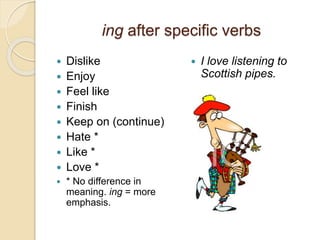
 I love listening to 
Scottish pipes.
ing after specific verbs 
 (don´t) mind 
 Practice 
 Spend time 
 Start * (no difference 
in meaning). 
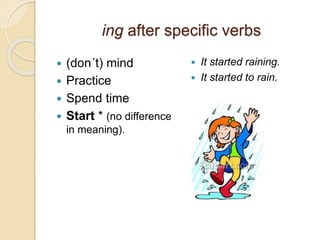
 It started raining. 
 It started to rain.
ing after specific verbs 
 Stop (change of 
meaning). 
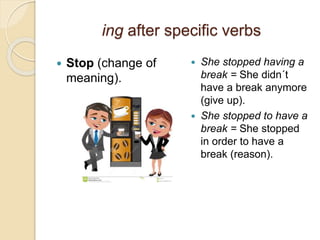
 She stopped having a 
break = She didn´t 
have a break anymore 
(give up). 
 She stopped to have a 
break = She stopped 
in order to have a 
break (reason).
ing after specific verbs 
 Try (change of 
meaning). 
 Why don´t you try 
doing yoga? 
(experiment). 
 Try to ski (to make an 
effort or attempt)
ing after specific verbs 
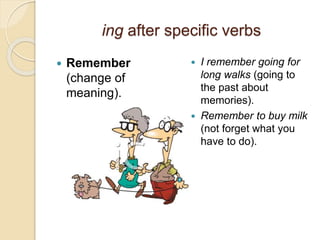
 Remember 
(change of 
meaning). 
 I remember going for 
long walks (going to 
the past about 
memories). 
 Remember to buy milk 
(not forget what you 
have to do).
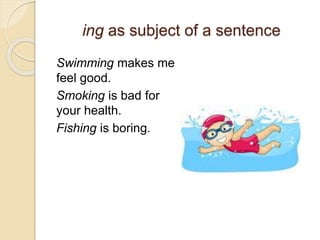
ing as subject of a sentence 
Swimming makes me 
feel good. 
Smoking is bad for 
your health. 
Fishing is boring.
ing after prepositions 
He left without saying 
goodbye. 
We were all happy 
about celebrating the 
New Year. 
I´m sick of eating 
hamburguers.
ing as adjective 
 Common 
adjectives with ing: 
 Amusing. 
 Interesting. 
 Shocking. 
 Worrying. 
 Dissapointing. 
 Boring. 
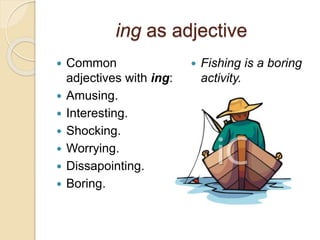
 Fishing is a boring 
activity.
ing as adjective 
 Surprising. 
 Exciting. 
 Terrifying. 
 Frightening. 
 Tiring. 
 Annoying. 
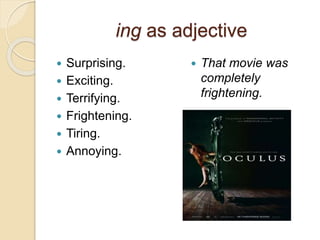
 That movie was 
completely 
frightening.
Sources 
 British Council: adjectives –ed and –ing 
https://learnenglish.britishcouncil.org/en/english-grammar/ 
adjectives/adjectives-ed-and-ing 
Retrieved on September 21st, 2014. 
 Capel, Annette and Sharp, Wendy. (2013). 
Objective Proficiency. Cambridge, UK: 
Cambridge University Press. 
 Oxenden, Clive and Latham-Koenig, Christina. 
(1997). American English File 2. New York, USA: 
Oxford University Press. 
 Oxenden, Clive and Latham-Koenig Christina. 
(2009). New English File Upper-intermediate 
students. Oxford: Oxford University Press.
 dnospraka@yahoo.com

Verb + verb ing grammar rules

  • 1.
    Diana L. Portillo September 2014 Verb + verb ing
  • 2.
    ing after specificverbs  Dislike  Enjoy  Feel like  Finish  Keep on (continue)  Hate *  Like *  Love *  * No difference in meaning. ing = more emphasis.  I love listening to Scottish pipes.
  • 3.
    ing after specificverbs  (don´t) mind  Practice  Spend time  Start * (no difference in meaning).  It started raining.  It started to rain.
  • 4.
    ing after specificverbs  Stop (change of meaning).  She stopped having a break = She didn´t have a break anymore (give up).  She stopped to have a break = She stopped in order to have a break (reason).
  • 5.
    ing after specificverbs  Try (change of meaning).  Why don´t you try doing yoga? (experiment).  Try to ski (to make an effort or attempt)
  • 6.
    ing after specificverbs  Remember (change of meaning).  I remember going for long walks (going to the past about memories).  Remember to buy milk (not forget what you have to do).
  • 7.
    ing as subjectof a sentence Swimming makes me feel good. Smoking is bad for your health. Fishing is boring.
  • 8.
    ing after prepositions He left without saying goodbye. We were all happy about celebrating the New Year. I´m sick of eating hamburguers.
  • 9.
    ing as adjective  Common adjectives with ing:  Amusing.  Interesting.  Shocking.  Worrying.  Dissapointing.  Boring.  Fishing is a boring activity.
  • 10.
    ing as adjective  Surprising.  Exciting.  Terrifying.  Frightening.  Tiring.  Annoying.  That movie was completely frightening.
  • 11.
    Sources  BritishCouncil: adjectives –ed and –ing https://learnenglish.britishcouncil.org/en/english-grammar/ adjectives/adjectives-ed-and-ing Retrieved on September 21st, 2014.  Capel, Annette and Sharp, Wendy. (2013). Objective Proficiency. Cambridge, UK: Cambridge University Press.  Oxenden, Clive and Latham-Koenig, Christina. (1997). American English File 2. New York, USA: Oxford University Press.  Oxenden, Clive and Latham-Koenig Christina. (2009). New English File Upper-intermediate students. Oxford: Oxford University Press.
  • 12.