 Would rather is used to express a
  preference in English. Would rather is the
  same in meaning as would prefer. These
  two phrases are used interchangeably to
  express a preference when making a
  choice.
 Here are some examples of short
  conversations that use would rather to
  either state or ask for a preference.
John: Let's go out tonight.
Mary: That's a good idea.
John: How about going to a film? There's a new
film out with Tom Hanks.
Mary: I'd rather go out for dinner. I'm hungry!
Sue: I'm not sure which topic to choose for my
essay.
Debby: Well, what are your choices?
Sue: I can write about the economy or about a
book.
Debby: Which would you rather write about?
   The form would rather is a little strange
    because 'rather' is not a verb but is part of
    an expression that means 'would prefer to'.
    'Rather' is usually immediately followed by a
    verb in base form (verb without 'to'). It's
    common to use would rather in the
    shortened 'd rather form in positive
    statements. All subjects take 'would rather'.
    Would rather can be used to refer to the
    present moment or a future moment in
    time.
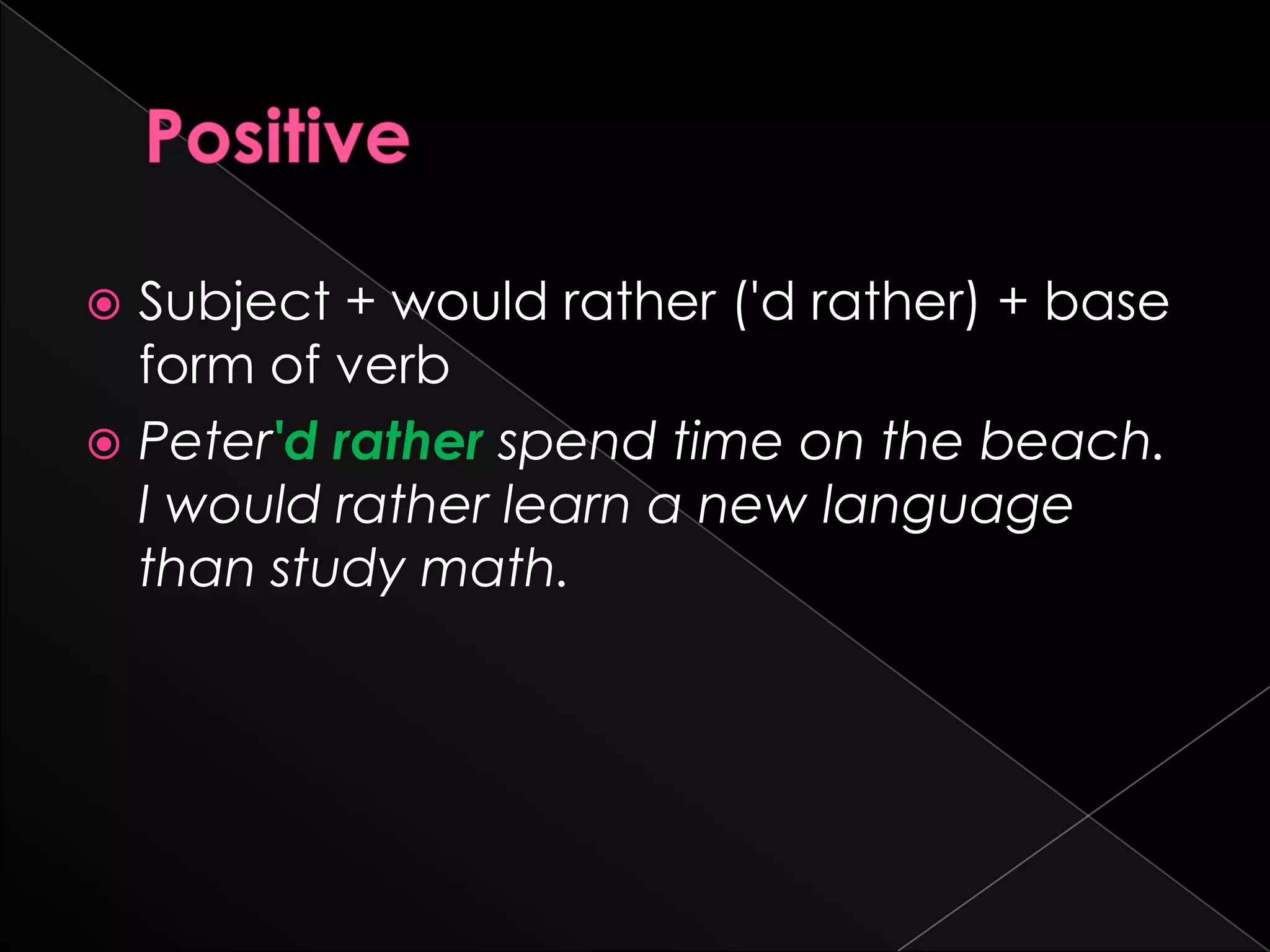
 Subject + would rather ('d rather) + base
  form of verb
 Peter'd rather spend time on the beach.
  I would rather learn a new language
  than study math.
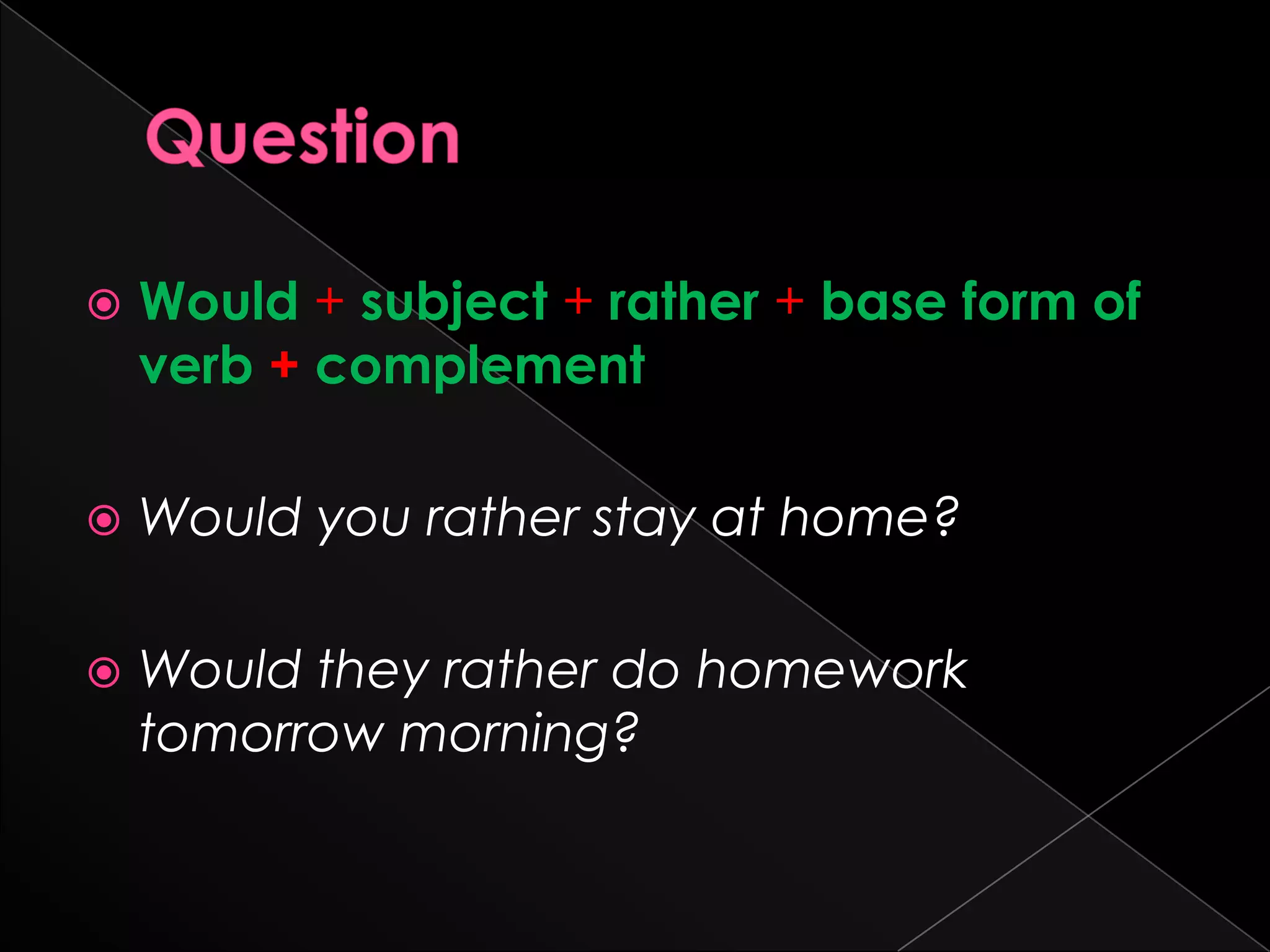
   Would + subject + rather + base form of
    verb + complement

   Would you rather stay at home?

   Would they rather do homework
    tomorrow morning?
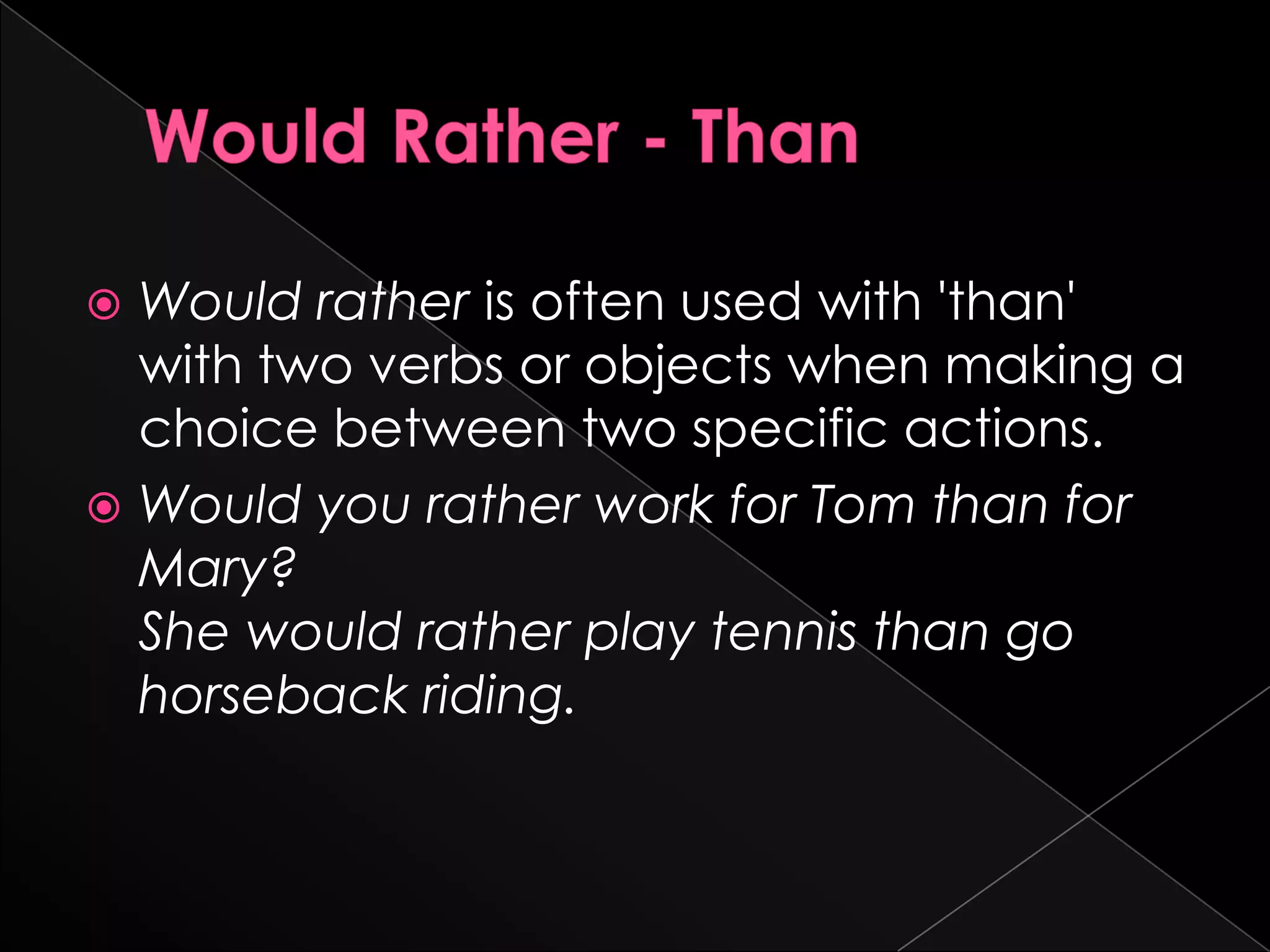
 Would rather is often used with 'than'
  with two verbs or objects when making a
  choice between two specific actions.
 Would you rather work for Tom than for
  Mary?
  She would rather play tennis than go
  horseback riding.

Would rather

  • 2.
     Would ratheris used to express a preference in English. Would rather is the same in meaning as would prefer. These two phrases are used interchangeably to express a preference when making a choice.  Here are some examples of short conversations that use would rather to either state or ask for a preference.
  • 3.
    John: Let's goout tonight. Mary: That's a good idea. John: How about going to a film? There's a new film out with Tom Hanks. Mary: I'd rather go out for dinner. I'm hungry! Sue: I'm not sure which topic to choose for my essay. Debby: Well, what are your choices? Sue: I can write about the economy or about a book. Debby: Which would you rather write about?
  • 4.
    The form would rather is a little strange because 'rather' is not a verb but is part of an expression that means 'would prefer to'. 'Rather' is usually immediately followed by a verb in base form (verb without 'to'). It's common to use would rather in the shortened 'd rather form in positive statements. All subjects take 'would rather'. Would rather can be used to refer to the present moment or a future moment in time.
  • 5.
     Subject +would rather ('d rather) + base form of verb  Peter'd rather spend time on the beach. I would rather learn a new language than study math.
  • 6.
    Would + subject + rather + base form of verb + complement  Would you rather stay at home?  Would they rather do homework tomorrow morning?
  • 7.
     Would ratheris often used with 'than' with two verbs or objects when making a choice between two specific actions.  Would you rather work for Tom than for Mary? She would rather play tennis than go horseback riding.