
-ED AND –ING CLAUSES
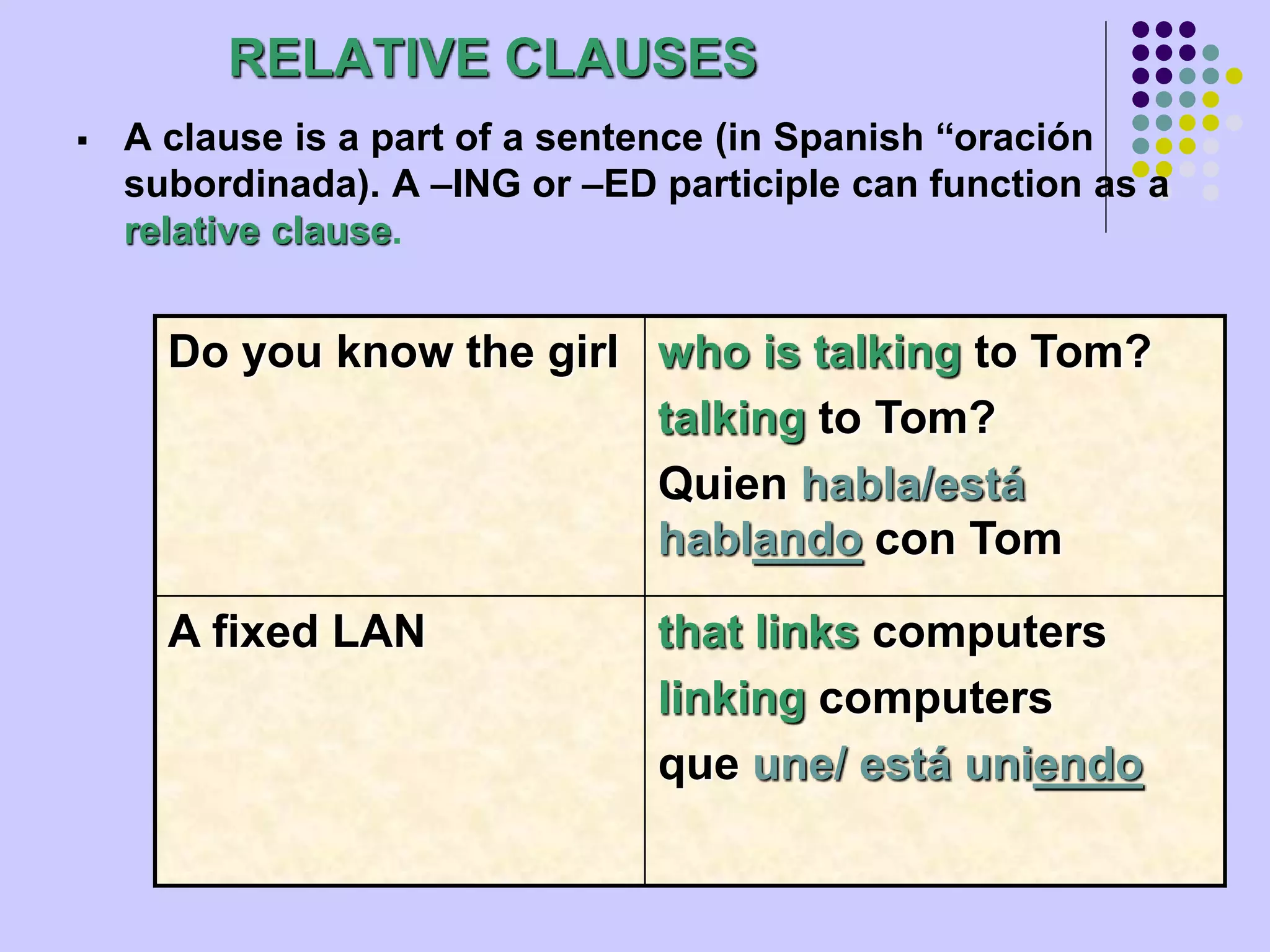
RELATIVE CLAUSES
 A clause is a part of a sentence (in Spanish “oración
subordinada). A –ING or –ED participle can function as a
relative clause.
Do you know the girl who is talking to Tom?
talking to Tom?
Quien habla/está
hablando con Tom
A fixed LAN that links computers
linking computers
que une/ está uniendo
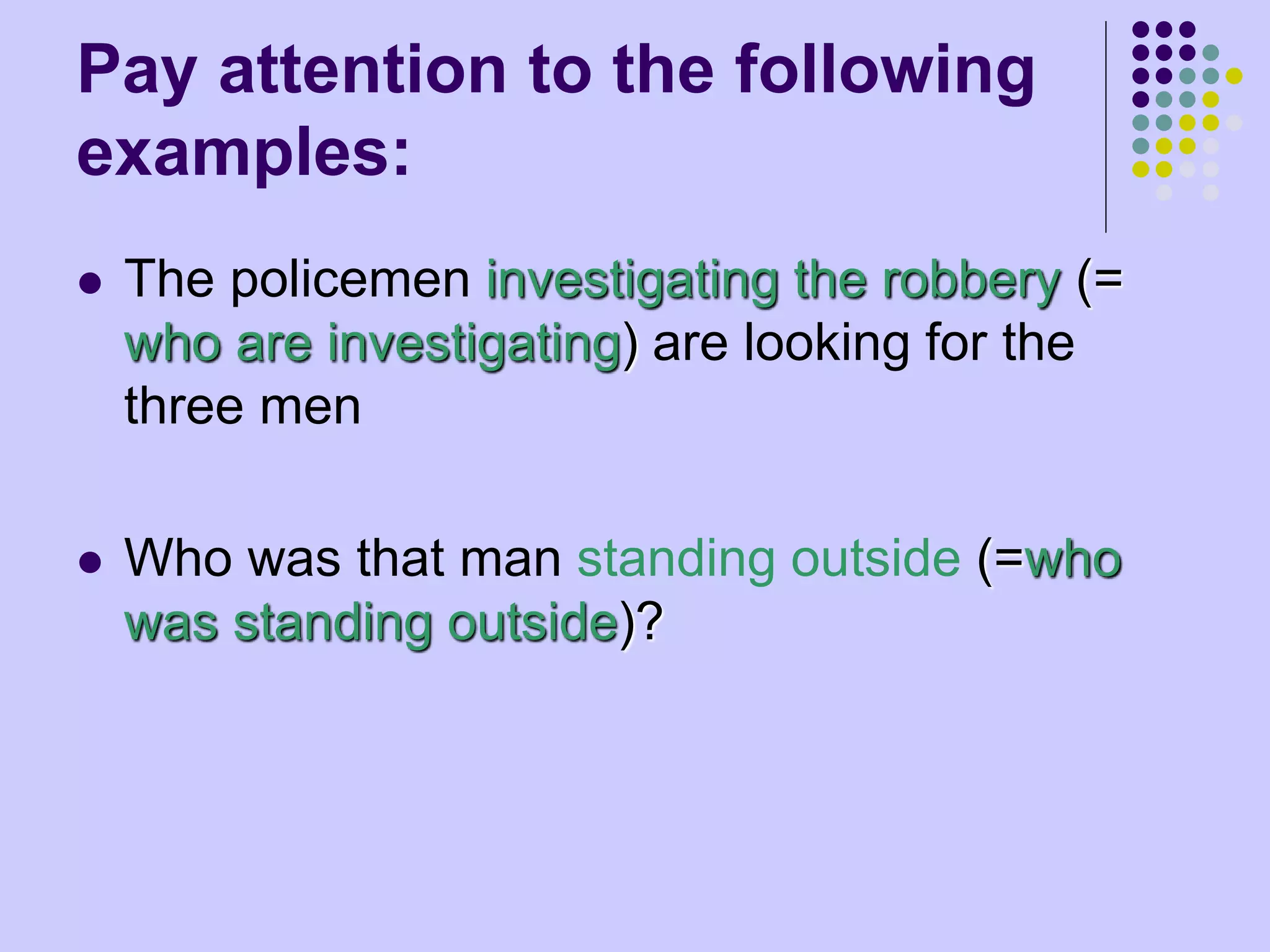
Pay attention to the following
examples:
 The policemen investigating the robbery (=
who are investigating) are looking for the
three men
 Who was that man standing outside (=who
was standing outside)?
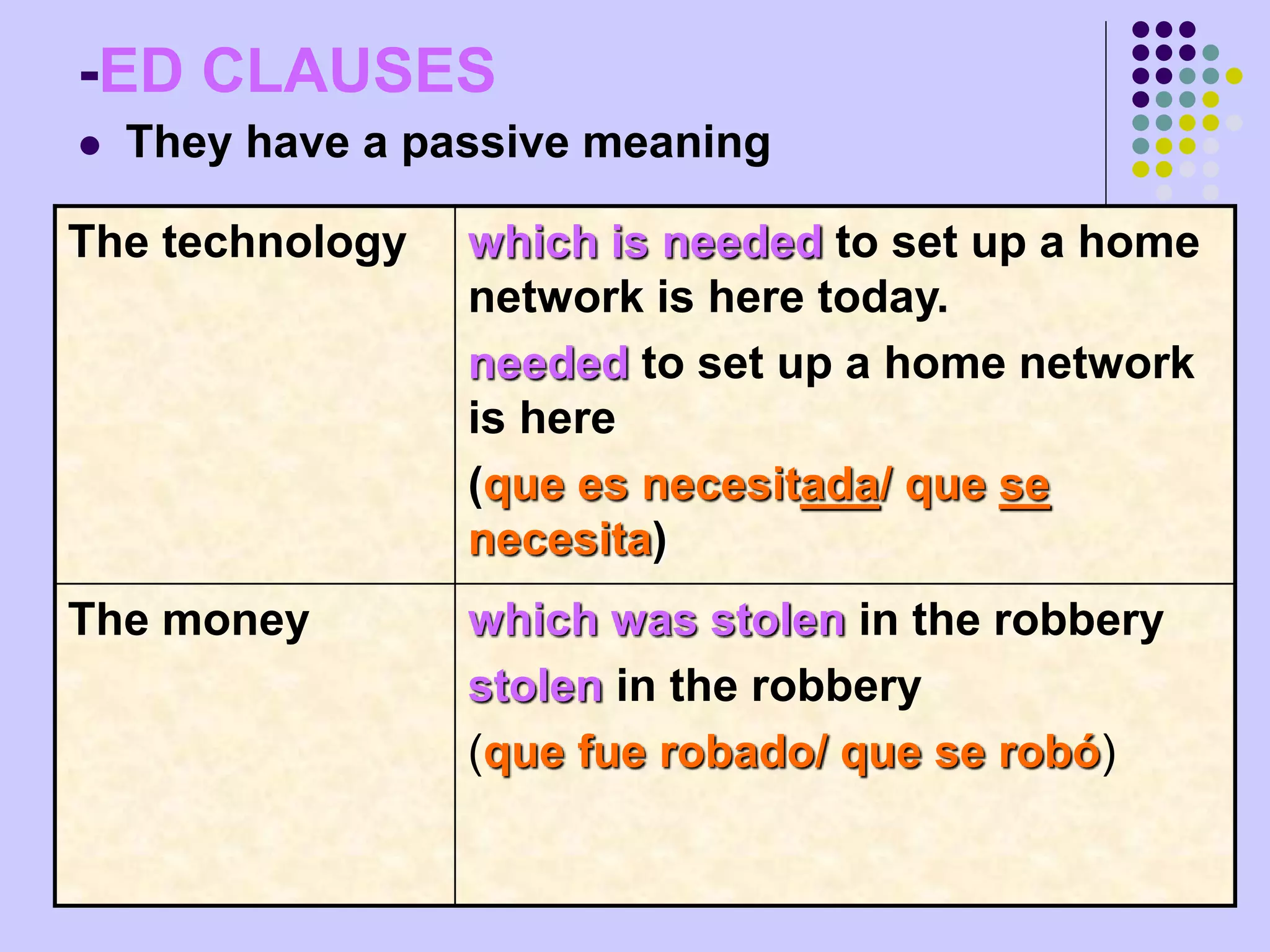
-ED CLAUSES
 They have a passive meaning
The technology which is needed to set up a home
network is here today.
needed to set up a home network
is here
(que es necesitada/ que se
necesita)
The money which was stolen in the robbery
stolen in the robbery
(que fue robado/ que se robó)
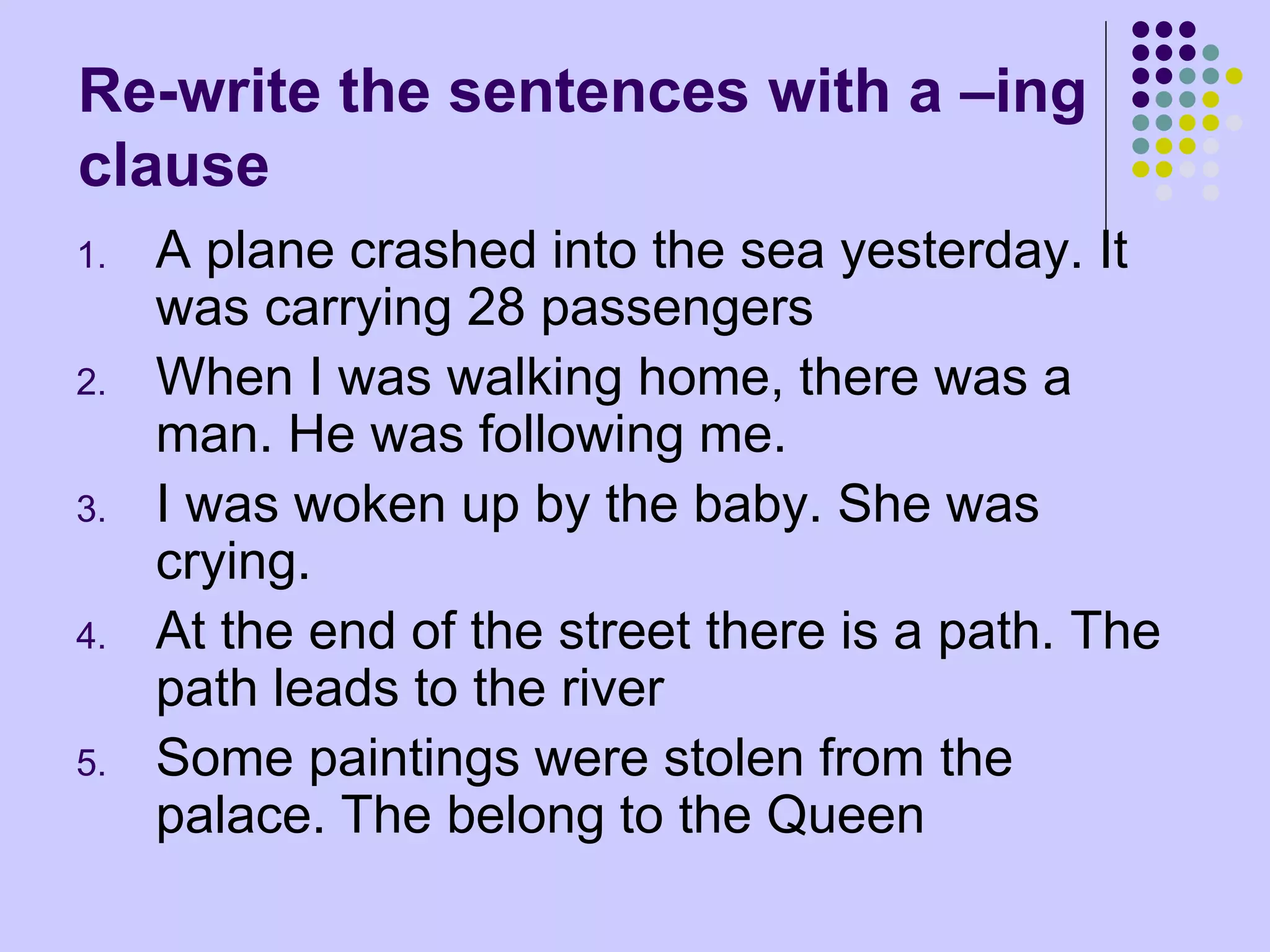
Re-write the sentences with a –ing
clause
1. A plane crashed into the sea yesterday. It
was carrying 28 passengers
2. When I was walking home, there was a
man. He was following me.
3. I was woken up by the baby. She was
crying.
4. At the end of the street there is a path. The
path leads to the river
5. Some paintings were stolen from the
palace. The belong to the Queen
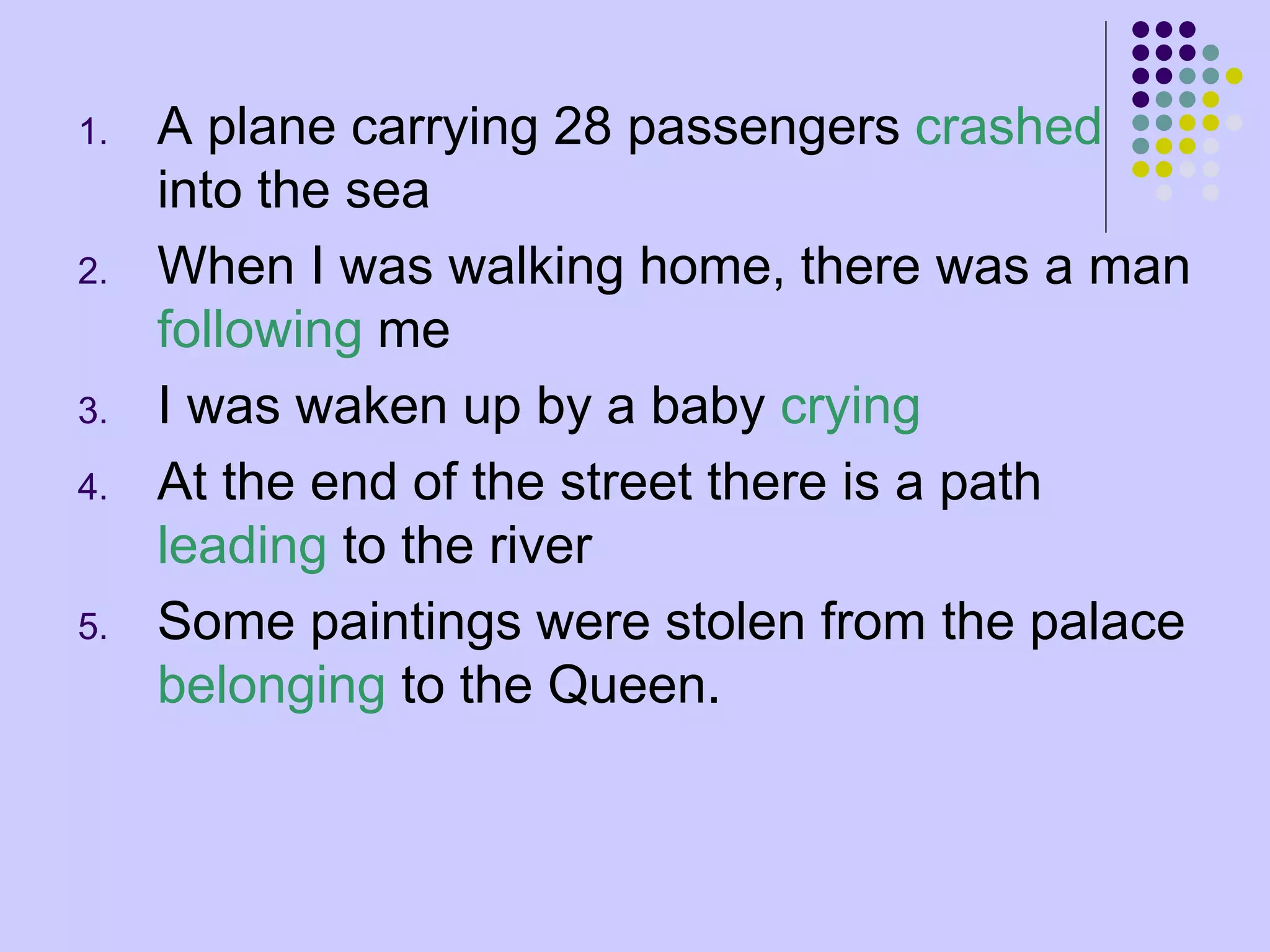
1. A plane carrying 28 passengers crashed
into the sea
2. When I was walking home, there was a man
following me
3. I was waken up by a baby crying
4. At the end of the street there is a path
leading to the river
5. Some paintings were stolen from the palace
belonging to the Queen.
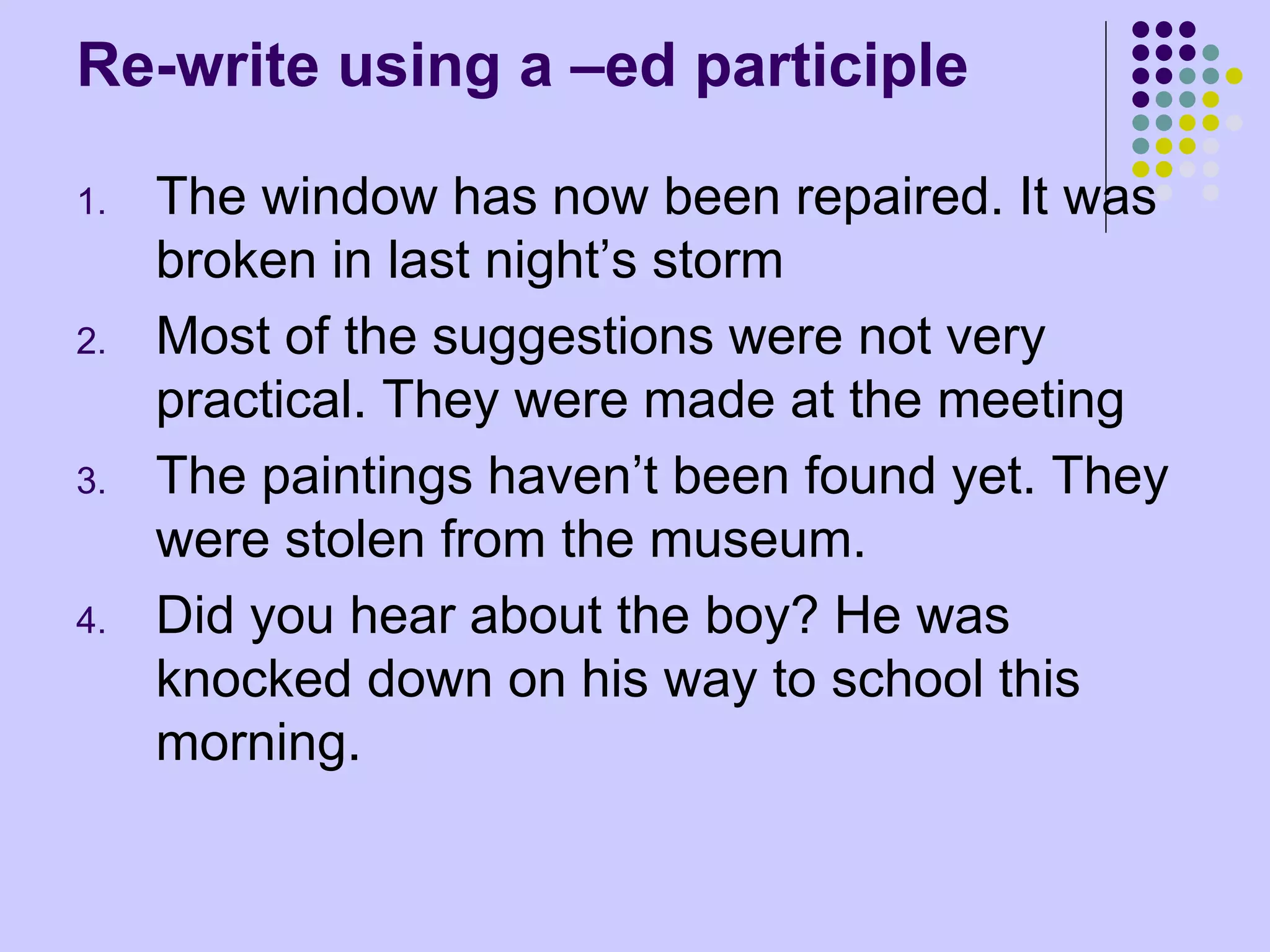
Re-write using a –ed participle
1. The window has now been repaired. It was
broken in last night’s storm
2. Most of the suggestions were not very
practical. They were made at the meeting
3. The paintings haven’t been found yet. They
were stolen from the museum.
4. Did you hear about the boy? He was
knocked down on his way to school this
morning.
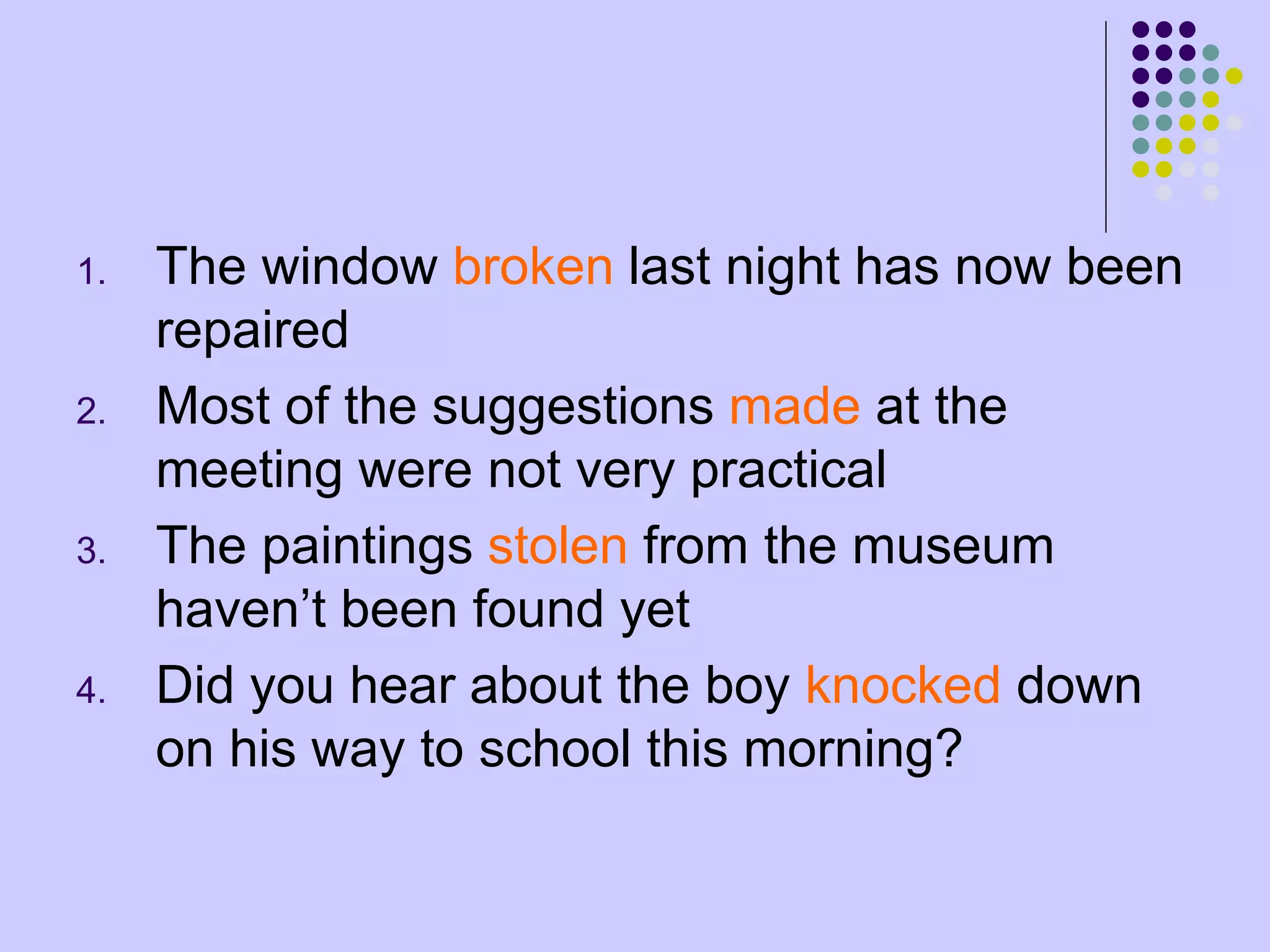
1. The window broken last night has now been
repaired
2. Most of the suggestions made at the
meeting were not very practical
3. The paintings stolen from the museum
haven’t been found yet
4. Did you hear about the boy knocked down
on his way to school this morning?

Ed and –ing clauses

  • 1.
  • 2.
    RELATIVE CLAUSES  Aclause is a part of a sentence (in Spanish “oración subordinada). A –ING or –ED participle can function as a relative clause. Do you know the girl who is talking to Tom? talking to Tom? Quien habla/está hablando con Tom A fixed LAN that links computers linking computers que une/ está uniendo
  • 3.
    Pay attention tothe following examples:  The policemen investigating the robbery (= who are investigating) are looking for the three men  Who was that man standing outside (=who was standing outside)?
  • 4.
    -ED CLAUSES  Theyhave a passive meaning The technology which is needed to set up a home network is here today. needed to set up a home network is here (que es necesitada/ que se necesita) The money which was stolen in the robbery stolen in the robbery (que fue robado/ que se robó)
  • 5.
    Re-write the sentenceswith a –ing clause 1. A plane crashed into the sea yesterday. It was carrying 28 passengers 2. When I was walking home, there was a man. He was following me. 3. I was woken up by the baby. She was crying. 4. At the end of the street there is a path. The path leads to the river 5. Some paintings were stolen from the palace. The belong to the Queen
  • 6.
    1. A planecarrying 28 passengers crashed into the sea 2. When I was walking home, there was a man following me 3. I was waken up by a baby crying 4. At the end of the street there is a path leading to the river 5. Some paintings were stolen from the palace belonging to the Queen.
  • 7.
    Re-write using a–ed participle 1. The window has now been repaired. It was broken in last night’s storm 2. Most of the suggestions were not very practical. They were made at the meeting 3. The paintings haven’t been found yet. They were stolen from the museum. 4. Did you hear about the boy? He was knocked down on his way to school this morning.
  • 8.
    1. The windowbroken last night has now been repaired 2. Most of the suggestions made at the meeting were not very practical 3. The paintings stolen from the museum haven’t been found yet 4. Did you hear about the boy knocked down on his way to school this morning?