
Non-Verbal
Communication
Sign Language
Visual signs
 Colors
 Graphs –Tables-map
 Symbols
 Pictures-posters
Audio signs-silence
Visual Signs
Colors
 Colours suggests mood, choice, feelings of people
 It also has psychological effect on human beings.
 Colours are used as representation of thoughts too.
 Red, black, white, green are symbolic for various purpose.
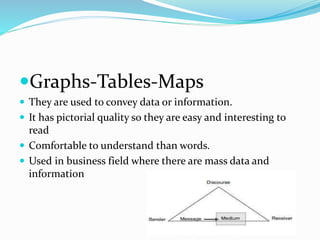
Graphs-Tables-Maps
 They are used to convey data or information.
 It has pictorial quality so they are easy and interesting to
read
 Comfortable to understand than words.
 Used in business field where there are mass data and
information
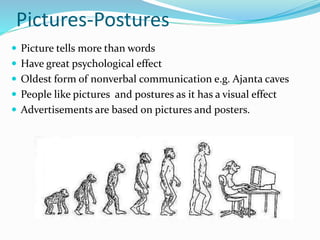
Pictures-Postures
 Picture tells more than words
 Have great psychological effect
 Oldest form of nonverbal communication e.g. Ajanta caves
 People like pictures and postures as it has a visual effect
 Advertisements are based on pictures and posters.
Audio Signs
 Audio signs mainly stand for warnings and orders.
 They used when it is required to convey quick
messages
 It has psychological effect.
 Trains, hammer of Judge, school bells are e.g of audio
signs
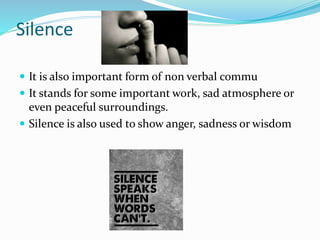
Silence
 It is also important form of non verbal commu
 It stands for some important work, sad atmosphere or
even peaceful surroundings.
 Silence is also used to show anger, sadness or wisdom
Body Language
 A language that is spoken through body rather
than words
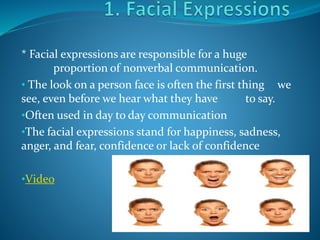
* Facial expressions are responsible for a huge
proportion of nonverbal communication.
• The look on a person face is often the first thing we
see, even before we hear what they have to say.
•Often used in day to day communication
•The facial expressions stand for happiness, sadness,
anger, and fear, confidence or lack of confidence
•Video
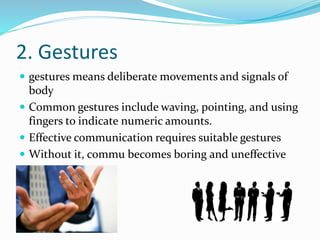
2. Gestures
 gestures means deliberate movements and signals of
body
 Common gestures include waving, pointing, and using
fingers to indicate numeric amounts.
 Effective communication requires suitable gestures
 Without it, commu becomes boring and uneffective
Paralinguistics
 Paralinguistics refers to vocal communication.
 This includes factors such as tone of voice, loudness,
inflection, and pitch. Consider the powerful effect that
tone of voice can have on the meaning of a sentence.
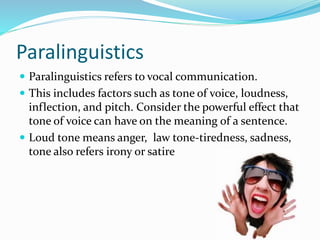
 Loud tone means anger, law tone-tiredness, sadness,
tone also refers irony or satire
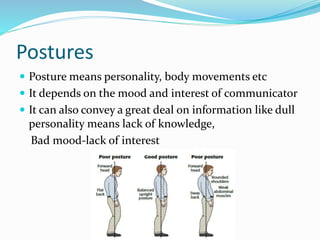
Postures
 Posture means personality, body movements etc
 It depends on the mood and interest of communicator
 It can also convey a great deal on information like dull
personality means lack of knowledge,
Bad mood-lack of interest
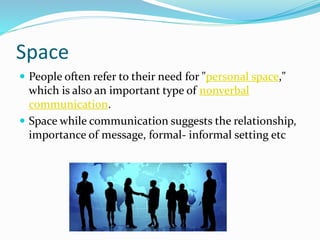
Space
 People often refer to their need for "personal space,"
which is also an important type of nonverbal
communication.
 Space while communication suggests the relationship,
importance of message, formal- informal setting etc
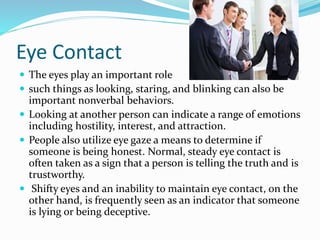
Eye Contact
 The eyes play an important role
 such things as looking, staring, and blinking can also be
important nonverbal behaviors.
 Looking at another person can indicate a range of emotions
including hostility, interest, and attraction.
 People also utilize eye gaze a means to determine if
someone is being honest. Normal, steady eye contact is
often taken as a sign that a person is telling the truth and is
trustworthy.
 Shifty eyes and an inability to maintain eye contact, on the
other hand, is frequently seen as an indicator that someone
is lying or being deceptive.
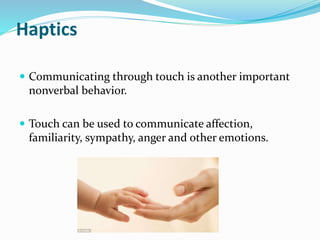
Haptics
 Communicating through touch is another important
nonverbal behavior.
 Touch can be used to communicate affection,
familiarity, sympathy, anger and other emotions.
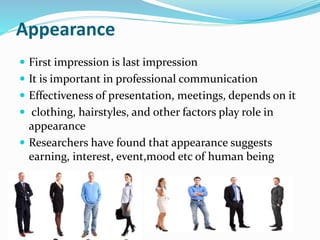
Appearance
 First impression is last impression
 It is important in professional communication
 Effectiveness of presentation, meetings, depends on it
 clothing, hairstyles, and other factors play role in
appearance
 Researchers have found that appearance suggests
earning, interest, event,mood etc of human being
 Thanking You……
Jignesh Gohil
Teacher of English
M.A,M.Ed.,Net-Edu

Nonverbal communication

  • 1.
  • 2.
    Sign Language Visual signs Colors  Graphs –Tables-map  Symbols  Pictures-posters Audio signs-silence
  • 3.
    Visual Signs Colors  Colourssuggests mood, choice, feelings of people  It also has psychological effect on human beings.  Colours are used as representation of thoughts too.  Red, black, white, green are symbolic for various purpose.
  • 4.
    Graphs-Tables-Maps  They areused to convey data or information.  It has pictorial quality so they are easy and interesting to read  Comfortable to understand than words.  Used in business field where there are mass data and information
  • 5.
    Pictures-Postures  Picture tellsmore than words  Have great psychological effect  Oldest form of nonverbal communication e.g. Ajanta caves  People like pictures and postures as it has a visual effect  Advertisements are based on pictures and posters.
  • 6.
    Audio Signs  Audiosigns mainly stand for warnings and orders.  They used when it is required to convey quick messages  It has psychological effect.  Trains, hammer of Judge, school bells are e.g of audio signs
  • 7.
    Silence  It isalso important form of non verbal commu  It stands for some important work, sad atmosphere or even peaceful surroundings.  Silence is also used to show anger, sadness or wisdom
  • 8.
    Body Language  Alanguage that is spoken through body rather than words
  • 9.
    * Facial expressionsare responsible for a huge proportion of nonverbal communication. • The look on a person face is often the first thing we see, even before we hear what they have to say. •Often used in day to day communication •The facial expressions stand for happiness, sadness, anger, and fear, confidence or lack of confidence •Video
  • 10.
    2. Gestures  gesturesmeans deliberate movements and signals of body  Common gestures include waving, pointing, and using fingers to indicate numeric amounts.  Effective communication requires suitable gestures  Without it, commu becomes boring and uneffective
  • 11.
    Paralinguistics  Paralinguistics refersto vocal communication.  This includes factors such as tone of voice, loudness, inflection, and pitch. Consider the powerful effect that tone of voice can have on the meaning of a sentence.  Loud tone means anger, law tone-tiredness, sadness, tone also refers irony or satire
  • 12.
    Postures  Posture meanspersonality, body movements etc  It depends on the mood and interest of communicator  It can also convey a great deal on information like dull personality means lack of knowledge, Bad mood-lack of interest
  • 13.
    Space  People oftenrefer to their need for "personal space," which is also an important type of nonverbal communication.  Space while communication suggests the relationship, importance of message, formal- informal setting etc
  • 14.
    Eye Contact  Theeyes play an important role  such things as looking, staring, and blinking can also be important nonverbal behaviors.  Looking at another person can indicate a range of emotions including hostility, interest, and attraction.  People also utilize eye gaze a means to determine if someone is being honest. Normal, steady eye contact is often taken as a sign that a person is telling the truth and is trustworthy.  Shifty eyes and an inability to maintain eye contact, on the other hand, is frequently seen as an indicator that someone is lying or being deceptive.
  • 15.
    Haptics  Communicating throughtouch is another important nonverbal behavior.  Touch can be used to communicate affection, familiarity, sympathy, anger and other emotions.
  • 16.
    Appearance  First impressionis last impression  It is important in professional communication  Effectiveness of presentation, meetings, depends on it  clothing, hairstyles, and other factors play role in appearance  Researchers have found that appearance suggests earning, interest, event,mood etc of human being
  • 17.
     Thanking You…… JigneshGohil Teacher of English M.A,M.Ed.,Net-Edu