LEVOSIMENDAN
INTRODUCTION
One of the strategies used in the management of congestive heart
failure is to increase myocardial contractility without increasing the
afterload.
“Inodilators”, as their name suggest, are a group of drugs that achieve
this dual goal by increasing the contractility and causing
vasodilatation.
This group includes dobutamine (β- adrenergic agent) and milrinone
(phosphodiesterase III inhibitor).
These agents achieve these effects by increasing intracellular
concentrations of free
calcium.
However, this action markedly increases myocardial energy
consumption, which may
contribute to the risk of arrhythmias.
Levosimendan is one of a new class of inodilators, the calcium
sensitizers.
Current IV Treatments for
Acute Heart Failure
• Diuretics
• Other agents (inotropes)
• ß-receptor agonists
(dobutamine, dopamine)
• PDE inhibitors (milrinone)
• Nitrates and/or any other IV
vasodilators
Preload
Contractility
Afterload
4
Inotropic drugs
Gs Gi
β-receptor
ATP cAMP (active)
rise in intracellular
calcium
Dobutamine
AMP (inactive)
PDE
Na+/Ca2+
exchanger
Na+/K+exchanger
[Ca2+]
[Na+]
[K+]
Digoxin
Milrinone
5
MECHANISM OF ACTION
Levosimendan is a pyridazone-dinitrile derivative.
It has two important actions. Its primary action is to enhance cardiac
contractility. This is achieved by a pharmamcological mechanism known as
calcium sensitization.
It does not increase intracellular concentrations of free calcium. It binds to
cardiac troponin C in a calcium-dependent manner and stabilises troponin C.
This causes actin-myosin cross-bridges, without increasing myocardial
consumption of adenosine triphosphate (ATP).
The cardiac performance and contractility are significantly inproved with no
increase in the total myocardial energy demand and oxygen consumption.
The potential for arrhythmia is also reduced as total intracellular calcium
levels are not raised.
Stabilization effect is calcium dependant and levosimendan exerts
it effects during systole; it does not effect the duration of diastole and
so ventricular relaxation is not impaired.
Consequently adequate ventricular filling and optimal coronary
perfusion still occurs.
Levosimendan also causes venous, arterial and coronary vasodilation,
probably by opening ATPsensitive potassium channels in smooth
muscle.
Dose-dependant hypotension may occur. Levosimendan is also of
benefit in the setting of pulmonary vasoconstriction and right
ventricular dysfunction and reduces pulmonary vascular
resistance.
Levosimendan
Levosimendan increases calcium myofilament responsiveness by directly
affecting contractile proteins to increase contractility without increasing
intracellular calcium concentrations
(2) it opens KATP channels in myocytes & SM cells
act as a vasodilator ( anti-ischemic and antistunning effects)
(1) Enhances calcium myofilament responsiveness by
binding to cardiac troponin C
increases contraction
(functions as a calcium sensitizer)
Dual mechanism of action:
key differentiating property of levosimendan
- does not increase intracellular levels of cAMP or calcium
- does not cause increased myocardial oxygen consumption
- Opens KATP channels in myocytes and vascular SM cells
- results in vasodilatation and cardio protection
- reduces preload and after load
- increased blood flow to organs
(including increased coronary blood flow)
- anti-ischemic and antistunning effects
Loading dose - 12µ g/kg applied over 10 minutes
Continuous infusion- 0 .1 to 0.2 µg/kg per min over 24 hours
PHARMACOKINETICS
Levosimendan is 98% bound to plasma proteins and completely metabolized
prior to excretion.
Approxi-mately 5% of a dose is converted in the intestines, and then to a
highly-active metabolite
with an elimination half-life of 75–80 h (compared to 1 hour elimination half-
life for levosimendan itself).
This metabolite reaches a peak plasma concentration about 2 days after the
termination of the infusion and
exhibits haemodynamic effects similar to those of levosimendan.
Because of the long half-life of the active metabolite, these effects last for up
to 7 to 9 days after discontinuation of a 24-hour infusion of levosimendan.
DOSAGE
The usual dosage of intravenous levosimendan used in clinical trials of
patients with heart failure is 6 to 12 μg/kg loading dose over 10 minutes
followed by 0.05 to 0.2 μg/kg/min as a continuous infusion.
Hemodynamic response is generally observed within 5 minutes of
commencement of infusion of the loading dose.
Peak effects are observed within 10 to 30 minutes of infusion; duration of
action of levosimendan is about 75-78 hours to 1 week due to
active metabolites.
No dosage adjustments are required in patients with mild to moderate renal
failure and hepatic impair-ment.
Efficacy with once a week administration makes it a promising drug.
The published trials so far have utilized intravenous levosimendan. However,
the agent is also well absorbed orally and oral preparation is now available.
SIDE EFFECTS
Levosimendan is well tolerated, with most adverse
events (e.g., headache, hypotension) being dose related
and arising from the vasodilatory actions of the drug.
In order to avoid undue hypotension it may
be prudent to temporarily stop milrinone and other
vasodilators when administering this drug.
The other side effects that are forthcoming from trials
include prolongation of corrected QT interval and
rarely, ventricular tachycardia.
Nevertheless, it should be avoided in patients with Torsades or any
other abnormal rhythm.
Contraindications
Hypersensitivity to levosimendan or to racemic simendan
Levosimendan should not be used in either severe renal (creatinine
clearance <30mL/min) or severe hepatic impairment.
Severe hypotension and tachycardia
Significant mechanical obstructions affecting ventricular filling or
outflow or both
History of Torsades de Pointes
Precautions
Should be used cautiously in patients with tachycardia, atrial
fibrillation with rapid ventricular response or potentially life-
threatening arrhythmias
Should be used cautiously and under close ECG monitoring in
patients with ongoing coronary ischaemia, long QTc interval
regardless of aetiology, or when given concomitantly with medicinal
products that prolong the QTc interval
Hypotension
As excessive decrease in cardiac filling pressure may limit the
response to levosimendan, severe hypovolaemia should be corrected
If excessive changes in blood pressure or heart rate are observed, the rate of
infusion should be reduced or the infusion discontinued
Effects on blood pressure generally last for 3-4 days and the effects on heart
rate for 7-9 days. Non-invasive monitoring for at least 3 days after the end of
infusion or until the patient is clinically stable is recommended.
Hepatic dysfunction (reduced clearance) may lead to increased
concentrations of the metabolite, which may result in more pronounced and
prolonged haemodynamic effects
May cause a decrease in serum potassium concentration.
Levosimendan infusions of may be accompanied by decreases in
haemoglobin and haematocrit and caution should be exercised in patients
with ischaemic cardiovascular disease and concurrent anaemia
Short-Term Use of Inodilator Treatment
-Dobutamine v/s Levosimendan
Levosimendan V/s Dobutamine:
- LIDO trial
- CASINO trial
- SURVIVE –W trial
Levosimendan Infusion versus Dobutamine
(LIDO) studyLevosimendan Infusion versus Dobutamine (LIDO) study
Kaplan–Meier survival analysis in the LIDO
The prospective benefit observed at 31 days for Levosimendan-treated
patients was maintained through the 180-day follow-up period.
Calcium Sensitizer or Inotrope or None in Low-Output Heart
Failure Study (CASINO)
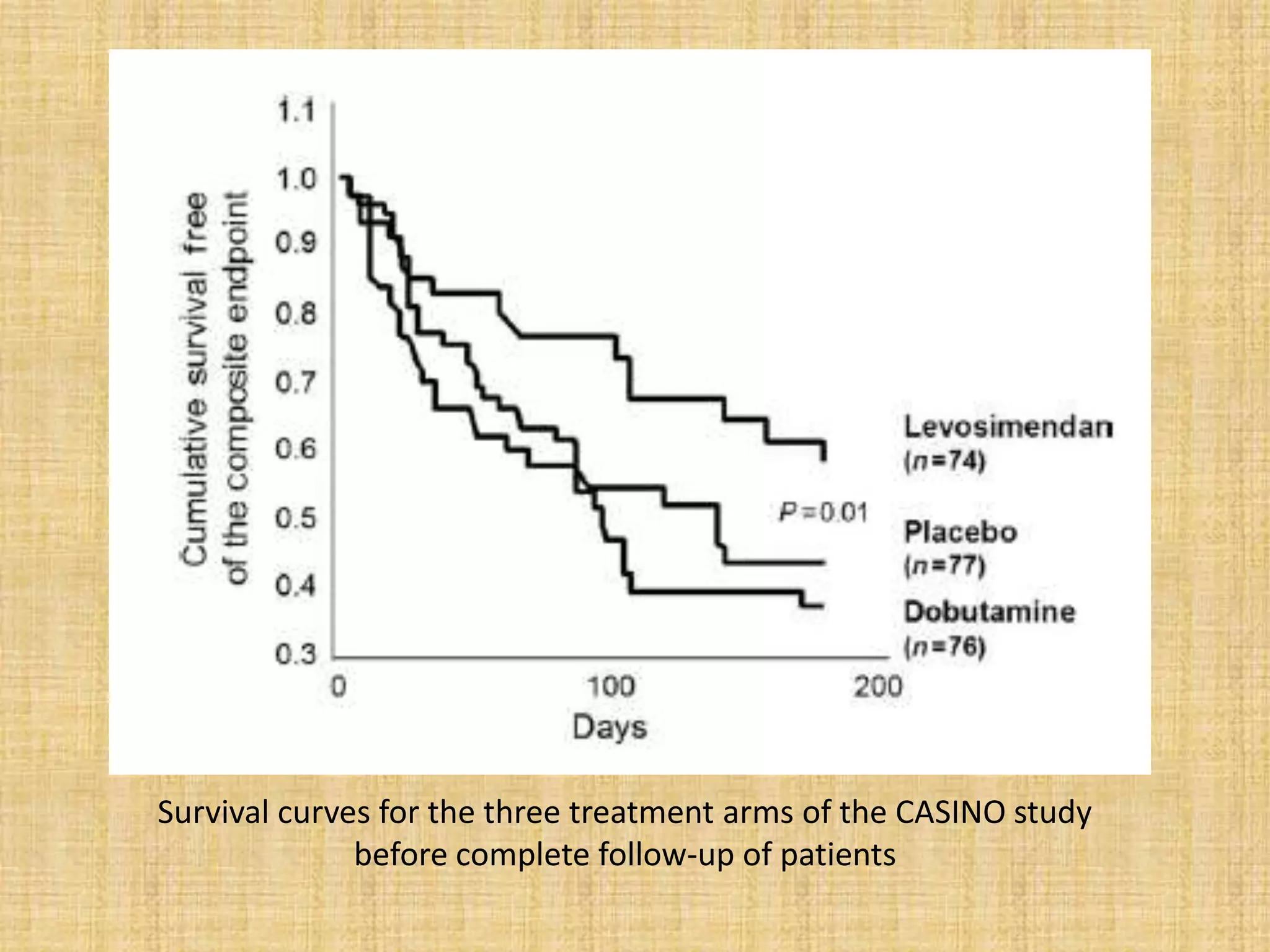
Dobutamine was associated with lower 6-month survival compared with
Levosimendan or placebo in patients with decompensated low output HF
- enrolled 600 patients hospitalized with NYHA class IV HF
- randomized to Levosimendan, Dobutamine, or placebo 48 hrs after presentation
- primary end point of the study was mortality at one month, 6 months, or 1 yr
Heart Failure Update 2004 and Eur J Heart Fail
Survival curves for the three treatment arms of the CASINO study
before complete follow-up of patients
Randomized Multicenter Evaluation of Intravenous Levosimendan
Efficacy Versus Placebo in the Short-Term Treatment of
Decompensated Heart Failure (REVIVE)
- large-scale, placebo-controlled, double-blind study
- in 600patients hospitalized for AHFS with LVEF <0.35 & dyspnea
at rest who required intravenous diuretics
- Randomized to receive either Levosimendan or placebo in
addition to standard therapy
REVIVE-1 data ( n=100) - Levosimendan treatment A/W
- improvement in the composite end point at 24 hrs and 5 days
- a significant reduction in BNP levels at 24 hours and 5 days
- shorter lengths of initial hospitalization
Randomized Study on Safety and Effectiveness of Levosimendan in Patients
with Left Ventricular Failure Due to an Acute Myocardial Infarction (RUSSLAN)
LEVOSIMENDAN
Randomized Study on Safety and Effectiveness of Levosimendan in Patients
with Left Ventricular Failure Due to an Acute Myocardial Infarction (RUSSLAN)
Kaplan–Meier survival analysis in the RUSSLAN trial
The prospective survival benefit of Levosimendan compared to
placebo at 14 days were maintained through 180 days of follow-up
- indicated in patients with symptomatic low COP HF secondary to cardiac
systolic dysfunction without severe hypotension
ESC 2005 guideline on acute HF: Levosimendan
class IIa/ Level of evidence B
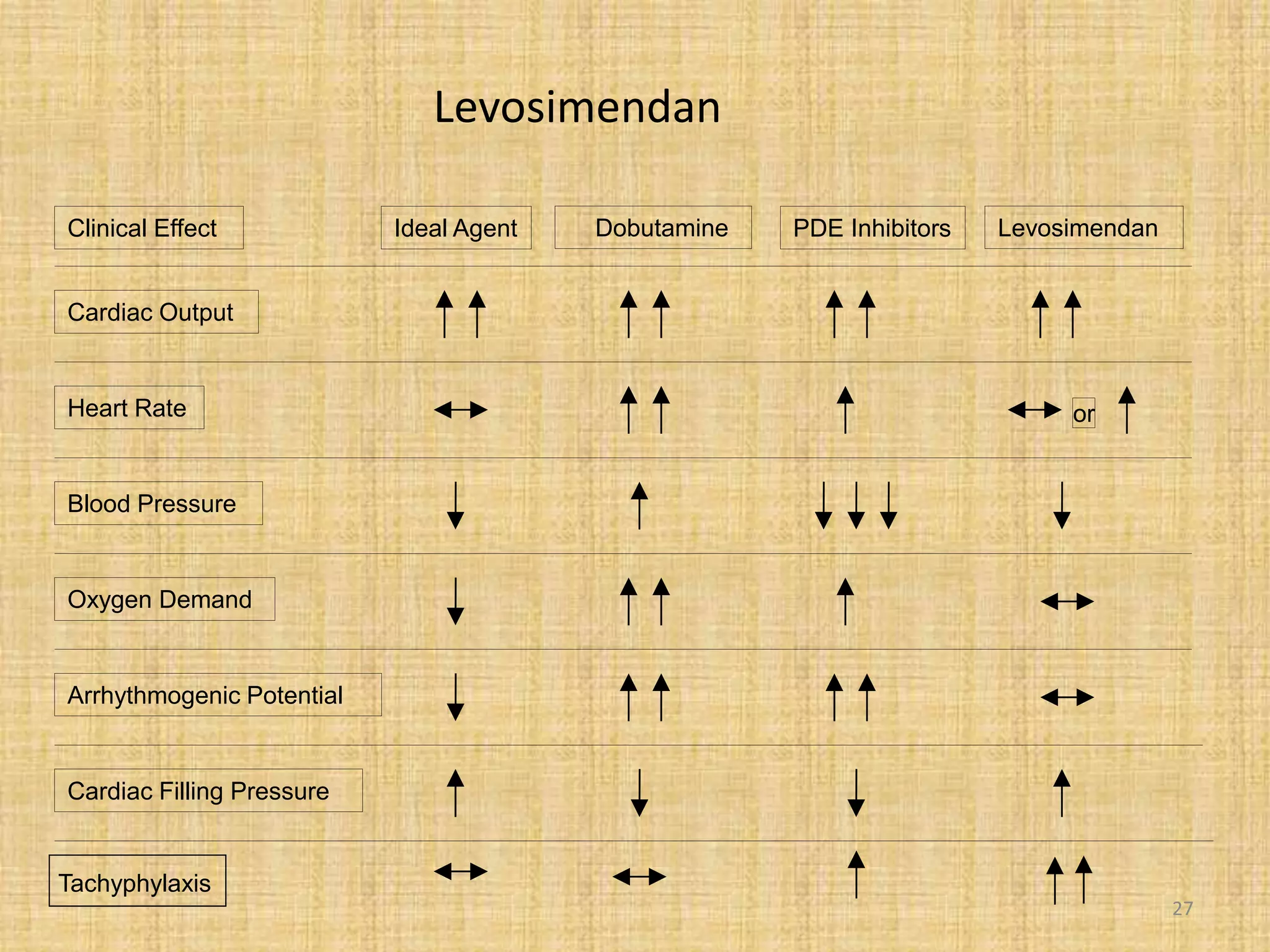
Levosimendan
Clinical Effect Ideal Agent LevosimendanPDE InhibitorsDobutamine
Cardiac Output
Heart Rate
Blood Pressure
Oxygen Demand
Arrhythmogenic Potential
Cardiac Filling Pressure
or
Tachyphylaxis
27
Levosimendan
• LIDO (Lancet 2002; 360:196-202)
- Benefit & safety better than standard inotrope in
ADHF
• RUSSLAN study (Eur Heart J 2002;23:1422-32)
– Safe & effective for patients with LV failure
complicating acute MI
• CASINO (Eur J Heart Fail 2004;6:673-6)
– Clear mortality benefit in favour of levosimendan
compared with dobutamine in class IV CHF patients
• REVIVE I trial (Crit Care 2004;8(suppl 1):P88)
– Levosimendan reduces length of intensive and
hospital day in patient with acute decompensated HF
28
Levosimendan for treatment of
acute decompensated heart failure
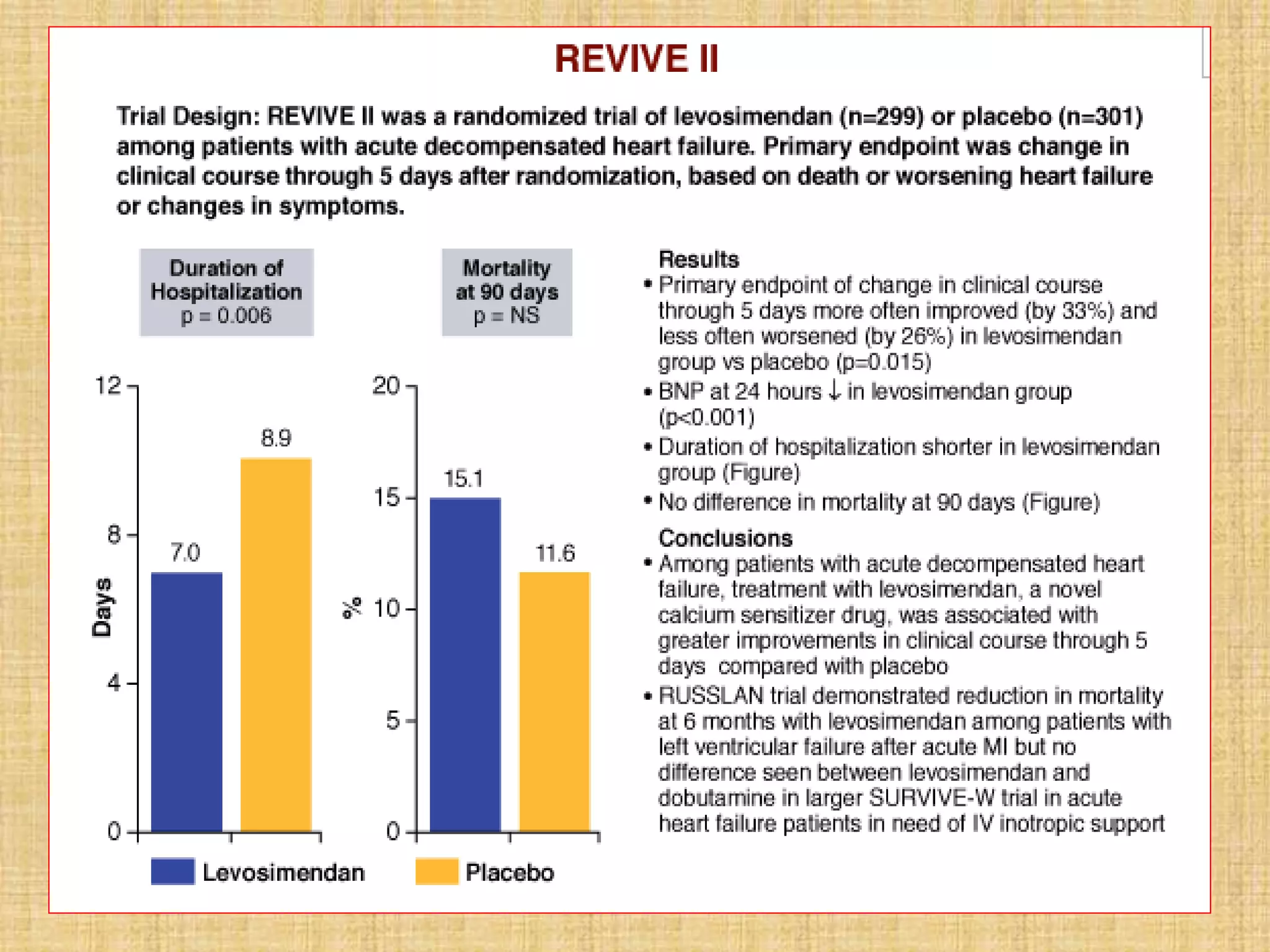
REVIVE II (Randomized Multicenter Evaluation of Intravenous
Levosimendan Efficacy Study)
(AHA Scientific Sessions 2005 Late Breaking Clinical Trials II)
 600 patients, 103 sites
 ADHF, dyspnoea at rest despite iv diuretics, LVEF <35%
 Levo bolus (6-12 mcg/kg) + 24-hour infusion (0.1-
0.2mcg/kg/min) vs placebo
 After 5 days, more Levo patients improved (19.4% vs 14.6%),
fewer Levo patients worsened (19.4% vs 27.2%)
 Significant BNP reduction in Levo arm at 24 hours & 5 days
 No difference in mortality at 90 days
29
Levosimendan for treatment of
acute decompensated heart failure
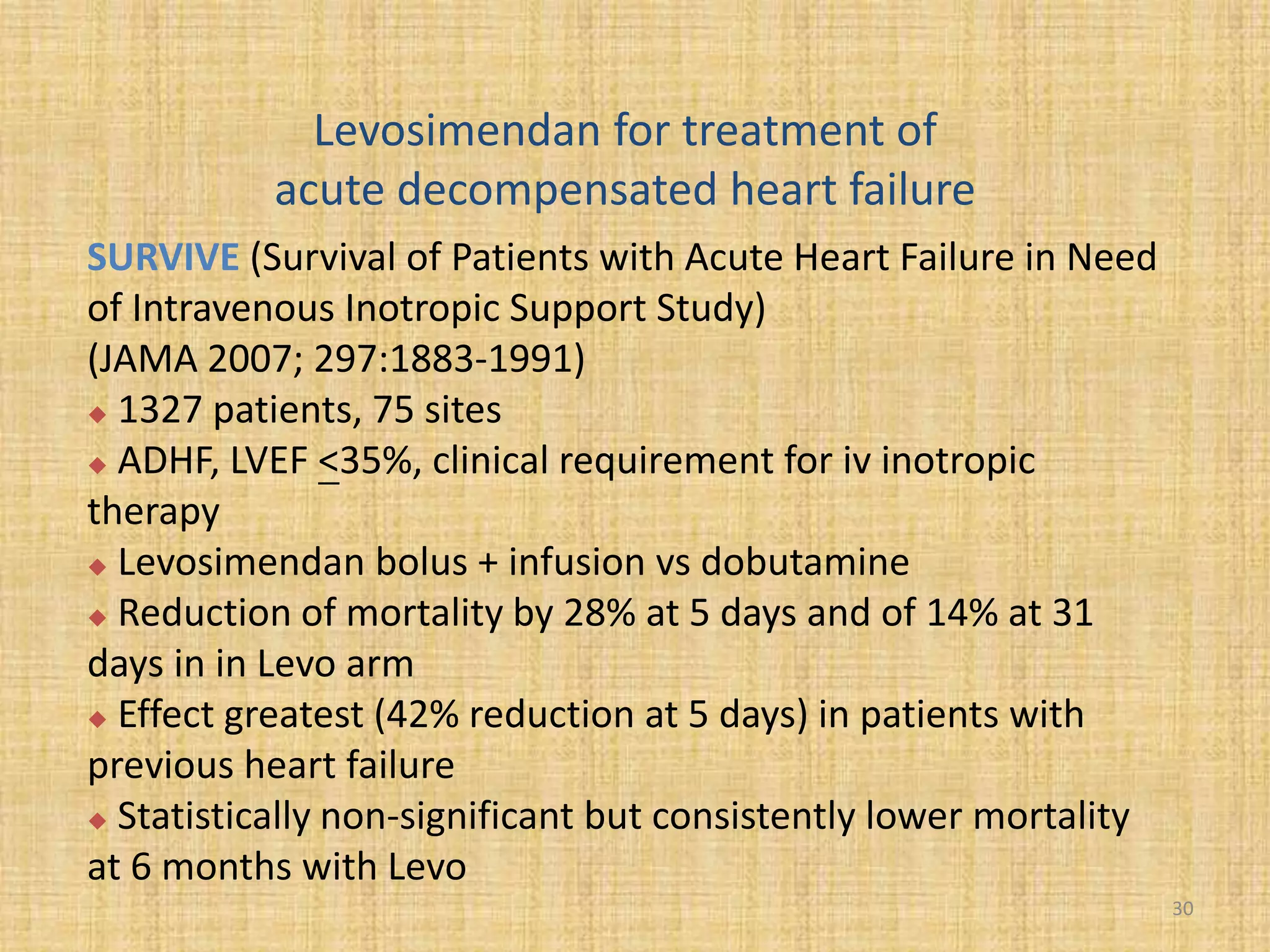
SURVIVE (Survival of Patients with Acute Heart Failure in Need
of Intravenous Inotropic Support Study)
(JAMA 2007; 297:1883-1991)
 1327 patients, 75 sites
 ADHF, LVEF <35%, clinical requirement for iv inotropic
therapy
 Levosimendan bolus + infusion vs dobutamine
 Reduction of mortality by 28% at 5 days and of 14% at 31
days in in Levo arm
 Effect greatest (42% reduction at 5 days) in patients with
previous heart failure
 Statistically non-significant but consistently lower mortality
at 6 months with Levo
30
Conclusions from
REVIVE II and SURVIVE
 Levosimendan represents an effective alternative to current
therapies for ADHF
 Short-term improvement in symptoms and clinical course,
associated with marked reduction in BNP
Mortality was numerically greater vs placebo but lower vs
dobutamine
AF was increased during 3- to 6-month FU period
VT was increased vs placebo but not increased vs
dobutamine
31
CONCLUSIONS
Prophylactic levosimendan did not result in a rate of the short-term
composite end point of death, renal-replacement therapy,
perioperative myocardial infarction, or use of a mechanical cardiac
assist device that was lower than the rate with placebo among
patients with a reduced left ventricular ejection fraction who were
undergoing cardiac surgery with the use of cardiopulmonary bypass.
LEVOSIMENDAN IN SEPTIC SHOCK
Studies have shown that myocardial dysfunction
is present in up to 60% of the patients with
septic shock and may not be apparent at initial
presentation.
Therefore, the majority of patients with septic shock could still be
expected to benefit from the inotropic effects of levosimendan, not to
mention its antiinflammatory, antioxidative, antiapoptotic, and
cardioprotective effects.
Such effects may offer additional systemic benefit, regardless of the
presence of myocardial
dysfunction.
KEY MESSAGES
• Levosimendan, a new inodilator, may be useful in refractory cardiac
failure, refractory pulmonary hypertension and dilated
cardiomyopathy.
• Levosimendan may help in decreasing the need for long term
inotropic support and may thus act as a bridge
to heart transport.
• Levosimendan with its long half-life appears to be a promising “once
a week” inotrope.
THANK YOU

Levosimendan

  • 1.
  • 2.
    INTRODUCTION One of thestrategies used in the management of congestive heart failure is to increase myocardial contractility without increasing the afterload. “Inodilators”, as their name suggest, are a group of drugs that achieve this dual goal by increasing the contractility and causing vasodilatation. This group includes dobutamine (β- adrenergic agent) and milrinone (phosphodiesterase III inhibitor).
  • 3.
    These agents achievethese effects by increasing intracellular concentrations of free calcium. However, this action markedly increases myocardial energy consumption, which may contribute to the risk of arrhythmias. Levosimendan is one of a new class of inodilators, the calcium sensitizers.
  • 4.
    Current IV Treatmentsfor Acute Heart Failure • Diuretics • Other agents (inotropes) • ß-receptor agonists (dobutamine, dopamine) • PDE inhibitors (milrinone) • Nitrates and/or any other IV vasodilators Preload Contractility Afterload 4
  • 5.
    Inotropic drugs Gs Gi β-receptor ATPcAMP (active) rise in intracellular calcium Dobutamine AMP (inactive) PDE Na+/Ca2+ exchanger Na+/K+exchanger [Ca2+] [Na+] [K+] Digoxin Milrinone 5
  • 6.
    MECHANISM OF ACTION Levosimendanis a pyridazone-dinitrile derivative. It has two important actions. Its primary action is to enhance cardiac contractility. This is achieved by a pharmamcological mechanism known as calcium sensitization. It does not increase intracellular concentrations of free calcium. It binds to cardiac troponin C in a calcium-dependent manner and stabilises troponin C. This causes actin-myosin cross-bridges, without increasing myocardial consumption of adenosine triphosphate (ATP). The cardiac performance and contractility are significantly inproved with no increase in the total myocardial energy demand and oxygen consumption. The potential for arrhythmia is also reduced as total intracellular calcium levels are not raised.
  • 7.
    Stabilization effect iscalcium dependant and levosimendan exerts it effects during systole; it does not effect the duration of diastole and so ventricular relaxation is not impaired. Consequently adequate ventricular filling and optimal coronary perfusion still occurs. Levosimendan also causes venous, arterial and coronary vasodilation, probably by opening ATPsensitive potassium channels in smooth muscle. Dose-dependant hypotension may occur. Levosimendan is also of benefit in the setting of pulmonary vasoconstriction and right ventricular dysfunction and reduces pulmonary vascular resistance.
  • 8.
    Levosimendan Levosimendan increases calciummyofilament responsiveness by directly affecting contractile proteins to increase contractility without increasing intracellular calcium concentrations (2) it opens KATP channels in myocytes & SM cells act as a vasodilator ( anti-ischemic and antistunning effects) (1) Enhances calcium myofilament responsiveness by binding to cardiac troponin C increases contraction (functions as a calcium sensitizer) Dual mechanism of action:
  • 9.
    key differentiating propertyof levosimendan - does not increase intracellular levels of cAMP or calcium - does not cause increased myocardial oxygen consumption - Opens KATP channels in myocytes and vascular SM cells - results in vasodilatation and cardio protection - reduces preload and after load - increased blood flow to organs (including increased coronary blood flow) - anti-ischemic and antistunning effects Loading dose - 12µ g/kg applied over 10 minutes Continuous infusion- 0 .1 to 0.2 µg/kg per min over 24 hours
  • 10.
    PHARMACOKINETICS Levosimendan is 98%bound to plasma proteins and completely metabolized prior to excretion. Approxi-mately 5% of a dose is converted in the intestines, and then to a highly-active metabolite with an elimination half-life of 75–80 h (compared to 1 hour elimination half- life for levosimendan itself). This metabolite reaches a peak plasma concentration about 2 days after the termination of the infusion and exhibits haemodynamic effects similar to those of levosimendan. Because of the long half-life of the active metabolite, these effects last for up to 7 to 9 days after discontinuation of a 24-hour infusion of levosimendan.
  • 11.
    DOSAGE The usual dosageof intravenous levosimendan used in clinical trials of patients with heart failure is 6 to 12 μg/kg loading dose over 10 minutes followed by 0.05 to 0.2 μg/kg/min as a continuous infusion. Hemodynamic response is generally observed within 5 minutes of commencement of infusion of the loading dose. Peak effects are observed within 10 to 30 minutes of infusion; duration of action of levosimendan is about 75-78 hours to 1 week due to active metabolites. No dosage adjustments are required in patients with mild to moderate renal failure and hepatic impair-ment. Efficacy with once a week administration makes it a promising drug. The published trials so far have utilized intravenous levosimendan. However, the agent is also well absorbed orally and oral preparation is now available.
  • 12.
    SIDE EFFECTS Levosimendan iswell tolerated, with most adverse events (e.g., headache, hypotension) being dose related and arising from the vasodilatory actions of the drug. In order to avoid undue hypotension it may be prudent to temporarily stop milrinone and other vasodilators when administering this drug. The other side effects that are forthcoming from trials include prolongation of corrected QT interval and rarely, ventricular tachycardia. Nevertheless, it should be avoided in patients with Torsades or any other abnormal rhythm.
  • 13.
    Contraindications Hypersensitivity to levosimendanor to racemic simendan Levosimendan should not be used in either severe renal (creatinine clearance <30mL/min) or severe hepatic impairment. Severe hypotension and tachycardia Significant mechanical obstructions affecting ventricular filling or outflow or both History of Torsades de Pointes
  • 14.
    Precautions Should be usedcautiously in patients with tachycardia, atrial fibrillation with rapid ventricular response or potentially life- threatening arrhythmias Should be used cautiously and under close ECG monitoring in patients with ongoing coronary ischaemia, long QTc interval regardless of aetiology, or when given concomitantly with medicinal products that prolong the QTc interval Hypotension As excessive decrease in cardiac filling pressure may limit the response to levosimendan, severe hypovolaemia should be corrected
  • 15.
    If excessive changesin blood pressure or heart rate are observed, the rate of infusion should be reduced or the infusion discontinued Effects on blood pressure generally last for 3-4 days and the effects on heart rate for 7-9 days. Non-invasive monitoring for at least 3 days after the end of infusion or until the patient is clinically stable is recommended. Hepatic dysfunction (reduced clearance) may lead to increased concentrations of the metabolite, which may result in more pronounced and prolonged haemodynamic effects May cause a decrease in serum potassium concentration. Levosimendan infusions of may be accompanied by decreases in haemoglobin and haematocrit and caution should be exercised in patients with ischaemic cardiovascular disease and concurrent anaemia
  • 16.
    Short-Term Use ofInodilator Treatment -Dobutamine v/s Levosimendan Levosimendan V/s Dobutamine: - LIDO trial - CASINO trial - SURVIVE –W trial
  • 17.
    Levosimendan Infusion versusDobutamine (LIDO) studyLevosimendan Infusion versus Dobutamine (LIDO) study
  • 18.
    Kaplan–Meier survival analysisin the LIDO The prospective benefit observed at 31 days for Levosimendan-treated patients was maintained through the 180-day follow-up period.
  • 19.
    Calcium Sensitizer orInotrope or None in Low-Output Heart Failure Study (CASINO) Dobutamine was associated with lower 6-month survival compared with Levosimendan or placebo in patients with decompensated low output HF - enrolled 600 patients hospitalized with NYHA class IV HF - randomized to Levosimendan, Dobutamine, or placebo 48 hrs after presentation - primary end point of the study was mortality at one month, 6 months, or 1 yr Heart Failure Update 2004 and Eur J Heart Fail
  • 20.
    Survival curves forthe three treatment arms of the CASINO study before complete follow-up of patients
  • 21.
    Randomized Multicenter Evaluationof Intravenous Levosimendan Efficacy Versus Placebo in the Short-Term Treatment of Decompensated Heart Failure (REVIVE) - large-scale, placebo-controlled, double-blind study - in 600patients hospitalized for AHFS with LVEF <0.35 & dyspnea at rest who required intravenous diuretics - Randomized to receive either Levosimendan or placebo in addition to standard therapy REVIVE-1 data ( n=100) - Levosimendan treatment A/W - improvement in the composite end point at 24 hrs and 5 days - a significant reduction in BNP levels at 24 hours and 5 days - shorter lengths of initial hospitalization
  • 23.
    Randomized Study onSafety and Effectiveness of Levosimendan in Patients with Left Ventricular Failure Due to an Acute Myocardial Infarction (RUSSLAN) LEVOSIMENDAN
  • 24.
    Randomized Study onSafety and Effectiveness of Levosimendan in Patients with Left Ventricular Failure Due to an Acute Myocardial Infarction (RUSSLAN)
  • 25.
    Kaplan–Meier survival analysisin the RUSSLAN trial The prospective survival benefit of Levosimendan compared to placebo at 14 days were maintained through 180 days of follow-up
  • 26.
    - indicated inpatients with symptomatic low COP HF secondary to cardiac systolic dysfunction without severe hypotension ESC 2005 guideline on acute HF: Levosimendan class IIa/ Level of evidence B
  • 27.
    Levosimendan Clinical Effect IdealAgent LevosimendanPDE InhibitorsDobutamine Cardiac Output Heart Rate Blood Pressure Oxygen Demand Arrhythmogenic Potential Cardiac Filling Pressure or Tachyphylaxis 27
  • 28.
    Levosimendan • LIDO (Lancet2002; 360:196-202) - Benefit & safety better than standard inotrope in ADHF • RUSSLAN study (Eur Heart J 2002;23:1422-32) – Safe & effective for patients with LV failure complicating acute MI • CASINO (Eur J Heart Fail 2004;6:673-6) – Clear mortality benefit in favour of levosimendan compared with dobutamine in class IV CHF patients • REVIVE I trial (Crit Care 2004;8(suppl 1):P88) – Levosimendan reduces length of intensive and hospital day in patient with acute decompensated HF 28
  • 29.
    Levosimendan for treatmentof acute decompensated heart failure REVIVE II (Randomized Multicenter Evaluation of Intravenous Levosimendan Efficacy Study) (AHA Scientific Sessions 2005 Late Breaking Clinical Trials II)  600 patients, 103 sites  ADHF, dyspnoea at rest despite iv diuretics, LVEF <35%  Levo bolus (6-12 mcg/kg) + 24-hour infusion (0.1- 0.2mcg/kg/min) vs placebo  After 5 days, more Levo patients improved (19.4% vs 14.6%), fewer Levo patients worsened (19.4% vs 27.2%)  Significant BNP reduction in Levo arm at 24 hours & 5 days  No difference in mortality at 90 days 29
  • 30.
    Levosimendan for treatmentof acute decompensated heart failure SURVIVE (Survival of Patients with Acute Heart Failure in Need of Intravenous Inotropic Support Study) (JAMA 2007; 297:1883-1991)  1327 patients, 75 sites  ADHF, LVEF <35%, clinical requirement for iv inotropic therapy  Levosimendan bolus + infusion vs dobutamine  Reduction of mortality by 28% at 5 days and of 14% at 31 days in in Levo arm  Effect greatest (42% reduction at 5 days) in patients with previous heart failure  Statistically non-significant but consistently lower mortality at 6 months with Levo 30
  • 31.
    Conclusions from REVIVE IIand SURVIVE  Levosimendan represents an effective alternative to current therapies for ADHF  Short-term improvement in symptoms and clinical course, associated with marked reduction in BNP Mortality was numerically greater vs placebo but lower vs dobutamine AF was increased during 3- to 6-month FU period VT was increased vs placebo but not increased vs dobutamine 31
  • 37.
    CONCLUSIONS Prophylactic levosimendan didnot result in a rate of the short-term composite end point of death, renal-replacement therapy, perioperative myocardial infarction, or use of a mechanical cardiac assist device that was lower than the rate with placebo among patients with a reduced left ventricular ejection fraction who were undergoing cardiac surgery with the use of cardiopulmonary bypass.
  • 38.
    LEVOSIMENDAN IN SEPTICSHOCK Studies have shown that myocardial dysfunction is present in up to 60% of the patients with septic shock and may not be apparent at initial presentation. Therefore, the majority of patients with septic shock could still be expected to benefit from the inotropic effects of levosimendan, not to mention its antiinflammatory, antioxidative, antiapoptotic, and cardioprotective effects. Such effects may offer additional systemic benefit, regardless of the presence of myocardial dysfunction.
  • 39.
    KEY MESSAGES • Levosimendan,a new inodilator, may be useful in refractory cardiac failure, refractory pulmonary hypertension and dilated cardiomyopathy. • Levosimendan may help in decreasing the need for long term inotropic support and may thus act as a bridge to heart transport. • Levosimendan with its long half-life appears to be a promising “once a week” inotrope.
  • 40.

Editor's Notes

  • #6 Inotropic agents, intended to improve the contractility of the stunned, postischemic myocardium, can offer short-term benefits at the expense of increased energy expenditure. In contrast, agents that increase the response of the myofilaments to Ca2+ may reduce the energetic cost of increases in contractility by sparing the cell ATP hydrolysis for the purpose of cycling Ca2+ to and from the sarcoplasmic reticulum and by potential effects on the tension cost (unit of ATP hydrolyzed/ unit tension). These attributes of agents that directly activate the sarcomere may be especially significant during cardiac stunning in which it is apparent that there is oxygen wasting related to a decrease in the efficiency of myofibrillar contraction and an increased oxygen cost of contractility (1,2). 1. Solaro, R.J. (2001) Modulation of cardiac myofilament activity by protein phosphorylation. Handbook of Physiology: Section 2: The Cardiovascular System. Volume 1 The Heart (E. Page, H. Fozzard, R. J. Solaro, Eds.) Oxford University Press, New York, pp 264-300.  2. Arteaga, GA, Kobayashi T, Solaro RJ. (2002) Molecular Actions of Drugs that Sensitize Cardiac Myofilaments to Ca2+. Annals of Medicine 34:248-258.