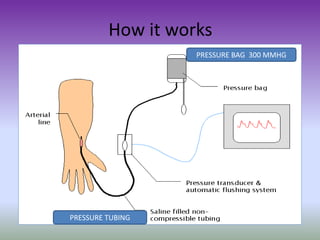
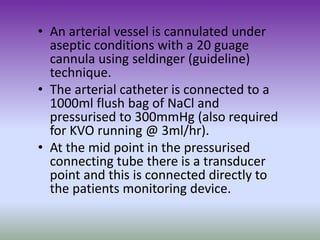
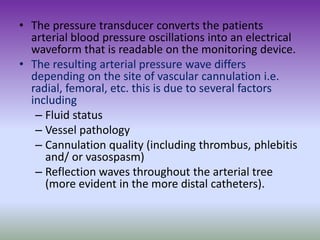
1) An arterial line allows continuous monitoring of a patient's blood pressure by connecting an arterial catheter to a pressure transducer. The transducer converts pressure oscillations into an electrical waveform displayed on a monitor.
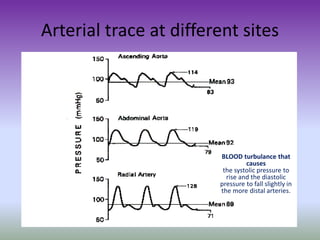
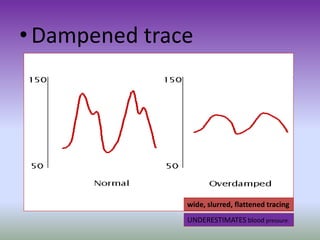
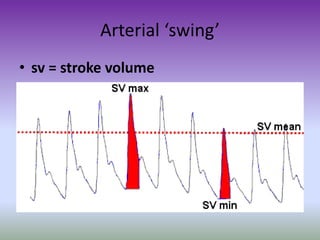
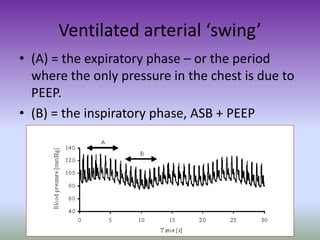
2) The arterial waveform provides information about cardiovascular physiology and hemodynamics. An accurate waveform depends on proper catheter placement, monitoring equipment setup, and avoiding issues like dampening or resonance.
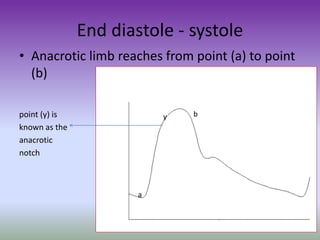
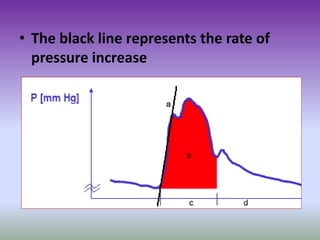
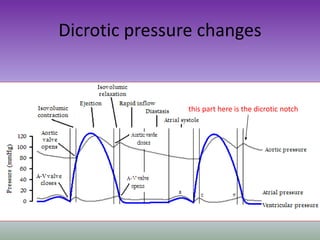
3) Key portions of the arterial waveform include the anacrotic limb, anacrotic notch, dicrotic limb, and dicrotic notch, which reflect events in the cardiac cycle and can be affected by conditions like vascular resistance.