VASCULAR ACCESS
AND OTHER ESSENTIAL
EMERGENCY PROCEDURE

   2nd SP-ER day: Emergency Conference " Emergency Medicine Update “
   8 August 2009
   Borwon Wittayachamnankul MD.
VASCULAR ACCESSES
Indication

 Peripheral
   Blood example
   Drugs
   fluid
 Central
   Central venous pressure
   Inotropics
   TPN
   Cannot access peripheral line
Alternative


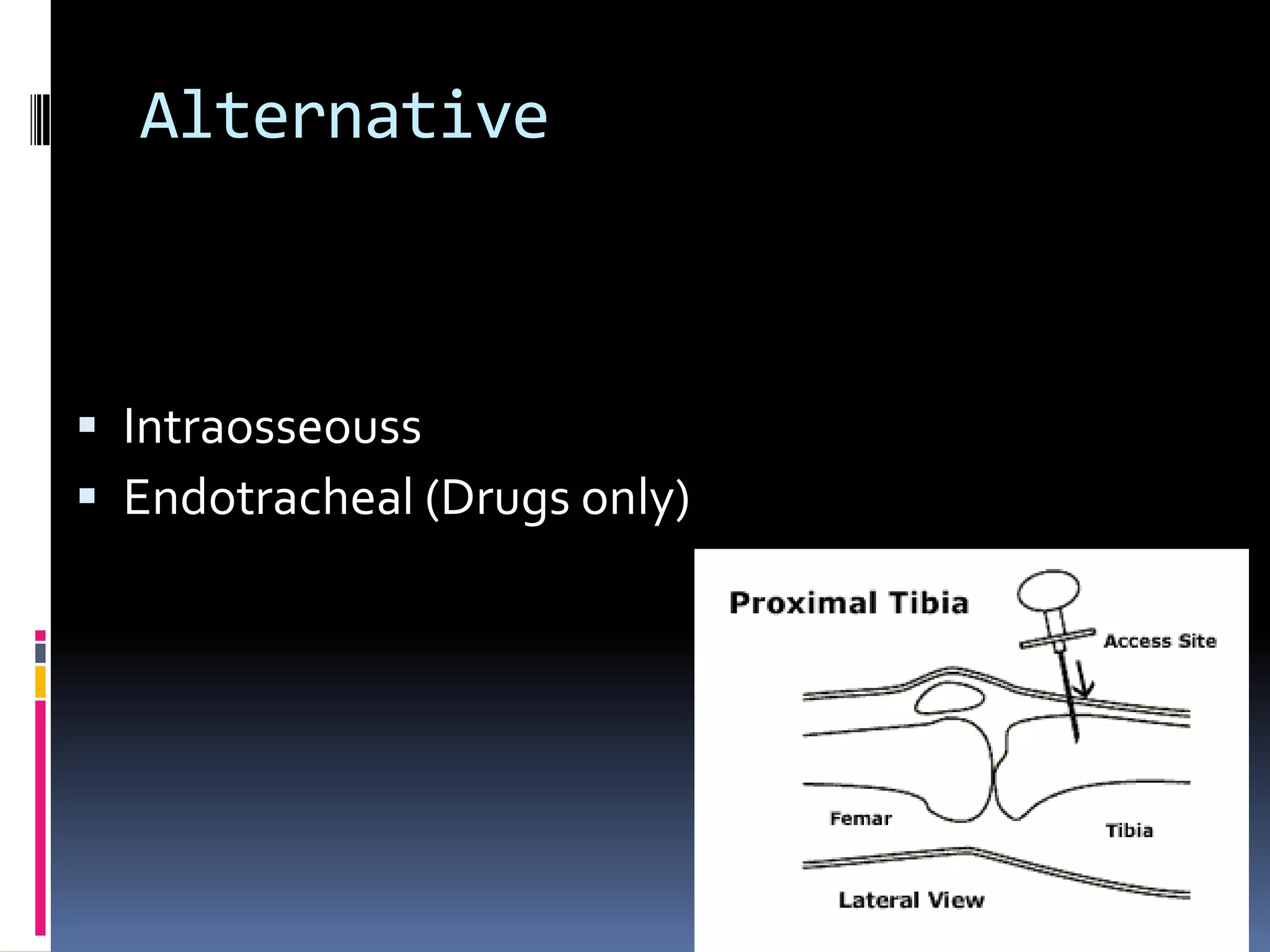
 Intraosseouss
 Endotracheal (Drugs only)
Central venous pressure
catheterization and
monitoring
 Performed when
   Necessary for procedure such as pulmonary artery
    catheter or pacemaker placement
   Peripheral vein cannot be cannulated
   Desired for measurement of central venous
    pressure
Central venous pressure
catheterization and
monitoring
 Not performed in hypovolemic shock except
   Massive volume repletion to elderly patients or
    heart disease
   Fluid administration monitored in patients with
    visceral trauma & severe head injury
Central venous pressure
catheterization and
monitoring
 Sites
   Most common: placed in the superior vena cava
    via internal jugular or subclavian vein
   Less common: via external jugular vein or femoral
    vein
   Peripheral veins: brachial-basilic system
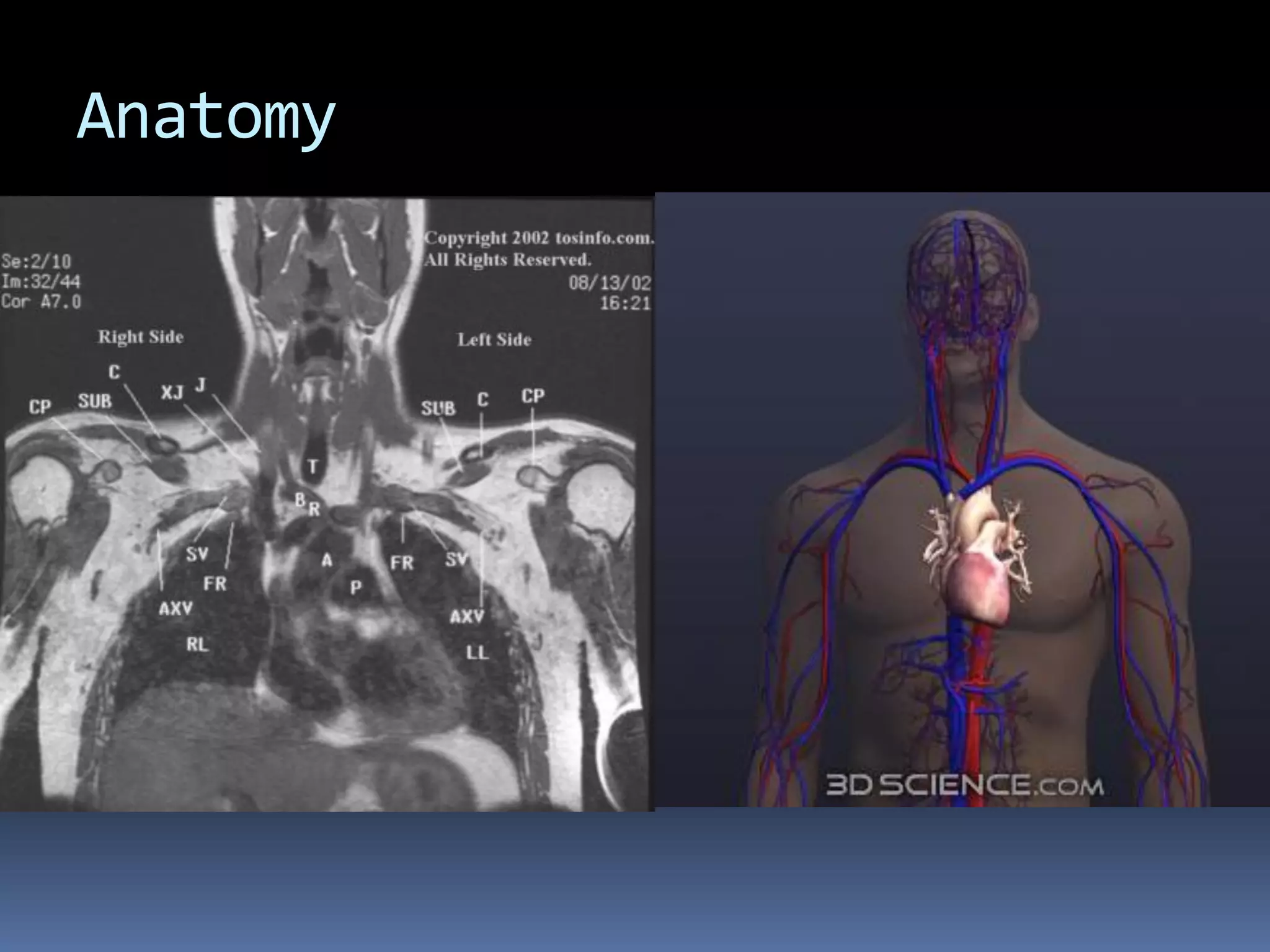
Anatomy
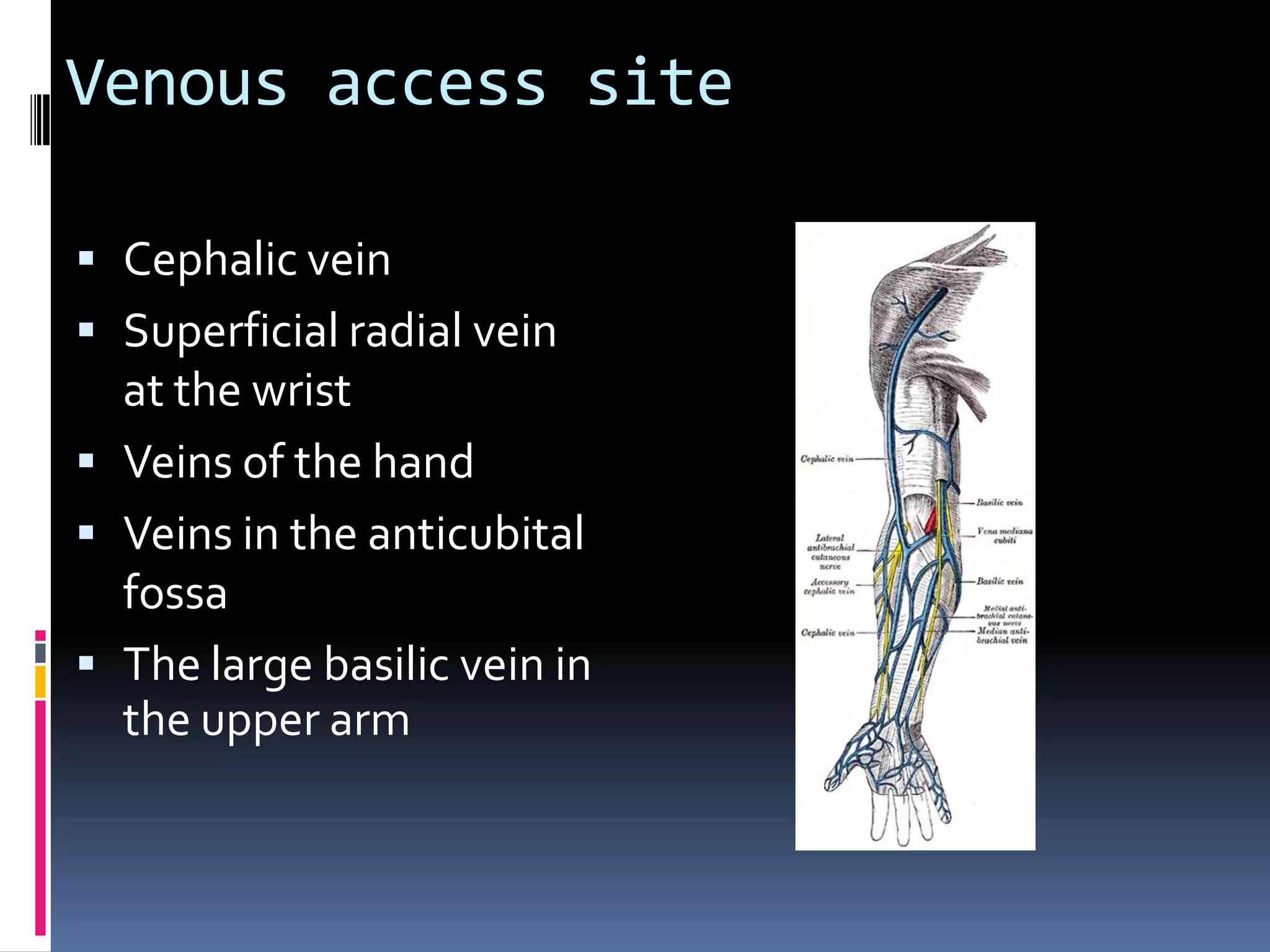
Venous access site

 Cephalic vein
 Superficial radial vein
  at the wrist
 Veins of the hand
 Veins in the anticubital
  fossa
 The large basilic vein in
  the upper arm
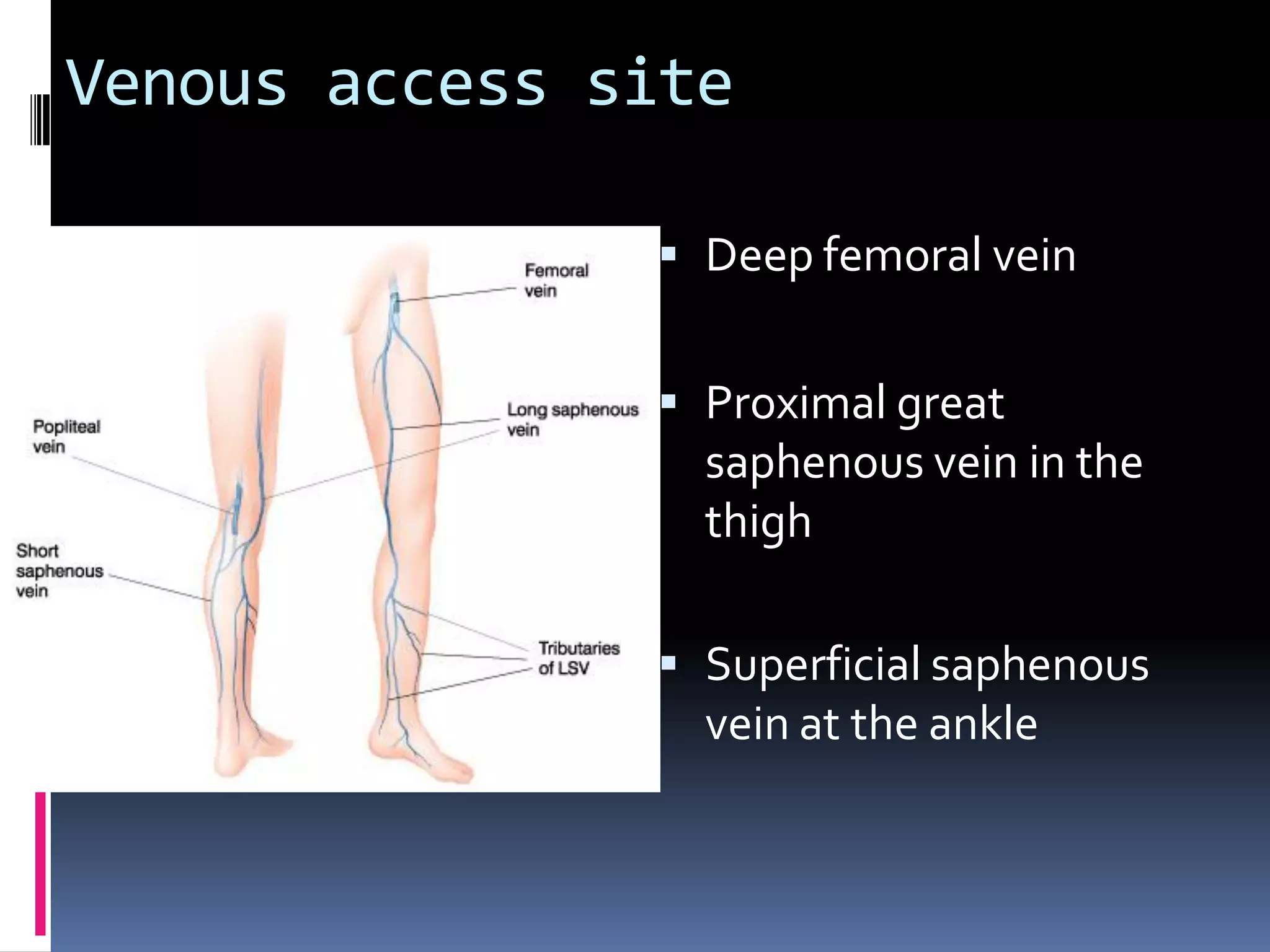
Venous access site

                Deep femoral vein


                Proximal great
                 saphenous vein in the
                 thigh

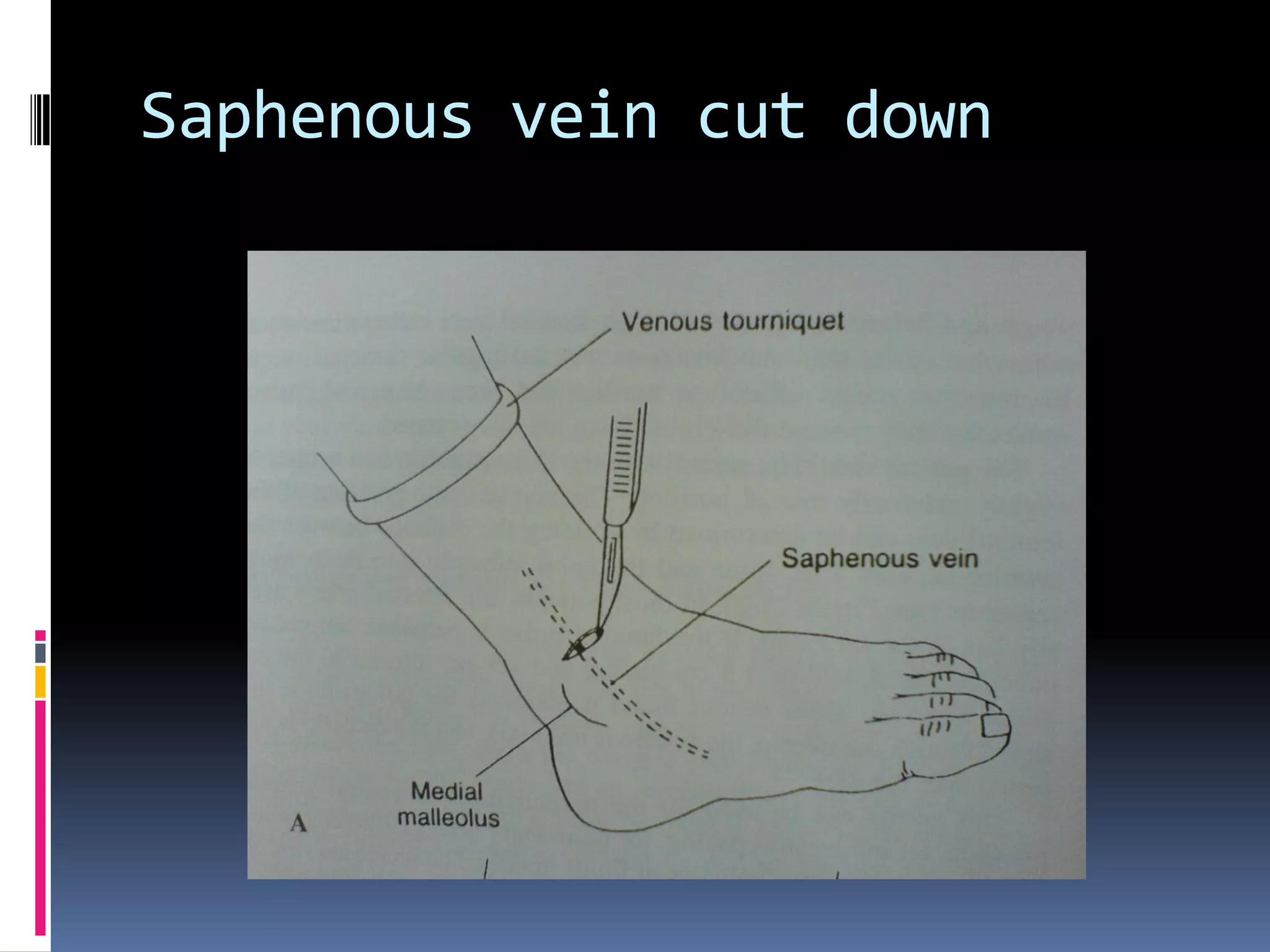
                Superficial saphenous
                 vein at the ankle
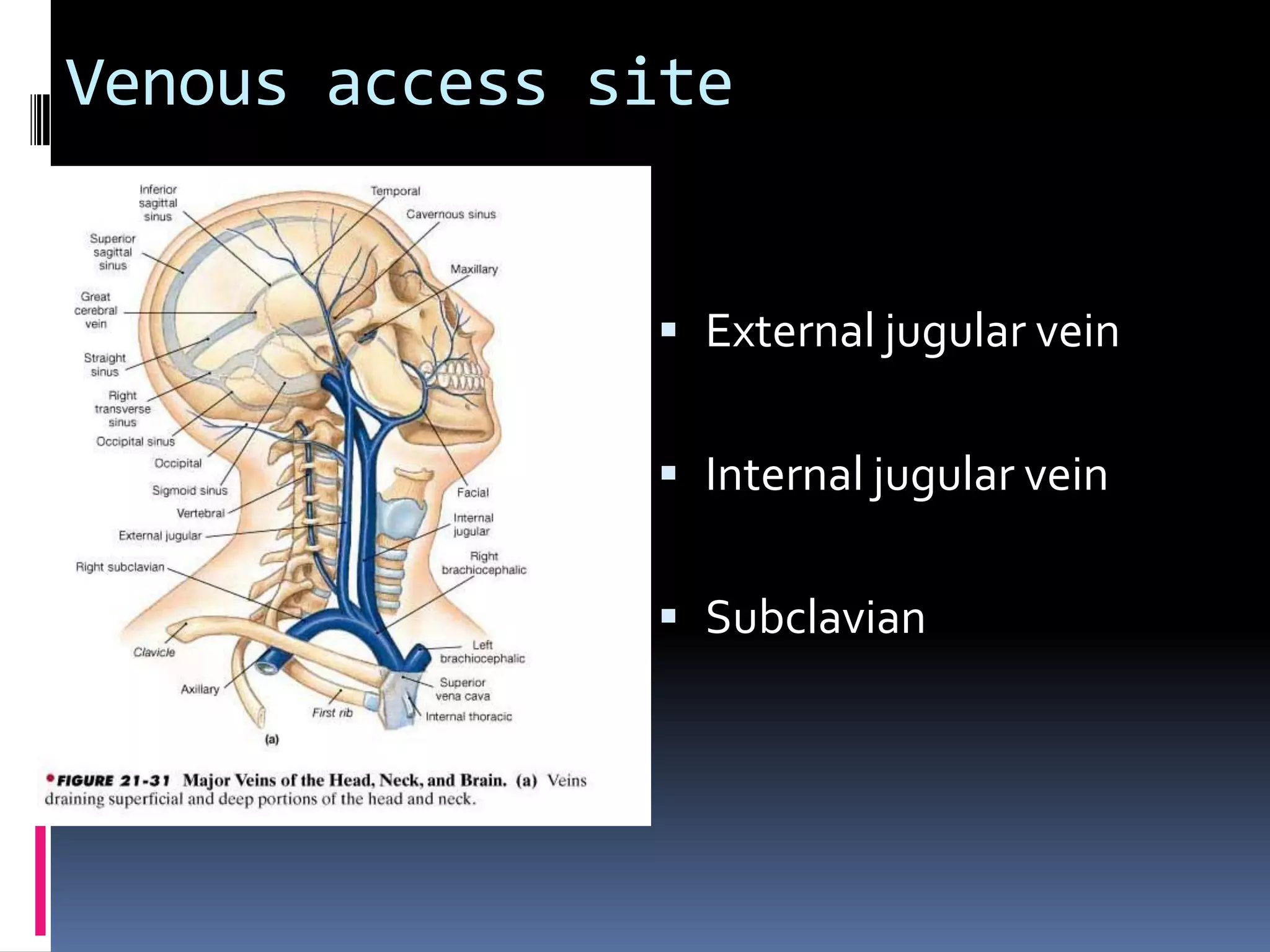
Venous access site


                External jugular vein


                Internal jugular vein


                Subclavian
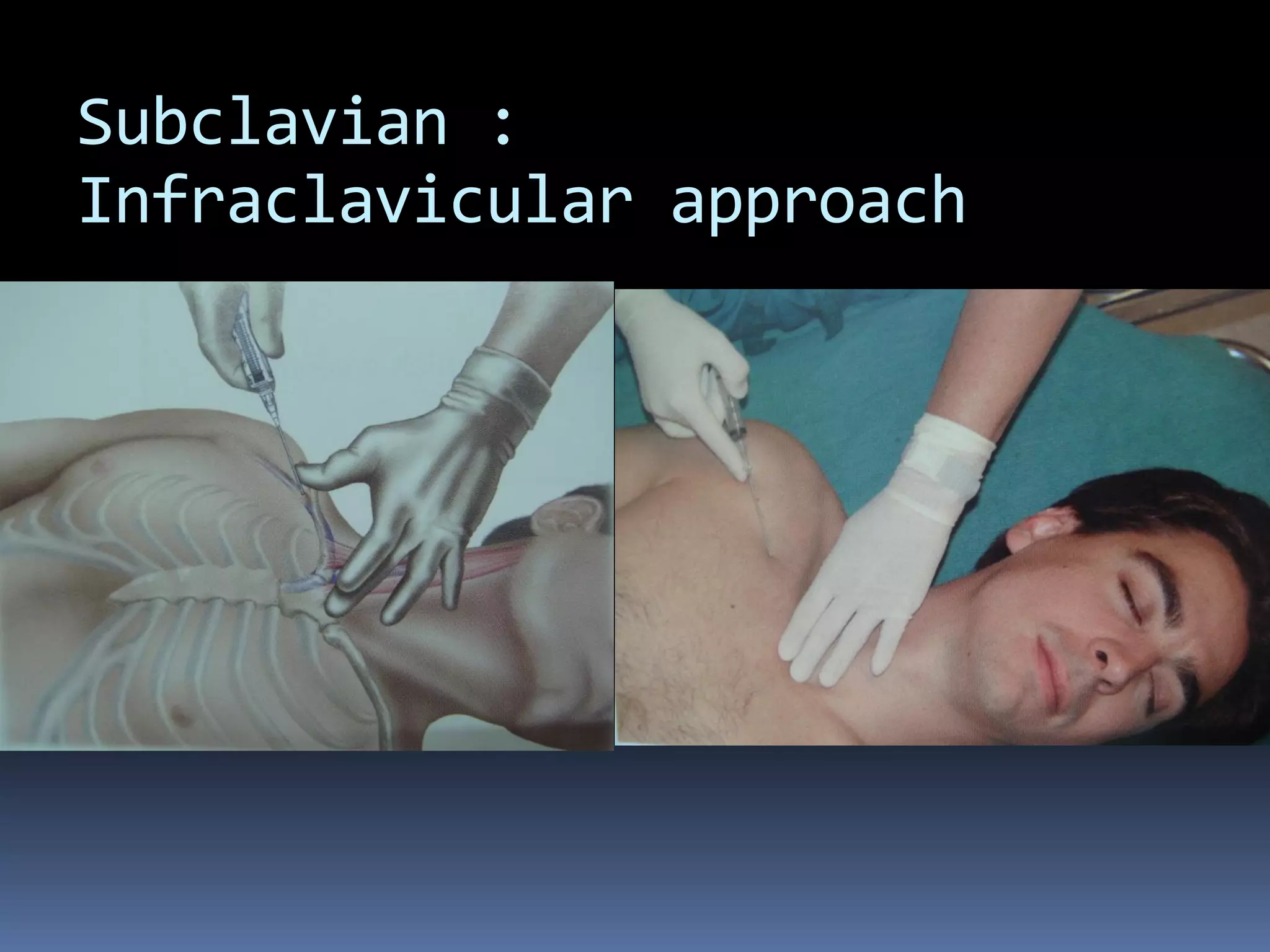
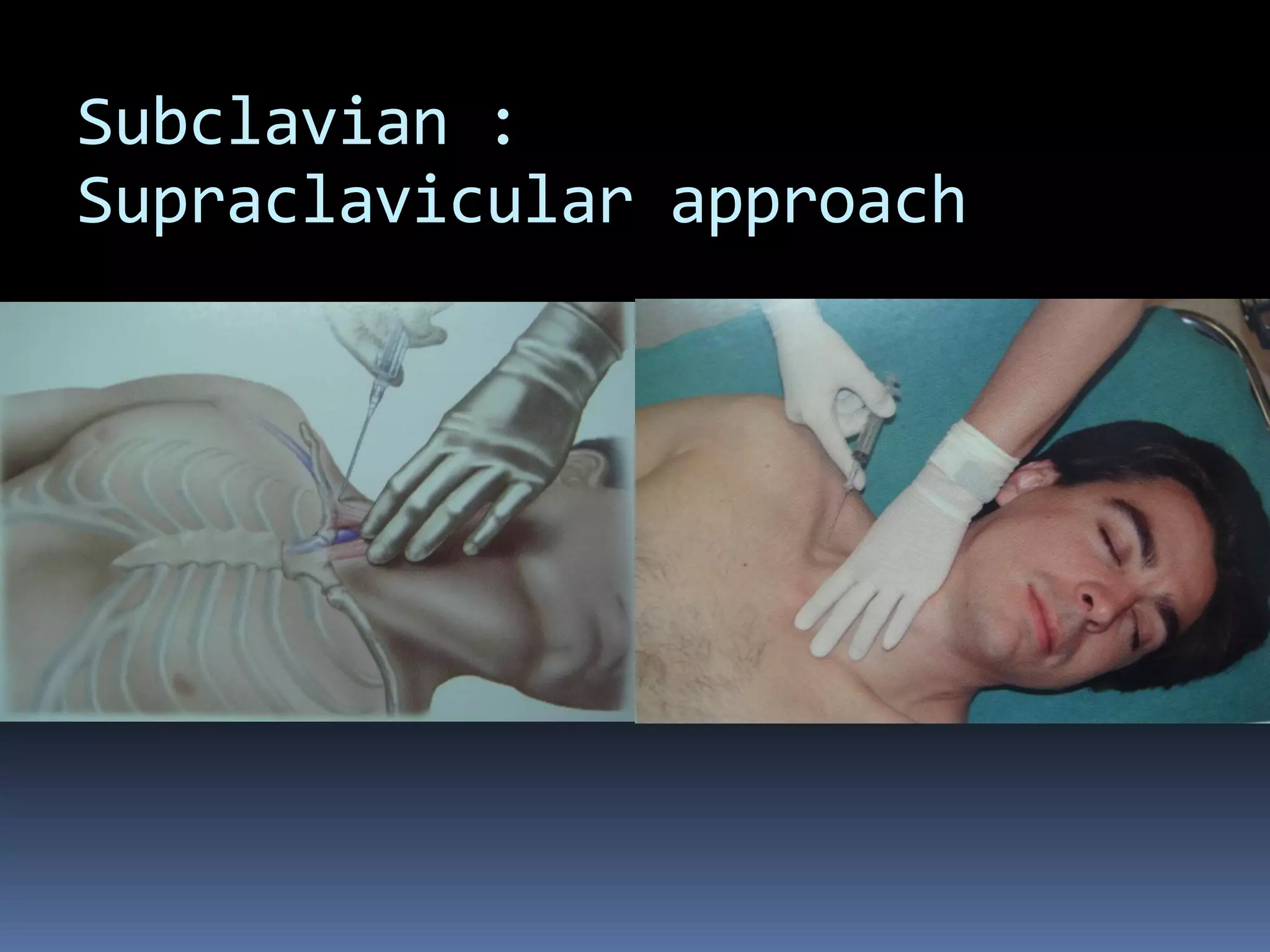
APPROACH
Subclavian :
Infraclavicular approach
Subclavian :
Supraclavicular approach
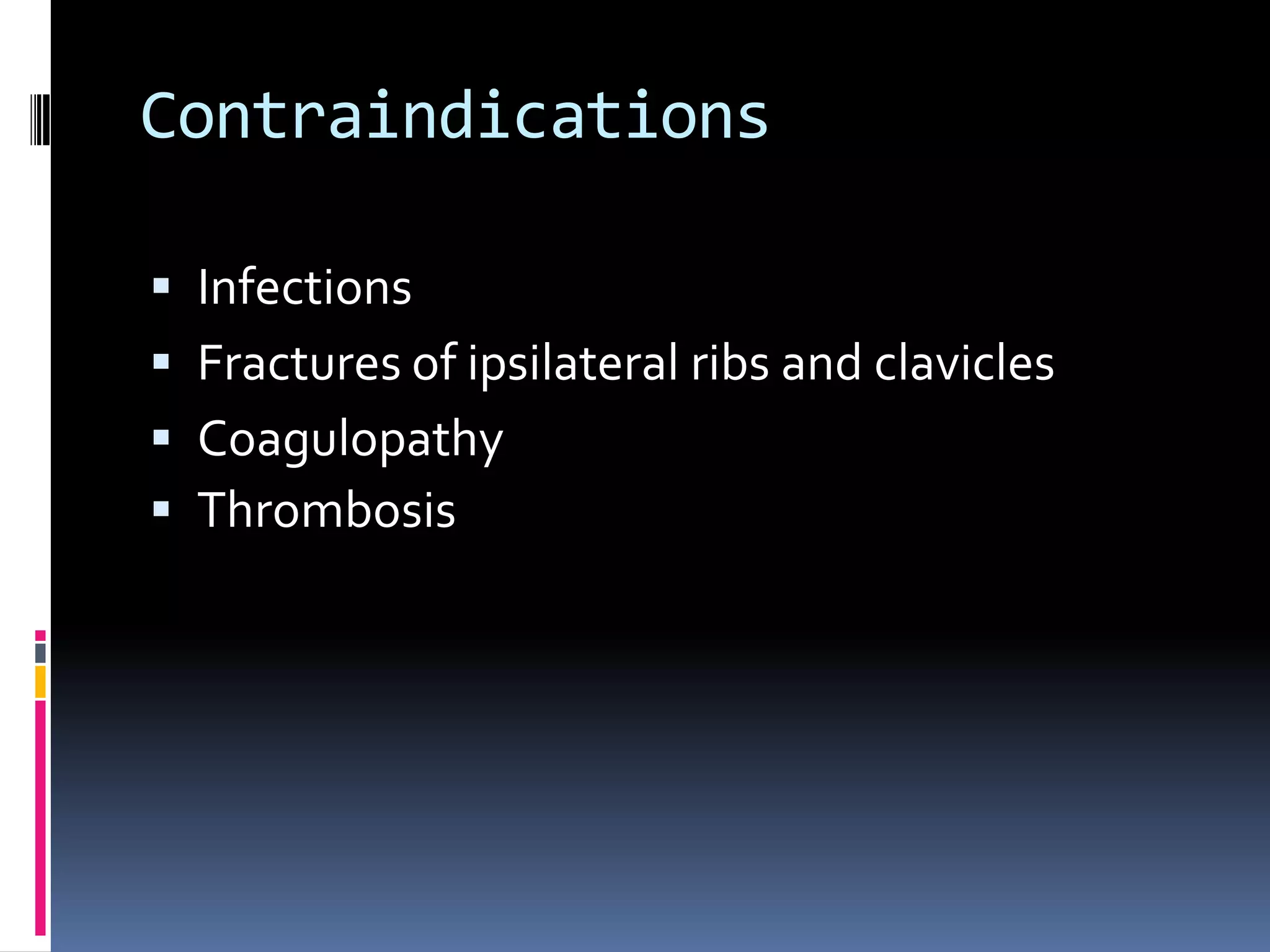
Contraindications

 Infections
 Fractures of ipsilateral ribs and clavicles
 Coagulopathy
 Thrombosis
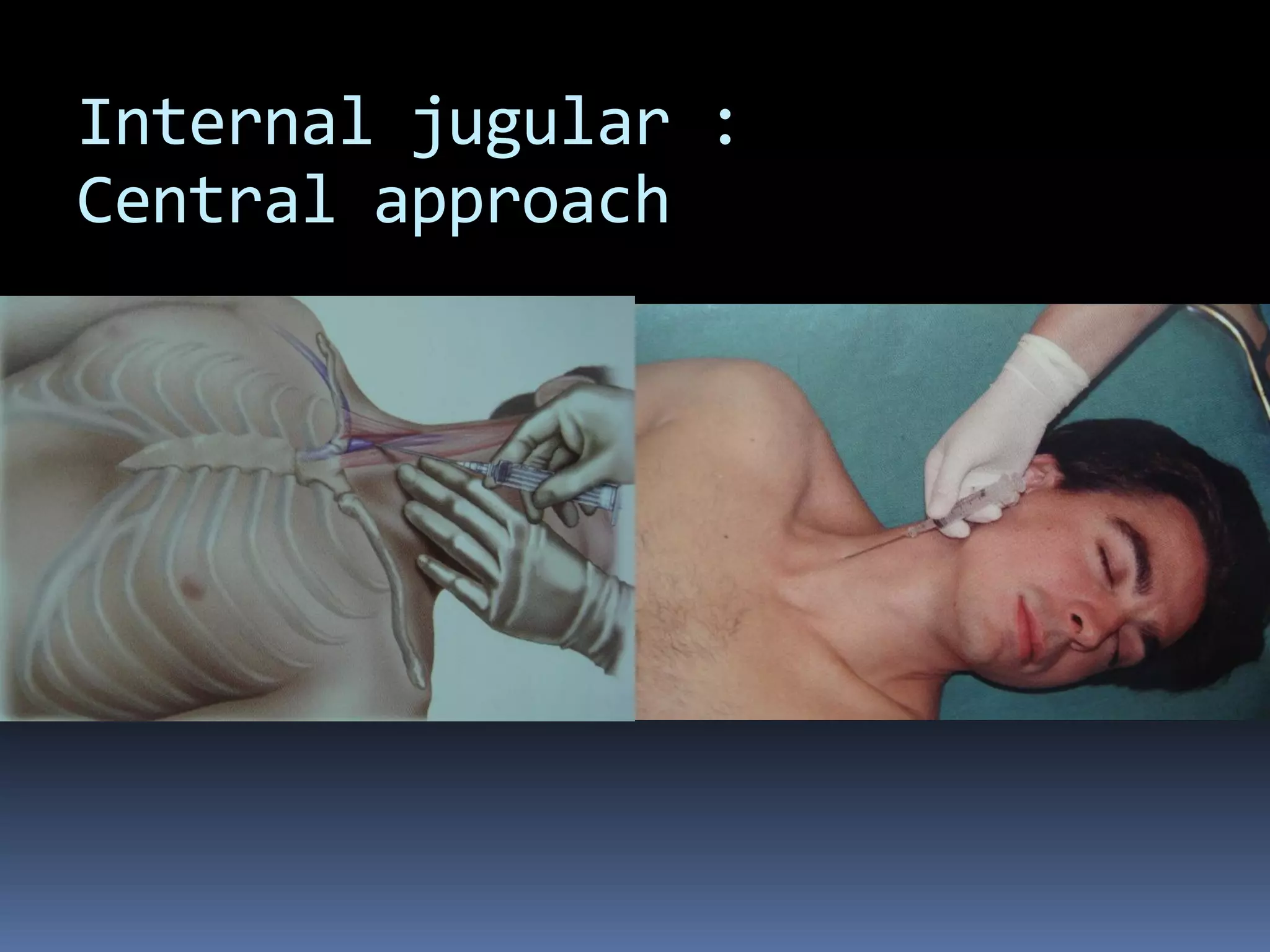
Internal jugular :
Central approach
Internal jugular :
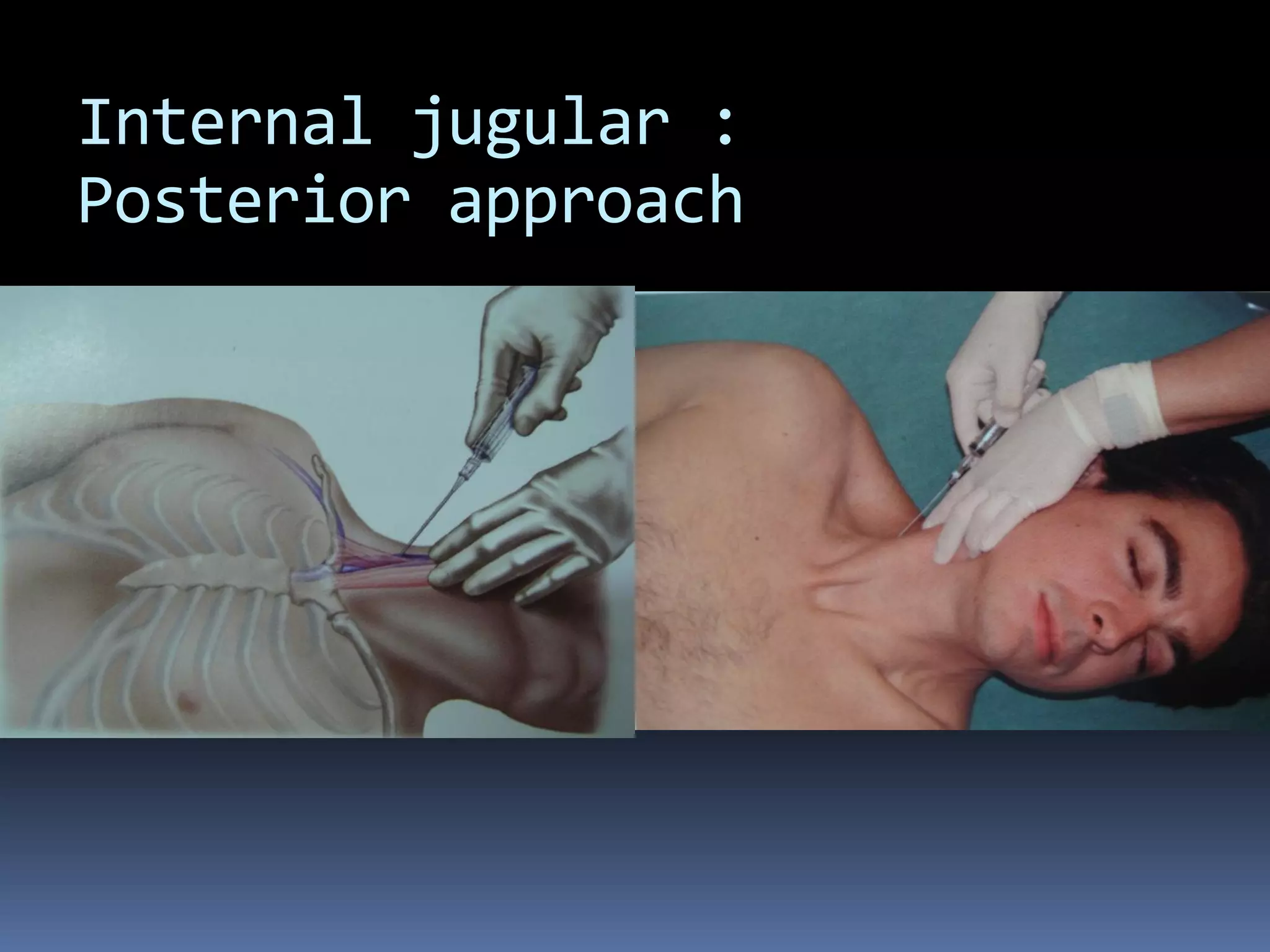
Posterior approach
Internal jugular :
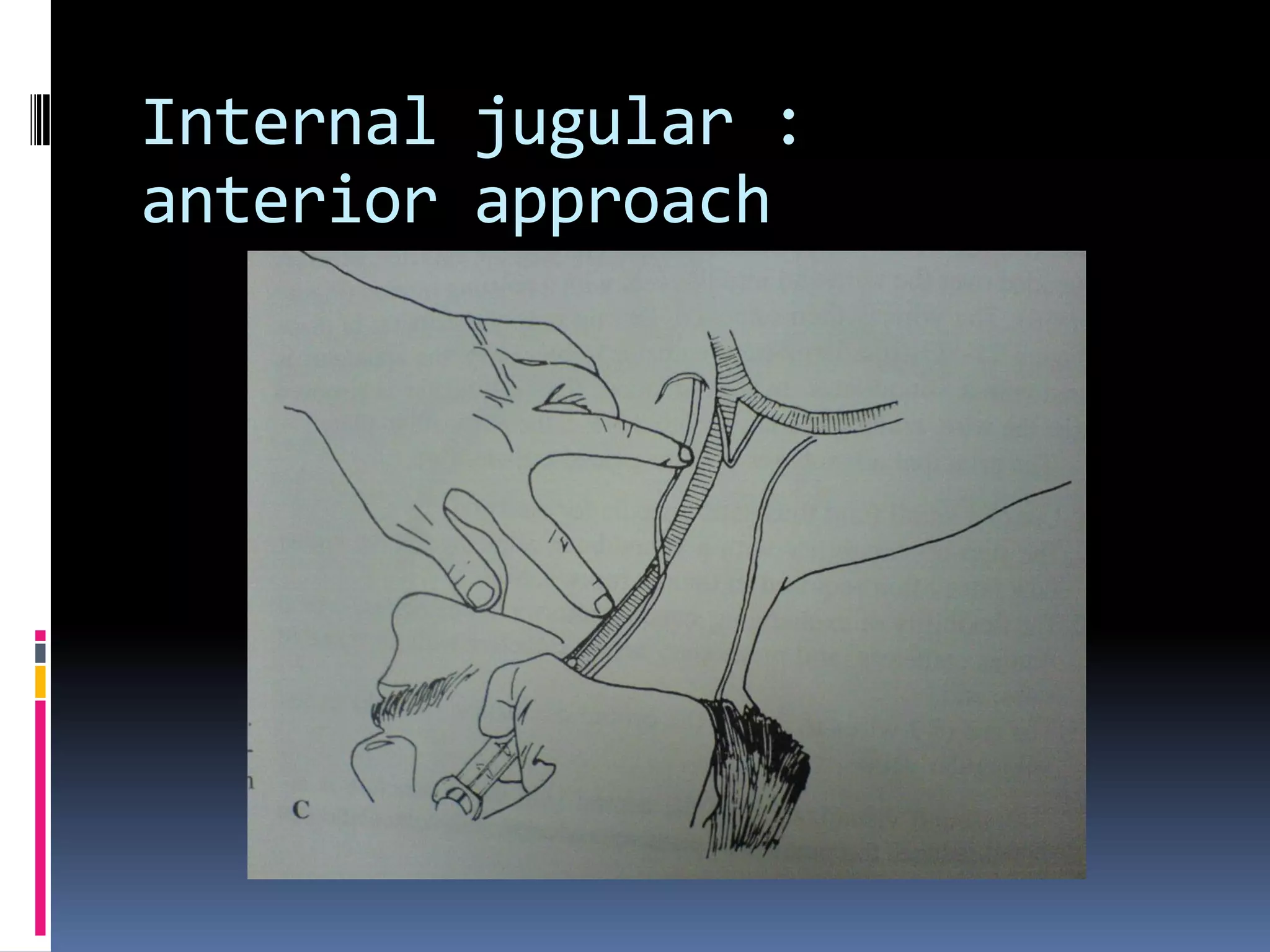
anterior approach
Contraindications

 Infections
 Thrombosis
 Coagulopathy “
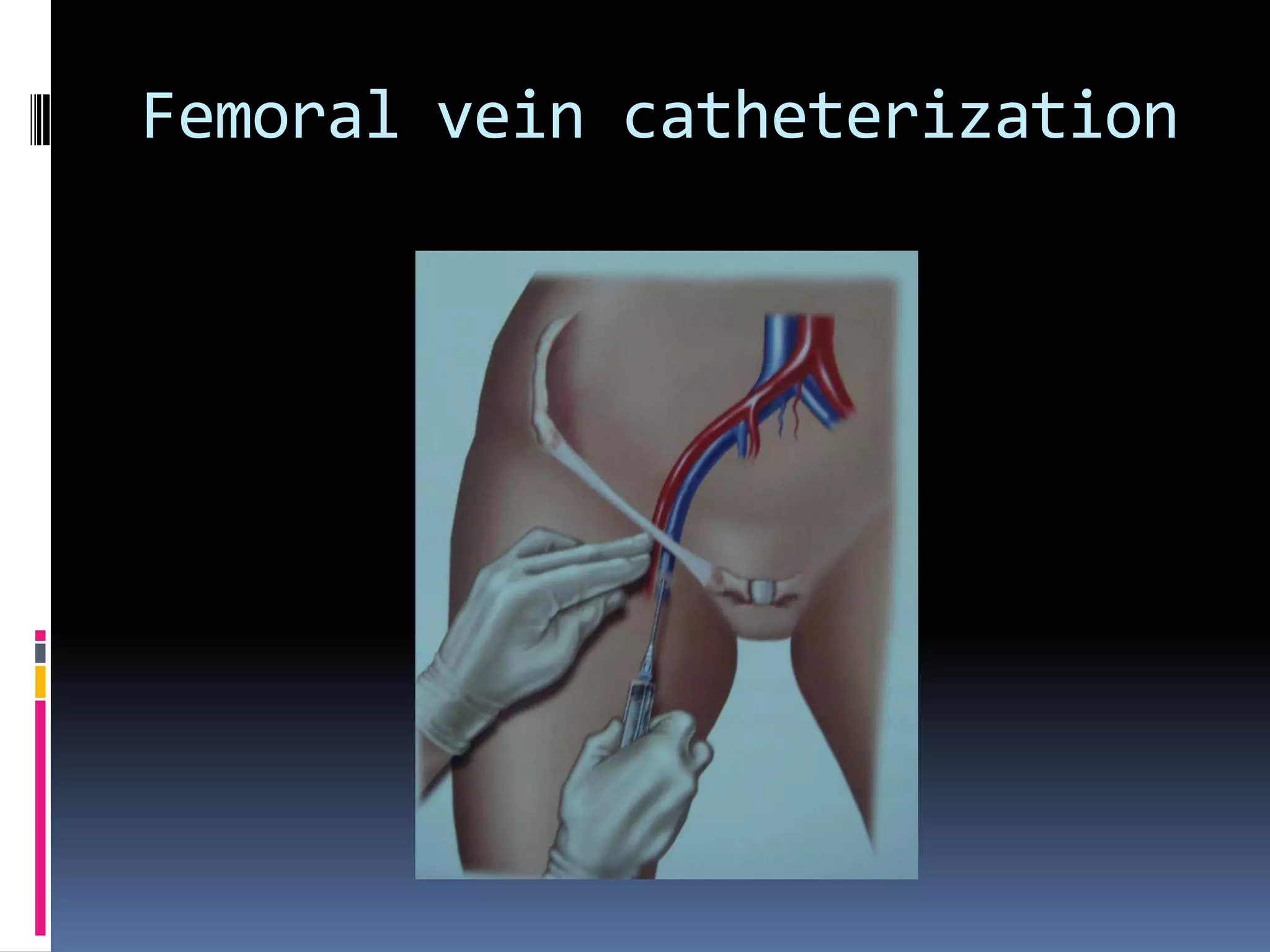
Femoral vein catheterization
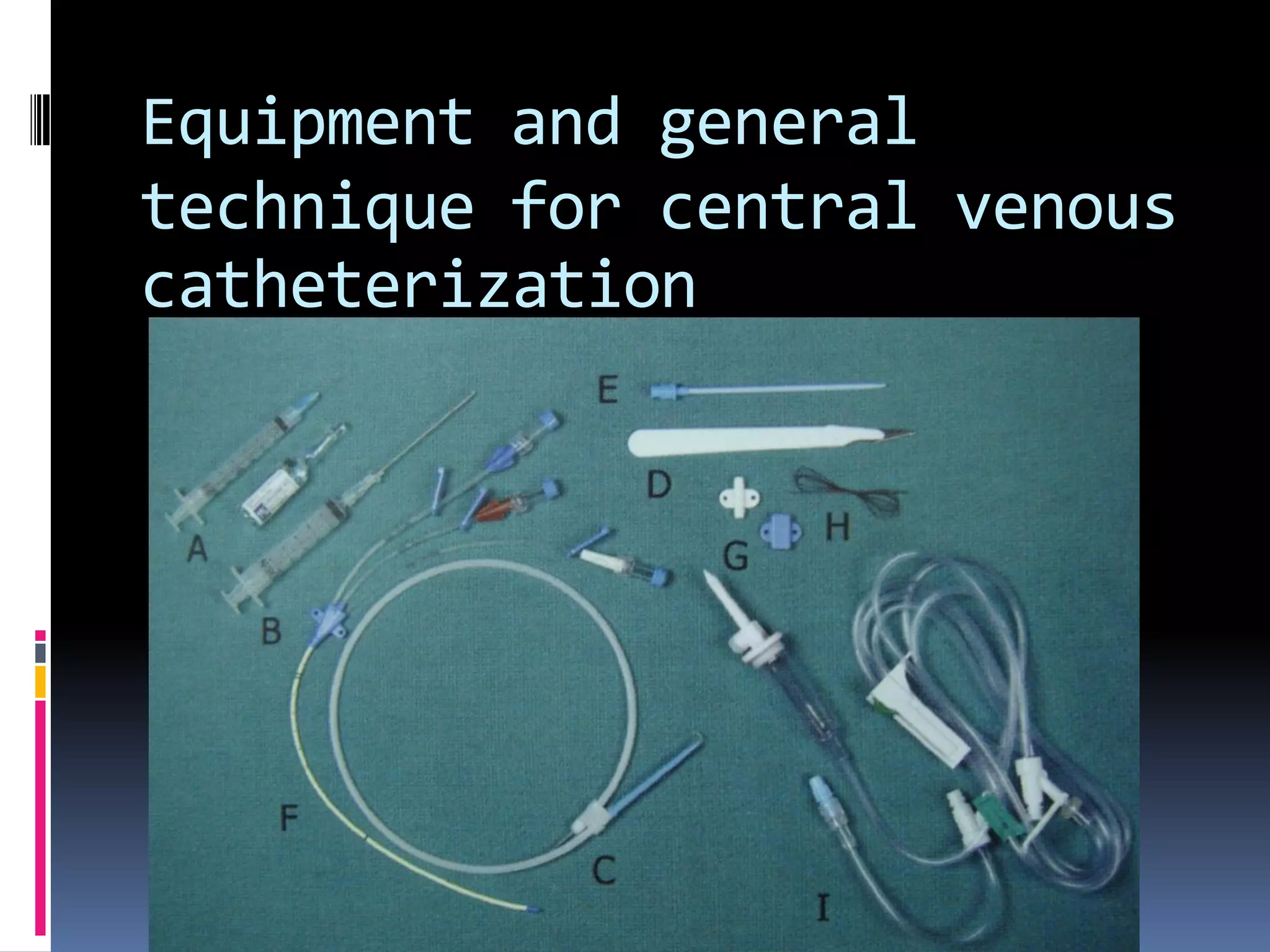
Equipment and general
technique for central venous
catheterization
TEACHNIQUE
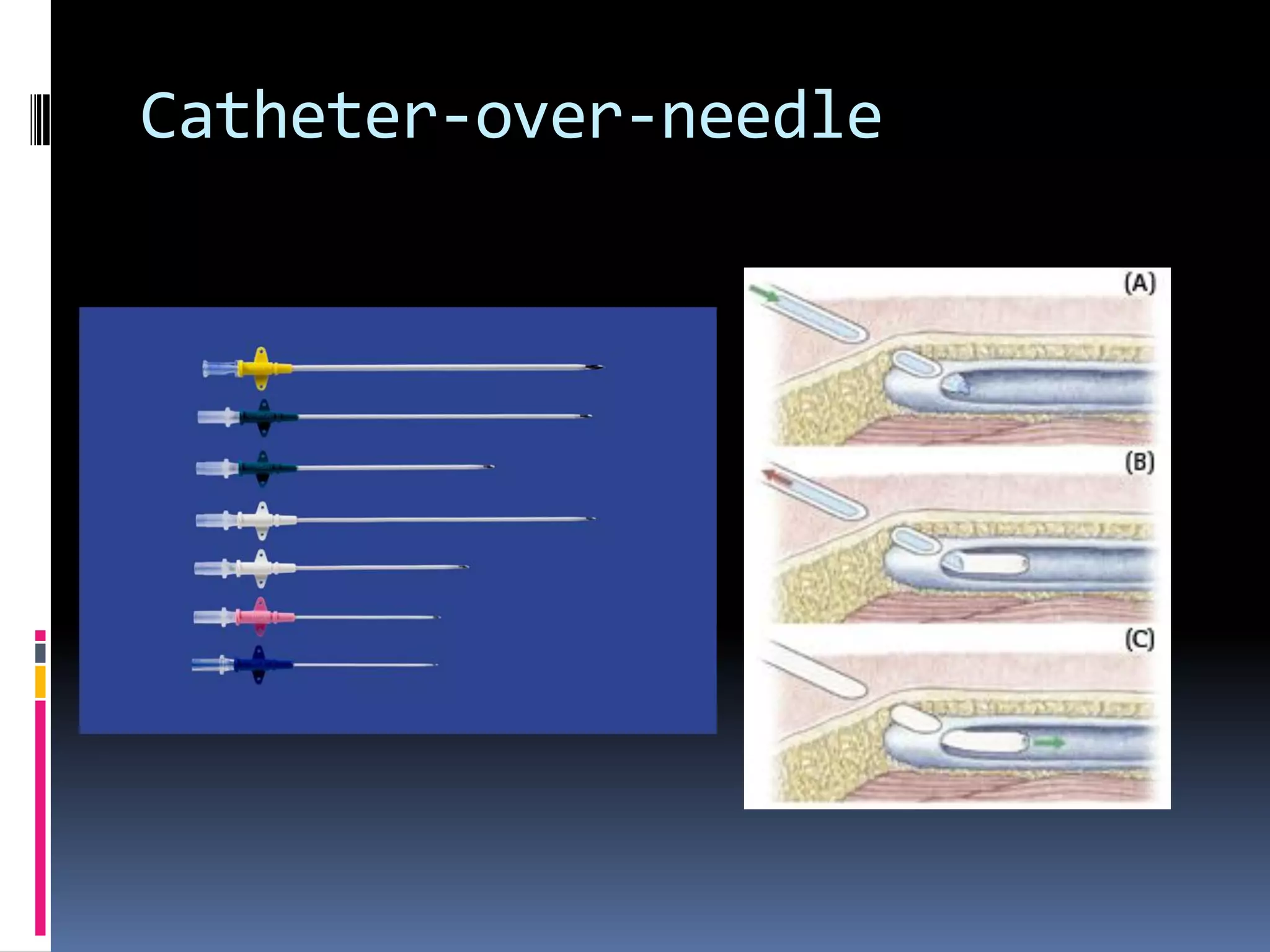
Catheter-over-needle
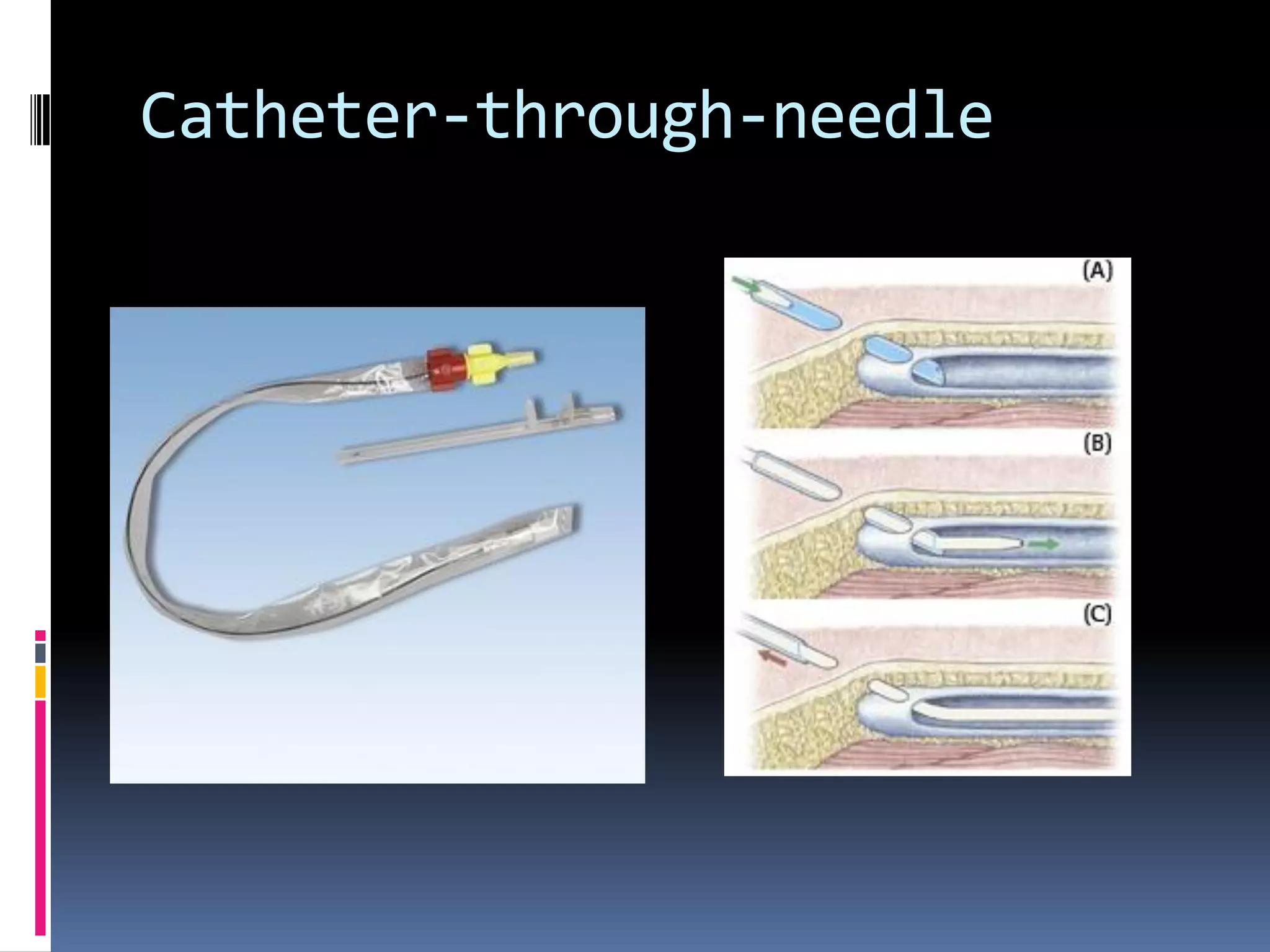
Catheter-through-needle
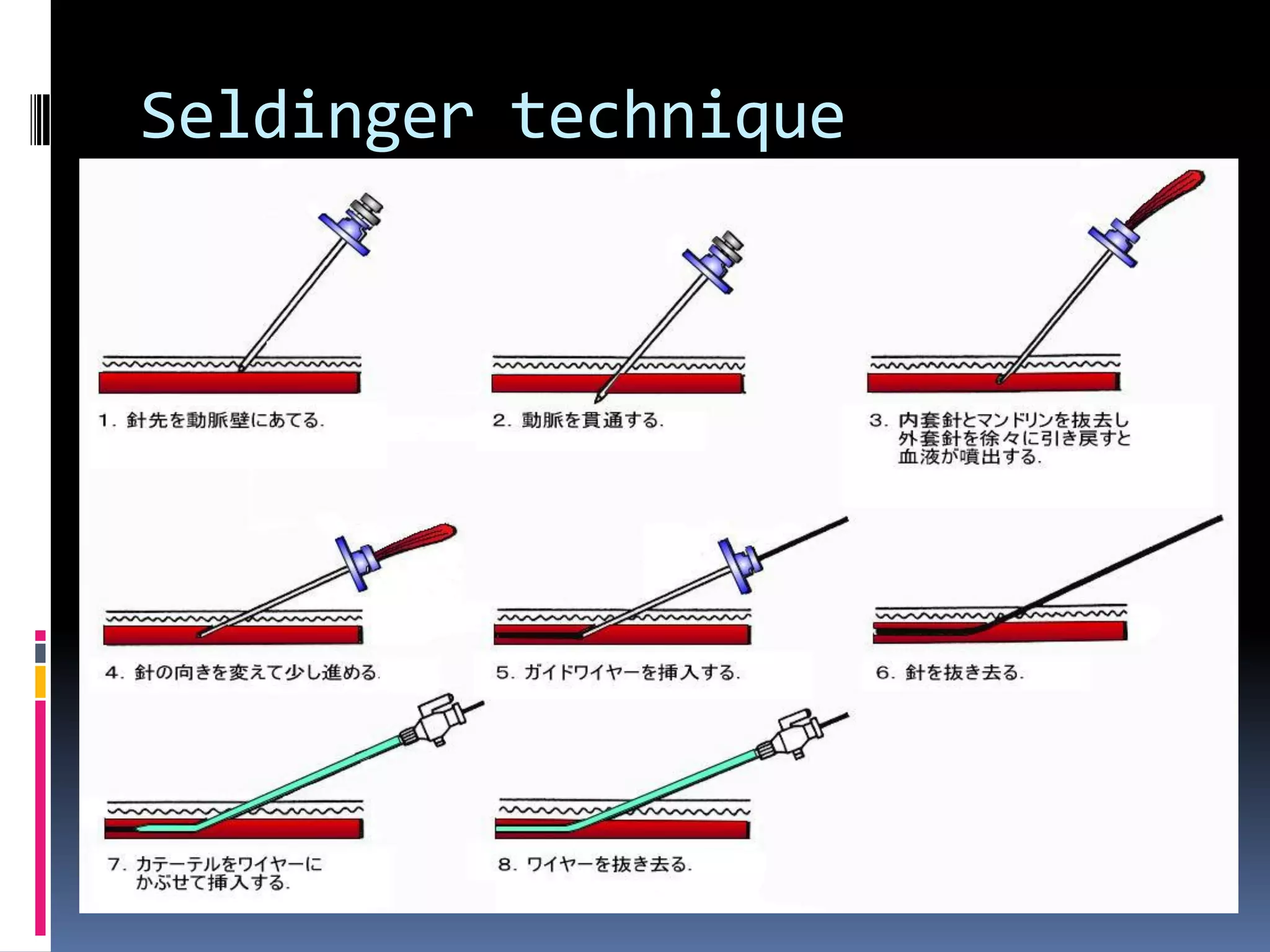
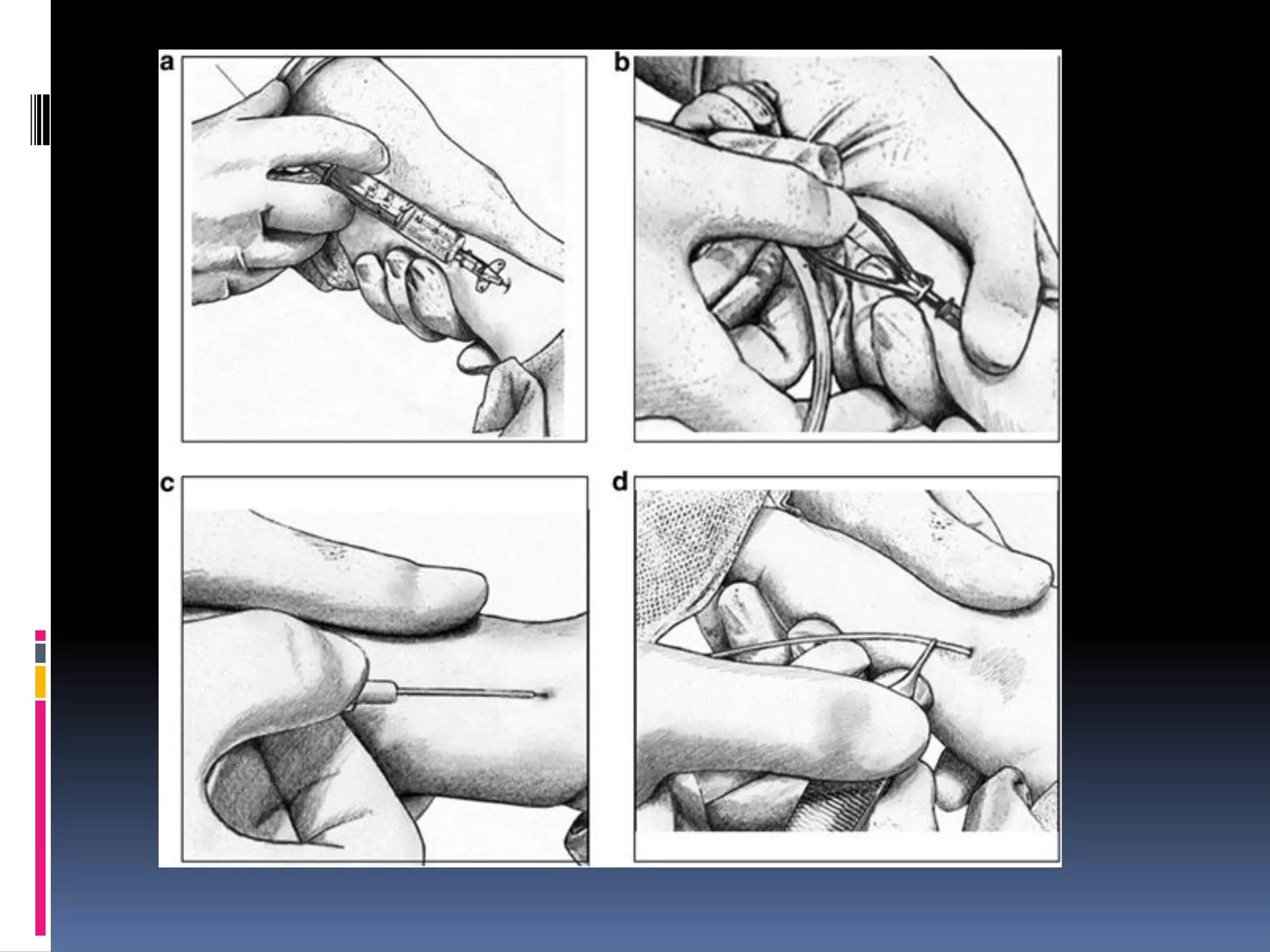
Seldinger technique
Seldinger technique

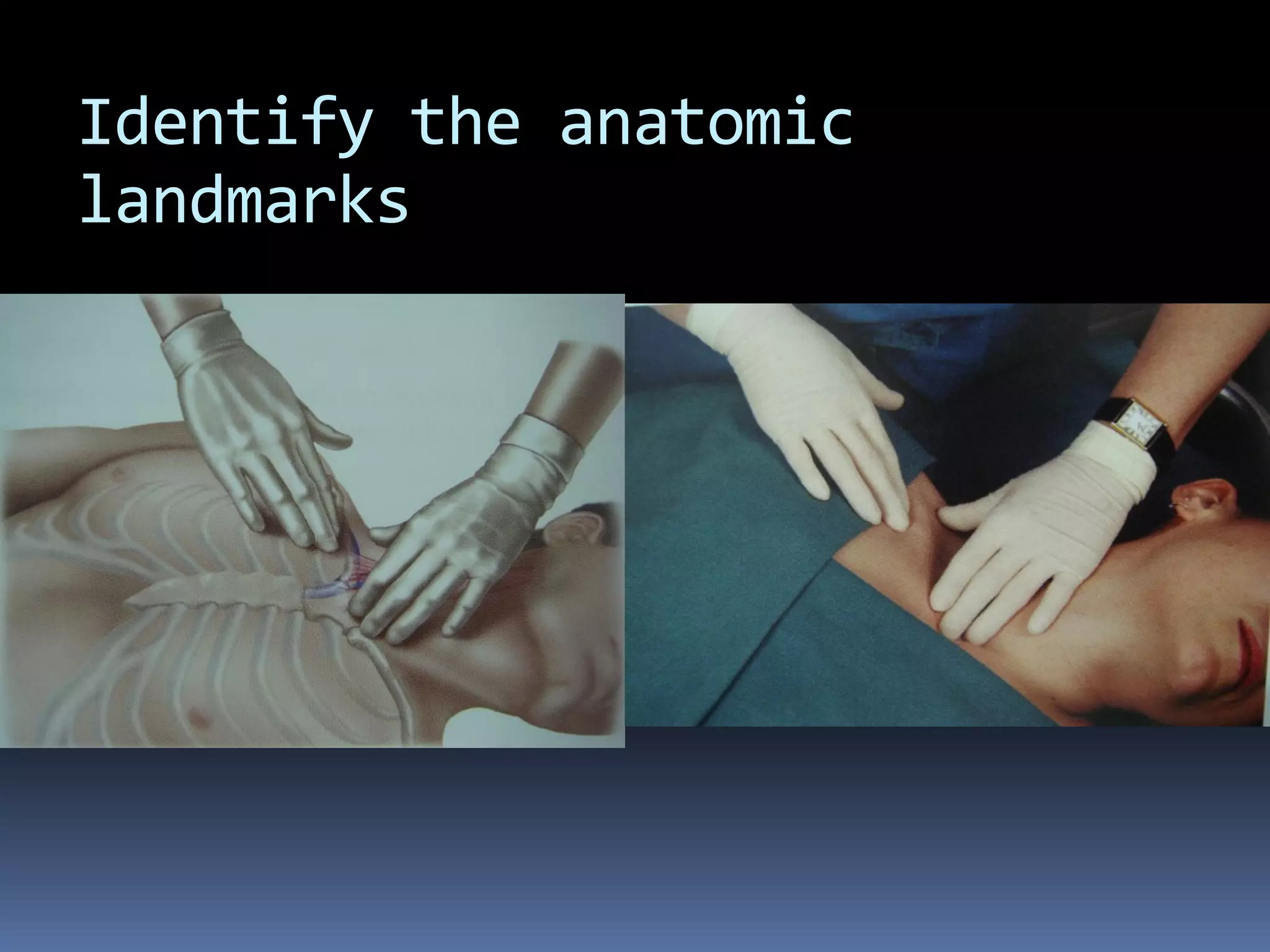
   Subclavian Infraclavicular approach
Identify the anatomic
landmarks
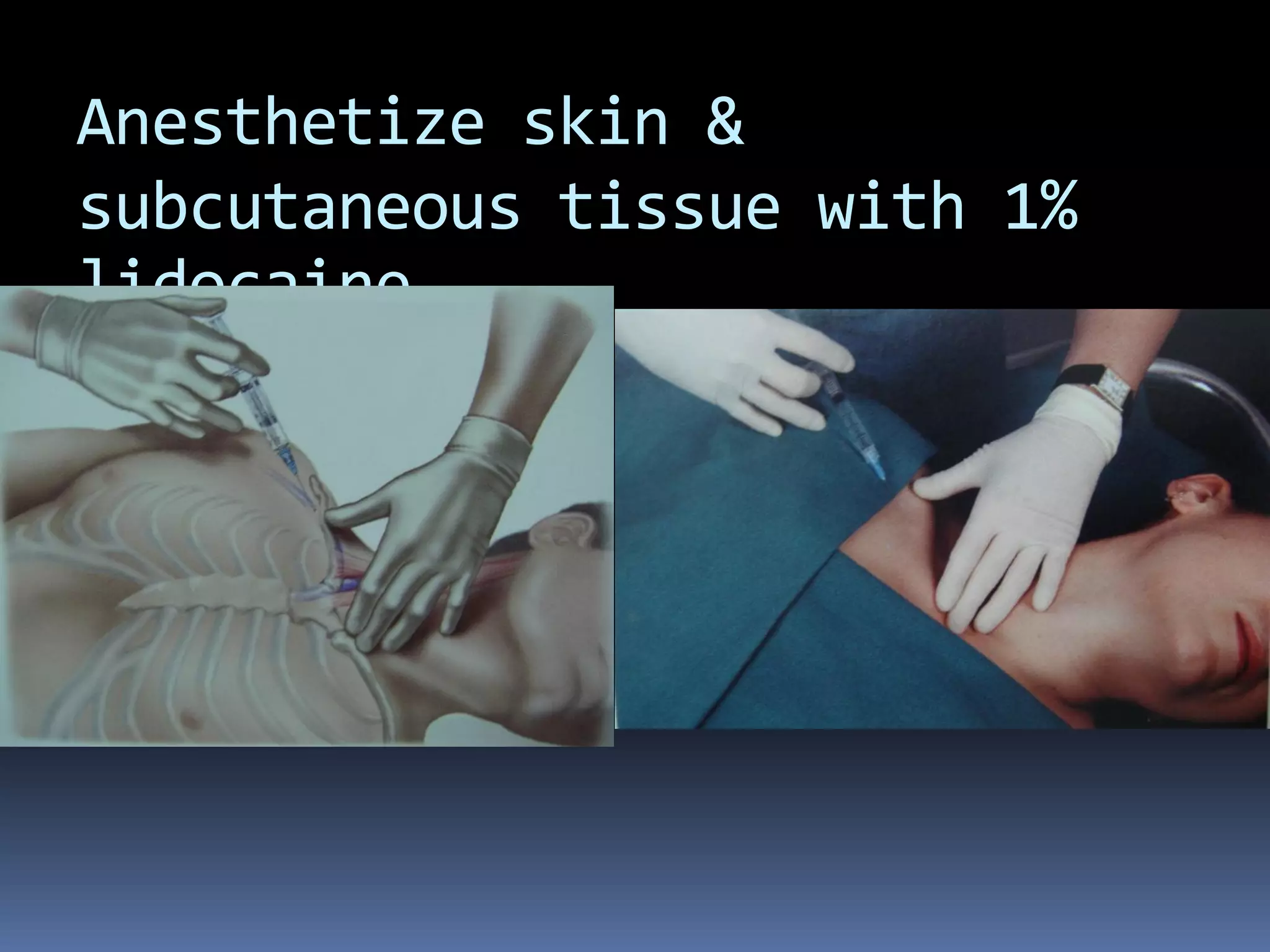
Anesthetize skin &
subcutaneous tissue with 1%
lidocaine.
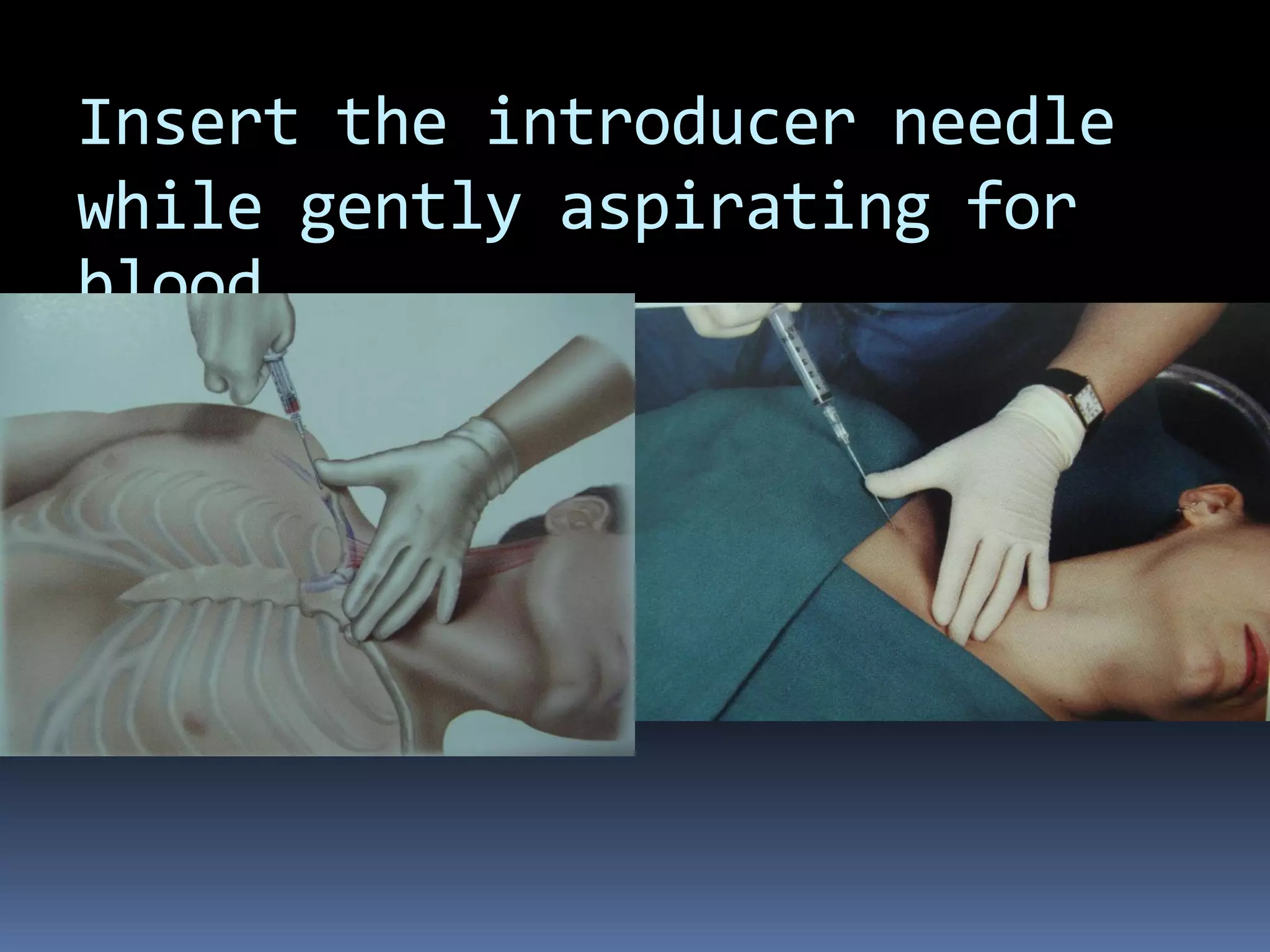
Insert the introducer needle
while gently aspirating for
blood.
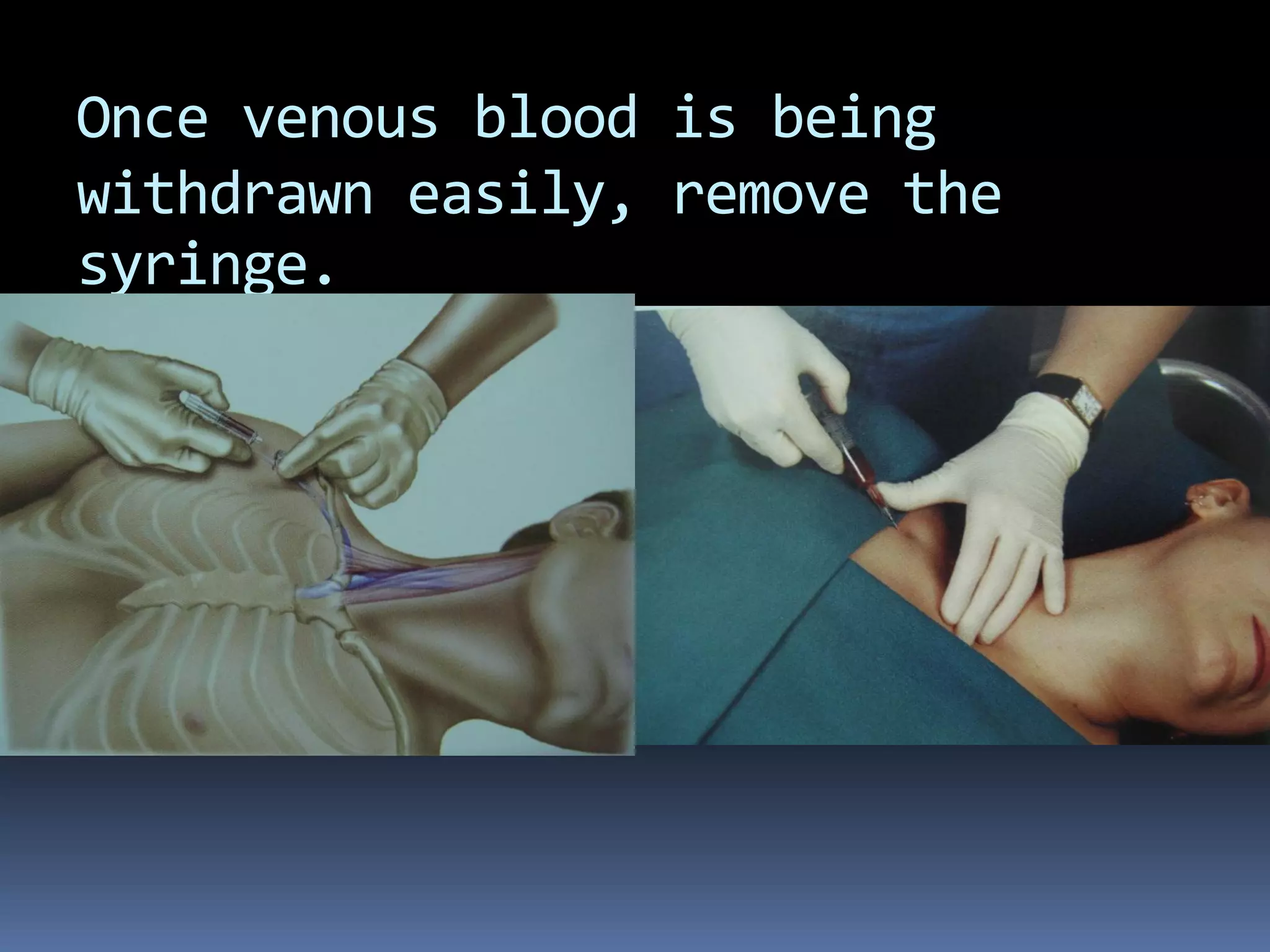
Once venous blood is being
withdrawn easily, remove the
syringe.
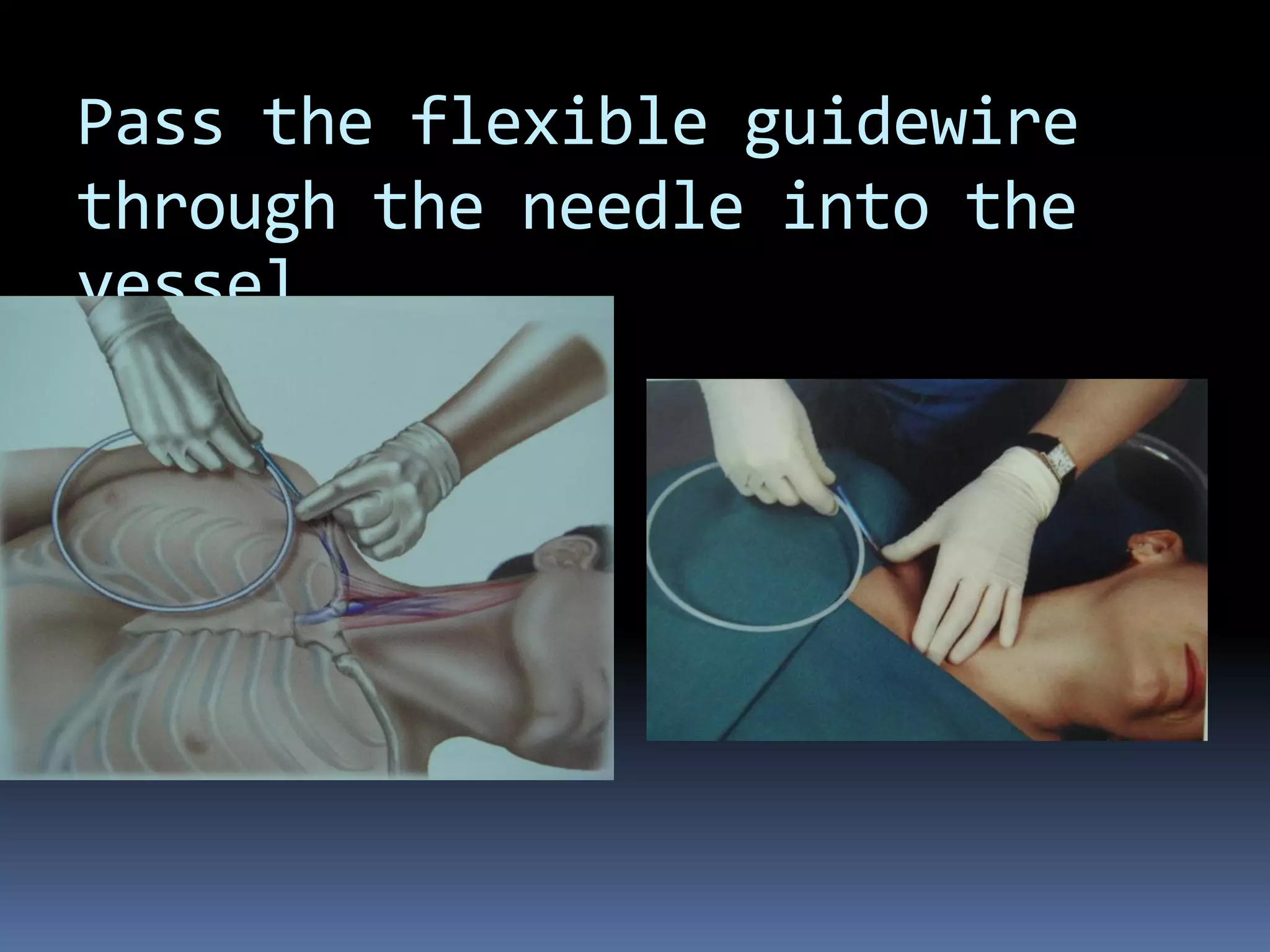
Pass the flexible guidewire
through the needle into the
vessel.
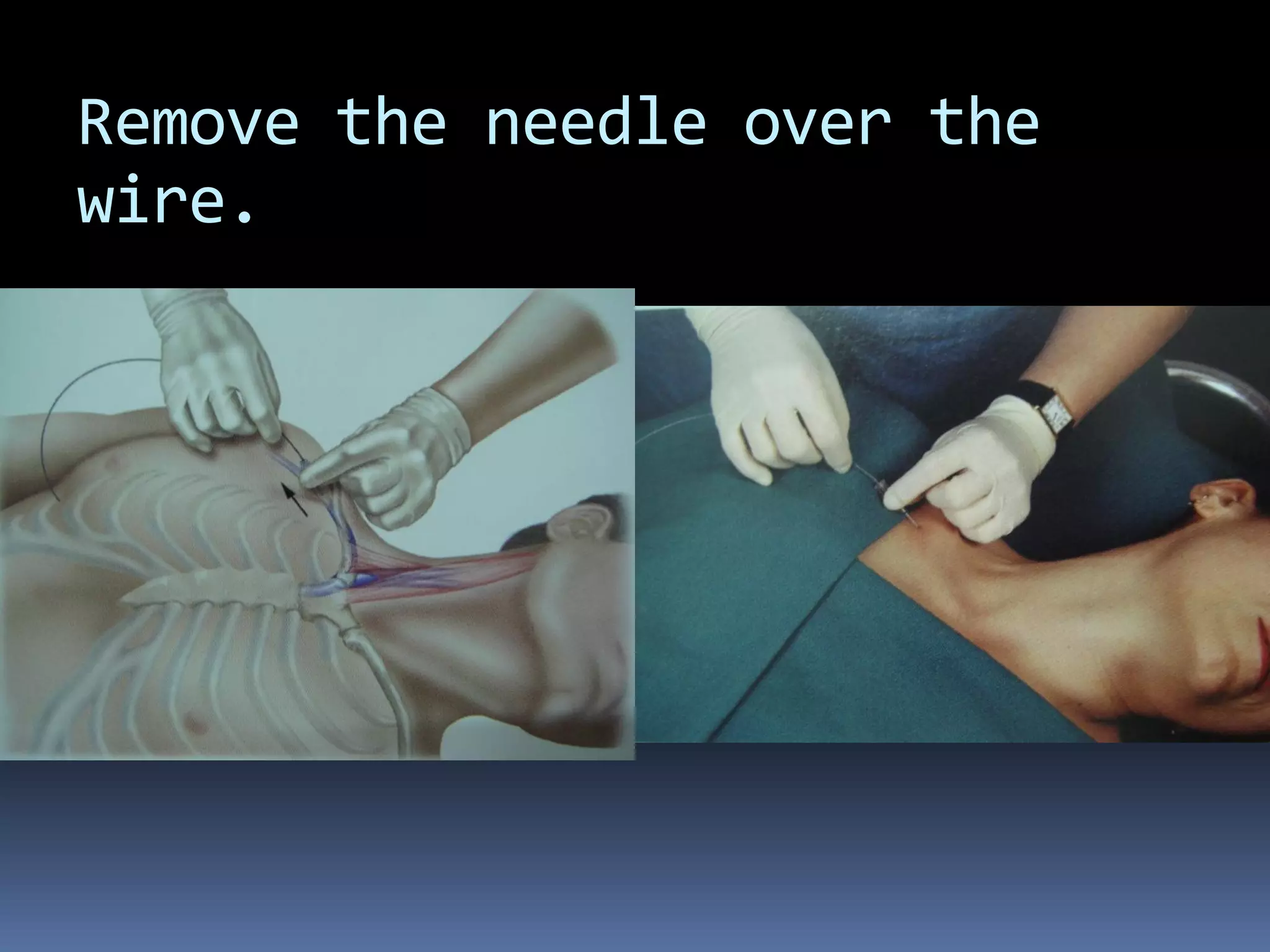
Remove the needle over the
wire.
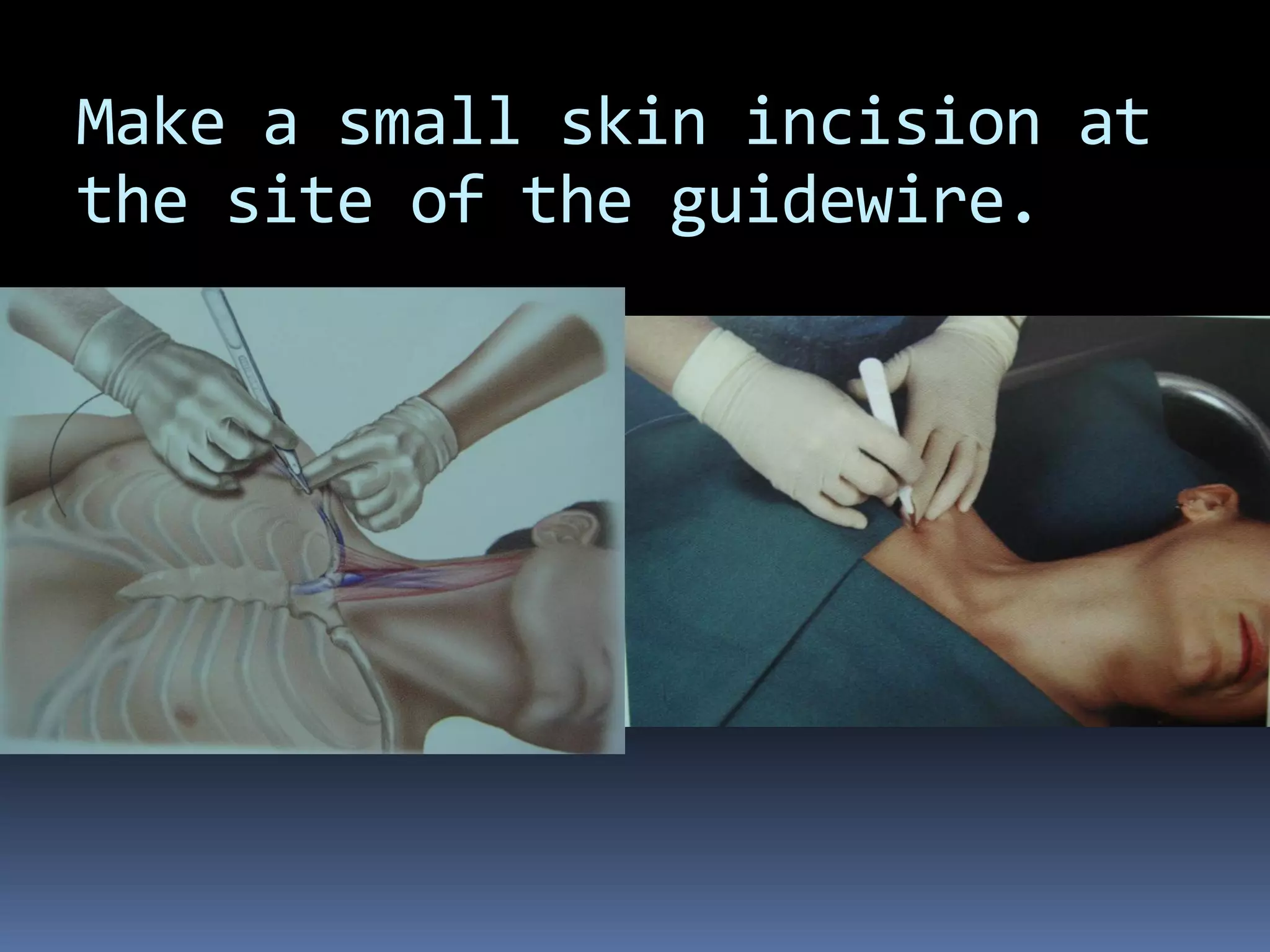
Make a small skin incision at
the site of the guidewire.
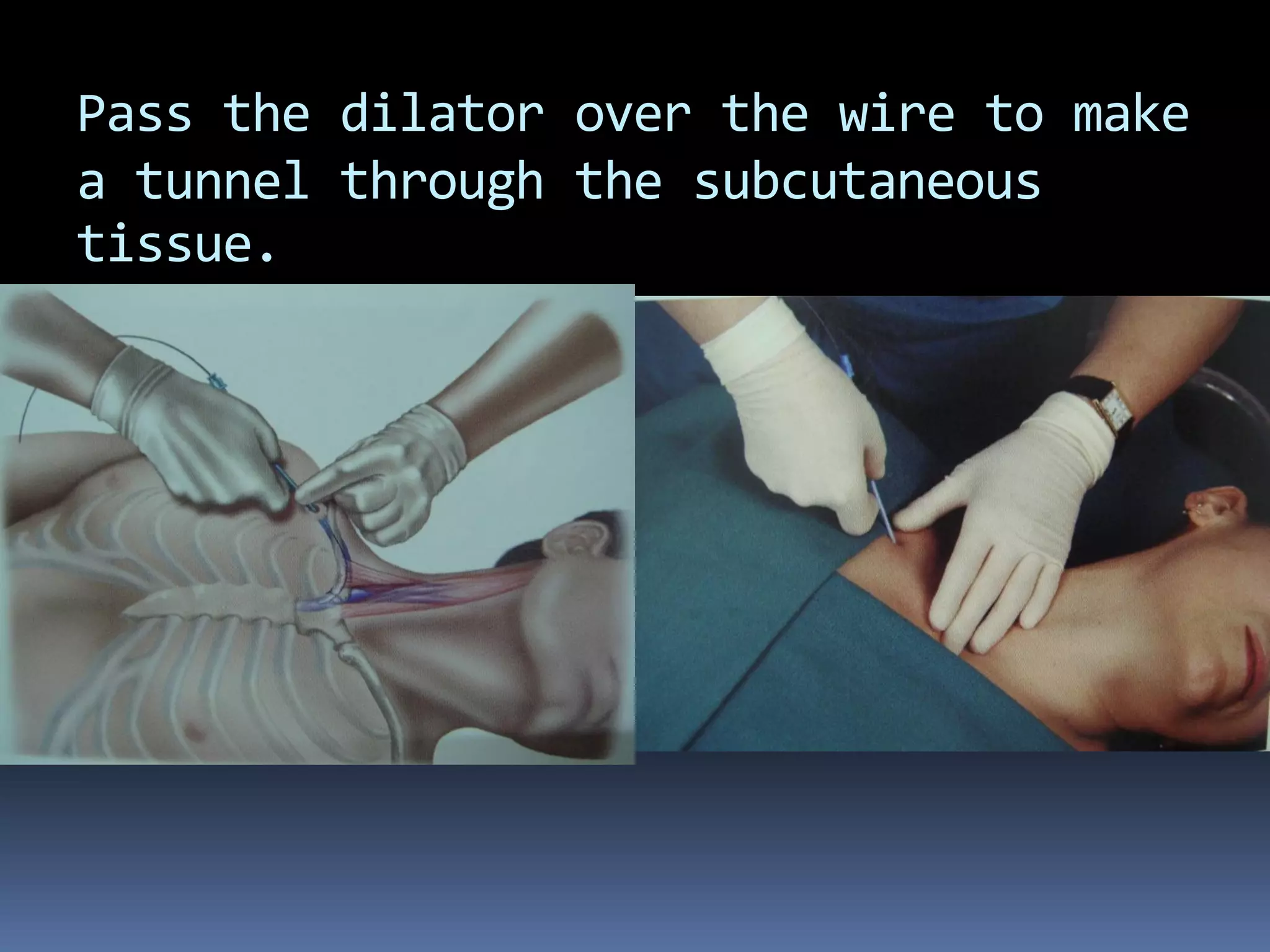
Pass the dilator over the wire to make
a tunnel through the subcutaneous
tissue.
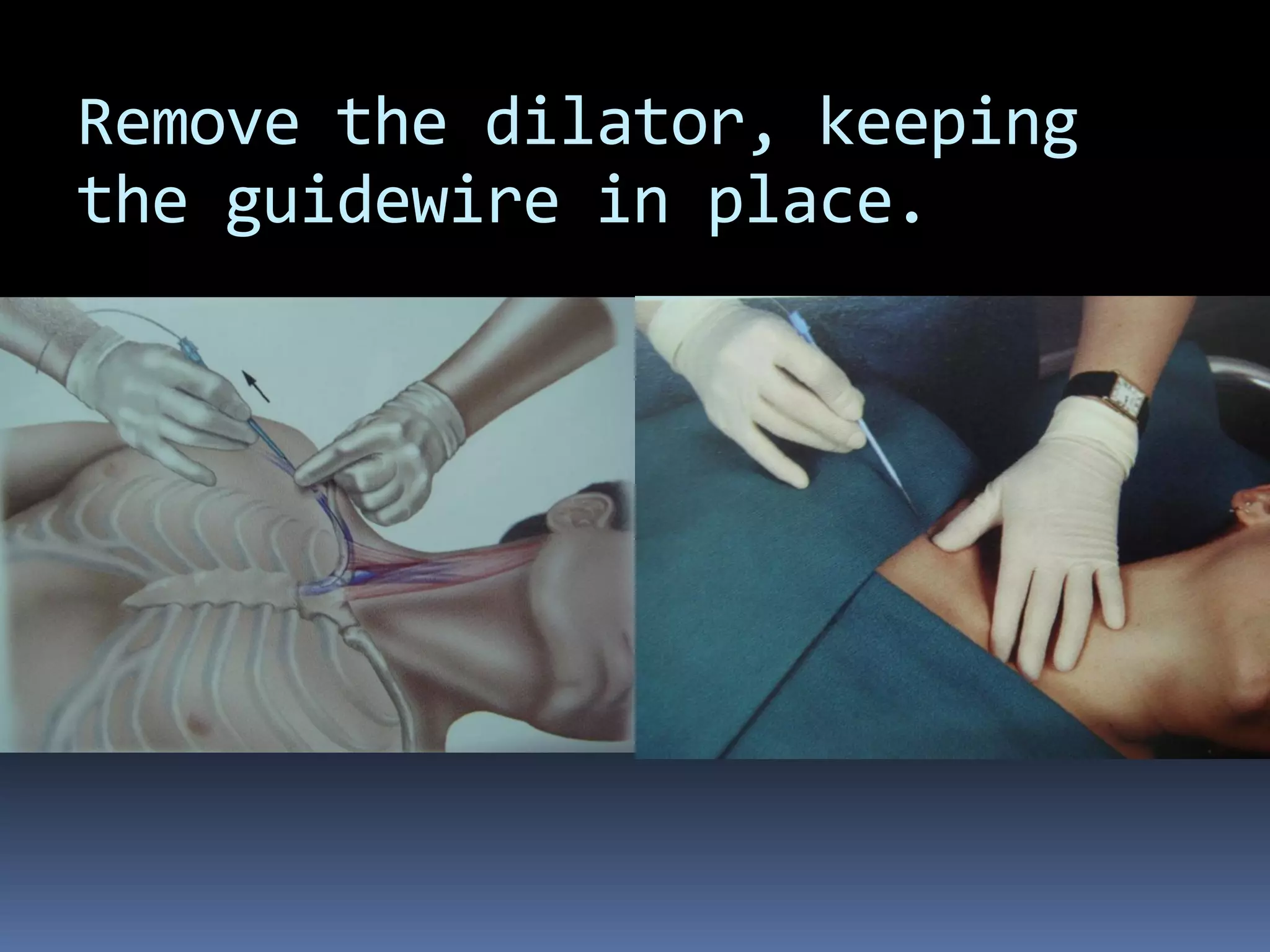
Remove the dilator, keeping
the guidewire in place.
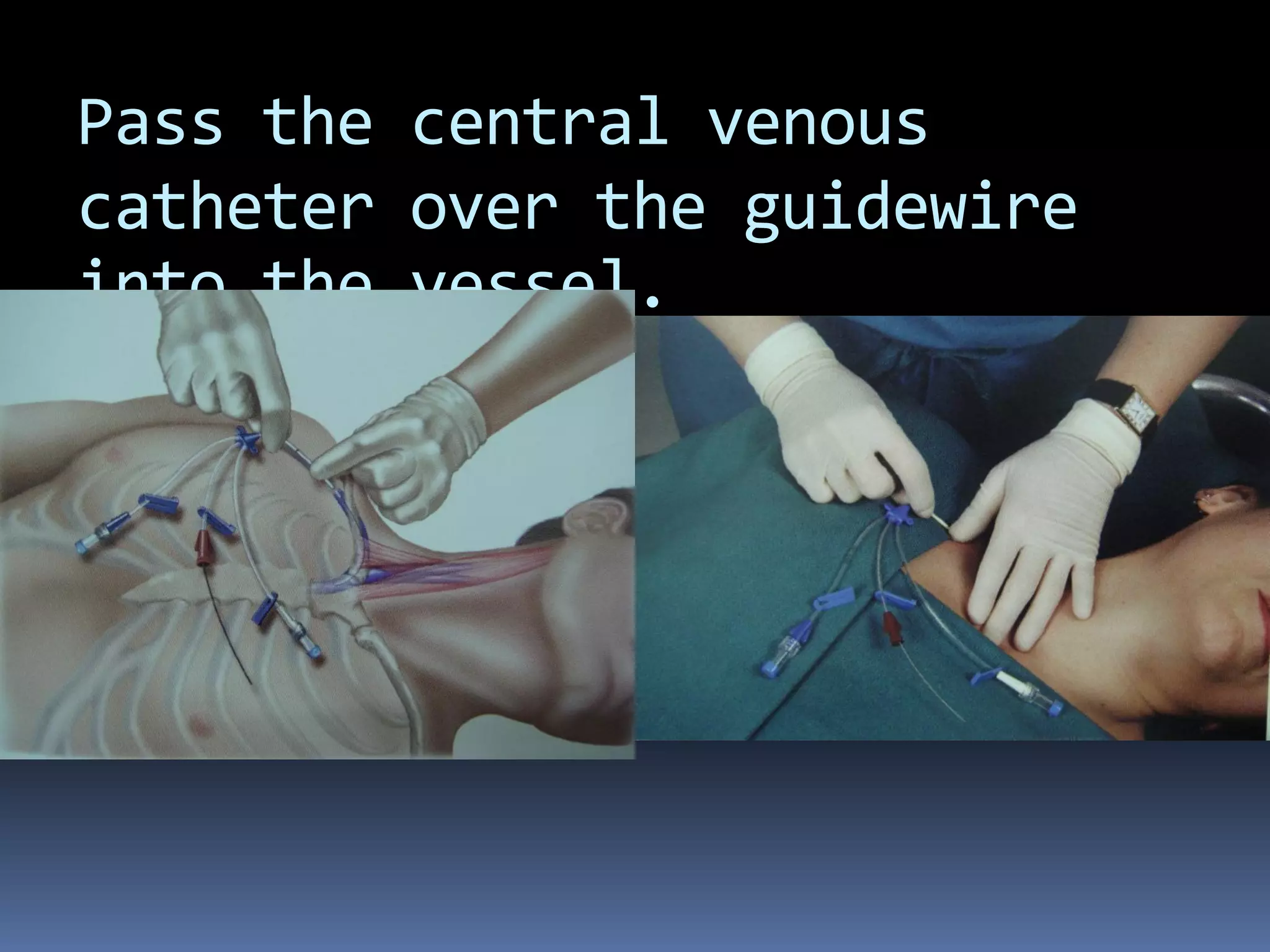
Pass the central venous
catheter over the guidewire
into the vessel.
Remove the guidewire.
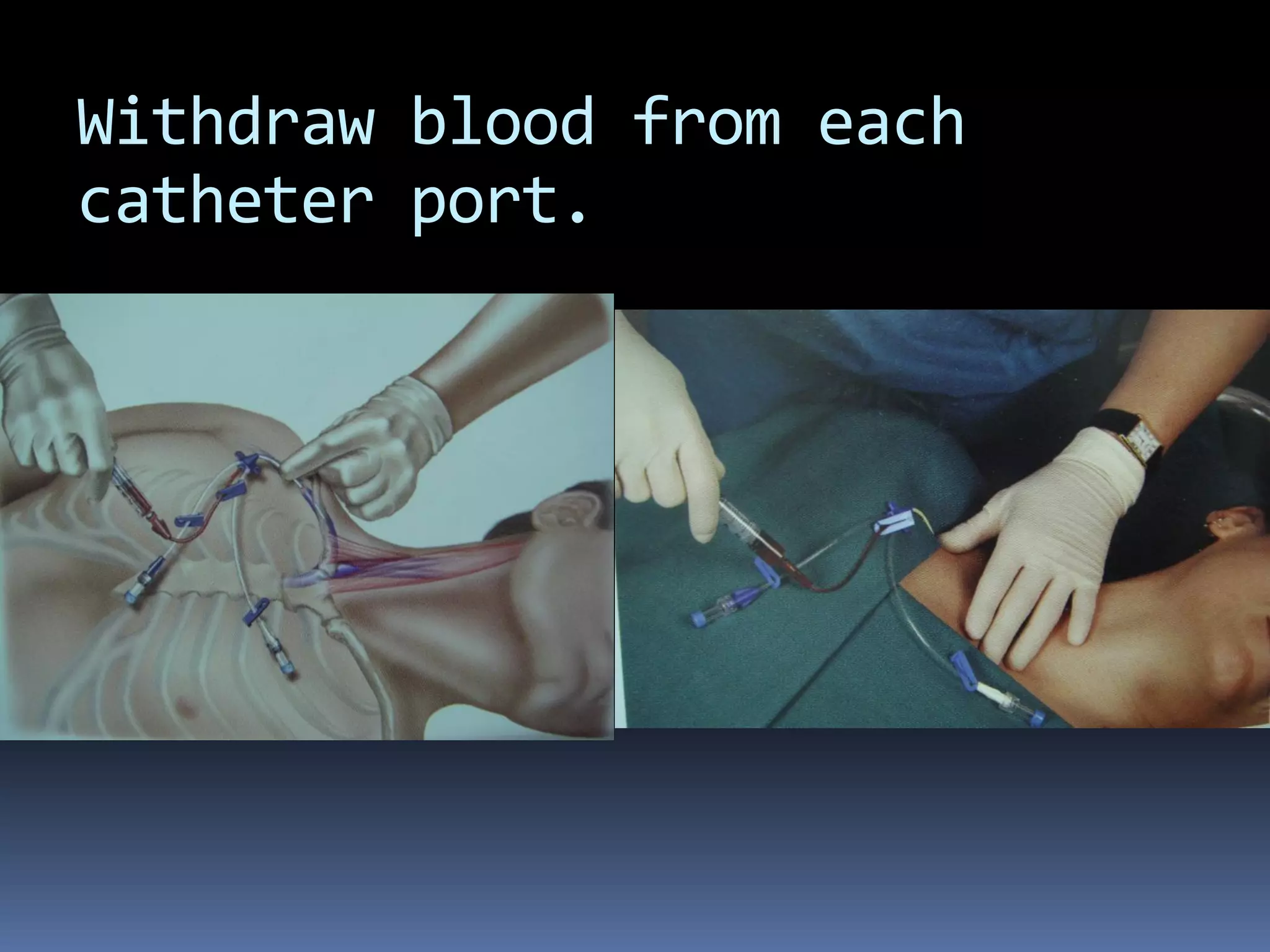
Withdraw blood from each
catheter port.
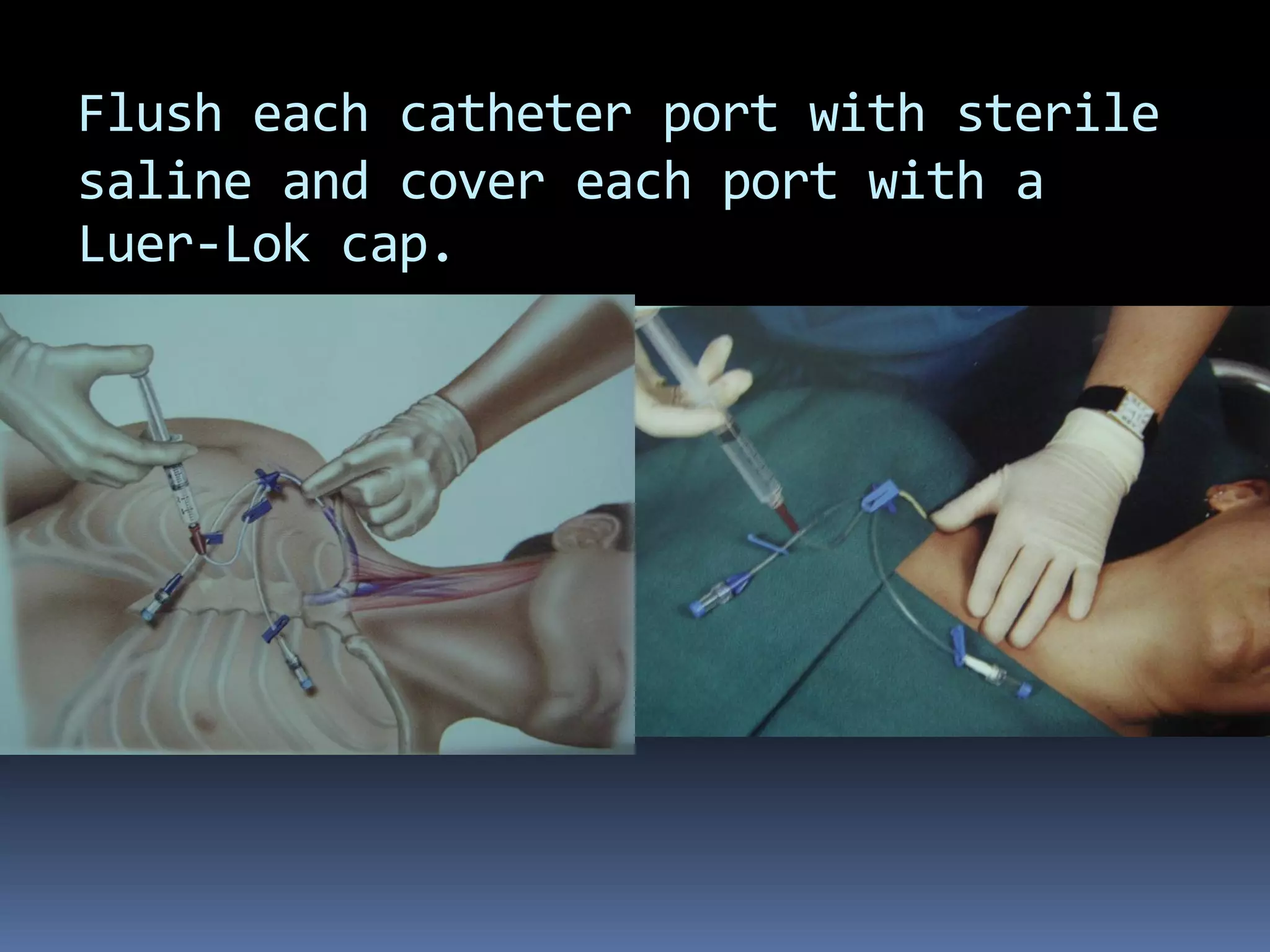
Flush each catheter port with sterile
saline and cover each port with a
Luer-Lok cap.
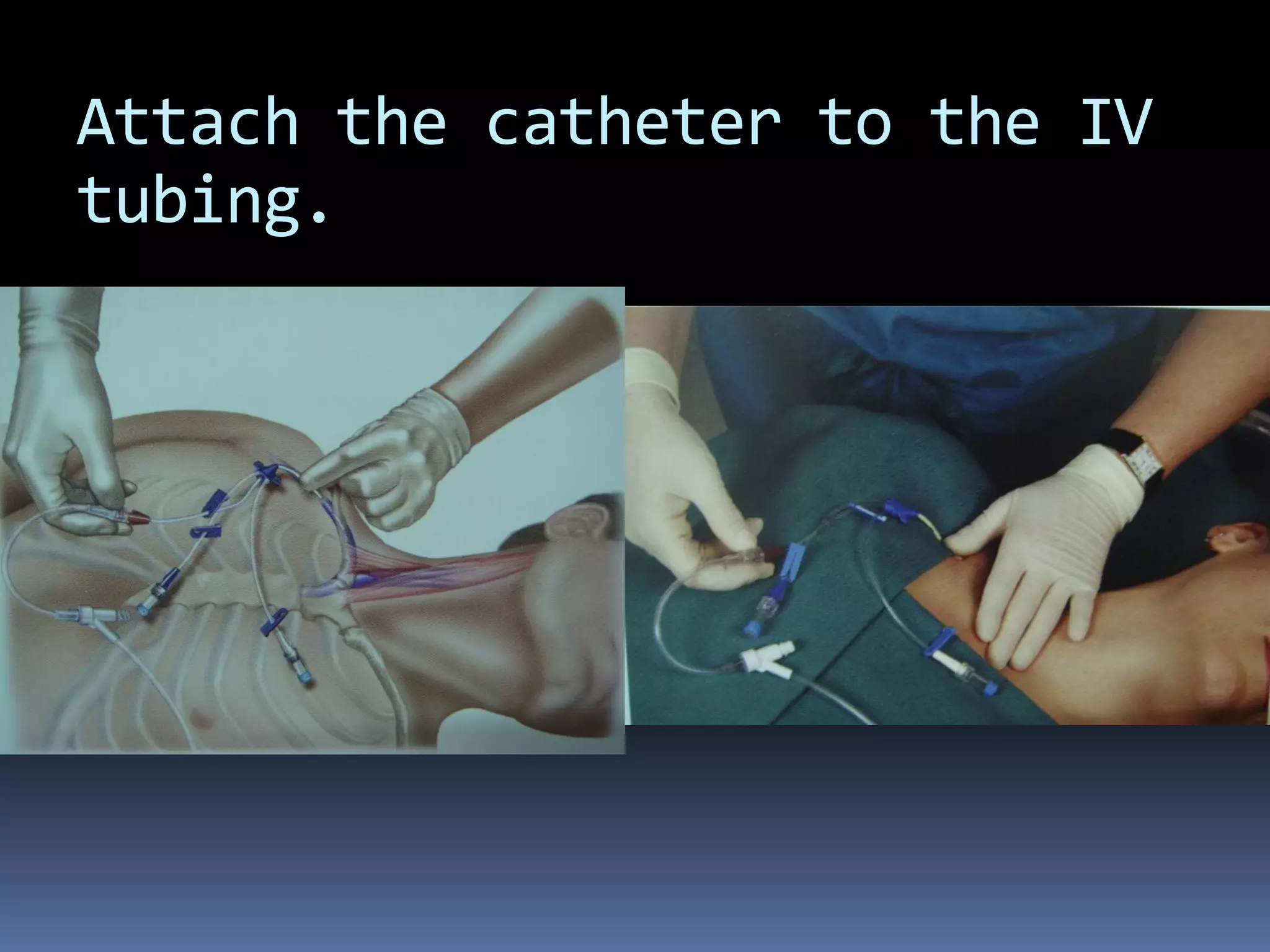
Attach the catheter to the IV
tubing.
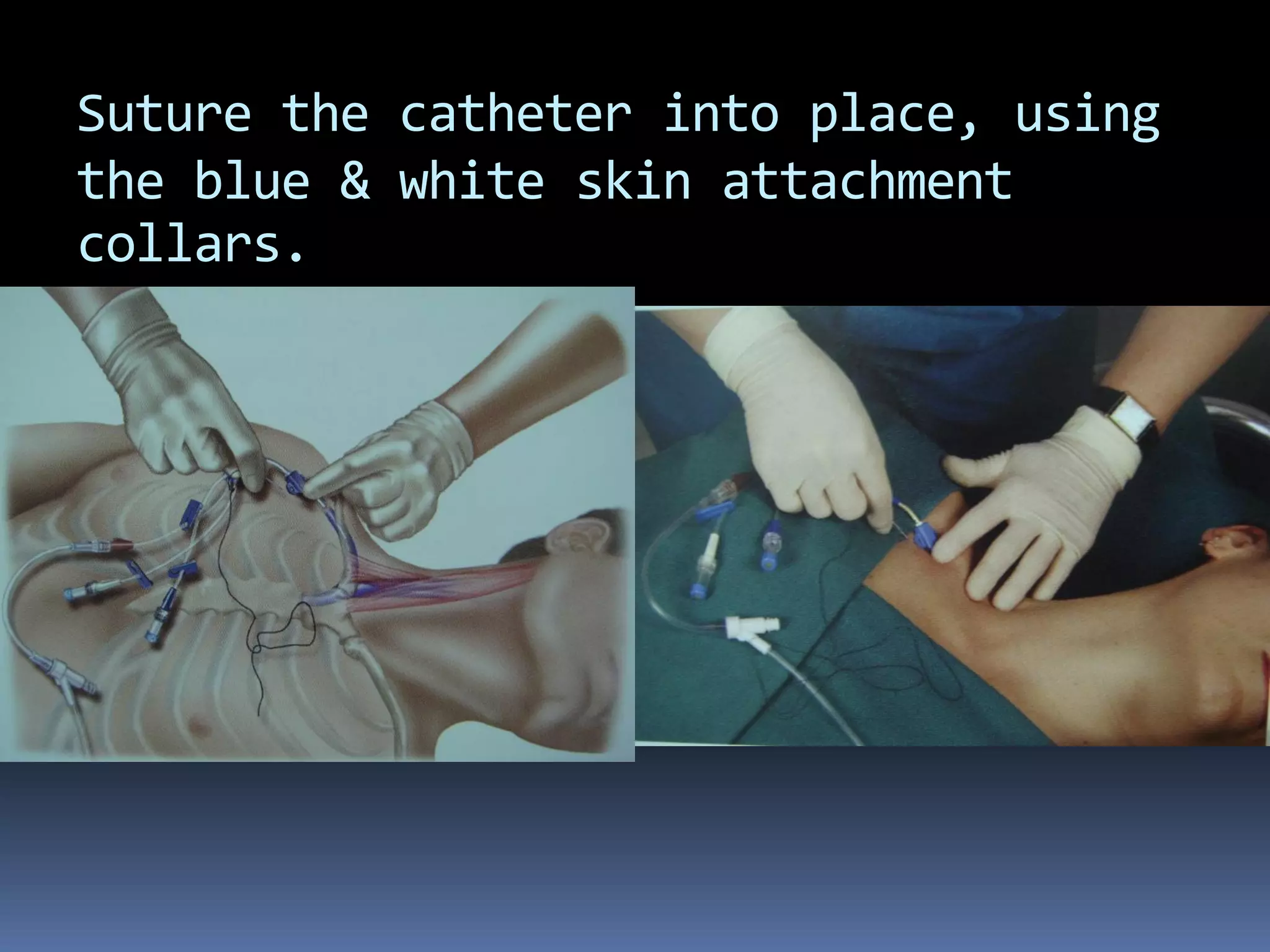
Suture the catheter into place, using
the blue & white skin attachment
collars.
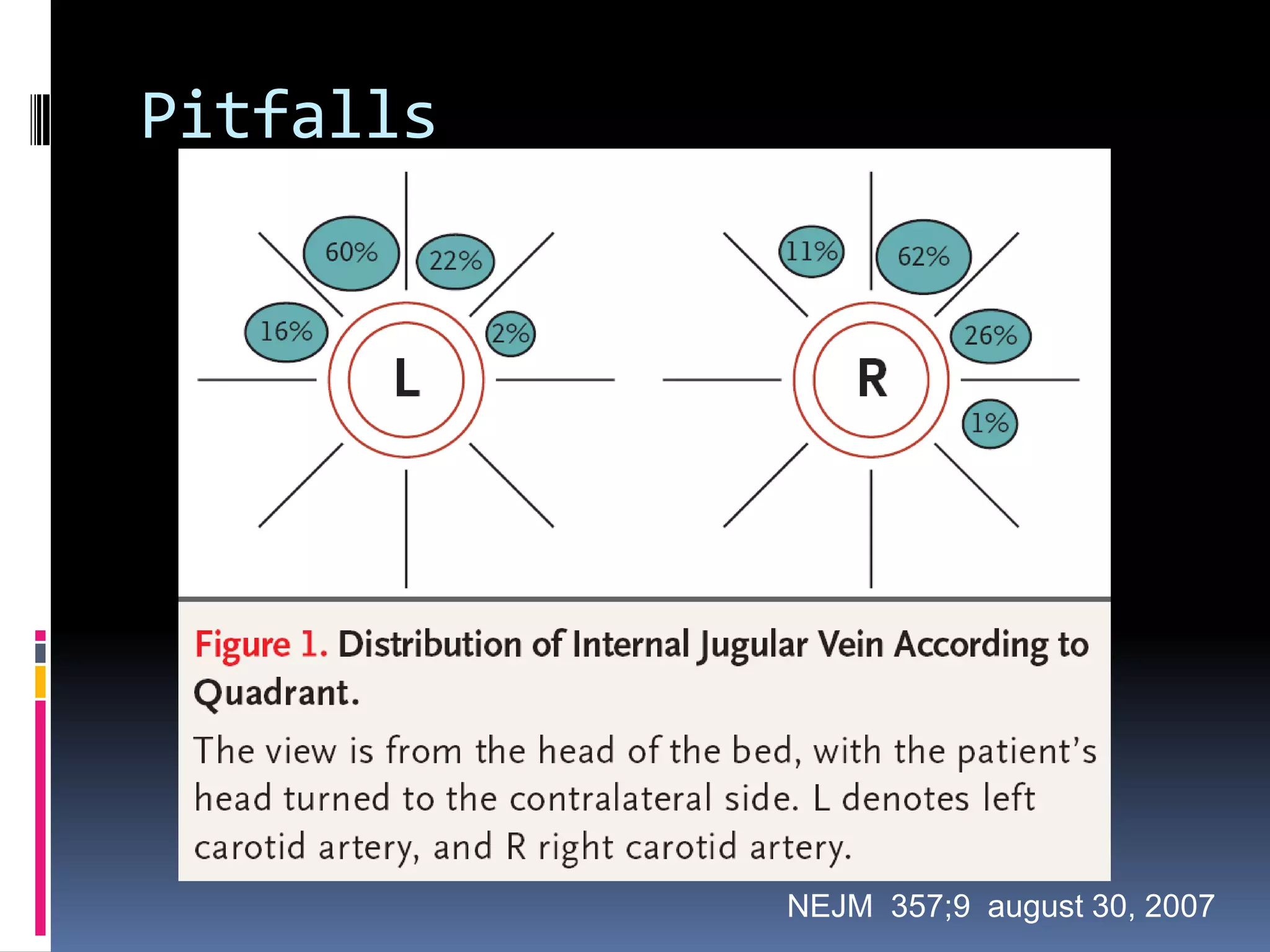
Pitfalls


           NEJM 357;9 august 30, 2007
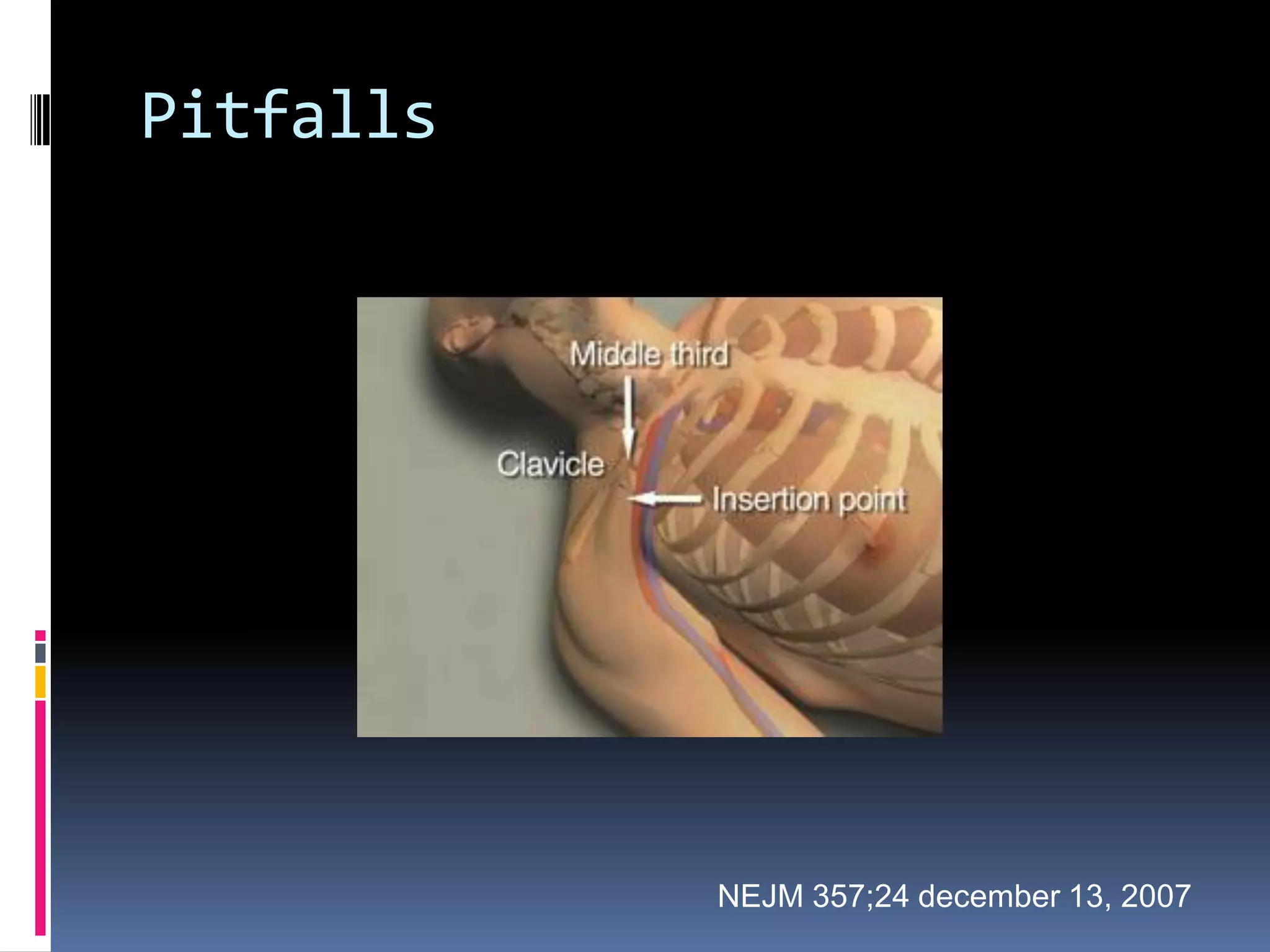
Pitfalls


           NEJM 357;24 december 13, 2007
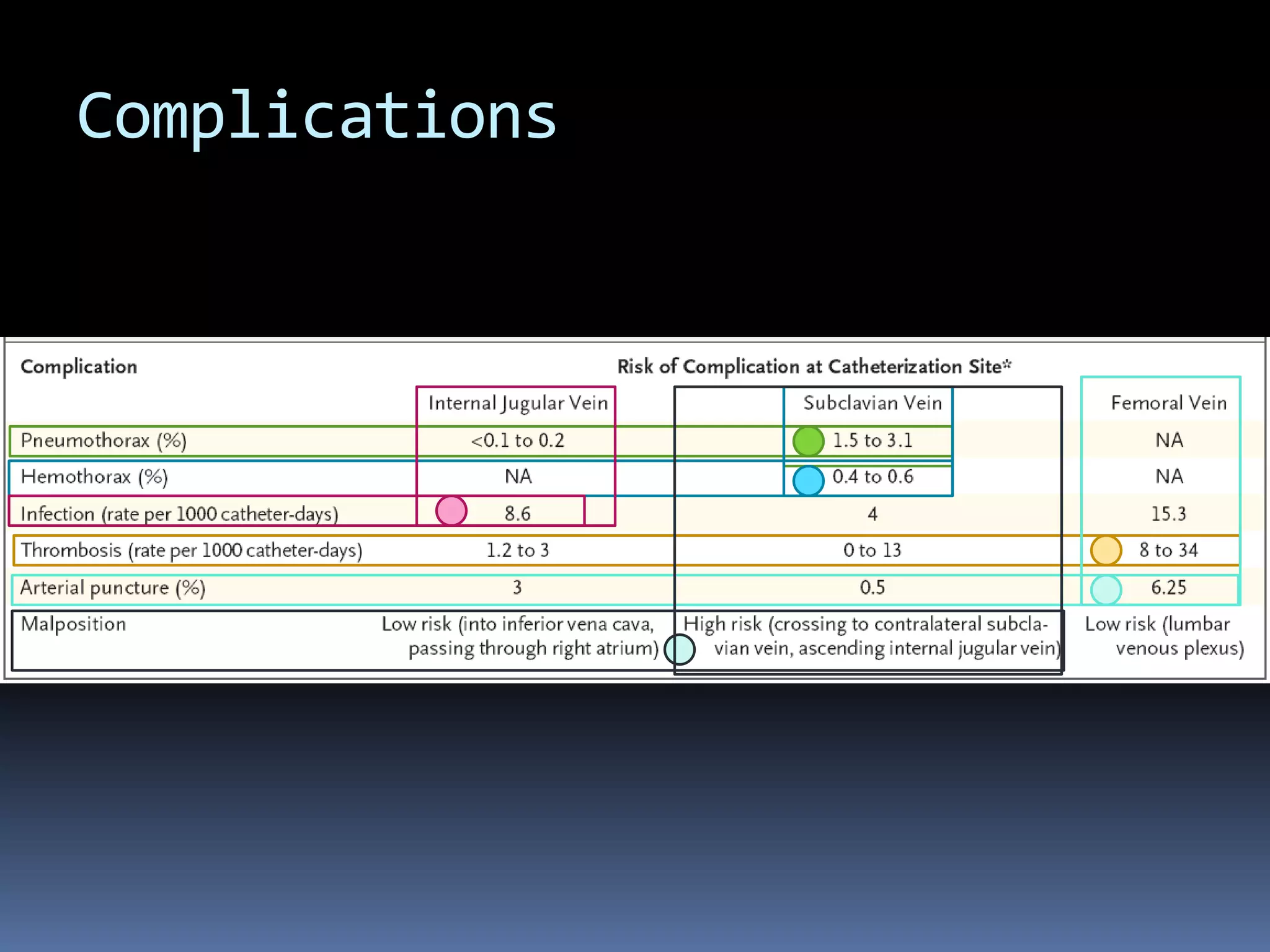
Complications
Intraosseous line placement
Indications

•Immediate venous access for delivery of fluids, drugs or
blood products in patients cannot find out other site

• Recommended In PALS, ACLS
• CPR more than 2 mins or more than 2 attempt
Contraindications

 fracture at proximal insertion site
 Skin infection at proposed insertion site
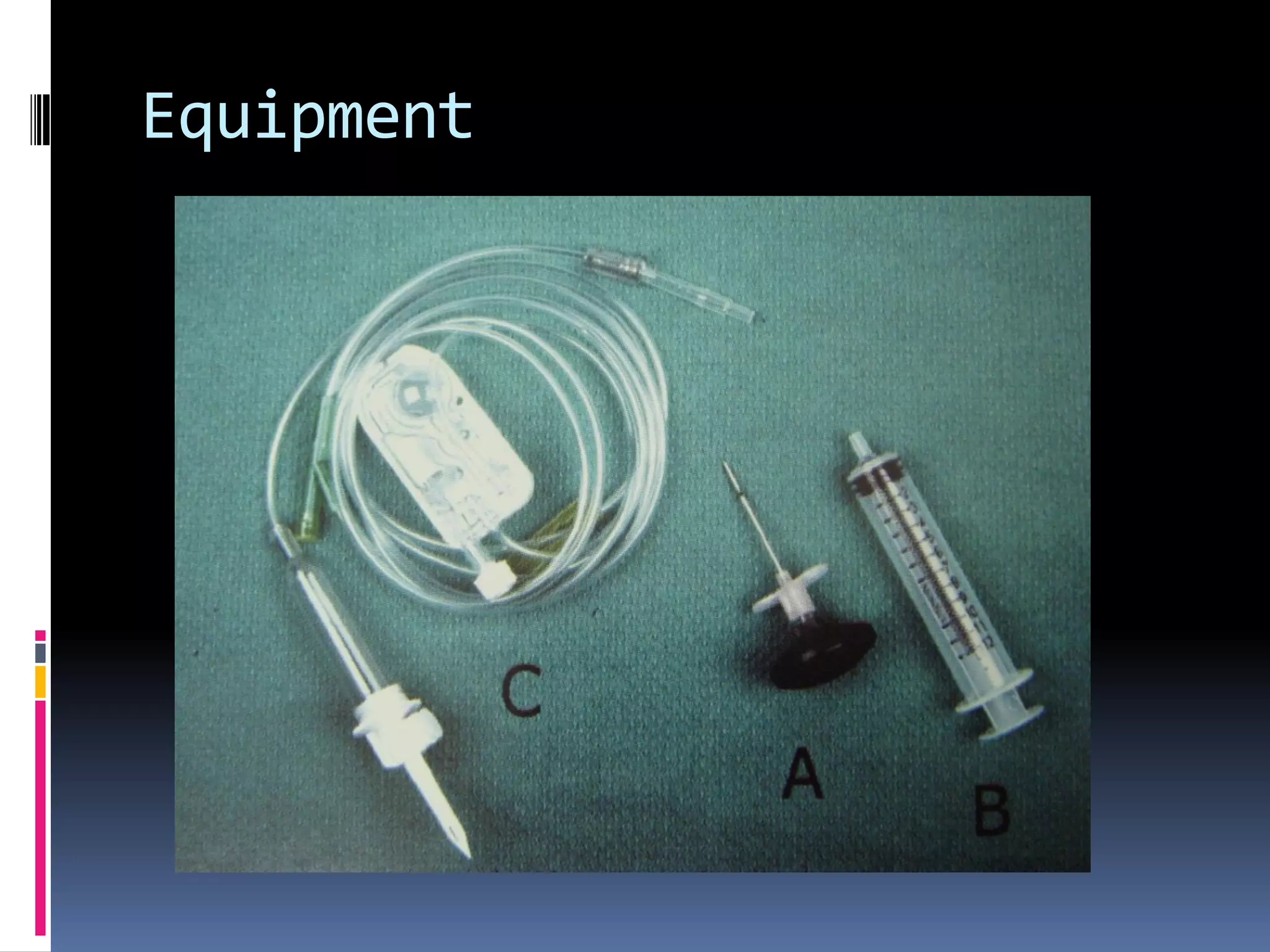
Equipment
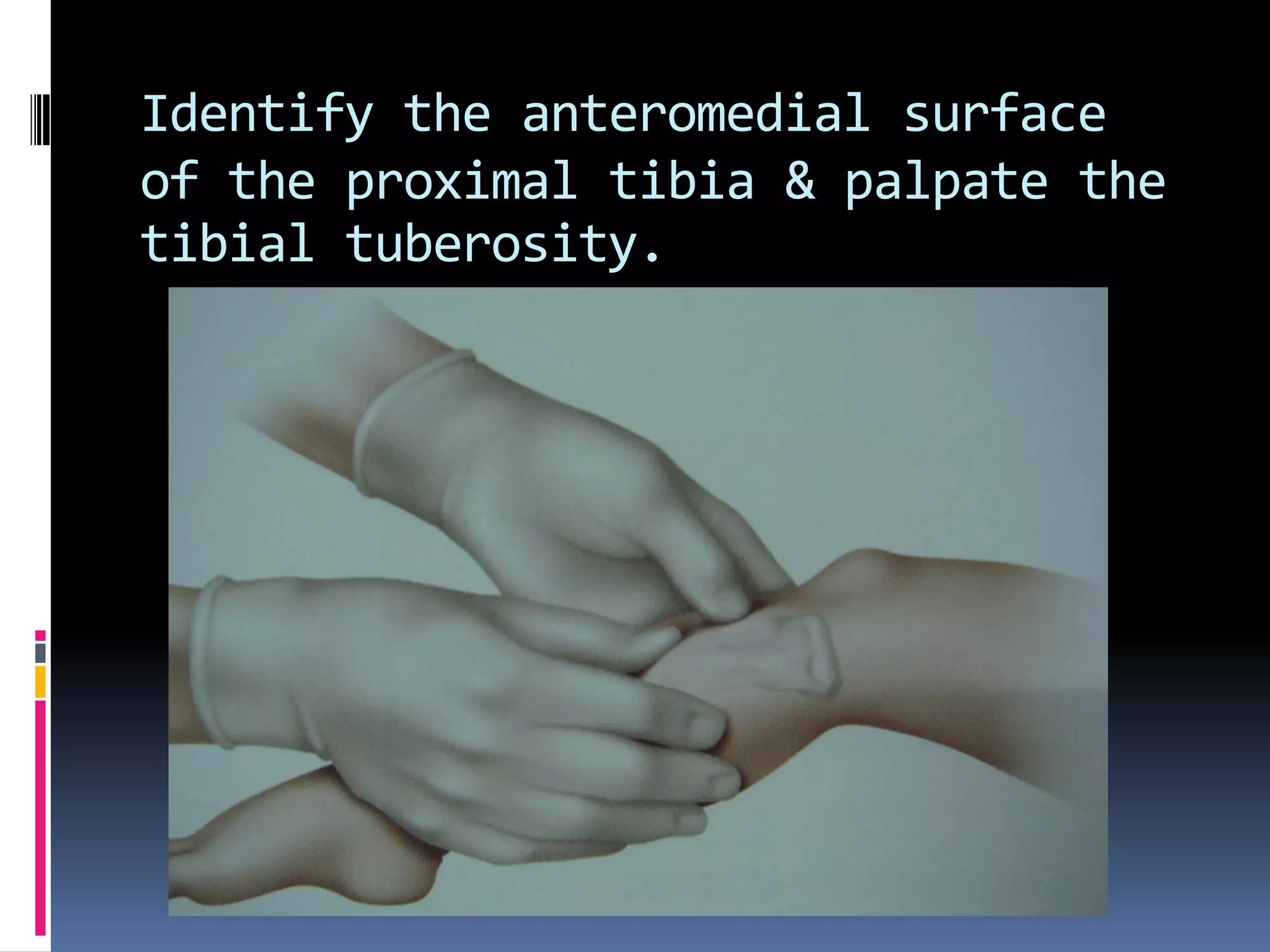
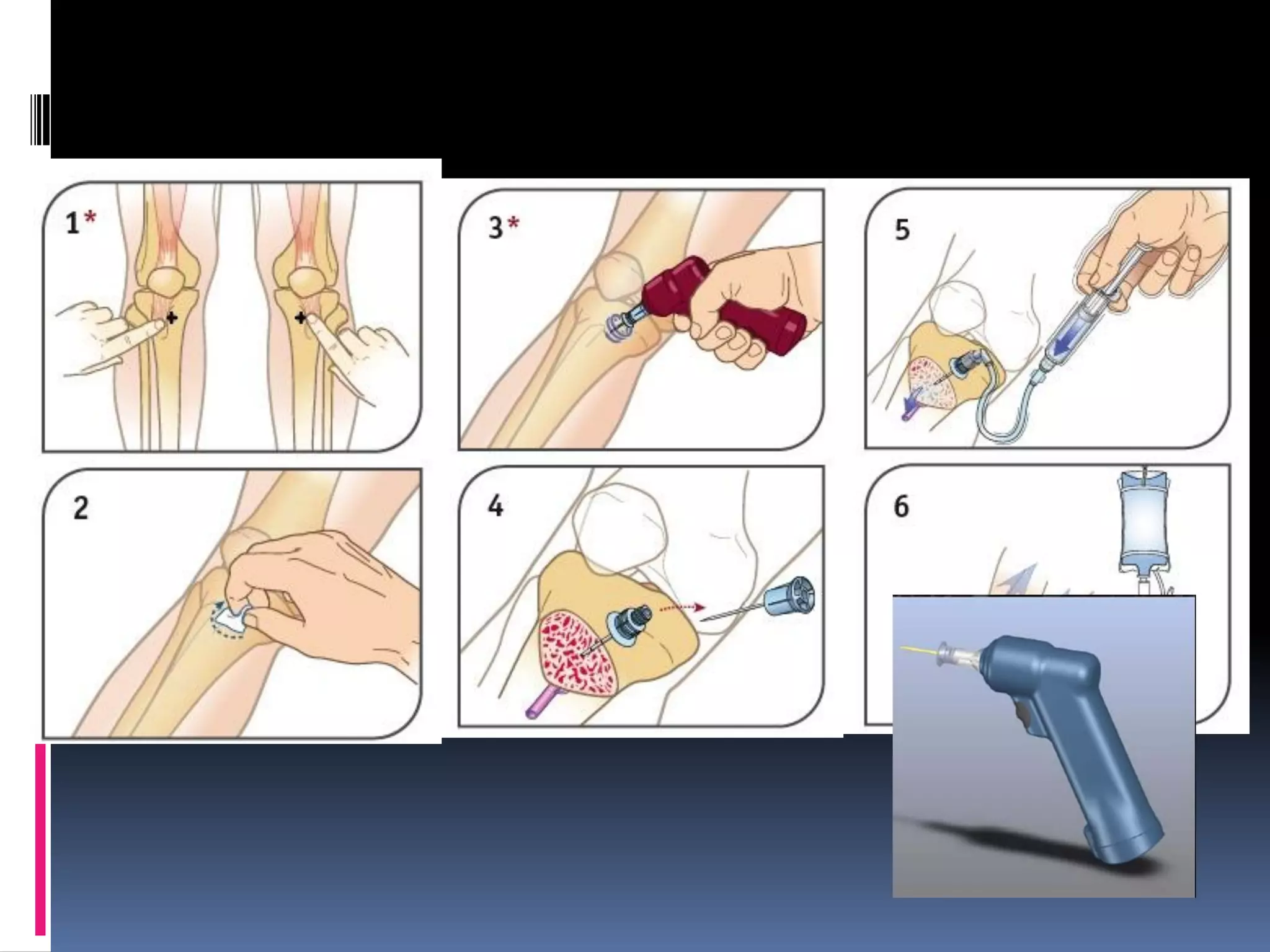
Identify the anteromedial surface
of the proximal tibia & palpate the
tibial tuberosity.
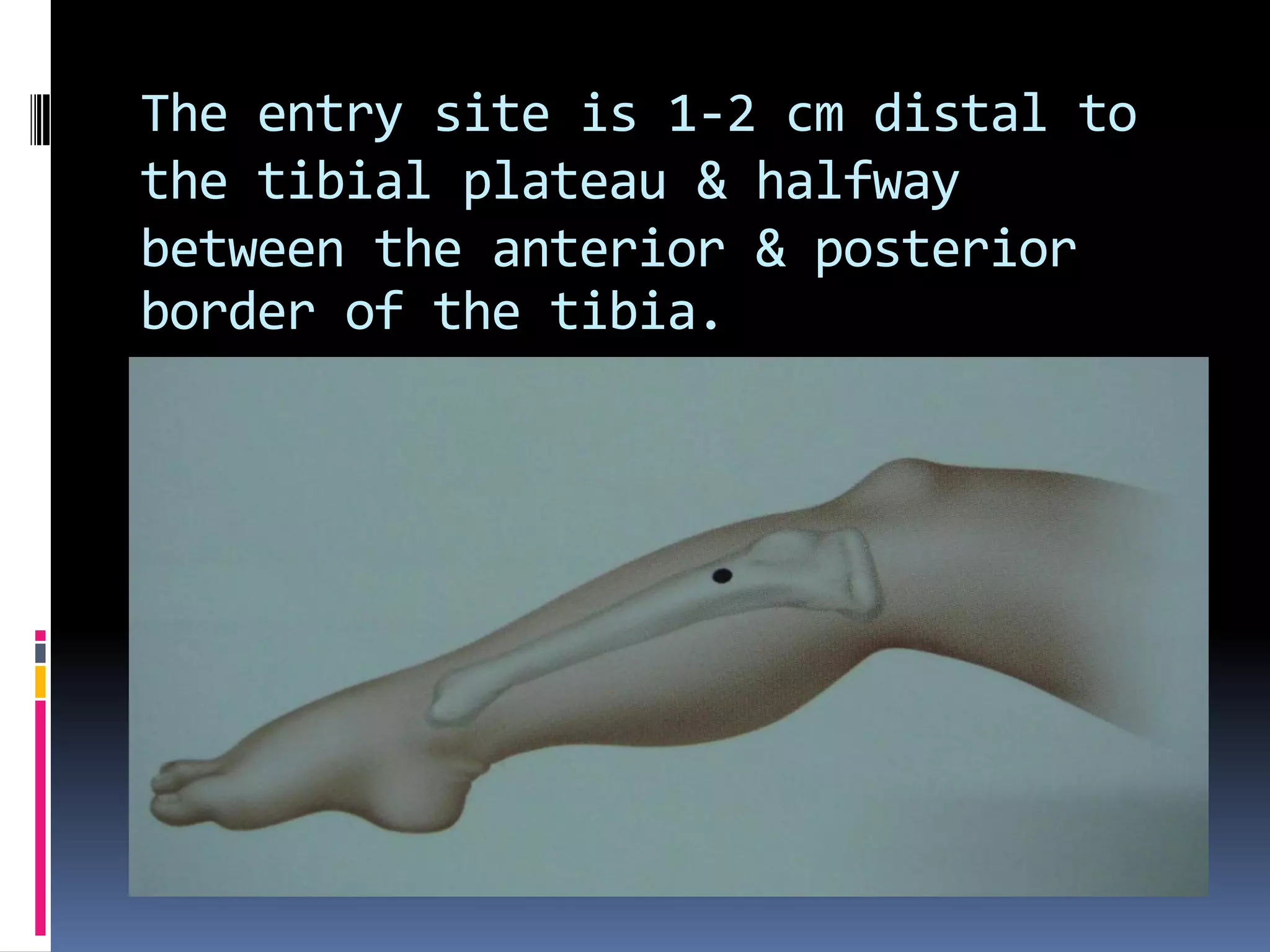
The entry site is 1-2 cm distal to
the tibial plateau & halfway
between the anterior & posterior
border of the tibia.
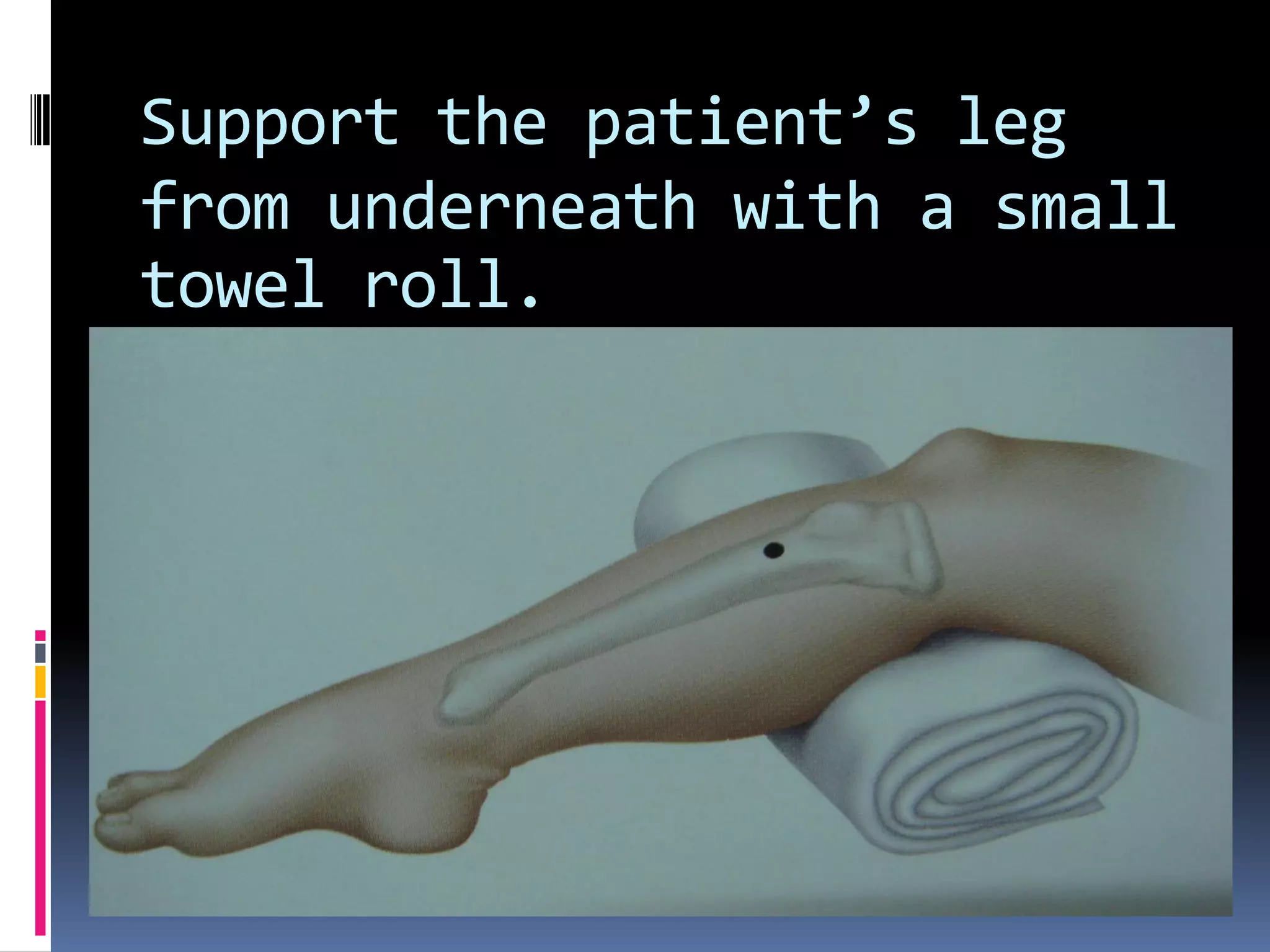
Support the patient’s leg
from underneath with a small
towel roll.
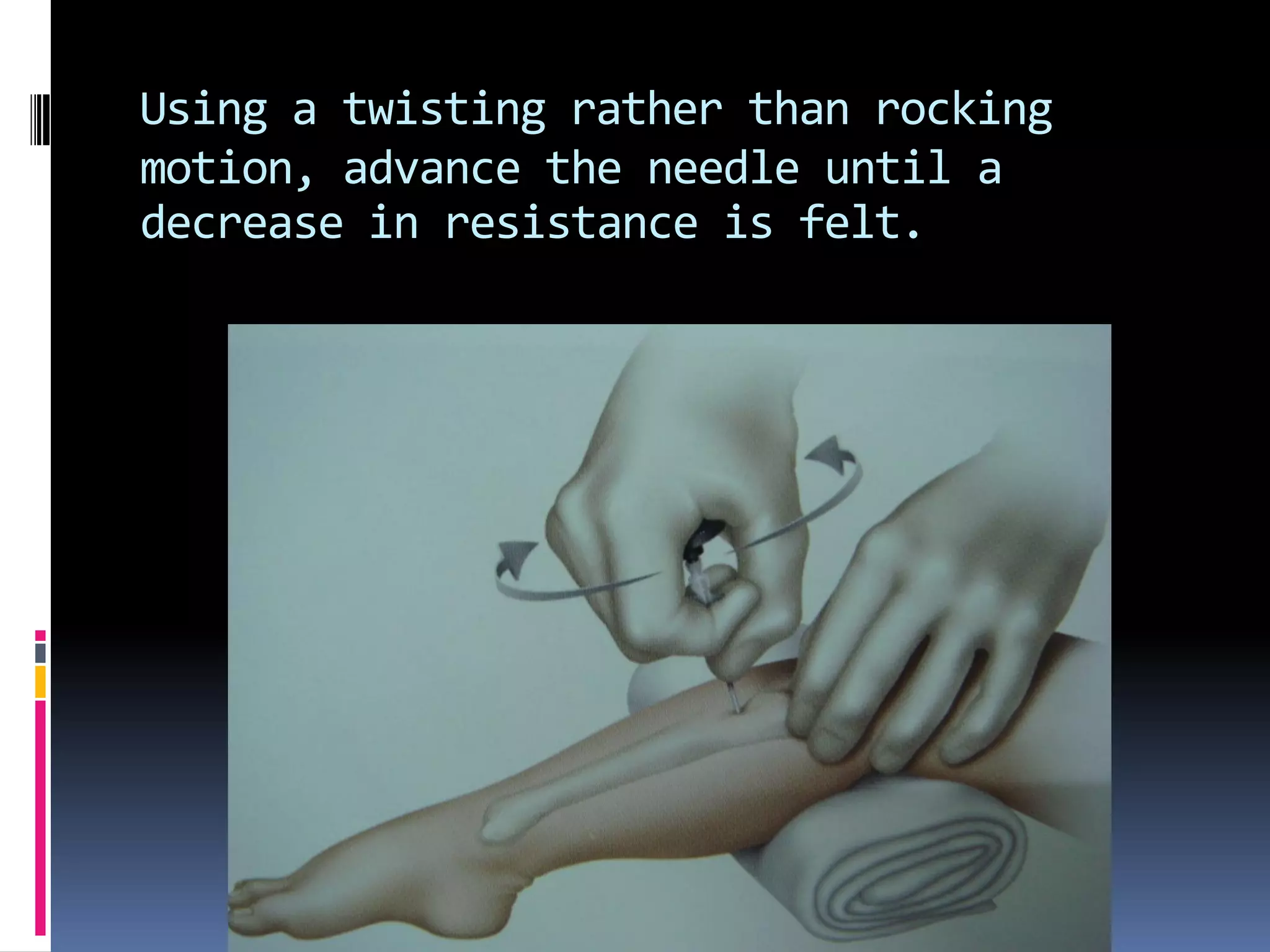
Using a twisting rather than rocking
motion, advance the needle until a
decrease in resistance is felt.
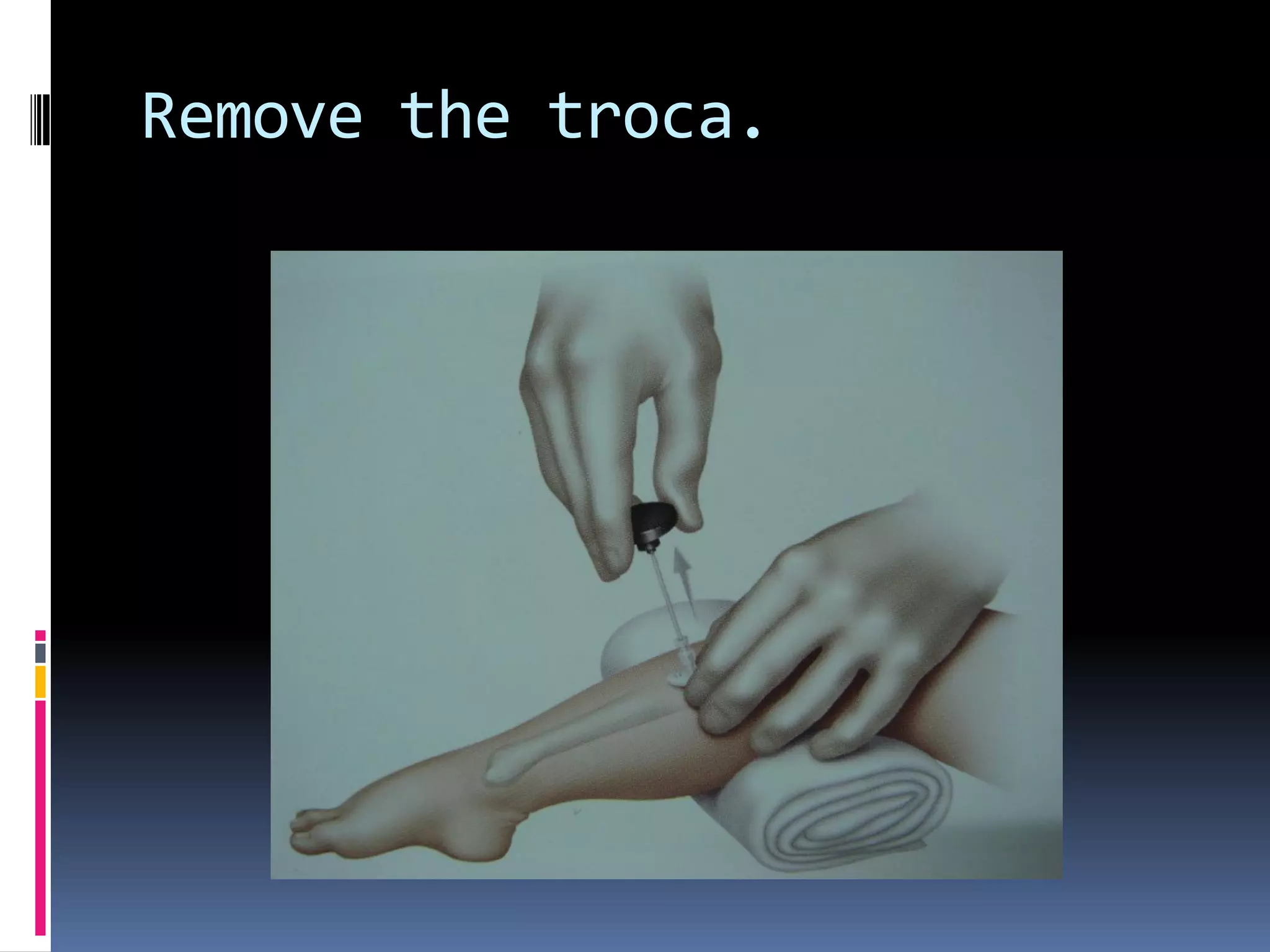
Remove the troca.
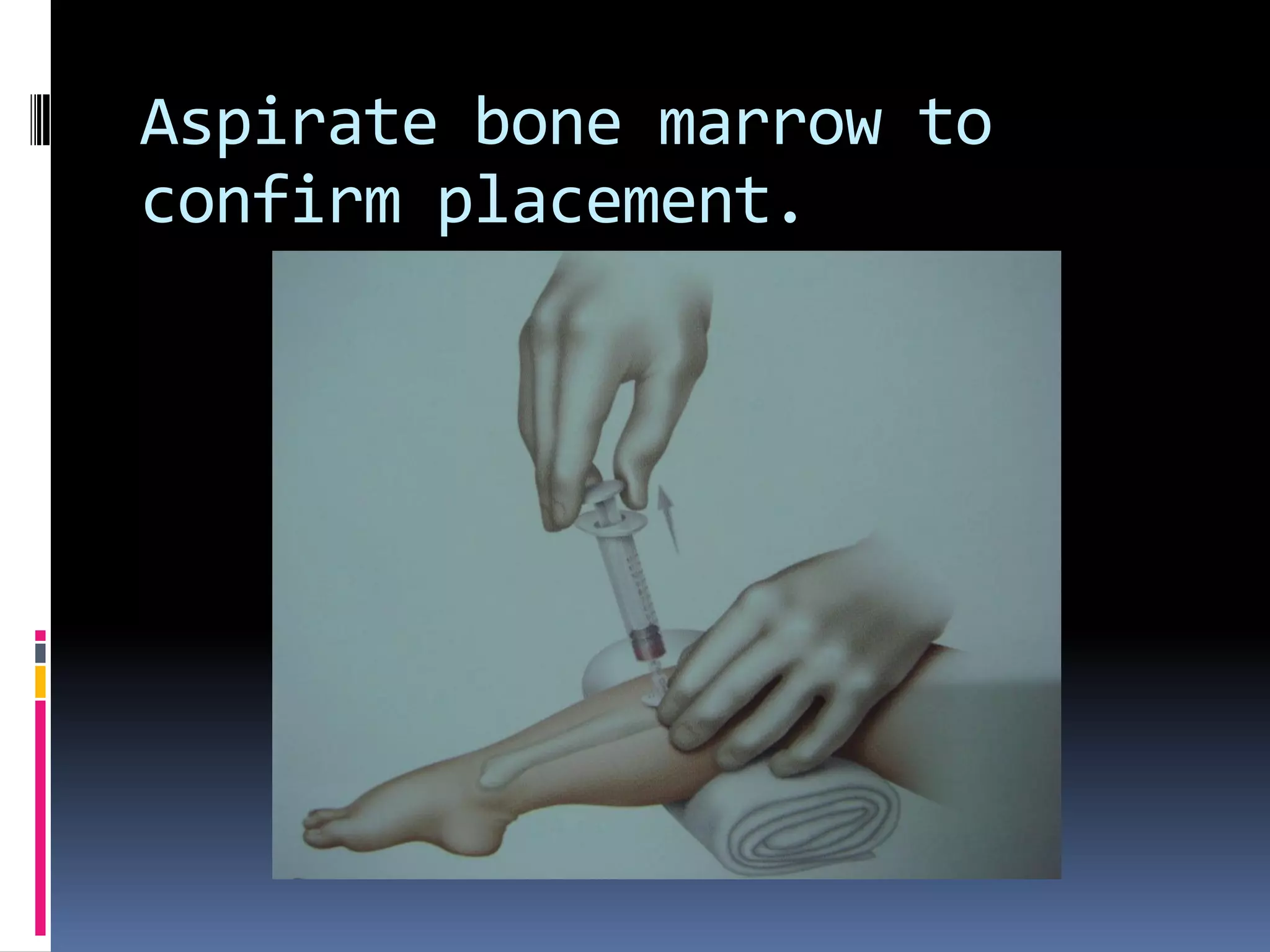
Aspirate bone marrow to
confirm placement.
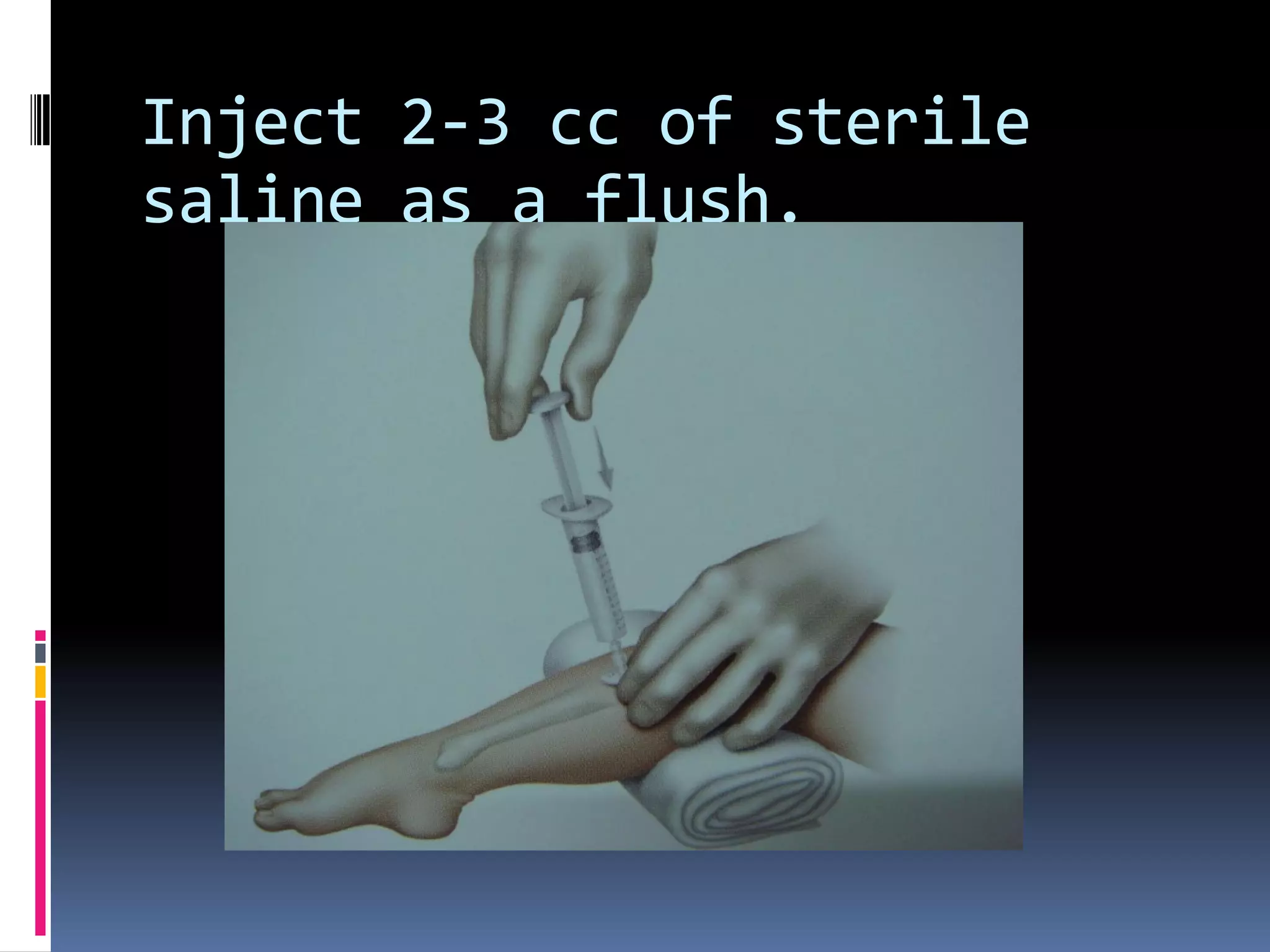
Inject 2-3 cc of sterile
saline as a flush.
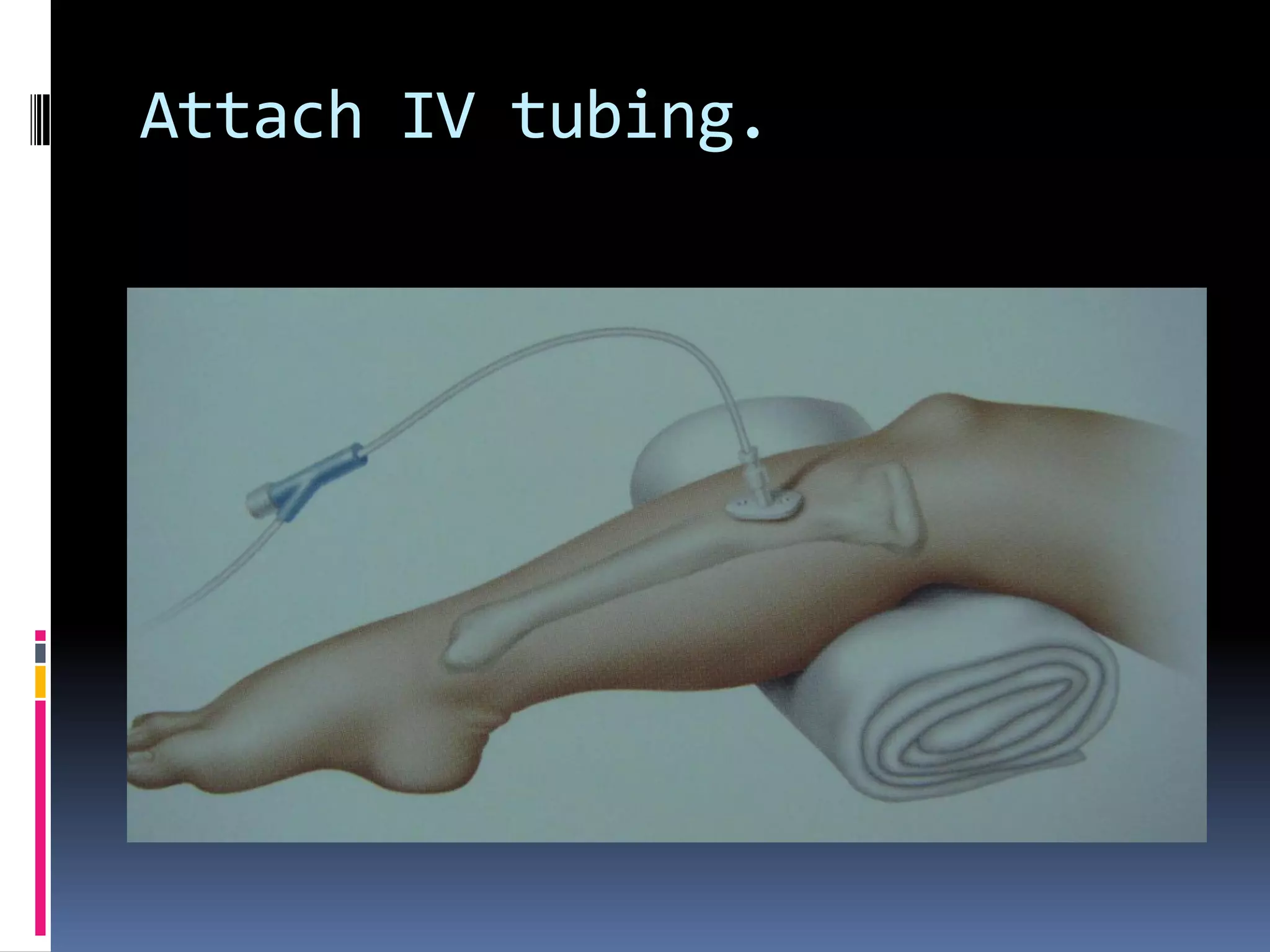
Attach IV tubing.
Saphenous vein cut down
Complications

 Local hematoma or cellulitis
 RARELY osteomyelitis
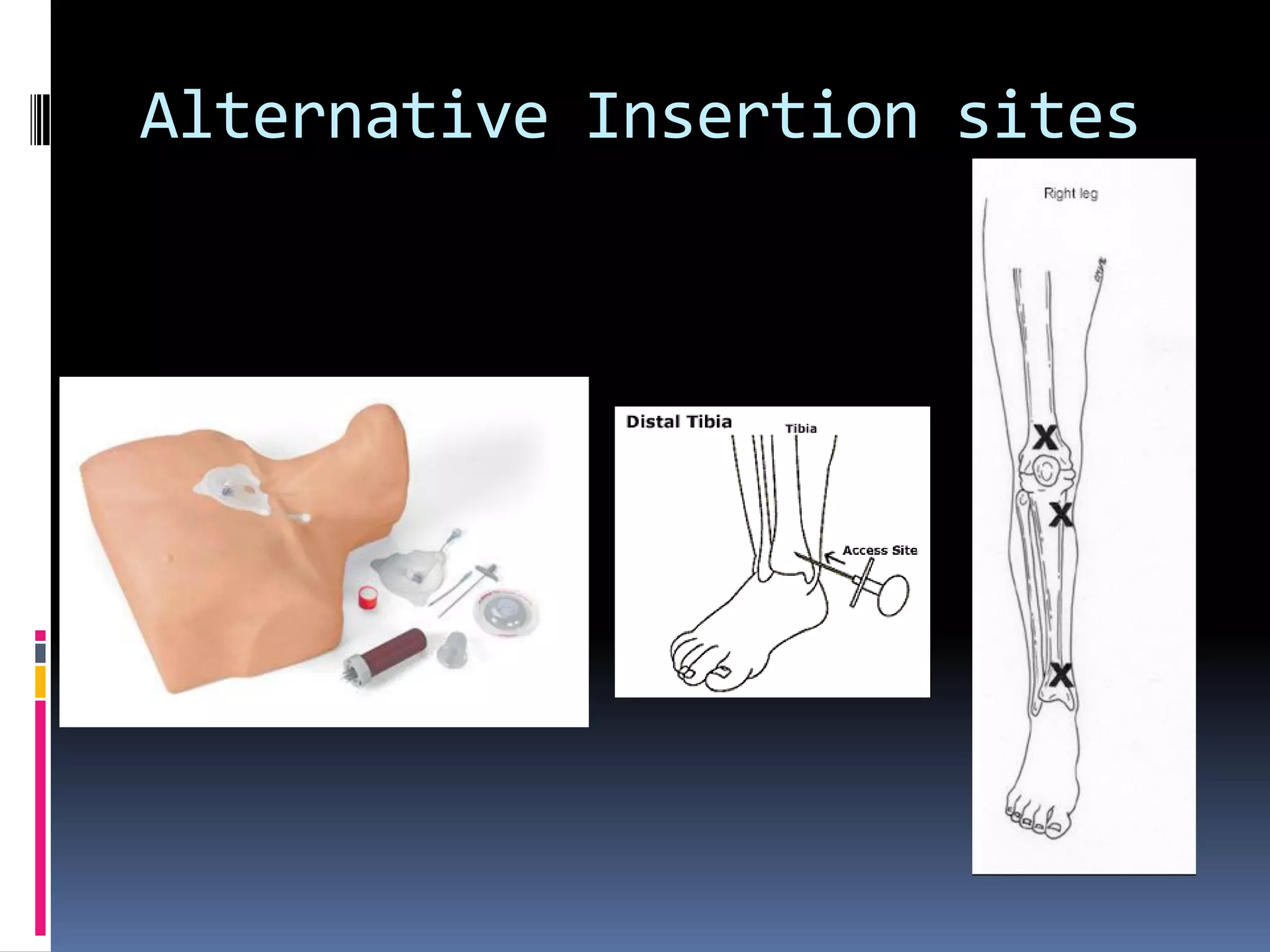
Alternative Insertion sites
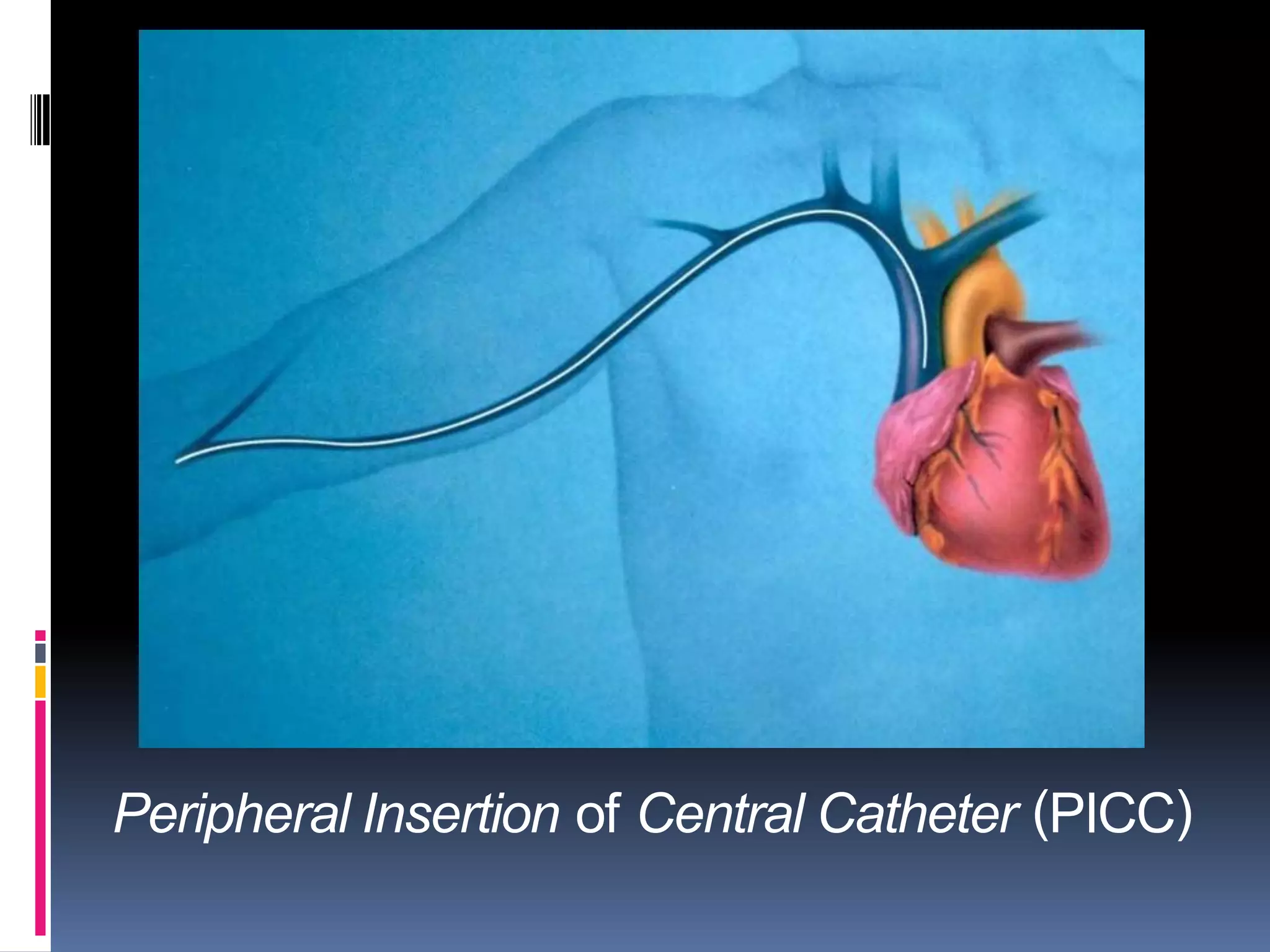
Peripheral Insertion of Central Catheter (PICC)
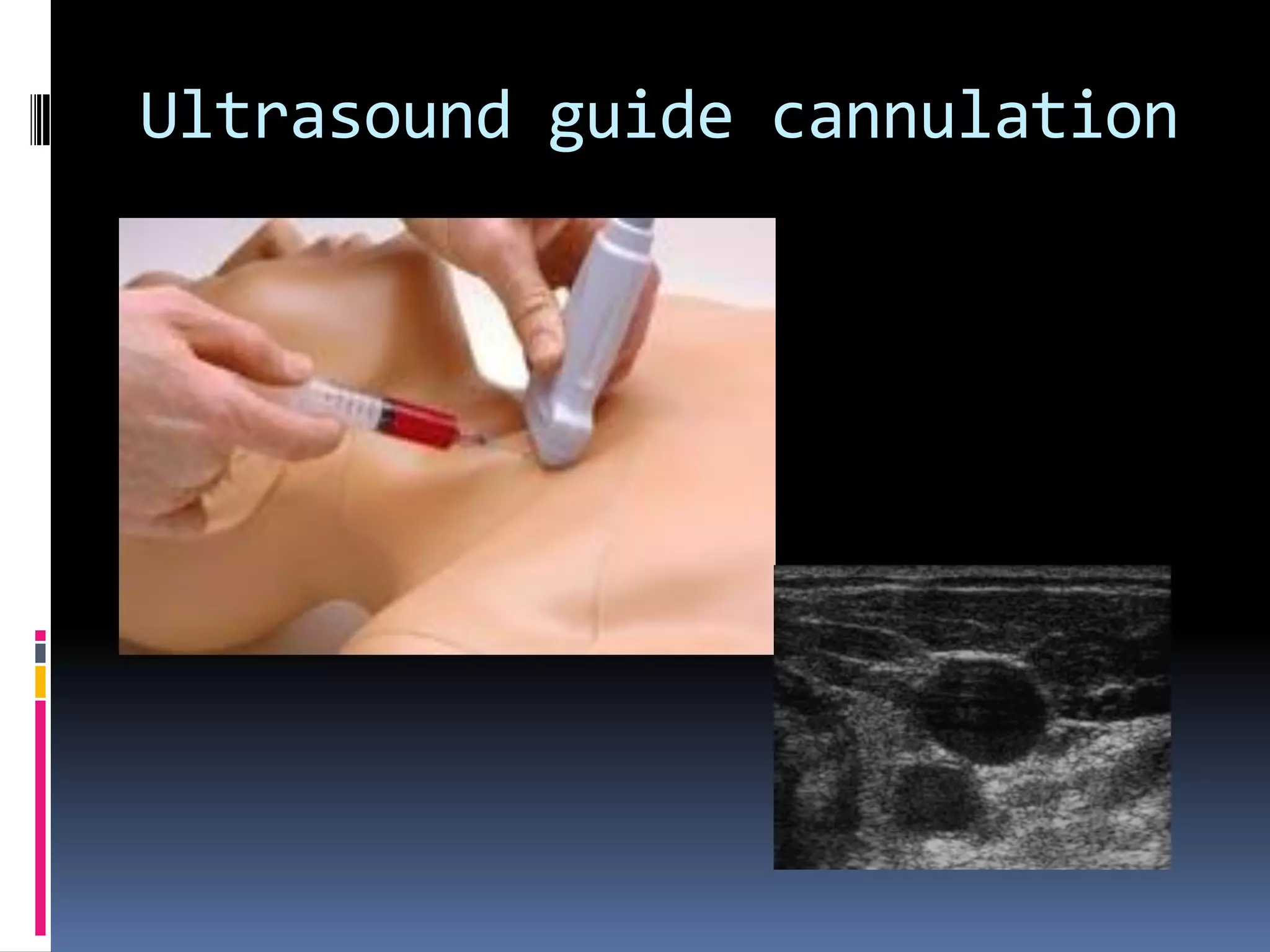
Ultrasound guide cannulation
Issue of flow dynamics

 Rate of flow
   Internal catheter diameter
   Temperature
   Pressure
   Viscosity
   Catheter length
 Stable adult trauma patients
   2 large-bore 16-gauge or greater
 Exsanquination
   8.5-F catheter with
     Manually operated pressure bag or
     Wall-mounted external pneumatic device
   2nd catheter for drug infusion
 Volume repletion & measurement of CVP
   Y arm catheter sheath
OTHER ESSENTIAL PROCEDURE
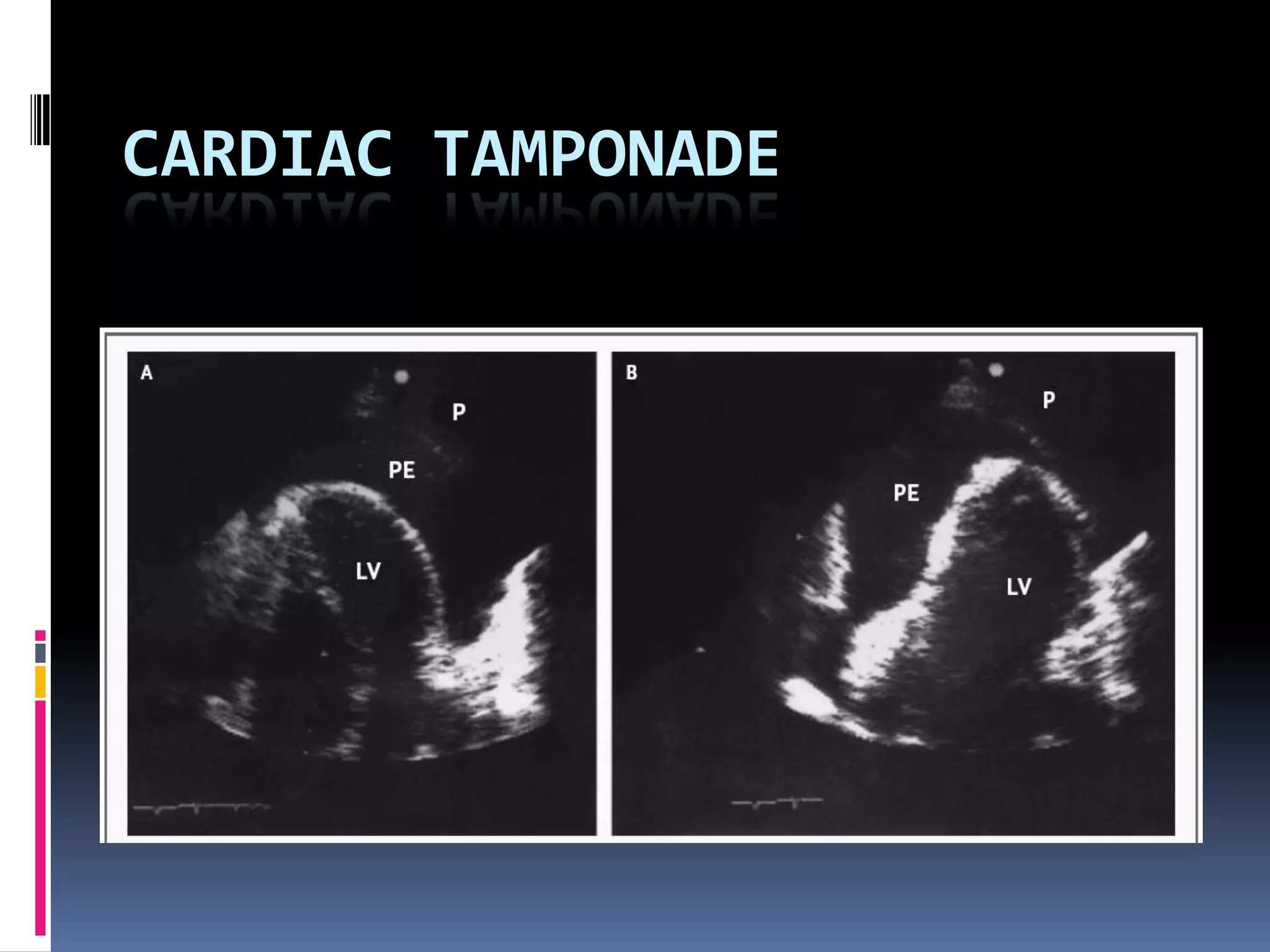
CARDIAC TAMPONADE
Treatment

 Venous access
 Rapid volume infusion
 To less volume changes during respiration
 And increase RV pressure to counter with
  pericardial pressure
 These may prevent requirement for
  pericardiocentesis
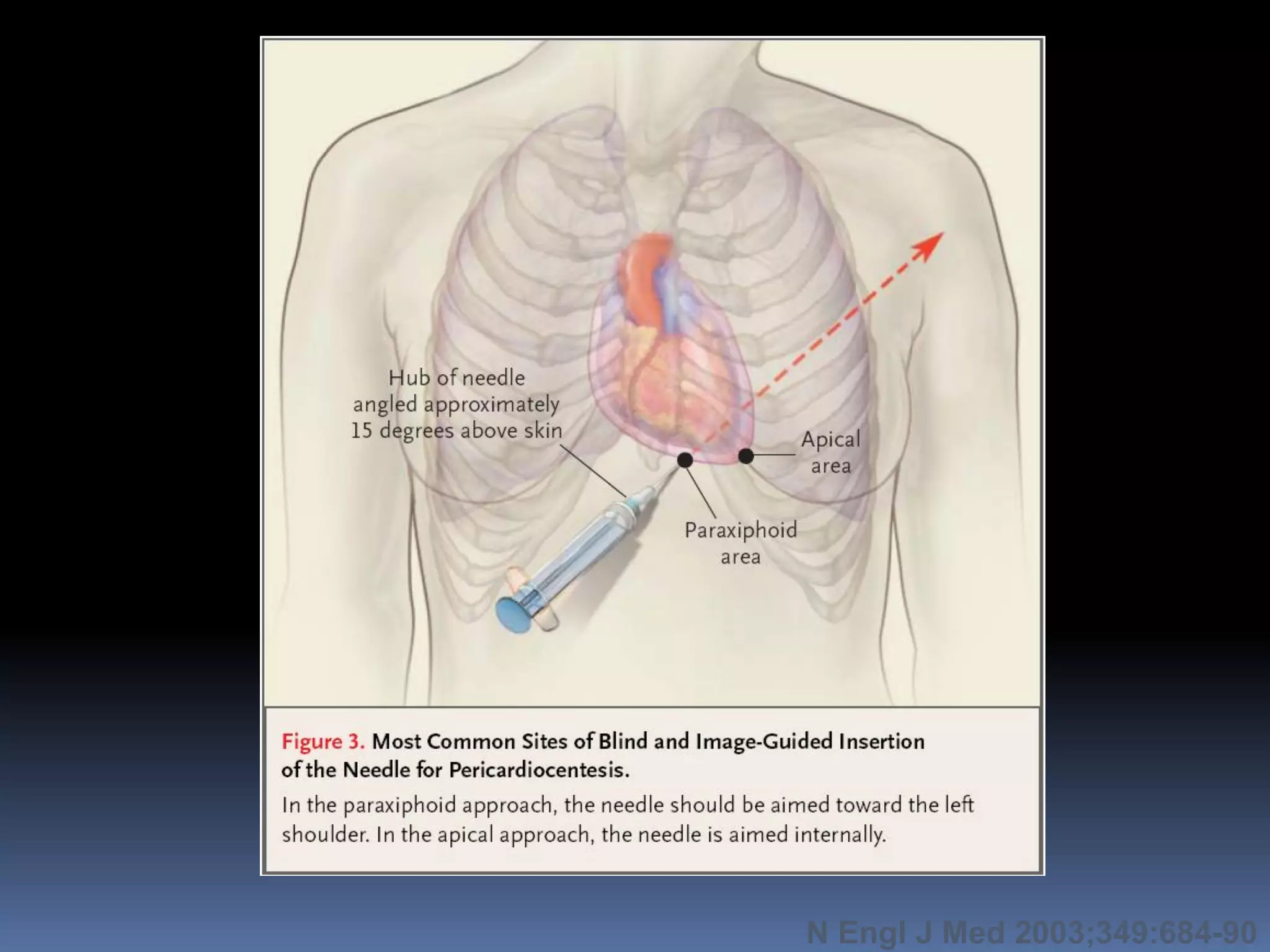
Pericardiocentesis

 If hemodynamic instability observed,
 Emergently performed underfluoroscopy or
  echocardiographic guided
 With/without comfirmatory testing with
  agitated saline injection
 Dramatical improvement is necessary
N Engl J Med 2003;349:684-90
Contra-indication

 Diagnosis is indoubt
 Rupture true or false aneurysm
 Rupture ventricular aneurysm
 Severe local infection
Post drainage monitoring

 Symptoms
 Physical findings of decompensation
   Blood pressure changes
   Evidence of hypoperfusion
   Pulsus paradoxus
 Imaging
   Chest X ray
   Echocardiography
Indwelling catheter drainage

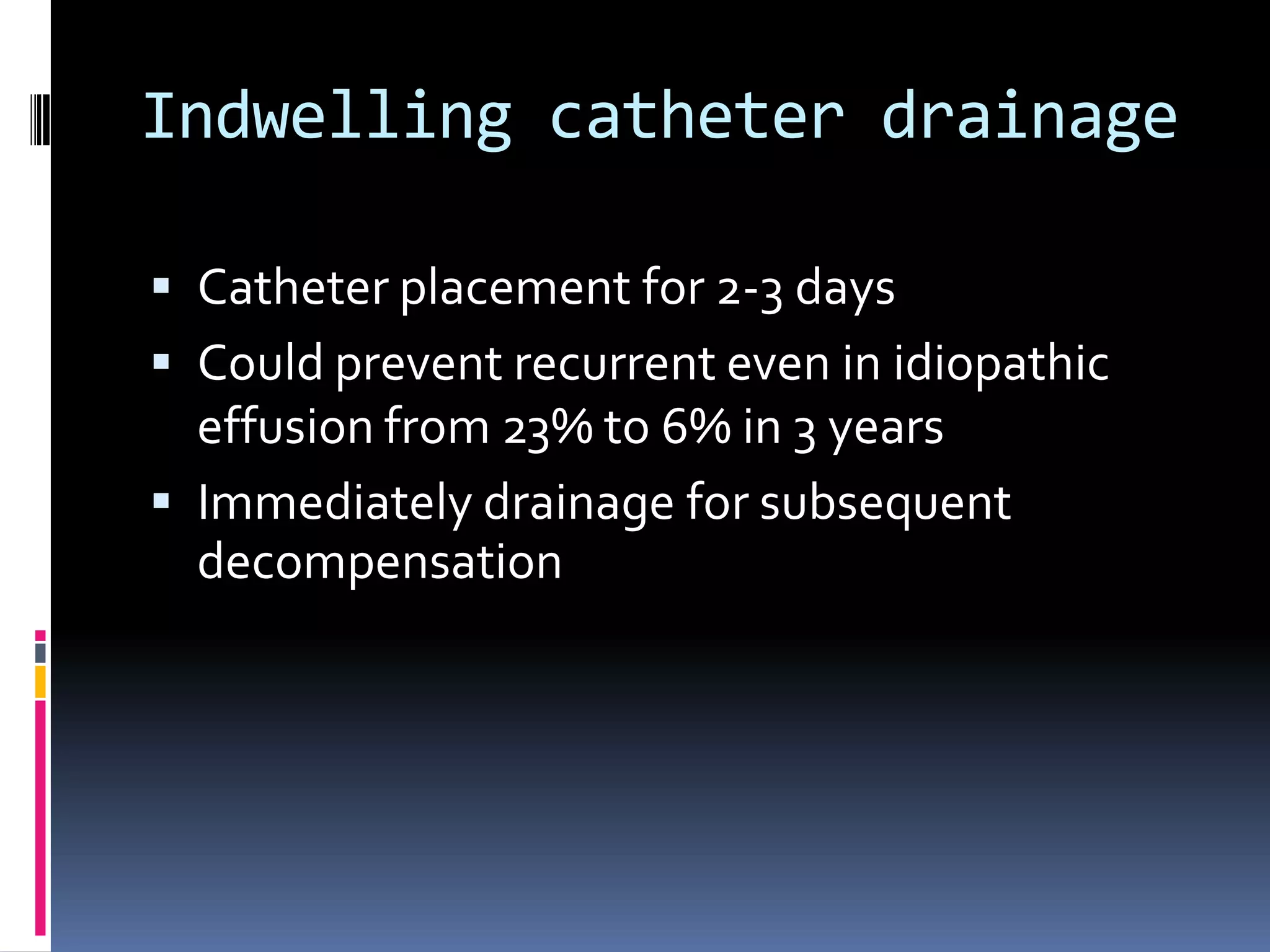
 Catheter placement for 2-3 days
 Could prevent recurrent even in idiopathic
  effusion from 23% to 6% in 3 years
 Immediately drainage for subsequent
  decompensation
Indwelling catheter drainage

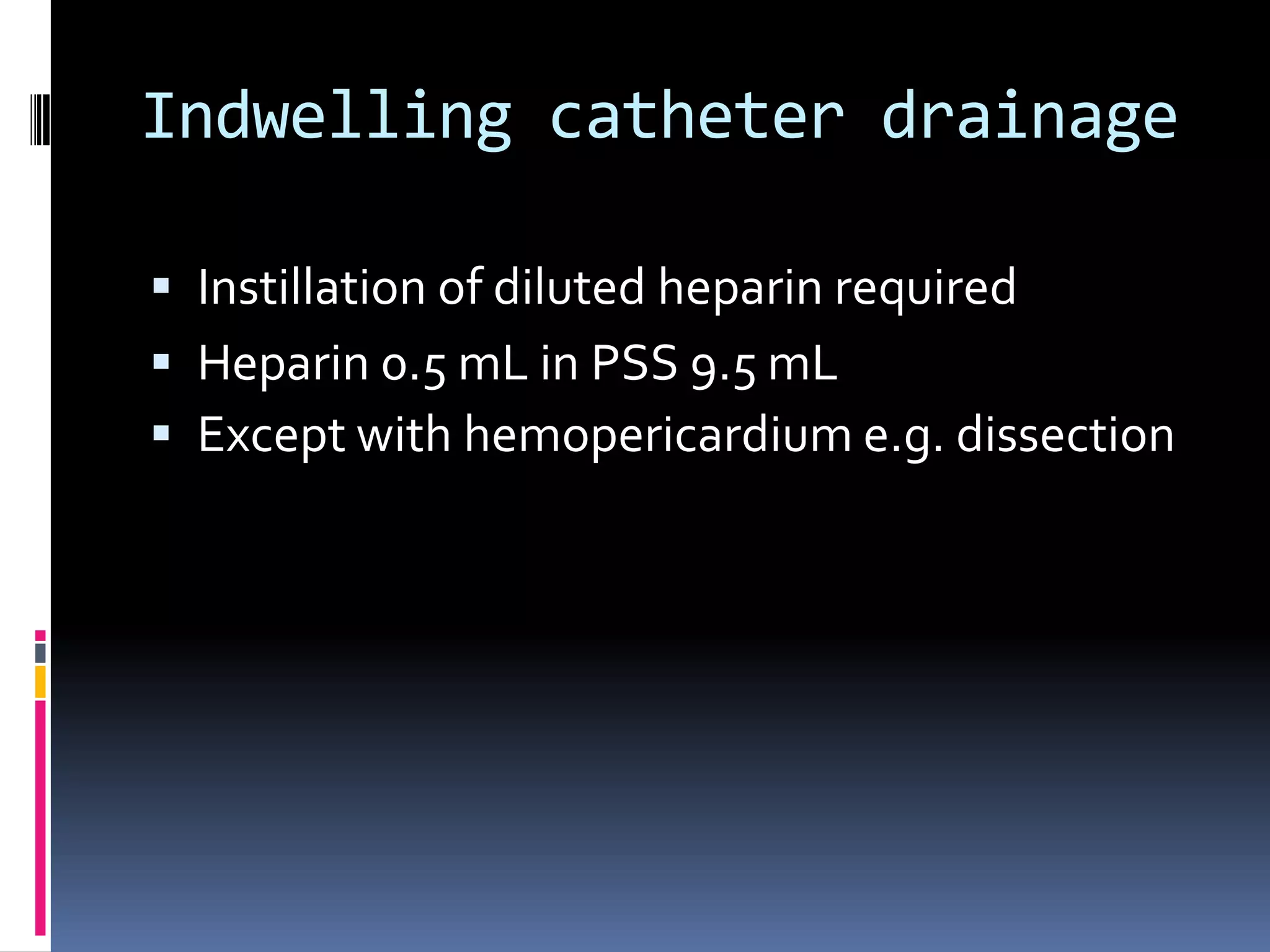
 Instillation of diluted heparin required
 Heparin 0.5 mL in PSS 9.5 mL
 Except with hemopericardium e.g. dissection
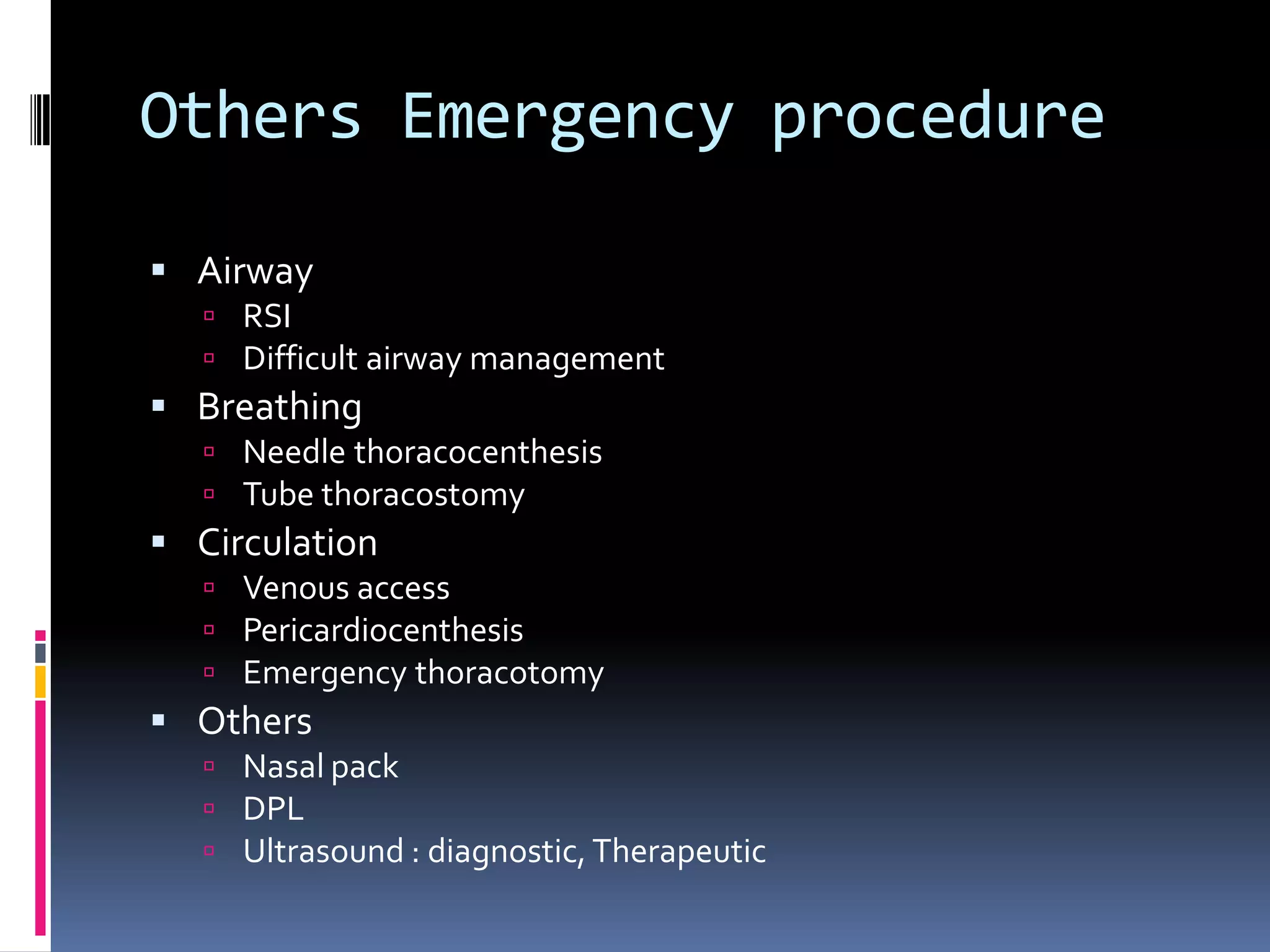
Others Emergency procedure

 Airway
    RSI
    Difficult airway management
 Breathing
    Needle thoracocenthesis
    Tube thoracostomy
 Circulation
    Venous access
    Pericardiocenthesis
    Emergency thoracotomy
 Others
    Nasal pack
    DPL
    Ultrasound : diagnostic, Therapeutic
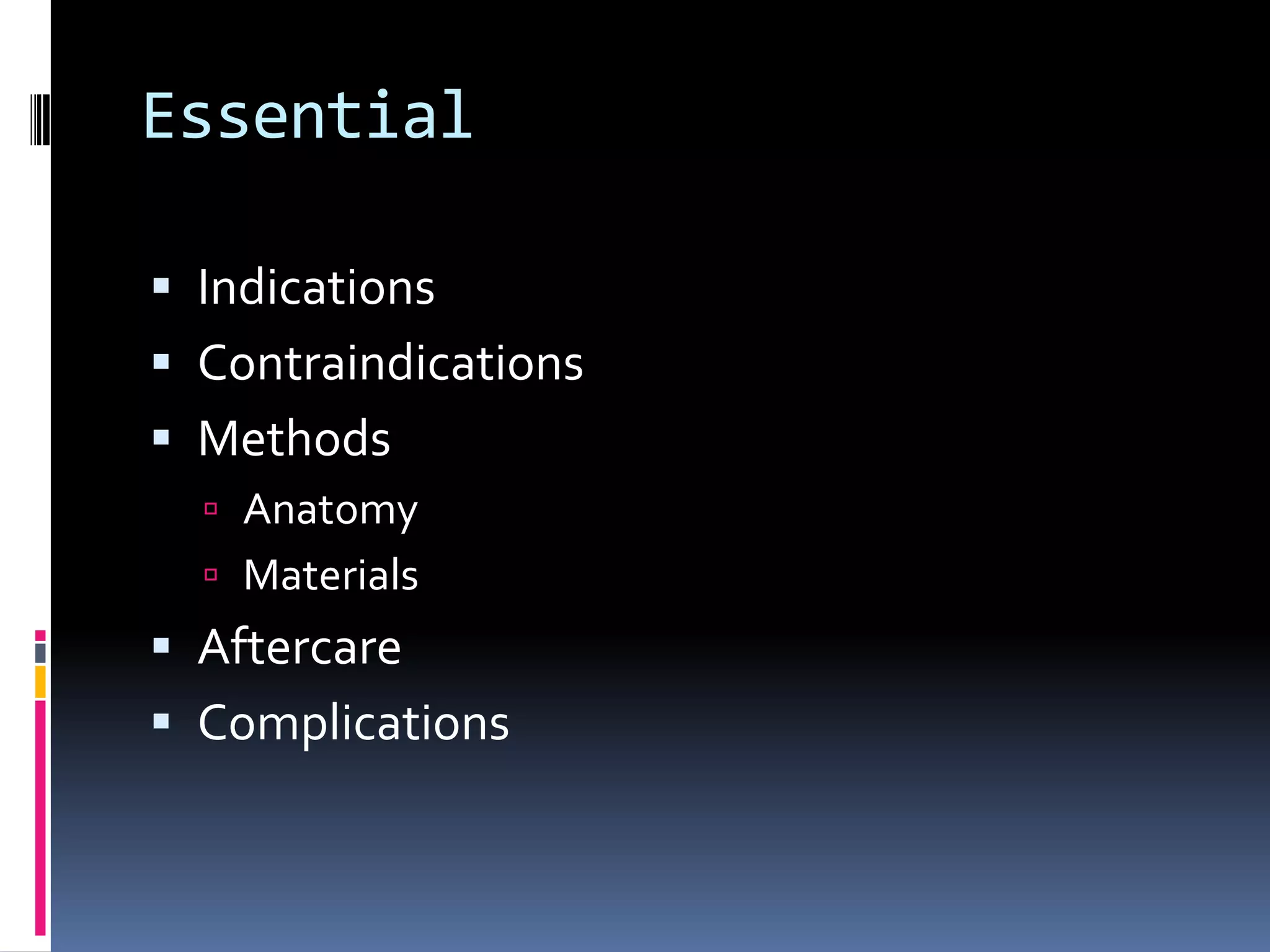
Essential

 Indications
 Contraindications
 Methods
   Anatomy
   Materials
 Aftercare
 Complications
Vascular Access And Others Essentail Procedures

Vascular Access And Others Essentail Procedures