K.THIYAGU, Assistant Professor, Department of Education, Central University of Kerala, Kasaragod
Variables
The quantity or condition
that can change
(anything that has a quantity or
quality that varies)
Independent
(A variable that we can control)
Cause
X Y
Independent Variable (IV)
also called
exposure,
explanatory,
manipulated variables
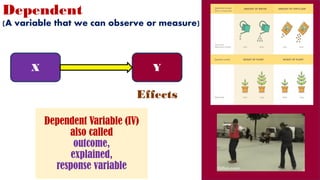
Dependent
(A variable that we can observe or measure)
Effects
X Y
Dependent Variable (IV)
also called
outcome,
explained,
response variable
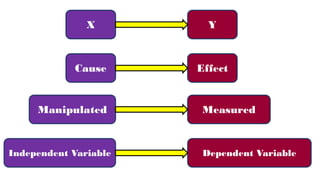
X Y
Cause Effect
Manipulated Measured
Independent Variable Dependent Variable
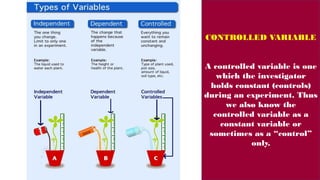
CONTROLLED VARIABLE
A controlled variable is one
which the investigator
holds constant (controls)
during an experiment. Thus
we also know the
controlled variable as a
constant variable or
sometimes as a “control”
only.
Z: Confounding, Mediating and Moderating Variables
X Y
Z ?
Confounding Variables
X Y
Z
Confounder Both X and Y are affected by Z
Subject
Interest
Hours
of Study
Exam
Score
Mediating Variable
X Y
Z
Mediator A part of the association between X and Y goes through Z
Practice
Problems
Hours
of Study
Exam
Score
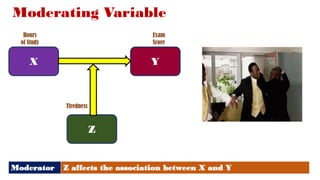
Moderating Variable
X Y
Z
Moderator Z affects the association between X and Y
Tiredness
Hours
of Study
Exam
Score
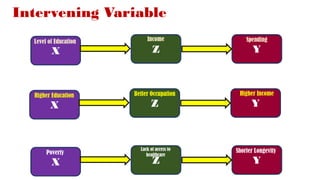
X YZ
Level of Education
Intervening Variable
SpendingIncome
X YZ
Higher Education Higher IncomeBetter Occupation
X YZ
Poverty Shorter LongevityLack of access to
healthcare
Active Variable
Variables which can be
manipulated
(The variables that the researcher creates
are the active variables.)
Active variables can also be
independent variables.
E.g. Effectiveness of Flipped Classroom
Strategies on achievement.
Attribute Variable
Variables which cannot be
manipulated
(variable where we do not alter the variable
during the study)
It can also be the
independent variable
Eg: age, gender, blood group, color of eyes, etc.
We might want to study the effect of age on weight.
We cannot change a person's age,
but we can study people of different ages and weights.
Demographic Variables
Demographic variables are characteristics or
attributes of subjects that are collected to
describe the sample.
They are also called sample characteristics.
It means these variables describe study sample
and determine if samples are representative of
the population of interest.
Eg: age, gender, occupation, marital status,
income etc.
Dichotomous
Variable
Gender: Male and female
Locality: Rural and Urban
Pregnant and non pregnant
Alive and dead
Literate and illiterate
Trichotomous
Variable
Residence:
Urban, semi urban and
rural
Religion:
Hindu, Muslim, and
Christianity
Multiple
Variables
Blood groups: A,B,AB and O
Extraneous Variables
An extraneous variable refers to any variables that you
are not intentionally studying (or cannot study, perhaps
because of reasons of cost or difficulty)
Any variable that you are not intentionally studying in
your dissertation is an extraneous variable that could
threaten the internal validity of your results
When an extraneous variable changes systematically along
with the variables that you are studying, this is called
a confounding variable.
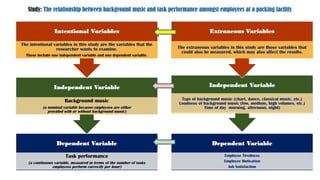
Dependent Variable
Task performance
(a continuous variable, measured in terms of the number of tasks
employees perform correctly per hour)
Independent Variable
Background music
(a nominal variable because employees are either
provided with or without background music)
Intentional Variables
The intentional variables in this study are the variables that the
researcher wants to examine.
These include one independent variable and one dependent variable.
Dependent Variable
Employee Tiredness
Employee Motivation
Job Satisfaction
Independent Variable
Type of background music (chart, dance, classical music, etc.)
Loudness of background music (low, medium, high volumes, etc.)
Time of day morning, afternoon, night)
Extraneous Variables
The extraneous variables in this study are those variables that
could also be measured, which may also affect the results.
Study: The relationship between background music and task performance amongst employees at a packing facility
Dependent Variable
Exam performance
(statistics exam ranging from 0-100 marks)
Independent Variable
Learning Format/Teaching Style
(either lectures or seminars)
Intentional Variables
The intentional variables in this study are the variables that the
researcher wants to examine.
These include one independent variable and one dependent variable.
Dependent Variable
Student Tiredness
Independent Variable
Quality of lecturer vs. seminars; teacher
Extraneous Variables
The extraneous variables in this study are those variables that
could also be measured, which may also affect the results.
Study: The impact of learning format/teaching style (lectures/seminars) on exam performance
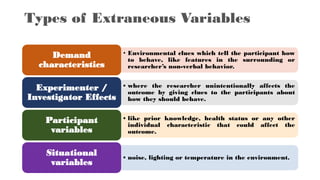
Types of Extraneous Variables
• Environmental clues which tell the participant how
to behave, like features in the surrounding or
researcher’s non-verbal behavior.
Demand
characteristics
• where the researcher unintentionally affects the
outcome by giving clues to the participants about
how they should behave.
Experimenter /
Investigator Effects
• like prior knowledge, health status or any other
individual characteristic that could affect the
outcome.
Participant
variables
• noise, lighting or temperature in the environment.
Situational
variables
Measuring Variables
Ratio
Quantitative Ordered Equal Intervals Absolute Zero
Interval
Quantitative Ordered Equal Intervals
Ordinal
Quantitative Ordered
Nominal
Categorical
Composite Variable
A composite variable is a variable created
by combining two or more individual
variables, called indicators, into a single
variable.
Each indicator alone doesn't provide
sufficient information, but altogether they
can represent the more complex concept.
Think of the indicators as pieces of a
puzzle that must be fit together to see the
big picture.
Variables of the Study

Variables of the Study

  • 1.
    K.THIYAGU, Assistant Professor,Department of Education, Central University of Kerala, Kasaragod
  • 2.
    Variables The quantity orcondition that can change (anything that has a quantity or quality that varies)
  • 3.
    Independent (A variable thatwe can control) Cause X Y Independent Variable (IV) also called exposure, explanatory, manipulated variables
  • 4.
    Dependent (A variable thatwe can observe or measure) Effects X Y Dependent Variable (IV) also called outcome, explained, response variable
  • 5.
    X Y Cause Effect ManipulatedMeasured Independent Variable Dependent Variable
  • 6.
    CONTROLLED VARIABLE A controlledvariable is one which the investigator holds constant (controls) during an experiment. Thus we also know the controlled variable as a constant variable or sometimes as a “control” only.
  • 7.
    Z: Confounding, Mediatingand Moderating Variables X Y Z ?
  • 8.
    Confounding Variables X Y Z ConfounderBoth X and Y are affected by Z Subject Interest Hours of Study Exam Score
  • 9.
    Mediating Variable X Y Z MediatorA part of the association between X and Y goes through Z Practice Problems Hours of Study Exam Score
  • 10.
    Moderating Variable X Y Z ModeratorZ affects the association between X and Y Tiredness Hours of Study Exam Score
  • 11.
    X YZ Level ofEducation Intervening Variable SpendingIncome X YZ Higher Education Higher IncomeBetter Occupation X YZ Poverty Shorter LongevityLack of access to healthcare
  • 12.
    Active Variable Variables whichcan be manipulated (The variables that the researcher creates are the active variables.) Active variables can also be independent variables. E.g. Effectiveness of Flipped Classroom Strategies on achievement. Attribute Variable Variables which cannot be manipulated (variable where we do not alter the variable during the study) It can also be the independent variable Eg: age, gender, blood group, color of eyes, etc. We might want to study the effect of age on weight. We cannot change a person's age, but we can study people of different ages and weights.
  • 13.
    Demographic Variables Demographic variablesare characteristics or attributes of subjects that are collected to describe the sample. They are also called sample characteristics. It means these variables describe study sample and determine if samples are representative of the population of interest. Eg: age, gender, occupation, marital status, income etc.
  • 14.
    Dichotomous Variable Gender: Male andfemale Locality: Rural and Urban Pregnant and non pregnant Alive and dead Literate and illiterate Trichotomous Variable Residence: Urban, semi urban and rural Religion: Hindu, Muslim, and Christianity Multiple Variables Blood groups: A,B,AB and O
  • 15.
    Extraneous Variables An extraneousvariable refers to any variables that you are not intentionally studying (or cannot study, perhaps because of reasons of cost or difficulty) Any variable that you are not intentionally studying in your dissertation is an extraneous variable that could threaten the internal validity of your results When an extraneous variable changes systematically along with the variables that you are studying, this is called a confounding variable.
  • 16.
    Dependent Variable Task performance (acontinuous variable, measured in terms of the number of tasks employees perform correctly per hour) Independent Variable Background music (a nominal variable because employees are either provided with or without background music) Intentional Variables The intentional variables in this study are the variables that the researcher wants to examine. These include one independent variable and one dependent variable. Dependent Variable Employee Tiredness Employee Motivation Job Satisfaction Independent Variable Type of background music (chart, dance, classical music, etc.) Loudness of background music (low, medium, high volumes, etc.) Time of day morning, afternoon, night) Extraneous Variables The extraneous variables in this study are those variables that could also be measured, which may also affect the results. Study: The relationship between background music and task performance amongst employees at a packing facility
  • 17.
    Dependent Variable Exam performance (statisticsexam ranging from 0-100 marks) Independent Variable Learning Format/Teaching Style (either lectures or seminars) Intentional Variables The intentional variables in this study are the variables that the researcher wants to examine. These include one independent variable and one dependent variable. Dependent Variable Student Tiredness Independent Variable Quality of lecturer vs. seminars; teacher Extraneous Variables The extraneous variables in this study are those variables that could also be measured, which may also affect the results. Study: The impact of learning format/teaching style (lectures/seminars) on exam performance
  • 18.
    Types of ExtraneousVariables • Environmental clues which tell the participant how to behave, like features in the surrounding or researcher’s non-verbal behavior. Demand characteristics • where the researcher unintentionally affects the outcome by giving clues to the participants about how they should behave. Experimenter / Investigator Effects • like prior knowledge, health status or any other individual characteristic that could affect the outcome. Participant variables • noise, lighting or temperature in the environment. Situational variables
  • 19.
    Measuring Variables Ratio Quantitative OrderedEqual Intervals Absolute Zero Interval Quantitative Ordered Equal Intervals Ordinal Quantitative Ordered Nominal Categorical
  • 20.
    Composite Variable A compositevariable is a variable created by combining two or more individual variables, called indicators, into a single variable. Each indicator alone doesn't provide sufficient information, but altogether they can represent the more complex concept. Think of the indicators as pieces of a puzzle that must be fit together to see the big picture.