

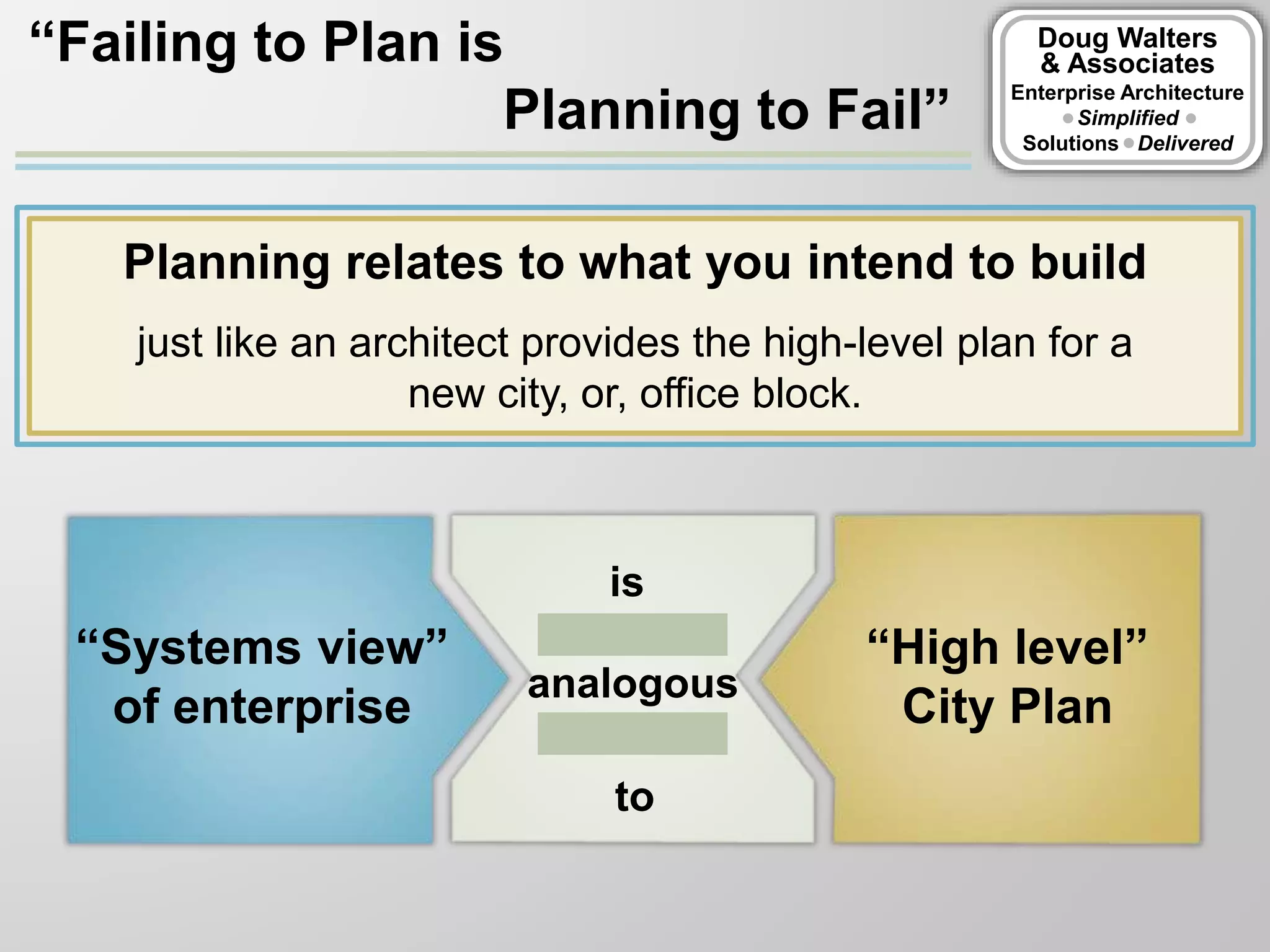


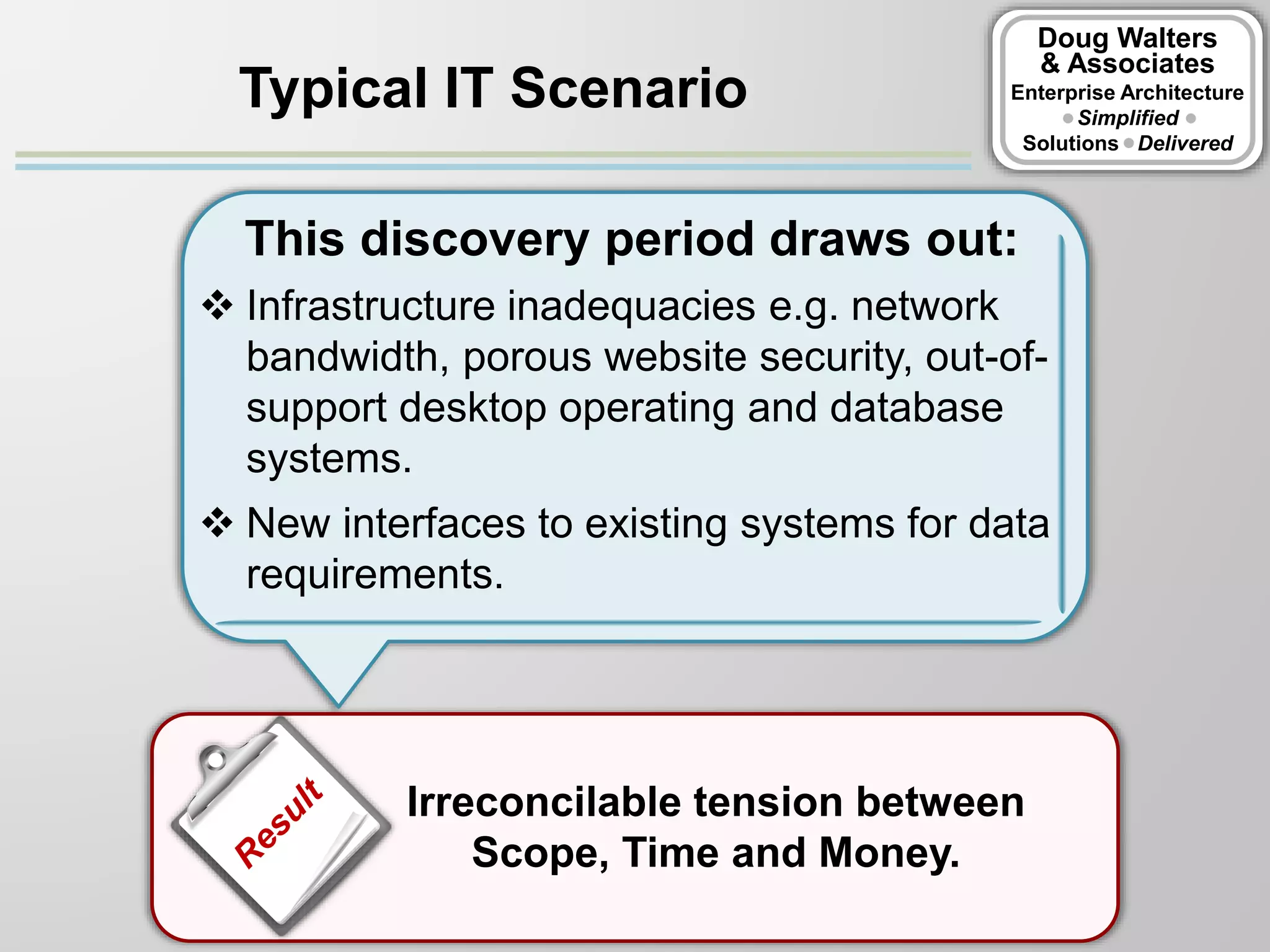

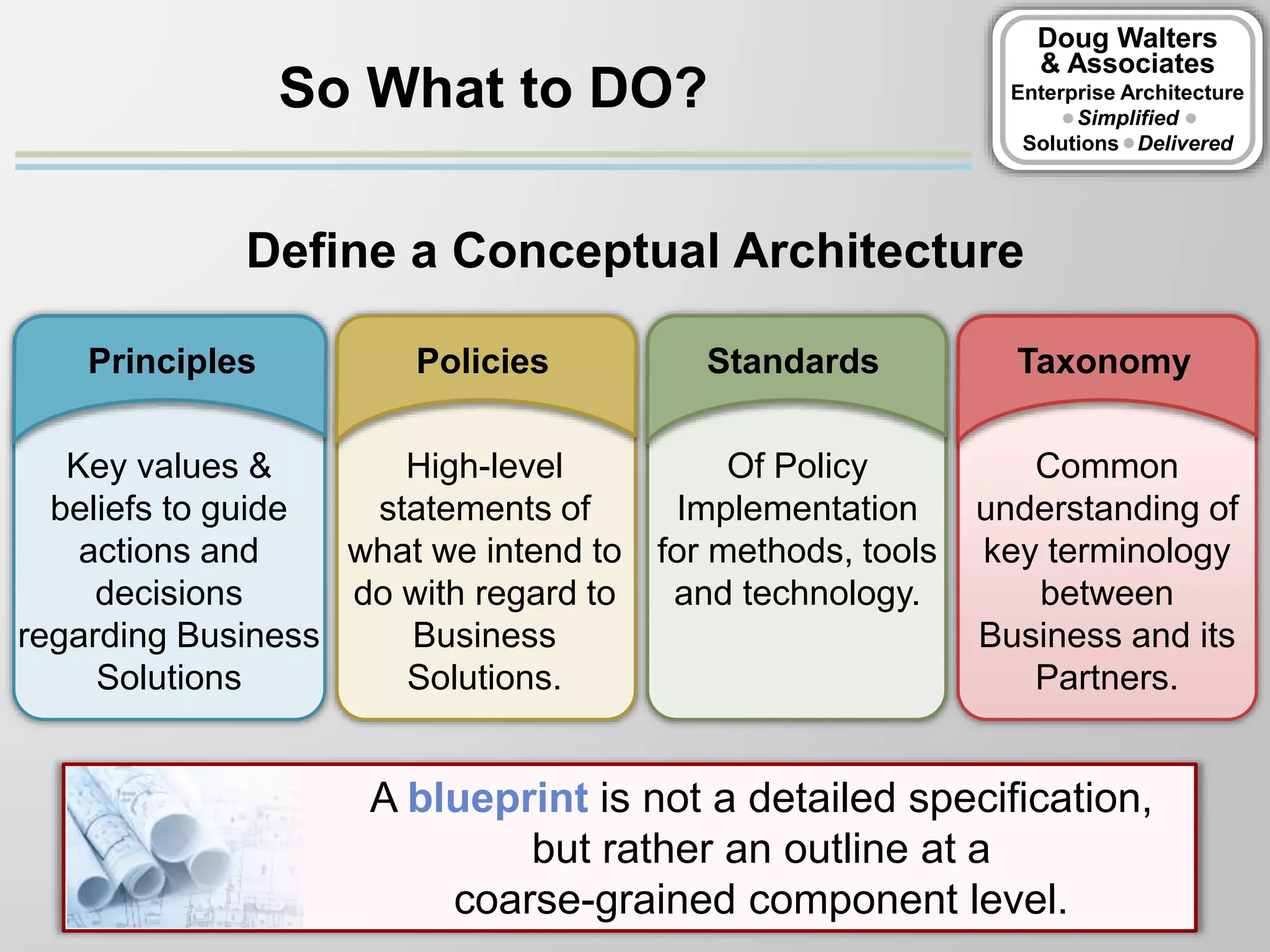
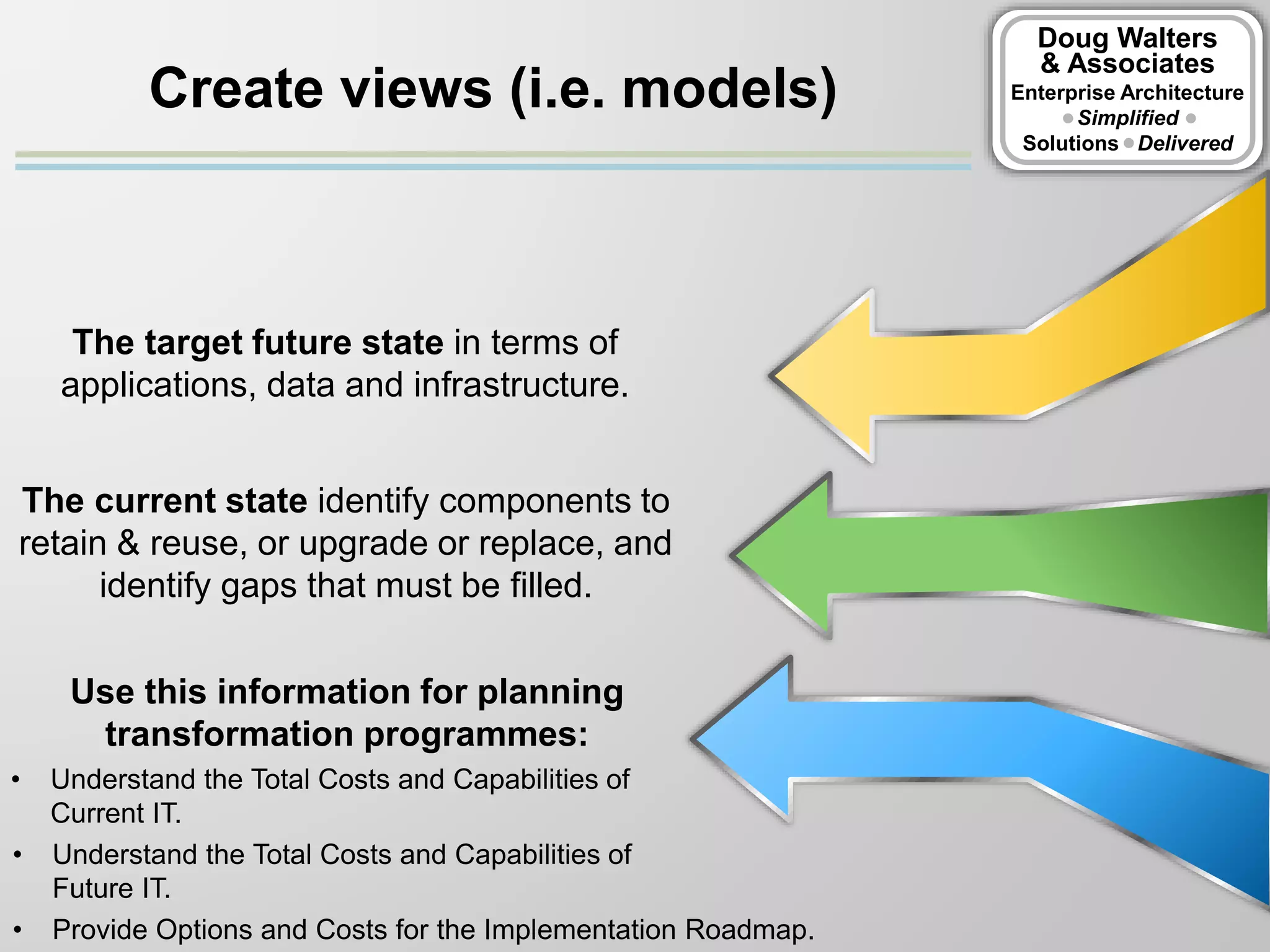

This document discusses the importance of enterprise architecture and planning for business solutions. It argues that failing to plan is like planning to fail, and provides examples of how individual systems developed without an overall plan can result in issues like those seen in the Winchester Mystery House. The document recommends defining a conceptual architecture with principles, policies, standards and taxonomy to provide a blueprint or high-level plan before embarking on projects. This helps understand current and future costs and capabilities, and provides a roadmap to transform systems in a coordinated way rather than creating duplicative, incompatible or unsustainable solutions.


