Value of TMT
Exercise testing
• It is better known as Exercise electrocardiographic testing.
• It most fundamental and widely used tests for the evaluation of
patients with cardiovascular disease (CVD).
• Initially developed to detect the presence of myocardial ischemia
secondary to coronary artery disease (CAD)
• Now recognized for its power in predicting prognosis.
Other uses
• Valvular heart disease
• Congenital heart disease
• Genetic cardiovascular conditions.
• Arrhythmias.
• Peripheral arterial disease (PAD).
Physiology of exercise testing
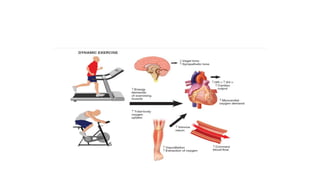
TOTAL BODY OXYGEN UPTAKE:
• Energy requirements at rest and for any given amount of physical
activity (work rate) can be estimated from measurements of total-
body oxygen uptake (V O2).
• VO2 is equal to the product of cardiac output and oxygen extraction
at the periphery.
• VO2 is easily expressed in multiples of resting oxygen requirements
(metabolic equivalents [METs].
• 1 MET being resting energy expenditure and defined as approximately
3.5 mL oxygen/kg body weight/min.
• Therefore, 5-MET activity requires five times the energy expenditure
at rest.
• VO2max is the peak oxygen uptake achieved during performance of
the highest level of dynamic exercise involving large muscle groups.
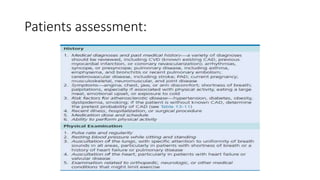
Patients assessment:
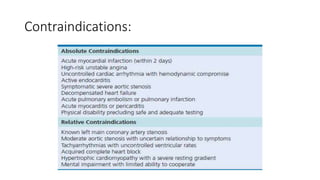
Contraindications:
Exercise Test Modality and Protocols
• Patient’s estimated functional capacity based on age, estimated
physical fitness from the patient’s history, and underlying disease.
• Treadmill and stationary cycle ergometers.
• use stepped or continuous ramp protocols
• Work rate increments (stages) during stepped protocols can vary from
1 to 2.5 METs.
• Ramp protocols are designed with stages that are no longer than 1
minute and for the patient to attain peak effort within 8 to 12
minutes.
• Ramp protocols must be individualized and selected to accommodate
the patient’s estimated exercise capacity.
• Submaximal tests are used in patients early after myocardial
infarction before discharge from the hospital because they can
provide prognostic information to guide management.
• They are useful in the evaluation of a patient’s ability to engage in
daily activities after discharge and in addition serve as a baseline for
cardiac rehabilitative exercise therapy
TMT
• Treadmill testing provides a more common form of physiologic stress
(i.e., walking) in which
• In this subjects are more likely to attain a higher oxygen uptake and
peak heart rate than during stationary cycling
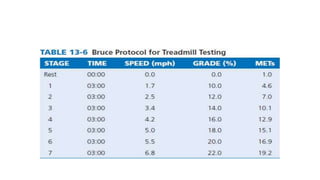
• The most frequently used stepped treadmill protocols are the Bruce
protocol.
• Patients should be encouraged to walk freely and use the handrails
for balance only when necessary.
• This will prevent overestimation of exercise capacity and an
inaccurate heart rate– and blood pressure–to-workload relationship.
• Exercise capacity (peak METs) can be reasonably estimated for
treadmill exercise
Stationary Cycle
• Cycle ergometer is smaller, quieter, and less expensive than a
treadmill.
• Quality electrocardiographic recordings and blood pressure
measurements are easier to obtain.
• Involves cycling at a given pace against an external force and is
generally independent of the patient’s body weight, which is
supported by the seat.
Cardiopulmonary Exercise Testing.
• It uses ventilatory gas exchange analysis during exercise to provide a
more reliable and reproducible measure of VO2.
• Peak VO2 is the most accurate measure of exercise capacity and is a
useful reflection of overall cardiopulmonary health.
Exercise test supervision
• Patients be screened before exercise testing to assess their risk for an
exercise-related adverse event.
• Personal supervision requires a physician’s presence in the room only
if the screening has labelled high risk for TMT.
• It is supervised by nonphysician staff members but physician should
be available to attend emergency.
Risk of exercise testing
• It has an increased risk for an adverse cardiovascular event.
• Recent myocardial infarction, reduced left ventricular systolic
function, exertion-induced myocardial ischemia, and serious
ventricular arrhythmias are at highest risk.
• Safety of exercise testing is well documented and the overall risk for
adverse events is quite low.
• Major complications (including myocardial infarction and other events
requiring hospitalization) was less than 1 to as high as 5 per 10,000
tests.
• The rate of death was less than 0.5 per 10,000 tests.
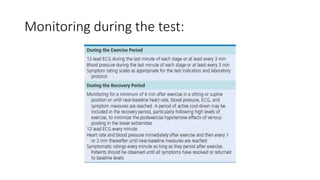
Monitoring during the test:
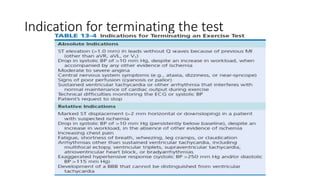
Indication for terminating the test
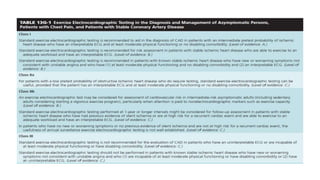
Diagnostic utility:
• Pre test probability
• Prognostic utilization
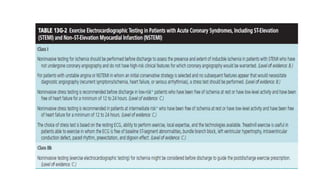
• Acute coronary syndrome
• Post MI risk stratification
• Role in chest pain unit
• Thank you

Value of tmt

  • 1.
  • 2.
    Exercise testing • Itis better known as Exercise electrocardiographic testing. • It most fundamental and widely used tests for the evaluation of patients with cardiovascular disease (CVD).
  • 3.
    • Initially developedto detect the presence of myocardial ischemia secondary to coronary artery disease (CAD) • Now recognized for its power in predicting prognosis.
  • 4.
    Other uses • Valvularheart disease • Congenital heart disease • Genetic cardiovascular conditions. • Arrhythmias. • Peripheral arterial disease (PAD).
  • 5.
    Physiology of exercisetesting TOTAL BODY OXYGEN UPTAKE: • Energy requirements at rest and for any given amount of physical activity (work rate) can be estimated from measurements of total- body oxygen uptake (V O2). • VO2 is equal to the product of cardiac output and oxygen extraction at the periphery. • VO2 is easily expressed in multiples of resting oxygen requirements (metabolic equivalents [METs].
  • 6.
    • 1 METbeing resting energy expenditure and defined as approximately 3.5 mL oxygen/kg body weight/min. • Therefore, 5-MET activity requires five times the energy expenditure at rest. • VO2max is the peak oxygen uptake achieved during performance of the highest level of dynamic exercise involving large muscle groups.
  • 8.
  • 9.
  • 10.
    Exercise Test Modalityand Protocols • Patient’s estimated functional capacity based on age, estimated physical fitness from the patient’s history, and underlying disease. • Treadmill and stationary cycle ergometers. • use stepped or continuous ramp protocols
  • 11.
    • Work rateincrements (stages) during stepped protocols can vary from 1 to 2.5 METs. • Ramp protocols are designed with stages that are no longer than 1 minute and for the patient to attain peak effort within 8 to 12 minutes. • Ramp protocols must be individualized and selected to accommodate the patient’s estimated exercise capacity.
  • 12.
    • Submaximal testsare used in patients early after myocardial infarction before discharge from the hospital because they can provide prognostic information to guide management. • They are useful in the evaluation of a patient’s ability to engage in daily activities after discharge and in addition serve as a baseline for cardiac rehabilitative exercise therapy
  • 13.
    TMT • Treadmill testingprovides a more common form of physiologic stress (i.e., walking) in which • In this subjects are more likely to attain a higher oxygen uptake and peak heart rate than during stationary cycling • The most frequently used stepped treadmill protocols are the Bruce protocol.
  • 15.
    • Patients shouldbe encouraged to walk freely and use the handrails for balance only when necessary. • This will prevent overestimation of exercise capacity and an inaccurate heart rate– and blood pressure–to-workload relationship. • Exercise capacity (peak METs) can be reasonably estimated for treadmill exercise
  • 16.
    Stationary Cycle • Cycleergometer is smaller, quieter, and less expensive than a treadmill. • Quality electrocardiographic recordings and blood pressure measurements are easier to obtain. • Involves cycling at a given pace against an external force and is generally independent of the patient’s body weight, which is supported by the seat.
  • 17.
    Cardiopulmonary Exercise Testing. •It uses ventilatory gas exchange analysis during exercise to provide a more reliable and reproducible measure of VO2. • Peak VO2 is the most accurate measure of exercise capacity and is a useful reflection of overall cardiopulmonary health.
  • 18.
    Exercise test supervision •Patients be screened before exercise testing to assess their risk for an exercise-related adverse event. • Personal supervision requires a physician’s presence in the room only if the screening has labelled high risk for TMT. • It is supervised by nonphysician staff members but physician should be available to attend emergency.
  • 19.
    Risk of exercisetesting • It has an increased risk for an adverse cardiovascular event. • Recent myocardial infarction, reduced left ventricular systolic function, exertion-induced myocardial ischemia, and serious ventricular arrhythmias are at highest risk. • Safety of exercise testing is well documented and the overall risk for adverse events is quite low.
  • 20.
    • Major complications(including myocardial infarction and other events requiring hospitalization) was less than 1 to as high as 5 per 10,000 tests. • The rate of death was less than 0.5 per 10,000 tests.
  • 21.
  • 22.
  • 23.
    Diagnostic utility: • Pretest probability • Prognostic utilization • Acute coronary syndrome • Post MI risk stratification • Role in chest pain unit
  • 26.

Editor's Notes

  • #17 Pateints are usually unfamiliar with it and may not attain the max threshold