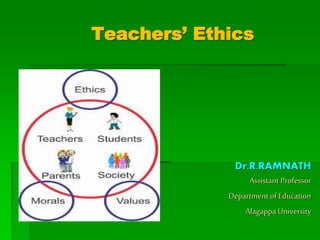
Teachers’ Ethics
Dr.R.RAMNATH
Assistant Professor
Department of Education
Alagappa University
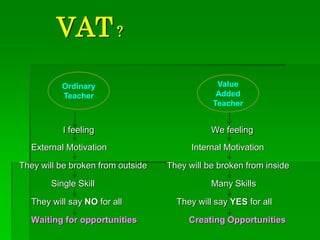
VAT?
I feeling We feeling
External Motivation Internal Motivation
They will be broken from outside They will be broken from inside
Single Skill Many Skills
They will say NO for all They will say YES for all
Waiting for opportunities Creating Opportunities
Ordinary
Teacher
Value
Added
Teacher
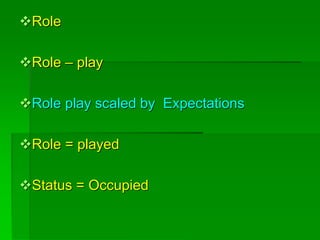
Role
Role – play
Role play scaled by Expectations
Role = played
Status = Occupied
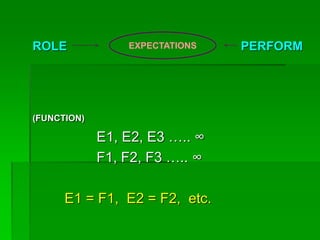
ROLE PERFORM
(FUNCTION)
E1, E2, E3 ….. ∞
F1, F2, F3 ….. ∞
E1 = F1, E2 = F2, etc.
EXPECTATIONS
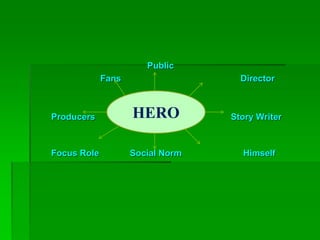
Public
Fans Director
Producers Story Writer
Focus Role Social Norm Himself
HERO
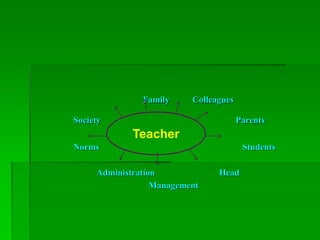
Family Colleagues
Society Parents
Norms Students
Administration Head
Management
Teacher
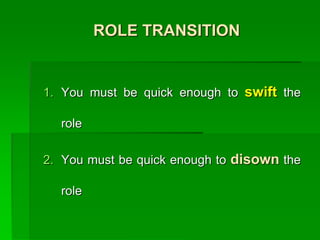
ROLE TRANSITION
1. You must be quick enough to swift the
role
2. You must be quick enough to disown the
role
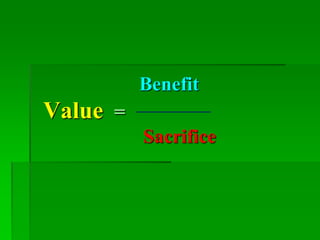
Benefit
Value =
Sacrifice
The National Curriculum
Framework (NCF, 2005 )
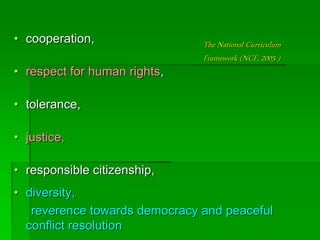
• cooperation,
• respect for human rights,
• tolerance,
• justice,
• responsible citizenship,
• diversity,
reverence towards democracy and peaceful
conflict resolution
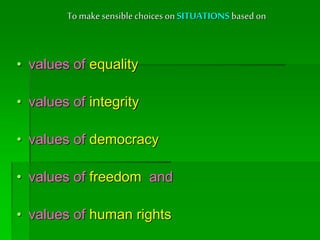
To make sensible choices on SITUATIONS based on
• values of equality
• values of integrity
• values of democracy
• values of freedom and
• values of human rights
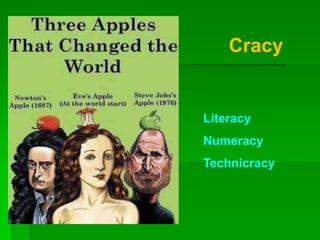
Cracy
Literacy
Numeracy
Technicracy
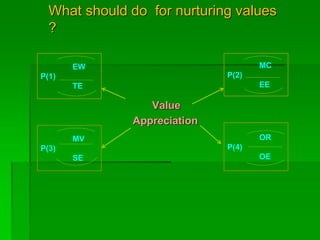
What should do for nurturing values
?
Value
Appreciation
MC
P(2)
EE
MV
P(3)
SE
OR
P(4)
OE
EW
P(1)
TE
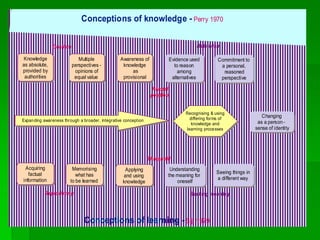
Reproducing Seeking meaning
Dualism Relativism
Expanding awareness through a broader, integrative conception
Conceptions of knowledge - Perry 1970
Conceptions of learning -SŠljŠ, 1979
Pivotal
position
Awareness of
knowledge
as
provisional
Acquiring
factual
information
Evidence used
to reason
among
alternatives
Multiple
perspectives -
opinions of
equal value
Knowledge
as absolute,
provided by
authorities
Changing
as a person-
sense of identity
Memorising
what has
to be learned
Applying
and using
knowledge
Understanding
the meaning for
oneself
Threshold
Recognising & using
differing forms of
knowledge and
learning processes
Commitment to
a personal,
reasoned
perspective
Seeing things in
a different way
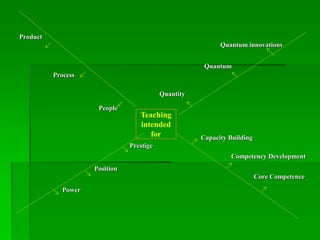
Product
Quantum innovations
Quantum
Process
Quantity
People
Capacity Building
Prestige
Competency Development
Position
Core Competence
Power
Teaching
intended
for
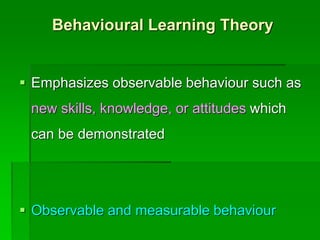
Behavioural Learning Theory
 Emphasizes observable behaviour such as
new skills, knowledge, or attitudes which
can be demonstrated
 Observable and measurable behaviour
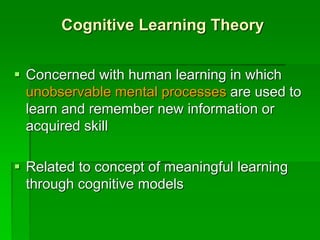
Cognitive Learning Theory
 Concerned with human learning in which
unobservable mental processes are used to
learn and remember new information or
acquired skill
 Related to concept of meaningful learning
through cognitive models
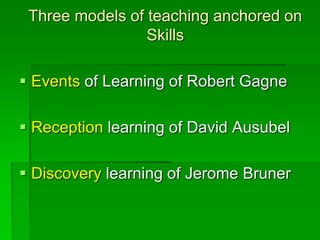
Three models of teaching anchored on
Skills
 Events of Learning of Robert Gagne
 Reception learning of David Ausubel
 Discovery learning of Jerome Bruner
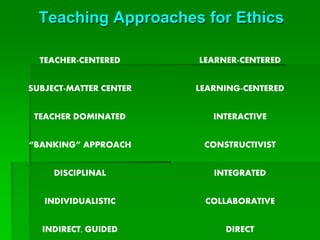
Teaching Approaches for Ethics
TEACHER-CENTERED LEARNER-CENTERED
SUBJECT-MATTER CENTER LEARNING-CENTERED
TEACHER DOMINATED INTERACTIVE
“BANKING” APPROACH CONSTRUCTIVIST
DISCIPLINAL INTEGRATED
INDIVIDUALISTIC COLLABORATIVE
INDIRECT, GUIDED DIRECT
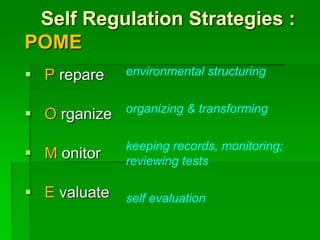
Self Regulation Strategies :
POME
 P repare
 O rganize
 M onitor
 E valuate
environmental structuring
organizing & transforming
keeping records, monitoring;
reviewing tests
self evaluation
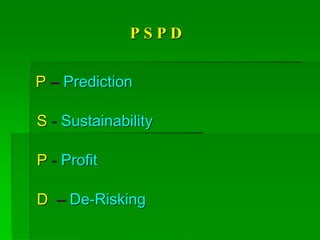
P S P D
P – Prediction
S - Sustainability
P - Profit
D – De-Risking
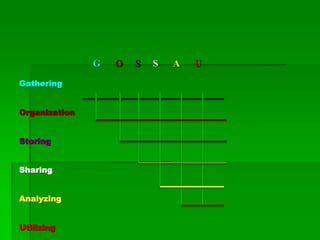
G O S S A U
Gathering
Organization
Storing
Sharing
Analyzing
Utilizing
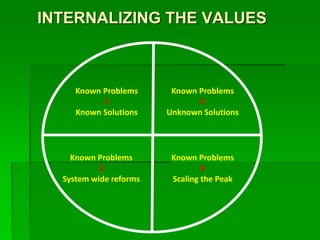
INTERNALIZING THE VALUES
Known Problems
1
Known Solutions
Known Problems
3
System wide reforms
Known Problems
4
Scaling the Peak
Known Problems
2
Unknown Solutions
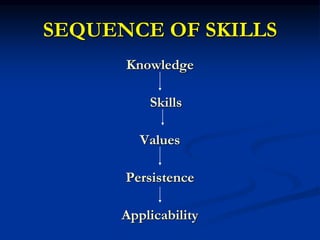
SEQUENCE OF SKILLS
Knowledge
Skills
Values
Persistence
Applicability
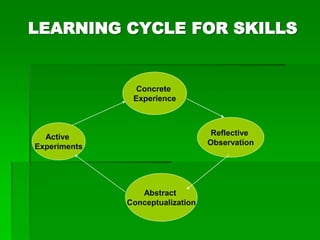
LEARNING CYCLE FOR SKILLS
Concrete
Experience
Reflective
Observation
Active
Experiments
Abstract
Conceptualization
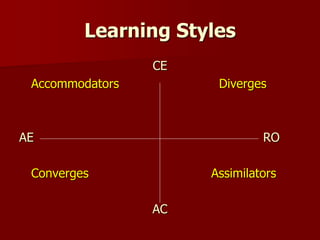
Learning Styles
CE
Accommodators Diverges
AE RO
Converges Assimilators
AC
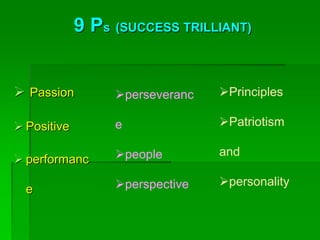
9 Ps (SUCCESS TRILLIANT)
 Passion
 Positive
 performanc
e
perseveranc
e
people
perspective
Principles
Patriotism
and
personality
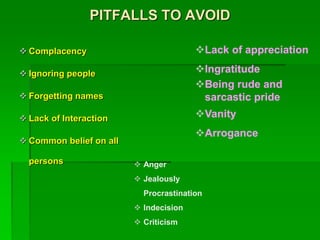
PITFALLS TO AVOID
 Complacency
 Ignoring people
 Forgetting names
 Lack of Interaction
 Common belief on all
persons
Lack of appreciation
Ingratitude
Being rude and
sarcastic pride
Vanity
Arrogance
 Anger
 Jealously
Procrastination
 Indecision
 Criticism
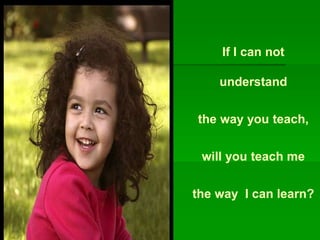
If I can not
understand
the way you teach,
will you teach me
the way I can learn?
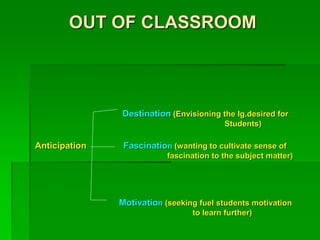
OUT OF CLASSROOM
Destination (Envisioning the lg.desired for
Students)
Anticipation Fascination (wanting to cultivate sense of
fascination to the subject matter)
Motivation (seeking fuel students motivation
to learn further)
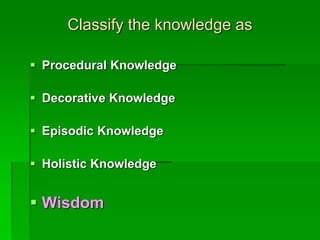
Classify the knowledge as
 Procedural Knowledge
 Decorative Knowledge
 Episodic Knowledge
 Holistic Knowledge
 Wisdom
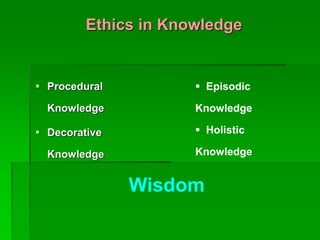
Ethics in Knowledge
 Procedural
Knowledge
 Decorative
Knowledge
 Episodic
Knowledge
 Holistic
Knowledge
Wisdom
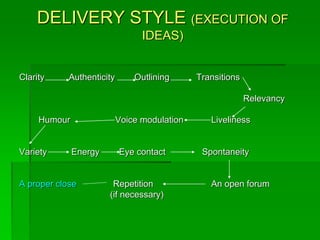
DELIVERY STYLE (EXECUTION OF
IDEAS)
Clarity Authenticity Outlining Transitions
Relevancy
Humour Voice modulation Liveliness
Variety Energy Eye contact Spontaneity
A proper close Repetition An open forum
(if necessary)
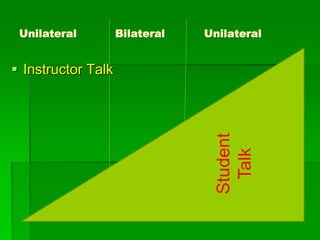
Unilateral Bilateral Unilateral
 Instructor Talk
Student
Talk
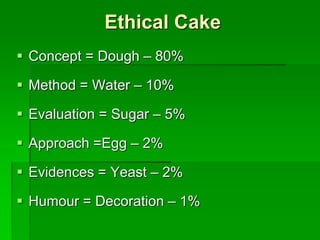
Ethical Cake
 Concept = Dough – 80%
 Method = Water – 10%
 Evaluation = Sugar – 5%
 Approach =Egg – 2%
 Evidences = Yeast – 2%
 Humour = Decoration – 1%
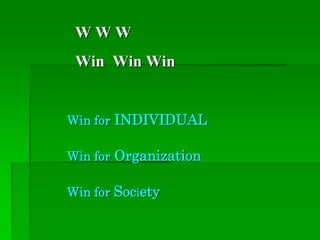
W W W
Win Win Win
Win for INDIVIDUAL
Win for Organization
Win for Society
THANK YOU
rrnathedu@gmail.com
rrnathedn@yahoo.co.in

Value Integration in Teaching and Learning - VITAL

  • 1.
  • 32.
    VAT? I feeling Wefeeling External Motivation Internal Motivation They will be broken from outside They will be broken from inside Single Skill Many Skills They will say NO for all They will say YES for all Waiting for opportunities Creating Opportunities Ordinary Teacher Value Added Teacher
  • 33.
    Role Role – play Roleplay scaled by Expectations Role = played Status = Occupied
  • 34.
    ROLE PERFORM (FUNCTION) E1, E2,E3 ….. ∞ F1, F2, F3 ….. ∞ E1 = F1, E2 = F2, etc. EXPECTATIONS
  • 35.
    Public Fans Director Producers StoryWriter Focus Role Social Norm Himself HERO
  • 36.
    Family Colleagues Society Parents NormsStudents Administration Head Management Teacher
  • 38.
    ROLE TRANSITION 1. Youmust be quick enough to swift the role 2. You must be quick enough to disown the role
  • 39.
  • 40.
    The National Curriculum Framework(NCF, 2005 ) • cooperation, • respect for human rights, • tolerance, • justice, • responsible citizenship, • diversity, reverence towards democracy and peaceful conflict resolution
  • 41.
    To make sensiblechoices on SITUATIONS based on • values of equality • values of integrity • values of democracy • values of freedom and • values of human rights
  • 42.
  • 45.
    What should dofor nurturing values ? Value Appreciation MC P(2) EE MV P(3) SE OR P(4) OE EW P(1) TE
  • 46.
    Reproducing Seeking meaning DualismRelativism Expanding awareness through a broader, integrative conception Conceptions of knowledge - Perry 1970 Conceptions of learning -SŠljŠ, 1979 Pivotal position Awareness of knowledge as provisional Acquiring factual information Evidence used to reason among alternatives Multiple perspectives - opinions of equal value Knowledge as absolute, provided by authorities Changing as a person- sense of identity Memorising what has to be learned Applying and using knowledge Understanding the meaning for oneself Threshold Recognising & using differing forms of knowledge and learning processes Commitment to a personal, reasoned perspective Seeing things in a different way
  • 47.
    Product Quantum innovations Quantum Process Quantity People Capacity Building Prestige CompetencyDevelopment Position Core Competence Power Teaching intended for
  • 49.
    Behavioural Learning Theory Emphasizes observable behaviour such as new skills, knowledge, or attitudes which can be demonstrated  Observable and measurable behaviour
  • 50.
    Cognitive Learning Theory Concerned with human learning in which unobservable mental processes are used to learn and remember new information or acquired skill  Related to concept of meaningful learning through cognitive models
  • 51.
    Three models ofteaching anchored on Skills  Events of Learning of Robert Gagne  Reception learning of David Ausubel  Discovery learning of Jerome Bruner
  • 52.
    Teaching Approaches forEthics TEACHER-CENTERED LEARNER-CENTERED SUBJECT-MATTER CENTER LEARNING-CENTERED TEACHER DOMINATED INTERACTIVE “BANKING” APPROACH CONSTRUCTIVIST DISCIPLINAL INTEGRATED INDIVIDUALISTIC COLLABORATIVE INDIRECT, GUIDED DIRECT
  • 54.
    Self Regulation Strategies: POME  P repare  O rganize  M onitor  E valuate environmental structuring organizing & transforming keeping records, monitoring; reviewing tests self evaluation
  • 55.
    P S PD P – Prediction S - Sustainability P - Profit D – De-Risking
  • 56.
    G O SS A U Gathering Organization Storing Sharing Analyzing Utilizing
  • 57.
    INTERNALIZING THE VALUES KnownProblems 1 Known Solutions Known Problems 3 System wide reforms Known Problems 4 Scaling the Peak Known Problems 2 Unknown Solutions
  • 58.
  • 59.
    LEARNING CYCLE FORSKILLS Concrete Experience Reflective Observation Active Experiments Abstract Conceptualization
  • 61.
  • 62.
    9 Ps (SUCCESSTRILLIANT)  Passion  Positive  performanc e perseveranc e people perspective Principles Patriotism and personality
  • 63.
    PITFALLS TO AVOID Complacency  Ignoring people  Forgetting names  Lack of Interaction  Common belief on all persons Lack of appreciation Ingratitude Being rude and sarcastic pride Vanity Arrogance  Anger  Jealously Procrastination  Indecision  Criticism
  • 64.
    If I cannot understand the way you teach, will you teach me the way I can learn?
  • 65.
    OUT OF CLASSROOM Destination(Envisioning the lg.desired for Students) Anticipation Fascination (wanting to cultivate sense of fascination to the subject matter) Motivation (seeking fuel students motivation to learn further)
  • 66.
    Classify the knowledgeas  Procedural Knowledge  Decorative Knowledge  Episodic Knowledge  Holistic Knowledge  Wisdom
  • 67.
    Ethics in Knowledge Procedural Knowledge  Decorative Knowledge  Episodic Knowledge  Holistic Knowledge Wisdom
  • 68.
    DELIVERY STYLE (EXECUTIONOF IDEAS) Clarity Authenticity Outlining Transitions Relevancy Humour Voice modulation Liveliness Variety Energy Eye contact Spontaneity A proper close Repetition An open forum (if necessary)
  • 69.
    Unilateral Bilateral Unilateral Instructor Talk Student Talk
  • 70.
    Ethical Cake  Concept= Dough – 80%  Method = Water – 10%  Evaluation = Sugar – 5%  Approach =Egg – 2%  Evidences = Yeast – 2%  Humour = Decoration – 1%
  • 87.
    W W W WinWin Win Win for INDIVIDUAL Win for Organization Win for Society
  • 88.