Curriculum Planning and
Development
Reggie O. Cruz, Ed.D.
Student, Ph.D. in Curriculum and Instruction with Specialization in Filipino Language Teaching
Angeles University Foundation
C.I. 601 Curriculum Planning, Implementation and Evaluation
What to Expect?
 Discuss the considerations in Curriculum Design
 Comprehend and Analyze the Technical- Scientific Approach in
Curriculum Design
 Demonstrate understanding through chart on the Non Technical and
Non Scientific Approach in Curriculum Design
Considerations in Curriculum Design
Curriculum Designs – are most observable as
“programs” and as content organizers (Wiles, 2005).
Refers to the way we conceptualize the curriculum
and arrange its major components from subject
matter or content, instructional methods and
materials, learner experiences or activities (Ornstein
and Hunkins, 2009).
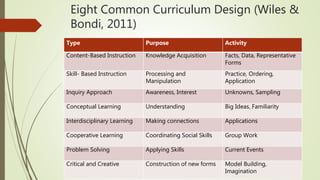
Eight Common Curriculum Design (Wiles &
Bondi, 2011)
Type Purpose Activity
Content-Based Instruction Knowledge Acquisition Facts, Data, Representative
Forms
Skill- Based Instruction Processing and
Manipulation
Practice, Ordering,
Application
Inquiry Approach Awareness, Interest Unknowns, Sampling
Conceptual Learning Understanding Big Ideas, Familiarity
Interdisciplinary Learning Making connections Applications
Cooperative Learning Coordinating Social Skills Group Work
Problem Solving Applying Skills Current Events
Critical and Creative Construction of new forms Model Building,
Imagination
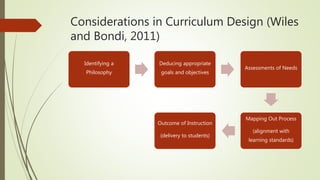
Considerations in Curriculum Design (Wiles
and Bondi, 2011)
Identifying a
Philosophy
Deducing appropriate
goals and objectives
Assessments of Needs
Mapping Out Process
(alignment with
learning standards)
Outcome of Instruction
(delivery to students)
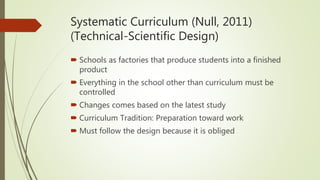
Systematic Curriculum (Null, 2011)
(Technical-Scientific Design)
 Schools as factories that produce students into a finished
product
 Everything in the school other than curriculum must be
controlled
 Changes comes based on the latest study
 Curriculum Tradition: Preparation toward work
 Must follow the design because it is obliged
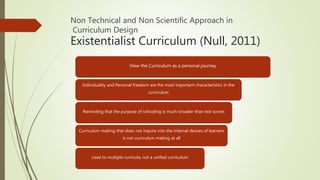
Non Technical and Non Scientific Approach in
Curriculum Design
Existentialist Curriculum (Null, 2011)
View the Curriculum as a personal journey
Individuality and Personal freedom are the most important characteristics in the
curriculum
Reminding that the purpose of schooling is much broader than test scores
Curriculum making that does not inquire into the internal desires of learners
is not curriculum making at all
Lead to multiple curricula, not a unified curriculum
Synthesis
 Curriculum Planning is not easy task and require a lot of energy and considerations
 Curriculum Planner should have an extensive background on the discipline aligned
with the national and international needs
 Scientific Approach is abundant in the Philippine Educational System
 Non Scientific Approach has its pros and cons
 Development and planning should not a single effort but a whole group collective
effort.

Curriculum planning and development

  • 1.
    Curriculum Planning and Development ReggieO. Cruz, Ed.D. Student, Ph.D. in Curriculum and Instruction with Specialization in Filipino Language Teaching Angeles University Foundation C.I. 601 Curriculum Planning, Implementation and Evaluation
  • 2.
    What to Expect? Discuss the considerations in Curriculum Design  Comprehend and Analyze the Technical- Scientific Approach in Curriculum Design  Demonstrate understanding through chart on the Non Technical and Non Scientific Approach in Curriculum Design
  • 3.
    Considerations in CurriculumDesign Curriculum Designs – are most observable as “programs” and as content organizers (Wiles, 2005). Refers to the way we conceptualize the curriculum and arrange its major components from subject matter or content, instructional methods and materials, learner experiences or activities (Ornstein and Hunkins, 2009).
  • 4.
    Eight Common CurriculumDesign (Wiles & Bondi, 2011) Type Purpose Activity Content-Based Instruction Knowledge Acquisition Facts, Data, Representative Forms Skill- Based Instruction Processing and Manipulation Practice, Ordering, Application Inquiry Approach Awareness, Interest Unknowns, Sampling Conceptual Learning Understanding Big Ideas, Familiarity Interdisciplinary Learning Making connections Applications Cooperative Learning Coordinating Social Skills Group Work Problem Solving Applying Skills Current Events Critical and Creative Construction of new forms Model Building, Imagination
  • 5.
    Considerations in CurriculumDesign (Wiles and Bondi, 2011) Identifying a Philosophy Deducing appropriate goals and objectives Assessments of Needs Mapping Out Process (alignment with learning standards) Outcome of Instruction (delivery to students)
  • 6.
    Systematic Curriculum (Null,2011) (Technical-Scientific Design)  Schools as factories that produce students into a finished product  Everything in the school other than curriculum must be controlled  Changes comes based on the latest study  Curriculum Tradition: Preparation toward work  Must follow the design because it is obliged
  • 7.
    Non Technical andNon Scientific Approach in Curriculum Design Existentialist Curriculum (Null, 2011) View the Curriculum as a personal journey Individuality and Personal freedom are the most important characteristics in the curriculum Reminding that the purpose of schooling is much broader than test scores Curriculum making that does not inquire into the internal desires of learners is not curriculum making at all Lead to multiple curricula, not a unified curriculum
  • 8.
    Synthesis  Curriculum Planningis not easy task and require a lot of energy and considerations  Curriculum Planner should have an extensive background on the discipline aligned with the national and international needs  Scientific Approach is abundant in the Philippine Educational System  Non Scientific Approach has its pros and cons  Development and planning should not a single effort but a whole group collective effort.