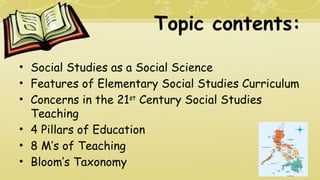





Topic contents:
• Social Studies as a Social Science
• Features of Elementary Social Studies Curriculum
• Concerns in the 21st
Century Social Studies
Teaching
• 4 Pillars of Education
• 8 M’s of Teaching
• Bloom’s Taxonomy
“Social Studies as a
Social Science”
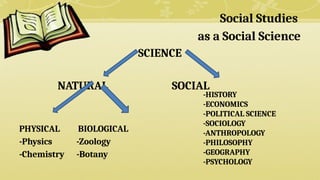
Social Studies
as a Social Science
SCIENCE
NATURAL SOCIAL
PHYSICAL BIOLOGICAL
-Physics -Zoology
-Chemistry -Botany
-HISTORY
-ECONOMICS
-POLITICAL SCIENCE
-SOCIOLOGY
-ANTHROPOLOGY
-PHILOSOPHY
-GEOGRAPHY
-PSYCHOLOGY
Social Science vs
Social Studies
Social Science
• Systematized body of knowledge about human
beings and society
• Emphasized the application of scientific methods
and rigorous standards of evidence to the study of
humanity
• Studies the social life of human groups and
individuals
Social Studies
• Integrated study of Social Science to promote
effective citizenry
• Curriculum vehicle through which the capacities of
disciplinary knowledge, thinking skills, commitment
etc. are being delivered to students
• Broad study of the various fields that involves past
and current human interactions
Social Science vs
Social Studies
“Features of Elementary
Social Studies
Curriculum”
Features of Elementary
Social Studies Curriculum
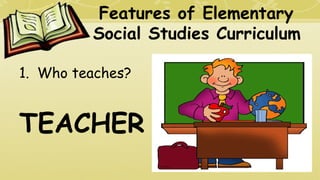
1. Who teaches?
TEACHER
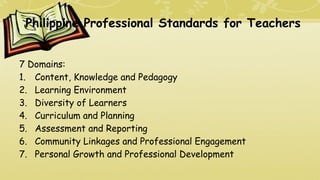
Philippine Professional Standards for Teachers
7 Domains:
1. Content, Knowledge and Pedagogy
2. Learning Environment
3. Diversity of Learners
4. Curriculum and Planning
5. Assessment and Reporting
6. Community Linkages and Professional Engagement
7. Personal Growth and Professional Development
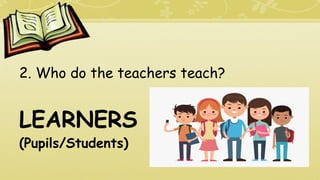
2. Who do the teachers teach?
LEARNERS
(Pupils/Students)
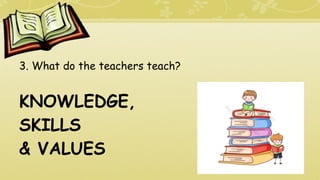
3. What do the teachers teach?
KNOWLEDGE,
SKILLS
& VALUES
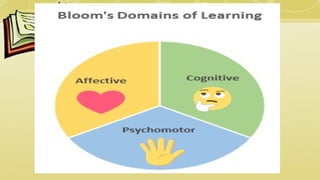
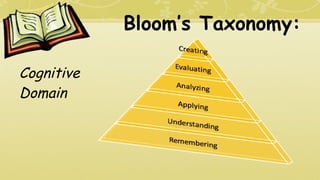
Bloom’s Taxonomy:
Cognitive
Domain
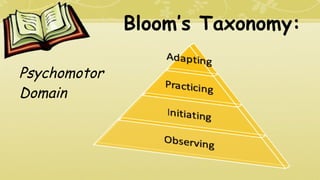
Bloom’s Taxonomy:
Psychomotor
Domain
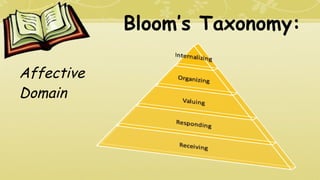
Bloom’s Taxonomy:
Affective
Domain
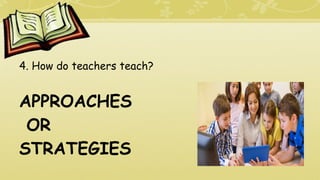
4. How do teachers teach?
APPROACHES
OR
STRATEGIES
Strategies in teaching Social Studies
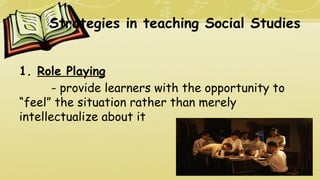
1. Role Playing
- provide learners with the opportunity to
“feel” the situation rather than merely
intellectualize about it
2. Perspective-thinking
-entails “standing in the shoe of the
other and walking in the way for a while”
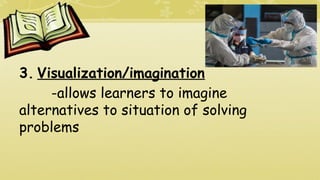
3. Visualization/imagination
-allows learners to imagine
alternatives to situation of solving
problems
4. Reading or writing a quotation
-encourages learners to think or
appreciate better concepts learned in the
session
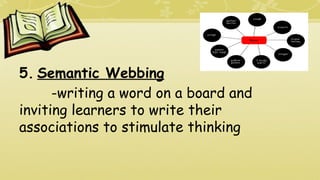
5. Semantic Webbing
-writing a word on a board and
inviting learners to write their
associations to stimulate thinking
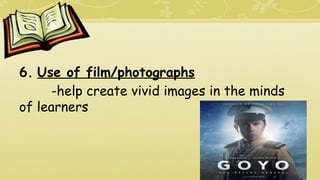
6. Use of film/photographs
-help create vivid images in the minds
of learners
7. Story telling
-helps learners connect with the
story on a more personal basis
8. Song/Poem Analysis
-allows learners to listen or read
them, identify their favorite lines and
interpret messages
5. How much of the teaching was learned?
ACADEMIC
PERFORMANCE
Assessment of Learning
*Assessment is abstract but guided by
terms to make concrete (tools to assess):
1. Measurement (quantitative)
2. Evaluation (qualitative)
6. With whom do we teach?
COMMUNITY
PARTNERS
“Concerns in the 21st
Century Social Studies
Teaching”
As future Social Studies teachers, do you
think what are the concerns in the 21st
Century Social Studies teaching in the
Philippines?
Activity Task
for presentation
Topics:
• 4 Pillars of Education
• 8 M’s of Teaching
Contents:
• Definition
• Examples
4 Pillars of Education:
• Learning to know
• Learning to do
• Learning to live together
• Learning to be
8 M’s of Teaching:
• Motivation
• Milieu
• Materials
• Matter
• Method
• Mastery
• Media
• Measurement
Thank you!
Yosef Eric C. Hipolito, LPT, MAED, MED
Historian, Philippine Historical Association
yoseferichipolito19@gmail.com

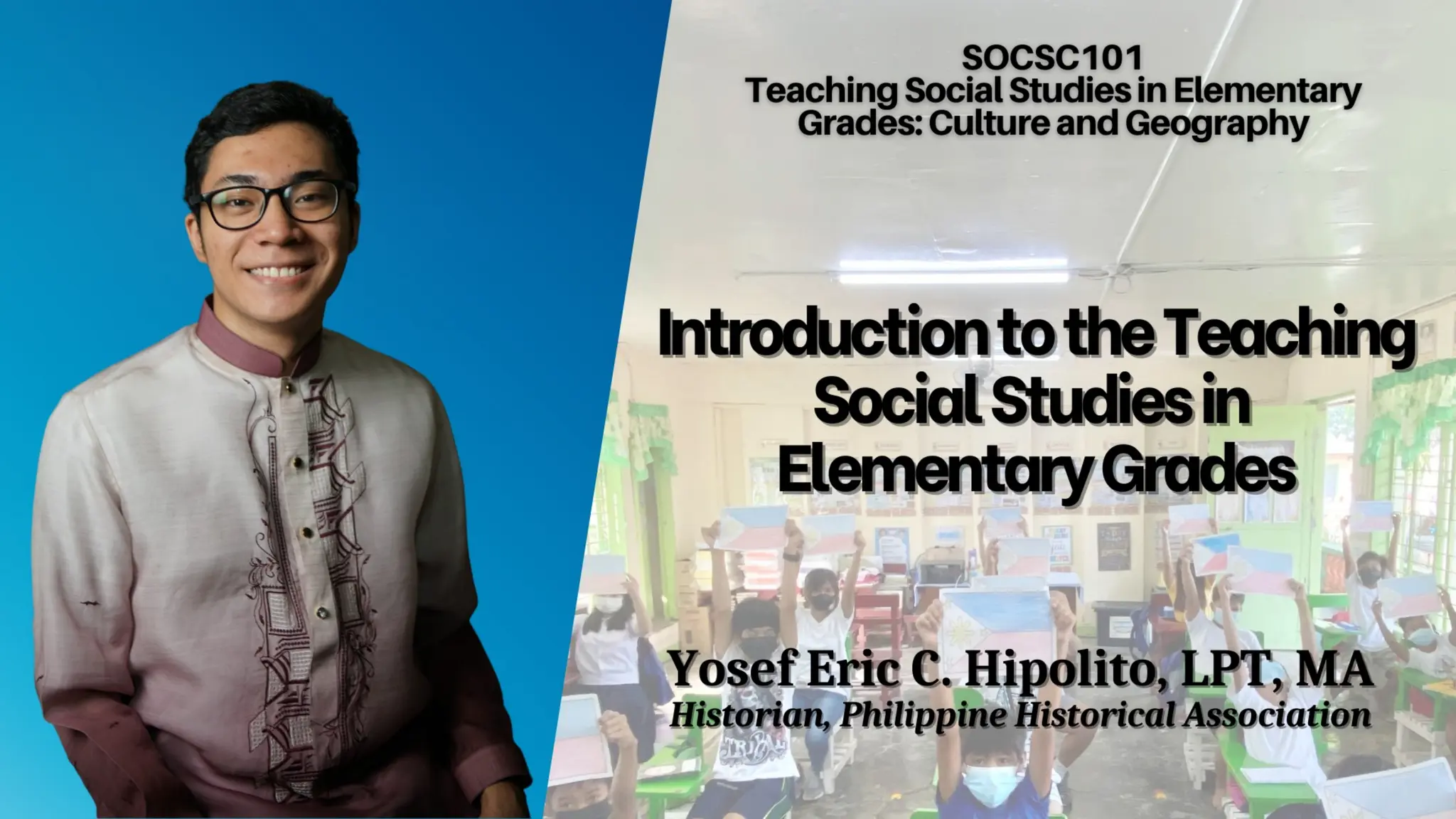
Introduction to the Teaching Social Studies