Validity
Dr. Vicky Kasundra
(MPT Neuro)
• Its refers to the extent to which a test measures (tool or test), what is supposed to
measure
• Validity implies that a measurement is free from error: that is valid test & also
reliable.
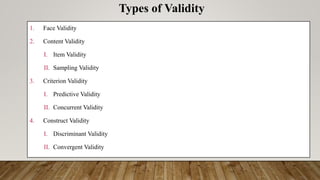
Types of Validity
1. Face Validity
2. Content Validity
I. Item Validity
II. Sampling Validity
3. Criterion Validity
I. Predictive Validity
II. Concurrent Validity
4. Construct Validity
I. Discriminant Validity
II. Convergent Validity
Face Validity
• Extent to which the instruments itself appear to measure what it claims.
• Its concerns overall view, which is often a first impression, without going into
much detail.
• Its subjective , so it can not be quantified.
• when other form of validation isn’t possible that case we used face validity to
support instrument use.
• e.g. Measure tape, just by seeing we can claimed that its used to measure distance.
Content Validity
• Extent to which the content of a measurement instrument is an adequate
reflection of the construct to be measured.
• Its means that the test does contain all the elements that reflect the variable being
studied.
• E.g. McGill pain questionnaire, includes many elements of pain such as types,
duration, intensity so it has greater content validity
• Where as VAS only shows intensity of pain so its has less validity compare to
McGill pain questionnaire.
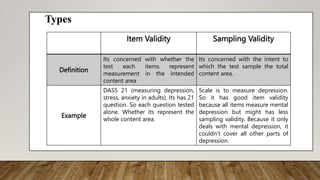
Types
Item Validity Sampling Validity
Definition
Its concerned with whether the
test each items represent
measurement in the intended
content area
Its concerned with the intent to
which the test sample the total
content area.
Example
DASS 21 (measuring depression,
stress, anxiety in adults). Its has 21
question. So each question tested
alone. Whether its represent the
whole content area.
Scale is to measure depression.
So it has good item validity
because all items measure mental
depression but might has less
sampling validity. Because it only
deals with mental depression, it
couldn’t cover all other parts of
depression.
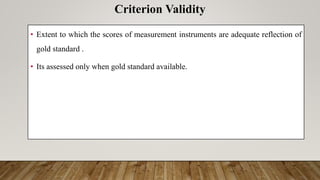
• Extent to which the scores of measurement instruments are adequate reflection of
gold standard .
• Its assessed only when gold standard available.
Criterion Validity
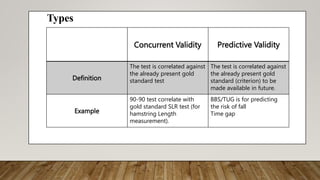
Types
Concurrent Validity Predictive Validity
Definition
The test is correlated against
the already present gold
standard test
The test is correlated against
the already present gold
standard (criterion) to be
made available in future.
Example
90-90 test correlate with
gold standard SLR test (for
hamstring Length
measurement).
BBS/TUG is for predicting
the risk of fall
Time gap
Construct Validity
• In situation in which gold standard is lacking, that time construct validity be used
to provide evidence of validity.
• Less powerful than criterion validity.
• Extent to which a test measure the concept or construct that is intended to
measure.
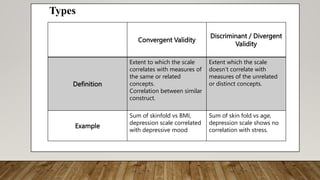
Types
Convergent Validity
Discriminant / Divergent
Validity
Definition
Extent to which the scale
correlates with measures of
the same or related
concepts.
Correlation between similar
construct.
Extent which the scale
doesn’t correlate with
measures of the unrelated
or distinct concepts.
Example
Sum of skinfold vs BMI,
depression scale correlated
with depressive mood
Sum of skin fold vs age,
depression scale shows no
correlation with stress.
Thank You

Validity.pptx

  • 1.
  • 2.
    • Its refersto the extent to which a test measures (tool or test), what is supposed to measure • Validity implies that a measurement is free from error: that is valid test & also reliable.
  • 3.
    Types of Validity 1.Face Validity 2. Content Validity I. Item Validity II. Sampling Validity 3. Criterion Validity I. Predictive Validity II. Concurrent Validity 4. Construct Validity I. Discriminant Validity II. Convergent Validity
  • 4.
    Face Validity • Extentto which the instruments itself appear to measure what it claims. • Its concerns overall view, which is often a first impression, without going into much detail. • Its subjective , so it can not be quantified. • when other form of validation isn’t possible that case we used face validity to support instrument use. • e.g. Measure tape, just by seeing we can claimed that its used to measure distance.
  • 5.
    Content Validity • Extentto which the content of a measurement instrument is an adequate reflection of the construct to be measured. • Its means that the test does contain all the elements that reflect the variable being studied. • E.g. McGill pain questionnaire, includes many elements of pain such as types, duration, intensity so it has greater content validity • Where as VAS only shows intensity of pain so its has less validity compare to McGill pain questionnaire.
  • 6.
    Types Item Validity SamplingValidity Definition Its concerned with whether the test each items represent measurement in the intended content area Its concerned with the intent to which the test sample the total content area. Example DASS 21 (measuring depression, stress, anxiety in adults). Its has 21 question. So each question tested alone. Whether its represent the whole content area. Scale is to measure depression. So it has good item validity because all items measure mental depression but might has less sampling validity. Because it only deals with mental depression, it couldn’t cover all other parts of depression.
  • 7.
    • Extent towhich the scores of measurement instruments are adequate reflection of gold standard . • Its assessed only when gold standard available. Criterion Validity
  • 8.
    Types Concurrent Validity PredictiveValidity Definition The test is correlated against the already present gold standard test The test is correlated against the already present gold standard (criterion) to be made available in future. Example 90-90 test correlate with gold standard SLR test (for hamstring Length measurement). BBS/TUG is for predicting the risk of fall Time gap
  • 9.
    Construct Validity • Insituation in which gold standard is lacking, that time construct validity be used to provide evidence of validity. • Less powerful than criterion validity. • Extent to which a test measure the concept or construct that is intended to measure.
  • 10.
    Types Convergent Validity Discriminant /Divergent Validity Definition Extent to which the scale correlates with measures of the same or related concepts. Correlation between similar construct. Extent which the scale doesn’t correlate with measures of the unrelated or distinct concepts. Example Sum of skinfold vs BMI, depression scale correlated with depressive mood Sum of skin fold vs age, depression scale shows no correlation with stress.
  • 11.