Vaccines  D-r Mitova MU-Sofia
Hepatitis B and Hepatitis B vaccine Epidemic jaundice described by Hippocrates in 5th century BCE Jaundice reported among recipients of human serum and yellow fever vaccines in 1930s and 1940s Australian antigen described in 1965 Serologic tests developed in 1970s
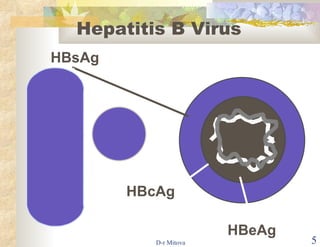
Hepatitis B Virus Hepadnaviridae family (DNA) Numerous antigenic components Humans are only known host May retain infectivity for at least 1 month at room temperature
Hepatitis B Virus Infection > 200 million carriers worldwide Established cause of chronic hepatitis and cirrhosis Human carcinogen—cause of up to 80% of hepatocellular carcinomas
HBsAg HBcAg HBeAg Hepatitis B Virus
Hepatitis B Clinical Features Incubation period 6 weeks to 6 months (average 120 days) Nonspecific prodrome of fever, malaise, headache, myalgia Illness not specific for hepatitis B At least 50% of infections asymptomatic
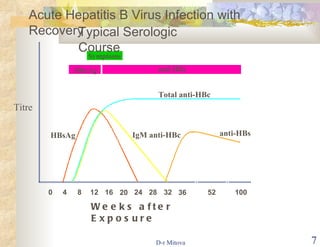
Symptoms HBeAg anti-HBe Total anti-HBc IgM anti-HBc anti-HBs HBsAg 0 4 8 12 16 20 24 28 32 36 52 100 Acute Hepatitis B Virus Infection with Recovery Typical Serologic Course Weeks after Exposure Titre
Hepatitis B Complications Fulminant hepatitis Hospitalization Cirrhosis Hepatocellular carcinoma Death
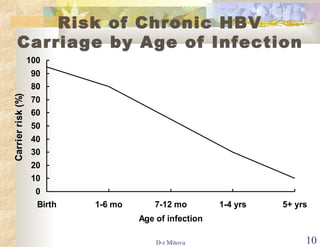
Chronic Hepatitis B  Virus Infection Chronic viremia Responsible for most mortality Overall risk 10% Higher risk with early infection
Risk of Chronic HBV Carriage by Age of Infection
Hepatitis B Epidemiology Reservoir Human.  Endemic Transmission Bloodborne Subclinical cases transmit  Communicability 1-2 months before and after onset of symptoms Chronic carriers
Hepatitis B Perinatal Transmission  If mother positive for HBsAg and HBeAg 70%-90% of infants infected 90% of infected infants become chronic carriers If positive for HBsAg only 20% of infants infected 90% of infected infants become chronic carriers *in the absence of postexposure prophylaxis
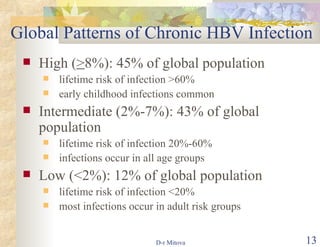
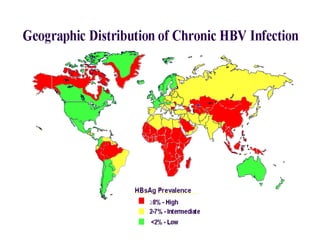
Global Patterns of Chronic HBV Infection High ( > 8%): 45% of global population lifetime risk of infection >60% early childhood infections common Intermediate (2%-7%): 43% of global population lifetime risk of infection 20%-60% infections occur in all age groups Low (<2%): 12% of global population lifetime risk of infection <20% most infections occur in adult risk groups
 
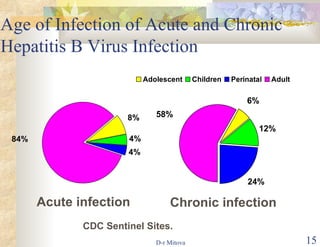
Age of Infection of Acute and Chronic Hepatitis B Virus Infection Acute infection Chronic infection CDC Sentinel Sites.
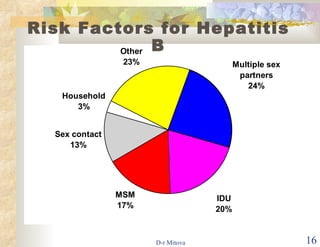
Risk Factors for Hepatitis B CDC Sentinel Sites.  2001 data.
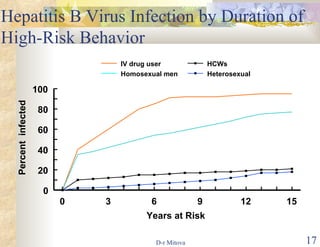
Hepatitis B Virus Infection by Duration of High-Risk Behavior 0 3 6 9 12 15 Years at Risk 0 20 40 60 80 100 Percent  infected IV drug user Homosexual men HCWs Heterosexual
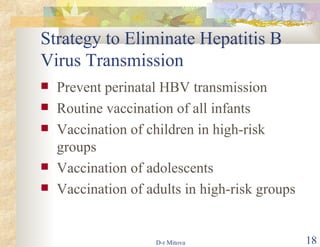
Strategy to Eliminate Hepatitis B Virus Transmission  Prevent perinatal HBV transmission Routine vaccination of all infants Vaccination of children in high-risk groups Vaccination of adolescents Vaccination of adults in high-risk groups
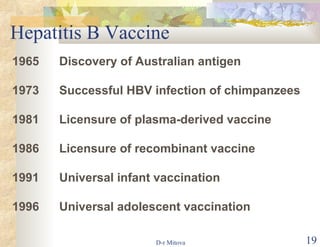
Hepatitis B Vaccine 1965 Discovery of Australian antigen 1973 Successful HBV infection of chimpanzees 1981 Licensure of plasma-derived vaccine 1986 Licensure of recombinant vaccine 1991 Universal infant vaccination 1996 Universal adolescent vaccination
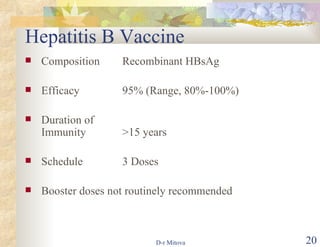
Hepatitis B Vaccine Composition Recombinant HBsAg Efficacy 95% (Range, 80%-100%) Duration of Immunity >15 years Schedule 3 Doses Booster doses not routinely recommended
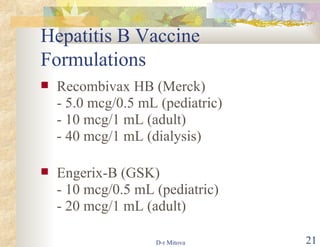
Hepatitis B Vaccine Formulations Recombivax HB (Merck) - 5.0 mcg/0.5 mL (pediatric) - 10 mcg/1 mL (adult) - 40 mcg/1 mL (dialysis) Engerix-B (GSK) - 10 mcg/0.5 mL (pediatric) - 20 mcg/1 mL (adult)
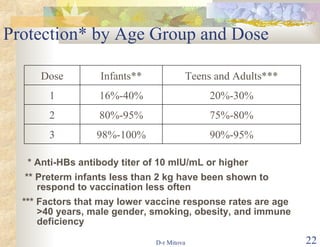
Protection* by Age Group and Dose * Anti-HBs antibody titer of   10 mIU/mL or higher ** Preterm infants less than 2 kg have been shown to respond to vaccination less often *** Factors that may lower vaccine response rates are age >40 years, male gender, smoking, obesity, and immune deficiency 90%-95% 98%-100% 3 75%-80% 80%-95% 2 20%-30% 16%-40% 1 Teens and Adults*** Infants** Dose
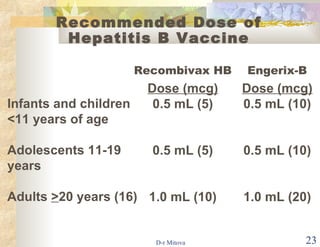
Recommended Dose of Hepatitis B Vaccine Infants and children <11 years of age Adolescents 11-19 years Adults  > 20 years (16) Recombivax HB Dose (mcg) 0.5 mL (5) 0.5 mL (5) 1.0 mL (10) Engerix-B Dose (mcg) 0.5 mL (10) 0.5 mL (10) 1.0 mL (20)
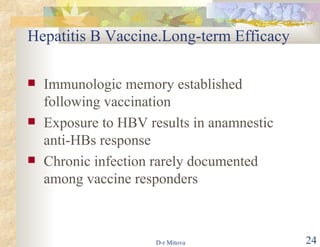
Hepatitis B Vaccine.Long-term Efficacy Immunologic memory established following vaccination Exposure to HBV results in anamnestic anti-HBs response Chronic infection rarely documented among vaccine responders
Hepatitis B Vaccine Routine booster doses are  NOT  routinely recommended for any group
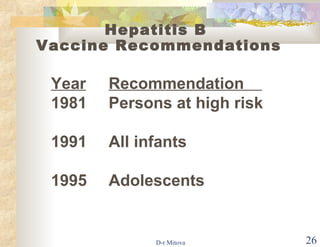
Hepatitis B  Vaccine Recommendations Year 1981 1991 1995 Recommendation  Persons at high risk All infants Adolescents
Indications for  Hepatitis B Vaccine Infants Adolescents 11-12 years of age Selected adults
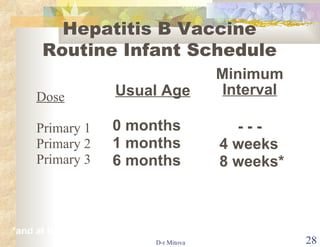
Dose Primary 1 Primary 2 Primary 3  Usual Age 0 months  1 months 6 months Minimum Interval - - - 4 weeks 8 weeks* Hepatitis B Vaccine Routine Infant Schedule *and at least 16 weeks after the first dose
Very Low Birthweight Infants Infants <2000 grams respond poorly to vaccine  Delay first dose until chronological age 1 month if mother HBsAg negative Birth dose and HBIG if mother HBsAg positive
Pediarix DTaP – Hep B – IPV combination Approved for 3 doses at 2, 4 and 6 months Not approved for booster doses Licensed for children 6 weeks to 7 years of age
Pediarix May be used interchangeably with other pertussis-containing vaccines if necessary Can be given at 2, 4, and 6 months in infants who received a birth dose of hepatitis B vaccine (total of 4 doses) May be used in infants whose mothers are HBsAg positive or status not known
Hepatitis B Vaccine Adolescent Vaccination Routine vaccination recommended through age 18 years Integrate into routine adolescent immunization visit Flexible schedules
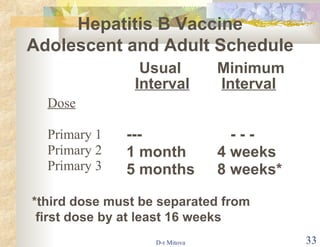
Dose Primary 1 Primary 2 Primary 3  Minimum Interval - - -  4 weeks 8 weeks* Usual Interval --- 1 month 5 months Hepatitis B Vaccine Adolescent and Adult Schedule *third dose must be separated from first dose by at least 16 weeks
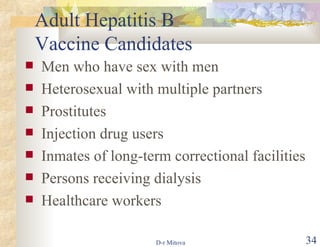
Adult Hepatitis B  Vaccine Candidates Men who have sex with men Heterosexual with multiple partners Prostitutes Injection drug users Inmates of long-term correctional facilities Persons receiving dialysis Healthcare workers
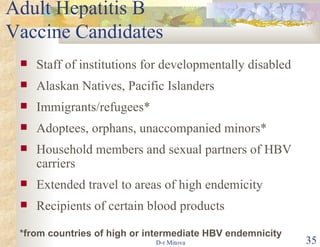
Adult Hepatitis B  Vaccine Candidates Staff of institutions for developmentally disabled Alaskan Natives, Pacific Islanders Immigrants/refugees*  Adoptees, orphans, unaccompanied minors* Household members and sexual partners of HBV carriers Extended travel to areas of high endemicity Recipients of certain blood products *from countries of high or intermediate HBV endemnicity
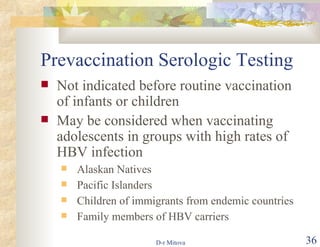
Prevaccination Serologic Testing Not indicated before routine vaccination of infants or children May be considered when vaccinating adolescents in groups with high rates of HBV infection Alaskan Natives Pacific Islanders Children of immigrants from endemic countries Family members of HBV carriers
Postvaccination Serologic Testing Not routinely recommended following vaccination of infants, children, adolescents, or most adults Recommended for: Infants born to HBsAg+ women Dialysis patients Immunodeficient persons Certain healthcare workers
Postvaccination Serologic Testing Healthcare workers who have contact with patients or blood should be tested for antibody after vaccination.
Management of Nonresponse to Hepatitis B Vaccine Complete a second series of three doses Should be given on the usual schedule of 0, 1 and 6 months Retest 1-2 months after completing the second series
Persistent Nonresponse to Hepatitis B Vaccine <5% of vaccinees do not develop anti-HBsAg after 6 valid doses May be nonresponder or &quot;hyporesponder&quot; Check HBsAg status If exposed, treat as nonresponder with postexposure prophylaxis
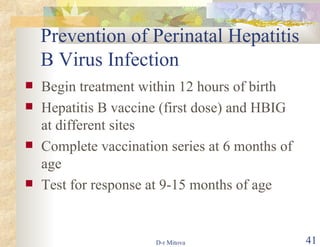
Prevention of Perinatal Hepatitis B Virus Infection Begin treatment within 12 hours of birth Hepatitis B vaccine (first dose) and HBIG at different sites Complete vaccination series at 6 months of age Test for response at 9-15 months of age
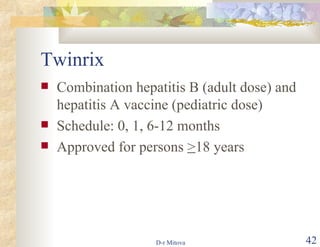
Twinrix Combination hepatitis B (adult dose) and hepatitis A vaccine (pediatric dose) Schedule: 0, 1, 6-12 months Approved for persons  > 18 years
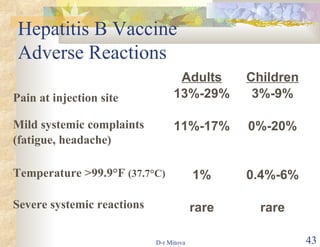
Hepatitis B Vaccine Adverse Reactions Pain at injection site Mild systemic complaints (fatigue, headache) Temperature >99.9 ° F  (37.7 ° C) Severe systemic reactions Adults 13%-29% 11%-17% 1% rare Infants and  Children 3%-9% 0%-20% 0.4%-6% rare
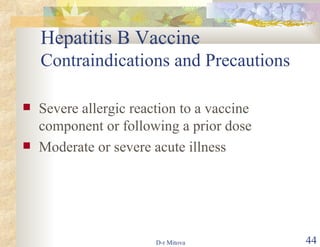
Hepatitis B Vaccine Contraindications and Precautions Severe allergic reaction to a vaccine component or following a prior dose Moderate or severe acute illness
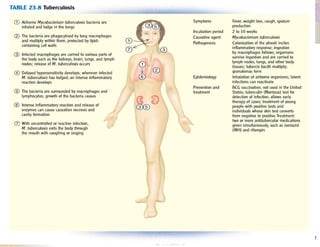
Tuberculosis HIV/AIDS, TB and malaria kill 6 million people every year; nearly 2 million deaths are caused by TB 2 billion people — one third of the world's population — are infected with TB bacilli, the microbes that cause TB. 1 in 10 people infected with TB bacilli will become sick with active TB in their lifetime; people with HIV are at a much greater risk Almost 9 million new TB cases occurred in 2004 — 80% of them in 22 countries
Persons at Risk for Developing TB Disease Those who have been recently infected Those with clinical conditions that increase their risk of progressing from LTBI to TB disease Persons at high risk for developing TB disease fall into 2 categories
 
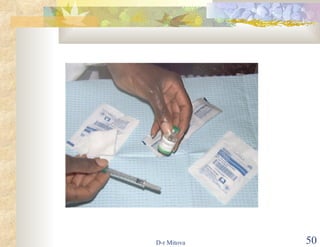
Bacillus of Calmette and Guérin  (BCG)  is a vaccine against tuberculosis that is prepared from a strain of the attenuated (weakened) live bovine tuberculosis bacillus, Mycobacterium bovis, that has lost its virulence in humans by being specially cultured in an artificial medium for years. The bacilli have retained enough strong antigenicity to become a somewhat effective vaccine for the prevention of human tuberculosis. At best, the BCG vaccine is 80% effective in preventing tuberculosis for a duration of 15 years.
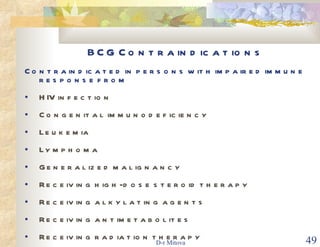
BCG Contraindications Contraindicated in persons with impaired immune response from HIV infection Congenital immunodeficiency Leukemia Lymphoma Generalized malignancy Receiving high-dose steroid therapy Receiving alkylating agents Receiving antimetabolites Receiving radiation therapy
 
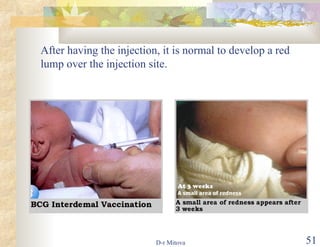
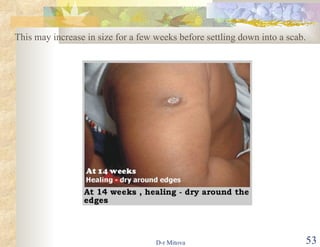
After having the injection, it is normal to develop a red lump over the injection site.
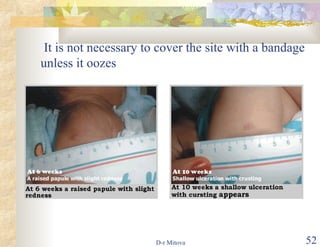
It is not necessary to cover the site with a bandage unless it oozes
This may increase in size for a few weeks before settling down into a scab.
BCG vaccine may cause side effects .   swollen lymph nodes small red areas at the site of injection. (These usually appear 10-14 days after injection and slowly decrease in size. They should disappear after about 6 months.) fever blood in the urine frequent or painful urination upset stomach vomiting
Testing for  M. tuberculosis   Mantoux tuberculin skin test (TST) Skin test that produces delayed-type hypersensitivity reaction in persons with  M. tuberculosis  infection
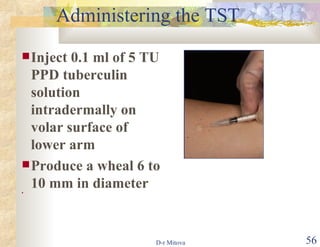
Administering the TST Inject 0.1 ml of 5 TU PPD tuberculin solution intradermally on volar surface of lower arm  Produce a wheal 6 to 10 mm in diameter
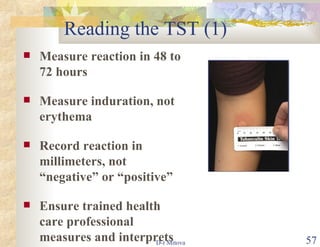
Reading the TST (1) Measure reaction in 48 to 72 hours Measure induration, not erythema Record reaction in millimeters, not “negative” or “positive” Ensure trained health care professional measures and interprets the TST
TST Interpretation (1) 5-mm induration is interpreted as positive in HIV-infected persons Close contacts to an infectious TB case Persons with chest radiographs consistent with prior untreated TB
TST Interpretation (2) 5-mm induration is interpreted as positive in (cont.) Organ transplant recipients Other immunosuppressed patients (e.g., those taking the equivalent of >15 mg/d of prednisone for 1 month or those taking TNF- α  antagonists )
TST Interpretation (3) 10-mm induration is interpreted as positive in Recent immigrants Injection drug users Residents or employees of congregate settings Mycobacteriology laboratory personnel
TST Interpretation (4) 10-mm induration is interpreted as positive in (cont.) Persons with clinical conditions that place them at high risk Children < 4 years; infants, children, and adolescents exposed to adults at high-risk
TST Interpretation (5) Persons with no known risk factors for TB.* *Although skin testing programs should be conducted only among high-risk groups, certain individuals may require TST for employment or school attendance. Diagnosis and treatment of LTBI should always be tied to risk assessment. 15-mm induration is interpreted as positive in ____________________________________________________
Factors That May Cause False-Positive TST Reactions Nontuberculous mycobacteria Reactions caused by nontuberculous  mycobacteria are usually    10 mm of induration BCG vaccination Reactivity in BCG vaccine recipients generally wanes over time; positive TST result is likely due to TB infection if risk factors are present
Factors That May Cause False-Negative TST Reactions (1)  Anergy Inability to react to a TST because of a weakened immune system  Usefulness of anergy testing in TST-negative persons who are HIV infected has not been demonstrated
Factors That May Cause False-Negative TST Reactions (2)  Recent TB infection Defined as 2 to 10 weeks after exposure Very young age  Newborns
Factors That May Cause False-Negative TST Reactions (3) Live-virus vaccination  For example, measles or smallpox Can temporarily suppress TST reactivity Overwhelming TB disease Poor TST administration technique For example, TST injection too shallow or too deep, or wheal is too small
DTaP Vaccination   Pertussis Highly contagious respiratory infection caused by  Bordetella pertussis Outbreaks first described in 16th century Bordetella pertussis  isolated in 1906 Estimated 285,000 deaths worldwide  in 2001
Whole-Cell Pertussis Vaccine Developed in mid-1930s and combined as DTP in mid-1940s 70%-90% efficacy after 3 doses Protection for 5-10 years Local adverse reactions common
Acellular Pertussis Vaccine (DTaP) Purified &quot;subunit&quot; vaccines Intended to reduce adverse reactions Licensed for fourth and fifth doses in 1991 Licensed for full series in 1996
Diphtheria Greek  diphtheria  (leather hide) Recognized by Hippocrates in  5th century B.C. Epidemics described in  6th century C. diphtheriae  described by Klebs in 1883 Toxoid developed in 1920s
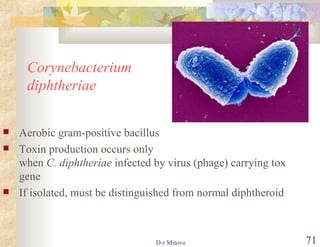
Corynebacterium  diphtheriae Aerobic gram-positive bacillus Toxin production occurs only  when  C. diphtheriae  infected by virus (phage) carrying tox gene If isolated, must be distinguished from normal diphtheroid
Tetanus First described by Hippocrates Etiology discovered in 1884 by Carle and Rattone Passive immunity used for treatment and prophylaxis during World War I Tetanus toxoid first widely used during World War II
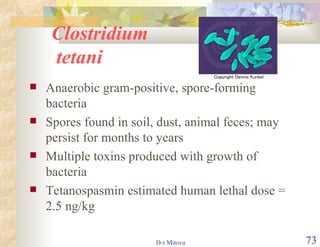
Clostridium  tetani Anaerobic gram-positive, spore-forming bacteria Spores found in soil, dust, animal feces; may persist for months to years Multiple toxins produced with growth of bacteria Tetanospasmin estimated human lethal dose = 2.5 ng/kg
Tetanus Clinical Features Incubation period; 8 days  (range, 3-21 days) Three clinical forms: Local (not common), cephalic (rare), generalized (most common) Generalized tetanus:  descending symptoms of trismus (lockjaw), difficulty swallowing, muscle rigidity, spasms Spasms continue for 3-4 weeks; complete recovery may take months
Neonatal Tetanus Generalized tetanus in newborn infant Infant born without protective passive immunity High fatality rate without therapy Estimated >215,000 deaths worldwide in 1998
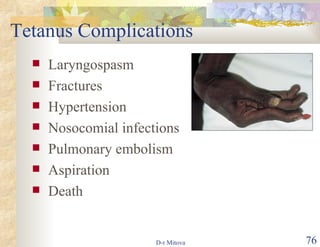
Tetanus Complications Laryngospasm Fractures Hypertension Nosocomial infections Pulmonary embolism Aspiration Death
Tetanus Epidemiology Reservoir Soil and intestine of      animals and humans Transmission   Contaminated wounds   Tissue injury Temporal pattern  Peak in summer or wet season Communicability Not contagious
Tetanus Toxoid Formalin-inactivated tetanus toxin Schedule Three or four doses + booster Booster every 10 years Efficacy Approximately 100% Duration Approximately 10 years Should be administered with diphtheria toxoid as DTaP, DT, or Td
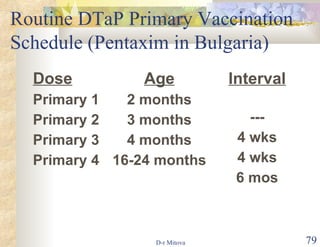
Routine DTaP Primary Vaccination Schedule (Pentaxim in Bulgaria) Dose Primary 1 Primary 2 Primary 3 Primary 4 Age 2 months 3 months 4 months 16-24 months Interval   --- 4 wks 4 wks 6 mos
6 years ( DTaP polio) Tetraxim 12 years of age (Td) 17 years of age (Td) Every 10 years thereafter (Td) Booster Doses
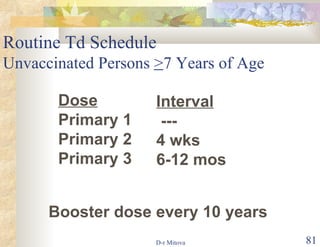
Routine Td Schedule Unvaccinated Persons  > 7 Years of Age Booster dose every 10 years Dose Primary 1 Primary 2 Primary 3 Interval --- 4 wks 6-12 mos
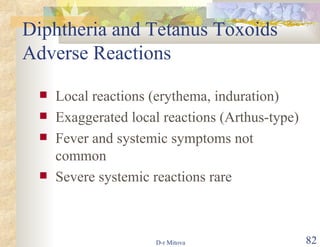
Diphtheria and Tetanus Toxoids Adverse Reactions Local reactions (erythema, induration) Exaggerated local reactions (Arthus-type) Fever and systemic symptoms not common Severe systemic reactions rare
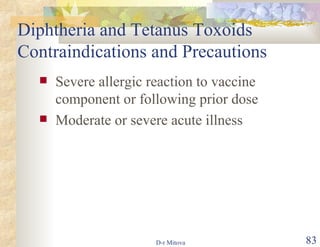
Diphtheria and Tetanus Toxoids Contraindications and Precautions Severe allergic reaction to vaccine component or following prior dose Moderate or severe acute illness
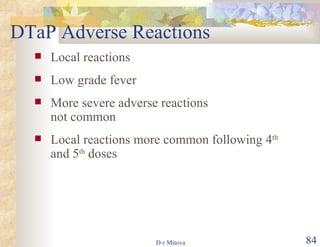
DTaP Adverse Reactions Local reactions Low grade fever More severe adverse reactions  not common Local reactions more common following 4 th  and 5 th  doses
Adverse Reactions Following the 4th and 5th DTaP Dose Local adverse reactions and fever increased with 4th and 5th doses  of DTaP Reports of swelling of entire limb Extensive swelling after 4th dose NOT a contraindication to 5th dose
DTaP Contraindications Serious allergic reaction to vaccine component or following prior dose Encephalopathy occurring within 7 days after vaccination not due to another identifiable cause
DTaP Precautions Moderate or severe acute illness Temperature  >  40 C or higher within 48 hours with no other identifiable cause Collapse or shock-like state (hypotonic-hyporesponsive episode) within 48 hours Persistent, inconsolable crying lasting  > 3 hours, occurring within 48 hours  Convulsions with or without fever occurring within 3 days  *may consider use in outbreaks
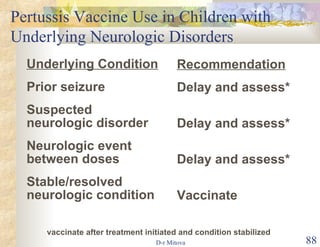
Pertussis Vaccine Use in Children with Underlying Neurologic Disorders Underlying Condition Prior seizure Suspected neurologic disorder Neurologic event between doses Stable/resolved neurologic condition Recommendation Delay and assess* Delay and assess* Delay and assess* Vaccinate * vaccinate after treatment initiated and condition stabilized
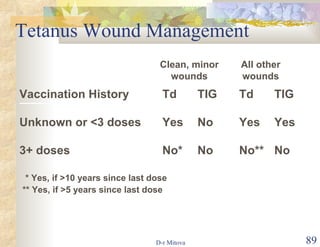
Tetanus Wound Management * Yes, if >10 years since last dose ** Yes, if >5 years since last dose Vaccination History Unknown or <3 doses 3+ doses Td TIG Yes No No* No Td TIG Yes Yes No** No Clean, minor wounds All other wounds

Vaccine2 hep b

  • 1.
    Vaccines D-rMitova MU-Sofia
  • 2.
    Hepatitis B andHepatitis B vaccine Epidemic jaundice described by Hippocrates in 5th century BCE Jaundice reported among recipients of human serum and yellow fever vaccines in 1930s and 1940s Australian antigen described in 1965 Serologic tests developed in 1970s
  • 3.
    Hepatitis B VirusHepadnaviridae family (DNA) Numerous antigenic components Humans are only known host May retain infectivity for at least 1 month at room temperature
  • 4.
    Hepatitis B VirusInfection > 200 million carriers worldwide Established cause of chronic hepatitis and cirrhosis Human carcinogen—cause of up to 80% of hepatocellular carcinomas
  • 5.
    HBsAg HBcAg HBeAgHepatitis B Virus
  • 6.
    Hepatitis B ClinicalFeatures Incubation period 6 weeks to 6 months (average 120 days) Nonspecific prodrome of fever, malaise, headache, myalgia Illness not specific for hepatitis B At least 50% of infections asymptomatic
  • 7.
    Symptoms HBeAg anti-HBeTotal anti-HBc IgM anti-HBc anti-HBs HBsAg 0 4 8 12 16 20 24 28 32 36 52 100 Acute Hepatitis B Virus Infection with Recovery Typical Serologic Course Weeks after Exposure Titre
  • 8.
    Hepatitis B ComplicationsFulminant hepatitis Hospitalization Cirrhosis Hepatocellular carcinoma Death
  • 9.
    Chronic Hepatitis B Virus Infection Chronic viremia Responsible for most mortality Overall risk 10% Higher risk with early infection
  • 10.
    Risk of ChronicHBV Carriage by Age of Infection
  • 11.
    Hepatitis B EpidemiologyReservoir Human. Endemic Transmission Bloodborne Subclinical cases transmit Communicability 1-2 months before and after onset of symptoms Chronic carriers
  • 12.
    Hepatitis B PerinatalTransmission If mother positive for HBsAg and HBeAg 70%-90% of infants infected 90% of infected infants become chronic carriers If positive for HBsAg only 20% of infants infected 90% of infected infants become chronic carriers *in the absence of postexposure prophylaxis
  • 13.
    Global Patterns ofChronic HBV Infection High ( > 8%): 45% of global population lifetime risk of infection >60% early childhood infections common Intermediate (2%-7%): 43% of global population lifetime risk of infection 20%-60% infections occur in all age groups Low (<2%): 12% of global population lifetime risk of infection <20% most infections occur in adult risk groups
  • 14.
  • 15.
    Age of Infectionof Acute and Chronic Hepatitis B Virus Infection Acute infection Chronic infection CDC Sentinel Sites.
  • 16.
    Risk Factors forHepatitis B CDC Sentinel Sites. 2001 data.
  • 17.
    Hepatitis B VirusInfection by Duration of High-Risk Behavior 0 3 6 9 12 15 Years at Risk 0 20 40 60 80 100 Percent infected IV drug user Homosexual men HCWs Heterosexual
  • 18.
    Strategy to EliminateHepatitis B Virus Transmission Prevent perinatal HBV transmission Routine vaccination of all infants Vaccination of children in high-risk groups Vaccination of adolescents Vaccination of adults in high-risk groups
  • 19.
    Hepatitis B Vaccine1965 Discovery of Australian antigen 1973 Successful HBV infection of chimpanzees 1981 Licensure of plasma-derived vaccine 1986 Licensure of recombinant vaccine 1991 Universal infant vaccination 1996 Universal adolescent vaccination
  • 20.
    Hepatitis B VaccineComposition Recombinant HBsAg Efficacy 95% (Range, 80%-100%) Duration of Immunity >15 years Schedule 3 Doses Booster doses not routinely recommended
  • 21.
    Hepatitis B VaccineFormulations Recombivax HB (Merck) - 5.0 mcg/0.5 mL (pediatric) - 10 mcg/1 mL (adult) - 40 mcg/1 mL (dialysis) Engerix-B (GSK) - 10 mcg/0.5 mL (pediatric) - 20 mcg/1 mL (adult)
  • 22.
    Protection* by AgeGroup and Dose * Anti-HBs antibody titer of 10 mIU/mL or higher ** Preterm infants less than 2 kg have been shown to respond to vaccination less often *** Factors that may lower vaccine response rates are age >40 years, male gender, smoking, obesity, and immune deficiency 90%-95% 98%-100% 3 75%-80% 80%-95% 2 20%-30% 16%-40% 1 Teens and Adults*** Infants** Dose
  • 23.
    Recommended Dose ofHepatitis B Vaccine Infants and children <11 years of age Adolescents 11-19 years Adults > 20 years (16) Recombivax HB Dose (mcg) 0.5 mL (5) 0.5 mL (5) 1.0 mL (10) Engerix-B Dose (mcg) 0.5 mL (10) 0.5 mL (10) 1.0 mL (20)
  • 24.
    Hepatitis B Vaccine.Long-termEfficacy Immunologic memory established following vaccination Exposure to HBV results in anamnestic anti-HBs response Chronic infection rarely documented among vaccine responders
  • 25.
    Hepatitis B VaccineRoutine booster doses are NOT routinely recommended for any group
  • 26.
    Hepatitis B Vaccine Recommendations Year 1981 1991 1995 Recommendation Persons at high risk All infants Adolescents
  • 27.
    Indications for Hepatitis B Vaccine Infants Adolescents 11-12 years of age Selected adults
  • 28.
    Dose Primary 1Primary 2 Primary 3 Usual Age 0 months 1 months 6 months Minimum Interval - - - 4 weeks 8 weeks* Hepatitis B Vaccine Routine Infant Schedule *and at least 16 weeks after the first dose
  • 29.
    Very Low BirthweightInfants Infants <2000 grams respond poorly to vaccine Delay first dose until chronological age 1 month if mother HBsAg negative Birth dose and HBIG if mother HBsAg positive
  • 30.
    Pediarix DTaP –Hep B – IPV combination Approved for 3 doses at 2, 4 and 6 months Not approved for booster doses Licensed for children 6 weeks to 7 years of age
  • 31.
    Pediarix May beused interchangeably with other pertussis-containing vaccines if necessary Can be given at 2, 4, and 6 months in infants who received a birth dose of hepatitis B vaccine (total of 4 doses) May be used in infants whose mothers are HBsAg positive or status not known
  • 32.
    Hepatitis B VaccineAdolescent Vaccination Routine vaccination recommended through age 18 years Integrate into routine adolescent immunization visit Flexible schedules
  • 33.
    Dose Primary 1Primary 2 Primary 3 Minimum Interval - - - 4 weeks 8 weeks* Usual Interval --- 1 month 5 months Hepatitis B Vaccine Adolescent and Adult Schedule *third dose must be separated from first dose by at least 16 weeks
  • 34.
    Adult Hepatitis B Vaccine Candidates Men who have sex with men Heterosexual with multiple partners Prostitutes Injection drug users Inmates of long-term correctional facilities Persons receiving dialysis Healthcare workers
  • 35.
    Adult Hepatitis B Vaccine Candidates Staff of institutions for developmentally disabled Alaskan Natives, Pacific Islanders Immigrants/refugees* Adoptees, orphans, unaccompanied minors* Household members and sexual partners of HBV carriers Extended travel to areas of high endemicity Recipients of certain blood products *from countries of high or intermediate HBV endemnicity
  • 36.
    Prevaccination Serologic TestingNot indicated before routine vaccination of infants or children May be considered when vaccinating adolescents in groups with high rates of HBV infection Alaskan Natives Pacific Islanders Children of immigrants from endemic countries Family members of HBV carriers
  • 37.
    Postvaccination Serologic TestingNot routinely recommended following vaccination of infants, children, adolescents, or most adults Recommended for: Infants born to HBsAg+ women Dialysis patients Immunodeficient persons Certain healthcare workers
  • 38.
    Postvaccination Serologic TestingHealthcare workers who have contact with patients or blood should be tested for antibody after vaccination.
  • 39.
    Management of Nonresponseto Hepatitis B Vaccine Complete a second series of three doses Should be given on the usual schedule of 0, 1 and 6 months Retest 1-2 months after completing the second series
  • 40.
    Persistent Nonresponse toHepatitis B Vaccine <5% of vaccinees do not develop anti-HBsAg after 6 valid doses May be nonresponder or &quot;hyporesponder&quot; Check HBsAg status If exposed, treat as nonresponder with postexposure prophylaxis
  • 41.
    Prevention of PerinatalHepatitis B Virus Infection Begin treatment within 12 hours of birth Hepatitis B vaccine (first dose) and HBIG at different sites Complete vaccination series at 6 months of age Test for response at 9-15 months of age
  • 42.
    Twinrix Combination hepatitisB (adult dose) and hepatitis A vaccine (pediatric dose) Schedule: 0, 1, 6-12 months Approved for persons > 18 years
  • 43.
    Hepatitis B VaccineAdverse Reactions Pain at injection site Mild systemic complaints (fatigue, headache) Temperature >99.9 ° F (37.7 ° C) Severe systemic reactions Adults 13%-29% 11%-17% 1% rare Infants and Children 3%-9% 0%-20% 0.4%-6% rare
  • 44.
    Hepatitis B VaccineContraindications and Precautions Severe allergic reaction to a vaccine component or following a prior dose Moderate or severe acute illness
  • 45.
    Tuberculosis HIV/AIDS, TBand malaria kill 6 million people every year; nearly 2 million deaths are caused by TB 2 billion people — one third of the world's population — are infected with TB bacilli, the microbes that cause TB. 1 in 10 people infected with TB bacilli will become sick with active TB in their lifetime; people with HIV are at a much greater risk Almost 9 million new TB cases occurred in 2004 — 80% of them in 22 countries
  • 46.
    Persons at Riskfor Developing TB Disease Those who have been recently infected Those with clinical conditions that increase their risk of progressing from LTBI to TB disease Persons at high risk for developing TB disease fall into 2 categories
  • 47.
  • 48.
    Bacillus of Calmetteand Guérin (BCG) is a vaccine against tuberculosis that is prepared from a strain of the attenuated (weakened) live bovine tuberculosis bacillus, Mycobacterium bovis, that has lost its virulence in humans by being specially cultured in an artificial medium for years. The bacilli have retained enough strong antigenicity to become a somewhat effective vaccine for the prevention of human tuberculosis. At best, the BCG vaccine is 80% effective in preventing tuberculosis for a duration of 15 years.
  • 49.
    BCG Contraindications Contraindicatedin persons with impaired immune response from HIV infection Congenital immunodeficiency Leukemia Lymphoma Generalized malignancy Receiving high-dose steroid therapy Receiving alkylating agents Receiving antimetabolites Receiving radiation therapy
  • 50.
  • 51.
    After having theinjection, it is normal to develop a red lump over the injection site.
  • 52.
    It is notnecessary to cover the site with a bandage unless it oozes
  • 53.
    This may increasein size for a few weeks before settling down into a scab.
  • 54.
    BCG vaccine maycause side effects . swollen lymph nodes small red areas at the site of injection. (These usually appear 10-14 days after injection and slowly decrease in size. They should disappear after about 6 months.) fever blood in the urine frequent or painful urination upset stomach vomiting
  • 55.
    Testing for M. tuberculosis Mantoux tuberculin skin test (TST) Skin test that produces delayed-type hypersensitivity reaction in persons with M. tuberculosis infection
  • 56.
    Administering the TSTInject 0.1 ml of 5 TU PPD tuberculin solution intradermally on volar surface of lower arm Produce a wheal 6 to 10 mm in diameter
  • 57.
    Reading the TST(1) Measure reaction in 48 to 72 hours Measure induration, not erythema Record reaction in millimeters, not “negative” or “positive” Ensure trained health care professional measures and interprets the TST
  • 58.
    TST Interpretation (1)5-mm induration is interpreted as positive in HIV-infected persons Close contacts to an infectious TB case Persons with chest radiographs consistent with prior untreated TB
  • 59.
    TST Interpretation (2)5-mm induration is interpreted as positive in (cont.) Organ transplant recipients Other immunosuppressed patients (e.g., those taking the equivalent of >15 mg/d of prednisone for 1 month or those taking TNF- α antagonists )
  • 60.
    TST Interpretation (3)10-mm induration is interpreted as positive in Recent immigrants Injection drug users Residents or employees of congregate settings Mycobacteriology laboratory personnel
  • 61.
    TST Interpretation (4)10-mm induration is interpreted as positive in (cont.) Persons with clinical conditions that place them at high risk Children < 4 years; infants, children, and adolescents exposed to adults at high-risk
  • 62.
    TST Interpretation (5)Persons with no known risk factors for TB.* *Although skin testing programs should be conducted only among high-risk groups, certain individuals may require TST for employment or school attendance. Diagnosis and treatment of LTBI should always be tied to risk assessment. 15-mm induration is interpreted as positive in ____________________________________________________
  • 63.
    Factors That MayCause False-Positive TST Reactions Nontuberculous mycobacteria Reactions caused by nontuberculous mycobacteria are usually  10 mm of induration BCG vaccination Reactivity in BCG vaccine recipients generally wanes over time; positive TST result is likely due to TB infection if risk factors are present
  • 64.
    Factors That MayCause False-Negative TST Reactions (1) Anergy Inability to react to a TST because of a weakened immune system Usefulness of anergy testing in TST-negative persons who are HIV infected has not been demonstrated
  • 65.
    Factors That MayCause False-Negative TST Reactions (2) Recent TB infection Defined as 2 to 10 weeks after exposure Very young age Newborns
  • 66.
    Factors That MayCause False-Negative TST Reactions (3) Live-virus vaccination For example, measles or smallpox Can temporarily suppress TST reactivity Overwhelming TB disease Poor TST administration technique For example, TST injection too shallow or too deep, or wheal is too small
  • 67.
    DTaP Vaccination Pertussis Highly contagious respiratory infection caused by Bordetella pertussis Outbreaks first described in 16th century Bordetella pertussis isolated in 1906 Estimated 285,000 deaths worldwide in 2001
  • 68.
    Whole-Cell Pertussis VaccineDeveloped in mid-1930s and combined as DTP in mid-1940s 70%-90% efficacy after 3 doses Protection for 5-10 years Local adverse reactions common
  • 69.
    Acellular Pertussis Vaccine(DTaP) Purified &quot;subunit&quot; vaccines Intended to reduce adverse reactions Licensed for fourth and fifth doses in 1991 Licensed for full series in 1996
  • 70.
    Diphtheria Greek diphtheria (leather hide) Recognized by Hippocrates in 5th century B.C. Epidemics described in 6th century C. diphtheriae described by Klebs in 1883 Toxoid developed in 1920s
  • 71.
    Corynebacterium diphtheriaeAerobic gram-positive bacillus Toxin production occurs only when C. diphtheriae infected by virus (phage) carrying tox gene If isolated, must be distinguished from normal diphtheroid
  • 72.
    Tetanus First describedby Hippocrates Etiology discovered in 1884 by Carle and Rattone Passive immunity used for treatment and prophylaxis during World War I Tetanus toxoid first widely used during World War II
  • 73.
    Clostridium tetaniAnaerobic gram-positive, spore-forming bacteria Spores found in soil, dust, animal feces; may persist for months to years Multiple toxins produced with growth of bacteria Tetanospasmin estimated human lethal dose = 2.5 ng/kg
  • 74.
    Tetanus Clinical FeaturesIncubation period; 8 days (range, 3-21 days) Three clinical forms: Local (not common), cephalic (rare), generalized (most common) Generalized tetanus: descending symptoms of trismus (lockjaw), difficulty swallowing, muscle rigidity, spasms Spasms continue for 3-4 weeks; complete recovery may take months
  • 75.
    Neonatal Tetanus Generalizedtetanus in newborn infant Infant born without protective passive immunity High fatality rate without therapy Estimated >215,000 deaths worldwide in 1998
  • 76.
    Tetanus Complications LaryngospasmFractures Hypertension Nosocomial infections Pulmonary embolism Aspiration Death
  • 77.
    Tetanus Epidemiology ReservoirSoil and intestine of animals and humans Transmission Contaminated wounds Tissue injury Temporal pattern Peak in summer or wet season Communicability Not contagious
  • 78.
    Tetanus Toxoid Formalin-inactivatedtetanus toxin Schedule Three or four doses + booster Booster every 10 years Efficacy Approximately 100% Duration Approximately 10 years Should be administered with diphtheria toxoid as DTaP, DT, or Td
  • 79.
    Routine DTaP PrimaryVaccination Schedule (Pentaxim in Bulgaria) Dose Primary 1 Primary 2 Primary 3 Primary 4 Age 2 months 3 months 4 months 16-24 months Interval --- 4 wks 4 wks 6 mos
  • 80.
    6 years (DTaP polio) Tetraxim 12 years of age (Td) 17 years of age (Td) Every 10 years thereafter (Td) Booster Doses
  • 81.
    Routine Td ScheduleUnvaccinated Persons > 7 Years of Age Booster dose every 10 years Dose Primary 1 Primary 2 Primary 3 Interval --- 4 wks 6-12 mos
  • 82.
    Diphtheria and TetanusToxoids Adverse Reactions Local reactions (erythema, induration) Exaggerated local reactions (Arthus-type) Fever and systemic symptoms not common Severe systemic reactions rare
  • 83.
    Diphtheria and TetanusToxoids Contraindications and Precautions Severe allergic reaction to vaccine component or following prior dose Moderate or severe acute illness
  • 84.
    DTaP Adverse ReactionsLocal reactions Low grade fever More severe adverse reactions not common Local reactions more common following 4 th and 5 th doses
  • 85.
    Adverse Reactions Followingthe 4th and 5th DTaP Dose Local adverse reactions and fever increased with 4th and 5th doses of DTaP Reports of swelling of entire limb Extensive swelling after 4th dose NOT a contraindication to 5th dose
  • 86.
    DTaP Contraindications Seriousallergic reaction to vaccine component or following prior dose Encephalopathy occurring within 7 days after vaccination not due to another identifiable cause
  • 87.
    DTaP Precautions Moderateor severe acute illness Temperature > 40 C or higher within 48 hours with no other identifiable cause Collapse or shock-like state (hypotonic-hyporesponsive episode) within 48 hours Persistent, inconsolable crying lasting > 3 hours, occurring within 48 hours Convulsions with or without fever occurring within 3 days *may consider use in outbreaks
  • 88.
    Pertussis Vaccine Usein Children with Underlying Neurologic Disorders Underlying Condition Prior seizure Suspected neurologic disorder Neurologic event between doses Stable/resolved neurologic condition Recommendation Delay and assess* Delay and assess* Delay and assess* Vaccinate * vaccinate after treatment initiated and condition stabilized
  • 89.
    Tetanus Wound Management* Yes, if >10 years since last dose ** Yes, if >5 years since last dose Vaccination History Unknown or <3 doses 3+ doses Td TIG Yes No No* No Td TIG Yes Yes No** No Clean, minor wounds All other wounds

Editor's Notes

  • #6 Although HBV has numerous antigens, only the presence of HBsAg indicates active infection. Antibody to HBsAg, from either disease or vaccine, indicates immunity.
  • #14 35
  • #17 This graphic shows the distribution of risk factors in 2001. Persons with multiple sexual contacts, men who have sex with men, and sexual contact with a person known to have HBV infection account for 54 percent of cases with a known risk factor. Injection drug use accounts for 20 percent of cases. About 3 percent of cases are in people who have household contact with a person with acute or chronic hepatitis B. Fifteen years ago, health care workers accounted for 2 percent of HBV infections- 2 or 3 thousand new infections each year. Since that time, the rate of infection among health care workers has declined by 95 percent, and is now lower than the rate for the general population. Hepatitis B vaccine has made occupational HBV infection a thing of the past.
  • #19 5 5 5
  • #31 In December 2002, the US Food and Drug Administration approved a new combination vaccine- Pediarix- which is manufactured by Glaxo Smith Kline. This vaccine contains DTaP, inactivated polio and hepatitis B vaccines. The DTaP component is Infanrix, and the hepatitis B component is Engerix-B, which were previously licensed in the U.S. Pediarix is approved for the first three doses of the DTAP and IPV series, which are usually given at about 2, 4, and 6 months of age. However, Pediarix is approved for use through 6 years of age. The minimum age for the first dose of Pediarix is 6 weeks. So it can’t be used for the birth dose of the hepatitis B series.
  • #32 Interchangeable Can be used after a birth dose of heaptitis B – total of 4 doses O.K. Pediarix may be used in infants born to women who are hepatitis B surface antigen positive or whose hepatitis B status is unknown. Like COMVAX, Pediarix is not approved for this use. But at it’s February 2003 meeting, ACIP voted to allow the use of Pediarix to complete the hepatitis B series in these infants. But remember that the minimum age for Pediarix is 6 weeks, so it must NOT be used for the birth or one month dose of the hepatitis B series. Another important fact to remember about Pediarix is that the minimum intervals between doses are dictated by the single antigen with the longest minimum intervals. Therefore, Pediarix minimum intervals are determined by the hepatitis B component. As for hepatitis B vaccine, the minimum interval between the first two doses of Pediarix is 4 weeks. The third dose must be administered at least 8 weeks after the second dose, and should follow the first dose by at least 16 weeks. The third dose should not be given before 6 months of age to be counted as a valid third dose of hepatitis B vaccine.