Pankaj Yadav
346/11
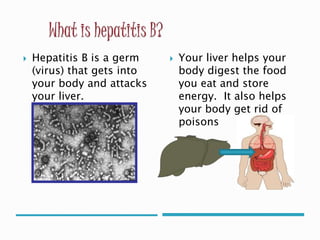
 Hepatitis B is a germ
(virus) that gets into
your body and attacks
your liver.
 Your liver helps your
body digest the food
you eat and store
energy. It also helps
your body get rid of
poisons
 Acute Hepatitis B
 In Acute Hepatitis B ,Most adults who get it have it
for a short time and then get better.
 Chronic Hepatitis B
 Sometimes the virus causes a long-term infection,
called chronic hepatitis.
 It is passed by contact with the blood or other
body fluids of someone who has the hepatitis
B virus.
 Being born to a mother who has hepatitis B.
 Sharing needles and syringes.
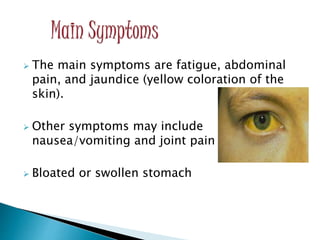
 The main symptoms are fatigue, abdominal
pain, and jaundice (yellow coloration of the
skin).
 Other symptoms may include
nausea/vomiting and joint pain
 Bloated or swollen stomach
Hepatitis A
 This form of hepatitis never leads to a
chronic infection and usually has no
complications.
Hepatitis C
 At least 80% of patients with hepatitis C
develop a chronic liver infection.
 No vaccine is yet available to prevent
hepatitis C.
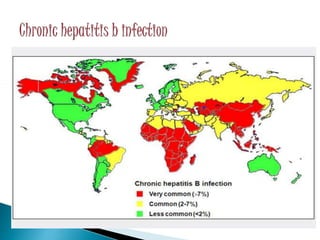
 Approximately 1 in 12 persons worldwide, or
some 500 million people, are living with
chronic viral hepatitis .
 An estimated 350 million people are living
with chronic hepatitis B worldwide.
 An estimated 1 million people die each year
from hepatitis B and its complications.
 Chronic hepatitis C affects an estimated 170
million people worldwide and causes
approximately 350,000 deaths each year .
 Highest rate of people that get it are in the 20
to 49 year old age group.
 There has been a great decline in infected
children due to routine vaccinations.
 An estimated 1.25 million chronically infected
americans (20-30% get it in childhood).
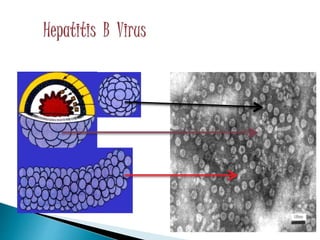
 A member of the hepadnavirus group.
 Circular partially double-stranded DNA
viruses
 It has not yet been possible to propogate the
virus in cell culture.
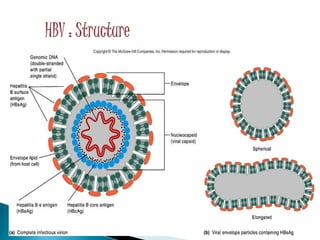
 HBsAg
 HBcAg (HBeAg is a splice variant)
 Hepatitis B virus DNA polymerase(it convert
the viral RNA genome into dsDNA in viral
cytoplasmic capsids)
 It is developed for the prevention of hepatitis
B virus infection.
 The vaccine contains one of the viral envelope
proteins, hepatitis B surface antigen (HBsAg).
 It is produced by hansenula polymorpha
(yeast )cells, into which the genetic code for
HBsAg has been inserted
 The first vaccine became available in 1981.
 Paediatric
 Each dose of 0.5 ml
contains :
 10 mcg of purified Hepatitis
B surface antigen
 Adsorbed on Aluminium
hydroxide (Al+++)0.25 mg
to 0.40 mg
 Preservative: Thiomersal
0.025 mg
 Produced in Hansenula
Polymorpha (yeast)
 Dose : 0.5 ml by
intramuscular injection
 Adult
 Each dose of 1 ml contains :
 20 mcg of purified Hepatitis
B surface antigen
 Adsorbed on Aluminium
hydroxide (Al+++)0.5 mg
to 0.8 mg
 Preservative: Thiomersal
0.05 mg
 Produced in Hansenula
Polymorpha (yeast)
 Dose : 1 ml by
intramuscular injection
It can also cause long-term
(chronic) illness that leads to:
 Liver damage (cirrhosis)
 Liver cancer
Children and Adults
 Babies normally get 3 doses of hepatitis B
vaccine:
 1st Dose: Birth
 2nd Dose: 1-2 months of age
 3rd Dose: 6-18 months of age
 Everyone 18 years of age and younger.
 Adults over 18 who are at risk.
 People with life-threatening allergic reaction
to baker’s yeast or to hepatitis B vaccine.
 People with moderate or severe illness should
wait until they recover.
 Severe allergic reactions, harm or death
(extremely rare).
 Soreness at site of injection lasting 1-2 days.
 Mild to moderate fever.
 Hives, swelling, redness
 High fever
 Difficulty breathing, wheezing
 Dizzyness
 When to expect an allergic
reaction?
 Within a few minutes to a few hours after the shot.
 What should I do?
 CALL a doctor or see a doctor right away.
 There are 3 common tests.
 HBsAg, HBsAb, HBcAb.
 The doctor needs all 3 blood test results in
order to determine your diagnosis.
 The hepatitis B blood panel requires only
one blood sample but includes three tests.
 HBsAg (hepatitis B surface antigen)
 HBsAb or Anti-HBs (hepatitis B surface
antibody)
 HBcAb or anti-HBc (hepatitis B core antibody)
 This test looks for hepatitis B surface
antigens in your blood.
 A "positive" or "reactive" HBsAg test result
means that the person is infected with the
hepatitis B virus.
 A "positive" or "reactive" HBsAb (or anti-HBs)
test result indicates that a person has
successfully responded to the hepatitis B
vaccine or has recovered from an acute
hepatitis B infection.
 This result means that you are immune to
future hepatitis B infection and you are not
contagious.
 The HBcAb is an antibody that is part of the
virus- it does not provide protection.
 Test result indicates a past or present
infection, but it could also be a false positive.
 Hepatitis B is a leading cause of death
worldwide and the primary cause of hepatic
cirrhosis.
 Available evidence indicates that control of
Hepatitis B replication with antiviral therapy
decreases the incidence of complications.
Thank You…

Ppt on hepatitis b

  • 1.
  • 2.
     Hepatitis Bis a germ (virus) that gets into your body and attacks your liver.  Your liver helps your body digest the food you eat and store energy. It also helps your body get rid of poisons
  • 3.
     Acute HepatitisB  In Acute Hepatitis B ,Most adults who get it have it for a short time and then get better.  Chronic Hepatitis B  Sometimes the virus causes a long-term infection, called chronic hepatitis.
  • 4.
     It ispassed by contact with the blood or other body fluids of someone who has the hepatitis B virus.  Being born to a mother who has hepatitis B.  Sharing needles and syringes.
  • 5.
     The mainsymptoms are fatigue, abdominal pain, and jaundice (yellow coloration of the skin).  Other symptoms may include nausea/vomiting and joint pain  Bloated or swollen stomach
  • 6.
    Hepatitis A  Thisform of hepatitis never leads to a chronic infection and usually has no complications. Hepatitis C  At least 80% of patients with hepatitis C develop a chronic liver infection.  No vaccine is yet available to prevent hepatitis C.
  • 7.
     Approximately 1in 12 persons worldwide, or some 500 million people, are living with chronic viral hepatitis .  An estimated 350 million people are living with chronic hepatitis B worldwide.  An estimated 1 million people die each year from hepatitis B and its complications.  Chronic hepatitis C affects an estimated 170 million people worldwide and causes approximately 350,000 deaths each year .
  • 8.
     Highest rateof people that get it are in the 20 to 49 year old age group.  There has been a great decline in infected children due to routine vaccinations.  An estimated 1.25 million chronically infected americans (20-30% get it in childhood).
  • 11.
     A memberof the hepadnavirus group.  Circular partially double-stranded DNA viruses  It has not yet been possible to propogate the virus in cell culture.
  • 13.
     HBsAg  HBcAg(HBeAg is a splice variant)  Hepatitis B virus DNA polymerase(it convert the viral RNA genome into dsDNA in viral cytoplasmic capsids)
  • 14.
     It isdeveloped for the prevention of hepatitis B virus infection.  The vaccine contains one of the viral envelope proteins, hepatitis B surface antigen (HBsAg).  It is produced by hansenula polymorpha (yeast )cells, into which the genetic code for HBsAg has been inserted  The first vaccine became available in 1981.
  • 15.
     Paediatric  Eachdose of 0.5 ml contains :  10 mcg of purified Hepatitis B surface antigen  Adsorbed on Aluminium hydroxide (Al+++)0.25 mg to 0.40 mg  Preservative: Thiomersal 0.025 mg  Produced in Hansenula Polymorpha (yeast)  Dose : 0.5 ml by intramuscular injection  Adult  Each dose of 1 ml contains :  20 mcg of purified Hepatitis B surface antigen  Adsorbed on Aluminium hydroxide (Al+++)0.5 mg to 0.8 mg  Preservative: Thiomersal 0.05 mg  Produced in Hansenula Polymorpha (yeast)  Dose : 1 ml by intramuscular injection
  • 16.
    It can alsocause long-term (chronic) illness that leads to:  Liver damage (cirrhosis)  Liver cancer
  • 17.
    Children and Adults Babies normally get 3 doses of hepatitis B vaccine:  1st Dose: Birth  2nd Dose: 1-2 months of age  3rd Dose: 6-18 months of age
  • 18.
     Everyone 18years of age and younger.  Adults over 18 who are at risk.
  • 19.
     People withlife-threatening allergic reaction to baker’s yeast or to hepatitis B vaccine.  People with moderate or severe illness should wait until they recover.
  • 20.
     Severe allergicreactions, harm or death (extremely rare).  Soreness at site of injection lasting 1-2 days.  Mild to moderate fever.
  • 21.
     Hives, swelling,redness  High fever  Difficulty breathing, wheezing  Dizzyness
  • 22.
     When toexpect an allergic reaction?  Within a few minutes to a few hours after the shot.  What should I do?  CALL a doctor or see a doctor right away.
  • 23.
     There are3 common tests.  HBsAg, HBsAb, HBcAb.  The doctor needs all 3 blood test results in order to determine your diagnosis.  The hepatitis B blood panel requires only one blood sample but includes three tests.
  • 24.
     HBsAg (hepatitisB surface antigen)  HBsAb or Anti-HBs (hepatitis B surface antibody)  HBcAb or anti-HBc (hepatitis B core antibody)
  • 25.
     This testlooks for hepatitis B surface antigens in your blood.  A "positive" or "reactive" HBsAg test result means that the person is infected with the hepatitis B virus.
  • 26.
     A "positive"or "reactive" HBsAb (or anti-HBs) test result indicates that a person has successfully responded to the hepatitis B vaccine or has recovered from an acute hepatitis B infection.  This result means that you are immune to future hepatitis B infection and you are not contagious.
  • 27.
     The HBcAbis an antibody that is part of the virus- it does not provide protection.  Test result indicates a past or present infection, but it could also be a false positive.
  • 28.
     Hepatitis Bis a leading cause of death worldwide and the primary cause of hepatic cirrhosis.  Available evidence indicates that control of Hepatitis B replication with antiviral therapy decreases the incidence of complications.
  • 29.

Editor's Notes

  • #17 Hepatitis B vaccine can prevent hepatitis B, and the serious consequences of hepatitis B infection, including liver cancer and cirrhosis. Hepatitis B vaccine may be given by itself or in the same shot with other vaccines. Routine hepatitis B vaccination was recommended for some U.S. adults and children beginning in 1982, and for all children in 1991. Since 1990, new hepatitis B infections among children and adolescents have dropped by more than 95% – and by 75% in other age groups. Vaccination gives long-term protection from hepatitis B infection, possibly lifelong.
  • #29 HBV is a leading cause of death worldwide and the primary cause of hepatic cirrhosis and HCC. Chronic HBV infection is an increasingly important public health problem. The natural history of chronic HBV infection is determined to a large extent by the level of HBV replication, as reflected in circulating levels of HBV DNA in serum. Available evidence indicates that control of HBV replication with antiviral therapy decreases the incidence of complications. Individuals with chronic hepatitis B require regular monitoring for viral activity, viral load reduction, drug resistance, and disease progression. Enhanced understanding of viral, host, and environmental factors that influence disease progression may ultimately improve the management of patients with chronic HBV infection. Ideally, prevention of hepatitis B through global vaccination programs and routinely applied neonatal and primary adulthood prophylaxis should be pursued