

It can not be a financial asset, it much be an actual good.
Estimate price on board
What if Warren Buffett is
too busy to go shopping
so he gives you the cash.
 Would you still buy the one good?
 Why or why not?

 Budget constraint

 Does money always increase utility? Many goods vs. few

or one for consumers
 Ted.org video clip
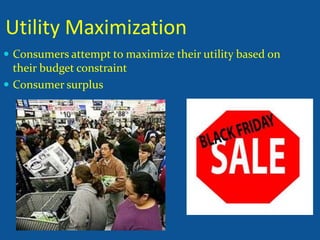
Utility Maximization
 Consumers attempt to maximize their utility based on

their budget constraint
 Consumer surplus
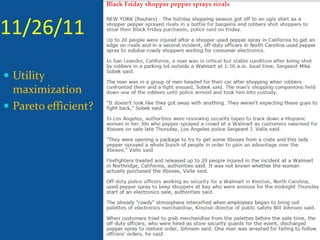
11/26/11
 Utility

maximization
 Pareto efficient?
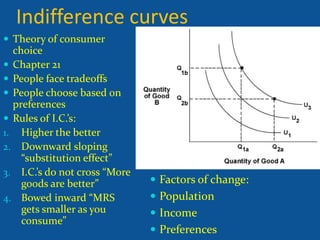
Indifference curves
 Theory of consumer

choice
 Chapter 21
 People face tradeoffs
 People choose based on
preferences
 Rules of I.C.’s:
1. Higher the better
2. Downward sloping
“substitution effect”
3. I.C.’s do not cross “More
goods are better”
4. Bowed inward “MRS
gets smaller as you
consume”

 Factors of change:

 Population
 Income
 Preferences
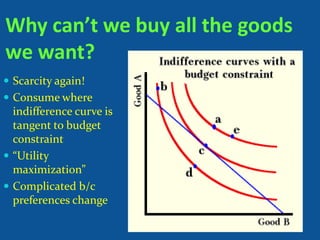
Why can’t we buy all the goods
we want?
 Scarcity again!
 Consume where

indifference curve is
tangent to budget
constraint
 “Utility
maximization”
 Complicated b/c
preferences change
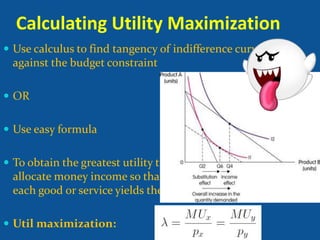
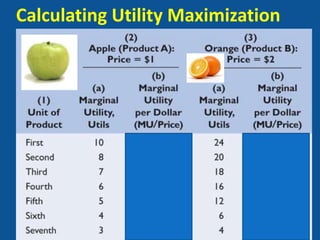
Calculating Utility Maximization
 Use calculus to find tangency of indifference curve

against the budget constraint
 OR
 Use easy formula
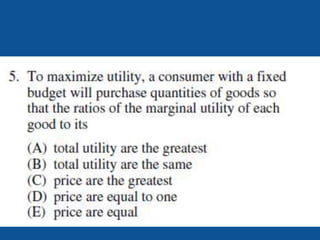
 To obtain the greatest utility the consumer should

allocate money income so that the last dollar spent on
each good or service yields the same marginal utility.
 Util maximization:
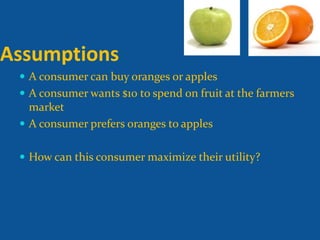
Assumptions:
 A consumer can buy oranges or apples
 A consumer wants $10 to spend on fruit at the farmers

market
 A consumer prefers oranges to apples
 How can this consumer maximize their utility?
Calculating Utility Maximization
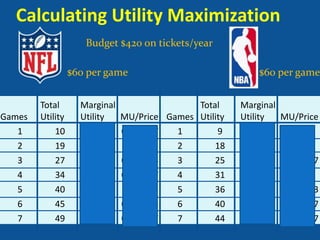
Budget $420 on tickets/year
$60 per game

Games
1
2
3
4
5
6
7

Total
Utility
10
19
27
34
40
45
49

Marginal
Utility
10
9
8
7
6
5
4

Total
MU/Price Games Utility
0.166667
1
9
0.15
2
18
0.133333
3
25
0.116667
4
31
0.1
5
36
0.083333
6
40
0.066667
7
44

$60 per game
Marginal
Utility
9
9
7
6
5
4
4

MU/Price
0.15
0.15
0.116667
0.1
0.083333
0.066667
0.066667
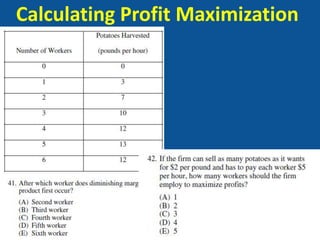
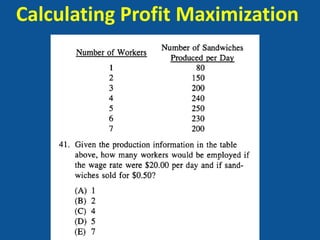
Calculating Profit Maximization
Mankiw
 Pages 464-465
 #15 then #12
 EC #14

Utility maximization

  • 1.
    It can notbe a financial asset, it much be an actual good. Estimate price on board
  • 2.
    What if WarrenBuffett is too busy to go shopping so he gives you the cash.  Would you still buy the one good?  Why or why not?  Budget constraint  Does money always increase utility? Many goods vs. few or one for consumers  Ted.org video clip
  • 3.
    Utility Maximization  Consumersattempt to maximize their utility based on their budget constraint  Consumer surplus
  • 4.
  • 5.
    Indifference curves  Theoryof consumer choice  Chapter 21  People face tradeoffs  People choose based on preferences  Rules of I.C.’s: 1. Higher the better 2. Downward sloping “substitution effect” 3. I.C.’s do not cross “More goods are better” 4. Bowed inward “MRS gets smaller as you consume”  Factors of change:  Population  Income  Preferences
  • 6.
    Why can’t webuy all the goods we want?  Scarcity again!  Consume where indifference curve is tangent to budget constraint  “Utility maximization”  Complicated b/c preferences change
  • 7.
    Calculating Utility Maximization Use calculus to find tangency of indifference curve against the budget constraint  OR  Use easy formula  To obtain the greatest utility the consumer should allocate money income so that the last dollar spent on each good or service yields the same marginal utility.  Util maximization:
  • 8.
    Assumptions:  A consumercan buy oranges or apples  A consumer wants $10 to spend on fruit at the farmers market  A consumer prefers oranges to apples  How can this consumer maximize their utility?
  • 9.
  • 10.
    Calculating Utility Maximization Budget$420 on tickets/year $60 per game Games 1 2 3 4 5 6 7 Total Utility 10 19 27 34 40 45 49 Marginal Utility 10 9 8 7 6 5 4 Total MU/Price Games Utility 0.166667 1 9 0.15 2 18 0.133333 3 25 0.116667 4 31 0.1 5 36 0.083333 6 40 0.066667 7 44 $60 per game Marginal Utility 9 9 7 6 5 4 4 MU/Price 0.15 0.15 0.116667 0.1 0.083333 0.066667 0.066667
  • 12.
  • 13.
  • 15.
    Mankiw  Pages 464-465 #15 then #12  EC #14