Presented by:
Muhammd Faizan Jamil
U.S Asia-Pacific Policy
Overview
 Introduction
 Geographical location of Asia Pacific region
 Importance of Asian Pacific region
 Us alliance with different countries of Asia Pacific
 China economic corridor in Asia Pacific region
 US, China conflict in Asia Pacific region
 Conclusion
 Summary
 Finding
 Suggestions
 References
Introduction
 Strategy
 proxy (Indirect) war against china
 neo-Colonial activities
 Geopolitical force from West to East make the Asia-Pacific
district more essential to the United States
 engine of the worldwide economy
 Major Asian nations are getting to be worldwide financial
and political on-screen characters
. Such a technique must expand upon America's
long-standing positive engagement in Asia
 Maintaining center standards and in close
association with it’s associates and companions
 Putting resources into important military
capacities
 Snags to America's "rebalance
 U.S long haul techniques for the Asia-Pacific
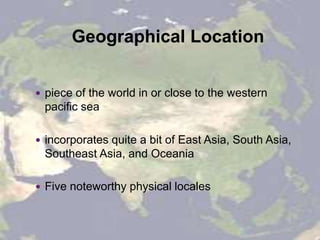
Geographical Location
 piece of the world in or close to the western
pacific sea
 incorporates quite a bit of East Asia, South Asia,
Southeast Asia, and Oceania
 Five noteworthy physical locales
US Asia Pacific
Policy
Importance of Asia-pacific
policy
 Home to an extensive and expanding
centralization of mechanical capacities
 critical makers in an extensive variety
 Soil gives the scene to our biological community
and backings the world's nourishment supply and
fiber creation
 High populated area where Labor expenses are
low.
Strengthening alliances and
security partnerships
 US. should support more organized
methods.
 "center and-talked" methodology .
.
Alliance with
different
countries of
Asia
Pacific
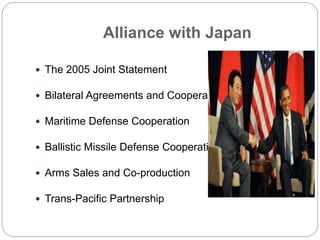
Alliance with Japan
 The 2005 Joint Statement
 Bilateral Agreements and Cooperation
 Maritime Defense Cooperation
 Ballistic Missile Defense Cooperation
 Arms Sales and Co-production
 Trans-Pacific Partnership
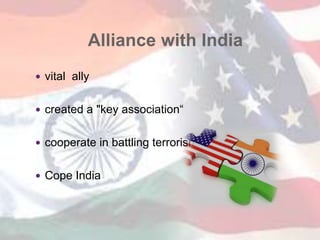
Alliance with India
 vital ally
 created a "key association“
 cooperate in battling terrorism
 Cope India
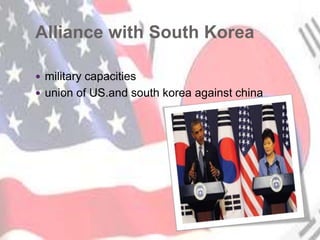
Alliance with South Korea
 military capacities
 union of US.and south korea against china
Taiwan
 Taiwan's law
 Build a strong relation between Taiwan and US
 Taiwan Relations Act was authorized on April 10,
1979
 us will always stand with Taiwan
 china restrict us to support Taiwan
Indonesia
 U.S-Indonesia make some relevant relation for
safety
 The restoration of military to-military relations
 In 2004 created a vote based government
 Indonesian military has centered around battling
the war against Islamist fanatics in Southeast
Asia
Australia and New Zealand
 the ANZUS Treaty in 1952
 Help us in wake of 9/11
 AUSMIN
 New Zealand and the United States remain companions if
no more formal associates
 Proliferation Security
 territorial strength
Alliance with Singapore
 SFA
 U.S- Singapore Free Trade Agreement
 Oceanic Security Collaboration
Alliance with Philippines
 Terrorist danger
 US helped Philippines
 US strategy
 China’s relationship struggle:
 China economic corridor in Asia Pacific region
 China’s expanding its ways
 To defeat the US Asia Pecific Policy, China is
expanding its key gap and attempting more
endeavors in "look westwards" and "walk westwards
US china conflict in Asian pacific
region
 China's fast economic growth
 china's interest in military modernization
 Obama's struggle to convince china
 Human right issue
Summary
 topic of article
 Us policy of rebalance powers
 Appearance of new powers
Findings
 Us foreign policy
 China's foreign policy
 Multipolar world
SUGGESTIONS
 Us china trade is a win-win game
 supporting nuclear disarm movement
 globalization
 increasing Chinese awareness by providing them
free information

U.S Asia-Pacific Policy

  • 1.
    Presented by: Muhammd FaizanJamil U.S Asia-Pacific Policy
  • 2.
    Overview  Introduction  Geographicallocation of Asia Pacific region  Importance of Asian Pacific region  Us alliance with different countries of Asia Pacific  China economic corridor in Asia Pacific region  US, China conflict in Asia Pacific region  Conclusion  Summary  Finding  Suggestions  References
  • 3.
    Introduction  Strategy  proxy(Indirect) war against china  neo-Colonial activities  Geopolitical force from West to East make the Asia-Pacific district more essential to the United States  engine of the worldwide economy  Major Asian nations are getting to be worldwide financial and political on-screen characters
  • 4.
    . Such atechnique must expand upon America's long-standing positive engagement in Asia  Maintaining center standards and in close association with it’s associates and companions  Putting resources into important military capacities  Snags to America's "rebalance  U.S long haul techniques for the Asia-Pacific
  • 5.
    Geographical Location  pieceof the world in or close to the western pacific sea  incorporates quite a bit of East Asia, South Asia, Southeast Asia, and Oceania  Five noteworthy physical locales
  • 6.
  • 7.
    Importance of Asia-pacific policy Home to an extensive and expanding centralization of mechanical capacities  critical makers in an extensive variety  Soil gives the scene to our biological community and backings the world's nourishment supply and fiber creation  High populated area where Labor expenses are low.
  • 8.
    Strengthening alliances and securitypartnerships  US. should support more organized methods.  "center and-talked" methodology .
  • 9.
  • 10.
    Alliance with Japan The 2005 Joint Statement  Bilateral Agreements and Cooperation  Maritime Defense Cooperation  Ballistic Missile Defense Cooperation  Arms Sales and Co-production  Trans-Pacific Partnership
  • 11.
    Alliance with India vital ally  created a "key association“  cooperate in battling terrorism  Cope India
  • 12.
    Alliance with SouthKorea  military capacities  union of US.and south korea against china
  • 13.
    Taiwan  Taiwan's law Build a strong relation between Taiwan and US  Taiwan Relations Act was authorized on April 10, 1979  us will always stand with Taiwan  china restrict us to support Taiwan
  • 14.
    Indonesia  U.S-Indonesia makesome relevant relation for safety  The restoration of military to-military relations  In 2004 created a vote based government  Indonesian military has centered around battling the war against Islamist fanatics in Southeast Asia
  • 15.
    Australia and NewZealand  the ANZUS Treaty in 1952  Help us in wake of 9/11  AUSMIN  New Zealand and the United States remain companions if no more formal associates  Proliferation Security  territorial strength
  • 16.
    Alliance with Singapore SFA  U.S- Singapore Free Trade Agreement  Oceanic Security Collaboration
  • 17.
    Alliance with Philippines Terrorist danger  US helped Philippines  US strategy
  • 18.
     China’s relationshipstruggle:  China economic corridor in Asia Pacific region  China’s expanding its ways  To defeat the US Asia Pecific Policy, China is expanding its key gap and attempting more endeavors in "look westwards" and "walk westwards
  • 19.
    US china conflictin Asian pacific region  China's fast economic growth  china's interest in military modernization  Obama's struggle to convince china  Human right issue
  • 20.
    Summary  topic ofarticle  Us policy of rebalance powers  Appearance of new powers
  • 21.
    Findings  Us foreignpolicy  China's foreign policy  Multipolar world
  • 22.
    SUGGESTIONS  Us chinatrade is a win-win game  supporting nuclear disarm movement  globalization  increasing Chinese awareness by providing them free information