Downloaded 70 times
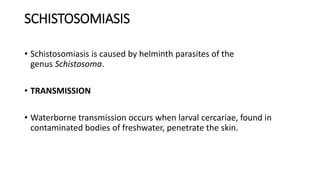
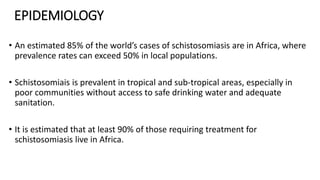








Schistosomiasis is caused by parasitic worms that are transmitted through contaminated freshwater. It is most prevalent in poor communities in Africa, where over 85% of global cases occur. Symptoms vary depending on the infected organ but can include abdominal pain, blood in urine or stool, liver and spleen enlargement. Diagnosis is through detection of parasite eggs in stool or urine samples. Treatment involves praziquantel which is most effective against adult parasites. Control relies on mass drug administration targeted at high-risk groups, along with improved sanitation and access to safe water.


