


 Kidneys
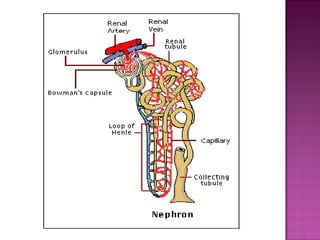
- primary regulators of fluid and
acid base balance.
Nephrons – functional unit of
kidneys.
- each has glomerulus- tuft of
capillaries surrounded by
Bowman’s capsule.
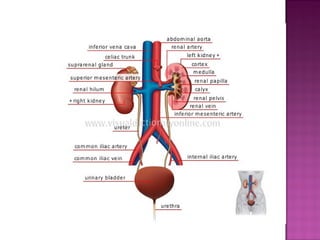
 Ureters
 Urine is formed in the kidneys, it moves
through the collecting ducts into the calyces
of the renal pelvis then to ureters.
Bladder
hollow muscular organ that serves as a
reservoir for urine and the organ for
excretion.
Urethra
extends from the bladder to the urinary
meatus
 refer to the process of emptying the
bladder.
Stretch receptor-
 - special nerve endings.
 - bladder contains 250ml and 450ml of
urine.
In children: 50 to 200 ml
 1. Developmental factors
 Infant, pre-schoolers, school age, elders
2. Psychological factors
3. Fluid and food intake
4. Medications
5. Muscle Tone
6. Pathologic conditions
7. Surgical and diagnostic Procedures
1. Polyuria
- refers to the production of abnormally large
amounts of urine by the kidneys, often
several liters more.
2. Oliguria
- low urine output, usually less than 500ml a
day or 30 ml an hour.
3. Anuria
- refers to lack of urine production
1. Urinary frequency
- voiding at frequent intervals. More often
than usual.
2. Nocturia
- voiding 2 or more times at night.
3. Urgency
- feeling that the person must void.
4. Dysuria
- voiding that is painful.
5. Enuresis
- involuntary urination in children beyond the
age when voluntary bladder control is
normally acquired.
6. Urinary Incontinence
- involuntary urination.
7. Urinary retention
- problem in emptying the bladder.
8. Neurogenic bladder
- impaired neurologic function which
interferes with normal urine mechanisms.
 expulsion of feces from the
anus and rectum.
 Also known as bowel
movement
 The frequency of defecation
is highly individualized.
 made of about 75% water and 25
% solid materials.
 Soft and formed
 Chiefly brown due to the
presence of stercobilin and
urobilin, which are derived from
bilirubin.
 Development
 Diet
 Fluid
 Activity
 Psychologic factors
 Medications
 Anesthaisa and Surgery
 Pathologic conditions
 Pain
1. Constipation
 defined as fewer than 3
bowel movements per
week.
 Infers passage of dry, hard
stool or no stool
2. Fecal Impaction
 a mass or collection of hardened feces in
the folds of the rectum.
 Results from prolonged retention and
accumulation of fecal material
3. Diarrhea
 Refers to the passage of
liquid feces and an
increased frequency of
defecation
4. Bowel Incontinence
 also called fecal
incontinence
 involuntary ability to
control fecal and gaseous
discharges through the anal
sphincter.
5. Flatulence
 presence of excessive flatus
in the intestines and leads
to stretching and inflation
of intestines

Urinary elimination

  • 2.
     Kidneys - primaryregulators of fluid and acid base balance. Nephrons – functional unit of kidneys. - each has glomerulus- tuft of capillaries surrounded by Bowman’s capsule.
  • 5.
     Ureters  Urineis formed in the kidneys, it moves through the collecting ducts into the calyces of the renal pelvis then to ureters. Bladder hollow muscular organ that serves as a reservoir for urine and the organ for excretion. Urethra extends from the bladder to the urinary meatus
  • 7.
     refer tothe process of emptying the bladder. Stretch receptor-  - special nerve endings.  - bladder contains 250ml and 450ml of urine. In children: 50 to 200 ml
  • 8.
     1. Developmentalfactors  Infant, pre-schoolers, school age, elders 2. Psychological factors 3. Fluid and food intake 4. Medications 5. Muscle Tone
  • 9.
    6. Pathologic conditions 7.Surgical and diagnostic Procedures
  • 10.
    1. Polyuria - refersto the production of abnormally large amounts of urine by the kidneys, often several liters more. 2. Oliguria - low urine output, usually less than 500ml a day or 30 ml an hour.
  • 11.
    3. Anuria - refersto lack of urine production
  • 12.
    1. Urinary frequency -voiding at frequent intervals. More often than usual. 2. Nocturia - voiding 2 or more times at night. 3. Urgency - feeling that the person must void.
  • 13.
    4. Dysuria - voidingthat is painful. 5. Enuresis - involuntary urination in children beyond the age when voluntary bladder control is normally acquired. 6. Urinary Incontinence - involuntary urination.
  • 14.
    7. Urinary retention -problem in emptying the bladder. 8. Neurogenic bladder - impaired neurologic function which interferes with normal urine mechanisms.
  • 16.
     expulsion offeces from the anus and rectum.  Also known as bowel movement  The frequency of defecation is highly individualized.
  • 17.
     made ofabout 75% water and 25 % solid materials.  Soft and formed  Chiefly brown due to the presence of stercobilin and urobilin, which are derived from bilirubin.
  • 18.
     Development  Diet Fluid  Activity  Psychologic factors  Medications  Anesthaisa and Surgery  Pathologic conditions  Pain
  • 19.
    1. Constipation  definedas fewer than 3 bowel movements per week.  Infers passage of dry, hard stool or no stool
  • 20.
    2. Fecal Impaction a mass or collection of hardened feces in the folds of the rectum.  Results from prolonged retention and accumulation of fecal material
  • 21.
    3. Diarrhea  Refersto the passage of liquid feces and an increased frequency of defecation
  • 22.
    4. Bowel Incontinence also called fecal incontinence  involuntary ability to control fecal and gaseous discharges through the anal sphincter.
  • 23.
    5. Flatulence  presenceof excessive flatus in the intestines and leads to stretching and inflation of intestines