PRESENTED BY : HARPREET KAUR
M.Sc 1st year
1. Regulation of the volume of blood by
excretion or conservation of water.
2. Regulation of the electrolyte content of the blood
by the excretion or conservation of minerals.
3. Regulation of the acid-base balance of the blood
by excretion or conservation of ions
4. Regulation of all of the above in tissue fluid.
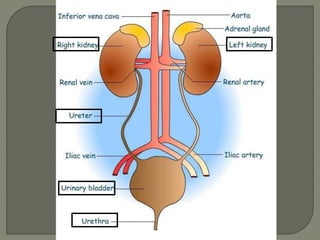
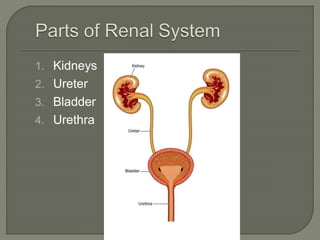
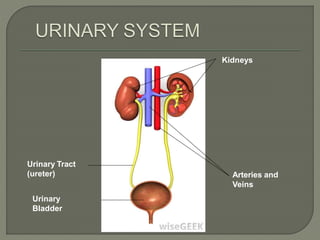
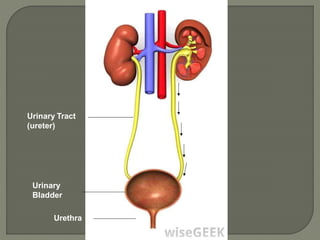
1. Kidneys
2. Ureter
3. Bladder
4. Urethra
Kidneys
- is to separate urea, mineral salts, toxins
and other waste products from the blood.
- filtering out wastes to be excreted in the urine.
- regulating BP
- regulating an acid-base balance
- stimulating RBC production
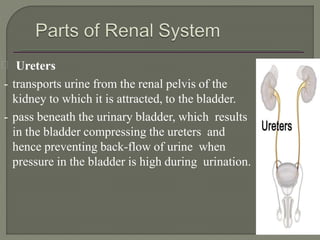
Ureters
- transports urine from the renal pelvis of the
kidney to which it is attracted, to the bladder.
- pass beneath the urinary bladder, which results
in the bladder compressing the ureters and
hence preventing back-flow of urine when
pressure in the bladder is high during urination.
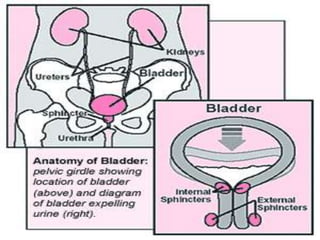
Bladder
- store urine
- expels urine into the urethra (Micturation)
Micturation – involves both voluntary and
involutary muscles.
Urethra
- is the passageway through which urine is
discharged from the body
Main difference between the urinary system of male
and female is the
“ length of urethra.”
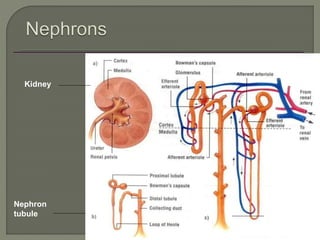
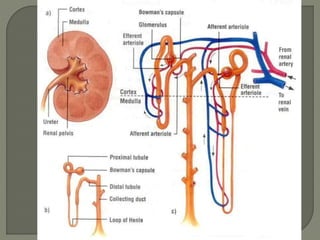
1. Nephrons – functional unit of kidney.
Each kidney is formed of about one
million nephrons.
2. Glomerulus – filters the blood
3. Bowman’s Capsule – is a large double
walled cup. It lies in the renal cortex
4. Tubular Component – necessary
substances are being reabsorbed
1. Loop of Henle – create a concentration gradient
in the medulla of the kidney.
- reabsorb water and important nutrients in the filtrate.
2. Renal Vein – a blood vessel that carries
deoxygenated blood out of the kidneys
3. Renal Artery – supply clean, oxygen-rich blood to
the kidneys
4. Adrenal Gland (Suprarenal Gland) – located on top of
the kidneys and is essential for balancing salt and water
in the body
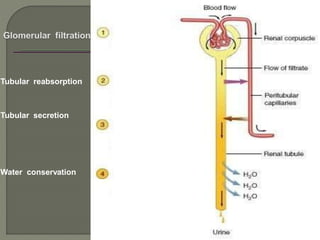
Beginning of the process.
• A process by which the blood courses
through the glomeruli, much of its fluid,
containg both useful chemicals and dissolve
waste materials, soaks out the blood
through membranes where it is filtered and
then flows into Bowman’s capsule.
Tubular Reabsorption
• A movement of substances out of the renal
tubules back into the blood capillaries located
around the tubules (peritubular capillaries).
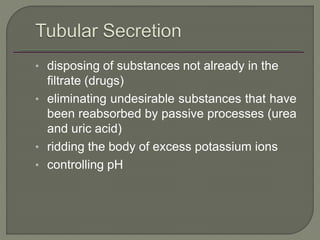
• disposing of substances not already in the
filtrate (drugs)
• eliminating undesirable substances that have
been reabsorbed by passive processes (urea
and uric acid)
• ridding the body of excess potassium ions
• controlling pH
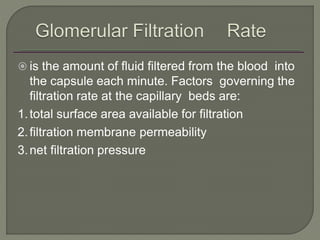
 is the amount of fluid filtered from the blood into
the capsule each minute. Factors governing the
filtration rate at the capillary beds are:
1.total surface area available for filtration
2.filtration membrane permeability
3.net filtration pressure
Kidneys
Arteries and
Veins
Urinary Tract
(ureter)
Urinary
Bladder
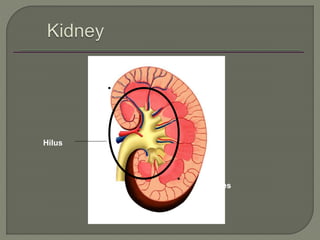
Hilus
Lobules
Nephron
tubule
Kidney
Nephron
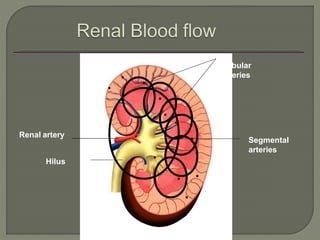
Renal artery
Hilus
Segmental
arteries
Lobular
arteries
Tubular reabsorption
Tubular secretion
Water conservation
Urinary Tract
(ureter)
Urinary
Bladder
Urethra
• Kidneys performed as the body’s main Excretory
function by filtering the blood and selectively
reabsorbed those materials that are needed to
maintain a stable internal environment.
• Nephrons is the functional unit of the kidneys.
It is composed by a glomerulus which filters the blood
and the tubular component where necessary
substances are reabsorbed into the the blood stream
and the unneeded materials are secreted into the
tubular filtrate for elimination and urine.
RENAL DISORDERS
 Definition
 Types and description
 Etiology
 Pathophysiology
 Clinical manifestations
 Diagnostic
 Medical management
 Nursing management
 Surgical management
 Nursing management of surgical client
Urinary incontinence has been defined by the
international continence society (ICS) as “a condition
in which involuntary loss of urine is a social or
hygienic problem and is objectively demonstrable”.
 Stress incontinence
 Urge incontinence
 Overflow incontinence
 Reflex incontinence
 Functional incontinence
 Others
 after trauma and surgery
 Due to prostrate cancer
 Urinary incontinence commonly result from many
factors including anatomic defects, physical,
physiological, psychosocial and pharmacological
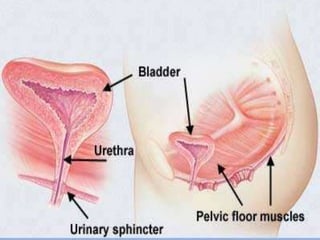
 Anatomic and physiologic incontinence results
from sphincter weakness or damage, urethral
deformity, altered muscle tone at the
urethrovesical junction (Q-tip test) and detrusor
instability
- Q-tip test is for the urethral hyper mobility of the
urethrovesical junction
 Stress incontinence
- Found most commonly in women with relaxed
pelvic floor muscles (from delivery, use of
instrumentation during vaginal delivery or
multiple pregnancies).
- Female urethra atrophy when estrogen
decreases after menopause.
- Prostate surgery for BPH or prostate cancer.
- Repeated straining, urogenital prolapsed and
congenital weakness.
- Surgical interventions may cause bladder
neck damage, with possible permanent
incontinence.
- Hypermobile urethrovesical junction.
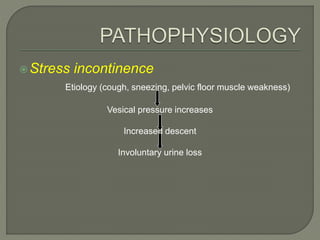
Stress incontinence
Etiology (cough, sneezing, pelvic floor muscle weakness)
Vesical pressure increases
Increased descent
Involuntary urine loss
 Major manifestation of urinary incontinence is
involuntarily loss of urine in all types.
1. Stress incontinence
- Leakage in small amounts
- May not be daily
- Condition is caused by uncontrolled contraction or
overactivity of detrusor muscle.
- Bladder escapes central inhibition and contracts
reflexively.
- Condition includes CNS disorder (e.g. cerebrovascular
disease , Alzheimer's disease , brain tumor, parkinson’s
disease)
- Bladder disorders (e.g. carcinoma in situ , radiation effect,
cystitis)
- Interference with spinal inhibitory pathways (malignant
growth in spinal cord, spondylosis and the bladder outlet
obstruction)
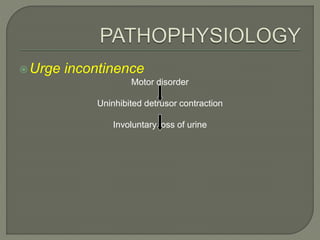
Urge incontinence
Motor disorder
Uninhibited detrusor contraction
Involuntary loss of urine
Urinary urgency
Urinary frequency
Periodic leakage in large amount
Nocturnal frequency
- Spinal cord lesions above S2 .
- Detrusor hyperreflexia and interference
with pathways coordinating detrusor
contraction and sphincter relaxation.
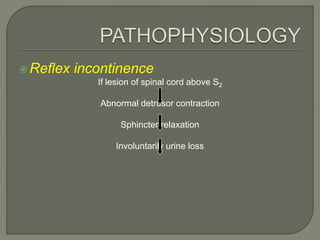
Reflex incontinence
If lesion of spinal cord above S2
Abnormal detrusor contraction
Sphincter relaxation
Involuntarily urine loss
- No warning or stress before involuntarily urination
- frequent, moderate volume
- equally during day and night
- Elderly often have problem that affect
balance and mobility, there are also some
physical causes
Cognitive defect
Functional defect
Vesicovaginal or vesicouretheral reflux
Altered continence control
- Disorder is caused by bladder or urethral outlet
obstruction ,( or caused by bladder neck
obstruction , urethral stricture ,pelvic organ
prolapse)
- After surgery such as hemorrhoidectomy,
herniorrhaphy, cystoscopy.
- Neurogenic bladder.
- Drugs can also contribute to incontinence,
specially overflow incontinence, examples are :-
opioidus, tranquilizers, sedatives and hypnotic
agents, alcohols, rapid acting diuretics,
antihistamines, atropine, hypotensive agents,
ganglionic blockers
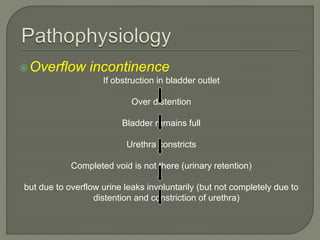
Overflow incontinence
If obstruction in bladder outlet
Over distention
Bladder remains full
Urethra constricts
Completed void is not there (urinary retention)
but due to overflow urine leaks involuntarily (but not completely due to
distention and constriction of urethra)
OVERFLOW INCONTINENCE
- Feeling of fullness in bladder
- No sphincter control
- Frequent leakage in small amounts
- Palpable and distended bladder
- feeling of incomplete voiding (as in urinary
retention)
- Fistula may occur during pregnancy, after
delivery of baby , as a result of
hysterectomy, or invasive cancer of cervix,
or after radiation therapy.
- Incontinence is found as post operative
complication after transurethral, perineal or
retropubic prostatectomy.
 Urodynamic examination
- cystometrography
- electromyographic
- urine flow rate (help to identify hypotonic
detrusor or an obstructional or dysfunctional
voiding mechanism)
- Urethral pressure profile (to detect pressure in
urethra in stress incontinence)
- Ultrasonography and catheterization (can detect
the elevated residual urine level)
- cystoscopy (for tumors, foreign bodies such a
stones) or structural abnormalities in the bladder
and urethra.
- Q-tip test.
- an excellent diagnostic tool, the bladder diary,
reveals voiding frequency, fluid intake, pattern of
urinary urgency and no. of severity of incontinent
episodes. A seven day diary reveals pattern of
incontinence and may be helpful before a
diagnostic evaluation.
 Electrical stimulation
 Medications
#Anticholenergic agents such as
1. Oxybutynin (Ditropan) and Tolterodine (Detrol):-
Anticholenergic agents work by
- increasing volume in the bladder
- inhibits involuntary contractions
- increase the total bladder capacity
- ditropan : antispasmodic action
# Tricyclic antidepressants
1. Imipramine (Tofranil) and Amitriptyline (Elavil)
- Increase the bladder ball relaxation and bladder
capacity.
# Pseudoephedrine (Sudafed)
- a very commonly used drug
- stimulates the alpha receptors
- constricts urethra, or the closer mechanism of
urethra
is increased
# Vaginal estrogen (for women)
- enriches genitourinary system with
estrogen receptor leads to good blood
supply to vaginal mucosa.
- prevents atrophy of mucosa.
- maintains elasticity of urethra and ability to
close properly.
 Monitor fluid intake
 Teach kegal exercises
 Develop a voiding schedule
 Implement biofeedback techniques
 Use behavior modification
 Explore obstructive devices
 Skin care
 Recommend counselling
 Encourage follow up
Use of other incontinence products
Disposable pads
Condom systems
Stress incontinence
- pelvic floor muscle exercises e.g., kegal
exercises
- weight loss if patient is obese
- cessation of smoking
- topical estrogen products
- external condom catheters or penile
clamps in men
- Treatment of underlying cause
- behavioral interventions including bladder
retraining with urge suppression
- decrease in dietary irritants
- bowel regularity
- pelvic floor muscle exercises
- external condom catheters
- Vaginal estrogen creams
- Urinary catheterization to decompress
the bladder
- Intra vaginal device such as a pessary to
sport the prolapse
- intermittent catheterization
- treatment of underlying cause
- bladder decompression to prevent urethral
reflux and hydronephrosis
- intermittent self catheterization
- diazepam to relax external sphincter as
prescribed
Incontinence after trauma and surgery
- External condom catheter
- penile clamp
- placement of artificial implantable
sphincter
 Functional incontinence
- Modification of environment or care plan that
facilitate regular, easy access to toilet and
promote patient safety
1. Better lightening
2. Ambulatory assistance
3. Equipment
4. Clothing alterations
5. Timely voiding
6. Different toileting equipment
1. Bladder neck suspension
 Restore the normal urethrovesical junction
or lengthen and support the urethra.
2. Implantation of an artificial urinary sphincter
 Implantation of an artificial urinary sphincter
may help some clients to achieve
continence.
This procedure is usually avoided until all
other treatments have failed.
 Maintain adequate urinary drainage
 With bladder suspension, preventing
distention is a priority to help in avoiding
excessive pressure on the healing surgical
site
 Bladder training program is initiated to help
the client to regain detrusor muscle tone.
 Clamp the catheter for lengthening intervals
while urine collects in the bladder, unclamping
it periodically to empty the bladder.
If client reports severe pressure,
immediately unclamp the catheter.
If a suprapubic catheter is used, the client
should try to void every two to three hours.
After voiding is attempted, catheter is
drained to measure the residual urine.
 Urinary incontinence is uncontrolled leakage
of urine.
 Approximately 17 million people living in the
united states suffer from urinary incontinence.
Among young adults to middle aged women,
prevalence rate is 30% to 40% and it
increases to 30% to 50% in elderly women.
 In contrast urinary incontinence in men tends
to be considerably lower ranging from 1% to
5% in young adult men and increasing 9% to
34% in elderly men
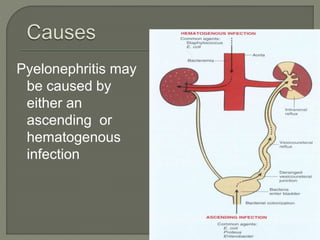
Pyelonephritis is the inflammation of renal
pelvis and parenchyma caused by
bacterial infection.
Pyelonephritis may
be caused by
either an
ascending or
hematogenous
infection
 Infection Primary to:
-calculus
-malignancy
-hydronephrosis
-trauma
 Hematogenous spread
-Bacterial endocarditis
-septicemia
 UTI ( infection carried to kidneys via ascending
route that is travelling up
-vesicouretral reflux
-bladder tumors
-BPH
-strictures
-urinary stones
Pyelonephritis may be
 Acute
 Chronic
Acute pyelonephritis occurs after bacterial
contamination of urethra or
instrumentation such as catheterization
or cystoscopy.
Starts at renal medulla
spreads to cortex
fibrosis and scarring
 Pregnancy
 Calculi
 Chronic Cystitis
 IDDM
 Foreign bodies in UT
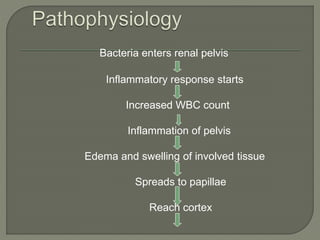
Bacteria enters renal pelvis
Inflammatory response starts
Increased WBC count
Inflammation of pelvis
Edema and swelling of involved tissue
Spreads to papillae
Reach cortex
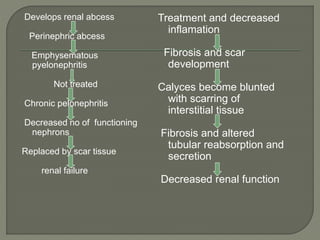
Develops renal abcess
Perinephric abcess
Emphysematous
pyelonephritis
Not treated
Chronic pelonephritis
Decreased no of functioning
nephrons
Replaced by scar tissue
renal failure
Treatment and decreased
inflamation
Fibrosis and scar
development
Calyces become blunted
with scarring of
interstitial tissue
Fibrosis and altered
tubular reabsorption and
secretion
Decreased renal function
 Mild lassitude
 Sudden onset of chills
 Fever
 Vomiting
 Malaise
 Flank pain
 Dysuria
 Frequent urination
 Headache
 Symptoms subside after few days except
bacteruria
 Acute pyelonephritis is Characterized by
-enlarged kidneys
-focal parenchymal abcess
-accumulation of polymorphonuclear
leukocytes around and in tubules
 Urine culture and sensitivity
 Physical examination
 Studies for calculi
 Cystogram
 IVP
 Retrograde pyelogram
 Cystourethrogram
 Blood culture, WBC count
 X-Ray (KUB)
 MRI/CT Scan
 Cystoscopy, USG, Antibody coated bacteria
test
Therapeutic aims
Eliminating the pathogenic organisms
with appropriate antibiotics as identified
by urine culture and sensitivity study
Removing component contributing to
decreased host resistance
Mild symptoms
 Short antibiotic course
 Oral antibiotics for 10-14 days
 Fluid intake of 3000ml/day
 Follow up urine cultures
Severe Symptoms
 Hospitalization
 Parenteral antibiotics
 Fluid intake 3000ml/day
 Follow up urine cultures after discharge
Dietary alterations e.g for calculi
-Reduce calcium
-Reduce oxalates
for UTI
-acid ash diet
Underlying defects to be corrected e.g.
obstruction,
reflux,
calculus
Chronic pyelonephritis ( Chronic interstitial
nephritis) is the result of not only acute
pyelonephritis but end result of long
standing UTI with recurrence, relapses of
infections (Slowly ,progressive disease)
 Chronic obstruction
 Long standing UTI
 Reflux
 Chronic disorders
 Associated with recurrent acute attacks
 H/O acute infection progressing to
chronic renal insufficiency
 No specific symptoms of its own
 Frequently diagnosed incidently when
client shows HTN or its complications
 Chronic PN progresses with other acute
infections
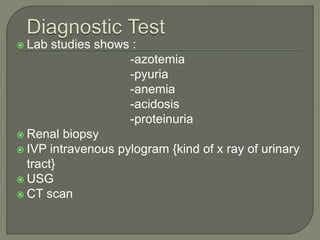
 Lab studies shows :
-azotemia
-pyuria
-anemia
-acidosis
-proteinuria
 Renal biopsy
 IVP intravenous pylogram {kind of x ray of urinary
tract}
 USG
 CT scan
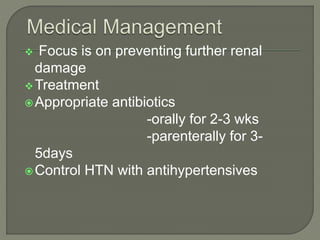
 Focus is on preventing further renal
damage
Treatment
Appropriate antibiotics
-orally for 2-3 wks
-parenterally for 3-
5days
Control HTN with antihypertensives
Nursing Assessment:
 History
-present history
-past history
-family history
-social and personal history
 Physical examination
 Urinalysis
 Blood studies
 Urine culture and sensitivity
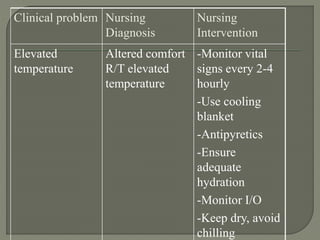
Clinical problem Nursing
Diagnosis
Nursing
Intervention
Elevated
temperature
Altered comfort
R/T elevated
temperature
-Monitor vital
signs every 2-4
hourly
-Use cooling
blanket
-Antipyretics
-Ensure
adequate
hydration
-Monitor I/O
-Keep dry, avoid
chilling
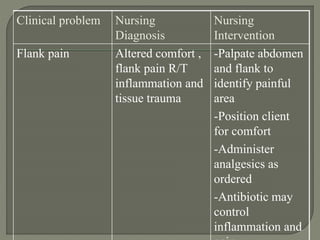
Clinical problem Nursing
Diagnosis
Nursing
Intervention
Flank pain Altered comfort ,
flank pain R/T
inflammation and
tissue trauma
-Palpate abdomen
and flank to
identify painful
area
-Position client
for comfort
-Administer
analgesics as
ordered
-Antibiotic may
control
inflammation and
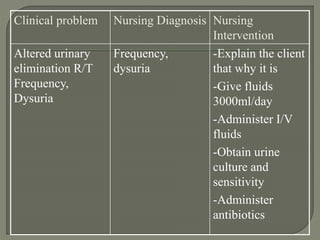
Clinical problem Nursing Diagnosis Nursing
Intervention
Altered urinary
elimination R/T
Frequency,
Dysuria
Frequency,
dysuria
-Explain the client
that why it is
-Give fluids
3000ml/day
-Administer I/V
fluids
-Obtain urine
culture and
sensitivity
-Administer
antibiotics
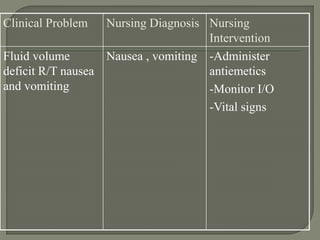
Clinical Problem Nursing Diagnosis Nursing
Intervention
Fluid volume
deficit R/T nausea
and vomiting
Nausea , vomiting -Administer
antiemetics
-Monitor I/O
-Vital signs
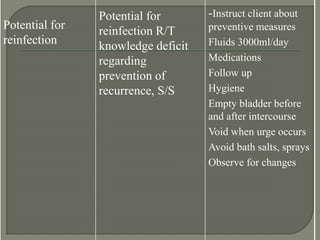
Potential for
reinfection
Potential for
reinfection R/T
knowledge deficit
regarding
prevention of
recurrence, S/S
-Instruct client about
preventive measures
Fluids 3000ml/day
Medications
Follow up
Hygiene
Empty bladder before
and after intercourse
Void when urge occurs
Avoid bath salts, sprays
Observe for changes
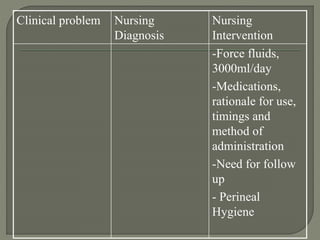
Clinical problem Nursing
Diagnosis
Nursing
Intervention
-Force fluids,
3000ml/day
-Medications,
rationale for use,
timings and
method of
administration
-Need for follow
up
- Perineal
Hygiene
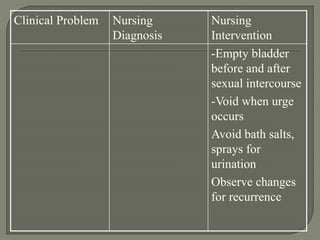
Clinical Problem Nursing
Diagnosis
Nursing
Intervention
-Empty bladder
before and after
sexual intercourse
-Void when urge
occurs
Avoid bath salts,
sprays for
urination
Observe changes
for recurrence
 Acute Kidney Injury (AKI), previously called acute
renal failure (ARF) is the rapid breakdown of renal
(kidney) function that occurs when high levels of uremic
toxins (waste products of the body's metabolism)
accumulate in the blood.
 ARF occurs when the kidneys are unable to excrete
(discharge) the daily load of toxins in the urine.
 Acute renal failure is a syndrome defined by a sudden loss
of renal function over several hours to several days.
It is characterized by:
Oliguria
Body water and body fluids disturbances
Electrolyte dearangement
India's national CKD registry organized under the
auspices of Indian Society of Nephrology and housed
in Kidney Institute at Nadiad has given data from
45,885 subjects admitted to 166 kidney centers in
India upto January 2010.
ARF affects approximately 1% of patients on
admission to the hospital, 2% to 5% during the
hospital stay, and 4% to 15% after cardiopulmonary
bypass surgery.
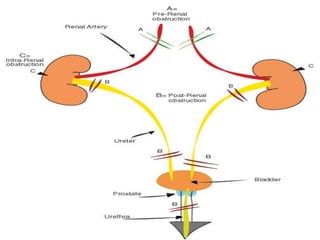
PRERENAL CAUSES
(55%)
INTRARENAL CAUSES
(40%)
POSTRENAL CAUSES
(5%)
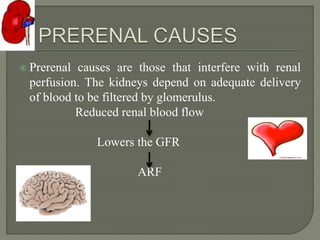
 Prerenal causes are those that interfere with renal
perfusion. The kidneys depend on adequate delivery
of blood to be filtered by glomerulus.
Reduced renal blood flow
Lowers the GFR
ARF
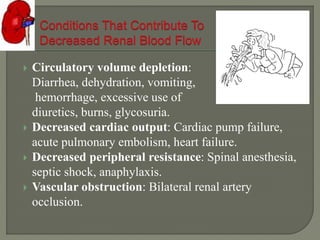
 Circulatory volume depletion:
Diarrhea, dehydration, vomiting,
hemorrhage, excessive use of
diuretics, burns, glycosuria.
 Decreased cardiac output: Cardiac pump failure,
acute pulmonary embolism, heart failure.
 Decreased peripheral resistance: Spinal anesthesia,
septic shock, anaphylaxis.
 Vascular obstruction: Bilateral renal artery
occlusion.
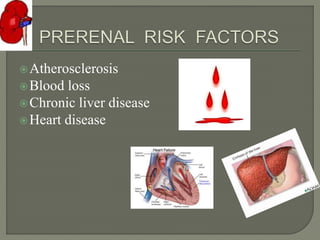
Atherosclerosis
Blood loss
Chronic liver disease
Heart disease
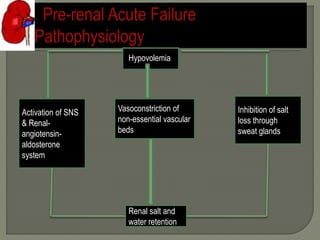
Vasoconstriction of
non-essential vascular
beds
Inhibition of salt
loss through
sweat glands
Renal salt and
water retention
Activation of SNS
& Renal-
angiotensin-
aldosterone
system
Hypovolemia
It involves parenchymal changes caused by disease
or nephrotoxic substances. Intrinsic ARF accounts
for approximately 40% of the cases of acute renal
failure.
The causes can be classified as follows:
 Vascular disease
◦ Glomerulonephritis (GN) and vasculitis
(inflammation of blood vessels)
◦ Renal artery obstruction (atherosclerosis,
thrombosis)
• Renal vein obstruction (thrombosis)
• Low blood platelet and red blood cell counts
 Diseases of tubules and interstitium (space between
parts of tissue)
• Amyloidosis (deposition of proteins in kidney tissues)
• Interstitial nephritis (associated with allergy or
infection)
 Acute tubular necrosis (70%)
• Ischemia (lack of blood flow to an organ)
• Toxins
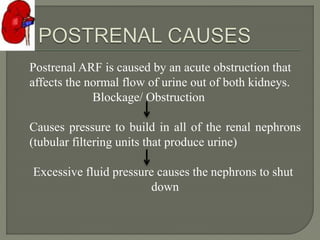
Postrenal ARF is caused by an acute obstruction that
affects the normal flow of urine out of both kidneys.
Blockage/ Obstruction
Causes pressure to build in all of the renal nephrons
(tubular filtering units that produce urine)
Excessive fluid pressure causes the nephrons to shut
down
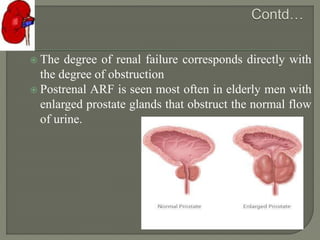
 The degree of renal failure corresponds directly with
the degree of obstruction
 Postrenal ARF is seen most often in elderly men with
enlarged prostate glands that obstruct the normal flow
of urine.
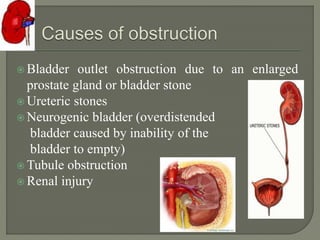
 Bladder outlet obstruction due to an enlarged
prostate gland or bladder stone
 Ureteric stones
 Neurogenic bladder (overdistended
bladder caused by inability of the
bladder to empty)
 Tubule obstruction
 Renal injury
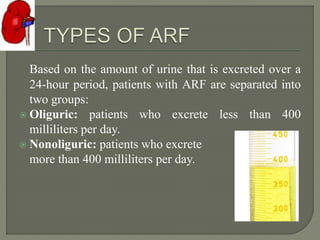
Based on the amount of urine that is excreted over a
24-hour period, patients with ARF are separated into
two groups:
 Oliguric: patients who excrete less than 400
milliliters per day.
 Nonoliguric: patients who excrete
more than 400 milliliters per day.
 Onset or initiating phase: It covers the period
from the precipitating event to the development
of renal manifestations.
 Oliguric-anuric phase: It lasts for 1-8weeks.
Dialysis may be required in this phase.
 Diuretic phase: A gradual or abrupt return to
GFR and leveling of BUN. U/O may be 1000-
2000ml which leads to dehydration.(25% of
deaths occur in this phase)
 Recovery phase(3-12months): During this time
the client returns to an activity level similar to that
before the onset of the illness. Mild tubular
abnormalities, glycosuria, decreased concentrating
ability may continue for years and client is at the
risk for fluid and electrolyte imbalance.
1. Decreased blood flow
2. Decreased permeability of glomerular
basement membrane
3. Tubular obstruction
4. Back leak of GF through damaged epithelial
cell tubules
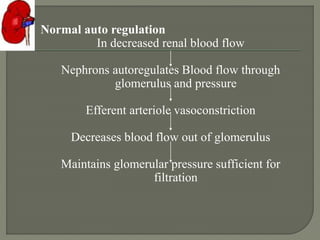
Normal auto regulation
In decreased renal blood flow
Nephrons autoregulates Blood flow through
glomerulus and pressure
Efferent arteriole vasoconstriction
Decreases blood flow out of glomerulus
Maintains glomerular pressure sufficient for
filtration
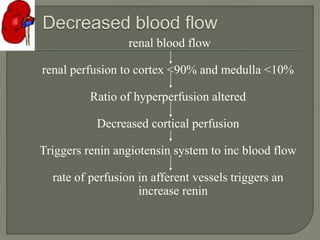
renal blood flow
renal perfusion to cortex <90% and medulla <10%
Ratio of hyperperfusion altered
Decreased cortical perfusion
Triggers renin angiotensin system to inc blood flow
rate of perfusion in afferent vessels triggers an
increase renin
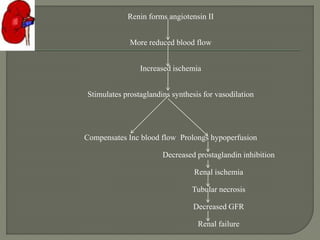
Renin forms angiotensin II
More reduced blood flow
Increased ischemia
Stimulates prostaglandins synthesis for vasodilation
Compensates Inc blood flow Prolongs hypoperfusion
Decreased prostaglandin inhibition
Renal ischemia
Tubular necrosis
Decreased GFR
Renal failure
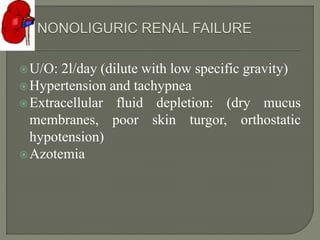
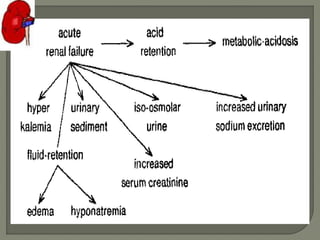
U/O: 2l/day (dilute with low specific gravity)
Hypertension and tachypnea
Extracellular fluid depletion: (dry mucus
membranes, poor skin turgor, orthostatic
hypotension)
Azotemia
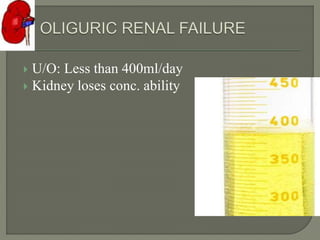
 U/O: Less than 400ml/day
 Kidney loses conc. ability
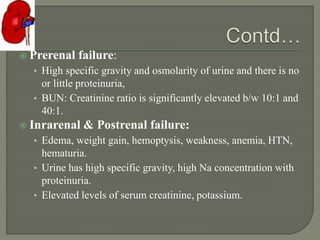
 Prerenal failure:
• High specific gravity and osmolarity of urine and there is no
or little proteinuria,
• BUN: Creatinine ratio is significantly elevated b/w 10:1 and
40:1.
 Inrarenal & Postrenal failure:
• Edema, weight gain, hemoptysis, weakness, anemia, HTN,
hematuria.
• Urine has high specific gravity, high Na concentration with
proteinuria.
• Elevated levels of serum creatinine, potassium.
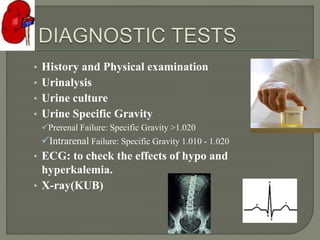
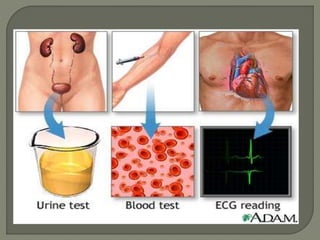
• History and Physical examination
• Urinalysis
• Urine culture
• Urine Specific Gravity
Prerenal Failure: Specific Gravity >1.020
Intrarenal Failure: Specific Gravity 1.010 - 1.020
• ECG: to check the effects of hypo and
hyperkalemia.
• X-ray(KUB)
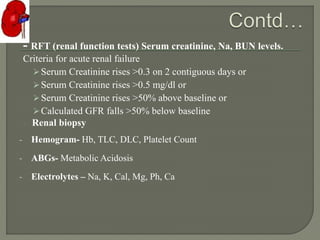
- RFT (renal function tests) Serum creatinine, Na, BUN levels.
Criteria for acute renal failure
Serum Creatinine rises >0.3 on 2 contiguous days or
Serum Creatinine rises >0.5 mg/dl or
Serum Creatinine rises >50% above baseline or
Calculated GFR falls >50% below baseline
- Renal biopsy
- Hemogram- Hb, TLC, DLC, Platelet Count
- ABGs- Metabolic Acidosis
- Electrolytes – Na, K, Cal, Mg, Ph, Ca
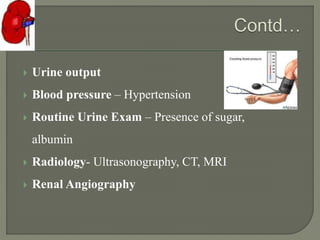
 Urine output
 Blood pressure – Hypertension
 Routine Urine Exam – Presence of sugar,
albumin
 Radiology- Ultrasonography, CT, MRI
 Renal Angiography
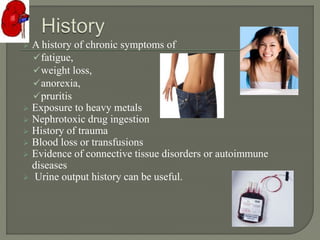
 A history of chronic symptoms of
fatigue,
weight loss,
anorexia,
pruritis
 Exposure to heavy metals
 Nephrotoxic drug ingestion
 History of trauma
 Blood loss or transfusions
 Evidence of connective tissue disorders or autoimmune
diseases
 Urine output history can be useful.
Past medical history
 Hypertension
 Congestive cardiac failure
 Diabetes
 Multiple myeloma
 Chronic infection
 Myeloproliferative disorder
Consensus criteria (RIFLE for the diagnosis of ARF
are:
 Risk: serum creatinine increased 1.5 times OR urine
production of <0.5 ml/kg body weight for 6 hours
 Injury: creatinine 2.0 times OR urine production
<0.5 ml/kg for 12 h
 Failure: creatinine 3.0 times or urine output below
0.3 ml/kg for 24 h
 Loss: persistent ARF or complete loss of kidney
function for more than four weeks
 End-stage Renal Disease: complete loss of kidney
function for more than three months
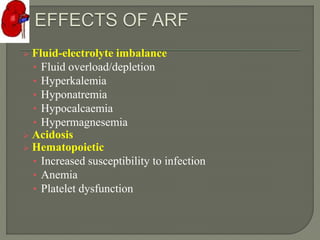
 Fluid-electrolyte imbalance
• Fluid overload/depletion
• Hyperkalemia
• Hyponatremia
• Hypocalcaemia
• Hypermagnesemia
 Acidosis
 Hematopoietic
• Increased susceptibility to infection
• Anemia
• Platelet dysfunction
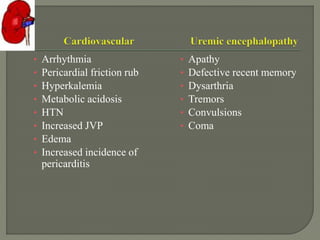
• Arrhythmia
• Pericardial friction rub
• Hyperkalemia
• Metabolic acidosis
• HTN
• Increased JVP
• Edema
• Increased incidence of
pericarditis
• Apathy
• Defective recent memory
• Dysarthria
• Tremors
• Convulsions
• Coma
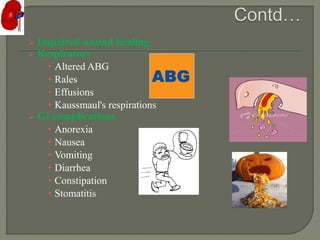
 Impaired wound healing
 Respiratory
• Altered ABG
• Rales
• Effusions
• Kaussmaul's respirations
 GI complications
• Anorexia
• Nausea
• Vomiting
• Diarrhea
• Constipation
• Stomatitis
Objectives
 Preventing and treating effects
 Attaining and maintaining adequate hydration
 Prevention of contributing factors
 Prompt recognition and restoration of optimal
renal function
Eliminate the cause
Hemodynamic support
Respiratory support
Fluid management
Electrolyte management
Medication dose adjustment
Dialysis
Maintenance of fluid and electrolyte balance on the
basis of output and wt
 Limit Fluid Intake to Urine Output + 300-500 ml/day:
Usually it is calculated on the basis of previous day’s
U/O + an amount of 400ml.
 Monitor weight daily
 Hyponatremia - Proper fluid replacement(limit Na
intake to 2g/day)
 Hyperphosphatemia
• Administration of aluminum hydroxide or other phosphate
binders
• Low phosphorus diet
 Hypocalcemia
• Calcium & Vitamin D supplements
 Hypertension
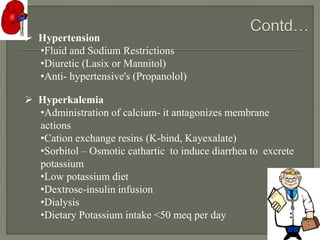
•Fluid and Sodium Restrictions
•Diuretic (Lasix or Mannitol)
•Anti- hypertensive's (Propanolol)
 Hyperkalemia
•Administration of calcium- it antagonizes membrane
actions
•Cation exchange resins (K-bind, Kayexalate)
•Sorbitol – Osmotic cathartic to induce diarrhea to excrete
potassium
•Low potassium diet
•Dextrose-insulin infusion
•Dialysis
•Dietary Potassium intake <50 meq per day
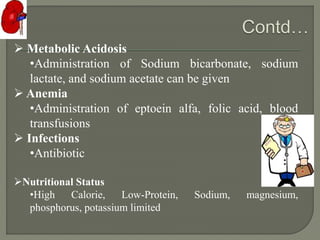
 Metabolic Acidosis
•Administration of Sodium bicarbonate, sodium
lactate, and sodium acetate can be given
 Anemia
•Administration of eptoein alfa, folic acid, blood
transfusions
 Infections
•Antibiotic
Nutritional Status
•High Calorie, Low-Protein, Sodium, magnesium,
phosphorus, potassium limited
 Hypermagnesemia
 Avoid dark green vegetables and whole grains.
 Treat seizures
• Phenytoin
• Phenobarbitone
 Prevention of pericarditis
• Medications
 steroids
 NSAIDs
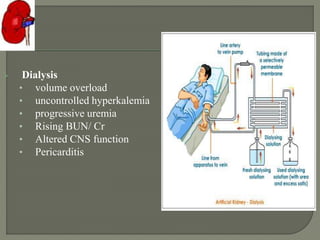
 Dialysis
• volume overload
• uncontrolled hyperkalemia
• progressive uremia
• Rising BUN/ Cr
• Altered CNS function
• Pericarditis
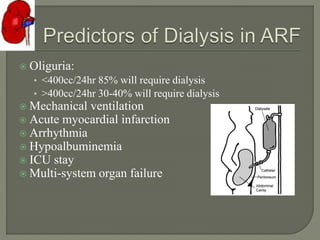
 Oliguria:
• <400cc/24hr 85% will require dialysis
• >400cc/24hr 30-40% will require dialysis
 Mechanical ventilation
 Acute myocardial infarction
 Arrhythmia
 Hypoalbuminemia
 ICU stay
 Multi-system organ failure
Access : Veno-venous
 It is a mode of renal replacement therapy for
hemodynamically unstable, fluid overloaded, catabolic
septic patients especially in the critical care /intensive care
unit setting.
 The techniques most commonly used are slow continuous
hemodialysis and hemodiafiltration.
 These patients having various co-morbid conditions are on
mechanical ventilation and various life supporting
modalities which do not merit the dialysis procedure to be
carried out in the routine dialysis set up.
 These patients require continuous clearance of waste
produced due to ongoing illnesses and an adequate
potential for infusion of nutritional and inotropic agents
for sustenance of vital parameters.
 Presence of marked azotemia
 Fluid overload
 Persistent oliguria
 Hyperkalemia
 Refractory pulmonary edema
 Pericarditis
 Serial rise in blood urea and serum creatinine.
 ARF with cardiovascular instability
 ARF with septicemia
 ARF with septicemia and ARDS.
 ARF with cerebral edema
 Systemic inflammatory response syndrome
1. CRRT by its lower rate of fluid removal can lead to
steady state fluid equilibrium in hemodynamically
unstable, critically ill patients with associated
comorbid conditions eg. M.I, ARDS, septicemia,
bleeding disorders.
2. It provides excellent control of azotemia, electrolytes
and acid base balance.
3. It is efficacious in removing fluid in special
circumstances – post surgery, pulmonary edema;
ARDS etc.
4. CRRT can help in administration of parenteral
nutrition and obligatory I.V medications like pressors
& inotropes by creating an unlimited space by virtue
of continuous ultrafiltration.
5. Hemofiltration modality is effective in lowering
intracranial tension v/s routine intermittent
hemodialysis which can sometimes raise intracranial
tension.
6. Proinflammtory mediators of inflammation are also
shown to have been removed by this modality eg.IL-
1, IL-6, IL-8, TNF-a.
This mode of therapy requires regular
monitoring of hemodynamic status and fluid
balance (ultrafiltration rate, replacement fluid);
regular infusion of dialysate; continuous
anticoagulation; ongoing alarms and an
expensive mode of therapy above all.
Nursing Assessment
Nursing Diagnosis
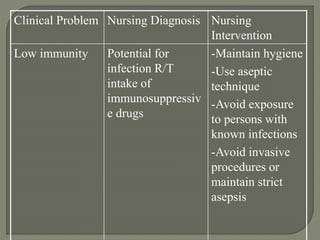
1. Fluid volume excess R/T decreased GFR
manifested by edema/weight gain
2. Altered nutrition :less than body requirement
R/T high catabolic state
3. Risk for infection R/T lowered resistance
4. Risk for injury R/T weakness, confusion,
postural hypotension
5. Knowledge deficit about the disease condition
Expected outcomes: Patient will be having no fluid
retention as evidenced by no or reduced edema, HR
within limits and stable BP.
Interventions:
-Record I/O, Acid base balance, electrolyte levels
-Measure weight, B.P, Auscultate lungs
-Assess for peripheral edema, decrease in Urine output,
increase in B.P, hyperkalemia
-Assess respiratory rate
- -Assess for the need for dialysis
-Inspect skin for breakdown
- Raise extremities
-Treat hyperkalemia by avoiding foods
containing K+, administering kayexalate (Ion
exchange resin)
-Look for S/S of hyperkalemia (muscle weakness,
arrhythmia, flaccidity)
Expected outcome: Patient will be having improved
nutrition pattern as evidenced by improved hemoglobin
levels, decreased fatigue and weakness.
Interventions :
- Encourage high carbohydrate, high fat diet
- Restrict potassium and proteins
- Serve in an attractive manner
- Consider likes and dislikes
- Consult dietician
Expected outcome: Patient will have reduced chances
of infection as evidenced by normal Hemogram, stable
vital signs.
Interventions:
- Use aseaptic technique during all treatments especially
with invasive lines and catheters
- Relieve pruritis by using superfatted soap and
antipruritic medications
- Maintain pulmonary hygiene
Expected outcome: patient will have increased
awareness regarding diet, medication, rest, follow-up.
- Teach the pt and family about:
cause and problems with recurrent failure
Identification of preventable environment or health
factors
prescribed medications
prescribed dietary regimen
Risk for hyperkalemia and reportable S/S
S/S of infection and methods of prevention
Follow-up
Chronic kidney disease (CKD) is a
worldwide public health problem. It is
recognized as a common condition that is
associated with an increased risk of
cardiovascular disease and chronic renal
failure (CRF).
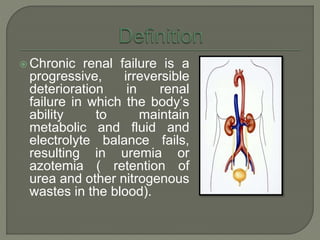
 Chronic renal failure is a
progressive, irreversible
deterioration in renal
failure in which the body’s
ability to maintain
metabolic and fluid and
electrolyte balance fails,
resulting in uremia or
azotemia ( retention of
urea and other nitrogenous
wastes in the blood).
The Kidney Disease Outcomes Quality
Initiative (K/DOQI) of the National Kidney
Foundation (NKF) defines Chronic kidney
disease as either kidney damage or a
decreased Glomerular filtration rate (GFR)
of less than 60 ml/min for 3 or more
months.
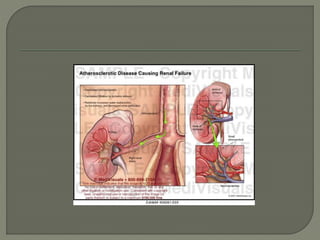
 Causes of chronic kidney disease include the
following:
 Vascular disease
 Glomerular disease (primary or secondary)
 Tubulointerstitial disease
 Urinary tract obstruction
Vascular disease
o Renal artery stenosis
o Atheroemboli
o Hypertensive nephrosclerosis
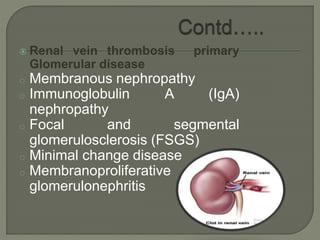
 Renal vein thrombosis primary
Glomerular disease
o Membranous nephropathy
o Immunoglobulin A (IgA)
nephropathy
o Focal and segmental
glomerulosclerosis (FSGS)
o Minimal change disease
o Membranoproliferative
glomerulonephritis
 Secondary glomerulus
disease
o Diabetes mellitus
o Systemiclupus erythematus
o Rheumatoid arthritis
o Hepatitis B and C
o Syphilis
o Human immunodeficiency
virus (HIV)
o Parasitic infection
 Causes of Tubulointerstitial disease
o Drugs (e.g. allopurinol)
o Infection (viral, bacterial, parasitic)
o Chronic Hypokalemia
o Chronic hypercalcemia
o Polycystic kidneys
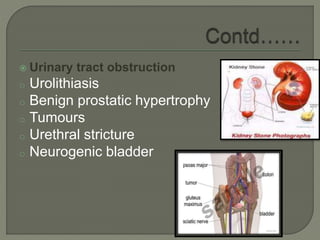
 Urinary tract obstruction
o Urolithiasis
o Benign prostatic hypertrophy
o Tumours
o Urethral stricture
o Neurogenic bladder
Total Glomerular filtration rate decreases (
reduced clearance)
Serum Creatinine and nitrogen level
increase
Nephrons works harder to eliminate
Creatinine and nitrogen
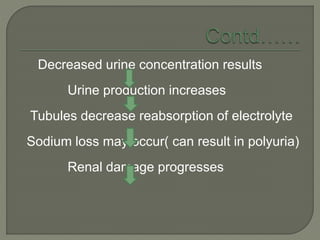
Decreased urine concentration results
Urine production increases
Tubules decrease reabsorption of electrolyte
Sodium loss may occur( can result in polyuria)
Renal damage progresses
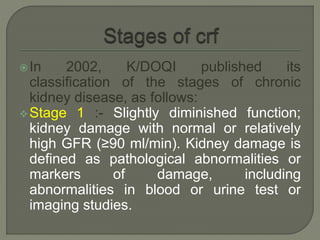
In 2002, K/DOQI published its
classification of the stages of chronic
kidney disease, as follows:
Stage 1 :- Slightly diminished function;
kidney damage with normal or relatively
high GFR (≥90 ml/min). Kidney damage is
defined as pathological abnormalities or
markers of damage, including
abnormalities in blood or urine test or
imaging studies.
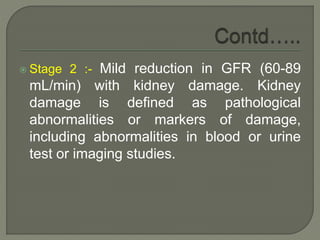
 Stage 2 :- Mild reduction in GFR (60-89
mL/min) with kidney damage. Kidney
damage is defined as pathological
abnormalities or markers of damage,
including abnormalities in blood or urine
test or imaging studies.
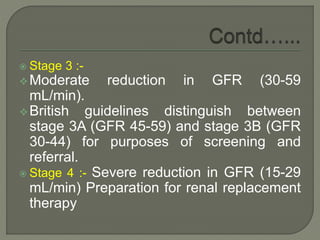
 Stage 3 :-
Moderate reduction in GFR (30-59
mL/min).
British guidelines distinguish between
stage 3A (GFR 45-59) and stage 3B (GFR
30-44) for purposes of screening and
referral.
 Stage 4 :- Severe reduction in GFR (15-29
mL/min) Preparation for renal replacement
therapy
 Stage 5 :- Established kidney failure (GFR
<15 mL/min, or permanent renal
replacement therapy.
Stage 1:- Reduced renal reserve,
Characterized by a 40% to 75% loss of
nephro function.
The patient usually does not have
symptoms because the remaining
nephrons are able to carry out the normal
functions of the kidney.
Stage 2:- Renal insufficiency
It occurs when 75% to 90% of nephrons
function is lost.
At this point, the serum Creatinine and
blood urea nitrogen rise, the kidney losses
its ability to concentrate urine and anemia
develops.
The patient may reports polyuria and
nocturia.
Stage 3:- End stage renal disease
 The final stage of CRF occurs when there is
less than 10% nephron function remaining.
 All of the normal regulatory, excretory and
hormonal function of the kidney are severely
impaired.
 ESRD is evidenced by elevated by the
Creatinine and blood urea nitrogen levels as
well as electrolyte imbalances.
 Once the patient reaches this point, dialysis is
usually indicated.
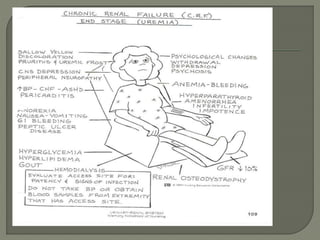
Neurologic:-
 Weakness and fatigue
 Confusion
 Inability to concentrate
 Disorientation
 Tremors
 Asterixis
 Restless of legs
 Burning of soles of feet
 Behavior changes
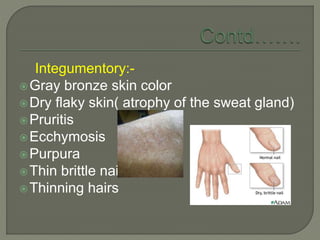
Integumentory:-
Gray bronze skin color
Dry flaky skin( atrophy of the sweat gland)
Pruritis
Ecchymosis
Purpura
Thin brittle nails
Thinning hairs
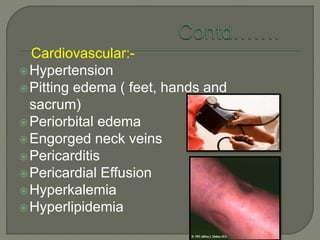
Cardiovascular:-
Hypertension
Pitting edema ( feet, hands and
sacrum)
Periorbital edema
Engorged neck veins
Pericarditis
Pericardial Effusion
Hyperkalemia
Hyperlipidemia
Pulmonary:-
Crackles, thick, tenacious sputum
Depressed cough reflex
Pleuritic pain
Shortness of breath
Tachypnea
Kussmaul type respiration
Uremic pneumonitis
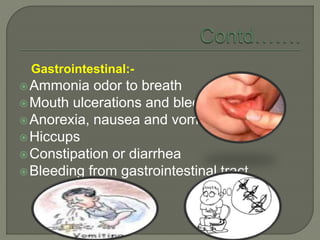
Gastrointestinal:-
Ammonia odor to breath
Mouth ulcerations and bleeding
Anorexia, nausea and vomiting
Hiccups
Constipation or diarrhea
Bleeding from gastrointestinal tract
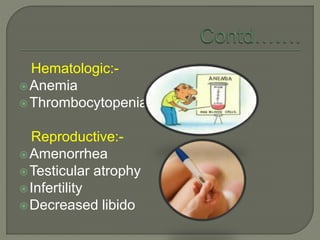
Hematologic:-
Anemia
Thrombocytopenia
Reproductive:-
Amenorrhea
Testicular atrophy
Infertility
Decreased libido
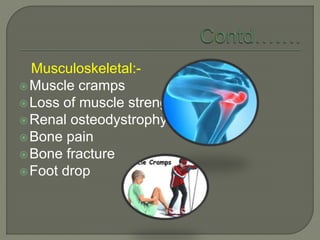
Musculoskeletal:-
Muscle cramps
Loss of muscle strength
Renal osteodystrophy
Bone pain
Bone fracture
Foot drop
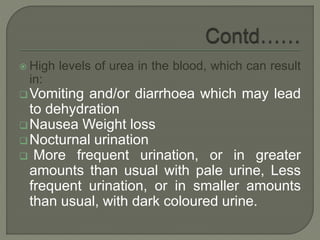
 High levels of urea in the blood, which can result
in:
Vomiting and/or diarrhoea which may lead
to dehydration
Nausea Weight loss
Nocturnal urination
 More frequent urination, or in greater
amounts than usual with pale urine, Less
frequent urination, or in smaller amounts
than usual, with dark coloured urine.
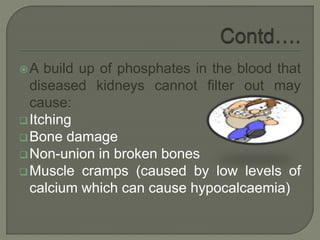
A build up of phosphates in the blood that
diseased kidneys cannot filter out may
cause:
Itching
Bone damage
Non-union in broken bones
Muscle cramps (caused by low levels of
calcium which can cause hypocalcaemia)
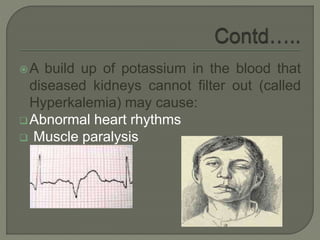
A build up of potassium in the blood that
diseased kidneys cannot filter out (called
Hyperkalemia) may cause:
Abnormal heart rhythms
 Muscle paralysis
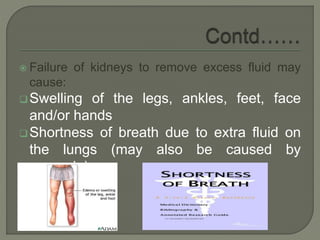
 Failure of kidneys to remove excess fluid may
cause:
Swelling of the legs, ankles, feet, face
and/or hands
Shortness of breath due to extra fluid on
the lungs (may also be caused by
anaemia)
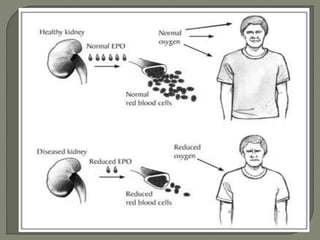
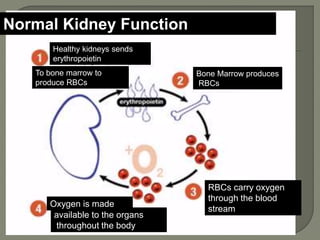
 Healthy kidneys produce the hormone
erythropoietin which stimulates the bone
marrow to make oxygen-carrying red blood
cells.
 As the kidneys fail, they produce less
erythropoietin, resulting in decreased
production of red blood cells to replace the
natural breakdown of old red blood cells. As a
result, the blood carries less haemoglobin, a
condition known as anaemia. This can result
in:
Feeling tired and/or weak
 Memory problems
Difficulty concentrating Dizziness Low
blood pressure
Other symptoms include:
Appetite loss
 A bad taste in the mouth
Difficulty sleeping
Darkening of the skin
Excess protein in the blood
Urinalysis:- Decreased GFR can be
detected by obtaining a 24 hours urine
analysis for Creatinine clearance.
As GFR decreases, the Creatinine
clearance value decreases, where as the
serum Creatinine value increase.
 Serum Sodium and
Potassium level:- The
kidney is unable to
concentrate or dilute the
urine normally in ESRD.
 Some patient retain
sodium, potassium and
water, increasing the risk
for edema, congestive
heart failure and
hypertension.
pH:- With advanced renal disease,
metabolic acidosis occurs because the
kidney is unable to excrete increased
loads of acids.
Complete blood Count:- Anemia develops
as a result of inadequate erythropoietin
production, the short life span of RBCs,
nutritional deficiencies and the patient
ability to bleed.
In renal failure, erythropoietin production
decreases and profound anemia results,
producing fatigue, angina and shortness of
breath.
Serum calcium and Phosphorus:- With in
the decrease in the GFR, there is an
increase in the serum phosphate level and
a reciprocal or corresponding decrease in
the serum calcium level.
 KUB is usually done first to determine
whether there is a problem with the
structure of the renal system.
 An IVP and CT scan can be done to
assess renal structure and function.
 Renal angiography may also be done
to assess the blood supply to and
through the kidneys.
 Renal ultrasonography is useful to
screen for hydronephrosis which may
be not observed in early obstruction.
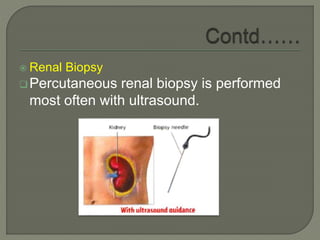
 Renal Biopsy
Percutaneous renal biopsy is performed
most often with ultrasound.
The goal of management
is to maintain kidney
function and homeostasis
for as long as possible.
All the factors that
contribute to ESRD and
all factors that are
reversible ( e.g.
obstruction) are identified
and treated.
 Antacid:- Hyperphosphatemia and
hypocalcemia are treated with aluminum
based antacids that binds dietary phosphorus
in the gastrointestinal tract.
 Phosphate-Lowering Agents
 Dietary phosphate binders promote the
binding of phosphate, typically with calcium,
to reduce Hyperphosphatemia.
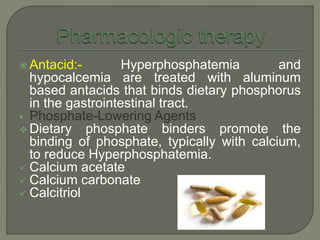
 Calcium acetate
 Calcium carbonate
 Calcitriol
 Antihypertensive and cardiovascular agents:-
Hypertension is managed by intravascular
volume control and a variety of
antihypertensive medications.
 Congestive heart failure and pulmonary
edema may also require treatment with fluid
restriction.
 Low sodium diets, diuretics, inotropic agents
such as digitalis or dobutamine and dialysis.
Anticonvulsants:- Intravenous diazepam or
phenytoin is usually administered to
control seizures.
Erythropoietin:- Anemia associated with
CRF is treated with recombinant human
erythropoietin ( Epogen).
It is administered subcutaneously three
times a week for the Hematocrit to rise.
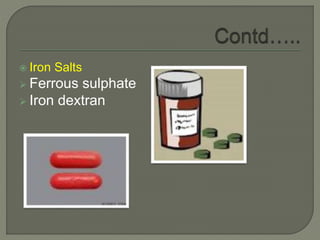
 Iron Salts
 Ferrous sulphate
 Iron dextran
Nutritional therapy:- Careful regulation of
protein intake.
Fluid intake to balance fluid losses.
Sodium intake to balance sodium losses.
Restriction of potassium.
Adequate calorie intake and vitamin
supplementation must be ensured.
The allowed protein must be of high
biologic value.
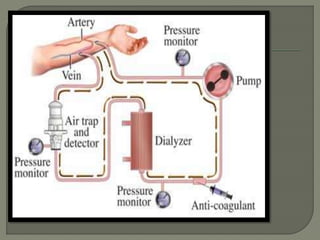
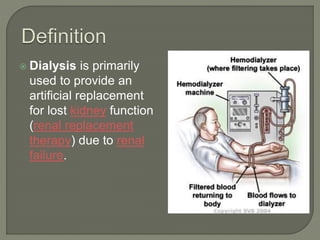
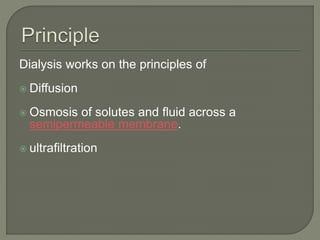
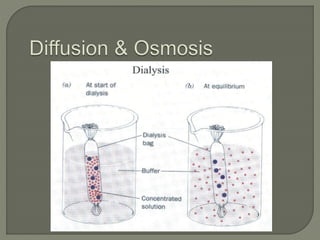
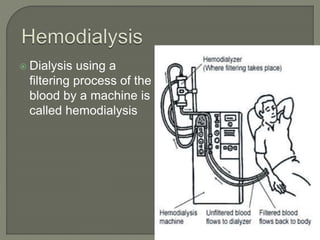
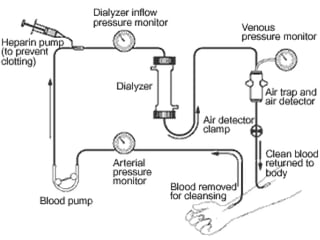
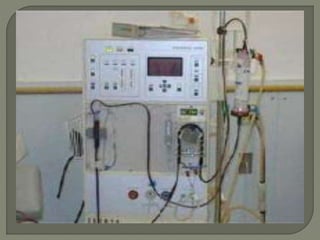
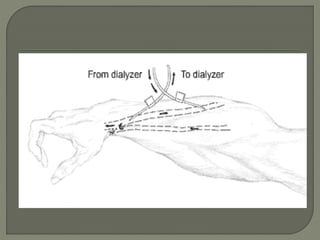
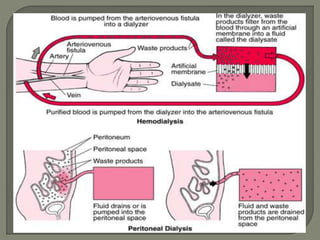
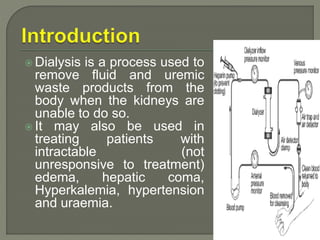
 Dialysis is a process for removing waste and
excess water from the blood, and is primarily used
to provide an artificial replacement for lost kidney
function in people with renal failure.
 Dialysis may be used for those with an acute
disturbance in kidney function (acute kidney injury)
, previously acute renal failure) or for those with
progressive but chronically worsening kidney
function–a state known as chronic kidney disease
stage 5 (previously chronic renal failure or end-
stage kidney disease).
The latter form may develop over months
or years, but in contrast to acute kidney
injury is not usually reversible, and dialysis
is regarded as a "holding measure" until a
renal transplant can be performed, or
sometimes as the only supportive measure
in those for whom a transplant would be
inappropriate.
It may also be used to treat the
patients with intractable ( not
responsive to treatment) edema,
hepatic coma, Hyperkalemia,
hypercalcemia, hypertension and
uremia.
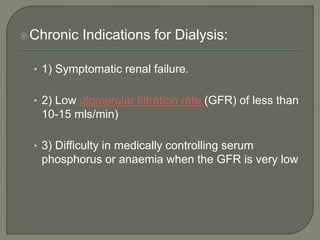
It is usually initiated when the patient
cannot maintain a reasonable
lifestyle with conservative treatment.
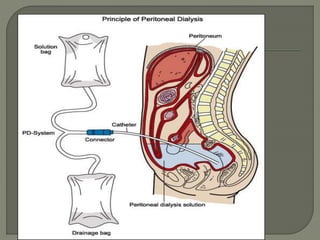
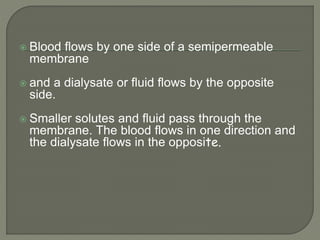
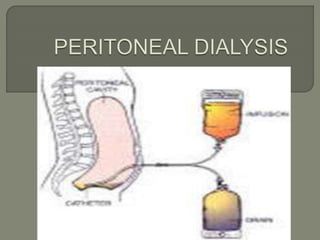
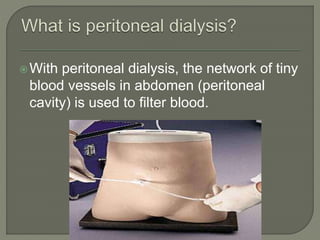
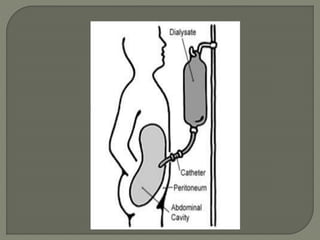
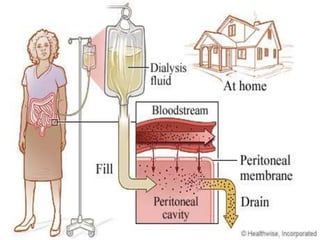
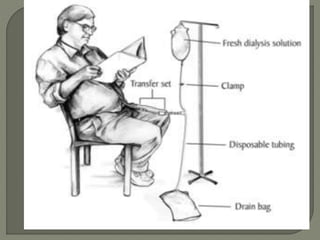
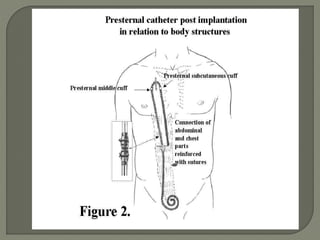
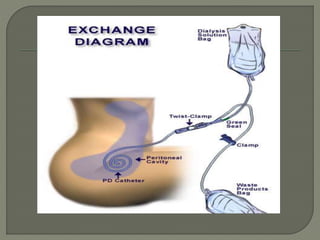
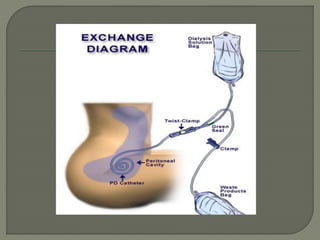
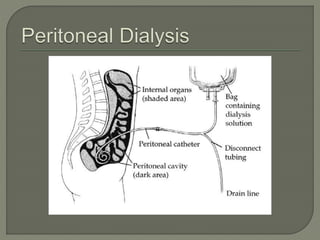
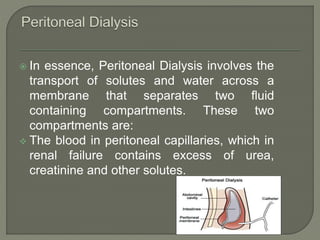
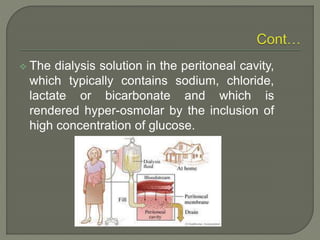
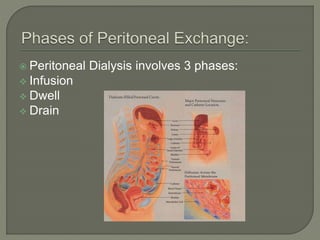
A different dialysis technique, continuous
ambulatory peritoneal dialysis (CAPD),
makes use of the fact that the peritoneum
(the lining of the abdominal cavity) is a
differentially permeable membrane. A
plastic bag containing dialysis fluid is
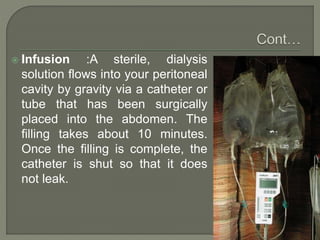
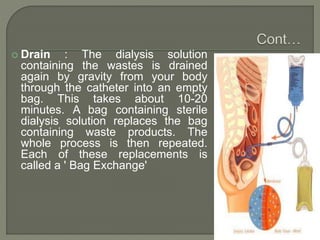
attached to the patient's abdominal cavity..
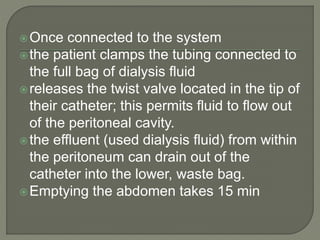
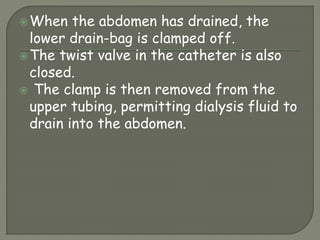
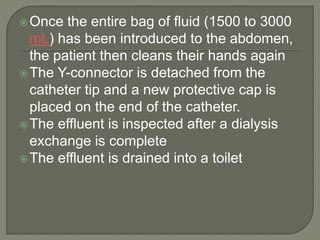
 After about 30 minutes, the fluid is withdrawn
into the bag and discarded. This process is
repeated about three times a day. This type of
dialysis is much more convenient but poses the
threat of peritonitis, should bacteria enter the
body cavity with the dialysis fluid
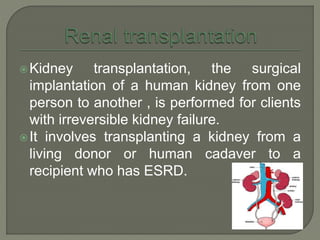
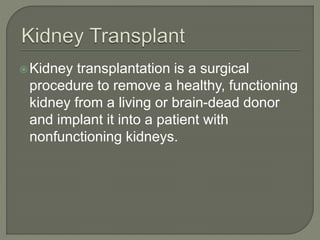
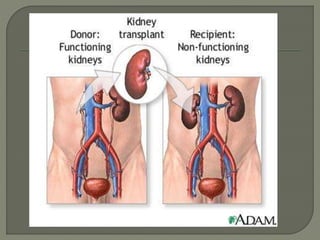
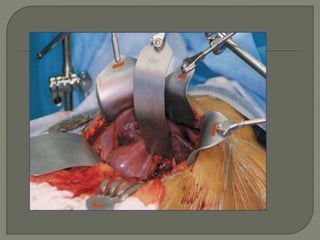
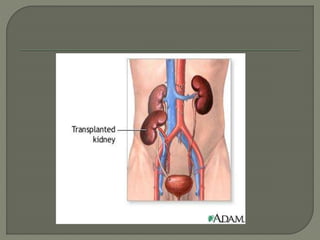
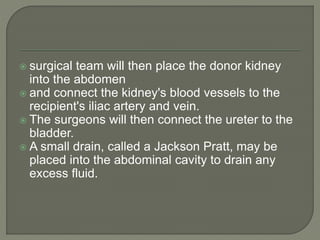
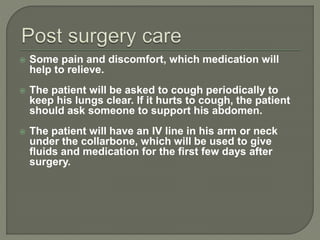
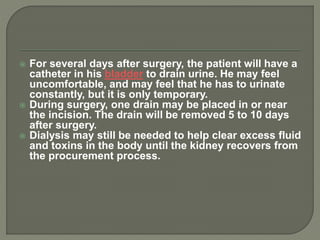
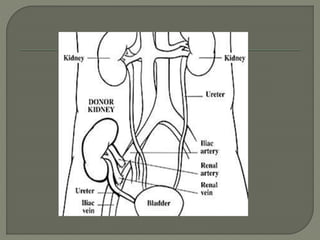
Kidney transplantation, the surgical
implantation of a human kidney from one
person to another , is performed for clients
with irreversible kidney failure.
It involves transplanting a kidney from a
living donor or human cadaver to a
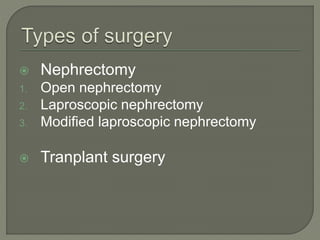
recipient who has ESRD.
 Patients with chronic kidney disease should
be educated about the following:
 Importance of compliance with secondary
preventive measures
 Natural disease progression
 Prescribed medications (highlighting their
potential benefits and adverse effects)
 Avoidance of nephrotoxins
 Diet
 Renal replacement modalities, including
peritoneal dialysis, hemodialysis, and
transplantation
 Permanent vascular access options for
hemodialysis
 Nursing Diagnosis:- Fluid volume excess
related to decreased urine output, dietary
excesses and retention of sodium and water.
 Intervention:- Assess fluid status.
 Daily weight.
 Intake and output balance.
 Skin turgor and presence of edema.
 Distention of neck veins
 Blood pressure, pulse rate and rhythm
 Respiratory rate and effort
Limit fluid intake to prescribed volume.
Identify potential sources of fluid:
Medications and fluids used to take
medications : oral and intravenous
Explain to patient and family rationale for
restriction.
Provide or encourage frequent oral
hygiene.
Nursing diagnosis:- Altered nutrition; less
than body requirements related to
anorexia, nausea, vomiting, dietary
restrictions.
Interventions:- Assess nutritional status:
 Weight changes.
 Anthropometric measures
 Laboratory values ( serum electrolyte,
BUN, Creatinine and iron level)
 Assess patient’s nutritional dietary pattern.
 Diet history
 Food preferences
 Calorie counts
 Assess for factors contributing to altered
nutritional intake
 Anorexia, nausea and vomiting
 Depression
 Lack of understanding of dietary restrictions
 Provide patient’s food preferences with in
dietary restrictions.
 Promote intake of high biologic value protein
foods: eggs, diary products, meats.
 Encourage high-calorie, low protein, low
sodium and low potassium snacks between
meals.
 Alter schedule of medications so that they are
not given immediately before meals.
Explain rationale for dietary restrictions
and relationships to kidney disease and
increased urea and Creatinine levels.
Provide written list of foods allowed and
suggestions for improving their taste
without use of sodium and potassium.
Provide pleasant surroundings at meal
times.
Weigh patient daily.
 Nursing Diagnosis:- Knowledge deficit
regarding condition and treatment.
 Intervention:- Assess understanding of cause
of renal failure, consequences of renal failure,
and its treatment:
Cause of patient’s renal failure.
 Meaning of renal failure.
 Understanding of renal function.
 Relationship of fluid and dietary restrictions to
renal failure.
 Rationale for treatment.
Provide explanation of renal function and
consequences of renal failure at patient’s
level of understanding and guided by
patient’s readiness to learn.
Assist patient to identify ways to
incorporate changes related to illness and
its treatment into lifestyle.
Provide oral and written information as
appropriate about:
Renal function and failure.
Fluid and dietary restrictions
Medications
Follow up schedule
Community resources
Treatment options
Nursing Diagnosis:- Activity intolerance
related to fatigue, anemia, retention of
waste products and dialysis procedure
Intervention:- Assess factors contributing
to fatigue:
 Anemia
 Fluid and electrolyte imbalances
 Retention of waste products
 Depression
Promote independence in self care
activities as tolerated ;assit if fatigued.
Encourage alternating activity with rest.
Encourage patient to rest after dialysis
treatments.
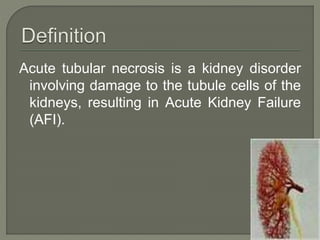
Acute tubular necrosis is a kidney disorder
involving damage to the tubule cells of the
kidneys, resulting in Acute Kidney Failure
(AFI).
Acute tubular necrosis or (ATN) is a
medical condition involving the death of
tubular cells that form the tubule that
transports urine to the ureters while
reabsorbing 99% of the water (and highly
concentrating the salts and metabolic
byproducts). Tubular cells continually
replace themselves and if the cause of
ATN is removed then recovery is likely.
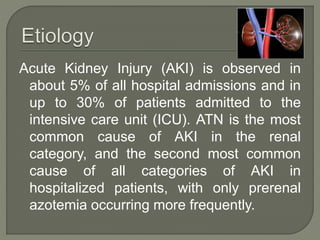
Acute Kidney Injury (AKI) is observed in
about 5% of all hospital admissions and in
up to 30% of patients admitted to the
intensive care unit (ICU). ATN is the most
common cause of AKI in the renal
category, and the second most common
cause of all categories of AKI in
hospitalized patients, with only prerenal
azotemia occurring more frequently.
It may be classified as :
Toxic
Ischemic
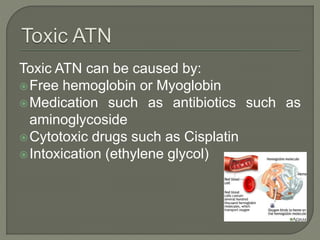
Toxic ATN can be caused by:
Free hemoglobin or Myoglobin
Medication such as antibiotics such as
aminoglycoside
Cytotoxic drugs such as Cisplatin
Intoxication (ethylene glycol)
Toxic ATN is characterized by:
Proximal tubular epithelium necrosis due to
a toxic substance.
Necrotic cells fall into the tubule lumen,
obliterating it, and determining acute renal
failure.
Basement membrane is intact, so the
tubular epithelium regeneration is
possible.
Glomeruli are not affected.
Ischemic ATN can be caused :
When the kidneys are not sufficiently
perfused for a long period of time
(e.g. renal artery stenosis, shock).
Hypoperfusion can also be caused by
embolism of the renal arteries.
Ischemic ATN specifically causes skip
lesions through the tubules.
Blood transfusion reaction.
Injury or trauma that damages the
muscles.
Recent major surgery.
Septic shock or other forms of shock.
Severe low blood pressure (hypotension)
that lasts longer than 30 minutes.
Liver disease and kidney damage caused
by diabetes (diabetic nephropathy) may
make a person more susceptible to the
condition.
Exposure to medications that are toxic to
the kidneys (such as Aminoglycoside
antibiotics)
Antifungal agents (such as Amphotericin)
Dye used for X-Ray studies.
Causes of ischemic acute tubular necrosis:
Hypovolemic states: hemorrhage, volume
depletion from gastrointestinal (GI) or renal
losses, burns, fluid sequestration.
Low cardiac output states: heart failure
and other diseases of myocardium,
valvulopathy, arrhythmia, pericardial
diseases, tamponade.
Systemic Vasodilation: sepsis,
anaphylaxis.
Disseminated intravascular coagulation.
Renal vasoconstriction: cyclosporine,
amphotericin B, norepinephrine,
epinephrine, hypercalcemia
Impaired renal autoregulatory responses:
cyclo oxygenase (COX) inhibitors,
Angiotensin-Converting Enzyme (ACE)
inhibitors, Angiotensin receptor blockers.
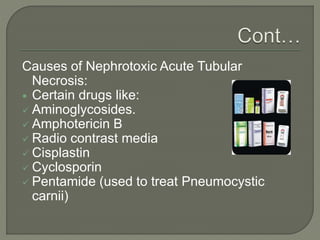
Causes of Nephrotoxic Acute Tubular
Necrosis:
 Certain drugs like:
 Aminoglycosides.
 Amphotericin B
 Radio contrast media
 Cisplastin
 Cyclosporin
 Pentamide (used to treat Pneumocystic
carnii)
 Sulpha drugs
 Acyclovir, Indinavir
Radio contrast media
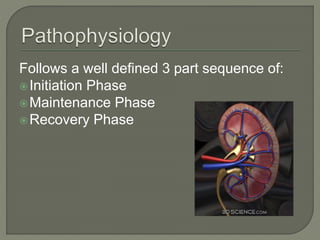
Follows a well defined 3 part sequence of:
Initiation Phase
Maintenance Phase
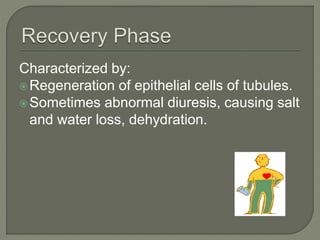
Recovery Phase
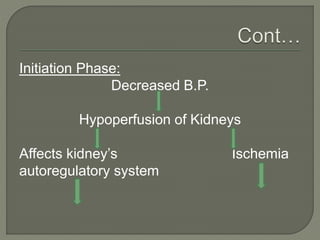
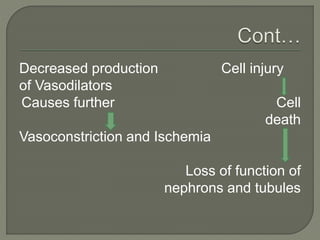
Initiation Phase:
Decreased B.P.
Hypoperfusion of Kidneys
Affects kidney’s Ischemia
autoregulatory system
Decreased production Cell injury
of Vasodilators
Causes further Cell
death
Vasoconstriction and Ischemia
Loss of function of
nephrons and tubules
Characterized by:
Stabilization of GFR at very low rate.
Lasts for 1- 2 weeks.
Characterized by:
Regeneration of epithelial cells of tubules.
Sometimes abnormal diuresis, causing salt
and water loss, dehydration.
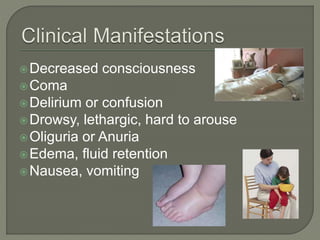
Decreased consciousness
Coma
Delirium or confusion
Drowsy, lethargic, hard to arouse
Oliguria or Anuria
Edema, fluid retention
Nausea, vomiting
Symptoms of acute kidney failure may also
be present.
Incresed BUN and serum creatinine levels.
Fractional excretion of sodium and of urea
may be relatively high.
Presence of casts, kidney tubular cells,
and red blood cells in urinalysis.
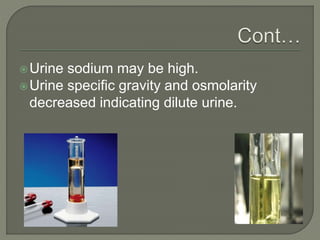
Urine sodium may be high.
Urine specific gravity and osmolarity
decreased indicating dilute urine.
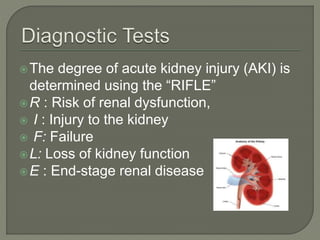
The degree of acute kidney injury (AKI) is
determined using the “RIFLE”
R : Risk of renal dysfunction,
 I : Injury to the kidney
 F: Failure
L: Loss of kidney function
E : End-stage renal disease
Complete Haemogram:
 Anaemia
Serum Chemistries:
 BUN
 Serum Creatinine
 Hyponatremia
 Hyperkalemia
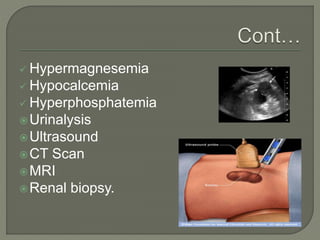
 Hypermagnesemia
 Hypocalcemia
 Hyperphosphatemia
Urinalysis
Ultrasound
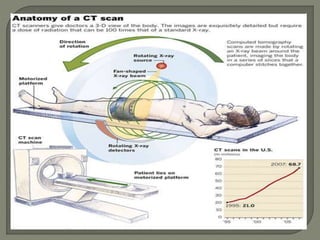
CT Scan
MRI
Renal biopsy.
In most people, acute tubular necrosis is
reversible. The goal of treatment is to
prevent life-threatening complications of
acute kidney failure.
Treatment focuses on preventing the excess
build-up of fluids and wastes, while
allowing the kidneys to heal. Patents
should be closely monitored for
deterioration of kidney function.
Anti Hyperkalemia therapy.
Dialysis.
Anti- oxidants: prevent reperfusion
damage as well as haemodynamics.
Diuretics.
N- Acetylcystine: used for Acetaminophen
toxicity.
Correction of oliguria, which may increase
due to the use of diuretics.
Fluid restriction: intake equals to output
considering the sensible loss also.
Restricting the substances normally
removed by Kidney like proteins, sodium,
potassium etc.
The duration of symptoms varies. The
decreased urine output phase may last
from a few days to 6 weeks or more. This
is occasionally followed by a period of high
urine output, where the healed and newly
functioning kidneys try to clear the body of
fluid and wastes.
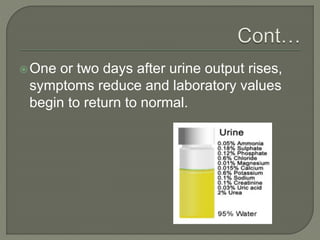
One or two days after urine output rises,
symptoms reduce and laboratory values
begin to return to normal.
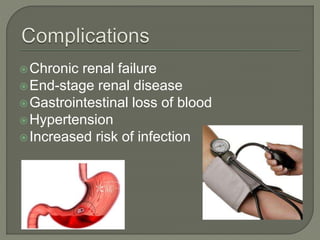
Chronic renal failure
End-stage renal disease
Gastrointestinal loss of blood
Hypertension
Increased risk of infection
Altered consciousness related to
accumulation of uremic toxins.
Fluid and electrolyte imbalance related to
sodium and water retention.
Altered nutrition less than body
requirement related to nausea and
vomiting.
 knowledge deficit related to diseased
condition and its management.
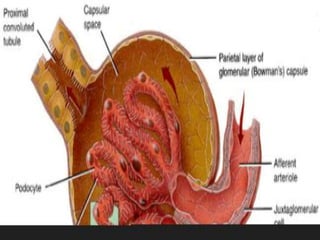
Glomerulonephritis is a type of kidney
disease that involves the glomeruli.
 During glomerulonephritis, the glomeruli
become inflamed and impair the kidney's
ability to filter urine.
The glomeruli are very small, important
structures in the kidneys that supply blood
flow to the small units in the kidneys that
filter urine, called the nephrons.
Glomerulonephritis, also known as
glomerular nephritis, abbreviated GN, is
a renal disease characterized by
inflammation of the glomeruli, or small
blood vessels in the kidneys
GN is a proliferative immunologic non
bacterial inflammation of the glomerular
structure due to antigen – antibody
reaction.
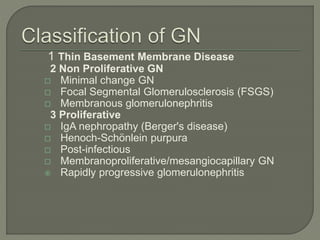
1 Thin Basement Membrane Disease
2 Non Proliferative GN
 Minimal change GN
 Focal Segmental Glomerulosclerosis (FSGS)
 Membranous glomerulonephritis
3 Proliferative
 IgA nephropathy (Berger's disease)
 Henoch-Schönlein purpura
 Post-infectious
 Membranoproliferative/mesangiocapillary GN
 Rapidly progressive glomerulonephritis
it is an autosomal dominant inherited
disease characterised by thin glomerular
basement membranes on electron
microscopy.
 This is characterised by low numbers of
cells (lack of hypercellularity) in the
glomeruli. They usually cause nephrotic
syndrome. This includes the following
types:
1. Minimal change GN
2. Focal Segmental Glomerulosclerosis (FSGS)
3. Membranous glomerulonephritis
 This form of GN causes 80% of nephrotic
syndrome in children, but only 20% in adults.
There is fusion of podocytes (supportive cells
in the glomerulus).
 Rx: Treatment consists of supportive care for
the massive fluid accumulation in the patients
body (oedema) and as well as steroids to halt
the disease process (typically Prednisone 1
mg/kg).
 Only certain foci of glomeruli within the kidney
are affected, and then only a segment of an
individual glomerulus.
 The pathological lesion is sclerosis (fibrosis)
within the glomerulus and hyalinisation of the
feeding arterioles, but no increase in the number
of cells (hence non-proliferative).
Rx: Steroids are often tried but not shown to be
effective. 50% of people with FSGS continue to
have progressive deterioration of kidney
function, ending in renal failure.
 MGN is characterized by a thickened glomerular
basement membrane without a hypercellular
glomerulus.
 The basement membrane may completely
surround the granular deposits, forming a "spike
and dome" pattern.
 Prognosis follows the rule of thirds: one-third
remain with MGN indefinitely, one-third remit, and
one-third progress to end-stage renal failure .
 As the glomerulonephritis progresses, the tubules
of the kidney become infected, leading to atrophy
and hyalinisation. The kidney appears to shrink.
 This type is characterised by increased
number of cells in the glomerulus
(hypercellular).
 Usually present as a nephritic syndrome and
usually progress to end-stage renal failure
(ESRF) over weeks to years
Types
 IgA nephropathy (Berger's disease)
 Henoch-Schönlein purpura
 Membranoproliferative/mesangiocapillary GN
 Rapidly progressive glomerulonephritis
 IgA nephropathy usually presents as macroscopic
haematuria (visibly bloody urine). It occasionally
presents as a nephrotic syndrome.
 It often affects young males within days (24-
48hrs) after an upper respiratory tract or
gastrointestinal infection.
 It shows increased number of mesangial cells
with increased matrix (the 'cement' which holds
everything together).
 Immuno-staining is positive for IgA deposits
within the matrix.
 Prognosis is variable, 20% progress to ESRF.
 ACE inhibitors are the mainstay of treatment
HSP is a systemic variant of IgA
nephropathy which causes a small-
vessel vasculitis and associated
glomerulonephritis.
 It can occur after essentially any infection,
specially with Streptococcus pyogenes.
 Streptococcal titers in the blood (antistreptolysin
O titers) may support the diagnosis.
 It shows diffuse hypercellularity due to
proliferation of endothelial and mesangial cells,
as well as an influx of neutrophils and monocytes.
 The Bowman space is compressed, in some
cases to the extent that this produces a crescent
formation characteristic of crescentic
glomerulonephritis.
 Treatment is supportive, and the disease
generally resolves in 2-4 weeks.
This is primary, or secondary to SLE,
viral hepatitis, hypocomplementemia.
One sees 'hypercellular and
hyperlobular' glomeruli due to
proliferation of both cells and the matrix
within the mesangium.
Presents usually with as a nephrotic
syndrome, with inevitable progression to
ESRF.
 Crescentic glomerulonephritis induced by
infective endocarditis
 It is demonstrated circumferential and cellular
crescent formation with interstitial nephritis.
 It has a poor prognosis, with rapid
progression to kidney failure over weeks.
 Steroid therapy is sometimes used
 Any of the above types of GN can be rapidly
progressive.
 Additionally two further causes present
as solely RPGN.
1. Goodpasture's syndrome, an
autoimmune disease whereby antibodies
are directed against basal membrane
antigens found in the kidney and lungs. As
well as kidney failure, patient have
hemoptysis (cough up blood).
High dose immunosuppresion is required (IV
Methylprednisolone) and cyclophosphamide,
plus plasmapheresis.
1. Wegener's granulomatosis and polyarteritis.
 There is a lack of immune deposits on staining,
but blood tests are positive for ANCA.
 The majority of glomeruli present "crescents".
Formation of crescents is initiated by passage
of fibrin into the Bowman space as a result of
increased permeability of glomerular basement
membrane.
 Fibrin stimulates the proliferation of parietal
cells of Bowman capsule, and an influx of
monocytes.
 Rapid growing and fibrosis of crescents
compresses the capillary loops and decreases
the Bowman space which leads to renal failure
within weeks or months.
 Hereditary: result from a gene on the X chromosome
passed on from carrier mothers who have no features,
or minimal features of the problem,
 Idiopathic
 Infections
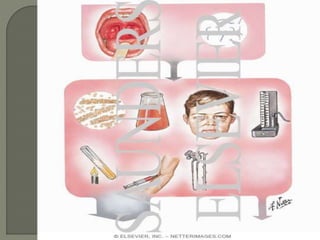
• Post streptococcal GN: Beta hemolytic
streptococcal infection, URTI. Called as acute
poststreptococcal glomerulonephritis, or APSGN.
• Bacterial endocarditis
• Viral infections e.g. hep. B,C AIDS
• Fungal and parasitic
 Immune disease
• Lupus (SLE)
• Goodpasteur’s syndrome
• IgA nephropathy
 Vasculitis
polyarteritis nodosa
Wegener vasculitis
Henoch-Schönlein purpura
 Conditions causing scarring of glomeruli
• HTN
• Diabetic nephropathy
• Focal segmental GN
 dark brown-colored urine
(from blood and protein)
 sore throat
 diminished urine output
 fatigue
 lethargy
 increased breathing effort
 headache
 high blood pressure
 seizures (may occur as a
result of high blood
pressure)
 rash, especially
over the buttocks
and legs
 weight loss
 joint pain
 pale skin color
 fluid accumulation
in the tissues
(edema) in m’ing
S/S of Kidney failure
• Lack of appetite
• Nausea
• Vomiting
• Fatigue
• Difficulty in sleeping
• Dry /itchy skin
• Muscle cramps at night
Any1or 2 degree infection
Immune response activates
Antibodies formed in response to antigen
Antigen-antibody complex formed
Deposition of immune complex in
glomeruli
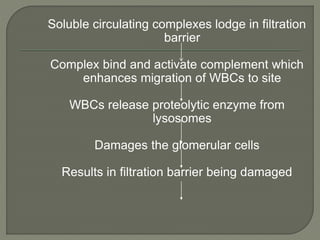
Soluble circulating complexes lodge in filtration
barrier
Complex bind and activate complement which
enhances migration of WBCs to site
WBCs release proteolytic enzyme from
lysosomes
Damages the glomerular cells
Results in filtration barrier being damaged
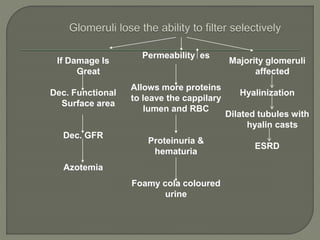
If Damage Is
Great
Dec. Functional
Surface area
Dec. GFR
Azotemia
Majority glomeruli
affected
Hyalinization
Dilated tubules with
hyalin casts
ESRD
Permeability es
Allows more proteins
to leave the cappilary
lumen and RBC
Proteinuria &
hematuria
Foamy cola coloured
urine
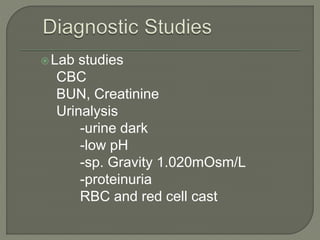
Lab studies
CBC
BUN, Creatinine
Urinalysis
-urine dark
-low pH
-sp. Gravity 1.020mOsm/L
-proteinuria
RBC and red cell cast
 Imaging studies
• Radiograph(chest)
• CT scan
 Other tests
• Serology
• Anti Nuclear Antobody
• Serum complement
• Renal Biopsy
Streptozyme test
Antistreptolysin O
Cultures of throat and skin lesions
Blood culture
Symptomatic management
Sodium and fluid restriction
Bed rest
Protein restriction
Dialysis if needed
Calcium supplements
Plasmapheresis if needed
Manage edema
For HTN
 Diuretics
 Angiotensin-converting enzyme (ACE) inhibitors
 Angiotensin II receptor agonists
 Calcium channel blockers
 Beta blockers
For circulatory congestion & pulm edema
• Preload and afterload restriction
• Diuretics
• Nitrates
• Morphine
• Dialysis
 Strep or other bacterial infection: antibiotic.
 Lupus or vasculitis. : corticosteroids and immune-
suppressing drugs.
 IgA nephropathy: Fish oil supplements
 Goodpasture's syndrome. Plasmapheresis
Plasmapheresis is a mechanical process that
removes antibodies from your blood by taking
the plasma out of your blood and replacing it
with fluid or donated plasma.
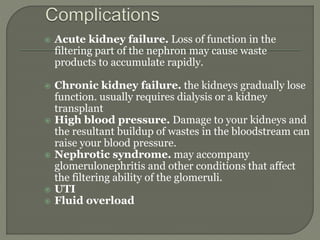
 Acute kidney failure. Loss of function in the
filtering part of the nephron may cause waste
products to accumulate rapidly.
 Chronic kidney failure. the kidneys gradually lose
function. usually requires dialysis or a kidney
transplant
 High blood pressure. Damage to your kidneys and
the resultant buildup of wastes in the bloodstream can
raise your blood pressure.
 Nephrotic syndrome. may accompany
glomerulonephritis and other conditions that affect
the filtering ability of the glomeruli.
 UTI
 Fluid overload
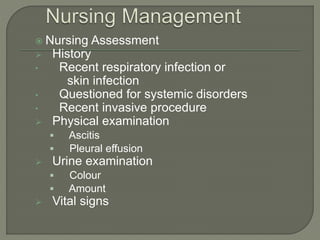
 Nursing Assessment
 History
• Recent respiratory infection or
skin infection
• Questioned for systemic disorders
• Recent invasive procedure
 Physical examination
 Ascitis
 Pleural effusion
 Urine examination
 Colour
 Amount
 Vital signs
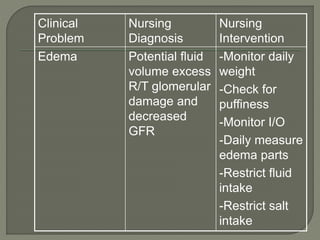
Clinical
Problem
Nursing
Diagnosis
Nursing
Intervention
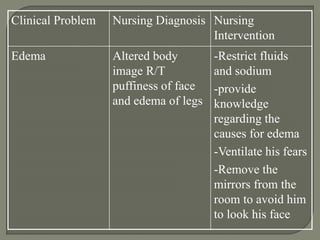
Edema Potential fluid
volume excess
R/T glomerular
damage and
decreased
GFR
-Monitor daily
weight
-Check for
puffiness
-Monitor I/O
-Daily measure
edema parts
-Restrict fluid
intake
-Restrict salt
intake
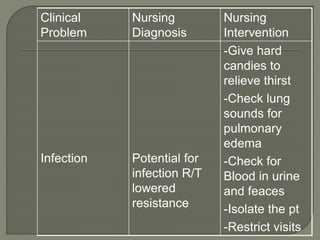
Clinical
Problem
Nursing
Diagnosis
Nursing
Intervention
Infection Potential for
infection R/T
lowered
resistance
-Give hard
candies to
relieve thirst
-Check lung
sounds for
pulmonary
edema
-Check for
Blood in urine
and feaces
-Isolate the pt
-Restrict visits
Clinical
Problem
Nursing
Diagnosis
Nursing
Intervention
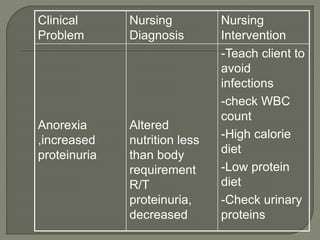
Anorexia
,increased
proteinuria
Altered
nutrition less
than body
requirement
R/T
proteinuria,
decreased
-Teach client to
avoid
infections
-check WBC
count
-High calorie
diet
-Low protein
diet
-Check urinary
proteins
Clinical
Problem
Nursing
Diagnosis
Nursing
Intervention
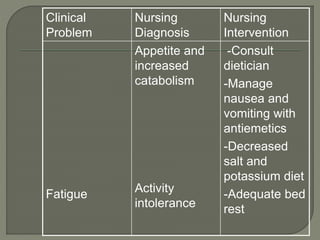
Fatigue
Appetite and
increased
catabolism
Activity
intolerance
-Consult
dietician
-Manage
nausea and
vomiting with
antiemetics
-Decreased
salt and
potassium diet
-Adequate bed
rest
Clinical
Problem
Nursing
Diagnosis
Nursing
Intervention
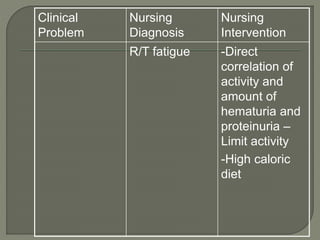
R/T fatigue -Direct
correlation of
activity and
amount of
hematuria and
proteinuria –
Limit activity
-High caloric
diet
Clinical
Problem
Nursing
Diagnosis
Nursing
Intervention
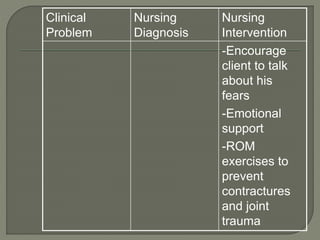
-Encourage
client to talk
about his
fears
-Emotional
support
-ROM
exercises to
prevent
contractures
and joint
trauma
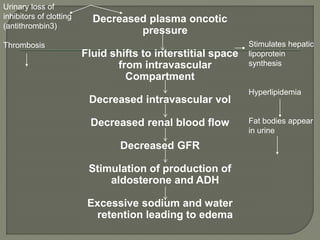
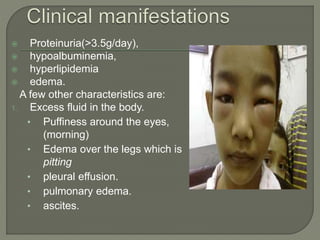
The nephrotic syndrome is characterized by
heavy proteinuria (more than 3.5g protein)
and is usually associated with
hypoalbuminemia ,hyperlipidemia and
edema.
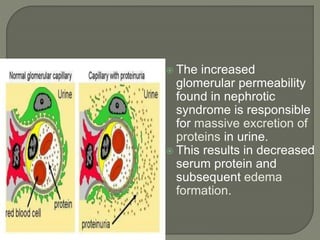
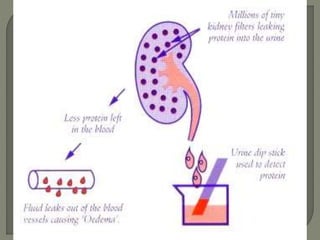
 The increased
glomerular permeability
found in nephrotic
syndrome is responsible
for massive excretion of
proteins in urine.
 This results in decreased
serum protein and
subsequent edema
formation.
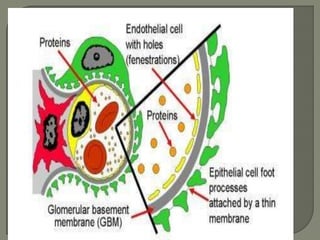
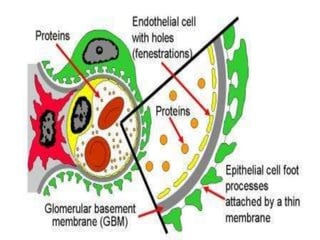
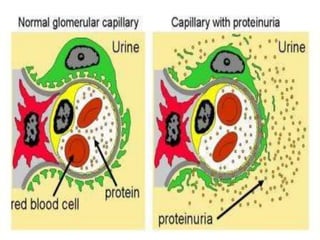
 The normal glomerular capillary wall
keeps blood cells and most proteins in
the blood.
 In patients with proteinuria, protein
leaks across the wall into the urine.
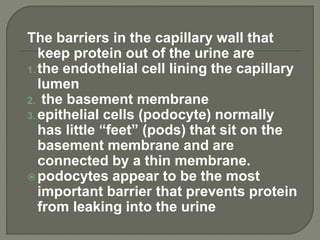
The barriers in the capillary wall that
keep protein out of the urine are
1. the endothelial cell lining the capillary
lumen
2. the basement membrane
3. epithelial cells (podocyte) normally
has little “feet” (pods) that sit on the
basement membrane and are
connected by a thin membrane.
podocytes appear to be the most
important barrier that prevents protein
from leaking into the urine
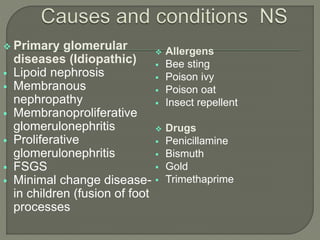
 Primary glomerular
diseases (Idiopathic)
 Lipoid nephrosis
 Membranous
nephropathy
 Membranoproliferative
glomerulonephritis
 Proliferative
glomerulonephritis
 FSGS
 Minimal change disease-
in children (fusion of foot
processes
 Allergens
 Bee sting
 Poison ivy
 Poison oat
 Insect repellent
 Drugs
 Penicillamine
 Bismuth
 Gold
 Trimethaprime
 Collagen- Vascular
diseases
 SLE
 Polyarteritis nodosa
 Metabolic diseases
 DM
 Amyloidosis
 Multiple myeloma
 Infectious diseases
 Quartan malaria
 Bacterial endocarditis
 Schistosomiasis
 Secondary syphilis
 Neoplastic Disorders
 Bronchogenic
carcinoma
 Hodgkin disease
 Colonic cancer
 Vascular diseases
 Constrictive Pericarditis
 Renal vein Thrombosis
 Inferior vena cava obstruction
 Congenital Nephrotic Syndrome
 Herodofamilial Nephrotic
syndrome
 Pregnancy
Becoz of immunologic, inflammatory or metabolic
abnormality(DM) ,HTN, GN
Increased glomerular basement membrane permability
or glomerulus get damaged
Low mol wt proteins such as albumin and alpha-globulin
are excreted in excess amt
Albumin synthesis and production imbalances
Hypoalbuminemia
Decreased plasma oncotic
pressure
Fluid shifts to interstitial space
from intravascular
Compartment
Decreased intravascular vol
Decreased renal blood flow
Decreased GFR
Stimulation of production of
aldosterone and ADH
Excessive sodium and water
retention leading to edema
Urinary loss of
inhibitors of clotting
(antithrombin3)
Thrombosis Stimulates hepatic
lipoprotein
synthesis
Hyperlipidemia
Fat bodies appear
in urine
 Proteinuria(>3.5g/day),
 hypoalbuminemia,
 hyperlipidemia
 edema.
A few other characteristics are:
1. Excess fluid in the body.
• Puffiness around the eyes,
(morning)
• Edema over the legs which is
pitting
• pleural effusion.
• pulmonary edema.
• ascites.
2. Hypertension (rarely)
3. foamy urine, due to a lowering of the surface
tension by the severe proteinuria.
4. hematuria or oliguria are uncommon, and
are seen commonly in nephritic syndrome.
5. rash associated with Systemic Lupus
Erythematosus,
6. neuropathy associated with diabetes.
 Urine sample shows proteinuria (>3.5 per
1.73 m2 per 24 hour).
 Hypoalbuminemia: albumin level ≤2.5g/dL
(normal=3.5-5g/dL).
 hypercholesterolemia, elevated LDL, usually
with concomitantly elevated VLDL
 Electrolytes, urea and creatinine (EUCs)
 Biopsy of kidney
 Auto-immune markers (ANA, ASOT, C3,
cryoglobulins, serum electrophoresis)
 Monitoring and maintaining euvolemia
 monitoring urine output, BP regularly
 fluid restrict to 1L
 diuretics (IV furosemide)
 Monitoring kidney function
 do EUCs daily and calculating GFR
 Prevent and treat any complications
 Albumin infusions are generally not used
because their effect lasts only transiently.
 Prophylactic anticoagulation may be
appropriate in some circumstances.
 Immunosupression (corticosteroids, cyclosporin).
 Standard ISKDC regime for first episode:
prednisolone -60 mg/m2/day in 3 divided doses
for 4 weeks followed by 40 mg/m2/day in a single
dose on every alternate day for 4 weeks.
 Frequent relapses treated by: cyclophosphamide
or nitrogen mustard or cyclosporin or levamisole.
 blood glucose control if diabetic.
 Blood pressure control. ACE inhibitors (they have
been shown to decrease protein loss)
 Venous thrombosis: due to leak of anti-
thrombin 3, which helps prevent thrombosis.
This often occurs in the renal veins. Treatment
is with oral anticoagulants (not heparin as
heparin acts via anti-thrombin 3 which is lost in
the proteinuria so it will be ineffective.)
 Infection: due to leakage of immunoglobulins,
encapsulated bacteria such as Haemophilus
influenzae and Streptococcus pneumonia can
cause infection.
 Acute renal failure is due to hypovolemia.
 Pulmonary edema
Growth retardation:It occurs in cases
of relapses or resistance to therapy.
Causes of growth retardation are protein
deficiency from the loss of protein in
urine, anorexia (reduced protein intake),
and steroid therapy (catabolism).
Vitamin D deficiency
Thyroxin is reduced due to decreased
thyroid binding globulin.
Microcytic hypochromic anaemia
Nursing Assessment
 Assess edema
 Check daily wt
 Accurate I/O
 Measure abdominal girth/ extremity size
 Assess skin condition
 Assess for effectiveness of treatment
 Avoid trauma
 Effectiveness of diuretic therapy
Clinical Problem Nursing Diagnosis Nursing
Intervention
Retention of
sodium and fluid
Edema
Altered fluid and
electrolyte balance
R/T retention of
sodium and fluid
Impaired skin
integrity R/T edema
-Check daily
weight -
Measure abdominal
girth
-Maintain I/O chart
-Low sodium diet
-Monitor
electrolytes
-Assess for the skin
integrity
-Keep pt dry
Clinical Problem Nursing Diagnosis Nursing
Intervention
-Turn the pt
frequently
-Maintain hygiene
-Relieve pressure
from pressure
points
-Use air or water
mattresses
-Provide scrotal
support in men
Clinical
Problem
Nursing Diagnosis Nursing
Intervention
Protein loss Altered nutritional
pattern R/T protein
loss
-Assess for S/S of
infection
-Serve small
frequent feedings
-Protein intake 1.0
to 1.5 per kg of
body wt
-Serve food in an
attractive manner
-Ask for the likes
and dislikes of pt
Clinical Problem Nursing Diagnosis Nursing
Intervention
Low immunity Potential for
infection R/T
intake of
immunosuppressiv
e drugs
-Maintain hygiene
-Use aseptic
technique
-Avoid exposure
to persons with
known infections
-Avoid invasive
procedures or
maintain strict
asepsis
Clinical problem Nursing
Diagnosis
Nursing
Intervention
-Obtain specimen
for culture and
sensitivity when
infection is
suspected
-Administer
antibiotics as
prescribed
-Tell the pt S/S of
infection
Clinical Problem Nursing Diagnosis Nursing
Intervention
Edema Altered body
image R/T
puffiness of face
and edema of legs
-Restrict fluids
and sodium
-provide
knowledge
regarding the
causes for edema
-Ventilate his fears
-Remove the
mirrors from the
room to avoid him
to look his face
 The normal function of the urinary bladder is
to store and expel urine in a coordinated,
controlled fashion. This coordinated activity
is regulated by the central and peripheral
nervous systems. Neurogenic bladder is a
term applied to a malfunctioning urinary
bladder due to neurologic dysfunction or
insult emanating from internal or external
trauma, disease, or injury.
Neurogenic bladder refers to dysfunction
of the urinary bladder due to disease of the
central nervous system or peripheral
nerves involved in the control of
micturition.
 Brain lesion
 stroke
 brain tumor
 Parkinson disease
 Hydrocephalus
 cerebral palsy
 Shy-Drager syndrome
 Spinal cord lesion
 motor vehicle and diving accidents
 Multiple sclerosis (MS)
 myelomeningocele
 Sacral cord injury
 Sacral cord tumour
 Herniated disc
 Injuries that crush pelvis
 Lumbar laminectomy
 Radical hysterectomy
 Abdominoperineal resection
 Peripheral nerve injury
 Diabetes mellitus
 AIDS
 poliomyelitis
 Guillain-Barré syndrome
 severe herpes in the genitoanal area
 pernicious anemia
 neurosyphilis (tabes dorsalis)
 urinary tract infection
 kidney stones - these may be difficult to determine
because you may not be able to feel pain associated
with kidney stones if you have spinal cord
abnormalities. Symptoms of kidney stones include:
 chills
 shivering
 fever
 urinary incontinence
 small urine volume during voiding
 urinary frequency and urgency
 dribbling urine
 loss of sensation of bladder fullness
 Lab studies
 Urinalysis and urine culture
 Urine cytology
 Chem 7 profile: Blood urea nitrogen (BUN) and
creatinine
 Other tests
 Voiding diary: A voiding diary is a daily record of the
patient's bladder activity
 Pad test :This is an objective test that documents the
urine loss. Intravesical methylene blue test or oral
Pyridium or Urised may be used. Methylene blue and
Urised turns the urine color blue; Pyridium turns the
urine color orange.
 Diagnostic procedures
 Postvoid residual urine
 Uroflow rate :Uroflow rate is volume of urine
voided per unit of time.
 Filling cystometrogram
 filling cystometrogram
 Voiding cystometrogram (pressure-flow study)
 Cystogram
 Electromyography
 Cystoscopy
 Videourodynamics
TREATMENT
 Stress incontinence may be treated with
surgical and nonsurgical means.
 Urge incontinence may be treated with
behavioral modification or with bladder-
relaxing agents.
 Mixed incontinence may require
medications as well as surgery.
 Overflow incontinence may be treated with
some type of catheter regimen.
 Functional incontinence may be resolved
by treating the underlying cause (eg,
urinary tract infection, constipation) or by
simply changing a few medications.
 Absorbent products :Absorbent products
are pads or garments designed to absorb
urine to protect the skin and clothing.
 Urethral occlusive devices :Urethral
occlusive devices are artificial devices that
may be inserted into the urethra or placed
over the urethral meatus to prevent urinary
leakage.
 Catheters
 Indwelling urethral catheters
 suprapubic tubes
 self-intermittent catheterization.
 Surgical care for stress incontinence involves
procedures that increase urethral outlet
resistance. Operations that increase urethral
resistance include :
 bladder neck suspension
 periurethral bulking therapy
 sling procedures
 artificial urinary sphincter
 Surgical care for urge incontinence involves
procedures that improve bladder compliance or
bladder capacity.
 sacral neuromodulation
 botulinum toxin injections,
 detrusor myomectomy
 bladder augmentation
 Avoidance of dietary stimulants
 avoiding spicy foods like curry, chili
pepper, cayenne pepper, and dry mustard.
 Avoiding citrus fruits like grapefruits and
oranges.
 Avoiding chocolate-containing sweets.
Chocolate snacks
 Avoiding treats contain caffeine
 Beverages
 Avoid beverages that contain caffeine
:coffee, tea, hot chocolate, and sodas, milk,
Over-the-counter medicines
 Avoid carbonated beverages
citrus fruits drinks
acidic juices
artificial sweeteners.
 fluid restriction
 Pelvic floor exercise
 Vaginal weights : Vaginal weights are
tamponlike special help aids used to
enhance pelvic floor muscle exercises..
 Biofeedback :Biofeedback therapy is a
form of pelvic floor muscle rehabilitation
using an electronic device for individuals
having difficulty identifying levator ani
muscles. These devices allow the patient
to receive immediate visual feedback on
the activity of the pelvic floor muscles.
 Electrical stimulation :Electrical stimulation
is a more sophisticated form of biofeedback
used for pelvic floor muscle rehabilitation.
This treatment involves stimulation of levator
ani muscles using painless electric shocks.
 Bladder training: Bladder training generally
consists of self-education, scheduled voiding
with conscious delay of voiding, and positive
reinforcement.
 Medications
 Sympathomimetic drugs
 estrogen
 tricyclic agents
 The 3 main categories of drugs used to
treat urge incontinence include :
 anticholinergic drugs
 antispasmodics
 tricyclic antidepressant agents
 When a single drug treatment does not
work, combination therapy, such as
oxybutynin (Ditropan) and imipramine
(Tofranil) may be used.
.
 Estrogen derivatives
 Conjugated estrogen
 Anticholinergic drugs
Propantheline bromide (Pro Banthine)
Dicyclomine hydrochloride (Bentyl)
Hyoscyamine sulfate (Levsin/SL, Levsin)
 Antispasmodic drugs
Solifenacin succinate (VESIcare)
Darifenacin (Enablex)
OxybutyninChloride
Tolterodine
Trospium
 Tricyclic Antidepressants
Imipramine hydrochloride
Amitriptyline hydrochloride
 contact dermatitis
 skin breakdown
 pressure sores and ulcers
 secondary infections
 urinary tract infection.
 bladder infection
 bladder stones
 ascending pyelonephritis
 urethral erosion.
 urethral injury.
 bladder spasms
unique to suprapubic catheter
 skin infection
 hematoma
 bowel injury
 problems with catheter reinsertion
Untreated urinary tract infections may lead
to urosepsis and death.
Excellent
 Depends on the underlying condition
that has precipitated urinary
incontinence
 Urinary incontinence itself is easily
treated and prevented by properly
trained health care individuals.
 The urinary bladder occupies the deep pelvic
cavity and is well protected.
Because the bladder is located within the
bony structures of the pelvis, it is protected
from most external forces. This is the reason
it is rarely traumatized.
 However it can suffer traumas which can
cause extraperitoneal and intraperitoneal
ruptures
It is the injury to the urinary bladder caused by
either blunt or penetrating accidents.
The probability of bladder injury varies
according to the degree of bladder distention;
therefore, a full bladder is more likely to
become injured than an empty one.
60 - 85% - Blunt injuries
15 - 40% - Penetrating injury
10 - 29% - Pelvic fractures
0.3% - Caesarean section
30% - Bladder biopsy
Penetrating and blunt trauma (main causes of
bladder injury) during accidents.
Iatrogenic causes include surgical
misadventures from gynecologic, urologic, and
orthopedic operations near the urinary bladder.
 Spontaneous or idiopathic bladder injuries
without an obvious underlying pathology
constitute the remainder.
Other causes include:
Surgeries of the pelvis or groin (including
hernia repair and abdominal hysterectomy)
Tears, cuts, bruises, and other injuries to the
urethra (most common in men)
 Straddle injuries (direct force accidents that
injure the scrotum area between a man's legs)
Deceleration injury (for example, a motor
vehicle accident that occurs with a full bladder
while wearing seatbelt)
◦ The most common mechanisms of blunt trauma
are road traffic accidents (87%), falls (7%), and
assaults (6%).
 Deceleration injuries usually produce both
bladder trauma (perforation) and pelvic fractures.
◦ Approximately 10% of patients with pelvic fractures also
have significant bladder injuries.
◦ The likelihood of the bladder to sustain injury is
related to its degree of distention at the time of
trauma.
◦ Injury may occur if there is a blow to the pelvis
that is severe enough to break the bones and
cause bone fragments to penetrate the bladder
wall.
◦ Generally the bladder injury in these cases is
associated with other injuries as well, the
commonest being to the spleen and rectum.
 The most common cause of penetrating trauma is
gunshot wounds (85%), followed by stabbings
(15%).
 It is also associated with abdominal and/or pelvic
organ injuries.
 Combined penetrating trauma of the rectum and
urinary bladder is rare.
 The combination of penetrating trauma to both
rectum and the urinary system is associated with
high morbidity and mortality.
 During prolonged labor or a difficult forceps
delivery, persistent pressure from the fetal head
against the mother's pubis can lead to bladder
necrosis.
• Direct laceration of the urinary bladder is reported
in 0.3% of women undergoing a Caesarean
delivery.
• Previous Caesarean deliveries, and the adhesions
that can remain subsequently, are a risk factor.
• Bladder injury may occur during a vaginal or
abdominal hysterectomy.
• Blind dissection in the incorrect tissue plane
between the base of the bladder and the
cervical fascia results in bladder injury.
Perforation of the bladder during a bladder
biopsy, cystolitholapaxy, transurethral
resection of the prostate (TURP), or
transurethral resection of a bladder tumor
(TURBT) is common.
Incidence of bladder perforation is reportedly
as high as 36% following bladder biopsy.
 Orthopedic pins and screws can
commonly perforate the urinary bladder,
particularly during internal fixation of
pelvic fractures.
 Thermal injuries to the bladder wall may
occur during the setting of cement
substances used to seat arthroplasty
prosthetics.
• Alcoholics and those individuals
who chronically drink large
quantities of fluids are susceptible
to this type of injury (bladder over
distension )
Person who holds urine for long
time during over distension.
Type I injuries are partial tears of the mucosa.
This is the most common injury pattern of
multisystem trauma patients and is associated
with blunt trauma.
Type II or intraperitoneal bladder ruptures.
This is usually the result of a direct blow to the
distended organ.
 Type III or interstitial pattern. This is an intramural or
partial-thickness laceration of the intact serosa. CT
cystography is used to diagnose this. Intramural
contrast is shown within the bladder wall. This
condition is usually the result of blunt trauma.
 Type IV bladder injury is extraperitoneal. It is the
most common bladder rupture. It is subdivided into
simple and complex injuries.
Extraperitoneal bladder ruptures
• Traumatic extraperitoneal ruptures are usually
associated with pelvic fractures (89%-100%). The
bladder rupture is most often due to a direct burst
injury or the shearing force of the deforming pelvic
ring.
• These ruptures are usually associated with
fractures of the anterior pubic arch, and they may
occur from a direct laceration of the bladder by the
bony fragments of the osseous pelvis.
• The anterolateral aspect of the bladder is
typically perforated by bony spicules.
Forceful disruption of the bony pelvis tear
the wall of the bladder.
• The degree of bladder injury is directly
related to the severity of the fracture.
• The classic cystographic finding is contrast
extravasation around the base of the bladder
confined to the perivesical space
• With a more complex injury, the
contrast material extends to the
thigh, penis, perineum, or into the
anterior abdominal wall.
• The bladder may assume a teardrop
shape from compression by a pelvic
hematoma.
Classic intraperitoneal bladder ruptures are
described as large horizontal tears in the dome
of the bladder. The dome is the least supported
area and the only portion of the adult bladder
covered by peritoneum.
The mechanism of injury is a sudden large
increase in intravesical pressure in a full
bladder.
When full, the bladder's muscle fibers are
widely separated and the entire bladder wall is
relatively thin, offering relatively little
resistance to perforation from sudden large
changes in intra vesical pressure.
Intraperitoneal bladder rupture occurs as the
result of a direct blow to a distended urinary
bladder.
This type of injury is common among
patients diagnosed with alcoholism or
those sustaining a seatbelt or steering
wheel injury.
Since urine may continue to drain into
the abdomen, intraperitoneal ruptures
may go undiagnosed from days to weeks.
Electrolyte abnormalities (e.g.,
hyperkalemia , hypernatremia, uremia,
acidosis) may occur as urine is reabsorbed
from the peritoneal cavity.
Such patients may appear anuric, and the
diagnosis is established when urinary
ascites are recovered during paracentesis.
 Intraperitoneal ruptures demonstrate contrast
extravasation into the peritoneal cavity, often
outlining loops of bowel and pooling under the
diaphragm.
 An intraperitoneal rupture is more common in
children because of the relative intra-
abdominal position of the bladder. The bladder
usually descends into the pelvis by age 20
years.
Clinical signs of bladder injury are relatively
nonspecific; however, a triad of symptoms are
often present: GROSS HEMATURIA
SUPRAPUBIC
PAIN OR
TENDERNESS
DIFFICULTY OR
INABILITY TO
VOID
Hematuria invariably accompanies all
bladder injuries. Gross hematuria is the
hallmark of a bladder rupture.
More than 98% of bladder ruptures are
associated with gross hematuria, and 10%
are associated with microscopic
hematuria.
An abdominal examination may reveal
distention, guarding, or rebound
tenderness.
Absent bowel sounds and signs of
peritoneal irritation indicate a possible
intraperitoneal bladder rupture.
A rectal examination should be performed
to exclude rectal injury.
 Shock or hemorrhage (the symptoms include)
Increased heart rate
Pale skin
Sweating
Skin cool to touch
Drowsiness
Lethargy
Decreased alertness
Coma
 History of trauma
 Gross hematuria
 Suprapubic pain
 Difficulty to void
 Abdominal tenderness
 Foley’s catheter
 CT scanning
 Cystography
It is often the first test performed in patients
with blunt abdominal trauma.
The CT scan of the pelvis provides
information on the status of the pelvic organs
and bony pelvis .
It most sensitive test for bladder perforation
The European Association of Urology (EAU)
developed guidelines for the appropriate
management of genito-urinary trauma.
In suspected renal injuries the hemodynamic
situation of the patient is the benchmark for
the diagnostic and therapeutic algorithm.
Most extraperitoneal ruptures can be
managed safely with simple catheter
drainage (ie, urethral or Suprapubic).
Leave the catheter in for 7-10 days and
then obtain a cystogram.
All extraperitoneal bladder injuries heal
within 3 weeks
Intraperitoneal bladder rupture
Most require surgical exploration, as they do
not heal with catheterization alone. Urine
continues to leak into the abdominal cavity,
resulting in urinary ascites, abdominal
distention, and electrolyte disturbances.
All wounds should be explored and should be
surgically repaired.
Extraperitoneal extravasation
Bladders with extensive extraperitoneal
extravasation are often repaired
surgically.
Early surgical intervention in these cases
decreases the length of hospitalization
and potential complications. It also
promotes early recovery.
 Hemorrhage
 Pelvic infection
 Peritonitis
 Urge incontinence
 Urinary extravasation
 Wound dehiscence
 Obstructive uropathy
The patient should return in 7-10 days for
staple removal and wound check.
The X-ray cystogram should be done 10-14
days after surgery.
If the cystogram finding is normal, the urethral
catheter can be removed.
Advise the patient that they may return to
normal activity 4-6 weeks after surgery.
Nursing Assessment
Nursing Diagnosis
1) Hypovolemia related to gross hemorrhage.
2) High risk for infection related to
extravasation of urine and open wounds.
3) Acute pain related to injury of the bladder.
4) Fluid and electrolyte imbalance related to
hemorrhage.
5) Anemia related to gross hematuria.
 Hydronephrosis is
distention and
dilation of the renal
pelvis and calyces,
usually caused by
obstruction of the
free flow of urine
from the kidney,
leading to
progressive atrophy
of the kidney
The obstruction may be either
partial
complete
and can occur anywhere from the
urethral meatus to the calyces of the
renal pelvis.
Intrinsic
obstructions (occur
within the tract)
 blood clots,
 stones,
 sloughed papilla
 tumours of the
kidney, ureter and
bladder.
Extrinsic obstructions
(caused by factors outside of
the urinary tract)
 pelvic or abdominal tumours
 retroperitoneal fibrosis or
neurological deficits.
 Strictures of the ureters
(congenital or acquired),
 neuromuscular dysfunctions
 schistosomiasis which
originate from the wall of
the urinary tract.
Urinary Tract Obstruction
Dilation of structure behind obstruction
Backflow of urine
Dilation of kidney pelvis
Pressure on kidney structure Stasis of
urine
Dilation of kidney pressure on Infection
tubules renal calculi
arteries
Ischemia
Tubular damage
 It depend upon
whether the
obstruction is
 acute or chronic,
 partial or complete,
 unilateral or bilateral.
 Unilateral
hydronephrosis may
occur without any
symptoms, while acute
obstruction can cause
intense pain.[1]
Acute
Hydronephrosis
 Renal colic
 Changes in urinary
output (oliguria, anuria)
 Hematuria
 Palpable bladder
 Hypertension
 Hesitancy
 Urgency
 Incontinence
 Post voiding dribling
 Decreased force of
stream
Chronic
hydronephrosis
 No symptoms
 Intermittent pain
 Elevated RFT
An enlarged kidney may be palpable on
examination.
suprapubic tenderness along with a
palpable bladder.
If the obstruction is complete, an
enlarged kidney is often palpable on
examination.
Blood (U&E, creatinine)
urine (MSU, pH) tests
Ultrasound
An IVU
Antegrade or retrograde pyelography
The choice of imaging depends on the
clinical presentation
(history, symptoms and examination
findings).
In the case of renal colic the initial
investigation is usually an IVU
CT /MRI
 Removal of the obstruction
 drainage of urine.
 the specific treatment depends upon where the
obstruction lies, and whether it is acute or
chronic.
 Acute obstruction of the upper urinary tract is
usually treated by the insertion of a
nephrostomy tube.
 Chronic upper urinary tract obstruction is
treated by the insertion of a ureteric stent or a
pyeloplasty.
 Lower urinary tract obstruction is usually
treated by insertion of a urinary catheter or a
suprapubic catheter.
 Nursing Assessment
 Nursing Diagnosis
1. Pain R/T by obstruction of urinary
flow
2. Fluid and electrolyte imbalance R/T
renal dysfunction
3. Altered elimination Pattern R/t
incontinence , urgency, dribling
Healthy kidneys sends
erythropoietin
To bone marrow to
produce RBCs
Bone Marrow produces
RBCs
RBCs carry oxygen
through the blood
stream
available to the organs
throughout the body
Oxygen is made
Normal Kidney Function
 Dialysis is primarily
used to provide an
artificial replacement
for lost kidney function
(renal replacement
therapy) due to renal
failure.
In serious kidney disease, kidney function
is impaired or totally lost.
In such a situation, it is by the process of
"Dialysis" that waste products and excess
fluids are removed from the blood.
 Acute Indications for Dialysis/Hemofiltration:
• 1) Hyperkalemia
• 2) Metabolic Acidosis
• 3) Fluid overload (which usually manifests as
pulmonary edema)
• 4) Uremic pericarditis, a potentially life threatening
complication of renal failure
• 5) And in patients without renal failure, acute poisoning
with a dialysable drug, such as lithium, or aspirin.
Chronic Indications for Dialysis:
• 1) Symptomatic renal failure.
• 2) Low glomerular filtration rate (GFR) of less than
10-15 mls/min)
• 3) Difficulty in medically controlling serum
phosphorus or anaemia when the GFR is very low
Dialysis works on the principles of
 Diffusion
 Osmosis of solutes and fluid across a
semipermeable membrane.
 ultrafiltration
 Blood flows by one side of a semipermeable
membrane
 and a dialysate or fluid flows by the opposite
side.
 Smaller solutes and fluid pass through the
membrane. The blood flows in one direction and
the dialysate flows in the opposite.
The concentrations of undesired solutes
(for example potassium, calcium, and
urea) are high in the blood, but low or
absent in the dialysis solution and constant
replacement of the dialysate ensures that
the concentration of undesired solutes is
kept low on this side of the membrane.
 There are two types of dialysis:
1. Hemodialysis
 2. Peritoneal dialysis
Each method has it own advantages and
disadvantages but it is the medical condition &
attitude that will decide which method will suit
you best.
 Dialysis using a
filtering process of the
blood by a machine is
called hemodialysis
 Hemodialysis utilizes counter current flow, where the
dialysate is flowing in the opposite direction to blood
flow in the extracorporeal circuit.
 Counter-current flow maintains the concentration
gradient across the membrane at a maximum and
increases the efficiency of the dialysis.
 Fluid removal (ultrafiltration) is achieved by altering
the hydrostatic pressure of the dialysate
compartment, causing free water and some
dissolved solutes to move across the membrane
along a created pressure gradient.
 The dialysis solution that is used is a sterilized
solution of mineral ions. Urea and other waste
products, and also, potassium and phosphate,
diffuse into the dialysis solution.
 However, concentrations of sodium and chloride
are similar to those of normal plasma to prevent
loss.
 Bicarbonate is added in a higher concentration
than plasma to correct blood acidity. A small
amount of glucose is also commonly used.
In general, the larger the body size of an
individual, the more dialysis he will need.
In the North America and UK, 3-4 hour
treatments (sometimes up to 5 hours for
larger patients) given
3 times a week are typical
 blood is allowed to flow, a few ounces at a time,
through a special filter that removes wastes and
extra fluids.
 The clean blood is then returned to your body.
 Removing the harmful wastes and extra salt and
fluids helps control blood pressure and keep the
proper balance of chemicals like potassium and
sodium in body.
Getting Your Vascular Access Ready
Equipment and Procedures
Dialysis Machine
Dialyzer
Dialysis Solution
Needles
One important step before starting hemodialysis is
preparing a vascular access:
 a site on your body from which your blood is
removed and returned.
 A vascular access should be prepared weeks or
months before starting dialysis.
 It will allow easier and more efficient removal
and replacement of your blood with fewer
complications.
Three primary methods are used to gain
access to the blood:
an intravenous catheter
an arteriovenous (AV) fistula
or a synthetic graft.
 Catheter access sometimes called a CVC
(Central Venous Catheter), consists of
 a plastic catheter with two lumens (or
occasionally two separate catheters)
 It is inserted into a large vein (usually the vena
cava, via the internal jugular vein or the femoral
vein) to allow large flows of blood to be
withdrawn from one lumen, to enter the dialysis
circuit, and to be returned via the other lumen.
Non-tunnelled cathetar
Tunnelled catheter
 AV (arteriovenous)
fistulas are
recognized as the
preferred access
method.
 To create a fistula, a vascular surgeon joins an
artery and a vein together through anastomosis.
 Since this bypasses the capillaries, blood flows
rapidly through the fistula.
 One can feel this by placing one's finger over a
mature fistula. This is called feeling for "thrill" and
produces a distinct 'buzzing' feeling over the
fistula.
Fistulas are usually created in the
nondominant arm and may be situated on
the hand (the 'snuffbox' fistula'),
forearm (radiocephalic fistula, in which
the radial artery is anastomosed to the
cephalic vein),
elbow (usually a brachiocephalic fistula,
where the brachial artery is anastomosed
to the cephalic vein).
A fistula will take a number of weeks to
mature, on average perhaps 4-6 weeks.
During treatment, two needles are inserted
into the fistula, one to draw blood and one
to return it.
 AV (arteriovenous) grafts are much like
fistulas in most respects, except that an
artificial vessel is used to join the artery
and vein.
The graft usually is made of a synthetic
material, but sometimes chemically
treated, sterilized veins from animals are
used.
Grafts are inserted when the patient's
native vasculature does not permit a
fistula. They mature faster than fistulas,
and may be ready for use several weeks
after formation (some newer grafts may be
used even sooner).
The dialysis machine is about the size of a
dishwasher. This machine has three
main jobs:
1. pump blood and watch flow for safety
2. clean wastes from blood
3. watch blood pressure and the rate of
fluid removal from your body
A cylindrical bundle of hollow fibers, whose
walls are composed of semi-permeable
membrane, is anchored at each end into
potting compound (a sort of glue) through
which blood is passed.
 Dialysis solution, the cleansing fluid, is
pumped around these fibers.
The fibers allow wastes and extra fluids to
pass from blood into the solution, which
carries them away.
 Blood port at each end of
the cylinder
communicates with each
end of the bundle of
hollow fibers forming
"blood compartment"
1. Two other ports are cut
into the side of the
cylinder. These
communicate with the
space around the hollow
fibers, the "dialysate
compartment."
4 Openings
Your dialysis center may use the same
dialyzer more than once for your
treatments.
Reuse is considered safe as long as the
dialyzer is cleaned before each use.
The dialyzer to be labeled with name and
check to see that it has been cleaned,
disinfected, and tested.
Dialysis solution, also known as dialysate,
is the fluid in the dialyzer that helps
remove wastes and extra fluid from blood.
 It contains chemicals that make it act like
a sponge.
Bicarbonate
Na
K
Ca
Mg
Cl
glucose
blood and dialysate flow rates
dialysis solution conductivity
temperature
 pH
analysis of the dialysate for evidence of
blood leakage
presence of air.
Most dialysis centers use two needles—
one to carry blood to the dialyzer
and one to return the cleaned blood to
body.
 Cramping
 Drops in blood
pressure
 Headaches
 Nausea and vomiting
 Feeling washed out
 Abnormal heart
rhythms
 Infections
 Fatigue
 Chest Pains
 Leg-cramps
 Anemia
 Renal
Osteodystrophy
 Itching
 Sleeping Disorders
Patient may experience a syndrome called
"washout".
 The syndrome may begin toward the end of
treatment or minutes following the treatment
last 30 minutes or 12-14 hours
"are too tired, too weak to converse”
symptoms including headaches, nausea and
loss of appetite.
Eating a light meal, rest and quiet help the
patient cope with washout until it has 'worn
away.'
1. Dialysis machine prepared
2. The patient is carefully weighed.
3. Standing and sitting BP are taken.
4. Temperature is taken.
5. Access is set up.
6. Heart rate
7. Breathing rate
8. Chest assessment
9. Examination of venous access
10. Access is set up
 The pump and a timer are started.
 Blood taken Out is 200-350ml/min
 half hour BP is taken.
 Most dialysis patients are on moderate to severe
fluid restrictive diets
 During dialysis, occasionally, patients may have low
BP , then Trendelenburg position could be given for
a short time.
 Hemodialysis may remove 2-5 kilograms
(5-10 pounds) of fluid
 Fluid to be removed is set according to the
"estimated dry weight."
 Dry weight represents what the patient
should weight without fluid built up
The patient is disconnected from the
plumbing - blood lines
Needle wounds are bandaged with gauze,
held for up to 1 hour with direct pressure to
stop bleeding,
Temperature
Standing and sitting BP
Weight to confirm removal of desired
amount of fluid.
A patient on dialysis has a prescribed diet
to prevent catabolism and control the level
of serum uremic products that accumulate
between dialysis treatments.
Typically, this daily diet includes
60 grams of protein,
2 grams of sodium,
2 grams of potassium,
1,000 ml of water.
water-soluble vitamins
a stool softener
a phosphate binder (to bind calcium with
phosphate in the gastrointestinal tract,
remove it in the stool, and prevent
osteodystrophy).
For morning dialysis, arrange an early
breakfast
Give him water-soluble medications after
dialysis
hold antihypertensive medications. Dialysis
lowers blood pressure (BP),
Send I.V medications (such as antibiotics,
calcitriol, and iron compounds) with the
patient.
assess site for bleeding and BP before
letting him resume activity.
evaluate serum K level for hyperkalemia.
avoid using access arm for administering I.V.
medications, taking BP, or drawing blood.
 Assess the thrill of the access site each
shift.
 If patient has diabetes and ESRD and becomes
hypoglycemic, give him apple juice instead of
orange juice.
 Monitor Intake Output
 Monitor
 bruising,
 eye hemorrhages,
 tarry stools,
 signs of anemia.
 Monitor hematocrit level
 Provide Psychological Support.
Dialysis using the natural filtering
membrane of the body called "Peritoneum"
is called Peritoneal Dialysis.
With peritoneal dialysis, the network of tiny
blood vessels in abdomen (peritoneal
cavity) is used to filter blood.
the peritoneal membrane ,surrounding
intestine, act as a natural semipermeable
membrane and if a formulated dialysis fluid
is instilled around the membrane then
dialysis can occur by diffusion
Excess fluid can also be removed by
osmosis, by altering the concentration of
glucose in the fluid.
Diabetes
Hypertension
Glomerulonephritis
Polycystic Kidney Disease
Hypotension
Inflammatory Bowel Disease
Intestinal Disease
Multiple Surgical Scars
 Can be done at home.
 easy to learn.
 Easy to travel with, bags of solution
 Fluid balance is easier than on hemodialysis
 Excluding kidney transplant, PD is first choice
method in treating chronic kidney failure.
Requires a degree of motivation and
attention to cleanliness while performing
exchanges.
Possible complications
3 types
Continuous ambulatory peritoneal dialysis
(CAPD)
Continuous cyclic peritoneal dialysis
(CCPD)
Intermittent peritoneal dialysis (IPD)
Continuous ambulatory peritoneal dialysis
common
The dialysate passes from a plastic bag
through a catheter and into the abdomen.
 No machine is necessary.
 After 4 to 6 hours, the solution is drained
back into the bag and replaced with fresh
solution.
The solution is usually changed 4 times a
day.
 It uses a machine called a cycler to minimize the need for
manual exchanges.
 It allows dialysis to be done at night while patient sleeps.
 Dialysate is warmed by cycler machine to body temperature
 It fills abdomen while the patient is lying in bed.
 Dwell time can be programmed into the cycler.
 When dwell time completes, the used dialysate is drained and
replaced.
 The cycler is programmed to fill and drain the abdomen
automatically at night.
 It performs several exchanges while the patient sleeps with one
exchange done in the morning before unhooking from the
machine.
 Continuous cyclic
peritoneal dialysis is like
CAPD, except that a
machine is used to fill and
drain the dialysate through
the catheter.
 This procedure is
performed nightly, for 10 to
12 hours, during sleep. It
requires the help of a
partner.
Intermittent peritoneal dialysis uses a
machine, much like CCPD, to add and
drain the dialysate.
 Each session may last up to 24 hours.
 Intermittent peritoneal dialysis treatments
are usually performed in a hospital for a
total of 36 to 42 hours weekly.
 The apparatus consists of two bags
 one empty and one with the fluid,
 bag of dialysis fluid comprises glucose
dissolved in water. It determines the osmotic
gradient,.
 Common strengths of glucose are 0.5%, 1.5%,
2.5% and 4.25%.
 It is connected via flexible tubing to a Y-shaped
fitting.
 The bag is heated to body temperature, to avoid
causing cramping.
 Dialysis fluid is instilled via a
peritoneal dialysis catheter, (
Tenckhoff Catheter)
 Catheter is surgically placed
through the wall of the patient's
abdomen as a permanent access
 The catheter is placed 1 inch
below and to the side of the navel.
 2-4 inches of the catheter extends
out of the body.
Through catheter, peritoneum is filled with
dialysate sol.
The dialysate absorbs the excess water
and the waste products.
The dialysate remains in the peritoneum for
a certain period of time. This is known as
‘dwell time’. Varies from 20min-8hrs
The bag of dialysis fluid is hung from an
IV stand
The tubing attached to the bag of fluid
is uncoiled, and the second (empty) bag
is placed on the floor.
The Y-shaped connector is attached to
the catheter tip;
a protective cap is removed from both
of these before the connection is made
Once connected to the system
the patient clamps the tubing connected to
the full bag of dialysis fluid
releases the twist valve located in the tip of
their catheter; this permits fluid to flow out
of the peritoneal cavity.
the effluent (used dialysis fluid) from within
the peritoneum can drain out of the
catheter into the lower, waste bag.
Emptying the abdomen takes 15 min
When the abdomen has drained, the
lower drain-bag is clamped off.
The twist valve in the catheter is also
closed.
 The clamp is then removed from the
upper tubing, permitting dialysis fluid to
drain into the abdomen.
Once the entire bag of fluid (1500 to 3000
mL) has been introduced to the abdomen,
the patient then cleans their hands again
The Y-connector is detached from the
catheter tip and a new protective cap is
placed on the end of the catheter.
The effluent is inspected after a dialysis
exchange is complete
The effluent is drained into a toilet
 Volume to be infused
Number of exchanges / day
Type of PD (manual or automated)
Type of dialysis solution
Glucose is used in dialysate to pull fluid
out of the patient
New molecule (icodextrin) more effective
for fluid removal
 INFECTION
 PERITONITIS
 FLUID LEAKS :may occur into surrounding soft tissue,
often the scrotum in males.
 HERNIAS
 ACCUMULATION OF FIBRIN: To break up the fibrin,
Heparin must be injected into the bags of dialysate
(generally 1mL Heparin per liter of dialysate) until the
fibrin clears up.
 Infection is the most common problem for people
on PD.
 keep catheter bacteria-free to avoid peritonitis
 Rules :
• Store supplies in a cool, clean, dry place.
• Inspect each bag of solution for signs of contamination
before you use it.
• Find a clean, dry, well-lit space to perform exchanges.
• Wear sterile gloves to perform exchanges.
• Wash your hands every time you need to handle
catheter.
• Clean the exit site with antiseptic every day.
 Keep a close watch for any signs of infection and
report them so they can be treated promptly e.g
 Fever
 Nausea or vomiting
 Redness or pain around the catheter
 Unusual color or cloudiness in used dialysis
solution
 A catheter cuff that has been pushed out
 Dialysis is a process used to
remove fluid and uremic
waste products from the
body when the kidneys are
unable to do so.
 It may also be used in
treating patients with
intractable (not
unresponsive to treatment)
edema, hepatic coma,
Hyperkalemia, hypertension
and uraemia.
Patients with no renal function have been
maintained for a number of years by
dialysis. Successful kidney transplantation
eliminates the need for dialysis.
Although the costs of dialysis are usually
reimbursable, limitations on the patient’s
ability to work resulting from illness and
dialysis usually impose a great financial
burden on patients and family.
Method of therapy include:-
Hemodialysis
Continuous renal replacement therapy
(CRRT)
Peritoneal Dialysis
Acute dialysis is indicated when there is a
high and rising level of serum potassium,
fluid overload, or impending pulmonary
edema, increasing acidosis, pericarditis
and severe confusion.
It may also be used to remove certain
medications or other toxins from the blood.
Chronic or maintenance dialysis is
indicated in CRF, known as ESRD, in the
following instances: the occurrence of
uremic sign and symptoms affecting all
body systems (nausea and vomiting,
severe anorexia, increasing lethargy,
mental confusion), Hyperkalemia, fluid
overload not responsive to diuretics and
fluid restriction, and a general lack of well
being.
Hemodialysis: - It is the most commonly
used method of dialysis. It is used for
patients who are acutely ill and require
short-term dialysis (days to weeks) and for
patients with ESRD who require long term
or permanent therapy.
A dialyzer or artificial kidney serves as a
synthetic, semi permeable membrane,
replacing the renal glomeruli and tubules
as the filter for the impaired kidneys.
For patients with CRF, hemodialysis
prevents death, although it does not
compensate for loss of the kidney’s
endocrine or metabolic activities.
Patients receiving hemodialysis must
undergo treatment for the rest of their lives
(usually three times a week for at least 3 to
4 hours per treatment) or until they
undergo successful kidney transplantation.
The objective of hemodialysis is to
extract toxic nitrogenous substances from
the blood and to remove excess water.
In hemodialysis, the blood, laden with
toxins and nitrogenous wastes, is diverted
from the patient to a machine, a dialyser, in
which the blood is cleansed and then
returned to the patient.
 Diffusion: - The toxins and
wastes in the blood are removed
by diffusion; that is, they move
from an area of greater
concentration in the blood to an
area of lesser concentration in the
dialysate.
 The dialysate is a solution
composed of all the important
electrolytes in their ideal
extracellular concentrations.
The electrolyte level in the blood can be
brought under control by properly adjusting
the dialysate bath.
The semi permeable membrane impedes
the diffusion of large molecules, such as
red blood cells and proteins.
Osmosis: - Excess water is removed from
the blood by osmosis, in which water
moves from an area of higher solutes
concentration (blood) to lower solute
concentration (the dialysate bath).
 Ultra filtration: - is defined as water
moving under high pressure to an area
of lower pressure. This process is
much more efficient at water removal
than is osmosis.
 Ultra filtration is accomplished by
applying negative pressure or a
suctioning force to the dialysis
membrane. Because patients with
renal disease usually cannot excrete
water, this force is necessary to
remove fluid to achieve fluid balance.
 Dialysers:- Most dialyser or artificial
kidneys are either flat- plate dialysers or
hollow fibre artificial kidneys that contains
thousands of tiny cellophane tubules that
act as semi permeable membranes.
 The blood flows through the tubules while
a solution, the dialysate circulates around
the tubules. The exchange of wastes from
the blood to the dialysate occurs through
the semi permeable membrane of the
tubules.
 The concentrations of solutes (for example
potassium, phosphorus, and urea) are
undesirably high in the blood, but low or
absent in the dialysis solution and constant
replacement of the dialysate ensures that the
concentration of undesired solutes is kept low
on this side of the membrane.
 The dialysis solution has levels of minerals
like potassium and calcium that are similar to
their natural concentration in healthy blood
For another solute, bicarbonate, dialysis
solution level is set at a slightly higher level
than in normal blood, to encourage
diffusion of bicarbonate into the blood, to
act as a pH buffer to neutralize the
metabolic acidosis that is often present in
these patients.
A typical composition would be in mmoL / L
sodium 140.0
potassium 1.0
calcium 1.25
bicarbonate 34.0
magnesium 0.5
chloride 107.5
glucose 5.5
Blood can be removed, cleaned and
returned to the body at rates between 200
and 800ml/min;first, however, access to
the patient’s circulation must be
established. Several kinds of access are
available.
 Subclavian, internal jugular and femoral
catheter:- Immediate access to the patient’s
circulation for acute hemodialysis is achieved
by inserting a double- lumen or multilumen
catheter into the subclavian, internal jugular,
or femoral vein.
 Although this method of vascular access is
not without risk (e.g. hematoma,
pnemothorax, infection, thrombosis of the
subclavian vein, inadequate flow), it can be
used for several weeks.
The catheters are removed when no
longer needed because the patient’s
condition has improved or another type of
access has been established.
Double lumen, cuffed catheter may also be
surgically inserted into the subclavian vein
of patients requiring a central venous
catheter for dialysis over a longer term.
 Fistulas: - A more permanent access, known
as fistula, is created surgically ( usually in the
forearm) by joining (anastomosis) an artery to
a vein, either side to side or end to side.
 Needles are inserted into the vessels to
obtain blood flow adequate to pass through
the dialyser. The arterial segment of the
fistula is used for arterial flow and venous
segment for reinfusion of the dialyzed blood.
The fistula takes 4 to 6 weeks to mature
before it is ready to use. This gives time for
healing and for venous segment of the
fistula to dilate to accommodate two large-
bore (14 or 16 gauge) needles.
The patient is encouraged to perform
exercise to increase the size of these
vessels (i.e. squeezing a rubber ball for
forearm).
 Graft: - An arteriovenous graft can be created
by subcutaneously interposing a biologic,
semi biologic or synthetic graft material
between an artery and vein.
 The most commonly used synthetic graft
material is expanded polyfluoroethylene.
Usually a graft is created when the patient
own blood vessels are not suitable for fistula.
Patients with compromised vascular systems
(e.g. from diabetes) often need to have a graft
to undergo hemodialysis.
Grafts are usually
placed in the
forearm, upper
arm, or upper
thigh. Infection and
thrombosis are the
most common
complications of
arteriovenous
grafts.
In hemodialysis, the client’s toxin-laden
blood is diverted into a dialyzer, cleaned
and then returned to the client. While the
blood is in the dialyzer, a mechanical
proportioning pump causes dialysis fluid to
flow on the other side of membrane.
Toxins diffuse across the membrane from
the blood to the dialysate.
Strict asepsis must be maintained
throughout the procedure.
One of the vital aspect of hemodialysis is
the establishment and maintenance of
adequate blood access. Without it
hemodialysis can not be done.
The major route of access are external
arteriovenous shunts and subclavian
catheters for acute dialysis and internal
arteriovenous fistulae and grafts for
chronic dialysis.
The external arteriovenous shunt
requires surgical placement of two rubber
like silicone ( Silastic) cannula into the
forearm or leg.
The two cannula are connected to form a
U shape. Blood flows form the client’s
artery through the shunt into the vein.
When the client is to be connected to the
hemodialyzer, a tube leading to the
membrane compartment is connected to
the arterial cannula.
Blood then fills the membrane
compartment and flows back to the client
by way of a tube connected to the venous
cannula.
When dialysis is completed, the arterial
cannula is clamped. Once the blood in the
membrane compartment has been
returned to the body, the venous cannula is
clamped and the ends of the two cannula
are reattached to form their U.
This access can be created quickly and
thus is particularly suitable when dialysis
must be started immediately
Infection at insertion site.
Accidental dislodgment
Hemorrhage
Skin Erosion
The internal arteriovenous fistulas is the
access of clients receiving chronic dialysis.
The fistula is created through a surgical
procedure in which an artery in the arm is
anastomsed to a vein in an end to side,
side to side, side to end or end to end
fashion.
The result is an opening or fistula between
a large artery and a large vein.
 The internal arteriovenous graft is used primarily
for chronic dialysis. In this approach , an artificial
graft made of water-repellent fabric is used to
create an artificial vein for blood flow.
 The graft is used in clients who do not have
adequate blood vessels for surgical creation of a
fistula.
 One end of the artificial graft is anastomsed to an
artery, tunneled under the skin and anastomsed to
a vein. The graft can be used 2 weeks after
insertion.
 Complication include clotting, aneurysms and
infection.
Hemodialysis as a treatment for CRF must
be continued intermittently for the client’s
lifetime unless successful kidney
transplant is performed.
A typical schedule is 3 to 4 hours of
treatment 3 days per week.
The overall effect of hemodialysis are to-
 Clear waste products from the body.
 Restore fluid, electrolyte and acid base
balance.
 Reverse some of the untoward
manifestations of irreversible renal failure.
Excess fluid, potassium, urea nitrogen,
and acid ions are lost but only temporarily.
Nutritionally, CHO intolerance is usually
reduced.
Amino acid, protein, glucose and water
soluble vitamins are lost.
Anemia generally worsens because of
blood loss associated with the therapy.
 Renal osteodystrophy usually improves with
dialysis.
 Men who have maintenance dialysis often
have low testosterone levels and develop
gynecomastia, which is usually transient.
 The usual effect of hemodialysis on serum
concentration of medications is increased
clearance, which is therapeutic in case of
overdose.
 Dosage schedule are altered to prevent, as
much as possible.
 Complication of hemodialysis:-
 Hypotension may occur during the treatment
as fluid is removed. Nausea and vomiting,
diaphoresis, tachycardia, and dizziness are
common signs of hypotension.
 Painful muscle cramping occurs, usually
late in dialysis as fluid and electrolytes rapidly
leaves the extracellular spaces.
 Dysrhythmais may result from electrolyte
and pH changes or from removal of
antiarrhythmic medications during dialysis.
 Air embolism is rare but can occur if air
enters the patient’s vascular system.
 Chest pain may occur because of anaemia or
in patients with arteriosclerotic heart disease.
 Dialysis disequilibrium results from cerebral
fluid shifts. Manifestations include headache,
nausea and vomiting, restlessness,
decreased level of consciousness, or
seizures; it is more likely to occur in acute
renal failure or when BUN levels are very
high(exceeding 150 mg/dl).
Dialysis disequilibrium syndrome can
occur, particularly during the client’s first
few dialysis episodes.
 Rapid solute removal from the blood
probably causes a relative excess of
solutes interstitially and intracellularly ( an
osmotic gradient).
 The excess causes cerebral edema,
which leads to increased intracranial
pressure.
Many dialysis centers avoid this
complication by first time dialyzing
for shorter times at a reduced
blood flow rate.
It is characterized by
 mental confusion
 Deterioration of the level of
consciousness
 Headache and seizures.
 It may last for several days.
 Deficient fluid volume or excess fluid
volume related to impaired renal function,
fluid shifts between dialysate and blood and
blood loss during hemodialysis.
 Expected Outcome:- Neither a fluid volume
deficit nor an excess will occur, as evidenced by
the absence of edema or dehydration.
Monitor fluid volume status:-
o Monitor the client’s fluid status by observing
daily weights, orthostatic blood pressure, skin
turgor and mucous membrane moistness and
by meticulous intake and output comparisons.
Help the client understand that vomiting,
diarrhea, and working or playing in a hot
environment may cause excessive fluid
loss and must be prevented and
controlled.
 Follow fluid restriction:- Fluid restrictions
are difficult for most clients. Offer suggestions
about reducing thirst and moistening lips with
lip balms, frequent oral hygiene.
 Taking ice chips
 If intravenous fluids are used, carefully attend
to them to ensure proper administration rate.
 Water may be restricted so that the client can
drink more nutritious liquids , such as apple
juice, cranberry juice or milk.
 Monitor fluid status during
hemodialysis:-
 Carefully monitor the client’s vital
signs including postural B.P.
pulse, weight and intake and
output.
 Watch for hypovolemia and
retention of dialysate.
 If the client is undergoing
hemodialysis, hypotension and
excess fluid removal are risk;
monitor carefully.
 Nursing Diagnosis:- Risk of infection
related to venipuncture and connection of
tubing during hemodialysis.
 Expected Outcome:- The client will remain
free of infection, as evidenced by a normal
white cell count, absence of fever.
 Interventions:- Use strict aseptic technique
during venipuncture and when attaching
tubing.
 Assess the site for any redness, inflammation
and itching.
Hand washing should be done before
starting the procedure.
Check the WBCs count of the patient to
rule out any infection.
Use disposable tubing for every patient
and proper disposal of the tubing should
be done after the end of the procedure.
 Nursing Diagnosis:- Risk for injury related
to trauma to hemodialysis vascular access
site.
 Expected Outcome:- The client will not
experience injury to the vascular access site,
as evidenced by continued patency of the
site.
 Intervention:- Careful attention to the access
site-to prevent infection and clotting.
 A dressing is used to protect cannula and
subclavian catheters from infection.
 The access site must also be protected from
trauma that could cause clotting, bleeding or
physical disruption of the site. E.g. Warn the
client against wearing tight sleeves or
carrying purse over the access site.
 The limb that contains the access site should
not be used to take blood pressure or to draw
blood.
 Between dialysis periods, the skin over the
fistula or graft requires only routine care with
soap and water.
 The site of the fistula should be carefully
assessed.
 To assess the patency, palpate over the
fistula for a thrill and auscultate for bruit at
regular intervals.
 The client must also learn to assess the
access site for patency.
 Keep the access site clean at all times to
prevent infection.
 Avoid injections, intravenous (IV) needles or
fluids, or taking blood samples in the access
site arm.
 Advise patients to avoid wearing jewellery or
tight clothing, sleeping on, or lifting heavy
objects with the access arm.
 Check the temperature and colour of the
fingers and the pulse of the access arm for
adequate circulation.
 Check for signs of infection at the access site.
 Needle insertions for hemodialysis treatments
should be rotated so that one spot is not
repeatedly stuck and weakened.
Nursing Diagnosis:- Risk of complications
related to hemodialysis procedure.
 Expected Outcome:- The client will not show
any sign of complication in between the
hemodialysis.
 Intervention:- Technical problem such as
blood leaks, insufficient loss of fluid and
clotting should be avoided by carefully
monitoring during hemodialysis.
 The vital signs should be carefully monitored
during hemodialysis.
Rapid solute removal must be avoided.
Air embolism should be avoided while
attaching the tubing.
Continuous observe the patient for
hypotension and dysrhythmais because
this can occur because of removal of
antiarrhythmic medicines.
 Observe the patient for dialysis
equilibrium syndrome.
Nursing Diagnosis:- Risk for
compromised family and ineffective
individual coping related to chronic
illness, uncertain future for the client, role
reversal and effects of long term dialysis.
 Expected Outcome:- The client and family
will cope with the chronic illness and future
deterioration, as evidenced by acceptance of
the client’s problems and ability to support the
client.
Interventions:-
Involve in decision making:- Assistance for
the client and significant others must begin
before dialysis is started.
Provide Support:- Encourage the client
and significant others to discuss their
feelings and concerns, together and
individually, using therapeutic
communication techniques.
 The nurse assist the patient to identify effective
and safe coping strategies to deal with these ever
present problems and fears.
 Referring the patient and family to mental health
provider with specific expertise in care of patients
receiving dialysis may be helpful.
 Counseling and psychotherapy may be needed.
 The nurse need to convey a nonjudgmental
attitude to enable the patient and family to discuss
options and their feelings about these options.
Team conferences are helpful for sharing
the information and providing every team
member the opportunity to discuss the
need of the patient and family.
PERITONEAL
DIALYSIS
 Peritoneal Dialysis is the method of renal replacement
therapy used by approximately 120,000 patients
worldwide.
 Peritoneal dialysis provides approximately 10% of
normal kidney function. It does not reverse chronic
kidney disease or kidney failure.
 Since the introduction of Continuous Ambulatory
Peritoneal Dialysis (CAPD) almost three decades ago,
its popularity has increased greatly, mainly because of
its simplicity, convenience and relatively low cost.
 In essence, Peritoneal Dialysis involves the
transport of solutes and water across a
membrane that separates two fluid
containing compartments. These two
compartments are:
 The blood in peritoneal capillaries, which in
renal failure contains excess of urea,
creatinine and other solutes.
 The dialysis solution in the peritoneal cavity,
which typically contains sodium, chloride,
lactate or bicarbonate and which is
rendered hyper-osmolar by the inclusion of
high concentration of glucose.
 The Peritoneum is a serosal membrane that
lines the peritoneal cavity. It has a surface
area that is thoroughly to be approximately
equal to the body surface area and so
typically ranges from 1 to 2 m2 in an adult.
Divided into two:
 The Visceral Peritoneum, lines the gut and
other viscera.
 The Parietal Peritoneum, lines the walls of
abdominal cavity.
 The Visceral Peritoneum accounts for about
80% of the total peritoneal surface area and
receives its blood supply from the superior
mesentric artery, whereas its venous
drainage is via the portal system.
 Total peritoneal blood flow cannot be
measured but has been indirectly estimated
at between 50 and 100 ml per minute.
 The main lymphatic drainage of the
peritoneum and of the peritoneal cavity is
via large collecting ducts into the right
lymphatic duct. There is however, additional
drainage via lymphatics in both visceral and
peritoneal peritoneum.
 Peritoneal Dialysis involves 3 phases:
 Infusion
 Dwell
 Drain

 Infusion :A sterile, dialysis
solution flows into your peritoneal
cavity by gravity via a catheter or
tube that has been surgically
placed into the abdomen. The
filling takes about 10 minutes.
Once the filling is complete, the
catheter is shut so that it does
not leak.
 Dwell : The lining of the peritoneal cavity
called the peritoneum acts as a natural filter.
It lets the waste products and excess fluids
in the blood filter through into the dialysis
solution, while holding back important
substances that the body needs. The length
of time varies from 3 - 6 hours. While the
solution is in the body you can move about
 Drain : The dialysis solution
containing the wastes is drained
again by gravity from your body
through the catheter into an empty
bag. This takes about 10-20
minutes. A bag containing sterile
dialysis solution replaces the bag
containing waste products. The
whole process is then repeated.
Each of these replacements is
called a ' Bag Exchange'
 During the course of Peritoneal Dialysis
dwell, three transport processes occur
simultaneously:
 Diffusion
 Ultra filtration
 Absorption
 CAPD solutions are packed in the clear, flexible plastic
bags or less commonly in semi- rigid plastic containers.
 The bags are typically made from polyvinyl chloride
through theoretical concern about phthalic acid
leachates have led to bags of other composition being
developed.
 Some new PD solutions are packed with different
solution components in two (or three) chamber bags,
which are mixed before infusion into the peritoneal
cavity.
 For Adult patients, CAPD solutions are
available in the volumes of 1.5, 2.0, 2.25,
2.5 or 3.0, depending on the manufacturer.
 The commonly used bags are routinely
overfilled by 100 ml to allow for flushing.
 The standard volume prescribed has been
2L but 2.5L is also widely used.
 Generally, larger volumes are prescribed in
order to increase the solute clearance, but
they may not always be tolerated by smaller
patients because of symptoms induced by
increase in intra- peritoneal hydrostatic
pressure.
 The electrolyte concentration of CAPD
solution varies little by manufacturer.
 Solutions contain no potassium and
sodium levels are set at about 132 – 134
mM.
 Higher sodium concentrations would lead to
less diffusive removal of sodium during
dwells.
 Low sodium solutions have been proposed
as a means of augmenting sodium removal
but would likely lead to hyponatremia, as
well as requirement for more glucose to
maintain a given osmolarity.
 Up until recently, all commonly marketed
CAPD solutions contained lactate as the
bicarbonate generating base. Now
bicarbonate based PD solutions have
become available in most countries and are
increasingly used.
 Both pure bicarbonate solutions and
bicarbonate- lactate mixtures are available.
 The two compartment bag system is used to
keep the bicarbonate separate from the
calcium and magnesium until just before
use.
 Bicarbonate solutions have a normal pH
and so cause less discomfort on infusion
than lactate based solutions.
 They are believed to be theoretically more
biocompatible and it is hoped that they will
enhance peritoneal host defenses and
improve peritoneal membrane longevity and
even patient survival.
 To date, however, there is little evidence
that bicarbonate solutions improve long
term patient outcome.
 Dextrose (Glucose Monohydrate) is the
osmotic agent commonly used in CAPD
solutions, and preparations containing
1.5%, 2.5% and 4.25% dextrose solutions
are routinely available and are labeled as
such.
 Dextrose as an osmotic agent in PD has the
advantage of being familiar, relatively safe
and inexpensive and also a good source of
calories.
 There is concern however that it
predisposes patients to hyperglycemia,
dyslipidemia, obesity and long term
peritoneal membrane damage.
 Amino Acid based Solutions: They are used for
nutritional supplementation as they are largely absorbed
by the end of 4- 6 hour dwell.
 They are reasonably effective osmotically (compared to
1.5% dextrose solution) but can only be used once daily
because in larger amounts they tend to cause acidosis
as well as rise in blood urea.
 These side effects may have to be addressed with oral
alkali therapy and more dialysis respectively.
 Icodextrin: It is a poly glucose preparation
which is widely available in market.
 It is iso-osmotic solution which induces ultra
filtration by its Oncotic effect
 The pH of traditionally lactate based PD
solutions is lowered to about 5.5 to prevent
carmelization of glucose to minimize
generation of GDPs during heat sterilization.
 Lowering pH would further decrease GDP
but would cause infusion pain in patients.
 Three types of Peritoneal Dialysis are
present. These are:
 Continuous Ambulatory Peritoneal Dialysis
(CAPD).
 Continuous Cyclic Peritoneal Dialysis
(CCPD).
 Intermittent Peritoneal Dialysis (IPD).
 Continuous Ambulatory Peritoneal
Dialysis (CAPD):
 CAPD is the most common type of
peritoneal dialysis.
 It needs no machine.
 It can be done in any clean, well-lit place.
 The dialysate passes from a plastic bag
through the catheter and into abdomen of
the patient.
 The dialysate stays in the abdomen with the
catheter sealed.
 After several hours, patient drains the
solution back into the bag.
 Then refill the abdomen with fresh solution
through the same catheter.
 Now the cleaning process begins again.
 While the solution is in the body, patient
may fold the empty plastic bag and hide it
under the clothes, around the waist, or in a
pocket.
 Drainage of spent dialysate and inflow of
fresh dialysis solution are performed
manually, using gravity to move fluid into
and out of the peritoneal cavity.
 CAPD is a form of self treatment, needs no
machine and no partner.
 The Dwell time for CAPD is 4- 6 hours and
Drain time is usually 30 – 40 minutes and
generally needs 4 sessions a day with a
range of 3- 5 sessions depending upon the
requirement of the individual.
 CCPD is like CAPD except that a machine,
which connects patient to catheter,
automatically fills and drains the dialysate
from the abdomen or Peritoneal Cavity.
 The machine does this at night while the
patient sleeps.
 The treatment lasts for 10- 12 hours every
night.
 IPD uses the same type of machine as
CCPD to add and drain the dialysate.
 IPD can be done at home, but it’s usually
done in the hospital.
 IPD treatments take longer than CCPD.
 Treatments are done several times a week
for a total of 36- 42 hours per week.
 CAPD: Pros
 Can perform treatment alone.
 Can do it at times patient chooses.
 Can do it in many locations.
 No need of a machine.
 Cons
 It disrupts the daily schedule.
 CCPD
 Pros
 Can be performed at night, mainly while
patient sleeps.
 Cons
 Needs a machine and help from a partner.
 IPD
 Pros
 Health professionals usually perform treatments.
 Cons
 May need to go to a hospital.
 It takes a lot of time.
 Needs a machine.
 Complications include:
 Catheter site infections.
 Peritonitis.
 Bleeding at the catheter site.
 Electrolyte imbalance.
 Nausea and Vomiting.
 Respiratory Distress.
 Scarring of the lining of abdominal wall.
 Leaks in the lining of abdominal wall.
 Active Inflammatory Bowel Disease
(Crohn’s Disease or Ulcerative Colitis)
 May be able to have more salt and fluids.
 May eat more protein.
 May have different and liberal potassium
restrictions.
 Need to cut back on the number of calories
patient eats. This limitation is because the
sugar or dextrose in the dialysate may
induce weight gain.
 Fluid and electrolyte imbalance related to
dialysate exchange during Peritoneal
Dialysis.
 Knowledge deficit regarding procedure of
Peritoneal Dialysis, possible complications,
diet.
 Risk for complications like respiratory
distress, nausea and vomiting related to
infusion of large amount of dialysate.
Kidney transplantation is a surgical
procedure to remove a healthy, functioning
kidney from a living or brain-dead donor
and implant it into a patient with
nonfunctioning kidneys.
 Kidney failure occurs when the kidneys cannot
perform their normal tasks.
 When kidney function is less than 10 per cent,
 the kidneys cannot remove excess water, salt, or
wastes, and the body's tissues begin to swell.
 When wastes accumulate in the blood, people
become seriously ill. Blood pressure starts to rise
and, without medical help, kidney failure is life
threatening.
The most common diseases leading to kidney failure
include:
 glomerulonephritis
 diabetes
 polycystic kidney disease
 drug-induced kidney failure
 pylonephritis
 urinary tract obstruction
 high blood pressure
 congenital renal obstructive disorders leading to
hydronephrosis, including the following:
• ureteropelvic junction obstruction
• vesicoureteral reflux
• posterior urethral valves
• prune belly syndrome
• megaureter
 congenital nephrotic syndrome
 Alport syndrome
 nephropathic and juvenile cystinosis
 polycystic kidney disease
 nail-patella syndrome
 glomerulonephritis
 Berger disease
 hemolytic uremic syndrome
 Wegener granulomatosis
 Goodpasture syndrome
Patients who have chronic renal failure -
e.g. due to causes such as chronic
pyelonephritis, diabetes mellitus,
hypertension, polycystic kidneys, or
connective tissue disorders, are
maintained on dialysis until a suitable
donor kidney becomes available. .
Kidneys can be donated for transplant from
either:
 a cadaver (recently deceased donor), or
 a living related donor.
In both cases necessary conditions are that there
is:
 ABO Blood Group compatibility, and
 human leucocyte antigen (HLA) tissue-type
compatibility
 transplant surgeons - physicians who specialize
in transplantation and who will be performing the
surgery. The transplant surgeons coordinate all
team members.
 nephrologists - physicians who specialize in
disorders of the kidneys.
 urologists - physicians who specialize in
diagnosis and treatment of disorders of the
genitourinary tract.
 transplant nurse coordinator - a nurse who
organizes all aspects of care provided to your
child before and after the transplant.
 social workers -.
 dietitians - professionals who will help your child meet
his/her nutritional needs before and after the transplant.
 physical therapists - professionals who will help your
child become strong and independent with movement
and endurance after the transplantation.
 other team members - several other team members will
evaluate your child before transplantation and provide
follow-up care, as needed. These include, but are not
limited to, the following:
• pharmacists
• anesthesiologists
• hematologists
• infectious disease specialists
• respiratory therapists
• lab technicians
• psychologists
 Kidney transplantation involves surgically
attaching a functioning kidney, or graft, from a
brain-dead organ donor (a cadaver transplant) or
from a living donor, to a patient with ESRD.
 Living donors may be related or unrelated to the
patient, but a related donor has a better chance
of having a kidney that is a stronger biological
"match" for the patient.
 Nephrectomy
1. Open nephrectomy
2. Laproscopic nephrectomy
3. Modified laproscopic nephrectomy
 Tranplant surgery
The surgical procedure to remove a kidney
from a living donor is called a
nephrectomy.
 In a traditional, open nephrectomy, the kidney
donor is administered general anesthesia and a
6–10-in (15.2–25.4-cm) incision through several
layers of muscle is made on the side or front of
the abdomen at the costo vertebral angle
 The blood vessels connecting the kidney to the
donor are cut and clamped, and the ureter is
also cut and clamped between the bladder and
kidney.
The kidney and an attached section of
ureter are removed from the donor. The
vessels and ureter in the donor are then
tied off and the incision is sutured together
again.
A similar procedure is used to harvest
cadaver kidneys, although both kidneys
are typically removed at once, and blood
and cell samples for tissue typing are also
taken.
 Laparoscopic nephrectomy is a form of minimally
invasive surgery using instruments on long,
narrow rods to view, cut, and remove the donor
kidney.
 The surgeon views the kidney and surrounding
tissue with a flexible videoscope.
 The videoscope and surgical instruments are
maneuvered through four small incisions in the
abdomen, and carbon dioxide is pumped into the
abdominal cavity to inflate it for an improved
visualization of the kidney.
 .
 Once the kidney is freed, it is secured in a bag
and pulled through a fifth incision, approximately
3 in (7.6 cm) wide, in the front of the abdominal
wall below the navel.
 Although this surgical technique takes slightly
longer than an open nephrectomy, studies have
shown that it promotes a faster recovery time,
shorter hospital stays, and less postoperative
pain for kidney donors
 A modified laparoscopic technique called hand-
assisted laparoscopic nephrectomy may also be
used to remove the kidney. In the hand-assisted
surgery, a small incision of 3–5 in (7.6–12.7 cm)
is made in the patient's abdomen.
 The incision allows the surgeon to place his
hand in the abdominal cavity using a special
surgical glove that also maintains a seal for the
inflation of the abdominal cavity with carbon
dioxide.
The technique gives the surgeon the
benefit of using his or her hands to feel the
kidney and related structures. The kidney
is then removed through the incision by
hand instead of with a bag.
Once removed, kidneys from live donors
and cadavers are placed on ice and
flushed with a cold preservative solution.
The kidney can be preserved in this
solution for 24–48 hours until the
transplant takes place. The sooner the
transplant takes place after harvesting the
kidney, the better the chances are for
proper functioning.
 During the transplant operation, the kidney recipient is
typically under general anesthesia and administered
antibiotics to prevent possible infection.
 A catheter is placed in the bladder before surgery begins.
 An incision is made in the flank of the patient, and the
surgeon implants the kidney above the pelvic bone and
below the existing, non-functioning kidney by suturing the
kidney artery and vein to the patient's iliac artery and
vein.
 The ureter of the new kidney is attached directly
to the kidney recipient's bladder.
 Once the new kidney is attached, the patient's
existing, diseased kidneys may or may not be
removed, depending on the circumstances
surrounding the kidney failure.
 Barring any complications, the transplant
operation takes about three to four hours.
It includes
 blood tests
 diagnostic tests
 psychological and social evaluation of the child (if old
enough) and the family
 Tests are done to gather information
 These tests include those to analyze the general health
of the body, including the child's heart, lung, and kidney
function, the child's nutritional status, and the presence of
infection. Blood tests will help improve the chances that
the donor organ will not be rejected.
 Pretransplant tests, as well as giving a clear
picture of the patient's overall health status, help
in identifying potential problems before they
occur. They also help in determining whether
transplantation is truly the best option. This
increases the likelihood of success.
 Physical exam - Gives the doctor an overall
picture of the patient's conditions.
 Chest x-ray - Determines the health of the
patient's lungs and lower respiratory tract.
 Complete medical and surgical history -
Determines what additional tests may need to be
done.
 Electrocardiogram (EKG or ECG) - Determines
how well the patient's heart is working and may
reveal heart damage that was previously
unsuspected.
 Ultrasound with Doppler examination -
Determines the quality of the iliac vessels.
 Blood tests - The patient's blood count, blood and tissue
type, blood chemistries, and immune system function will all
be checked. In addition, blood tests for certain infectious
diseases will be performed.
 Blood typing - Every person is a blood type A, B, AB or O.
The donor's blood type does not have to be the same as the
recipient's blood type, but it must be "compatible“
 Pulmonary function test - The patient will be asked to
breathe into a tube attached to a measuring device, which will
reveal how well his lungs are working and determine his
blood's capacity to carry oxygen.
 Upper gastrointestinal (GI) series - This will show whether
the patient's esophagus and stomach are disease free.
 Lower GI series - Ensures that the patient is free of intestinal
abnormalities.
 Renal function studies - Urine may be collected from the
patient for 24 hours in order to determine if the kidneys are
working correctly. Blood tests such as serum creatinine are
also performed to measure kidney function.
 Tissue typing - This test is done on white blood
cells. White blood cells have special "markers" that
distinguish "tissue type", which are used to find a
matching kidney.
 Panel Reactive Antibody (PRA) - A way of
measuring immune system activity within the body.
PRA is higher when more antibodies are being
made. It is easier to acquire a kidney if a recipient's
immune system is calm or measures 0%. An
immune system may be active from blood
transfusion, pregnancy, a previous transplant or a
current infection.
 Viral testing - Determines if the patient has been
exposed to hepatitis, cytomegalovirus (CMV),
Epstein-Barr (EBV), or acquired immune deficiency
syndrome.
 Mammogram - X-ray of a woman's breast that can
detect signs of breast cancer.
 Pap smear - Cells collected from a woman's cervix
that are microscopically analyzed for signs of cancer.
 Echocardiogram - Reveals any abnormalities in the
heart.
 Dental Evaluations - You need to have a dental
check-up before you will be listed for transplant. Your
dentist must tell us that your teeth and gums are
healthy. You will also need to be checked by your
dentist every year while you are waiting for your
transplant.

 Other tests - Any special tests or doctor visits that
might be needed for the transplant workup.
 Crossmatch Testing - This test is done when a
donor kidney is available. Your blood is mixed
with the donor's blood. If there is no reaction
(negative crossmatch) it means you are
"compatible" with the donor. If there is a reaction
(positive crossmatch), the kidney will not work for
you because it is "incompatible".
 Other Tests - The transplant doctors will ask for
any special tests they think you will need. For
example, people with diabetes will need more
tests for their heart. Your transplant coordinator
or dialysis doctor can help you make
arrangements for these tests.

These tests may include:
 blood chemistries - these may include serum
creatinine, electrolytes (such as sodium and
potassium), cholesterol, and liver function tests.
 clotting studies, such as prothrombin time (PT)
and partial thromboplastin time (PTT) - tests that
measure the time it takes for blood to clot.
 function tests
They may include:
 blood type: Each person has a specific blood type:
type A+, A-, B+, B-, AB+, AB-, O+, or O-.
 human leukocyte antigens (HLA) and panel reactive
antibody (PRA): These tests help determine the
likelihood of success of an organ transplant by
checking the genetic types of recipients cells as well
as the antibodies in recipients blood.
 Antibodies in the bloodstream will try to attack
transplanted organs. Therefore, patients who receive a
transplant will take medications that decrease this
immune response. The higher PRA, the more likely
that an organ will be rejected.
kidney, liver, and other vital organ viral
studies: These tests determine if your child
has antibodies to viruses that may
increase the likelihood of rejecting the
donor organ, such as cytomegalovirus
(CMV).
 renal ultrasound
 kidney biopsy
 intravenous pyelogram (IVP) –
 The transplant team will consider all information
from interviews, patients medical history,
physical examination, and diagnostic tests in
determining whether patients can be a candidate
for kidney transplantation.
 After the evaluation and patient has been
accepted to have a kidney transplant
Graft survival is 80% one year after the procedure, and
60% 5 years after the procedure - according to 2001
UK statistics.
The relatively high overall success rate for kidney
transplants can be attributed to the following:
 The vascular connections are relatively simple
 It is possible to accept kidneys from live donors,
which enables very close blood matching between
donors and recipients.
 Partly due to above, there are fewer immuno-
supression-related problems (in which the body's
own immune system react against the new kidney)
than might otherwise be the case.

 the patient may receive an enema or a laxative to clean
out his intestines and prevent constipation after surgery.
 Hair from the chest and abdomen will be shaved to
prevent infection,
 and an intravenous (IV) line will be inserted in the arm or
just under the collarbone to give medication and prevent
dehydration.
 The patient will also be given a sedative to help him relax
and feel sleepy before going to the operating room.
 Body wash with betadine scrub
 Vital Signs checked and recorded
 Psychological support
The patient will be under general
anesthesia throughout the surgery. Once
asleep, the transplant surgeon will make
an incision on the right or left side of the
lower abdomen just above the groin.
 surgical team will then place the donor kidney
into the abdomen
 and connect the kidney's blood vessels to the
recipient's iliac artery and vein.
 The surgeons will then connect the ureter to the
bladder.
 A small drain, called a Jackson Pratt, may be
placed into the abdominal cavity to drain any
excess fluid.
 Some pain and discomfort, which medication will
help to relieve.
 The patient will be asked to cough periodically to
keep his lungs clear. If it hurts to cough, the patient
should ask someone to support his abdomen.
 The patient will have an IV line in his arm or neck
under the collarbone, which will be used to give
fluids and medication for the first few days after
surgery.
 For several days after surgery, the patient will have a
catheter in his bladder to drain urine. He may feel
uncomfortable, and may feel that he has to urinate
constantly, but it is only temporary.
 During surgery, one drain may be placed in or near
the incision. The drain will be removed 5 to 10 days
after surgery.
 Dialysis may still be needed to help clear excess fluid
and toxins in the body until the kidney recovers from
the procurement process.
 The most critical part of kidney transplantation is
preventing rejection of the graft kidney.
 Different transplant centers use different drug
combinations to fight rejection of a
transplanted kidney.
 The drugs work by suppressing your immune
system, which is programmed to reject
anything "foreign," such as a new organ.
 Like any medication, these drugs can have
unpleasant side effects.
 Some of the most common immune-suppressing
drugs used in transplantation are described
here.
Cyclosporine: This drug interferes with
communication between the T cells of the
immune system. It is started immediately after
the transplant to suppress your immune system
and continued indefinitely.
• Corticosteroids: These drugs block T-cell
communication as well. They are usually given at
high doses for a short period immediately after the
transplant and again if rejection is suspected.
Corticosteroids have many different side effects,
including easy bruising of the skin, osteoporosis,
avascular necrosis (bone death), high blood pressure,
high blood sugar, stomach ulcers, weight gain, acne,
mood swings, and a round face. Because of these side
effects, many transplant centers are trying to reduce
the maintenance dose of the drug as much as possible
or even to replace it with other drugs.
• Azathioprine: This drug slows the production of T cells
in the immune system. Azathioprine is usually used for
long-term maintenance of immunosuppression. The
most common side effects of this drug are suppression of
the bone marrow, which produces blood cells, and liver
damage. Many transplant centers are now using a newer
drug called mycophenolate mofetil instead of
azathioprine.
• Newer antirejection drugs include tacrolimus, sirolimus,
and mizoribin, among others. These drugs are now being
used to try to reduce side effects and to replace drugs
after episodes of rejection.
• Other costly and experimental treatments include using
antibodies to attack specific parts of the immune system
to decrease its response.
final renal seminar.pptx

final renal seminar.pptx

  • 1.
    PRESENTED BY :HARPREET KAUR M.Sc 1st year
  • 3.
    1. Regulation ofthe volume of blood by excretion or conservation of water. 2. Regulation of the electrolyte content of the blood by the excretion or conservation of minerals. 3. Regulation of the acid-base balance of the blood by excretion or conservation of ions 4. Regulation of all of the above in tissue fluid.
  • 4.
    1. Kidneys 2. Ureter 3.Bladder 4. Urethra
  • 5.
    Kidneys - is toseparate urea, mineral salts, toxins and other waste products from the blood. - filtering out wastes to be excreted in the urine. - regulating BP - regulating an acid-base balance - stimulating RBC production
  • 6.
    Ureters - transports urinefrom the renal pelvis of the kidney to which it is attracted, to the bladder. - pass beneath the urinary bladder, which results in the bladder compressing the ureters and hence preventing back-flow of urine when pressure in the bladder is high during urination.
  • 7.
    Bladder - store urine -expels urine into the urethra (Micturation) Micturation – involves both voluntary and involutary muscles.
  • 8.
    Urethra - is thepassageway through which urine is discharged from the body
  • 9.
    Main difference betweenthe urinary system of male and female is the “ length of urethra.”
  • 10.
    1. Nephrons –functional unit of kidney. Each kidney is formed of about one million nephrons. 2. Glomerulus – filters the blood 3. Bowman’s Capsule – is a large double walled cup. It lies in the renal cortex 4. Tubular Component – necessary substances are being reabsorbed
  • 11.
    1. Loop ofHenle – create a concentration gradient in the medulla of the kidney. - reabsorb water and important nutrients in the filtrate. 2. Renal Vein – a blood vessel that carries deoxygenated blood out of the kidneys 3. Renal Artery – supply clean, oxygen-rich blood to the kidneys 4. Adrenal Gland (Suprarenal Gland) – located on top of the kidneys and is essential for balancing salt and water in the body
  • 12.
    Beginning of theprocess. • A process by which the blood courses through the glomeruli, much of its fluid, containg both useful chemicals and dissolve waste materials, soaks out the blood through membranes where it is filtered and then flows into Bowman’s capsule.
  • 13.
    Tubular Reabsorption • Amovement of substances out of the renal tubules back into the blood capillaries located around the tubules (peritubular capillaries).
  • 14.
    • disposing ofsubstances not already in the filtrate (drugs) • eliminating undesirable substances that have been reabsorbed by passive processes (urea and uric acid) • ridding the body of excess potassium ions • controlling pH
  • 15.
     is theamount of fluid filtered from the blood into the capsule each minute. Factors governing the filtration rate at the capillary beds are: 1.total surface area available for filtration 2.filtration membrane permeability 3.net filtration pressure
  • 16.
  • 17.
  • 18.
  • 19.
  • 22.
  • 23.
  • 24.
    • Kidneys performedas the body’s main Excretory function by filtering the blood and selectively reabsorbed those materials that are needed to maintain a stable internal environment. • Nephrons is the functional unit of the kidneys. It is composed by a glomerulus which filters the blood and the tubular component where necessary substances are reabsorbed into the the blood stream and the unneeded materials are secreted into the tubular filtrate for elimination and urine.
  • 25.
  • 27.
     Definition  Typesand description  Etiology  Pathophysiology  Clinical manifestations  Diagnostic  Medical management  Nursing management  Surgical management  Nursing management of surgical client
  • 28.
    Urinary incontinence hasbeen defined by the international continence society (ICS) as “a condition in which involuntary loss of urine is a social or hygienic problem and is objectively demonstrable”.
  • 31.
     Stress incontinence Urge incontinence  Overflow incontinence  Reflex incontinence  Functional incontinence  Others  after trauma and surgery  Due to prostrate cancer
  • 32.
     Urinary incontinencecommonly result from many factors including anatomic defects, physical, physiological, psychosocial and pharmacological  Anatomic and physiologic incontinence results from sphincter weakness or damage, urethral deformity, altered muscle tone at the urethrovesical junction (Q-tip test) and detrusor instability - Q-tip test is for the urethral hyper mobility of the urethrovesical junction
  • 33.
     Stress incontinence -Found most commonly in women with relaxed pelvic floor muscles (from delivery, use of instrumentation during vaginal delivery or multiple pregnancies). - Female urethra atrophy when estrogen decreases after menopause. - Prostate surgery for BPH or prostate cancer. - Repeated straining, urogenital prolapsed and congenital weakness.
  • 34.
    - Surgical interventionsmay cause bladder neck damage, with possible permanent incontinence. - Hypermobile urethrovesical junction.
  • 35.
    Stress incontinence Etiology (cough,sneezing, pelvic floor muscle weakness) Vesical pressure increases Increased descent Involuntary urine loss
  • 36.
     Major manifestationof urinary incontinence is involuntarily loss of urine in all types. 1. Stress incontinence - Leakage in small amounts - May not be daily
  • 37.
    - Condition iscaused by uncontrolled contraction or overactivity of detrusor muscle. - Bladder escapes central inhibition and contracts reflexively. - Condition includes CNS disorder (e.g. cerebrovascular disease , Alzheimer's disease , brain tumor, parkinson’s disease) - Bladder disorders (e.g. carcinoma in situ , radiation effect, cystitis) - Interference with spinal inhibitory pathways (malignant growth in spinal cord, spondylosis and the bladder outlet obstruction)
  • 38.
    Urge incontinence Motor disorder Uninhibiteddetrusor contraction Involuntary loss of urine
  • 39.
    Urinary urgency Urinary frequency Periodicleakage in large amount Nocturnal frequency
  • 40.
    - Spinal cordlesions above S2 . - Detrusor hyperreflexia and interference with pathways coordinating detrusor contraction and sphincter relaxation.
  • 41.
    Reflex incontinence If lesionof spinal cord above S2 Abnormal detrusor contraction Sphincter relaxation Involuntarily urine loss
  • 42.
    - No warningor stress before involuntarily urination - frequent, moderate volume - equally during day and night
  • 43.
    - Elderly oftenhave problem that affect balance and mobility, there are also some physical causes
  • 44.
  • 45.
    Vesicovaginal or vesicouretheralreflux Altered continence control
  • 46.
    - Disorder iscaused by bladder or urethral outlet obstruction ,( or caused by bladder neck obstruction , urethral stricture ,pelvic organ prolapse) - After surgery such as hemorrhoidectomy, herniorrhaphy, cystoscopy. - Neurogenic bladder. - Drugs can also contribute to incontinence, specially overflow incontinence, examples are :- opioidus, tranquilizers, sedatives and hypnotic agents, alcohols, rapid acting diuretics, antihistamines, atropine, hypotensive agents, ganglionic blockers
  • 47.
    Overflow incontinence If obstructionin bladder outlet Over distention Bladder remains full Urethra constricts Completed void is not there (urinary retention) but due to overflow urine leaks involuntarily (but not completely due to distention and constriction of urethra)
  • 48.
    OVERFLOW INCONTINENCE - Feelingof fullness in bladder - No sphincter control - Frequent leakage in small amounts - Palpable and distended bladder - feeling of incomplete voiding (as in urinary retention)
  • 49.
    - Fistula mayoccur during pregnancy, after delivery of baby , as a result of hysterectomy, or invasive cancer of cervix, or after radiation therapy. - Incontinence is found as post operative complication after transurethral, perineal or retropubic prostatectomy.
  • 50.
     Urodynamic examination -cystometrography - electromyographic - urine flow rate (help to identify hypotonic detrusor or an obstructional or dysfunctional voiding mechanism) - Urethral pressure profile (to detect pressure in urethra in stress incontinence) - Ultrasonography and catheterization (can detect the elevated residual urine level)
  • 51.
    - cystoscopy (fortumors, foreign bodies such a stones) or structural abnormalities in the bladder and urethra. - Q-tip test. - an excellent diagnostic tool, the bladder diary, reveals voiding frequency, fluid intake, pattern of urinary urgency and no. of severity of incontinent episodes. A seven day diary reveals pattern of incontinence and may be helpful before a diagnostic evaluation.
  • 52.
     Electrical stimulation Medications #Anticholenergic agents such as 1. Oxybutynin (Ditropan) and Tolterodine (Detrol):- Anticholenergic agents work by - increasing volume in the bladder - inhibits involuntary contractions - increase the total bladder capacity - ditropan : antispasmodic action
  • 53.
    # Tricyclic antidepressants 1.Imipramine (Tofranil) and Amitriptyline (Elavil) - Increase the bladder ball relaxation and bladder capacity. # Pseudoephedrine (Sudafed) - a very commonly used drug - stimulates the alpha receptors - constricts urethra, or the closer mechanism of urethra is increased
  • 54.
    # Vaginal estrogen(for women) - enriches genitourinary system with estrogen receptor leads to good blood supply to vaginal mucosa. - prevents atrophy of mucosa. - maintains elasticity of urethra and ability to close properly.
  • 55.
     Monitor fluidintake  Teach kegal exercises  Develop a voiding schedule  Implement biofeedback techniques  Use behavior modification  Explore obstructive devices  Skin care  Recommend counselling  Encourage follow up
  • 56.
    Use of otherincontinence products Disposable pads Condom systems
  • 57.
    Stress incontinence - pelvicfloor muscle exercises e.g., kegal exercises - weight loss if patient is obese - cessation of smoking - topical estrogen products - external condom catheters or penile clamps in men
  • 58.
    - Treatment ofunderlying cause - behavioral interventions including bladder retraining with urge suppression - decrease in dietary irritants - bowel regularity - pelvic floor muscle exercises - external condom catheters - Vaginal estrogen creams
  • 59.
    - Urinary catheterizationto decompress the bladder - Intra vaginal device such as a pessary to sport the prolapse - intermittent catheterization
  • 60.
    - treatment ofunderlying cause - bladder decompression to prevent urethral reflux and hydronephrosis - intermittent self catheterization - diazepam to relax external sphincter as prescribed
  • 61.
    Incontinence after traumaand surgery - External condom catheter - penile clamp - placement of artificial implantable sphincter
  • 62.
     Functional incontinence -Modification of environment or care plan that facilitate regular, easy access to toilet and promote patient safety 1. Better lightening 2. Ambulatory assistance 3. Equipment 4. Clothing alterations 5. Timely voiding 6. Different toileting equipment
  • 63.
    1. Bladder necksuspension  Restore the normal urethrovesical junction or lengthen and support the urethra. 2. Implantation of an artificial urinary sphincter  Implantation of an artificial urinary sphincter may help some clients to achieve continence. This procedure is usually avoided until all other treatments have failed.
  • 64.
     Maintain adequateurinary drainage  With bladder suspension, preventing distention is a priority to help in avoiding excessive pressure on the healing surgical site  Bladder training program is initiated to help the client to regain detrusor muscle tone.  Clamp the catheter for lengthening intervals while urine collects in the bladder, unclamping it periodically to empty the bladder.
  • 65.
    If client reportssevere pressure, immediately unclamp the catheter. If a suprapubic catheter is used, the client should try to void every two to three hours. After voiding is attempted, catheter is drained to measure the residual urine.
  • 66.
     Urinary incontinenceis uncontrolled leakage of urine.  Approximately 17 million people living in the united states suffer from urinary incontinence. Among young adults to middle aged women, prevalence rate is 30% to 40% and it increases to 30% to 50% in elderly women.  In contrast urinary incontinence in men tends to be considerably lower ranging from 1% to 5% in young adult men and increasing 9% to 34% in elderly men
  • 67.
    Pyelonephritis is theinflammation of renal pelvis and parenchyma caused by bacterial infection.
  • 68.
    Pyelonephritis may be causedby either an ascending or hematogenous infection
  • 69.
     Infection Primaryto: -calculus -malignancy -hydronephrosis -trauma  Hematogenous spread -Bacterial endocarditis -septicemia  UTI ( infection carried to kidneys via ascending route that is travelling up -vesicouretral reflux -bladder tumors -BPH -strictures -urinary stones
  • 70.
    Pyelonephritis may be Acute  Chronic
  • 71.
    Acute pyelonephritis occursafter bacterial contamination of urethra or instrumentation such as catheterization or cystoscopy. Starts at renal medulla spreads to cortex fibrosis and scarring
  • 72.
     Pregnancy  Calculi Chronic Cystitis  IDDM  Foreign bodies in UT
  • 73.
    Bacteria enters renalpelvis Inflammatory response starts Increased WBC count Inflammation of pelvis Edema and swelling of involved tissue Spreads to papillae Reach cortex
  • 74.
    Develops renal abcess Perinephricabcess Emphysematous pyelonephritis Not treated Chronic pelonephritis Decreased no of functioning nephrons Replaced by scar tissue renal failure Treatment and decreased inflamation Fibrosis and scar development Calyces become blunted with scarring of interstitial tissue Fibrosis and altered tubular reabsorption and secretion Decreased renal function
  • 75.
     Mild lassitude Sudden onset of chills  Fever  Vomiting  Malaise  Flank pain  Dysuria
  • 76.
     Frequent urination Headache  Symptoms subside after few days except bacteruria  Acute pyelonephritis is Characterized by -enlarged kidneys -focal parenchymal abcess -accumulation of polymorphonuclear leukocytes around and in tubules
  • 77.
     Urine cultureand sensitivity  Physical examination  Studies for calculi  Cystogram  IVP  Retrograde pyelogram  Cystourethrogram  Blood culture, WBC count  X-Ray (KUB)  MRI/CT Scan  Cystoscopy, USG, Antibody coated bacteria test
  • 78.
    Therapeutic aims Eliminating thepathogenic organisms with appropriate antibiotics as identified by urine culture and sensitivity study Removing component contributing to decreased host resistance
  • 79.
    Mild symptoms  Shortantibiotic course  Oral antibiotics for 10-14 days  Fluid intake of 3000ml/day  Follow up urine cultures Severe Symptoms  Hospitalization  Parenteral antibiotics  Fluid intake 3000ml/day  Follow up urine cultures after discharge
  • 80.
    Dietary alterations e.gfor calculi -Reduce calcium -Reduce oxalates for UTI -acid ash diet
  • 81.
    Underlying defects tobe corrected e.g. obstruction, reflux, calculus
  • 82.
    Chronic pyelonephritis (Chronic interstitial nephritis) is the result of not only acute pyelonephritis but end result of long standing UTI with recurrence, relapses of infections (Slowly ,progressive disease)
  • 83.
     Chronic obstruction Long standing UTI  Reflux  Chronic disorders  Associated with recurrent acute attacks
  • 84.
     H/O acuteinfection progressing to chronic renal insufficiency  No specific symptoms of its own  Frequently diagnosed incidently when client shows HTN or its complications  Chronic PN progresses with other acute infections
  • 85.
     Lab studiesshows : -azotemia -pyuria -anemia -acidosis -proteinuria  Renal biopsy  IVP intravenous pylogram {kind of x ray of urinary tract}  USG  CT scan
  • 86.
     Focus ison preventing further renal damage Treatment Appropriate antibiotics -orally for 2-3 wks -parenterally for 3- 5days Control HTN with antihypertensives
  • 87.
    Nursing Assessment:  History -presenthistory -past history -family history -social and personal history  Physical examination  Urinalysis  Blood studies  Urine culture and sensitivity
  • 88.
    Clinical problem Nursing Diagnosis Nursing Intervention Elevated temperature Alteredcomfort R/T elevated temperature -Monitor vital signs every 2-4 hourly -Use cooling blanket -Antipyretics -Ensure adequate hydration -Monitor I/O -Keep dry, avoid chilling
  • 89.
    Clinical problem Nursing Diagnosis Nursing Intervention Flankpain Altered comfort , flank pain R/T inflammation and tissue trauma -Palpate abdomen and flank to identify painful area -Position client for comfort -Administer analgesics as ordered -Antibiotic may control inflammation and
  • 90.
    Clinical problem NursingDiagnosis Nursing Intervention Altered urinary elimination R/T Frequency, Dysuria Frequency, dysuria -Explain the client that why it is -Give fluids 3000ml/day -Administer I/V fluids -Obtain urine culture and sensitivity -Administer antibiotics
  • 91.
    Clinical Problem NursingDiagnosis Nursing Intervention Fluid volume deficit R/T nausea and vomiting Nausea , vomiting -Administer antiemetics -Monitor I/O -Vital signs
  • 92.
    Potential for reinfection Potential for reinfectionR/T knowledge deficit regarding prevention of recurrence, S/S -Instruct client about preventive measures Fluids 3000ml/day Medications Follow up Hygiene Empty bladder before and after intercourse Void when urge occurs Avoid bath salts, sprays Observe for changes
  • 93.
    Clinical problem Nursing Diagnosis Nursing Intervention -Forcefluids, 3000ml/day -Medications, rationale for use, timings and method of administration -Need for follow up - Perineal Hygiene
  • 94.
    Clinical Problem Nursing Diagnosis Nursing Intervention -Emptybladder before and after sexual intercourse -Void when urge occurs Avoid bath salts, sprays for urination Observe changes for recurrence
  • 96.
     Acute KidneyInjury (AKI), previously called acute renal failure (ARF) is the rapid breakdown of renal (kidney) function that occurs when high levels of uremic toxins (waste products of the body's metabolism) accumulate in the blood.  ARF occurs when the kidneys are unable to excrete (discharge) the daily load of toxins in the urine.  Acute renal failure is a syndrome defined by a sudden loss of renal function over several hours to several days.
  • 97.
    It is characterizedby: Oliguria Body water and body fluids disturbances Electrolyte dearangement
  • 98.
    India's national CKDregistry organized under the auspices of Indian Society of Nephrology and housed in Kidney Institute at Nadiad has given data from 45,885 subjects admitted to 166 kidney centers in India upto January 2010. ARF affects approximately 1% of patients on admission to the hospital, 2% to 5% during the hospital stay, and 4% to 15% after cardiopulmonary bypass surgery.
  • 99.
  • 101.
     Prerenal causesare those that interfere with renal perfusion. The kidneys depend on adequate delivery of blood to be filtered by glomerulus. Reduced renal blood flow Lowers the GFR ARF
  • 102.
     Circulatory volumedepletion: Diarrhea, dehydration, vomiting, hemorrhage, excessive use of diuretics, burns, glycosuria.  Decreased cardiac output: Cardiac pump failure, acute pulmonary embolism, heart failure.  Decreased peripheral resistance: Spinal anesthesia, septic shock, anaphylaxis.  Vascular obstruction: Bilateral renal artery occlusion.
  • 103.
  • 104.
    Vasoconstriction of non-essential vascular beds Inhibitionof salt loss through sweat glands Renal salt and water retention Activation of SNS & Renal- angiotensin- aldosterone system Hypovolemia
  • 105.
    It involves parenchymalchanges caused by disease or nephrotoxic substances. Intrinsic ARF accounts for approximately 40% of the cases of acute renal failure. The causes can be classified as follows:  Vascular disease ◦ Glomerulonephritis (GN) and vasculitis (inflammation of blood vessels) ◦ Renal artery obstruction (atherosclerosis, thrombosis)
  • 106.
    • Renal veinobstruction (thrombosis) • Low blood platelet and red blood cell counts  Diseases of tubules and interstitium (space between parts of tissue) • Amyloidosis (deposition of proteins in kidney tissues) • Interstitial nephritis (associated with allergy or infection)  Acute tubular necrosis (70%) • Ischemia (lack of blood flow to an organ) • Toxins
  • 107.
    Postrenal ARF iscaused by an acute obstruction that affects the normal flow of urine out of both kidneys. Blockage/ Obstruction Causes pressure to build in all of the renal nephrons (tubular filtering units that produce urine) Excessive fluid pressure causes the nephrons to shut down
  • 108.
     The degreeof renal failure corresponds directly with the degree of obstruction  Postrenal ARF is seen most often in elderly men with enlarged prostate glands that obstruct the normal flow of urine.
  • 109.
     Bladder outletobstruction due to an enlarged prostate gland or bladder stone  Ureteric stones  Neurogenic bladder (overdistended bladder caused by inability of the bladder to empty)  Tubule obstruction  Renal injury
  • 111.
    Based on theamount of urine that is excreted over a 24-hour period, patients with ARF are separated into two groups:  Oliguric: patients who excrete less than 400 milliliters per day.  Nonoliguric: patients who excrete more than 400 milliliters per day.
  • 112.
     Onset orinitiating phase: It covers the period from the precipitating event to the development of renal manifestations.  Oliguric-anuric phase: It lasts for 1-8weeks. Dialysis may be required in this phase.  Diuretic phase: A gradual or abrupt return to GFR and leveling of BUN. U/O may be 1000- 2000ml which leads to dehydration.(25% of deaths occur in this phase)
  • 113.
     Recovery phase(3-12months):During this time the client returns to an activity level similar to that before the onset of the illness. Mild tubular abnormalities, glycosuria, decreased concentrating ability may continue for years and client is at the risk for fluid and electrolyte imbalance.
  • 114.
    1. Decreased bloodflow 2. Decreased permeability of glomerular basement membrane 3. Tubular obstruction 4. Back leak of GF through damaged epithelial cell tubules
  • 115.
    Normal auto regulation Indecreased renal blood flow Nephrons autoregulates Blood flow through glomerulus and pressure Efferent arteriole vasoconstriction Decreases blood flow out of glomerulus Maintains glomerular pressure sufficient for filtration
  • 116.
    renal blood flow renalperfusion to cortex <90% and medulla <10% Ratio of hyperperfusion altered Decreased cortical perfusion Triggers renin angiotensin system to inc blood flow rate of perfusion in afferent vessels triggers an increase renin
  • 117.
    Renin forms angiotensinII More reduced blood flow Increased ischemia Stimulates prostaglandins synthesis for vasodilation Compensates Inc blood flow Prolongs hypoperfusion Decreased prostaglandin inhibition Renal ischemia Tubular necrosis Decreased GFR Renal failure
  • 119.
    U/O: 2l/day (dilutewith low specific gravity) Hypertension and tachypnea Extracellular fluid depletion: (dry mucus membranes, poor skin turgor, orthostatic hypotension) Azotemia
  • 120.
     U/O: Lessthan 400ml/day  Kidney loses conc. ability
  • 121.
     Prerenal failure: •High specific gravity and osmolarity of urine and there is no or little proteinuria, • BUN: Creatinine ratio is significantly elevated b/w 10:1 and 40:1.  Inrarenal & Postrenal failure: • Edema, weight gain, hemoptysis, weakness, anemia, HTN, hematuria. • Urine has high specific gravity, high Na concentration with proteinuria. • Elevated levels of serum creatinine, potassium.
  • 123.
    • History andPhysical examination • Urinalysis • Urine culture • Urine Specific Gravity Prerenal Failure: Specific Gravity >1.020 Intrarenal Failure: Specific Gravity 1.010 - 1.020 • ECG: to check the effects of hypo and hyperkalemia. • X-ray(KUB)
  • 124.
    - RFT (renalfunction tests) Serum creatinine, Na, BUN levels. Criteria for acute renal failure Serum Creatinine rises >0.3 on 2 contiguous days or Serum Creatinine rises >0.5 mg/dl or Serum Creatinine rises >50% above baseline or Calculated GFR falls >50% below baseline - Renal biopsy - Hemogram- Hb, TLC, DLC, Platelet Count - ABGs- Metabolic Acidosis - Electrolytes – Na, K, Cal, Mg, Ph, Ca
  • 125.
     Urine output Blood pressure – Hypertension  Routine Urine Exam – Presence of sugar, albumin  Radiology- Ultrasonography, CT, MRI  Renal Angiography
  • 127.
     A historyof chronic symptoms of fatigue, weight loss, anorexia, pruritis  Exposure to heavy metals  Nephrotoxic drug ingestion  History of trauma  Blood loss or transfusions  Evidence of connective tissue disorders or autoimmune diseases  Urine output history can be useful.
  • 128.
    Past medical history Hypertension  Congestive cardiac failure  Diabetes  Multiple myeloma  Chronic infection  Myeloproliferative disorder
  • 129.
    Consensus criteria (RIFLEfor the diagnosis of ARF are:  Risk: serum creatinine increased 1.5 times OR urine production of <0.5 ml/kg body weight for 6 hours  Injury: creatinine 2.0 times OR urine production <0.5 ml/kg for 12 h  Failure: creatinine 3.0 times or urine output below 0.3 ml/kg for 24 h
  • 130.
     Loss: persistentARF or complete loss of kidney function for more than four weeks  End-stage Renal Disease: complete loss of kidney function for more than three months
  • 131.
     Fluid-electrolyte imbalance •Fluid overload/depletion • Hyperkalemia • Hyponatremia • Hypocalcaemia • Hypermagnesemia  Acidosis  Hematopoietic • Increased susceptibility to infection • Anemia • Platelet dysfunction
  • 133.
    • Arrhythmia • Pericardialfriction rub • Hyperkalemia • Metabolic acidosis • HTN • Increased JVP • Edema • Increased incidence of pericarditis • Apathy • Defective recent memory • Dysarthria • Tremors • Convulsions • Coma
  • 134.
     Impaired woundhealing  Respiratory • Altered ABG • Rales • Effusions • Kaussmaul's respirations  GI complications • Anorexia • Nausea • Vomiting • Diarrhea • Constipation • Stomatitis
  • 136.
    Objectives  Preventing andtreating effects  Attaining and maintaining adequate hydration  Prevention of contributing factors  Prompt recognition and restoration of optimal renal function
  • 137.
    Eliminate the cause Hemodynamicsupport Respiratory support Fluid management Electrolyte management Medication dose adjustment Dialysis
  • 138.
    Maintenance of fluidand electrolyte balance on the basis of output and wt  Limit Fluid Intake to Urine Output + 300-500 ml/day: Usually it is calculated on the basis of previous day’s U/O + an amount of 400ml.  Monitor weight daily  Hyponatremia - Proper fluid replacement(limit Na intake to 2g/day)  Hyperphosphatemia • Administration of aluminum hydroxide or other phosphate binders • Low phosphorus diet  Hypocalcemia • Calcium & Vitamin D supplements
  • 139.
     Hypertension •Fluid andSodium Restrictions •Diuretic (Lasix or Mannitol) •Anti- hypertensive's (Propanolol)  Hyperkalemia •Administration of calcium- it antagonizes membrane actions •Cation exchange resins (K-bind, Kayexalate) •Sorbitol – Osmotic cathartic to induce diarrhea to excrete potassium •Low potassium diet •Dextrose-insulin infusion •Dialysis •Dietary Potassium intake <50 meq per day
  • 140.
     Metabolic Acidosis •Administrationof Sodium bicarbonate, sodium lactate, and sodium acetate can be given  Anemia •Administration of eptoein alfa, folic acid, blood transfusions  Infections •Antibiotic Nutritional Status •High Calorie, Low-Protein, Sodium, magnesium, phosphorus, potassium limited
  • 141.
     Hypermagnesemia  Avoiddark green vegetables and whole grains.  Treat seizures • Phenytoin • Phenobarbitone  Prevention of pericarditis • Medications  steroids  NSAIDs
  • 142.
     Dialysis • volumeoverload • uncontrolled hyperkalemia • progressive uremia • Rising BUN/ Cr • Altered CNS function • Pericarditis
  • 143.
     Oliguria: • <400cc/24hr85% will require dialysis • >400cc/24hr 30-40% will require dialysis  Mechanical ventilation  Acute myocardial infarction  Arrhythmia  Hypoalbuminemia  ICU stay  Multi-system organ failure
  • 144.
    Access : Veno-venous It is a mode of renal replacement therapy for hemodynamically unstable, fluid overloaded, catabolic septic patients especially in the critical care /intensive care unit setting.  The techniques most commonly used are slow continuous hemodialysis and hemodiafiltration.  These patients having various co-morbid conditions are on mechanical ventilation and various life supporting modalities which do not merit the dialysis procedure to be carried out in the routine dialysis set up.
  • 145.
     These patientsrequire continuous clearance of waste produced due to ongoing illnesses and an adequate potential for infusion of nutritional and inotropic agents for sustenance of vital parameters.
  • 146.
     Presence ofmarked azotemia  Fluid overload  Persistent oliguria  Hyperkalemia  Refractory pulmonary edema  Pericarditis  Serial rise in blood urea and serum creatinine.  ARF with cardiovascular instability  ARF with septicemia  ARF with septicemia and ARDS.  ARF with cerebral edema  Systemic inflammatory response syndrome
  • 147.
    1. CRRT byits lower rate of fluid removal can lead to steady state fluid equilibrium in hemodynamically unstable, critically ill patients with associated comorbid conditions eg. M.I, ARDS, septicemia, bleeding disorders. 2. It provides excellent control of azotemia, electrolytes and acid base balance. 3. It is efficacious in removing fluid in special circumstances – post surgery, pulmonary edema; ARDS etc.
  • 148.
    4. CRRT canhelp in administration of parenteral nutrition and obligatory I.V medications like pressors & inotropes by creating an unlimited space by virtue of continuous ultrafiltration. 5. Hemofiltration modality is effective in lowering intracranial tension v/s routine intermittent hemodialysis which can sometimes raise intracranial tension. 6. Proinflammtory mediators of inflammation are also shown to have been removed by this modality eg.IL- 1, IL-6, IL-8, TNF-a.
  • 149.
    This mode oftherapy requires regular monitoring of hemodynamic status and fluid balance (ultrafiltration rate, replacement fluid); regular infusion of dialysate; continuous anticoagulation; ongoing alarms and an expensive mode of therapy above all.
  • 150.
  • 151.
    1. Fluid volumeexcess R/T decreased GFR manifested by edema/weight gain 2. Altered nutrition :less than body requirement R/T high catabolic state 3. Risk for infection R/T lowered resistance 4. Risk for injury R/T weakness, confusion, postural hypotension 5. Knowledge deficit about the disease condition
  • 152.
    Expected outcomes: Patientwill be having no fluid retention as evidenced by no or reduced edema, HR within limits and stable BP. Interventions: -Record I/O, Acid base balance, electrolyte levels -Measure weight, B.P, Auscultate lungs -Assess for peripheral edema, decrease in Urine output, increase in B.P, hyperkalemia -Assess respiratory rate
  • 153.
    - -Assess forthe need for dialysis -Inspect skin for breakdown - Raise extremities -Treat hyperkalemia by avoiding foods containing K+, administering kayexalate (Ion exchange resin) -Look for S/S of hyperkalemia (muscle weakness, arrhythmia, flaccidity)
  • 154.
    Expected outcome: Patientwill be having improved nutrition pattern as evidenced by improved hemoglobin levels, decreased fatigue and weakness. Interventions : - Encourage high carbohydrate, high fat diet - Restrict potassium and proteins - Serve in an attractive manner - Consider likes and dislikes - Consult dietician
  • 155.
    Expected outcome: Patientwill have reduced chances of infection as evidenced by normal Hemogram, stable vital signs. Interventions: - Use aseaptic technique during all treatments especially with invasive lines and catheters - Relieve pruritis by using superfatted soap and antipruritic medications - Maintain pulmonary hygiene
  • 156.
    Expected outcome: patientwill have increased awareness regarding diet, medication, rest, follow-up. - Teach the pt and family about: cause and problems with recurrent failure Identification of preventable environment or health factors prescribed medications prescribed dietary regimen Risk for hyperkalemia and reportable S/S S/S of infection and methods of prevention Follow-up
  • 158.
    Chronic kidney disease(CKD) is a worldwide public health problem. It is recognized as a common condition that is associated with an increased risk of cardiovascular disease and chronic renal failure (CRF).
  • 159.
     Chronic renalfailure is a progressive, irreversible deterioration in renal failure in which the body’s ability to maintain metabolic and fluid and electrolyte balance fails, resulting in uremia or azotemia ( retention of urea and other nitrogenous wastes in the blood).
  • 160.
    The Kidney DiseaseOutcomes Quality Initiative (K/DOQI) of the National Kidney Foundation (NKF) defines Chronic kidney disease as either kidney damage or a decreased Glomerular filtration rate (GFR) of less than 60 ml/min for 3 or more months.
  • 161.
     Causes ofchronic kidney disease include the following:  Vascular disease  Glomerular disease (primary or secondary)  Tubulointerstitial disease  Urinary tract obstruction
  • 162.
    Vascular disease o Renalartery stenosis o Atheroemboli o Hypertensive nephrosclerosis
  • 163.
     Renal veinthrombosis primary Glomerular disease o Membranous nephropathy o Immunoglobulin A (IgA) nephropathy o Focal and segmental glomerulosclerosis (FSGS) o Minimal change disease o Membranoproliferative glomerulonephritis
  • 164.
     Secondary glomerulus disease oDiabetes mellitus o Systemiclupus erythematus o Rheumatoid arthritis o Hepatitis B and C o Syphilis o Human immunodeficiency virus (HIV) o Parasitic infection
  • 166.
     Causes ofTubulointerstitial disease o Drugs (e.g. allopurinol) o Infection (viral, bacterial, parasitic) o Chronic Hypokalemia o Chronic hypercalcemia o Polycystic kidneys
  • 167.
     Urinary tractobstruction o Urolithiasis o Benign prostatic hypertrophy o Tumours o Urethral stricture o Neurogenic bladder
  • 168.
    Total Glomerular filtrationrate decreases ( reduced clearance) Serum Creatinine and nitrogen level increase Nephrons works harder to eliminate Creatinine and nitrogen
  • 169.
    Decreased urine concentrationresults Urine production increases Tubules decrease reabsorption of electrolyte Sodium loss may occur( can result in polyuria) Renal damage progresses
  • 170.
    In 2002, K/DOQIpublished its classification of the stages of chronic kidney disease, as follows: Stage 1 :- Slightly diminished function; kidney damage with normal or relatively high GFR (≥90 ml/min). Kidney damage is defined as pathological abnormalities or markers of damage, including abnormalities in blood or urine test or imaging studies.
  • 171.
     Stage 2:- Mild reduction in GFR (60-89 mL/min) with kidney damage. Kidney damage is defined as pathological abnormalities or markers of damage, including abnormalities in blood or urine test or imaging studies.
  • 172.
     Stage 3:- Moderate reduction in GFR (30-59 mL/min). British guidelines distinguish between stage 3A (GFR 45-59) and stage 3B (GFR 30-44) for purposes of screening and referral.  Stage 4 :- Severe reduction in GFR (15-29 mL/min) Preparation for renal replacement therapy
  • 173.
     Stage 5:- Established kidney failure (GFR <15 mL/min, or permanent renal replacement therapy.
  • 174.
    Stage 1:- Reducedrenal reserve, Characterized by a 40% to 75% loss of nephro function. The patient usually does not have symptoms because the remaining nephrons are able to carry out the normal functions of the kidney.
  • 175.
    Stage 2:- Renalinsufficiency It occurs when 75% to 90% of nephrons function is lost. At this point, the serum Creatinine and blood urea nitrogen rise, the kidney losses its ability to concentrate urine and anemia develops. The patient may reports polyuria and nocturia.
  • 176.
    Stage 3:- Endstage renal disease  The final stage of CRF occurs when there is less than 10% nephron function remaining.  All of the normal regulatory, excretory and hormonal function of the kidney are severely impaired.  ESRD is evidenced by elevated by the Creatinine and blood urea nitrogen levels as well as electrolyte imbalances.  Once the patient reaches this point, dialysis is usually indicated.
  • 177.
    Neurologic:-  Weakness andfatigue  Confusion  Inability to concentrate  Disorientation  Tremors  Asterixis  Restless of legs  Burning of soles of feet  Behavior changes
  • 178.
    Integumentory:- Gray bronze skincolor Dry flaky skin( atrophy of the sweat gland) Pruritis Ecchymosis Purpura Thin brittle nails Thinning hairs
  • 179.
    Cardiovascular:- Hypertension Pitting edema (feet, hands and sacrum) Periorbital edema Engorged neck veins Pericarditis Pericardial Effusion Hyperkalemia Hyperlipidemia
  • 180.
    Pulmonary:- Crackles, thick, tenacioussputum Depressed cough reflex Pleuritic pain Shortness of breath Tachypnea Kussmaul type respiration Uremic pneumonitis
  • 181.
    Gastrointestinal:- Ammonia odor tobreath Mouth ulcerations and bleeding Anorexia, nausea and vomiting Hiccups Constipation or diarrhea Bleeding from gastrointestinal tract
  • 182.
  • 183.
    Musculoskeletal:- Muscle cramps Loss ofmuscle strength Renal osteodystrophy Bone pain Bone fracture Foot drop
  • 185.
     High levelsof urea in the blood, which can result in: Vomiting and/or diarrhoea which may lead to dehydration Nausea Weight loss Nocturnal urination  More frequent urination, or in greater amounts than usual with pale urine, Less frequent urination, or in smaller amounts than usual, with dark coloured urine.
  • 186.
    A build upof phosphates in the blood that diseased kidneys cannot filter out may cause: Itching Bone damage Non-union in broken bones Muscle cramps (caused by low levels of calcium which can cause hypocalcaemia)
  • 187.
    A build upof potassium in the blood that diseased kidneys cannot filter out (called Hyperkalemia) may cause: Abnormal heart rhythms  Muscle paralysis
  • 188.
     Failure ofkidneys to remove excess fluid may cause: Swelling of the legs, ankles, feet, face and/or hands Shortness of breath due to extra fluid on the lungs (may also be caused by anaemia)
  • 189.
     Healthy kidneysproduce the hormone erythropoietin which stimulates the bone marrow to make oxygen-carrying red blood cells.  As the kidneys fail, they produce less erythropoietin, resulting in decreased production of red blood cells to replace the natural breakdown of old red blood cells. As a result, the blood carries less haemoglobin, a condition known as anaemia. This can result in:
  • 190.
    Feeling tired and/orweak  Memory problems Difficulty concentrating Dizziness Low blood pressure
  • 191.
    Other symptoms include: Appetiteloss  A bad taste in the mouth Difficulty sleeping Darkening of the skin Excess protein in the blood
  • 192.
    Urinalysis:- Decreased GFRcan be detected by obtaining a 24 hours urine analysis for Creatinine clearance. As GFR decreases, the Creatinine clearance value decreases, where as the serum Creatinine value increase.
  • 193.
     Serum Sodiumand Potassium level:- The kidney is unable to concentrate or dilute the urine normally in ESRD.  Some patient retain sodium, potassium and water, increasing the risk for edema, congestive heart failure and hypertension.
  • 194.
    pH:- With advancedrenal disease, metabolic acidosis occurs because the kidney is unable to excrete increased loads of acids.
  • 195.
    Complete blood Count:-Anemia develops as a result of inadequate erythropoietin production, the short life span of RBCs, nutritional deficiencies and the patient ability to bleed. In renal failure, erythropoietin production decreases and profound anemia results, producing fatigue, angina and shortness of breath.
  • 196.
    Serum calcium andPhosphorus:- With in the decrease in the GFR, there is an increase in the serum phosphate level and a reciprocal or corresponding decrease in the serum calcium level.
  • 197.
     KUB isusually done first to determine whether there is a problem with the structure of the renal system.  An IVP and CT scan can be done to assess renal structure and function.  Renal angiography may also be done to assess the blood supply to and through the kidneys.  Renal ultrasonography is useful to screen for hydronephrosis which may be not observed in early obstruction.
  • 198.
     Renal Biopsy Percutaneousrenal biopsy is performed most often with ultrasound.
  • 199.
    The goal ofmanagement is to maintain kidney function and homeostasis for as long as possible. All the factors that contribute to ESRD and all factors that are reversible ( e.g. obstruction) are identified and treated.
  • 200.
     Antacid:- Hyperphosphatemiaand hypocalcemia are treated with aluminum based antacids that binds dietary phosphorus in the gastrointestinal tract.  Phosphate-Lowering Agents  Dietary phosphate binders promote the binding of phosphate, typically with calcium, to reduce Hyperphosphatemia.  Calcium acetate  Calcium carbonate  Calcitriol
  • 201.
     Antihypertensive andcardiovascular agents:- Hypertension is managed by intravascular volume control and a variety of antihypertensive medications.  Congestive heart failure and pulmonary edema may also require treatment with fluid restriction.  Low sodium diets, diuretics, inotropic agents such as digitalis or dobutamine and dialysis.
  • 202.
    Anticonvulsants:- Intravenous diazepamor phenytoin is usually administered to control seizures. Erythropoietin:- Anemia associated with CRF is treated with recombinant human erythropoietin ( Epogen). It is administered subcutaneously three times a week for the Hematocrit to rise.
  • 203.
     Iron Salts Ferrous sulphate  Iron dextran
  • 204.
    Nutritional therapy:- Carefulregulation of protein intake. Fluid intake to balance fluid losses. Sodium intake to balance sodium losses. Restriction of potassium. Adequate calorie intake and vitamin supplementation must be ensured. The allowed protein must be of high biologic value.
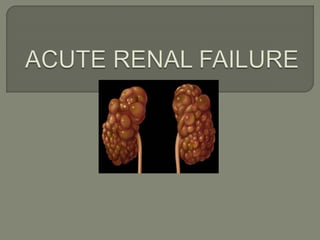
  • 205.
     Dialysis isa process for removing waste and excess water from the blood, and is primarily used to provide an artificial replacement for lost kidney function in people with renal failure.  Dialysis may be used for those with an acute disturbance in kidney function (acute kidney injury) , previously acute renal failure) or for those with progressive but chronically worsening kidney function–a state known as chronic kidney disease stage 5 (previously chronic renal failure or end- stage kidney disease).
  • 206.
    The latter formmay develop over months or years, but in contrast to acute kidney injury is not usually reversible, and dialysis is regarded as a "holding measure" until a renal transplant can be performed, or sometimes as the only supportive measure in those for whom a transplant would be inappropriate.
  • 207.
    It may alsobe used to treat the patients with intractable ( not responsive to treatment) edema, hepatic coma, Hyperkalemia, hypercalcemia, hypertension and uremia. It is usually initiated when the patient cannot maintain a reasonable lifestyle with conservative treatment.
  • 209.
    A different dialysistechnique, continuous ambulatory peritoneal dialysis (CAPD), makes use of the fact that the peritoneum (the lining of the abdominal cavity) is a differentially permeable membrane. A plastic bag containing dialysis fluid is attached to the patient's abdominal cavity..
  • 210.
     After about30 minutes, the fluid is withdrawn into the bag and discarded. This process is repeated about three times a day. This type of dialysis is much more convenient but poses the threat of peritonitis, should bacteria enter the body cavity with the dialysis fluid
  • 212.
    Kidney transplantation, thesurgical implantation of a human kidney from one person to another , is performed for clients with irreversible kidney failure. It involves transplanting a kidney from a living donor or human cadaver to a recipient who has ESRD.
  • 213.
     Patients withchronic kidney disease should be educated about the following:  Importance of compliance with secondary preventive measures  Natural disease progression  Prescribed medications (highlighting their potential benefits and adverse effects)  Avoidance of nephrotoxins  Diet  Renal replacement modalities, including peritoneal dialysis, hemodialysis, and transplantation  Permanent vascular access options for hemodialysis
  • 214.
     Nursing Diagnosis:-Fluid volume excess related to decreased urine output, dietary excesses and retention of sodium and water.  Intervention:- Assess fluid status.  Daily weight.  Intake and output balance.  Skin turgor and presence of edema.  Distention of neck veins  Blood pressure, pulse rate and rhythm  Respiratory rate and effort
  • 215.
    Limit fluid intaketo prescribed volume. Identify potential sources of fluid: Medications and fluids used to take medications : oral and intravenous Explain to patient and family rationale for restriction. Provide or encourage frequent oral hygiene.
  • 216.
    Nursing diagnosis:- Alterednutrition; less than body requirements related to anorexia, nausea, vomiting, dietary restrictions. Interventions:- Assess nutritional status:  Weight changes.  Anthropometric measures  Laboratory values ( serum electrolyte, BUN, Creatinine and iron level)
  • 217.
     Assess patient’snutritional dietary pattern.  Diet history  Food preferences  Calorie counts  Assess for factors contributing to altered nutritional intake  Anorexia, nausea and vomiting  Depression  Lack of understanding of dietary restrictions
  • 218.
     Provide patient’sfood preferences with in dietary restrictions.  Promote intake of high biologic value protein foods: eggs, diary products, meats.  Encourage high-calorie, low protein, low sodium and low potassium snacks between meals.  Alter schedule of medications so that they are not given immediately before meals.
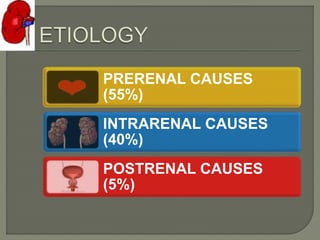
  • 219.
    Explain rationale fordietary restrictions and relationships to kidney disease and increased urea and Creatinine levels. Provide written list of foods allowed and suggestions for improving their taste without use of sodium and potassium. Provide pleasant surroundings at meal times. Weigh patient daily.
  • 220.
     Nursing Diagnosis:-Knowledge deficit regarding condition and treatment.  Intervention:- Assess understanding of cause of renal failure, consequences of renal failure, and its treatment: Cause of patient’s renal failure.  Meaning of renal failure.  Understanding of renal function.  Relationship of fluid and dietary restrictions to renal failure.  Rationale for treatment.
  • 221.
    Provide explanation ofrenal function and consequences of renal failure at patient’s level of understanding and guided by patient’s readiness to learn. Assist patient to identify ways to incorporate changes related to illness and its treatment into lifestyle. Provide oral and written information as appropriate about:
  • 222.
    Renal function andfailure. Fluid and dietary restrictions Medications Follow up schedule Community resources Treatment options
  • 223.
    Nursing Diagnosis:- Activityintolerance related to fatigue, anemia, retention of waste products and dialysis procedure Intervention:- Assess factors contributing to fatigue:  Anemia  Fluid and electrolyte imbalances  Retention of waste products  Depression
  • 224.
    Promote independence inself care activities as tolerated ;assit if fatigued. Encourage alternating activity with rest. Encourage patient to rest after dialysis treatments.
  • 226.
    Acute tubular necrosisis a kidney disorder involving damage to the tubule cells of the kidneys, resulting in Acute Kidney Failure (AFI).
  • 227.
    Acute tubular necrosisor (ATN) is a medical condition involving the death of tubular cells that form the tubule that transports urine to the ureters while reabsorbing 99% of the water (and highly concentrating the salts and metabolic byproducts). Tubular cells continually replace themselves and if the cause of ATN is removed then recovery is likely.
  • 228.
    Acute Kidney Injury(AKI) is observed in about 5% of all hospital admissions and in up to 30% of patients admitted to the intensive care unit (ICU). ATN is the most common cause of AKI in the renal category, and the second most common cause of all categories of AKI in hospitalized patients, with only prerenal azotemia occurring more frequently.
  • 229.
    It may beclassified as : Toxic Ischemic
  • 230.
    Toxic ATN canbe caused by: Free hemoglobin or Myoglobin Medication such as antibiotics such as aminoglycoside Cytotoxic drugs such as Cisplatin Intoxication (ethylene glycol)
  • 231.
    Toxic ATN ischaracterized by: Proximal tubular epithelium necrosis due to a toxic substance. Necrotic cells fall into the tubule lumen, obliterating it, and determining acute renal failure. Basement membrane is intact, so the tubular epithelium regeneration is possible. Glomeruli are not affected.
  • 232.
    Ischemic ATN canbe caused : When the kidneys are not sufficiently perfused for a long period of time (e.g. renal artery stenosis, shock). Hypoperfusion can also be caused by embolism of the renal arteries. Ischemic ATN specifically causes skip lesions through the tubules.
  • 233.
    Blood transfusion reaction. Injuryor trauma that damages the muscles. Recent major surgery. Septic shock or other forms of shock. Severe low blood pressure (hypotension) that lasts longer than 30 minutes.
  • 234.
    Liver disease andkidney damage caused by diabetes (diabetic nephropathy) may make a person more susceptible to the condition. Exposure to medications that are toxic to the kidneys (such as Aminoglycoside antibiotics) Antifungal agents (such as Amphotericin) Dye used for X-Ray studies.
  • 235.
    Causes of ischemicacute tubular necrosis: Hypovolemic states: hemorrhage, volume depletion from gastrointestinal (GI) or renal losses, burns, fluid sequestration. Low cardiac output states: heart failure and other diseases of myocardium, valvulopathy, arrhythmia, pericardial diseases, tamponade. Systemic Vasodilation: sepsis, anaphylaxis.
  • 236.
    Disseminated intravascular coagulation. Renalvasoconstriction: cyclosporine, amphotericin B, norepinephrine, epinephrine, hypercalcemia Impaired renal autoregulatory responses: cyclo oxygenase (COX) inhibitors, Angiotensin-Converting Enzyme (ACE) inhibitors, Angiotensin receptor blockers.
  • 237.
    Causes of NephrotoxicAcute Tubular Necrosis:  Certain drugs like:  Aminoglycosides.  Amphotericin B  Radio contrast media  Cisplastin  Cyclosporin  Pentamide (used to treat Pneumocystic carnii)
  • 238.
     Sulpha drugs Acyclovir, Indinavir Radio contrast media
  • 239.
    Follows a welldefined 3 part sequence of: Initiation Phase Maintenance Phase Recovery Phase
  • 240.
    Initiation Phase: Decreased B.P. Hypoperfusionof Kidneys Affects kidney’s Ischemia autoregulatory system
  • 241.
    Decreased production Cellinjury of Vasodilators Causes further Cell death Vasoconstriction and Ischemia Loss of function of nephrons and tubules
  • 242.
    Characterized by: Stabilization ofGFR at very low rate. Lasts for 1- 2 weeks.
  • 243.
    Characterized by: Regeneration ofepithelial cells of tubules. Sometimes abnormal diuresis, causing salt and water loss, dehydration.
  • 244.
    Decreased consciousness Coma Delirium orconfusion Drowsy, lethargic, hard to arouse Oliguria or Anuria Edema, fluid retention Nausea, vomiting
  • 245.
    Symptoms of acutekidney failure may also be present. Incresed BUN and serum creatinine levels. Fractional excretion of sodium and of urea may be relatively high. Presence of casts, kidney tubular cells, and red blood cells in urinalysis.
  • 246.
    Urine sodium maybe high. Urine specific gravity and osmolarity decreased indicating dilute urine.
  • 247.
    The degree ofacute kidney injury (AKI) is determined using the “RIFLE” R : Risk of renal dysfunction,  I : Injury to the kidney  F: Failure L: Loss of kidney function E : End-stage renal disease
  • 248.
    Complete Haemogram:  Anaemia SerumChemistries:  BUN  Serum Creatinine  Hyponatremia  Hyperkalemia
  • 249.
     Hypermagnesemia  Hypocalcemia Hyperphosphatemia Urinalysis Ultrasound CT Scan MRI Renal biopsy.
  • 251.
    In most people,acute tubular necrosis is reversible. The goal of treatment is to prevent life-threatening complications of acute kidney failure. Treatment focuses on preventing the excess build-up of fluids and wastes, while allowing the kidneys to heal. Patents should be closely monitored for deterioration of kidney function.
  • 252.
    Anti Hyperkalemia therapy. Dialysis. Anti-oxidants: prevent reperfusion damage as well as haemodynamics. Diuretics. N- Acetylcystine: used for Acetaminophen toxicity.
  • 253.
    Correction of oliguria,which may increase due to the use of diuretics. Fluid restriction: intake equals to output considering the sensible loss also. Restricting the substances normally removed by Kidney like proteins, sodium, potassium etc.
  • 254.
    The duration ofsymptoms varies. The decreased urine output phase may last from a few days to 6 weeks or more. This is occasionally followed by a period of high urine output, where the healed and newly functioning kidneys try to clear the body of fluid and wastes.
  • 255.
    One or twodays after urine output rises, symptoms reduce and laboratory values begin to return to normal.
  • 256.
    Chronic renal failure End-stagerenal disease Gastrointestinal loss of blood Hypertension Increased risk of infection
  • 257.
    Altered consciousness relatedto accumulation of uremic toxins. Fluid and electrolyte imbalance related to sodium and water retention. Altered nutrition less than body requirement related to nausea and vomiting.  knowledge deficit related to diseased condition and its management.
  • 259.
    Glomerulonephritis is atype of kidney disease that involves the glomeruli.  During glomerulonephritis, the glomeruli become inflamed and impair the kidney's ability to filter urine.
  • 260.
    The glomeruli arevery small, important structures in the kidneys that supply blood flow to the small units in the kidneys that filter urine, called the nephrons.
  • 262.
    Glomerulonephritis, also knownas glomerular nephritis, abbreviated GN, is a renal disease characterized by inflammation of the glomeruli, or small blood vessels in the kidneys
  • 263.
    GN is aproliferative immunologic non bacterial inflammation of the glomerular structure due to antigen – antibody reaction.
  • 266.
    1 Thin BasementMembrane Disease 2 Non Proliferative GN  Minimal change GN  Focal Segmental Glomerulosclerosis (FSGS)  Membranous glomerulonephritis 3 Proliferative  IgA nephropathy (Berger's disease)  Henoch-Schönlein purpura  Post-infectious  Membranoproliferative/mesangiocapillary GN  Rapidly progressive glomerulonephritis
  • 267.
    it is anautosomal dominant inherited disease characterised by thin glomerular basement membranes on electron microscopy.
  • 268.
     This ischaracterised by low numbers of cells (lack of hypercellularity) in the glomeruli. They usually cause nephrotic syndrome. This includes the following types: 1. Minimal change GN 2. Focal Segmental Glomerulosclerosis (FSGS) 3. Membranous glomerulonephritis
  • 269.
     This formof GN causes 80% of nephrotic syndrome in children, but only 20% in adults. There is fusion of podocytes (supportive cells in the glomerulus).  Rx: Treatment consists of supportive care for the massive fluid accumulation in the patients body (oedema) and as well as steroids to halt the disease process (typically Prednisone 1 mg/kg).
  • 270.
     Only certainfoci of glomeruli within the kidney are affected, and then only a segment of an individual glomerulus.  The pathological lesion is sclerosis (fibrosis) within the glomerulus and hyalinisation of the feeding arterioles, but no increase in the number of cells (hence non-proliferative). Rx: Steroids are often tried but not shown to be effective. 50% of people with FSGS continue to have progressive deterioration of kidney function, ending in renal failure.
  • 271.
     MGN ischaracterized by a thickened glomerular basement membrane without a hypercellular glomerulus.  The basement membrane may completely surround the granular deposits, forming a "spike and dome" pattern.  Prognosis follows the rule of thirds: one-third remain with MGN indefinitely, one-third remit, and one-third progress to end-stage renal failure .  As the glomerulonephritis progresses, the tubules of the kidney become infected, leading to atrophy and hyalinisation. The kidney appears to shrink.
  • 272.
     This typeis characterised by increased number of cells in the glomerulus (hypercellular).  Usually present as a nephritic syndrome and usually progress to end-stage renal failure (ESRF) over weeks to years Types  IgA nephropathy (Berger's disease)  Henoch-Schönlein purpura  Membranoproliferative/mesangiocapillary GN  Rapidly progressive glomerulonephritis
  • 273.
     IgA nephropathyusually presents as macroscopic haematuria (visibly bloody urine). It occasionally presents as a nephrotic syndrome.  It often affects young males within days (24- 48hrs) after an upper respiratory tract or gastrointestinal infection.  It shows increased number of mesangial cells with increased matrix (the 'cement' which holds everything together).  Immuno-staining is positive for IgA deposits within the matrix.  Prognosis is variable, 20% progress to ESRF.  ACE inhibitors are the mainstay of treatment
  • 274.
    HSP is asystemic variant of IgA nephropathy which causes a small- vessel vasculitis and associated glomerulonephritis.
  • 275.
     It canoccur after essentially any infection, specially with Streptococcus pyogenes.  Streptococcal titers in the blood (antistreptolysin O titers) may support the diagnosis.  It shows diffuse hypercellularity due to proliferation of endothelial and mesangial cells, as well as an influx of neutrophils and monocytes.  The Bowman space is compressed, in some cases to the extent that this produces a crescent formation characteristic of crescentic glomerulonephritis.  Treatment is supportive, and the disease generally resolves in 2-4 weeks.
  • 276.
    This is primary,or secondary to SLE, viral hepatitis, hypocomplementemia. One sees 'hypercellular and hyperlobular' glomeruli due to proliferation of both cells and the matrix within the mesangium. Presents usually with as a nephrotic syndrome, with inevitable progression to ESRF.
  • 277.
     Crescentic glomerulonephritisinduced by infective endocarditis  It is demonstrated circumferential and cellular crescent formation with interstitial nephritis.  It has a poor prognosis, with rapid progression to kidney failure over weeks.  Steroid therapy is sometimes used  Any of the above types of GN can be rapidly progressive.
  • 278.
     Additionally twofurther causes present as solely RPGN. 1. Goodpasture's syndrome, an autoimmune disease whereby antibodies are directed against basal membrane antigens found in the kidney and lungs. As well as kidney failure, patient have hemoptysis (cough up blood). High dose immunosuppresion is required (IV Methylprednisolone) and cyclophosphamide, plus plasmapheresis.
  • 279.
    1. Wegener's granulomatosisand polyarteritis.  There is a lack of immune deposits on staining, but blood tests are positive for ANCA.  The majority of glomeruli present "crescents". Formation of crescents is initiated by passage of fibrin into the Bowman space as a result of increased permeability of glomerular basement membrane.  Fibrin stimulates the proliferation of parietal cells of Bowman capsule, and an influx of monocytes.  Rapid growing and fibrosis of crescents compresses the capillary loops and decreases the Bowman space which leads to renal failure within weeks or months.
  • 280.
     Hereditary: resultfrom a gene on the X chromosome passed on from carrier mothers who have no features, or minimal features of the problem,  Idiopathic  Infections • Post streptococcal GN: Beta hemolytic streptococcal infection, URTI. Called as acute poststreptococcal glomerulonephritis, or APSGN. • Bacterial endocarditis • Viral infections e.g. hep. B,C AIDS • Fungal and parasitic
  • 281.
     Immune disease •Lupus (SLE) • Goodpasteur’s syndrome • IgA nephropathy  Vasculitis polyarteritis nodosa Wegener vasculitis Henoch-Schönlein purpura  Conditions causing scarring of glomeruli • HTN • Diabetic nephropathy • Focal segmental GN
  • 282.
     dark brown-coloredurine (from blood and protein)  sore throat  diminished urine output  fatigue  lethargy  increased breathing effort  headache  high blood pressure  seizures (may occur as a result of high blood pressure)  rash, especially over the buttocks and legs  weight loss  joint pain  pale skin color  fluid accumulation in the tissues (edema) in m’ing
  • 283.
    S/S of Kidneyfailure • Lack of appetite • Nausea • Vomiting • Fatigue • Difficulty in sleeping • Dry /itchy skin • Muscle cramps at night
  • 284.
    Any1or 2 degreeinfection Immune response activates Antibodies formed in response to antigen Antigen-antibody complex formed Deposition of immune complex in glomeruli
  • 285.
    Soluble circulating complexeslodge in filtration barrier Complex bind and activate complement which enhances migration of WBCs to site WBCs release proteolytic enzyme from lysosomes Damages the glomerular cells Results in filtration barrier being damaged
  • 286.
    If Damage Is Great Dec.Functional Surface area Dec. GFR Azotemia Majority glomeruli affected Hyalinization Dilated tubules with hyalin casts ESRD Permeability es Allows more proteins to leave the cappilary lumen and RBC Proteinuria & hematuria Foamy cola coloured urine
  • 287.
    Lab studies CBC BUN, Creatinine Urinalysis -urinedark -low pH -sp. Gravity 1.020mOsm/L -proteinuria RBC and red cell cast
  • 288.
     Imaging studies •Radiograph(chest) • CT scan  Other tests • Serology • Anti Nuclear Antobody • Serum complement • Renal Biopsy Streptozyme test Antistreptolysin O Cultures of throat and skin lesions Blood culture
  • 289.
    Symptomatic management Sodium andfluid restriction Bed rest Protein restriction Dialysis if needed Calcium supplements Plasmapheresis if needed Manage edema
  • 290.
    For HTN  Diuretics Angiotensin-converting enzyme (ACE) inhibitors  Angiotensin II receptor agonists  Calcium channel blockers  Beta blockers For circulatory congestion & pulm edema • Preload and afterload restriction • Diuretics • Nitrates • Morphine • Dialysis
  • 291.
     Strep orother bacterial infection: antibiotic.  Lupus or vasculitis. : corticosteroids and immune- suppressing drugs.  IgA nephropathy: Fish oil supplements  Goodpasture's syndrome. Plasmapheresis Plasmapheresis is a mechanical process that removes antibodies from your blood by taking the plasma out of your blood and replacing it with fluid or donated plasma.
  • 292.
     Acute kidneyfailure. Loss of function in the filtering part of the nephron may cause waste products to accumulate rapidly.  Chronic kidney failure. the kidneys gradually lose function. usually requires dialysis or a kidney transplant  High blood pressure. Damage to your kidneys and the resultant buildup of wastes in the bloodstream can raise your blood pressure.  Nephrotic syndrome. may accompany glomerulonephritis and other conditions that affect the filtering ability of the glomeruli.  UTI  Fluid overload
  • 293.
     Nursing Assessment History • Recent respiratory infection or skin infection • Questioned for systemic disorders • Recent invasive procedure  Physical examination  Ascitis  Pleural effusion  Urine examination  Colour  Amount  Vital signs
  • 294.
    Clinical Problem Nursing Diagnosis Nursing Intervention Edema Potential fluid volumeexcess R/T glomerular damage and decreased GFR -Monitor daily weight -Check for puffiness -Monitor I/O -Daily measure edema parts -Restrict fluid intake -Restrict salt intake
  • 295.
    Clinical Problem Nursing Diagnosis Nursing Intervention Infection Potential for infectionR/T lowered resistance -Give hard candies to relieve thirst -Check lung sounds for pulmonary edema -Check for Blood in urine and feaces -Isolate the pt -Restrict visits
  • 296.
  • 297.
  • 298.
    Clinical Problem Nursing Diagnosis Nursing Intervention R/T fatigue -Direct correlationof activity and amount of hematuria and proteinuria – Limit activity -High caloric diet
  • 299.
    Clinical Problem Nursing Diagnosis Nursing Intervention -Encourage client to talk abouthis fears -Emotional support -ROM exercises to prevent contractures and joint trauma
  • 301.
    The nephrotic syndromeis characterized by heavy proteinuria (more than 3.5g protein) and is usually associated with hypoalbuminemia ,hyperlipidemia and edema.
  • 302.
     The increased glomerularpermeability found in nephrotic syndrome is responsible for massive excretion of proteins in urine.  This results in decreased serum protein and subsequent edema formation.
  • 303.
     The normalglomerular capillary wall keeps blood cells and most proteins in the blood.  In patients with proteinuria, protein leaks across the wall into the urine.
  • 304.
    The barriers inthe capillary wall that keep protein out of the urine are 1. the endothelial cell lining the capillary lumen 2. the basement membrane 3. epithelial cells (podocyte) normally has little “feet” (pods) that sit on the basement membrane and are connected by a thin membrane. podocytes appear to be the most important barrier that prevents protein from leaking into the urine
  • 308.
     Primary glomerular diseases(Idiopathic)  Lipoid nephrosis  Membranous nephropathy  Membranoproliferative glomerulonephritis  Proliferative glomerulonephritis  FSGS  Minimal change disease- in children (fusion of foot processes  Allergens  Bee sting  Poison ivy  Poison oat  Insect repellent  Drugs  Penicillamine  Bismuth  Gold  Trimethaprime
  • 309.
     Collagen- Vascular diseases SLE  Polyarteritis nodosa  Metabolic diseases  DM  Amyloidosis  Multiple myeloma  Infectious diseases  Quartan malaria  Bacterial endocarditis  Schistosomiasis  Secondary syphilis  Neoplastic Disorders  Bronchogenic carcinoma  Hodgkin disease  Colonic cancer
  • 310.
     Vascular diseases Constrictive Pericarditis  Renal vein Thrombosis  Inferior vena cava obstruction  Congenital Nephrotic Syndrome  Herodofamilial Nephrotic syndrome  Pregnancy
  • 311.
    Becoz of immunologic,inflammatory or metabolic abnormality(DM) ,HTN, GN Increased glomerular basement membrane permability or glomerulus get damaged Low mol wt proteins such as albumin and alpha-globulin are excreted in excess amt Albumin synthesis and production imbalances Hypoalbuminemia
  • 312.
    Decreased plasma oncotic pressure Fluidshifts to interstitial space from intravascular Compartment Decreased intravascular vol Decreased renal blood flow Decreased GFR Stimulation of production of aldosterone and ADH Excessive sodium and water retention leading to edema Urinary loss of inhibitors of clotting (antithrombin3) Thrombosis Stimulates hepatic lipoprotein synthesis Hyperlipidemia Fat bodies appear in urine
  • 313.
     Proteinuria(>3.5g/day),  hypoalbuminemia, hyperlipidemia  edema. A few other characteristics are: 1. Excess fluid in the body. • Puffiness around the eyes, (morning) • Edema over the legs which is pitting • pleural effusion. • pulmonary edema. • ascites.
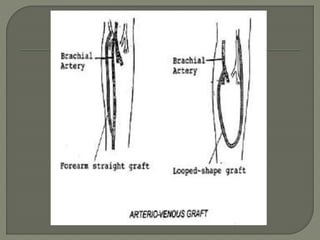
  • 314.
    2. Hypertension (rarely) 3.foamy urine, due to a lowering of the surface tension by the severe proteinuria. 4. hematuria or oliguria are uncommon, and are seen commonly in nephritic syndrome. 5. rash associated with Systemic Lupus Erythematosus, 6. neuropathy associated with diabetes.
  • 315.
     Urine sampleshows proteinuria (>3.5 per 1.73 m2 per 24 hour).  Hypoalbuminemia: albumin level ≤2.5g/dL (normal=3.5-5g/dL).  hypercholesterolemia, elevated LDL, usually with concomitantly elevated VLDL  Electrolytes, urea and creatinine (EUCs)  Biopsy of kidney  Auto-immune markers (ANA, ASOT, C3, cryoglobulins, serum electrophoresis)
  • 316.
     Monitoring andmaintaining euvolemia  monitoring urine output, BP regularly  fluid restrict to 1L  diuretics (IV furosemide)  Monitoring kidney function  do EUCs daily and calculating GFR  Prevent and treat any complications  Albumin infusions are generally not used because their effect lasts only transiently.  Prophylactic anticoagulation may be appropriate in some circumstances.
  • 317.
     Immunosupression (corticosteroids,cyclosporin).  Standard ISKDC regime for first episode: prednisolone -60 mg/m2/day in 3 divided doses for 4 weeks followed by 40 mg/m2/day in a single dose on every alternate day for 4 weeks.  Frequent relapses treated by: cyclophosphamide or nitrogen mustard or cyclosporin or levamisole.  blood glucose control if diabetic.  Blood pressure control. ACE inhibitors (they have been shown to decrease protein loss)
  • 318.
     Venous thrombosis:due to leak of anti- thrombin 3, which helps prevent thrombosis. This often occurs in the renal veins. Treatment is with oral anticoagulants (not heparin as heparin acts via anti-thrombin 3 which is lost in the proteinuria so it will be ineffective.)  Infection: due to leakage of immunoglobulins, encapsulated bacteria such as Haemophilus influenzae and Streptococcus pneumonia can cause infection.  Acute renal failure is due to hypovolemia.  Pulmonary edema
  • 319.
    Growth retardation:It occursin cases of relapses or resistance to therapy. Causes of growth retardation are protein deficiency from the loss of protein in urine, anorexia (reduced protein intake), and steroid therapy (catabolism). Vitamin D deficiency Thyroxin is reduced due to decreased thyroid binding globulin. Microcytic hypochromic anaemia
  • 320.
    Nursing Assessment  Assessedema  Check daily wt  Accurate I/O  Measure abdominal girth/ extremity size  Assess skin condition  Assess for effectiveness of treatment  Avoid trauma  Effectiveness of diuretic therapy
  • 321.
    Clinical Problem NursingDiagnosis Nursing Intervention Retention of sodium and fluid Edema Altered fluid and electrolyte balance R/T retention of sodium and fluid Impaired skin integrity R/T edema -Check daily weight - Measure abdominal girth -Maintain I/O chart -Low sodium diet -Monitor electrolytes -Assess for the skin integrity -Keep pt dry
  • 322.
    Clinical Problem NursingDiagnosis Nursing Intervention -Turn the pt frequently -Maintain hygiene -Relieve pressure from pressure points -Use air or water mattresses -Provide scrotal support in men
  • 323.
    Clinical Problem Nursing Diagnosis Nursing Intervention Proteinloss Altered nutritional pattern R/T protein loss -Assess for S/S of infection -Serve small frequent feedings -Protein intake 1.0 to 1.5 per kg of body wt -Serve food in an attractive manner -Ask for the likes and dislikes of pt
  • 324.
    Clinical Problem NursingDiagnosis Nursing Intervention Low immunity Potential for infection R/T intake of immunosuppressiv e drugs -Maintain hygiene -Use aseptic technique -Avoid exposure to persons with known infections -Avoid invasive procedures or maintain strict asepsis
  • 325.
    Clinical problem Nursing Diagnosis Nursing Intervention -Obtainspecimen for culture and sensitivity when infection is suspected -Administer antibiotics as prescribed -Tell the pt S/S of infection
  • 326.
    Clinical Problem NursingDiagnosis Nursing Intervention Edema Altered body image R/T puffiness of face and edema of legs -Restrict fluids and sodium -provide knowledge regarding the causes for edema -Ventilate his fears -Remove the mirrors from the room to avoid him to look his face
  • 328.
     The normalfunction of the urinary bladder is to store and expel urine in a coordinated, controlled fashion. This coordinated activity is regulated by the central and peripheral nervous systems. Neurogenic bladder is a term applied to a malfunctioning urinary bladder due to neurologic dysfunction or insult emanating from internal or external trauma, disease, or injury.
  • 329.
    Neurogenic bladder refersto dysfunction of the urinary bladder due to disease of the central nervous system or peripheral nerves involved in the control of micturition.
  • 330.
     Brain lesion stroke  brain tumor  Parkinson disease  Hydrocephalus  cerebral palsy  Shy-Drager syndrome  Spinal cord lesion  motor vehicle and diving accidents  Multiple sclerosis (MS)  myelomeningocele  Sacral cord injury  Sacral cord tumour
  • 331.
     Herniated disc Injuries that crush pelvis  Lumbar laminectomy  Radical hysterectomy  Abdominoperineal resection  Peripheral nerve injury  Diabetes mellitus  AIDS  poliomyelitis  Guillain-Barré syndrome  severe herpes in the genitoanal area  pernicious anemia  neurosyphilis (tabes dorsalis)
  • 332.
     urinary tractinfection  kidney stones - these may be difficult to determine because you may not be able to feel pain associated with kidney stones if you have spinal cord abnormalities. Symptoms of kidney stones include:  chills  shivering  fever  urinary incontinence  small urine volume during voiding  urinary frequency and urgency  dribbling urine  loss of sensation of bladder fullness
  • 333.
     Lab studies Urinalysis and urine culture  Urine cytology  Chem 7 profile: Blood urea nitrogen (BUN) and creatinine  Other tests  Voiding diary: A voiding diary is a daily record of the patient's bladder activity  Pad test :This is an objective test that documents the urine loss. Intravesical methylene blue test or oral Pyridium or Urised may be used. Methylene blue and Urised turns the urine color blue; Pyridium turns the urine color orange.  Diagnostic procedures  Postvoid residual urine
  • 334.
     Uroflow rate:Uroflow rate is volume of urine voided per unit of time.  Filling cystometrogram  filling cystometrogram  Voiding cystometrogram (pressure-flow study)  Cystogram  Electromyography  Cystoscopy  Videourodynamics
  • 335.
  • 336.
     Stress incontinencemay be treated with surgical and nonsurgical means.  Urge incontinence may be treated with behavioral modification or with bladder- relaxing agents.  Mixed incontinence may require medications as well as surgery.  Overflow incontinence may be treated with some type of catheter regimen.  Functional incontinence may be resolved by treating the underlying cause (eg, urinary tract infection, constipation) or by simply changing a few medications.
  • 337.
     Absorbent products:Absorbent products are pads or garments designed to absorb urine to protect the skin and clothing.  Urethral occlusive devices :Urethral occlusive devices are artificial devices that may be inserted into the urethra or placed over the urethral meatus to prevent urinary leakage.  Catheters  Indwelling urethral catheters  suprapubic tubes  self-intermittent catheterization.
  • 338.
     Surgical carefor stress incontinence involves procedures that increase urethral outlet resistance. Operations that increase urethral resistance include :  bladder neck suspension  periurethral bulking therapy  sling procedures  artificial urinary sphincter  Surgical care for urge incontinence involves procedures that improve bladder compliance or bladder capacity.  sacral neuromodulation  botulinum toxin injections,  detrusor myomectomy  bladder augmentation
  • 339.
     Avoidance ofdietary stimulants  avoiding spicy foods like curry, chili pepper, cayenne pepper, and dry mustard.  Avoiding citrus fruits like grapefruits and oranges.  Avoiding chocolate-containing sweets. Chocolate snacks  Avoiding treats contain caffeine
  • 340.
     Beverages  Avoidbeverages that contain caffeine :coffee, tea, hot chocolate, and sodas, milk, Over-the-counter medicines  Avoid carbonated beverages citrus fruits drinks acidic juices artificial sweeteners.  fluid restriction
  • 341.
     Pelvic floorexercise  Vaginal weights : Vaginal weights are tamponlike special help aids used to enhance pelvic floor muscle exercises..  Biofeedback :Biofeedback therapy is a form of pelvic floor muscle rehabilitation using an electronic device for individuals having difficulty identifying levator ani muscles. These devices allow the patient to receive immediate visual feedback on the activity of the pelvic floor muscles.
  • 342.
     Electrical stimulation:Electrical stimulation is a more sophisticated form of biofeedback used for pelvic floor muscle rehabilitation. This treatment involves stimulation of levator ani muscles using painless electric shocks.  Bladder training: Bladder training generally consists of self-education, scheduled voiding with conscious delay of voiding, and positive reinforcement.
  • 343.
     Medications  Sympathomimeticdrugs  estrogen  tricyclic agents  The 3 main categories of drugs used to treat urge incontinence include :  anticholinergic drugs  antispasmodics  tricyclic antidepressant agents  When a single drug treatment does not work, combination therapy, such as oxybutynin (Ditropan) and imipramine (Tofranil) may be used. .
  • 344.
     Estrogen derivatives Conjugated estrogen  Anticholinergic drugs Propantheline bromide (Pro Banthine) Dicyclomine hydrochloride (Bentyl) Hyoscyamine sulfate (Levsin/SL, Levsin)  Antispasmodic drugs Solifenacin succinate (VESIcare) Darifenacin (Enablex) OxybutyninChloride Tolterodine Trospium
  • 345.
     Tricyclic Antidepressants Imipraminehydrochloride Amitriptyline hydrochloride
  • 346.
     contact dermatitis skin breakdown  pressure sores and ulcers  secondary infections  urinary tract infection.  bladder infection  bladder stones  ascending pyelonephritis  urethral erosion.  urethral injury.  bladder spasms
  • 347.
    unique to suprapubiccatheter  skin infection  hematoma  bowel injury  problems with catheter reinsertion Untreated urinary tract infections may lead to urosepsis and death.
  • 348.
    Excellent  Depends onthe underlying condition that has precipitated urinary incontinence  Urinary incontinence itself is easily treated and prevented by properly trained health care individuals.
  • 350.
     The urinarybladder occupies the deep pelvic cavity and is well protected. Because the bladder is located within the bony structures of the pelvis, it is protected from most external forces. This is the reason it is rarely traumatized.  However it can suffer traumas which can cause extraperitoneal and intraperitoneal ruptures
  • 351.
    It is theinjury to the urinary bladder caused by either blunt or penetrating accidents. The probability of bladder injury varies according to the degree of bladder distention; therefore, a full bladder is more likely to become injured than an empty one.
  • 352.
    60 - 85%- Blunt injuries 15 - 40% - Penetrating injury 10 - 29% - Pelvic fractures 0.3% - Caesarean section 30% - Bladder biopsy
  • 353.
    Penetrating and blunttrauma (main causes of bladder injury) during accidents. Iatrogenic causes include surgical misadventures from gynecologic, urologic, and orthopedic operations near the urinary bladder.  Spontaneous or idiopathic bladder injuries without an obvious underlying pathology constitute the remainder.
  • 354.
    Other causes include: Surgeriesof the pelvis or groin (including hernia repair and abdominal hysterectomy) Tears, cuts, bruises, and other injuries to the urethra (most common in men)  Straddle injuries (direct force accidents that injure the scrotum area between a man's legs) Deceleration injury (for example, a motor vehicle accident that occurs with a full bladder while wearing seatbelt)
  • 356.
    ◦ The mostcommon mechanisms of blunt trauma are road traffic accidents (87%), falls (7%), and assaults (6%).  Deceleration injuries usually produce both bladder trauma (perforation) and pelvic fractures. ◦ Approximately 10% of patients with pelvic fractures also have significant bladder injuries.
  • 357.
    ◦ The likelihoodof the bladder to sustain injury is related to its degree of distention at the time of trauma. ◦ Injury may occur if there is a blow to the pelvis that is severe enough to break the bones and cause bone fragments to penetrate the bladder wall. ◦ Generally the bladder injury in these cases is associated with other injuries as well, the commonest being to the spleen and rectum.
  • 358.
     The mostcommon cause of penetrating trauma is gunshot wounds (85%), followed by stabbings (15%).  It is also associated with abdominal and/or pelvic organ injuries.  Combined penetrating trauma of the rectum and urinary bladder is rare.  The combination of penetrating trauma to both rectum and the urinary system is associated with high morbidity and mortality.
  • 359.
     During prolongedlabor or a difficult forceps delivery, persistent pressure from the fetal head against the mother's pubis can lead to bladder necrosis. • Direct laceration of the urinary bladder is reported in 0.3% of women undergoing a Caesarean delivery. • Previous Caesarean deliveries, and the adhesions that can remain subsequently, are a risk factor.
  • 360.
    • Bladder injurymay occur during a vaginal or abdominal hysterectomy. • Blind dissection in the incorrect tissue plane between the base of the bladder and the cervical fascia results in bladder injury.
  • 361.
    Perforation of thebladder during a bladder biopsy, cystolitholapaxy, transurethral resection of the prostate (TURP), or transurethral resection of a bladder tumor (TURBT) is common. Incidence of bladder perforation is reportedly as high as 36% following bladder biopsy.
  • 362.
     Orthopedic pinsand screws can commonly perforate the urinary bladder, particularly during internal fixation of pelvic fractures.  Thermal injuries to the bladder wall may occur during the setting of cement substances used to seat arthroplasty prosthetics.
  • 363.
    • Alcoholics andthose individuals who chronically drink large quantities of fluids are susceptible to this type of injury (bladder over distension ) Person who holds urine for long time during over distension.
  • 364.
    Type I injuriesare partial tears of the mucosa. This is the most common injury pattern of multisystem trauma patients and is associated with blunt trauma. Type II or intraperitoneal bladder ruptures. This is usually the result of a direct blow to the distended organ.
  • 365.
     Type IIIor interstitial pattern. This is an intramural or partial-thickness laceration of the intact serosa. CT cystography is used to diagnose this. Intramural contrast is shown within the bladder wall. This condition is usually the result of blunt trauma.  Type IV bladder injury is extraperitoneal. It is the most common bladder rupture. It is subdivided into simple and complex injuries.
  • 366.
    Extraperitoneal bladder ruptures •Traumatic extraperitoneal ruptures are usually associated with pelvic fractures (89%-100%). The bladder rupture is most often due to a direct burst injury or the shearing force of the deforming pelvic ring. • These ruptures are usually associated with fractures of the anterior pubic arch, and they may occur from a direct laceration of the bladder by the bony fragments of the osseous pelvis.
  • 367.
    • The anterolateralaspect of the bladder is typically perforated by bony spicules. Forceful disruption of the bony pelvis tear the wall of the bladder. • The degree of bladder injury is directly related to the severity of the fracture. • The classic cystographic finding is contrast extravasation around the base of the bladder confined to the perivesical space
  • 368.
    • With amore complex injury, the contrast material extends to the thigh, penis, perineum, or into the anterior abdominal wall. • The bladder may assume a teardrop shape from compression by a pelvic hematoma.
  • 369.
    Classic intraperitoneal bladderruptures are described as large horizontal tears in the dome of the bladder. The dome is the least supported area and the only portion of the adult bladder covered by peritoneum. The mechanism of injury is a sudden large increase in intravesical pressure in a full bladder.
  • 370.
    When full, thebladder's muscle fibers are widely separated and the entire bladder wall is relatively thin, offering relatively little resistance to perforation from sudden large changes in intra vesical pressure. Intraperitoneal bladder rupture occurs as the result of a direct blow to a distended urinary bladder.
  • 371.
    This type ofinjury is common among patients diagnosed with alcoholism or those sustaining a seatbelt or steering wheel injury. Since urine may continue to drain into the abdomen, intraperitoneal ruptures may go undiagnosed from days to weeks.
  • 372.
    Electrolyte abnormalities (e.g., hyperkalemia, hypernatremia, uremia, acidosis) may occur as urine is reabsorbed from the peritoneal cavity. Such patients may appear anuric, and the diagnosis is established when urinary ascites are recovered during paracentesis.
  • 373.
     Intraperitoneal rupturesdemonstrate contrast extravasation into the peritoneal cavity, often outlining loops of bowel and pooling under the diaphragm.  An intraperitoneal rupture is more common in children because of the relative intra- abdominal position of the bladder. The bladder usually descends into the pelvis by age 20 years.
  • 374.
    Clinical signs ofbladder injury are relatively nonspecific; however, a triad of symptoms are often present: GROSS HEMATURIA SUPRAPUBIC PAIN OR TENDERNESS DIFFICULTY OR INABILITY TO VOID
  • 375.
    Hematuria invariably accompaniesall bladder injuries. Gross hematuria is the hallmark of a bladder rupture. More than 98% of bladder ruptures are associated with gross hematuria, and 10% are associated with microscopic hematuria.
  • 376.
    An abdominal examinationmay reveal distention, guarding, or rebound tenderness. Absent bowel sounds and signs of peritoneal irritation indicate a possible intraperitoneal bladder rupture. A rectal examination should be performed to exclude rectal injury.
  • 377.
     Shock orhemorrhage (the symptoms include) Increased heart rate Pale skin Sweating Skin cool to touch Drowsiness Lethargy Decreased alertness Coma
  • 378.
     History oftrauma  Gross hematuria  Suprapubic pain  Difficulty to void  Abdominal tenderness  Foley’s catheter  CT scanning  Cystography
  • 379.
    It is oftenthe first test performed in patients with blunt abdominal trauma. The CT scan of the pelvis provides information on the status of the pelvic organs and bony pelvis . It most sensitive test for bladder perforation
  • 380.
    The European Associationof Urology (EAU) developed guidelines for the appropriate management of genito-urinary trauma. In suspected renal injuries the hemodynamic situation of the patient is the benchmark for the diagnostic and therapeutic algorithm.
  • 381.
    Most extraperitoneal rupturescan be managed safely with simple catheter drainage (ie, urethral or Suprapubic). Leave the catheter in for 7-10 days and then obtain a cystogram. All extraperitoneal bladder injuries heal within 3 weeks
  • 382.
    Intraperitoneal bladder rupture Mostrequire surgical exploration, as they do not heal with catheterization alone. Urine continues to leak into the abdominal cavity, resulting in urinary ascites, abdominal distention, and electrolyte disturbances. All wounds should be explored and should be surgically repaired.
  • 383.
    Extraperitoneal extravasation Bladders withextensive extraperitoneal extravasation are often repaired surgically. Early surgical intervention in these cases decreases the length of hospitalization and potential complications. It also promotes early recovery.
  • 384.
     Hemorrhage  Pelvicinfection  Peritonitis  Urge incontinence  Urinary extravasation  Wound dehiscence  Obstructive uropathy
  • 385.
    The patient shouldreturn in 7-10 days for staple removal and wound check. The X-ray cystogram should be done 10-14 days after surgery. If the cystogram finding is normal, the urethral catheter can be removed. Advise the patient that they may return to normal activity 4-6 weeks after surgery.
  • 386.
  • 387.
    1) Hypovolemia relatedto gross hemorrhage. 2) High risk for infection related to extravasation of urine and open wounds. 3) Acute pain related to injury of the bladder. 4) Fluid and electrolyte imbalance related to hemorrhage. 5) Anemia related to gross hematuria.
  • 389.
     Hydronephrosis is distentionand dilation of the renal pelvis and calyces, usually caused by obstruction of the free flow of urine from the kidney, leading to progressive atrophy of the kidney
  • 391.
    The obstruction maybe either partial complete and can occur anywhere from the urethral meatus to the calyces of the renal pelvis.
  • 392.
    Intrinsic obstructions (occur within thetract)  blood clots,  stones,  sloughed papilla  tumours of the kidney, ureter and bladder. Extrinsic obstructions (caused by factors outside of the urinary tract)  pelvic or abdominal tumours  retroperitoneal fibrosis or neurological deficits.  Strictures of the ureters (congenital or acquired),  neuromuscular dysfunctions  schistosomiasis which originate from the wall of the urinary tract.
  • 393.
    Urinary Tract Obstruction Dilationof structure behind obstruction Backflow of urine Dilation of kidney pelvis Pressure on kidney structure Stasis of urine Dilation of kidney pressure on Infection tubules renal calculi arteries Ischemia Tubular damage
  • 394.
     It dependupon whether the obstruction is  acute or chronic,  partial or complete,  unilateral or bilateral.  Unilateral hydronephrosis may occur without any symptoms, while acute obstruction can cause intense pain.[1]
  • 395.
    Acute Hydronephrosis  Renal colic Changes in urinary output (oliguria, anuria)  Hematuria  Palpable bladder  Hypertension  Hesitancy  Urgency  Incontinence  Post voiding dribling  Decreased force of stream Chronic hydronephrosis  No symptoms  Intermittent pain  Elevated RFT
  • 396.
    An enlarged kidneymay be palpable on examination. suprapubic tenderness along with a palpable bladder. If the obstruction is complete, an enlarged kidney is often palpable on examination.
  • 397.
    Blood (U&E, creatinine) urine(MSU, pH) tests Ultrasound An IVU Antegrade or retrograde pyelography
  • 398.
    The choice ofimaging depends on the clinical presentation (history, symptoms and examination findings). In the case of renal colic the initial investigation is usually an IVU CT /MRI
  • 399.
     Removal ofthe obstruction  drainage of urine.  the specific treatment depends upon where the obstruction lies, and whether it is acute or chronic.  Acute obstruction of the upper urinary tract is usually treated by the insertion of a nephrostomy tube.  Chronic upper urinary tract obstruction is treated by the insertion of a ureteric stent or a pyeloplasty.  Lower urinary tract obstruction is usually treated by insertion of a urinary catheter or a suprapubic catheter.
  • 400.
     Nursing Assessment Nursing Diagnosis 1. Pain R/T by obstruction of urinary flow 2. Fluid and electrolyte imbalance R/T renal dysfunction 3. Altered elimination Pattern R/t incontinence , urgency, dribling
  • 402.
    Healthy kidneys sends erythropoietin Tobone marrow to produce RBCs Bone Marrow produces RBCs RBCs carry oxygen through the blood stream available to the organs throughout the body Oxygen is made Normal Kidney Function
  • 403.
     Dialysis isprimarily used to provide an artificial replacement for lost kidney function (renal replacement therapy) due to renal failure.
  • 404.
    In serious kidneydisease, kidney function is impaired or totally lost. In such a situation, it is by the process of "Dialysis" that waste products and excess fluids are removed from the blood.
  • 405.
     Acute Indicationsfor Dialysis/Hemofiltration: • 1) Hyperkalemia • 2) Metabolic Acidosis • 3) Fluid overload (which usually manifests as pulmonary edema) • 4) Uremic pericarditis, a potentially life threatening complication of renal failure • 5) And in patients without renal failure, acute poisoning with a dialysable drug, such as lithium, or aspirin.
  • 406.
    Chronic Indications forDialysis: • 1) Symptomatic renal failure. • 2) Low glomerular filtration rate (GFR) of less than 10-15 mls/min) • 3) Difficulty in medically controlling serum phosphorus or anaemia when the GFR is very low
  • 407.
    Dialysis works onthe principles of  Diffusion  Osmosis of solutes and fluid across a semipermeable membrane.  ultrafiltration
  • 409.
     Blood flowsby one side of a semipermeable membrane  and a dialysate or fluid flows by the opposite side.  Smaller solutes and fluid pass through the membrane. The blood flows in one direction and the dialysate flows in the opposite.
  • 410.
    The concentrations ofundesired solutes (for example potassium, calcium, and urea) are high in the blood, but low or absent in the dialysis solution and constant replacement of the dialysate ensures that the concentration of undesired solutes is kept low on this side of the membrane.
  • 411.
     There aretwo types of dialysis: 1. Hemodialysis  2. Peritoneal dialysis Each method has it own advantages and disadvantages but it is the medical condition & attitude that will decide which method will suit you best.
  • 412.
     Dialysis usinga filtering process of the blood by a machine is called hemodialysis
  • 413.
     Hemodialysis utilizescounter current flow, where the dialysate is flowing in the opposite direction to blood flow in the extracorporeal circuit.  Counter-current flow maintains the concentration gradient across the membrane at a maximum and increases the efficiency of the dialysis.  Fluid removal (ultrafiltration) is achieved by altering the hydrostatic pressure of the dialysate compartment, causing free water and some dissolved solutes to move across the membrane along a created pressure gradient.
  • 414.
     The dialysissolution that is used is a sterilized solution of mineral ions. Urea and other waste products, and also, potassium and phosphate, diffuse into the dialysis solution.  However, concentrations of sodium and chloride are similar to those of normal plasma to prevent loss.  Bicarbonate is added in a higher concentration than plasma to correct blood acidity. A small amount of glucose is also commonly used.
  • 416.
    In general, thelarger the body size of an individual, the more dialysis he will need. In the North America and UK, 3-4 hour treatments (sometimes up to 5 hours for larger patients) given 3 times a week are typical
  • 417.
     blood isallowed to flow, a few ounces at a time, through a special filter that removes wastes and extra fluids.  The clean blood is then returned to your body.  Removing the harmful wastes and extra salt and fluids helps control blood pressure and keep the proper balance of chemicals like potassium and sodium in body.
  • 418.
    Getting Your VascularAccess Ready Equipment and Procedures Dialysis Machine Dialyzer Dialysis Solution Needles
  • 419.
    One important stepbefore starting hemodialysis is preparing a vascular access:  a site on your body from which your blood is removed and returned.  A vascular access should be prepared weeks or months before starting dialysis.  It will allow easier and more efficient removal and replacement of your blood with fewer complications.
  • 420.
    Three primary methodsare used to gain access to the blood: an intravenous catheter an arteriovenous (AV) fistula or a synthetic graft.
  • 421.
     Catheter accesssometimes called a CVC (Central Venous Catheter), consists of  a plastic catheter with two lumens (or occasionally two separate catheters)  It is inserted into a large vein (usually the vena cava, via the internal jugular vein or the femoral vein) to allow large flows of blood to be withdrawn from one lumen, to enter the dialysis circuit, and to be returned via the other lumen.
  • 422.
  • 425.
     AV (arteriovenous) fistulasare recognized as the preferred access method.
  • 426.
     To createa fistula, a vascular surgeon joins an artery and a vein together through anastomosis.  Since this bypasses the capillaries, blood flows rapidly through the fistula.  One can feel this by placing one's finger over a mature fistula. This is called feeling for "thrill" and produces a distinct 'buzzing' feeling over the fistula.
  • 428.
    Fistulas are usuallycreated in the nondominant arm and may be situated on the hand (the 'snuffbox' fistula'), forearm (radiocephalic fistula, in which the radial artery is anastomosed to the cephalic vein), elbow (usually a brachiocephalic fistula, where the brachial artery is anastomosed to the cephalic vein).
  • 429.
    A fistula willtake a number of weeks to mature, on average perhaps 4-6 weeks. During treatment, two needles are inserted into the fistula, one to draw blood and one to return it.
  • 430.
     AV (arteriovenous)grafts are much like fistulas in most respects, except that an artificial vessel is used to join the artery and vein.
  • 433.
    The graft usuallyis made of a synthetic material, but sometimes chemically treated, sterilized veins from animals are used. Grafts are inserted when the patient's native vasculature does not permit a fistula. They mature faster than fistulas, and may be ready for use several weeks after formation (some newer grafts may be used even sooner).
  • 434.
    The dialysis machineis about the size of a dishwasher. This machine has three main jobs: 1. pump blood and watch flow for safety 2. clean wastes from blood 3. watch blood pressure and the rate of fluid removal from your body
  • 435.
    A cylindrical bundleof hollow fibers, whose walls are composed of semi-permeable membrane, is anchored at each end into potting compound (a sort of glue) through which blood is passed.  Dialysis solution, the cleansing fluid, is pumped around these fibers. The fibers allow wastes and extra fluids to pass from blood into the solution, which carries them away.
  • 436.
     Blood portat each end of the cylinder communicates with each end of the bundle of hollow fibers forming "blood compartment" 1. Two other ports are cut into the side of the cylinder. These communicate with the space around the hollow fibers, the "dialysate compartment." 4 Openings
  • 439.
    Your dialysis centermay use the same dialyzer more than once for your treatments. Reuse is considered safe as long as the dialyzer is cleaned before each use. The dialyzer to be labeled with name and check to see that it has been cleaned, disinfected, and tested.
  • 440.
    Dialysis solution, alsoknown as dialysate, is the fluid in the dialyzer that helps remove wastes and extra fluid from blood.  It contains chemicals that make it act like a sponge.
  • 441.
  • 442.
    blood and dialysateflow rates dialysis solution conductivity temperature  pH analysis of the dialysate for evidence of blood leakage presence of air.
  • 445.
    Most dialysis centersuse two needles— one to carry blood to the dialyzer and one to return the cleaned blood to body.
  • 447.
     Cramping  Dropsin blood pressure  Headaches  Nausea and vomiting  Feeling washed out  Abnormal heart rhythms  Infections  Fatigue  Chest Pains  Leg-cramps  Anemia  Renal Osteodystrophy  Itching  Sleeping Disorders
  • 448.
    Patient may experiencea syndrome called "washout".  The syndrome may begin toward the end of treatment or minutes following the treatment last 30 minutes or 12-14 hours "are too tired, too weak to converse” symptoms including headaches, nausea and loss of appetite. Eating a light meal, rest and quiet help the patient cope with washout until it has 'worn away.'
  • 450.
    1. Dialysis machineprepared 2. The patient is carefully weighed. 3. Standing and sitting BP are taken. 4. Temperature is taken. 5. Access is set up. 6. Heart rate 7. Breathing rate 8. Chest assessment 9. Examination of venous access 10. Access is set up
  • 452.
     The pumpand a timer are started.  Blood taken Out is 200-350ml/min  half hour BP is taken.  Most dialysis patients are on moderate to severe fluid restrictive diets  During dialysis, occasionally, patients may have low BP , then Trendelenburg position could be given for a short time.
  • 453.
     Hemodialysis mayremove 2-5 kilograms (5-10 pounds) of fluid  Fluid to be removed is set according to the "estimated dry weight."  Dry weight represents what the patient should weight without fluid built up
  • 454.
    The patient isdisconnected from the plumbing - blood lines Needle wounds are bandaged with gauze, held for up to 1 hour with direct pressure to stop bleeding, Temperature Standing and sitting BP Weight to confirm removal of desired amount of fluid.
  • 455.
    A patient ondialysis has a prescribed diet to prevent catabolism and control the level of serum uremic products that accumulate between dialysis treatments. Typically, this daily diet includes 60 grams of protein, 2 grams of sodium, 2 grams of potassium, 1,000 ml of water.
  • 456.
    water-soluble vitamins a stoolsoftener a phosphate binder (to bind calcium with phosphate in the gastrointestinal tract, remove it in the stool, and prevent osteodystrophy).
  • 457.
    For morning dialysis,arrange an early breakfast Give him water-soluble medications after dialysis hold antihypertensive medications. Dialysis lowers blood pressure (BP), Send I.V medications (such as antibiotics, calcitriol, and iron compounds) with the patient.
  • 458.
    assess site forbleeding and BP before letting him resume activity. evaluate serum K level for hyperkalemia. avoid using access arm for administering I.V. medications, taking BP, or drawing blood.  Assess the thrill of the access site each shift.
  • 459.
     If patienthas diabetes and ESRD and becomes hypoglycemic, give him apple juice instead of orange juice.  Monitor Intake Output  Monitor  bruising,  eye hemorrhages,  tarry stools,  signs of anemia.  Monitor hematocrit level  Provide Psychological Support.
  • 462.
    Dialysis using thenatural filtering membrane of the body called "Peritoneum" is called Peritoneal Dialysis.
  • 463.
    With peritoneal dialysis,the network of tiny blood vessels in abdomen (peritoneal cavity) is used to filter blood.
  • 464.
    the peritoneal membrane,surrounding intestine, act as a natural semipermeable membrane and if a formulated dialysis fluid is instilled around the membrane then dialysis can occur by diffusion Excess fluid can also be removed by osmosis, by altering the concentration of glucose in the fluid.
  • 465.
  • 466.
    Inflammatory Bowel Disease IntestinalDisease Multiple Surgical Scars
  • 467.
     Can bedone at home.  easy to learn.  Easy to travel with, bags of solution  Fluid balance is easier than on hemodialysis  Excluding kidney transplant, PD is first choice method in treating chronic kidney failure.
  • 468.
    Requires a degreeof motivation and attention to cleanliness while performing exchanges. Possible complications
  • 470.
    3 types Continuous ambulatoryperitoneal dialysis (CAPD) Continuous cyclic peritoneal dialysis (CCPD) Intermittent peritoneal dialysis (IPD)
  • 471.
    Continuous ambulatory peritonealdialysis common The dialysate passes from a plastic bag through a catheter and into the abdomen.  No machine is necessary.  After 4 to 6 hours, the solution is drained back into the bag and replaced with fresh solution. The solution is usually changed 4 times a day.
  • 474.
     It usesa machine called a cycler to minimize the need for manual exchanges.  It allows dialysis to be done at night while patient sleeps.  Dialysate is warmed by cycler machine to body temperature  It fills abdomen while the patient is lying in bed.  Dwell time can be programmed into the cycler.  When dwell time completes, the used dialysate is drained and replaced.  The cycler is programmed to fill and drain the abdomen automatically at night.  It performs several exchanges while the patient sleeps with one exchange done in the morning before unhooking from the machine.
  • 475.
     Continuous cyclic peritonealdialysis is like CAPD, except that a machine is used to fill and drain the dialysate through the catheter.  This procedure is performed nightly, for 10 to 12 hours, during sleep. It requires the help of a partner.
  • 476.
    Intermittent peritoneal dialysisuses a machine, much like CCPD, to add and drain the dialysate.  Each session may last up to 24 hours.  Intermittent peritoneal dialysis treatments are usually performed in a hospital for a total of 36 to 42 hours weekly.
  • 477.
     The apparatusconsists of two bags  one empty and one with the fluid,  bag of dialysis fluid comprises glucose dissolved in water. It determines the osmotic gradient,.  Common strengths of glucose are 0.5%, 1.5%, 2.5% and 4.25%.  It is connected via flexible tubing to a Y-shaped fitting.  The bag is heated to body temperature, to avoid causing cramping.
  • 479.
     Dialysis fluidis instilled via a peritoneal dialysis catheter, ( Tenckhoff Catheter)  Catheter is surgically placed through the wall of the patient's abdomen as a permanent access  The catheter is placed 1 inch below and to the side of the navel.  2-4 inches of the catheter extends out of the body.
  • 481.
    Through catheter, peritoneumis filled with dialysate sol. The dialysate absorbs the excess water and the waste products. The dialysate remains in the peritoneum for a certain period of time. This is known as ‘dwell time’. Varies from 20min-8hrs
  • 483.
    The bag ofdialysis fluid is hung from an IV stand The tubing attached to the bag of fluid is uncoiled, and the second (empty) bag is placed on the floor. The Y-shaped connector is attached to the catheter tip; a protective cap is removed from both of these before the connection is made
  • 485.
    Once connected tothe system the patient clamps the tubing connected to the full bag of dialysis fluid releases the twist valve located in the tip of their catheter; this permits fluid to flow out of the peritoneal cavity. the effluent (used dialysis fluid) from within the peritoneum can drain out of the catheter into the lower, waste bag. Emptying the abdomen takes 15 min
  • 486.
    When the abdomenhas drained, the lower drain-bag is clamped off. The twist valve in the catheter is also closed.  The clamp is then removed from the upper tubing, permitting dialysis fluid to drain into the abdomen.
  • 487.
    Once the entirebag of fluid (1500 to 3000 mL) has been introduced to the abdomen, the patient then cleans their hands again The Y-connector is detached from the catheter tip and a new protective cap is placed on the end of the catheter. The effluent is inspected after a dialysis exchange is complete The effluent is drained into a toilet
  • 489.
     Volume tobe infused Number of exchanges / day Type of PD (manual or automated) Type of dialysis solution Glucose is used in dialysate to pull fluid out of the patient New molecule (icodextrin) more effective for fluid removal
  • 490.
     INFECTION  PERITONITIS FLUID LEAKS :may occur into surrounding soft tissue, often the scrotum in males.  HERNIAS  ACCUMULATION OF FIBRIN: To break up the fibrin, Heparin must be injected into the bags of dialysate (generally 1mL Heparin per liter of dialysate) until the fibrin clears up.
  • 491.
     Infection isthe most common problem for people on PD.  keep catheter bacteria-free to avoid peritonitis  Rules : • Store supplies in a cool, clean, dry place. • Inspect each bag of solution for signs of contamination before you use it. • Find a clean, dry, well-lit space to perform exchanges. • Wear sterile gloves to perform exchanges. • Wash your hands every time you need to handle catheter. • Clean the exit site with antiseptic every day.
  • 492.
     Keep aclose watch for any signs of infection and report them so they can be treated promptly e.g  Fever  Nausea or vomiting  Redness or pain around the catheter  Unusual color or cloudiness in used dialysis solution  A catheter cuff that has been pushed out
  • 494.
     Dialysis isa process used to remove fluid and uremic waste products from the body when the kidneys are unable to do so.  It may also be used in treating patients with intractable (not unresponsive to treatment) edema, hepatic coma, Hyperkalemia, hypertension and uraemia.
  • 495.
    Patients with norenal function have been maintained for a number of years by dialysis. Successful kidney transplantation eliminates the need for dialysis. Although the costs of dialysis are usually reimbursable, limitations on the patient’s ability to work resulting from illness and dialysis usually impose a great financial burden on patients and family.
  • 496.
    Method of therapyinclude:- Hemodialysis Continuous renal replacement therapy (CRRT) Peritoneal Dialysis
  • 497.
    Acute dialysis isindicated when there is a high and rising level of serum potassium, fluid overload, or impending pulmonary edema, increasing acidosis, pericarditis and severe confusion. It may also be used to remove certain medications or other toxins from the blood.
  • 498.
    Chronic or maintenancedialysis is indicated in CRF, known as ESRD, in the following instances: the occurrence of uremic sign and symptoms affecting all body systems (nausea and vomiting, severe anorexia, increasing lethargy, mental confusion), Hyperkalemia, fluid overload not responsive to diuretics and fluid restriction, and a general lack of well being.
  • 499.
    Hemodialysis: - Itis the most commonly used method of dialysis. It is used for patients who are acutely ill and require short-term dialysis (days to weeks) and for patients with ESRD who require long term or permanent therapy. A dialyzer or artificial kidney serves as a synthetic, semi permeable membrane, replacing the renal glomeruli and tubules as the filter for the impaired kidneys.
  • 500.
    For patients withCRF, hemodialysis prevents death, although it does not compensate for loss of the kidney’s endocrine or metabolic activities. Patients receiving hemodialysis must undergo treatment for the rest of their lives (usually three times a week for at least 3 to 4 hours per treatment) or until they undergo successful kidney transplantation.
  • 501.
    The objective ofhemodialysis is to extract toxic nitrogenous substances from the blood and to remove excess water. In hemodialysis, the blood, laden with toxins and nitrogenous wastes, is diverted from the patient to a machine, a dialyser, in which the blood is cleansed and then returned to the patient.
  • 502.
     Diffusion: -The toxins and wastes in the blood are removed by diffusion; that is, they move from an area of greater concentration in the blood to an area of lesser concentration in the dialysate.  The dialysate is a solution composed of all the important electrolytes in their ideal extracellular concentrations.
  • 503.
    The electrolyte levelin the blood can be brought under control by properly adjusting the dialysate bath. The semi permeable membrane impedes the diffusion of large molecules, such as red blood cells and proteins.
  • 504.
    Osmosis: - Excesswater is removed from the blood by osmosis, in which water moves from an area of higher solutes concentration (blood) to lower solute concentration (the dialysate bath).
  • 505.
     Ultra filtration:- is defined as water moving under high pressure to an area of lower pressure. This process is much more efficient at water removal than is osmosis.  Ultra filtration is accomplished by applying negative pressure or a suctioning force to the dialysis membrane. Because patients with renal disease usually cannot excrete water, this force is necessary to remove fluid to achieve fluid balance.
  • 506.
     Dialysers:- Mostdialyser or artificial kidneys are either flat- plate dialysers or hollow fibre artificial kidneys that contains thousands of tiny cellophane tubules that act as semi permeable membranes.  The blood flows through the tubules while a solution, the dialysate circulates around the tubules. The exchange of wastes from the blood to the dialysate occurs through the semi permeable membrane of the tubules.
  • 507.
     The concentrationsof solutes (for example potassium, phosphorus, and urea) are undesirably high in the blood, but low or absent in the dialysis solution and constant replacement of the dialysate ensures that the concentration of undesired solutes is kept low on this side of the membrane.  The dialysis solution has levels of minerals like potassium and calcium that are similar to their natural concentration in healthy blood
  • 508.
    For another solute,bicarbonate, dialysis solution level is set at a slightly higher level than in normal blood, to encourage diffusion of bicarbonate into the blood, to act as a pH buffer to neutralize the metabolic acidosis that is often present in these patients.
  • 509.
    A typical compositionwould be in mmoL / L sodium 140.0 potassium 1.0 calcium 1.25 bicarbonate 34.0 magnesium 0.5 chloride 107.5 glucose 5.5
  • 510.
    Blood can beremoved, cleaned and returned to the body at rates between 200 and 800ml/min;first, however, access to the patient’s circulation must be established. Several kinds of access are available.
  • 511.
     Subclavian, internaljugular and femoral catheter:- Immediate access to the patient’s circulation for acute hemodialysis is achieved by inserting a double- lumen or multilumen catheter into the subclavian, internal jugular, or femoral vein.  Although this method of vascular access is not without risk (e.g. hematoma, pnemothorax, infection, thrombosis of the subclavian vein, inadequate flow), it can be used for several weeks.
  • 512.
    The catheters areremoved when no longer needed because the patient’s condition has improved or another type of access has been established. Double lumen, cuffed catheter may also be surgically inserted into the subclavian vein of patients requiring a central venous catheter for dialysis over a longer term.
  • 513.
     Fistulas: -A more permanent access, known as fistula, is created surgically ( usually in the forearm) by joining (anastomosis) an artery to a vein, either side to side or end to side.  Needles are inserted into the vessels to obtain blood flow adequate to pass through the dialyser. The arterial segment of the fistula is used for arterial flow and venous segment for reinfusion of the dialyzed blood.
  • 514.
    The fistula takes4 to 6 weeks to mature before it is ready to use. This gives time for healing and for venous segment of the fistula to dilate to accommodate two large- bore (14 or 16 gauge) needles. The patient is encouraged to perform exercise to increase the size of these vessels (i.e. squeezing a rubber ball for forearm).
  • 516.
     Graft: -An arteriovenous graft can be created by subcutaneously interposing a biologic, semi biologic or synthetic graft material between an artery and vein.  The most commonly used synthetic graft material is expanded polyfluoroethylene. Usually a graft is created when the patient own blood vessels are not suitable for fistula. Patients with compromised vascular systems (e.g. from diabetes) often need to have a graft to undergo hemodialysis.
  • 517.
    Grafts are usually placedin the forearm, upper arm, or upper thigh. Infection and thrombosis are the most common complications of arteriovenous grafts.
  • 518.
    In hemodialysis, theclient’s toxin-laden blood is diverted into a dialyzer, cleaned and then returned to the client. While the blood is in the dialyzer, a mechanical proportioning pump causes dialysis fluid to flow on the other side of membrane. Toxins diffuse across the membrane from the blood to the dialysate. Strict asepsis must be maintained throughout the procedure.
  • 519.
    One of thevital aspect of hemodialysis is the establishment and maintenance of adequate blood access. Without it hemodialysis can not be done. The major route of access are external arteriovenous shunts and subclavian catheters for acute dialysis and internal arteriovenous fistulae and grafts for chronic dialysis.
  • 520.
    The external arteriovenousshunt requires surgical placement of two rubber like silicone ( Silastic) cannula into the forearm or leg. The two cannula are connected to form a U shape. Blood flows form the client’s artery through the shunt into the vein.
  • 521.
    When the clientis to be connected to the hemodialyzer, a tube leading to the membrane compartment is connected to the arterial cannula. Blood then fills the membrane compartment and flows back to the client by way of a tube connected to the venous cannula.
  • 522.
    When dialysis iscompleted, the arterial cannula is clamped. Once the blood in the membrane compartment has been returned to the body, the venous cannula is clamped and the ends of the two cannula are reattached to form their U. This access can be created quickly and thus is particularly suitable when dialysis must be started immediately
  • 523.
    Infection at insertionsite. Accidental dislodgment Hemorrhage Skin Erosion
  • 524.
    The internal arteriovenousfistulas is the access of clients receiving chronic dialysis. The fistula is created through a surgical procedure in which an artery in the arm is anastomsed to a vein in an end to side, side to side, side to end or end to end fashion. The result is an opening or fistula between a large artery and a large vein.
  • 525.
     The internalarteriovenous graft is used primarily for chronic dialysis. In this approach , an artificial graft made of water-repellent fabric is used to create an artificial vein for blood flow.  The graft is used in clients who do not have adequate blood vessels for surgical creation of a fistula.  One end of the artificial graft is anastomsed to an artery, tunneled under the skin and anastomsed to a vein. The graft can be used 2 weeks after insertion.  Complication include clotting, aneurysms and infection.
  • 526.
    Hemodialysis as atreatment for CRF must be continued intermittently for the client’s lifetime unless successful kidney transplant is performed. A typical schedule is 3 to 4 hours of treatment 3 days per week.
  • 527.
    The overall effectof hemodialysis are to-  Clear waste products from the body.  Restore fluid, electrolyte and acid base balance.  Reverse some of the untoward manifestations of irreversible renal failure.
  • 528.
    Excess fluid, potassium,urea nitrogen, and acid ions are lost but only temporarily. Nutritionally, CHO intolerance is usually reduced. Amino acid, protein, glucose and water soluble vitamins are lost. Anemia generally worsens because of blood loss associated with the therapy.
  • 529.
     Renal osteodystrophyusually improves with dialysis.  Men who have maintenance dialysis often have low testosterone levels and develop gynecomastia, which is usually transient.  The usual effect of hemodialysis on serum concentration of medications is increased clearance, which is therapeutic in case of overdose.  Dosage schedule are altered to prevent, as much as possible.
  • 530.
     Complication ofhemodialysis:-  Hypotension may occur during the treatment as fluid is removed. Nausea and vomiting, diaphoresis, tachycardia, and dizziness are common signs of hypotension.  Painful muscle cramping occurs, usually late in dialysis as fluid and electrolytes rapidly leaves the extracellular spaces.  Dysrhythmais may result from electrolyte and pH changes or from removal of antiarrhythmic medications during dialysis.
  • 531.
     Air embolismis rare but can occur if air enters the patient’s vascular system.  Chest pain may occur because of anaemia or in patients with arteriosclerotic heart disease.  Dialysis disequilibrium results from cerebral fluid shifts. Manifestations include headache, nausea and vomiting, restlessness, decreased level of consciousness, or seizures; it is more likely to occur in acute renal failure or when BUN levels are very high(exceeding 150 mg/dl).
  • 532.
    Dialysis disequilibrium syndromecan occur, particularly during the client’s first few dialysis episodes.  Rapid solute removal from the blood probably causes a relative excess of solutes interstitially and intracellularly ( an osmotic gradient).  The excess causes cerebral edema, which leads to increased intracranial pressure.
  • 533.
    Many dialysis centersavoid this complication by first time dialyzing for shorter times at a reduced blood flow rate. It is characterized by  mental confusion  Deterioration of the level of consciousness  Headache and seizures.  It may last for several days.
  • 535.
     Deficient fluidvolume or excess fluid volume related to impaired renal function, fluid shifts between dialysate and blood and blood loss during hemodialysis.  Expected Outcome:- Neither a fluid volume deficit nor an excess will occur, as evidenced by the absence of edema or dehydration. Monitor fluid volume status:- o Monitor the client’s fluid status by observing daily weights, orthostatic blood pressure, skin turgor and mucous membrane moistness and by meticulous intake and output comparisons.
  • 536.
    Help the clientunderstand that vomiting, diarrhea, and working or playing in a hot environment may cause excessive fluid loss and must be prevented and controlled.
  • 537.
     Follow fluidrestriction:- Fluid restrictions are difficult for most clients. Offer suggestions about reducing thirst and moistening lips with lip balms, frequent oral hygiene.  Taking ice chips  If intravenous fluids are used, carefully attend to them to ensure proper administration rate.  Water may be restricted so that the client can drink more nutritious liquids , such as apple juice, cranberry juice or milk.
  • 538.
     Monitor fluidstatus during hemodialysis:-  Carefully monitor the client’s vital signs including postural B.P. pulse, weight and intake and output.  Watch for hypovolemia and retention of dialysate.  If the client is undergoing hemodialysis, hypotension and excess fluid removal are risk; monitor carefully.
  • 539.
     Nursing Diagnosis:-Risk of infection related to venipuncture and connection of tubing during hemodialysis.  Expected Outcome:- The client will remain free of infection, as evidenced by a normal white cell count, absence of fever.  Interventions:- Use strict aseptic technique during venipuncture and when attaching tubing.  Assess the site for any redness, inflammation and itching.
  • 540.
    Hand washing shouldbe done before starting the procedure. Check the WBCs count of the patient to rule out any infection. Use disposable tubing for every patient and proper disposal of the tubing should be done after the end of the procedure.
  • 541.
     Nursing Diagnosis:-Risk for injury related to trauma to hemodialysis vascular access site.  Expected Outcome:- The client will not experience injury to the vascular access site, as evidenced by continued patency of the site.  Intervention:- Careful attention to the access site-to prevent infection and clotting.  A dressing is used to protect cannula and subclavian catheters from infection.
  • 542.
     The accesssite must also be protected from trauma that could cause clotting, bleeding or physical disruption of the site. E.g. Warn the client against wearing tight sleeves or carrying purse over the access site.  The limb that contains the access site should not be used to take blood pressure or to draw blood.  Between dialysis periods, the skin over the fistula or graft requires only routine care with soap and water.
  • 543.
     The siteof the fistula should be carefully assessed.  To assess the patency, palpate over the fistula for a thrill and auscultate for bruit at regular intervals.  The client must also learn to assess the access site for patency.  Keep the access site clean at all times to prevent infection.  Avoid injections, intravenous (IV) needles or fluids, or taking blood samples in the access site arm.
  • 544.
     Advise patientsto avoid wearing jewellery or tight clothing, sleeping on, or lifting heavy objects with the access arm.  Check the temperature and colour of the fingers and the pulse of the access arm for adequate circulation.  Check for signs of infection at the access site.  Needle insertions for hemodialysis treatments should be rotated so that one spot is not repeatedly stuck and weakened.
  • 545.
    Nursing Diagnosis:- Riskof complications related to hemodialysis procedure.  Expected Outcome:- The client will not show any sign of complication in between the hemodialysis.  Intervention:- Technical problem such as blood leaks, insufficient loss of fluid and clotting should be avoided by carefully monitoring during hemodialysis.  The vital signs should be carefully monitored during hemodialysis.
  • 546.
    Rapid solute removalmust be avoided. Air embolism should be avoided while attaching the tubing. Continuous observe the patient for hypotension and dysrhythmais because this can occur because of removal of antiarrhythmic medicines.  Observe the patient for dialysis equilibrium syndrome.
  • 547.
    Nursing Diagnosis:- Riskfor compromised family and ineffective individual coping related to chronic illness, uncertain future for the client, role reversal and effects of long term dialysis.  Expected Outcome:- The client and family will cope with the chronic illness and future deterioration, as evidenced by acceptance of the client’s problems and ability to support the client.
  • 548.
    Interventions:- Involve in decisionmaking:- Assistance for the client and significant others must begin before dialysis is started. Provide Support:- Encourage the client and significant others to discuss their feelings and concerns, together and individually, using therapeutic communication techniques.
  • 549.
     The nurseassist the patient to identify effective and safe coping strategies to deal with these ever present problems and fears.  Referring the patient and family to mental health provider with specific expertise in care of patients receiving dialysis may be helpful.  Counseling and psychotherapy may be needed.  The nurse need to convey a nonjudgmental attitude to enable the patient and family to discuss options and their feelings about these options.
  • 550.
    Team conferences arehelpful for sharing the information and providing every team member the opportunity to discuss the need of the patient and family.
  • 551.
  • 552.
     Peritoneal Dialysisis the method of renal replacement therapy used by approximately 120,000 patients worldwide.  Peritoneal dialysis provides approximately 10% of normal kidney function. It does not reverse chronic kidney disease or kidney failure.  Since the introduction of Continuous Ambulatory Peritoneal Dialysis (CAPD) almost three decades ago, its popularity has increased greatly, mainly because of its simplicity, convenience and relatively low cost.
  • 553.
     In essence,Peritoneal Dialysis involves the transport of solutes and water across a membrane that separates two fluid containing compartments. These two compartments are:  The blood in peritoneal capillaries, which in renal failure contains excess of urea, creatinine and other solutes.
  • 554.
     The dialysissolution in the peritoneal cavity, which typically contains sodium, chloride, lactate or bicarbonate and which is rendered hyper-osmolar by the inclusion of high concentration of glucose.
  • 555.
     The Peritoneumis a serosal membrane that lines the peritoneal cavity. It has a surface area that is thoroughly to be approximately equal to the body surface area and so typically ranges from 1 to 2 m2 in an adult. Divided into two:  The Visceral Peritoneum, lines the gut and other viscera.  The Parietal Peritoneum, lines the walls of abdominal cavity.
  • 556.
     The VisceralPeritoneum accounts for about 80% of the total peritoneal surface area and receives its blood supply from the superior mesentric artery, whereas its venous drainage is via the portal system.  Total peritoneal blood flow cannot be measured but has been indirectly estimated at between 50 and 100 ml per minute.
  • 557.
     The mainlymphatic drainage of the peritoneum and of the peritoneal cavity is via large collecting ducts into the right lymphatic duct. There is however, additional drainage via lymphatics in both visceral and peritoneal peritoneum.
  • 558.
     Peritoneal Dialysisinvolves 3 phases:  Infusion  Dwell  Drain 
  • 559.
     Infusion :Asterile, dialysis solution flows into your peritoneal cavity by gravity via a catheter or tube that has been surgically placed into the abdomen. The filling takes about 10 minutes. Once the filling is complete, the catheter is shut so that it does not leak.
  • 560.
     Dwell :The lining of the peritoneal cavity called the peritoneum acts as a natural filter. It lets the waste products and excess fluids in the blood filter through into the dialysis solution, while holding back important substances that the body needs. The length of time varies from 3 - 6 hours. While the solution is in the body you can move about
  • 561.
     Drain :The dialysis solution containing the wastes is drained again by gravity from your body through the catheter into an empty bag. This takes about 10-20 minutes. A bag containing sterile dialysis solution replaces the bag containing waste products. The whole process is then repeated. Each of these replacements is called a ' Bag Exchange'
  • 562.
     During thecourse of Peritoneal Dialysis dwell, three transport processes occur simultaneously:  Diffusion  Ultra filtration  Absorption
  • 563.
     CAPD solutionsare packed in the clear, flexible plastic bags or less commonly in semi- rigid plastic containers.  The bags are typically made from polyvinyl chloride through theoretical concern about phthalic acid leachates have led to bags of other composition being developed.  Some new PD solutions are packed with different solution components in two (or three) chamber bags, which are mixed before infusion into the peritoneal cavity.
  • 564.
     For Adultpatients, CAPD solutions are available in the volumes of 1.5, 2.0, 2.25, 2.5 or 3.0, depending on the manufacturer.  The commonly used bags are routinely overfilled by 100 ml to allow for flushing.  The standard volume prescribed has been 2L but 2.5L is also widely used.
  • 565.
     Generally, largervolumes are prescribed in order to increase the solute clearance, but they may not always be tolerated by smaller patients because of symptoms induced by increase in intra- peritoneal hydrostatic pressure.
  • 566.
     The electrolyteconcentration of CAPD solution varies little by manufacturer.  Solutions contain no potassium and sodium levels are set at about 132 – 134 mM.  Higher sodium concentrations would lead to less diffusive removal of sodium during dwells.
  • 567.
     Low sodiumsolutions have been proposed as a means of augmenting sodium removal but would likely lead to hyponatremia, as well as requirement for more glucose to maintain a given osmolarity.  Up until recently, all commonly marketed CAPD solutions contained lactate as the bicarbonate generating base. Now bicarbonate based PD solutions have become available in most countries and are increasingly used.
  • 568.
     Both purebicarbonate solutions and bicarbonate- lactate mixtures are available.  The two compartment bag system is used to keep the bicarbonate separate from the calcium and magnesium until just before use.  Bicarbonate solutions have a normal pH and so cause less discomfort on infusion than lactate based solutions.
  • 569.
     They arebelieved to be theoretically more biocompatible and it is hoped that they will enhance peritoneal host defenses and improve peritoneal membrane longevity and even patient survival.  To date, however, there is little evidence that bicarbonate solutions improve long term patient outcome.
  • 570.
     Dextrose (GlucoseMonohydrate) is the osmotic agent commonly used in CAPD solutions, and preparations containing 1.5%, 2.5% and 4.25% dextrose solutions are routinely available and are labeled as such.
  • 571.
     Dextrose asan osmotic agent in PD has the advantage of being familiar, relatively safe and inexpensive and also a good source of calories.  There is concern however that it predisposes patients to hyperglycemia, dyslipidemia, obesity and long term peritoneal membrane damage.
  • 572.
     Amino Acidbased Solutions: They are used for nutritional supplementation as they are largely absorbed by the end of 4- 6 hour dwell.  They are reasonably effective osmotically (compared to 1.5% dextrose solution) but can only be used once daily because in larger amounts they tend to cause acidosis as well as rise in blood urea.  These side effects may have to be addressed with oral alkali therapy and more dialysis respectively.
  • 573.
     Icodextrin: Itis a poly glucose preparation which is widely available in market.  It is iso-osmotic solution which induces ultra filtration by its Oncotic effect
  • 574.
     The pHof traditionally lactate based PD solutions is lowered to about 5.5 to prevent carmelization of glucose to minimize generation of GDPs during heat sterilization.  Lowering pH would further decrease GDP but would cause infusion pain in patients.
  • 575.
     Three typesof Peritoneal Dialysis are present. These are:  Continuous Ambulatory Peritoneal Dialysis (CAPD).  Continuous Cyclic Peritoneal Dialysis (CCPD).  Intermittent Peritoneal Dialysis (IPD).
  • 576.
     Continuous AmbulatoryPeritoneal Dialysis (CAPD):  CAPD is the most common type of peritoneal dialysis.  It needs no machine.  It can be done in any clean, well-lit place.  The dialysate passes from a plastic bag through the catheter and into abdomen of the patient.
  • 577.
     The dialysatestays in the abdomen with the catheter sealed.  After several hours, patient drains the solution back into the bag.  Then refill the abdomen with fresh solution through the same catheter.
  • 578.
     Now thecleaning process begins again.  While the solution is in the body, patient may fold the empty plastic bag and hide it under the clothes, around the waist, or in a pocket.  Drainage of spent dialysate and inflow of fresh dialysis solution are performed manually, using gravity to move fluid into and out of the peritoneal cavity.
  • 579.
     CAPD isa form of self treatment, needs no machine and no partner.  The Dwell time for CAPD is 4- 6 hours and Drain time is usually 30 – 40 minutes and generally needs 4 sessions a day with a range of 3- 5 sessions depending upon the requirement of the individual.
  • 580.
     CCPD islike CAPD except that a machine, which connects patient to catheter, automatically fills and drains the dialysate from the abdomen or Peritoneal Cavity.  The machine does this at night while the patient sleeps.  The treatment lasts for 10- 12 hours every night.
  • 581.
     IPD usesthe same type of machine as CCPD to add and drain the dialysate.  IPD can be done at home, but it’s usually done in the hospital.  IPD treatments take longer than CCPD.  Treatments are done several times a week for a total of 36- 42 hours per week.
  • 582.
     CAPD: Pros Can perform treatment alone.  Can do it at times patient chooses.  Can do it in many locations.  No need of a machine.  Cons  It disrupts the daily schedule.
  • 583.
     CCPD  Pros Can be performed at night, mainly while patient sleeps.  Cons  Needs a machine and help from a partner.
  • 584.
     IPD  Pros Health professionals usually perform treatments.  Cons  May need to go to a hospital.  It takes a lot of time.  Needs a machine.
  • 585.
     Complications include: Catheter site infections.  Peritonitis.  Bleeding at the catheter site.  Electrolyte imbalance.  Nausea and Vomiting.  Respiratory Distress.
  • 586.
     Scarring ofthe lining of abdominal wall.  Leaks in the lining of abdominal wall.  Active Inflammatory Bowel Disease (Crohn’s Disease or Ulcerative Colitis)
  • 587.
     May beable to have more salt and fluids.  May eat more protein.  May have different and liberal potassium restrictions.  Need to cut back on the number of calories patient eats. This limitation is because the sugar or dextrose in the dialysate may induce weight gain.
  • 588.
     Fluid andelectrolyte imbalance related to dialysate exchange during Peritoneal Dialysis.  Knowledge deficit regarding procedure of Peritoneal Dialysis, possible complications, diet.  Risk for complications like respiratory distress, nausea and vomiting related to infusion of large amount of dialysate.
  • 590.
    Kidney transplantation isa surgical procedure to remove a healthy, functioning kidney from a living or brain-dead donor and implant it into a patient with nonfunctioning kidneys.
  • 592.
     Kidney failureoccurs when the kidneys cannot perform their normal tasks.  When kidney function is less than 10 per cent,  the kidneys cannot remove excess water, salt, or wastes, and the body's tissues begin to swell.  When wastes accumulate in the blood, people become seriously ill. Blood pressure starts to rise and, without medical help, kidney failure is life threatening.
  • 593.
    The most commondiseases leading to kidney failure include:  glomerulonephritis  diabetes  polycystic kidney disease  drug-induced kidney failure  pylonephritis  urinary tract obstruction  high blood pressure
  • 594.
     congenital renalobstructive disorders leading to hydronephrosis, including the following: • ureteropelvic junction obstruction • vesicoureteral reflux • posterior urethral valves • prune belly syndrome • megaureter  congenital nephrotic syndrome  Alport syndrome  nephropathic and juvenile cystinosis  polycystic kidney disease  nail-patella syndrome  glomerulonephritis  Berger disease  hemolytic uremic syndrome  Wegener granulomatosis  Goodpasture syndrome
  • 595.
    Patients who havechronic renal failure - e.g. due to causes such as chronic pyelonephritis, diabetes mellitus, hypertension, polycystic kidneys, or connective tissue disorders, are maintained on dialysis until a suitable donor kidney becomes available. .
  • 596.
    Kidneys can bedonated for transplant from either:  a cadaver (recently deceased donor), or  a living related donor. In both cases necessary conditions are that there is:  ABO Blood Group compatibility, and  human leucocyte antigen (HLA) tissue-type compatibility
  • 597.
     transplant surgeons- physicians who specialize in transplantation and who will be performing the surgery. The transplant surgeons coordinate all team members.  nephrologists - physicians who specialize in disorders of the kidneys.  urologists - physicians who specialize in diagnosis and treatment of disorders of the genitourinary tract.  transplant nurse coordinator - a nurse who organizes all aspects of care provided to your child before and after the transplant.
  • 598.
     social workers-.  dietitians - professionals who will help your child meet his/her nutritional needs before and after the transplant.  physical therapists - professionals who will help your child become strong and independent with movement and endurance after the transplantation.  other team members - several other team members will evaluate your child before transplantation and provide follow-up care, as needed. These include, but are not limited to, the following: • pharmacists • anesthesiologists • hematologists • infectious disease specialists • respiratory therapists • lab technicians • psychologists
  • 599.
     Kidney transplantationinvolves surgically attaching a functioning kidney, or graft, from a brain-dead organ donor (a cadaver transplant) or from a living donor, to a patient with ESRD.  Living donors may be related or unrelated to the patient, but a related donor has a better chance of having a kidney that is a stronger biological "match" for the patient.
  • 600.
     Nephrectomy 1. Opennephrectomy 2. Laproscopic nephrectomy 3. Modified laproscopic nephrectomy  Tranplant surgery
  • 601.
    The surgical procedureto remove a kidney from a living donor is called a nephrectomy.
  • 602.
     In atraditional, open nephrectomy, the kidney donor is administered general anesthesia and a 6–10-in (15.2–25.4-cm) incision through several layers of muscle is made on the side or front of the abdomen at the costo vertebral angle  The blood vessels connecting the kidney to the donor are cut and clamped, and the ureter is also cut and clamped between the bladder and kidney.
  • 604.
    The kidney andan attached section of ureter are removed from the donor. The vessels and ureter in the donor are then tied off and the incision is sutured together again. A similar procedure is used to harvest cadaver kidneys, although both kidneys are typically removed at once, and blood and cell samples for tissue typing are also taken.
  • 605.
     Laparoscopic nephrectomyis a form of minimally invasive surgery using instruments on long, narrow rods to view, cut, and remove the donor kidney.  The surgeon views the kidney and surrounding tissue with a flexible videoscope.  The videoscope and surgical instruments are maneuvered through four small incisions in the abdomen, and carbon dioxide is pumped into the abdominal cavity to inflate it for an improved visualization of the kidney.  .
  • 606.
     Once thekidney is freed, it is secured in a bag and pulled through a fifth incision, approximately 3 in (7.6 cm) wide, in the front of the abdominal wall below the navel.  Although this surgical technique takes slightly longer than an open nephrectomy, studies have shown that it promotes a faster recovery time, shorter hospital stays, and less postoperative pain for kidney donors
  • 607.
     A modifiedlaparoscopic technique called hand- assisted laparoscopic nephrectomy may also be used to remove the kidney. In the hand-assisted surgery, a small incision of 3–5 in (7.6–12.7 cm) is made in the patient's abdomen.  The incision allows the surgeon to place his hand in the abdominal cavity using a special surgical glove that also maintains a seal for the inflation of the abdominal cavity with carbon dioxide.
  • 608.
    The technique givesthe surgeon the benefit of using his or her hands to feel the kidney and related structures. The kidney is then removed through the incision by hand instead of with a bag.
  • 609.
    Once removed, kidneysfrom live donors and cadavers are placed on ice and flushed with a cold preservative solution. The kidney can be preserved in this solution for 24–48 hours until the transplant takes place. The sooner the transplant takes place after harvesting the kidney, the better the chances are for proper functioning.
  • 610.
     During thetransplant operation, the kidney recipient is typically under general anesthesia and administered antibiotics to prevent possible infection.  A catheter is placed in the bladder before surgery begins.  An incision is made in the flank of the patient, and the surgeon implants the kidney above the pelvic bone and below the existing, non-functioning kidney by suturing the kidney artery and vein to the patient's iliac artery and vein.
  • 611.
     The ureterof the new kidney is attached directly to the kidney recipient's bladder.  Once the new kidney is attached, the patient's existing, diseased kidneys may or may not be removed, depending on the circumstances surrounding the kidney failure.  Barring any complications, the transplant operation takes about three to four hours.
  • 613.
    It includes  bloodtests  diagnostic tests  psychological and social evaluation of the child (if old enough) and the family  Tests are done to gather information  These tests include those to analyze the general health of the body, including the child's heart, lung, and kidney function, the child's nutritional status, and the presence of infection. Blood tests will help improve the chances that the donor organ will not be rejected.
  • 614.
     Pretransplant tests,as well as giving a clear picture of the patient's overall health status, help in identifying potential problems before they occur. They also help in determining whether transplantation is truly the best option. This increases the likelihood of success.  Physical exam - Gives the doctor an overall picture of the patient's conditions.
  • 615.
     Chest x-ray- Determines the health of the patient's lungs and lower respiratory tract.  Complete medical and surgical history - Determines what additional tests may need to be done.  Electrocardiogram (EKG or ECG) - Determines how well the patient's heart is working and may reveal heart damage that was previously unsuspected.  Ultrasound with Doppler examination - Determines the quality of the iliac vessels.
  • 616.
     Blood tests- The patient's blood count, blood and tissue type, blood chemistries, and immune system function will all be checked. In addition, blood tests for certain infectious diseases will be performed.  Blood typing - Every person is a blood type A, B, AB or O. The donor's blood type does not have to be the same as the recipient's blood type, but it must be "compatible“  Pulmonary function test - The patient will be asked to breathe into a tube attached to a measuring device, which will reveal how well his lungs are working and determine his blood's capacity to carry oxygen.  Upper gastrointestinal (GI) series - This will show whether the patient's esophagus and stomach are disease free.  Lower GI series - Ensures that the patient is free of intestinal abnormalities.  Renal function studies - Urine may be collected from the patient for 24 hours in order to determine if the kidneys are working correctly. Blood tests such as serum creatinine are also performed to measure kidney function.
  • 617.
     Tissue typing- This test is done on white blood cells. White blood cells have special "markers" that distinguish "tissue type", which are used to find a matching kidney.  Panel Reactive Antibody (PRA) - A way of measuring immune system activity within the body. PRA is higher when more antibodies are being made. It is easier to acquire a kidney if a recipient's immune system is calm or measures 0%. An immune system may be active from blood transfusion, pregnancy, a previous transplant or a current infection.  Viral testing - Determines if the patient has been exposed to hepatitis, cytomegalovirus (CMV), Epstein-Barr (EBV), or acquired immune deficiency syndrome.  Mammogram - X-ray of a woman's breast that can detect signs of breast cancer.
  • 618.
     Pap smear- Cells collected from a woman's cervix that are microscopically analyzed for signs of cancer.  Echocardiogram - Reveals any abnormalities in the heart.  Dental Evaluations - You need to have a dental check-up before you will be listed for transplant. Your dentist must tell us that your teeth and gums are healthy. You will also need to be checked by your dentist every year while you are waiting for your transplant.   Other tests - Any special tests or doctor visits that might be needed for the transplant workup.
  • 619.
     Crossmatch Testing- This test is done when a donor kidney is available. Your blood is mixed with the donor's blood. If there is no reaction (negative crossmatch) it means you are "compatible" with the donor. If there is a reaction (positive crossmatch), the kidney will not work for you because it is "incompatible".  Other Tests - The transplant doctors will ask for any special tests they think you will need. For example, people with diabetes will need more tests for their heart. Your transplant coordinator or dialysis doctor can help you make arrangements for these tests. 
  • 620.
    These tests mayinclude:  blood chemistries - these may include serum creatinine, electrolytes (such as sodium and potassium), cholesterol, and liver function tests.  clotting studies, such as prothrombin time (PT) and partial thromboplastin time (PTT) - tests that measure the time it takes for blood to clot.  function tests
  • 621.
    They may include: blood type: Each person has a specific blood type: type A+, A-, B+, B-, AB+, AB-, O+, or O-.  human leukocyte antigens (HLA) and panel reactive antibody (PRA): These tests help determine the likelihood of success of an organ transplant by checking the genetic types of recipients cells as well as the antibodies in recipients blood.  Antibodies in the bloodstream will try to attack transplanted organs. Therefore, patients who receive a transplant will take medications that decrease this immune response. The higher PRA, the more likely that an organ will be rejected.
  • 622.
    kidney, liver, andother vital organ viral studies: These tests determine if your child has antibodies to viruses that may increase the likelihood of rejecting the donor organ, such as cytomegalovirus (CMV).
  • 623.
     renal ultrasound kidney biopsy  intravenous pyelogram (IVP) –  The transplant team will consider all information from interviews, patients medical history, physical examination, and diagnostic tests in determining whether patients can be a candidate for kidney transplantation.  After the evaluation and patient has been accepted to have a kidney transplant
  • 624.
    Graft survival is80% one year after the procedure, and 60% 5 years after the procedure - according to 2001 UK statistics. The relatively high overall success rate for kidney transplants can be attributed to the following:  The vascular connections are relatively simple  It is possible to accept kidneys from live donors, which enables very close blood matching between donors and recipients.  Partly due to above, there are fewer immuno- supression-related problems (in which the body's own immune system react against the new kidney) than might otherwise be the case. 
  • 625.
     the patientmay receive an enema or a laxative to clean out his intestines and prevent constipation after surgery.  Hair from the chest and abdomen will be shaved to prevent infection,  and an intravenous (IV) line will be inserted in the arm or just under the collarbone to give medication and prevent dehydration.  The patient will also be given a sedative to help him relax and feel sleepy before going to the operating room.  Body wash with betadine scrub  Vital Signs checked and recorded  Psychological support
  • 626.
    The patient willbe under general anesthesia throughout the surgery. Once asleep, the transplant surgeon will make an incision on the right or left side of the lower abdomen just above the groin.
  • 627.
     surgical teamwill then place the donor kidney into the abdomen  and connect the kidney's blood vessels to the recipient's iliac artery and vein.  The surgeons will then connect the ureter to the bladder.  A small drain, called a Jackson Pratt, may be placed into the abdominal cavity to drain any excess fluid.
  • 628.
     Some painand discomfort, which medication will help to relieve.  The patient will be asked to cough periodically to keep his lungs clear. If it hurts to cough, the patient should ask someone to support his abdomen.  The patient will have an IV line in his arm or neck under the collarbone, which will be used to give fluids and medication for the first few days after surgery.
  • 629.
     For severaldays after surgery, the patient will have a catheter in his bladder to drain urine. He may feel uncomfortable, and may feel that he has to urinate constantly, but it is only temporary.  During surgery, one drain may be placed in or near the incision. The drain will be removed 5 to 10 days after surgery.  Dialysis may still be needed to help clear excess fluid and toxins in the body until the kidney recovers from the procurement process.
  • 631.
     The mostcritical part of kidney transplantation is preventing rejection of the graft kidney.  Different transplant centers use different drug combinations to fight rejection of a transplanted kidney.  The drugs work by suppressing your immune system, which is programmed to reject anything "foreign," such as a new organ.  Like any medication, these drugs can have unpleasant side effects.
  • 632.
     Some ofthe most common immune-suppressing drugs used in transplantation are described here. Cyclosporine: This drug interferes with communication between the T cells of the immune system. It is started immediately after the transplant to suppress your immune system and continued indefinitely.
  • 633.
    • Corticosteroids: Thesedrugs block T-cell communication as well. They are usually given at high doses for a short period immediately after the transplant and again if rejection is suspected. Corticosteroids have many different side effects, including easy bruising of the skin, osteoporosis, avascular necrosis (bone death), high blood pressure, high blood sugar, stomach ulcers, weight gain, acne, mood swings, and a round face. Because of these side effects, many transplant centers are trying to reduce the maintenance dose of the drug as much as possible or even to replace it with other drugs.
  • 634.
    • Azathioprine: Thisdrug slows the production of T cells in the immune system. Azathioprine is usually used for long-term maintenance of immunosuppression. The most common side effects of this drug are suppression of the bone marrow, which produces blood cells, and liver damage. Many transplant centers are now using a newer drug called mycophenolate mofetil instead of azathioprine. • Newer antirejection drugs include tacrolimus, sirolimus, and mizoribin, among others. These drugs are now being used to try to reduce side effects and to replace drugs after episodes of rejection. • Other costly and experimental treatments include using antibodies to attack specific parts of the immune system to decrease its response.