Updates in ATLS
ATLS®
Advanced Trauma Life Support
10th Edition
Update
Updates in
Updates in
ATLS®
Advanced Trauma Life Support
Presented by
Dr Sameer AL-Tairy, MD
Senior EM Specialist
Initial
Assessment
•1 litre of fluid, judicious approach
•Focus on massive transfusion
protocols
•Tranexamic acid
•Coagulopathy
•Canadian C Spine Rule
•Trauma team
Initial Assessment
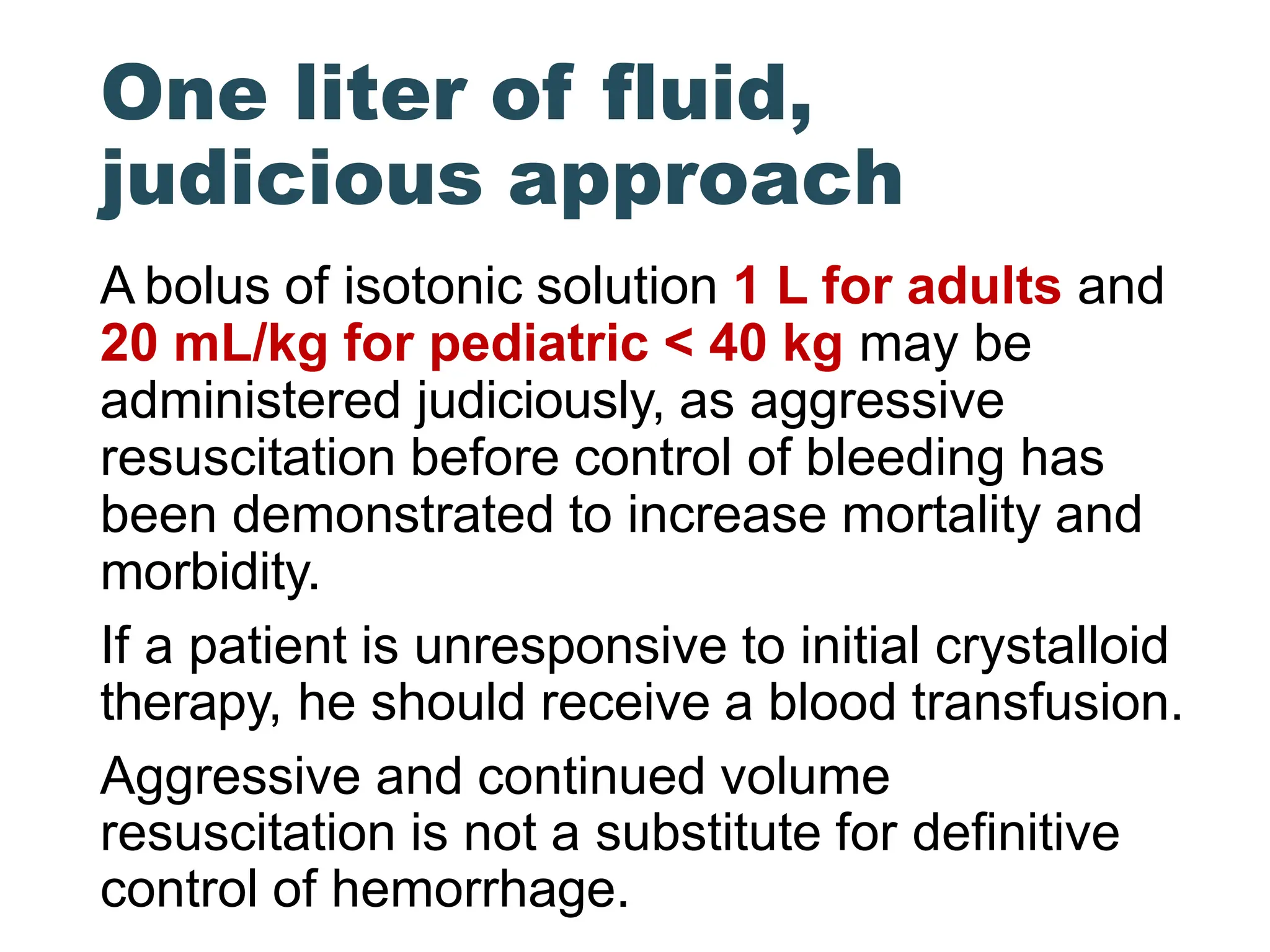
One liter of fluid,
judicious approach
A bolus of isotonic solution 1 L for adults and
20 mL/kg for pediatric < 40 kg may be
administered judiciously, as aggressive
resuscitation before control of bleeding has
been demonstrated to increase mortality and
morbidity.
If a patient is unresponsive to initial crystalloid
therapy, he should receive a blood transfusion.
Aggressive and continued volume
resuscitation is not a substitute for definitive
control of hemorrhage.
Airway
and
Ventilation
Airway and Ventilation
•RSI changed to Drug Assisted
Intubation
•Video-laryngoscopy
•Trauma team
Shock
O+
Shock
•Class of haemorrhage table
amended: Base excess
•Early use of blood and blood
products
•Management of coagulopathy
•Tranexamic acid
•Trauma team
ATLS classification of
hypovolemic shock
*
Early use of blood and
blood products
Early resuscitation with blood and blood
products must be considered in patients
with evidence of class III and IV
hemorrhage.
Early administration of blood products at a
low ratio of packed red blood cells to
plasma and platelets can prevent the
development of coagulopathy and
thrombocytopenia.
Management of coagulopathy
Uncontrolled blood loss can occur in patients
taking antiplatelet or anticoagulant medications.
Prevention
• Obtain medication list as soon as possible.
• Administer reversal agents as soon as possible.
• Where available, monitor coagulation with
thromboelastography (TEG) or rotational
thromboelastometry (ROTEM).
• Consider administering platelet transfusion,
even with normal platelet count.
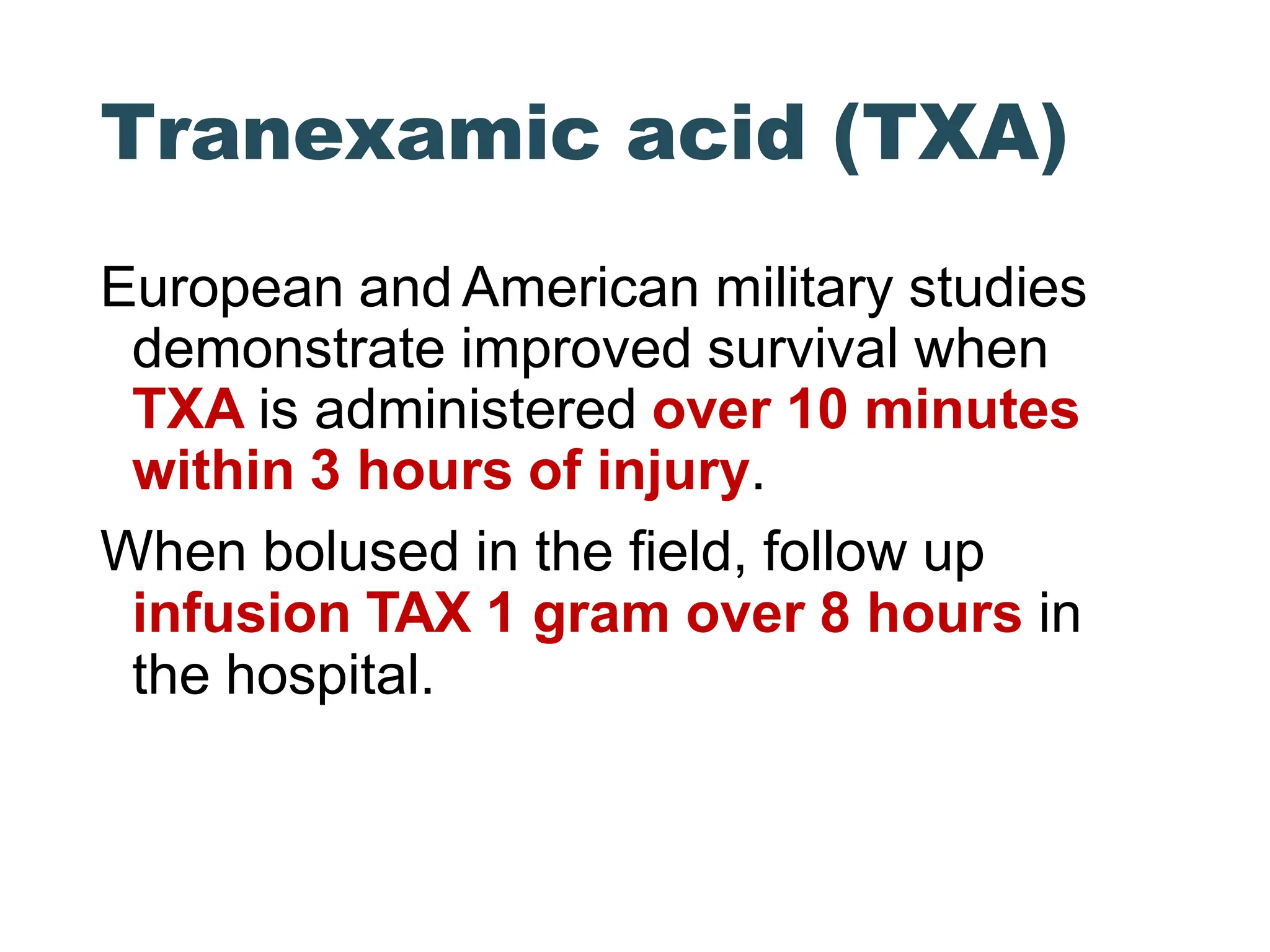
Tranexamic acid (TXA)
European and American military studies
demonstrate improved survival when
TXA is administered over 10 minutes
within 3 hours of injury.
When bolused in the field, follow up
infusion TAX 1 gram over 8 hours in
the hospital.
Thoraci
c
Trauma
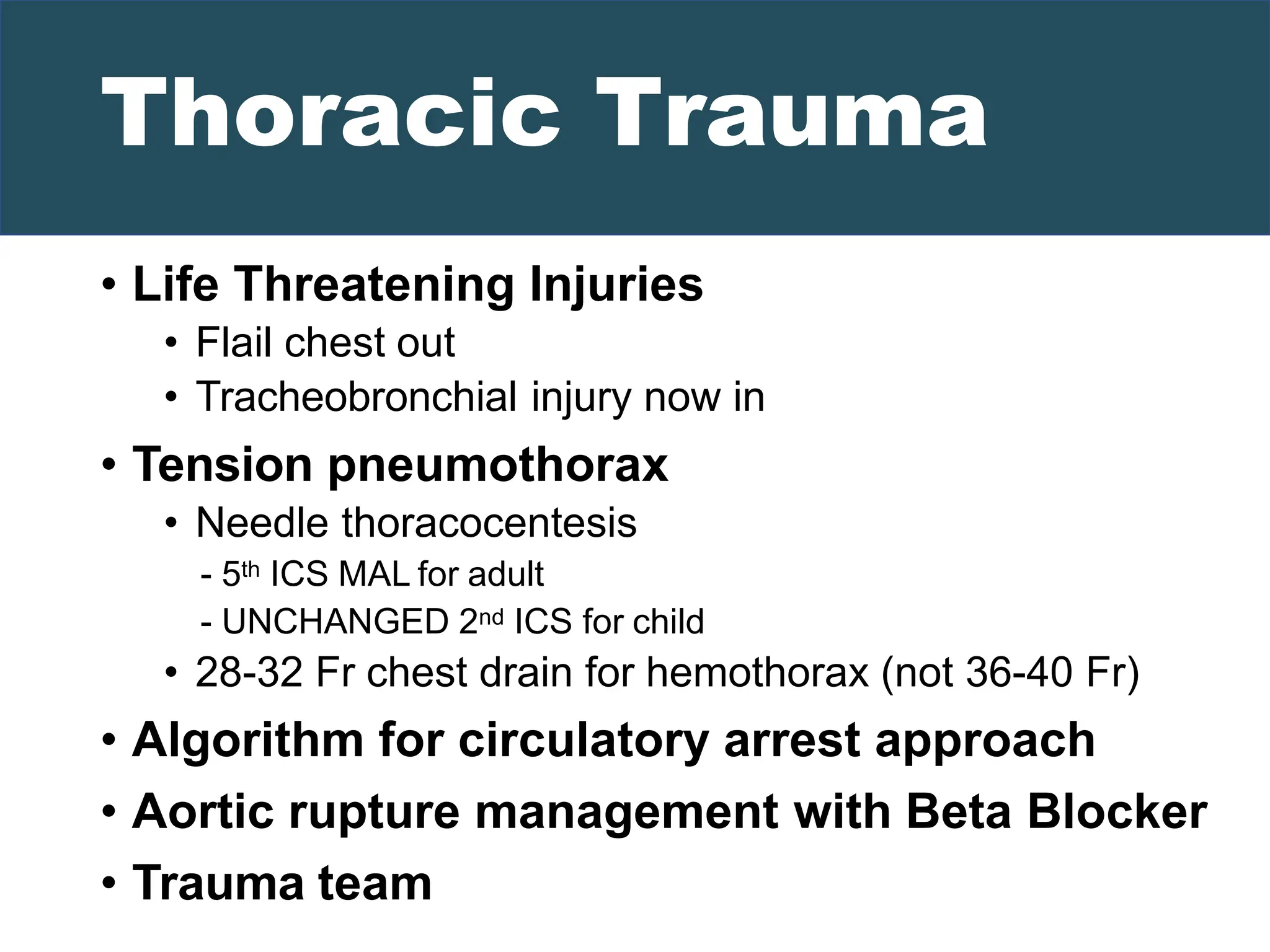
Thoracic Trauma
• Life Threatening Injuries
• Flail chest out
• Tracheobronchial injury now in
• Tension pneumothorax
• Needle thoracocentesis
- 5th ICS MAL for adult
- UNCHANGED 2nd ICS for child
• 28-32 Fr chest drain for hemothorax (not 36-40 Fr)
• Algorithm for circulatory arrest approach
• Aortic rupture management with Beta Blocker
• Trauma team
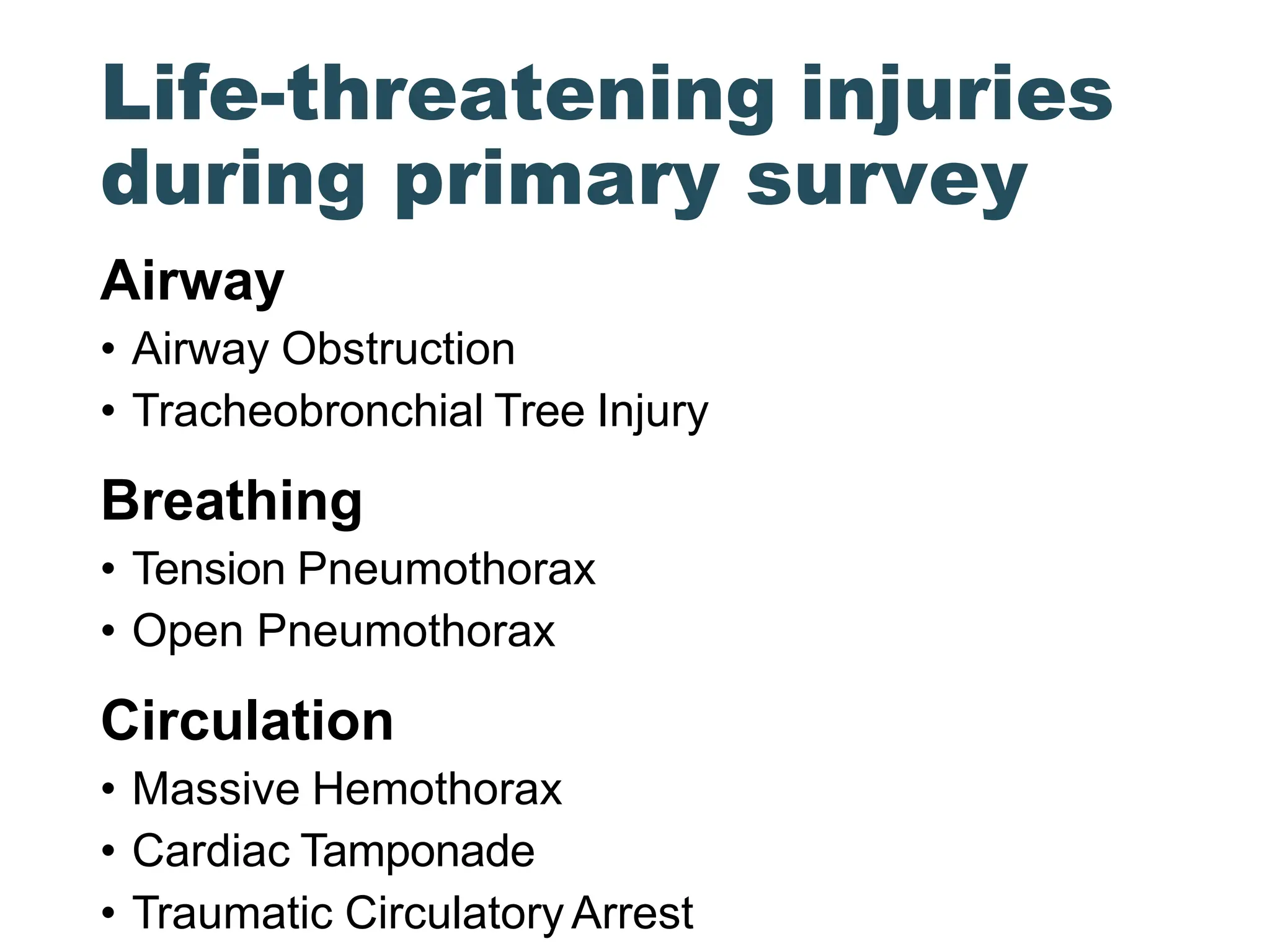
Life-threatening injuries
during primary survey
Airway
• Airway Obstruction
• Tracheobronchial Tree Injury
Breathing
• Tension Pneumothorax
• Open Pneumothorax
Circulation
• Massive Hemothorax
• Cardiac Tamponade
• Traumatic CirculatoryArrest
Tension pneumothorax
• When ultrasound is available, tension
pneumothorax can be diagnosed using an
extended FAST (eFAST): seashore, bar code,
or stratosphere sign in M mode.
• Needle decompression:
Recent evidence supports placing the large,
over-the-needle catheter at the fifth interspace,
slightly anterior to the midaxillary line
• 28-32 Fr chest tube for hemothorax (not 36-
40Fr)
Algorithm for
management of
traumatic
circulatory arrest.
ECM = external cardiac
massage;
OTI = orotracheal
intubation;
IVL = intravenous line;
IOL = intraosseous line.
Aortic rupture management
with beta blocker
If no contraindications exist, heart rate
control with a short-acting beta blocker
(esmolol) to a goal heart rate < 80 bpm
and blood pressure control with a goal
MAP 60-70 mmHg is recommended.
Abdominal
and Pelvic
Trauma
Abdominal and
Pelvic Trauma
•Palpation of prostate gland no
longer recommended for urethral
injury
•Flow chart for pelvic fracture with
hemorrhage amended
•Trauma team
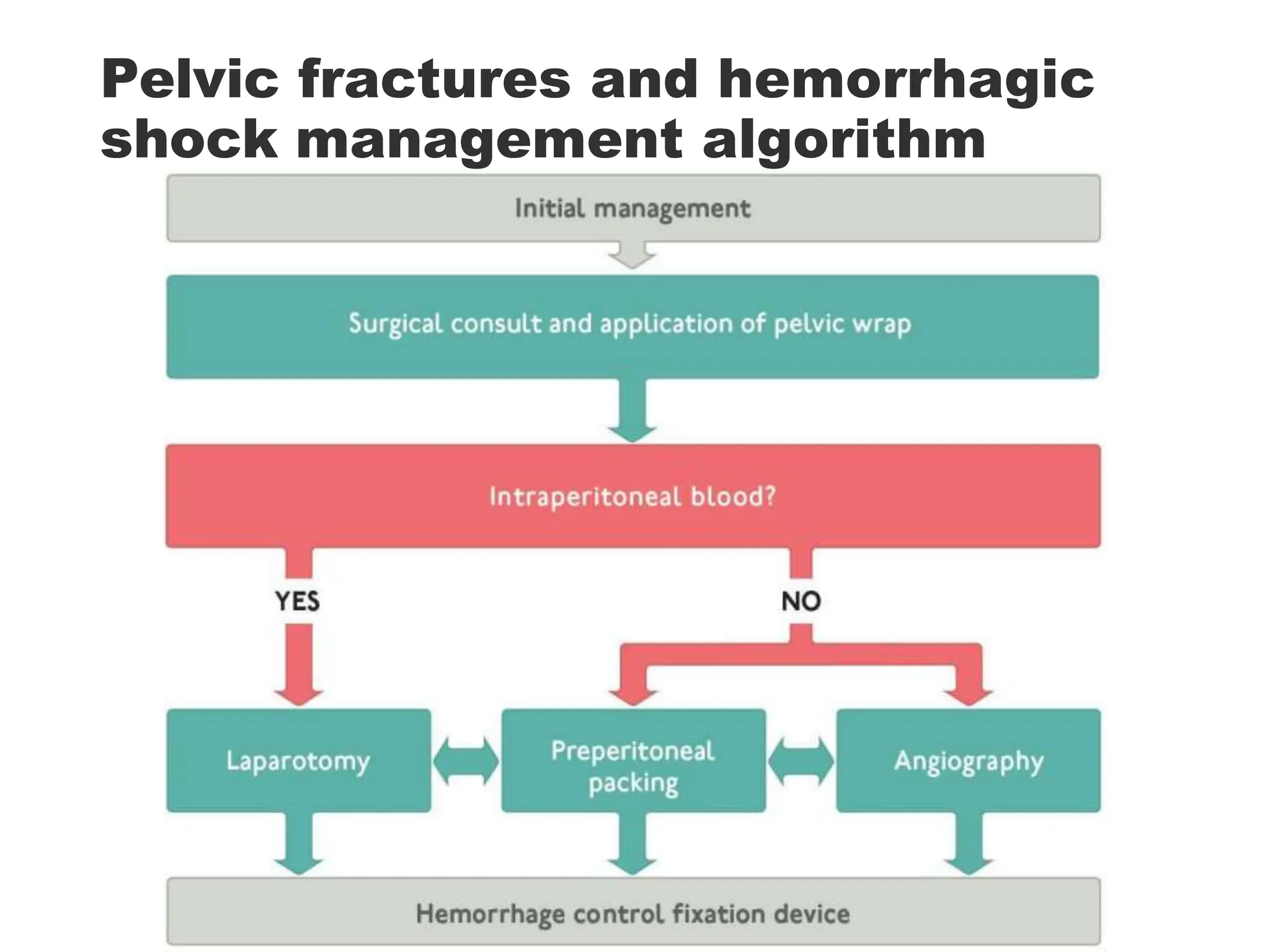
Pelvic fractures and hemorrhagic
shock management algorithm
Head
Trauma
Head Trauma
•Detailed guidance on SBP
management
•Classification – ‘mild’ head
trauma
•Anticoagulation reversal guidance
•Seizure prophylaxis
•Trauma team
Detailed guidance
on SBP management
Maintain SBP at ≥ 100 mmHg for patients
50-69 years or at ≥ 110 mmHg for
patients 15-49 years or older than 70
years; this may decrease mortality and
improve outcomes (III).
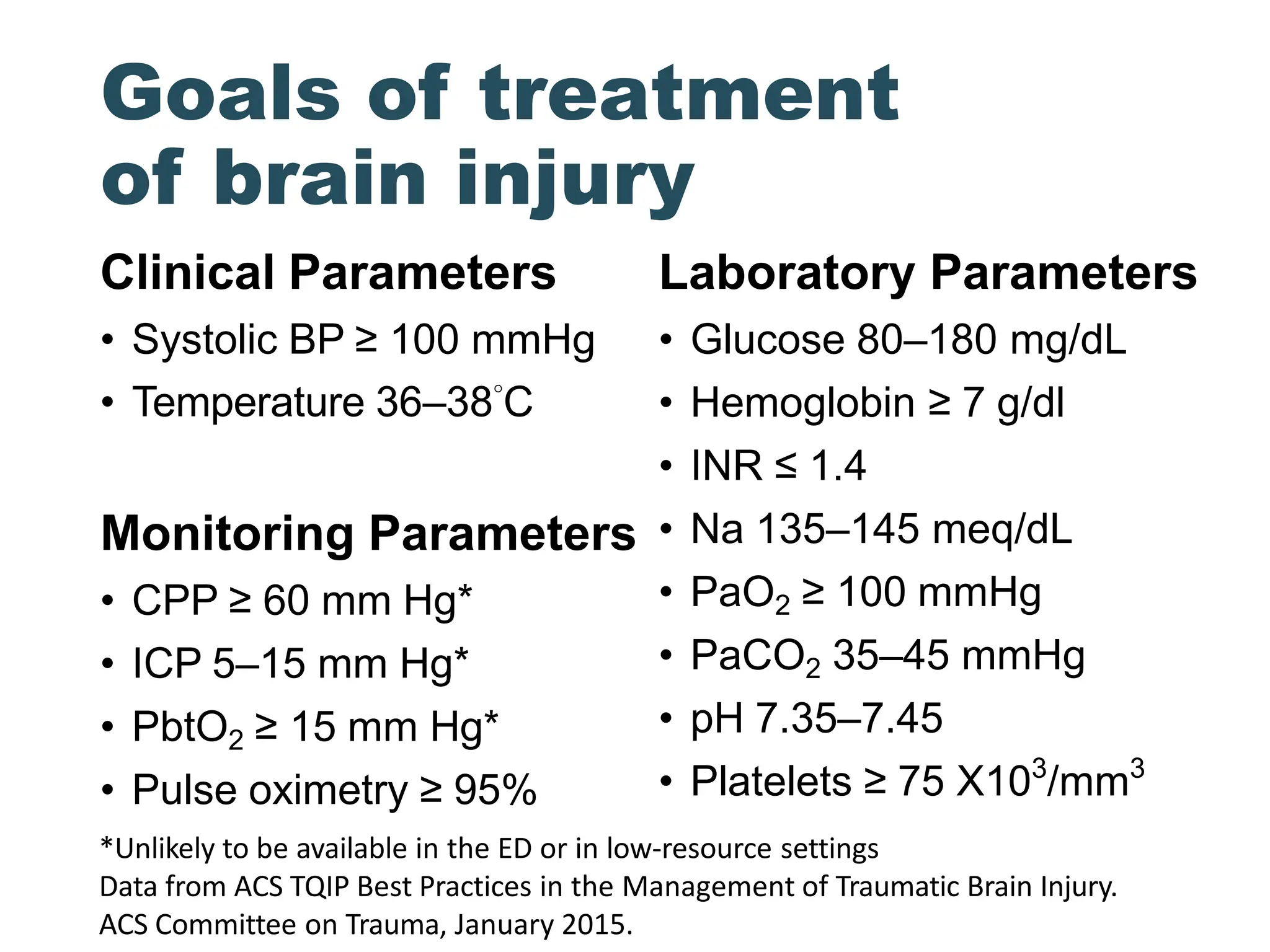
Goals of treatment
of brain injury
Clinical Parameters
• Systolic BP ≥ 100 mmHg
• Temperature 36–38°C
Monitoring Parameters
• CPP ≥ 60 mm Hg*
• ICP 5–15 mm Hg*
• PbtO2 ≥ 15 mm Hg*
• Pulse oximetry ≥ 95%
Laboratory Parameters
• Glucose 80–180 mg/dL
• Hemoglobin ≥ 7 g/dl
• INR ≤ 1.4
• Na 135–145 meq/dL
• PaO2 ≥ 100 mmHg
• PaCO2 35–45 mmHg
• pH 7.35–7.45
• Platelets ≥ 75 X103
/mm3
*Unlikely to be available in the ED or in low-resource settings
Data from ACS TQIP Best Practices in the Management of Traumatic Brain Injury.
ACS Committee on Trauma, January 2015.
Anticoagulation reversal guidance
Seizure prophylaxis
Prophylactic use of phenytoin (Dilantin) or
valproate (Depakote) is not
recommended for preventing late
posttraumatic seizures (PTS). Phenytoin
is recommended to decrease the
incidence of early PTS (within 7 days of
injury), when the overall benefit is felt to
outweigh the complications associated
with such treatment. However, early PTS
has not been associated with worse
outcomes (IIA).
Spine and
Spinal Cord
Trauma
Spine and
Spinal Cord Trauma
•C-spine protection changed to
‘Restriction of spinal motion’
•New myotome diagram
•Canadian C-Spine Rule (CCR) and
NEXUS Criteria
•Trauma team
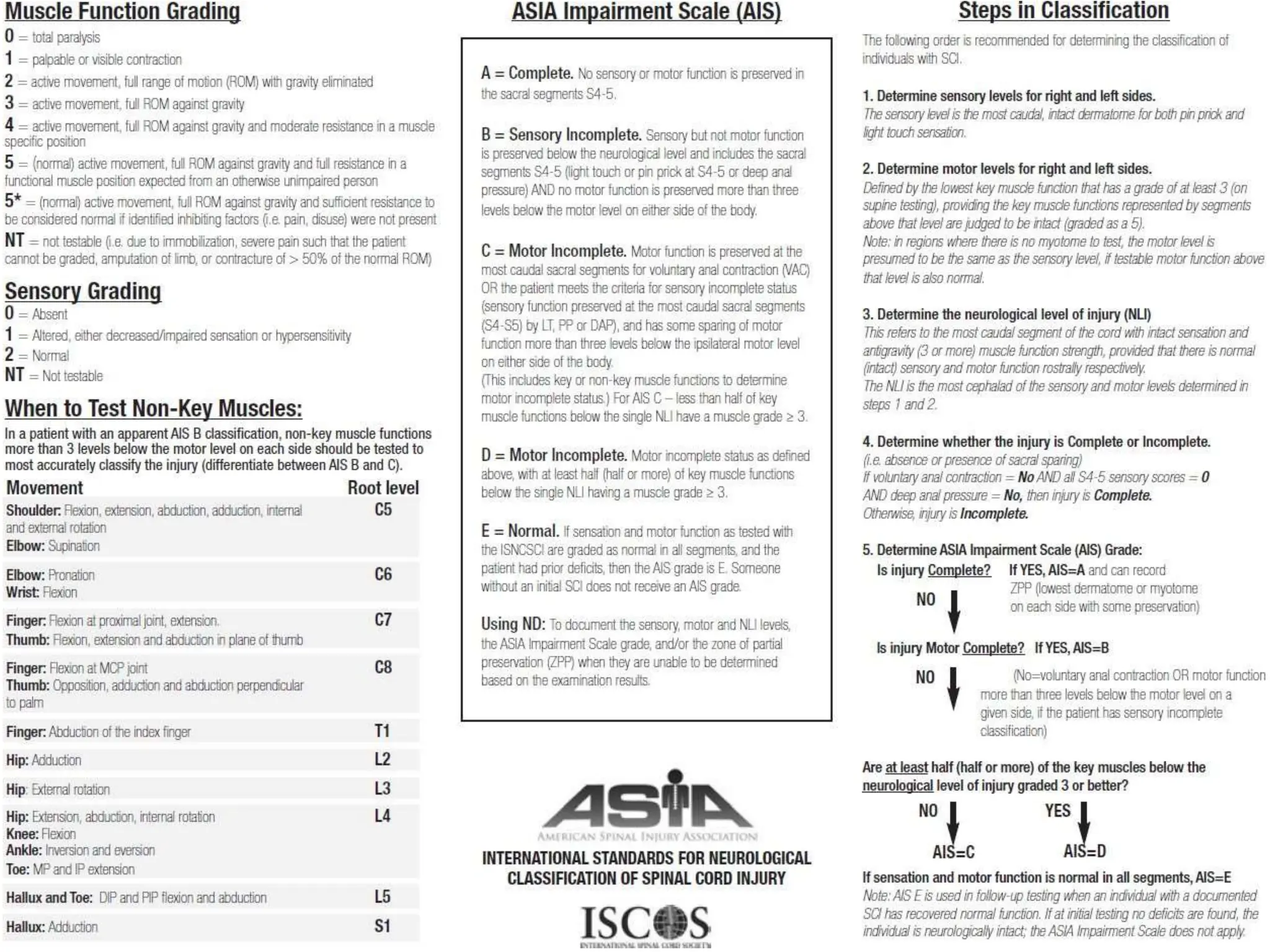
Key Myotomes.
Myotomes are used
to evaluate the level
of motor function
Musculo-
Skeletal
Trauma
Musculoskeletal
Trauma
•Weight based IV antibiotic regime
•Highlighting risk factor of bilateral
femur fractures
•Trauma team
Highlighting risk factor of
bilateral femur fractures
Compared with patients with unilateral
femur fractures, patients with bilateral
femur fractures are at higher risk for
significant blood loss, severe associated
injuries, pulmonary complications,
multiple organ failure, and death.
Thermal
Injuries
Thermal Injuries
•2 ml/kg × weight × % burn adults
•3 ml/kg × weight × % burn children
•Fluid titrated to urine output
•Trauma team
Paediatric
Trauma
Paediatric Trauma
•Needle thoracocentesis
UNCHANGED 2nd ICS
•Limiting crystalloid resuscitation
•Pediatric Emergency Care Applied
Research Network (PECARN)
Criteria for Head CT
•Trauma team
Pediatric Mass
Transfusion Protocol
Initial 20 mL/kg bolus of isotonic crystalloid
followed by weight-based blood product
resuscitation with 10-20 mL/kg of RBC
and 10-20 mL/kg of FFP and platelets.
Pediatric Emergency Care Applied Research Network
(PECARN) Criteria for Head CT. Suggested CT algorithm for
children younger than 2 years (A) and for those aged 2 years
and older (B) with GCS scores of 14-15 after head trauma.*
Identification of children at very low risk of clinically important brain injuries
after head trauma: a prospective cohort study. Lancet 374: 2009; 1160–1170.)
Transfer to
Definitive Care
Transfer to Definitive Care
•Specific mention of avoiding CT in
primary hospital
•SBAR template for communication
•Trauma Team
Avoiding CT
in primary hospital
Do not perform diagnostic procedures
(e.g., DPL or CT) that do not change the
plan of care.
However, procedures that treat or stabilize
an immediately life-threatening condition
should be rapidly performed.
ABC-SBAR template for
transfer of trauma patients
• Airway, Breathing, and Circulation problems
identified and interventions performed
• Situation: patient name, age, referring facility,
referring physician name, reporting nurse name,
indication for transfer, IV access site, IV fluid and rate,
other interventions completed
• Background: event history, AMPLE assessment,
blood products, medications given (date and time),
imaging performed, splinting
• Assessment: vital signs, pertinent physical exam
findings, patient response to treatment
• Recommendation: transport mode, level of transport
care, medication intervention during transport, needed
assessments and interventions
Mobile
eLearning
SUMMARY TABLE :
Chapter New recommendations
Initial assessment Restriction to only 1 L of crystalloid fluid during initial
assessment.
Airway &
ventilation
• Drug-assisted intubation has now replaced rapid
sequence intubation (RSI).
• Videolaryngoscopy highlighted as useful.
Shock • Early use of blood products advocated.
• Tranexamic acid is now recommended within 3
hours.
Thoracic trauma • Flail chest replaced by tracheobronchial tree injury
as a life-threatening injury.
• New location for needle thoracocentesis in adults
• Modified FAST recommended for identification of
pneumothorax.
• Traumatic circulatory arrest algorithm introduced.
SUMMARY TABLE :
Chapter New recommendations
Abdominal & pelvic
trauma
Prostate examination no longer recommended as part of the
evaluation.
Preperitoneal pelvic packing included in haemorrhage
protocol.
Head trauma Anticoagulation reversal table is now included in the
guidance.
Revised version of the GCS introduced.
Spine & spinal cord
trauma
CCR and NEXUS guidelines are now recommended.
“Spinal immobilisation” has been replaced with “spinal
motion restriction.”
Prolonged backboard usage (>2 hours) should be avoided.
Musculoskeletal
trauma
The use of a tourniquet to control severe extremity bleeding
is now recommended.
Antibiotics dosing regimens for open fractures introduced.
SUMMARY TABLE :
Chapter New recommendations
Thermal injuries • New fluid resuscitation formula (2 ml/kg/%TBSA)
Pediatric trauma • The PECARN traumatic brain injury algorithm now
recommended.
Geriatric trauma • Lower threshold for imaging in the elderly population is
now recommended.
• High-risk pre-existing conditions highlighted.
Trauma in pregnancy • Vaginal fluid pH greater than 4.5 is an indicator of
amniotic fluid leakage.
Transfer to
definitive care
• CT scans should now be avoided in the primary hospital.
• SBARcommunication tool now recommended.
SUMMARY TABLE :
Updates in Advanced Traumatic Life Support.pptx

Updates in Advanced Traumatic Life Support.pptx

  • 1.
  • 2.
    ATLS® Advanced Trauma LifeSupport 10th Edition Update Updates in
  • 3.
    Updates in ATLS® Advanced TraumaLife Support Presented by Dr Sameer AL-Tairy, MD Senior EM Specialist
  • 4.
  • 5.
    •1 litre offluid, judicious approach •Focus on massive transfusion protocols •Tranexamic acid •Coagulopathy •Canadian C Spine Rule •Trauma team Initial Assessment
  • 6.
    One liter offluid, judicious approach A bolus of isotonic solution 1 L for adults and 20 mL/kg for pediatric < 40 kg may be administered judiciously, as aggressive resuscitation before control of bleeding has been demonstrated to increase mortality and morbidity. If a patient is unresponsive to initial crystalloid therapy, he should receive a blood transfusion. Aggressive and continued volume resuscitation is not a substitute for definitive control of hemorrhage.
  • 7.
  • 8.
    Airway and Ventilation •RSIchanged to Drug Assisted Intubation •Video-laryngoscopy •Trauma team
  • 9.
  • 10.
    Shock •Class of haemorrhagetable amended: Base excess •Early use of blood and blood products •Management of coagulopathy •Tranexamic acid •Trauma team
  • 11.
  • 12.
    Early use ofblood and blood products Early resuscitation with blood and blood products must be considered in patients with evidence of class III and IV hemorrhage. Early administration of blood products at a low ratio of packed red blood cells to plasma and platelets can prevent the development of coagulopathy and thrombocytopenia.
  • 13.
    Management of coagulopathy Uncontrolledblood loss can occur in patients taking antiplatelet or anticoagulant medications. Prevention • Obtain medication list as soon as possible. • Administer reversal agents as soon as possible. • Where available, monitor coagulation with thromboelastography (TEG) or rotational thromboelastometry (ROTEM). • Consider administering platelet transfusion, even with normal platelet count.
  • 14.
    Tranexamic acid (TXA) Europeanand American military studies demonstrate improved survival when TXA is administered over 10 minutes within 3 hours of injury. When bolused in the field, follow up infusion TAX 1 gram over 8 hours in the hospital.
  • 15.
  • 16.
    Thoracic Trauma • LifeThreatening Injuries • Flail chest out • Tracheobronchial injury now in • Tension pneumothorax • Needle thoracocentesis - 5th ICS MAL for adult - UNCHANGED 2nd ICS for child • 28-32 Fr chest drain for hemothorax (not 36-40 Fr) • Algorithm for circulatory arrest approach • Aortic rupture management with Beta Blocker • Trauma team
  • 17.
    Life-threatening injuries during primarysurvey Airway • Airway Obstruction • Tracheobronchial Tree Injury Breathing • Tension Pneumothorax • Open Pneumothorax Circulation • Massive Hemothorax • Cardiac Tamponade • Traumatic CirculatoryArrest
  • 18.
    Tension pneumothorax • Whenultrasound is available, tension pneumothorax can be diagnosed using an extended FAST (eFAST): seashore, bar code, or stratosphere sign in M mode. • Needle decompression: Recent evidence supports placing the large, over-the-needle catheter at the fifth interspace, slightly anterior to the midaxillary line • 28-32 Fr chest tube for hemothorax (not 36- 40Fr)
  • 19.
    Algorithm for management of traumatic circulatoryarrest. ECM = external cardiac massage; OTI = orotracheal intubation; IVL = intravenous line; IOL = intraosseous line.
  • 20.
    Aortic rupture management withbeta blocker If no contraindications exist, heart rate control with a short-acting beta blocker (esmolol) to a goal heart rate < 80 bpm and blood pressure control with a goal MAP 60-70 mmHg is recommended.
  • 21.
  • 22.
    Abdominal and Pelvic Trauma •Palpationof prostate gland no longer recommended for urethral injury •Flow chart for pelvic fracture with hemorrhage amended •Trauma team
  • 23.
    Pelvic fractures andhemorrhagic shock management algorithm
  • 24.
  • 25.
    Head Trauma •Detailed guidanceon SBP management •Classification – ‘mild’ head trauma •Anticoagulation reversal guidance •Seizure prophylaxis •Trauma team
  • 26.
    Detailed guidance on SBPmanagement Maintain SBP at ≥ 100 mmHg for patients 50-69 years or at ≥ 110 mmHg for patients 15-49 years or older than 70 years; this may decrease mortality and improve outcomes (III).
  • 27.
    Goals of treatment ofbrain injury Clinical Parameters • Systolic BP ≥ 100 mmHg • Temperature 36–38°C Monitoring Parameters • CPP ≥ 60 mm Hg* • ICP 5–15 mm Hg* • PbtO2 ≥ 15 mm Hg* • Pulse oximetry ≥ 95% Laboratory Parameters • Glucose 80–180 mg/dL • Hemoglobin ≥ 7 g/dl • INR ≤ 1.4 • Na 135–145 meq/dL • PaO2 ≥ 100 mmHg • PaCO2 35–45 mmHg • pH 7.35–7.45 • Platelets ≥ 75 X103 /mm3 *Unlikely to be available in the ED or in low-resource settings Data from ACS TQIP Best Practices in the Management of Traumatic Brain Injury. ACS Committee on Trauma, January 2015.
  • 28.
  • 29.
    Seizure prophylaxis Prophylactic useof phenytoin (Dilantin) or valproate (Depakote) is not recommended for preventing late posttraumatic seizures (PTS). Phenytoin is recommended to decrease the incidence of early PTS (within 7 days of injury), when the overall benefit is felt to outweigh the complications associated with such treatment. However, early PTS has not been associated with worse outcomes (IIA).
  • 30.
  • 31.
    Spine and Spinal CordTrauma •C-spine protection changed to ‘Restriction of spinal motion’ •New myotome diagram •Canadian C-Spine Rule (CCR) and NEXUS Criteria •Trauma team
  • 32.
    Key Myotomes. Myotomes areused to evaluate the level of motor function
  • 37.
  • 38.
    Musculoskeletal Trauma •Weight based IVantibiotic regime •Highlighting risk factor of bilateral femur fractures •Trauma team
  • 39.
    Highlighting risk factorof bilateral femur fractures Compared with patients with unilateral femur fractures, patients with bilateral femur fractures are at higher risk for significant blood loss, severe associated injuries, pulmonary complications, multiple organ failure, and death.
  • 41.
  • 42.
    Thermal Injuries •2 ml/kg× weight × % burn adults •3 ml/kg × weight × % burn children •Fluid titrated to urine output •Trauma team
  • 44.
  • 45.
    Paediatric Trauma •Needle thoracocentesis UNCHANGED2nd ICS •Limiting crystalloid resuscitation •Pediatric Emergency Care Applied Research Network (PECARN) Criteria for Head CT •Trauma team
  • 46.
    Pediatric Mass Transfusion Protocol Initial20 mL/kg bolus of isotonic crystalloid followed by weight-based blood product resuscitation with 10-20 mL/kg of RBC and 10-20 mL/kg of FFP and platelets.
  • 47.
    Pediatric Emergency CareApplied Research Network (PECARN) Criteria for Head CT. Suggested CT algorithm for children younger than 2 years (A) and for those aged 2 years and older (B) with GCS scores of 14-15 after head trauma.* Identification of children at very low risk of clinically important brain injuries after head trauma: a prospective cohort study. Lancet 374: 2009; 1160–1170.)
  • 48.
  • 49.
    Transfer to DefinitiveCare •Specific mention of avoiding CT in primary hospital •SBAR template for communication •Trauma Team
  • 50.
    Avoiding CT in primaryhospital Do not perform diagnostic procedures (e.g., DPL or CT) that do not change the plan of care. However, procedures that treat or stabilize an immediately life-threatening condition should be rapidly performed.
  • 51.
    ABC-SBAR template for transferof trauma patients • Airway, Breathing, and Circulation problems identified and interventions performed • Situation: patient name, age, referring facility, referring physician name, reporting nurse name, indication for transfer, IV access site, IV fluid and rate, other interventions completed • Background: event history, AMPLE assessment, blood products, medications given (date and time), imaging performed, splinting • Assessment: vital signs, pertinent physical exam findings, patient response to treatment • Recommendation: transport mode, level of transport care, medication intervention during transport, needed assessments and interventions
  • 52.
  • 56.
    SUMMARY TABLE : ChapterNew recommendations Initial assessment Restriction to only 1 L of crystalloid fluid during initial assessment. Airway & ventilation • Drug-assisted intubation has now replaced rapid sequence intubation (RSI). • Videolaryngoscopy highlighted as useful. Shock • Early use of blood products advocated. • Tranexamic acid is now recommended within 3 hours. Thoracic trauma • Flail chest replaced by tracheobronchial tree injury as a life-threatening injury. • New location for needle thoracocentesis in adults • Modified FAST recommended for identification of pneumothorax. • Traumatic circulatory arrest algorithm introduced.
  • 57.
    SUMMARY TABLE : ChapterNew recommendations Abdominal & pelvic trauma Prostate examination no longer recommended as part of the evaluation. Preperitoneal pelvic packing included in haemorrhage protocol. Head trauma Anticoagulation reversal table is now included in the guidance. Revised version of the GCS introduced. Spine & spinal cord trauma CCR and NEXUS guidelines are now recommended. “Spinal immobilisation” has been replaced with “spinal motion restriction.” Prolonged backboard usage (>2 hours) should be avoided. Musculoskeletal trauma The use of a tourniquet to control severe extremity bleeding is now recommended. Antibiotics dosing regimens for open fractures introduced.
  • 58.
    SUMMARY TABLE : ChapterNew recommendations Thermal injuries • New fluid resuscitation formula (2 ml/kg/%TBSA) Pediatric trauma • The PECARN traumatic brain injury algorithm now recommended. Geriatric trauma • Lower threshold for imaging in the elderly population is now recommended. • High-risk pre-existing conditions highlighted. Trauma in pregnancy • Vaginal fluid pH greater than 4.5 is an indicator of amniotic fluid leakage. Transfer to definitive care • CT scans should now be avoided in the primary hospital. • SBARcommunication tool now recommended.
  • 59.