
Asthma - Part 1
Definition, Epidemiology and pathophysiology
Sandhya Khurana, MD, FCCP
Professor, Pulmonary & Critical Care Medicine
Director, Mary Parkes Center for Asthma, Allergy & Pulmonary Care
University of Rochester, NY
 Pathophysiology and diagnosis of asthma
 Genetics, Epidemiology, Biology
 Evaluation
 Severity and stepped care
 Mild, moderate, Severe
 Asthma in pregnancy
 Perioperative care
 Complications of care

 Special types and phenotypes of asthma
 Aspirin-sensitive asthma
 Exercise-induced asthma
 Eosinophilic TH2-high asthma
 Cough variant asthma and other special types
 Asthma mimics
 Vocal cord dysfunction
 Genetic (cystic fibrosis, alpha-1 antitrypsin disease, primary
ciliary dyskinesia) and nongenetic
 Hypereosinophilic Löffler's syndrome and other parasitic
infections
 Infiltrative airway processes (granulomatous, amyloidosis,
and other processes)
 Heart failure
 Central airway obstruction
 Exacerbation
 Status asthmaticus
 Viral infections, allergens, and other causes
 Allergic bronchopulmonary aspergillosis and fungosis
 Eosinophilic granulomatosis with polyangiitis
ABIM Blueprint – Asthma (9%)
• Review definition of asthma and burden on the disease
• Discuss asthma pathophysiology and immunology
• List cytokines involved in type-2 asthma
Learning Objectives
 Research funding – GSK, Sanofi
 Royalties – Springer
Disclosures
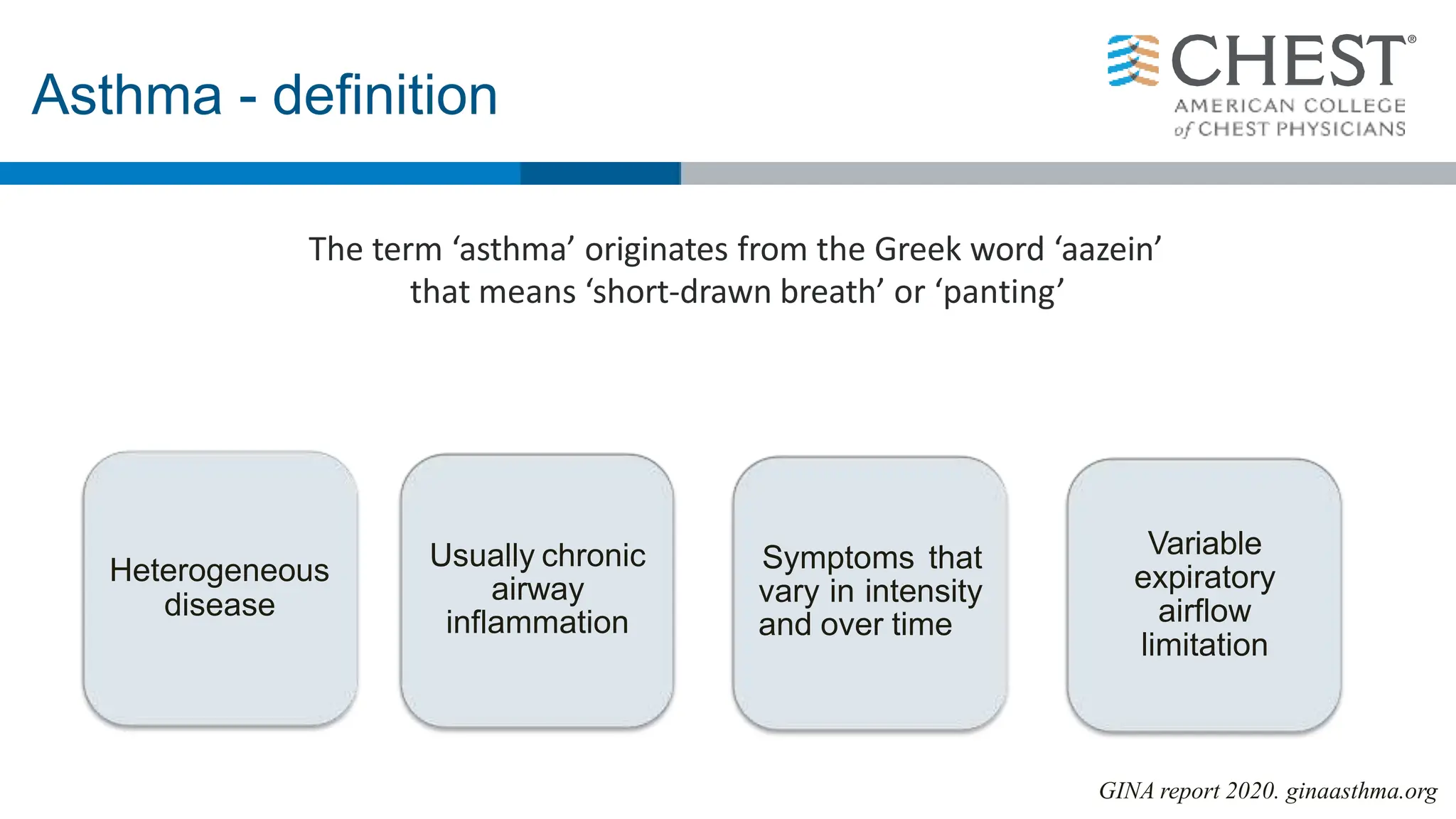
Heterogeneous
disease
Usually chronic
airway
inflammation
Symptoms that
vary in intensity
and over time
Variable
expiratory
airflow
limitation
The term ‘asthma’ originates from the Greek word ‘aazein’
that means ‘short-drawn breath’ or ‘panting’
Asthma - definition
GINA report 2020. ginaasthma.org
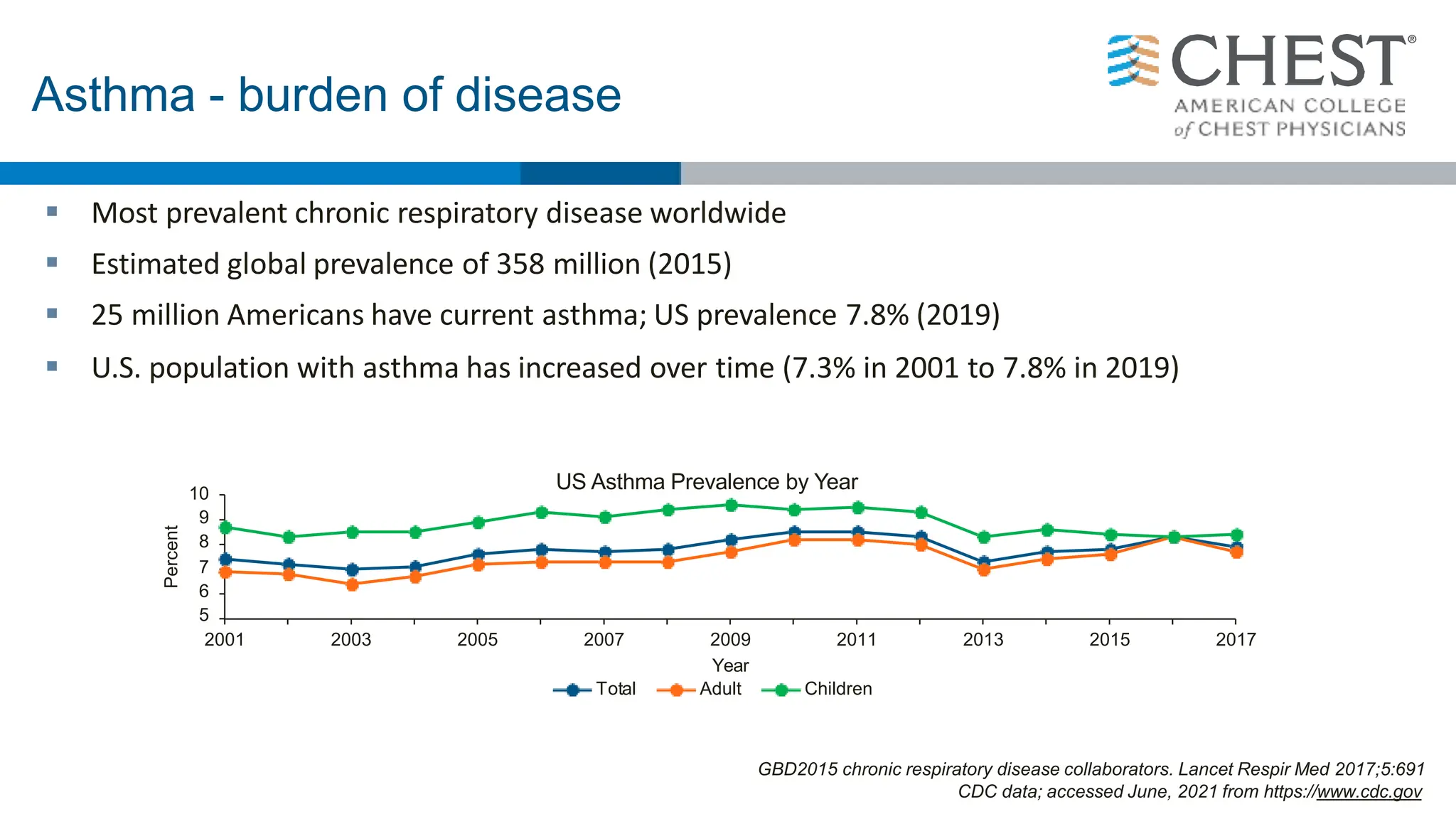
 Most prevalent chronic respiratory disease worldwide
 Estimated global prevalence of 358 million (2015)
 25 million Americans have current asthma; US prevalence 7.8% (2019)
 U.S. population with asthma has increased over time (7.3% in 2001 to 7.8% in 2019)
Asthma - burden of disease
10
9
8
7
6
5
2001 2003 2005 2007 2009
Year
2011 2013 2015 2017
Percent
US Asthma Prevalence by Year
Total Adult Children
GBD2015 chronic respiratory disease collaborators. Lancet Respir Med 2017;5:691
CDC data; accessed June, 2021 from https://www.cdc.gov
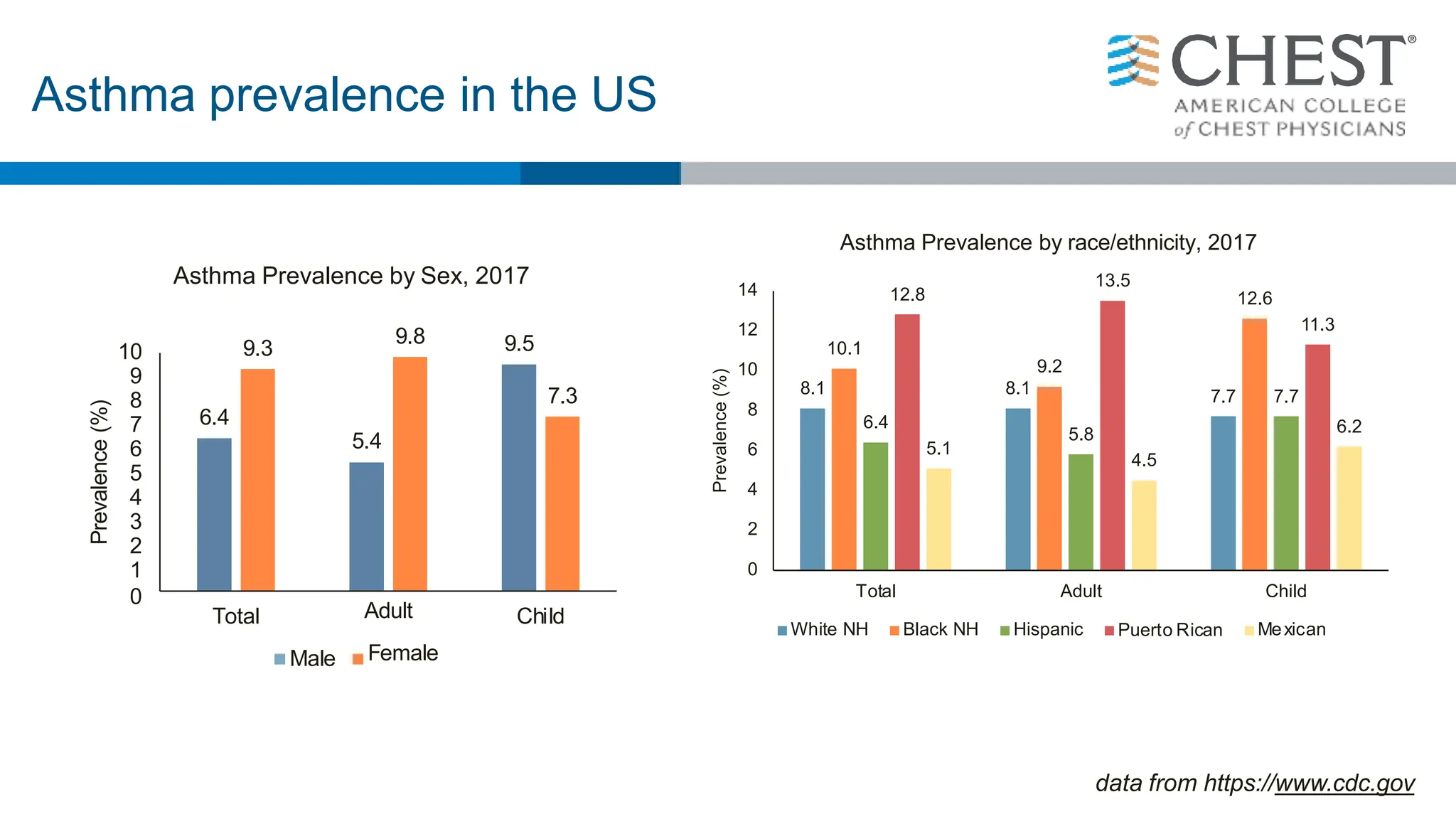
Asthma prevalence in the US
6.4
5.4
9.5
9.3
9.8
7.3
10
9
8
7
6
5
4
3
2
1
0
Total Child
Prevalence
(%)
Asthma Prevalence by Sex, 2017
Male
Adult
Female
8.1 8.1 7.7
10.1
9.2
12.6
6.4
5.8
7.7
12.8
13.5
11.3
5.1
4.5
6.2
0
2
4
6
8
10
12
14
Child
Mexican
Prevalence
(%)
Asthma Prevalence by race/ethnicity, 2017
Total Adult
White NH Black NH Hispanic Puerto Rican
data from https://www.cdc.gov
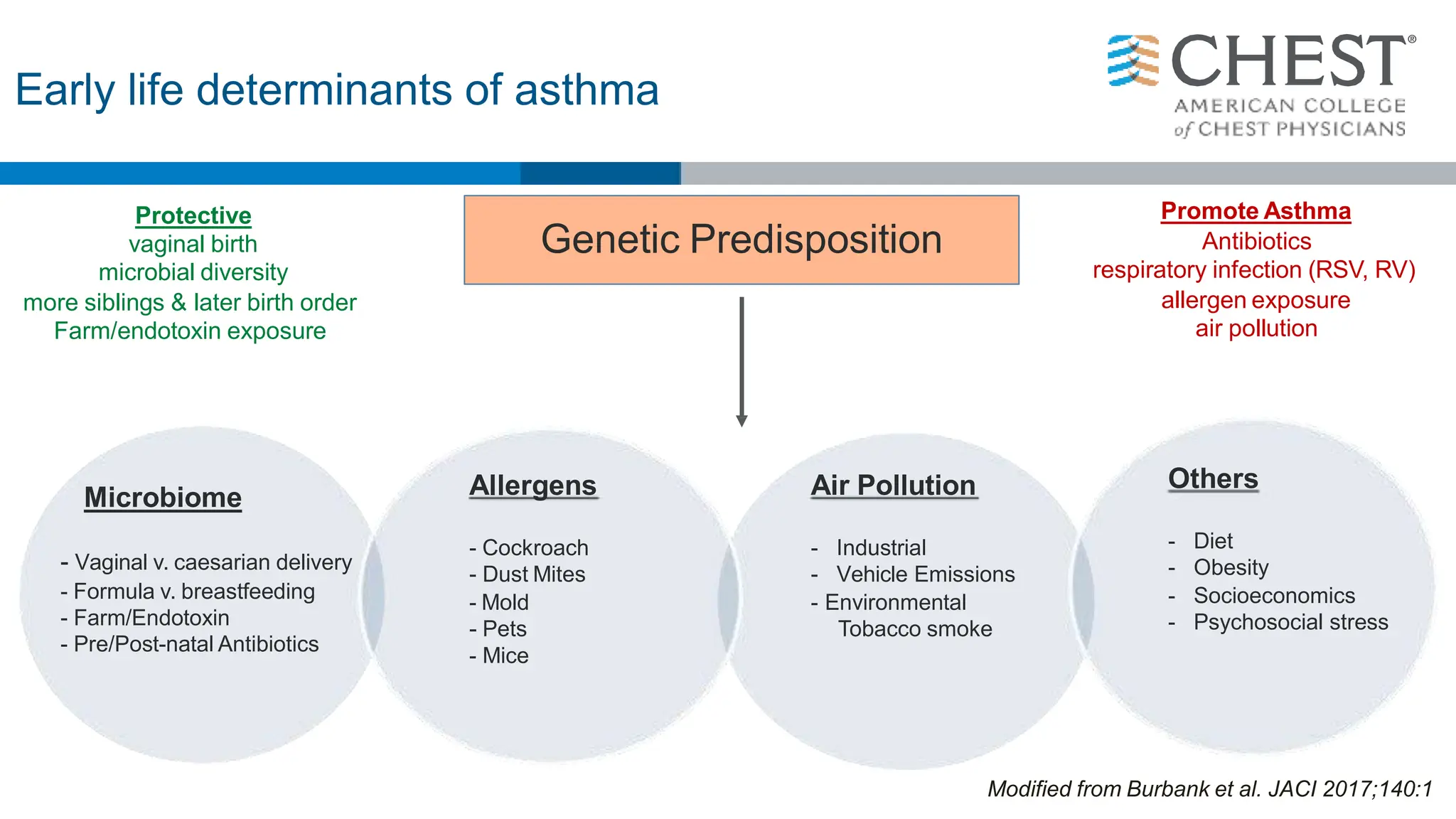
Early life determinants of asthma
Allergens
- Cockroach
- Dust Mites
- Mold
- Pets
- Mice
Air Pollution
- Industrial
- Vehicle Emissions
- Environmental
Tobacco smoke
Others
- Diet
- Obesity
- Socioeconomics
- Psychosocial stress
Genetic Predisposition
Microbiome
- Vaginal v. caesarian delivery
- Formula v. breastfeeding
- Farm/Endotoxin
- Pre/Post-natal Antibiotics
Protective
vaginal birth
microbial diversity
more siblings & later birth order
Farm/endotoxin exposure
Promote Asthma
Antibiotics
respiratory infection (RSV, RV)
allergen exposure
air pollution
Modified from Burbank et al. JACI 2017;140:1
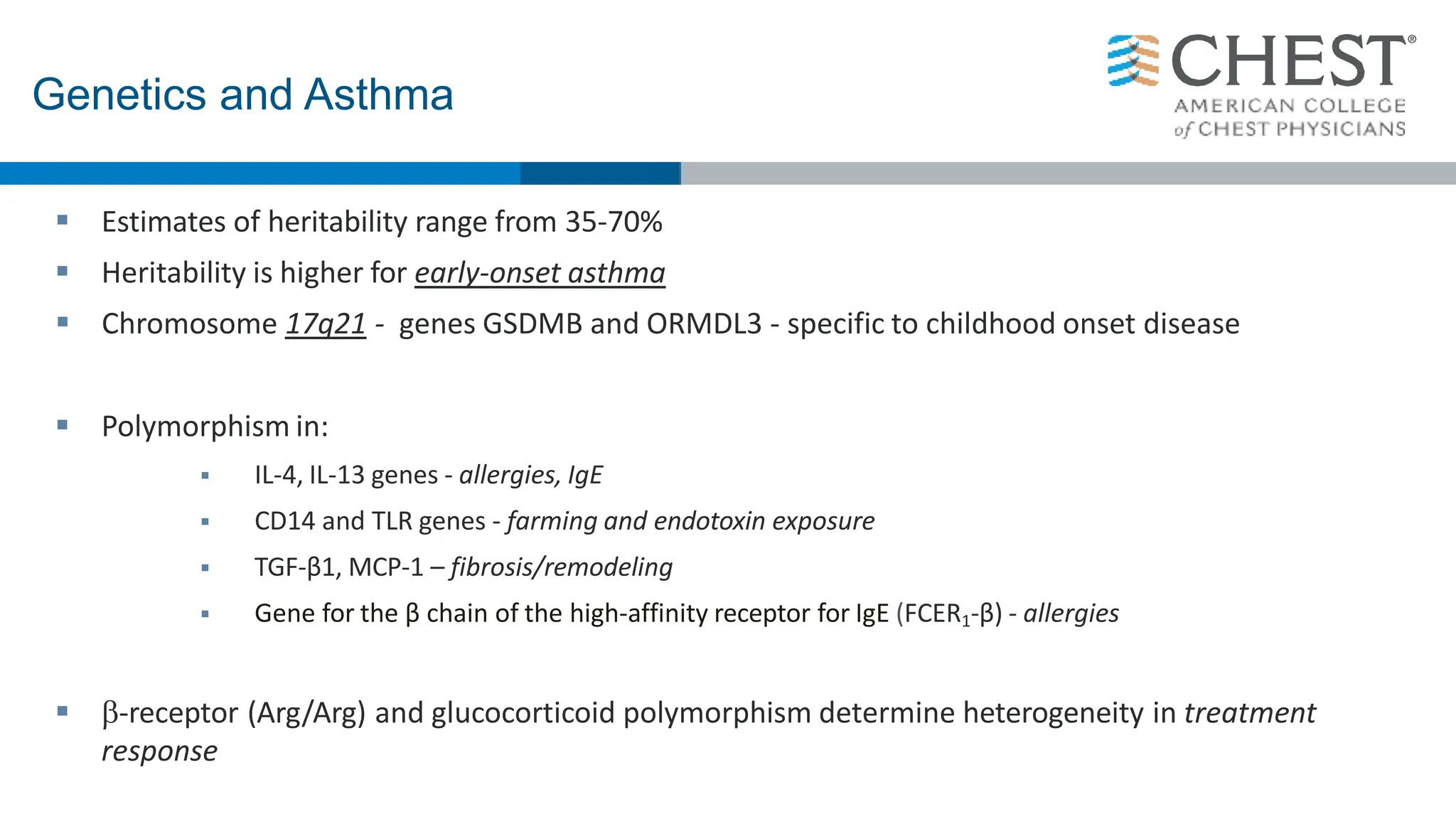
 Estimates of heritability range from 35-70%
 Heritability is higher for early-onset asthma
 Chromosome 17q21 - genes GSDMB and ORMDL3 - specific to childhood onset disease
 Polymorphism in:
 IL-4, IL-13 genes - allergies, IgE
 CD14 and TLR genes - farming and endotoxin exposure
 TGF-β1, MCP-1 – fibrosis/remodeling
 Gene for the β chain of the high-affinity receptor for IgE (FCER1-β) - allergies
 -receptor (Arg/Arg) and glucocorticoid polymorphism determine heterogeneity in treatment
response
Genetics and Asthma
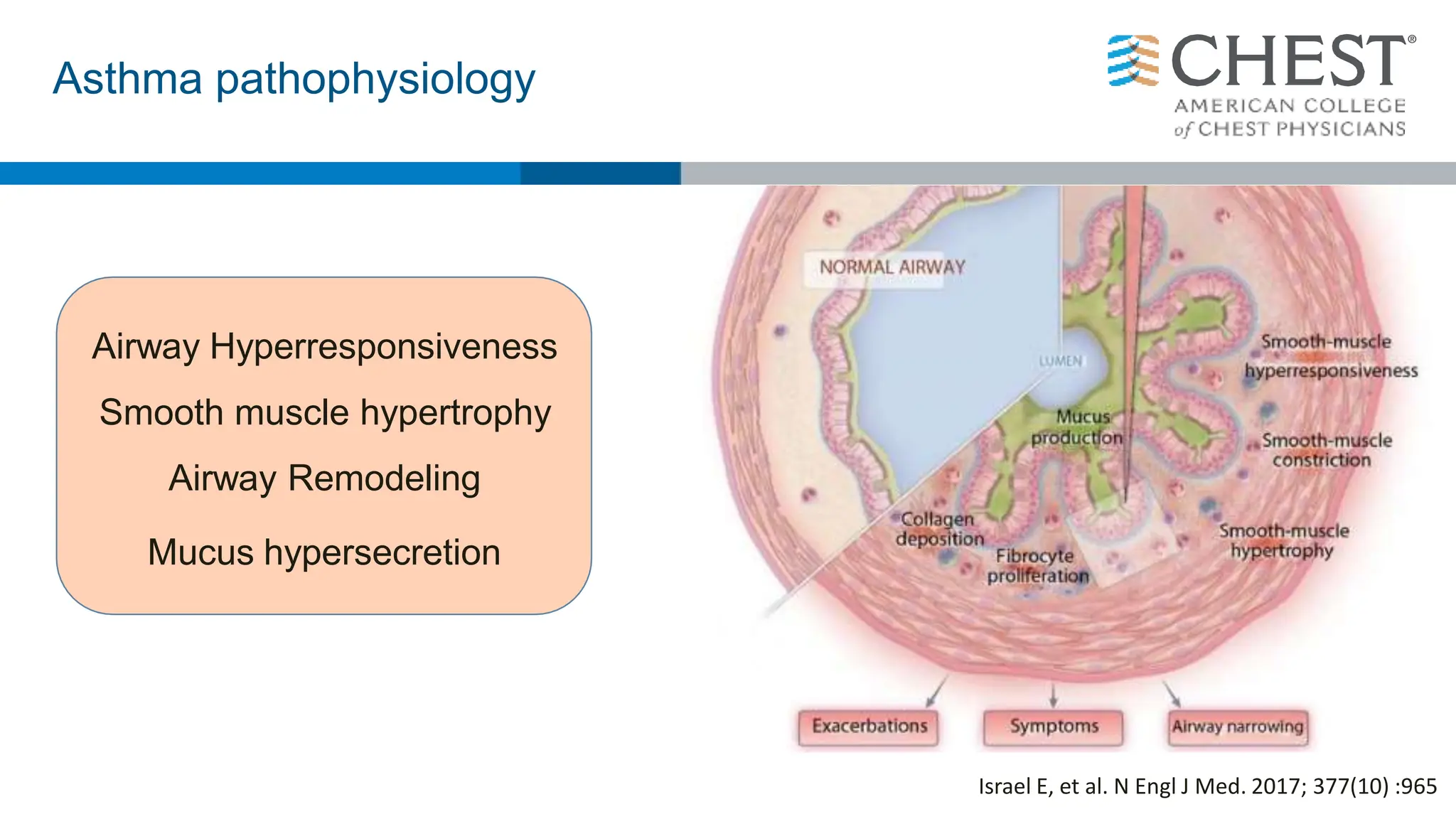
Asthma pathophysiology
Israel E, et al. N Engl J Med. 2017; 377(10) :965
Airway Hyperresponsiveness
Smooth muscle hypertrophy
Airway Remodeling
Mucus hypersecretion
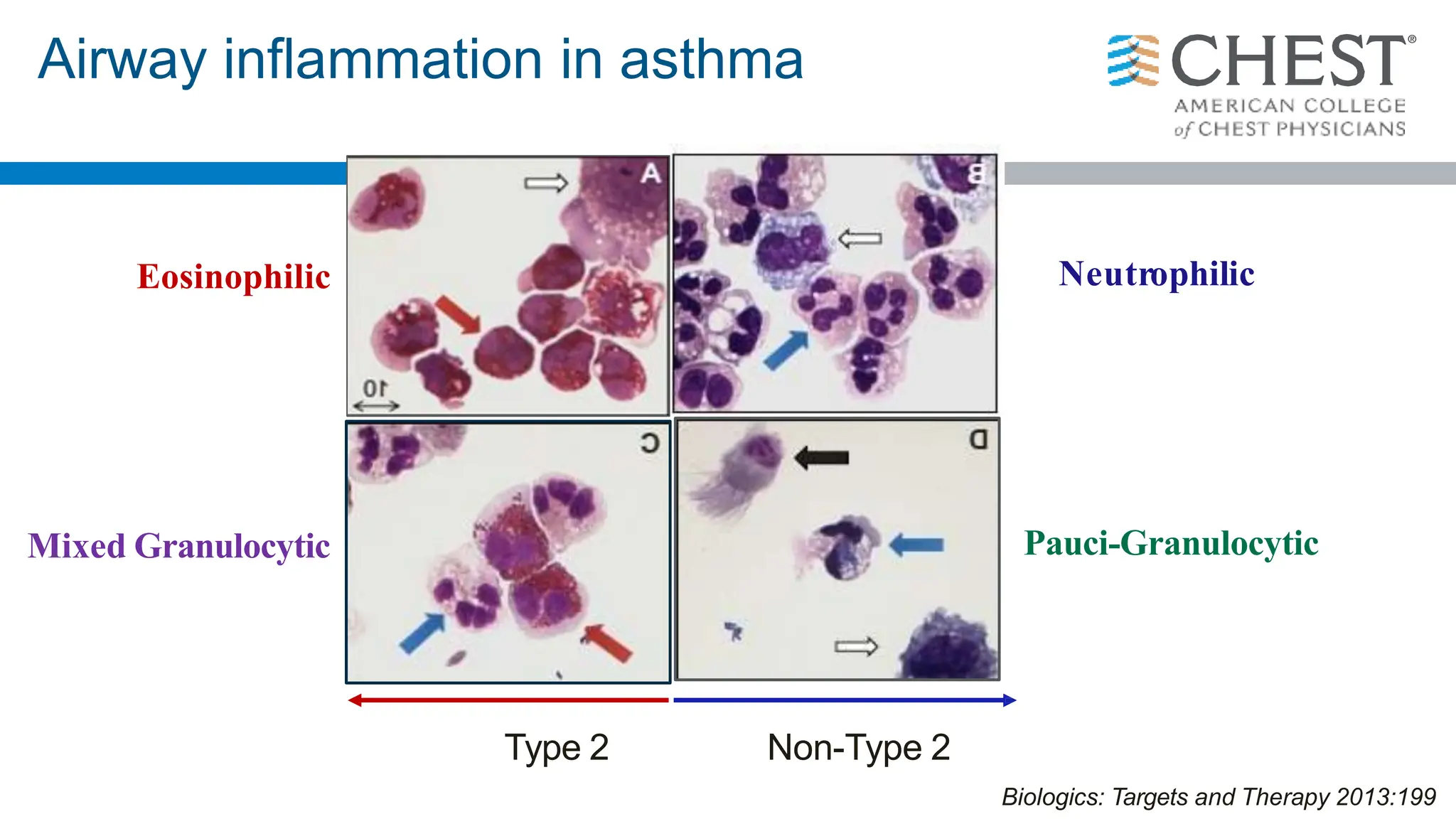
Biologics: Targets and Therapy 2013:199
Airway inflammation in asthma
Neutrophilic
Mixed Granulocytic Pauci-Granulocytic
Eosinophilic
Non-Type 2
Type 2
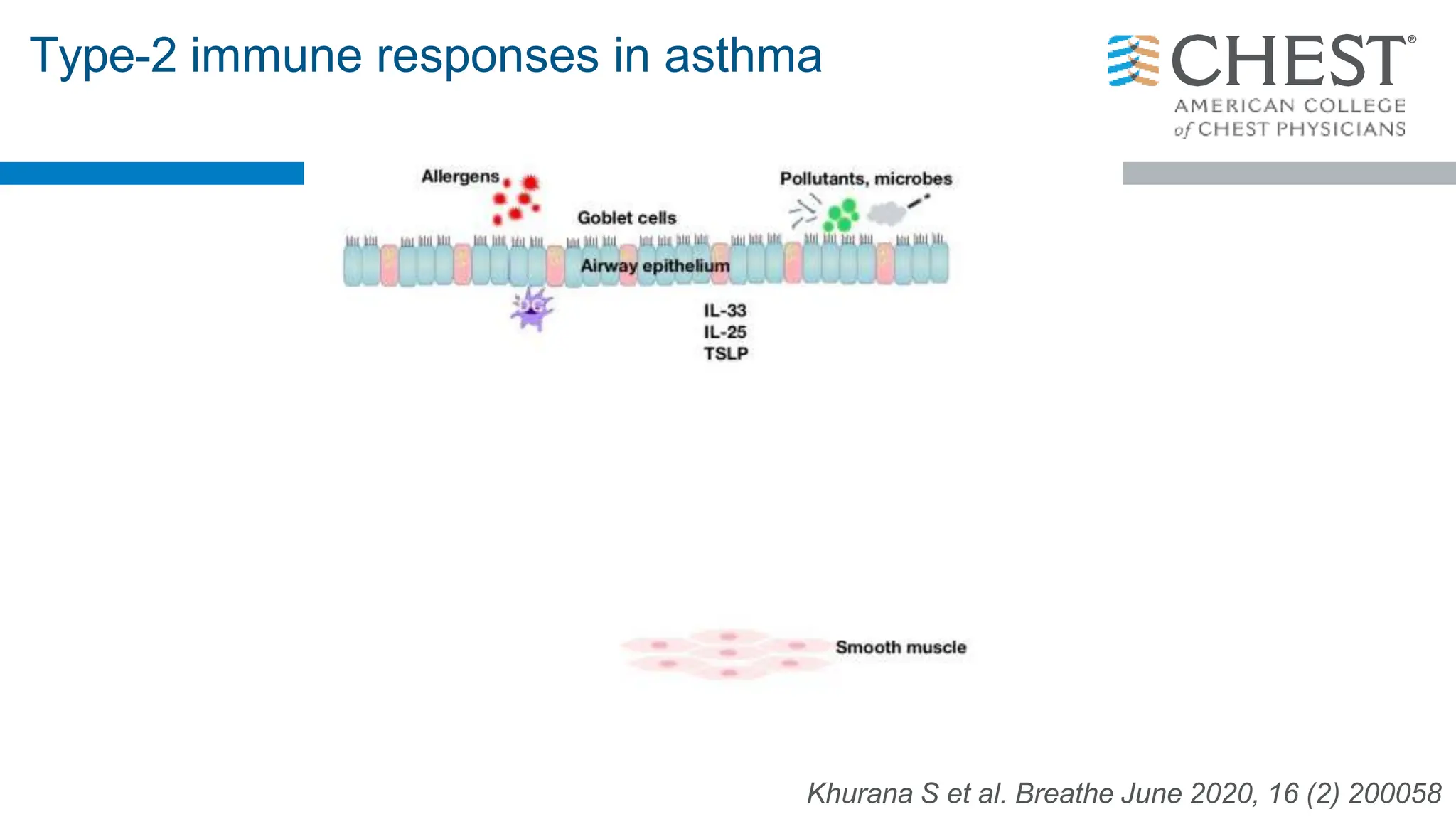
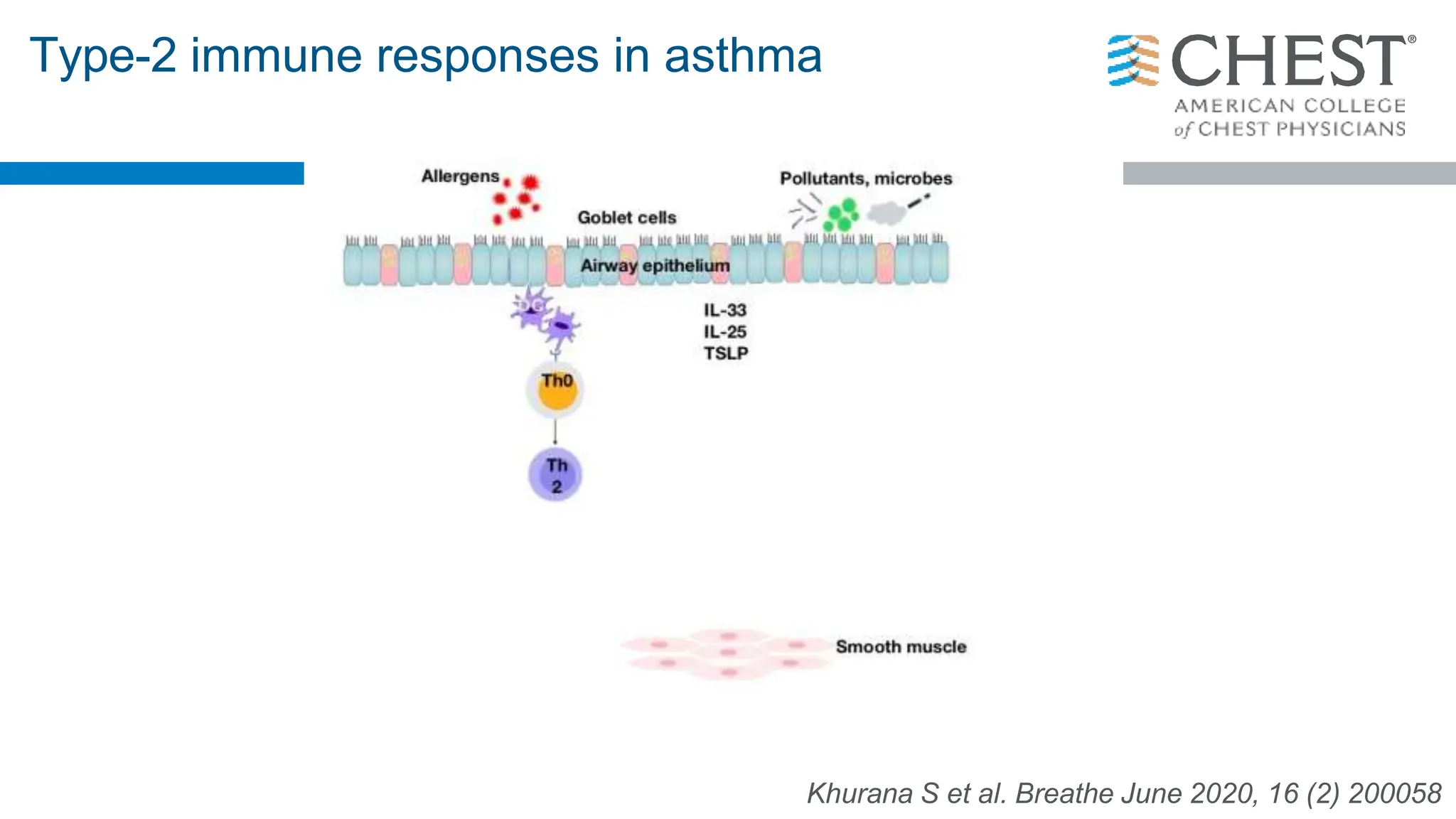
Type-2 immune responses in asthma
Khurana S et al. Breathe June 2020, 16 (2) 200058
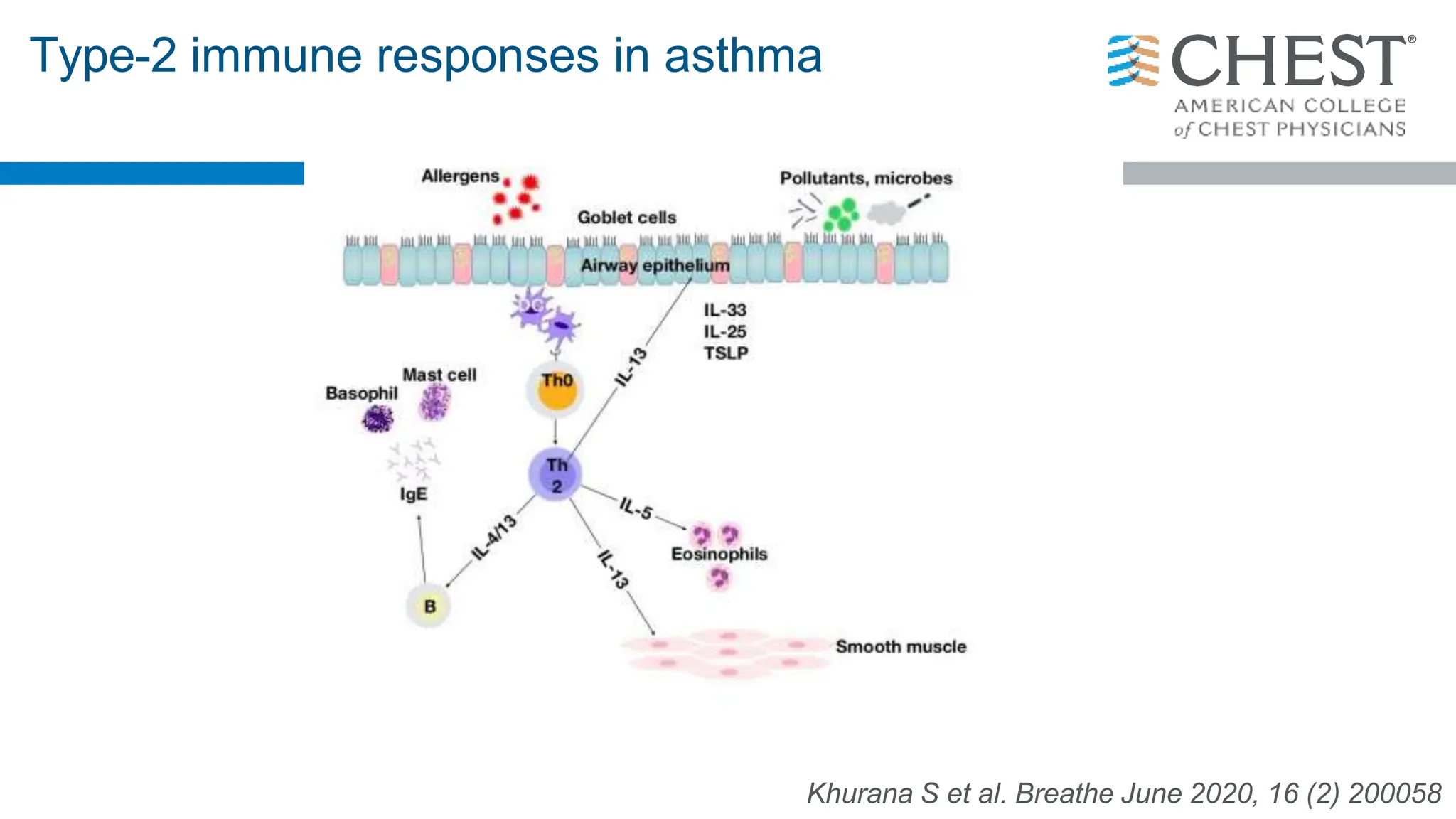
Type-2 immune responses in asthma
Khurana S et al. Breathe June 2020, 16 (2) 200058
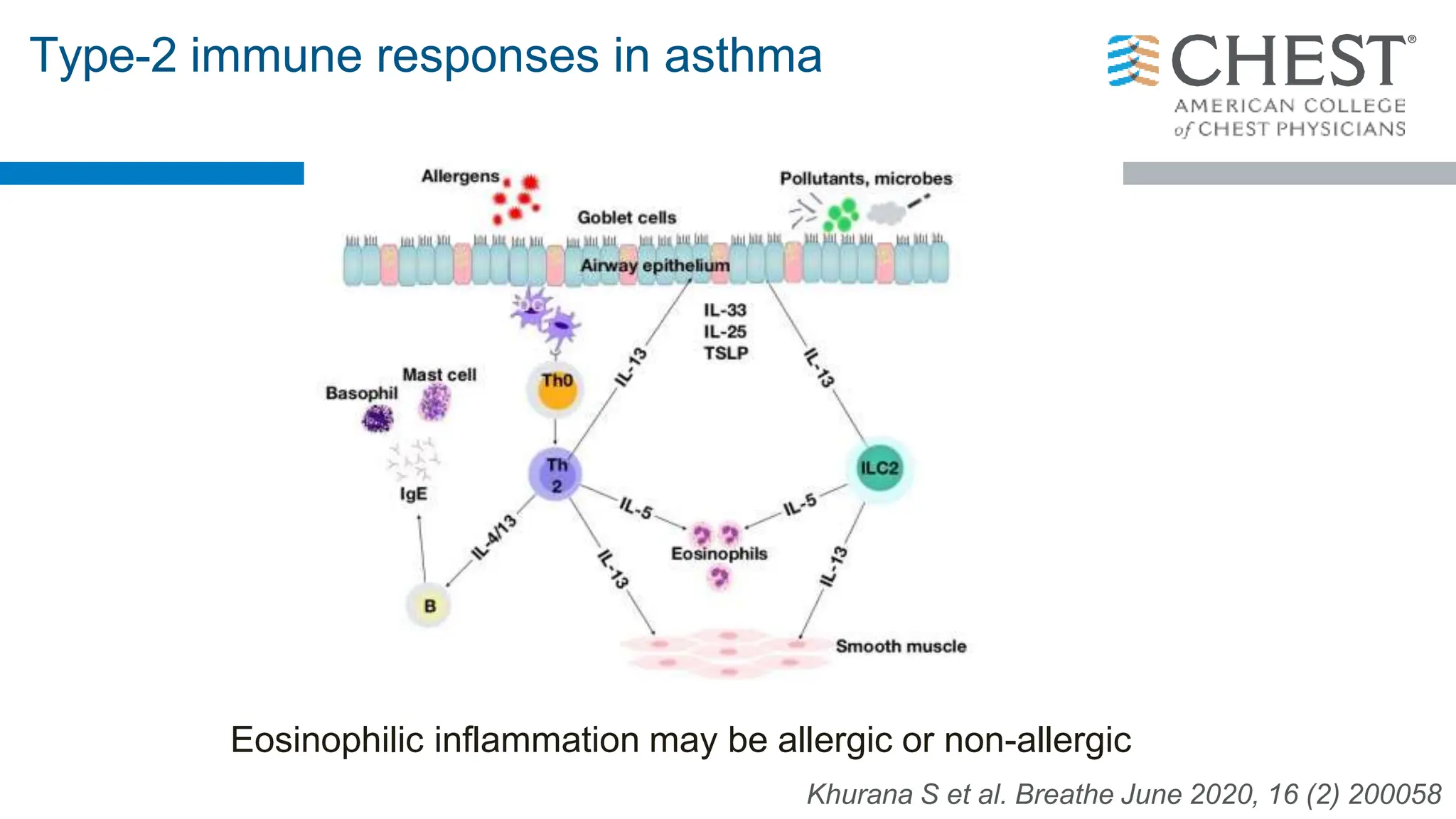
Type-2 immune responses in asthma
Khurana S et al. Breathe June 2020, 16 (2) 200058
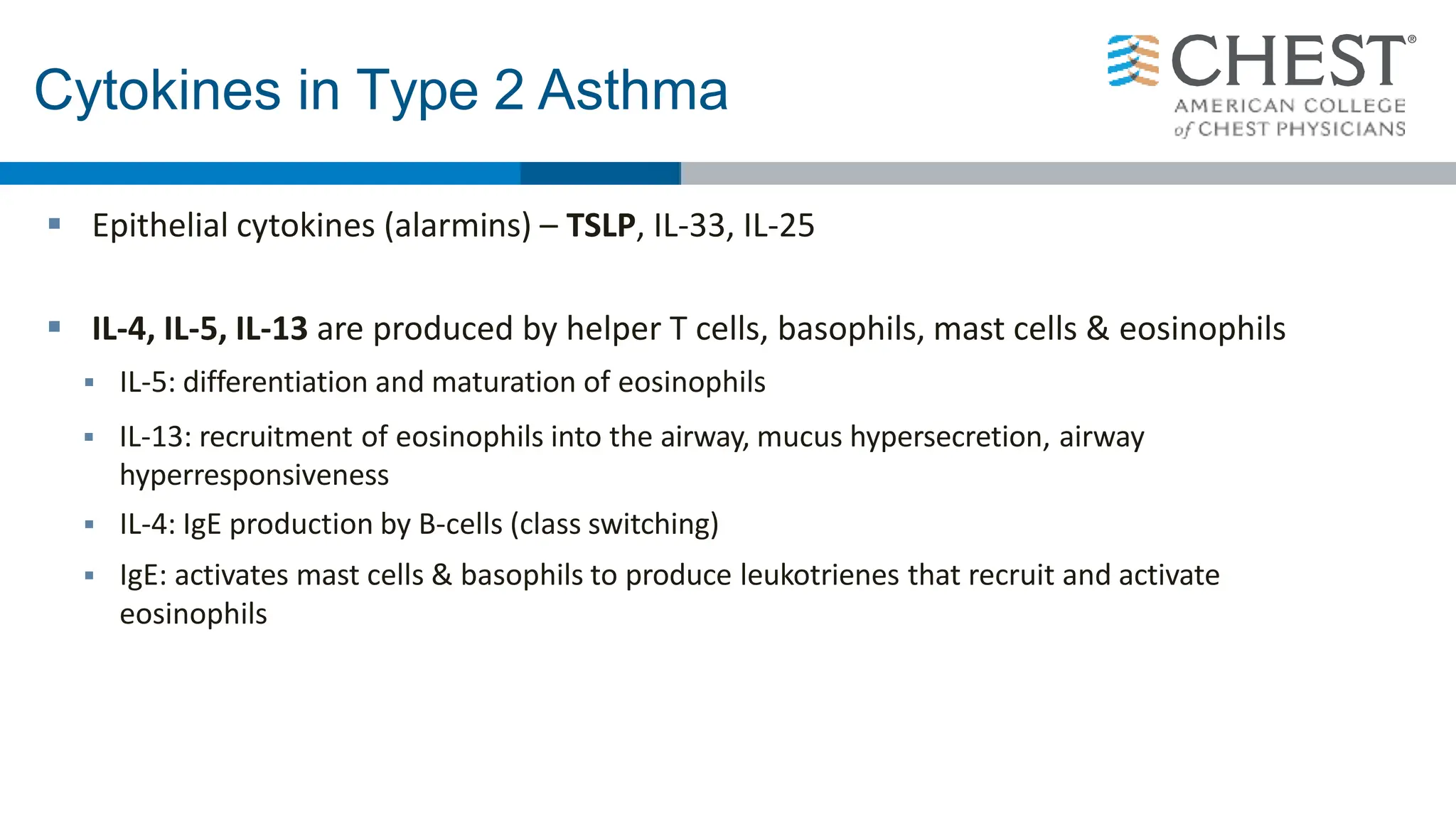
Type-2 immune responses in asthma
Eosinophilic inflammation may be allergic or non-allergic
Khurana S et al. Breathe June 2020, 16 (2) 200058
Cytokines in Type 2 Asthma
 Epithelial cytokines (alarmins) – TSLP, IL-33, IL-25
 IL-4, IL-5, IL-13 are produced by helper T cells, basophils, mast cells & eosinophils
 IL-5: differentiation and maturation of eosinophils
 IL-13: recruitment of eosinophils into the airway, mucus hypersecretion, airway
hyperresponsiveness
 IL-4: IgE production by B-cells (class switching)
 IgE: activates mast cells & basophils to produce leukotrienes that recruit and activate
eosinophils
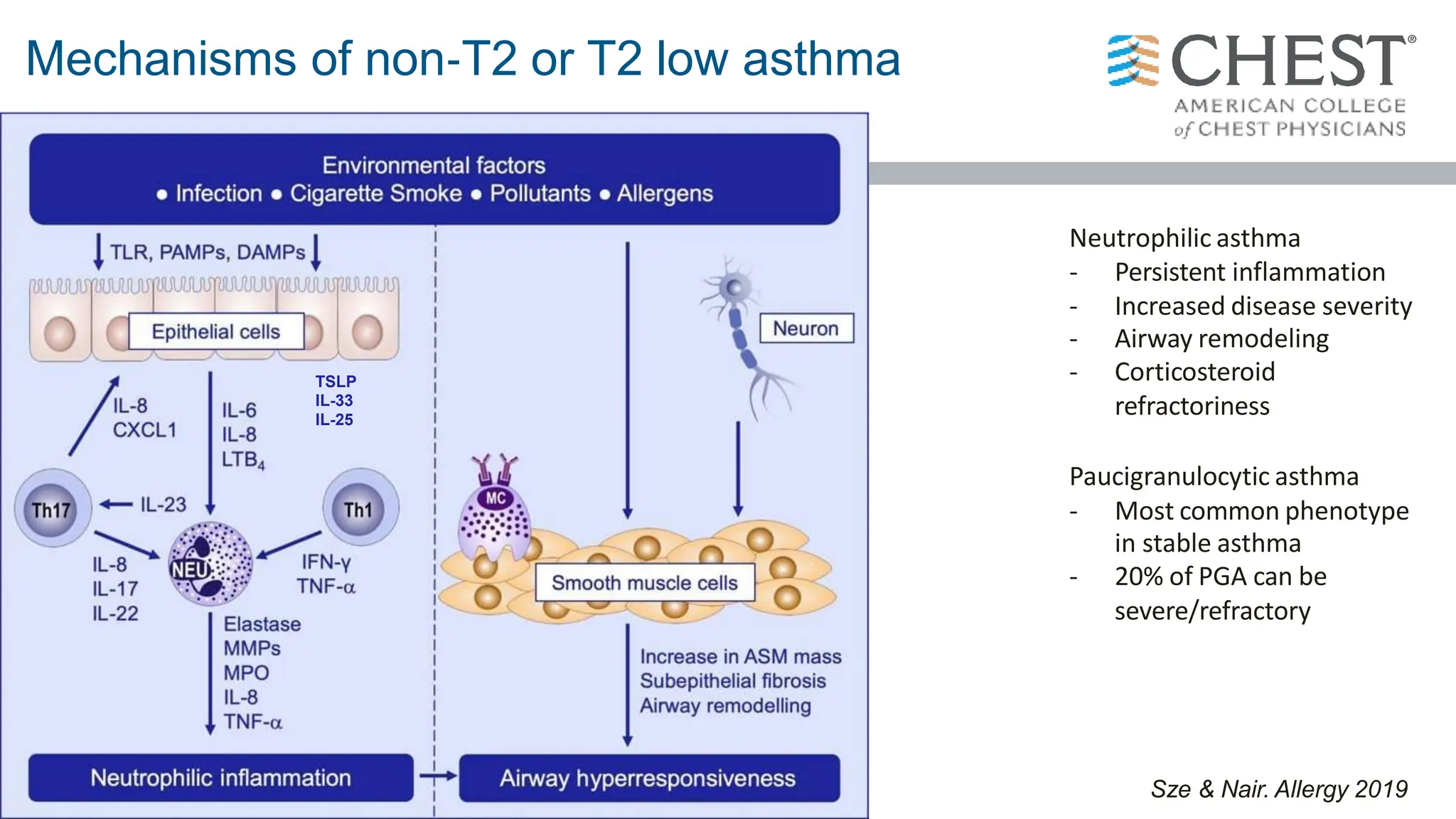
Mechanisms of non-T2 or T2 low asthma
Sze & Nair. Allergy 2019
Neutrophilic asthma
- Persistent inflammation
- Increased disease severity
- Airway remodeling
- Corticosteroid
refractoriness
Paucigranulocytic asthma
- Most common phenotype
in stable asthma
- 20% of PGA can be
severe/refractory
TSLP
IL-33
IL-25
Asthma - Part 2
Diagnosis, Evaluation, Phenotypes, Occupational Asthma
Sandhya Khurana, MD, FCCP
Professor, Pulmonary & Critical Care Medicine
Director, Mary Parkes Center for Asthma, Allergy & Pulmonary Care
University of Rochester, NY
• Describe approach to Asthma Diagnosis
• List available biomarkers of T2 high asthma
• Discuss evaluation and management of Occupational Asthma
Learning
Objectives
 Research funding – GSK, Sanofi
 Royalties – Springer
Disclosure
s
COPD = chronic obstructive pulmonary disease.
Aaron SD, et al. JAMA. 2017; 317(3):269
2020 GINA report, global strategy for asthma management and prevention
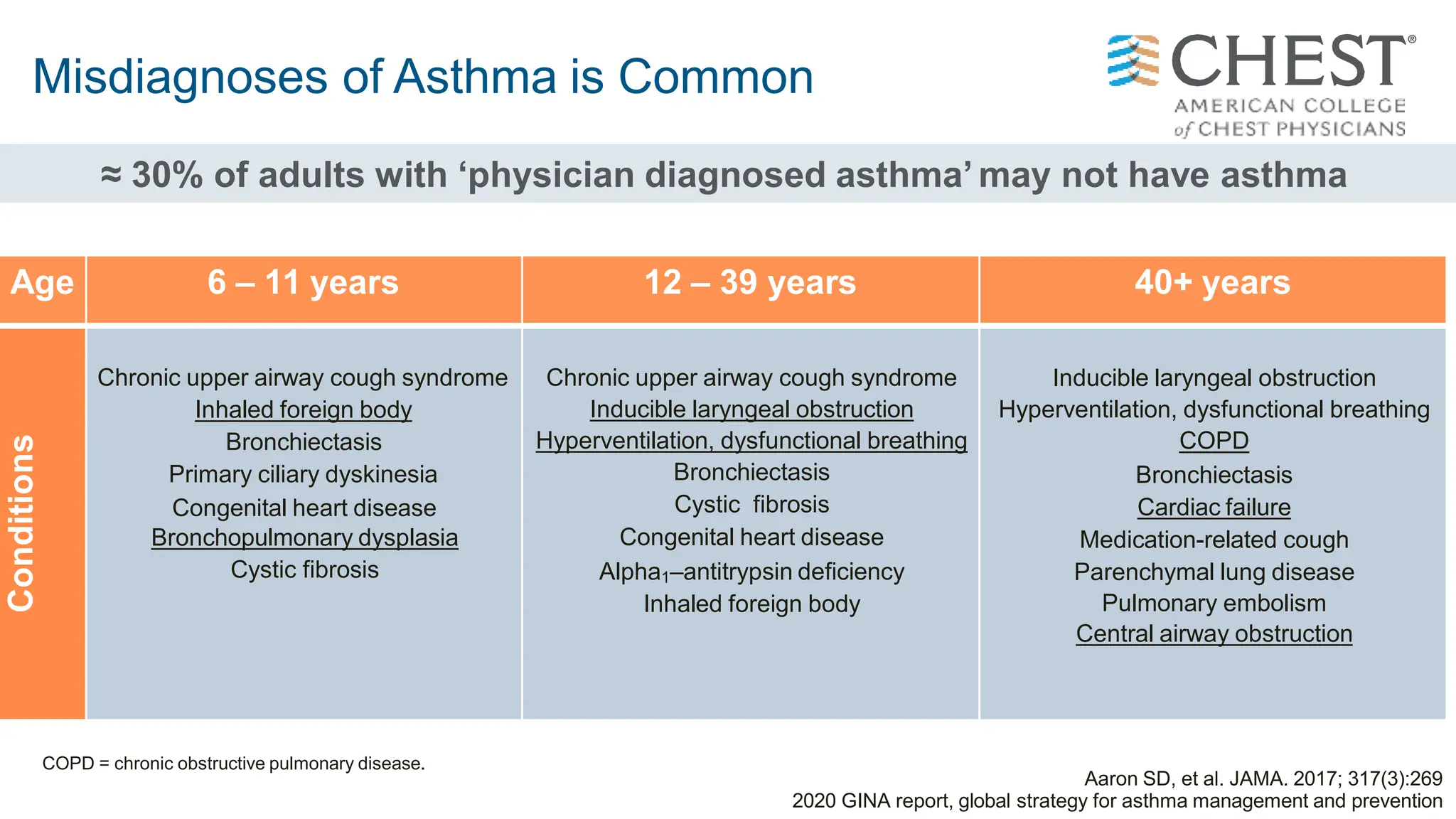
Misdiagnoses of Asthma is Common
Age 6 – 11 years 12 – 39 years 40+ years
Conditions
Chronic upper airway cough syndrome
Inhaled foreign body
Bronchiectasis
Primary ciliary dyskinesia
Congenital heart disease
Bronchopulmonary dysplasia
Cystic fibrosis
Chronic upper airway cough syndrome
Inducible laryngeal obstruction
Hyperventilation, dysfunctional breathing
Bronchiectasis
Cystic fibrosis
Congenital heart disease
Alpha1–antitrypsin deficiency
Inhaled foreign body
Inducible laryngeal obstruction
Hyperventilation, dysfunctional breathing
COPD
Bronchiectasis
Cardiac failure
Medication-related cough
Parenchymal lung disease
Pulmonary embolism
Central airway obstruction
≈ 30% of adults with ‘physician diagnosed asthma’ may not have asthma
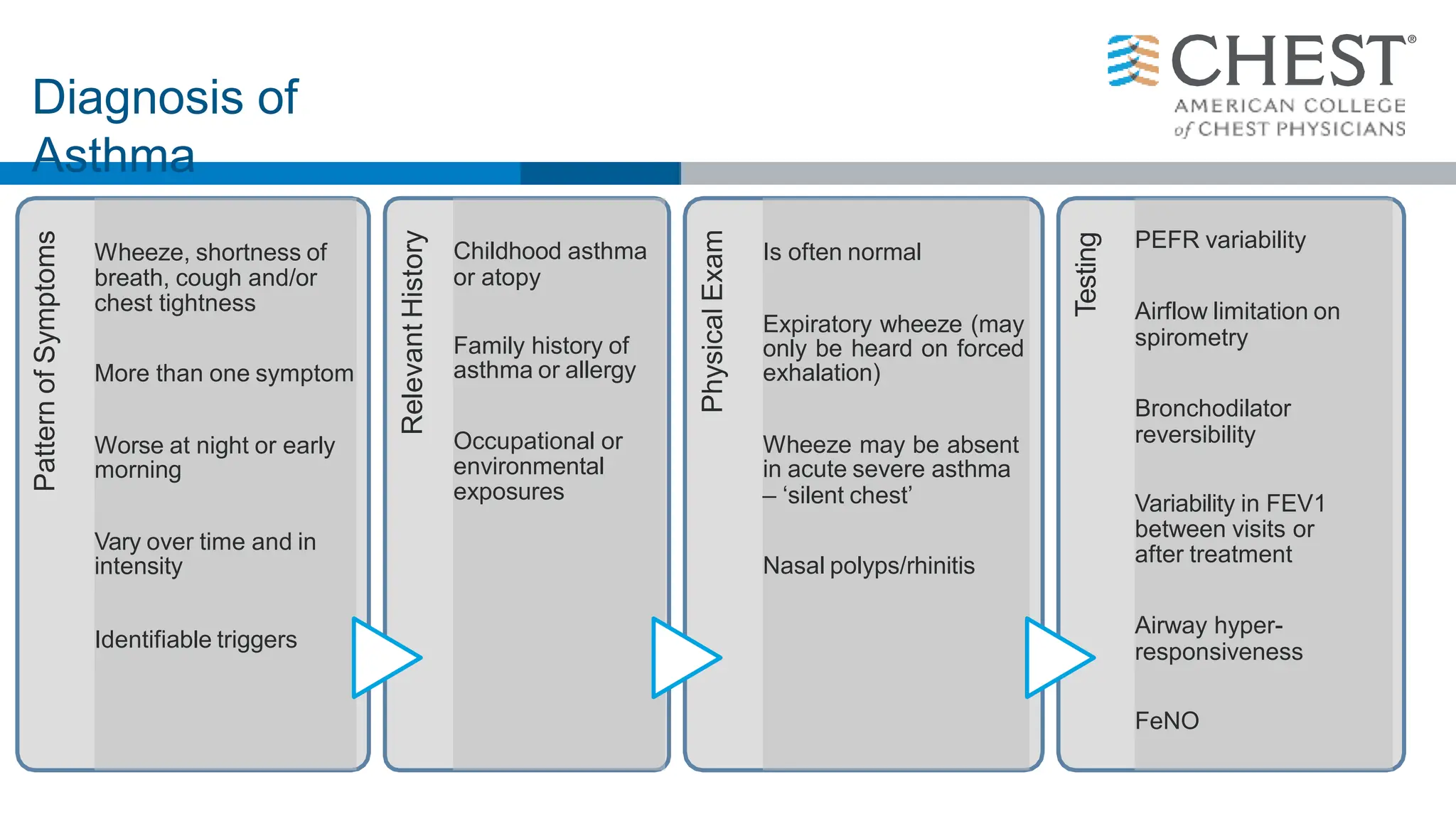
Diagnosis of
Asthma
Pattern
of
Symptoms
Wheeze, shortness of
breath, cough and/or
chest tightness
More than one symptom
Worse at night or early
morning
Vary over time and in
intensity
Identifiable triggers
Relevant
History
Childhood asthma
or atopy
Family history of
asthma or allergy
Occupational or
environmental
exposures
Physical
Exam
Is often normal
Expiratory wheeze (may
only be heard on forced
exhalation)
Wheeze may be absent
in acute severe asthma
– ‘silent chest’
Nasal polyps/rhinitis
Testing
PEFR variability
Airflow limitation on
spirometry
Bronchodilator
reversibility
Variability in FEV1
between visits or
after treatment
Airway hyper-
responsiveness
FeNO
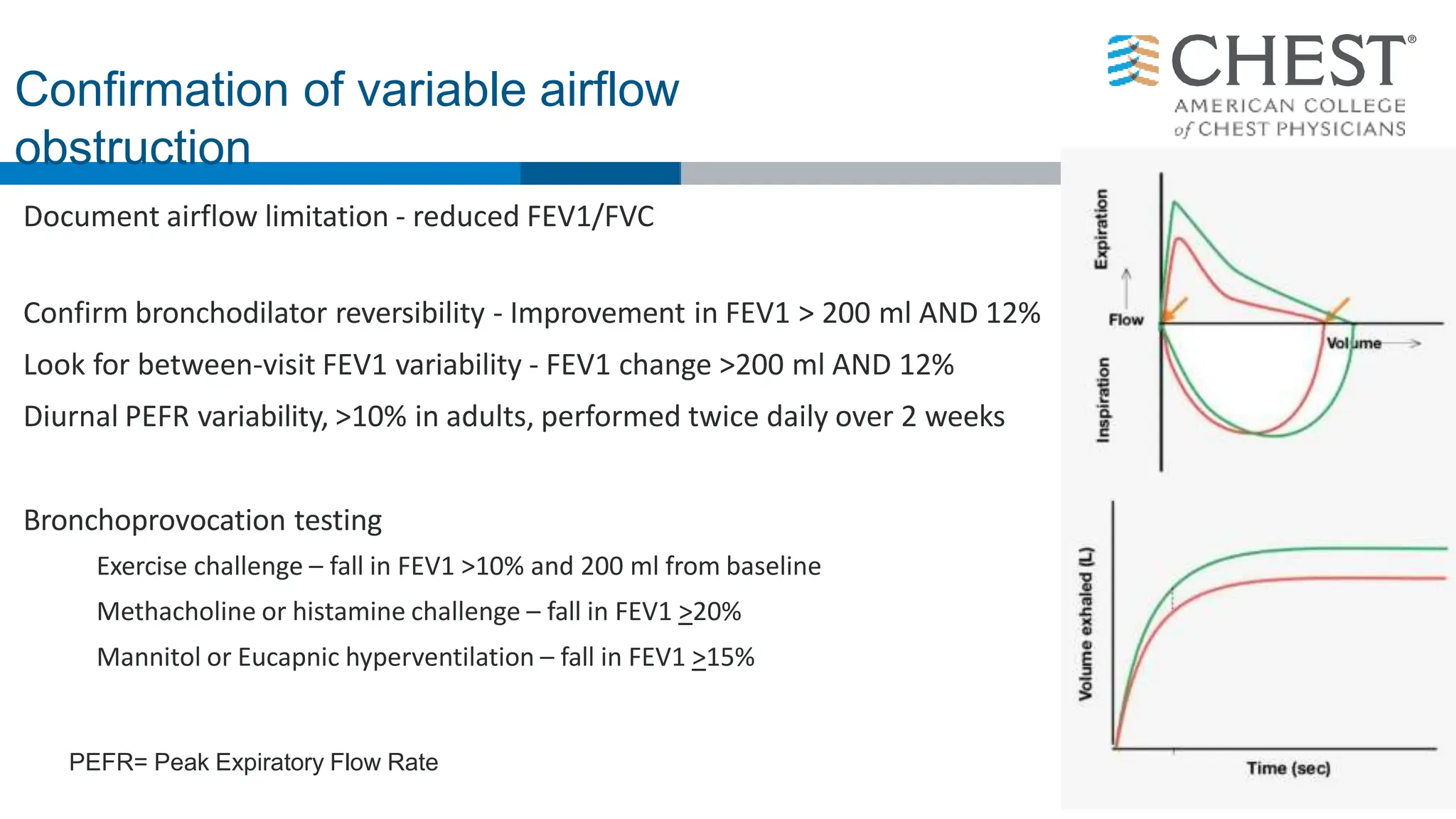
Document airflow limitation - reduced FEV1/FVC
Confirm bronchodilator reversibility - Improvement in FEV1 > 200 ml AND 12%
Look for between-visit FEV1 variability - FEV1 change >200 ml AND 12%
Diurnal PEFR variability, >10% in adults, performed twice daily over 2 weeks
Bronchoprovocation testing
Exercise challenge – fall in FEV1 >10% and 200 ml from baseline
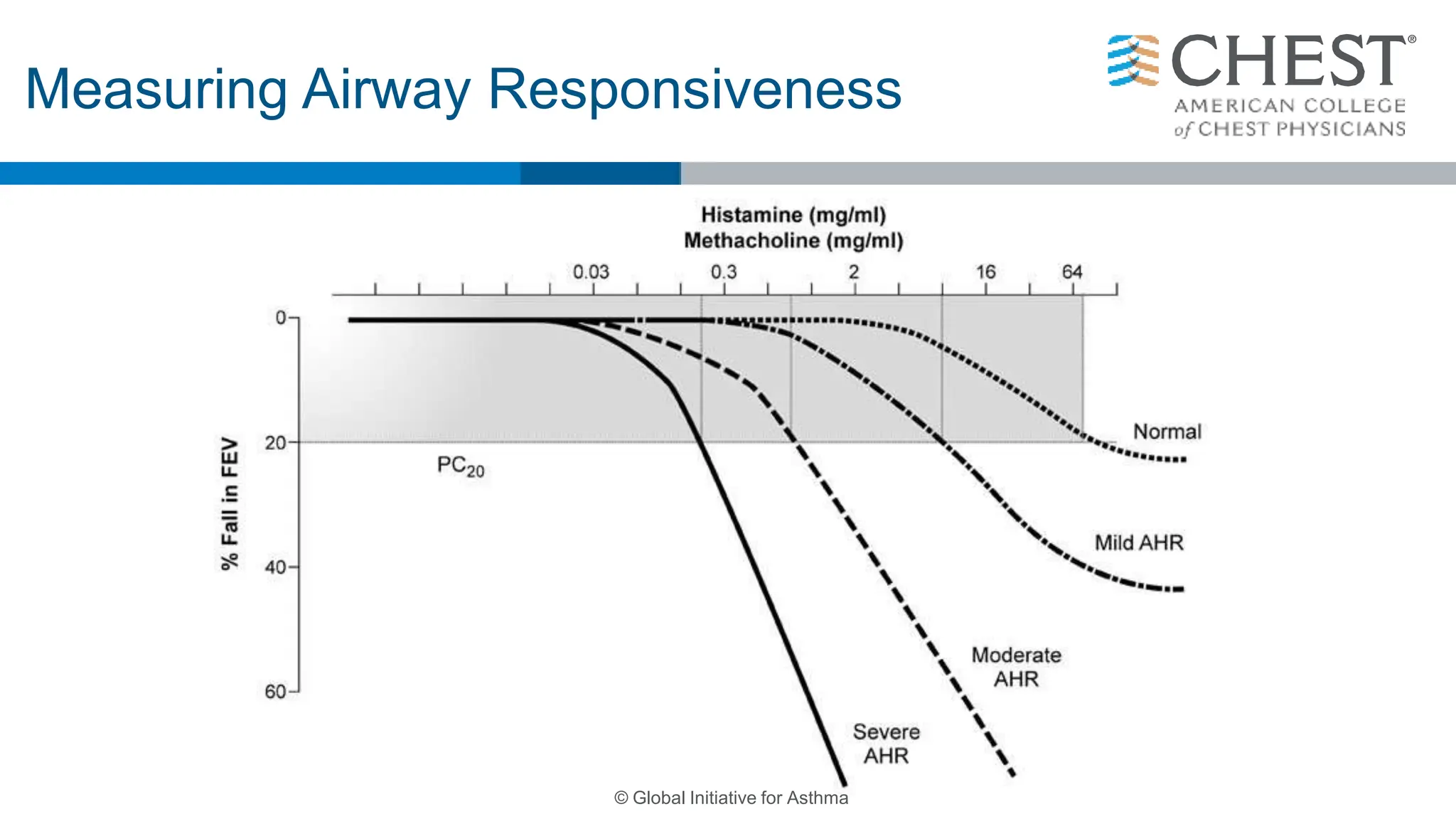
Methacholine or histamine challenge – fall in FEV1 >20%
Mannitol or Eucapnic hyperventilation – fall in FEV1 >15%
PEFR= Peak Expiratory Flow Rate
Confirmation of variable airflow
obstruction
Measuring Airway Responsiveness
© Global Initiative for Asthma
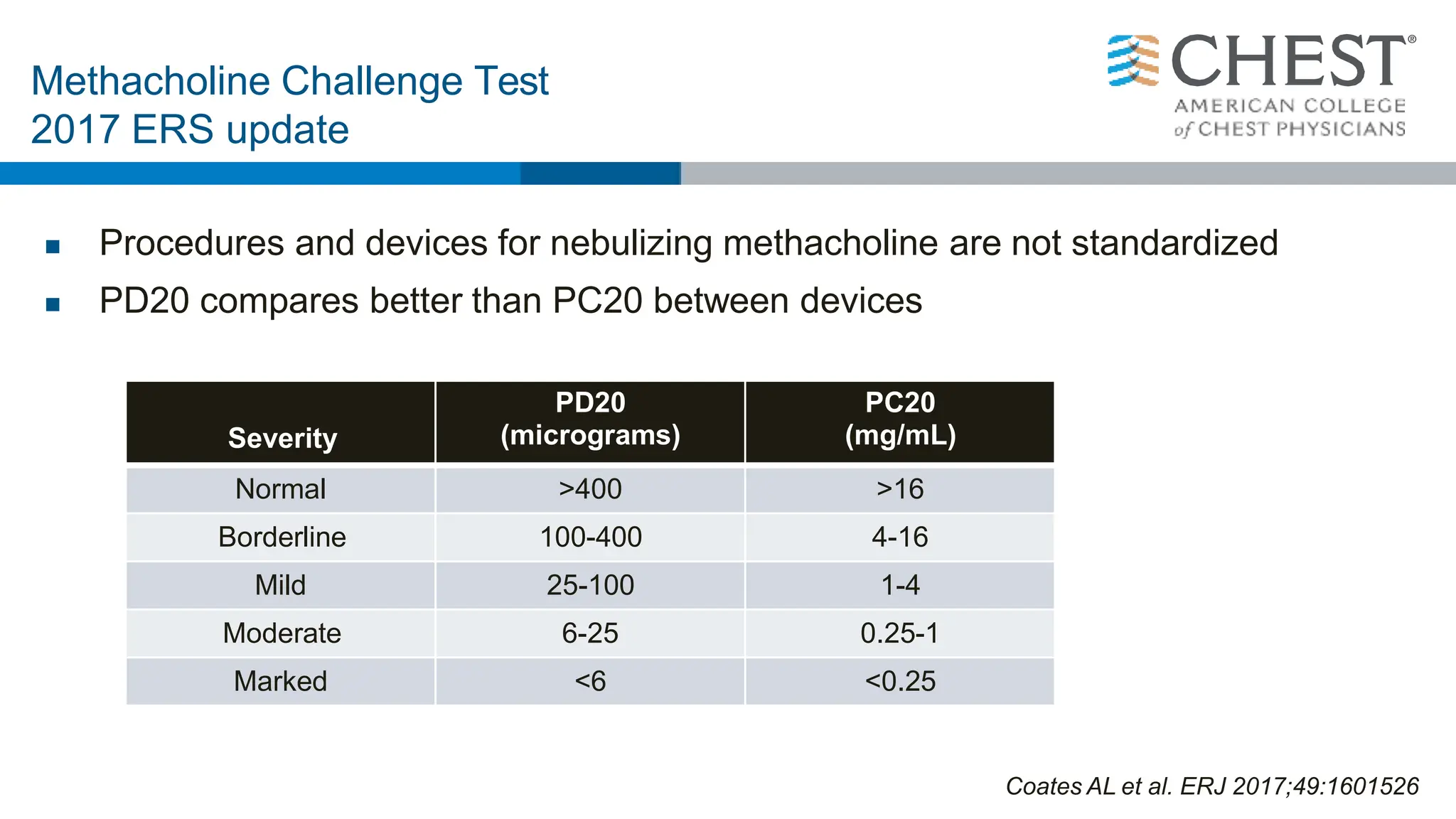
 Procedures and devices for nebulizing methacholine are not standardized
 PD20 compares better than PC20 between devices
Methacholine Challenge Test
2017 ERS update
Severity
PD20
(micrograms)
PC20
(mg/mL)
Normal >400 >16
Borderline 100-400 4-16
Mild 25-100 1-4
Moderate 6-25 0.25-1
Marked <6 <0.25
Coates AL et al. ERJ 2017;49:1601526
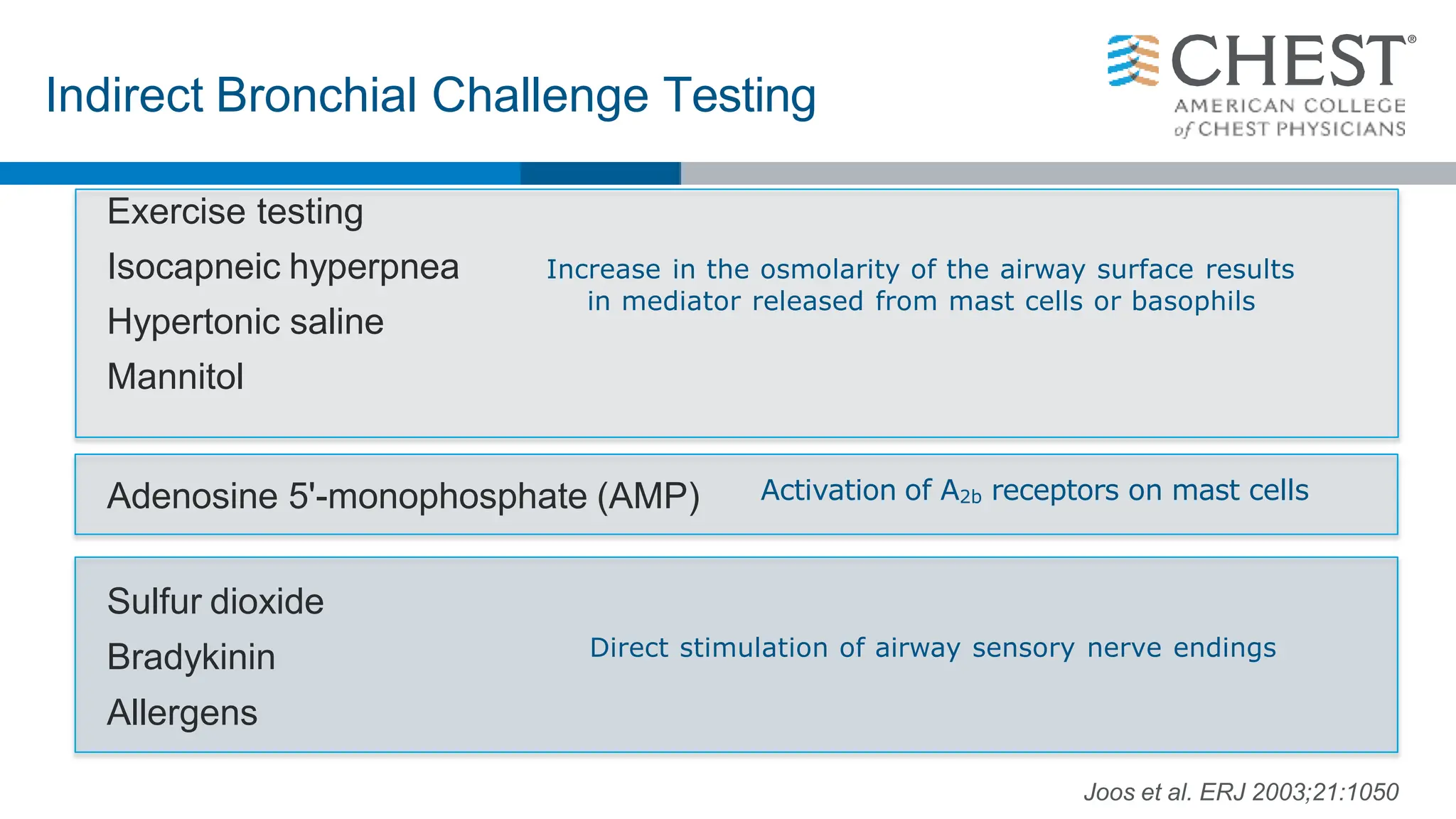
Exercise testing
Isocapneic hyperpnea
Hypertonic saline
Mannitol
Adenosine 5'-monophosphate (AMP)
Sulfur dioxide
Bradykinin
Allergens
Indirect Bronchial Challenge Testing
Direct stimulation of airway sensory nerve endings
Increase in the osmolarity of the airway surface results
in mediator released from mast cells or basophils
Activation of A2b receptors on mast cells
Joos et al. ERJ 2003;21:1050
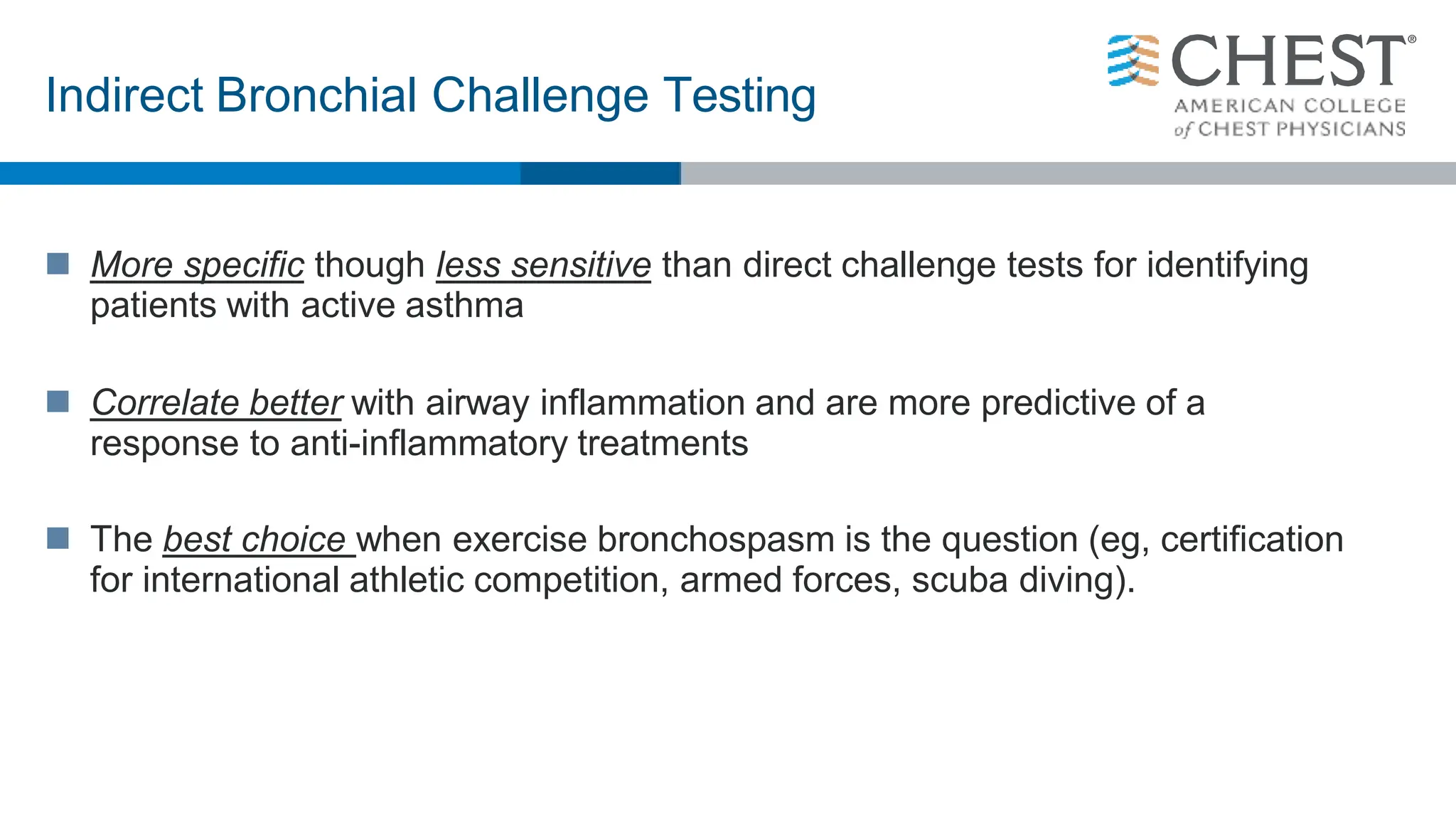
 More specific though less sensitive than direct challenge tests for identifying
patients with active asthma
 Correlate better with airway inflammation and are more predictive of a
response to anti-inflammatory treatments
 The best choice when exercise bronchospasm is the question (eg, certification
for international athletic competition, armed forces, scuba diving).
Indirect Bronchial Challenge Testing
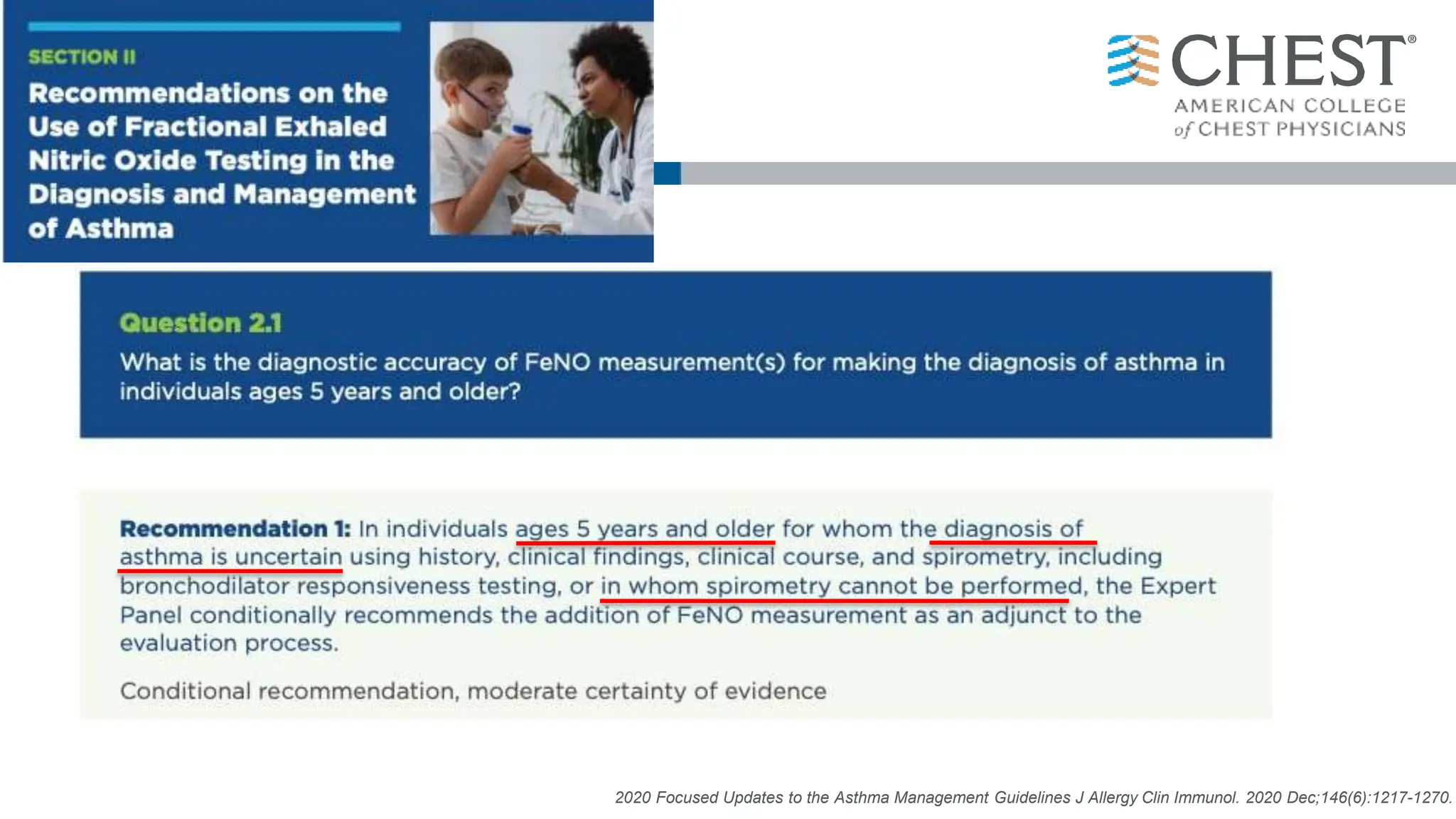
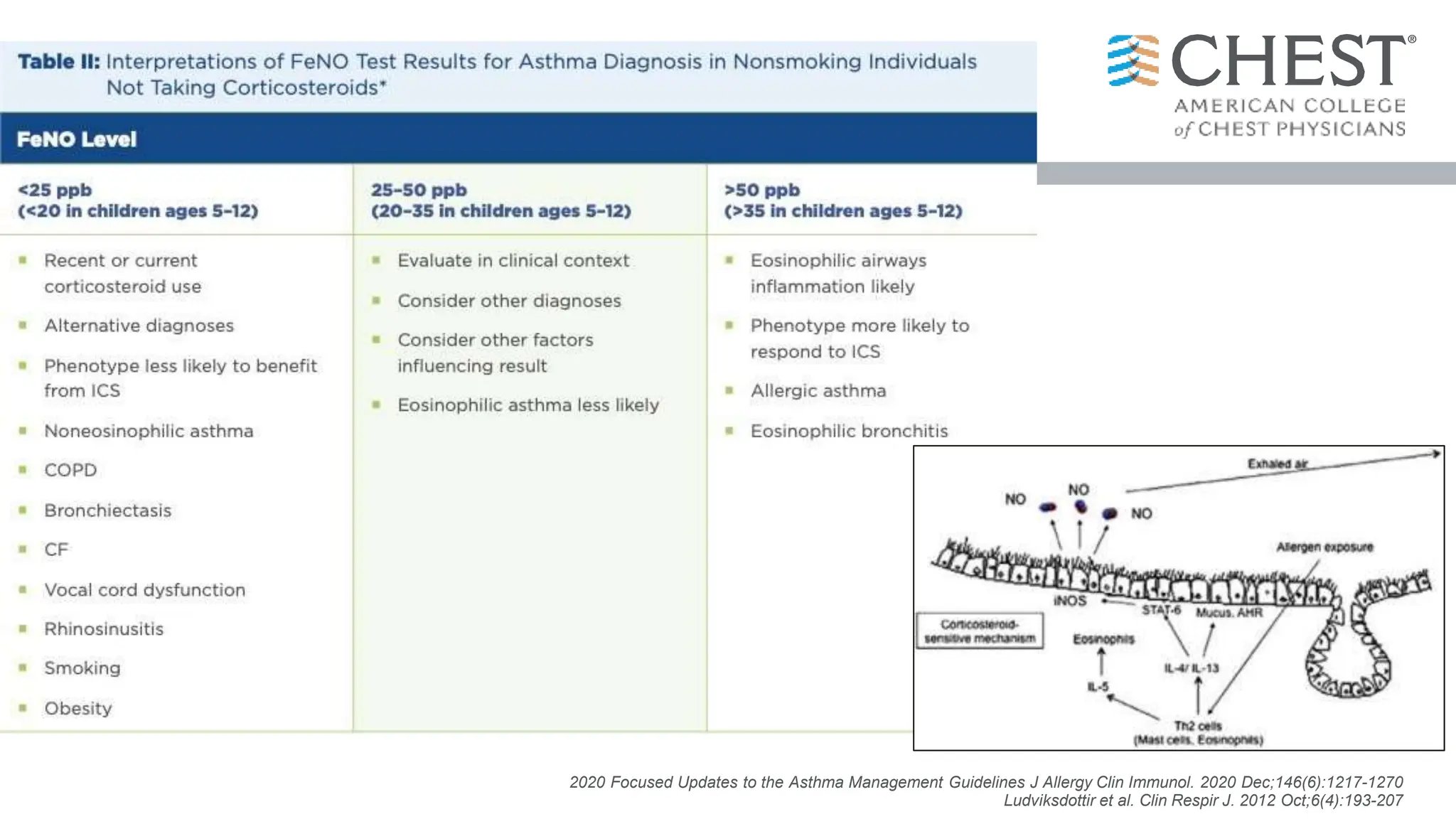
2020 Focused Updates to the Asthma Management Guidelines J Allergy Clin Immunol. 2020 Dec;146(6):1217-1270.
2020 Focused Updates to the Asthma Management Guidelines J Allergy Clin Immunol. 2020 Dec;146(6):1217-1270
Ludviksdottir et al. Clin Respir J. 2012 Oct;6(4):193-207
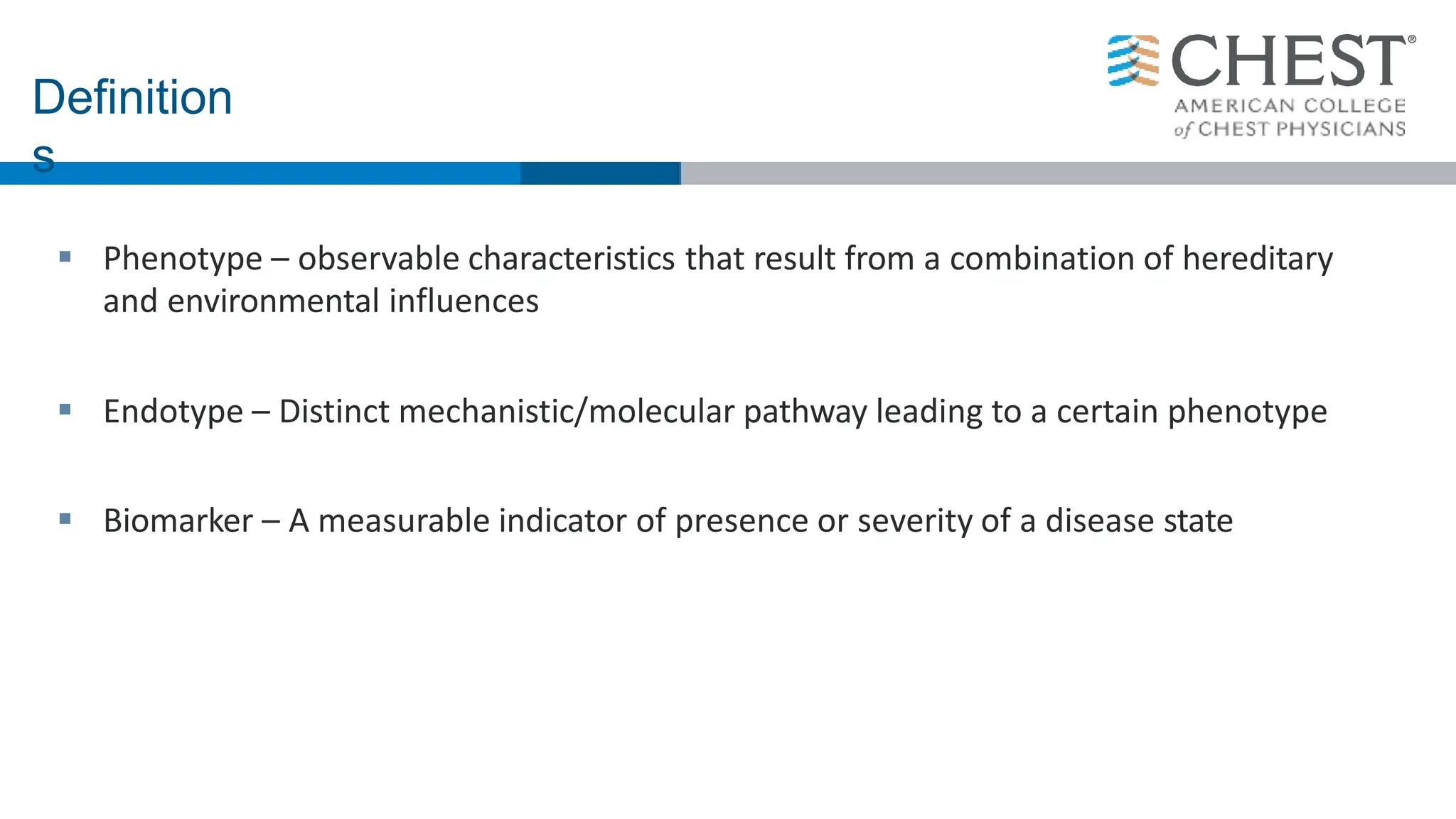
 Phenotype – observable characteristics that result from a combination of hereditary
and environmental influences
 Endotype – Distinct mechanistic/molecular pathway leading to a certain phenotype
 Biomarker – A measurable indicator of presence or severity of a disease state
Definition
s
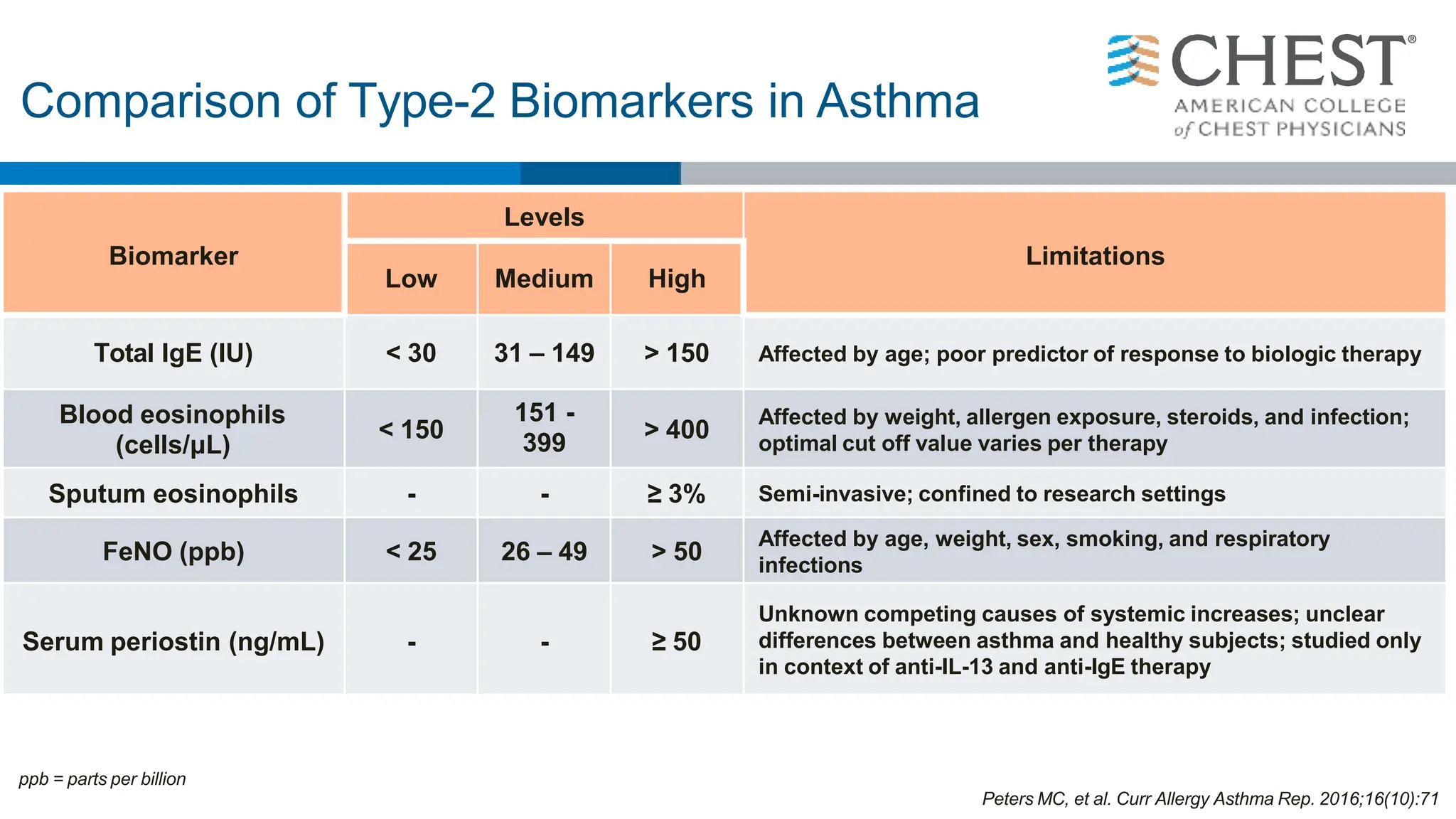
Comparison of Type-2 Biomarkers in Asthma
Biomarker
Levels
Limitations
Low Medium High
Total IgE (IU) < 30 31 – 149 > 150 Affected by age; poor predictor of response to biologic therapy
Blood eosinophils
(cells/μL)
< 150
151 -
399
> 400
Affected by weight, allergen exposure, steroids, and infection;
optimal cut off value varies per therapy
Sputum eosinophils - - ≥ 3% Semi-invasive; confined to research settings
FeNO (ppb) < 25 26 – 49 > 50
Affected by age, weight, sex, smoking, and respiratory
infections
Serum periostin (ng/mL) - - ≥ 50
Unknown competing causes of systemic increases; unclear
differences between asthma and healthy subjects; studied only
in context of anti-IL-13 and anti-IgE therapy
ppb = parts per billion
Peters MC, et al. Curr Allergy Asthma Rep. 2016;16(10):71
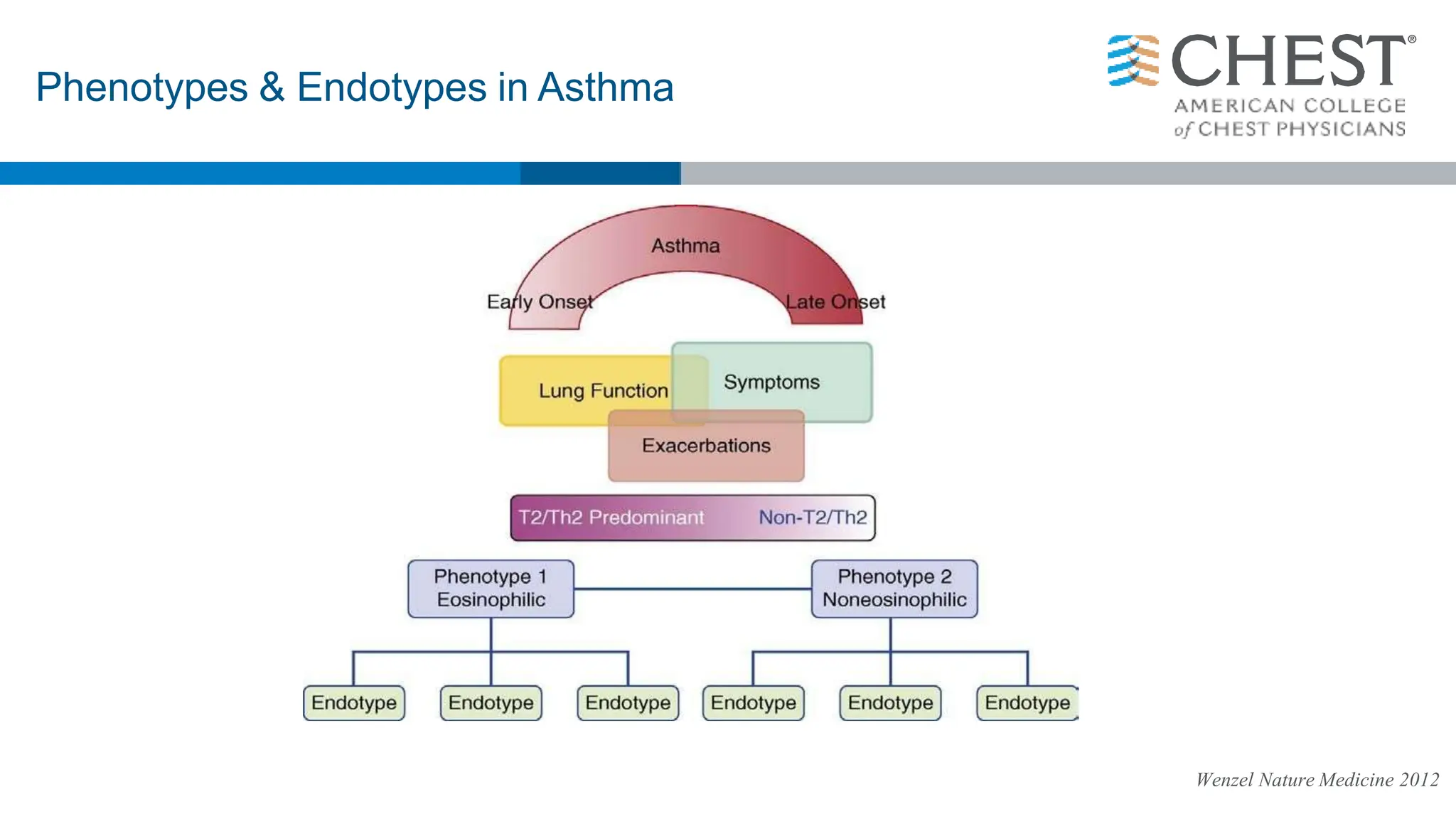
Wenzel Nature Medicine 2012
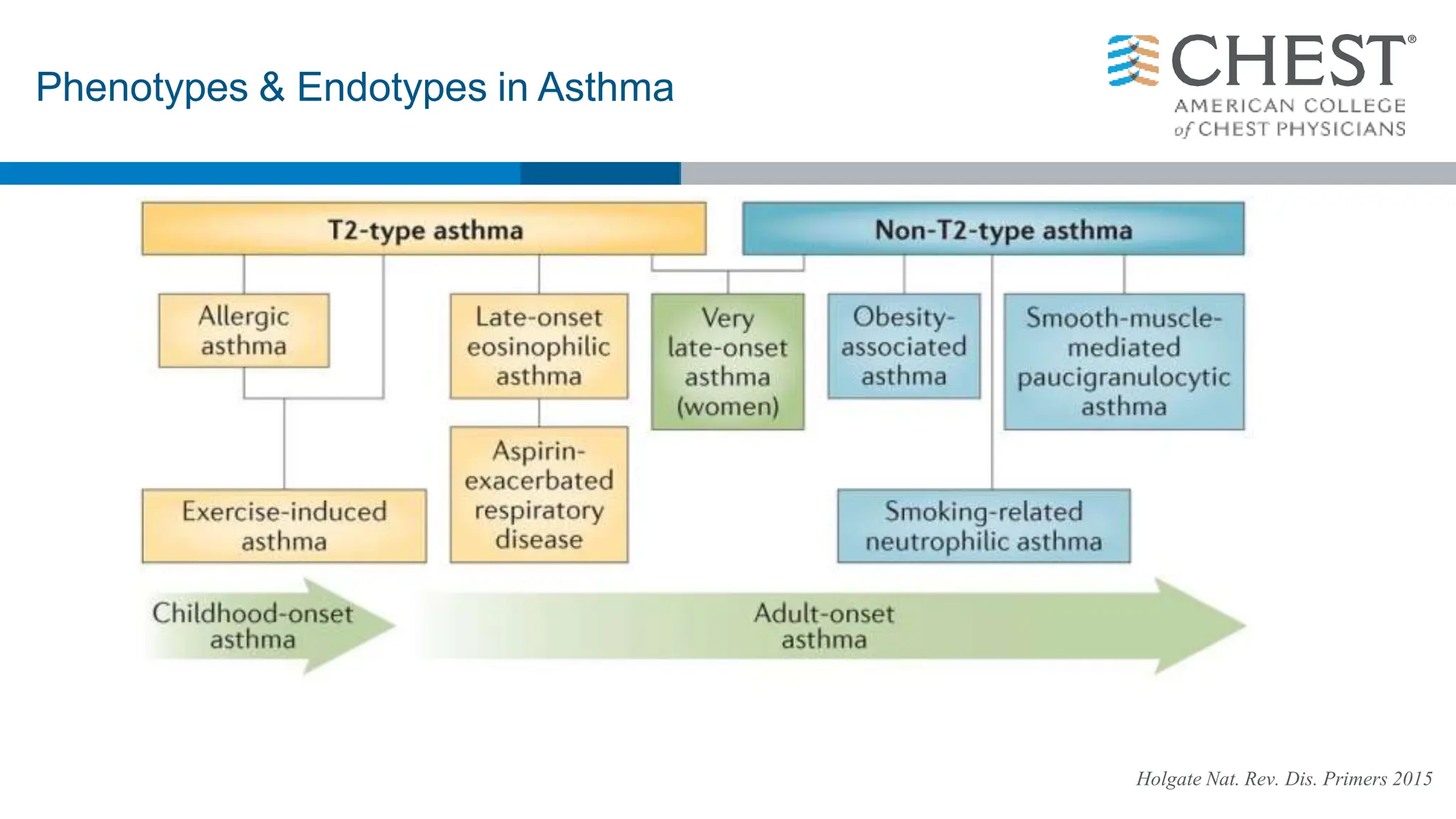
Phenotypes & Endotypes in Asthma
Holgate Nat. Rev. Dis. Primers 2015
Phenotypes & Endotypes in Asthma
Aspirin exacerbated respiratory disease
(AERD)
 Asthma, chronic rhinosinusitis with nasal polyposis (CRSwNP)
 Bronchospasm that occurs (typically 20min to 3 hours) after ingestion of aspirin/NSAIDs
 Non-IgE mediated – ”pseudo-allergic”
 Prevalence 7% of adults with asthma; more common in women
 Can take years for all three components to develop - CRS usually the first manifestation
 Asthma has a severe and protracted course
 Angioedema and GI symptoms may occur
 Elevated blood eosinophils
 Strong association with HLADPB1*0301
Aspirin exacerbated respiratory disease
(AERD)
 Diagnosis usually by history. Aspirin challenge for definitive diagnosis
 Treatment is same as for asthma without AERD, except consider early use of LTMs
and avoidance of NSAIDs
 Emerging role of biologics
 ASA desensitization indicated if worsening sinonasal symptoms despite maximal
therapy or treatment of other condition requiring ASA or NSAIDs
 Patients must continue daily aspirin therapy after completing desensitization
 ASA therapy after desensitization
 Improved nasal symptoms and decreased regrowth of NP
 Improved asthma control
Exercise Induced Bronchoconstriction
(EIB)
 Triggered by inhalation of large volumes of relatively cool dry air during
vigorous exercise
 Symptoms occur after the end of exercise or during prolonged exercise
 Initial bronchodilation followed by bronchoconstriction that peaks 10-15
minutes after exercise
 Diagnosis by exercise challenge test (15% decrease in FEV1 suggests EIA)
 Treatment
 Pre-treatment with short-acting bronchodilators (alone or combination)
 Chromoglycates, ICS + LABA, leukotriene modifiers
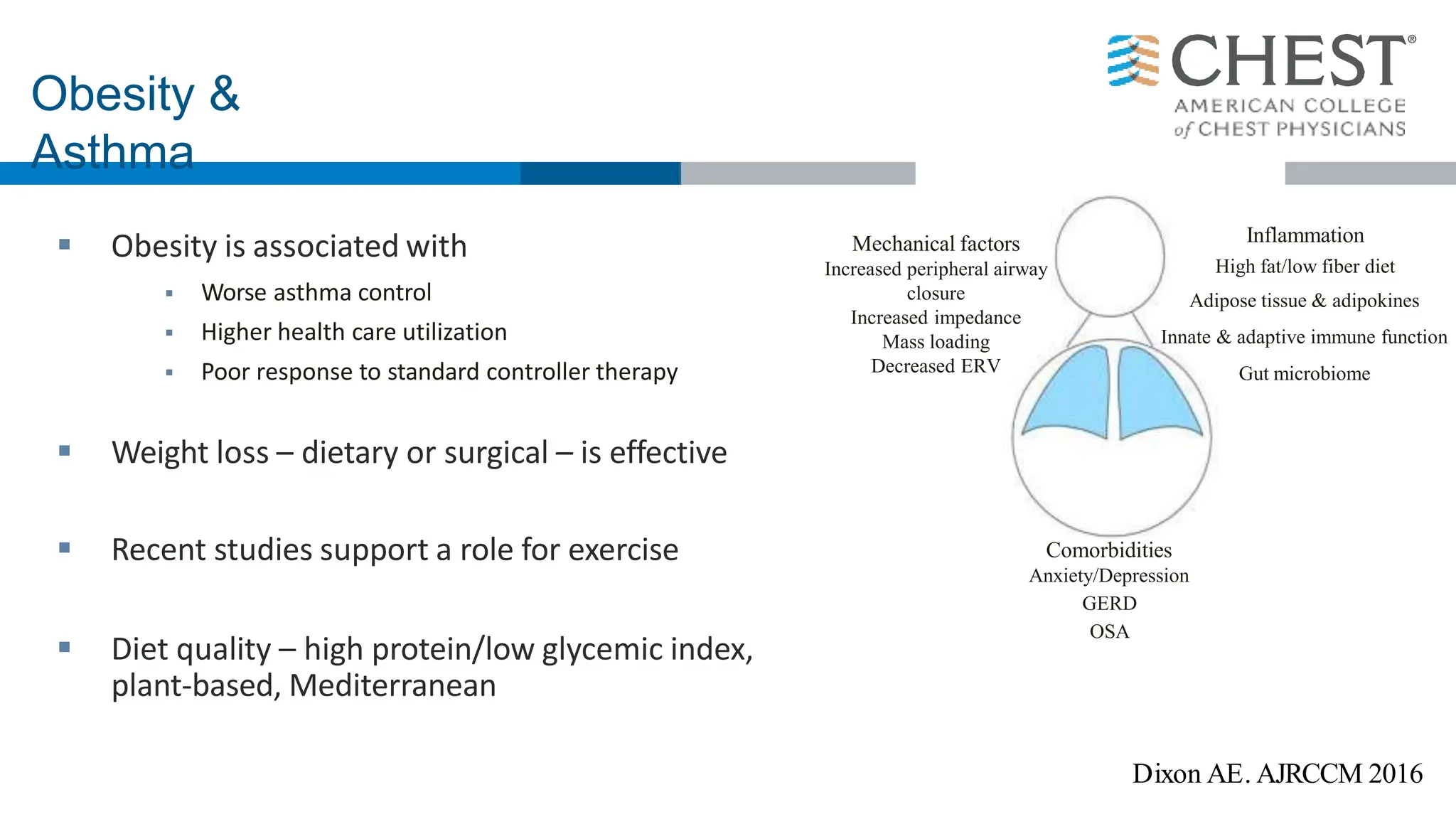
Obesity &
Asthma
 Obesity is associated with
 Worse asthma control
 Higher health care utilization
 Poor response to standard controller therapy
 Weight loss – dietary or surgical – is effective
 Recent studies support a role for exercise
 Diet quality – high protein/low glycemic index,
plant-based, Mediterranean
Inflammation
High fat/low fiber diet
Adipose tissue & adipokines
Innate & adaptive immune function
Gut microbiome
Mechanical factors
Increased peripheral airway
closure
Increased impedance
Mass loading
Decreased ERV
Comorbidities
Anxiety/Depression
GERD
OSA
Dixon AE. AJRCCM 2016
 Asthma due to causes and conditions attributable to a particular occupational
environment and not to stimuli encountered outside the workplace
 Two types of OA: Immunological (sensitizing) or non-immunological
 Needs to be distinguished from workplace exacerbated asthma
 When to suspect OA?
 Any new adult-onset asthma (OA accounts for 10-25%)
 Worsening asthma control in a previously well-controlled asthmatic
 Symptoms worse at work; improve over weekend and holidays
 Latency period from exposure to onset of symptoms is highly variable
Occupational Asthma
(OA)
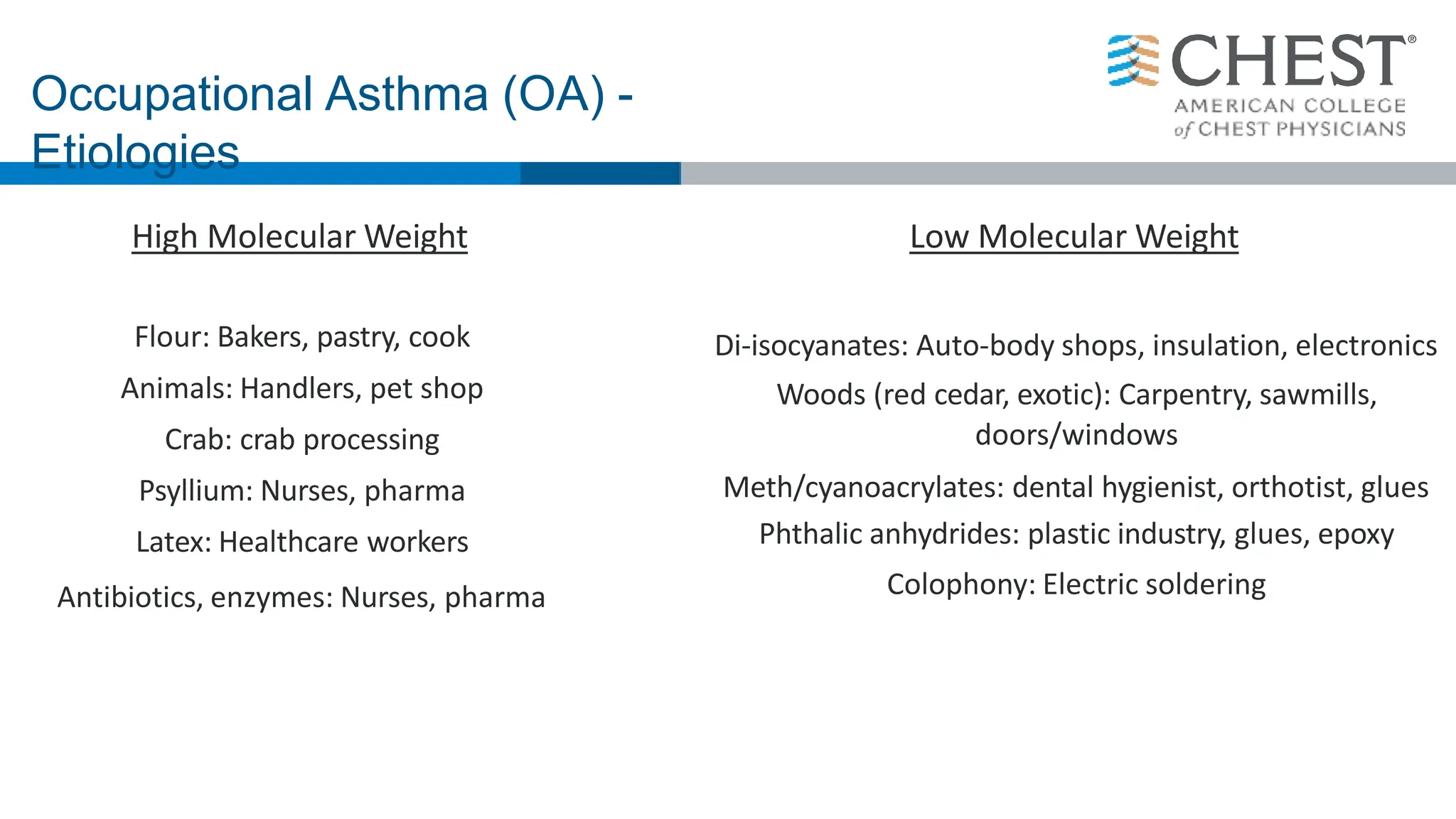
Occupational Asthma (OA) -
Etiologies
High Molecular Weight
Flour: Bakers, pastry, cook
Animals: Handlers, pet shop
Crab: crab processing
Psyllium: Nurses, pharma
Latex: Healthcare workers
Antibiotics, enzymes: Nurses, pharma
Low Molecular Weight
Di-isocyanates: Auto-body shops, insulation, electronics
Woods (red cedar, exotic): Carpentry, sawmills,
doors/windows
Meth/cyanoacrylates: dental hygienist, orthotist, glues
Phthalic anhydrides: plastic industry, glues, epoxy
Colophony: Electric soldering
 Rhinitis is a frequent feature for both HMW and LMW agents but more
severe with HMW
 Wheezing, nasal and ocular itching at work positively associated with OA to
HMW agents
 Rash sometimes associated with OA, particularly with HMW agents
 Symptoms and questionnaires are not specific
 Diagnosis must be confirmed objectively
 Skin tests and serology
 Monitoring PEFR, FEV1, AHR at and off work
 Specific inhalation challenge (the gold standard)
Occupational Asthma
(OA)
 Suspect OA in all adult-onset asthma
 Treat as for non-OA
 Objectively confirm diagnosis
 Early diagnosis and removal from exposure for best outcomes
 Absolute avoidance for patients with sensitizer induced OA
 For irritant induced workplace exacerbated asthma
 Reduce exposure
 Respiratory protective equipment, appropriate ventilation
 Optimize treatment
Occupational Asthma (OA) -
Management
Asthma - Part 3
Guidelines-Based Management & Role of Comorbidities
Sandhya Khurana, MD, FCCP
Professor, Pulmonary & Critical Care Medicine
Director, Mary Parkes Center for Asthma, Allergy & Pulmonary Care
University of Rochester, NY
• Review goals of asthma management
• Understand the difference between asthma control and severity
• Discuss the key updates from GINA and NAEPP asthma guidelines
Learning
Objectives
 Research funding – GSK, Sanofi
 Royalties – Springer
Disclosures
GINA and NAEPP-
EPR4
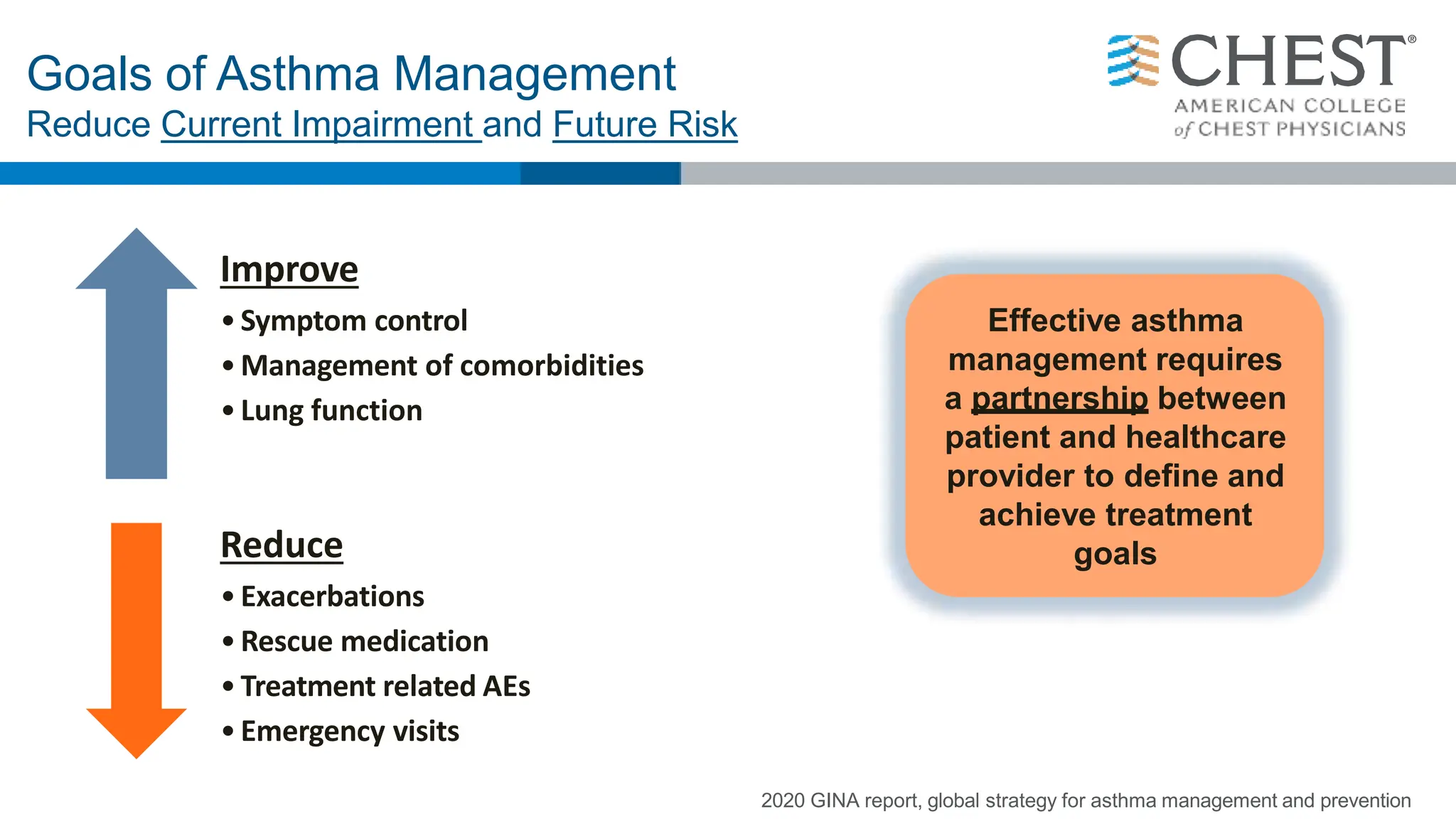
2020 GINA report, global strategy for asthma management and prevention
Goals of Asthma Management
Reduce Current Impairment and Future Risk
Effective asthma
management requires
a partnership between
patient and healthcare
provider to define and
achieve treatment
goals
Improve
•Symptom control
•Management of comorbidities
•Lung function
Reduce
•Exacerbations
•Rescue medication
•Treatment related AEs
•Emergency visits
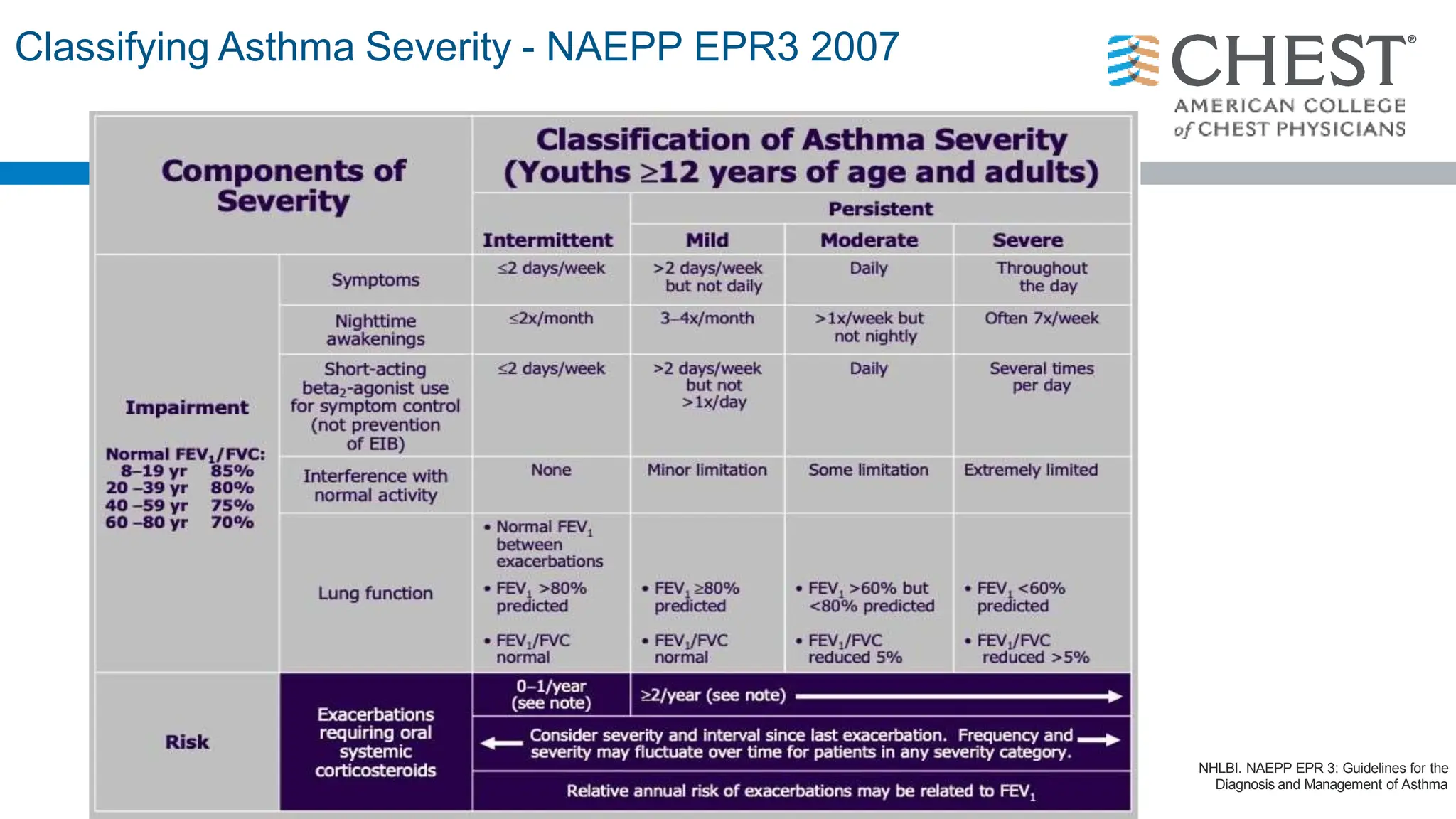
Classifying Asthma Severity - NAEPP EPR3 2007
NHLBI. NAEPP EPR 3: Guidelines for the
Diagnosis and Management of Asthma
Risk
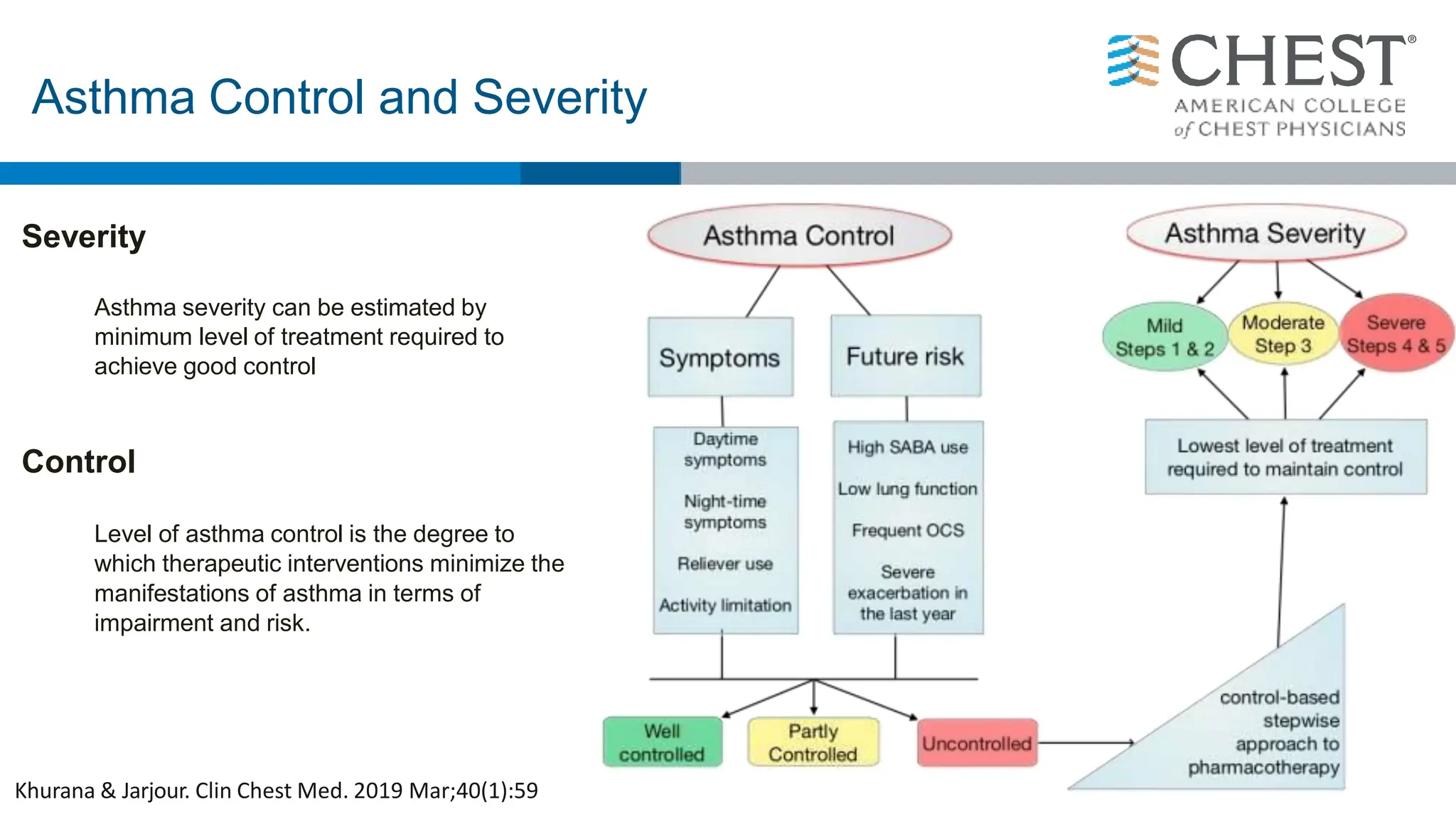
Asthma Control and Severity
Khurana & Jarjour. Clin Chest Med. 2019 Mar;40(1):59
Severity
Asthma severity can be estimated by
minimum level of treatment required to
achieve good control
Control
Level of asthma control is the degree to
which therapeutic interventions minimize the
manifestations of asthma in terms of
impairment and risk.
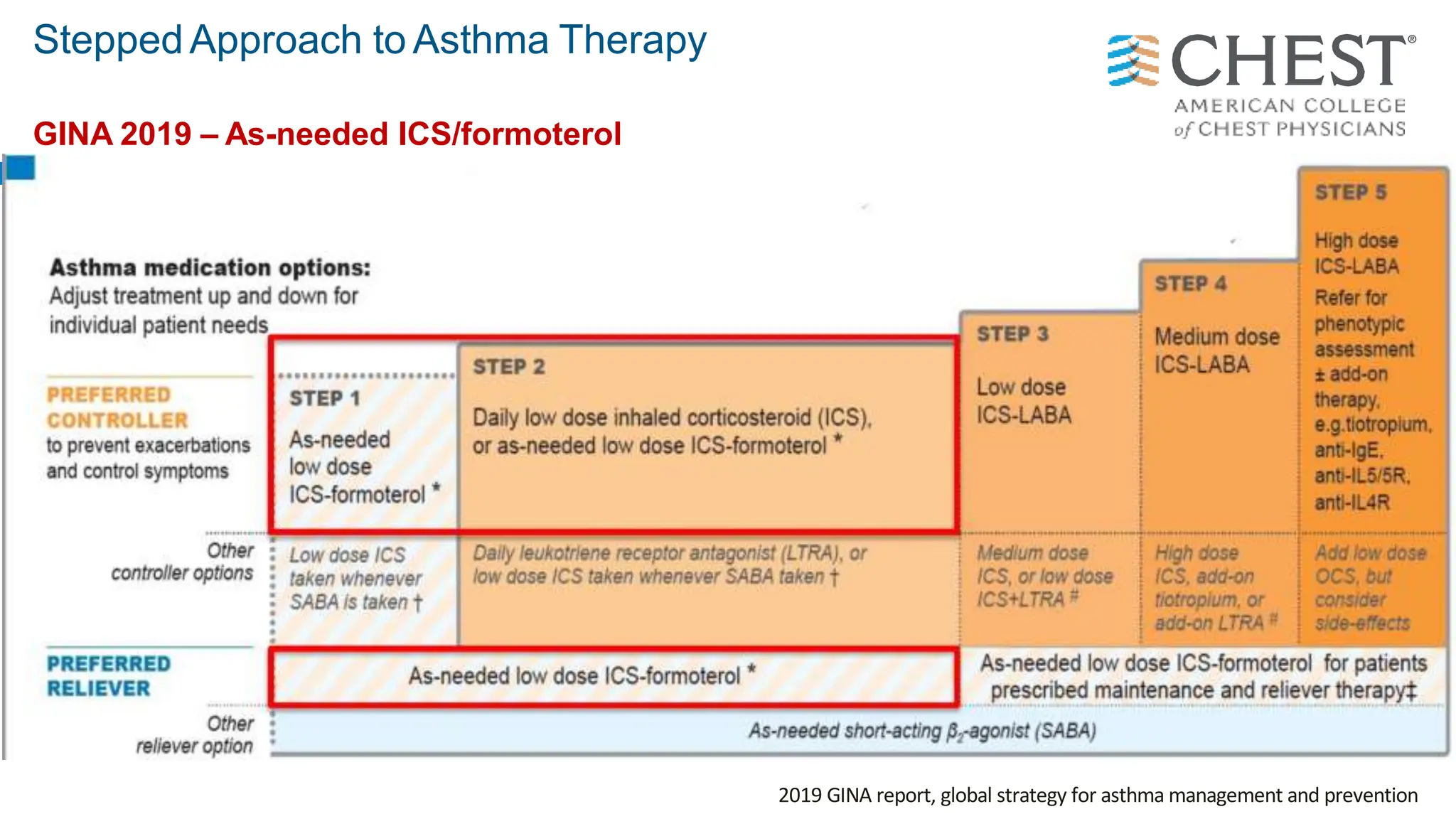
2019 GINA report, global strategy for asthma management and prevention
SteppedApproach to Asthma Therapy
GINA 2019 – As-needed ICS/formoterol
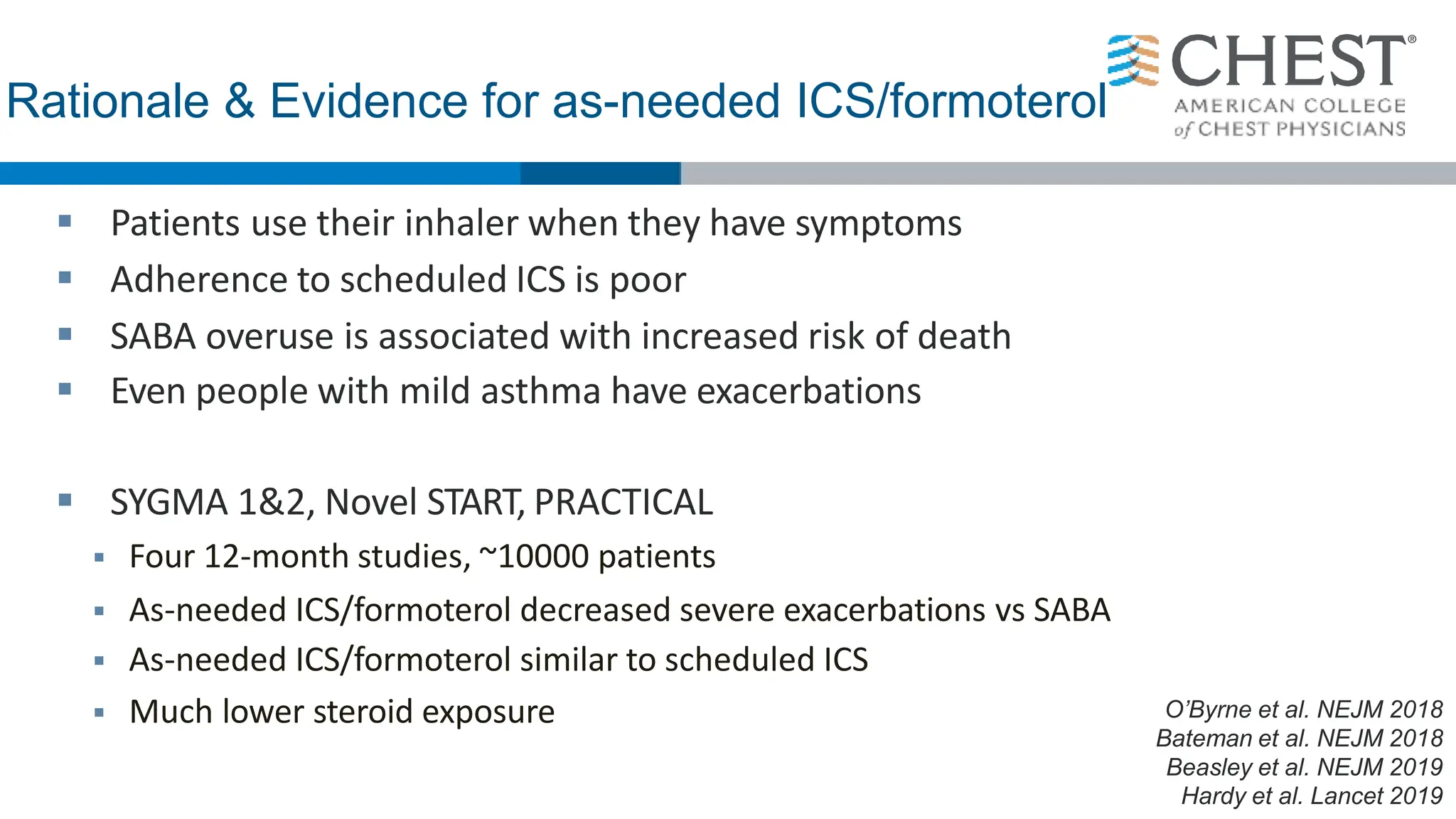
Rationale & Evidence for as-needed ICS/formoterol
 Patients use their inhaler when they have symptoms
 Adherence to scheduled ICS is poor
 SABA overuse is associated with increased risk of death
 Even people with mild asthma have exacerbations
 SYGMA 1&2, Novel START, PRACTICAL
 Four 12-month studies, ~10000 patients
 As-needed ICS/formoterol decreased severe exacerbations vs SABA
 As-needed ICS/formoterol similar to scheduled ICS
 Much lower steroid exposure O’Byrne et al. NEJM 2018
Bateman et al. NEJM 2018
Beasley et al. NEJM 2019
Hardy et al. Lancet 2019
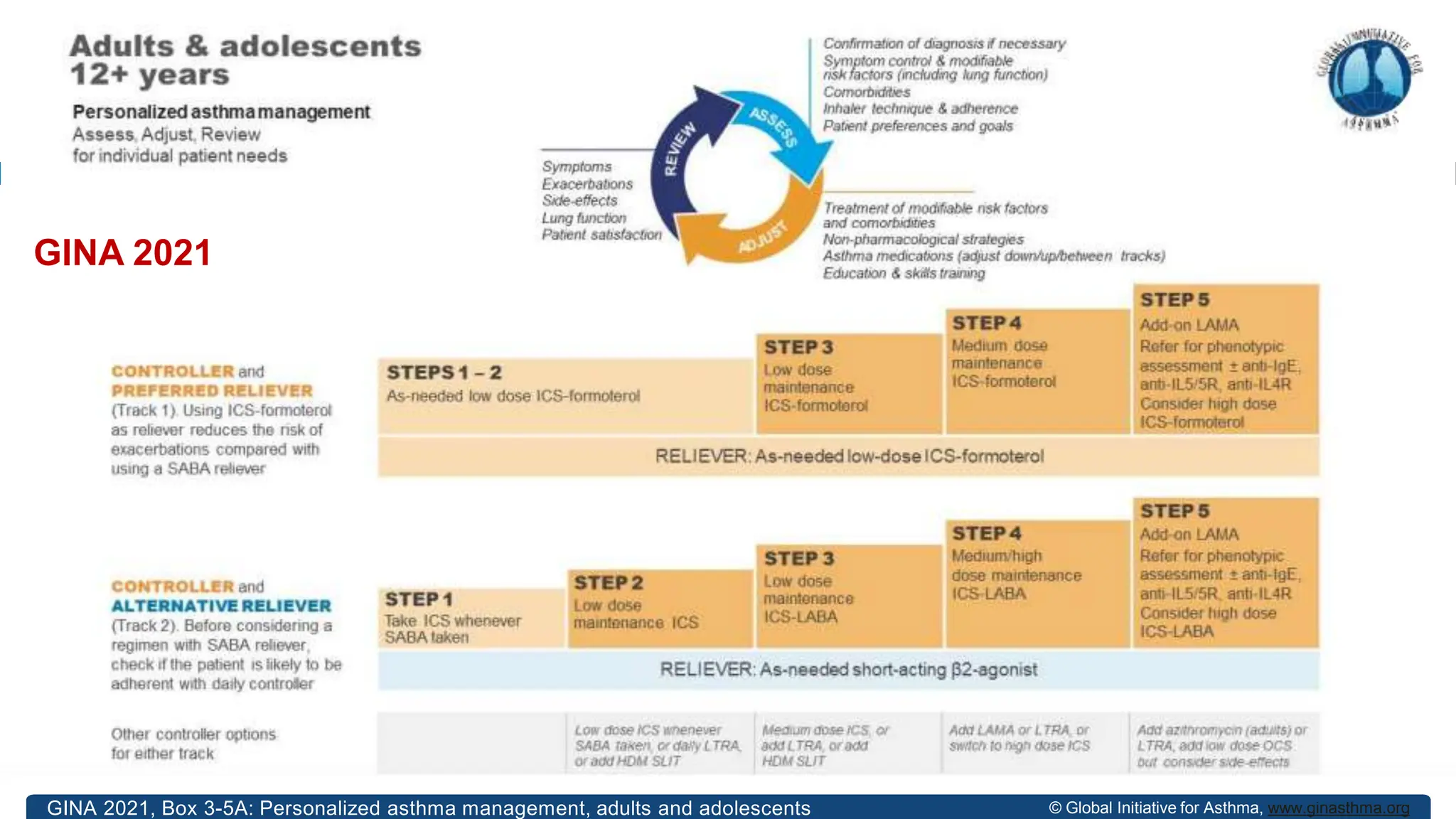
© Global Initiative for Asthma, www.ginasthma.org
GINA 2021, Box 3-5A: Personalized asthma management, adults and adolescents
GINA 2021
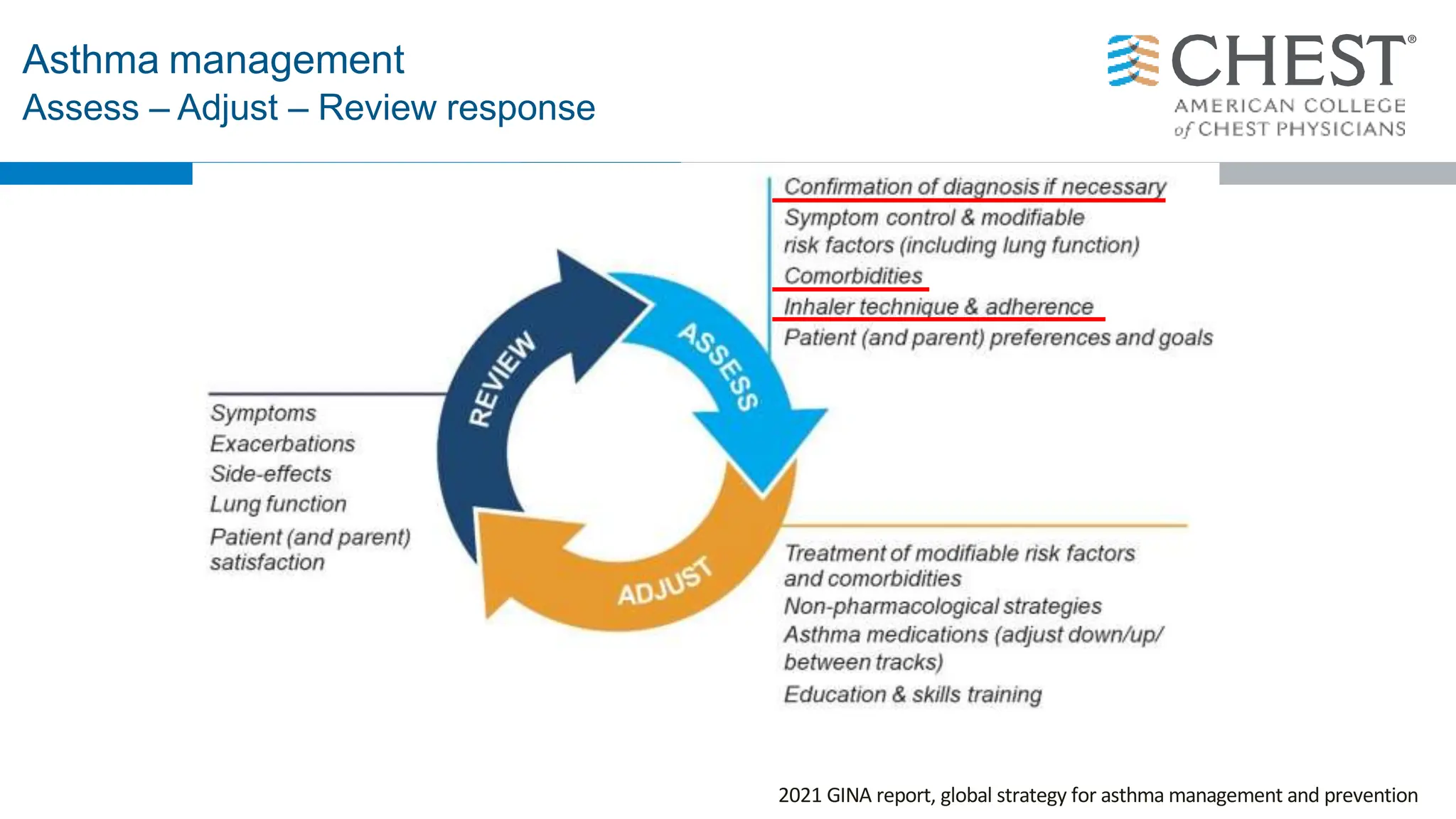
2021 GINA report, global strategy for asthma management and prevention
Asthma management
Assess – Adjust – Review response
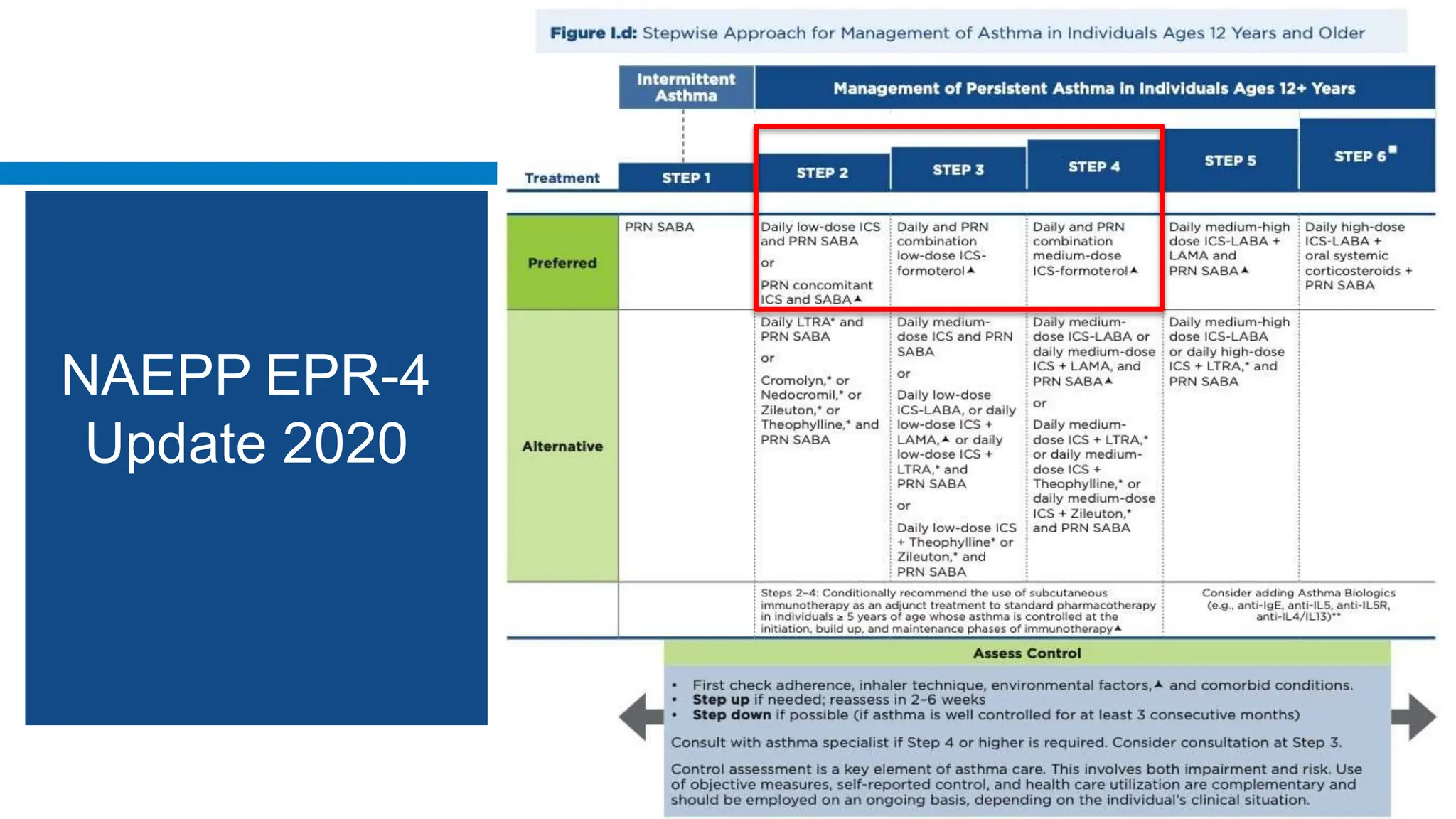
NAEPP EPR-4
Update 2020
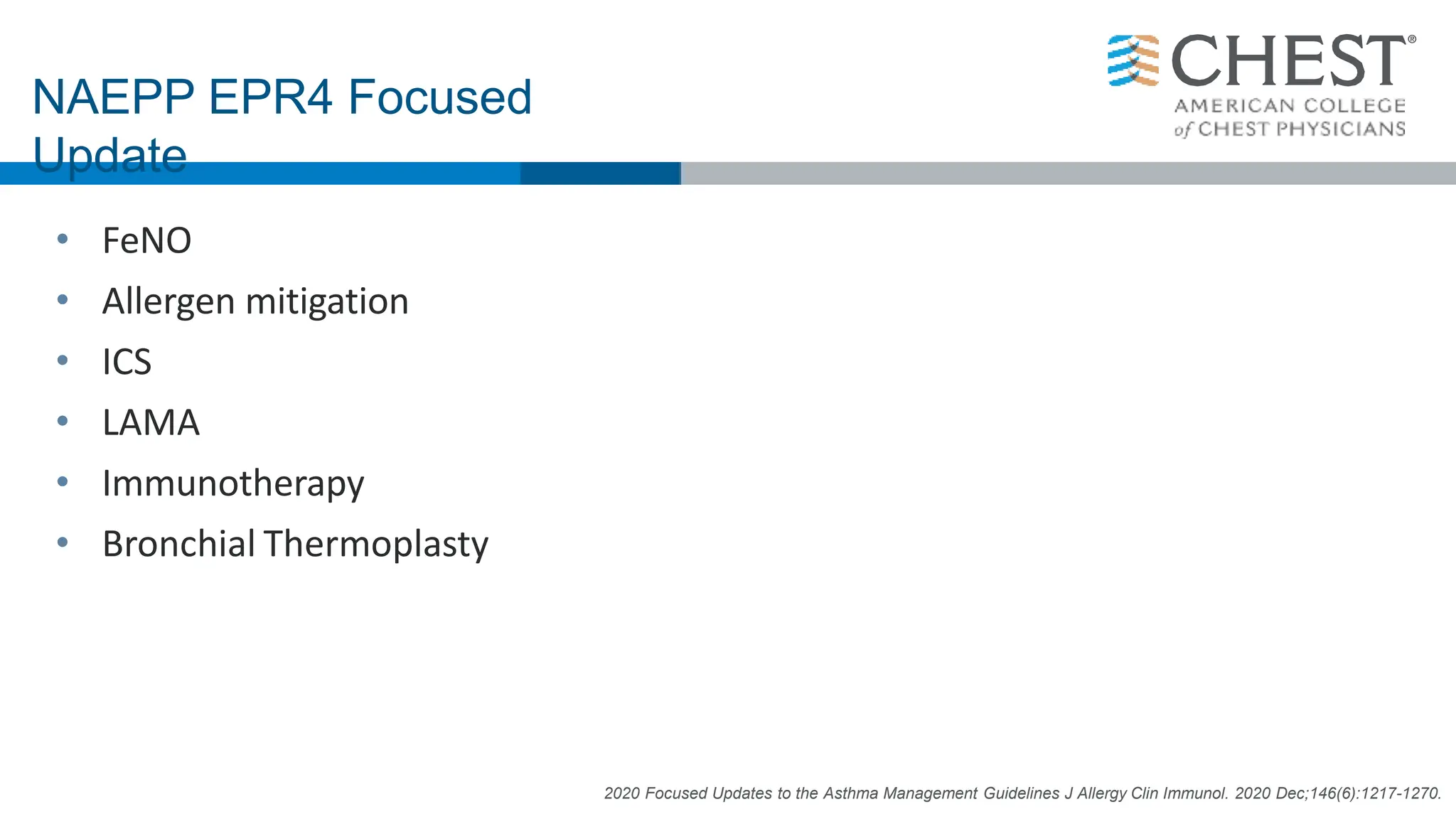
• FeNO
• Allergen mitigation
• ICS
• LAMA
• Immunotherapy
• Bronchial Thermoplasty
NAEPP EPR4 Focused
Update
2020 Focused Updates to the Asthma Management Guidelines J Allergy Clin Immunol. 2020 Dec;146(6):1217-1270.
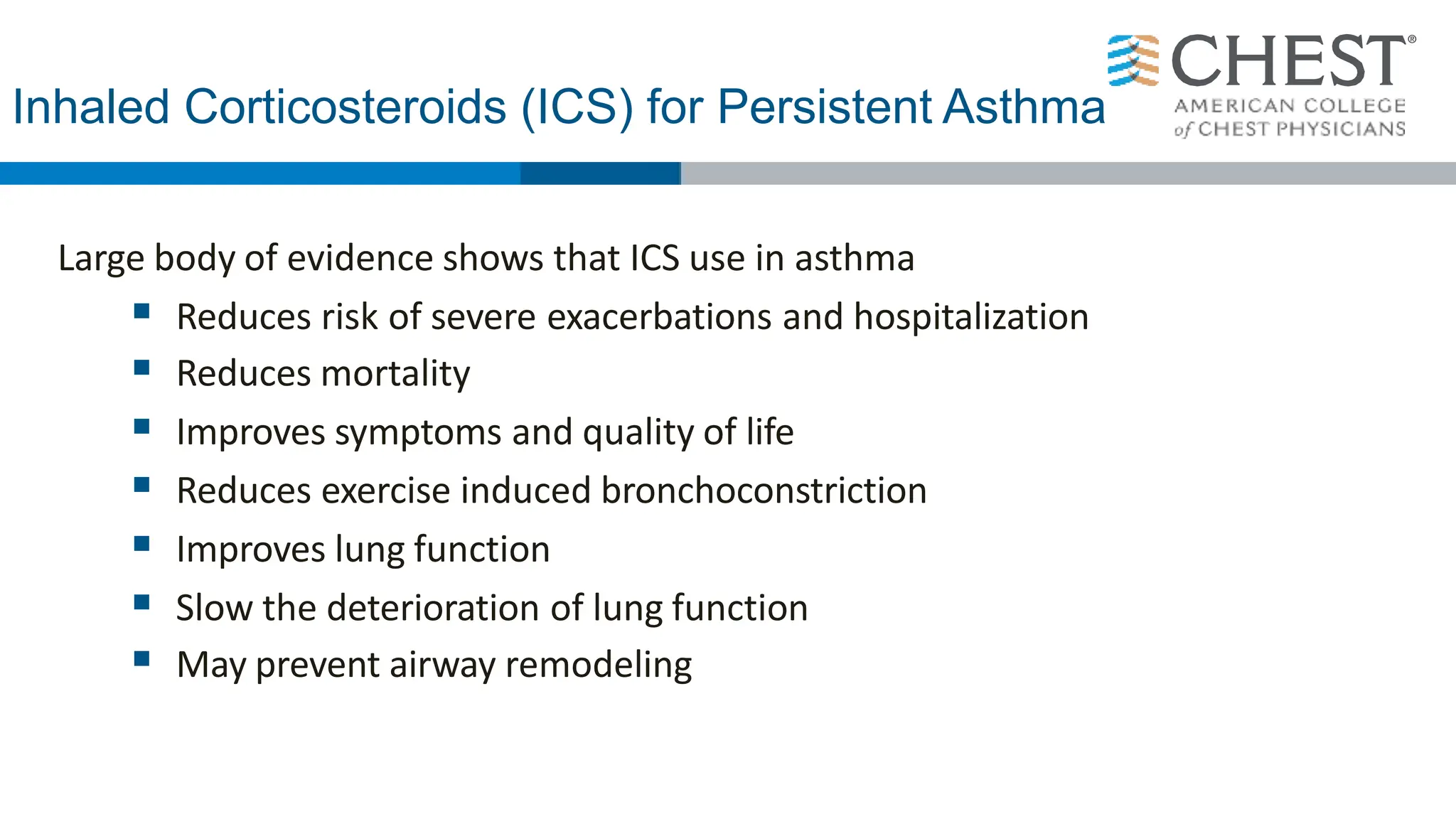
Inhaled Corticosteroids (ICS) for Persistent Asthma
Large body of evidence shows that ICS use in asthma
 Reduces risk of severe exacerbations and hospitalization
 Reduces mortality
 Improves symptoms and quality of life
 Reduces exercise induced bronchoconstriction
 Improves lung function
 Slow the deterioration of lung function
 May prevent airway remodeling
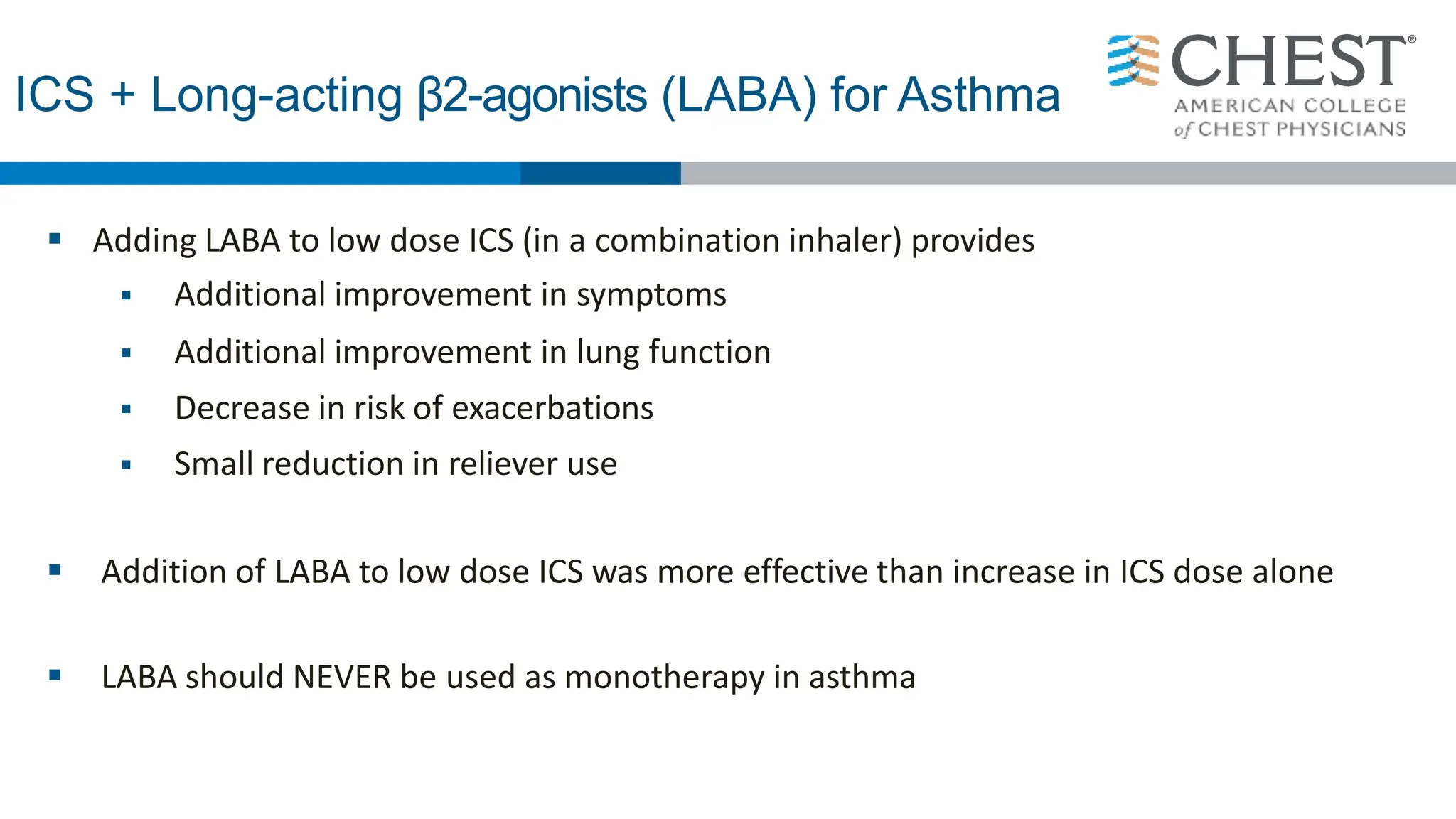
 Adding LABA to low dose ICS (in a combination inhaler) provides
 Additional improvement in symptoms
 Additional improvement in lung function
 Decrease in risk of exacerbations
 Small reduction in reliever use
 Addition of LABA to low dose ICS was more effective than increase in ICS dose alone
 LABA should NEVER be used as monotherapy in asthma
ICS + Long-acting β2-agonists (LABA) for Asthma
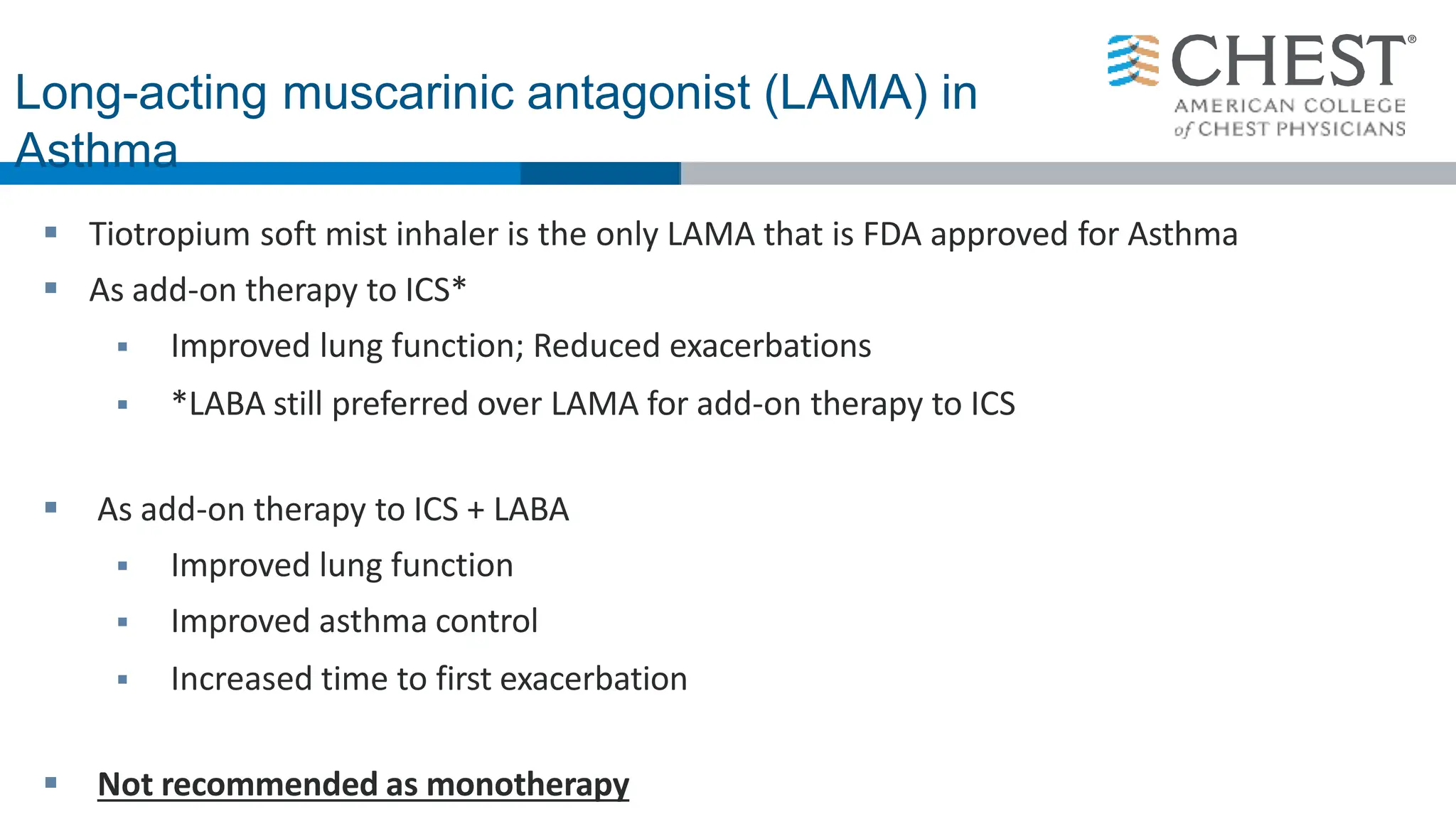
 Tiotropium soft mist inhaler is the only LAMA that is FDA approved for Asthma
 As add-on therapy to ICS*
 Improved lung function; Reduced exacerbations
 *LABA still preferred over LAMA for add-on therapy to ICS
 As add-on therapy to ICS + LABA
 Improved lung function
 Improved asthma control
 Increased time to first exacerbation
 Not recommended as monotherapy
Long-acting muscarinic antagonist (LAMA) in
Asthma
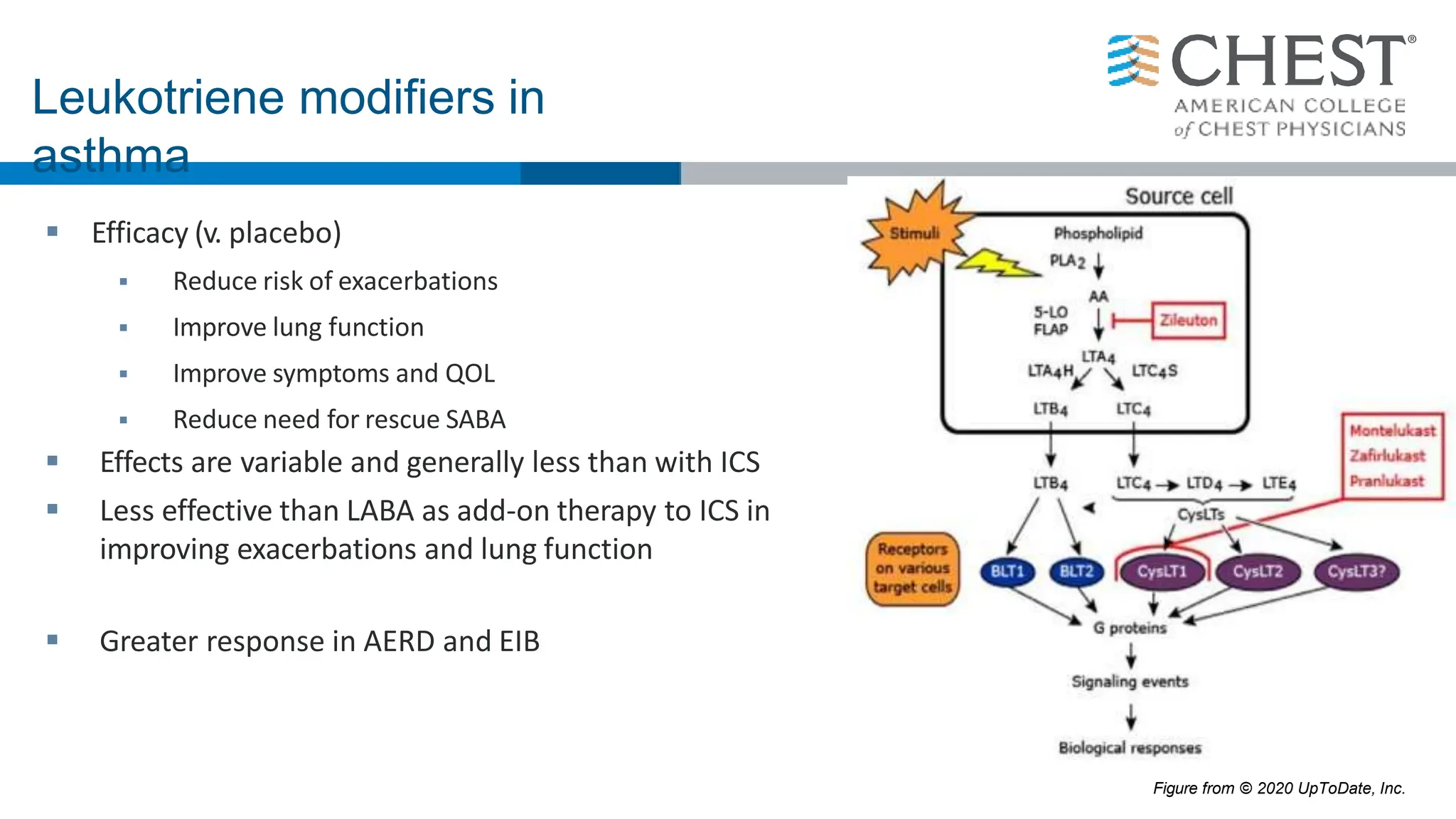
 Efficacy (v. placebo)
 Reduce risk of exacerbations
 Improve lung function
 Improve symptoms and QOL
 Reduce need for rescue SABA
 Effects are variable and generally less than with ICS
 Less effective than LABA as add-on therapy to ICS in
improving exacerbations and lung function
 Greater response in AERD and EIB
Leukotriene modifiers in
asthma
Figure from © 2020 UpToDate, Inc.
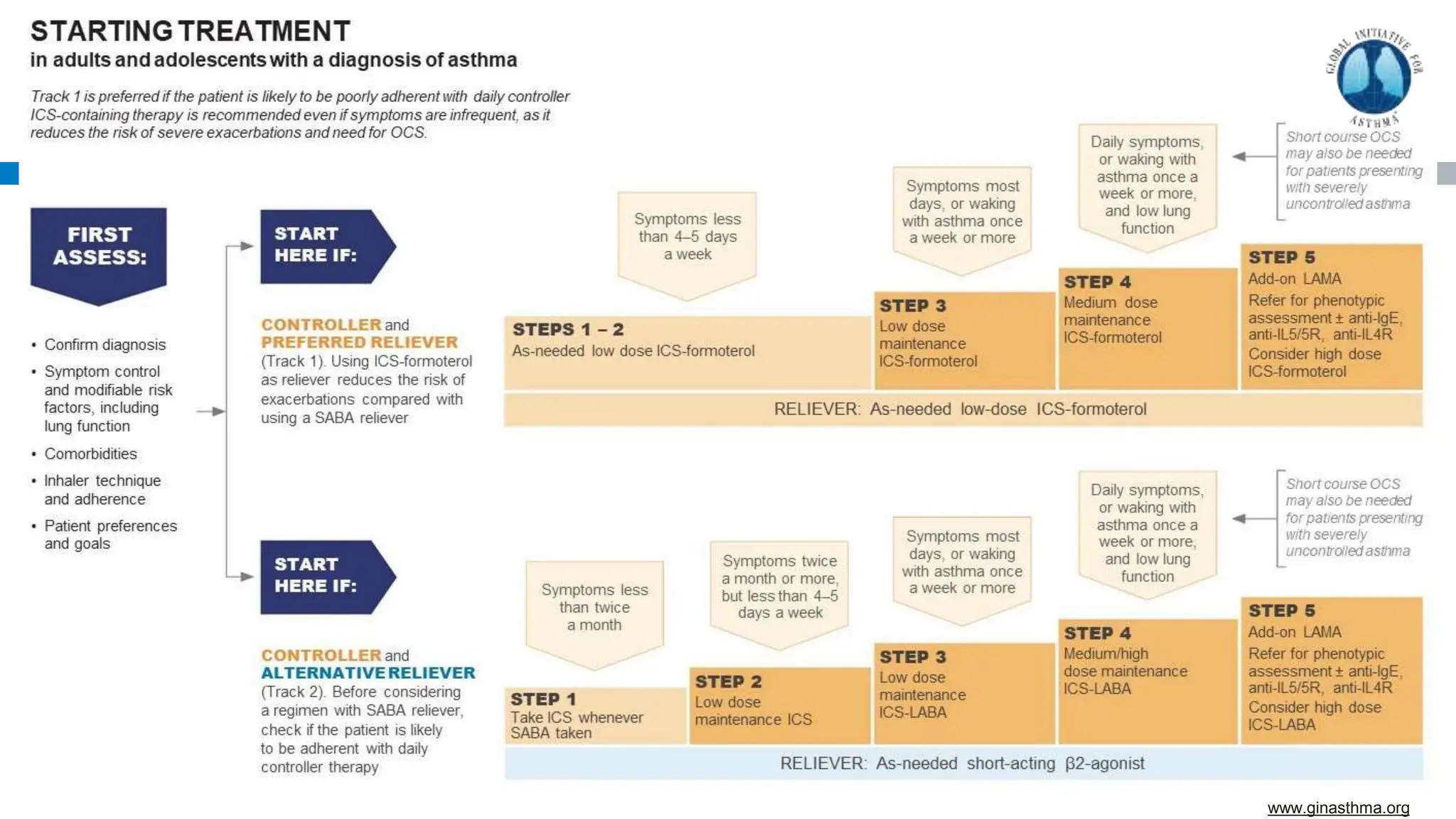
© Global Initiative for Asthma, www.ginasthma.org
GINA 2021, Box 3-4Bii: Starting asthma treatment in adults and adolescents
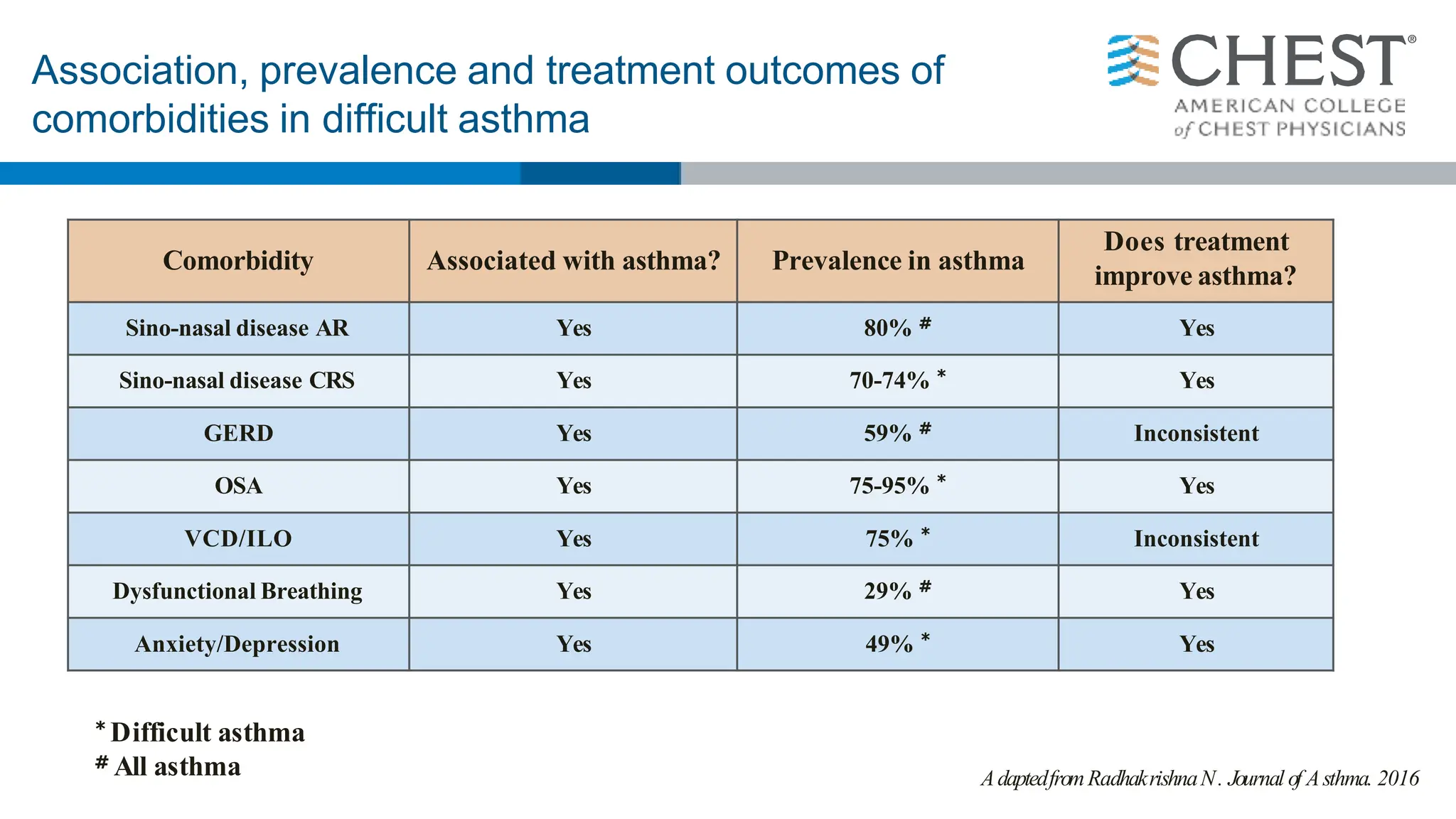
Association, prevalence and treatment outcomes of
comorbidities in difficult asthma
AdaptedfromRadhakrishnaN. Journal of Asthma. 2016
Comorbidity Associated with asthma? Prevalence in asthma
Does treatment
improve asthma?
Sino-nasal disease AR Yes 80% # Yes
Sino-nasal disease CRS Yes 70-74% * Yes
GERD Yes 59% # Inconsistent
OSA Yes 75-95% * Yes
VCD/ILO Yes 75% * Inconsistent
Dysfunctional Breathing Yes 29% # Yes
Anxiety/Depression Yes 49% * Yes
* Difficult asthma
# All asthma
GERD &
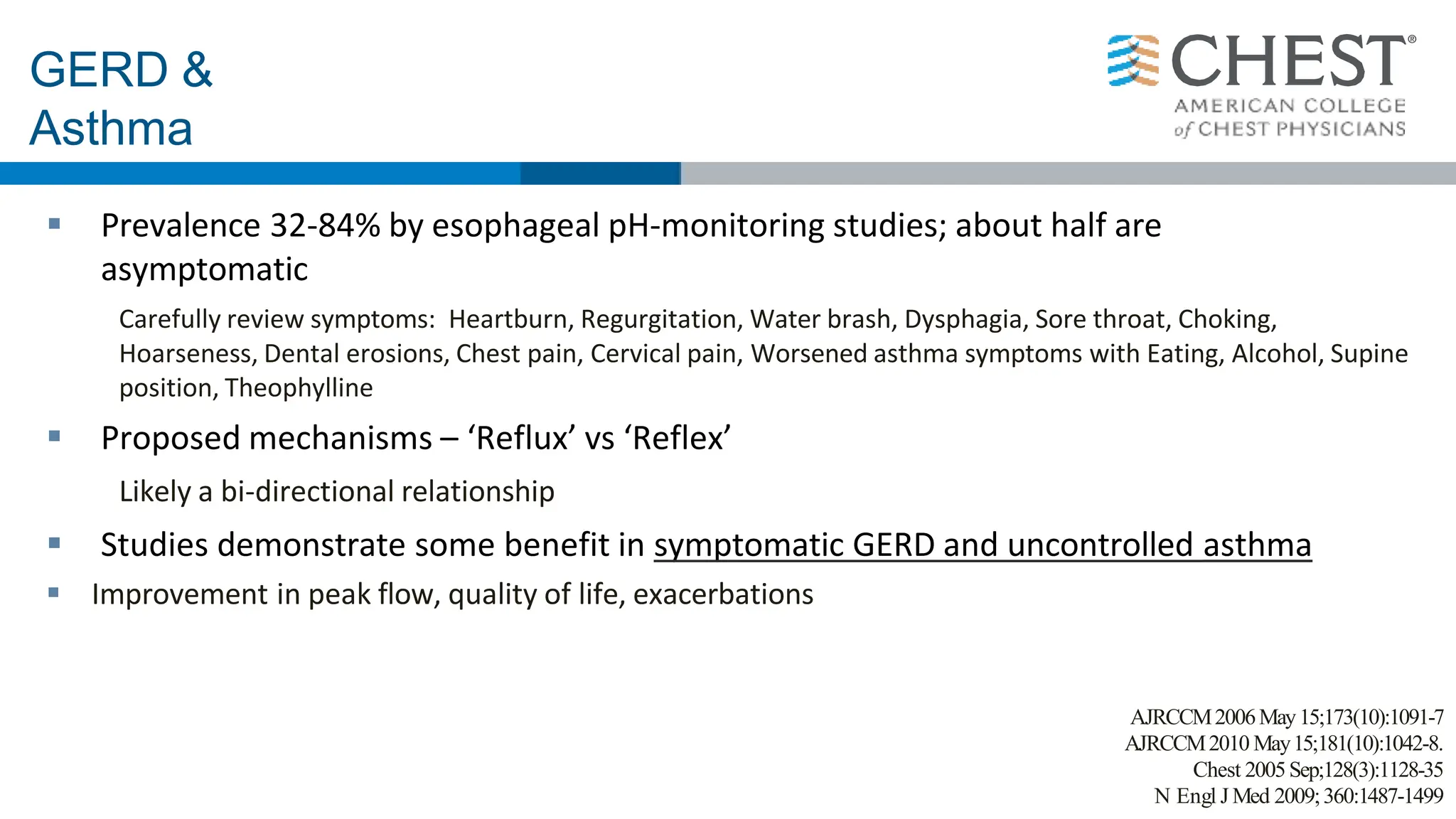
Asthma
 Prevalence 32-84% by esophageal pH-monitoring studies; about half are
asymptomatic
Carefully review symptoms: Heartburn, Regurgitation, Water brash, Dysphagia, Sore throat, Choking,
Hoarseness, Dental erosions, Chest pain, Cervical pain, Worsened asthma symptoms with Eating, Alcohol, Supine
position, Theophylline
 Proposed mechanisms – ‘Reflux’ vs ‘Reflex’
Likely a bi-directional relationship
 Studies demonstrate some benefit in symptomatic GERD and uncontrolled asthma
 Improvement in peak flow, quality of life, exacerbations
AJRCCM2006May15;173(10):1091-7
AJRCCM2010 May15;181(10):1042-8.
Chest 2005Sep;128(3):1128-35
N Engl J Med 2009;360:1487-1499
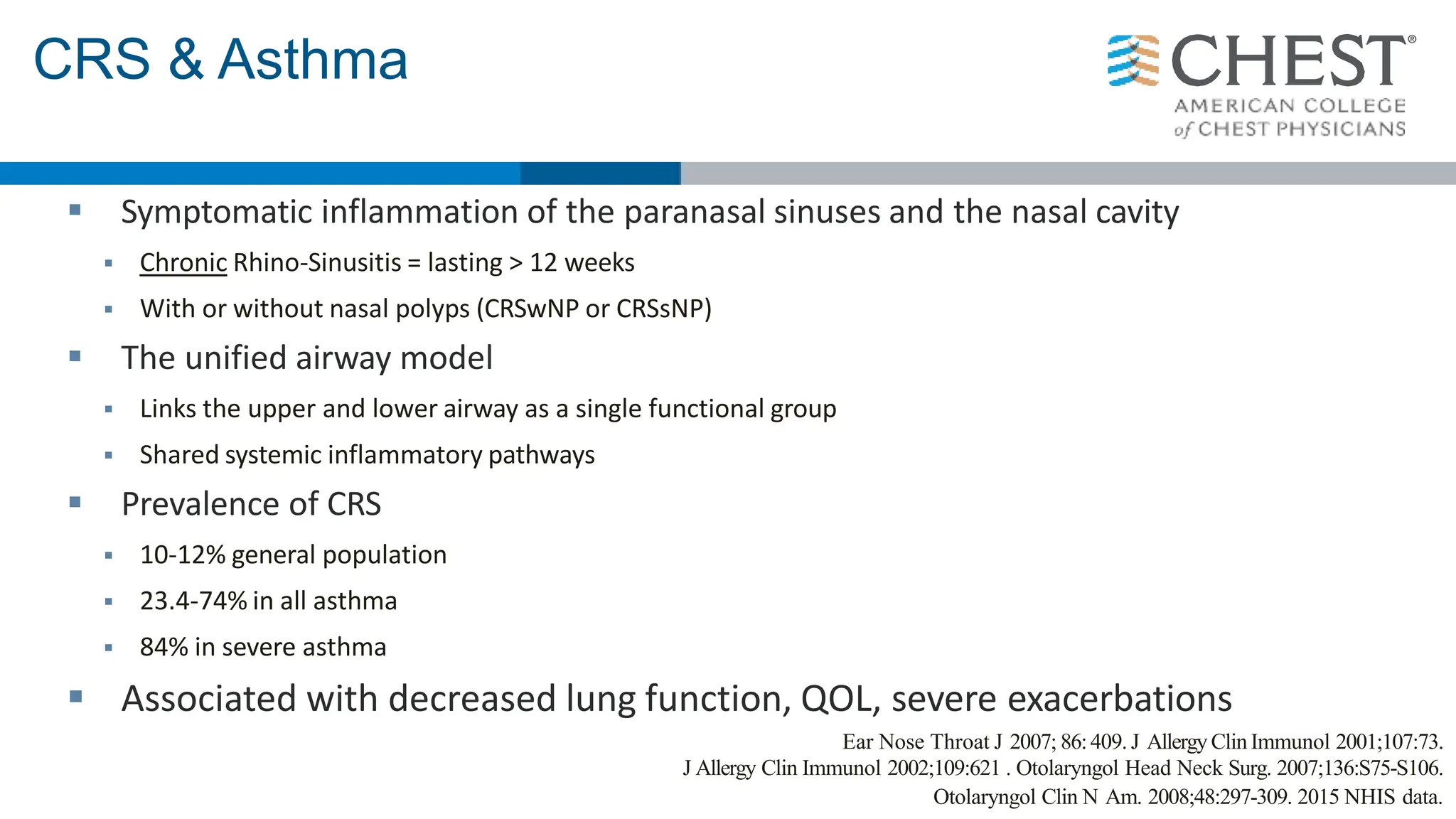
CRS & Asthma
 Symptomatic inflammation of the paranasal sinuses and the nasal cavity
 Chronic Rhino-Sinusitis = lasting > 12 weeks
 With or without nasal polyps (CRSwNP or CRSsNP)
 The unified airway model
 Links the upper and lower airway as a single functional group
 Shared systemic inflammatory pathways
 Prevalence of CRS
 10-12% general population
 23.4-74% in all asthma
 84% in severe asthma
 Associated with decreased lung function, QOL, severe exacerbations
Ear Nose Throat J 2007; 86:409. J Allergy Clin Immunol 2001;107:73.
J Allergy Clin Immunol 2002;109:621 . Otolaryngol Head Neck Surg. 2007;136:S75-S106.
Otolaryngol Clin N Am. 2008;48:297-309. 2015 NHIS data.
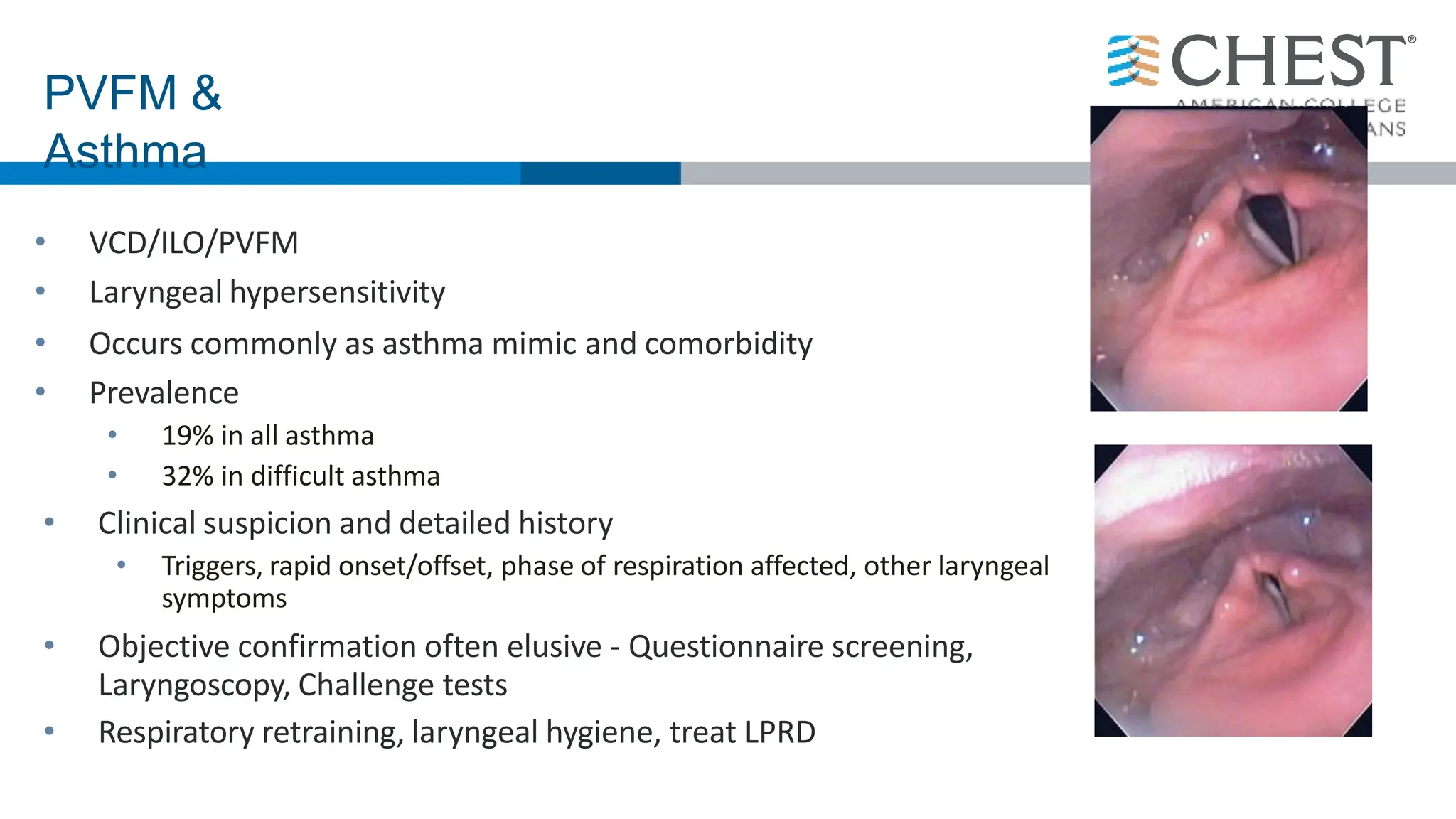
PVFM &
Asthma
• VCD/ILO/PVFM
• Laryngeal hypersensitivity
• Occurs commonly as asthma mimic and comorbidity
• Prevalence
• 19% in all asthma
• 32% in difficult asthma
• Clinical suspicion and detailed history
• Triggers, rapid onset/offset, phase of respiration affected, other laryngeal
symptoms
• Objective confirmation often elusive - Questionnaire screening,
Laryngoscopy, Challenge tests
• Respiratory retraining, laryngeal hygiene, treat LPRD
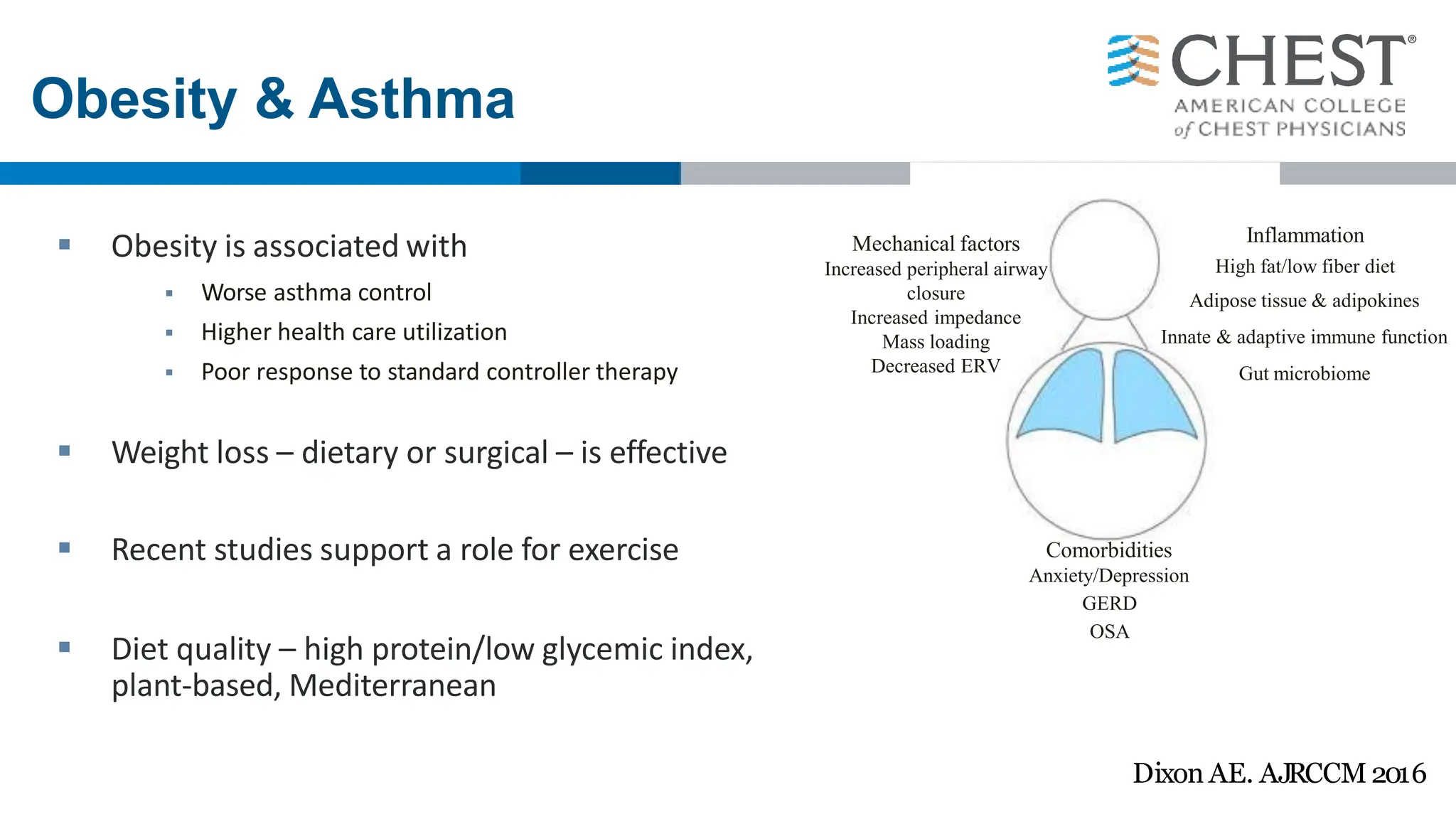
Obesity & Asthma
 Obesity is associated with
 Worse asthma control
 Higher health care utilization
 Poor response to standard controller therapy
 Weight loss – dietary or surgical – is effective
 Recent studies support a role for exercise
 Diet quality – high protein/low glycemic index,
plant-based, Mediterranean
Inflammation
High fat/low fiber diet
Adipose tissue & adipokines
Innate & adaptive immune function
Gut microbiome
Mechanical factors
Increased peripheral airway
closure
Increased impedance
Mass loading
Decreased ERV
Comorbidities
Anxiety/Depression
GERD
OSA
Dixon AE. AJRCCM2016
Asthma- Part 4
Advanced Therapies in Severe Asthma
Sandhya Khurana, MD, FCCP
Professor, Pulmonary & Critical Care Medicine
Director, Mary Parkes Center for Asthma, Allergy & Pulmonary Care
University of Rochester, NY
• Define severe asthma and prevalence
• Review available biologic therapies and mechanism of action
• Discuss management of non-T2 asthma
Learning Objectives
 Research funding – GSK, Sanofi
 Royalties – Springer
Disclosures
Asthma that requires treatment at GINA steps 4–5 or systemic CS for
>50% of the previous year to prevent it from becoming ‘‘uncontrolled’’
or remains ‘‘uncontrolled‘‘ despite this therapy
Or
Controlled asthma that worsens on tapering of these high doses of ICS
or systemic CS (or additional biologics)
Severe Asthma - Definition
Chung et al. Eur Respir J 2014; 43: 343–373
© Global Initiative for Asthma, www.ginasthma.org
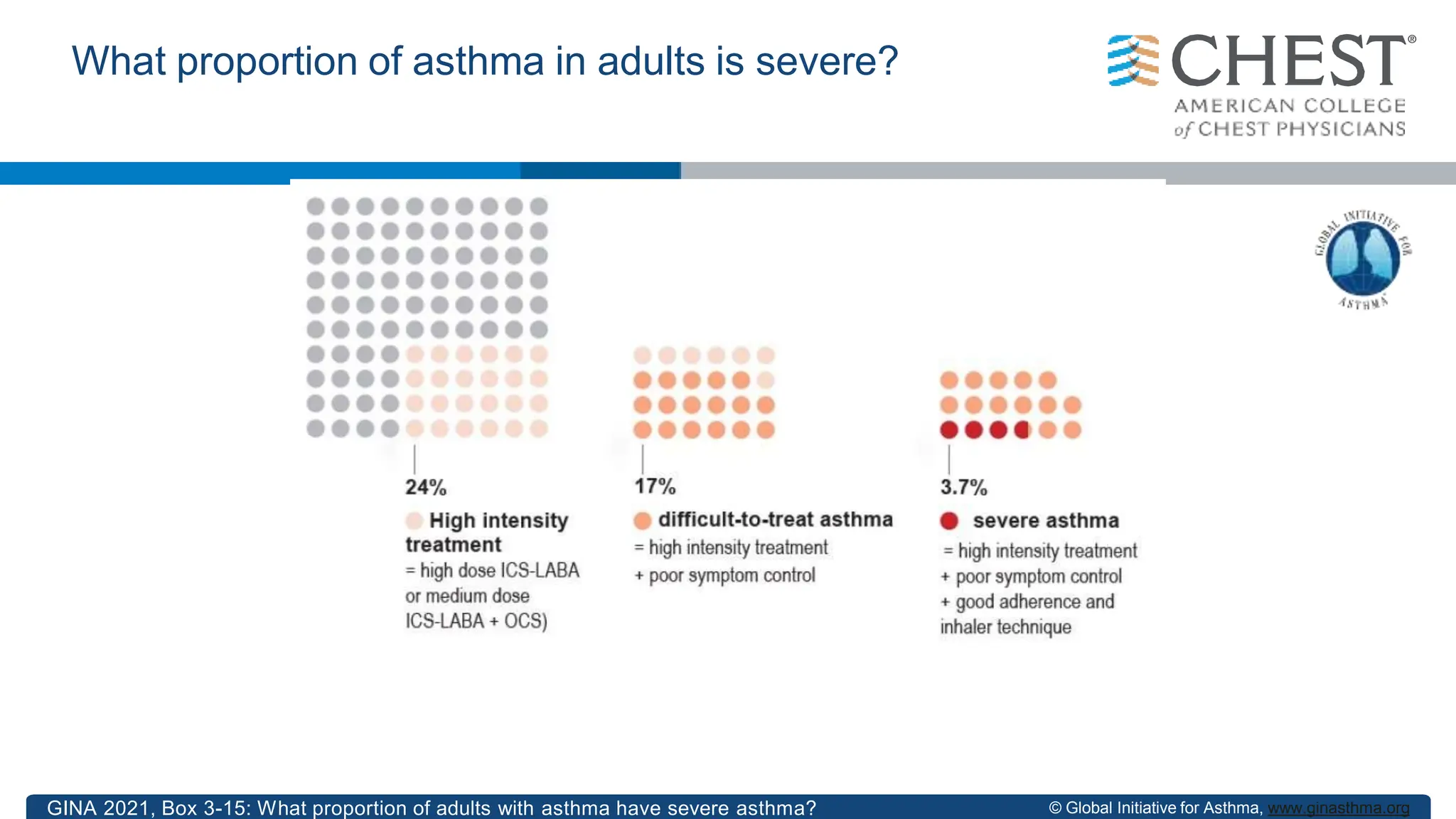
What proportion of asthma in adults is severe?
GINA 2021, Box 3-15: What proportion of adults with asthma have severe asthma?
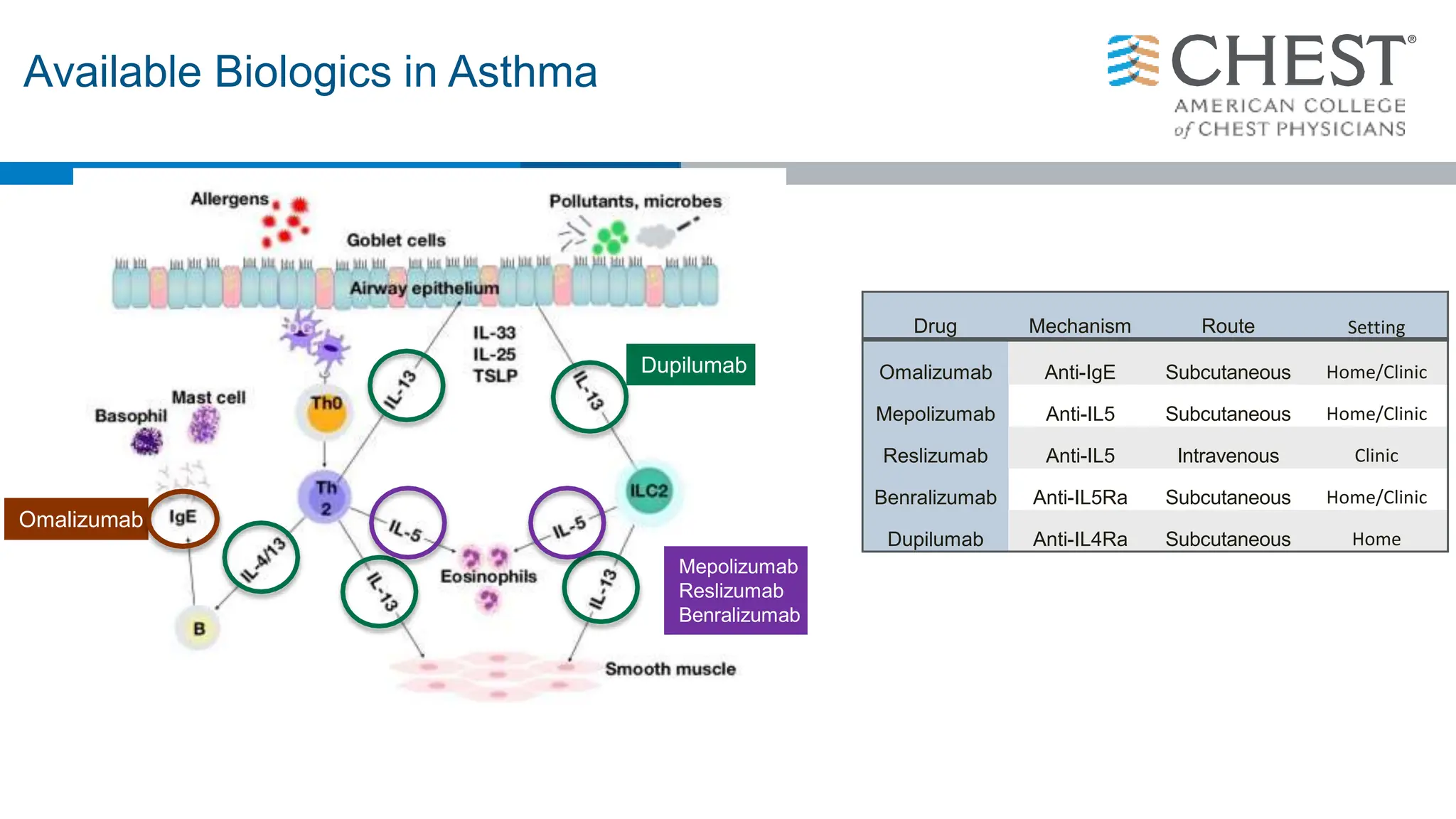
Available Biologics in Asthma
Drug Mechanism Route Setting
Omalizumab Anti-IgE Subcutaneous Home/Clinic
Mepolizumab Anti-IL5 Subcutaneous Home/Clinic
Reslizumab Anti-IL5 Intravenous Clinic
Benralizumab Anti-IL5Ra Subcutaneous Home/Clinic
Dupilumab Anti-IL4Ra Subcutaneous Home
Omalizumab
Dupilumab
Mepolizumab
Reslizumab
Benralizumab
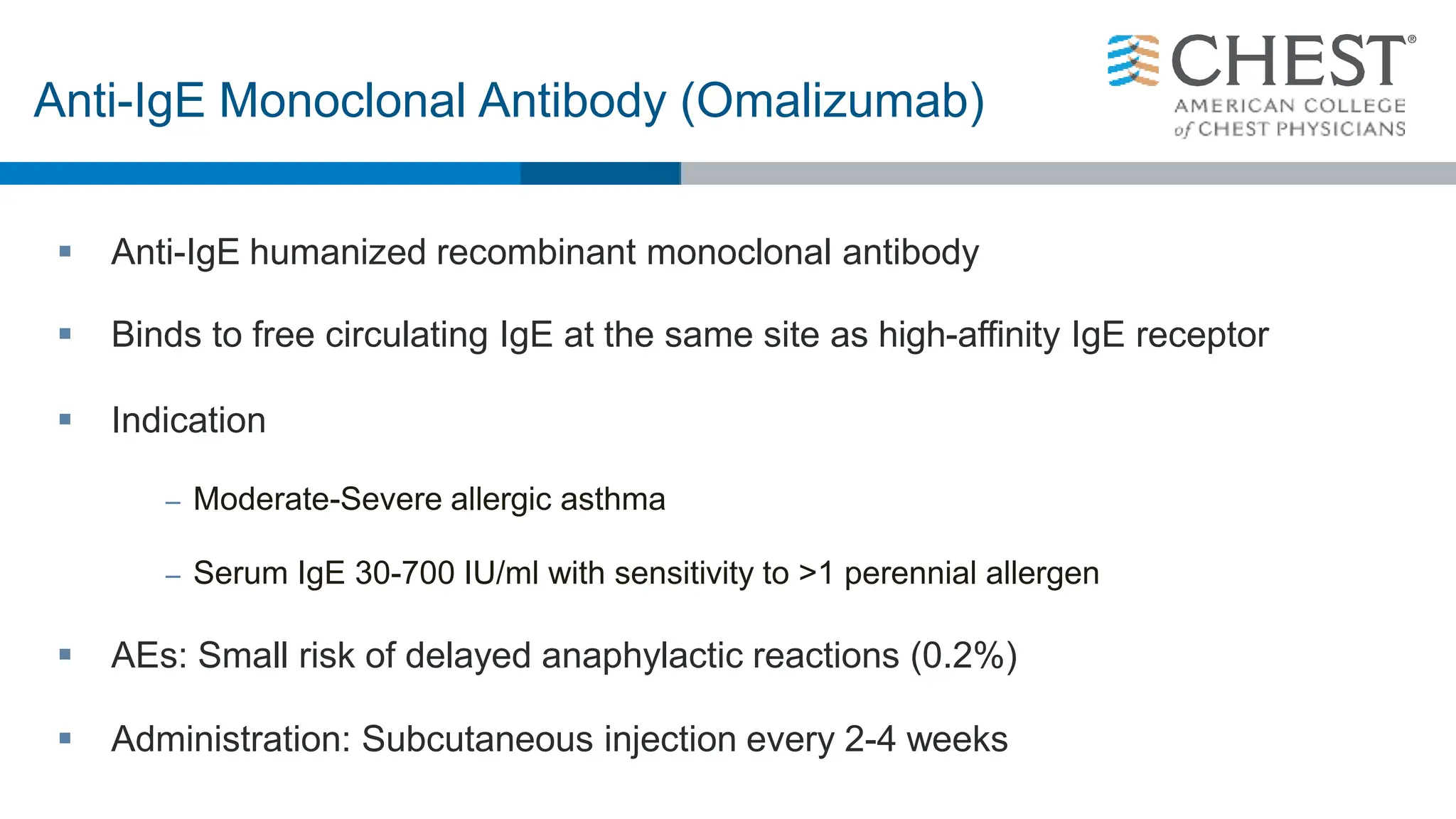
 Anti-IgE humanized recombinant monoclonal antibody
 Binds to free circulating IgE at the same site as high-affinity IgE receptor
 Indication
– Moderate-Severe allergic asthma
– Serum IgE 30-700 IU/ml with sensitivity to >1 perennial allergen
 AEs: Small risk of delayed anaphylactic reactions (0.2%)
 Administration: Subcutaneous injection every 2-4 weeks
Anti-IgE Monoclonal Antibody (Omalizumab)
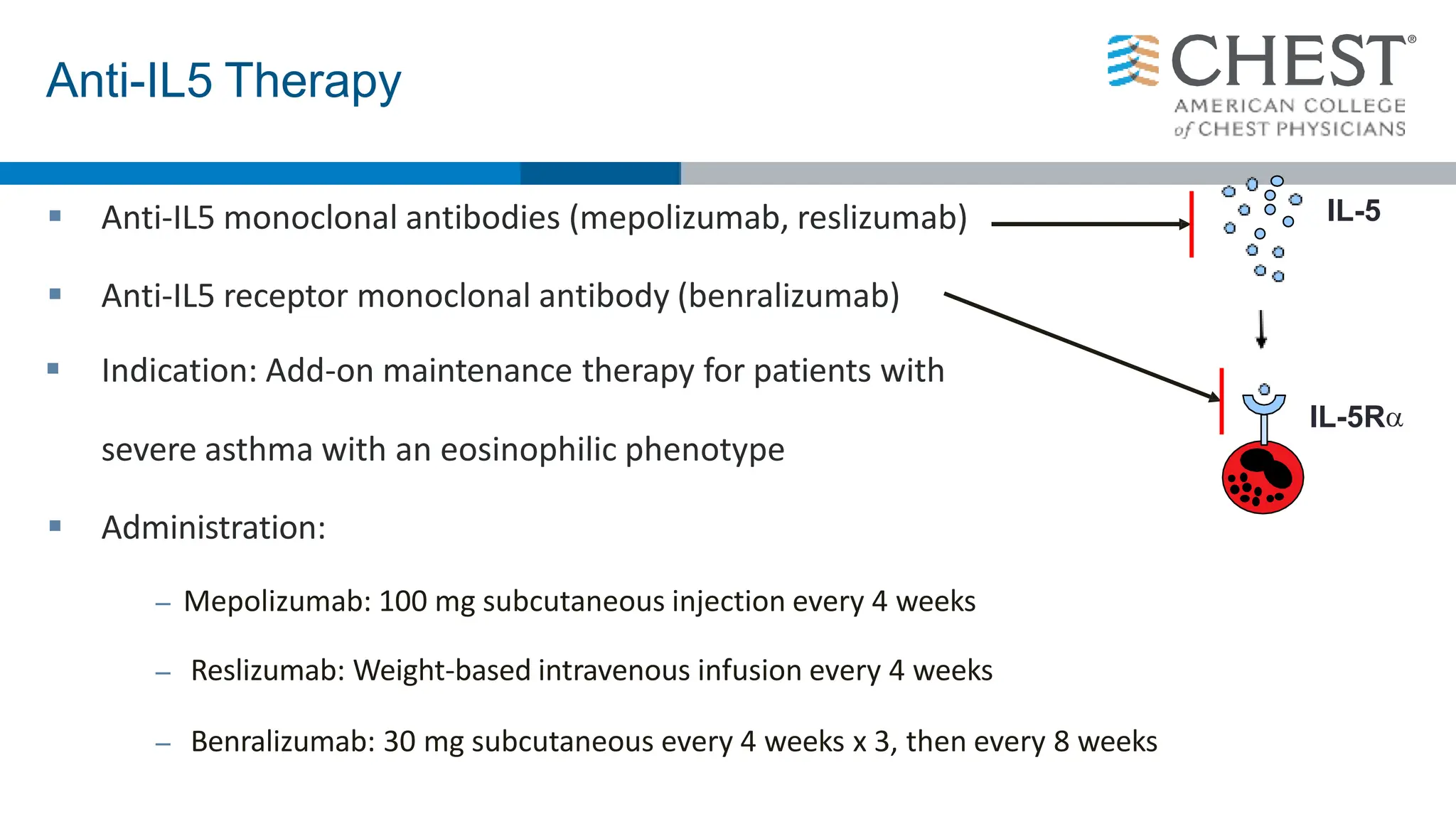
 Anti-IL5 monoclonal antibodies (mepolizumab, reslizumab)
 Anti-IL5 receptor monoclonal antibody (benralizumab)
 Indication: Add-on maintenance therapy for patients with
severe asthma with an eosinophilic phenotype
 Administration:
– Mepolizumab: 100 mg subcutaneous injection every 4 weeks
– Reslizumab: Weight-based intravenous infusion every 4 weeks
– Benralizumab: 30 mg subcutaneous every 4 weeks x 3, then every 8 weeks
Anti-IL5 Therapy
IL-5
IL-5R
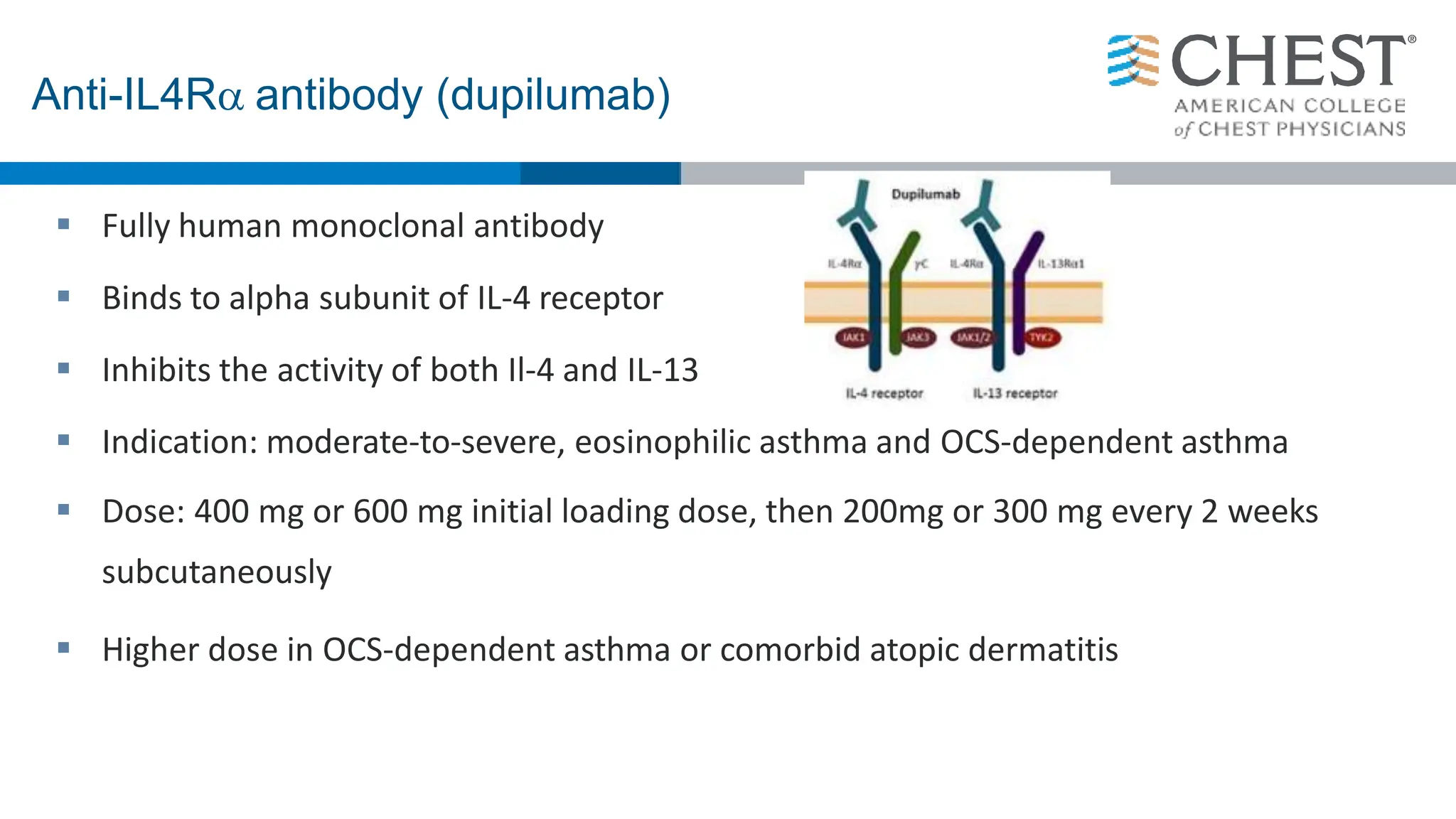
 Fully human monoclonal antibody
 Binds to alpha subunit of IL-4 receptor
 Inhibits the activity of both Il-4 and IL-13
 Indication: moderate-to-severe, eosinophilic asthma and OCS-dependent asthma
 Dose: 400 mg or 600 mg initial loading dose, then 200mg or 300 mg every 2 weeks
subcutaneously
 Higher dose in OCS-dependent asthma or comorbid atopic dermatitis
Anti-IL4R antibody (dupilumab)
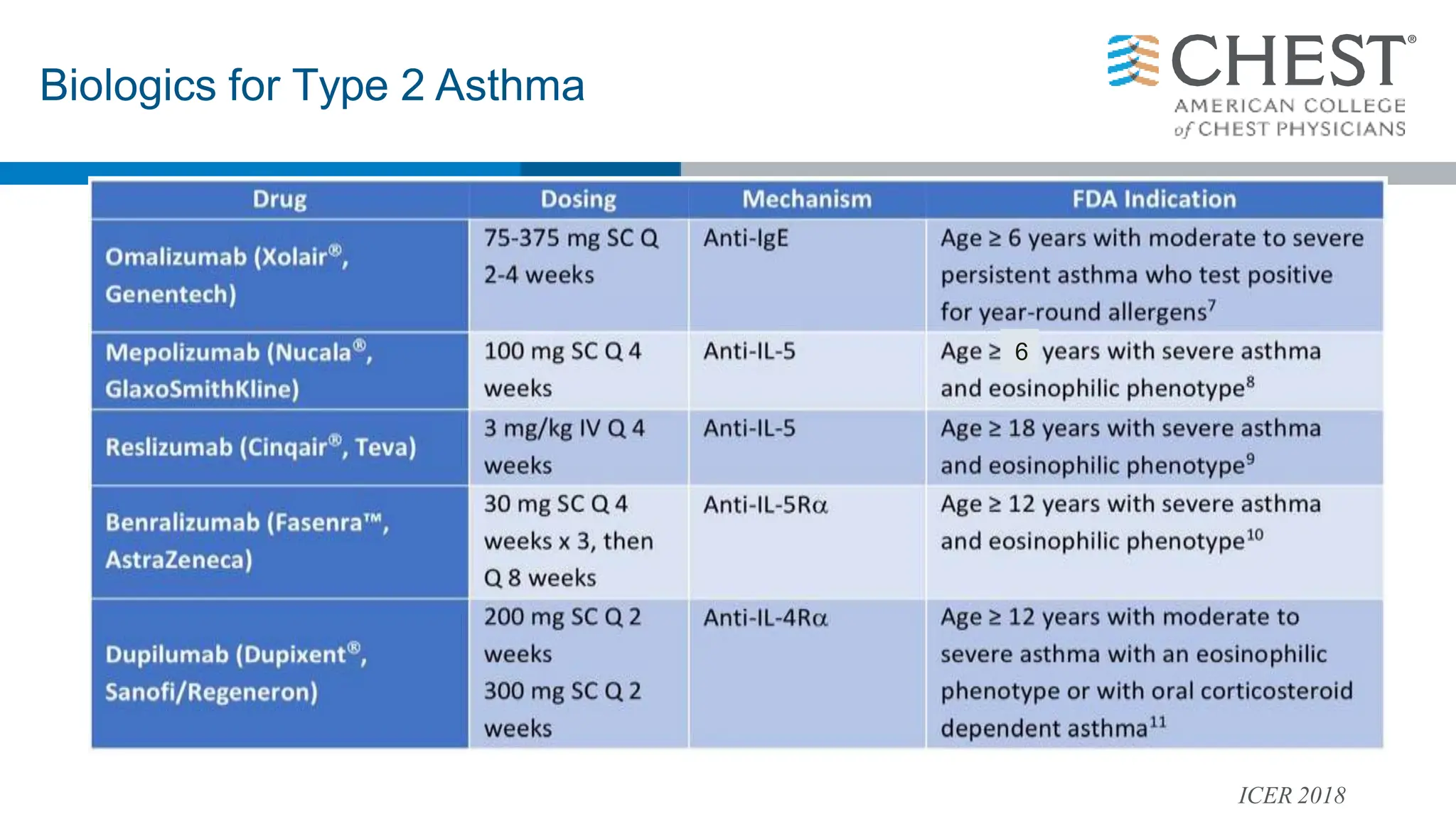
Biologics for Type 2 Asthma
ICER 2018
6
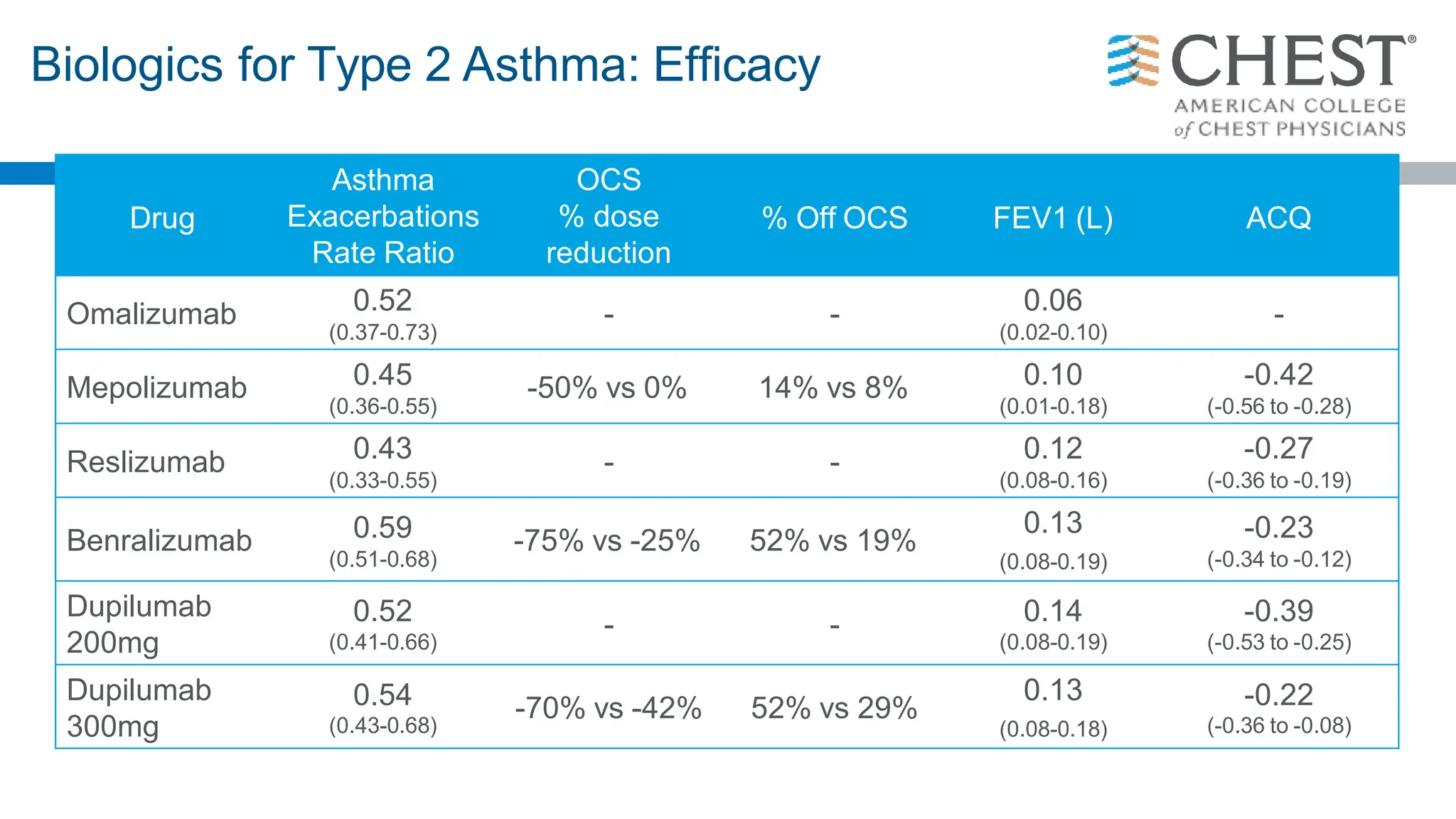
Biologics for Type 2 Asthma: Efficacy
Drug
Asthma
Exacerbations
Rate Ratio
OCS
% dose
reduction
% Off OCS FEV1 (L) ACQ
Omalizumab 0.52 - - 0.06 -
(0.37-0.73) (0.02-0.10)
Mepolizumab 0.45 -50% vs 0% 14% vs 8% 0.10 -0.42
(0.36-0.55) (0.01-0.18) (-0.56 to -0.28)
Reslizumab 0.43 - - 0.12 -0.27
(0.33-0.55) (0.08-0.16) (-0.36 to -0.19)
Benralizumab 0.59 -75% vs -25% 52% vs 19%
0.13 -0.23
(0.51-0.68) (0.08-0.19) (-0.34 to -0.12)
Dupilumab
200mg
0.52
(0.41-0.66)
- - 0.14
(0.08-0.19)
-0.39
(-0.53 to -0.25)
Dupilumab
300mg
0.54
(0.43-0.68)
-70% vs -42% 52% vs 29%
0.13
(0.08-0.18)
-0.22
(-0.36 to -0.08)
Treatment of Type 2 Low Asthma
 40 - 50% of asthma patients do not have Type 2 inflammation
 Severe, uncontrolled asthma without evidence for Type 2 inflammation
referred to as ‘Type 2 low asthma’
 Potential targets for Type 2 low asthma:
 Macrolide antibiotics
 Bronchial Thermoplasty
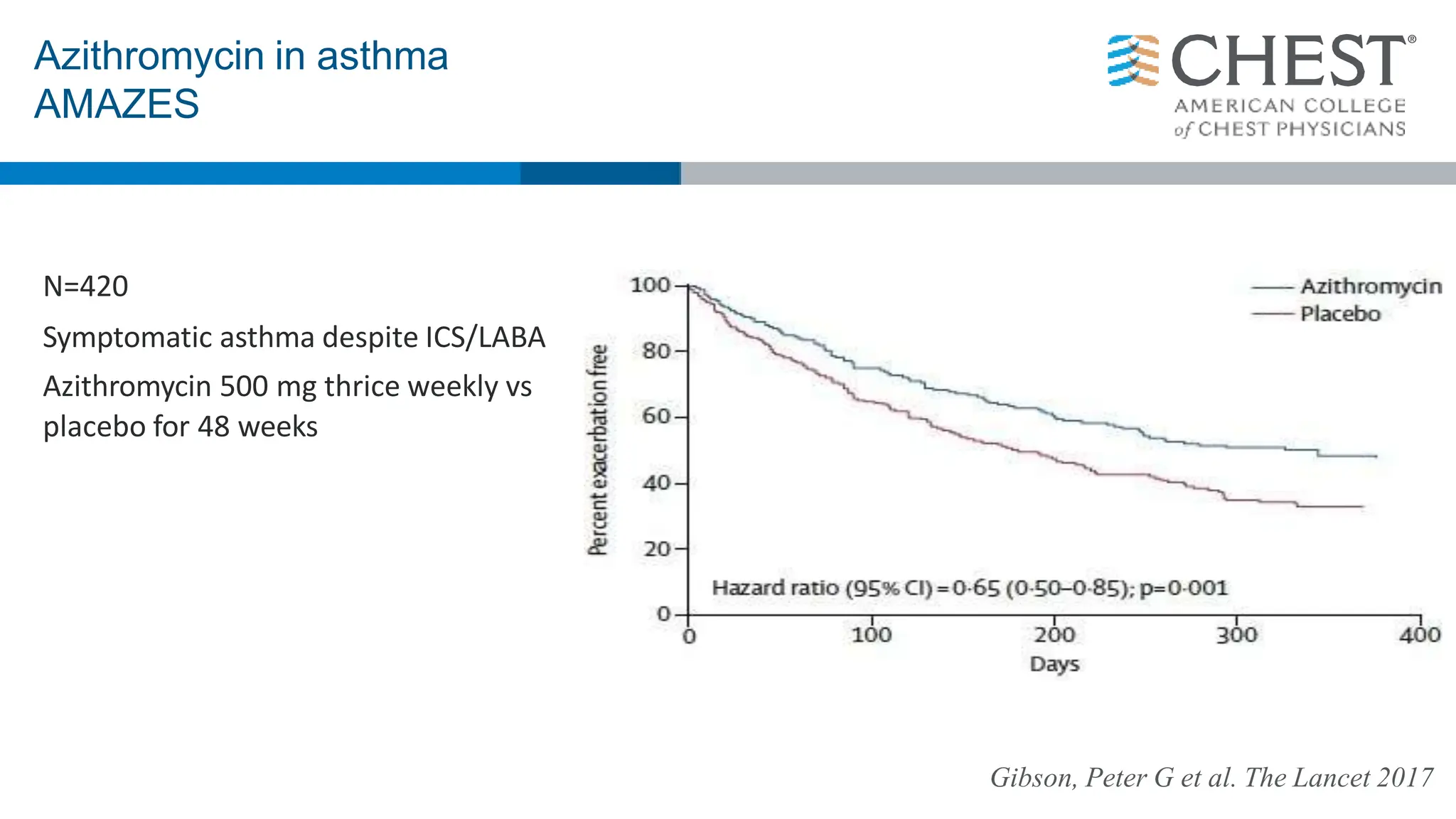
N=420
Symptomatic asthma despite ICS/LABA
Azithromycin 500 mg thrice weekly vs
placebo for 48 weeks
Azithromycin in asthma
AMAZES
Gibson, Peter G et al. The Lancet 2017
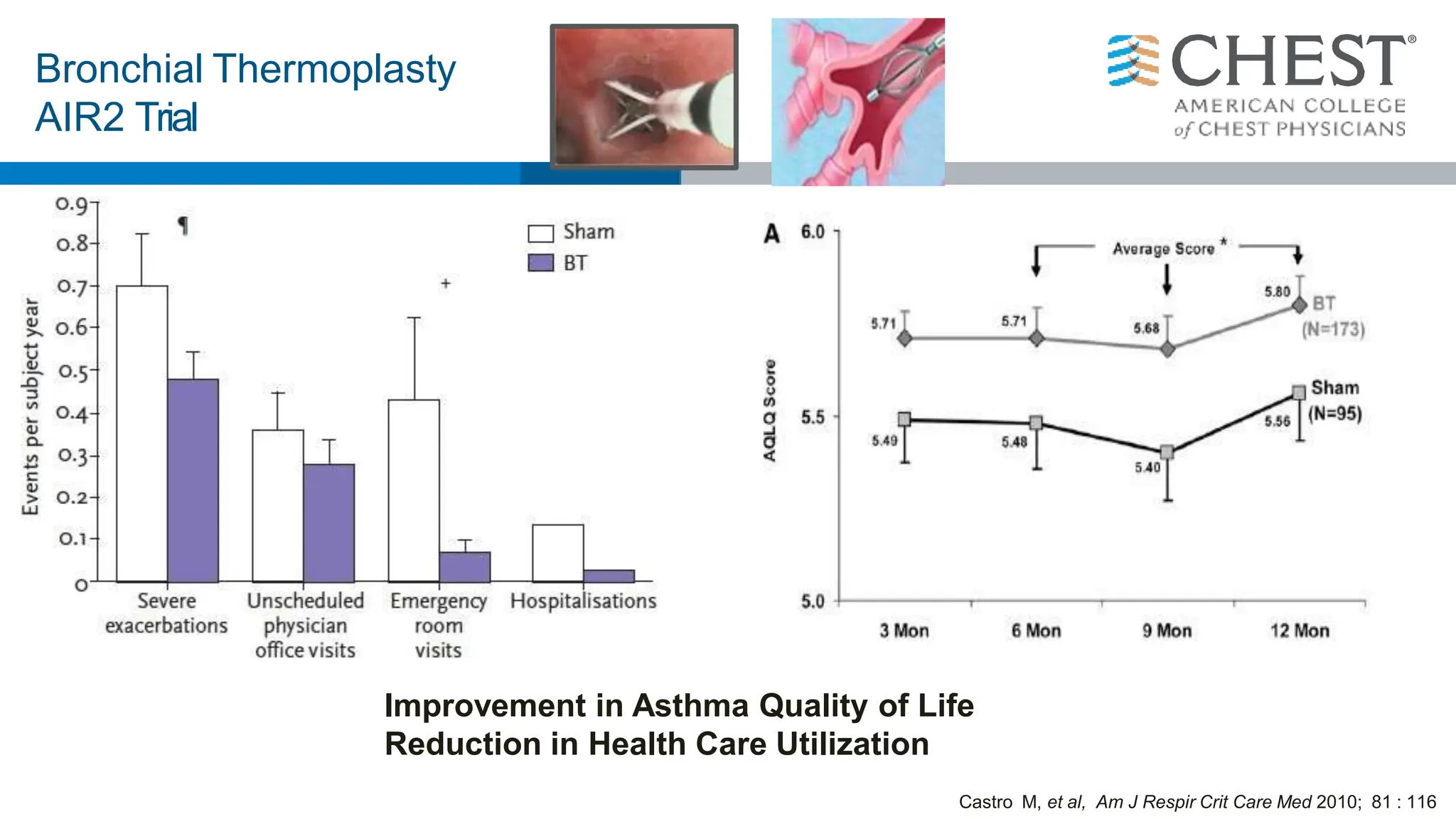
Bronchial Thermoplasty
AIR2 Trial
Improvement in Asthma Quality of Life
Reduction in Health Care Utilization
Castro M, et al, Am J Respir Crit Care Med 2010; 81 : 116
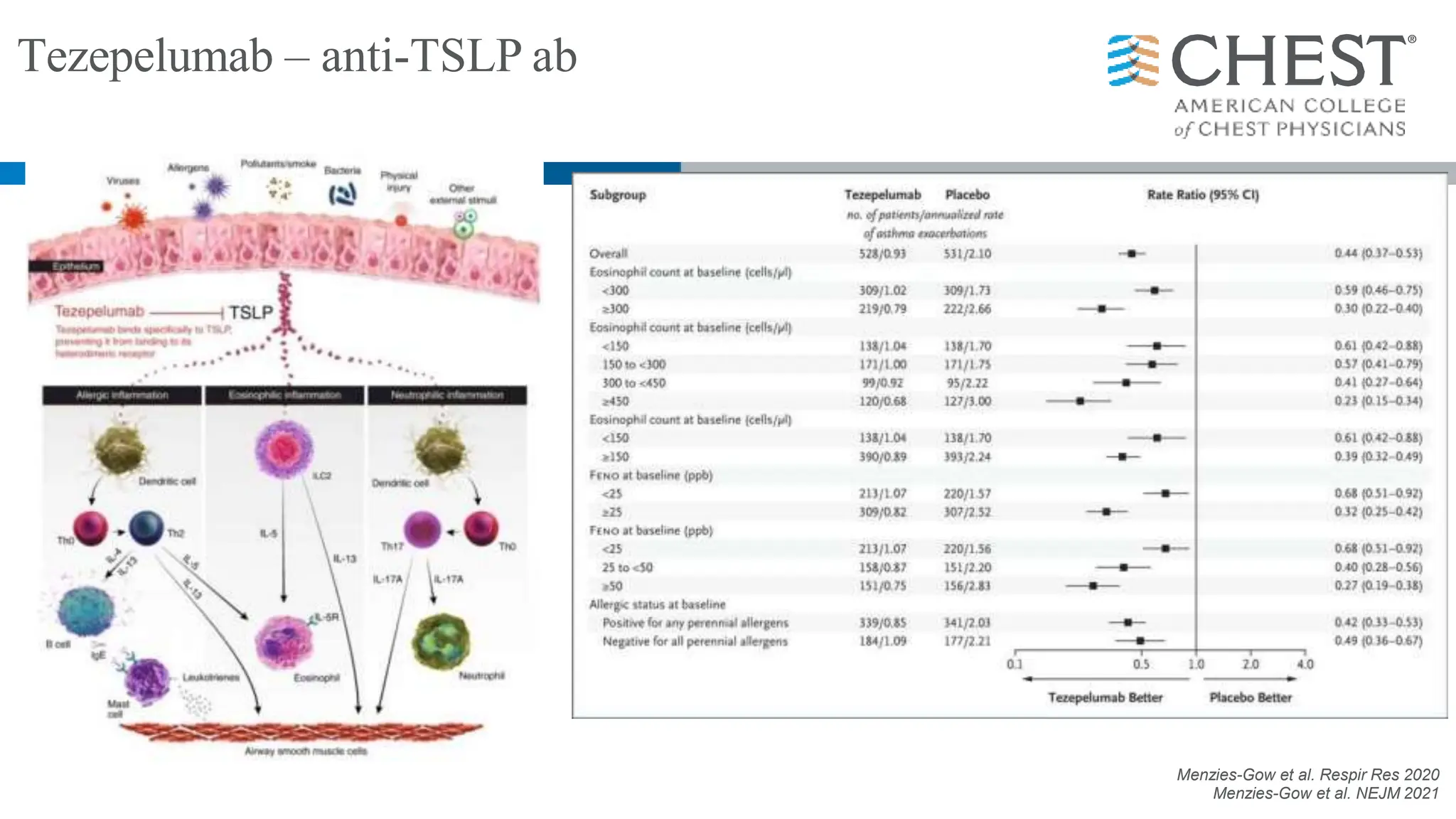
Tezepelumab – anti-TSLP ab
Menzies-Gow et al. Respir Res 2020
Menzies-Gow et al. NEJM 2021
Thank you!

Asthma Part 1 - Definition, Epidemiology and Pathophysiology_Khurana.pptx

  • 1.
    Asthma - Part1 Definition, Epidemiology and pathophysiology Sandhya Khurana, MD, FCCP Professor, Pulmonary & Critical Care Medicine Director, Mary Parkes Center for Asthma, Allergy & Pulmonary Care University of Rochester, NY
  • 2.
     Pathophysiology anddiagnosis of asthma  Genetics, Epidemiology, Biology  Evaluation  Severity and stepped care  Mild, moderate, Severe  Asthma in pregnancy  Perioperative care  Complications of care   Special types and phenotypes of asthma  Aspirin-sensitive asthma  Exercise-induced asthma  Eosinophilic TH2-high asthma  Cough variant asthma and other special types  Asthma mimics  Vocal cord dysfunction  Genetic (cystic fibrosis, alpha-1 antitrypsin disease, primary ciliary dyskinesia) and nongenetic  Hypereosinophilic Löffler's syndrome and other parasitic infections  Infiltrative airway processes (granulomatous, amyloidosis, and other processes)  Heart failure  Central airway obstruction  Exacerbation  Status asthmaticus  Viral infections, allergens, and other causes  Allergic bronchopulmonary aspergillosis and fungosis  Eosinophilic granulomatosis with polyangiitis ABIM Blueprint – Asthma (9%)
  • 3.
    • Review definitionof asthma and burden on the disease • Discuss asthma pathophysiology and immunology • List cytokines involved in type-2 asthma Learning Objectives
  • 4.
     Research funding– GSK, Sanofi  Royalties – Springer Disclosures
  • 5.
    Heterogeneous disease Usually chronic airway inflammation Symptoms that varyin intensity and over time Variable expiratory airflow limitation The term ‘asthma’ originates from the Greek word ‘aazein’ that means ‘short-drawn breath’ or ‘panting’ Asthma - definition GINA report 2020. ginaasthma.org
  • 6.
     Most prevalentchronic respiratory disease worldwide  Estimated global prevalence of 358 million (2015)  25 million Americans have current asthma; US prevalence 7.8% (2019)  U.S. population with asthma has increased over time (7.3% in 2001 to 7.8% in 2019) Asthma - burden of disease 10 9 8 7 6 5 2001 2003 2005 2007 2009 Year 2011 2013 2015 2017 Percent US Asthma Prevalence by Year Total Adult Children GBD2015 chronic respiratory disease collaborators. Lancet Respir Med 2017;5:691 CDC data; accessed June, 2021 from https://www.cdc.gov
  • 7.
    Asthma prevalence inthe US 6.4 5.4 9.5 9.3 9.8 7.3 10 9 8 7 6 5 4 3 2 1 0 Total Child Prevalence (%) Asthma Prevalence by Sex, 2017 Male Adult Female 8.1 8.1 7.7 10.1 9.2 12.6 6.4 5.8 7.7 12.8 13.5 11.3 5.1 4.5 6.2 0 2 4 6 8 10 12 14 Child Mexican Prevalence (%) Asthma Prevalence by race/ethnicity, 2017 Total Adult White NH Black NH Hispanic Puerto Rican data from https://www.cdc.gov
  • 8.
    Early life determinantsof asthma Allergens - Cockroach - Dust Mites - Mold - Pets - Mice Air Pollution - Industrial - Vehicle Emissions - Environmental Tobacco smoke Others - Diet - Obesity - Socioeconomics - Psychosocial stress Genetic Predisposition Microbiome - Vaginal v. caesarian delivery - Formula v. breastfeeding - Farm/Endotoxin - Pre/Post-natal Antibiotics Protective vaginal birth microbial diversity more siblings & later birth order Farm/endotoxin exposure Promote Asthma Antibiotics respiratory infection (RSV, RV) allergen exposure air pollution Modified from Burbank et al. JACI 2017;140:1
  • 9.
     Estimates ofheritability range from 35-70%  Heritability is higher for early-onset asthma  Chromosome 17q21 - genes GSDMB and ORMDL3 - specific to childhood onset disease  Polymorphism in:  IL-4, IL-13 genes - allergies, IgE  CD14 and TLR genes - farming and endotoxin exposure  TGF-β1, MCP-1 – fibrosis/remodeling  Gene for the β chain of the high-affinity receptor for IgE (FCER1-β) - allergies  -receptor (Arg/Arg) and glucocorticoid polymorphism determine heterogeneity in treatment response Genetics and Asthma
  • 10.
    Asthma pathophysiology Israel E,et al. N Engl J Med. 2017; 377(10) :965 Airway Hyperresponsiveness Smooth muscle hypertrophy Airway Remodeling Mucus hypersecretion
  • 11.
    Biologics: Targets andTherapy 2013:199 Airway inflammation in asthma Neutrophilic Mixed Granulocytic Pauci-Granulocytic Eosinophilic Non-Type 2 Type 2
  • 12.
    Type-2 immune responsesin asthma Khurana S et al. Breathe June 2020, 16 (2) 200058
  • 13.
    Type-2 immune responsesin asthma Khurana S et al. Breathe June 2020, 16 (2) 200058
  • 14.
    Type-2 immune responsesin asthma Khurana S et al. Breathe June 2020, 16 (2) 200058
  • 15.
    Type-2 immune responsesin asthma Eosinophilic inflammation may be allergic or non-allergic Khurana S et al. Breathe June 2020, 16 (2) 200058
  • 16.
    Cytokines in Type2 Asthma  Epithelial cytokines (alarmins) – TSLP, IL-33, IL-25  IL-4, IL-5, IL-13 are produced by helper T cells, basophils, mast cells & eosinophils  IL-5: differentiation and maturation of eosinophils  IL-13: recruitment of eosinophils into the airway, mucus hypersecretion, airway hyperresponsiveness  IL-4: IgE production by B-cells (class switching)  IgE: activates mast cells & basophils to produce leukotrienes that recruit and activate eosinophils
  • 17.
    Mechanisms of non-T2or T2 low asthma Sze & Nair. Allergy 2019 Neutrophilic asthma - Persistent inflammation - Increased disease severity - Airway remodeling - Corticosteroid refractoriness Paucigranulocytic asthma - Most common phenotype in stable asthma - 20% of PGA can be severe/refractory TSLP IL-33 IL-25
  • 18.
    Asthma - Part2 Diagnosis, Evaluation, Phenotypes, Occupational Asthma Sandhya Khurana, MD, FCCP Professor, Pulmonary & Critical Care Medicine Director, Mary Parkes Center for Asthma, Allergy & Pulmonary Care University of Rochester, NY
  • 19.
    • Describe approachto Asthma Diagnosis • List available biomarkers of T2 high asthma • Discuss evaluation and management of Occupational Asthma Learning Objectives
  • 20.
     Research funding– GSK, Sanofi  Royalties – Springer Disclosure s
  • 21.
    COPD = chronicobstructive pulmonary disease. Aaron SD, et al. JAMA. 2017; 317(3):269 2020 GINA report, global strategy for asthma management and prevention Misdiagnoses of Asthma is Common Age 6 – 11 years 12 – 39 years 40+ years Conditions Chronic upper airway cough syndrome Inhaled foreign body Bronchiectasis Primary ciliary dyskinesia Congenital heart disease Bronchopulmonary dysplasia Cystic fibrosis Chronic upper airway cough syndrome Inducible laryngeal obstruction Hyperventilation, dysfunctional breathing Bronchiectasis Cystic fibrosis Congenital heart disease Alpha1–antitrypsin deficiency Inhaled foreign body Inducible laryngeal obstruction Hyperventilation, dysfunctional breathing COPD Bronchiectasis Cardiac failure Medication-related cough Parenchymal lung disease Pulmonary embolism Central airway obstruction ≈ 30% of adults with ‘physician diagnosed asthma’ may not have asthma
  • 22.
    Diagnosis of Asthma Pattern of Symptoms Wheeze, shortnessof breath, cough and/or chest tightness More than one symptom Worse at night or early morning Vary over time and in intensity Identifiable triggers Relevant History Childhood asthma or atopy Family history of asthma or allergy Occupational or environmental exposures Physical Exam Is often normal Expiratory wheeze (may only be heard on forced exhalation) Wheeze may be absent in acute severe asthma – ‘silent chest’ Nasal polyps/rhinitis Testing PEFR variability Airflow limitation on spirometry Bronchodilator reversibility Variability in FEV1 between visits or after treatment Airway hyper- responsiveness FeNO
  • 23.
    Document airflow limitation- reduced FEV1/FVC Confirm bronchodilator reversibility - Improvement in FEV1 > 200 ml AND 12% Look for between-visit FEV1 variability - FEV1 change >200 ml AND 12% Diurnal PEFR variability, >10% in adults, performed twice daily over 2 weeks Bronchoprovocation testing Exercise challenge – fall in FEV1 >10% and 200 ml from baseline Methacholine or histamine challenge – fall in FEV1 >20% Mannitol or Eucapnic hyperventilation – fall in FEV1 >15% PEFR= Peak Expiratory Flow Rate Confirmation of variable airflow obstruction
  • 24.
    Measuring Airway Responsiveness ©Global Initiative for Asthma
  • 25.
     Procedures anddevices for nebulizing methacholine are not standardized  PD20 compares better than PC20 between devices Methacholine Challenge Test 2017 ERS update Severity PD20 (micrograms) PC20 (mg/mL) Normal >400 >16 Borderline 100-400 4-16 Mild 25-100 1-4 Moderate 6-25 0.25-1 Marked <6 <0.25 Coates AL et al. ERJ 2017;49:1601526
  • 26.
    Exercise testing Isocapneic hyperpnea Hypertonicsaline Mannitol Adenosine 5'-monophosphate (AMP) Sulfur dioxide Bradykinin Allergens Indirect Bronchial Challenge Testing Direct stimulation of airway sensory nerve endings Increase in the osmolarity of the airway surface results in mediator released from mast cells or basophils Activation of A2b receptors on mast cells Joos et al. ERJ 2003;21:1050
  • 27.
     More specificthough less sensitive than direct challenge tests for identifying patients with active asthma  Correlate better with airway inflammation and are more predictive of a response to anti-inflammatory treatments  The best choice when exercise bronchospasm is the question (eg, certification for international athletic competition, armed forces, scuba diving). Indirect Bronchial Challenge Testing
  • 28.
    2020 Focused Updatesto the Asthma Management Guidelines J Allergy Clin Immunol. 2020 Dec;146(6):1217-1270.
  • 29.
    2020 Focused Updatesto the Asthma Management Guidelines J Allergy Clin Immunol. 2020 Dec;146(6):1217-1270 Ludviksdottir et al. Clin Respir J. 2012 Oct;6(4):193-207
  • 30.
     Phenotype –observable characteristics that result from a combination of hereditary and environmental influences  Endotype – Distinct mechanistic/molecular pathway leading to a certain phenotype  Biomarker – A measurable indicator of presence or severity of a disease state Definition s
  • 31.
    Comparison of Type-2Biomarkers in Asthma Biomarker Levels Limitations Low Medium High Total IgE (IU) < 30 31 – 149 > 150 Affected by age; poor predictor of response to biologic therapy Blood eosinophils (cells/μL) < 150 151 - 399 > 400 Affected by weight, allergen exposure, steroids, and infection; optimal cut off value varies per therapy Sputum eosinophils - - ≥ 3% Semi-invasive; confined to research settings FeNO (ppb) < 25 26 – 49 > 50 Affected by age, weight, sex, smoking, and respiratory infections Serum periostin (ng/mL) - - ≥ 50 Unknown competing causes of systemic increases; unclear differences between asthma and healthy subjects; studied only in context of anti-IL-13 and anti-IgE therapy ppb = parts per billion Peters MC, et al. Curr Allergy Asthma Rep. 2016;16(10):71
  • 32.
    Wenzel Nature Medicine2012 Phenotypes & Endotypes in Asthma
  • 33.
    Holgate Nat. Rev.Dis. Primers 2015 Phenotypes & Endotypes in Asthma
  • 34.
    Aspirin exacerbated respiratorydisease (AERD)  Asthma, chronic rhinosinusitis with nasal polyposis (CRSwNP)  Bronchospasm that occurs (typically 20min to 3 hours) after ingestion of aspirin/NSAIDs  Non-IgE mediated – ”pseudo-allergic”  Prevalence 7% of adults with asthma; more common in women  Can take years for all three components to develop - CRS usually the first manifestation  Asthma has a severe and protracted course  Angioedema and GI symptoms may occur  Elevated blood eosinophils  Strong association with HLADPB1*0301
  • 35.
    Aspirin exacerbated respiratorydisease (AERD)  Diagnosis usually by history. Aspirin challenge for definitive diagnosis  Treatment is same as for asthma without AERD, except consider early use of LTMs and avoidance of NSAIDs  Emerging role of biologics  ASA desensitization indicated if worsening sinonasal symptoms despite maximal therapy or treatment of other condition requiring ASA or NSAIDs  Patients must continue daily aspirin therapy after completing desensitization  ASA therapy after desensitization  Improved nasal symptoms and decreased regrowth of NP  Improved asthma control
  • 36.
    Exercise Induced Bronchoconstriction (EIB) Triggered by inhalation of large volumes of relatively cool dry air during vigorous exercise  Symptoms occur after the end of exercise or during prolonged exercise  Initial bronchodilation followed by bronchoconstriction that peaks 10-15 minutes after exercise  Diagnosis by exercise challenge test (15% decrease in FEV1 suggests EIA)  Treatment  Pre-treatment with short-acting bronchodilators (alone or combination)  Chromoglycates, ICS + LABA, leukotriene modifiers
  • 37.
    Obesity & Asthma  Obesityis associated with  Worse asthma control  Higher health care utilization  Poor response to standard controller therapy  Weight loss – dietary or surgical – is effective  Recent studies support a role for exercise  Diet quality – high protein/low glycemic index, plant-based, Mediterranean Inflammation High fat/low fiber diet Adipose tissue & adipokines Innate & adaptive immune function Gut microbiome Mechanical factors Increased peripheral airway closure Increased impedance Mass loading Decreased ERV Comorbidities Anxiety/Depression GERD OSA Dixon AE. AJRCCM 2016
  • 38.
     Asthma dueto causes and conditions attributable to a particular occupational environment and not to stimuli encountered outside the workplace  Two types of OA: Immunological (sensitizing) or non-immunological  Needs to be distinguished from workplace exacerbated asthma  When to suspect OA?  Any new adult-onset asthma (OA accounts for 10-25%)  Worsening asthma control in a previously well-controlled asthmatic  Symptoms worse at work; improve over weekend and holidays  Latency period from exposure to onset of symptoms is highly variable Occupational Asthma (OA)
  • 39.
    Occupational Asthma (OA)- Etiologies High Molecular Weight Flour: Bakers, pastry, cook Animals: Handlers, pet shop Crab: crab processing Psyllium: Nurses, pharma Latex: Healthcare workers Antibiotics, enzymes: Nurses, pharma Low Molecular Weight Di-isocyanates: Auto-body shops, insulation, electronics Woods (red cedar, exotic): Carpentry, sawmills, doors/windows Meth/cyanoacrylates: dental hygienist, orthotist, glues Phthalic anhydrides: plastic industry, glues, epoxy Colophony: Electric soldering
  • 40.
     Rhinitis isa frequent feature for both HMW and LMW agents but more severe with HMW  Wheezing, nasal and ocular itching at work positively associated with OA to HMW agents  Rash sometimes associated with OA, particularly with HMW agents  Symptoms and questionnaires are not specific  Diagnosis must be confirmed objectively  Skin tests and serology  Monitoring PEFR, FEV1, AHR at and off work  Specific inhalation challenge (the gold standard) Occupational Asthma (OA)
  • 41.
     Suspect OAin all adult-onset asthma  Treat as for non-OA  Objectively confirm diagnosis  Early diagnosis and removal from exposure for best outcomes  Absolute avoidance for patients with sensitizer induced OA  For irritant induced workplace exacerbated asthma  Reduce exposure  Respiratory protective equipment, appropriate ventilation  Optimize treatment Occupational Asthma (OA) - Management
  • 42.
    Asthma - Part3 Guidelines-Based Management & Role of Comorbidities Sandhya Khurana, MD, FCCP Professor, Pulmonary & Critical Care Medicine Director, Mary Parkes Center for Asthma, Allergy & Pulmonary Care University of Rochester, NY
  • 43.
    • Review goalsof asthma management • Understand the difference between asthma control and severity • Discuss the key updates from GINA and NAEPP asthma guidelines Learning Objectives
  • 44.
     Research funding– GSK, Sanofi  Royalties – Springer Disclosures
  • 45.
  • 46.
    2020 GINA report,global strategy for asthma management and prevention Goals of Asthma Management Reduce Current Impairment and Future Risk Effective asthma management requires a partnership between patient and healthcare provider to define and achieve treatment goals Improve •Symptom control •Management of comorbidities •Lung function Reduce •Exacerbations •Rescue medication •Treatment related AEs •Emergency visits
  • 47.
    Classifying Asthma Severity- NAEPP EPR3 2007 NHLBI. NAEPP EPR 3: Guidelines for the Diagnosis and Management of Asthma Risk
  • 48.
    Asthma Control andSeverity Khurana & Jarjour. Clin Chest Med. 2019 Mar;40(1):59 Severity Asthma severity can be estimated by minimum level of treatment required to achieve good control Control Level of asthma control is the degree to which therapeutic interventions minimize the manifestations of asthma in terms of impairment and risk.
  • 49.
    2019 GINA report,global strategy for asthma management and prevention SteppedApproach to Asthma Therapy GINA 2019 – As-needed ICS/formoterol
  • 50.
    Rationale & Evidencefor as-needed ICS/formoterol  Patients use their inhaler when they have symptoms  Adherence to scheduled ICS is poor  SABA overuse is associated with increased risk of death  Even people with mild asthma have exacerbations  SYGMA 1&2, Novel START, PRACTICAL  Four 12-month studies, ~10000 patients  As-needed ICS/formoterol decreased severe exacerbations vs SABA  As-needed ICS/formoterol similar to scheduled ICS  Much lower steroid exposure O’Byrne et al. NEJM 2018 Bateman et al. NEJM 2018 Beasley et al. NEJM 2019 Hardy et al. Lancet 2019
  • 51.
    © Global Initiativefor Asthma, www.ginasthma.org GINA 2021, Box 3-5A: Personalized asthma management, adults and adolescents GINA 2021
  • 52.
    2021 GINA report,global strategy for asthma management and prevention Asthma management Assess – Adjust – Review response
  • 53.
  • 54.
    • FeNO • Allergenmitigation • ICS • LAMA • Immunotherapy • Bronchial Thermoplasty NAEPP EPR4 Focused Update 2020 Focused Updates to the Asthma Management Guidelines J Allergy Clin Immunol. 2020 Dec;146(6):1217-1270.
  • 55.
    Inhaled Corticosteroids (ICS)for Persistent Asthma Large body of evidence shows that ICS use in asthma  Reduces risk of severe exacerbations and hospitalization  Reduces mortality  Improves symptoms and quality of life  Reduces exercise induced bronchoconstriction  Improves lung function  Slow the deterioration of lung function  May prevent airway remodeling
  • 56.
     Adding LABAto low dose ICS (in a combination inhaler) provides  Additional improvement in symptoms  Additional improvement in lung function  Decrease in risk of exacerbations  Small reduction in reliever use  Addition of LABA to low dose ICS was more effective than increase in ICS dose alone  LABA should NEVER be used as monotherapy in asthma ICS + Long-acting β2-agonists (LABA) for Asthma
  • 57.
     Tiotropium softmist inhaler is the only LAMA that is FDA approved for Asthma  As add-on therapy to ICS*  Improved lung function; Reduced exacerbations  *LABA still preferred over LAMA for add-on therapy to ICS  As add-on therapy to ICS + LABA  Improved lung function  Improved asthma control  Increased time to first exacerbation  Not recommended as monotherapy Long-acting muscarinic antagonist (LAMA) in Asthma
  • 58.
     Efficacy (v.placebo)  Reduce risk of exacerbations  Improve lung function  Improve symptoms and QOL  Reduce need for rescue SABA  Effects are variable and generally less than with ICS  Less effective than LABA as add-on therapy to ICS in improving exacerbations and lung function  Greater response in AERD and EIB Leukotriene modifiers in asthma Figure from © 2020 UpToDate, Inc.
  • 59.
    © Global Initiativefor Asthma, www.ginasthma.org GINA 2021, Box 3-4Bii: Starting asthma treatment in adults and adolescents
  • 60.
    Association, prevalence andtreatment outcomes of comorbidities in difficult asthma AdaptedfromRadhakrishnaN. Journal of Asthma. 2016 Comorbidity Associated with asthma? Prevalence in asthma Does treatment improve asthma? Sino-nasal disease AR Yes 80% # Yes Sino-nasal disease CRS Yes 70-74% * Yes GERD Yes 59% # Inconsistent OSA Yes 75-95% * Yes VCD/ILO Yes 75% * Inconsistent Dysfunctional Breathing Yes 29% # Yes Anxiety/Depression Yes 49% * Yes * Difficult asthma # All asthma
  • 61.
    GERD & Asthma  Prevalence32-84% by esophageal pH-monitoring studies; about half are asymptomatic Carefully review symptoms: Heartburn, Regurgitation, Water brash, Dysphagia, Sore throat, Choking, Hoarseness, Dental erosions, Chest pain, Cervical pain, Worsened asthma symptoms with Eating, Alcohol, Supine position, Theophylline  Proposed mechanisms – ‘Reflux’ vs ‘Reflex’ Likely a bi-directional relationship  Studies demonstrate some benefit in symptomatic GERD and uncontrolled asthma  Improvement in peak flow, quality of life, exacerbations AJRCCM2006May15;173(10):1091-7 AJRCCM2010 May15;181(10):1042-8. Chest 2005Sep;128(3):1128-35 N Engl J Med 2009;360:1487-1499
  • 62.
    CRS & Asthma Symptomatic inflammation of the paranasal sinuses and the nasal cavity  Chronic Rhino-Sinusitis = lasting > 12 weeks  With or without nasal polyps (CRSwNP or CRSsNP)  The unified airway model  Links the upper and lower airway as a single functional group  Shared systemic inflammatory pathways  Prevalence of CRS  10-12% general population  23.4-74% in all asthma  84% in severe asthma  Associated with decreased lung function, QOL, severe exacerbations Ear Nose Throat J 2007; 86:409. J Allergy Clin Immunol 2001;107:73. J Allergy Clin Immunol 2002;109:621 . Otolaryngol Head Neck Surg. 2007;136:S75-S106. Otolaryngol Clin N Am. 2008;48:297-309. 2015 NHIS data.
  • 63.
    PVFM & Asthma • VCD/ILO/PVFM •Laryngeal hypersensitivity • Occurs commonly as asthma mimic and comorbidity • Prevalence • 19% in all asthma • 32% in difficult asthma • Clinical suspicion and detailed history • Triggers, rapid onset/offset, phase of respiration affected, other laryngeal symptoms • Objective confirmation often elusive - Questionnaire screening, Laryngoscopy, Challenge tests • Respiratory retraining, laryngeal hygiene, treat LPRD
  • 64.
    Obesity & Asthma Obesity is associated with  Worse asthma control  Higher health care utilization  Poor response to standard controller therapy  Weight loss – dietary or surgical – is effective  Recent studies support a role for exercise  Diet quality – high protein/low glycemic index, plant-based, Mediterranean Inflammation High fat/low fiber diet Adipose tissue & adipokines Innate & adaptive immune function Gut microbiome Mechanical factors Increased peripheral airway closure Increased impedance Mass loading Decreased ERV Comorbidities Anxiety/Depression GERD OSA Dixon AE. AJRCCM2016
  • 65.
    Asthma- Part 4 AdvancedTherapies in Severe Asthma Sandhya Khurana, MD, FCCP Professor, Pulmonary & Critical Care Medicine Director, Mary Parkes Center for Asthma, Allergy & Pulmonary Care University of Rochester, NY
  • 66.
    • Define severeasthma and prevalence • Review available biologic therapies and mechanism of action • Discuss management of non-T2 asthma Learning Objectives
  • 67.
     Research funding– GSK, Sanofi  Royalties – Springer Disclosures
  • 68.
    Asthma that requirestreatment at GINA steps 4–5 or systemic CS for >50% of the previous year to prevent it from becoming ‘‘uncontrolled’’ or remains ‘‘uncontrolled‘‘ despite this therapy Or Controlled asthma that worsens on tapering of these high doses of ICS or systemic CS (or additional biologics) Severe Asthma - Definition Chung et al. Eur Respir J 2014; 43: 343–373
  • 70.
    © Global Initiativefor Asthma, www.ginasthma.org What proportion of asthma in adults is severe? GINA 2021, Box 3-15: What proportion of adults with asthma have severe asthma?
  • 71.
    Available Biologics inAsthma Drug Mechanism Route Setting Omalizumab Anti-IgE Subcutaneous Home/Clinic Mepolizumab Anti-IL5 Subcutaneous Home/Clinic Reslizumab Anti-IL5 Intravenous Clinic Benralizumab Anti-IL5Ra Subcutaneous Home/Clinic Dupilumab Anti-IL4Ra Subcutaneous Home Omalizumab Dupilumab Mepolizumab Reslizumab Benralizumab
  • 72.
     Anti-IgE humanizedrecombinant monoclonal antibody  Binds to free circulating IgE at the same site as high-affinity IgE receptor  Indication – Moderate-Severe allergic asthma – Serum IgE 30-700 IU/ml with sensitivity to >1 perennial allergen  AEs: Small risk of delayed anaphylactic reactions (0.2%)  Administration: Subcutaneous injection every 2-4 weeks Anti-IgE Monoclonal Antibody (Omalizumab)
  • 73.
     Anti-IL5 monoclonalantibodies (mepolizumab, reslizumab)  Anti-IL5 receptor monoclonal antibody (benralizumab)  Indication: Add-on maintenance therapy for patients with severe asthma with an eosinophilic phenotype  Administration: – Mepolizumab: 100 mg subcutaneous injection every 4 weeks – Reslizumab: Weight-based intravenous infusion every 4 weeks – Benralizumab: 30 mg subcutaneous every 4 weeks x 3, then every 8 weeks Anti-IL5 Therapy IL-5 IL-5R
  • 74.
     Fully humanmonoclonal antibody  Binds to alpha subunit of IL-4 receptor  Inhibits the activity of both Il-4 and IL-13  Indication: moderate-to-severe, eosinophilic asthma and OCS-dependent asthma  Dose: 400 mg or 600 mg initial loading dose, then 200mg or 300 mg every 2 weeks subcutaneously  Higher dose in OCS-dependent asthma or comorbid atopic dermatitis Anti-IL4R antibody (dupilumab)
  • 75.
    Biologics for Type2 Asthma ICER 2018 6
  • 76.
    Biologics for Type2 Asthma: Efficacy Drug Asthma Exacerbations Rate Ratio OCS % dose reduction % Off OCS FEV1 (L) ACQ Omalizumab 0.52 - - 0.06 - (0.37-0.73) (0.02-0.10) Mepolizumab 0.45 -50% vs 0% 14% vs 8% 0.10 -0.42 (0.36-0.55) (0.01-0.18) (-0.56 to -0.28) Reslizumab 0.43 - - 0.12 -0.27 (0.33-0.55) (0.08-0.16) (-0.36 to -0.19) Benralizumab 0.59 -75% vs -25% 52% vs 19% 0.13 -0.23 (0.51-0.68) (0.08-0.19) (-0.34 to -0.12) Dupilumab 200mg 0.52 (0.41-0.66) - - 0.14 (0.08-0.19) -0.39 (-0.53 to -0.25) Dupilumab 300mg 0.54 (0.43-0.68) -70% vs -42% 52% vs 29% 0.13 (0.08-0.18) -0.22 (-0.36 to -0.08)
  • 77.
    Treatment of Type2 Low Asthma  40 - 50% of asthma patients do not have Type 2 inflammation  Severe, uncontrolled asthma without evidence for Type 2 inflammation referred to as ‘Type 2 low asthma’  Potential targets for Type 2 low asthma:  Macrolide antibiotics  Bronchial Thermoplasty
  • 78.
    N=420 Symptomatic asthma despiteICS/LABA Azithromycin 500 mg thrice weekly vs placebo for 48 weeks Azithromycin in asthma AMAZES Gibson, Peter G et al. The Lancet 2017
  • 79.
    Bronchial Thermoplasty AIR2 Trial Improvementin Asthma Quality of Life Reduction in Health Care Utilization Castro M, et al, Am J Respir Crit Care Med 2010; 81 : 116
  • 80.
    Tezepelumab – anti-TSLPab Menzies-Gow et al. Respir Res 2020 Menzies-Gow et al. NEJM 2021
  • 81.