Project Evaluation Review
Technique (PERT)
DR.ANJALATCHI
M.SC(N)MD(AM)MBA(HA)
LEARNING OBJECTIVES
• Introduce the topic
• Definition
• Need /overview
• History
• Concept and terminology
• Network analysis
• Creating PERT chart
• Components of PERT
Continued
• Steps of PERT
• Uses of PERT
• Advantages of PERT
• Disadvantages of PERT
• Limitation of PERT
• Summary
• Conclusion
• References
Introduction PERT
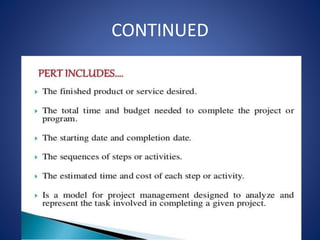
• In project management, the Project Evaluation
Review Technique, or PERT, is used to identify the
time it takes to finish a particular task or activity.
It is a system that helps in proper scheduling and
coordination of all tasks throughout a project. It
also helps in keeping track of the progress, or lack
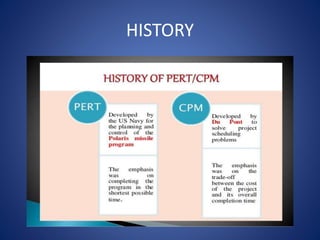
thereof, of the overall project. In the 1950s, the
Project Evaluation Review Technique was
developed by the US Navy to manage the Polaris
submarine missile program of their Special
Projects Office.
Continued
• Knowing the time it should take to execute a
project is crucial, as it helps project managers
decide on other factors such as the budget
and task delegation. No matter how big or
small a project is, estimates can be too
optimistic or pessimistic, but using a PERT
chart will help determine realistic estimates.
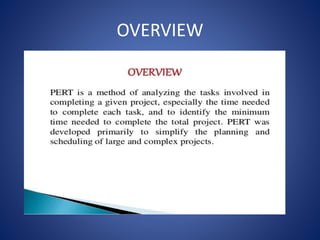
OVERVIEW
Meaning of PERT
• PERT is a project management planning tool
used to calculate the amount of time it will

take to realistically finish a
project. PERT stands for Program Evaluation
Review Technique.
DEFINITION OF PERT
HISTORY
CONCEPT AND TERMS
CONTINUED
CONTINUED
The network diagram
Continued
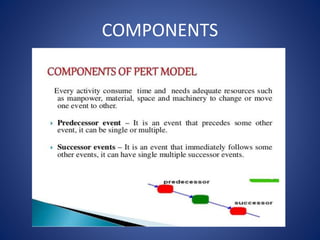
COMPONENTS
CONTINUED
CONTINUED
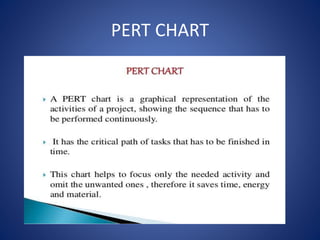
PERT CHART
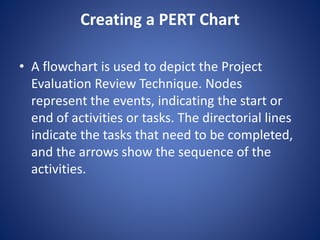
Creating a PERT Chart
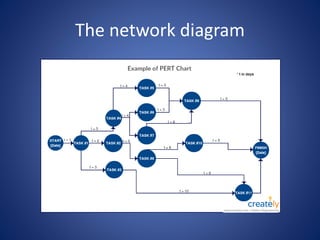
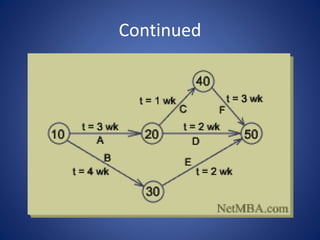
• A flowchart is used to depict the Project
Evaluation Review Technique. Nodes
represent the events, indicating the start or
end of activities or tasks. The directorial lines
indicate the tasks that need to be completed,
and the arrows show the sequence of the
activities.
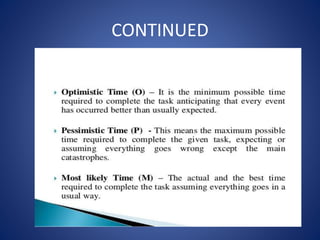
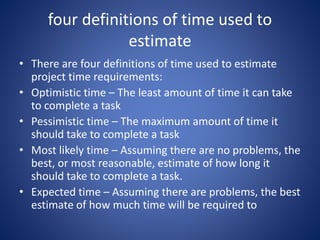
four definitions of time used to
estimate
• There are four definitions of time used to estimate
project time requirements:
• Optimistic time – The least amount of time it can take
to complete a task
• Pessimistic time – The maximum amount of time it
should take to complete a task
• Most likely time – Assuming there are no problems, the
best, or most reasonable, estimate of how long it
should take to complete a task.
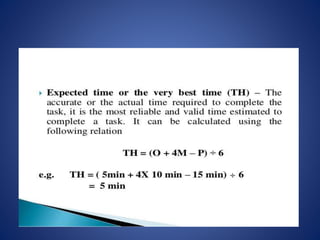
• Expected time – Assuming there are problems, the best
estimate of how much time will be required to
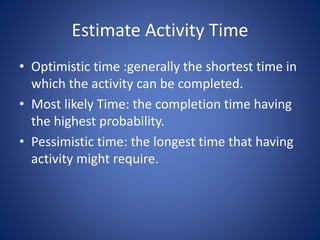
Estimate Activity Time
• Optimistic time :generally the shortest time in
which the activity can be completed.
• Most likely Time: the completion time having
the highest probability.
• Pessimistic time: the longest time that having
activity might require.
Steps of PERT analysis
• 1. identify the specific activities and milestones
• 2. determines the proper sequences of the
activities
• 3. construct a network diagram
• 4. estimate the time required for each activity
• 5.determine the critical path
• 6.updates the PERT charts as the project
progresses.
CONTINUED
Four quantities for each activity
• ES-earliest start time
• EF-Earliest Finish time
• LS-latest Start Time
• LF-Latest Finish Time
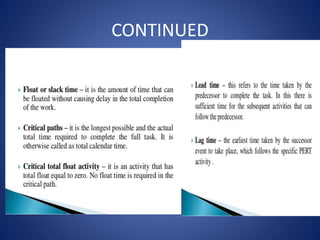
Here are several terms used in a PERT
chart:
• Float/Slack – Refers to the amount of time a task can be delayed
without resulting in an overall delay in completion of other tasks or
the project
• Critical Path – Indicates the longest possible continuous path from
the start to the end of a task or event
• Critical Path Activity – Refers to an activity without any slack
• Lead Time – Refers to the amount of time needed to finish a task
without affecting subsequent tasks
• Lag Time – The earliest time by which a successor event/task can
follow a prior event/task
• Fast Tracking – Refers to handling tasks or activities in parallel
• Crashing Critical Path – Shortening the amount of time to do a
critical task
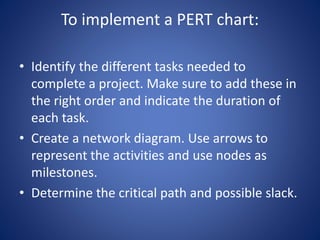
To implement a PERT chart:
• Identify the different tasks needed to
complete a project. Make sure to add these in
the right order and indicate the duration of
each task.
• Create a network diagram. Use arrows to
represent the activities and use nodes as
milestones.
• Determine the critical path and possible slack.
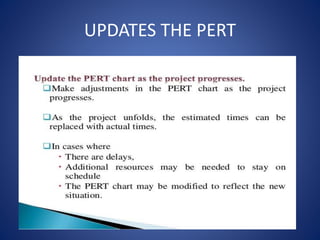
UPDATES THE PERT
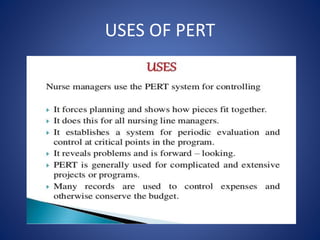
USES OF PERT
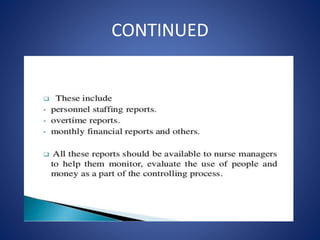
CONTINUED
Advantages of PERT
• Here are several benefits of using PERT in
project management:
• It helps maximize the use of resources.
• It makes project planning more manageable.
• It’s useful even if there is little or no previous
schedule data.
• It enables project managers to better estimate
or determine a more definite completion date.
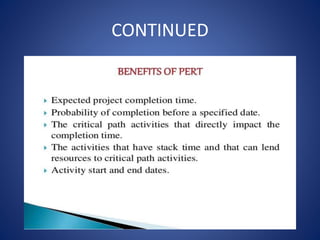
CONTINUED
Disadvantages of PERT
• Like any other method, PERT comes with its share
of limitations:
• In complex projects, many find PERT hard to
interpret, so they may also use a Gantt Chart,
another popular method for project
management.
• It can be tedious to update, modify, and maintain
the PERT diagram.
• It entails a subjective time analysis of activities
and, for those who are less experienced or are
biased, this may affect the project’s schedule.
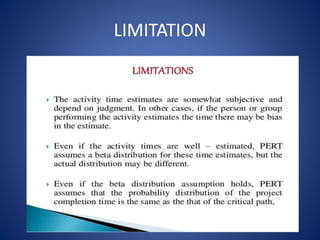
Limitation of PERT
• 1. the activity time estimate are some what
subjective and depend on judgments.
• 2. even if the activity times are well estimated
, PERT assume a beta distribution for these
times estimates, but actual distribution may
be different.
• 3.PERT consistently under estimates the
expected project completion time.
LIMITATION
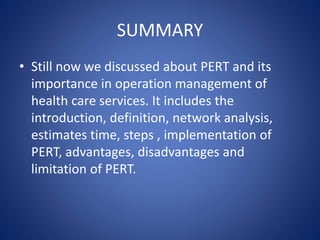
SUMMARY
• Still now we discussed about PERT and its
importance in operation management of
health care services. It includes the
introduction, definition, network analysis,
estimates time, steps , implementation of
PERT, advantages, disadvantages and
limitation of PERT.
Conclusion
• I hope you all understand about PERT analysis
and its significance in health care
management . If you got chance do the PERT
analysis will you able to apply this knowledge
confidently .
References
• Baker, Sunny, G. Michael Campbell, and Kim
Baker. The Complete Idiot's Guide to Project
Management. Alpha Books, 2003.
• Kerzner, Harold. Project Management: A
Systems Approach to Planning, Scheduling,
and Controlling. John Wiley & Sons, 2003.
• Punmia, B.C. and K. Khandelwal. Project
Planning and Control P.E.R.T. and C.P.M.: For
Degree Classes. Laxmi Publications, 2006.
Question related to the topic?
• Define the PERT?
• Discuss the need of PERT analysis?
• Narrate the concept of PERT analysis?
• Describe the Major features of PERT analysis?
• Explain the network analysis of PERT progress?
• Understand the benefits of PERT?
• State the disadvantages of PERT ?
• Demonstrate the one example of PERT analysis?
Thank you for your patience

Unit v mha project evaluation review technique (pert)

  • 1.
    Project Evaluation Review Technique(PERT) DR.ANJALATCHI M.SC(N)MD(AM)MBA(HA)
  • 2.
    LEARNING OBJECTIVES • Introducethe topic • Definition • Need /overview • History • Concept and terminology • Network analysis • Creating PERT chart • Components of PERT
  • 3.
    Continued • Steps ofPERT • Uses of PERT • Advantages of PERT • Disadvantages of PERT • Limitation of PERT • Summary • Conclusion • References
  • 4.
    Introduction PERT • Inproject management, the Project Evaluation Review Technique, or PERT, is used to identify the time it takes to finish a particular task or activity. It is a system that helps in proper scheduling and coordination of all tasks throughout a project. It also helps in keeping track of the progress, or lack thereof, of the overall project. In the 1950s, the Project Evaluation Review Technique was developed by the US Navy to manage the Polaris submarine missile program of their Special Projects Office.
  • 5.
    Continued • Knowing thetime it should take to execute a project is crucial, as it helps project managers decide on other factors such as the budget and task delegation. No matter how big or small a project is, estimates can be too optimistic or pessimistic, but using a PERT chart will help determine realistic estimates.
  • 6.
  • 7.
    Meaning of PERT •PERT is a project management planning tool used to calculate the amount of time it will take to realistically finish a project. PERT stands for Program Evaluation Review Technique.
  • 8.
  • 9.
  • 10.
  • 11.
  • 12.
  • 13.
  • 14.
  • 15.
  • 16.
  • 18.
  • 19.
  • 21.
    Creating a PERTChart • A flowchart is used to depict the Project Evaluation Review Technique. Nodes represent the events, indicating the start or end of activities or tasks. The directorial lines indicate the tasks that need to be completed, and the arrows show the sequence of the activities.
  • 22.
    four definitions oftime used to estimate • There are four definitions of time used to estimate project time requirements: • Optimistic time – The least amount of time it can take to complete a task • Pessimistic time – The maximum amount of time it should take to complete a task • Most likely time – Assuming there are no problems, the best, or most reasonable, estimate of how long it should take to complete a task. • Expected time – Assuming there are problems, the best estimate of how much time will be required to
  • 23.
    Estimate Activity Time •Optimistic time :generally the shortest time in which the activity can be completed. • Most likely Time: the completion time having the highest probability. • Pessimistic time: the longest time that having activity might require.
  • 24.
    Steps of PERTanalysis • 1. identify the specific activities and milestones • 2. determines the proper sequences of the activities • 3. construct a network diagram • 4. estimate the time required for each activity • 5.determine the critical path • 6.updates the PERT charts as the project progresses.
  • 25.
  • 26.
    Four quantities foreach activity • ES-earliest start time • EF-Earliest Finish time • LS-latest Start Time • LF-Latest Finish Time
  • 27.
    Here are severalterms used in a PERT chart: • Float/Slack – Refers to the amount of time a task can be delayed without resulting in an overall delay in completion of other tasks or the project • Critical Path – Indicates the longest possible continuous path from the start to the end of a task or event • Critical Path Activity – Refers to an activity without any slack • Lead Time – Refers to the amount of time needed to finish a task without affecting subsequent tasks • Lag Time – The earliest time by which a successor event/task can follow a prior event/task • Fast Tracking – Refers to handling tasks or activities in parallel • Crashing Critical Path – Shortening the amount of time to do a critical task
  • 28.
    To implement aPERT chart: • Identify the different tasks needed to complete a project. Make sure to add these in the right order and indicate the duration of each task. • Create a network diagram. Use arrows to represent the activities and use nodes as milestones. • Determine the critical path and possible slack.
  • 29.
  • 30.
  • 31.
  • 32.
    Advantages of PERT •Here are several benefits of using PERT in project management: • It helps maximize the use of resources. • It makes project planning more manageable. • It’s useful even if there is little or no previous schedule data. • It enables project managers to better estimate or determine a more definite completion date.
  • 33.
  • 34.
    Disadvantages of PERT •Like any other method, PERT comes with its share of limitations: • In complex projects, many find PERT hard to interpret, so they may also use a Gantt Chart, another popular method for project management. • It can be tedious to update, modify, and maintain the PERT diagram. • It entails a subjective time analysis of activities and, for those who are less experienced or are biased, this may affect the project’s schedule.
  • 35.
    Limitation of PERT •1. the activity time estimate are some what subjective and depend on judgments. • 2. even if the activity times are well estimated , PERT assume a beta distribution for these times estimates, but actual distribution may be different. • 3.PERT consistently under estimates the expected project completion time.
  • 36.
  • 37.
    SUMMARY • Still nowwe discussed about PERT and its importance in operation management of health care services. It includes the introduction, definition, network analysis, estimates time, steps , implementation of PERT, advantages, disadvantages and limitation of PERT.
  • 38.
    Conclusion • I hopeyou all understand about PERT analysis and its significance in health care management . If you got chance do the PERT analysis will you able to apply this knowledge confidently .
  • 39.
    References • Baker, Sunny,G. Michael Campbell, and Kim Baker. The Complete Idiot's Guide to Project Management. Alpha Books, 2003. • Kerzner, Harold. Project Management: A Systems Approach to Planning, Scheduling, and Controlling. John Wiley & Sons, 2003. • Punmia, B.C. and K. Khandelwal. Project Planning and Control P.E.R.T. and C.P.M.: For Degree Classes. Laxmi Publications, 2006.
  • 40.
    Question related tothe topic? • Define the PERT? • Discuss the need of PERT analysis? • Narrate the concept of PERT analysis? • Describe the Major features of PERT analysis? • Explain the network analysis of PERT progress? • Understand the benefits of PERT? • State the disadvantages of PERT ? • Demonstrate the one example of PERT analysis?
  • 41.
    Thank you foryour patience