z
Succession
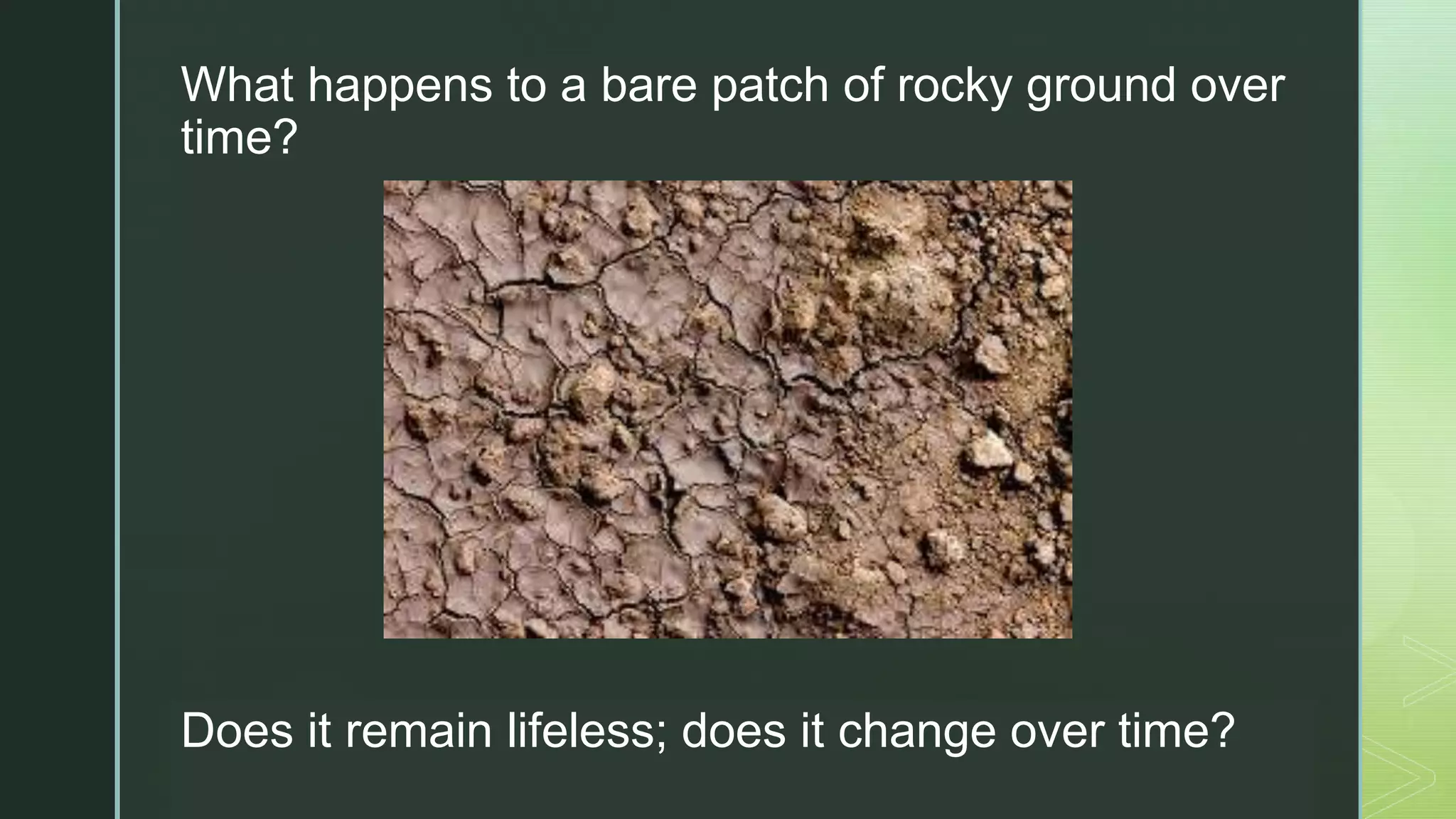
zWhat happens to a bare patch of rocky ground ​over
time?
Does it ​remain ​lifeless; does ​it change ​over time?
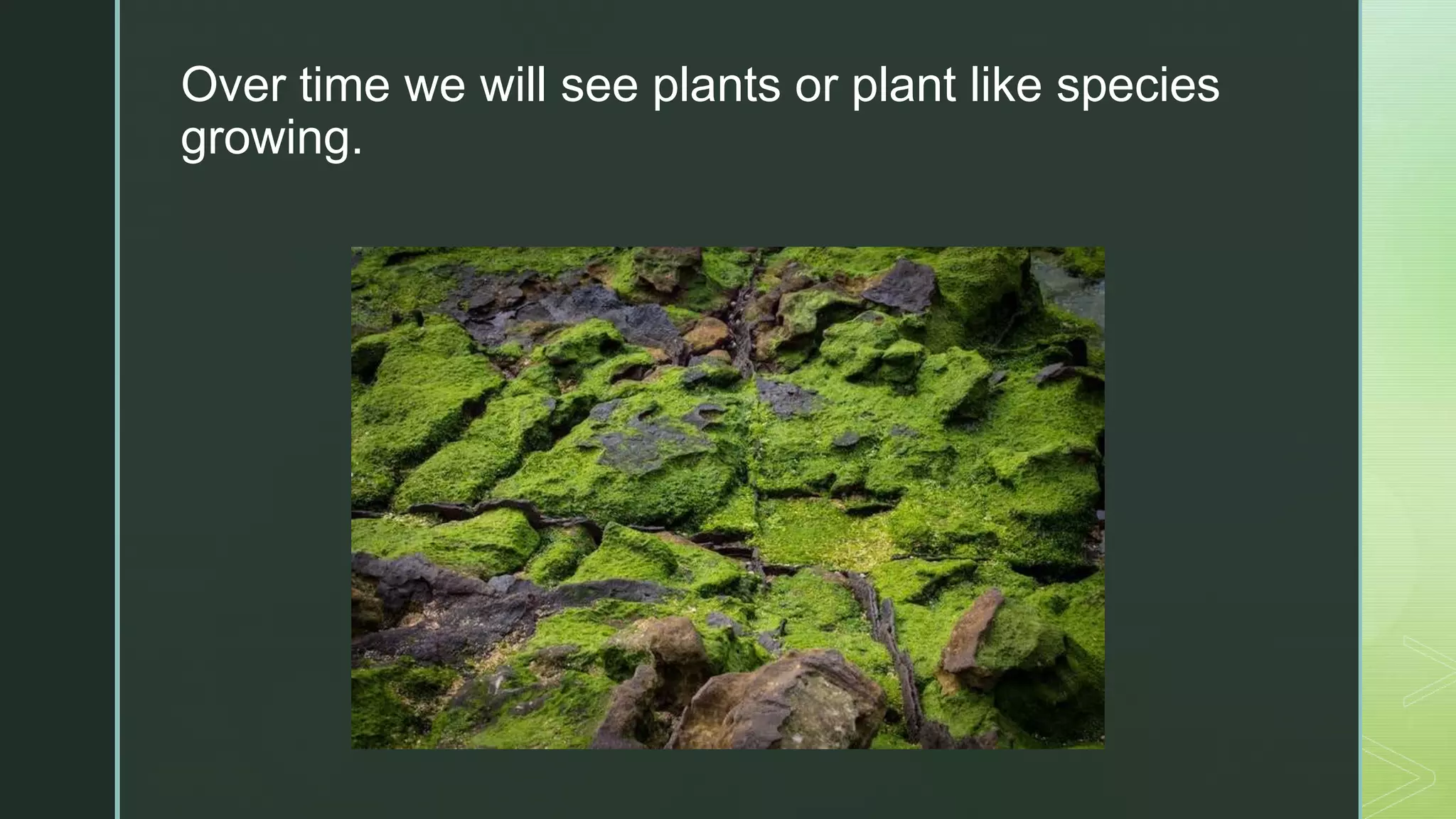
zOver time we will see plants or plant like ​species
growing.
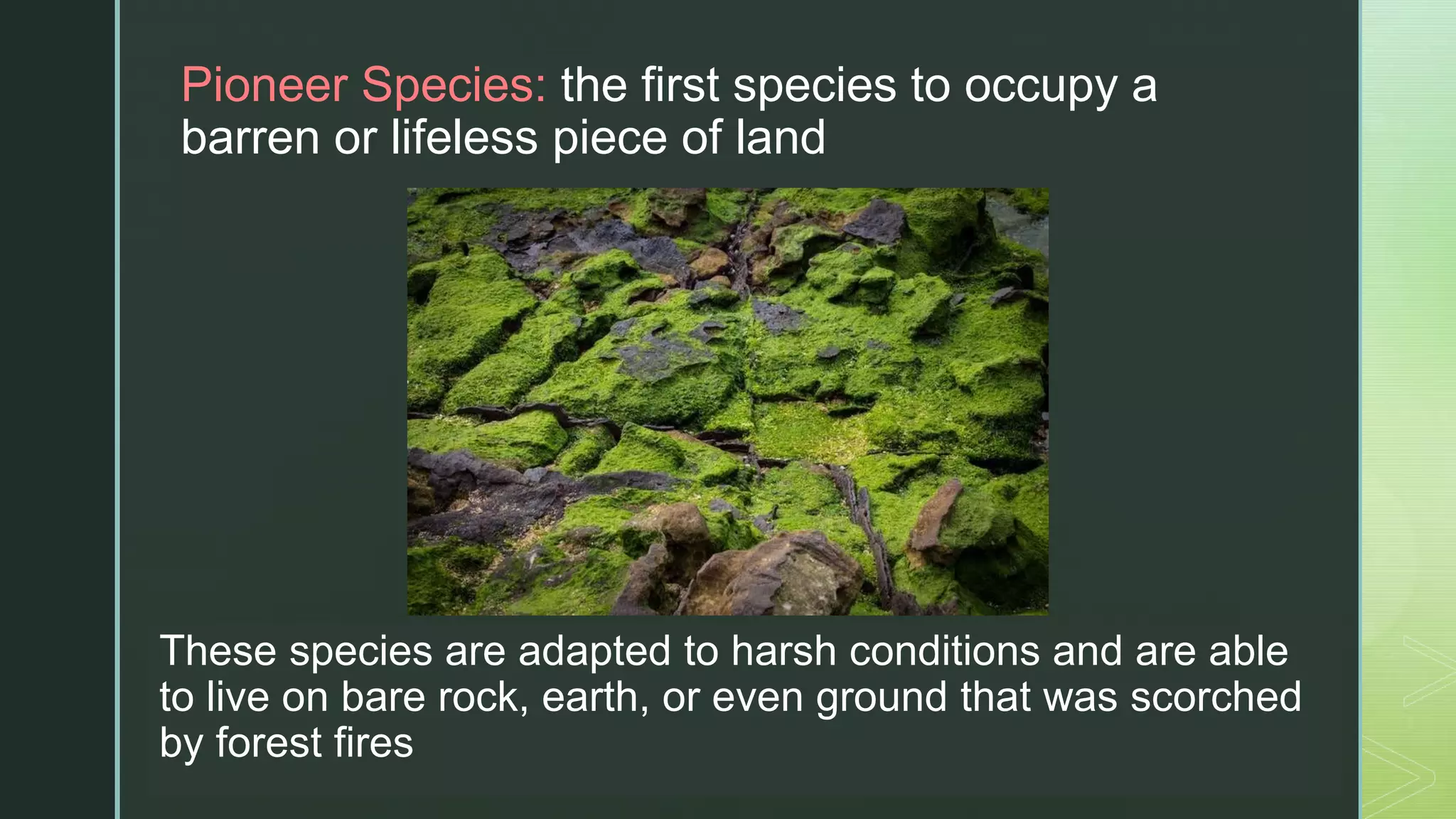
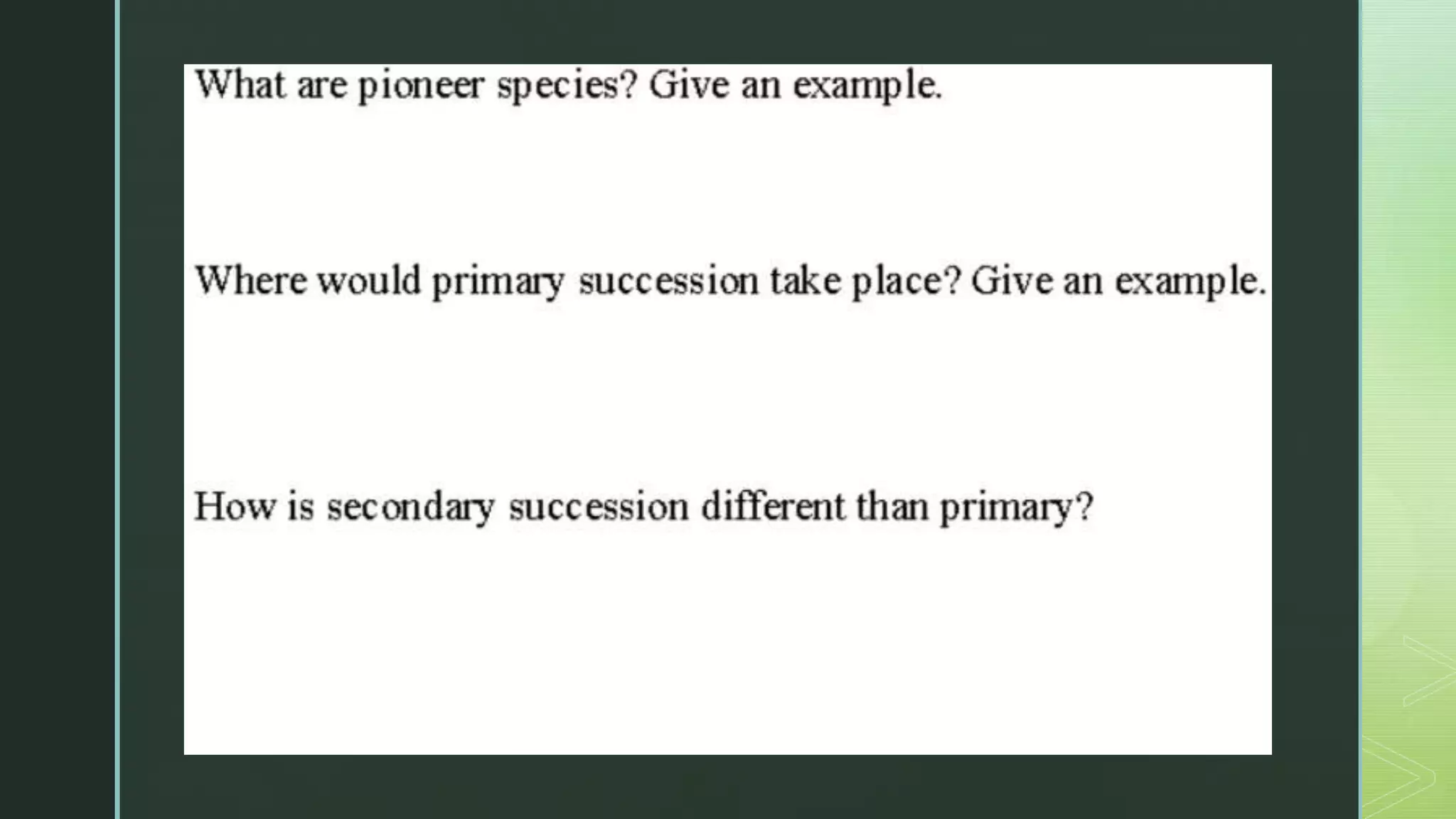
zPioneer ​Species: the ​first species to ​occupy a
barren or ​lifeless piece of ​land
These species are adapted to harsh conditions ​and are able
to live on bare rock, earth, or even ​ground that was scorched
by forest fires
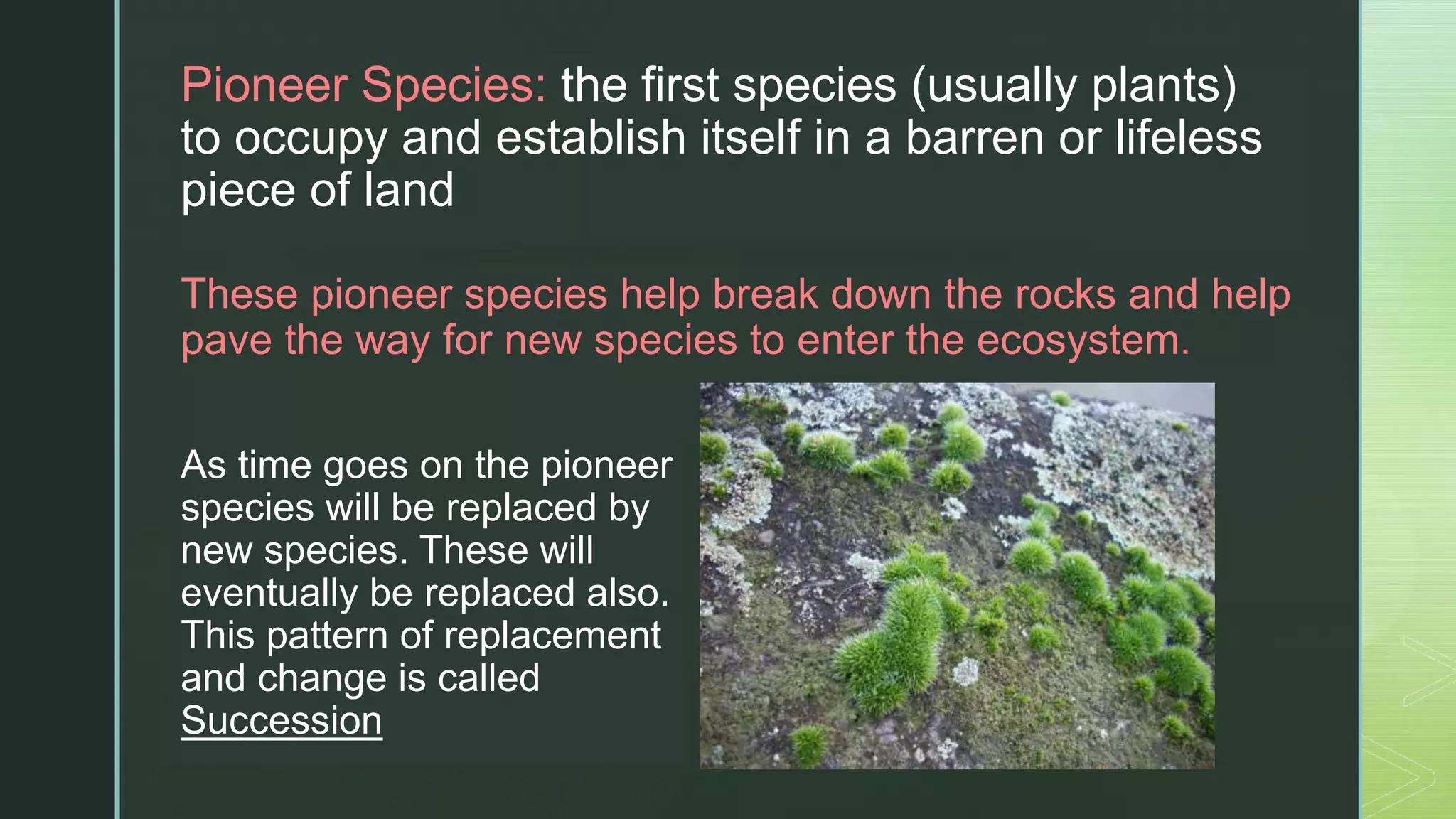
zPioneer ​Species: the ​first species (usually plants)
to ​occupy and establish itself in a barren or ​lifeless
piece of ​land
These pioneer species help break down the rocks and help
pave the way for new species to enter the ​ecosystem.
As time goes on the pioneer
species will be ​replaced by
new species. These will
eventually be replaced also.
This pattern of replacement
and ​change is called
Succession
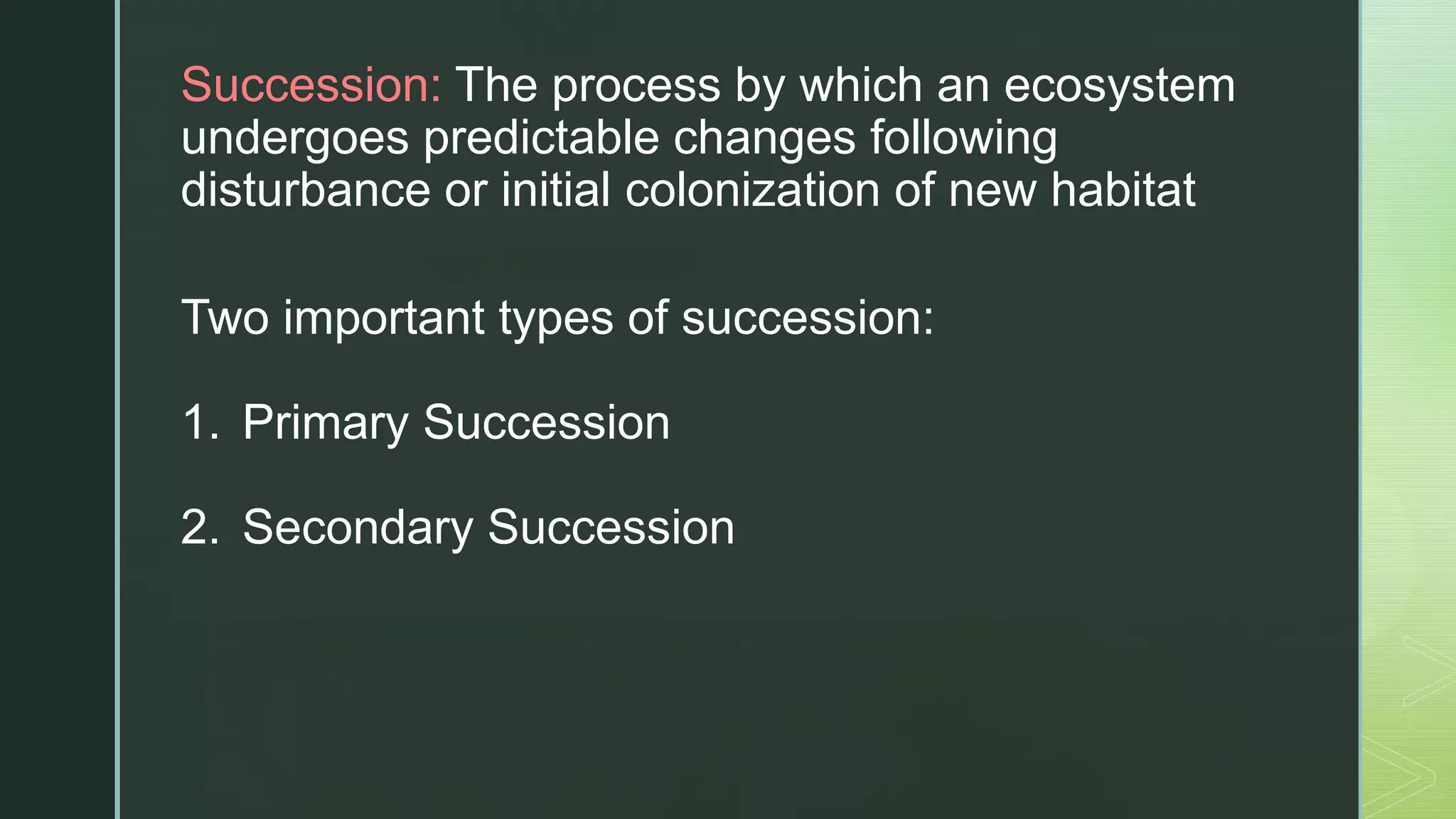
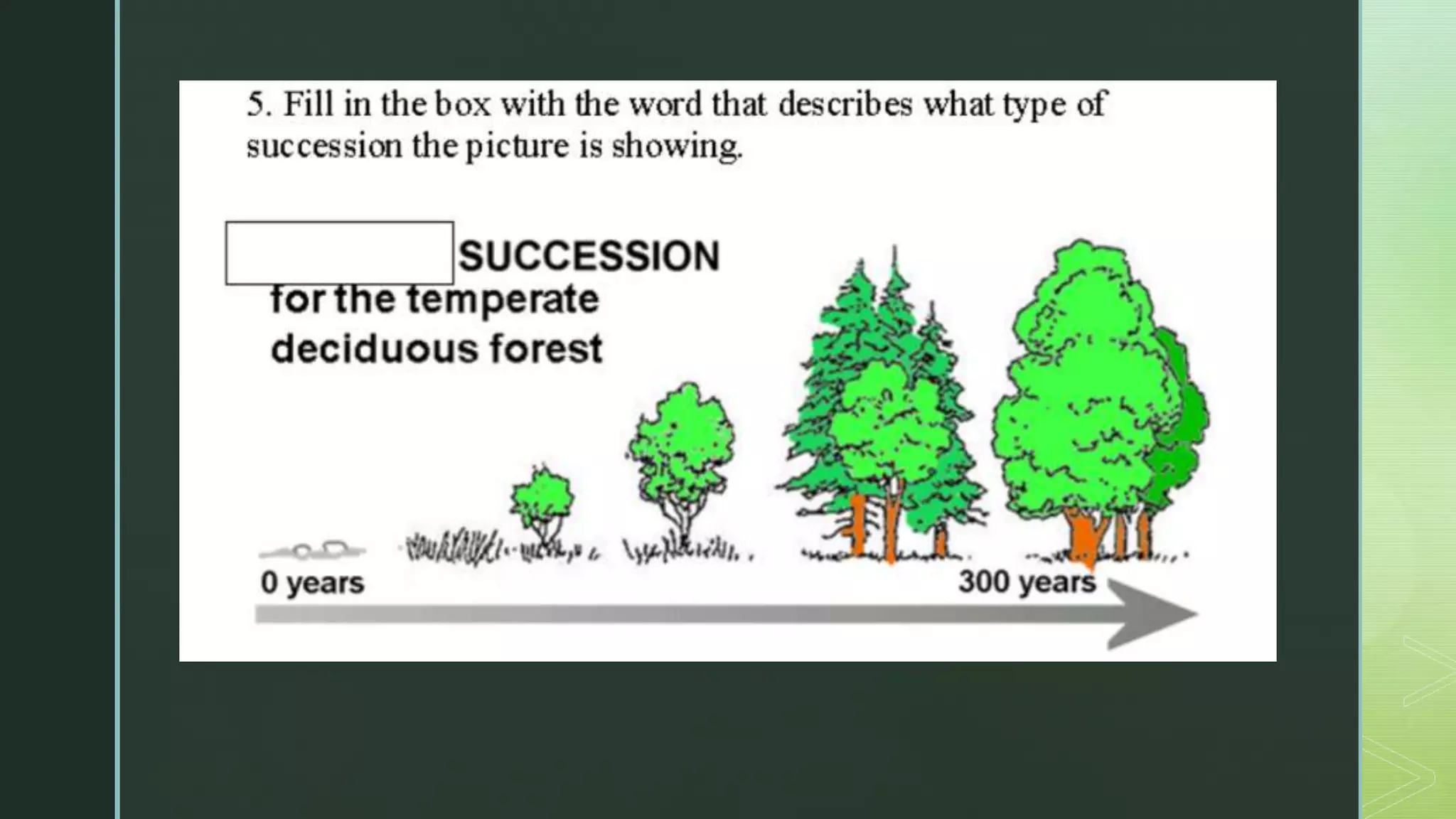
zSuccession: The process by which an ecosystem
undergoes predictable changes following
disturbance or initial colonization of new habitat
Two important types of succession:
1. Primary Succession
2. Secondary Succession
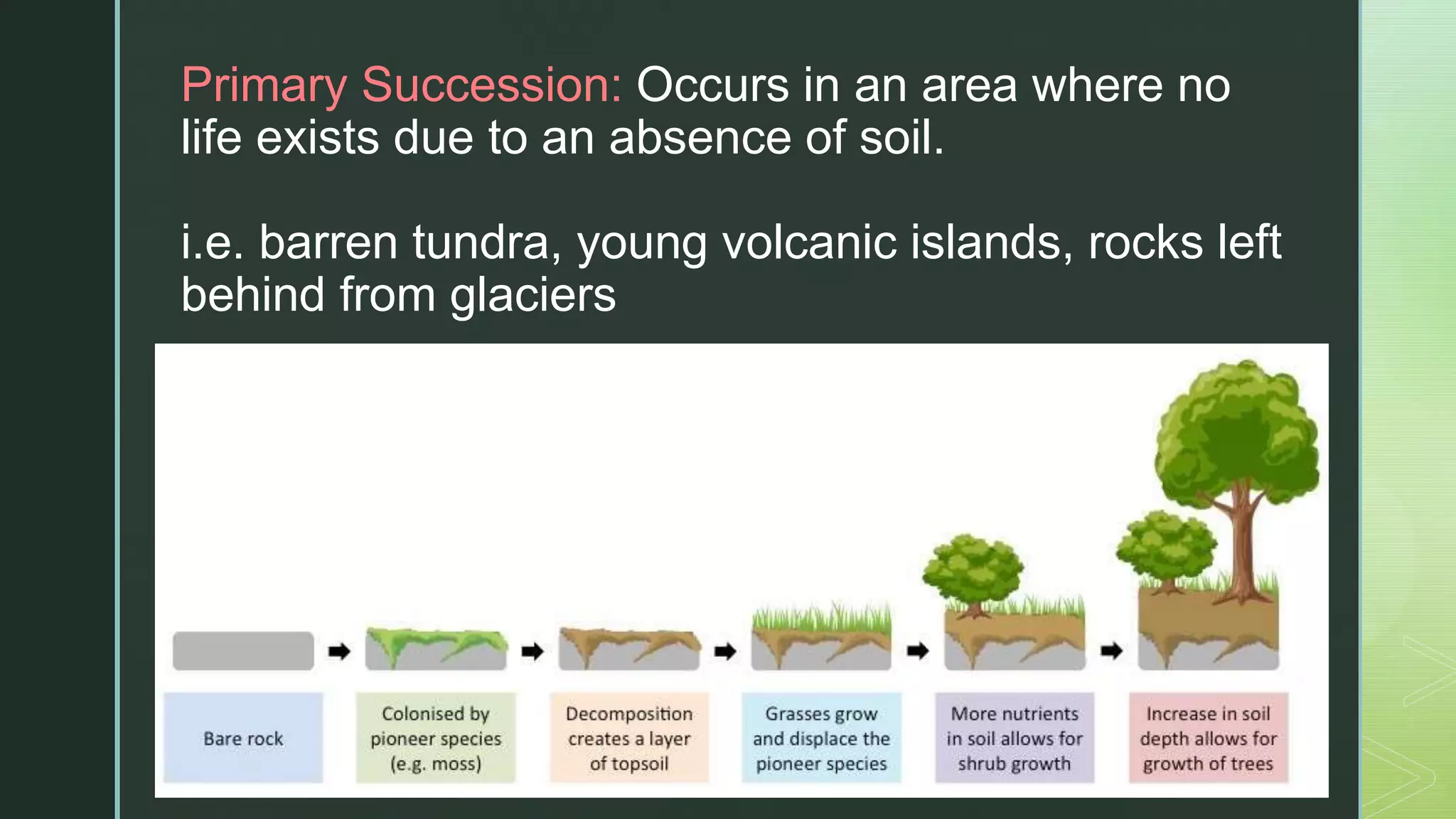
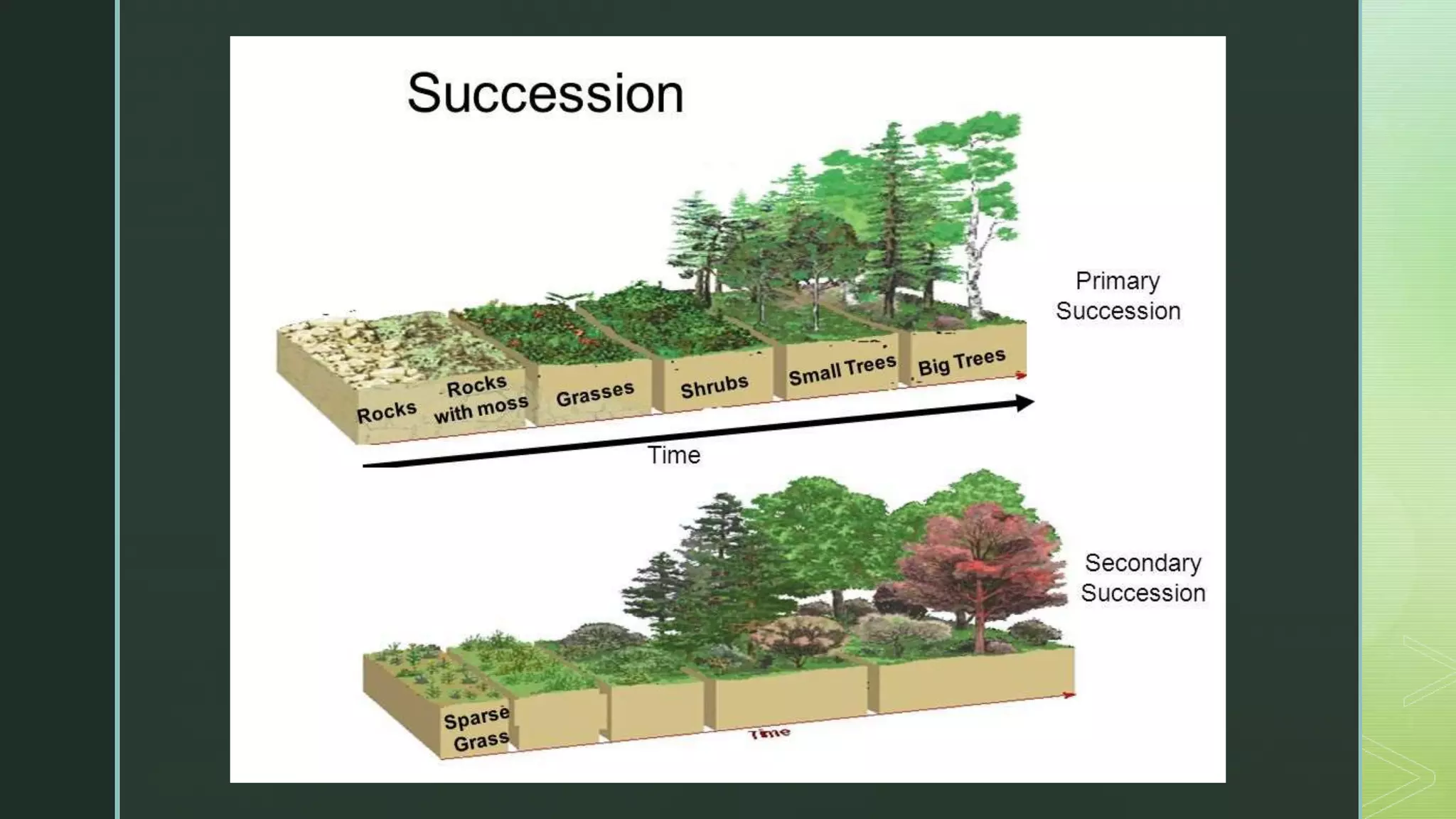
zPrimary Succession: Occurs in an area where no
life exists due to an absence of soil.
i.e. barren tundra, young volcanic islands, rocks ​left
behind from glaciers
z
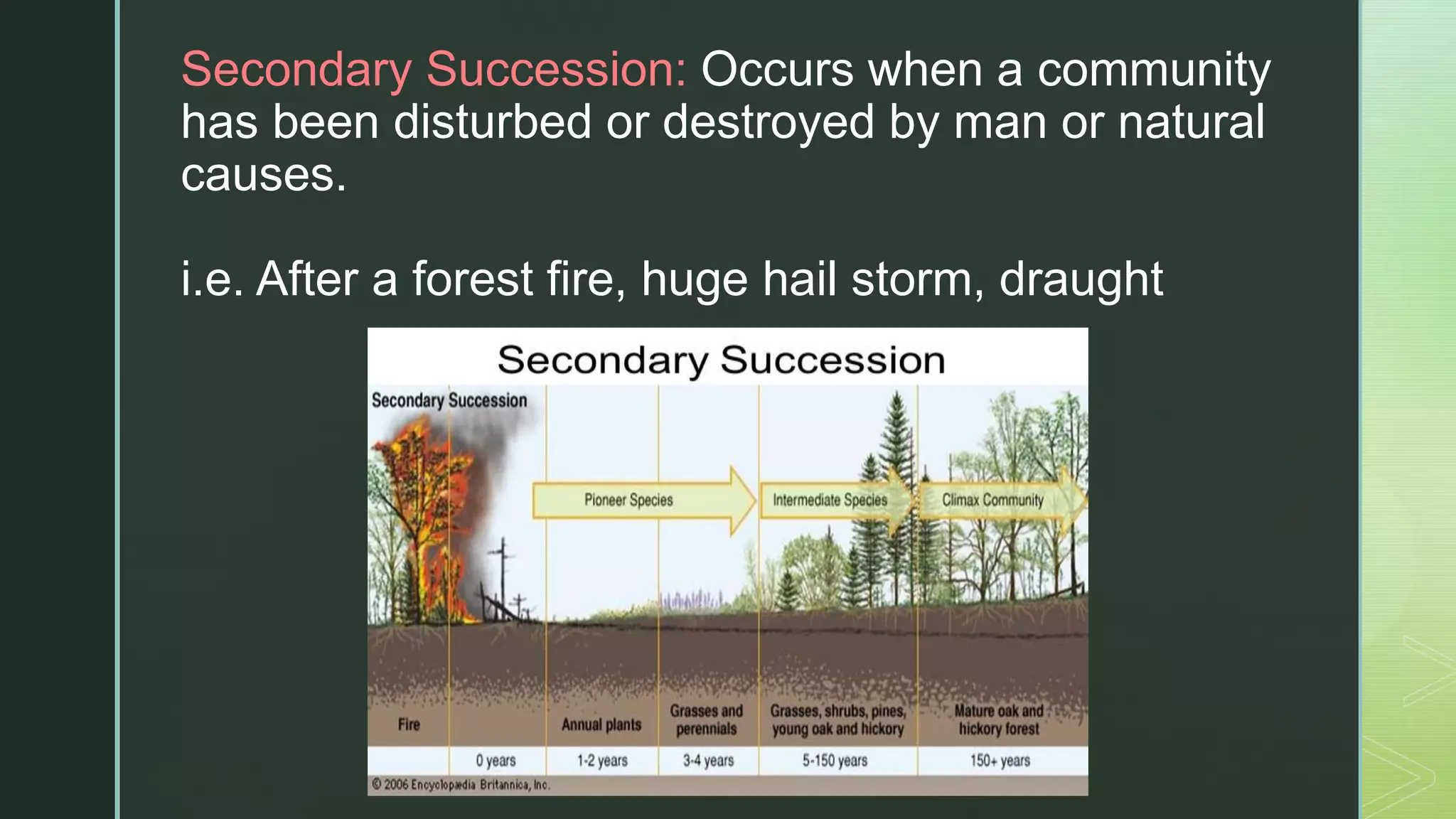
Secondary Succession: Occurs when a community
has been disturbed or ​destroyed by man or natural
causes.
i.e. After a forest fire, huge hail storm, draught
z
z
z
z
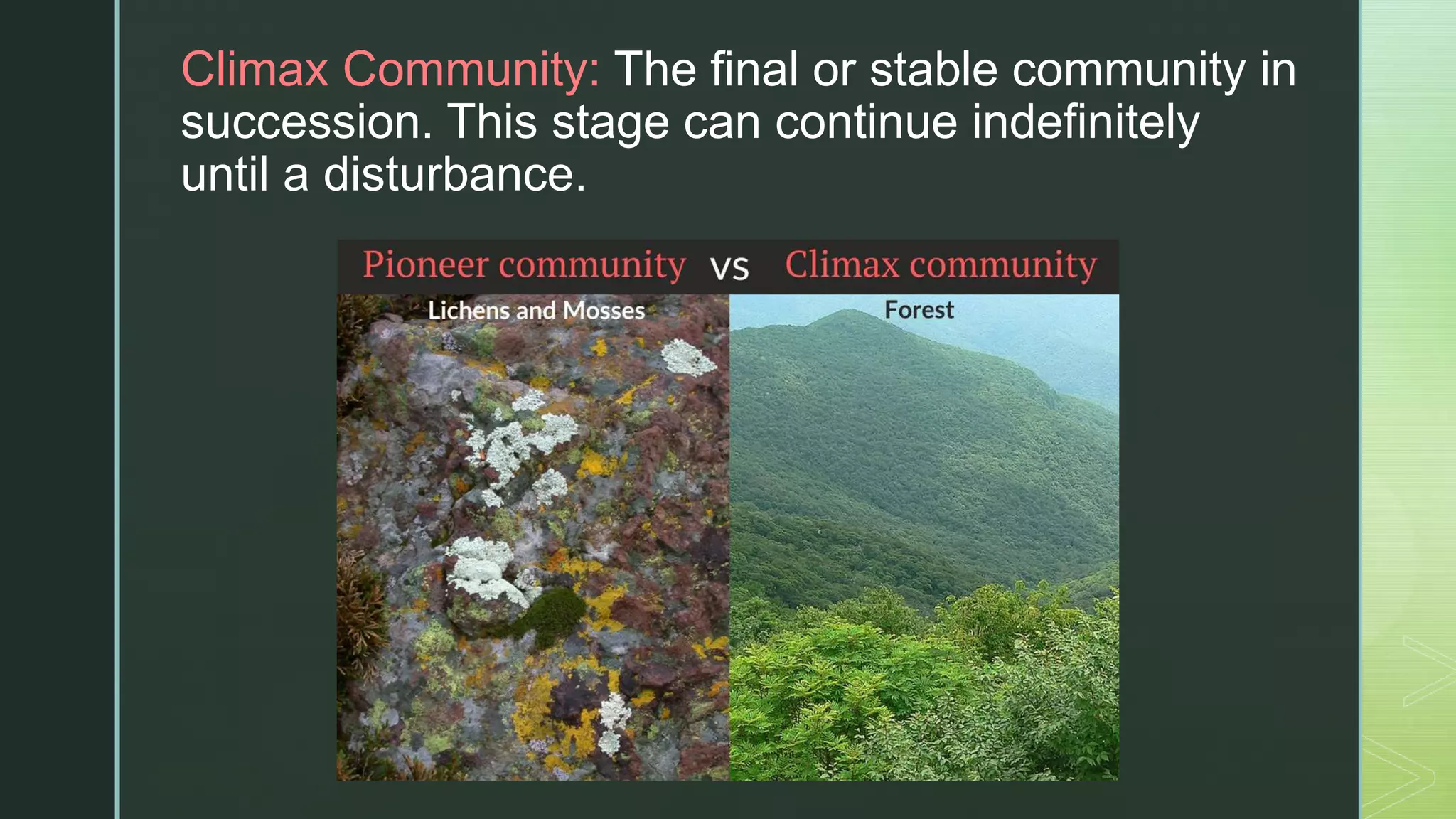
Climax Community: The final or stable community in
succession. This stage can continue indefinitely
until a disturbance.
z
The human population continues to grow on Earth.
To ​survive we have to meet our basic needs. We
have ​also become used to having certain luxuries.
Meeting ​our "needs" means using the environment
for food, ​space, and energy production. Each human
"need" has ​an impact on ecosystems and the living
things that ​populate them - including ourselves.

Unit a interactionsandecosystems(succession)

  • 1.
  • 2.
    zWhat happens toa bare patch of rocky ground ​over time? Does it ​remain ​lifeless; does ​it change ​over time?
  • 3.
    zOver time wewill see plants or plant like ​species growing.
  • 4.
    zPioneer ​Species: the​first species to ​occupy a barren or ​lifeless piece of ​land These species are adapted to harsh conditions ​and are able to live on bare rock, earth, or even ​ground that was scorched by forest fires
  • 5.
    zPioneer ​Species: the​first species (usually plants) to ​occupy and establish itself in a barren or ​lifeless piece of ​land These pioneer species help break down the rocks and help pave the way for new species to enter the ​ecosystem. As time goes on the pioneer species will be ​replaced by new species. These will eventually be replaced also. This pattern of replacement and ​change is called Succession
  • 6.
    zSuccession: The processby which an ecosystem undergoes predictable changes following disturbance or initial colonization of new habitat Two important types of succession: 1. Primary Succession 2. Secondary Succession
  • 7.
    zPrimary Succession: Occursin an area where no life exists due to an absence of soil. i.e. barren tundra, young volcanic islands, rocks ​left behind from glaciers
  • 8.
    z Secondary Succession: Occurswhen a community has been disturbed or ​destroyed by man or natural causes. i.e. After a forest fire, huge hail storm, draught
  • 9.
  • 10.
  • 11.
  • 12.
    z Climax Community: Thefinal or stable community in succession. This stage can continue indefinitely until a disturbance.
  • 13.
    z The human populationcontinues to grow on Earth. To ​survive we have to meet our basic needs. We have ​also become used to having certain luxuries. Meeting ​our "needs" means using the environment for food, ​space, and energy production. Each human "need" has ​an impact on ecosystems and the living things that ​populate them - including ourselves.