UNIT-5
DEFLECTION OF BEAMS AND
COLUMNS
INTRODUCTION
Methods of calculating beam deflections are:
1) double integration method,
2) Macaulays method
3) area-moment method.
4) Conjucate Method
Double integration method
The double integration method is a powerful
tool in solving deflection and slope of a beam
at any point because we will be able to get the
equation of the elastic curve.
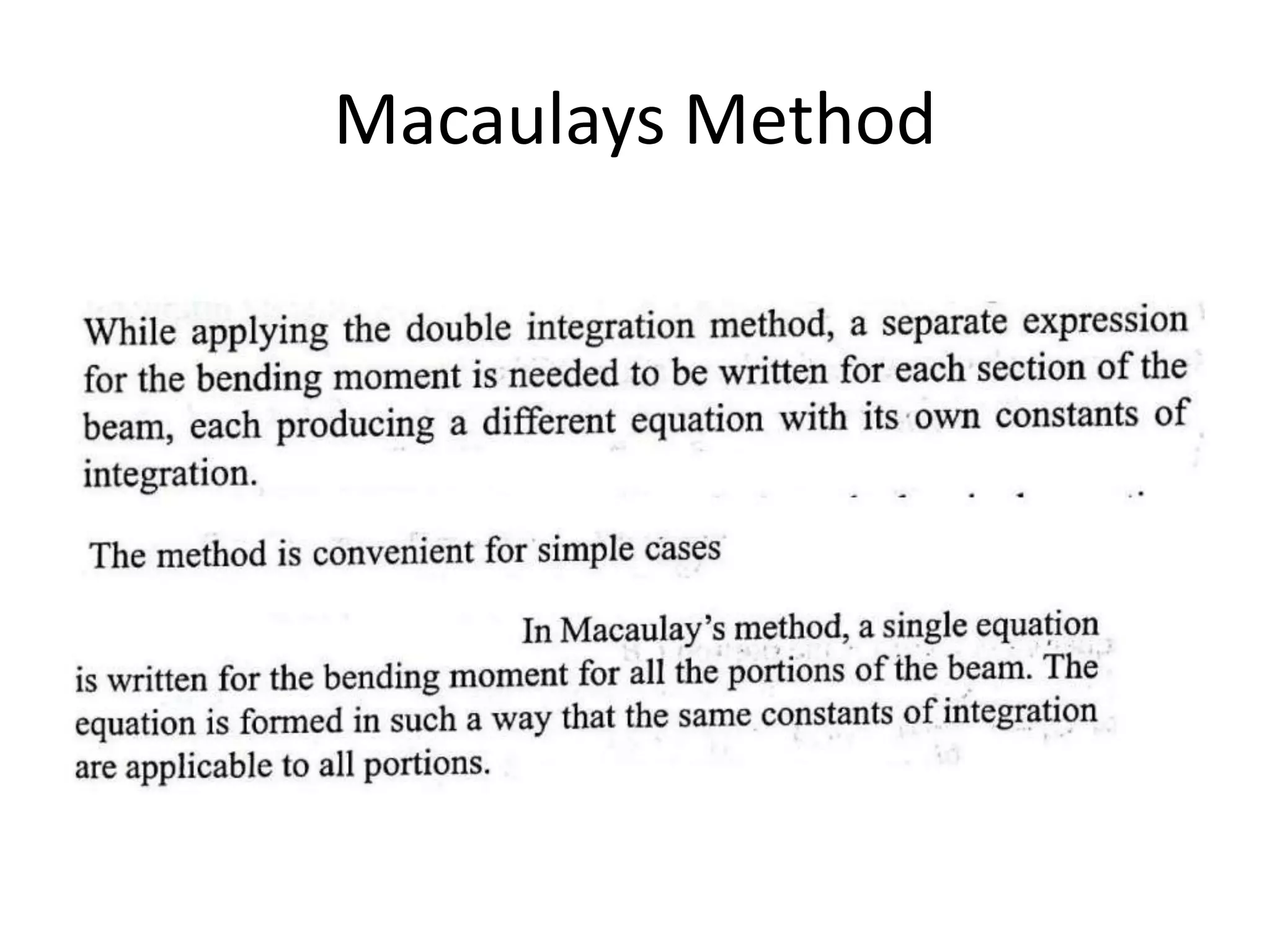
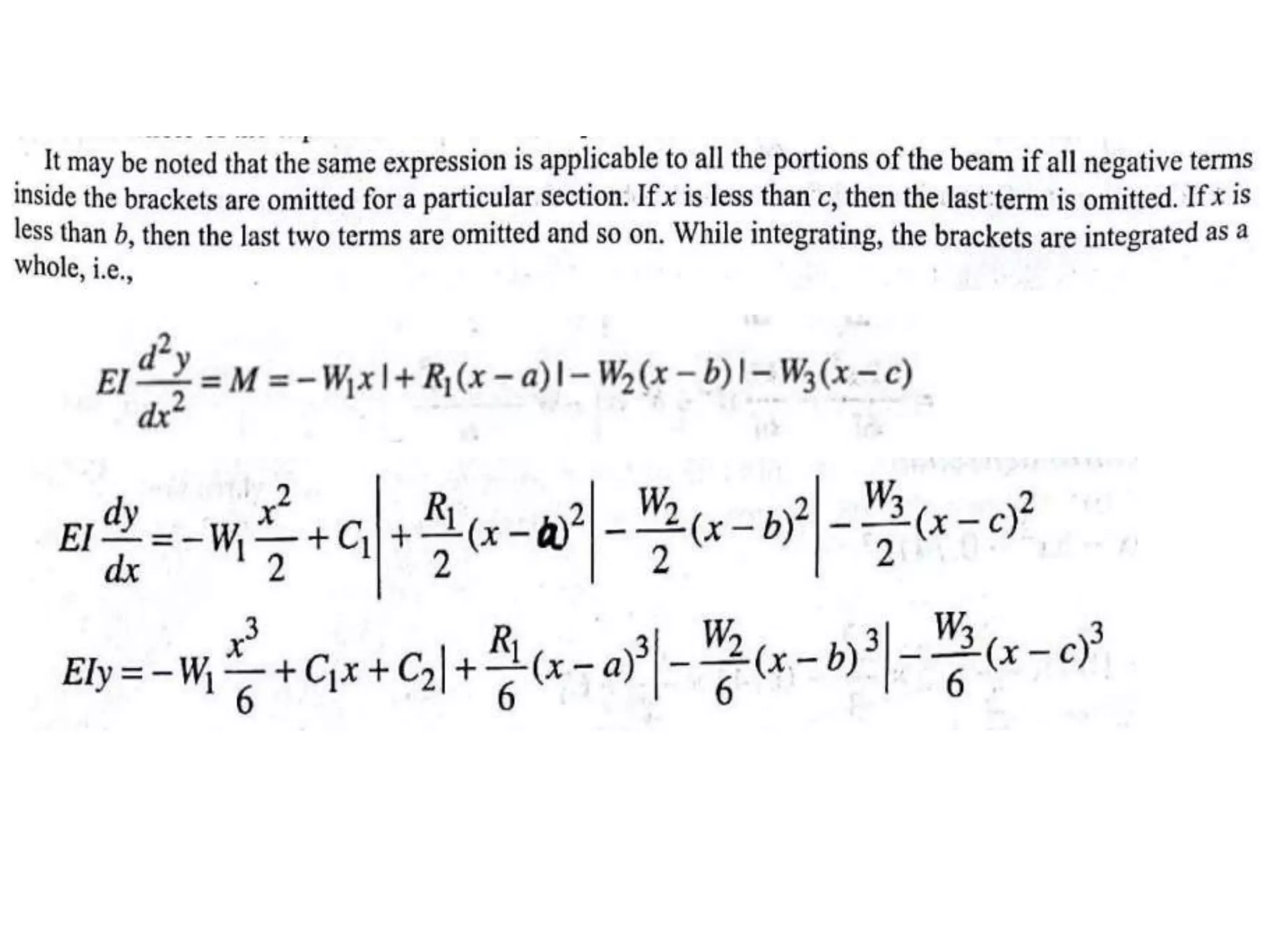
Macaulays Method
Moment Area Method
This is a method of determining the change in slope or the deflection between
two points on a beam. It is expressed as two theorems...
Theorem 1
If A and B are two points on a beam the change in angle (radians) between the
tangent at A and the tangent at B is equal to the area of the bending moment
diagram between the points divided by the relevant value of EI (the flexural
rigidity constant).
Theorem 2
If A and B are two points on a beam the displacement of B relative to the tangent
of the beam at A is equal to the moment of the area of the bending moment
diagram between A and B about the ordinate through B divided by the relevant
value of EI (the flexural rigidity constant).
COLUMN
Column
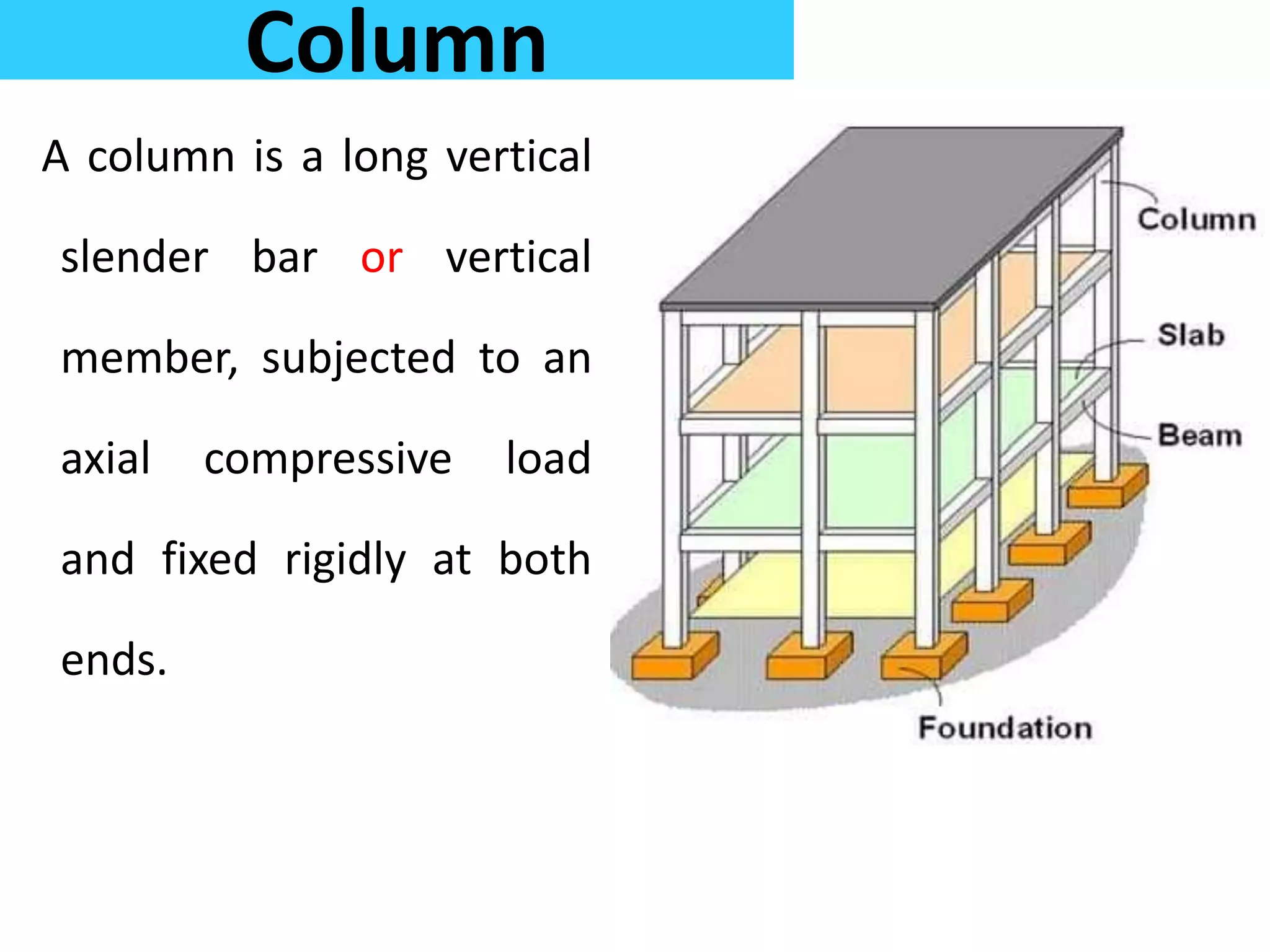
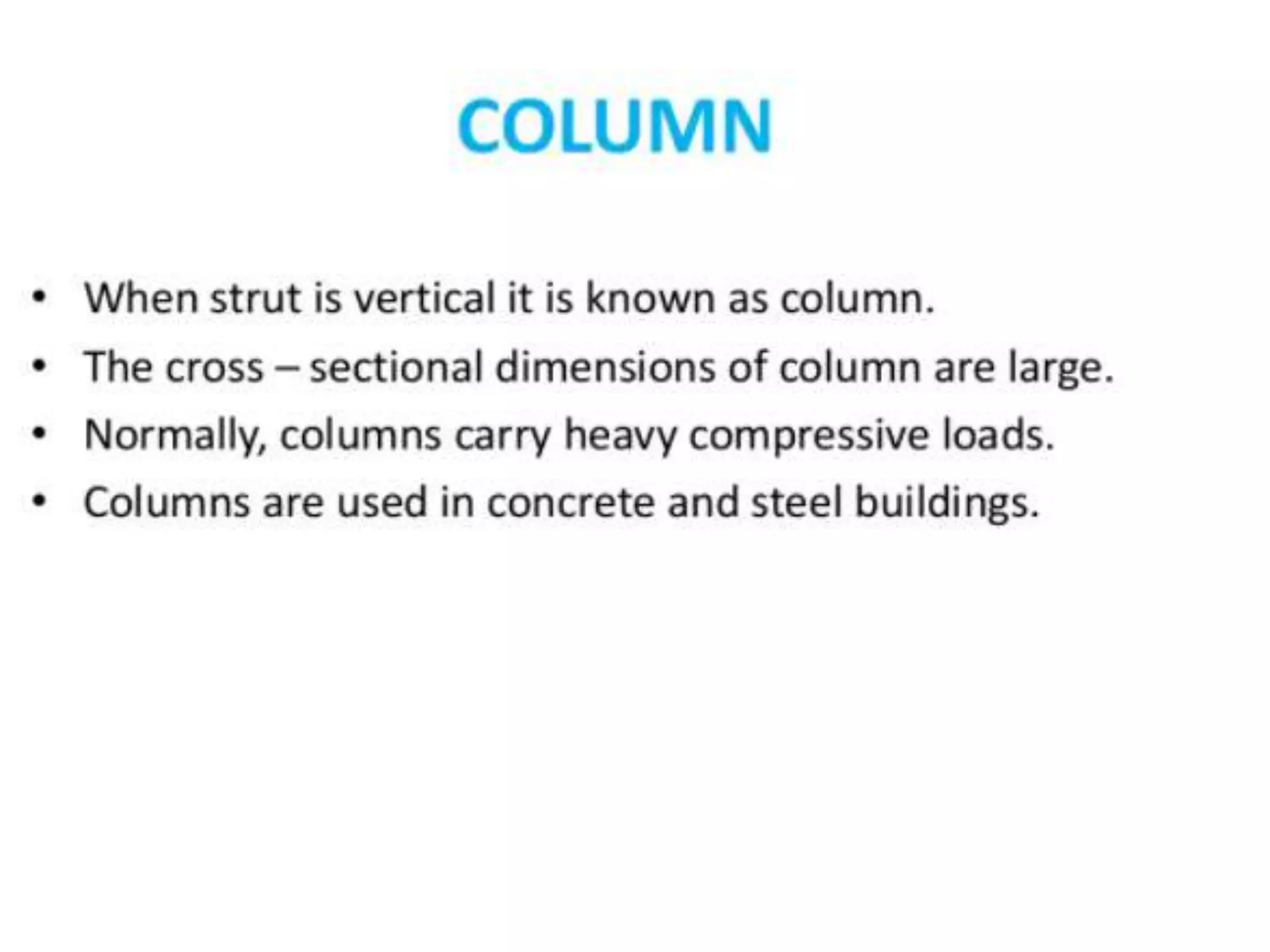
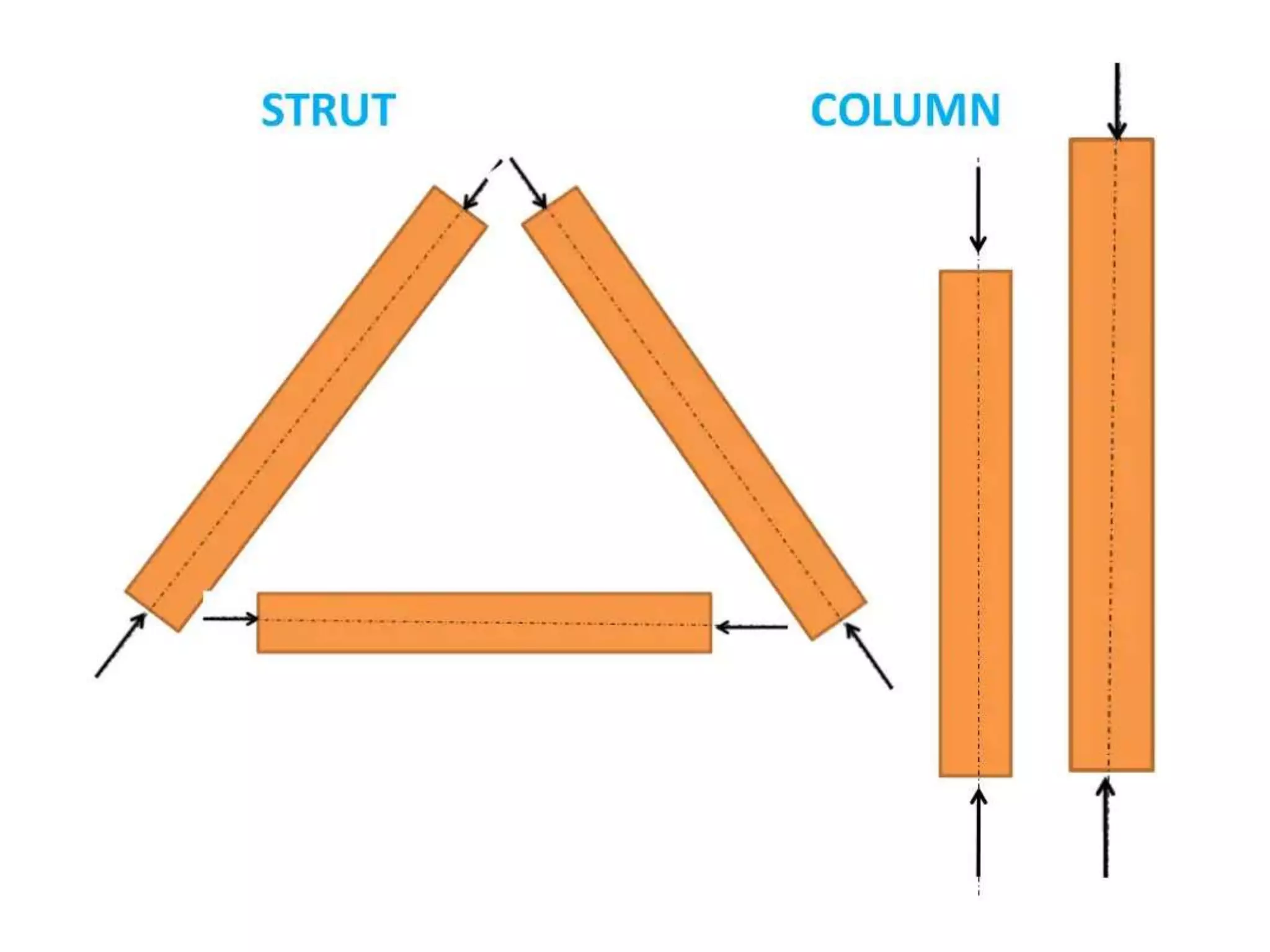
A column is a long vertical
slender bar or vertical
member, subjected to an
axial compressive load
and fixed rigidly at both
ends.
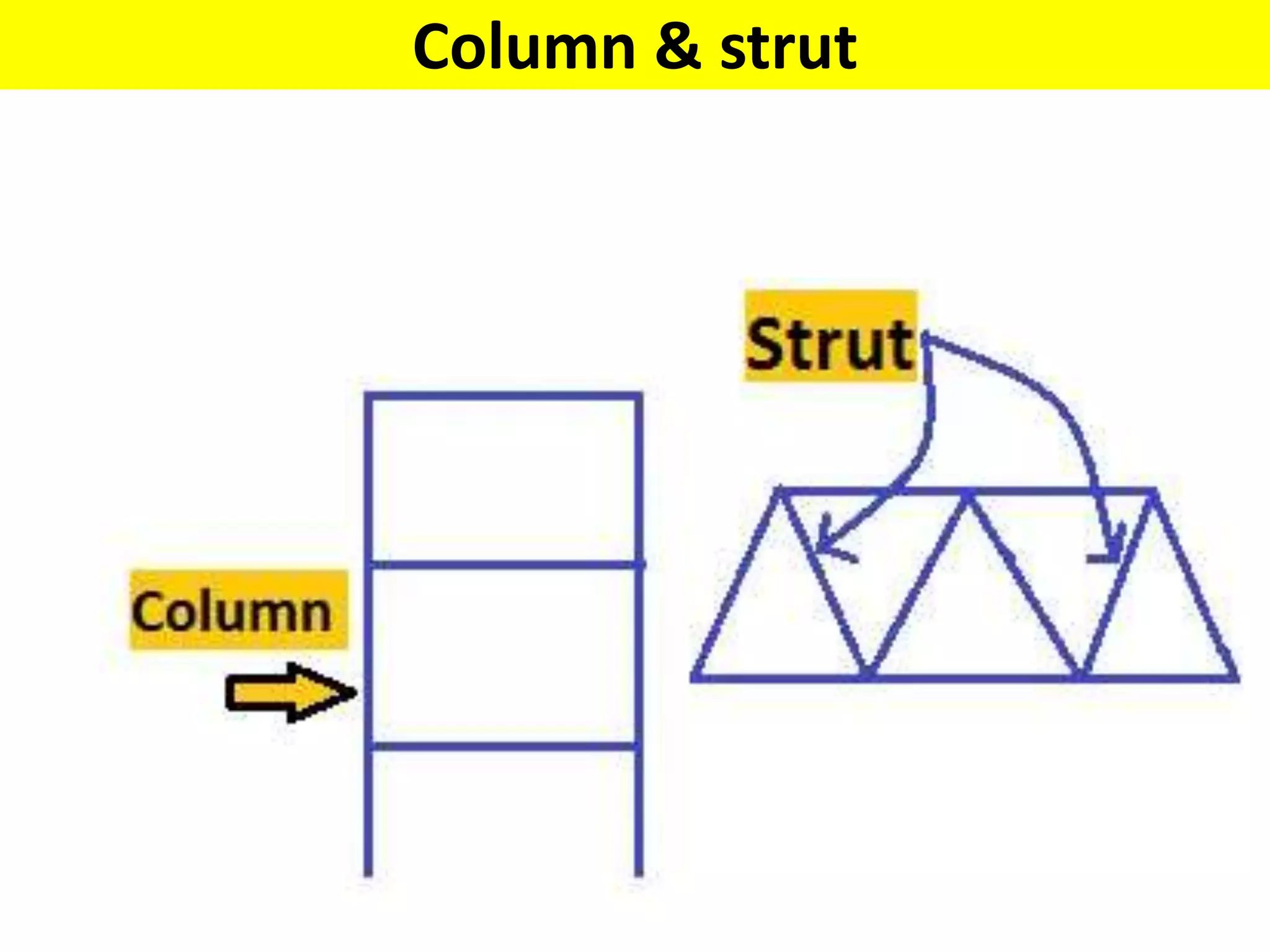
Column & strut
Strut
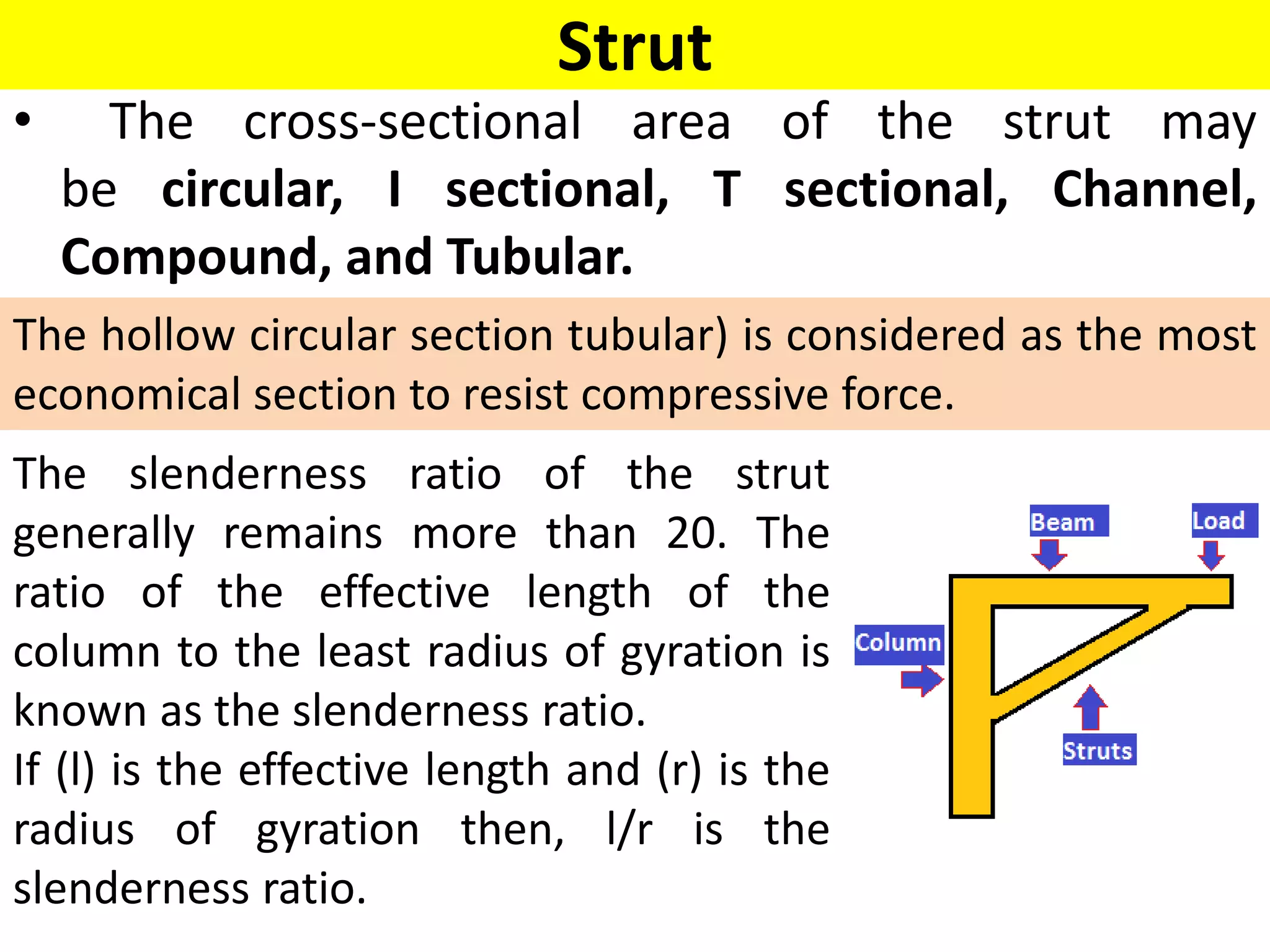
• The cross-sectional area of the strut may
be circular, I sectional, T sectional, Channel,
Compound, and Tubular.
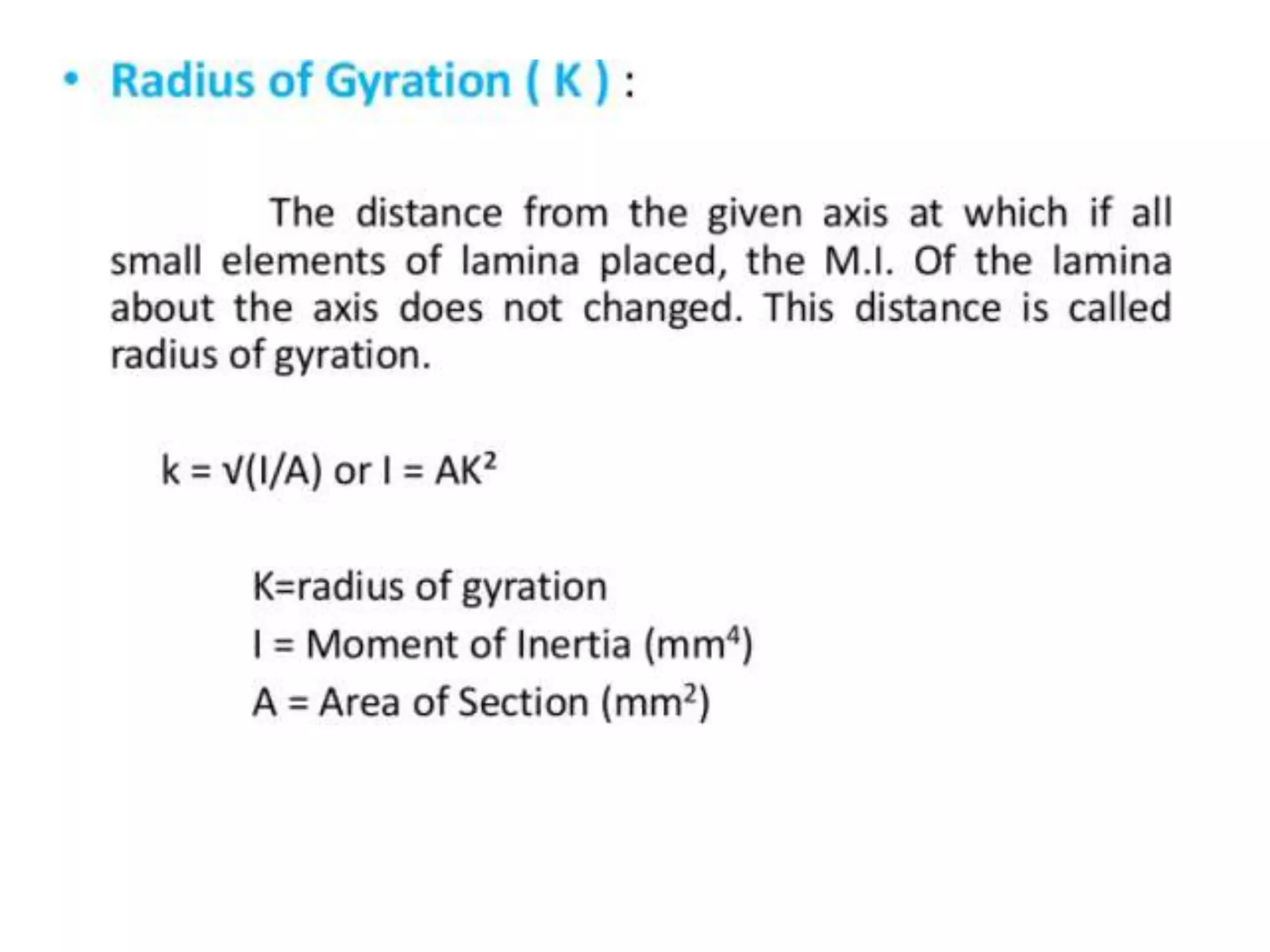
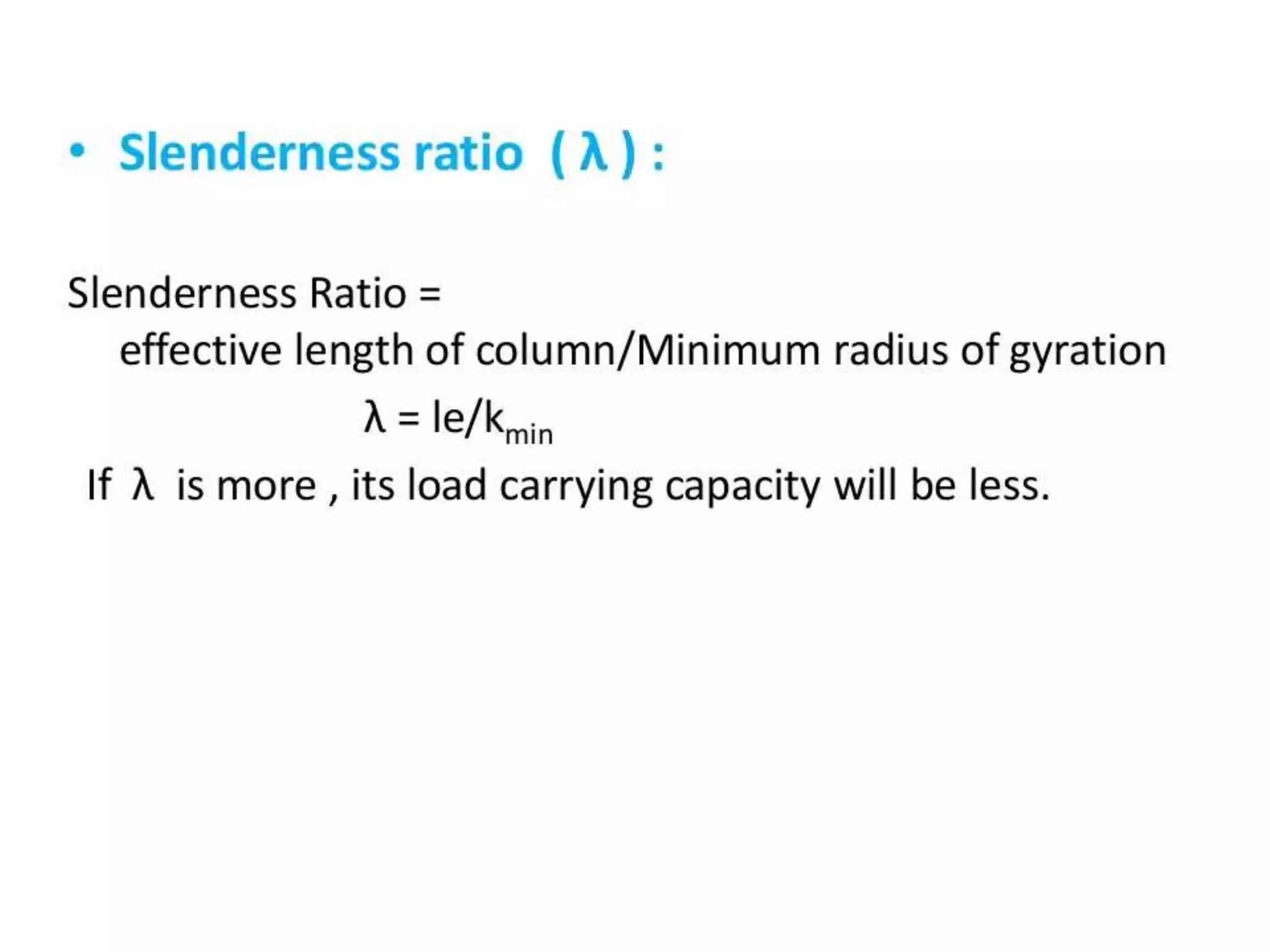
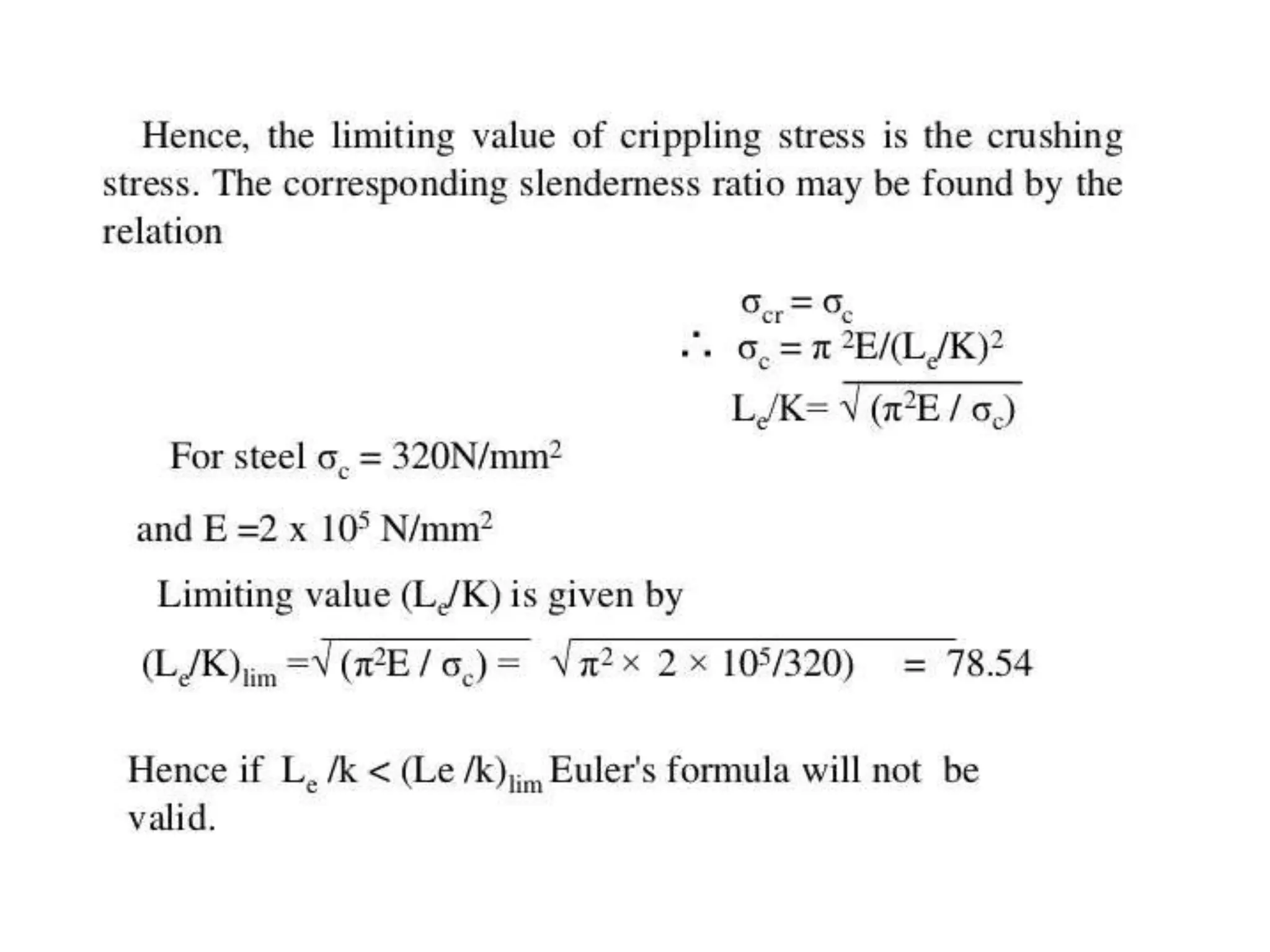
The slenderness ratio of the strut
generally remains more than 20. The
ratio of the effective length of the
column to the least radius of gyration is
known as the slenderness ratio.
If (l) is the effective length and (r) is the
radius of gyration then, l/r is the
slenderness ratio.
The hollow circular section tubular) is considered as the most
economical section to resist compressive force.
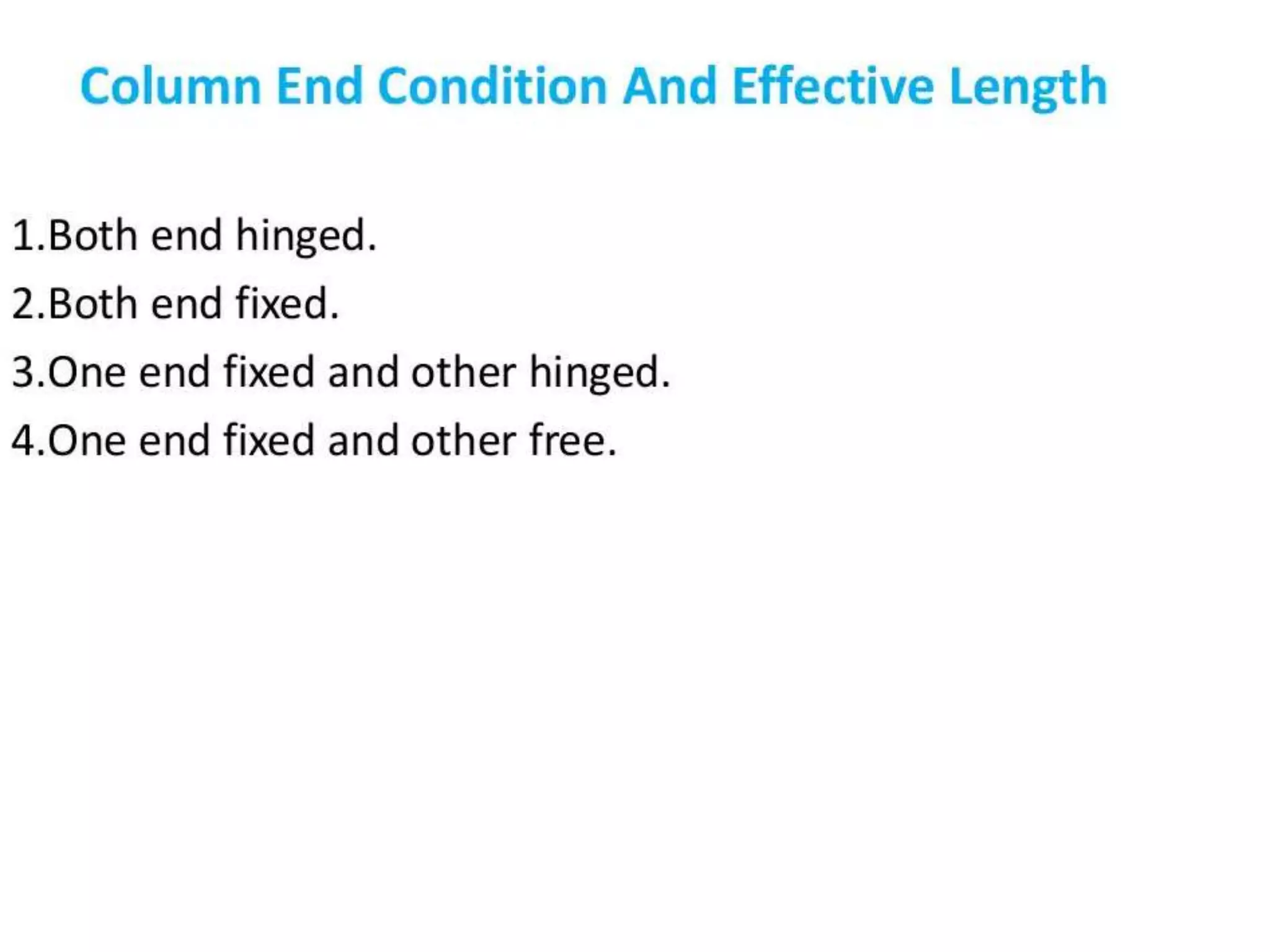
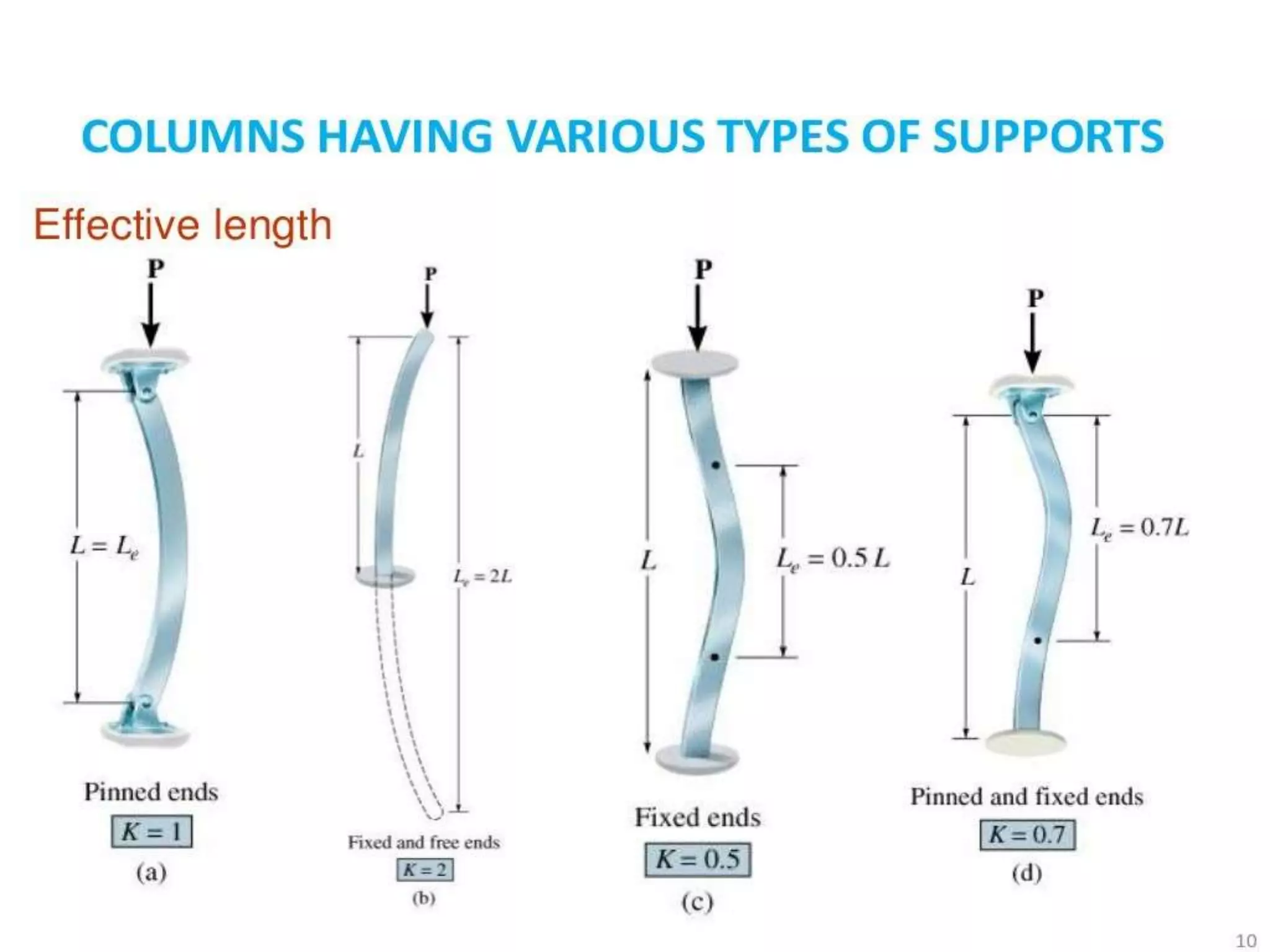
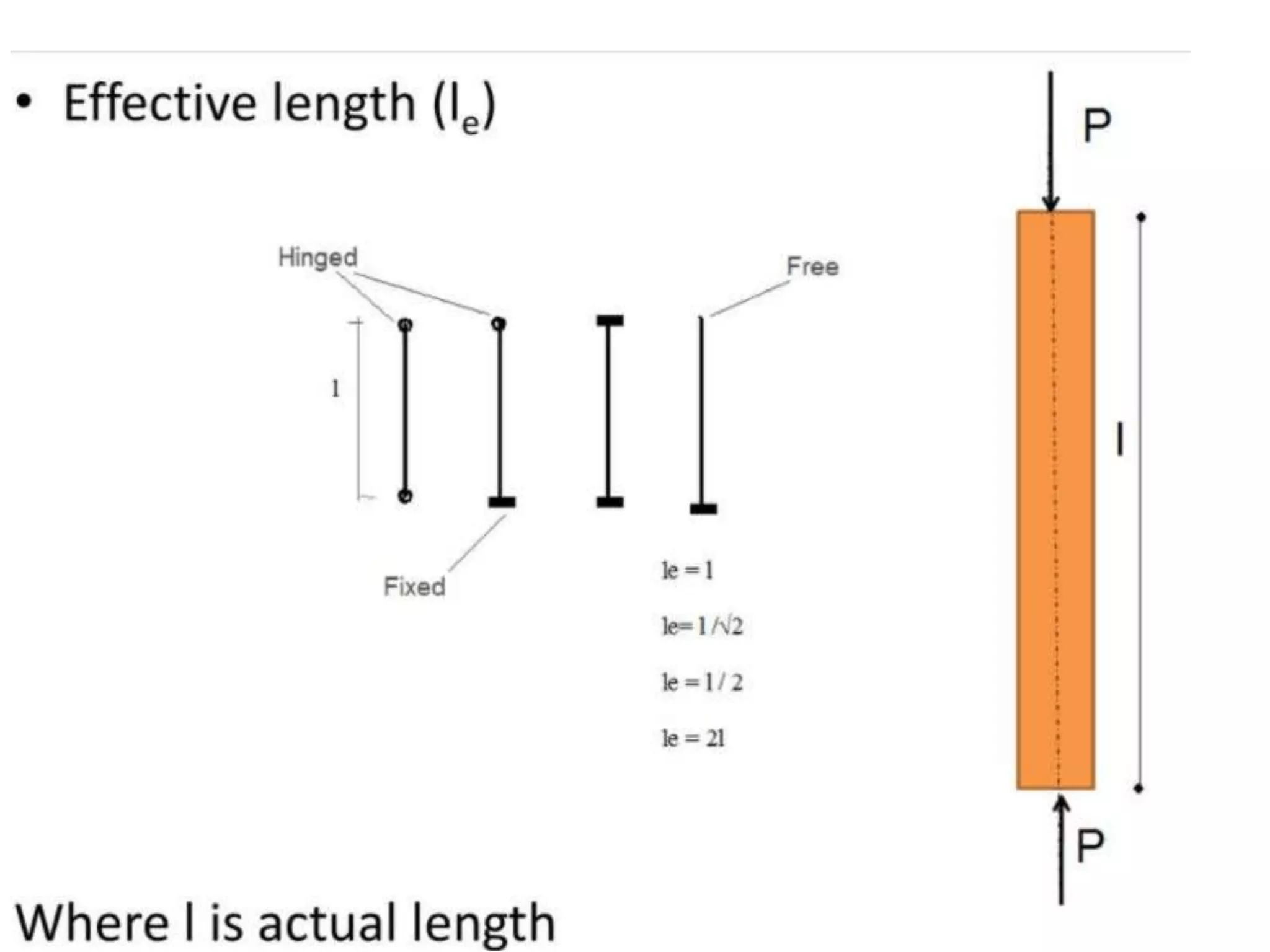
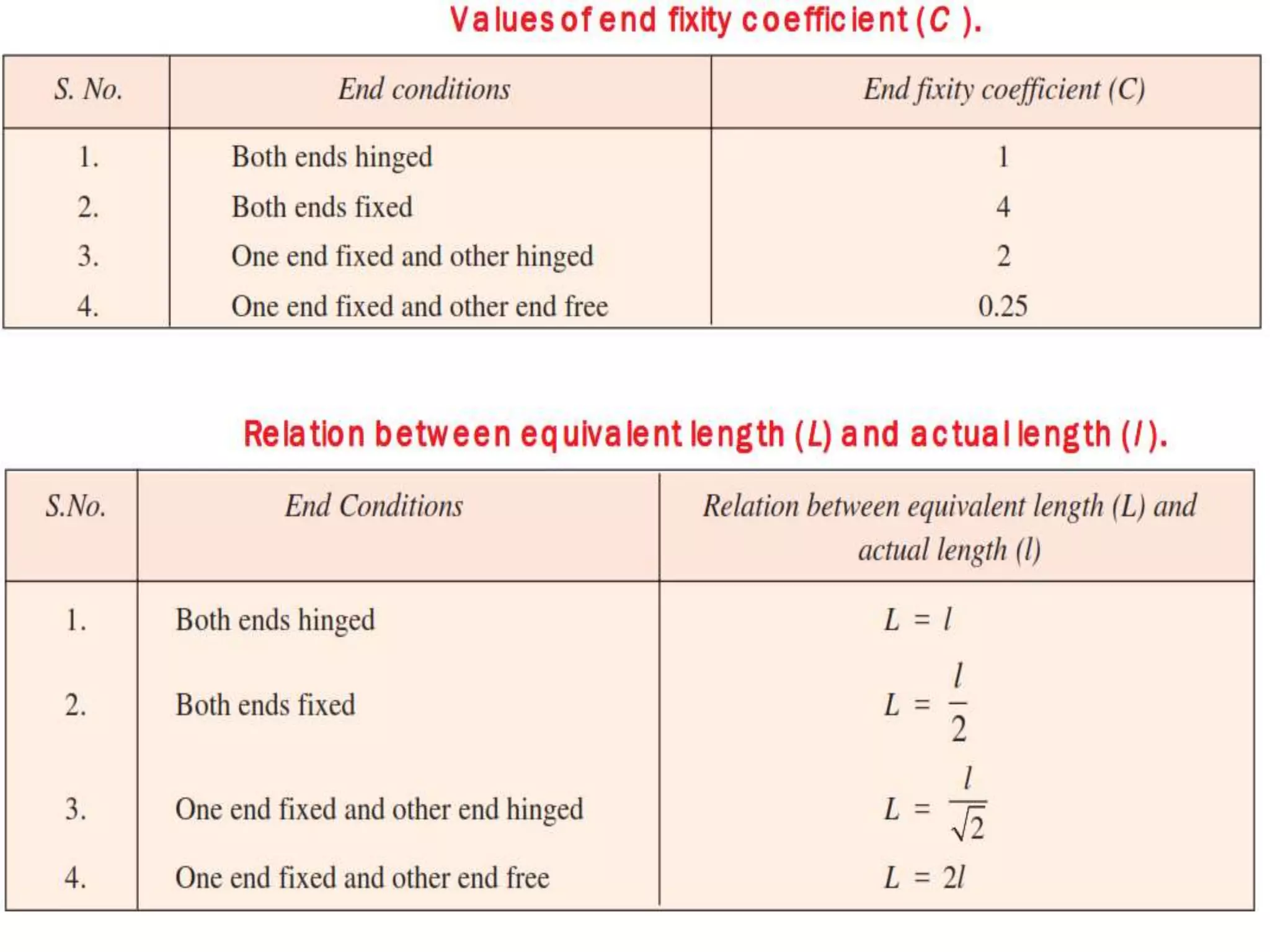
structure of column may be four types
1) Column those both end are hinged
2) Column those both end are fixed
3) column those one end is fixed and other end is
hinged
4) column those one end is fixed and second end is
free
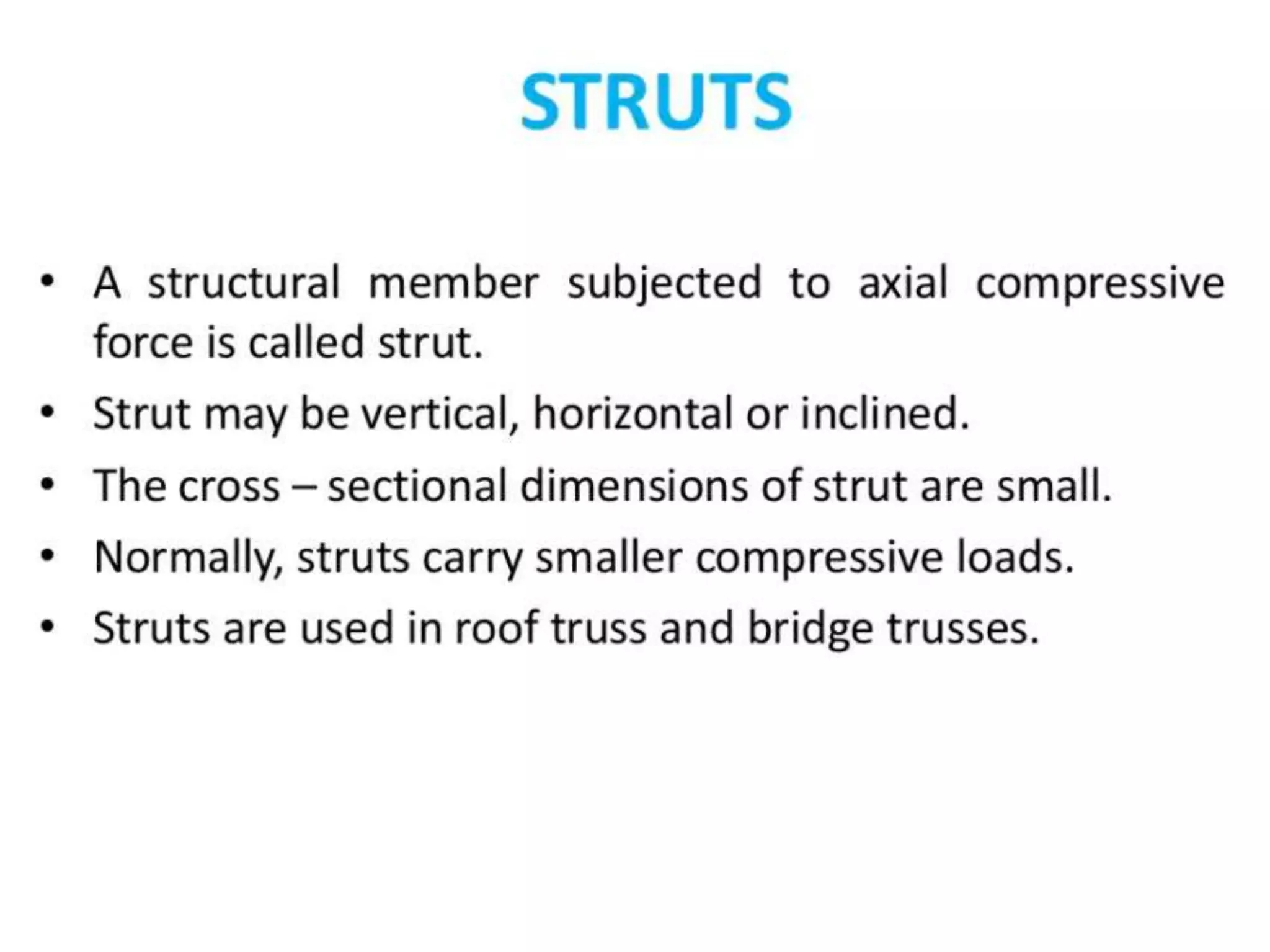
• A strut is a slender bar or a member in any
position other than vertical, subjected to a
compressive load and fixed rigidly or hinged or
pin jointed at one or both the end
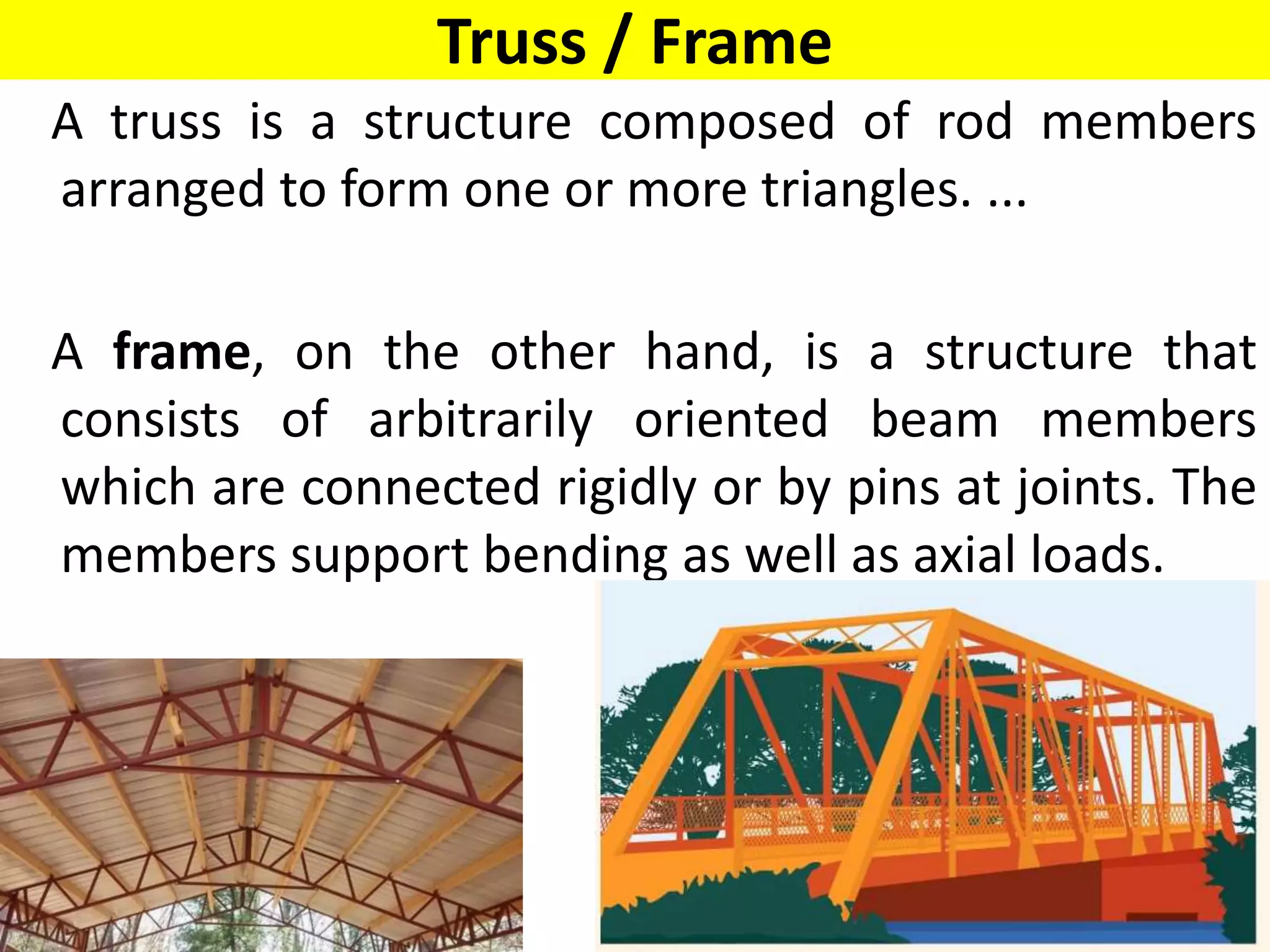
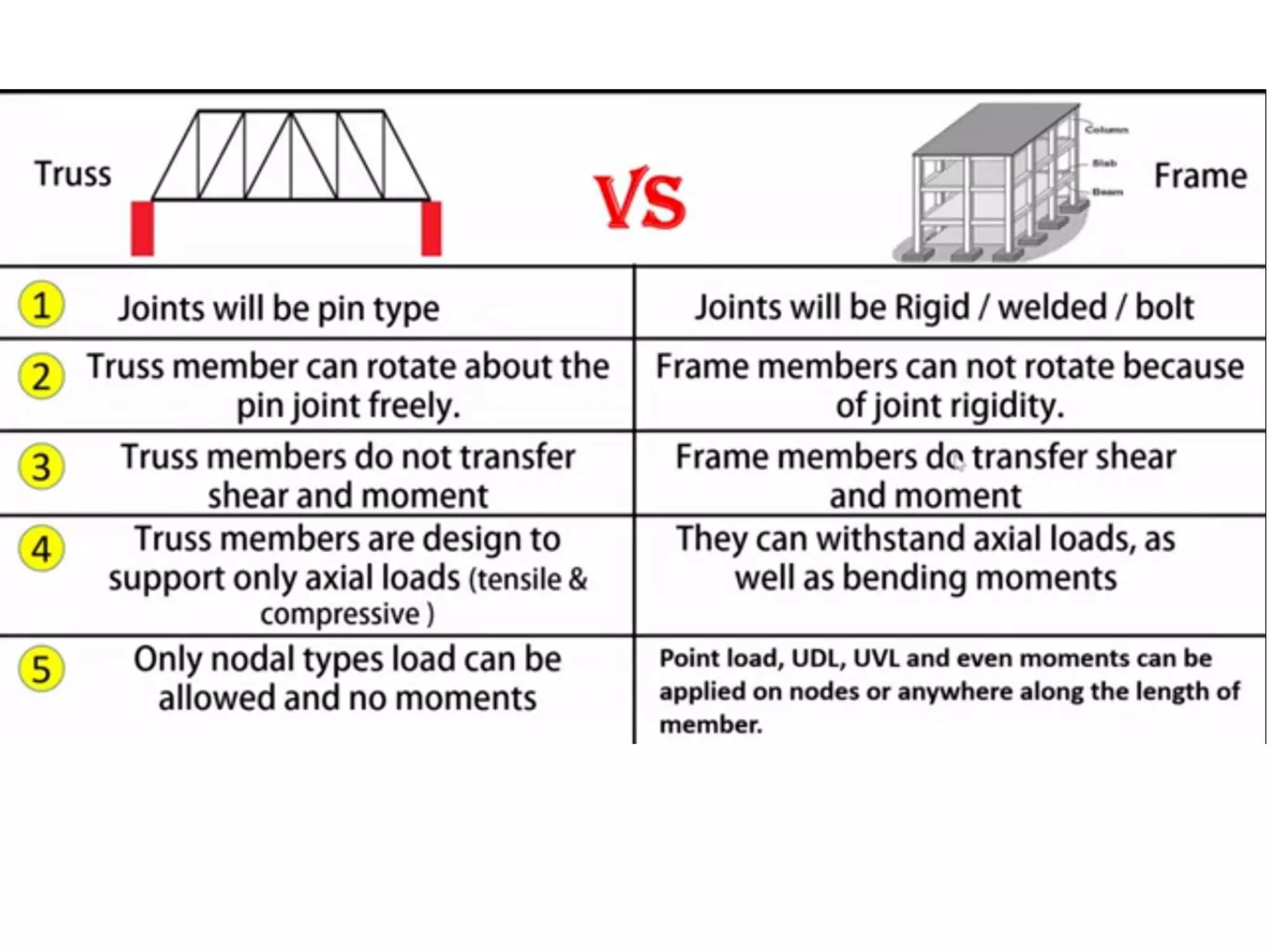
Truss / Frame
A truss is a structure composed of rod members
arranged to form one or more triangles. ...
A frame, on the other hand, is a structure that
consists of arbitrarily oriented beam members
which are connected rigidly or by pins at joints. The
members support bending as well as axial loads.
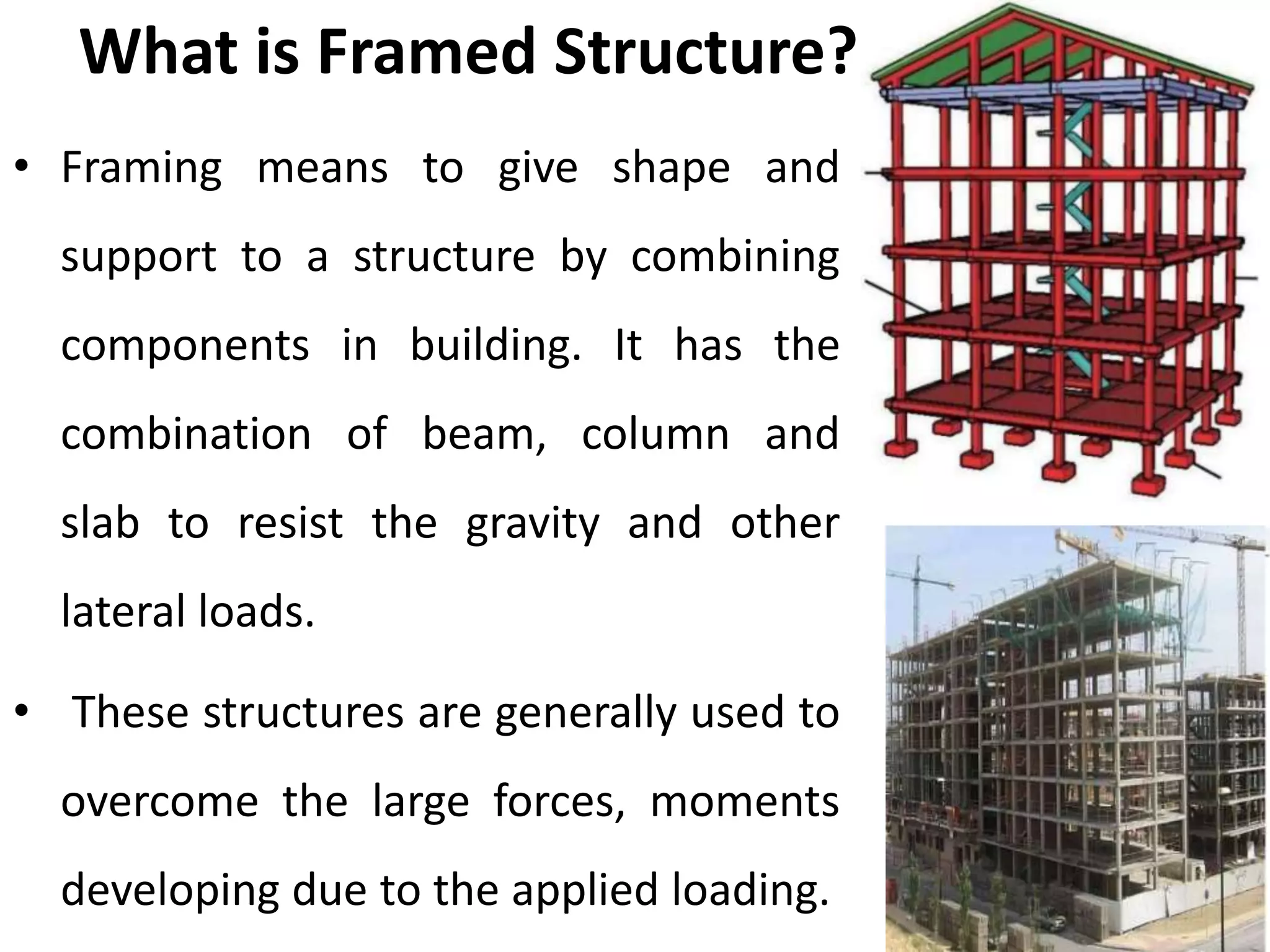
What is Framed Structure?
• Framing means to give shape and
support to a structure by combining
components in building. It has the
combination of beam, column and
slab to resist the gravity and other
lateral loads.
• These structures are generally used to
overcome the large forces, moments
developing due to the applied loading.
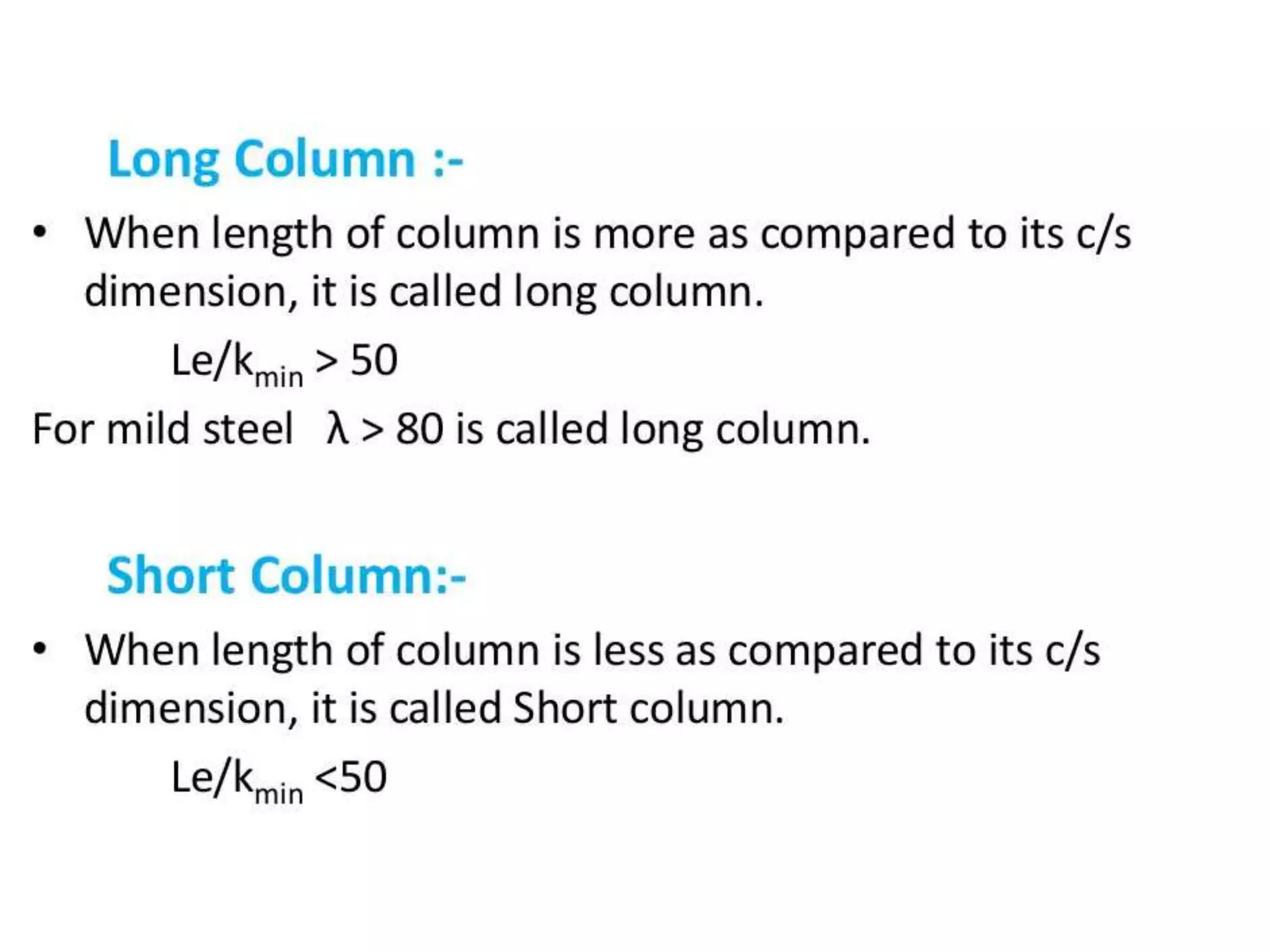
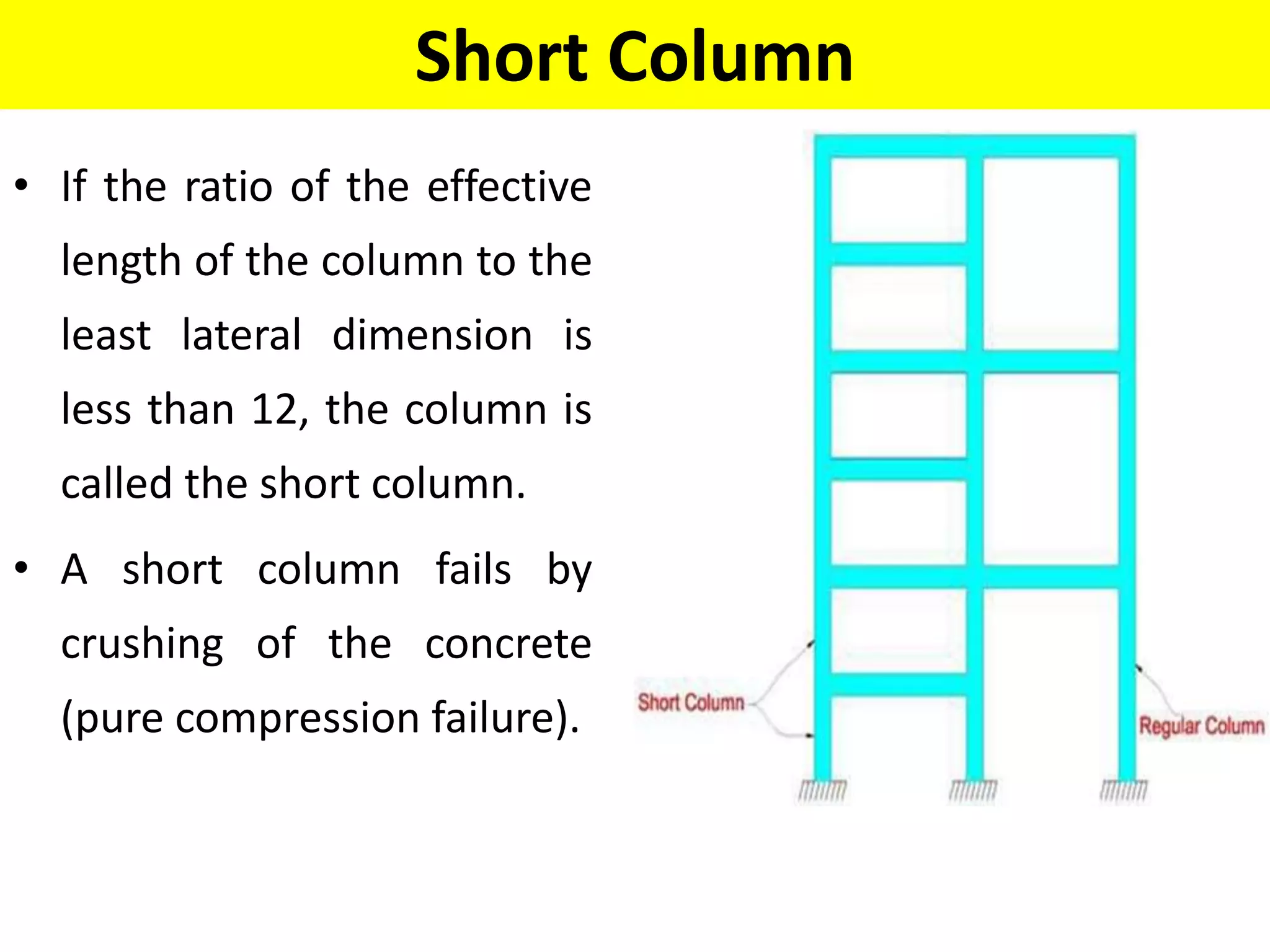
Short Column
• If the ratio of the effective
length of the column to the
least lateral dimension is
less than 12, the column is
called the short column.
• A short column fails by
crushing of the concrete
(pure compression failure).
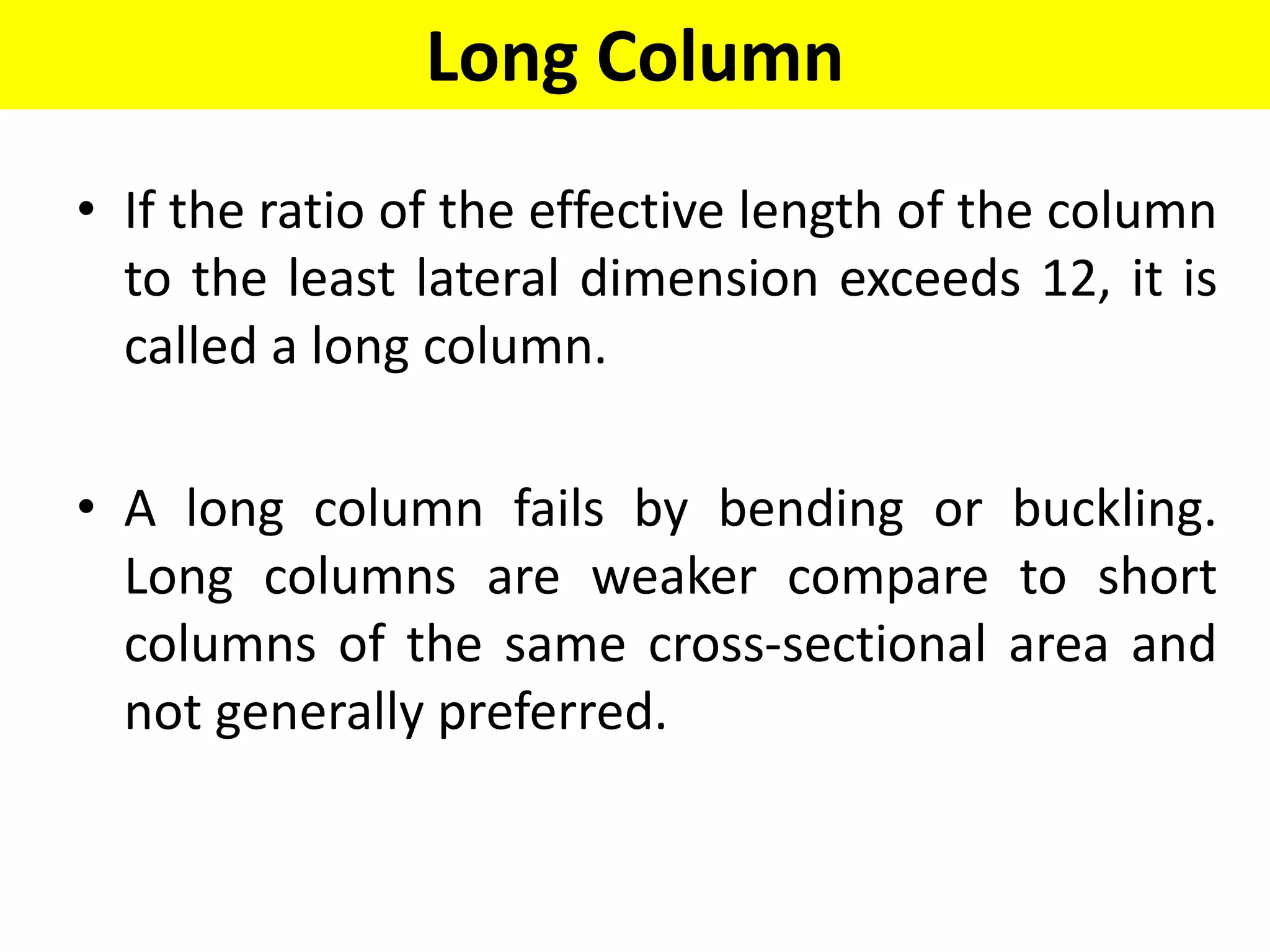
Long Column
• If the ratio of the effective length of the column
to the least lateral dimension exceeds 12, it is
called a long column.
• A long column fails by bending or buckling.
Long columns are weaker compare to short
columns of the same cross-sectional area and
not generally preferred.
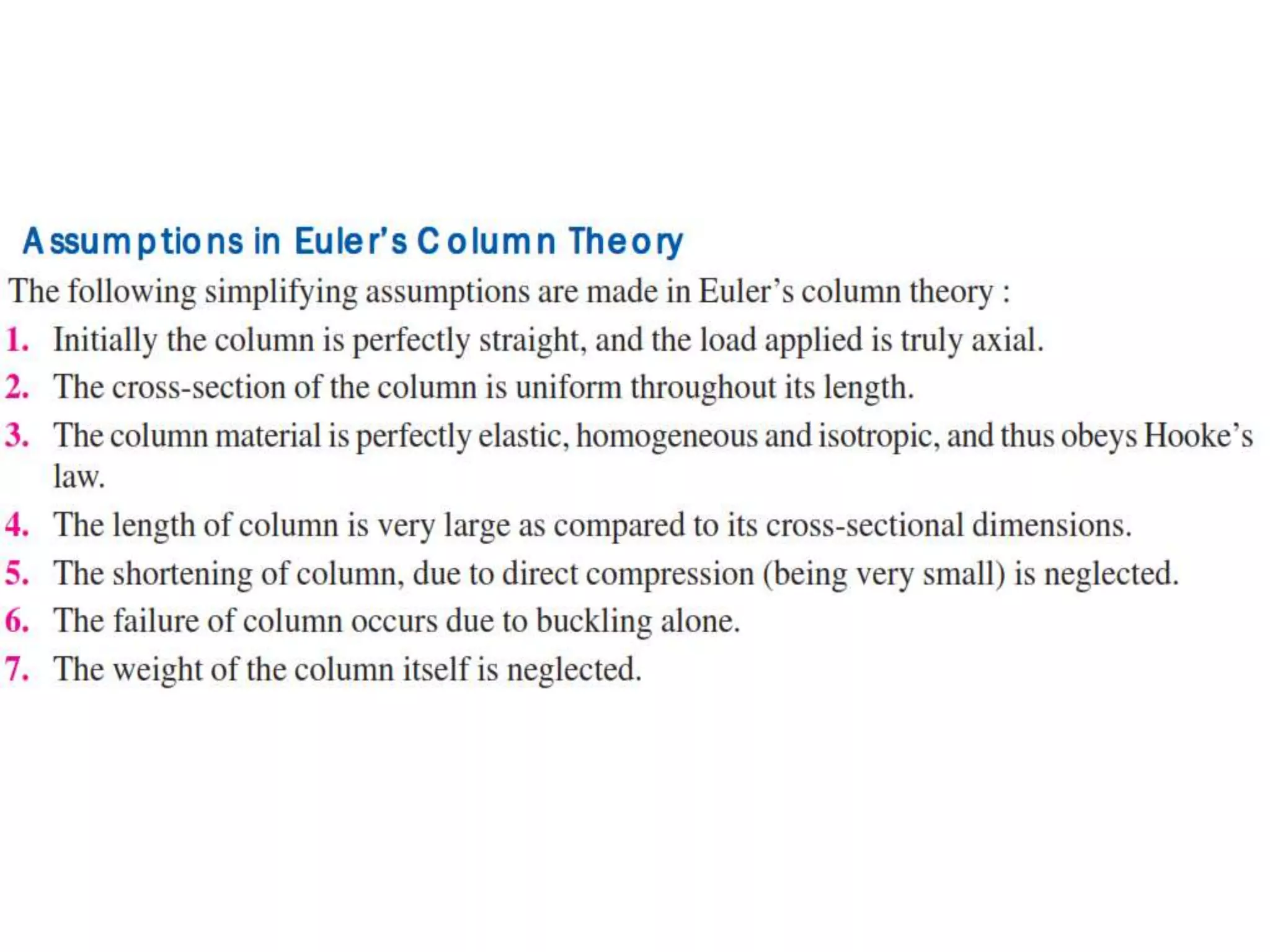
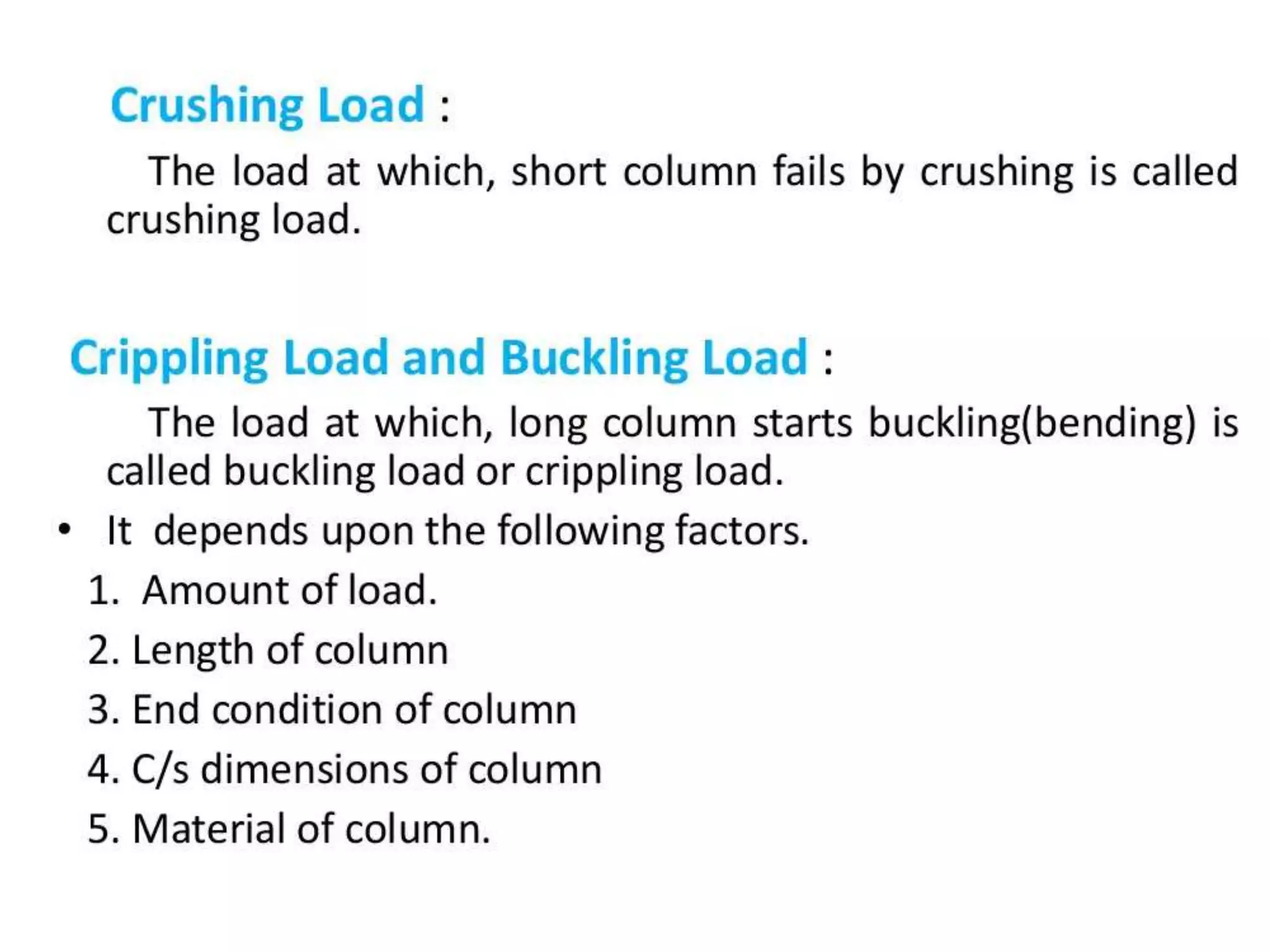
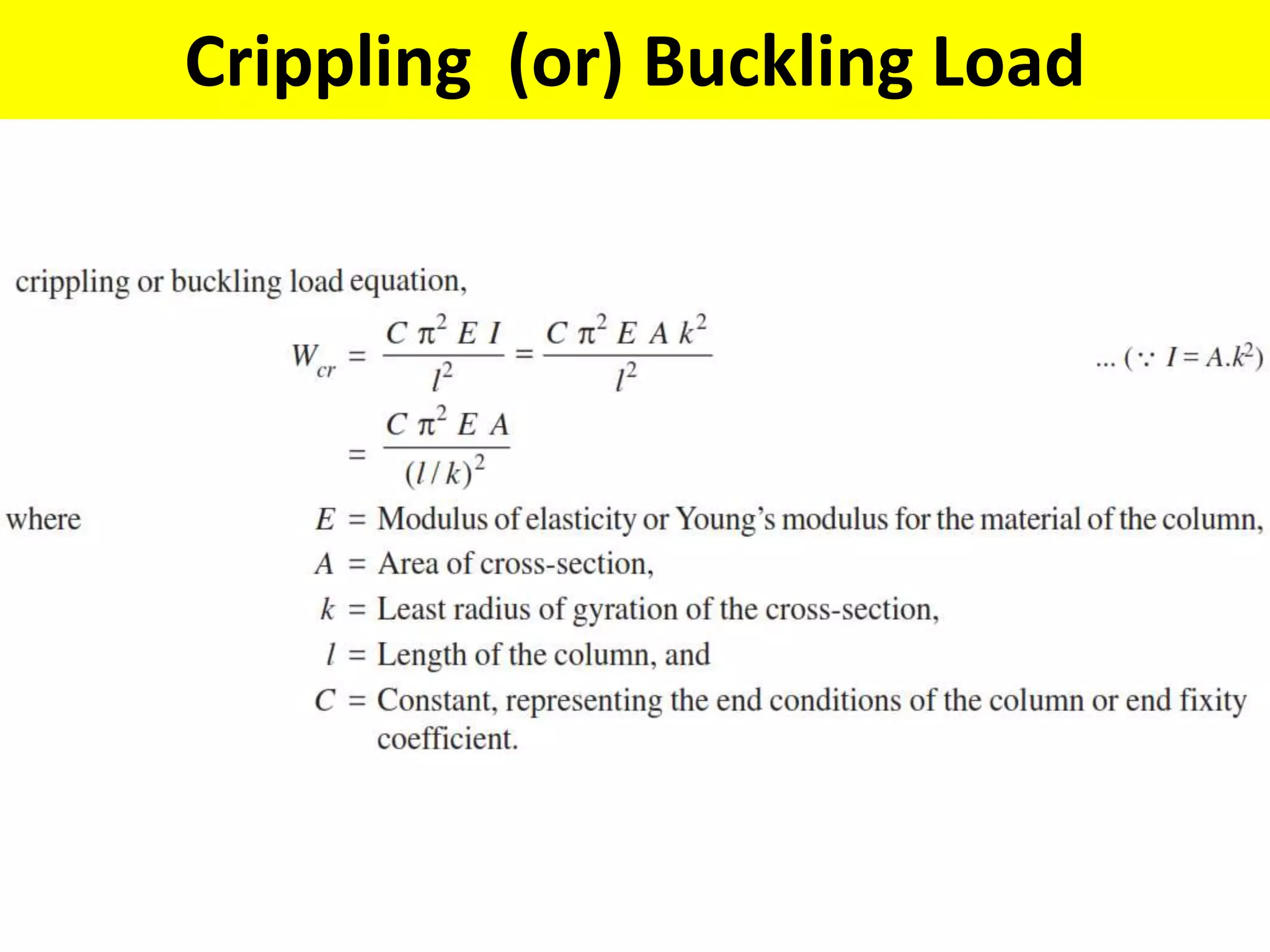
Crippling (or) Buckling Load
Unit  5 - deflection of beams and columns

Unit 5 - deflection of beams and columns

  • 1.
  • 2.
    INTRODUCTION Methods of calculatingbeam deflections are: 1) double integration method, 2) Macaulays method 3) area-moment method. 4) Conjucate Method
  • 4.
    Double integration method Thedouble integration method is a powerful tool in solving deflection and slope of a beam at any point because we will be able to get the equation of the elastic curve.
  • 6.
  • 10.
    Moment Area Method Thisis a method of determining the change in slope or the deflection between two points on a beam. It is expressed as two theorems... Theorem 1 If A and B are two points on a beam the change in angle (radians) between the tangent at A and the tangent at B is equal to the area of the bending moment diagram between the points divided by the relevant value of EI (the flexural rigidity constant). Theorem 2 If A and B are two points on a beam the displacement of B relative to the tangent of the beam at A is equal to the moment of the area of the bending moment diagram between A and B about the ordinate through B divided by the relevant value of EI (the flexural rigidity constant).
  • 11.
  • 12.
    Column A column isa long vertical slender bar or vertical member, subjected to an axial compressive load and fixed rigidly at both ends.
  • 13.
  • 14.
    Strut • The cross-sectionalarea of the strut may be circular, I sectional, T sectional, Channel, Compound, and Tubular. The slenderness ratio of the strut generally remains more than 20. The ratio of the effective length of the column to the least radius of gyration is known as the slenderness ratio. If (l) is the effective length and (r) is the radius of gyration then, l/r is the slenderness ratio. The hollow circular section tubular) is considered as the most economical section to resist compressive force.
  • 30.
    structure of columnmay be four types 1) Column those both end are hinged 2) Column those both end are fixed 3) column those one end is fixed and other end is hinged 4) column those one end is fixed and second end is free
  • 31.
    • A strutis a slender bar or a member in any position other than vertical, subjected to a compressive load and fixed rigidly or hinged or pin jointed at one or both the end
  • 32.
    Truss / Frame Atruss is a structure composed of rod members arranged to form one or more triangles. ... A frame, on the other hand, is a structure that consists of arbitrarily oriented beam members which are connected rigidly or by pins at joints. The members support bending as well as axial loads.
  • 33.
    What is FramedStructure? • Framing means to give shape and support to a structure by combining components in building. It has the combination of beam, column and slab to resist the gravity and other lateral loads. • These structures are generally used to overcome the large forces, moments developing due to the applied loading.
  • 35.
    Short Column • Ifthe ratio of the effective length of the column to the least lateral dimension is less than 12, the column is called the short column. • A short column fails by crushing of the concrete (pure compression failure).
  • 36.
    Long Column • Ifthe ratio of the effective length of the column to the least lateral dimension exceeds 12, it is called a long column. • A long column fails by bending or buckling. Long columns are weaker compare to short columns of the same cross-sectional area and not generally preferred.
  • 38.