PREPARED BY
  V.REVATHIAMBIKA
LECTURER IN PHYSICS
SOUND

• It is the sensation that is caused by stimulation of the
  organs of hearing by vibrations transmitted through the
  air or another medium.

• It is transmitted as condensations and rarefactions in the
  medium. It is called a pressure wave.

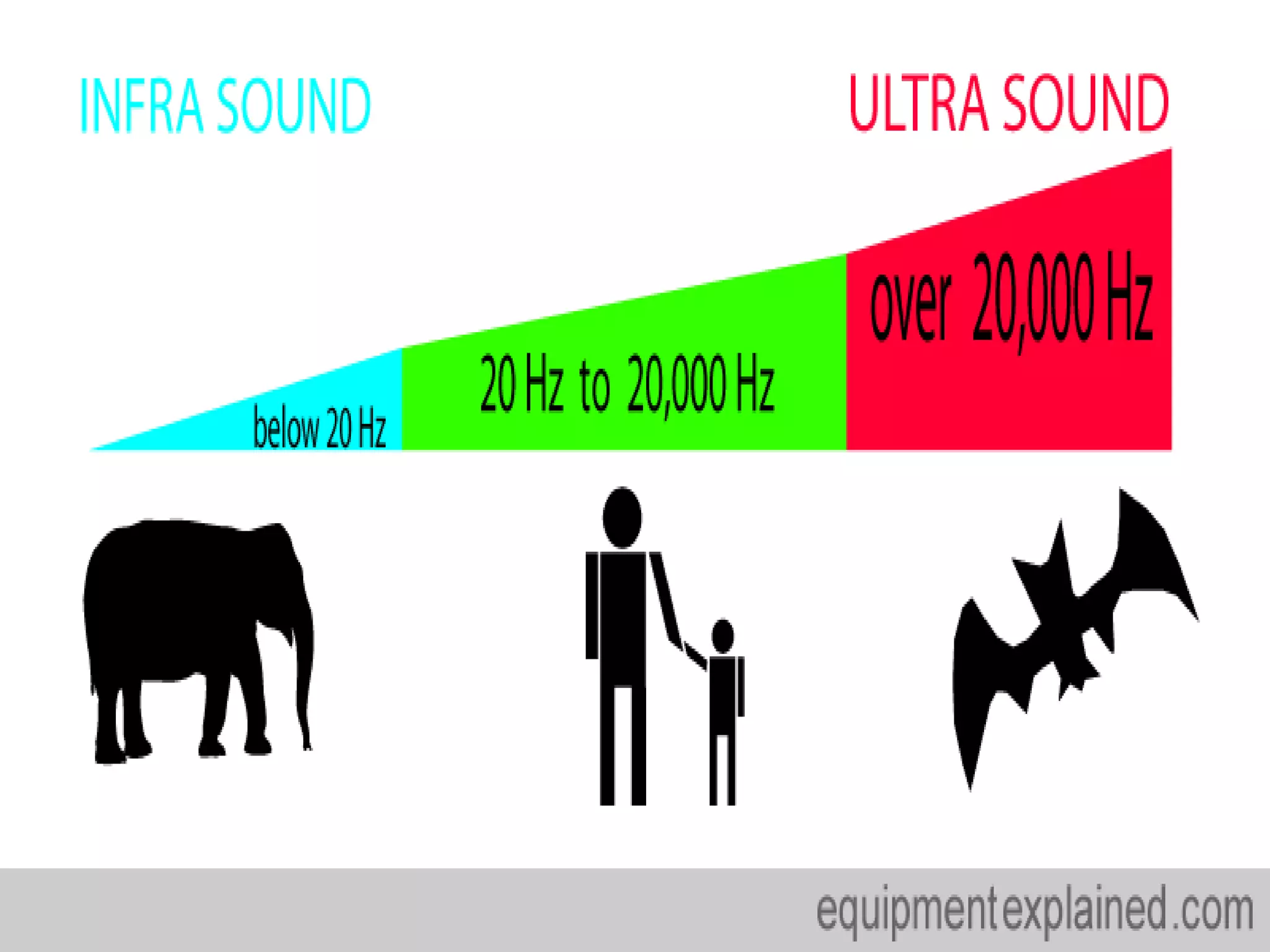
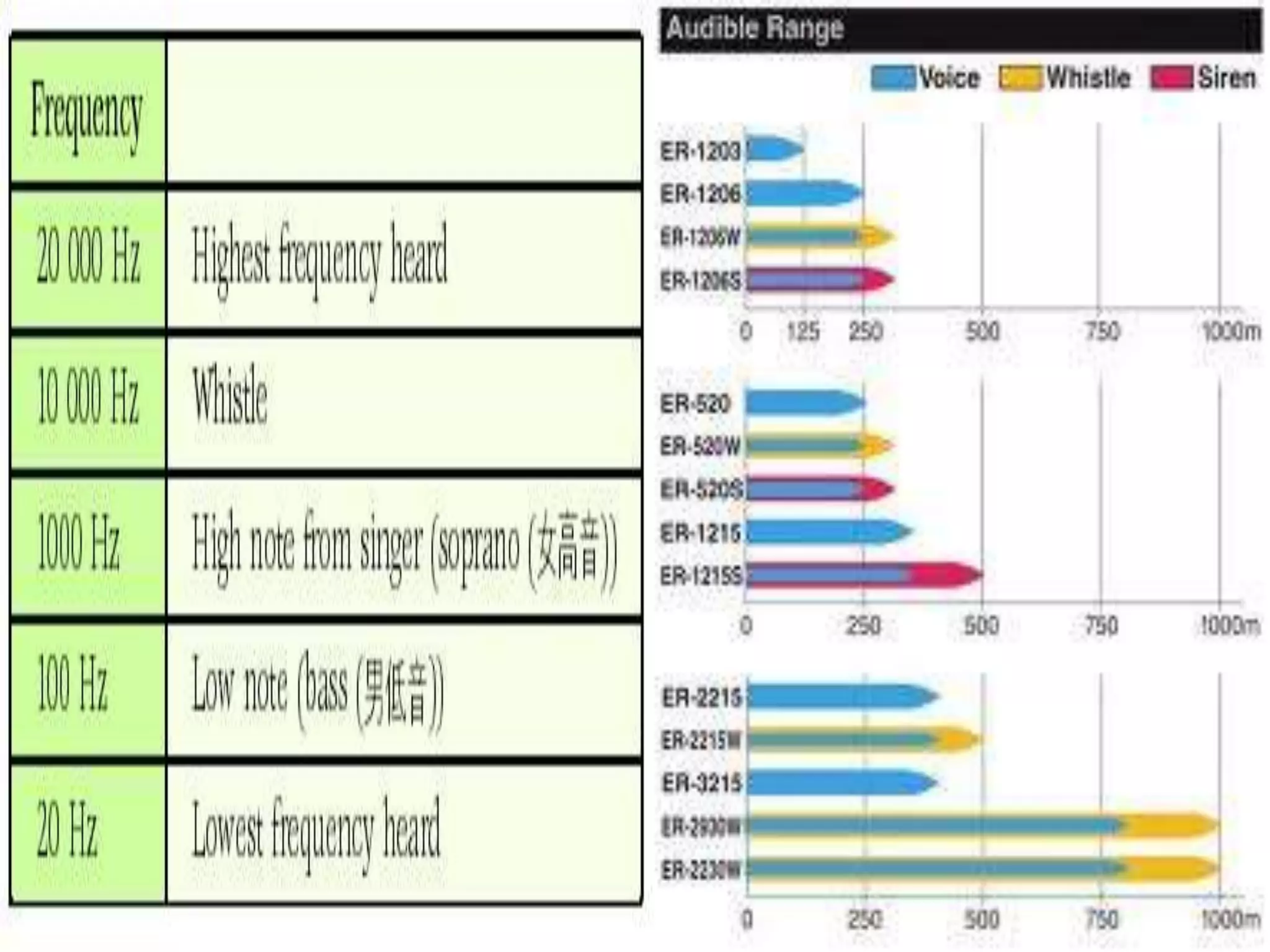
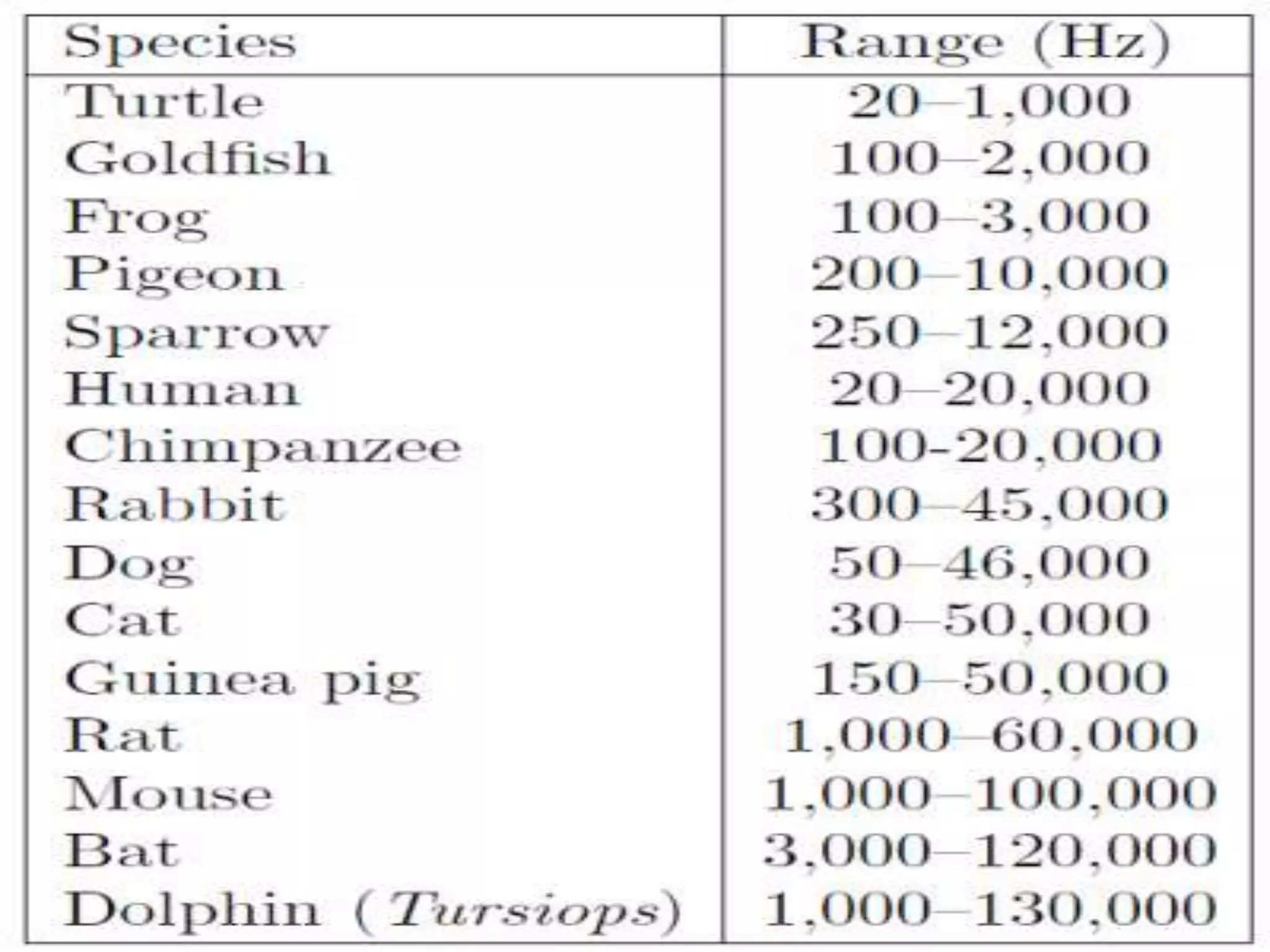
• Human ear can detect only those waves whose
  frequency of vibrations are in the range 20 – 20000
  cycles/ sec.
PRODUCTION OF SOUND

• Sound has great importance in our daily life.

• Sound makes it possible for us to communicate with
  one another through speech.

 Musical sound gives us pleasure.
 Radio and Television sound gives us information and
  entertainment.
 Horn sound of vehicles alert us.
PROPAGATION OF SOUND
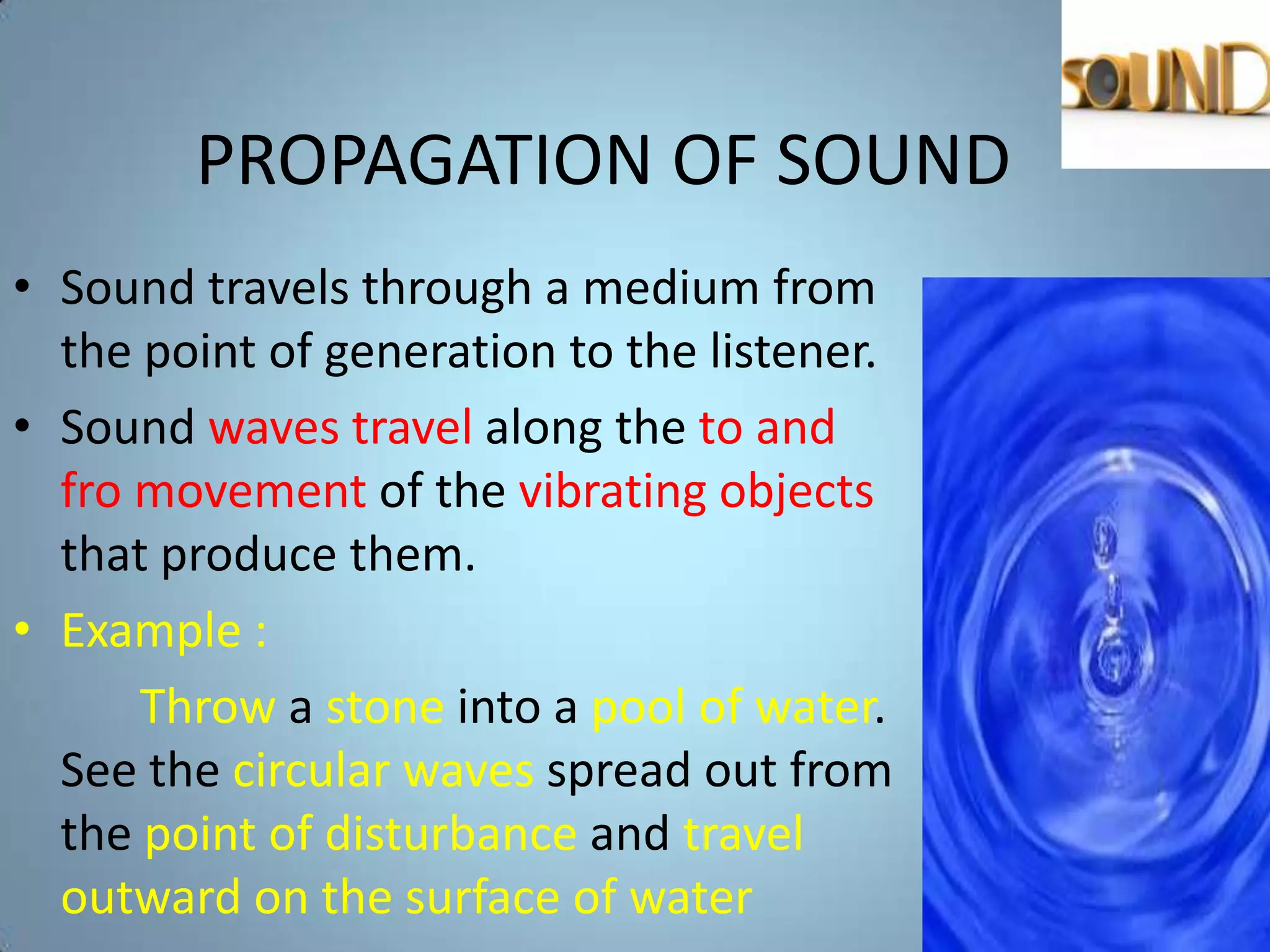
• Sound travels through a medium from
  the point of generation to the listener.
• Sound waves travel along the to and
  fro movement of the vibrating objects
  that produce them.
• Example :
      Throw a stone into a pool of water.
  See the circular waves spread out from
  the point of disturbance and travel
  outward on the surface of water
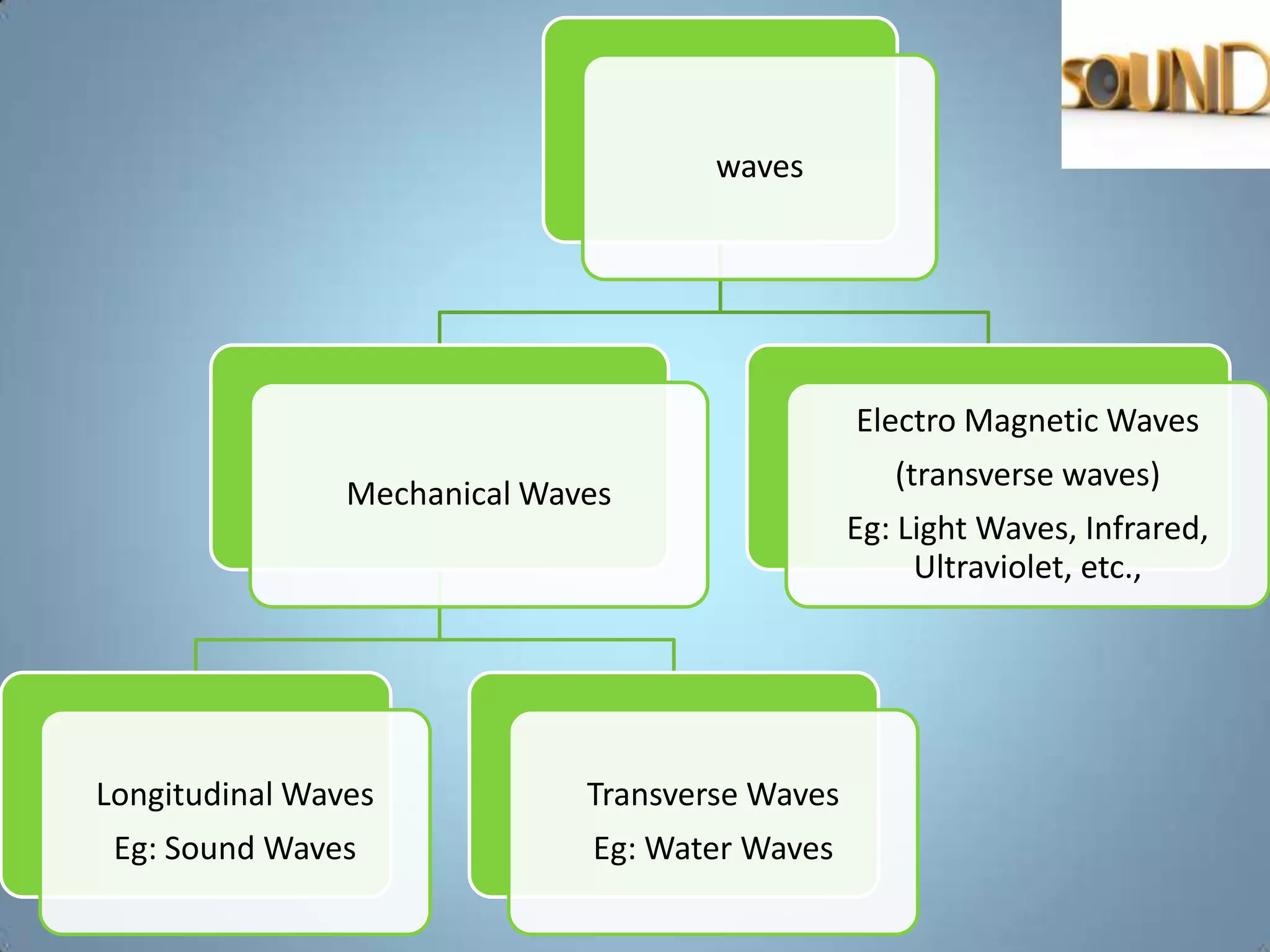
waves


                                                 Electro Magnetic Waves
                                                    (transverse waves)
                Mechanical Waves
                                                 Eg: Light Waves, Infrared,
                                                      Ultraviolet, etc.,


Longitudinal Waves            Transverse Waves
 Eg: Sound Waves              Eg: Water Waves
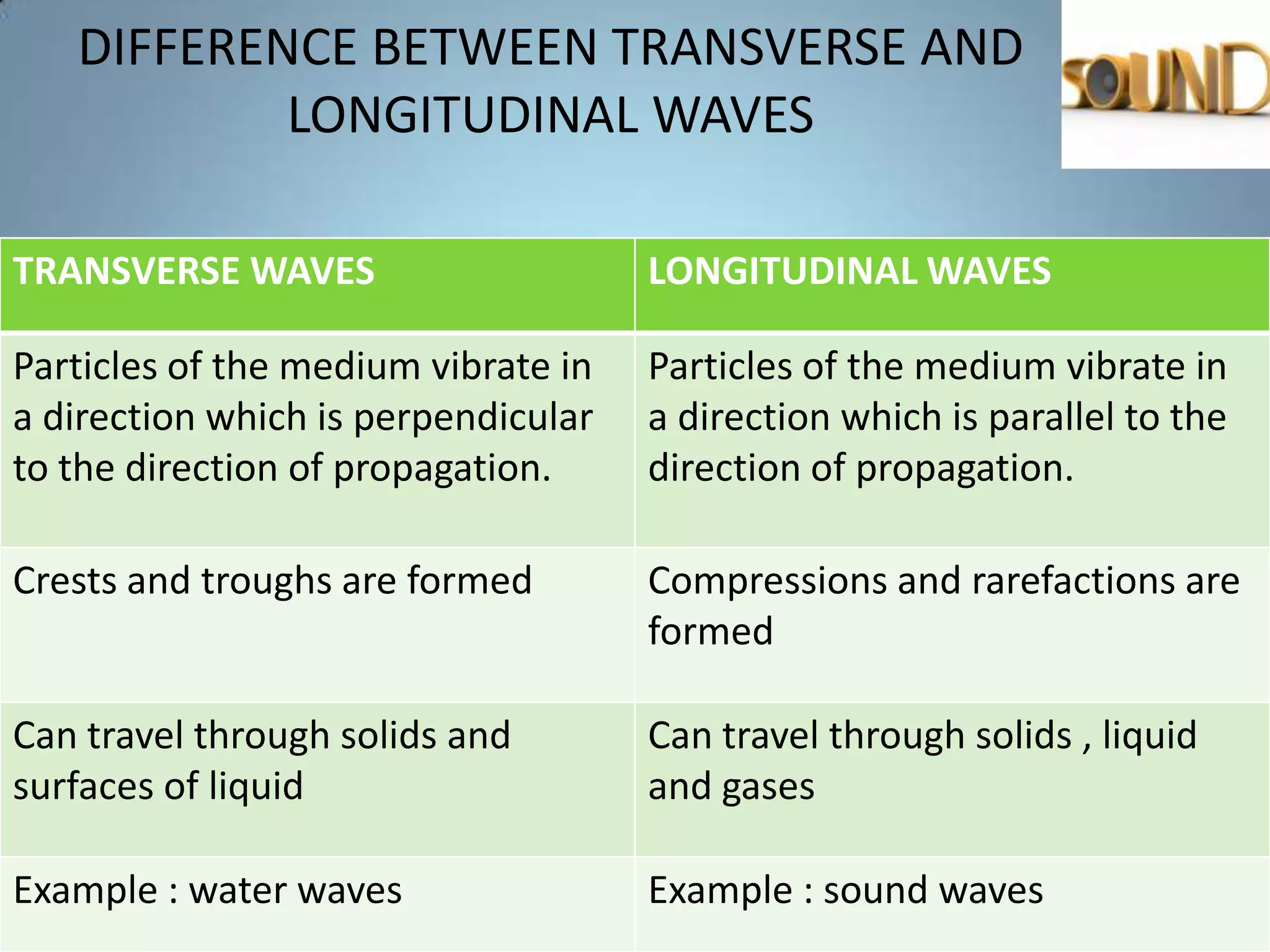
DIFFERENCE BETWEEN TRANSVERSE AND
           LONGITUDINAL WAVES

TRANSVERSE WAVES                     LONGITUDINAL WAVES

Particles of the medium vibrate in   Particles of the medium vibrate in
a direction which is perpendicular   a direction which is parallel to the
to the direction of propagation.     direction of propagation.

Crests and troughs are formed        Compressions and rarefactions are
                                     formed

Can travel through solids and        Can travel through solids , liquid
surfaces of liquid                   and gases

Example : water waves                Example : sound waves
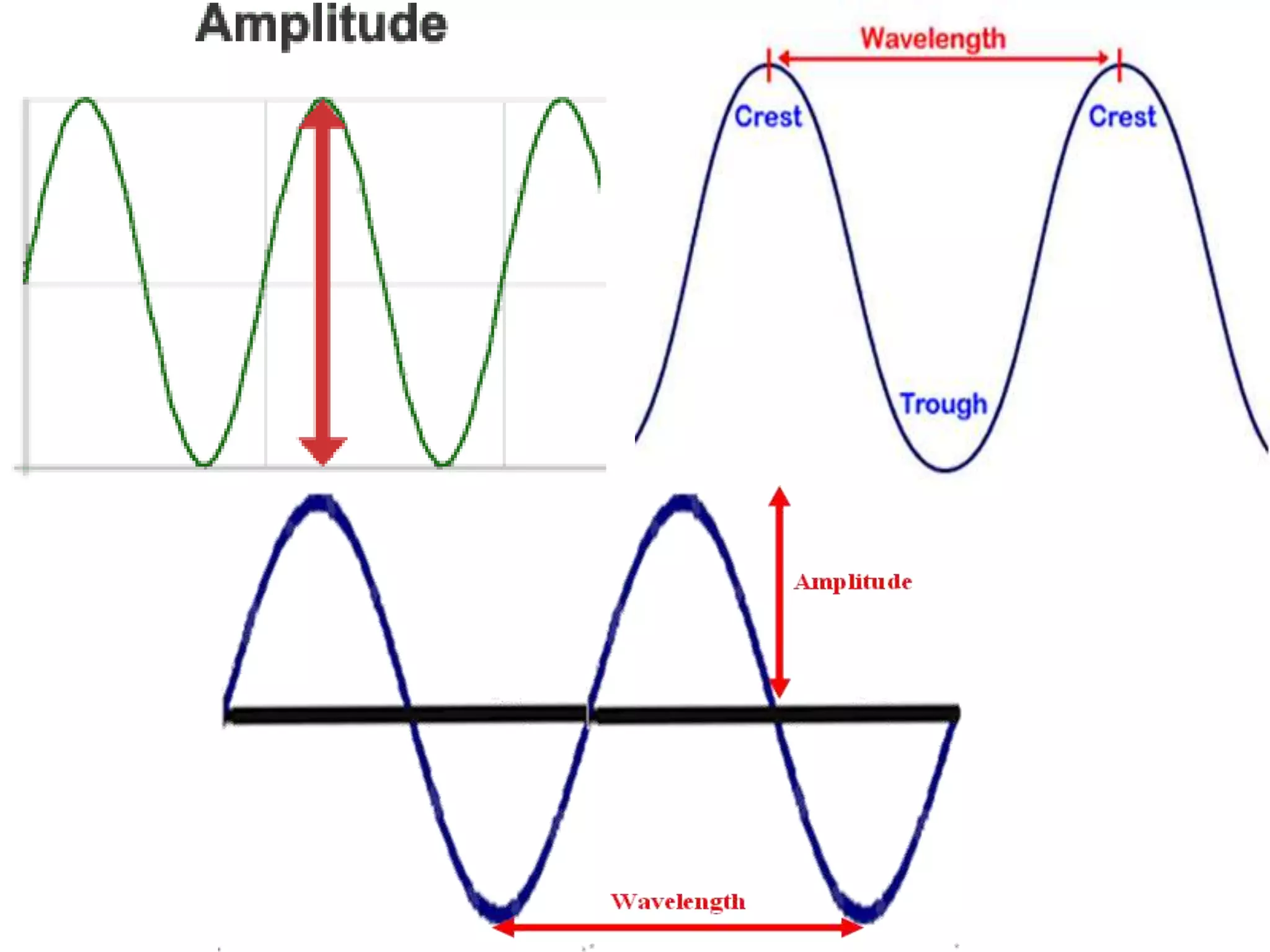
• The maximum displacement of a particle
                   from the mean position
AMPLITUDE(a)     • UNIT : metre


                 • Time taken by a particleof the medium
                   to complete one vibration
TIME PERIOD(T)   • UNIT : second


                 • The number of vibrations completed by
                   a particle in one second
FREQUENCY(n)     • UNIT : hertz


                 • Distance moved by a wave during the
                   time a particle completes one vibration
WAVELENGTH(λ)    • UNIT : metre
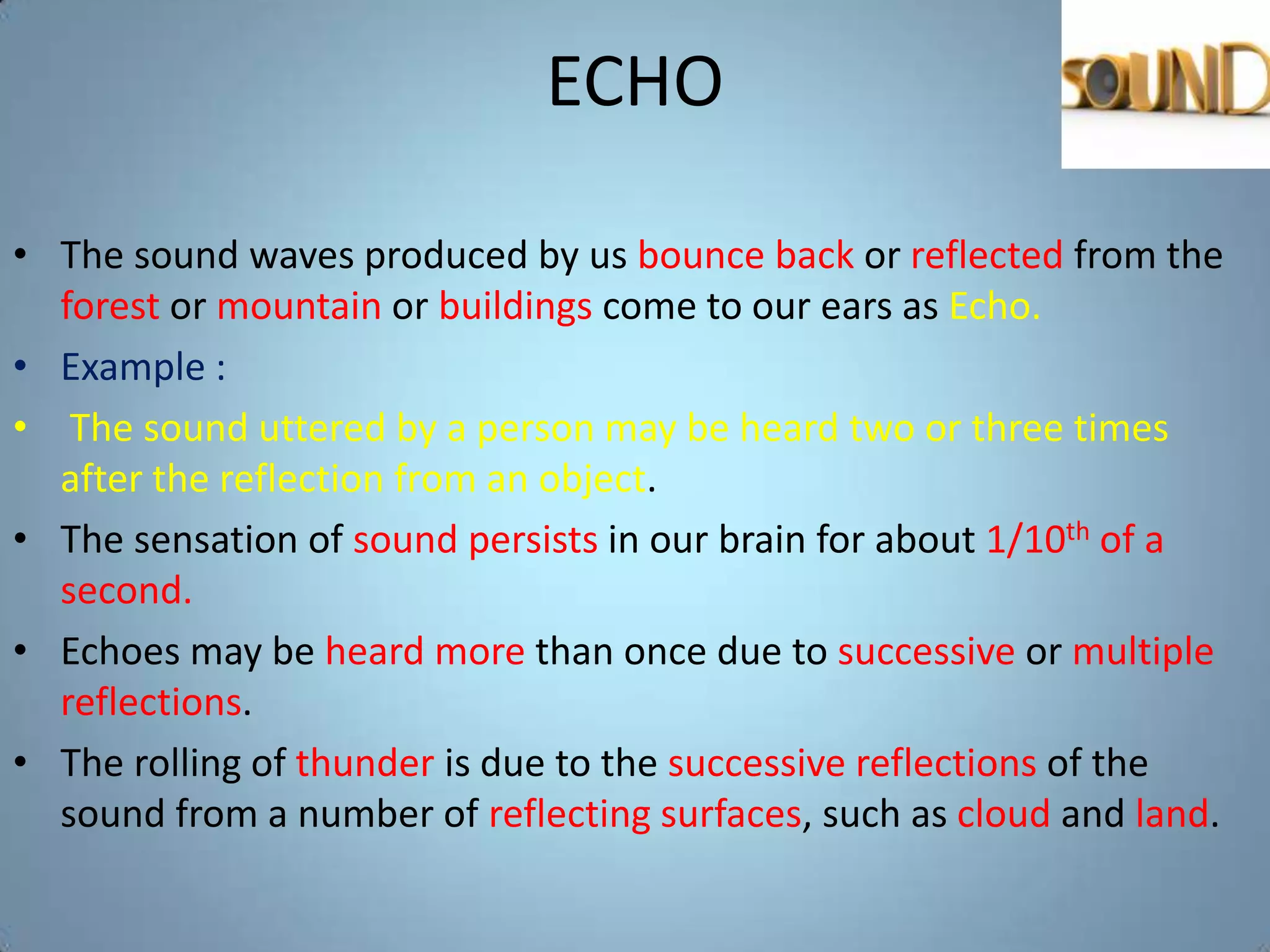
ECHO

• The sound waves produced by us bounce back or reflected from the
  forest or mountain or buildings come to our ears as Echo.
• Example :
• The sound uttered by a person may be heard two or three times
  after the reflection from an object.
• The sensation of sound persists in our brain for about 1/10th of a
  second.
• Echoes may be heard more than once due to successive or multiple
  reflections.
• The rolling of thunder is due to the successive reflections of the
  sound from a number of reflecting surfaces, such as cloud and land.
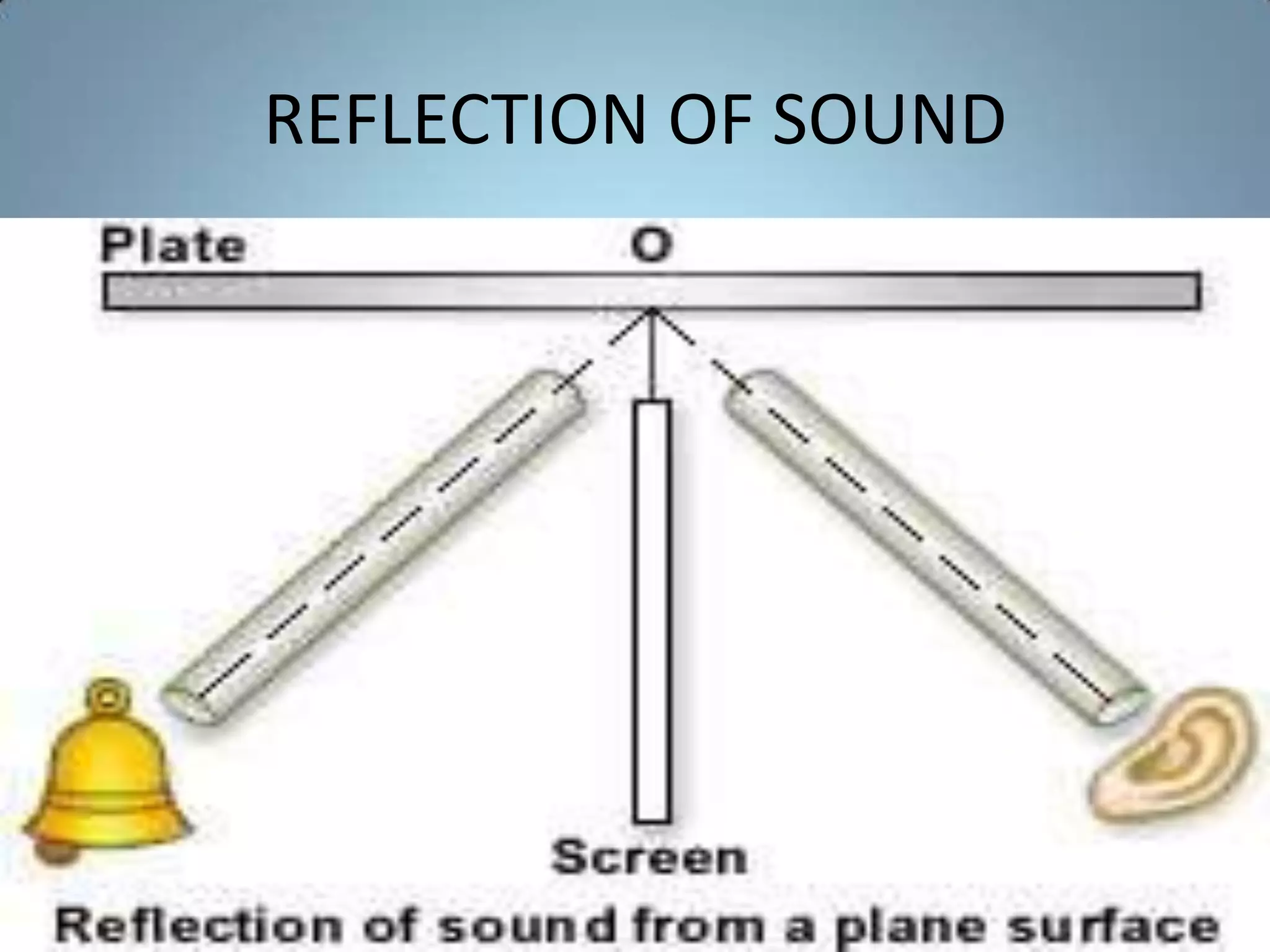
REFLECTION OF SOUND
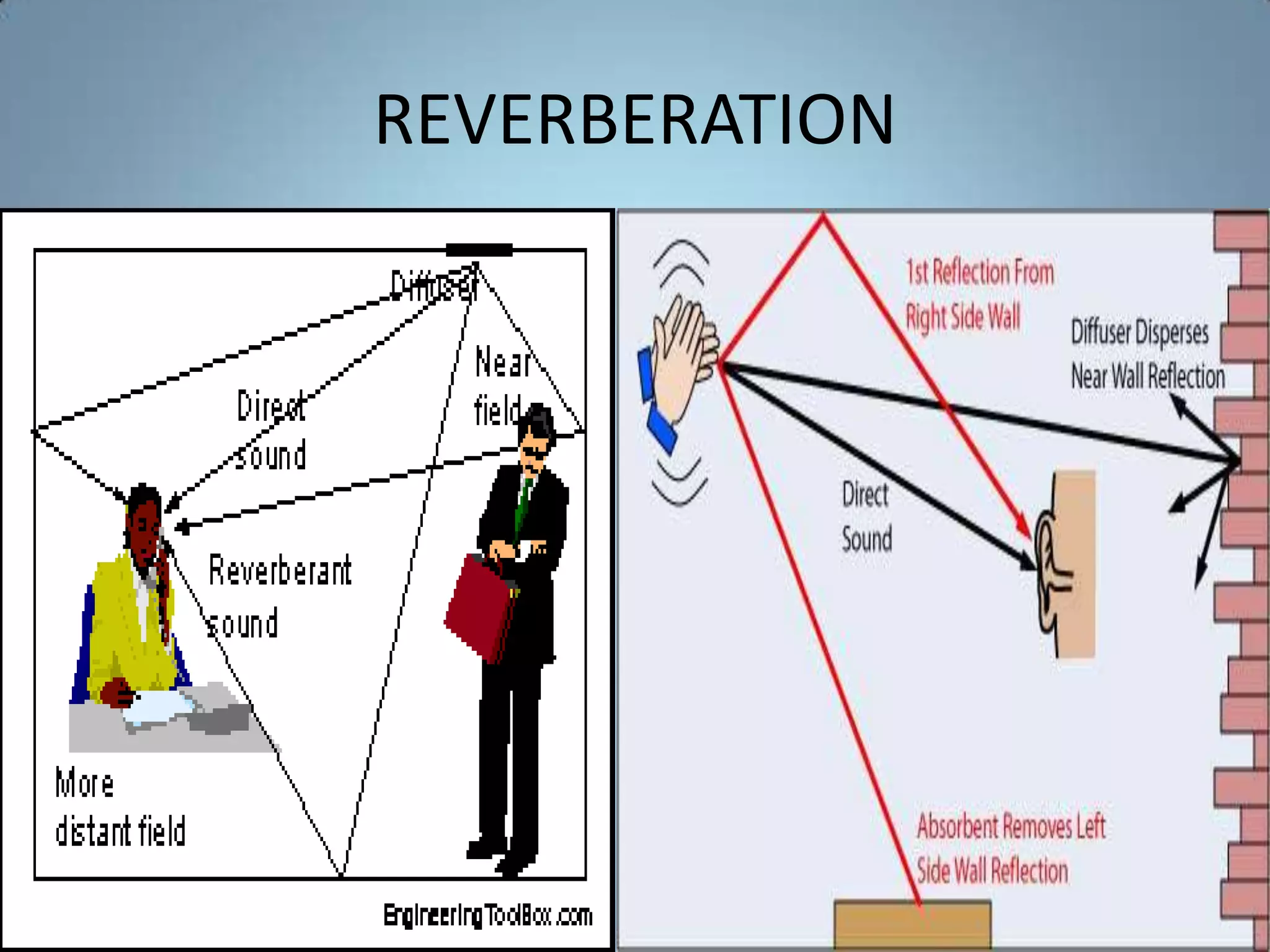
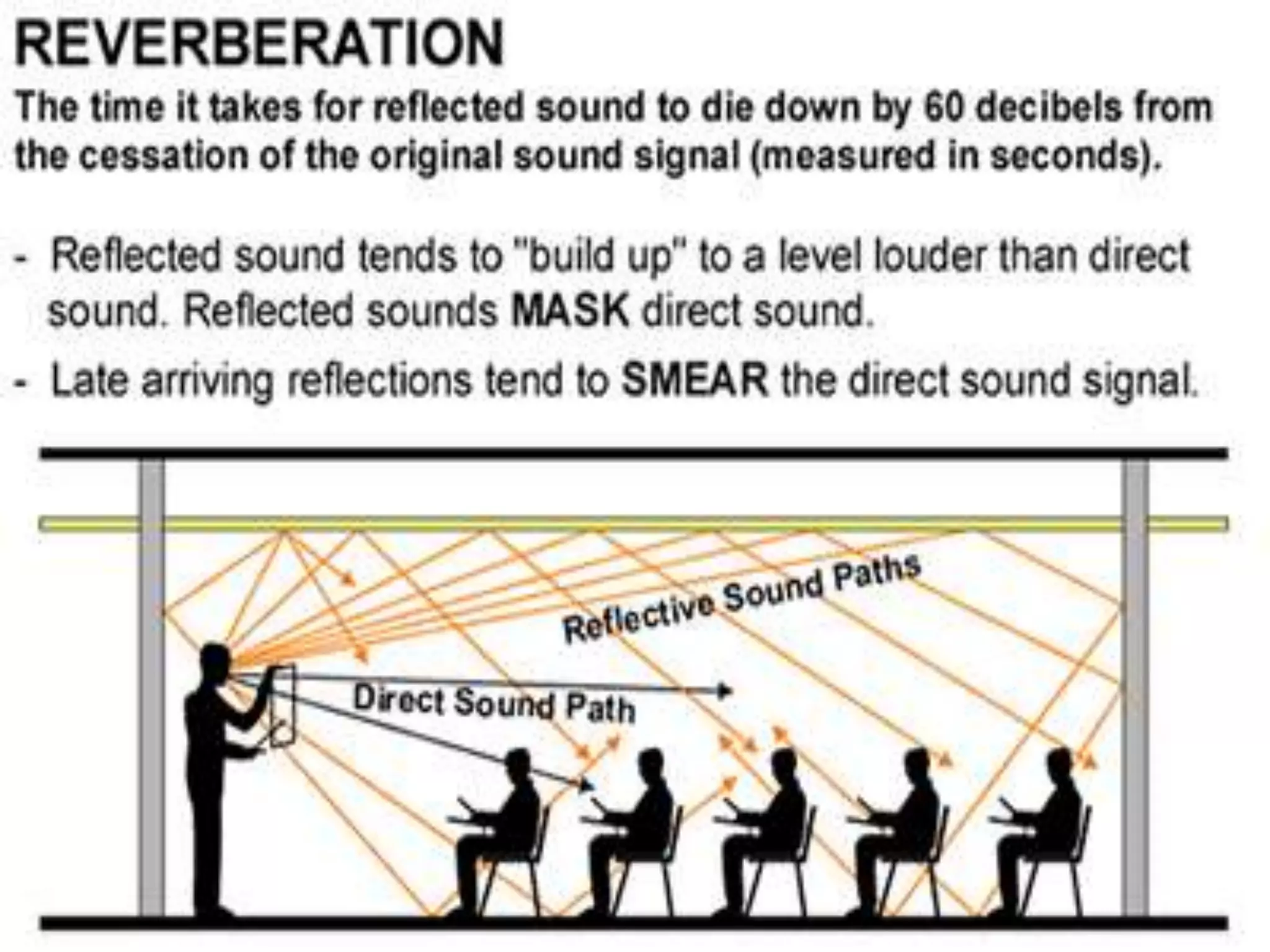
REVERBERATION
APPLICATION OF ULTRASOUND
• Ultra sound scan is currently considered to be
  a safe, non-invasive, accurate and cost
  effective investigation of the foetus.
• It has progressively become an indispensable
  obstetric tool and plays an important role in
  the care of every pregnant women.
• Ultra sound sent by transmitter and received
  by the detector.
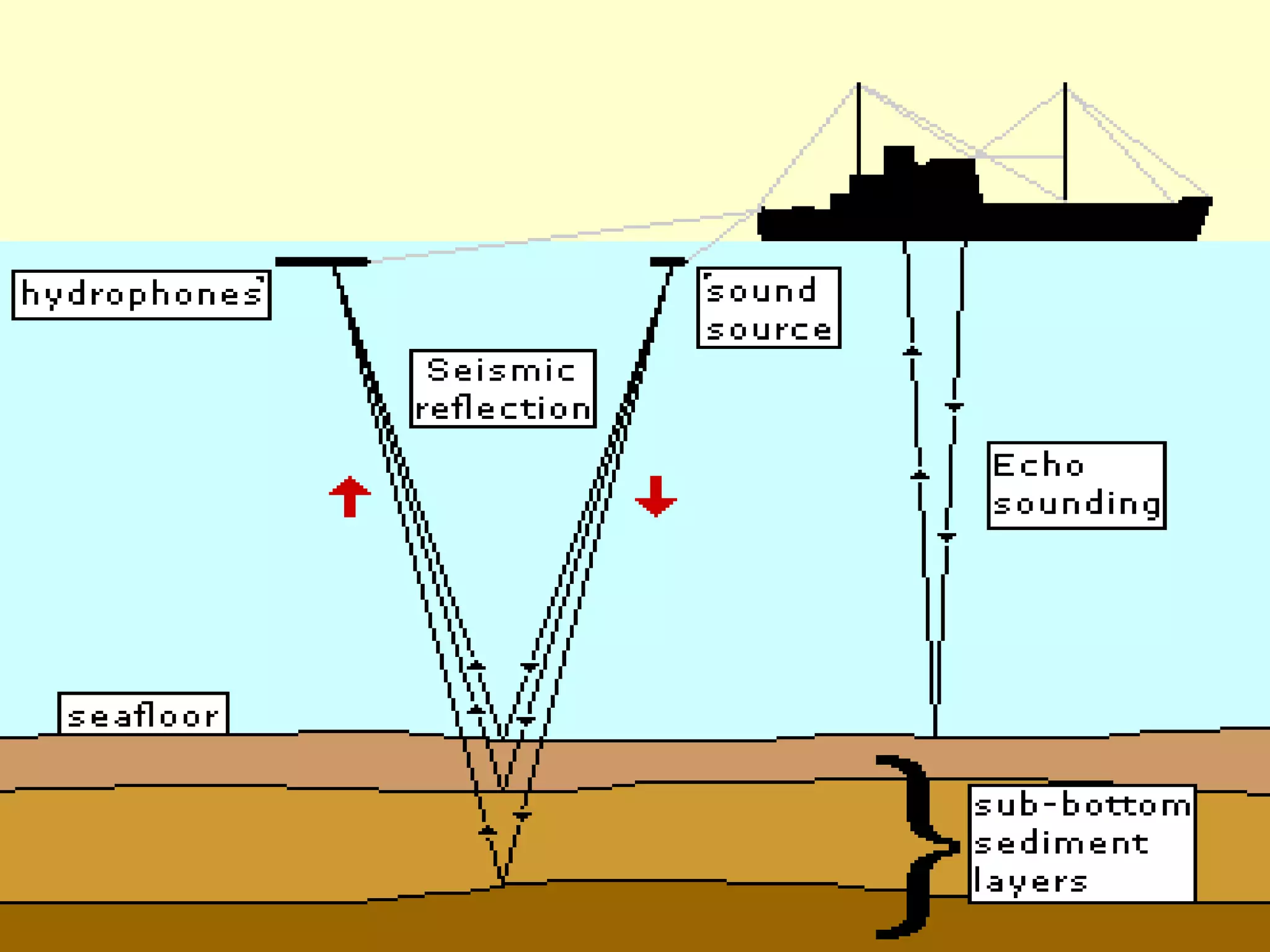
SONAR
• It is a device that uses ultrasonic waves to measure
  the distance, direction and speed of underwear
  objects and depth of the sea, locate under water
  hills, submarine, icebergs, sunken ship, etc.,
• ECHO Ranging :
• time interval between transmission and reception of
  ultrasound is “t” speed of sound through water is “ v
  “ total distance travelled is “ 2d “
             2d = v *t
             d = v * t /2
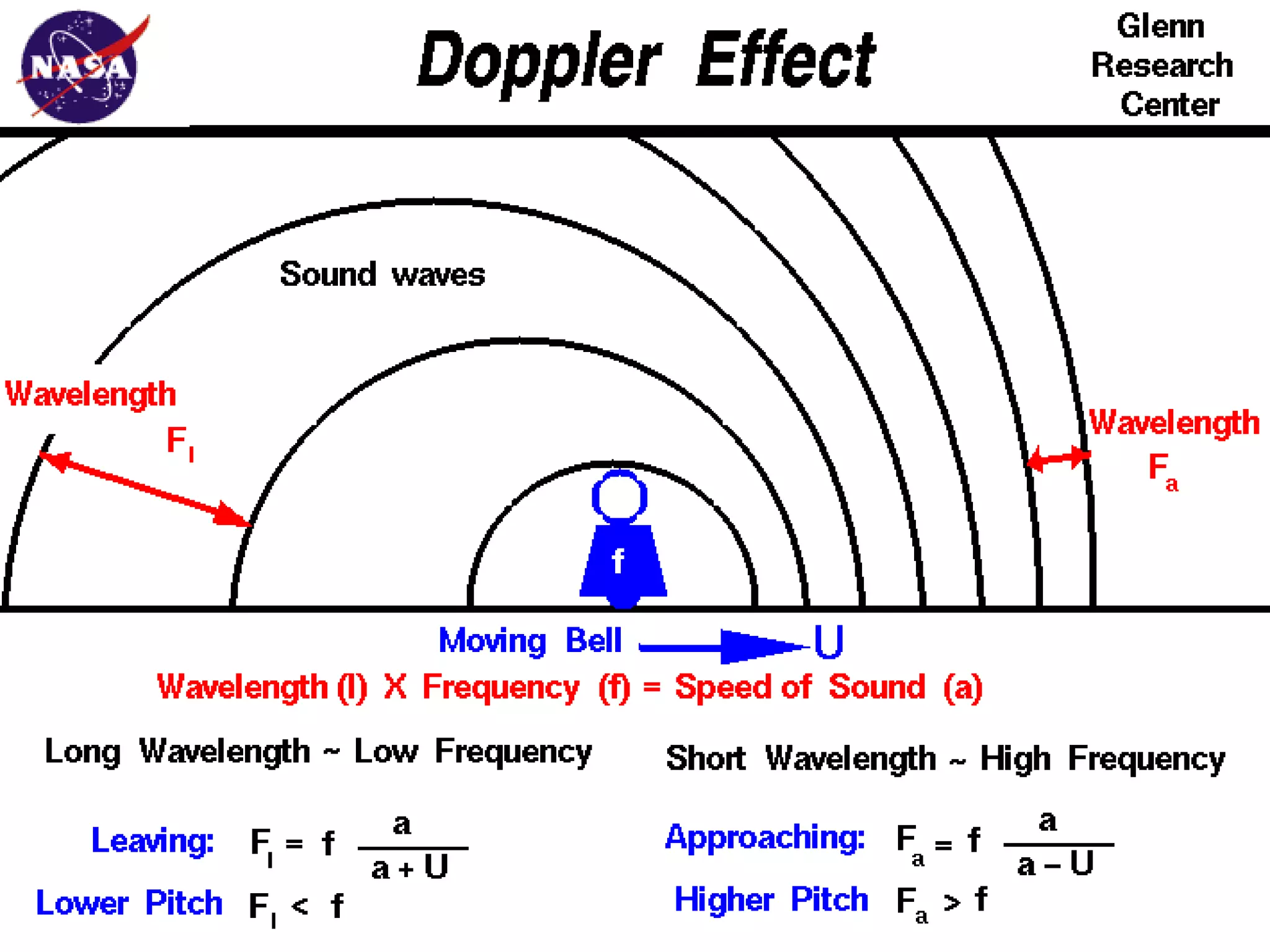
DOPPLER’S EFFECT

          The phenomenon of
          the apparent change
          in the frequency of
          the source due to
          relative motion
          between the source
          and the observer is
          called as Doppler’s
          Effect.
Uses of Doppler effect in sound
• The doppler shift of radar waves are used in
  airports to find the height, speed and distance
  of approaching aircrafts.

• Bats send out and receive ultrasonic waves
  reflected by the prey and obstacles. Bats
  detect the location, distance and movement
  of the prey by the Doppler Shift.
Sound

Sound

  • 1.
    PREPARED BY V.REVATHIAMBIKA LECTURER IN PHYSICS
  • 2.
    SOUND • It isthe sensation that is caused by stimulation of the organs of hearing by vibrations transmitted through the air or another medium. • It is transmitted as condensations and rarefactions in the medium. It is called a pressure wave. • Human ear can detect only those waves whose frequency of vibrations are in the range 20 – 20000 cycles/ sec.
  • 6.
    PRODUCTION OF SOUND •Sound has great importance in our daily life. • Sound makes it possible for us to communicate with one another through speech.  Musical sound gives us pleasure.  Radio and Television sound gives us information and entertainment.  Horn sound of vehicles alert us.
  • 8.
    PROPAGATION OF SOUND •Sound travels through a medium from the point of generation to the listener. • Sound waves travel along the to and fro movement of the vibrating objects that produce them. • Example : Throw a stone into a pool of water. See the circular waves spread out from the point of disturbance and travel outward on the surface of water
  • 9.
    waves Electro Magnetic Waves (transverse waves) Mechanical Waves Eg: Light Waves, Infrared, Ultraviolet, etc., Longitudinal Waves Transverse Waves Eg: Sound Waves Eg: Water Waves
  • 12.
    DIFFERENCE BETWEEN TRANSVERSEAND LONGITUDINAL WAVES TRANSVERSE WAVES LONGITUDINAL WAVES Particles of the medium vibrate in Particles of the medium vibrate in a direction which is perpendicular a direction which is parallel to the to the direction of propagation. direction of propagation. Crests and troughs are formed Compressions and rarefactions are formed Can travel through solids and Can travel through solids , liquid surfaces of liquid and gases Example : water waves Example : sound waves
  • 14.
    • The maximumdisplacement of a particle from the mean position AMPLITUDE(a) • UNIT : metre • Time taken by a particleof the medium to complete one vibration TIME PERIOD(T) • UNIT : second • The number of vibrations completed by a particle in one second FREQUENCY(n) • UNIT : hertz • Distance moved by a wave during the time a particle completes one vibration WAVELENGTH(λ) • UNIT : metre
  • 15.
    ECHO • The soundwaves produced by us bounce back or reflected from the forest or mountain or buildings come to our ears as Echo. • Example : • The sound uttered by a person may be heard two or three times after the reflection from an object. • The sensation of sound persists in our brain for about 1/10th of a second. • Echoes may be heard more than once due to successive or multiple reflections. • The rolling of thunder is due to the successive reflections of the sound from a number of reflecting surfaces, such as cloud and land.
  • 16.
  • 17.
  • 21.
    APPLICATION OF ULTRASOUND •Ultra sound scan is currently considered to be a safe, non-invasive, accurate and cost effective investigation of the foetus. • It has progressively become an indispensable obstetric tool and plays an important role in the care of every pregnant women. • Ultra sound sent by transmitter and received by the detector.
  • 23.
    SONAR • It isa device that uses ultrasonic waves to measure the distance, direction and speed of underwear objects and depth of the sea, locate under water hills, submarine, icebergs, sunken ship, etc., • ECHO Ranging : • time interval between transmission and reception of ultrasound is “t” speed of sound through water is “ v “ total distance travelled is “ 2d “ 2d = v *t d = v * t /2
  • 25.
    DOPPLER’S EFFECT The phenomenon of the apparent change in the frequency of the source due to relative motion between the source and the observer is called as Doppler’s Effect.
  • 26.
    Uses of Dopplereffect in sound • The doppler shift of radar waves are used in airports to find the height, speed and distance of approaching aircrafts. • Bats send out and receive ultrasonic waves reflected by the prey and obstacles. Bats detect the location, distance and movement of the prey by the Doppler Shift.