Unit II ILLUMINATION AND LIGHTING DESIGN
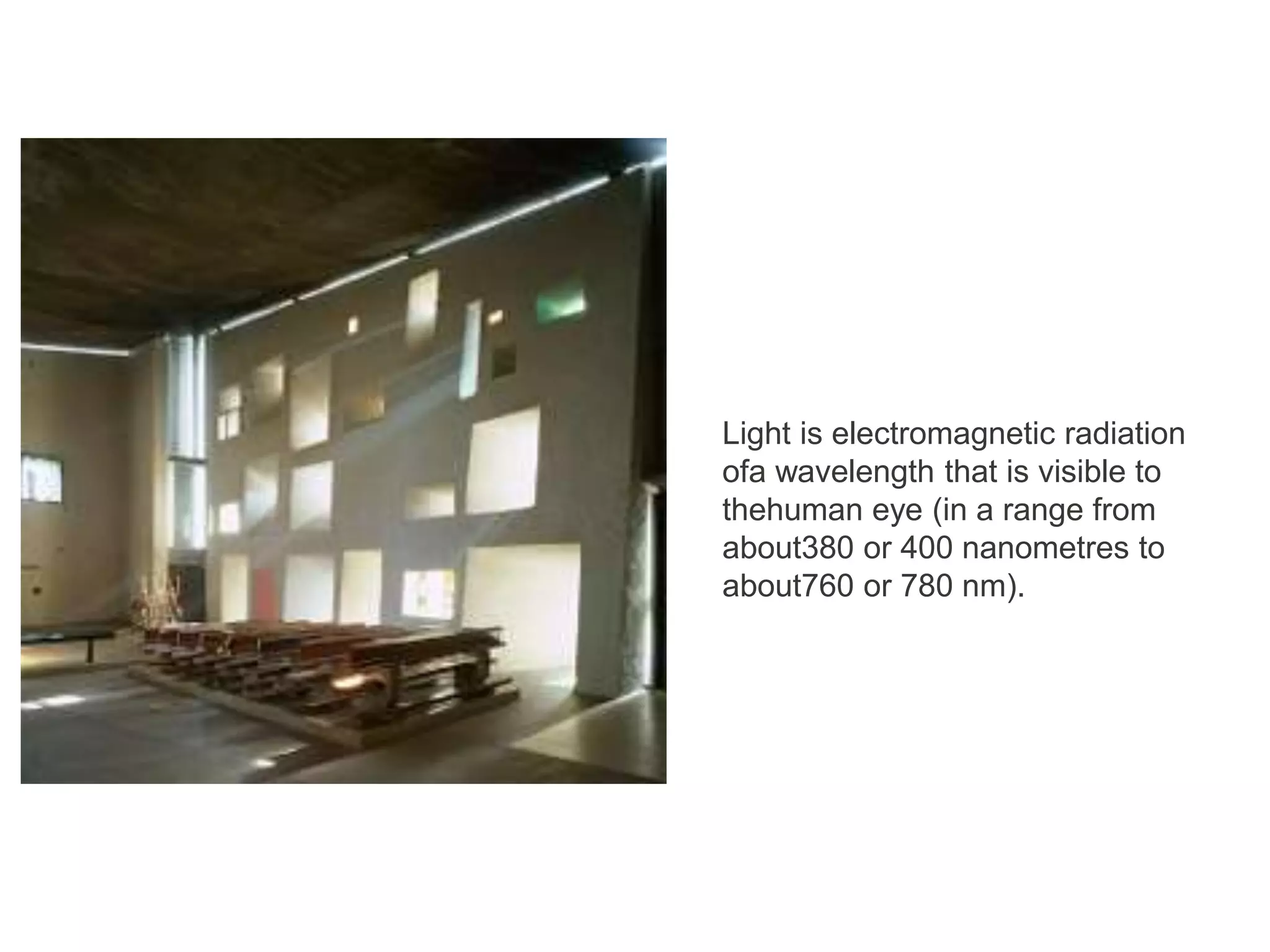
Light is electromagnetic radiation
ofa wavelength that is visible to
thehuman eye (in a range from
about380 or 400 nanometres to
about760 or 780 nm).
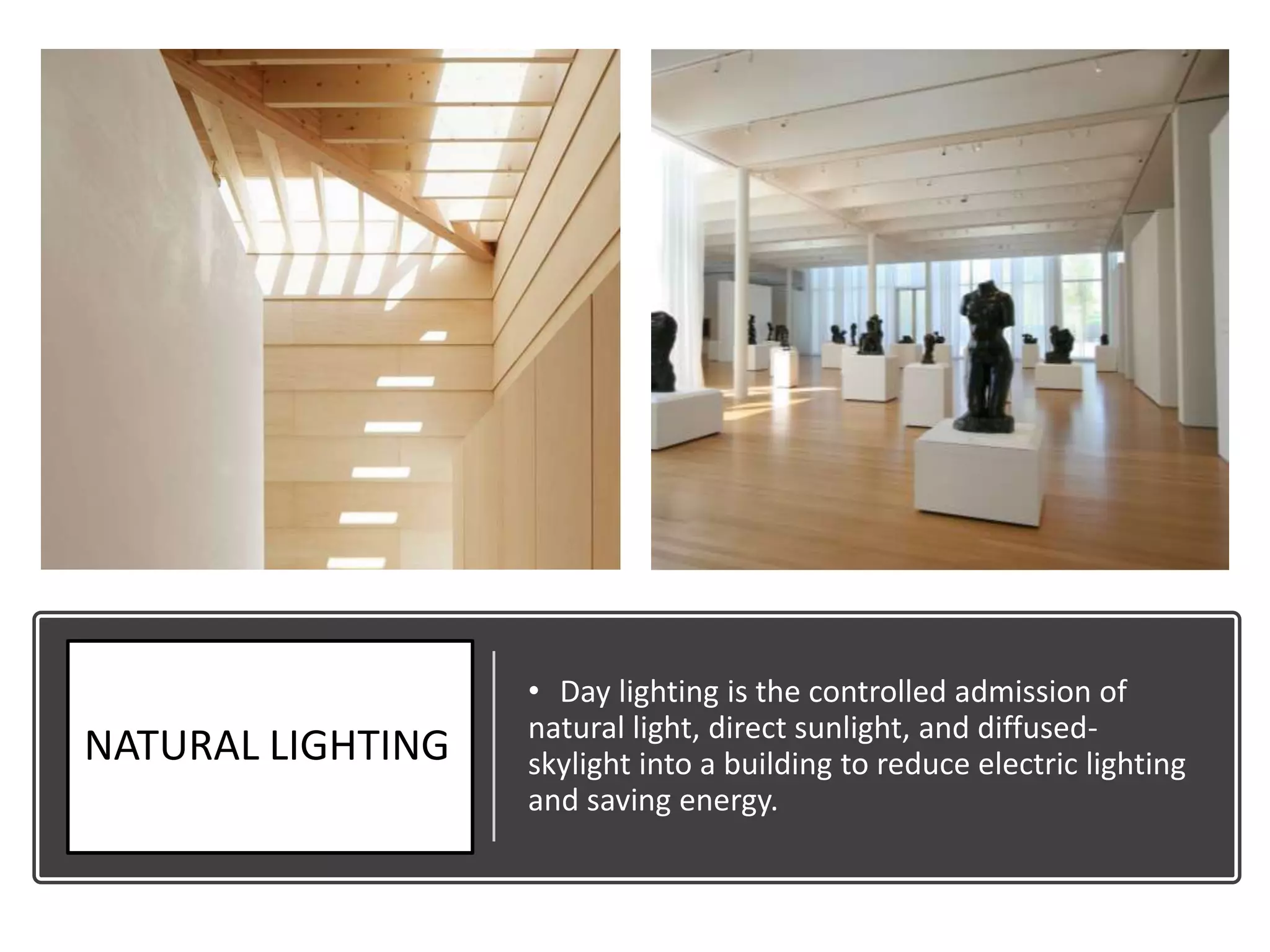
NATURAL LIGHTING
• Day lighting is the controlled admission of
natural light, direct sunlight, and diffused-
skylight into a building to reduce electric lighting
and saving energy.
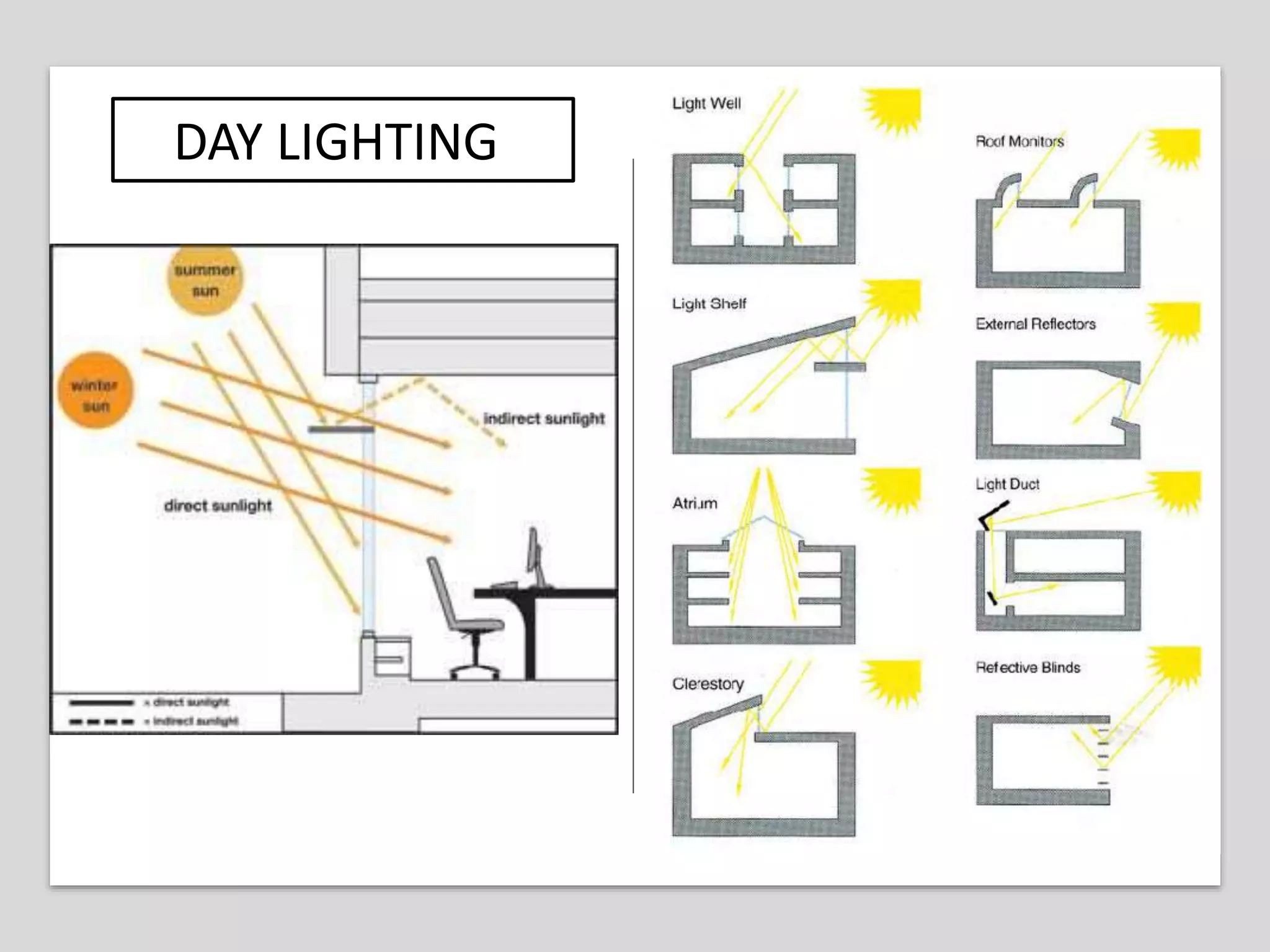
DAY LIGHTING
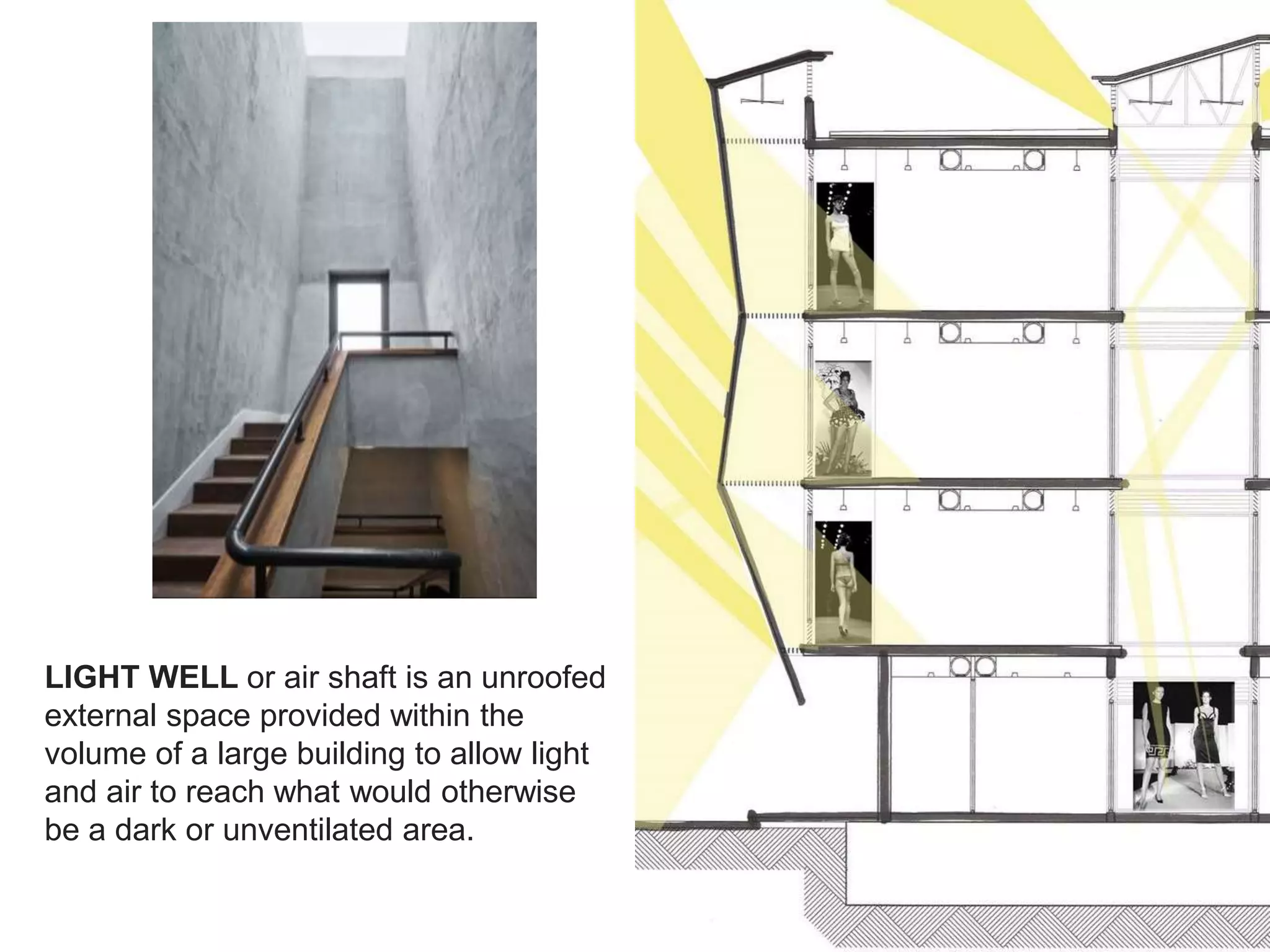
LIGHT WELL or air shaft is an unroofed
external space provided within the
volume of a large building to allow light
and air to reach what would otherwise
be a dark or unventilated area.
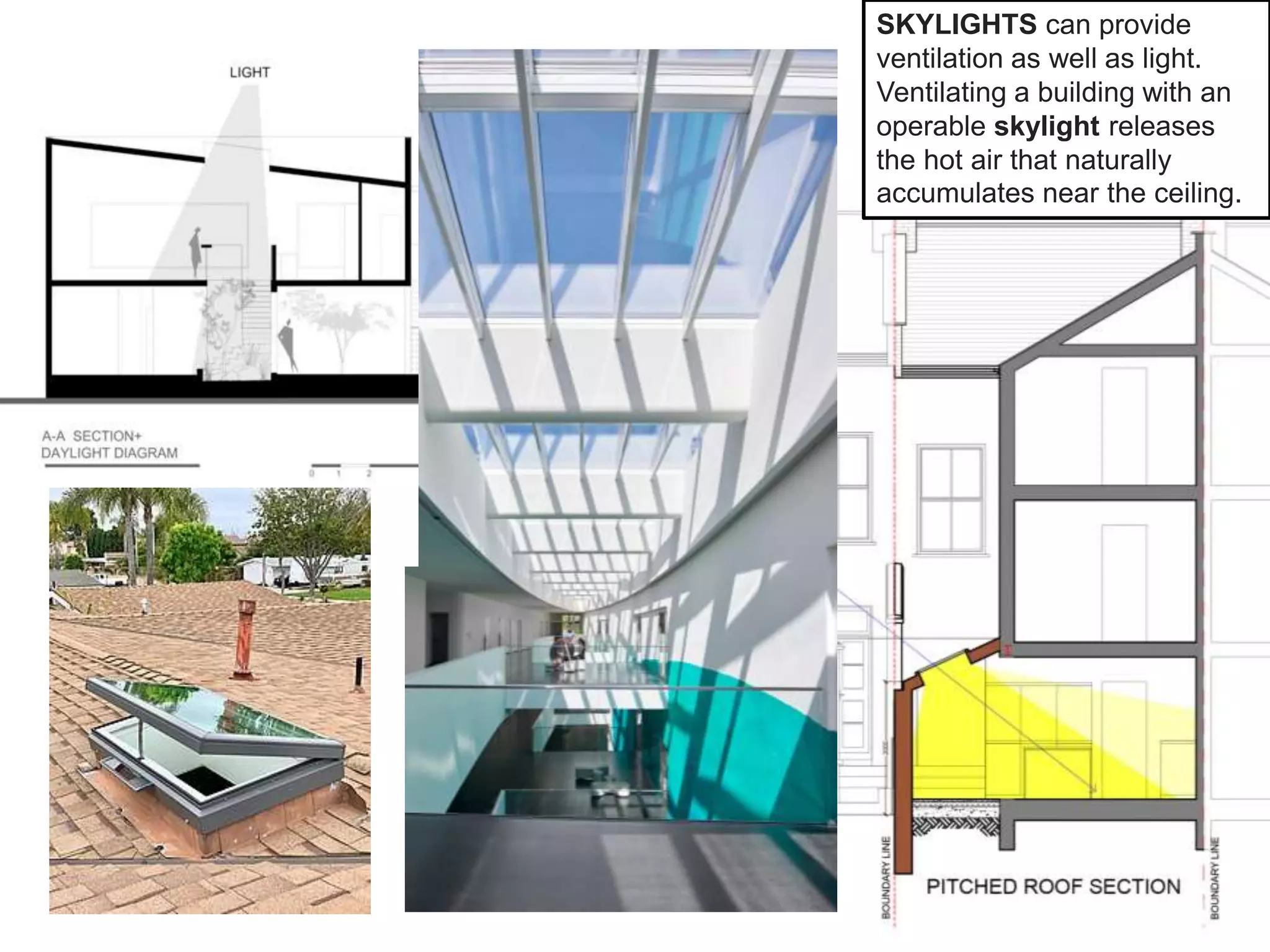
SKYLIGHTS can provide
ventilation as well as light.
Ventilating a building with an
operable skylight releases
the hot air that naturally
accumulates near the ceiling.
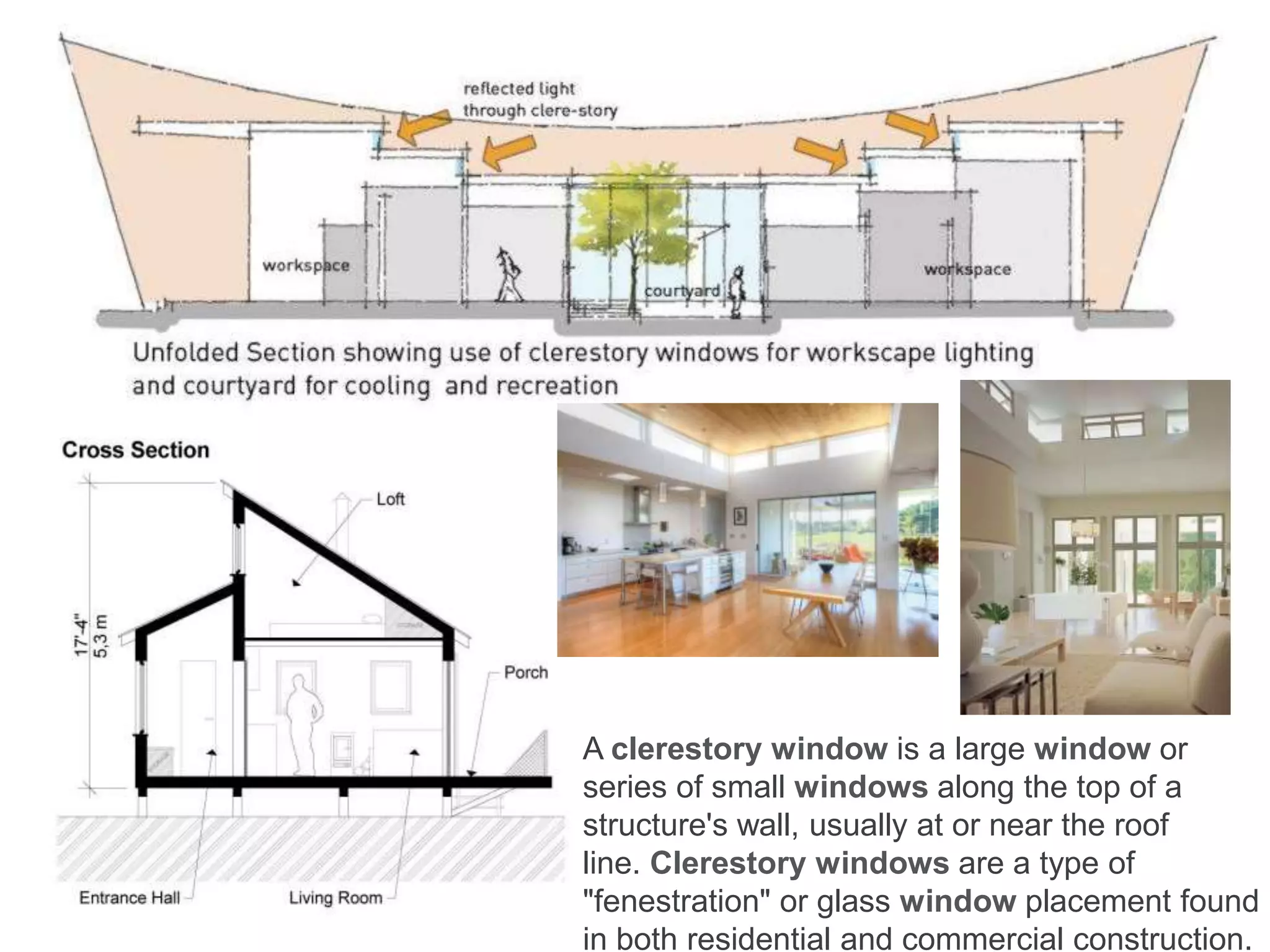
A clerestory window is a large window or
series of small windows along the top of a
structure's wall, usually at or near the roof
line. Clerestory windows are a type of
"fenestration" or glass window placement found
in both residential and commercial construction.
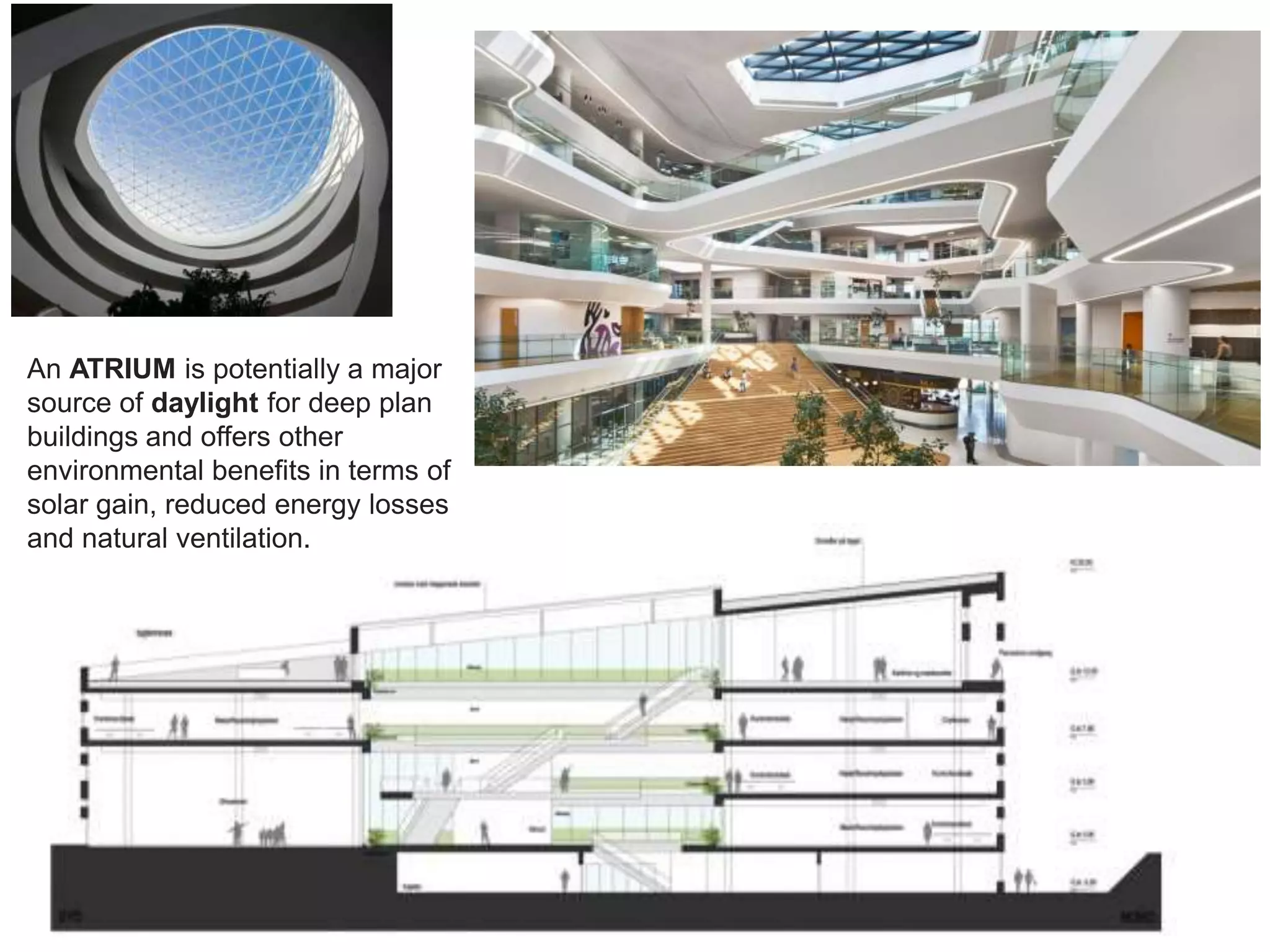
An ATRIUM is potentially a major
source of daylight for deep plan
buildings and offers other
environmental benefits in terms of
solar gain, reduced energy losses
and natural ventilation.
Types of Lights or Lamps in a Lighting system
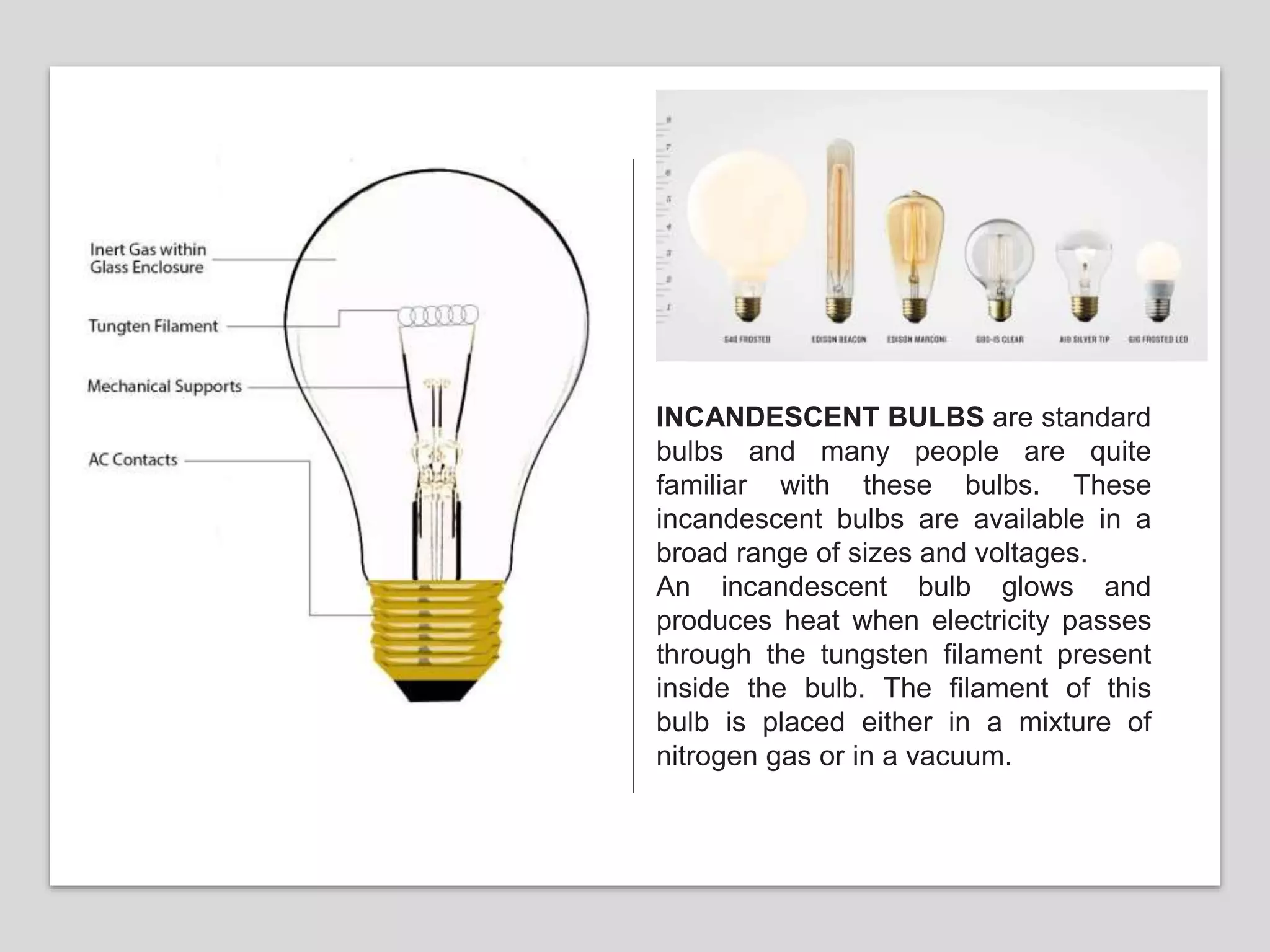
INCANDESCENT BULBS are standard
bulbs and many people are quite
familiar with these bulbs. These
incandescent bulbs are available in a
broad range of sizes and voltages.
An incandescent bulb glows and
produces heat when electricity passes
through the tungsten filament present
inside the bulb. The filament of this
bulb is placed either in a mixture of
nitrogen gas or in a vacuum.
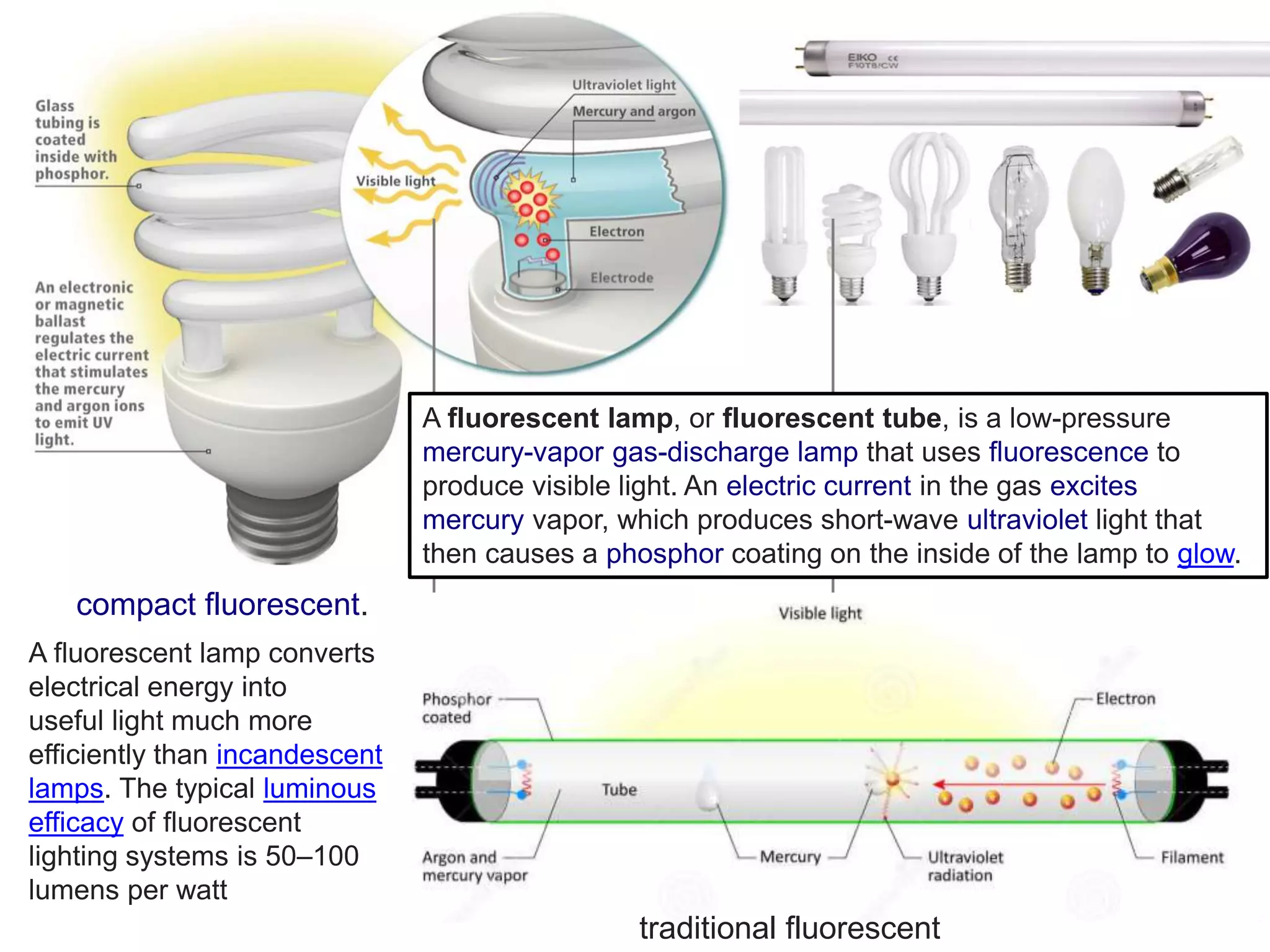
compact fluorescent.
traditional fluorescent
A fluorescent lamp, or fluorescent tube, is a low-pressure
mercury-vapor gas-discharge lamp that uses fluorescence to
produce visible light. An electric current in the gas excites
mercury vapor, which produces short-wave ultraviolet light that
then causes a phosphor coating on the inside of the lamp to glow.
A fluorescent lamp converts
electrical energy into
useful light much more
efficiently than incandescent
lamps. The typical luminous
efficacy of fluorescent
lighting systems is 50–100
lumens per watt
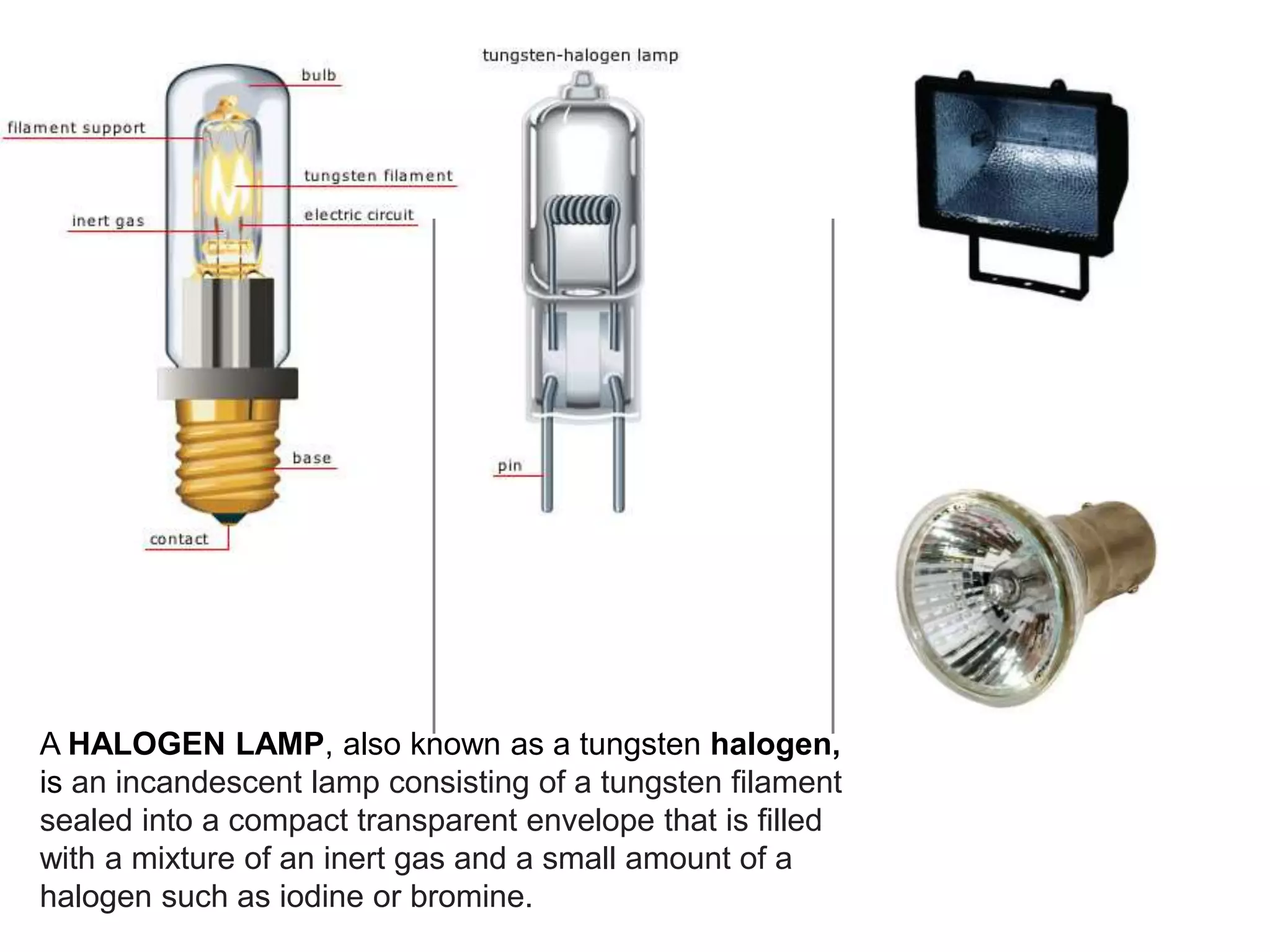
A HALOGEN LAMP, also known as a tungsten halogen,
is an incandescent lamp consisting of a tungsten filament
sealed into a compact transparent envelope that is filled
with a mixture of an inert gas and a small amount of a
halogen such as iodine or bromine.
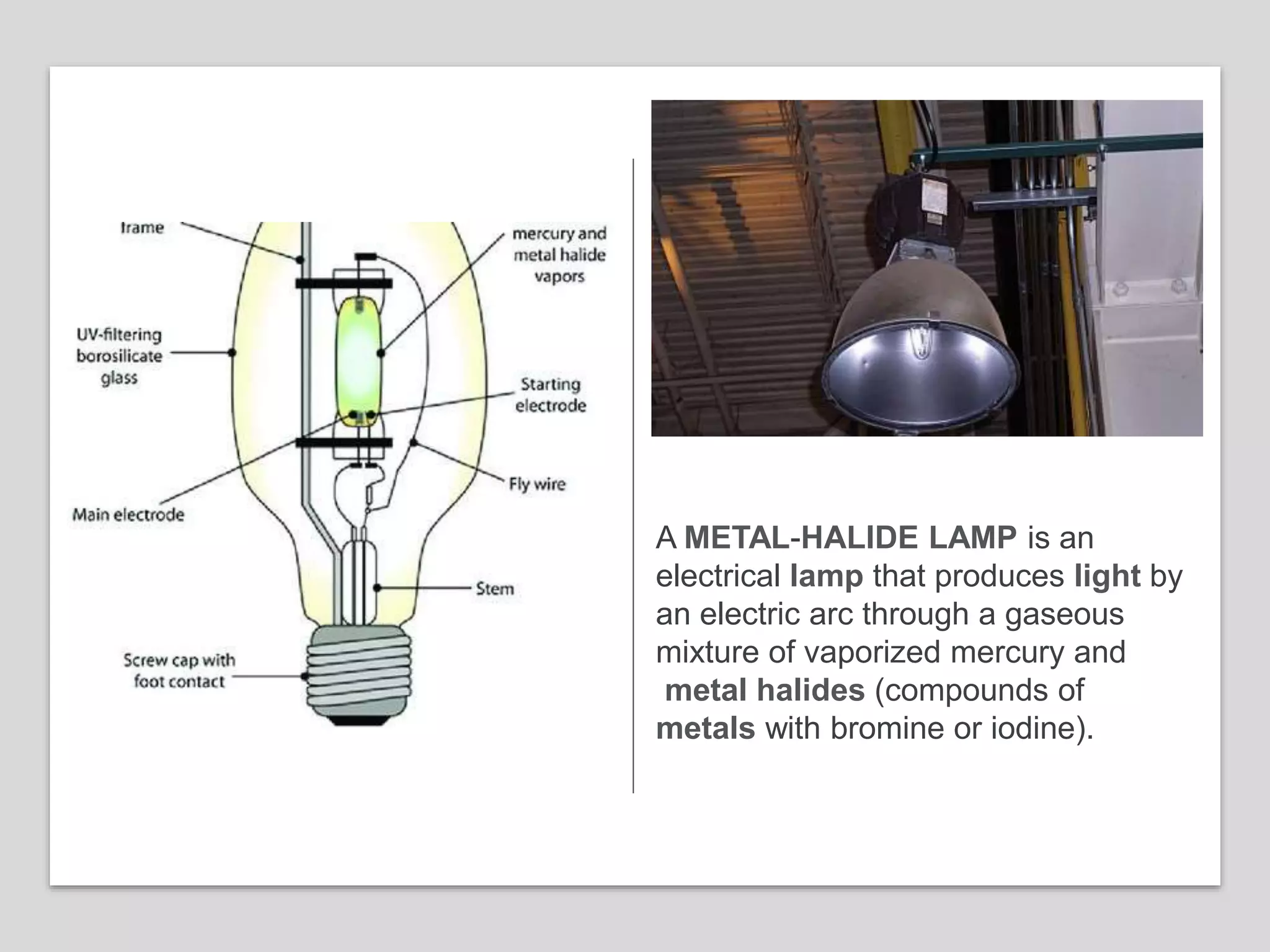
A METAL-HALIDE LAMP is an
electrical lamp that produces light by
an electric arc through a gaseous
mixture of vaporized mercury and
metal halides (compounds of
metals with bromine or iodine).
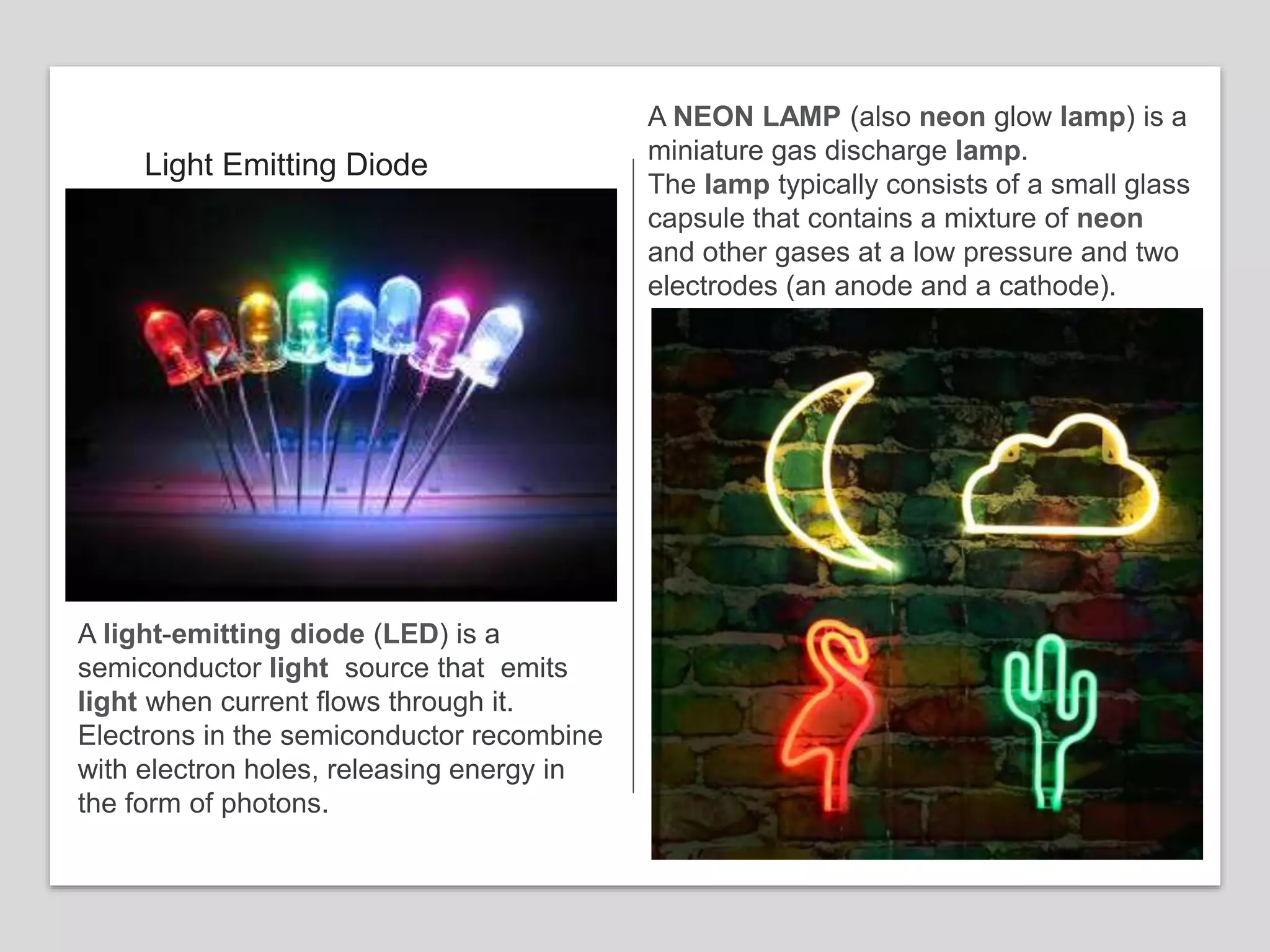
Light Emitting Diode
A light-emitting diode (LED) is a
semiconductor light source that emits
light when current flows through it.
Electrons in the semiconductor recombine
with electron holes, releasing energy in
the form of photons.
A NEON LAMP (also neon glow lamp) is a
miniature gas discharge lamp.
The lamp typically consists of a small glass
capsule that contains a mixture of neon
and other gases at a low pressure and two
electrodes (an anode and a cathode).
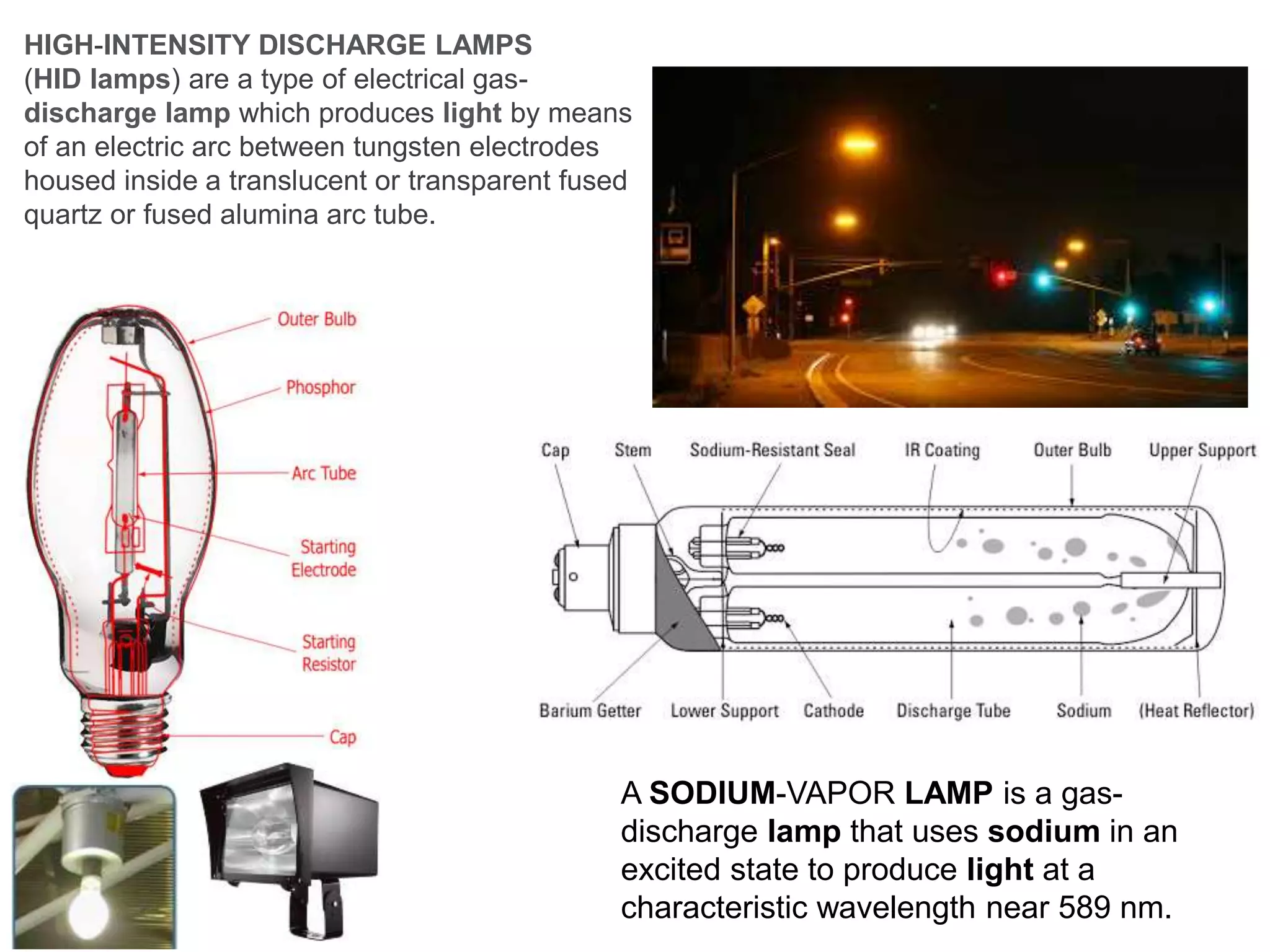
HIGH-INTENSITY DISCHARGE LAMPS
(HID lamps) are a type of electrical gas-
discharge lamp which produces light by means
of an electric arc between tungsten electrodes
housed inside a translucent or transparent fused
quartz or fused alumina arc tube.
A SODIUM-VAPOR LAMP is a gas-
discharge lamp that uses sodium in an
excited state to produce light at a
characteristic wavelength near 589 nm.
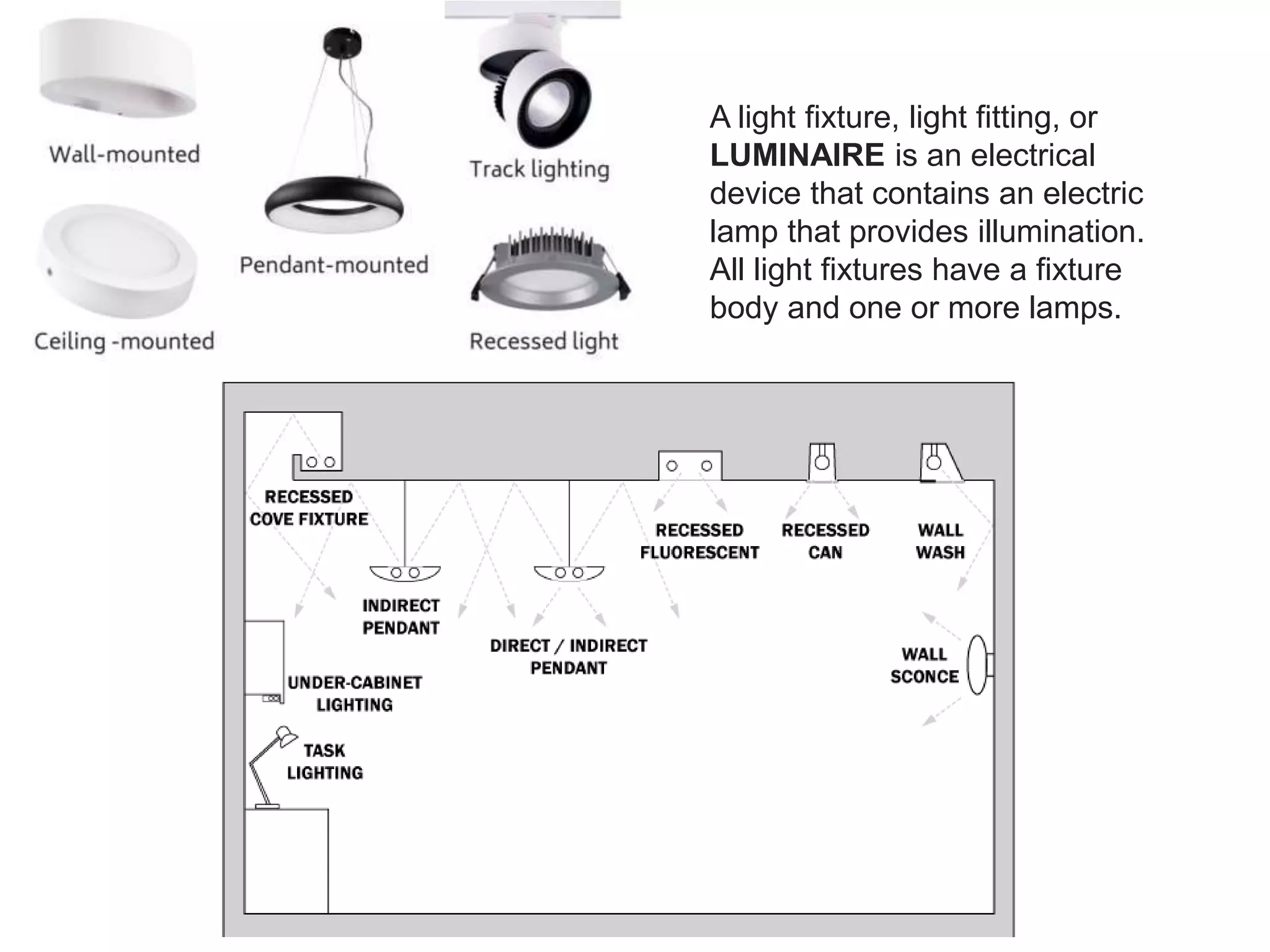
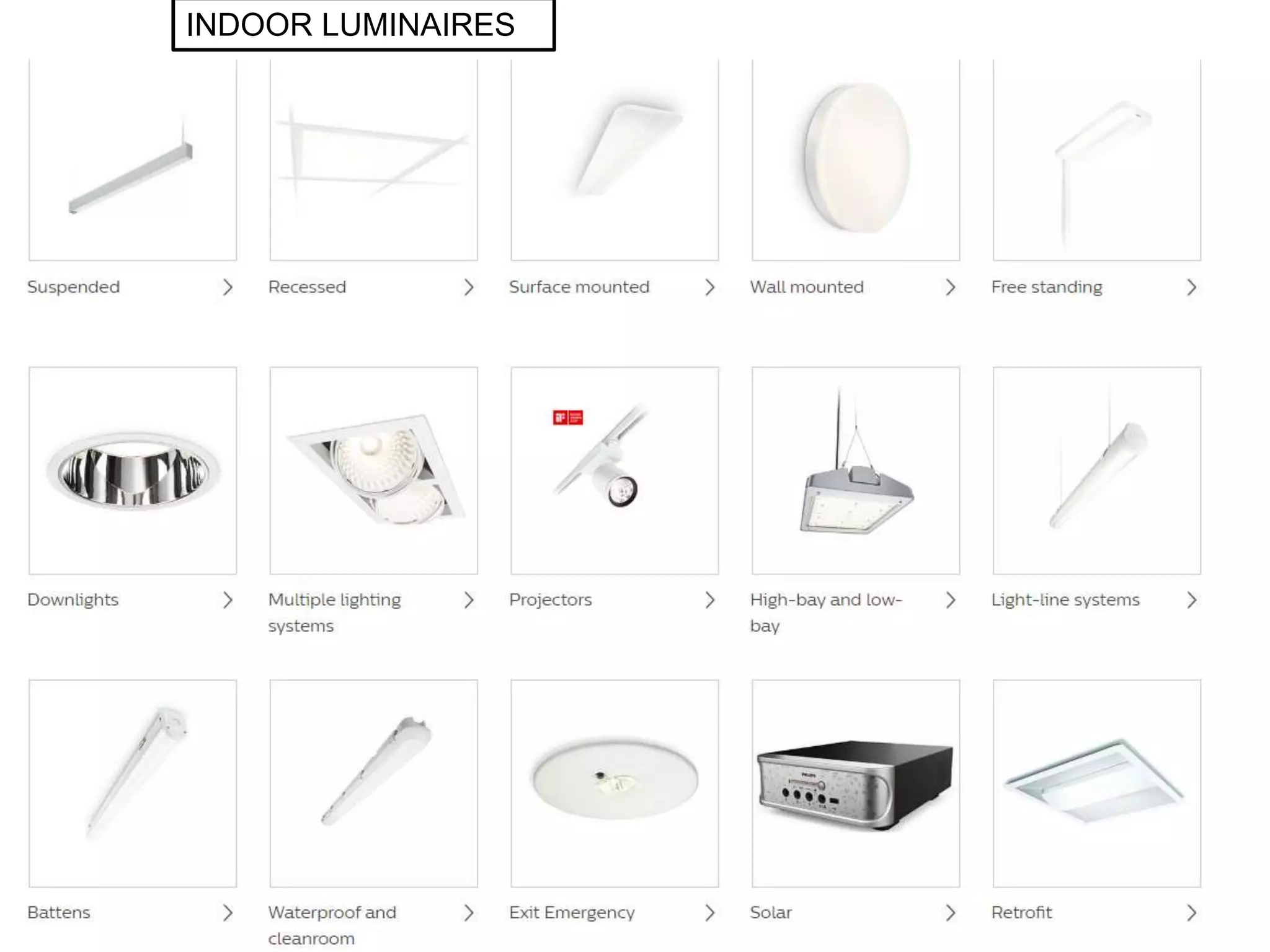
A light fixture, light fitting, or
LUMINAIRE is an electrical
device that contains an electric
lamp that provides illumination.
All light fixtures have a fixture
body and one or more lamps.
INDOOR LUMINAIRES
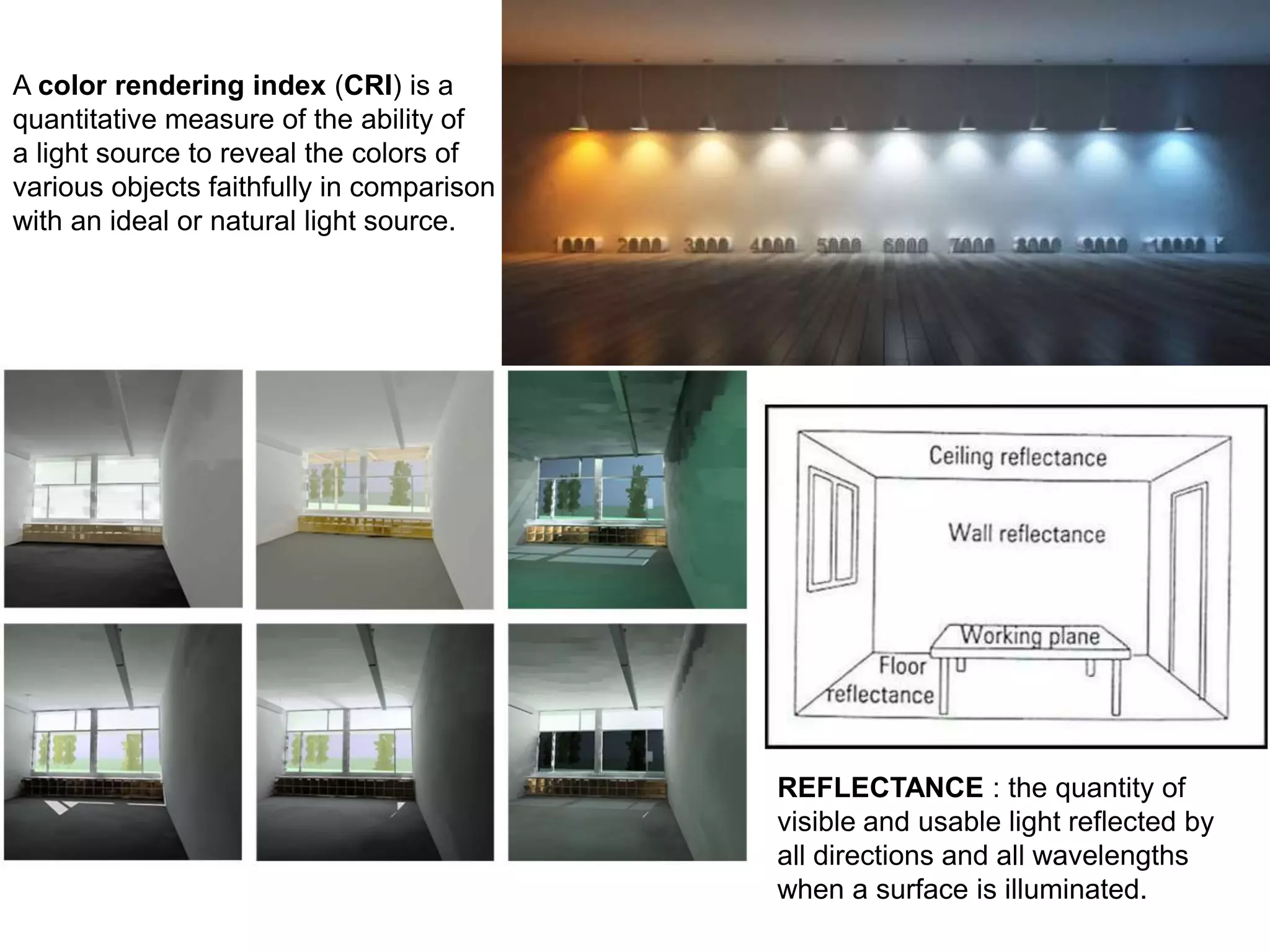
REFLECTANCE : the quantity of
visible and usable light reflected by
all directions and all wavelengths
when a surface is illuminated.
A color rendering index (CRI) is a
quantitative measure of the ability of
a light source to reveal the colors of
various objects faithfully in comparison
with an ideal or natural light source.
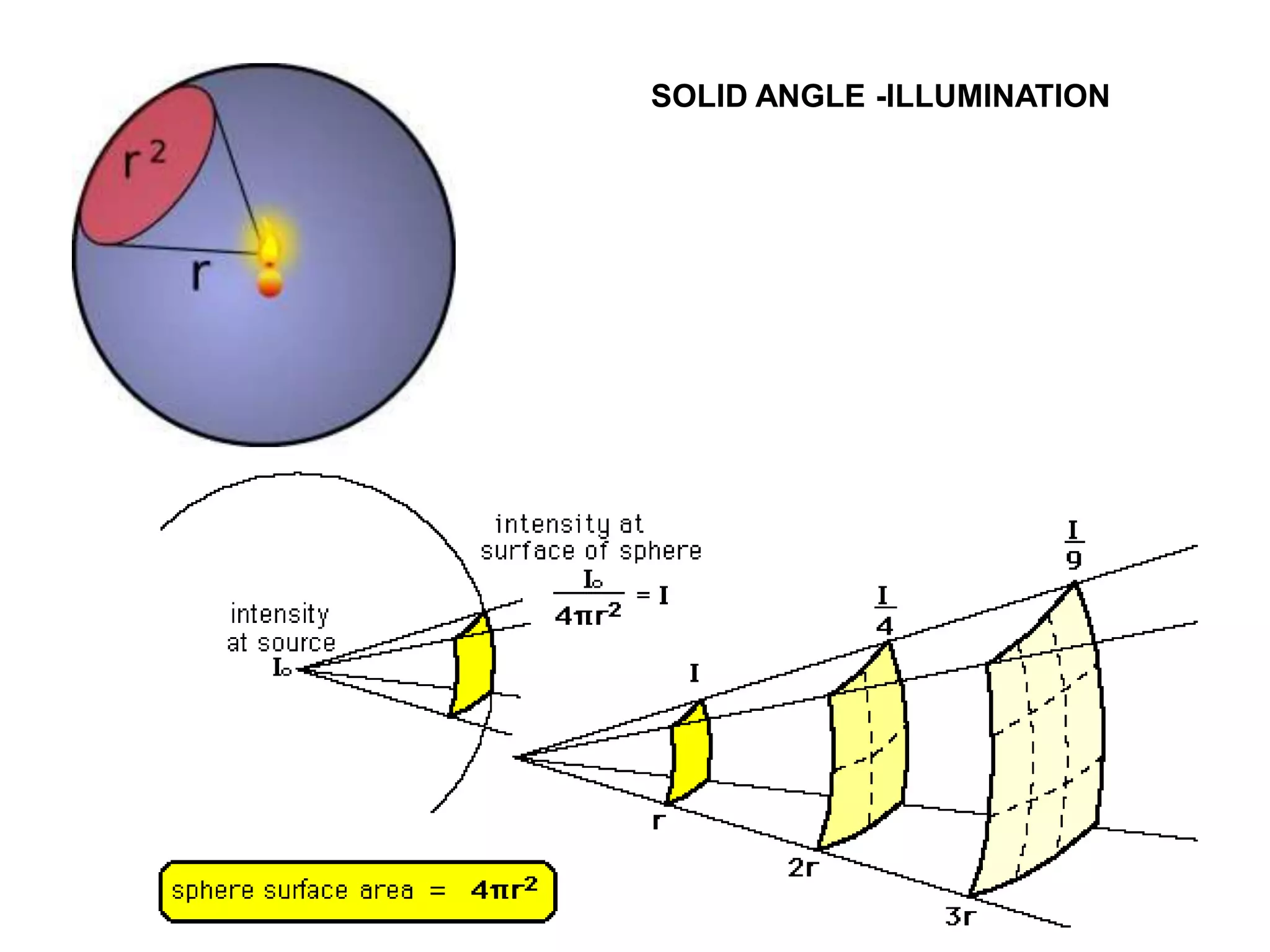
SOLID ANGLE -ILLUMINATION
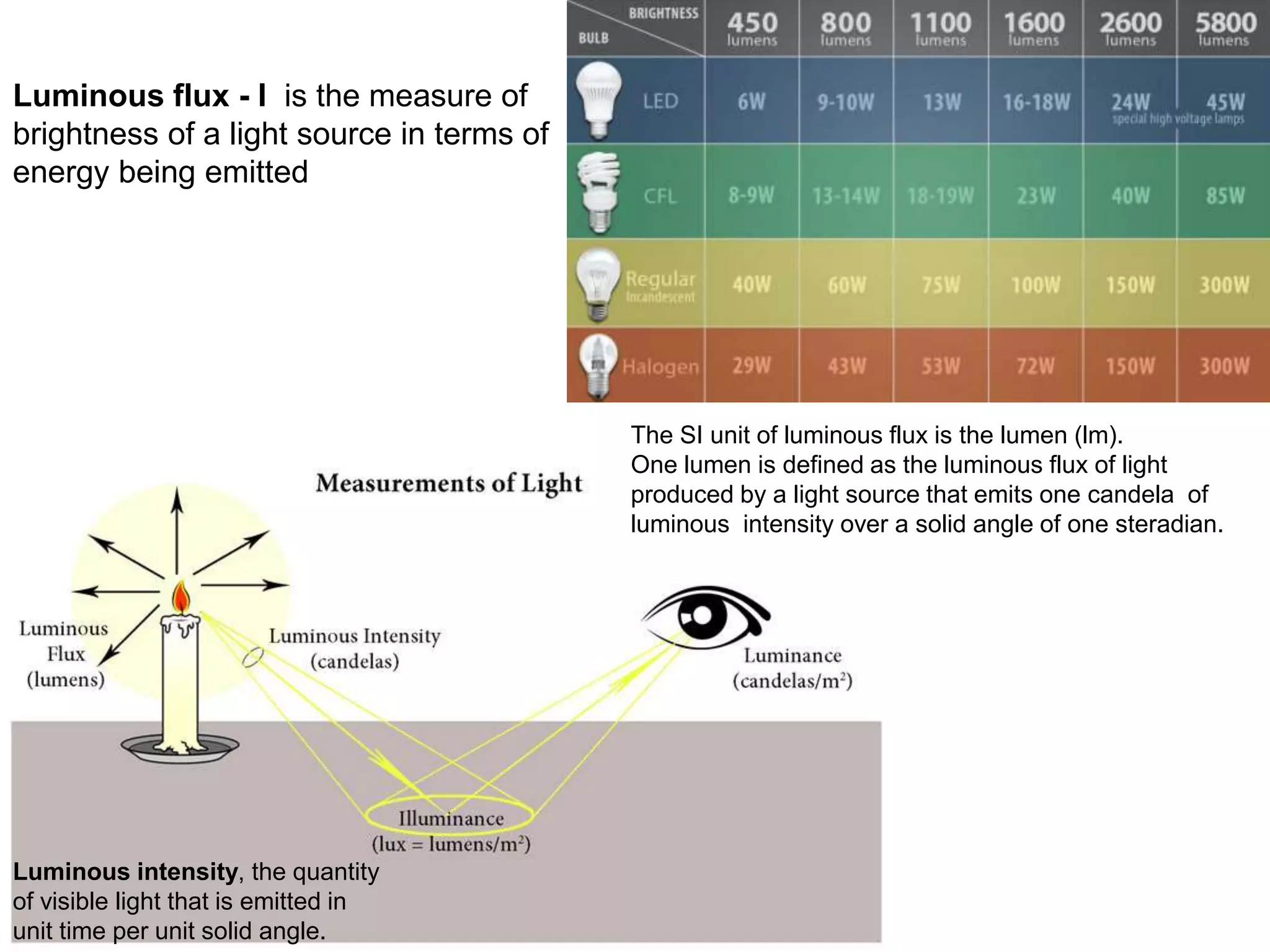
Luminous flux - I is the measure of
brightness of a light source in terms of
energy being emitted
The SI unit of luminous flux is the lumen (lm).
One lumen is defined as the luminous flux of light
produced by a light source that emits one candela of
luminous intensity over a solid angle of one steradian.
Luminous intensity, the quantity
of visible light that is emitted in
unit time per unit solid angle.
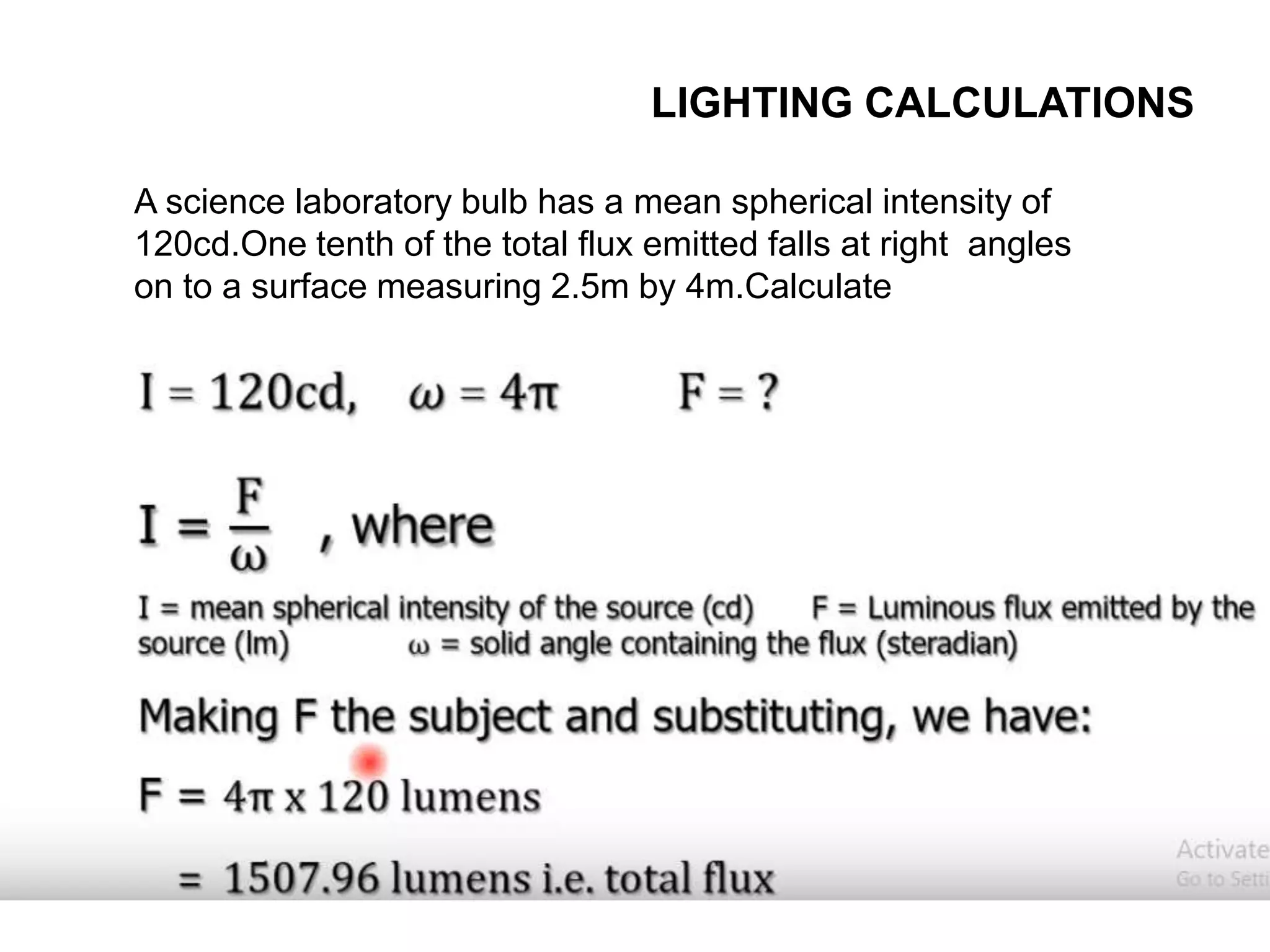
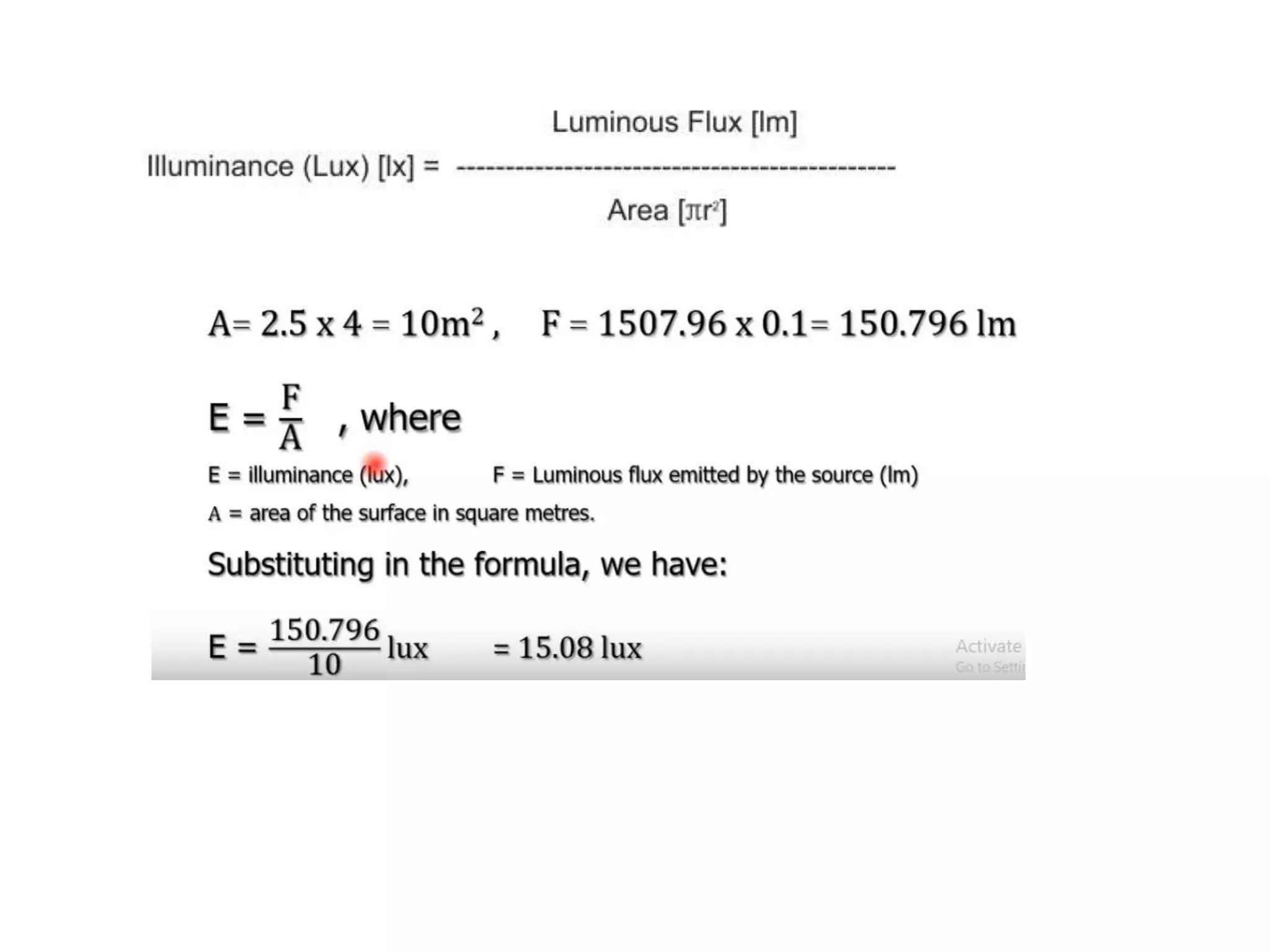
LIGHTING CALCULATIONS
A science laboratory bulb has a mean spherical intensity of
120cd.One tenth of the total flux emitted falls at right angles
on to a surface measuring 2.5m by 4m.Calculate
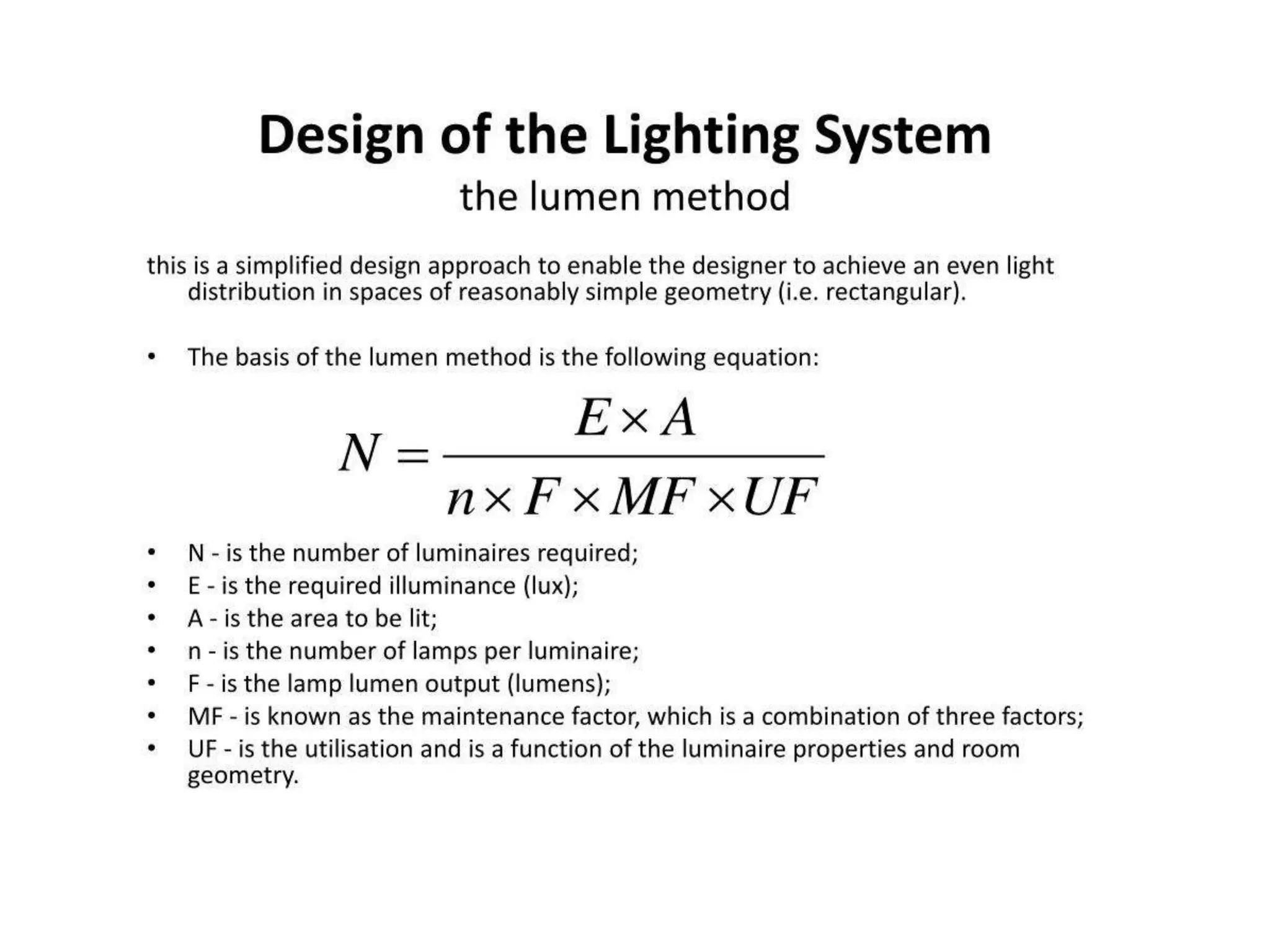
Lumen method
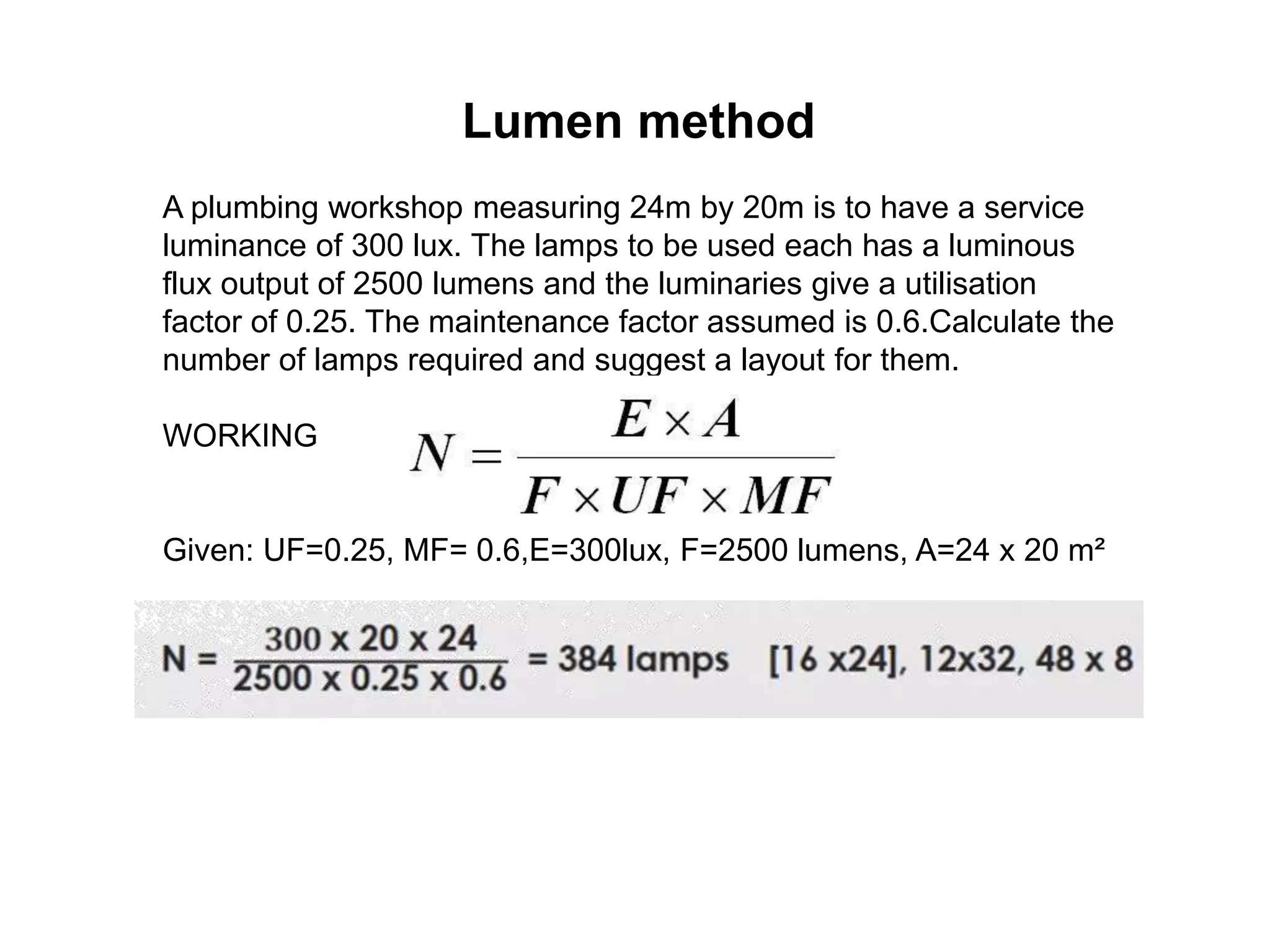
A plumbing workshop measuring 24m by 20m is to have a service
luminance of 300 lux. The lamps to be used each has a luminous
flux output of 2500 lumens and the luminaries give a utilisation
factor of 0.25. The maintenance factor assumed is 0.6.Calculate the
number of lamps required and suggest a layout for them.
WORKING
Given: UF=0.25, MF= 0.6,E=300lux, F=2500 lumens, A=24 x 20 m²
Unit 2 illumination

Unit 2 illumination

  • 1.
    Unit II ILLUMINATIONAND LIGHTING DESIGN
  • 2.
    Light is electromagneticradiation ofa wavelength that is visible to thehuman eye (in a range from about380 or 400 nanometres to about760 or 780 nm).
  • 3.
    NATURAL LIGHTING • Daylighting is the controlled admission of natural light, direct sunlight, and diffused- skylight into a building to reduce electric lighting and saving energy.
  • 4.
  • 5.
    LIGHT WELL orair shaft is an unroofed external space provided within the volume of a large building to allow light and air to reach what would otherwise be a dark or unventilated area.
  • 6.
    SKYLIGHTS can provide ventilationas well as light. Ventilating a building with an operable skylight releases the hot air that naturally accumulates near the ceiling.
  • 7.
    A clerestory windowis a large window or series of small windows along the top of a structure's wall, usually at or near the roof line. Clerestory windows are a type of "fenestration" or glass window placement found in both residential and commercial construction.
  • 8.
    An ATRIUM ispotentially a major source of daylight for deep plan buildings and offers other environmental benefits in terms of solar gain, reduced energy losses and natural ventilation.
  • 9.
    Types of Lightsor Lamps in a Lighting system
  • 10.
    INCANDESCENT BULBS arestandard bulbs and many people are quite familiar with these bulbs. These incandescent bulbs are available in a broad range of sizes and voltages. An incandescent bulb glows and produces heat when electricity passes through the tungsten filament present inside the bulb. The filament of this bulb is placed either in a mixture of nitrogen gas or in a vacuum.
  • 11.
    compact fluorescent. traditional fluorescent Afluorescent lamp, or fluorescent tube, is a low-pressure mercury-vapor gas-discharge lamp that uses fluorescence to produce visible light. An electric current in the gas excites mercury vapor, which produces short-wave ultraviolet light that then causes a phosphor coating on the inside of the lamp to glow. A fluorescent lamp converts electrical energy into useful light much more efficiently than incandescent lamps. The typical luminous efficacy of fluorescent lighting systems is 50–100 lumens per watt
  • 12.
    A HALOGEN LAMP,also known as a tungsten halogen, is an incandescent lamp consisting of a tungsten filament sealed into a compact transparent envelope that is filled with a mixture of an inert gas and a small amount of a halogen such as iodine or bromine.
  • 13.
    A METAL-HALIDE LAMPis an electrical lamp that produces light by an electric arc through a gaseous mixture of vaporized mercury and metal halides (compounds of metals with bromine or iodine).
  • 14.
    Light Emitting Diode Alight-emitting diode (LED) is a semiconductor light source that emits light when current flows through it. Electrons in the semiconductor recombine with electron holes, releasing energy in the form of photons. A NEON LAMP (also neon glow lamp) is a miniature gas discharge lamp. The lamp typically consists of a small glass capsule that contains a mixture of neon and other gases at a low pressure and two electrodes (an anode and a cathode).
  • 15.
    HIGH-INTENSITY DISCHARGE LAMPS (HIDlamps) are a type of electrical gas- discharge lamp which produces light by means of an electric arc between tungsten electrodes housed inside a translucent or transparent fused quartz or fused alumina arc tube. A SODIUM-VAPOR LAMP is a gas- discharge lamp that uses sodium in an excited state to produce light at a characteristic wavelength near 589 nm.
  • 16.
    A light fixture,light fitting, or LUMINAIRE is an electrical device that contains an electric lamp that provides illumination. All light fixtures have a fixture body and one or more lamps.
  • 17.
  • 18.
    REFLECTANCE : thequantity of visible and usable light reflected by all directions and all wavelengths when a surface is illuminated. A color rendering index (CRI) is a quantitative measure of the ability of a light source to reveal the colors of various objects faithfully in comparison with an ideal or natural light source.
  • 20.
  • 21.
    Luminous flux -I is the measure of brightness of a light source in terms of energy being emitted The SI unit of luminous flux is the lumen (lm). One lumen is defined as the luminous flux of light produced by a light source that emits one candela of luminous intensity over a solid angle of one steradian. Luminous intensity, the quantity of visible light that is emitted in unit time per unit solid angle.
  • 22.
    LIGHTING CALCULATIONS A sciencelaboratory bulb has a mean spherical intensity of 120cd.One tenth of the total flux emitted falls at right angles on to a surface measuring 2.5m by 4m.Calculate
  • 26.
    Lumen method A plumbingworkshop measuring 24m by 20m is to have a service luminance of 300 lux. The lamps to be used each has a luminous flux output of 2500 lumens and the luminaries give a utilisation factor of 0.25. The maintenance factor assumed is 0.6.Calculate the number of lamps required and suggest a layout for them. WORKING Given: UF=0.25, MF= 0.6,E=300lux, F=2500 lumens, A=24 x 20 m²