ILLUMINATION
DURGA PRASAD
SUPERINTENDING ENGINEER ( E )
CPWD, KOLKATA
INTRODUCTION
NATURE OF LIGHT SOURCE
TERMS USED IN ILLUMINATION
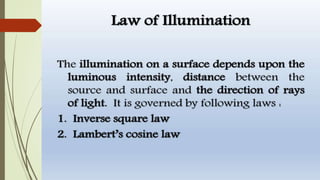
LAW OF ILLUMINATION
METHODS OF PRODUCING LIGHT
SOURCES OF LIGHT *
OFFICE, RESIDENTIAL,INDOOR N
OUTDOOR ILLUMINATION
SOURCES OF LIGHTS
 ARC LAMP
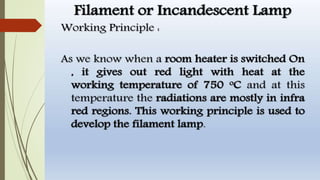
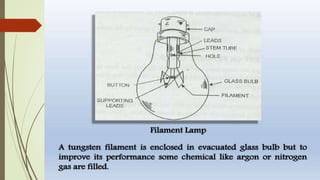
 FILAMENT LAMP
 GASEOUS DISCHARGE LAMP
 SODIUM VAPOR LAMP
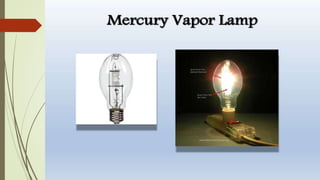
 MERCURY VAPOR LAMP
 FLUROSCENT TUBE
 NEON LAMP
 HALOGEN LAMP
 COMPACT FLUROSCENT LAMP
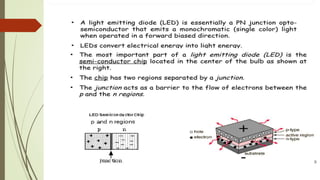
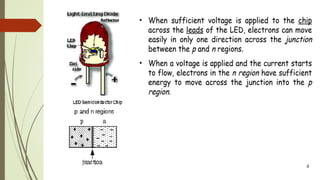
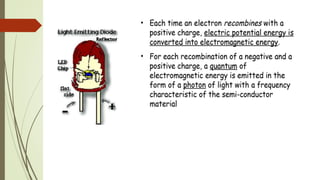
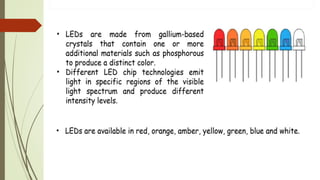
 LED LAMPS
ILLUMINATION IMPORTANCE
THE LIGHTING ENERGY CONSUMPTION
CONTRIBUTES 30- 40 % .
NECESSARY TO MODIFY THE OLD LIGHTING
SYSTEM TO ACHIEVE THE ENERGY SAVINGS IN
OLD INSTALLATIONS.
LIGHTS WITH BETTER LUMINIOUS EFFICACY AND
LONGER LIFE PERIOD TO ACHIEVE COST
EFFECTIVENESS
VITAL POINTS IN ILLUMINATION FOR ENERGY SAVINGS
EFFICIENT LIGHT SOURCE
MATCHING LAMP TYPE WITH PROPER COLOR
RENDERANCE AND COLOR TEMPERATURE
ADEQUATE LIGHT LEVEL (LUX LEVEL AS PER NBC)
ILLUMINATION HISTORY
 LUINOUS EFFICACIES INCREASED FROM 0.01Lmn/W to 140 Lmn/W THROUGH
THE CENTURIES
 TORCHE WAS PROBABLY THE FIRST LIGHTING SOURCE AND FIXTURE AROUND
400,000 YEARS BC
 CANDLE APPEARED AROUND 400 YEARS AD , USED INDOOR AS WELL AS
OUTDOOR WITH REFLECTING / TRANSPARENT PROTECTIVE CASE.
 1800 AD CARBON ARC LAMPS ARE INTRODUCED
 1814 AD GAS LAPMPS
 1879 AD ,INCANDESCENT LAMPS BY THOMAS EDISON WITH luminious
EFFICACY 1.4 Lmn/W
 1901, HIGH INTENSITY DISCHARGE LAMPS
 1932, LOW PRESSURE SODIUM AND FLUROSCENT LAMPS
 1960, QUARTZ AND METTAL HALLIDE
 RECENT IS LED LIGHTS…….LUMINIOUS EFFICACY UPTO 150 Lmn/W.
LIGHT BASIC
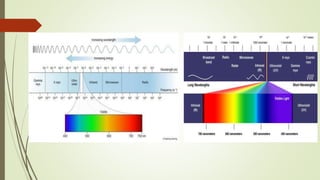
Electromagnetic radiation that can perceived by an
unaided human eye, having a wavelength from
370-800 nano meter and travelling at a speed of
2.99 lakh km/sec.
Light is just one portion of various electromagnetic
waves flying through space. These waves have both
frequency and wavelength which distinguish light
from other forms of energy on the electromagnetic
spectrum.
LIGHT BASICS
 Light is emitted from a body due to any of the following phenomenon
 Incandescence:- Solid and liquid emits visible radiation when they are
heated to about 1000K. The intensity increases and appearance becomes
whiter as the temperature increases.
 Electric discharge:-When an electric current passed through a gas, the
atoms and molecules emit radiation, whose spectrum is the characteristic
of the element present.
 Electro luminescence:- Light is generated when electric current is passed
through certain solids such as Semiconductors or phosphorous.
 Photo luminescence:- Radiation at one wavelength is absorbed usually
by a solid and re-emitted at a different wavelength. When the re-emitted
radiation is visible is termed as florescence or phosphorescence.
 Visible spectrum is nothing but
observable region of the
electromagnetic wave which is
visible to human eyes. In the
electromagnetic spectrum, the
visible spectrum ranges from
the Infra red region to UV
region. We can detect the
range of light spectrum from
about 400 Nano meter (violet)
to 700 Nano meter (Red) and
after this range human eye is
unable to see the rest of the
electromagnetic waves.
TERMS USED IN ILLUMINATION
 LIGHT
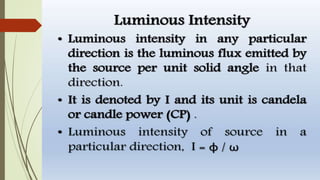
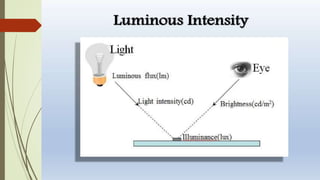
 LUMINIOUS FLUX
 LUMEN
 PLANE ANGLE
 SOLID ANGLE
 STERADIAN
 CANDLE POWER
 LUMINIOUS INTENSITY REDUCTION FACTOR
 GLARE
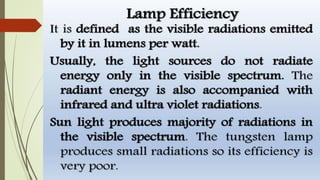
 LAMP EFFICIENCY
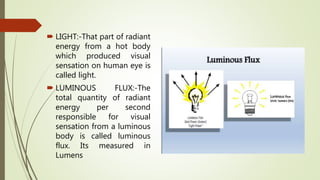
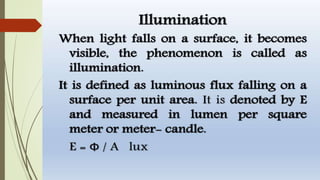
 LIGHT:-That part of radiant
energy from a hot body
which produced visual
sensation on human eye is
called light.
 LUMINOUS FLUX:-The
total quantity of radiant
energy per second
responsible for visual
sensation from a luminous
body is called luminous
flux. Its measured in
Lumens
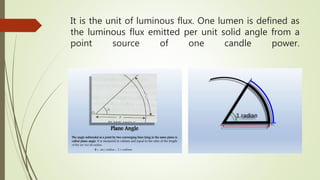
It is the unit of luminous flux. One lumen is defined as
the luminous flux emitted per unit solid angle from a
point source of one candle power.
Steradian:- The unit
of solid angle. One
Steradian is defined
as the solid angle
subtended at the
centre of a sphere by
its surface having
area equal to radius
square
w = Area of surface/
square of radius
THE END

Illumination, Lighting

  • 1.
  • 2.
    INTRODUCTION NATURE OF LIGHTSOURCE TERMS USED IN ILLUMINATION LAW OF ILLUMINATION METHODS OF PRODUCING LIGHT SOURCES OF LIGHT * OFFICE, RESIDENTIAL,INDOOR N OUTDOOR ILLUMINATION
  • 3.
    SOURCES OF LIGHTS ARC LAMP  FILAMENT LAMP  GASEOUS DISCHARGE LAMP  SODIUM VAPOR LAMP  MERCURY VAPOR LAMP  FLUROSCENT TUBE  NEON LAMP  HALOGEN LAMP  COMPACT FLUROSCENT LAMP  LED LAMPS
  • 4.
    ILLUMINATION IMPORTANCE THE LIGHTINGENERGY CONSUMPTION CONTRIBUTES 30- 40 % . NECESSARY TO MODIFY THE OLD LIGHTING SYSTEM TO ACHIEVE THE ENERGY SAVINGS IN OLD INSTALLATIONS. LIGHTS WITH BETTER LUMINIOUS EFFICACY AND LONGER LIFE PERIOD TO ACHIEVE COST EFFECTIVENESS
  • 5.
    VITAL POINTS INILLUMINATION FOR ENERGY SAVINGS EFFICIENT LIGHT SOURCE MATCHING LAMP TYPE WITH PROPER COLOR RENDERANCE AND COLOR TEMPERATURE ADEQUATE LIGHT LEVEL (LUX LEVEL AS PER NBC)
  • 6.
    ILLUMINATION HISTORY  LUINOUSEFFICACIES INCREASED FROM 0.01Lmn/W to 140 Lmn/W THROUGH THE CENTURIES  TORCHE WAS PROBABLY THE FIRST LIGHTING SOURCE AND FIXTURE AROUND 400,000 YEARS BC  CANDLE APPEARED AROUND 400 YEARS AD , USED INDOOR AS WELL AS OUTDOOR WITH REFLECTING / TRANSPARENT PROTECTIVE CASE.  1800 AD CARBON ARC LAMPS ARE INTRODUCED  1814 AD GAS LAPMPS  1879 AD ,INCANDESCENT LAMPS BY THOMAS EDISON WITH luminious EFFICACY 1.4 Lmn/W  1901, HIGH INTENSITY DISCHARGE LAMPS  1932, LOW PRESSURE SODIUM AND FLUROSCENT LAMPS  1960, QUARTZ AND METTAL HALLIDE  RECENT IS LED LIGHTS…….LUMINIOUS EFFICACY UPTO 150 Lmn/W.
  • 7.
    LIGHT BASIC Electromagnetic radiationthat can perceived by an unaided human eye, having a wavelength from 370-800 nano meter and travelling at a speed of 2.99 lakh km/sec. Light is just one portion of various electromagnetic waves flying through space. These waves have both frequency and wavelength which distinguish light from other forms of energy on the electromagnetic spectrum.
  • 8.
    LIGHT BASICS  Lightis emitted from a body due to any of the following phenomenon  Incandescence:- Solid and liquid emits visible radiation when they are heated to about 1000K. The intensity increases and appearance becomes whiter as the temperature increases.  Electric discharge:-When an electric current passed through a gas, the atoms and molecules emit radiation, whose spectrum is the characteristic of the element present.  Electro luminescence:- Light is generated when electric current is passed through certain solids such as Semiconductors or phosphorous.  Photo luminescence:- Radiation at one wavelength is absorbed usually by a solid and re-emitted at a different wavelength. When the re-emitted radiation is visible is termed as florescence or phosphorescence.
  • 9.
     Visible spectrumis nothing but observable region of the electromagnetic wave which is visible to human eyes. In the electromagnetic spectrum, the visible spectrum ranges from the Infra red region to UV region. We can detect the range of light spectrum from about 400 Nano meter (violet) to 700 Nano meter (Red) and after this range human eye is unable to see the rest of the electromagnetic waves.
  • 12.
    TERMS USED INILLUMINATION  LIGHT  LUMINIOUS FLUX  LUMEN  PLANE ANGLE  SOLID ANGLE  STERADIAN  CANDLE POWER  LUMINIOUS INTENSITY REDUCTION FACTOR  GLARE  LAMP EFFICIENCY
  • 13.
     LIGHT:-That partof radiant energy from a hot body which produced visual sensation on human eye is called light.  LUMINOUS FLUX:-The total quantity of radiant energy per second responsible for visual sensation from a luminous body is called luminous flux. Its measured in Lumens
  • 14.
    It is theunit of luminous flux. One lumen is defined as the luminous flux emitted per unit solid angle from a point source of one candle power.
  • 17.
    Steradian:- The unit ofsolid angle. One Steradian is defined as the solid angle subtended at the centre of a sphere by its surface having area equal to radius square w = Area of surface/ square of radius
  • 51.