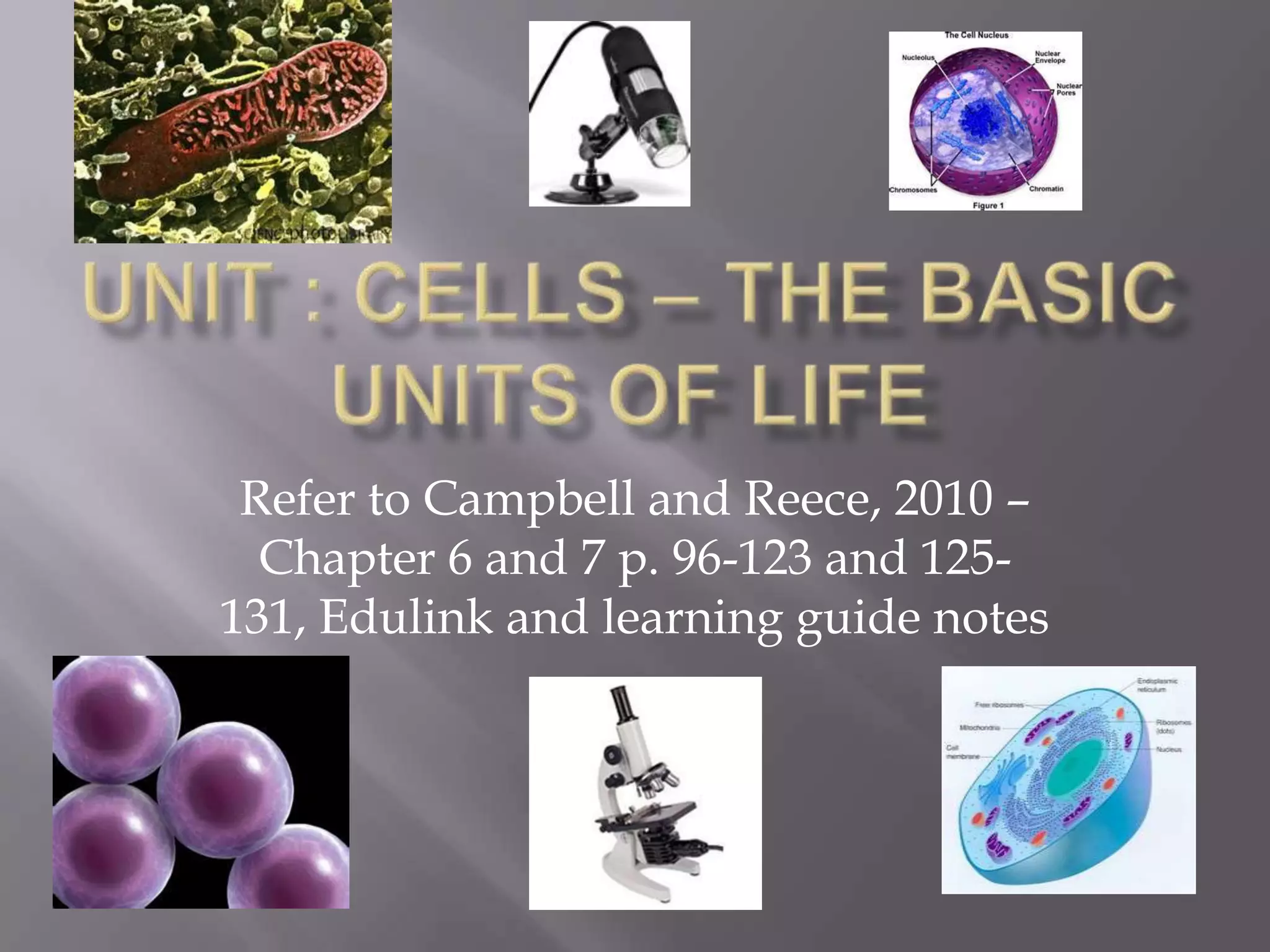
Refer to Campbell and Reece, 2010 –
  Chapter 6 and 7 p. 96-123 and 125-
131, Edulink and learning guide notes
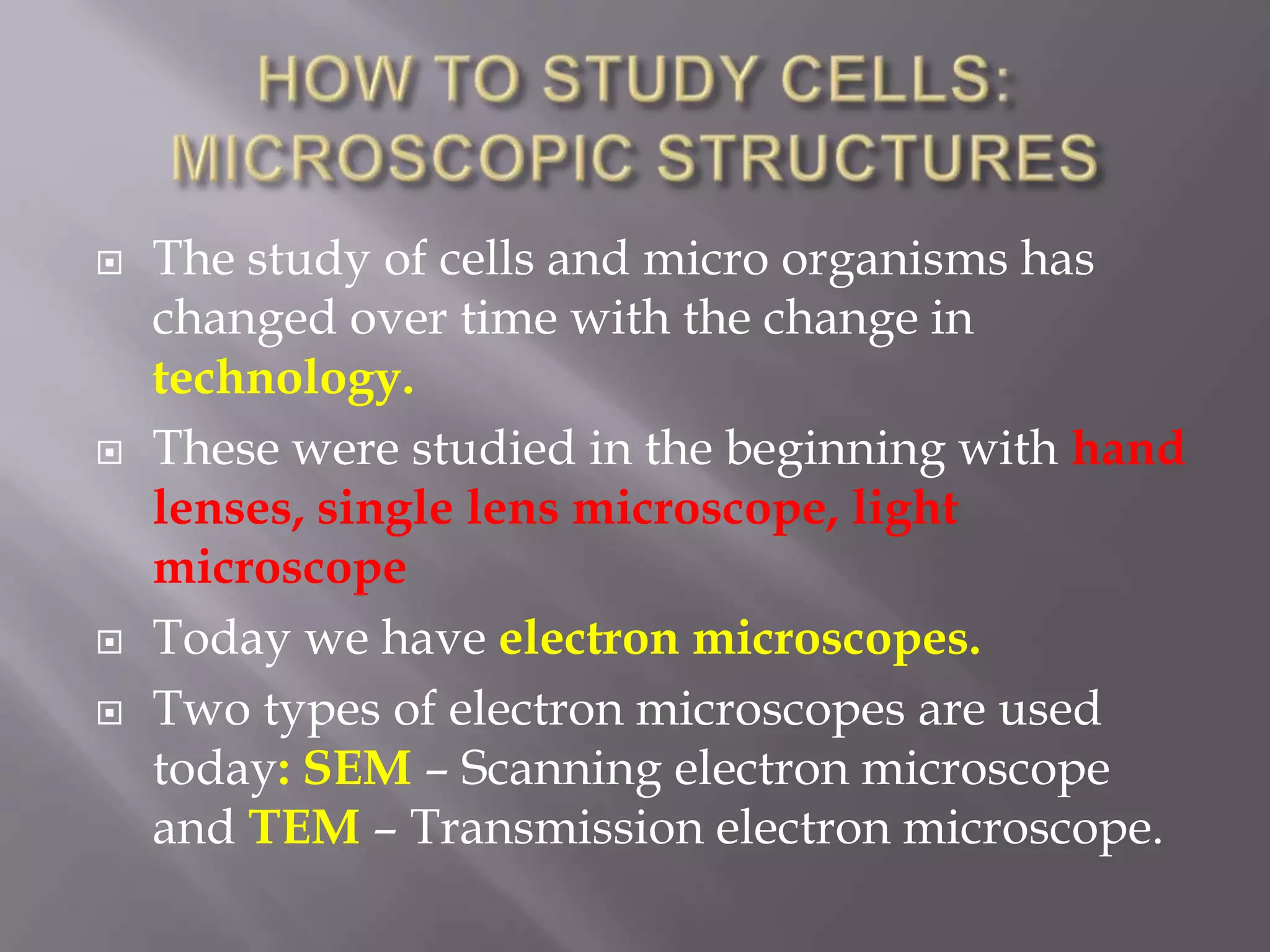
   The study of cells and micro organisms has
    changed over time with the change in
    technology.
   These were studied in the beginning with hand
    lenses, single lens microscope, light
    microscope
   Today we have electron microscopes.
   Two types of electron microscopes are used
    today: SEM – Scanning electron microscope
    and TEM – Transmission electron microscope.
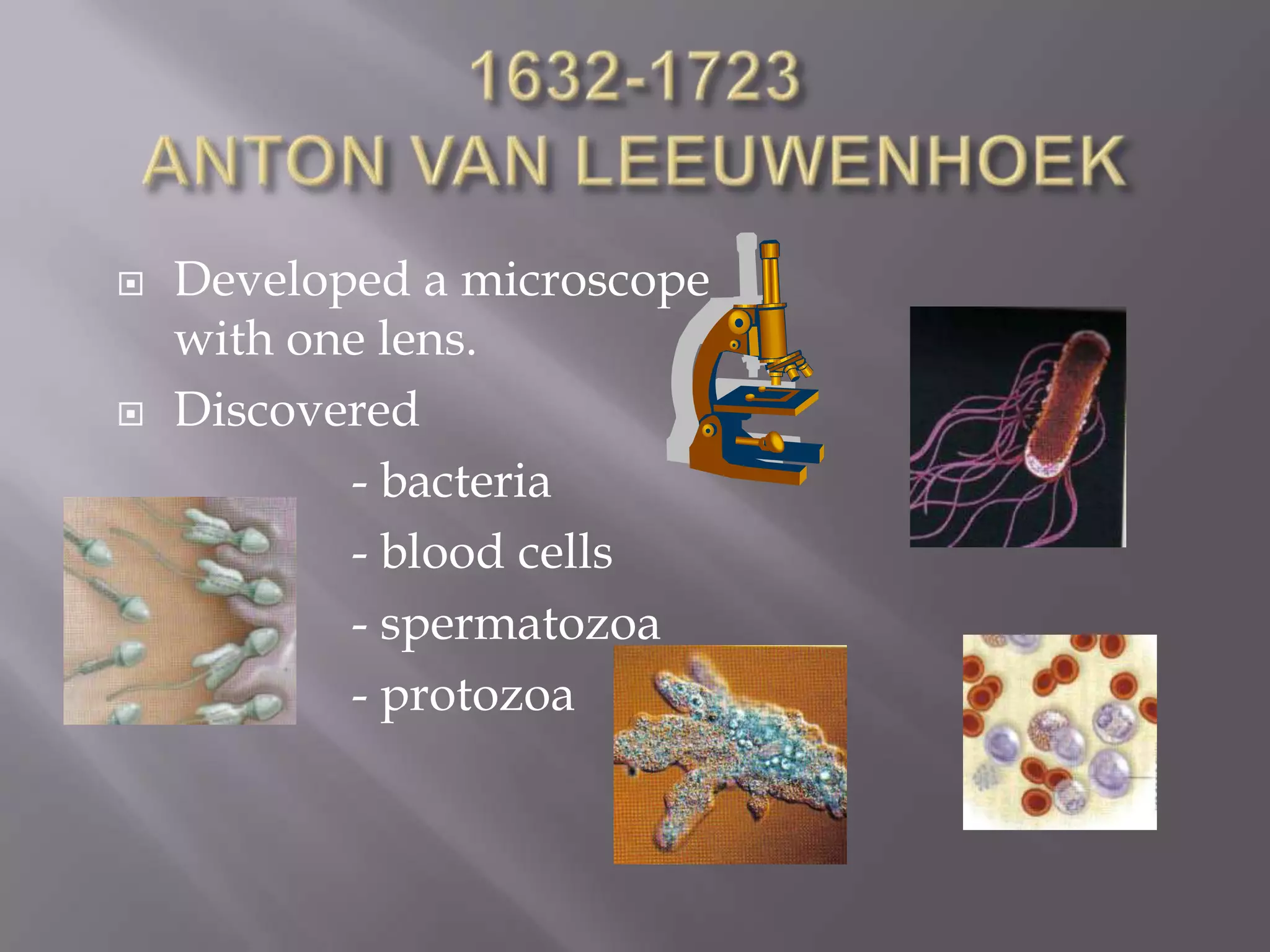
   Developed a microscope
    with one lens.
   Discovered
           - bacteria
           - blood cells
           - spermatozoa
           - protozoa
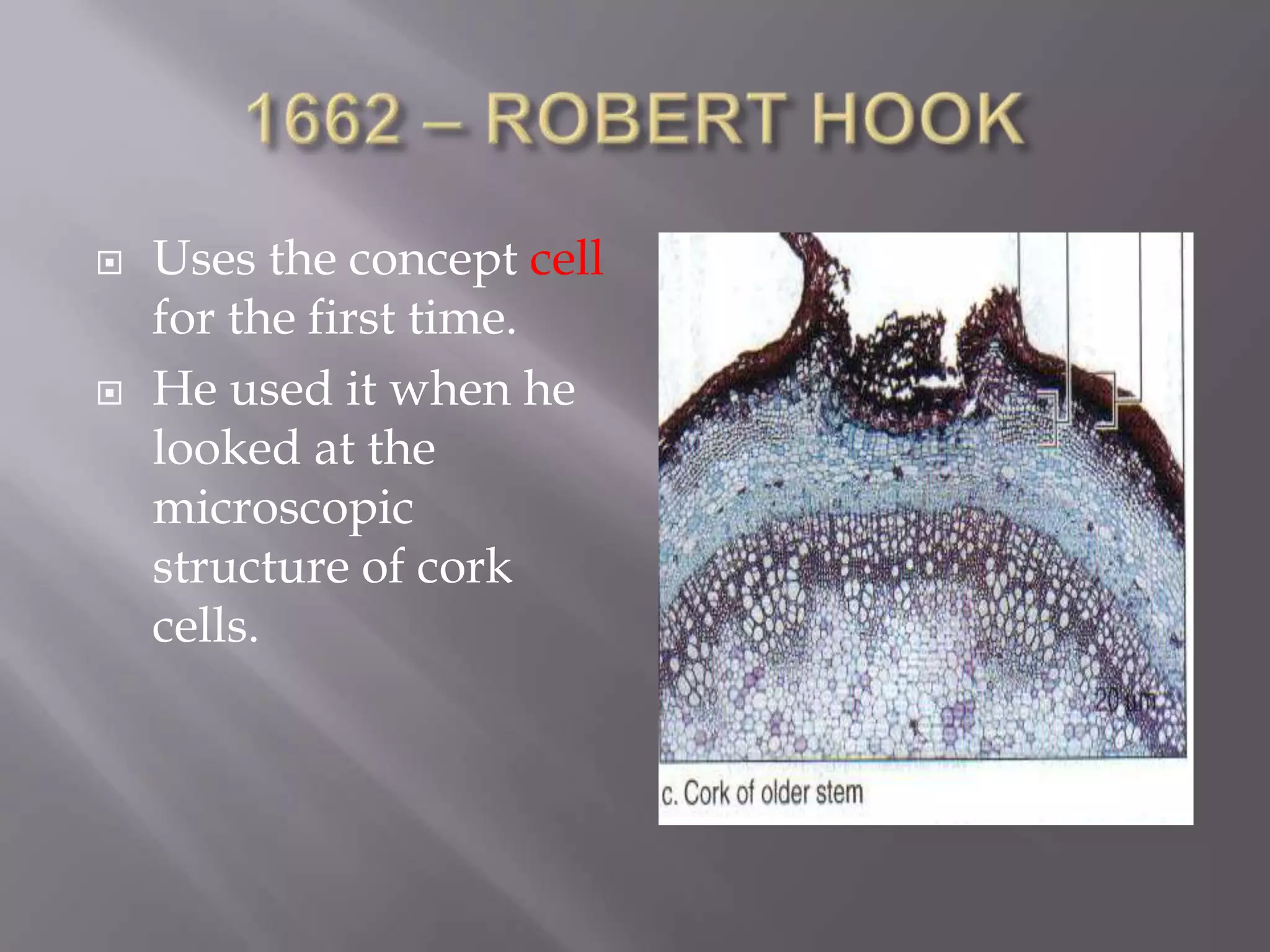
   Uses the concept cell
    for the first time.
   He used it when he
    looked at the
    microscopic
    structure of cork
    cells.
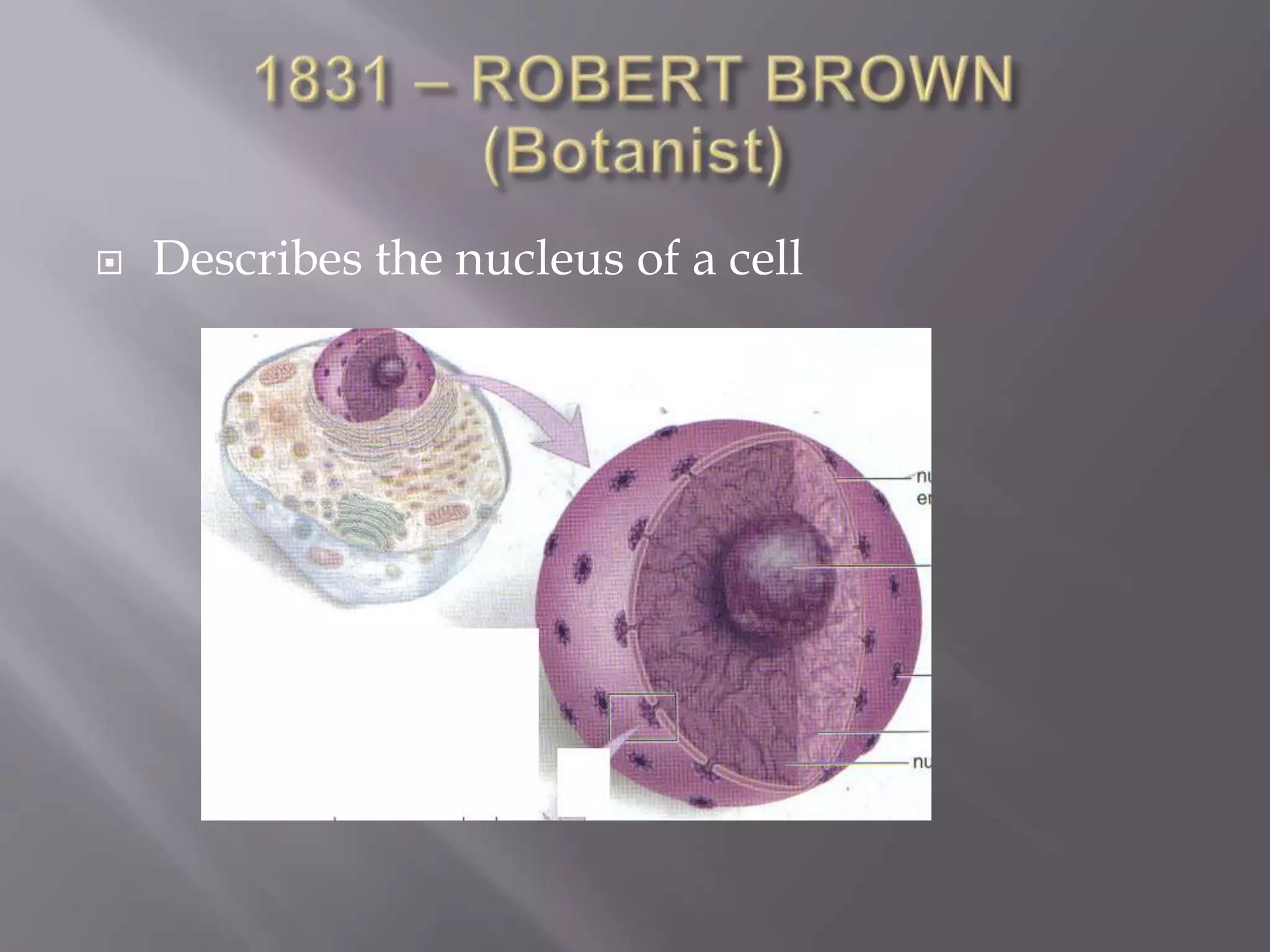
   Describes the nucleus of a cell
   Developed the cell theory:
      - Plants and animals are made of
        groups of cells.
      - The cell is the basic unit of living
        organisms
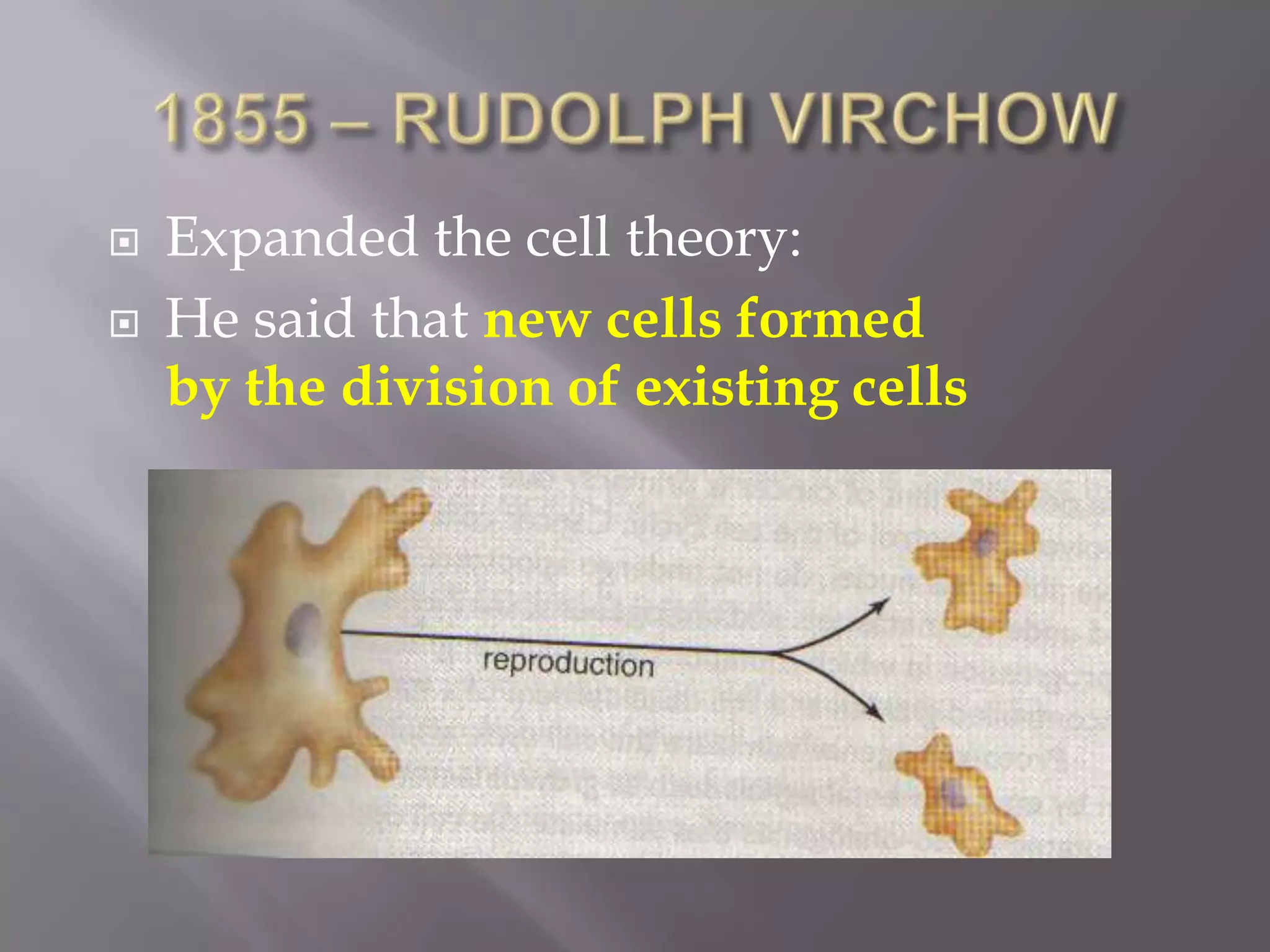
   Expanded the cell theory:
   He said that new cells formed
    by the division of existing cells
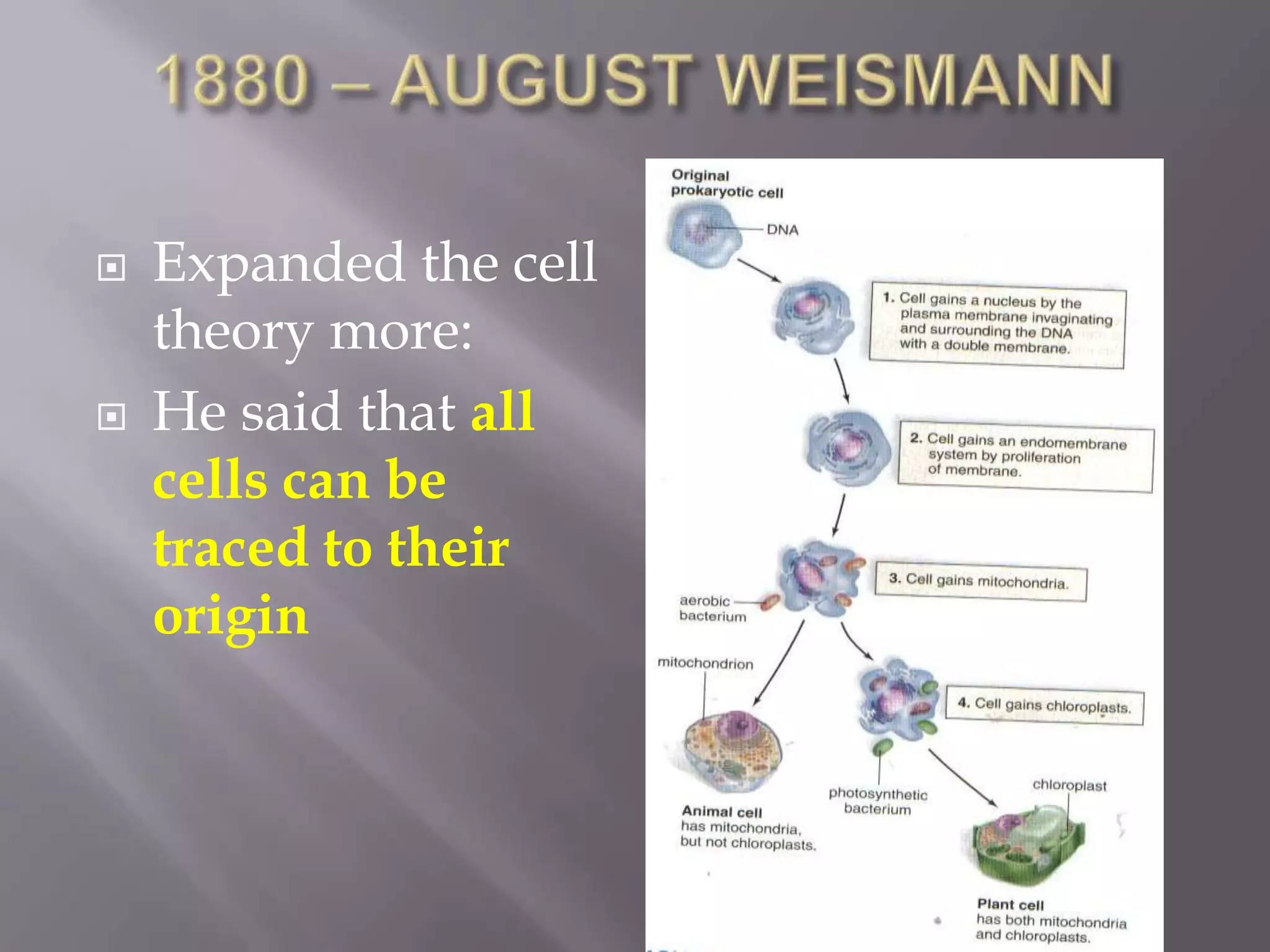
   Expanded the cell
    theory more:
   He said that all
    cells can be
    traced to their
    origin
   All living organisms are made out of cells
   New cells are formed by the division of
    existing cells
   The cell houses genes, which are the
    blueprint for growth, functioning and
    development of cells
   The cell is the functional unit of life
    because all chemical reactions of life take
    place inside the cell
 A cell is the basic unit of
  structure and function in
  organisms.
 Cells differ in size, shape and in
  function.
 A cell consist of smaller
  structures called organelles.
   Prokaryotic or Eukaryotic cells.
   Only organisms of the domains Bacteria
    and Archaea consist of prokaryotic cells –
    cells without a membrane bound nucleus.
    Protists, fungi, animals and plants all
    consist of eukaryotic cells – cell with a
    membrane bound nucleus.
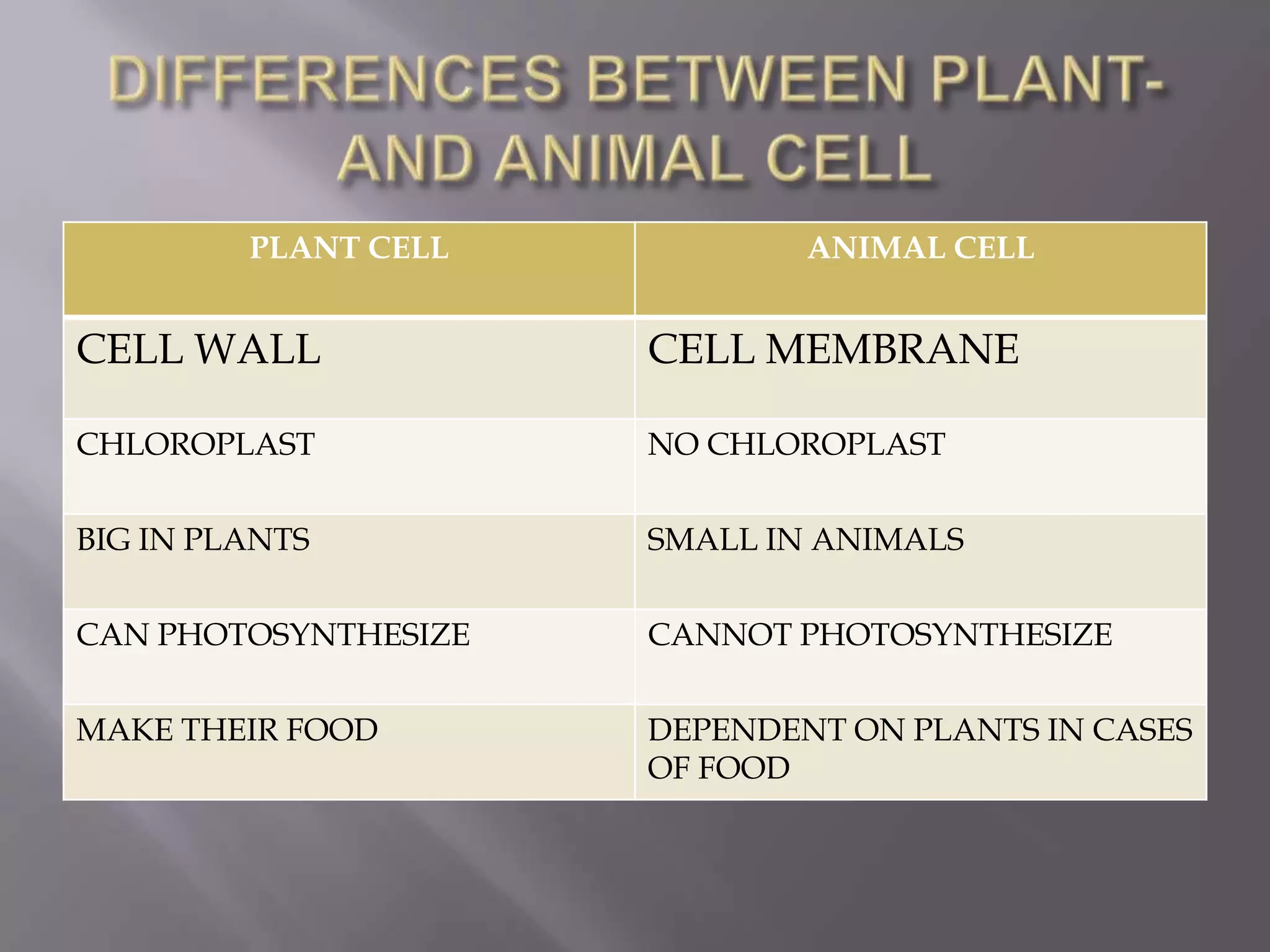
PLANT CELL           ANIMAL CELL


CELL WALL             CELL MEMBRANE

CHLOROPLAST           NO CHLOROPLAST


BIG IN PLANTS         SMALL IN ANIMALS

CAN PHOTOSYNTHESIZE   CANNOT PHOTOSYNTHESIZE


MAKE THEIR FOOD       DEPENDENT ON PLANTS IN CASES
                      OF FOOD
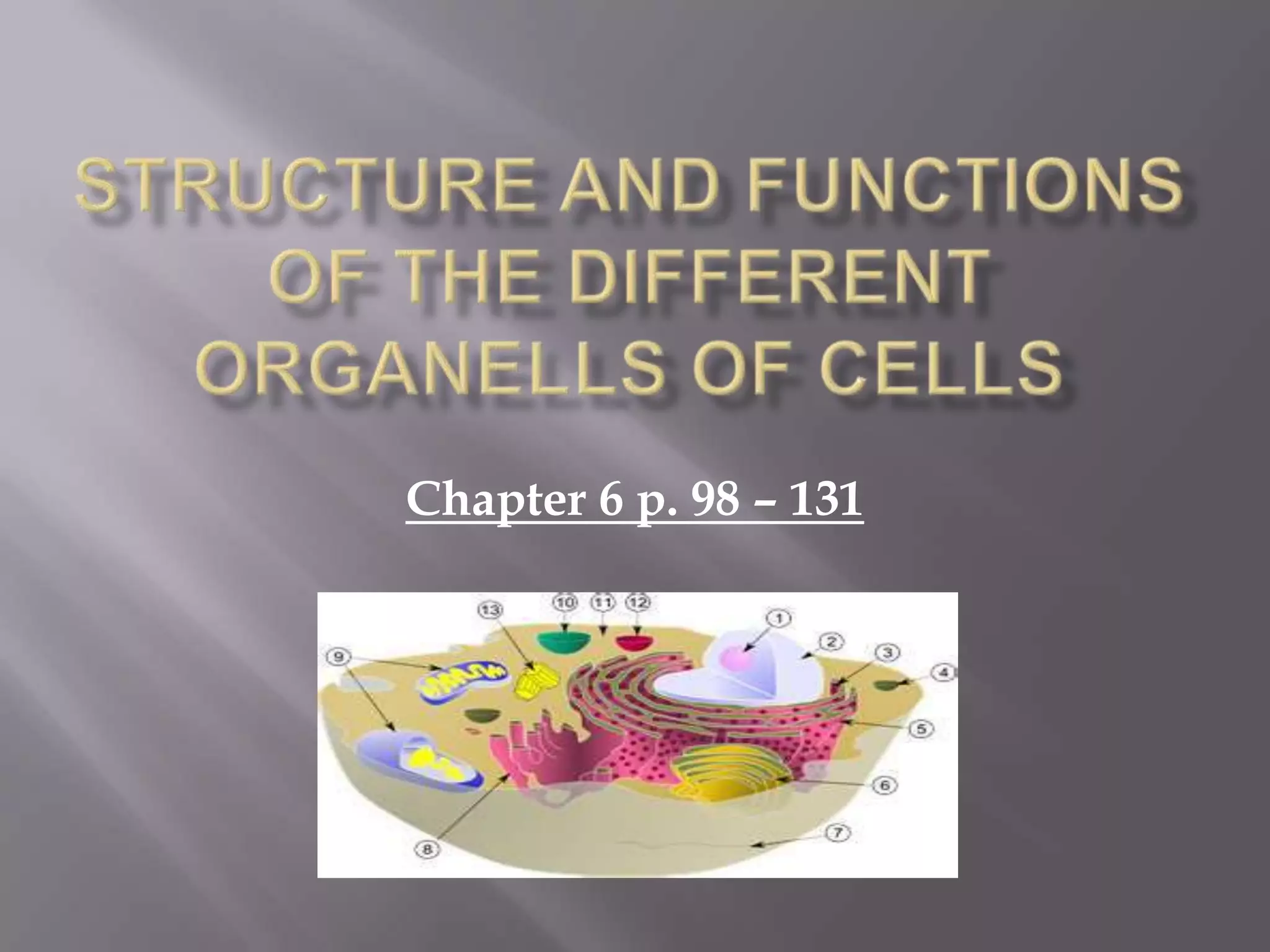
Chapter 6 p. 98 – 131
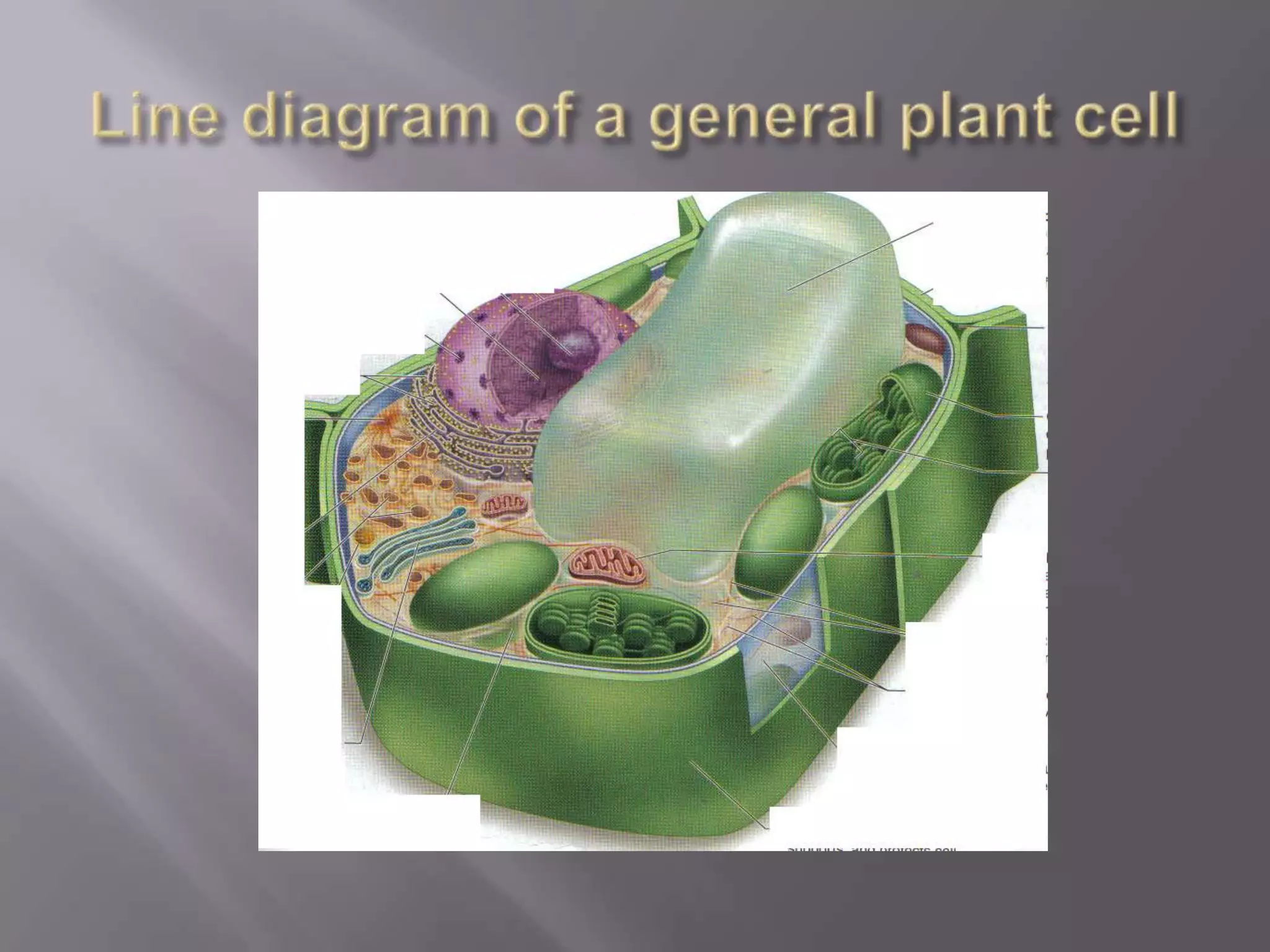
   Porous
   Varies in thickness
   Consist of pectin (elasticity), cellulose fibrils
    held together with non-cellulose substances
    (hardens the cell when mature) and lignin
    (adds strength to cell especially in woody
    plants)
   Cell wall is permeable and protects the inside
    of the cell.
   Middle lamella (layer of adhesive substances) –
    holds the cells together
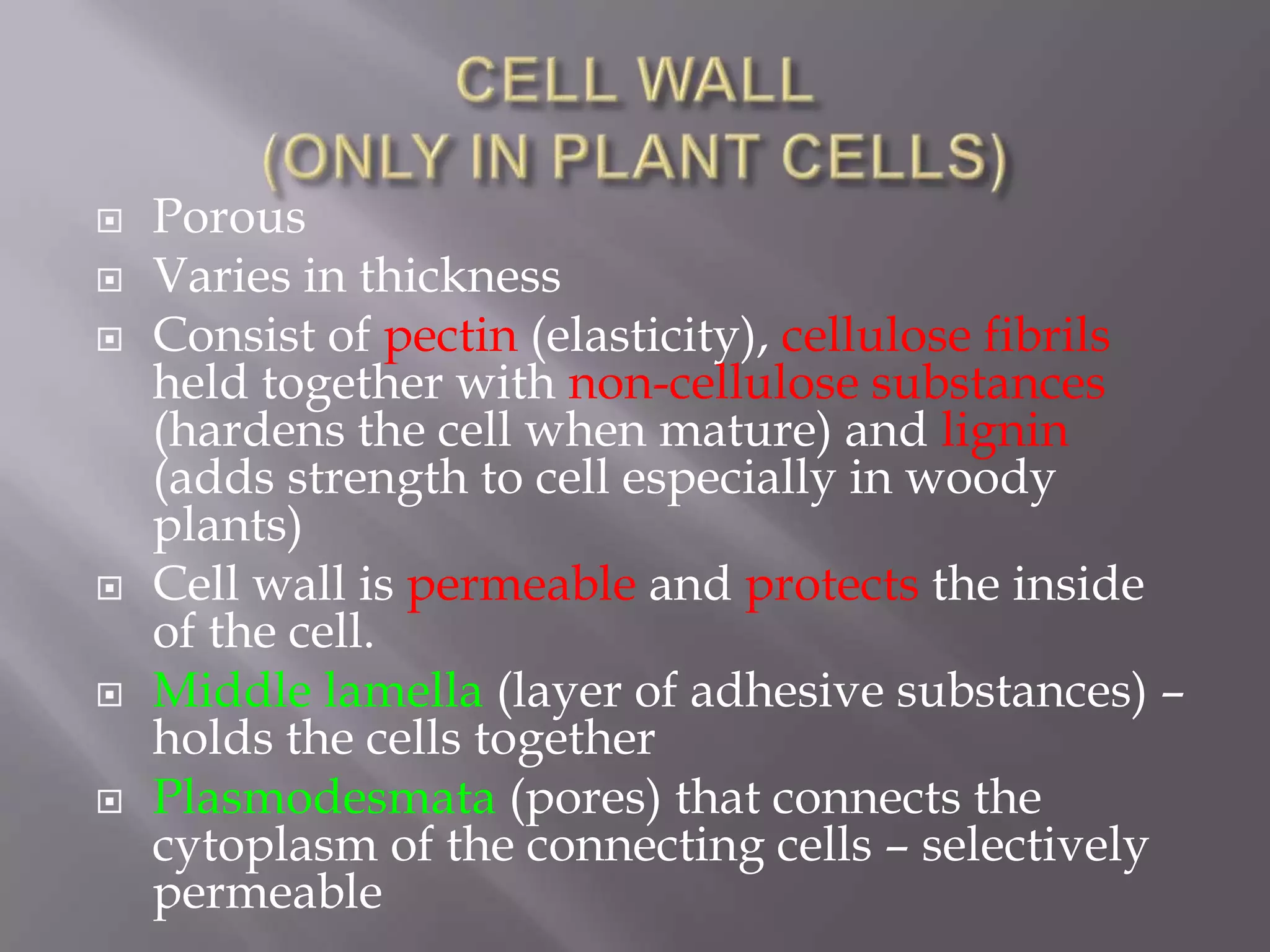
   Plasmodesmata (pores) that connects the
    cytoplasm of the connecting cells – selectively
    permeable
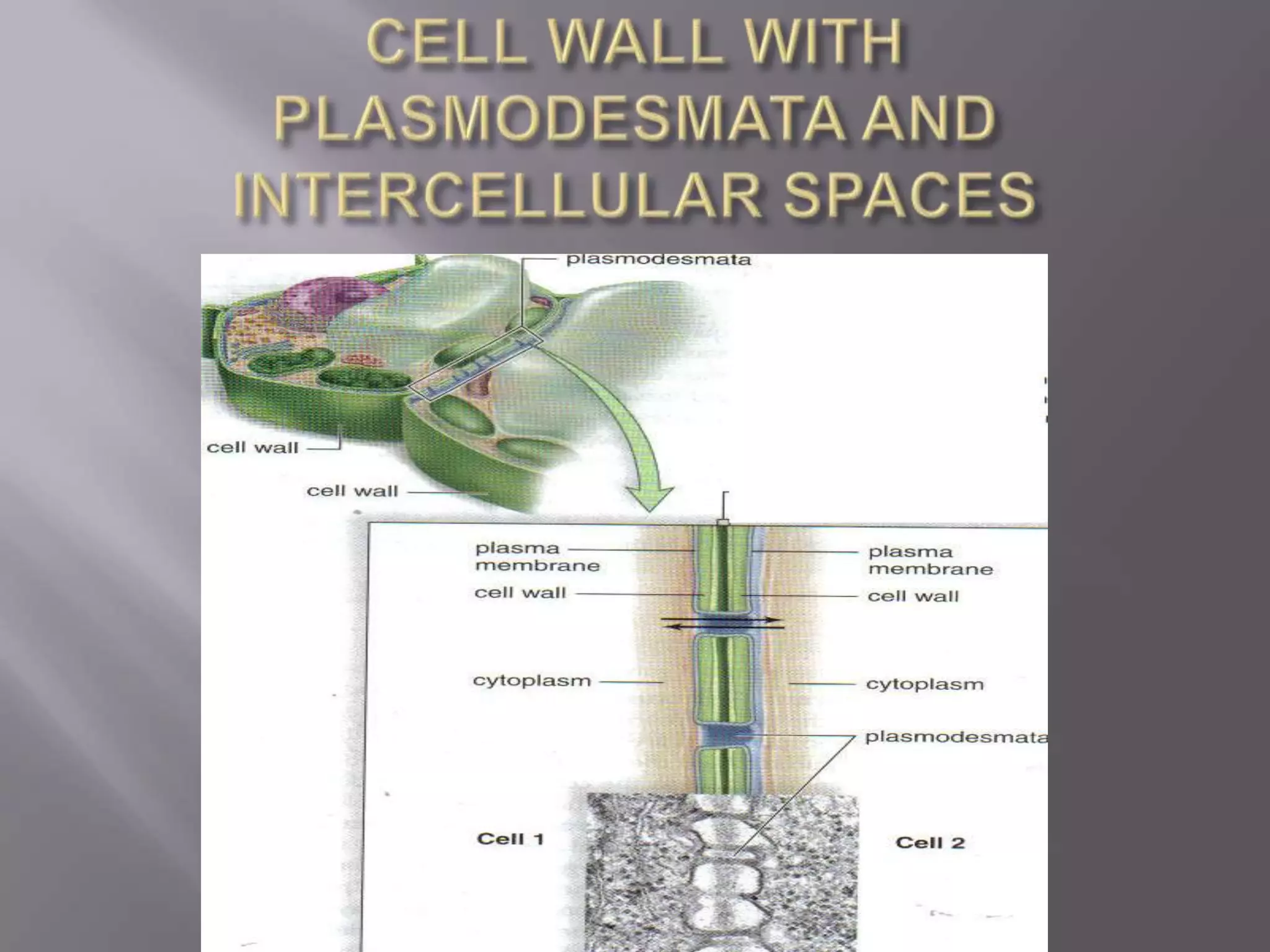
   Consist of 2
    phospholipid layers
    and proteins in
    between.
   The phospholipid
    layers are part
    hydrophillic and
    part hydrophobic
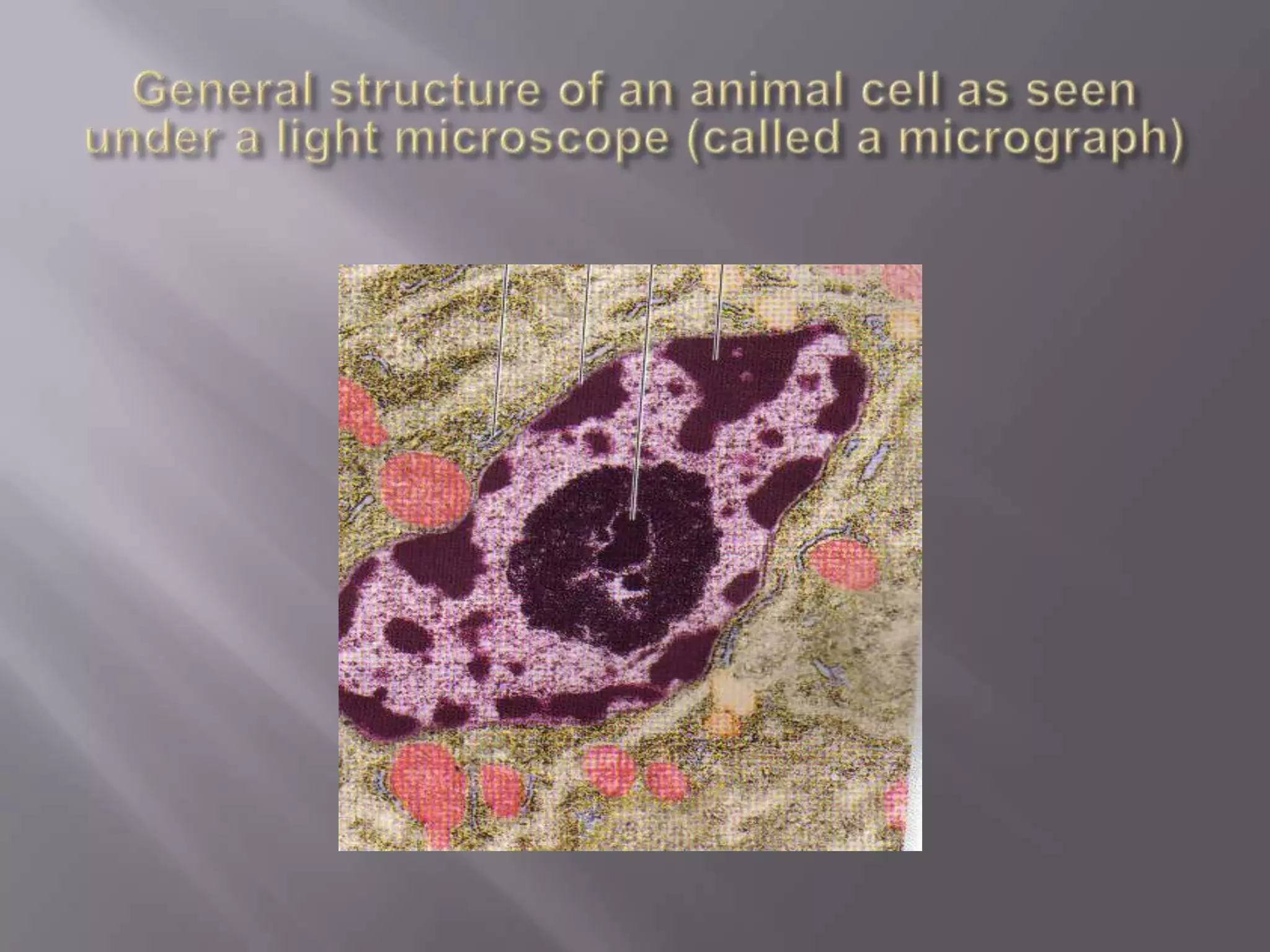
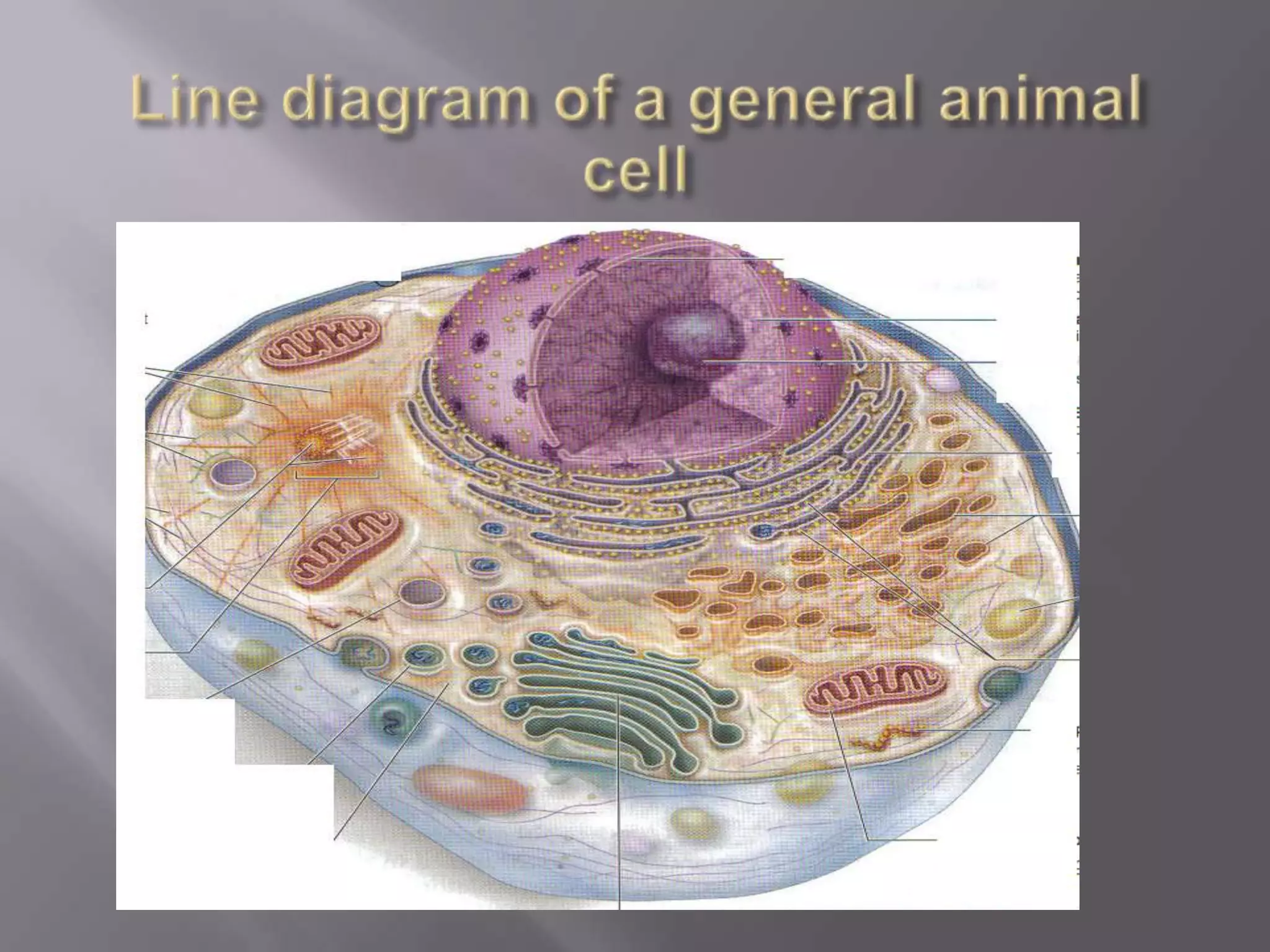
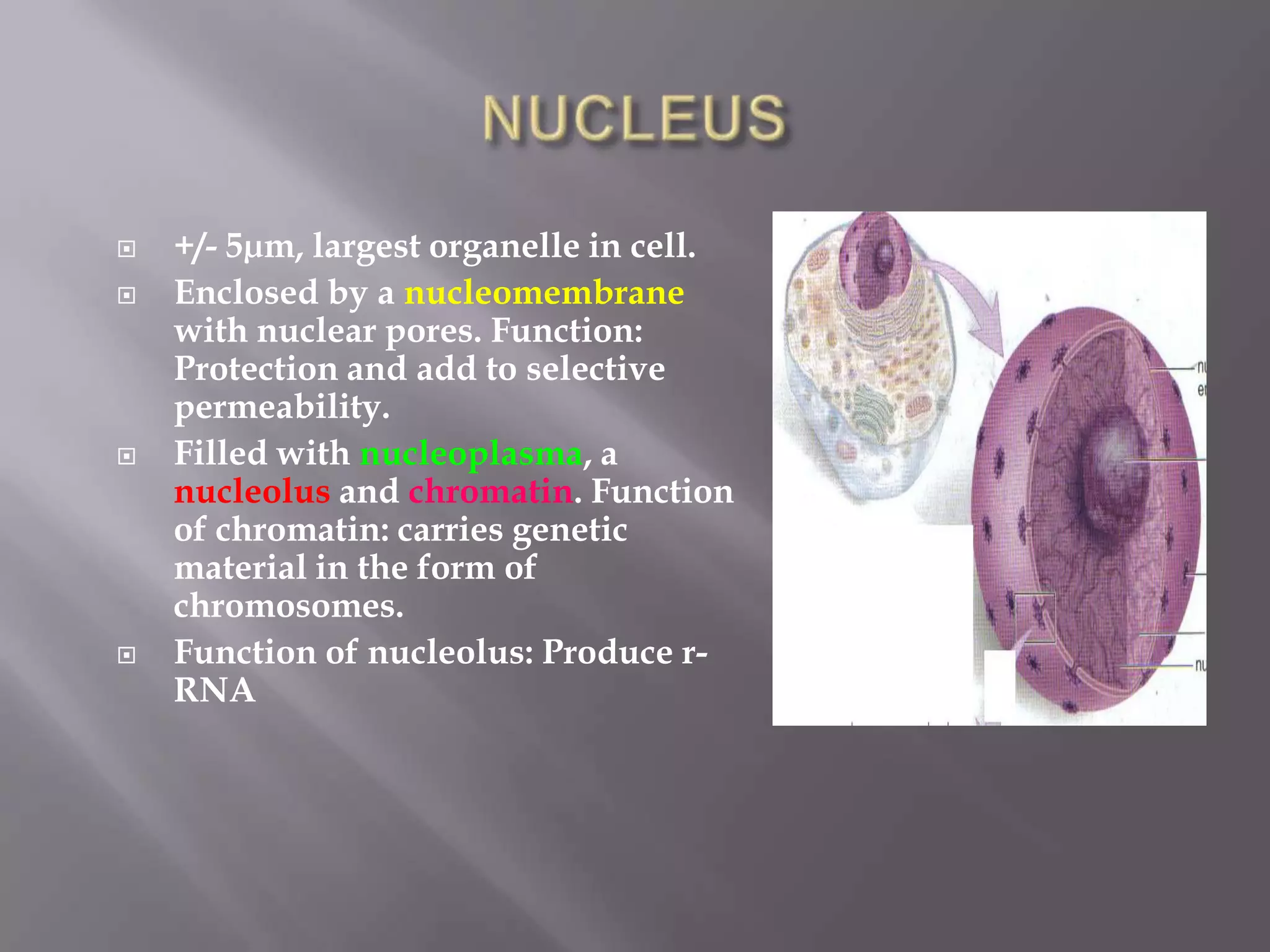
   +/- 5µm, largest organelle in cell.
   Enclosed by a nucleomembrane
    with nuclear pores. Function:
    Protection and add to selective
    permeability.
   Filled with nucleoplasma, a
    nucleolus and chromatin. Function
    of chromatin: carries genetic
    material in the form of
    chromosomes.
   Function of nucleolus: Produce r-
    RNA
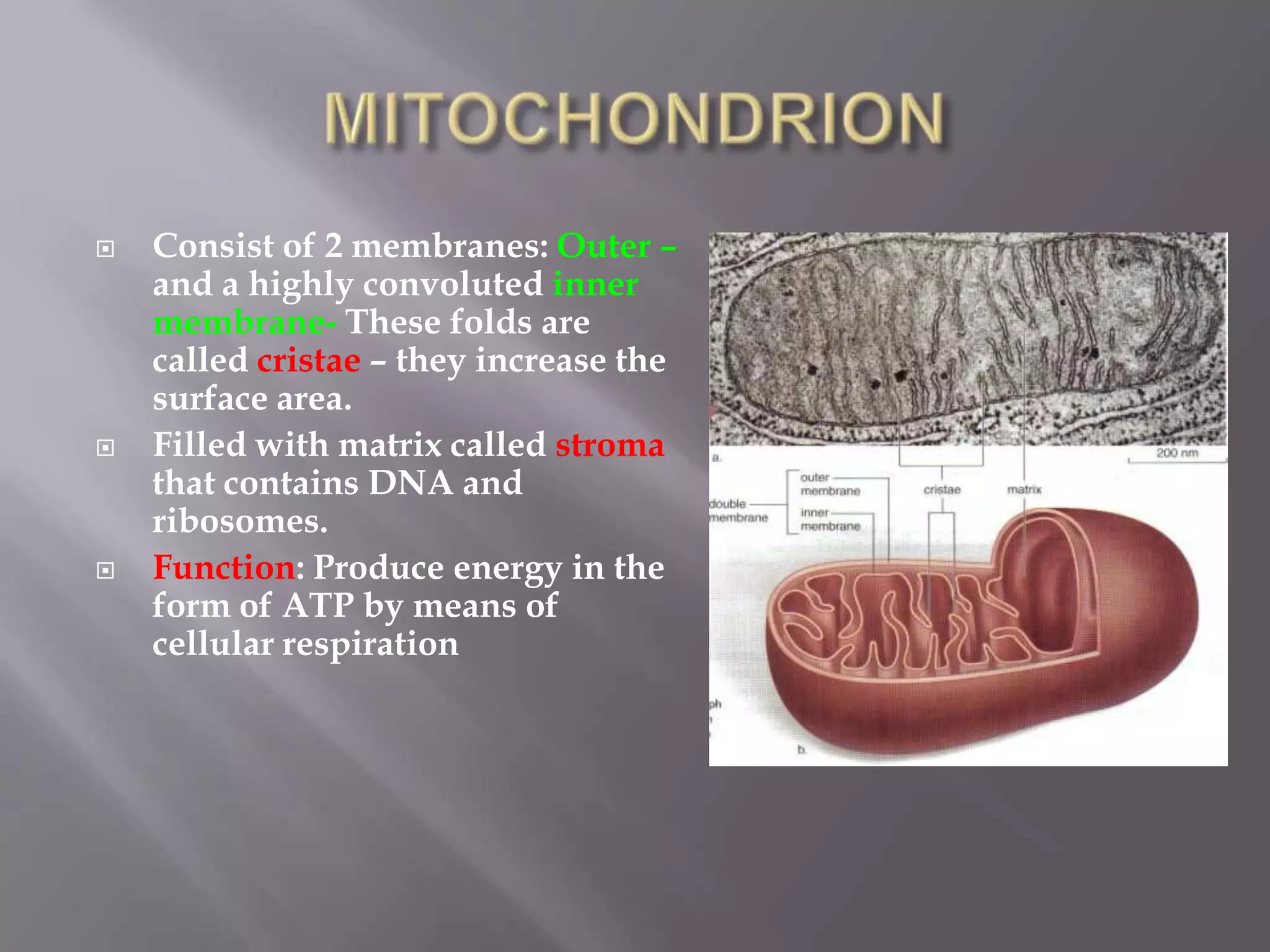
   Consist of 2 membranes: Outer –
    and a highly convoluted inner
    membrane- These folds are
    called cristae – they increase the
    surface area.
   Filled with matrix called stroma
    that contains DNA and
    ribosomes.
   Function: Produce energy in the
    form of ATP by means of
    cellular respiration
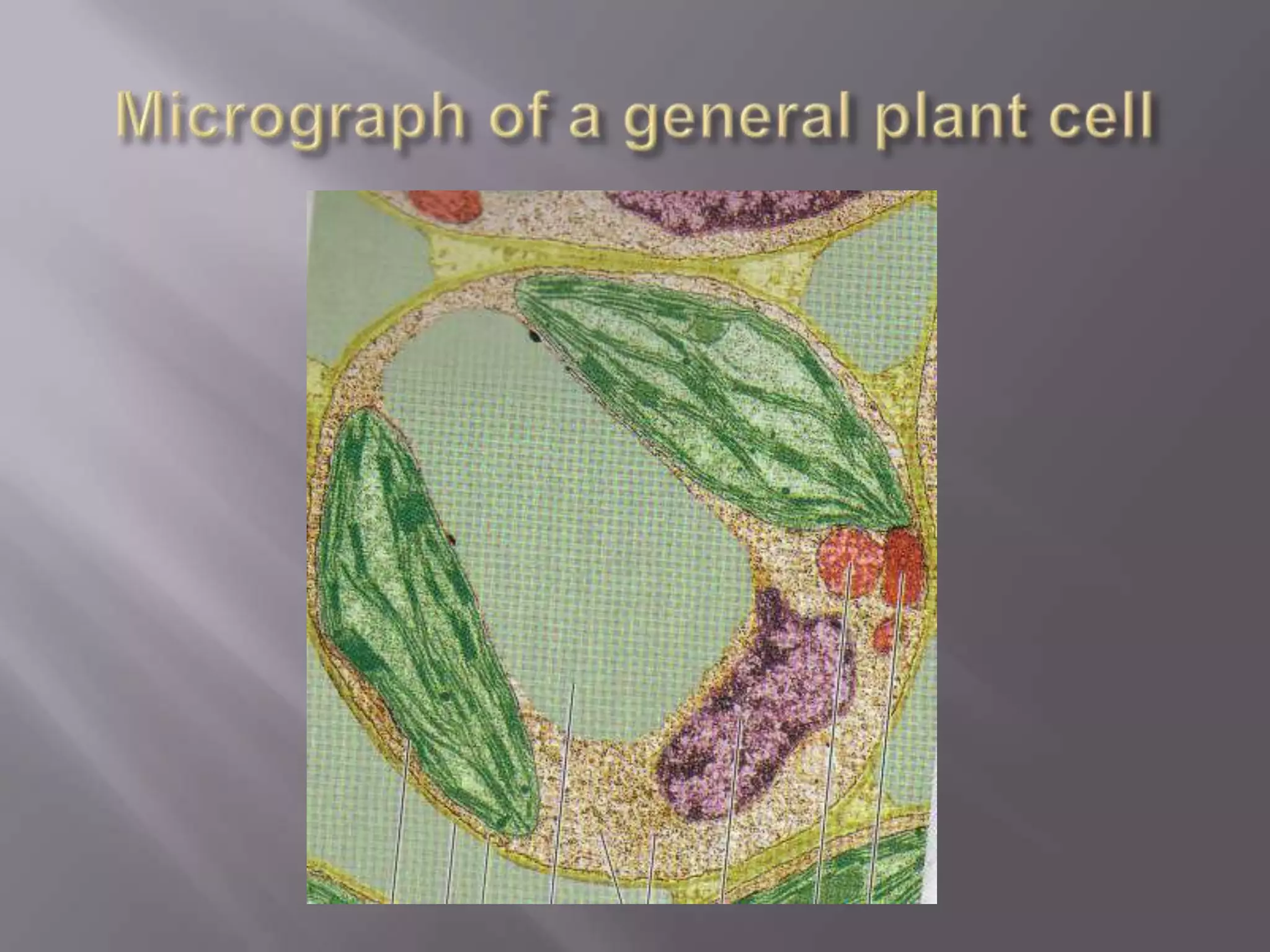
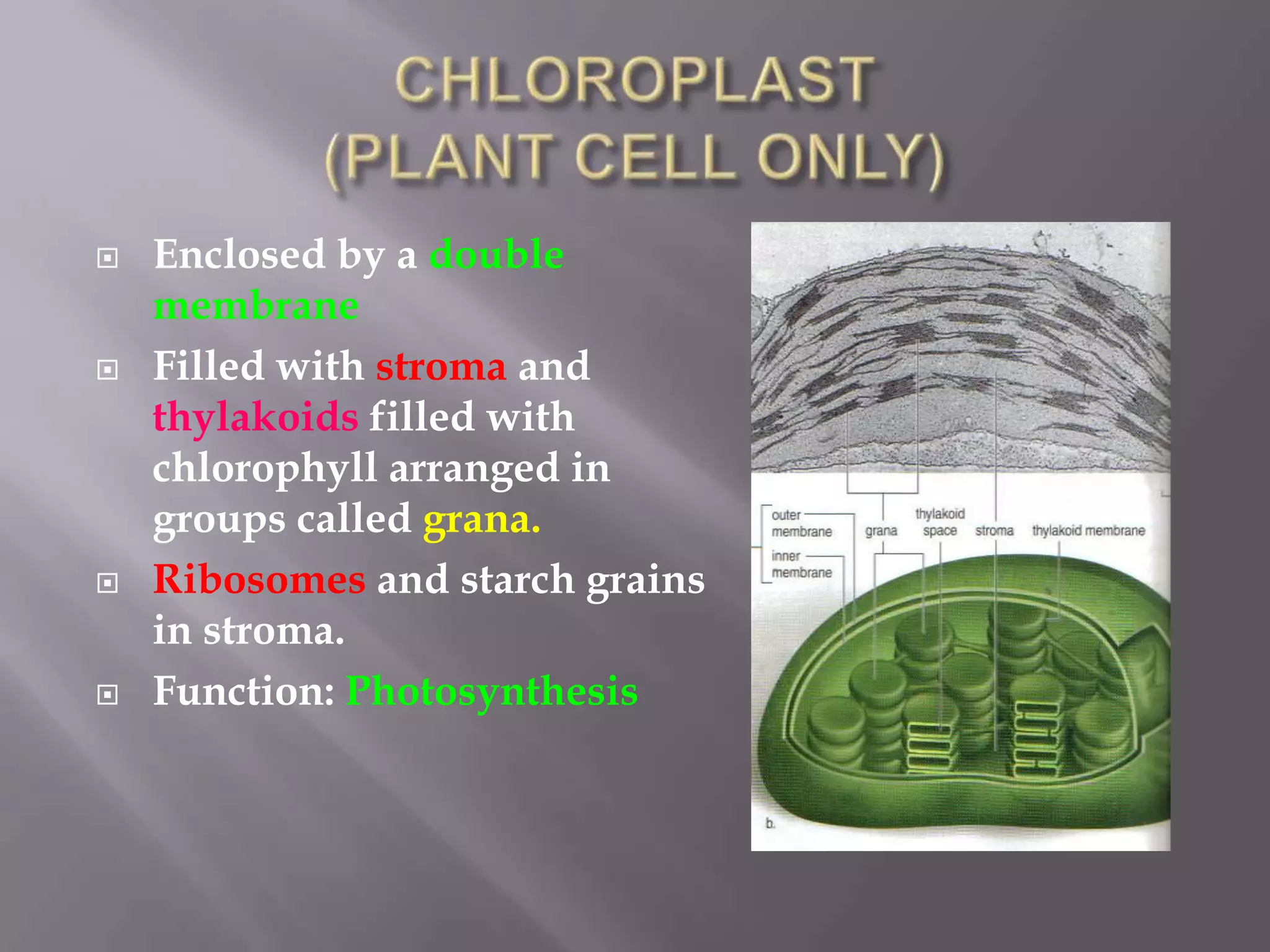
   Enclosed by a double
    membrane
   Filled with stroma and
    thylakoids filled with
    chlorophyll arranged in
    groups called grana.
   Ribosomes and starch grains
    in stroma.
   Function: Photosynthesis
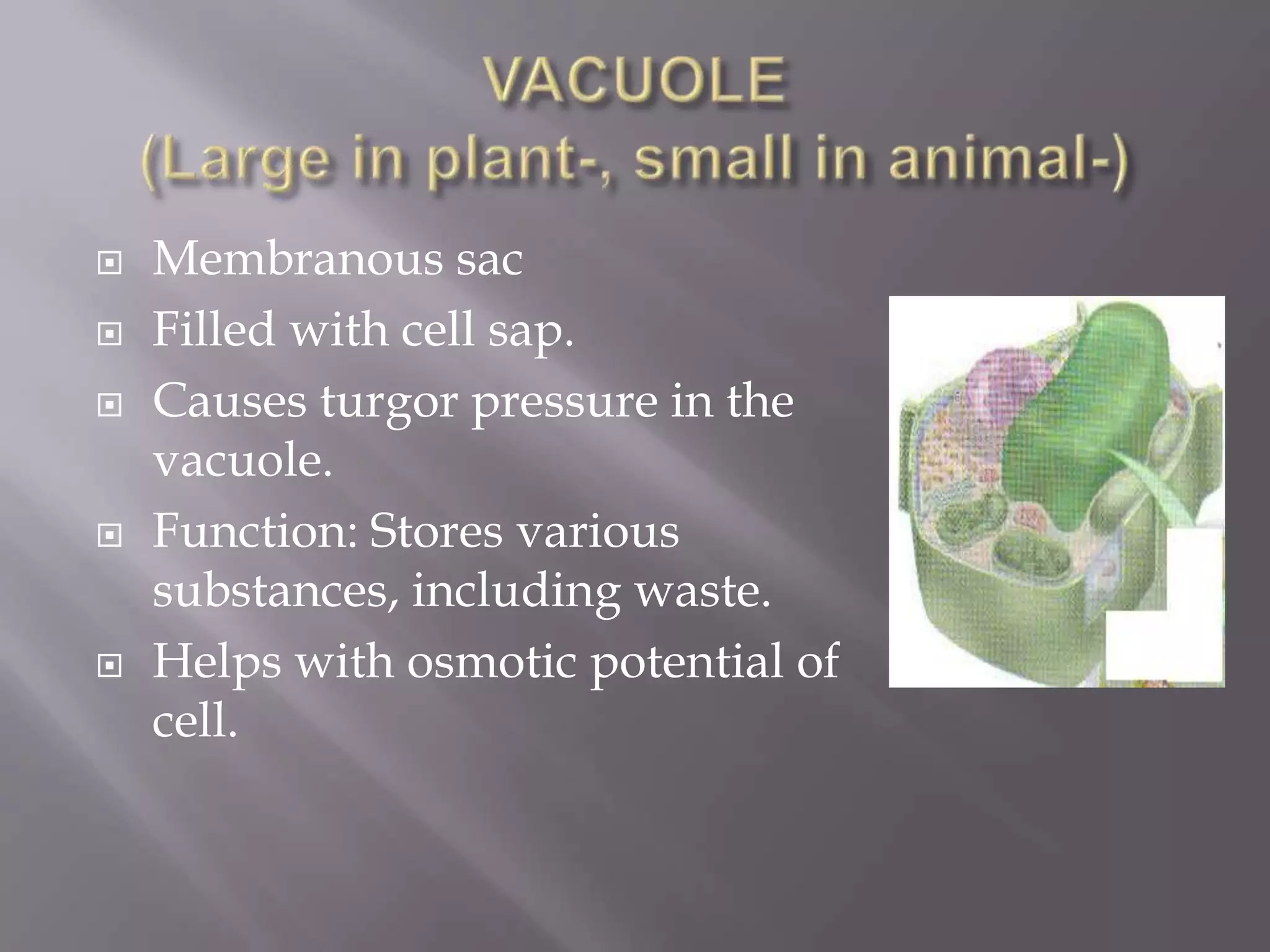
   Membranous sac
   Filled with cell sap.
   Causes turgor pressure in the
    vacuole.
   Function: Stores various
    substances, including waste.
   Helps with osmotic potential of
    cell.
 Endoplasmic Reticulum – Transport
  system in cell
 Ribosomes – Protein synthesis
 Golgi-apparatus – Make lysosomes and
  acts as transport system.
 Lysosomes – Intracellular digestion.
 Plastids e.g.– Leucoplasts – Stores
                starch
             - Chromoplast – gives colour
               to flowers and fruit.
* Centrioli – Mitosis in animal cells
   The cell membrane has the ability to
    regulate transport molecules across
    its structure.
   This function is essential to the cell’s
    existence.
   The fluid mosaic model helps to
    explain how membranes regulate the
    cell’s molecular traffic.
   Hydrocarbons, carbon dioxide and
    oxygen – non-polar
   So they can dissolve in the lipid bilayer of
    the membrane.
   They can cross the membrane without
    the aid of membrane proteins.
   Polar molecules like, water and glucose
    move slowly across the membrane and
    need the aid of proteins to get across
    the membrane.
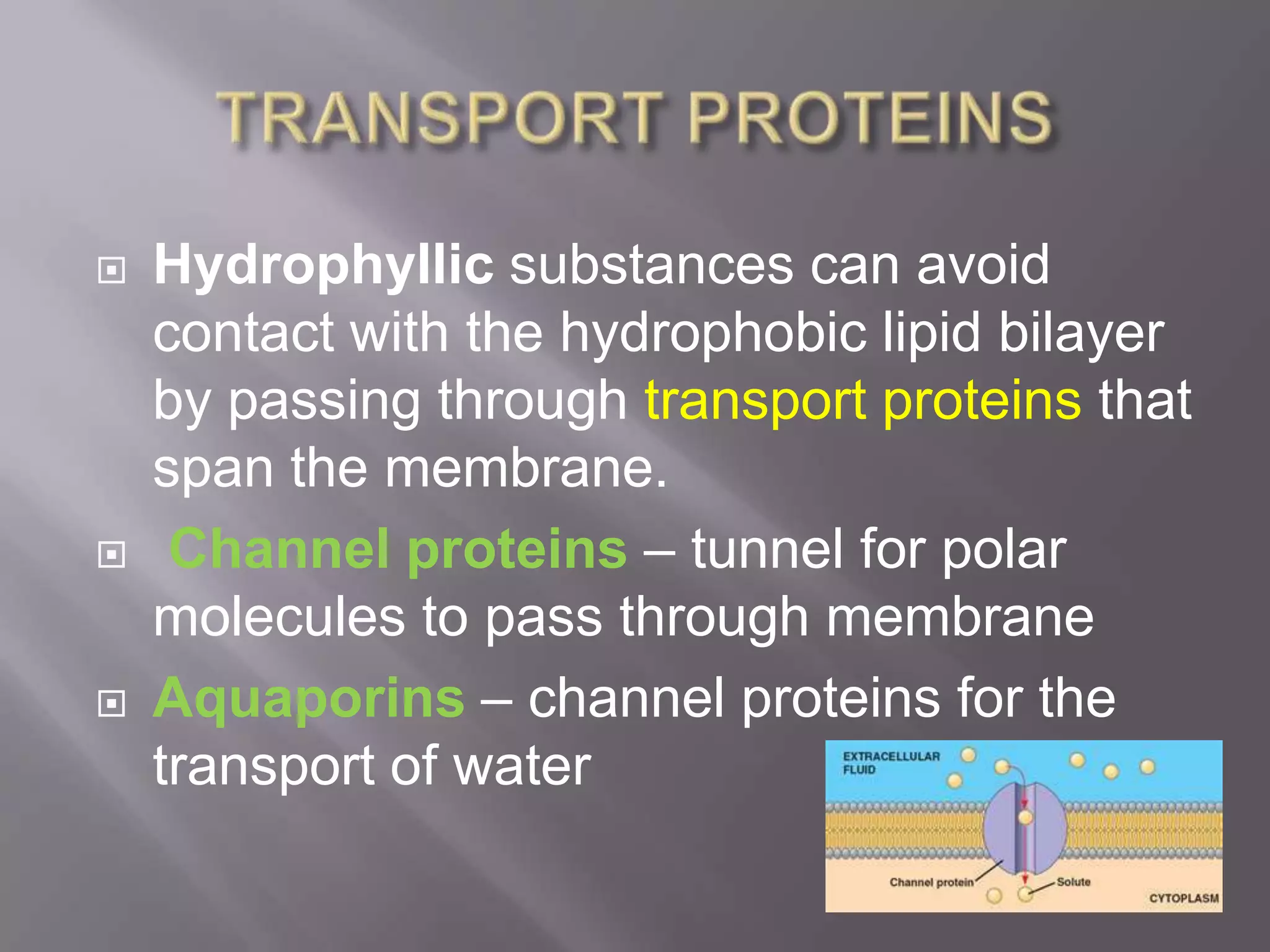
   Hydrophyllic substances can avoid
    contact with the hydrophobic lipid bilayer
    by passing through transport proteins that
    span the membrane.
    Channel proteins – tunnel for polar
    molecules to pass through membrane
   Aquaporins – channel proteins for the
    transport of water
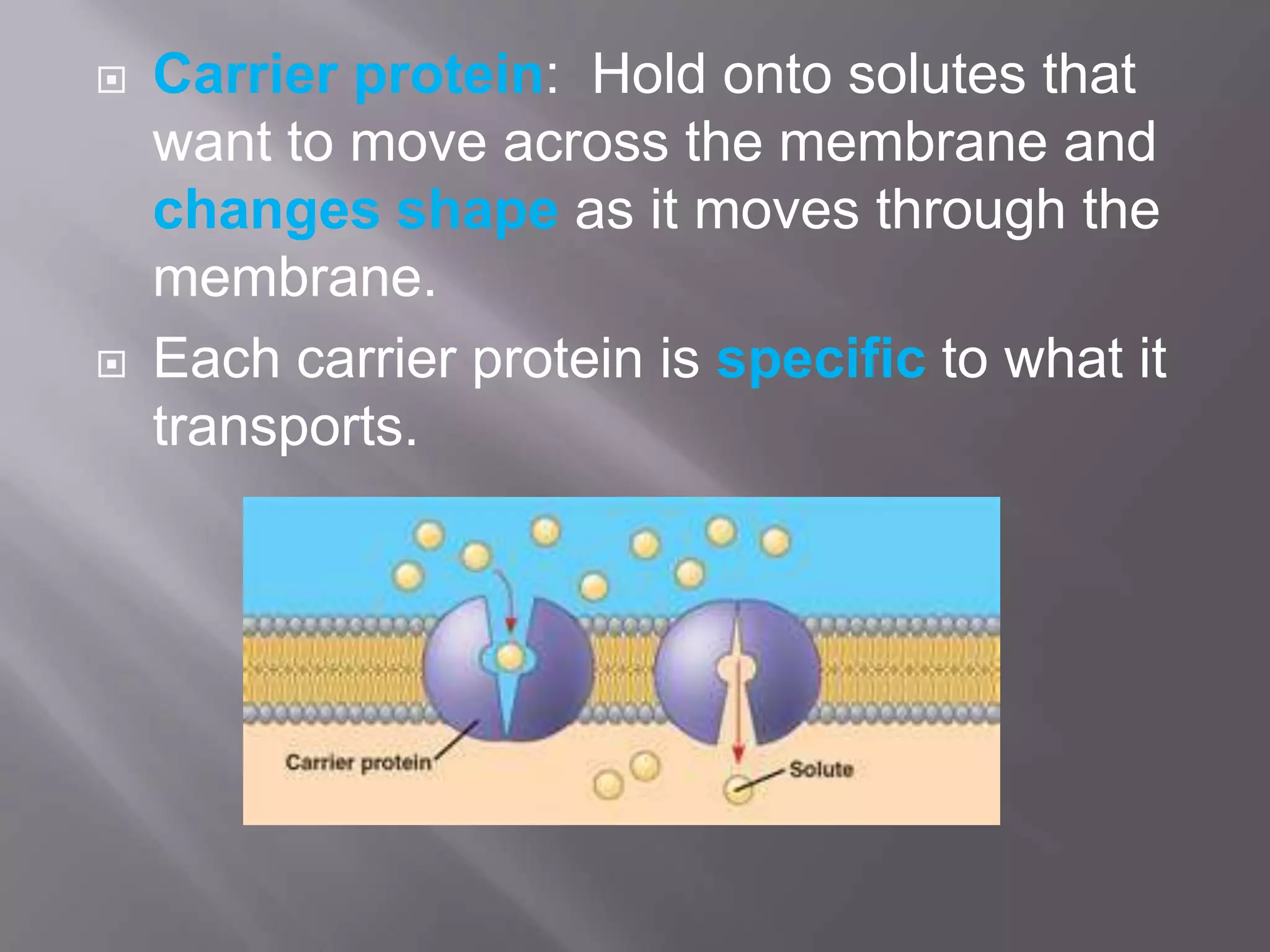
   Carrier protein: Hold onto solutes that
    want to move across the membrane and
    changes shape as it moves through the
    membrane.
   Each carrier protein is specific to what it
    transports.
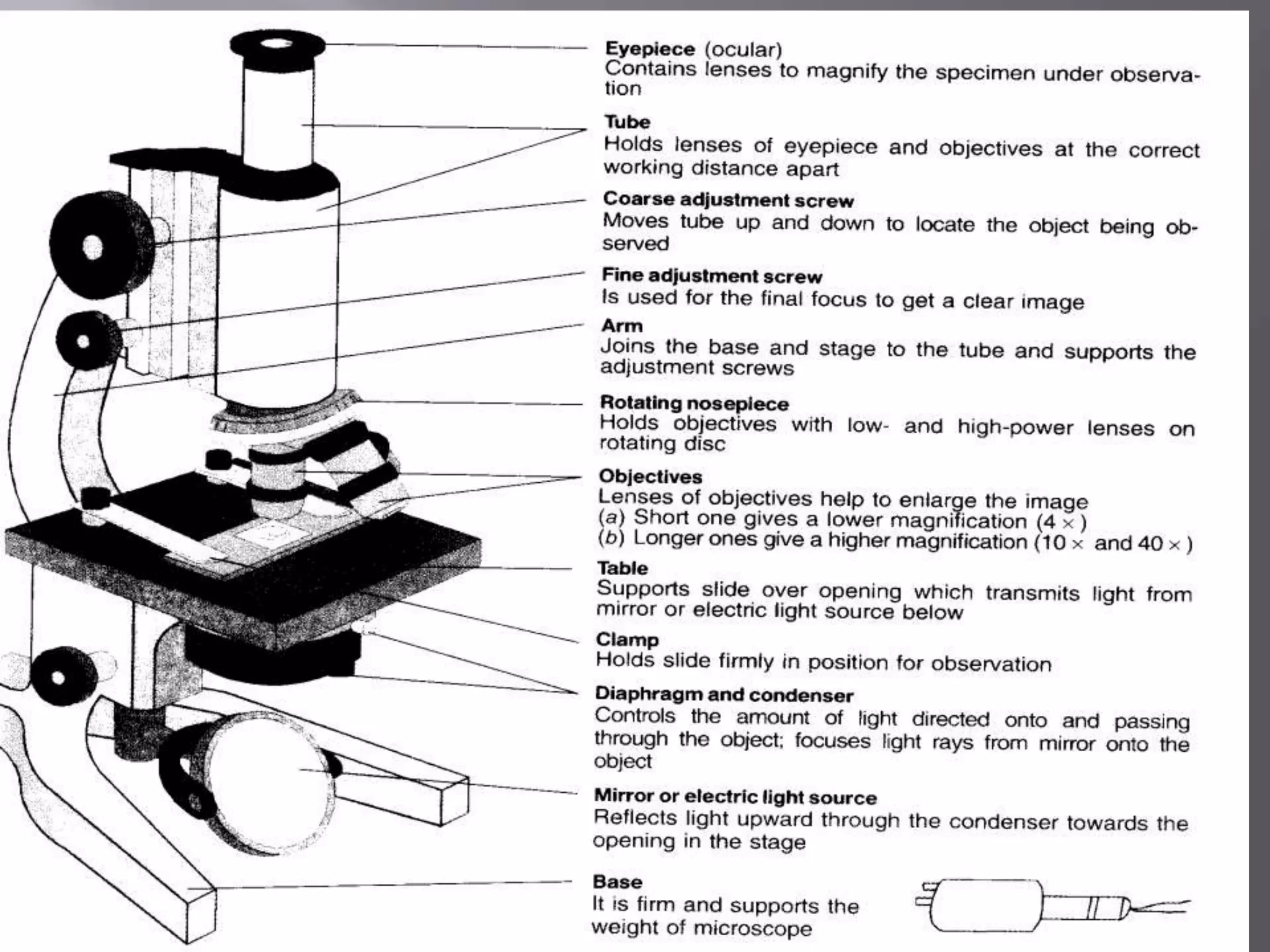
   The microscope is an instrument
    designed to observe objects too small to
    be seen with the naked eye.
    The human eye cannot distinguish
    objects much smaller than 0.1mm.
   The microscope act as an extension of
    the eye, allowing one to see smaller
    objects.
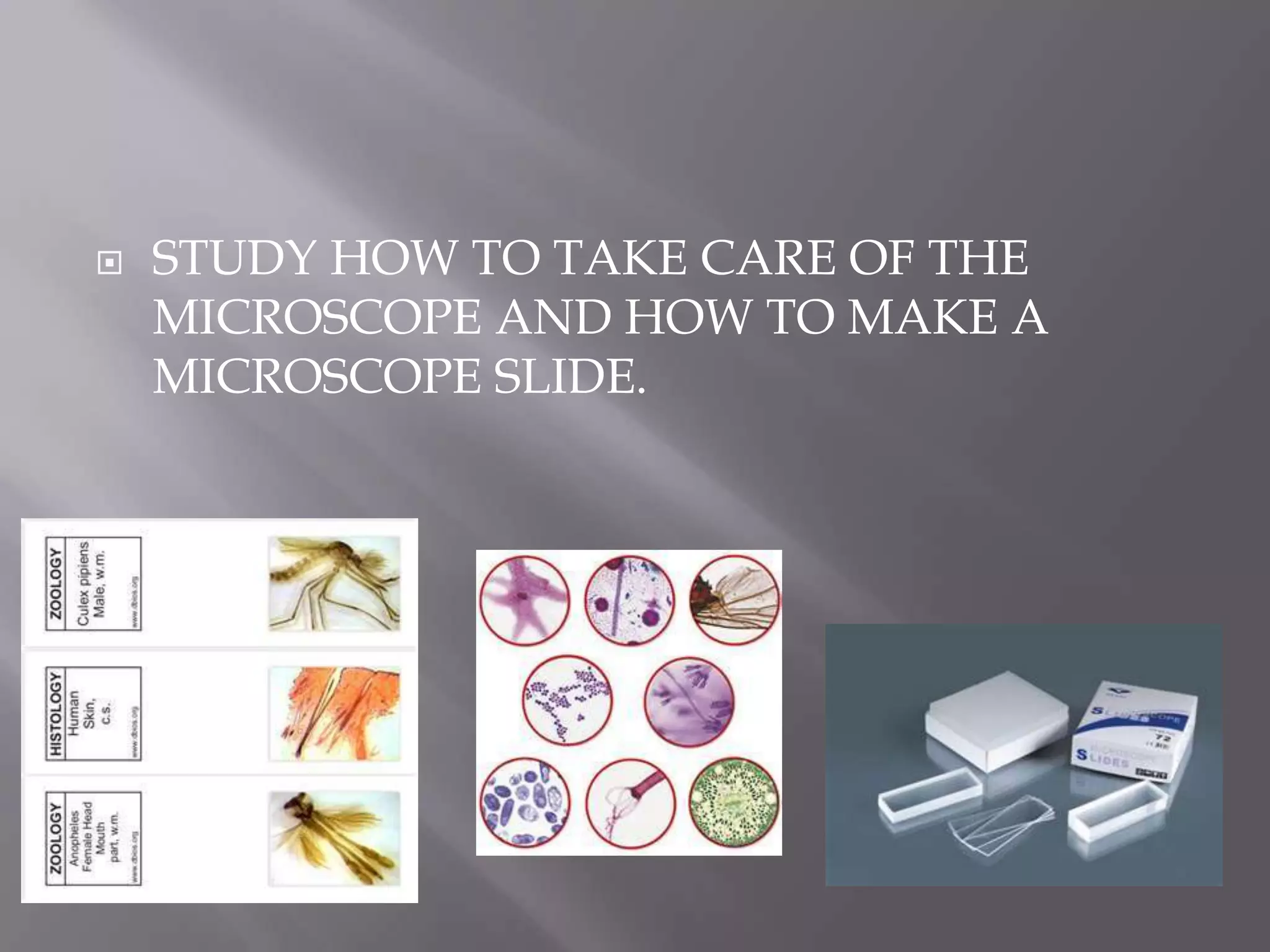
   STUDY HOW TO TAKE CARE OF THE
    MICROSCOPE AND HOW TO MAKE A
    MICROSCOPE SLIDE.

Unit 2 cells

  • 1.
    Refer to Campbelland Reece, 2010 – Chapter 6 and 7 p. 96-123 and 125- 131, Edulink and learning guide notes
  • 2.
    The study of cells and micro organisms has changed over time with the change in technology.  These were studied in the beginning with hand lenses, single lens microscope, light microscope  Today we have electron microscopes.  Two types of electron microscopes are used today: SEM – Scanning electron microscope and TEM – Transmission electron microscope.
  • 3.
    Developed a microscope with one lens.  Discovered - bacteria - blood cells - spermatozoa - protozoa
  • 4.
    Uses the concept cell for the first time.  He used it when he looked at the microscopic structure of cork cells.
  • 5.
    Describes the nucleus of a cell
  • 6.
    Developed the cell theory: - Plants and animals are made of groups of cells. - The cell is the basic unit of living organisms
  • 7.
    Expanded the cell theory:  He said that new cells formed by the division of existing cells
  • 8.
    Expanded the cell theory more:  He said that all cells can be traced to their origin
  • 9.
    All living organisms are made out of cells  New cells are formed by the division of existing cells  The cell houses genes, which are the blueprint for growth, functioning and development of cells  The cell is the functional unit of life because all chemical reactions of life take place inside the cell
  • 10.
     A cellis the basic unit of structure and function in organisms.  Cells differ in size, shape and in function.  A cell consist of smaller structures called organelles.
  • 11.
    Prokaryotic or Eukaryotic cells.  Only organisms of the domains Bacteria and Archaea consist of prokaryotic cells – cells without a membrane bound nucleus.  Protists, fungi, animals and plants all consist of eukaryotic cells – cell with a membrane bound nucleus.
  • 16.
    PLANT CELL ANIMAL CELL CELL WALL CELL MEMBRANE CHLOROPLAST NO CHLOROPLAST BIG IN PLANTS SMALL IN ANIMALS CAN PHOTOSYNTHESIZE CANNOT PHOTOSYNTHESIZE MAKE THEIR FOOD DEPENDENT ON PLANTS IN CASES OF FOOD
  • 17.
    Chapter 6 p.98 – 131
  • 18.
    Porous  Varies in thickness  Consist of pectin (elasticity), cellulose fibrils held together with non-cellulose substances (hardens the cell when mature) and lignin (adds strength to cell especially in woody plants)  Cell wall is permeable and protects the inside of the cell.  Middle lamella (layer of adhesive substances) – holds the cells together  Plasmodesmata (pores) that connects the cytoplasm of the connecting cells – selectively permeable
  • 20.
    Consist of 2 phospholipid layers and proteins in between.  The phospholipid layers are part hydrophillic and part hydrophobic
  • 21.
    +/- 5µm, largest organelle in cell.  Enclosed by a nucleomembrane with nuclear pores. Function: Protection and add to selective permeability.  Filled with nucleoplasma, a nucleolus and chromatin. Function of chromatin: carries genetic material in the form of chromosomes.  Function of nucleolus: Produce r- RNA
  • 22.
    Consist of 2 membranes: Outer – and a highly convoluted inner membrane- These folds are called cristae – they increase the surface area.  Filled with matrix called stroma that contains DNA and ribosomes.  Function: Produce energy in the form of ATP by means of cellular respiration
  • 23.
    Enclosed by a double membrane  Filled with stroma and thylakoids filled with chlorophyll arranged in groups called grana.  Ribosomes and starch grains in stroma.  Function: Photosynthesis
  • 24.
    Membranous sac  Filled with cell sap.  Causes turgor pressure in the vacuole.  Function: Stores various substances, including waste.  Helps with osmotic potential of cell.
  • 25.
     Endoplasmic Reticulum– Transport system in cell  Ribosomes – Protein synthesis  Golgi-apparatus – Make lysosomes and acts as transport system.  Lysosomes – Intracellular digestion.  Plastids e.g.– Leucoplasts – Stores starch - Chromoplast – gives colour to flowers and fruit. * Centrioli – Mitosis in animal cells
  • 26.
    The cell membrane has the ability to regulate transport molecules across its structure.  This function is essential to the cell’s existence.  The fluid mosaic model helps to explain how membranes regulate the cell’s molecular traffic.
  • 27.
    Hydrocarbons, carbon dioxide and oxygen – non-polar  So they can dissolve in the lipid bilayer of the membrane.  They can cross the membrane without the aid of membrane proteins.  Polar molecules like, water and glucose move slowly across the membrane and need the aid of proteins to get across the membrane.
  • 28.
    Hydrophyllic substances can avoid contact with the hydrophobic lipid bilayer by passing through transport proteins that span the membrane.  Channel proteins – tunnel for polar molecules to pass through membrane  Aquaporins – channel proteins for the transport of water
  • 29.
    Carrier protein: Hold onto solutes that want to move across the membrane and changes shape as it moves through the membrane.  Each carrier protein is specific to what it transports.
  • 30.
    The microscope is an instrument designed to observe objects too small to be seen with the naked eye.  The human eye cannot distinguish objects much smaller than 0.1mm.  The microscope act as an extension of the eye, allowing one to see smaller objects.
  • 32.
    STUDY HOW TO TAKE CARE OF THE MICROSCOPE AND HOW TO MAKE A MICROSCOPE SLIDE.