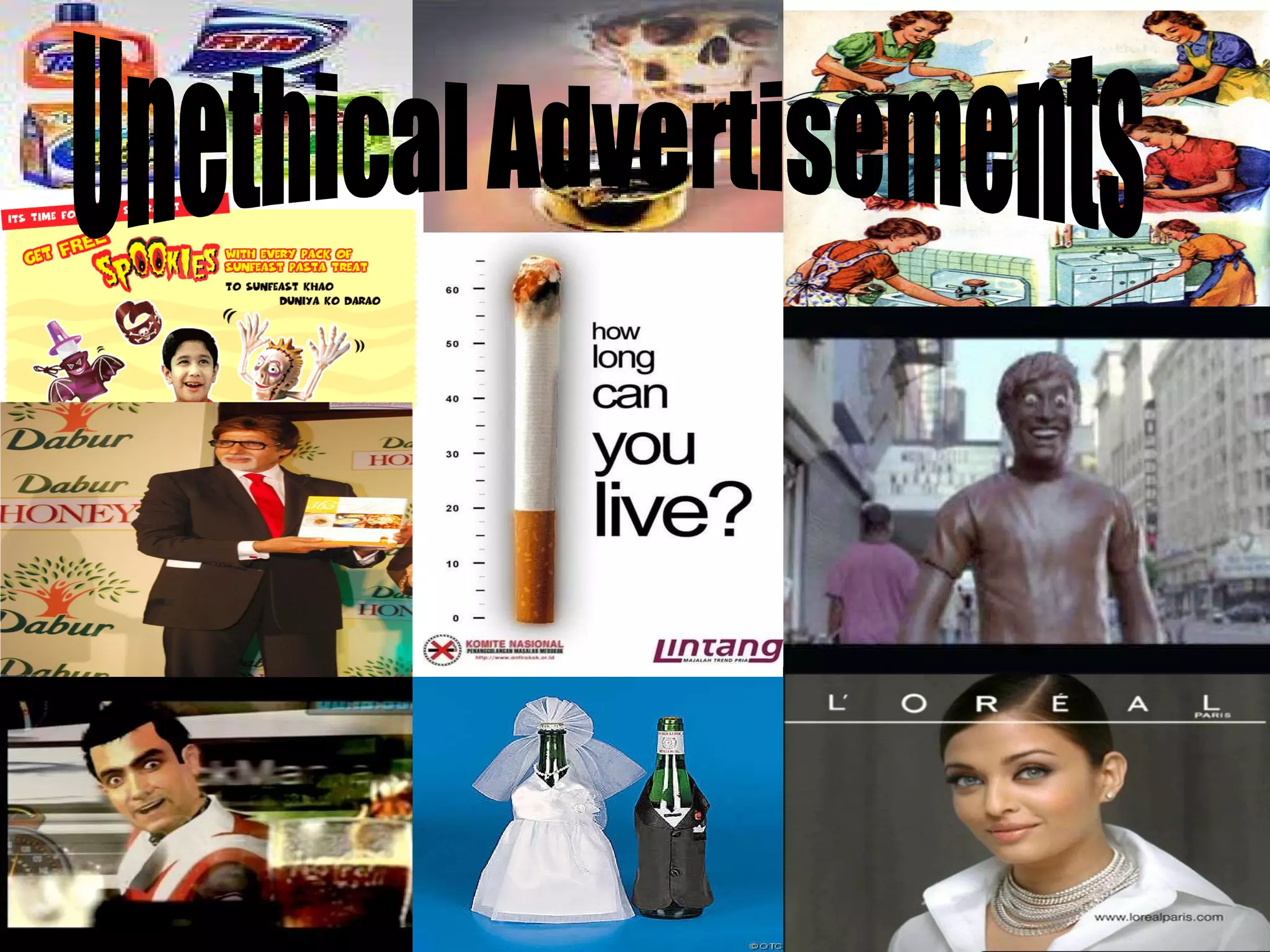
Unethical Advertisements
EFFORTS BY: MONIKA CHHILLAR SHIKHA KAUSHIK RIYA GIRIDHAR SONU SACHIN SINGAL SACHIN WAILA
Ethics Ethics is a branch of philosophy which seeks to address questions about morality; that is, about concepts  such as good and bad, right and wrong, justice, and virtue. Advertising   Advertising is the promotion of a company’s products and services carried out primarily to drive sales of the products and services but also to build a brand identity and communicate changes or new product /services to the customers. Advertising has become an essential element of the corporate world and hence the companies allot a considerable amount of revenues as their advertising budget.
Reasons for Advertising •  Increasing the sales of the product/service  •   Creating and maintaining a brand identity or brand image.  •   Communicating a change in the existing product line.  •   Introduction of a new product or service.  •   Increasing the buzz-value of the brand or the company
Unethical advertising Advertisement is considered unethical in the following situations; o When it has degraded or underestimated the substitute or rival's product. o When it gives false or misleading information on the value of the product. o When it fails to give useful information on the possible reaction or side effects of the product. And o When it is immoral .
Basic principals Decency  Honesty  Social Responsibility  Truthful presentation  Comparisons Imitation Safety and health  Avoidance of Harm Environmental behaviour
Ways of unethical advertisement Surrogate advertisement Puffery Exaggeration Unverified claims Women stereotyping Women used as sex symbols for promoting products Comparative advertisements Use of children in advertising
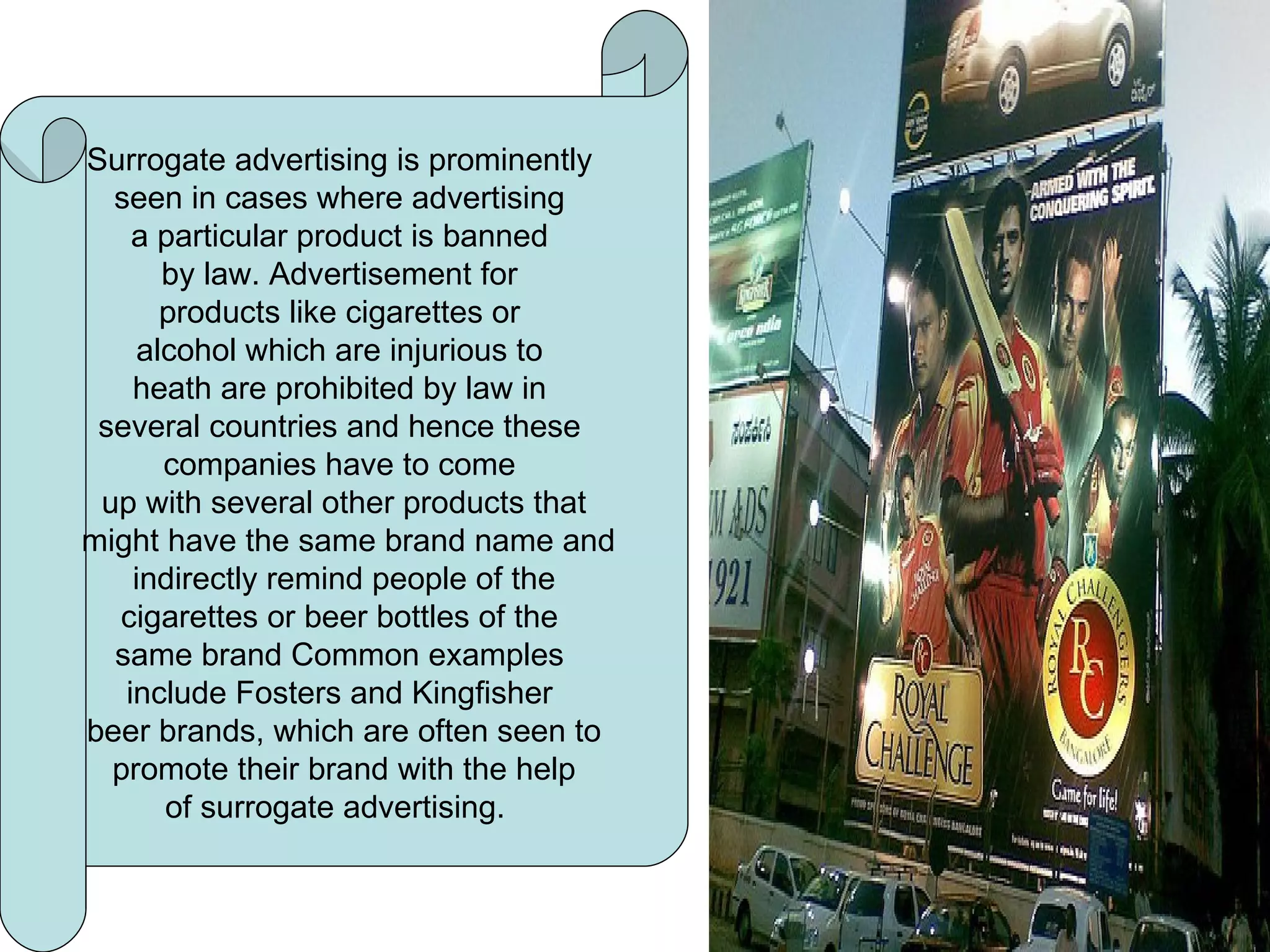
Surrogate advertising Surrogate advertising is prominently  seen in cases where advertising  a particular product is banned  by law. Advertisement for  products like cigarettes or  alcohol which are injurious to  heath are prohibited by law in  several countries and hence these  companies have to come  up with several other products that might have the same brand name and indirectly remind people of the  cigarettes or beer bottles of the  same brand Common examples  include Fosters and Kingfisher  beer brands, which are often seen to promote their brand with the help  of surrogate advertising.
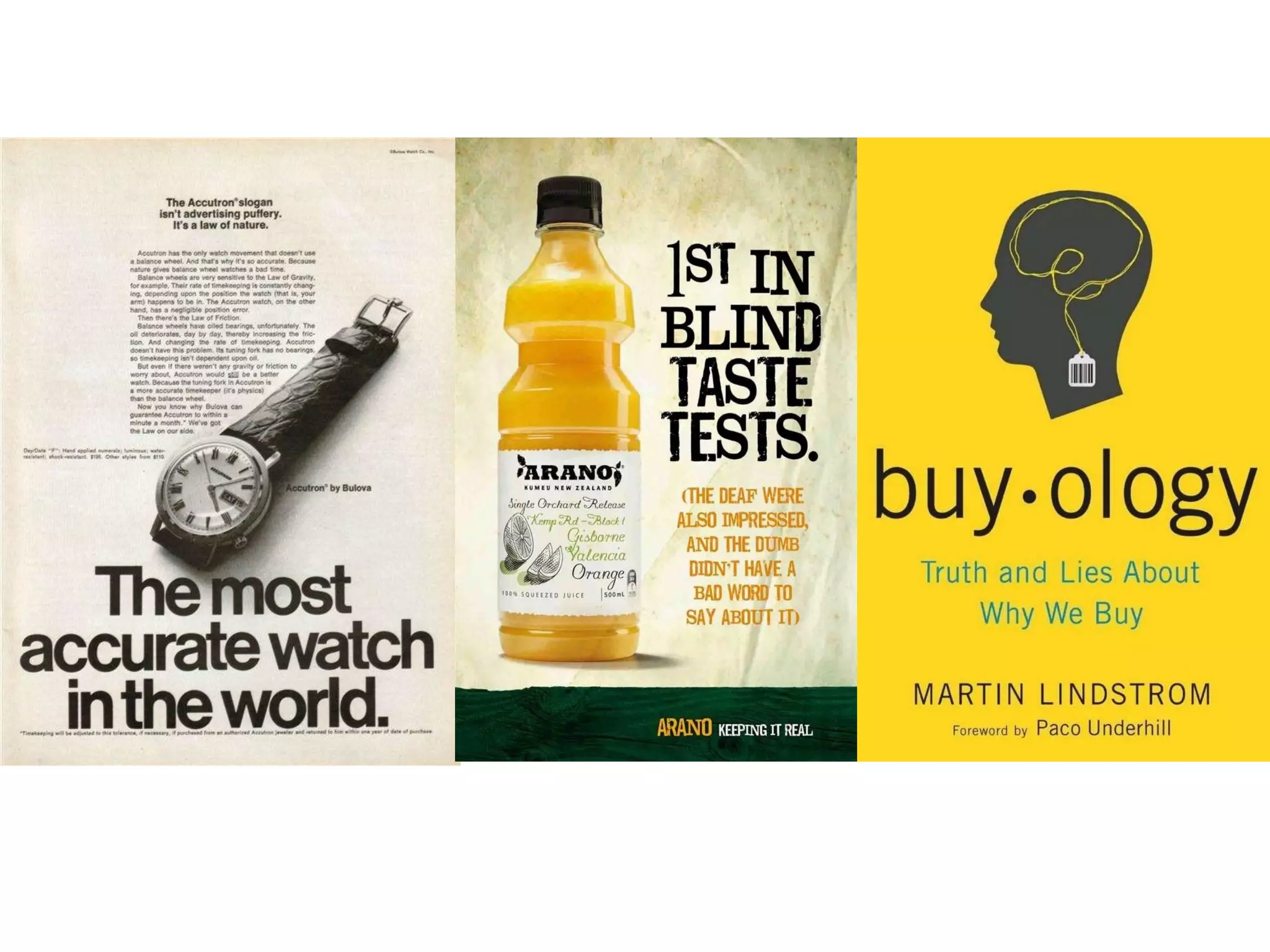
Puffery   Puffery  as a  legal term  refers to  promotional statements  and claims that express  subjective  rather than  objective  views, such that no reasonable person would take literally. A two-year old might believe that polar bears enjoy sipping Coca-Cola. But we know better.
 
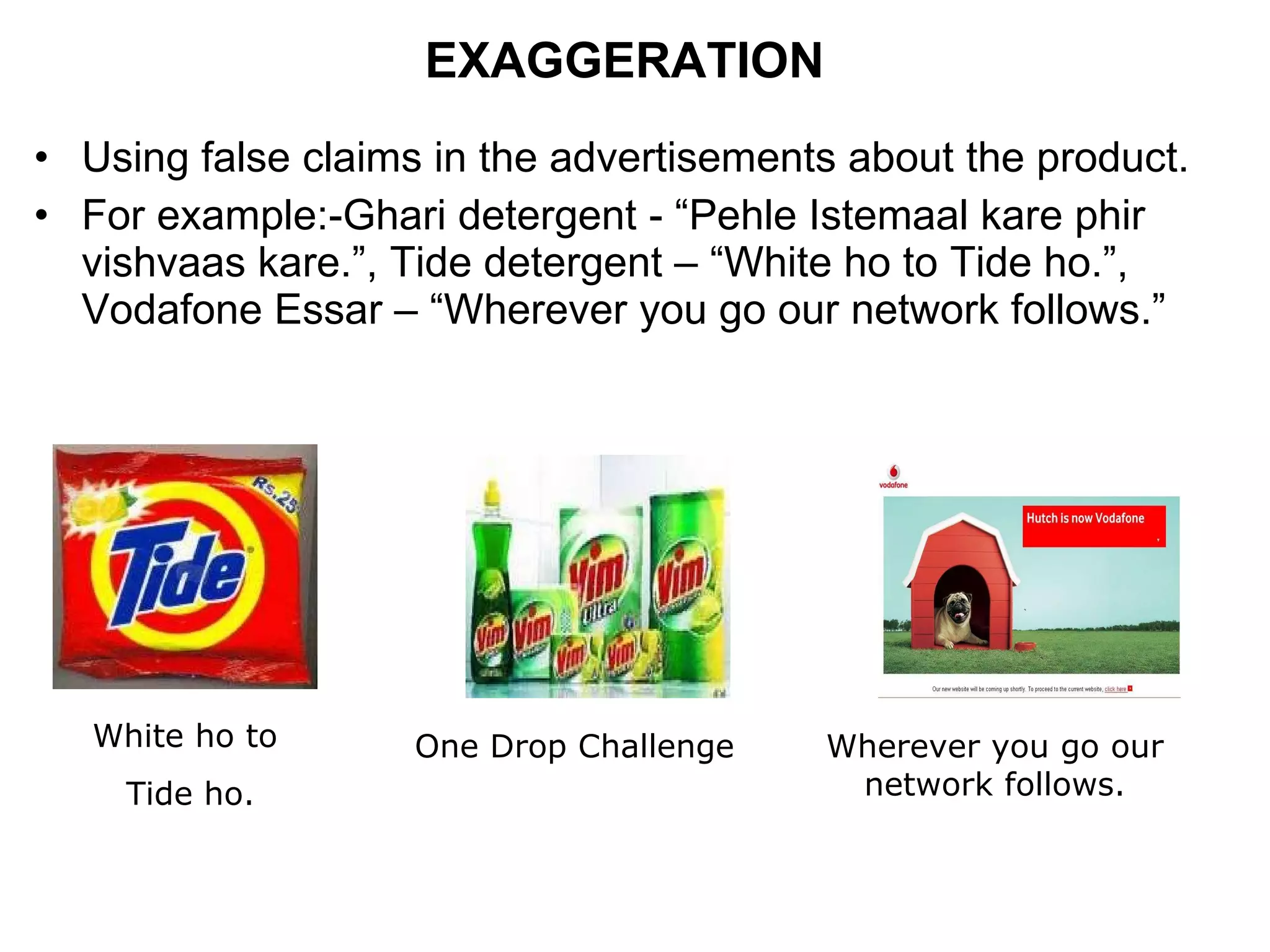
EXAGGERATION Using false claims in the advertisements about the product. For example:-Ghari detergent - “Pehle Istemaal kare phir vishvaas kare.”, Tide detergent – “White ho to Tide ho.”, Vodafone Essar – “Wherever you go our network follows.” White ho to  Tide ho. One Drop Challenge Wherever you go our network follows.
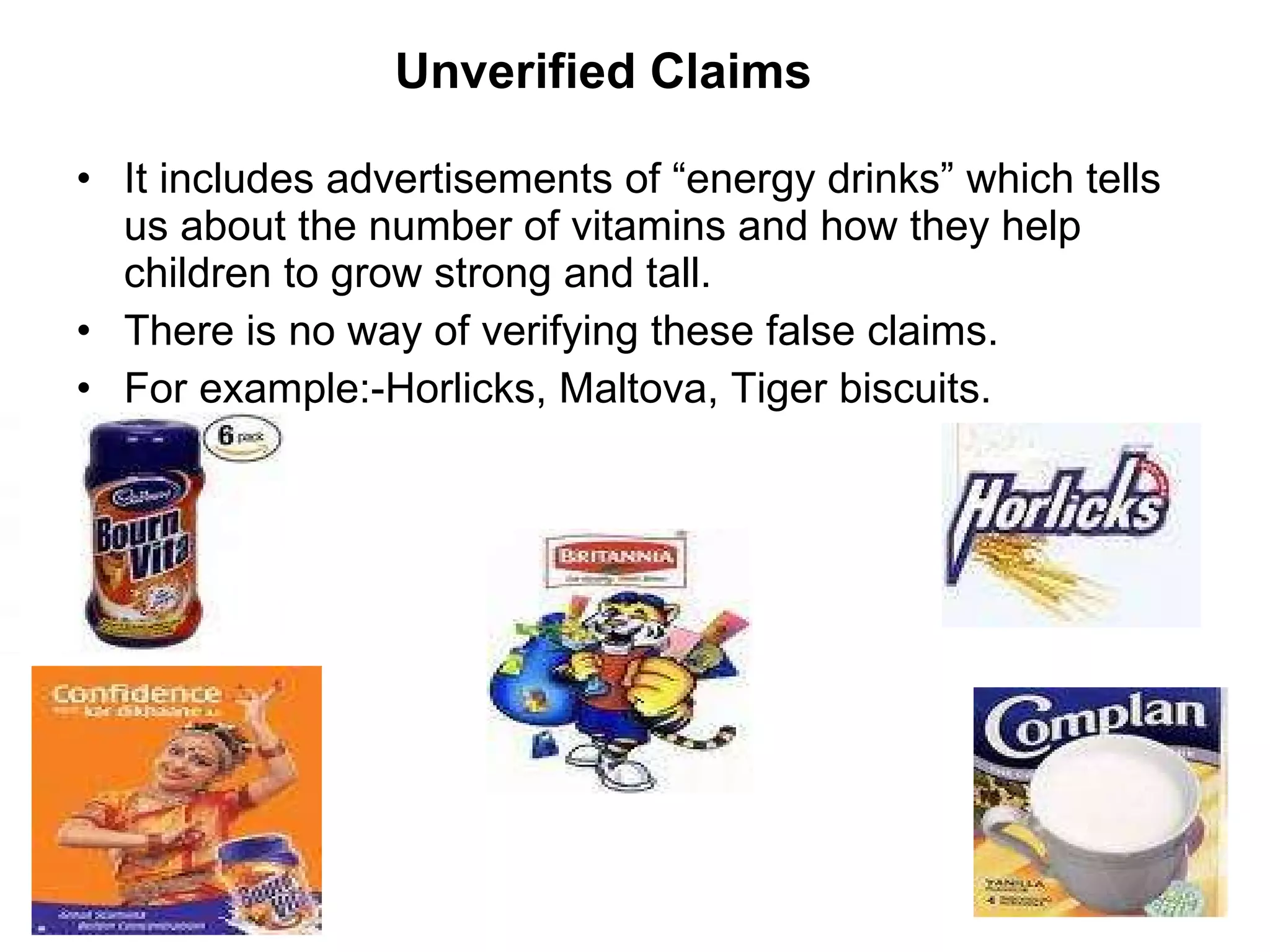
Unverified Claims It includes advertisements of “energy drinks” which tells us about the number of vitamins and how they help children to grow strong and tall. There is no way of verifying these false claims. For example:-Horlicks, Maltova, Tiger biscuits.
WOMEN IN ADVERTISING
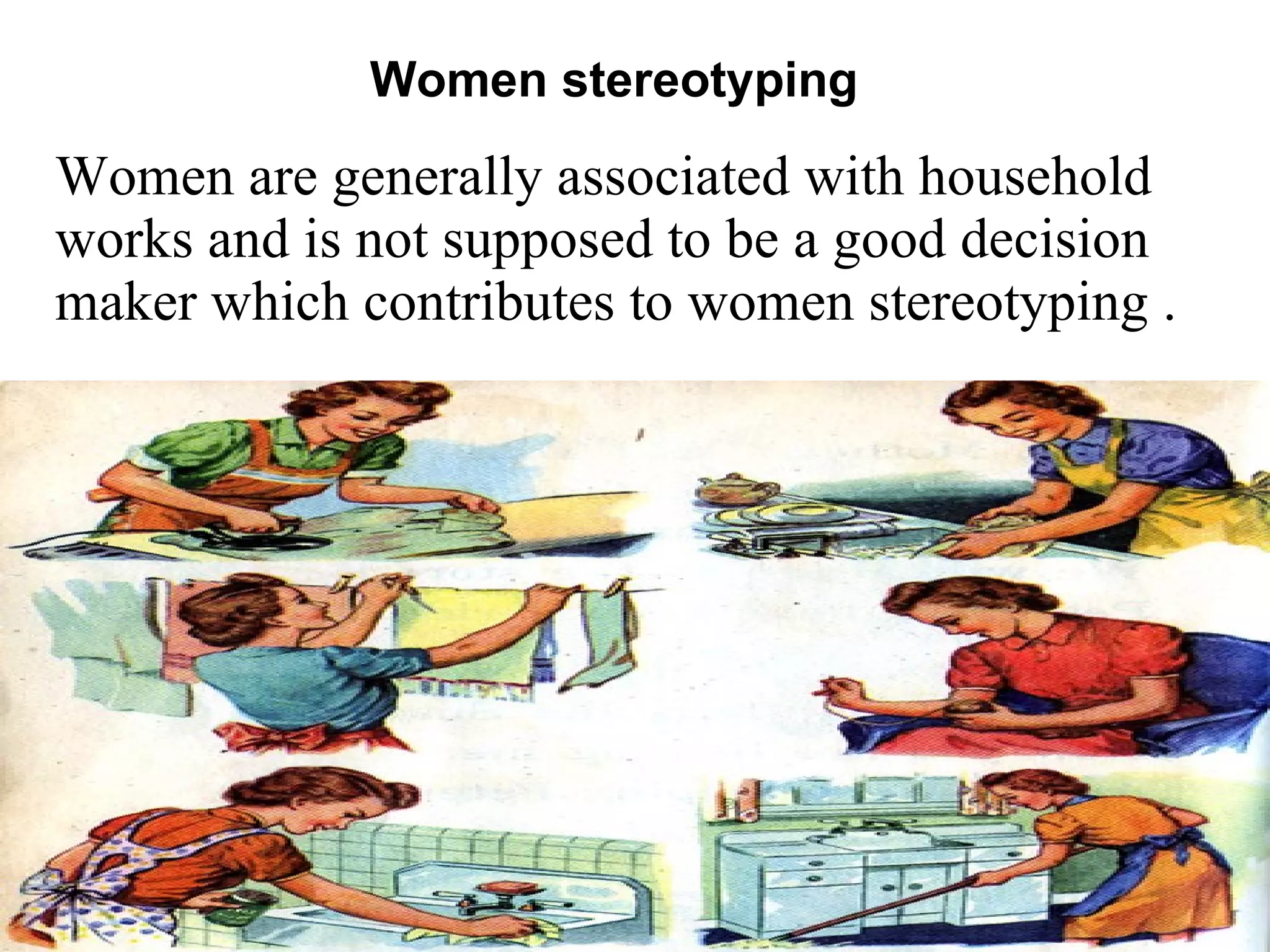
Women stereotyping Women are generally associated with household works and is not supposed to be a good decision maker which contributes to women stereotyping .
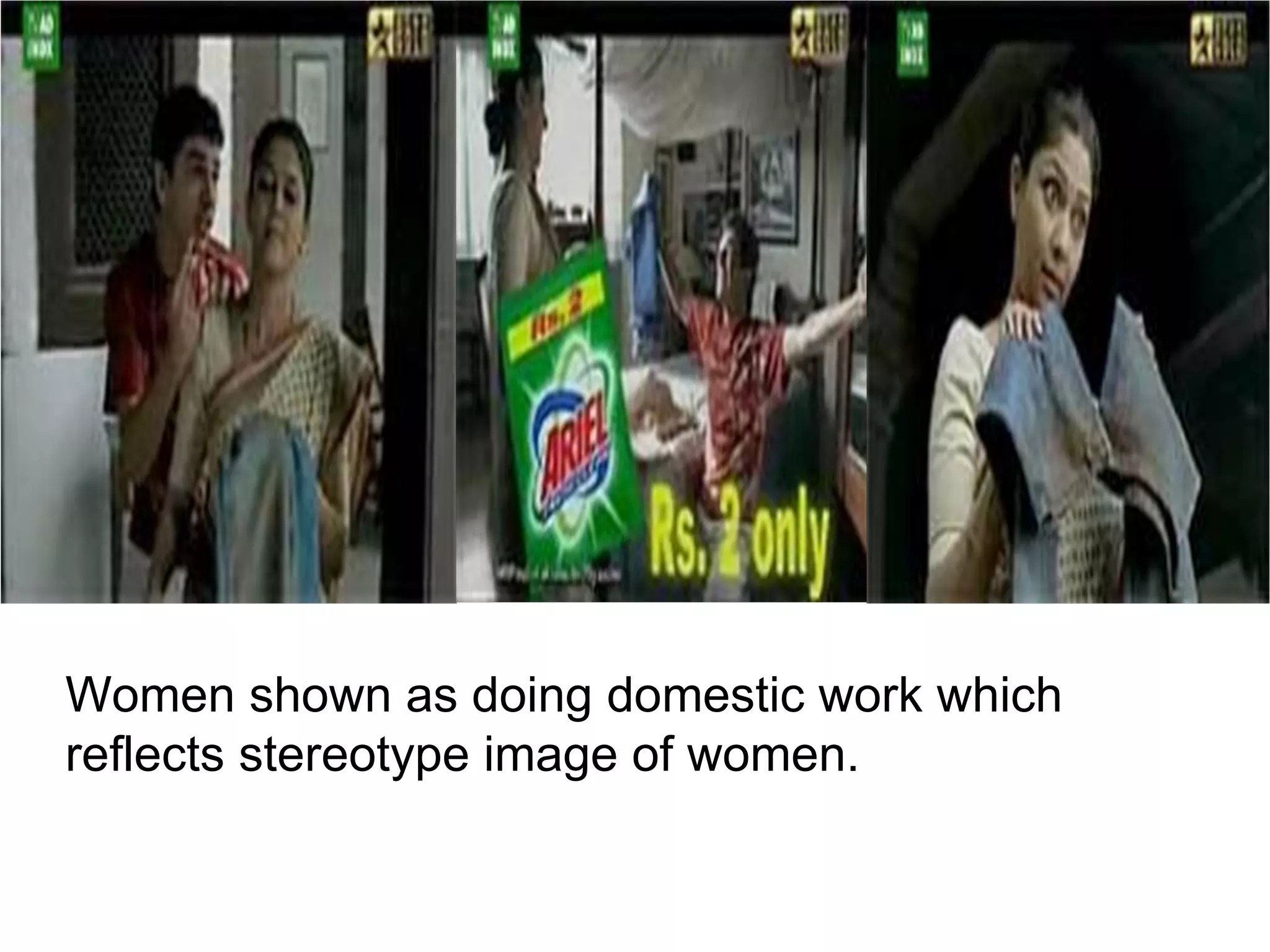
Women shown as doing domestic work which reflects stereotype image of women.
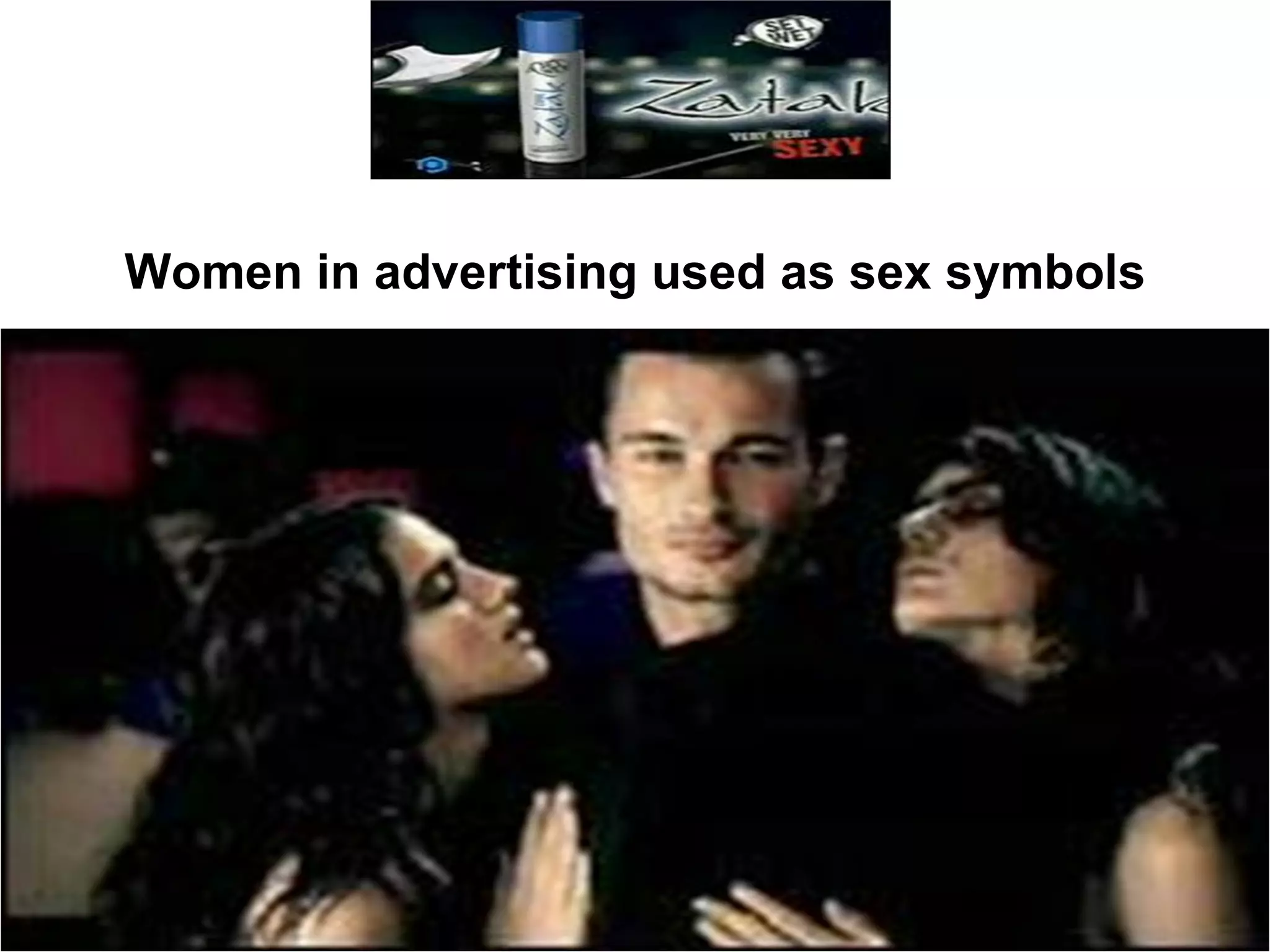
Women in advertising used as sex symbols
 
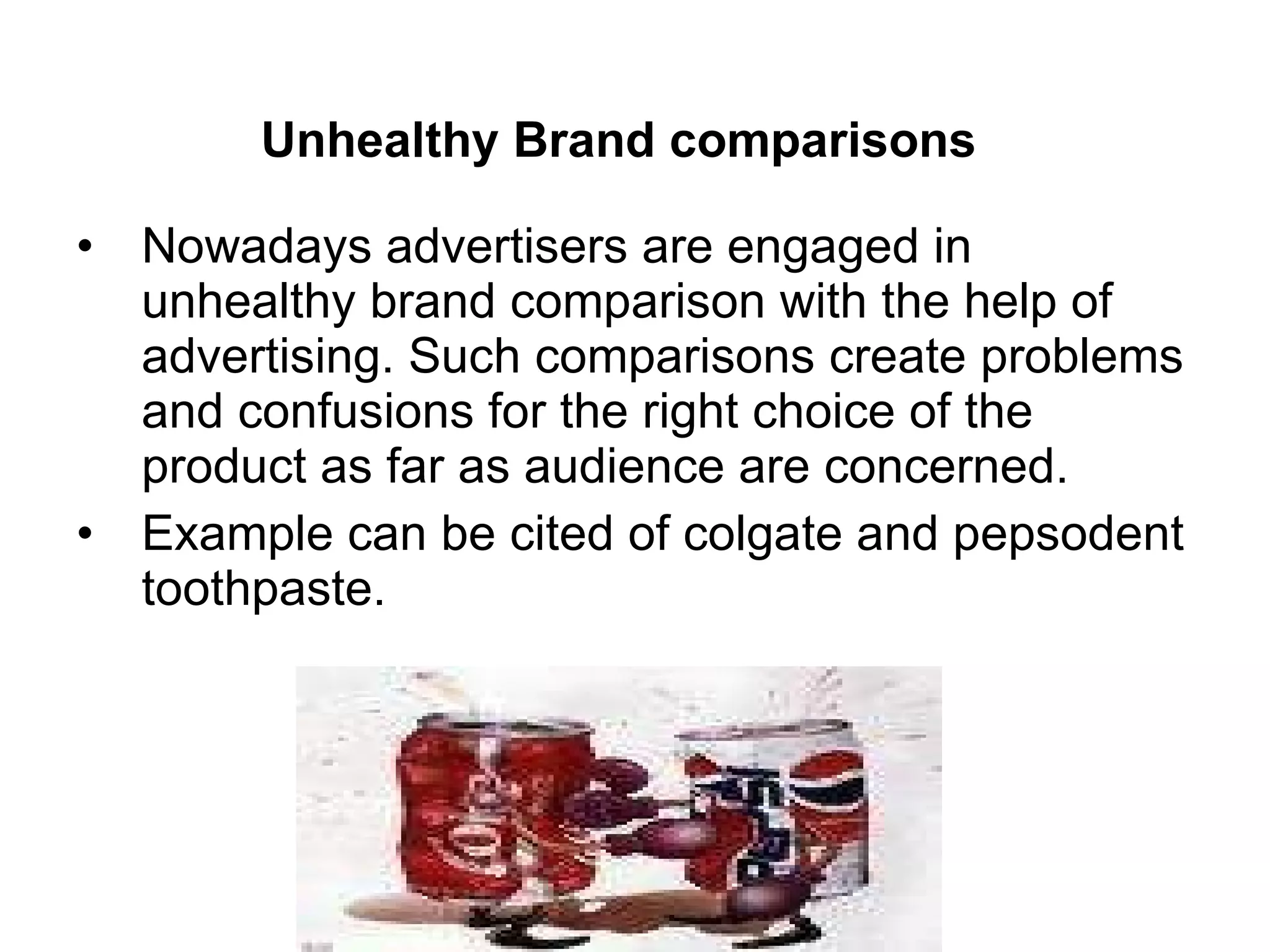
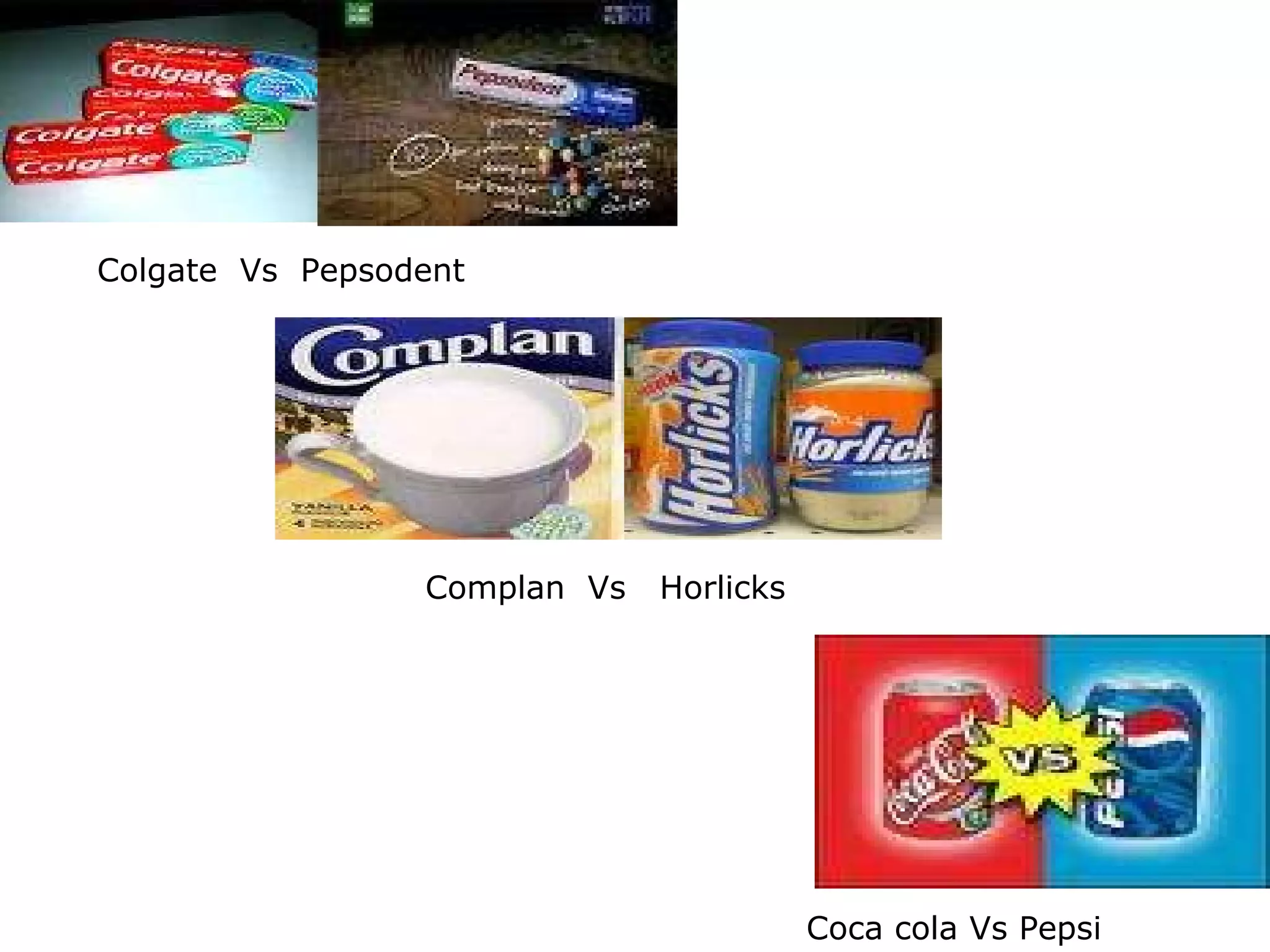
Unhealthy Brand comparisons   Nowadays advertisers are engaged in unhealthy brand comparison with the help of advertising. Such comparisons create problems and confusions for the right choice of the product as far as audience are concerned. Example can be cited of colgate and pepsodent toothpaste.
Colgate  Vs  Pepsodent Complan  Vs  Horlicks Coca cola Vs Pepsi
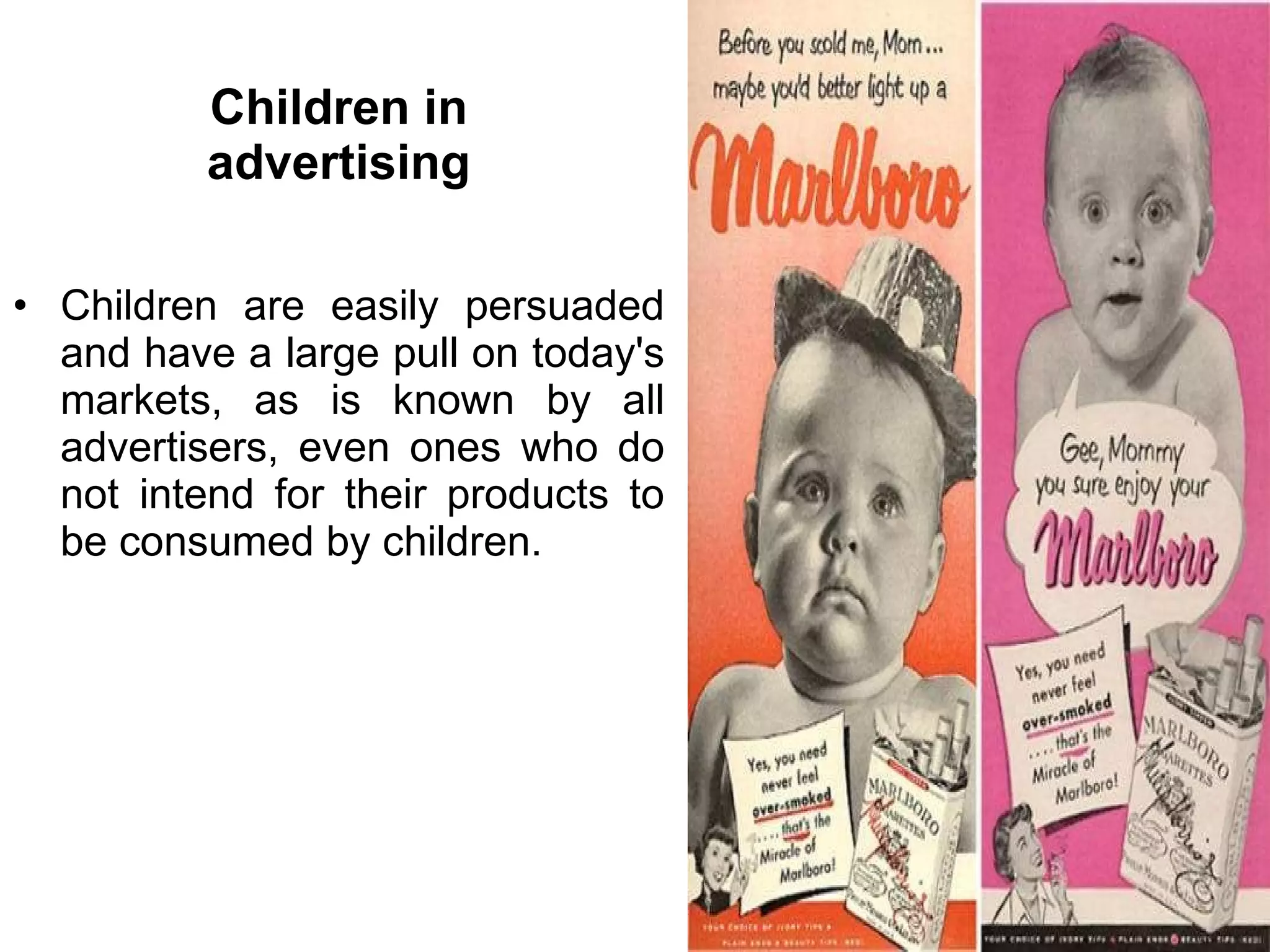
Children in advertising Children are easily persuaded and have a large pull on today's markets, as is known by all advertisers, even ones who do not intend for their products to be consumed by children.
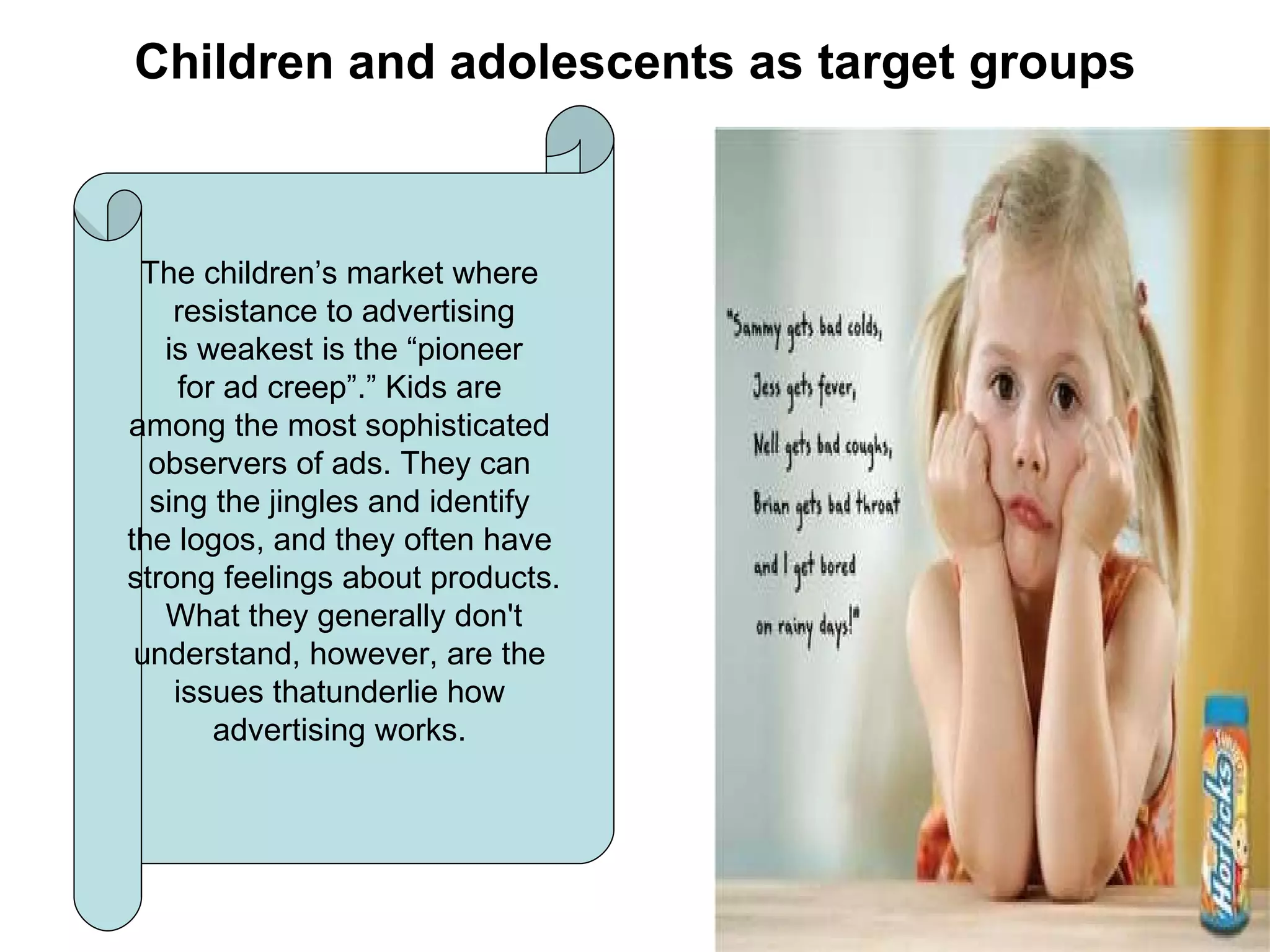
Children and adolescents as target groups The children’s market where  resistance to advertising is weakest is the “pioneer for ad creep”.” Kids are  among the most sophisticated  observers of ads. They can  sing the jingles and identify  the logos, and they often have  strong feelings about products. What they generally don't  understand, however, are the  issues thatunderlie how  advertising works.
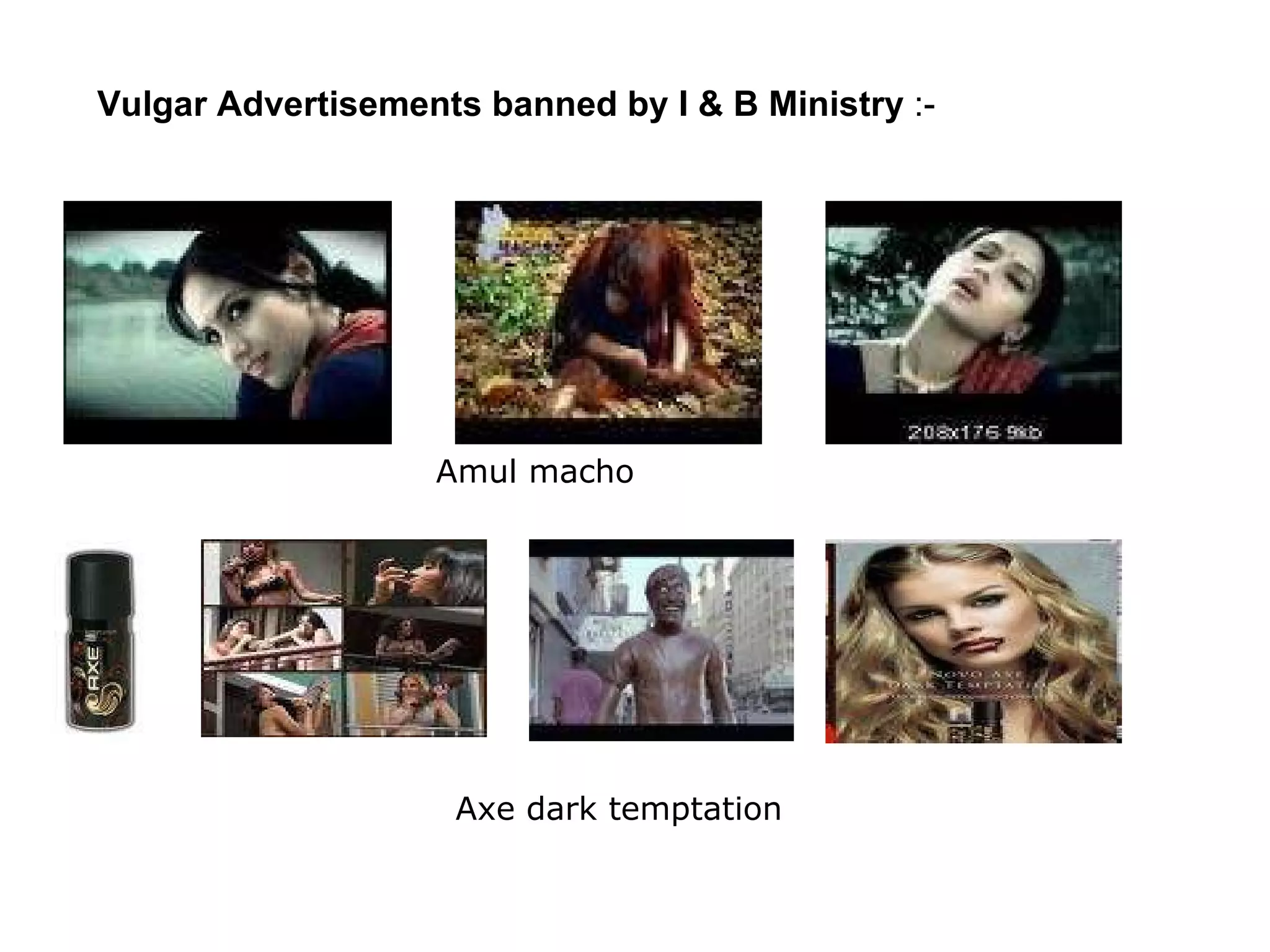
Amul macho Axe dark temptation Vulgar Advertisements banned by I & B Ministry  :-
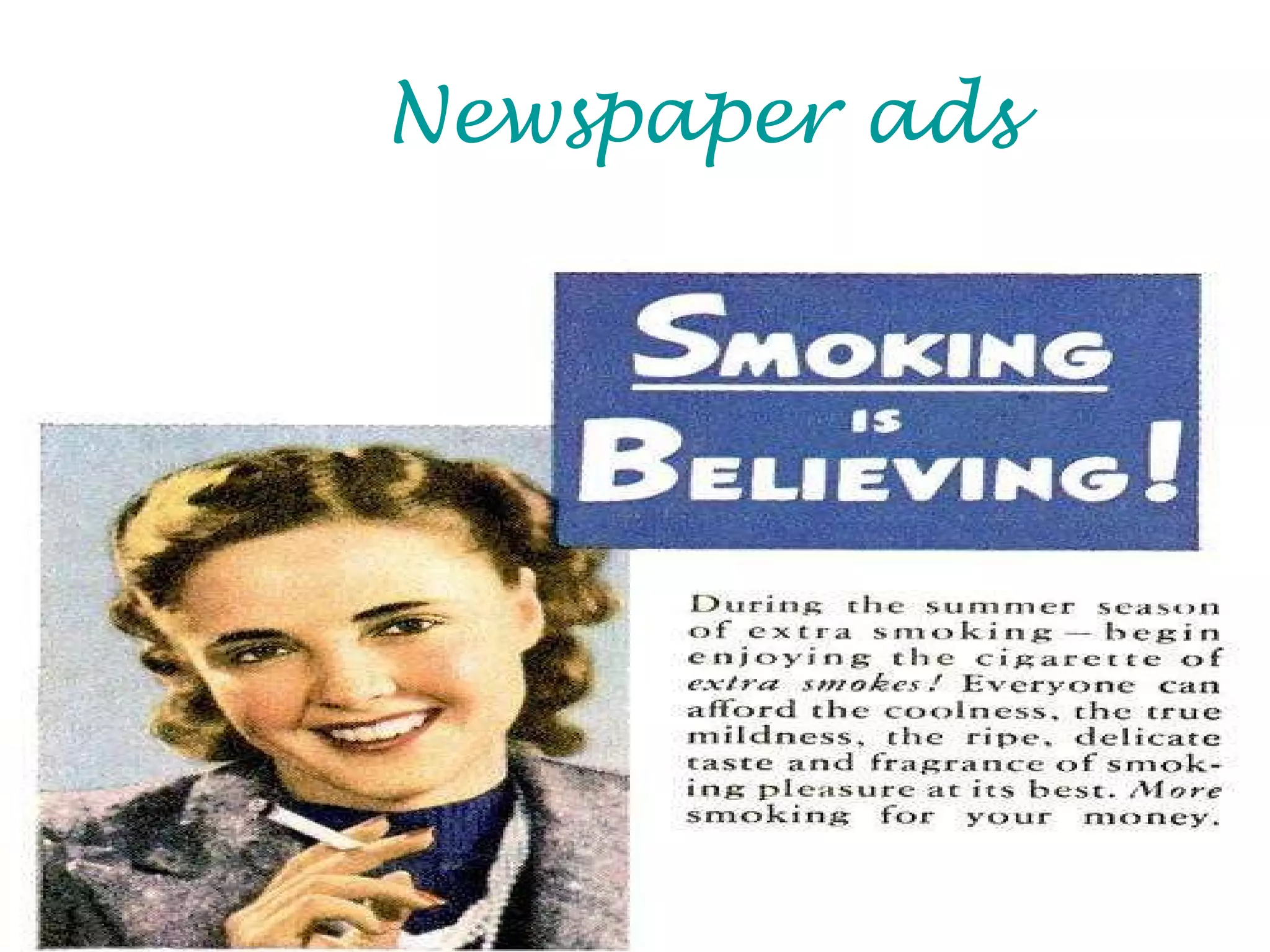
Newspaper ads
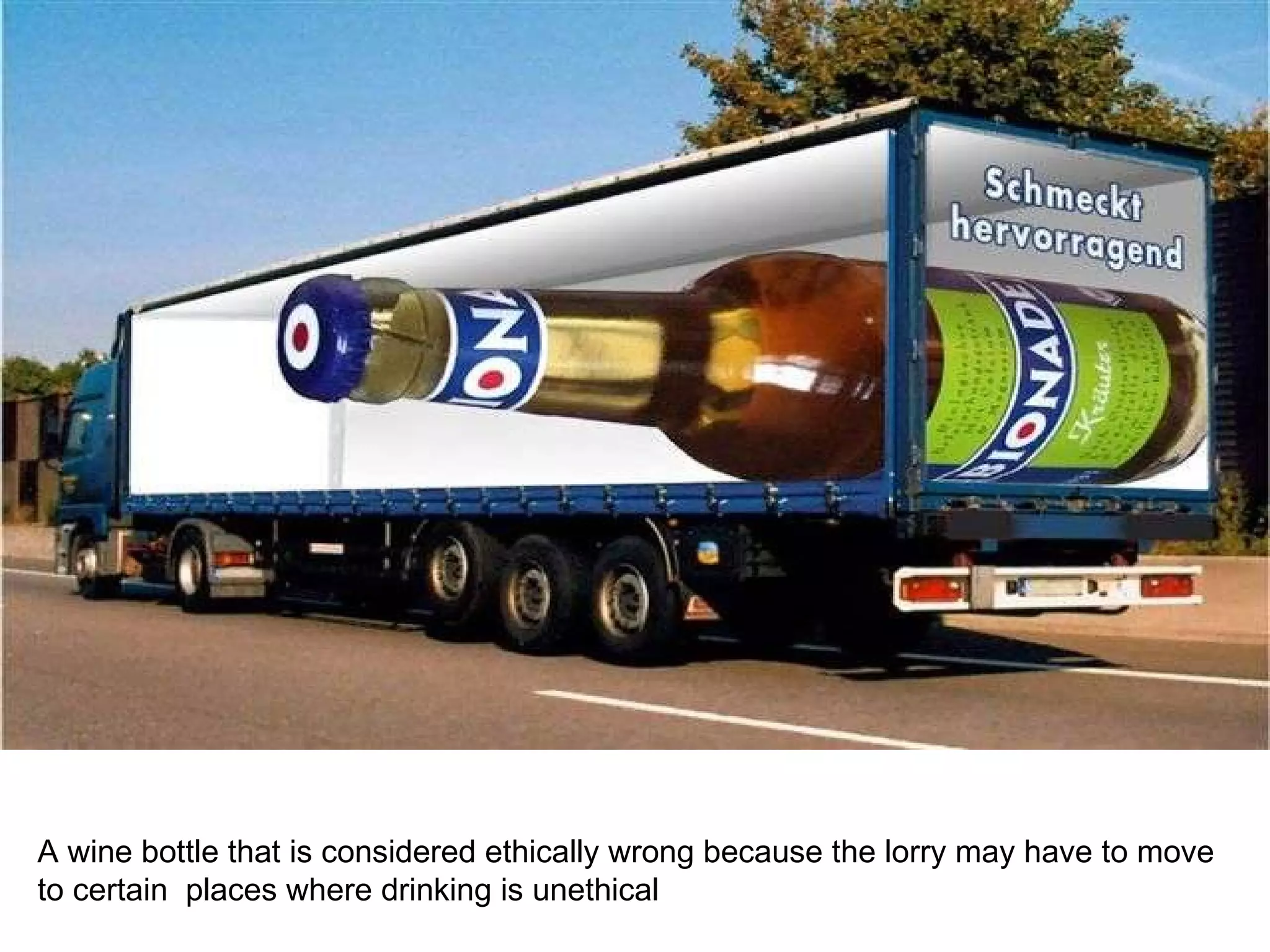
A wine bottle that is considered ethically wrong because the lorry may have to move to certain  places where drinking is unethical
 

Unethical advertisements

  • 1.
  • 2.
    EFFORTS BY: MONIKACHHILLAR SHIKHA KAUSHIK RIYA GIRIDHAR SONU SACHIN SINGAL SACHIN WAILA
  • 3.
    Ethics Ethics isa branch of philosophy which seeks to address questions about morality; that is, about concepts such as good and bad, right and wrong, justice, and virtue. Advertising Advertising is the promotion of a company’s products and services carried out primarily to drive sales of the products and services but also to build a brand identity and communicate changes or new product /services to the customers. Advertising has become an essential element of the corporate world and hence the companies allot a considerable amount of revenues as their advertising budget.
  • 4.
    Reasons for Advertising• Increasing the sales of the product/service • Creating and maintaining a brand identity or brand image. • Communicating a change in the existing product line. • Introduction of a new product or service. • Increasing the buzz-value of the brand or the company
  • 5.
    Unethical advertising Advertisementis considered unethical in the following situations; o When it has degraded or underestimated the substitute or rival's product. o When it gives false or misleading information on the value of the product. o When it fails to give useful information on the possible reaction or side effects of the product. And o When it is immoral .
  • 6.
    Basic principals Decency Honesty Social Responsibility Truthful presentation Comparisons Imitation Safety and health Avoidance of Harm Environmental behaviour
  • 7.
    Ways of unethicaladvertisement Surrogate advertisement Puffery Exaggeration Unverified claims Women stereotyping Women used as sex symbols for promoting products Comparative advertisements Use of children in advertising
  • 8.
    Surrogate advertising Surrogateadvertising is prominently seen in cases where advertising a particular product is banned by law. Advertisement for products like cigarettes or alcohol which are injurious to heath are prohibited by law in several countries and hence these companies have to come up with several other products that might have the same brand name and indirectly remind people of the cigarettes or beer bottles of the same brand Common examples include Fosters and Kingfisher beer brands, which are often seen to promote their brand with the help of surrogate advertising.
  • 9.
    Puffery Puffery as a legal term refers to promotional statements and claims that express subjective rather than objective views, such that no reasonable person would take literally. A two-year old might believe that polar bears enjoy sipping Coca-Cola. But we know better.
  • 10.
  • 11.
    EXAGGERATION Using falseclaims in the advertisements about the product. For example:-Ghari detergent - “Pehle Istemaal kare phir vishvaas kare.”, Tide detergent – “White ho to Tide ho.”, Vodafone Essar – “Wherever you go our network follows.” White ho to Tide ho. One Drop Challenge Wherever you go our network follows.
  • 12.
    Unverified Claims Itincludes advertisements of “energy drinks” which tells us about the number of vitamins and how they help children to grow strong and tall. There is no way of verifying these false claims. For example:-Horlicks, Maltova, Tiger biscuits.
  • 13.
  • 14.
    Women stereotyping Womenare generally associated with household works and is not supposed to be a good decision maker which contributes to women stereotyping .
  • 15.
    Women shown asdoing domestic work which reflects stereotype image of women.
  • 16.
    Women in advertisingused as sex symbols
  • 17.
  • 18.
    Unhealthy Brand comparisons Nowadays advertisers are engaged in unhealthy brand comparison with the help of advertising. Such comparisons create problems and confusions for the right choice of the product as far as audience are concerned. Example can be cited of colgate and pepsodent toothpaste.
  • 19.
    Colgate Vs Pepsodent Complan Vs Horlicks Coca cola Vs Pepsi
  • 20.
    Children in advertisingChildren are easily persuaded and have a large pull on today's markets, as is known by all advertisers, even ones who do not intend for their products to be consumed by children.
  • 21.
    Children and adolescentsas target groups The children’s market where resistance to advertising is weakest is the “pioneer for ad creep”.” Kids are among the most sophisticated observers of ads. They can sing the jingles and identify the logos, and they often have strong feelings about products. What they generally don't understand, however, are the issues thatunderlie how advertising works.
  • 22.
    Amul macho Axedark temptation Vulgar Advertisements banned by I & B Ministry :-
  • 23.
  • 24.
    A wine bottlethat is considered ethically wrong because the lorry may have to move to certain places where drinking is unethical
  • 25.