Downloaded 421 times

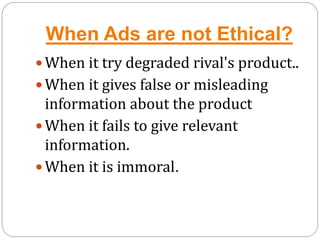
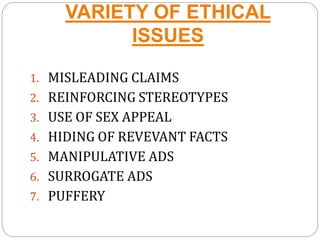
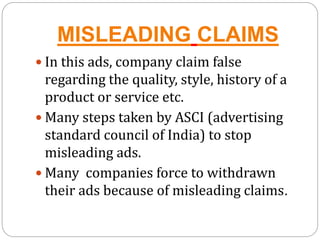






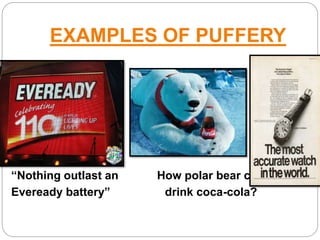

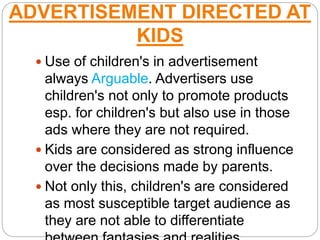



Advertising can raise ethical issues when it provides misleading, false, or incomplete information. Some common problems include misleading claims about a product's qualities or performance, reinforcing harmful stereotypes, using sex to sell a product, and hiding relevant facts. Advertisers also sometimes manipulate emotions or use surrogate ads to promote restricted products. Puffery makes vague claims that cannot be proven true or false. Weasel words qualify claims to avoid accountability. Ads also sometimes target children inappropriately to influence parental purchases. Regulators work to curb deceptive practices and protect consumers and social groups from harm.


