Class : s.Y B.f.M
suBjeCt : Business ethiCs
topiC : unethiCal Business praCtiCes
seMester : iii
Date :16/07/2012
Submitted to,
Girish Bhawnani
HEMANT CHAUDHARI

09

NAVEEN JETHWANI

22

LAVEEN PARYANI

49

DINESH DULANI

50

DINESH WADHWA

51

CHUNKY LULLA

54

HITESH KUKREJA

55

SONI AHUJHA

59

PRIYA MANWANI

60
Meaning

“Business Ethics simply Means Following Practices in
business which are morally correct and socially correct”

Individual

Organization

Basic Questions Related to Business Ethics
 Can A Business Be Ethical?
 Do ‘’Ethics’’ Matter More now than Before?
 Whose Ethics Are They?
 Isn’t The Best Ethic Maximizing Share Holder’s Value?
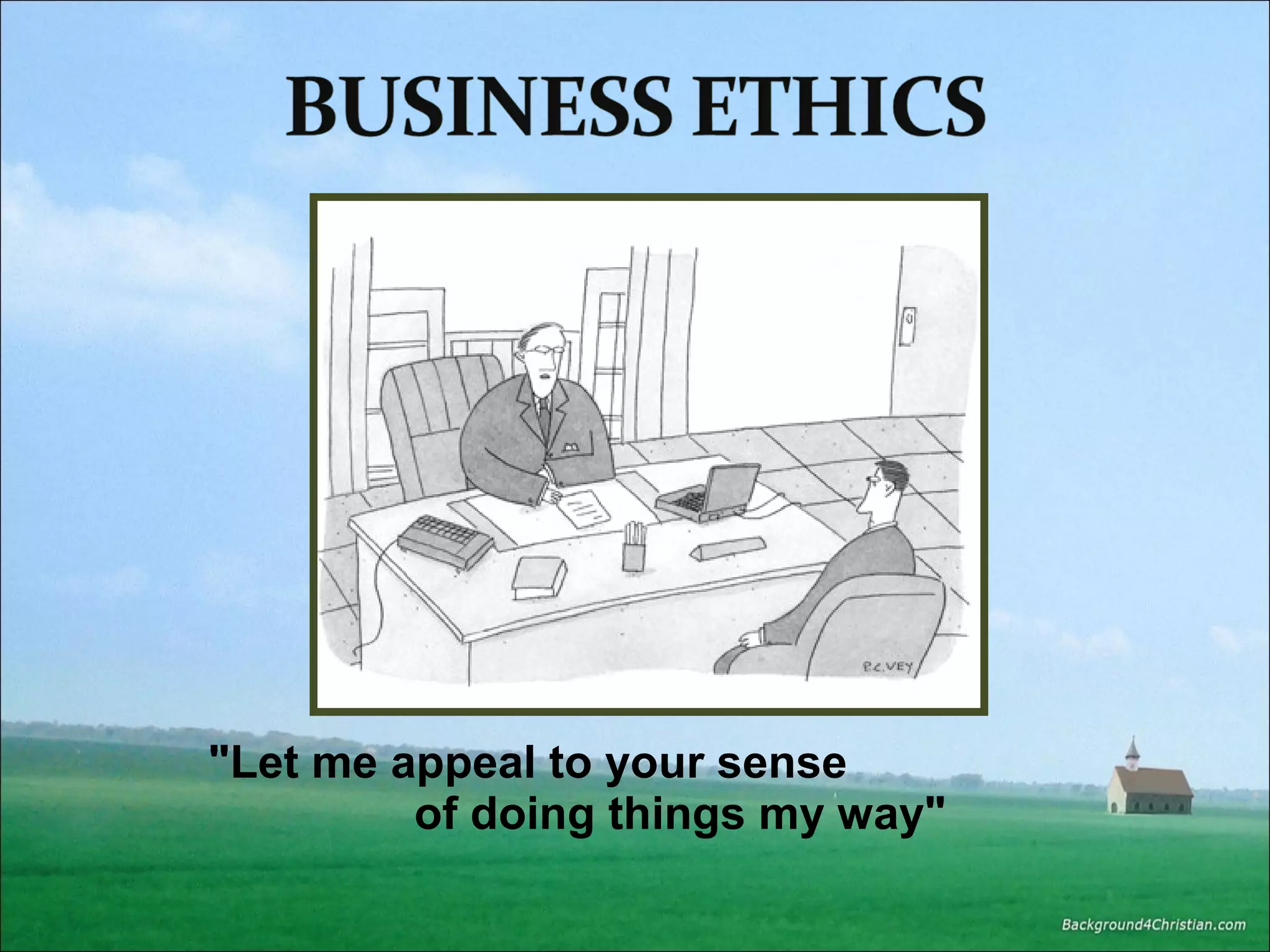
"Let me appeal to your sense
of doing things my way"
Abusive or Intimidating Behavior
Accurate but Incomplete Disclosures
Discrimination against Protected Class
Receiving/Offering Bribes, Kickbacks or Incentives
Theft or Fraud: Personal Use of Company Property or
Expense Account Misrepresentations
Termination without Fair Notice or Cause




Does “Doing the Right Thing” Matter?
To Whom Does it Matter?
What are the Costs to Business of Unethical
Behavior?
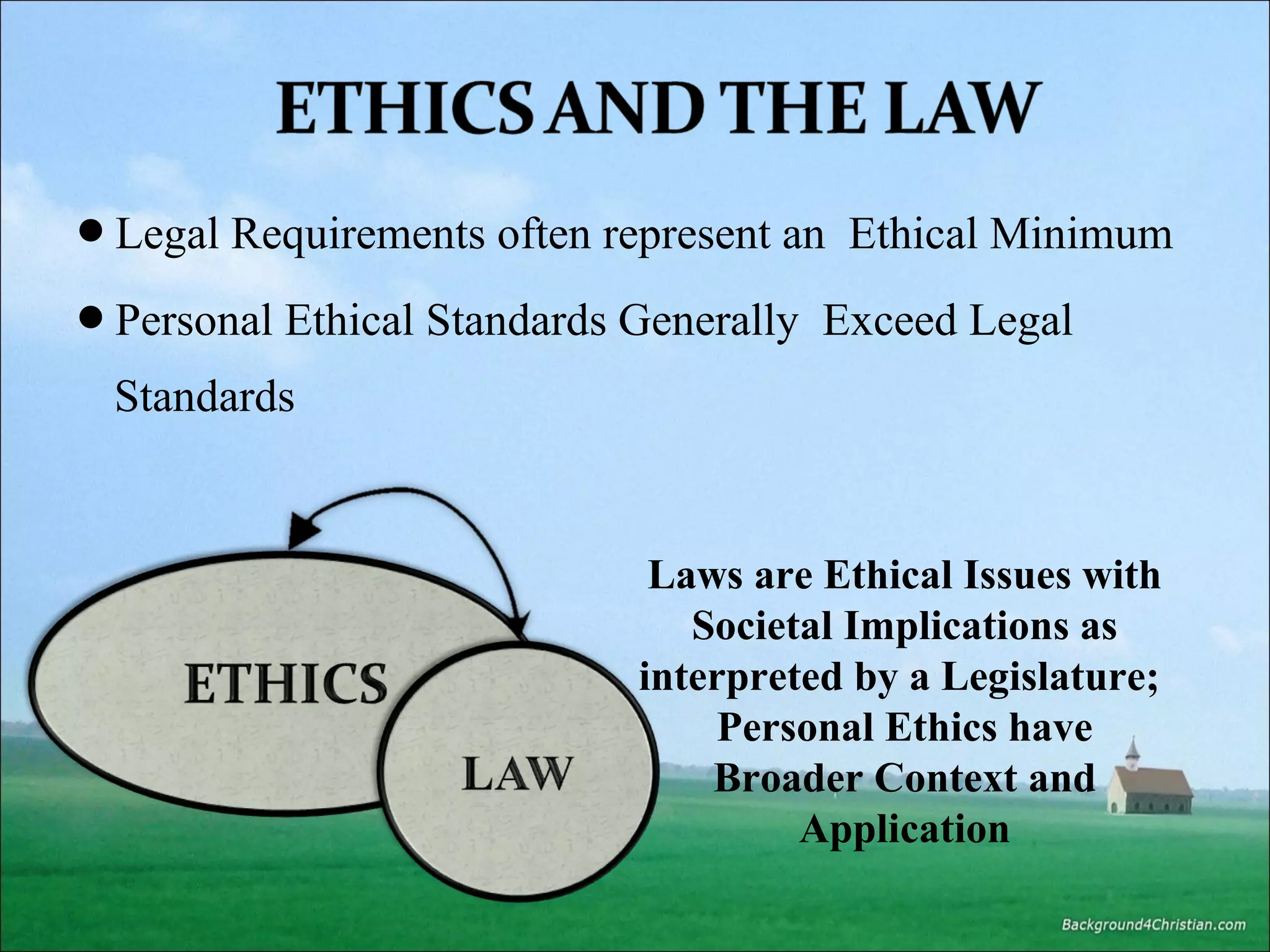
Legal Requirements often represent an Ethical Minimum
Personal Ethical Standards Generally Exceed Legal

Standards

Laws are Ethical Issues with
Societal Implications as
interpreted by a Legislature;
Personal Ethics have
Broader Context and
Application
What are the different levels at which
issues originate and how they move to
other levels?


Individual



Organizational



Societal
CORRUPTION
DECREASING COMPETITION
POLLUTION
ADULTERATION
Ethical Issues require Persons or Organizations to choose an
Action that may get judged as right or wrong
Classifications of Business Ethical Issues



Conflicts of Interest



Fairness and Honesty



Communications



Organizational Relationships
Lack of proper education
Raising Inefficiency
Ineffective Laws
Exploiting the consumer
Organizations that Promote an “Ethical Climate” provide
an Opportunity to develop an “Ethical Culture”
Starts with Organization-wide Commitment:
Organizations have to WANT to “Do the Right Thing” Obtain Commitments from CEO, President and Board
of Directors
With Commitment, Organizations can Define their “Right
Thing” and decide How to “Do It”
Is Action consistent with Organization’s Goals, not motivated

by self-interest?
Does Action respect the Rights of Individuals and Groups

affected by it?
Should behaviour be equal from top level to lower level of

management


Decision-making includes Personal, Organizational and
Societal Values



Ethical Values always open to Discussion and Criticism
of the society.



Accept Responsibility for Sound Moral Judgments, It’s in
Everyone’s Job Description

Unethical business practices

  • 1.
    Class : s.YB.f.M suBjeCt : Business ethiCs topiC : unethiCal Business praCtiCes seMester : iii Date :16/07/2012 Submitted to, Girish Bhawnani
  • 2.
    HEMANT CHAUDHARI 09 NAVEEN JETHWANI 22 LAVEENPARYANI 49 DINESH DULANI 50 DINESH WADHWA 51 CHUNKY LULLA 54 HITESH KUKREJA 55 SONI AHUJHA 59 PRIYA MANWANI 60
  • 3.
    Meaning “Business Ethics simplyMeans Following Practices in business which are morally correct and socially correct” Individual Organization Basic Questions Related to Business Ethics  Can A Business Be Ethical?  Do ‘’Ethics’’ Matter More now than Before?  Whose Ethics Are They?  Isn’t The Best Ethic Maximizing Share Holder’s Value?
  • 4.
    "Let me appealto your sense of doing things my way"
  • 5.
    Abusive or IntimidatingBehavior Accurate but Incomplete Disclosures Discrimination against Protected Class Receiving/Offering Bribes, Kickbacks or Incentives Theft or Fraud: Personal Use of Company Property or Expense Account Misrepresentations Termination without Fair Notice or Cause
  • 6.
       Does “Doing theRight Thing” Matter? To Whom Does it Matter? What are the Costs to Business of Unethical Behavior?
  • 7.
    Legal Requirements oftenrepresent an Ethical Minimum Personal Ethical Standards Generally Exceed Legal Standards Laws are Ethical Issues with Societal Implications as interpreted by a Legislature; Personal Ethics have Broader Context and Application
  • 8.
    What are thedifferent levels at which issues originate and how they move to other levels?  Individual  Organizational  Societal
  • 9.
  • 10.
    Ethical Issues requirePersons or Organizations to choose an Action that may get judged as right or wrong Classifications of Business Ethical Issues  Conflicts of Interest  Fairness and Honesty  Communications  Organizational Relationships
  • 11.
    Lack of propereducation Raising Inefficiency Ineffective Laws Exploiting the consumer
  • 12.
    Organizations that Promotean “Ethical Climate” provide an Opportunity to develop an “Ethical Culture” Starts with Organization-wide Commitment: Organizations have to WANT to “Do the Right Thing” Obtain Commitments from CEO, President and Board of Directors With Commitment, Organizations can Define their “Right Thing” and decide How to “Do It”
  • 13.
    Is Action consistentwith Organization’s Goals, not motivated by self-interest? Does Action respect the Rights of Individuals and Groups affected by it? Should behaviour be equal from top level to lower level of management
  • 14.
     Decision-making includes Personal,Organizational and Societal Values  Ethical Values always open to Discussion and Criticism of the society.  Accept Responsibility for Sound Moral Judgments, It’s in Everyone’s Job Description