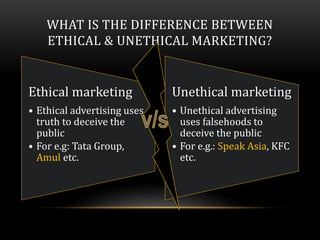
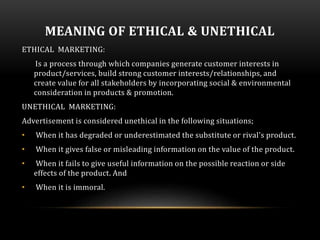

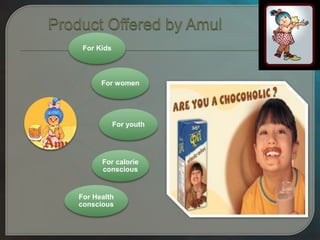


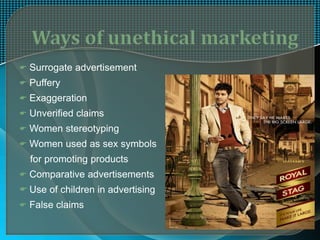

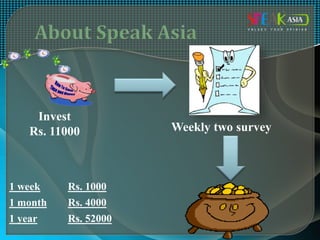
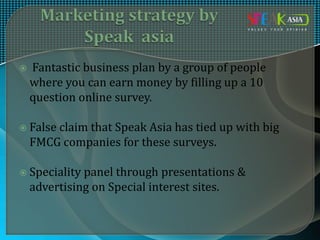

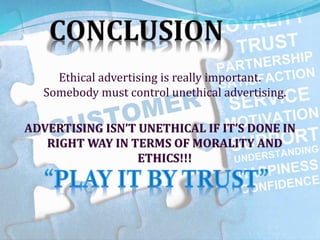


This document compares ethical and unethical marketing. It defines ethical marketing as using truth to build customer relationships and create value for stakeholders, while unethical marketing uses falsehoods or fails to provide useful product information. Amul is provided as an example of ethical marketing through inclusive products at affordable prices. Unethical practices discussed include surrogate advertising, puffery, and using children or exaggerated claims. Speak Asia is analyzed as an unethical marketing example through false promises, targeting emotions, and lack of evidence of funds. The document concludes ethical advertising is important and should be controlled, but advertising itself is not unethical if done morally and ethically.


![Lecture 4 - The Marketing Environment, Ethics & CSR (1) [Autosaved].pptx](https://cdn.slidesharecdn.com/ss_thumbnails/lecture4-themarketingenvironmentethicscsr1autosaved-230428083033-8892c277-thumbnail.jpg?width=640&height=640&fit=bounds)


