

1
Understanding Work Teams

11/18/13

2
Why have teams become so popular?
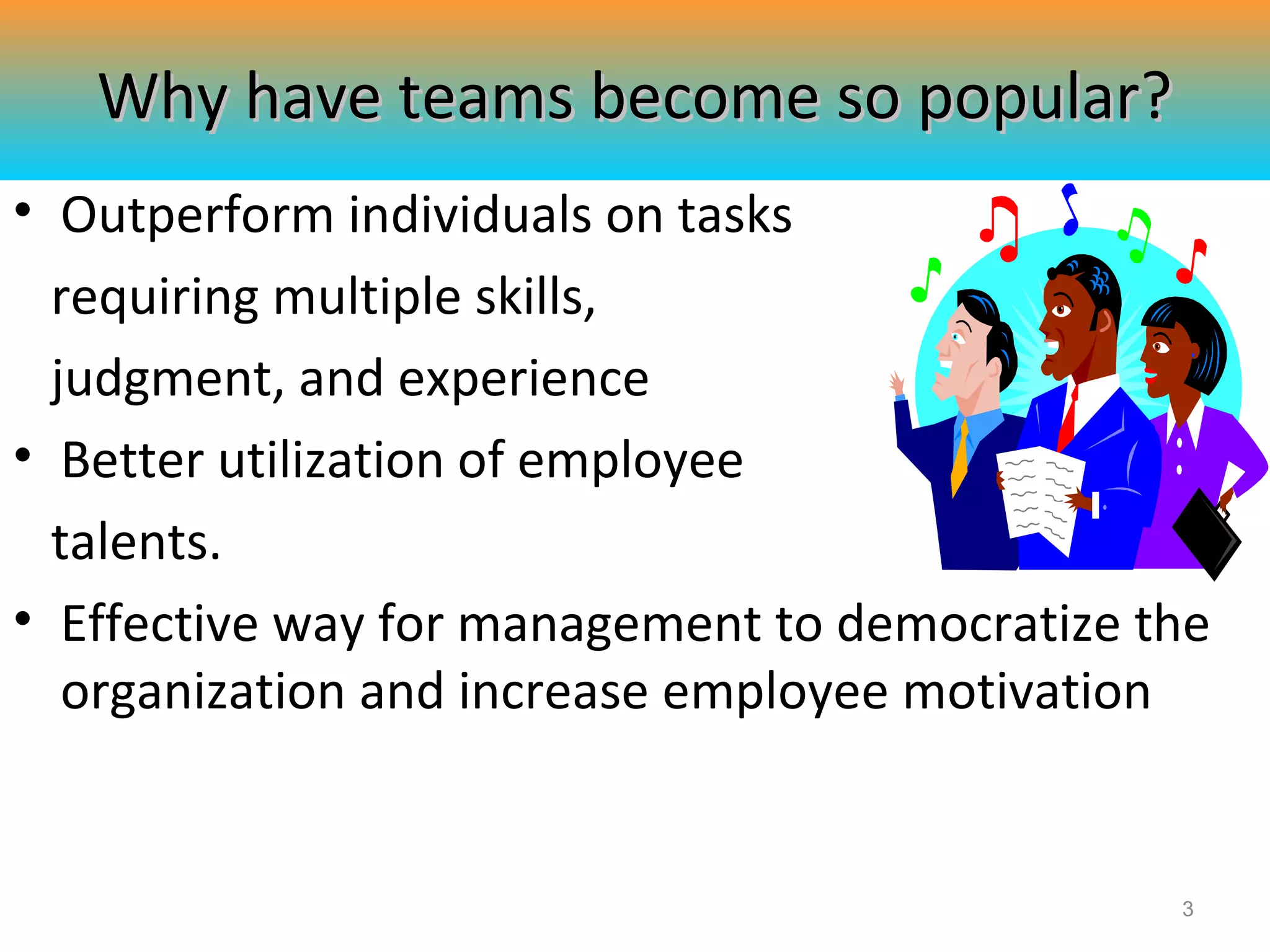
• Outperform individuals on tasks
requiring multiple skills,
judgment, and experience
• Better utilization of employee
talents.
• Effective way for management to democratize the
organization and increase employee motivation

3
Work Group vs. Work Team
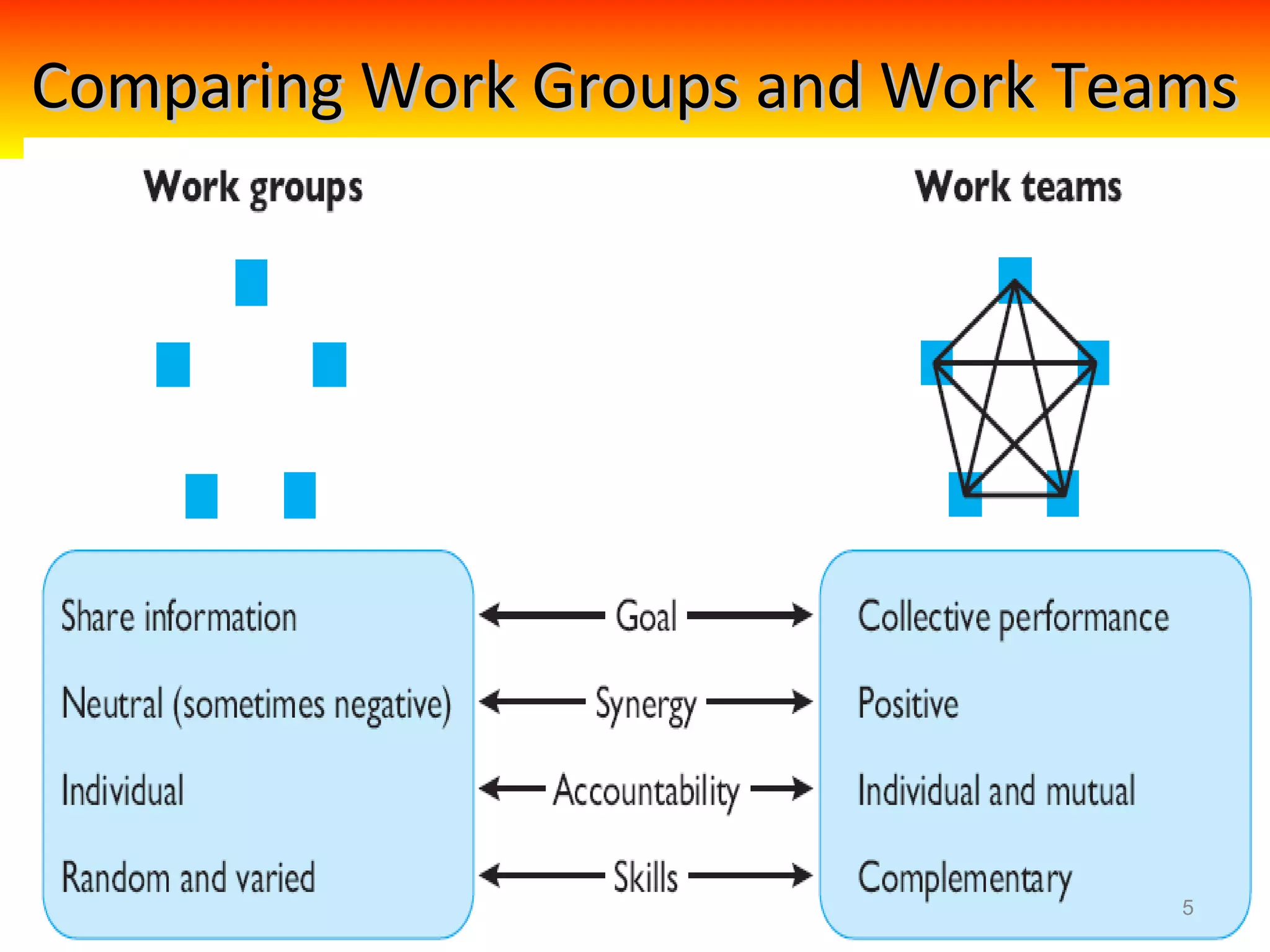
• Work Group
A group who interacts primarily to share
information and to make decisions to help one
another perform within each member’s area of
responsibility,
• Work Team
Generates positive synergy through
coordinated effort for a common goal. A group
whose Individual efforts result in a level of
performance that is greater than the sum of those
individual inputs
4
Comparing Work Groups and Work Teams

5
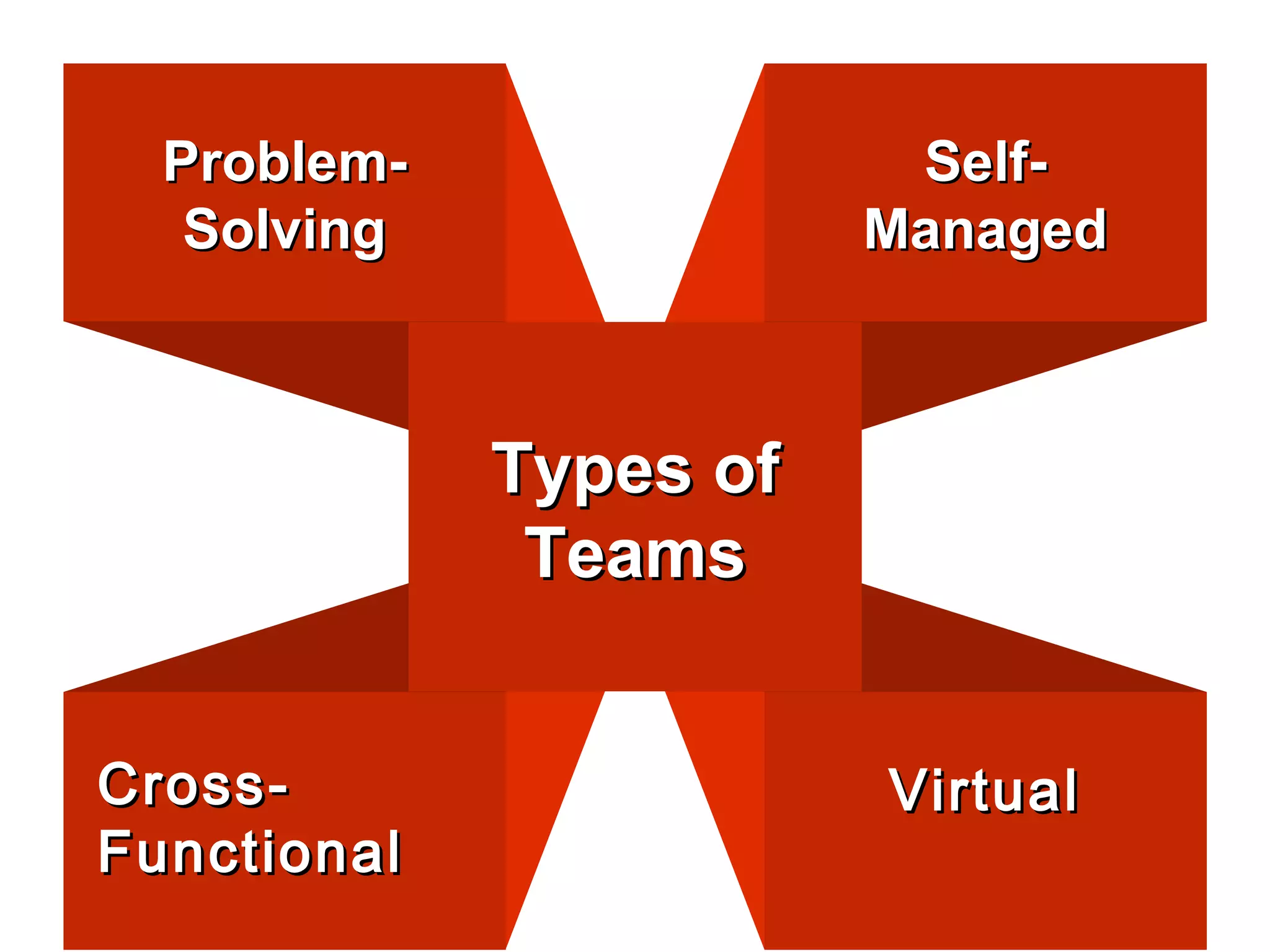
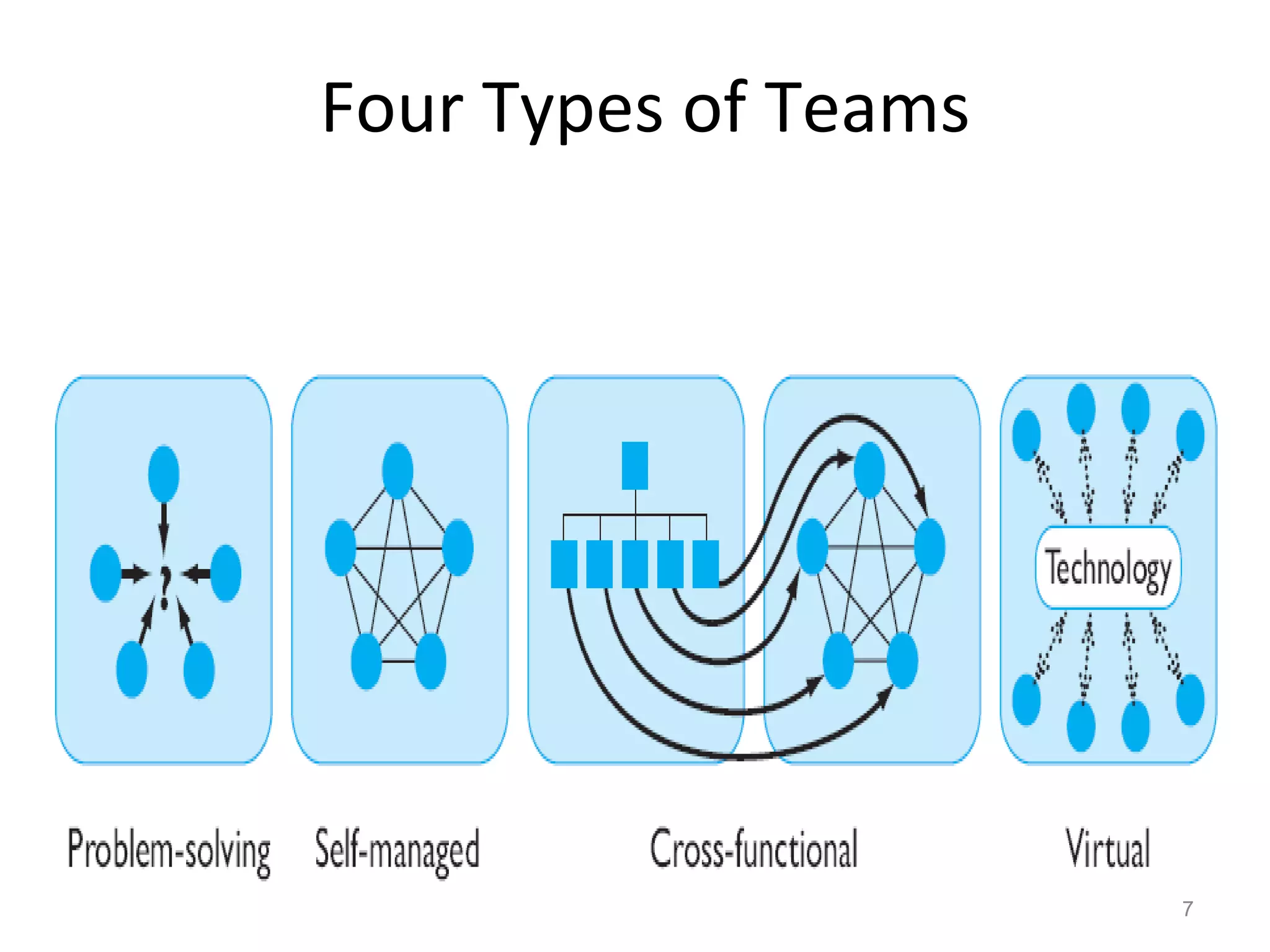
ProblemSolving

SelfManaged

Types of
Teams
CrossFunctional
11/18/13

Virtual
6
Four Types of Teams

7
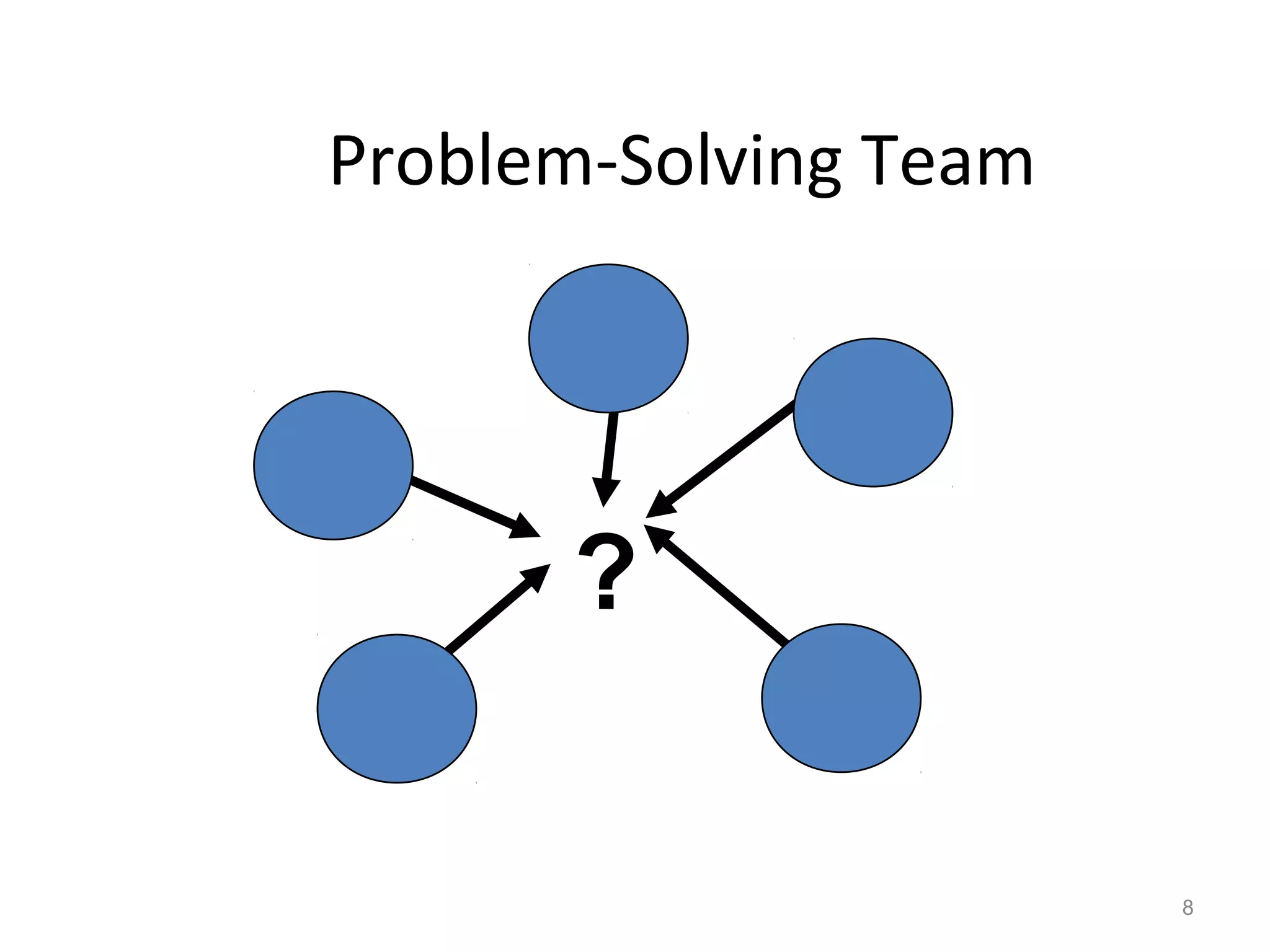
Problem-Solving Team

?
8
Problem-Solving Teams
• Share ideas
or offer suggestions
on how work
processes and methods can
be improved
• Rarely given authority
to implement any
of their suggested actions
9
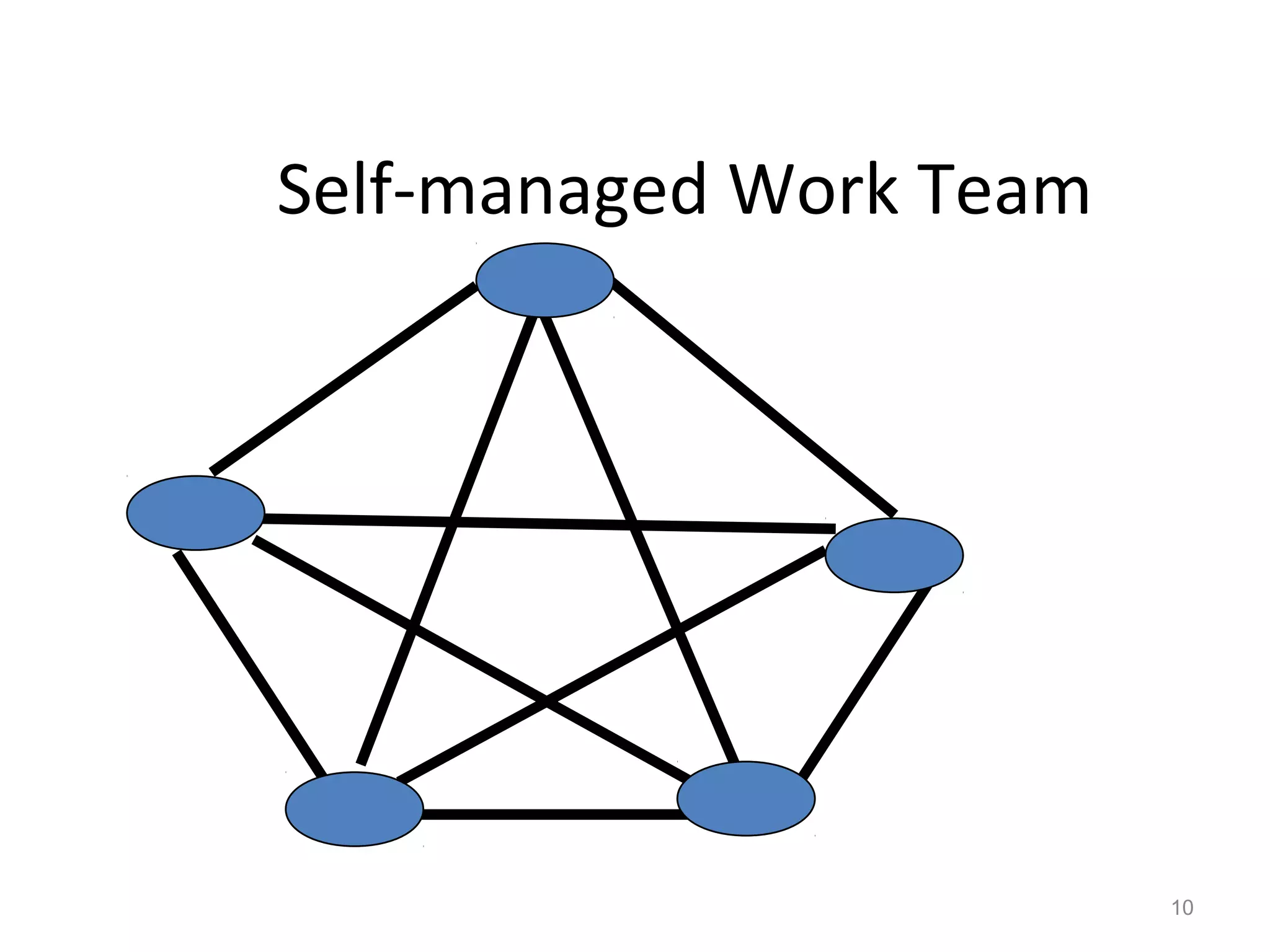
Self-managed Work Team

10
Self-Managed Work Teams
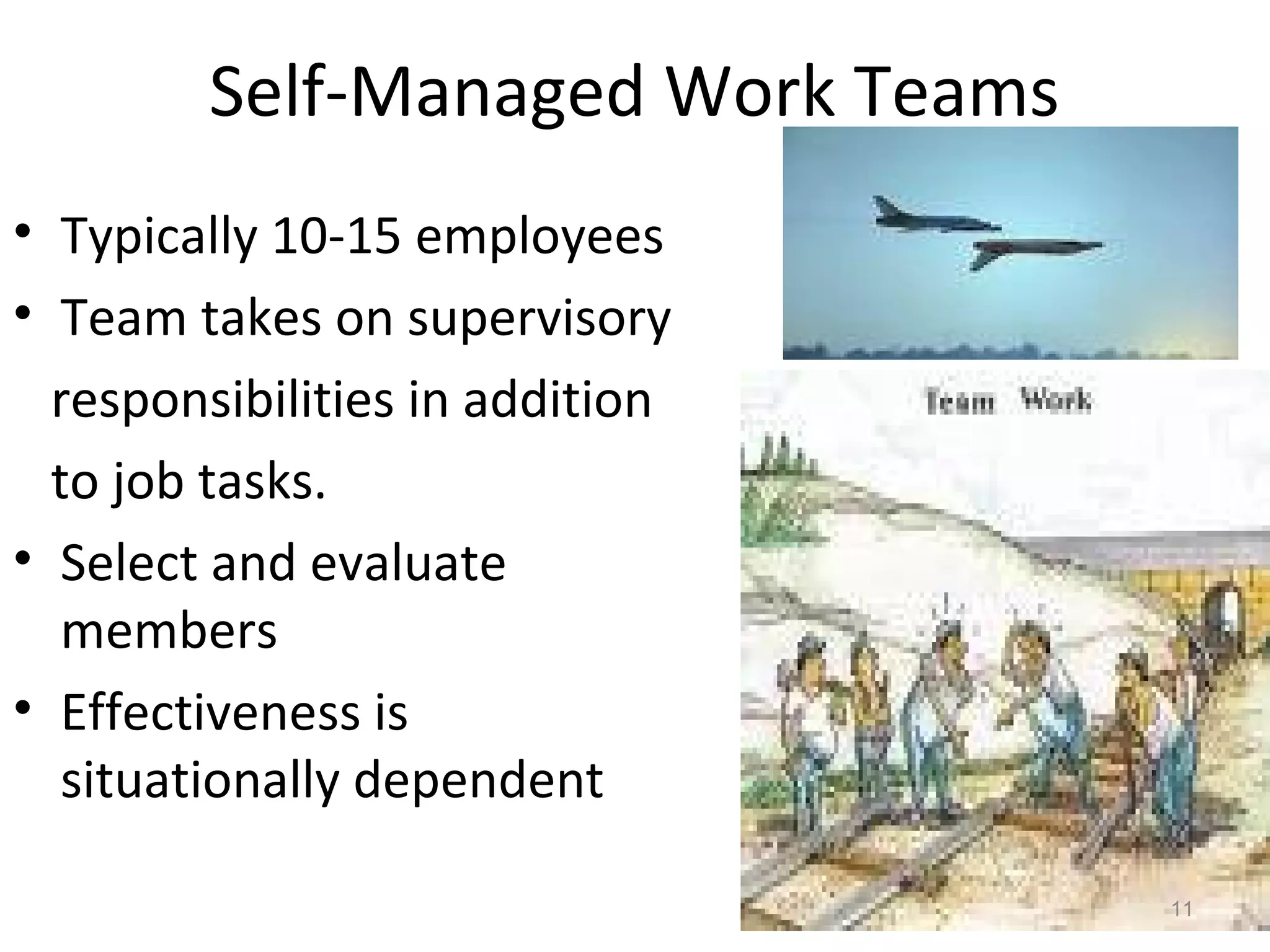
• Typically 10-15 employees
• Team takes on supervisory
responsibilities in addition
to job tasks.
• Select and evaluate
members
• Effectiveness is
situationally dependent
11
• Self managed work team are groups of
employees who perform highly related jobs
and take on many of the responsibilities of
their former supervisors.
• Typically this includes planning and scheduling
of work, assigning task to members, collective
control over the pace of work, making
operating decision, taking action on problems
and working with supliers and customers.
12
Cross-Functional Team

13
Cross-Functional Teams
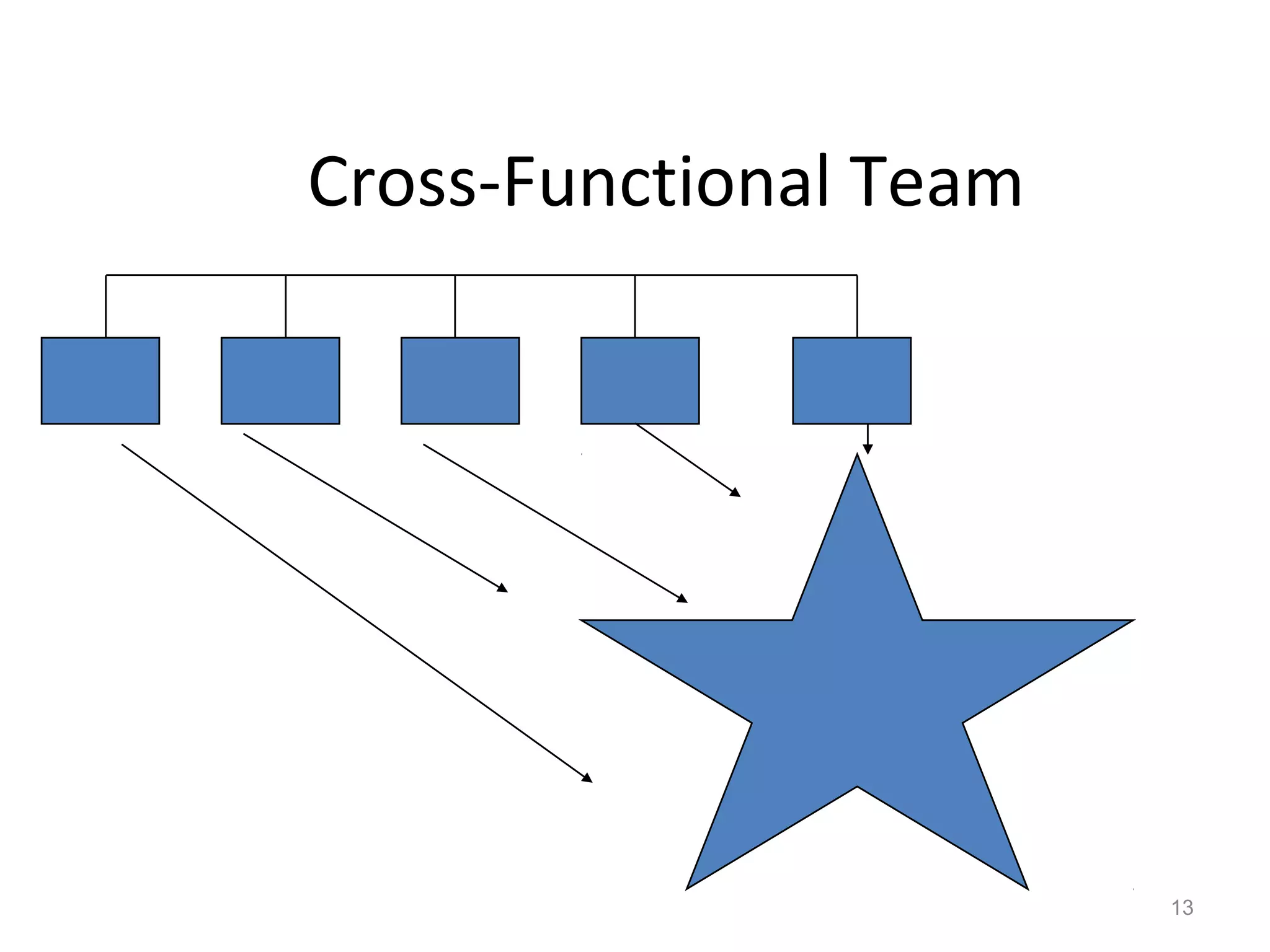
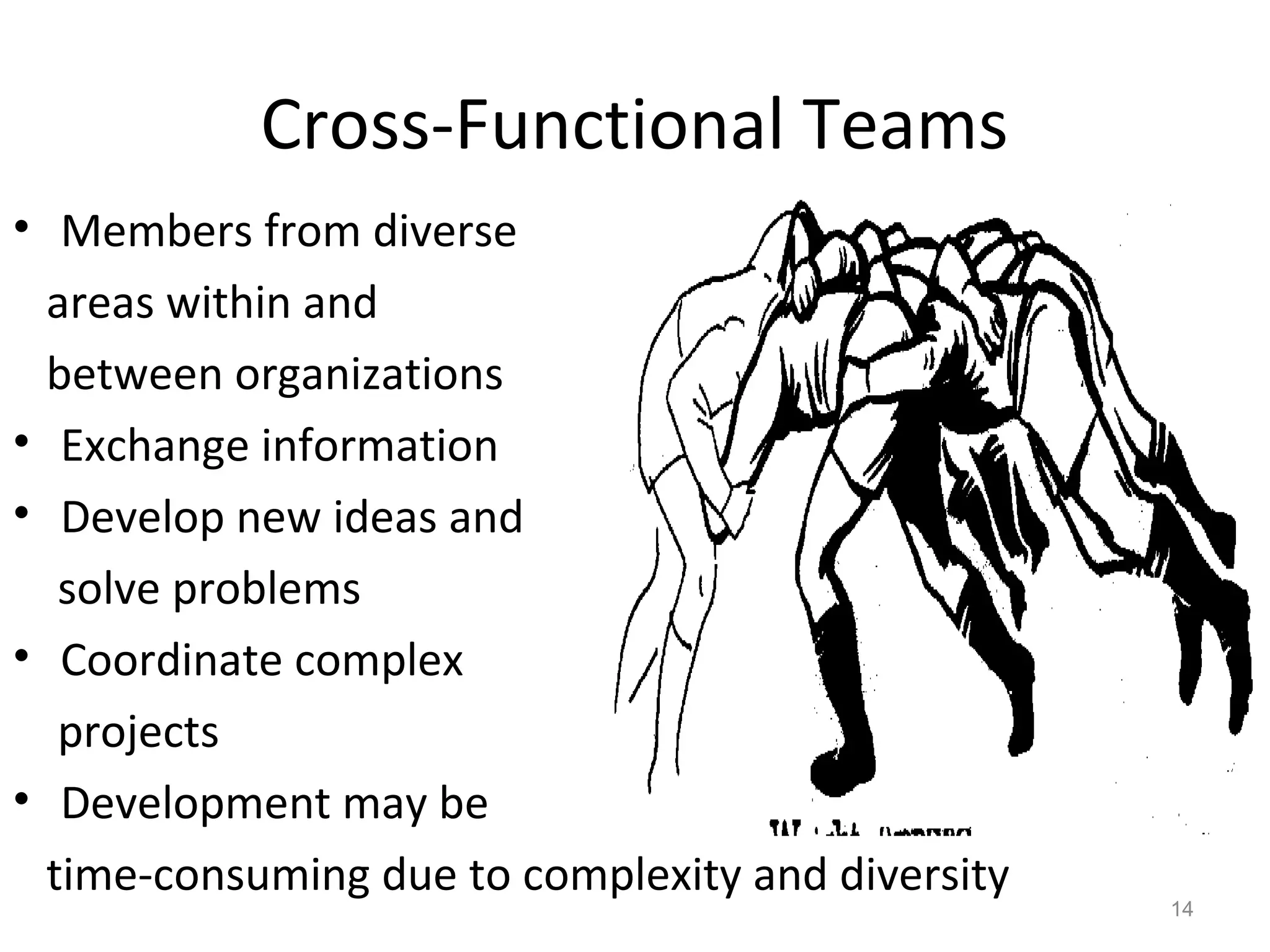
• Members from diverse
areas within and
between organizations
• Exchange information
• Develop new ideas and
solve problems
• Coordinate complex
projects
• Development may be
time-consuming due to complexity and diversity

14
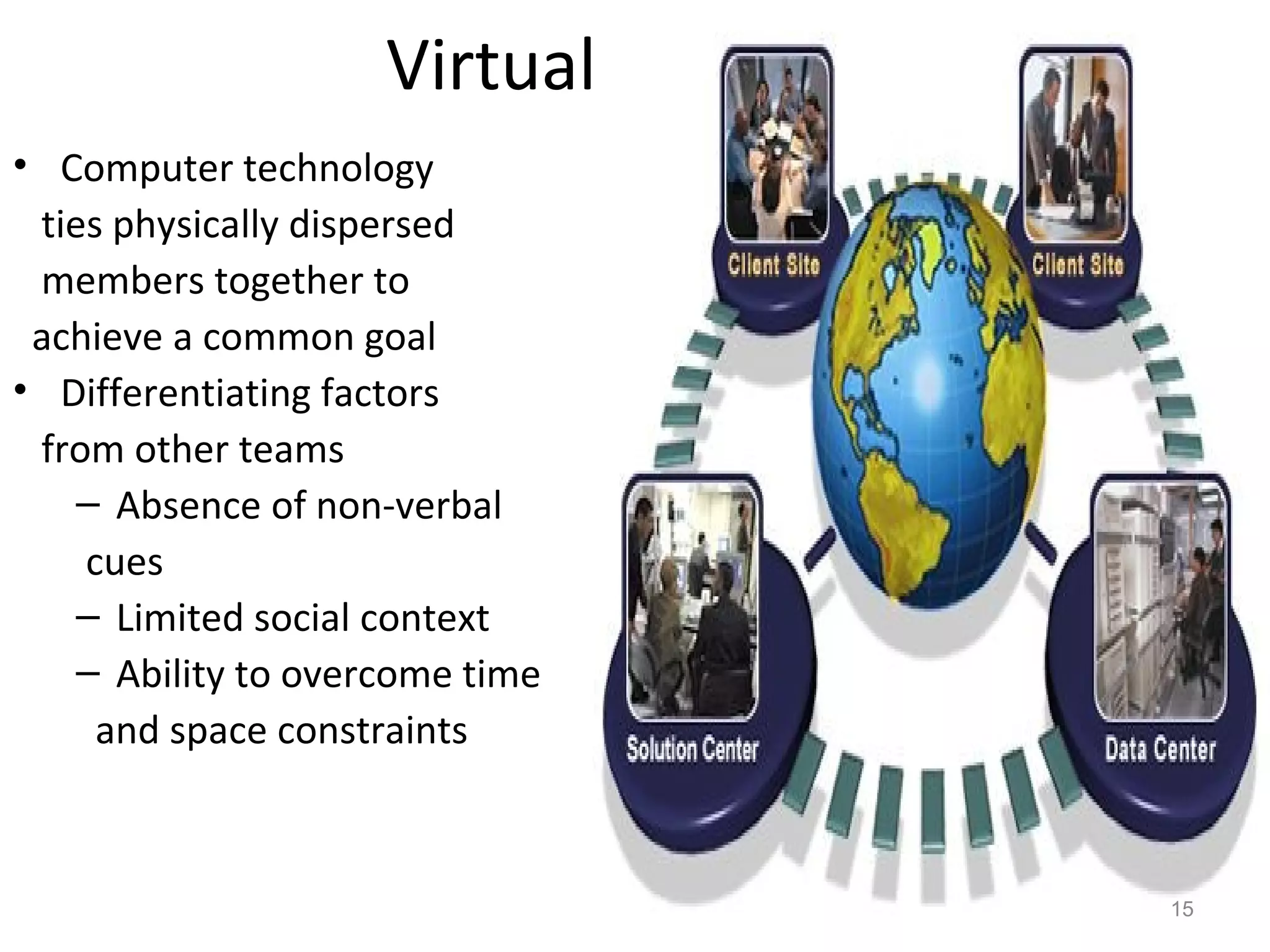
Virtual Teams
• Computer technology
ties physically dispersed
members together to
achieve a common goal
• Differentiating factors
from other teams
– Absence of non-verbal
cues
– Limited social context
– Ability to overcome time
and space constraints

15
Turning Individuals into Team Players
The Challenges
• Overcoming individual resistance to team membership
• Countering the influence of individualistic cultures
• Introducing teams in an organization that has historically valued
individual achievement

Shaping Team Players
• Selecting employees who can fulfill their team roles
• Training employees to become team players
• Reworking the reward system to encourage cooperative efforts while
continuing to recognize individual contributions

Understanding workteams

  • 1.
  • 2.
  • 3.
    Why have teamsbecome so popular? • Outperform individuals on tasks requiring multiple skills, judgment, and experience • Better utilization of employee talents. • Effective way for management to democratize the organization and increase employee motivation 3
  • 4.
    Work Group vs.Work Team • Work Group A group who interacts primarily to share information and to make decisions to help one another perform within each member’s area of responsibility, • Work Team Generates positive synergy through coordinated effort for a common goal. A group whose Individual efforts result in a level of performance that is greater than the sum of those individual inputs 4
  • 5.
    Comparing Work Groupsand Work Teams 5
  • 6.
  • 7.
  • 8.
  • 9.
    Problem-Solving Teams • Shareideas or offer suggestions on how work processes and methods can be improved • Rarely given authority to implement any of their suggested actions 9
  • 10.
  • 11.
    Self-Managed Work Teams •Typically 10-15 employees • Team takes on supervisory responsibilities in addition to job tasks. • Select and evaluate members • Effectiveness is situationally dependent 11
  • 12.
    • Self managedwork team are groups of employees who perform highly related jobs and take on many of the responsibilities of their former supervisors. • Typically this includes planning and scheduling of work, assigning task to members, collective control over the pace of work, making operating decision, taking action on problems and working with supliers and customers. 12
  • 13.
  • 14.
    Cross-Functional Teams • Membersfrom diverse areas within and between organizations • Exchange information • Develop new ideas and solve problems • Coordinate complex projects • Development may be time-consuming due to complexity and diversity 14
  • 15.
    Virtual Teams • Computertechnology ties physically dispersed members together to achieve a common goal • Differentiating factors from other teams – Absence of non-verbal cues – Limited social context – Ability to overcome time and space constraints 15
  • 16.
    Turning Individuals intoTeam Players The Challenges • Overcoming individual resistance to team membership • Countering the influence of individualistic cultures • Introducing teams in an organization that has historically valued individual achievement Shaping Team Players • Selecting employees who can fulfill their team roles • Training employees to become team players • Reworking the reward system to encourage cooperative efforts while continuing to recognize individual contributions

Editor's Notes

  • #7 Problem-Solving Teams share ideas and suggest improvements to work processes and methods; however, such teams rarely have the authority to implement their suggestions. Self-Managed Work Teams are autonomous, select their own members, and implement and take responsibility for their suggestions. These teams consist of ten to fifteen people who assume the responsibilities of their former supervisors: such as, control over the pace of work, organization of breaks, determination of work assignments, choice of inspection procedures, and choosing and evaluating members. Virtual teams use computer technology to enable physically dispersed team members to achieve a common goal. Virtual teams do all the things that other teams do. Three primary factors differentiate virtual teams from face-to-face teams: (1) the absence of paraverbal and nonverbal cues, (2) limited social context, and (3) the ability to overcome time and space constraints. On cross-functional teams, equally ranked employees from different functional areas work together to accomplish a task. Two examples are task forces and committees composed of members from across departmental lines. These teams expedite the following: exchanging ideas from diverse areas within or between organizations, developing new ideas and solving problems, and coordinating complex projects.
  • #9 Another type of team is a problem-solving team. This is a team, typically composed of 5-12 employees from the same department, who meet and discuss ways to improve quality, efficiently, and the work environment. During the 1980s, the most visible example of this type of team was the quality circle. However, these teams usually did not have the authority to implement any of their suggestions. The solutions are forwarded to more senior managers for approval and implementation.
  • #11 Another common type of team in today’s organization is the self-directed or self-managed team. This is a group of employees that operates without a manager and is responsible for a complete work process or segment that delivers a product or service to the customer. A good example is the Saturn Car Company where a self-directed team is responsible for the complete production of a car.
  • #14 The fourth type of team discussed will be the cross-functional team, which consists of employees from about the same hierarchical level but from different units in the organization. They are usually brought together to perform a specific task or undertake a particular project. These types of teams are a good way to allow and encourage employees from very different areas in the organization to exchange information and ideas.