Cracking the ‘Employee Onboarding’ Code
Best practices to improve engagement and retention of new hires
Reflect on your
onboarding
experience
What contributed to
make the experience
negative or positive?
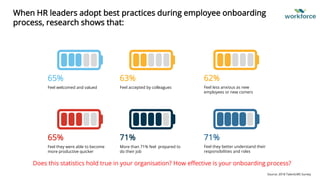
63%
Feel accepted by colleagues
65%
Feel welcomed and valued
71%
More than 71% feel prepared to
do their job
65%
Feel they were able to become
more productive quicker
When HR leaders adopt best practices during employee onboarding
process, research shows that:
62%
Feel less anxious as new
employees or new comers
71%
Feel they better understand their
responsibilities and roles
Source: 2018 TalentLMS Survey
Does this statistics hold true in your organisation? How effective is your onboarding process?
Onboarding
Businesses today employ various methods to bring
employees on board. However, onboarding produces the
greatest return on investment when it is intentional,
collaborative and managed over the span of the first year as
your new employee evolves in the job.
What is Employee
Onboarding?
Employee onboarding is an essential process for any
business. It is the process of introducing new
employees to the social and performance aspects of
their new job. It is an integral part of the employee
recruitment process, and its primary goal is to ensure
new hires become comfortable with their new position
and are able to contribute to the company right away.
The onboarding process begins with the hiring process,
and continues until the new employee is fully
integrated with the team.
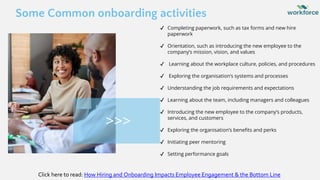
Some Common onboarding activities
✔ Completing paperwork, such as tax forms and new hire
paperwork
✔ Orientation, such as introducing the new employee to the
company’s mission, vision, and values
✔ Learning about the workplace culture, policies, and procedures
✔ Exploring the organisation’s systems and processes
✔ Understanding the job requirements and expectations
✔ Learning about the team, including managers and colleagues
✔ Introducing the new employee to the company’s products,
services, and customers
✔ Exploring the organisation’s benefits and perks
✔ Initiating peer mentoring
✔ Setting performance goals
>>>
Click here to read: How Hiring and Onboarding Impacts Employee Engagement & the Bottom Line
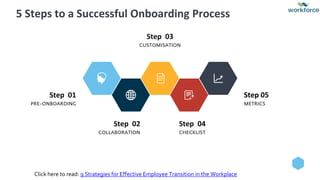
5 Steps to a Successful Onboarding Process
PRE-ONBOARDING
Step 01
METRICS
Step 05
CUSTOMISATION
Step 03
COLLABORATION
Step 02
CHECKLIST
Step 04
Click here to read: 9 Strategies for Effective Employee Transition in the Workplace
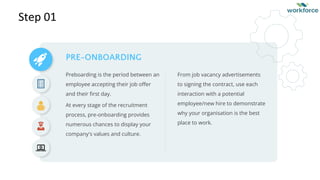
Step 01
PRE-ONBOARDING
Preboarding is the period between an
employee accepting their job offer
and their first day.
At every stage of the recruitment
process, pre-onboarding provides
numerous chances to display your
company's values and culture.
From job vacancy advertisements
to signing the contract, use each
interaction with a potential
employee/new hire to demonstrate
why your organisation is the best
place to work.
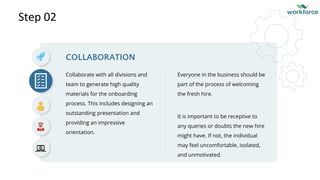
Step 02
COLLABORATION
Collaborate with all divisions and
team to generate high quality
materials for the onboarding
process. This includes designing an
outstanding presentation and
providing an impressive
orientation.
Everyone in the business should be
part of the process of welcoming
the fresh hire.
It is important to be receptive to
any queries or doubts the new hire
might have. If not, the individual
may feel uncomfortable, isolated,
and unmotivated.
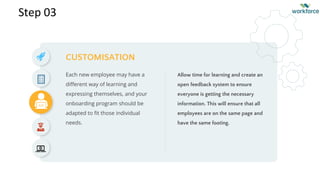
Step 03
CUSTOMISATION
Each new employee may have a
different way of learning and
expressing themselves, and your
onboarding program should be
adapted to fit those individual
needs.
Allow time for learning and create an
open feedback system to ensure
everyone is getting the necessary
information. This will ensure that all
employees are on the same page and
have the same footing.
Step 04
CHECKLIST
An onboarding checklist
is a helpful tool that
assists in keeping the
process of onboarding
running smoothly.
It contains all the tasks required to get ready for
bringing on a new employee, such as setting up a
workspace, organising email accounts, obtaining any
necessary hardware or software, providing the
employee handbook, etc.
Some organisations create checklist of all the major
areas and share with the new hire. The new employee
marks the checklist as "done" once they are
comfortable in an area. The HR manager can view the
checklist to know where a new hire hasn't fully settled in
and can deploy tailored interventions to close those
gaps.
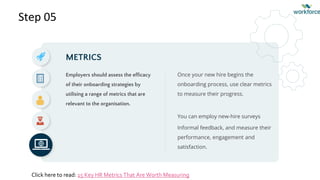
Step 05
METRICS
Employers should assess the efficacy
of their onboarding strategies by
utilising a range of metrics that are
relevant to the organisation.
Once your new hire begins the
onboarding process, use clear metrics
to measure their progress.
You can employ new-hire surveys
Informal feedback, and measure their
performance, engagement and
satisfaction.
Click here to read: 15 Key HR Metrics That Are Worth Measuring
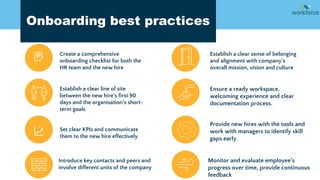
Onboarding best practices
Create a comprehensive
onboarding checklist for both the
HR team and the new hire
Establish a clear line of site
between the new hire's first 90
days and the organisation’s short-
term goals
Set clear KPIs and communicate
them to the new hire effectively
Establish a clear sense of belonging
and alignment with company's
overall mission, vision and culture
Ensure a ready workspace,
welcoming experience and clear
documentation process.
Provide new hires with the tools and
work with managers to identify skill
gaps early
Introduce key contacts and peers and
involve different units of the company
Monitor and evaluate employee’s
progress over time, provide continuous
feedback
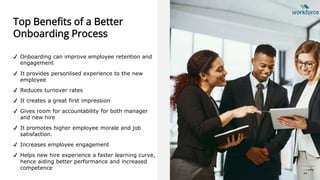
✔ Onboarding can improve employee retention and
engagement
✔ It provides personlised experience to the new
employee
✔ Reduces turnover rates
✔ It creates a great first impression
✔ Gives room for accountability for both manager
and new hire
✔ It promotes higher employee morale and job
satisfaction.
✔ Increases employee engagement
✔ Helps new hire experience a faster learning curve,
hence aiding better performance and increased
competence
Top Benefits of a Better
Onboarding Process
14
Key things to
remember
Gathering feedback continually from new employees
concerning the onboarding experience ensures that
procedures are continually evaluated and improved,
and that your personnel succeed, not just get by.
YOUR BUSINESS YOUR PEOPLE OUR FOCUS
=
Workforce Group
… We go
beyond
What we do
We help organisations solve problems around:
Staff Payroll
Management
Performance management
support
Health insurance management
Executive, Experienced and
Graduate Recruitment
Staff onboarding and
training
Staff records
management
Leave and exit
management
Background
verification
Strategy Development and
Execution
Digital Learning Function Specific
Programmes
Leadership
Development
Digital Content Creation and
Conversion
Assessment and
Development centre
Occupational testing
and Success Profiling
Independent Contractor
Management
Assessor skills training
Professional Employer
Organisation
Employer of Record
Recruitment Process
Outsourcing
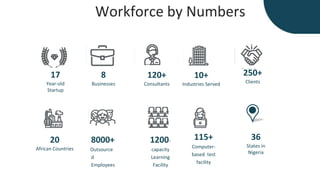
Workforce by Numbers
17
Year-old
Startup
8
Businesses
120+
Consultants
20
African Countries
8000+
Outsource
d
Employees
1200-
capacity
Learning
Facility
115+
Computer-
based test
facility
250+
Clients
10+
Industries Served
36
States in
Nigeria
READY TO GET
STARTED?
Visit https://workforcegroup.com/workforce-advisory/
or
Send an email to - hello@workforcegroup.com

Cracking The Employee Onboarding Code

  • 1.
    Cracking the ‘EmployeeOnboarding’ Code Best practices to improve engagement and retention of new hires
  • 2.
    Reflect on your onboarding experience Whatcontributed to make the experience negative or positive?
  • 3.
    63% Feel accepted bycolleagues 65% Feel welcomed and valued 71% More than 71% feel prepared to do their job 65% Feel they were able to become more productive quicker When HR leaders adopt best practices during employee onboarding process, research shows that: 62% Feel less anxious as new employees or new comers 71% Feel they better understand their responsibilities and roles Source: 2018 TalentLMS Survey Does this statistics hold true in your organisation? How effective is your onboarding process?
  • 4.
    Onboarding Businesses today employvarious methods to bring employees on board. However, onboarding produces the greatest return on investment when it is intentional, collaborative and managed over the span of the first year as your new employee evolves in the job.
  • 5.
    What is Employee Onboarding? Employeeonboarding is an essential process for any business. It is the process of introducing new employees to the social and performance aspects of their new job. It is an integral part of the employee recruitment process, and its primary goal is to ensure new hires become comfortable with their new position and are able to contribute to the company right away. The onboarding process begins with the hiring process, and continues until the new employee is fully integrated with the team.
  • 6.
    Some Common onboardingactivities ✔ Completing paperwork, such as tax forms and new hire paperwork ✔ Orientation, such as introducing the new employee to the company’s mission, vision, and values ✔ Learning about the workplace culture, policies, and procedures ✔ Exploring the organisation’s systems and processes ✔ Understanding the job requirements and expectations ✔ Learning about the team, including managers and colleagues ✔ Introducing the new employee to the company’s products, services, and customers ✔ Exploring the organisation’s benefits and perks ✔ Initiating peer mentoring ✔ Setting performance goals >>> Click here to read: How Hiring and Onboarding Impacts Employee Engagement & the Bottom Line
  • 7.
    5 Steps toa Successful Onboarding Process PRE-ONBOARDING Step 01 METRICS Step 05 CUSTOMISATION Step 03 COLLABORATION Step 02 CHECKLIST Step 04 Click here to read: 9 Strategies for Effective Employee Transition in the Workplace
  • 8.
    Step 01 PRE-ONBOARDING Preboarding isthe period between an employee accepting their job offer and their first day. At every stage of the recruitment process, pre-onboarding provides numerous chances to display your company's values and culture. From job vacancy advertisements to signing the contract, use each interaction with a potential employee/new hire to demonstrate why your organisation is the best place to work.
  • 9.
    Step 02 COLLABORATION Collaborate withall divisions and team to generate high quality materials for the onboarding process. This includes designing an outstanding presentation and providing an impressive orientation. Everyone in the business should be part of the process of welcoming the fresh hire. It is important to be receptive to any queries or doubts the new hire might have. If not, the individual may feel uncomfortable, isolated, and unmotivated.
  • 10.
    Step 03 CUSTOMISATION Each newemployee may have a different way of learning and expressing themselves, and your onboarding program should be adapted to fit those individual needs. Allow time for learning and create an open feedback system to ensure everyone is getting the necessary information. This will ensure that all employees are on the same page and have the same footing.
  • 11.
    Step 04 CHECKLIST An onboardingchecklist is a helpful tool that assists in keeping the process of onboarding running smoothly. It contains all the tasks required to get ready for bringing on a new employee, such as setting up a workspace, organising email accounts, obtaining any necessary hardware or software, providing the employee handbook, etc. Some organisations create checklist of all the major areas and share with the new hire. The new employee marks the checklist as "done" once they are comfortable in an area. The HR manager can view the checklist to know where a new hire hasn't fully settled in and can deploy tailored interventions to close those gaps.
  • 12.
    Step 05 METRICS Employers shouldassess the efficacy of their onboarding strategies by utilising a range of metrics that are relevant to the organisation. Once your new hire begins the onboarding process, use clear metrics to measure their progress. You can employ new-hire surveys Informal feedback, and measure their performance, engagement and satisfaction. Click here to read: 15 Key HR Metrics That Are Worth Measuring
  • 13.
    Onboarding best practices Createa comprehensive onboarding checklist for both the HR team and the new hire Establish a clear line of site between the new hire's first 90 days and the organisation’s short- term goals Set clear KPIs and communicate them to the new hire effectively Establish a clear sense of belonging and alignment with company's overall mission, vision and culture Ensure a ready workspace, welcoming experience and clear documentation process. Provide new hires with the tools and work with managers to identify skill gaps early Introduce key contacts and peers and involve different units of the company Monitor and evaluate employee’s progress over time, provide continuous feedback
  • 14.
    ✔ Onboarding canimprove employee retention and engagement ✔ It provides personlised experience to the new employee ✔ Reduces turnover rates ✔ It creates a great first impression ✔ Gives room for accountability for both manager and new hire ✔ It promotes higher employee morale and job satisfaction. ✔ Increases employee engagement ✔ Helps new hire experience a faster learning curve, hence aiding better performance and increased competence Top Benefits of a Better Onboarding Process 14
  • 15.
    Key things to remember Gatheringfeedback continually from new employees concerning the onboarding experience ensures that procedures are continually evaluated and improved, and that your personnel succeed, not just get by.
  • 16.
    YOUR BUSINESS YOURPEOPLE OUR FOCUS = Workforce Group … We go beyond
  • 17.
    What we do Wehelp organisations solve problems around: Staff Payroll Management Performance management support Health insurance management Executive, Experienced and Graduate Recruitment Staff onboarding and training Staff records management Leave and exit management Background verification Strategy Development and Execution Digital Learning Function Specific Programmes Leadership Development Digital Content Creation and Conversion Assessment and Development centre Occupational testing and Success Profiling Independent Contractor Management Assessor skills training Professional Employer Organisation Employer of Record Recruitment Process Outsourcing
  • 18.
    Workforce by Numbers 17 Year-old Startup 8 Businesses 120+ Consultants 20 AfricanCountries 8000+ Outsource d Employees 1200- capacity Learning Facility 115+ Computer- based test facility 250+ Clients 10+ Industries Served 36 States in Nigeria
  • 19.
    READY TO GET STARTED? Visithttps://workforcegroup.com/workforce-advisory/ or Send an email to - hello@workforcegroup.com