Social Problems
Table of Contents
Introduction
Characteristics of Social Problems
Causes of Social Problems
Types of Social Problems
Role of Government
Role of NGOs and Civil Society
Conclusion
Introduction
Definition: Social problems are
societal issues that affect a large
number of individuals within a
society.
Understanding social problems is
crucial for creating effective
solutions.
Characteristics of Social Problems
Universality: Social problems exist in all societies.
Relative Nature: What is considered a social problem can vary by
culture and time.
Interconnectedness: Social problems are often interconnected and can
impact each other.
Social Reaction: They evoke responses from individuals, communities,
and institutions, including advocacy, policy changes, and community
mobilization to address the issues.
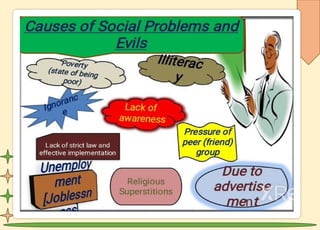
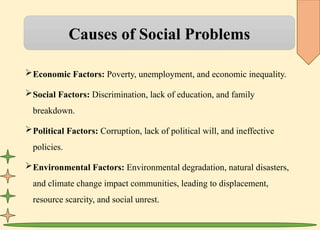
Causes of Social Problems
Economic Factors: Poverty, unemployment, and economic inequality.
Social Factors: Discrimination, lack of education, and family
breakdown.
Political Factors: Corruption, lack of political will, and ineffective
policies.
Environmental Factors: Environmental degradation, natural disasters,
and climate change impact communities, leading to displacement,
resource scarcity, and social unrest.
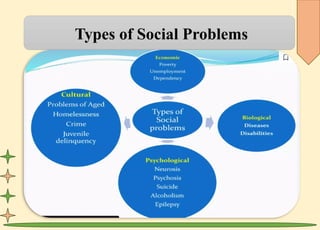
Types of Social Problems
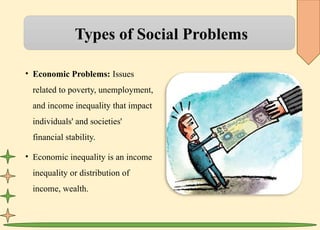
• Economic Problems: Issues
related to poverty, unemployment,
and income inequality that impact
individuals' and societies'
financial stability.
• Economic inequality is an income
inequality or distribution of
income, wealth.
Types of Social Problems
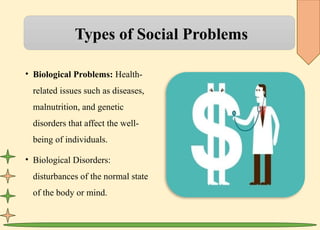
• Biological Problems: Health-
related issues such as diseases,
malnutrition, and genetic
disorders that affect the well-
being of individuals.
• Biological Disorders:
disturbances of the normal state
of the body or mind.
Types of Social Problems
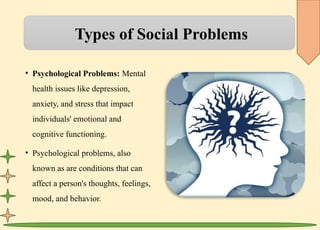
• Psychological Problems: Mental
health issues like depression,
anxiety, and stress that impact
individuals' emotional and
cognitive functioning.
• Psychological problems, also
known as are conditions that can
affect a person's thoughts, feelings,
mood, and behavior.
Types of Social Problems
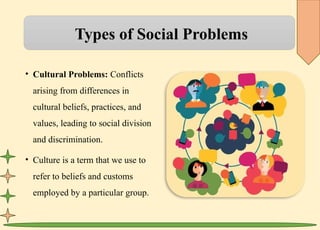
• Cultural Problems: Conflicts
arising from differences in
cultural beliefs, practices, and
values, leading to social division
and discrimination.
• Culture is a term that we use to
refer to beliefs and customs
employed by a particular group.
Role of Government
• Policy Development: Governments create and implement policies and
regulations to tackle social issues effectively.
• Resource Allocation: They allocate funds and resources to support
social programs and initiatives aimed at addressing these problems.
• Enforcement: Governments enforce laws and regulations to ensure
compliance and address societal issues like crime, environmental
degradation, and discrimination.
• Advocacy and Leadership: Governments also play a crucial role in
advocating for societal change and providing leadership in addressing
complex social challenges.
Role of NGOs and Civil Society
• Advocacy: They advocate for the rights and needs of marginalized
groups, raising awareness and influencing policies.
• Service Delivery: NGOs provide direct services and support to
communities affected by social problems, offering healthcare,
education, and humanitarian aid.
• Monitoring and Accountability: They monitor government actions,
hold them accountable for their commitments, and ensure transparency
in addressing social issues.
• Innovation and Flexibility: NGOs often innovate and adapt quickly to
changing social needs, filling gaps where government services may be
insufficient.
Conclusion
• Recap: We have explored various social problems including economic
disparities, health issues, environmental challenges, and social
inequalities.
• Call to Action: Let us all take proactive steps in our communities to
address these issues, whether through advocacy, volunteering, or
supporting local initiatives.
• Future Outlook: The future demands sustained efforts and innovative
solutions to create a more equitable and sustainable society. Together,
we can make a meaningful impact on the well-being of our
communities and future generations
References
• Wikipedia.org
• Google.com
• Seminarppt.com
• Studymafia.org
Thanks

Understanding-Social-Problems in Society.pptx

  • 1.
  • 2.
    Table of Contents Introduction Characteristicsof Social Problems Causes of Social Problems Types of Social Problems Role of Government Role of NGOs and Civil Society Conclusion
  • 3.
    Introduction Definition: Social problemsare societal issues that affect a large number of individuals within a society. Understanding social problems is crucial for creating effective solutions.
  • 4.
    Characteristics of SocialProblems Universality: Social problems exist in all societies. Relative Nature: What is considered a social problem can vary by culture and time. Interconnectedness: Social problems are often interconnected and can impact each other. Social Reaction: They evoke responses from individuals, communities, and institutions, including advocacy, policy changes, and community mobilization to address the issues.
  • 6.
    Causes of SocialProblems Economic Factors: Poverty, unemployment, and economic inequality. Social Factors: Discrimination, lack of education, and family breakdown. Political Factors: Corruption, lack of political will, and ineffective policies. Environmental Factors: Environmental degradation, natural disasters, and climate change impact communities, leading to displacement, resource scarcity, and social unrest.
  • 7.
  • 8.
    Types of SocialProblems • Economic Problems: Issues related to poverty, unemployment, and income inequality that impact individuals' and societies' financial stability. • Economic inequality is an income inequality or distribution of income, wealth.
  • 9.
    Types of SocialProblems • Biological Problems: Health- related issues such as diseases, malnutrition, and genetic disorders that affect the well- being of individuals. • Biological Disorders: disturbances of the normal state of the body or mind.
  • 10.
    Types of SocialProblems • Psychological Problems: Mental health issues like depression, anxiety, and stress that impact individuals' emotional and cognitive functioning. • Psychological problems, also known as are conditions that can affect a person's thoughts, feelings, mood, and behavior.
  • 11.
    Types of SocialProblems • Cultural Problems: Conflicts arising from differences in cultural beliefs, practices, and values, leading to social division and discrimination. • Culture is a term that we use to refer to beliefs and customs employed by a particular group.
  • 12.
    Role of Government •Policy Development: Governments create and implement policies and regulations to tackle social issues effectively. • Resource Allocation: They allocate funds and resources to support social programs and initiatives aimed at addressing these problems. • Enforcement: Governments enforce laws and regulations to ensure compliance and address societal issues like crime, environmental degradation, and discrimination. • Advocacy and Leadership: Governments also play a crucial role in advocating for societal change and providing leadership in addressing complex social challenges.
  • 13.
    Role of NGOsand Civil Society • Advocacy: They advocate for the rights and needs of marginalized groups, raising awareness and influencing policies. • Service Delivery: NGOs provide direct services and support to communities affected by social problems, offering healthcare, education, and humanitarian aid. • Monitoring and Accountability: They monitor government actions, hold them accountable for their commitments, and ensure transparency in addressing social issues. • Innovation and Flexibility: NGOs often innovate and adapt quickly to changing social needs, filling gaps where government services may be insufficient.
  • 14.
    Conclusion • Recap: Wehave explored various social problems including economic disparities, health issues, environmental challenges, and social inequalities. • Call to Action: Let us all take proactive steps in our communities to address these issues, whether through advocacy, volunteering, or supporting local initiatives. • Future Outlook: The future demands sustained efforts and innovative solutions to create a more equitable and sustainable society. Together, we can make a meaningful impact on the well-being of our communities and future generations
  • 15.
    References • Wikipedia.org • Google.com •Seminarppt.com • Studymafia.org
  • 16.