Social Issues Project for
your next Assignment
A Pathway to
Educational Success
This Presentation is generated in seconds with MagicSlides
Create presentation from text, YouTube, PDF to stunning Presentations
Visit www.magicslides.app for more
Scales of Social Problems
Photo by Pexels Photo by Pexels
Global vs. Local Varying scales
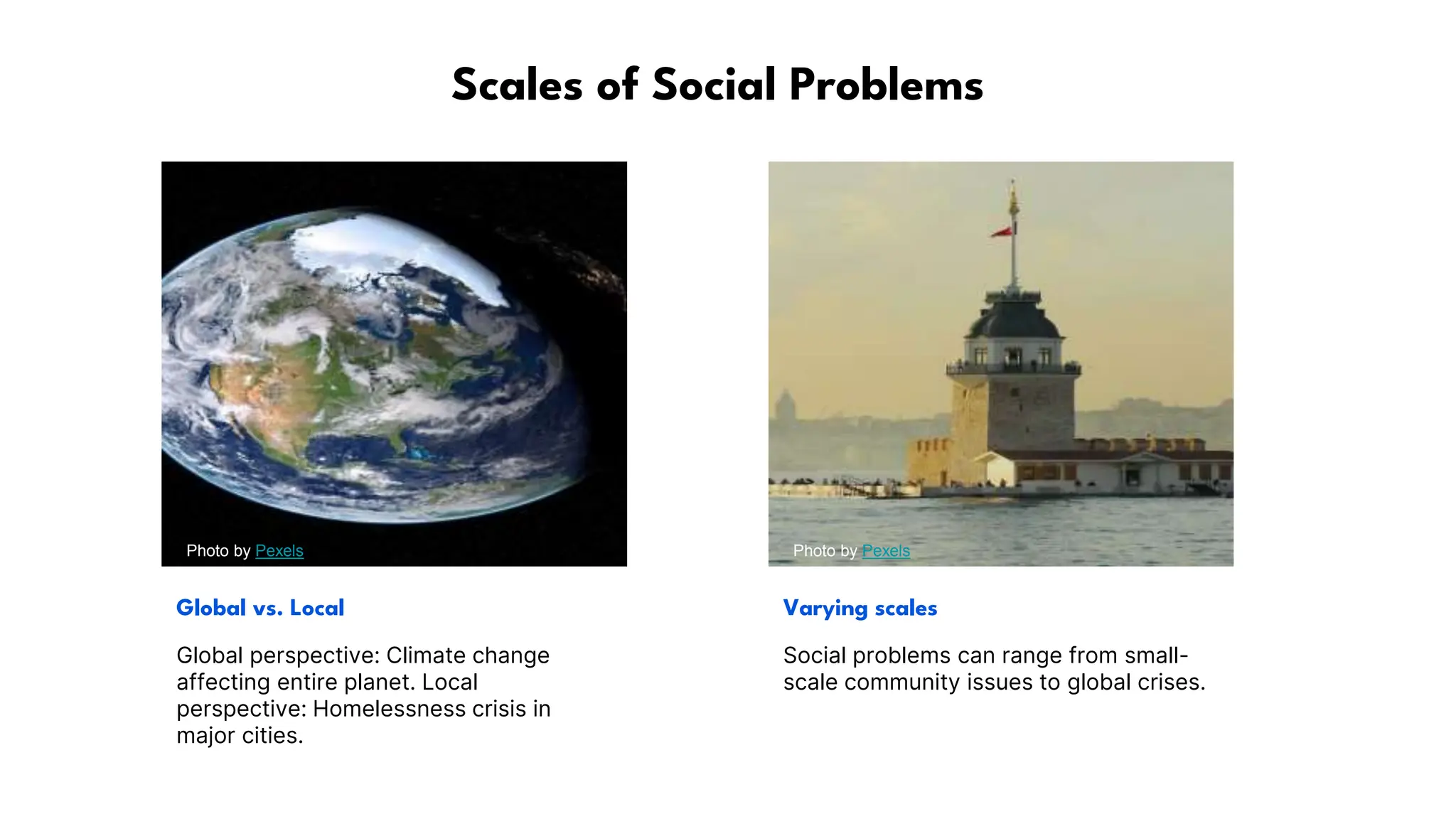
Global perspective: Climate change
affecting entire planet. Local
perspective: Homelessness crisis in
major cities.
Social problems can range from small-
scale community issues to global crises.
Introduction to Social Issues
Defining Contemporary Problems
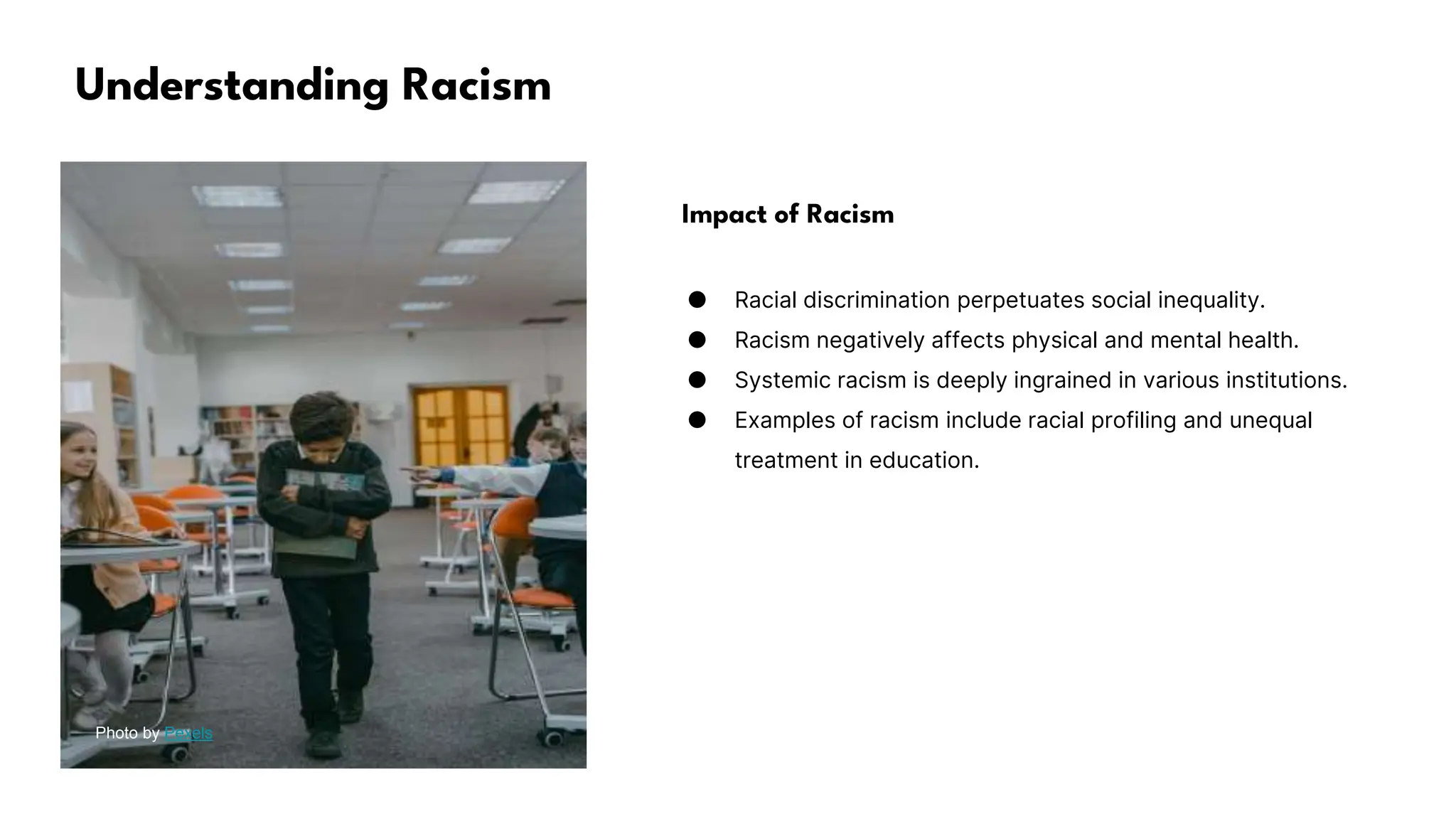
● Social issues are prevalent in modern society,
encompassing various challenges we face.
● These issues relate to inequality, poverty, discrimination,
and environmental concerns.
● For instance, income disparity creates divisions among
socioeconomic classes.
● Environmental degradation poses threats to wildlife and
future generations.
Photo by Pexels
Historical Overview of Social Issues
Roots and Evolution Explore the origins and development of social issues throughout
history.
Impact on Society Discuss how social issues have shaped societies and affected
individuals.
Current Challenges Highlight the pressing social issues faced by communities today.
Examining Poverty
Photo by Pexels
Persistent Social Issue
● Poverty has been a long-standing problem, affecting
millions of people worldwide.
● It is characterized by low income, inadequate access to
basic necessities, and limited opportunities for social
mobility.
● One example of poverty is lack of access to education,
which perpetuates the cycle of poverty for future
generations.
● Another aspect is the lack of affordable housing, leading to
homelessness and inadequate living conditions.
Understanding Racism
Photo by Pexels
Impact of Racism
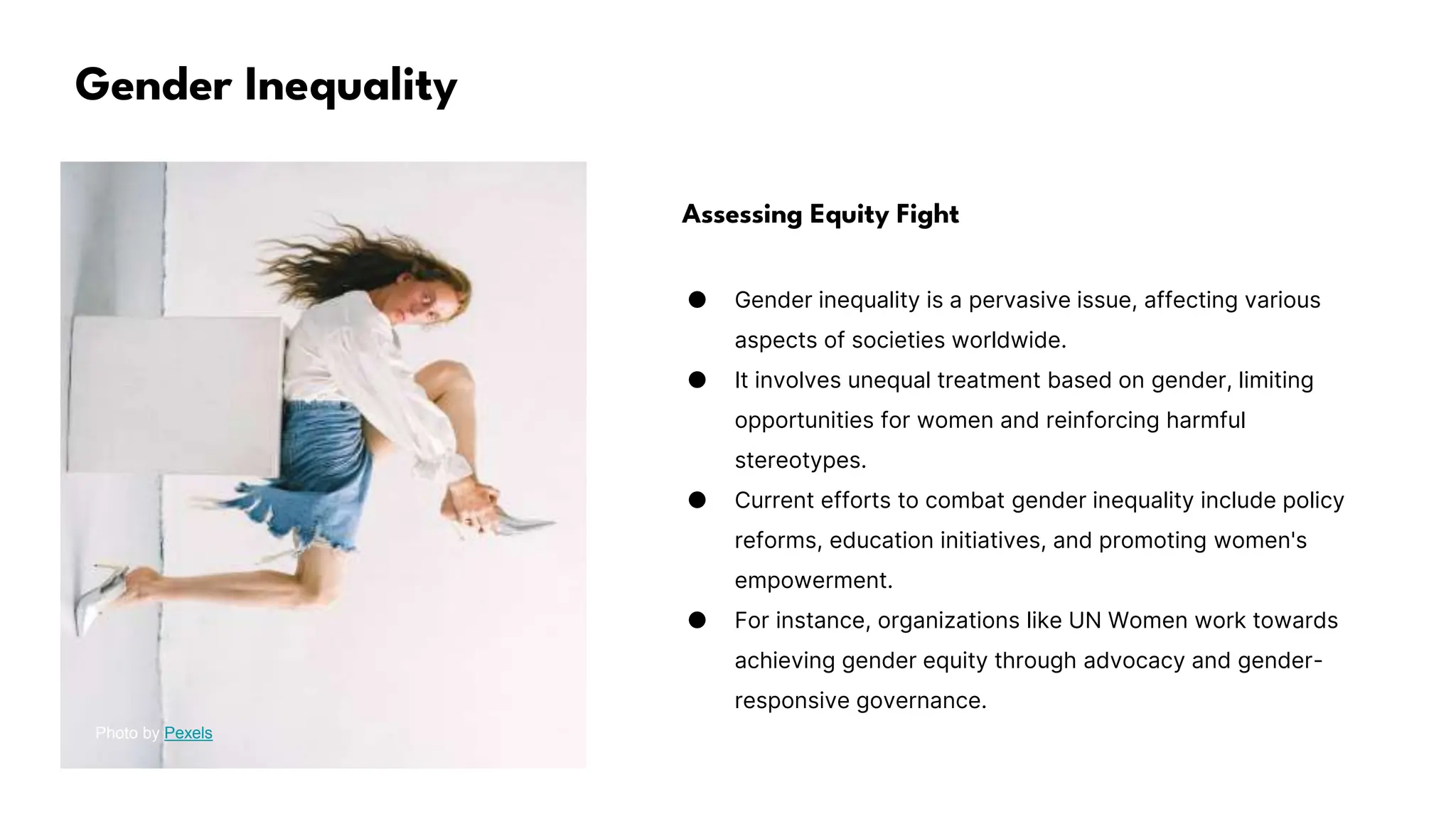
● Racial discrimination perpetuates social inequality.
● Racism negatively affects physical and mental health.
● Systemic racism is deeply ingrained in various institutions.
● Examples of racism include racial profiling and unequal
treatment in education.
Gender Inequality
Photo by Pexels
Assessing Equity Fight
● Gender inequality is a pervasive issue, affecting various
aspects of societies worldwide.
● It involves unequal treatment based on gender, limiting
opportunities for women and reinforcing harmful
stereotypes.
● Current efforts to combat gender inequality include policy
reforms, education initiatives, and promoting women's
empowerment.
● For instance, organizations like UN Women work towards
achieving gender equity through advocacy and gender-
responsive governance.
Healthcare Disparities
Benefits Challenges
● Increased accessibility to healthcare services
for all individuals
● Reduced healthcare disparities and improved
health outcomes
● Equitable distribution of healthcare resources
and facilities
● Limited availability of quality healthcare in
certain underserved areas
● Higher healthcare costs for individuals with
limited access
● Disparities in healthcare access based on
socioeconomic factors
Education: Pathway to Opportunity
Advantages of Education Challenges in Education
● Education improves social mobility by providing
individuals with knowledge and skills to
succeed.
● Higher levels of education are associated with
increased earning potential and better job
prospects.
● Education equips individuals with critical
thinking and problem-solving abilities essential
for personal and societal growth.
● Limited access to quality education hinders
social mobility, contributing to inequality.
● The cost of education can be a barrier for
individuals from disadvantaged backgrounds.
● Education alone may not guarantee equal
opportunities if systemic biases and
discrimination persist.
The Role of Technology
Technology has revolutionized the way we communicate, making it easier than ever to
connect with others around the world.
1
Social media platforms have transformed social relationships, enabling us to stay connected
with friends and family, but also increasing the prevalence of digital communication over
face-to-face interaction.
2
However, technology can also lead to a sense of isolation and loneliness, as online
interactions may lack the depth and intimacy of in-person relationships.
3
Environmental Challenges
Photo by Pexels Photo by Pexels Photo by Pexels
Societal Welfare Public Health Natural Resources
Environmental issues impact
the well-being of societies
worldwide.
Poor air quality and
contaminated water sources
pose health risks.
Depletion of resources affects
economic stability and future
generations.
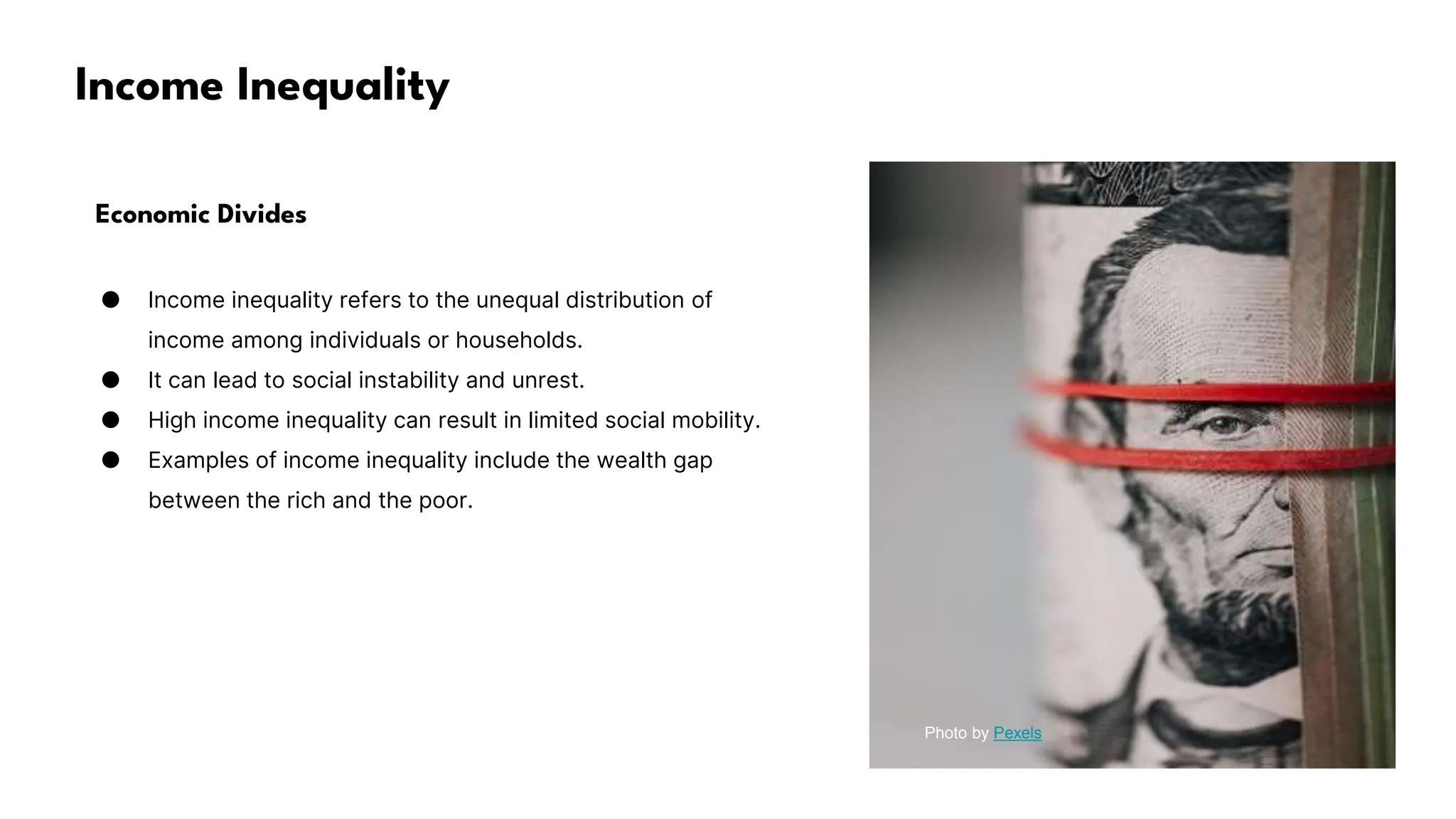
Income Inequality
Economic Divides
● Income inequality refers to the unequal distribution of
income among individuals or households.
● It can lead to social instability and unrest.
● High income inequality can result in limited social mobility.
● Examples of income inequality include the wealth gap
between the rich and the poor.
Photo by Pexels
The Power of Activism
Grassroots movements have a remarkable ability to mobilize communities and challenge the
status quo.
1
One example is the Civil Rights Movement in the 1960s, which successfully fought for racial
equality through peaceful protests and civil disobedience.
2
Another powerful example is the environmental movement, with activists advocating for
sustainable practices and urging corporations to minimize their carbon footprint.
3
Policy and Law: Paths to Reform
Legal Tools for Improvement
● Legal frameworks play a crucial role in driving reform and
societal progress.
● They provide a solid foundation to enforce policies and
regulations.
● By establishing clear guidelines, laws can ensure fair and
just outcomes.
● Examples include environmental regulations, labor laws,
and consumer protection measures.
Photo by Pexels
Our Role in the Solution
Empowering individuals to act
● By taking small actions, we can collectively make a big
impact.
● Individuals have the power to initiate positive change in
their communities.
● Empowering people encourages them to take
responsibility for their actions.
● Providing the necessary resources can enable individuals
to make a difference.
Photo by Pexels

Social Issues Project ideas for assignment

  • 1.
    Social Issues Projectfor your next Assignment A Pathway to Educational Success
  • 2.
    This Presentation isgenerated in seconds with MagicSlides Create presentation from text, YouTube, PDF to stunning Presentations Visit www.magicslides.app for more
  • 3.
    Scales of SocialProblems Photo by Pexels Photo by Pexels Global vs. Local Varying scales Global perspective: Climate change affecting entire planet. Local perspective: Homelessness crisis in major cities. Social problems can range from small- scale community issues to global crises.
  • 4.
    Introduction to SocialIssues Defining Contemporary Problems ● Social issues are prevalent in modern society, encompassing various challenges we face. ● These issues relate to inequality, poverty, discrimination, and environmental concerns. ● For instance, income disparity creates divisions among socioeconomic classes. ● Environmental degradation poses threats to wildlife and future generations. Photo by Pexels
  • 5.
    Historical Overview ofSocial Issues Roots and Evolution Explore the origins and development of social issues throughout history. Impact on Society Discuss how social issues have shaped societies and affected individuals. Current Challenges Highlight the pressing social issues faced by communities today.
  • 6.
    Examining Poverty Photo byPexels Persistent Social Issue ● Poverty has been a long-standing problem, affecting millions of people worldwide. ● It is characterized by low income, inadequate access to basic necessities, and limited opportunities for social mobility. ● One example of poverty is lack of access to education, which perpetuates the cycle of poverty for future generations. ● Another aspect is the lack of affordable housing, leading to homelessness and inadequate living conditions.
  • 7.
    Understanding Racism Photo byPexels Impact of Racism ● Racial discrimination perpetuates social inequality. ● Racism negatively affects physical and mental health. ● Systemic racism is deeply ingrained in various institutions. ● Examples of racism include racial profiling and unequal treatment in education.
  • 8.
    Gender Inequality Photo byPexels Assessing Equity Fight ● Gender inequality is a pervasive issue, affecting various aspects of societies worldwide. ● It involves unequal treatment based on gender, limiting opportunities for women and reinforcing harmful stereotypes. ● Current efforts to combat gender inequality include policy reforms, education initiatives, and promoting women's empowerment. ● For instance, organizations like UN Women work towards achieving gender equity through advocacy and gender- responsive governance.
  • 9.
    Healthcare Disparities Benefits Challenges ●Increased accessibility to healthcare services for all individuals ● Reduced healthcare disparities and improved health outcomes ● Equitable distribution of healthcare resources and facilities ● Limited availability of quality healthcare in certain underserved areas ● Higher healthcare costs for individuals with limited access ● Disparities in healthcare access based on socioeconomic factors
  • 10.
    Education: Pathway toOpportunity Advantages of Education Challenges in Education ● Education improves social mobility by providing individuals with knowledge and skills to succeed. ● Higher levels of education are associated with increased earning potential and better job prospects. ● Education equips individuals with critical thinking and problem-solving abilities essential for personal and societal growth. ● Limited access to quality education hinders social mobility, contributing to inequality. ● The cost of education can be a barrier for individuals from disadvantaged backgrounds. ● Education alone may not guarantee equal opportunities if systemic biases and discrimination persist.
  • 11.
    The Role ofTechnology Technology has revolutionized the way we communicate, making it easier than ever to connect with others around the world. 1 Social media platforms have transformed social relationships, enabling us to stay connected with friends and family, but also increasing the prevalence of digital communication over face-to-face interaction. 2 However, technology can also lead to a sense of isolation and loneliness, as online interactions may lack the depth and intimacy of in-person relationships. 3
  • 12.
    Environmental Challenges Photo byPexels Photo by Pexels Photo by Pexels Societal Welfare Public Health Natural Resources Environmental issues impact the well-being of societies worldwide. Poor air quality and contaminated water sources pose health risks. Depletion of resources affects economic stability and future generations.
  • 13.
    Income Inequality Economic Divides ●Income inequality refers to the unequal distribution of income among individuals or households. ● It can lead to social instability and unrest. ● High income inequality can result in limited social mobility. ● Examples of income inequality include the wealth gap between the rich and the poor. Photo by Pexels
  • 14.
    The Power ofActivism Grassroots movements have a remarkable ability to mobilize communities and challenge the status quo. 1 One example is the Civil Rights Movement in the 1960s, which successfully fought for racial equality through peaceful protests and civil disobedience. 2 Another powerful example is the environmental movement, with activists advocating for sustainable practices and urging corporations to minimize their carbon footprint. 3
  • 15.
    Policy and Law:Paths to Reform Legal Tools for Improvement ● Legal frameworks play a crucial role in driving reform and societal progress. ● They provide a solid foundation to enforce policies and regulations. ● By establishing clear guidelines, laws can ensure fair and just outcomes. ● Examples include environmental regulations, labor laws, and consumer protection measures. Photo by Pexels
  • 16.
    Our Role inthe Solution Empowering individuals to act ● By taking small actions, we can collectively make a big impact. ● Individuals have the power to initiate positive change in their communities. ● Empowering people encourages them to take responsibility for their actions. ● Providing the necessary resources can enable individuals to make a difference. Photo by Pexels