Understanding Multiple Sclerosis &
Management updates
Dr. Ajay Kumar Agarwalla
MD (Neurology), MRCP (UK)
Multiple sclerosis is a chronic, progressive, inflammatory disease of the central
nervous system
CNS, central nervous system.
1. Frisullo G, et al. J Neuroimmunol 2012;249:112–6; 2. Zwibel HL. Adv Ther 2009:26:1043–57; 3. Dutta R, Trapp BD. Prog Neurobiol 2011;93:1–12;
4. Hauser SL, Oksenberg JR. Neuron 2006;52:61–76; 5. Markowitz CE, et al. Am J Manag Care 2010;16:S211–8.
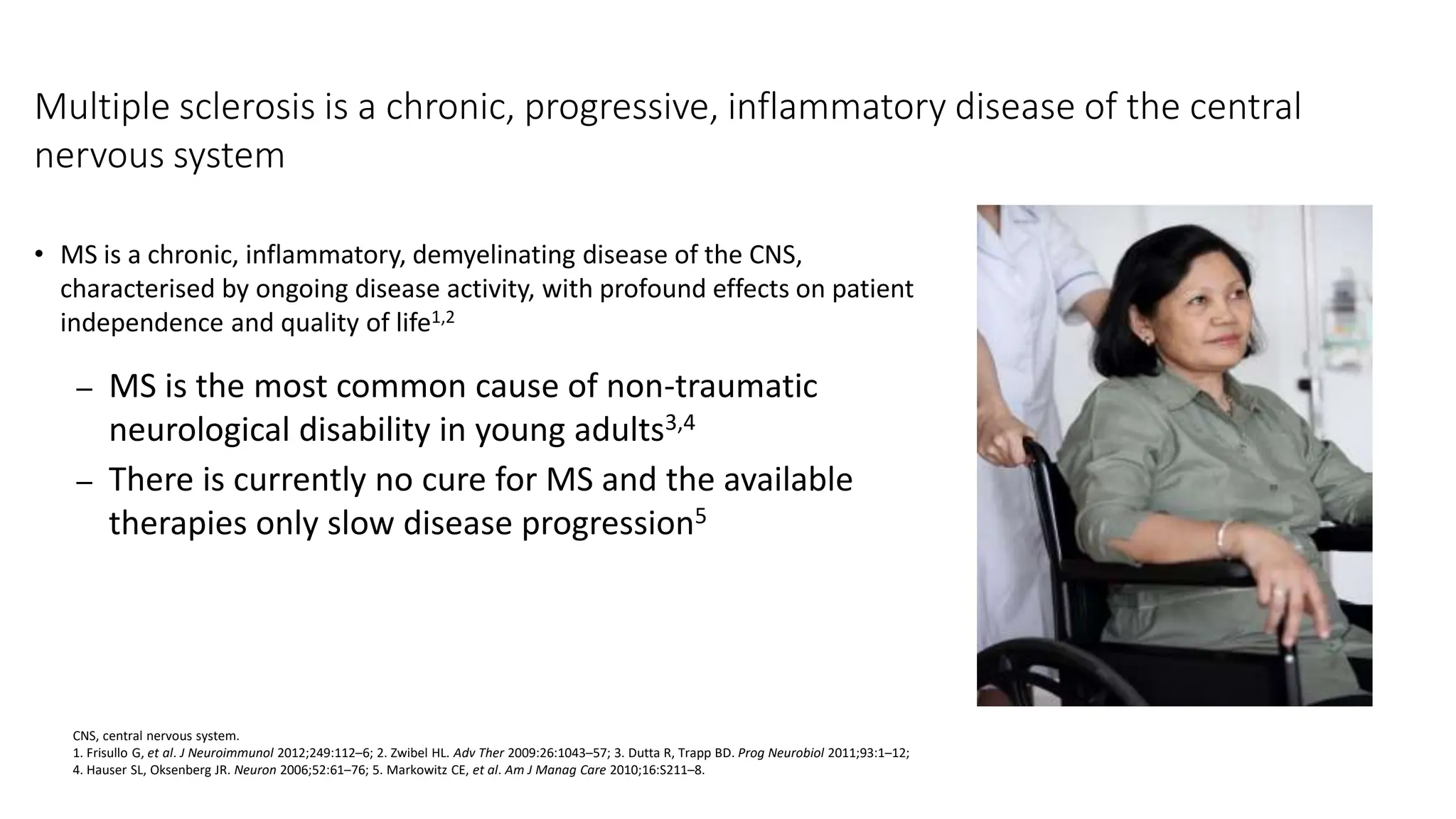
• MS is a chronic, inflammatory, demyelinating disease of the CNS,
characterised by ongoing disease activity, with profound effects on patient
independence and quality of life1,2
– MS is the most common cause of non-traumatic
neurological disability in young adults3,4
– There is currently no cure for MS and the available
therapies only slow disease progression5
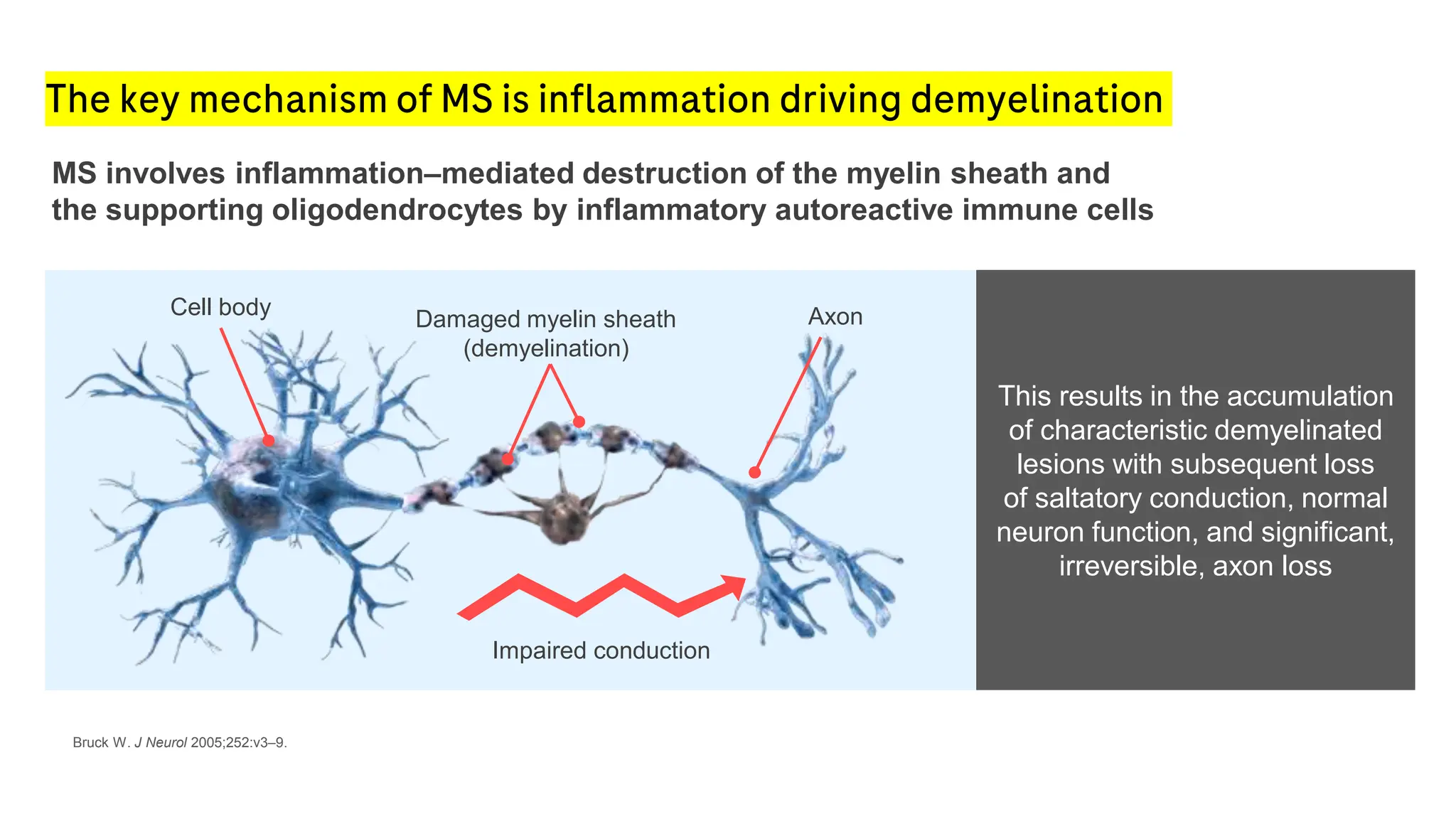
The key mechanism of MS is inflammation driving demyelination
Bruck W. J Neurol 2005;252:v3–9.
Damaged myelin sheath
(demyelination)
Impaired conduction
Cell body Axon
MS involves inflammation–mediated destruction of the myelin sheath and
the supporting oligodendrocytes by inflammatory autoreactive immune cells
This results in the accumulation
of characteristic demyelinated
lesions with subsequent loss
of saltatory conduction, normal
neuron function, and significant,
irreversible, axon loss
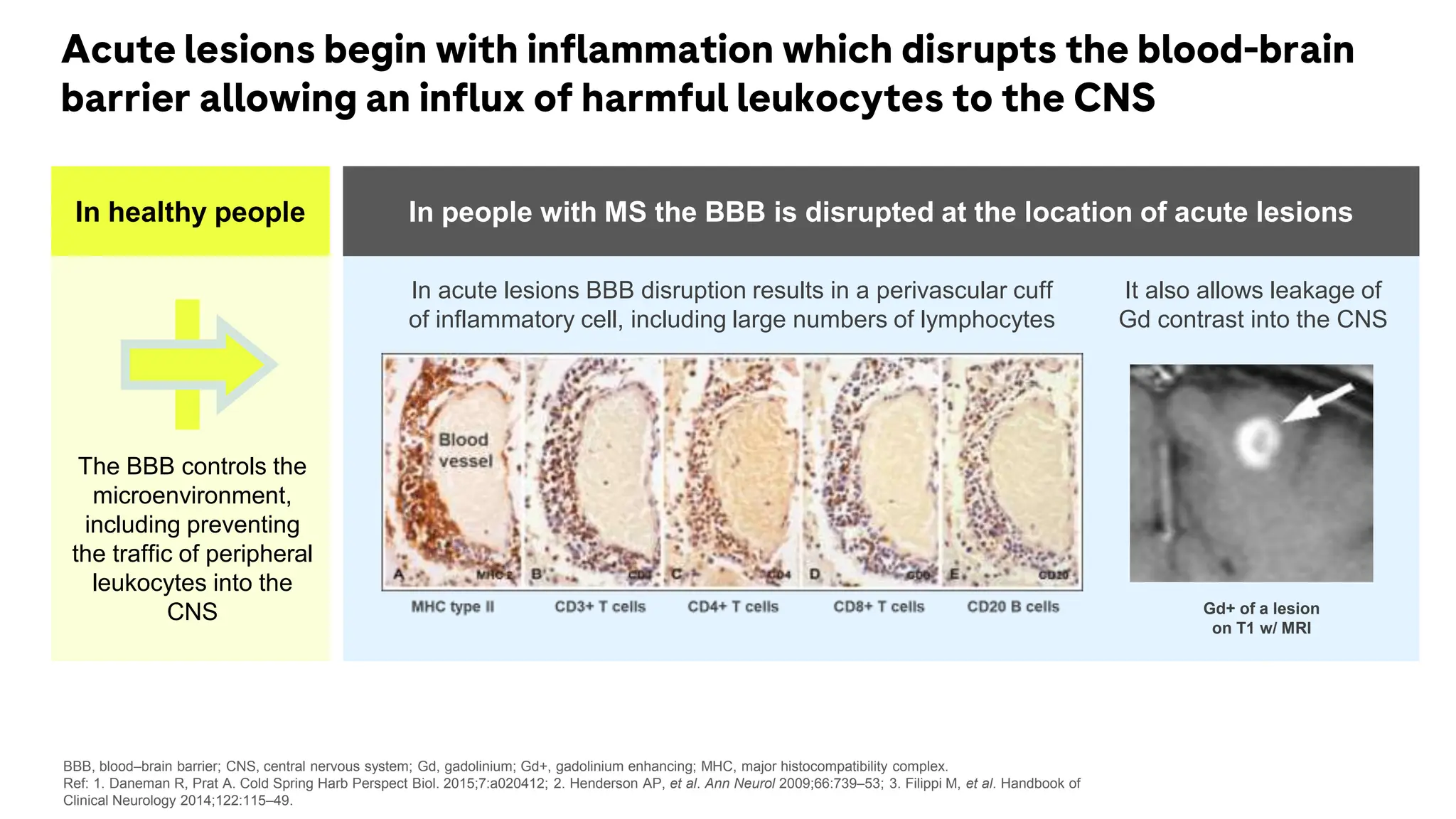
Acute lesions begin with inflammation which disrupts the blood-brain
barrier allowing an influx of harmful leukocytes to the CNS
BBB, blood–brain barrier; CNS, central nervous system; Gd, gadolinium; Gd+, gadolinium enhancing; MHC, major histocompatibility complex.
Ref: 1. Daneman R, Prat A. Cold Spring Harb Perspect Biol. 2015;7:a020412; 2. Henderson AP, et al. Ann Neurol 2009;66:739–53; 3. Filippi M, et al. Handbook of
Clinical Neurology 2014;122:115–49.
In healthy people
The BBB controls the
microenvironment,
including preventing
the traffic of peripheral
leukocytes into the
CNS
In people with MS the BBB is disrupted at the location of acute lesions
Gd+ of a lesion
on T1 w/ MRI
In acute lesions BBB disruption results in a perivascular cuff
of inflammatory cell, including large numbers of lymphocytes
It also allows leakage of
Gd contrast into the CNS
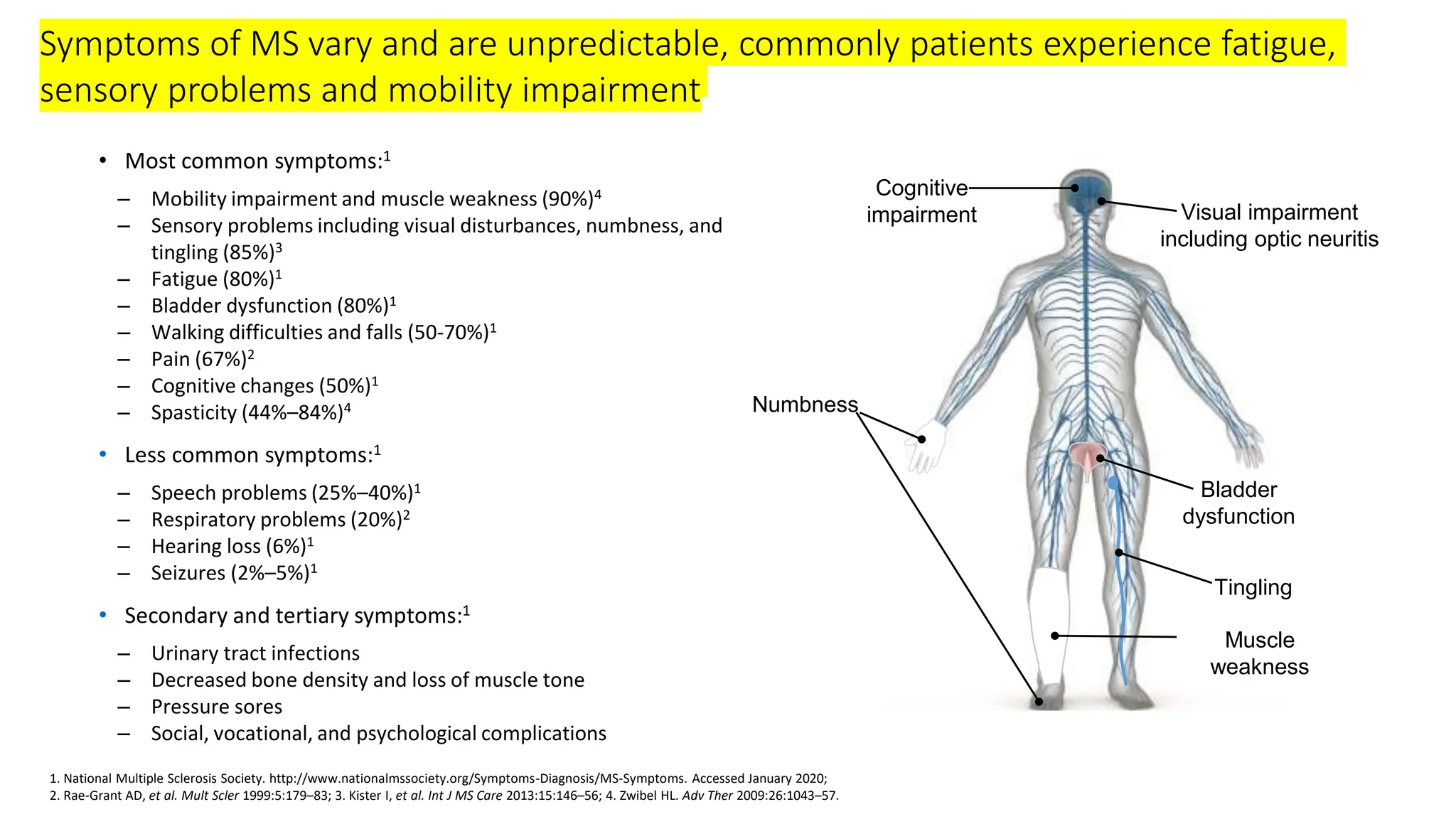
Symptoms of MS vary and are unpredictable, commonly patients experience fatigue,
sensory problems and mobility impairment
1. National Multiple Sclerosis Society. http://www.nationalmssociety.org/Symptoms-Diagnosis/MS-Symptoms. Accessed January 2020;
2. Rae-Grant AD, et al. Mult Scler 1999:5:179–83; 3. Kister I, et al. Int J MS Care 2013:15:146–56; 4. Zwibel HL. Adv Ther 2009:26:1043–57.
• Most common symptoms:1
– Mobility impairment and muscle weakness (90%)4
– Sensory problems including visual disturbances, numbness, and
tingling (85%)3
– Fatigue (80%)1
– Bladder dysfunction (80%)1
– Walking difficulties and falls (50-70%)1
– Pain (67%)2
– Cognitive changes (50%)1
– Spasticity (44%–84%)4
• Less common symptoms:1
– Speech problems (25%–40%)1
– Respiratory problems (20%)2
– Hearing loss (6%)1
– Seizures (2%–5%)1
• Secondary and tertiary symptoms:1
– Urinary tract infections
– Decreased bone density and loss of muscle tone
– Pressure sores
– Social, vocational, and psychological complications
Numbness
Tingling
Muscle
weakness
Cognitive
impairment Visual impairment
including optic neuritis
Bladder
dysfunction
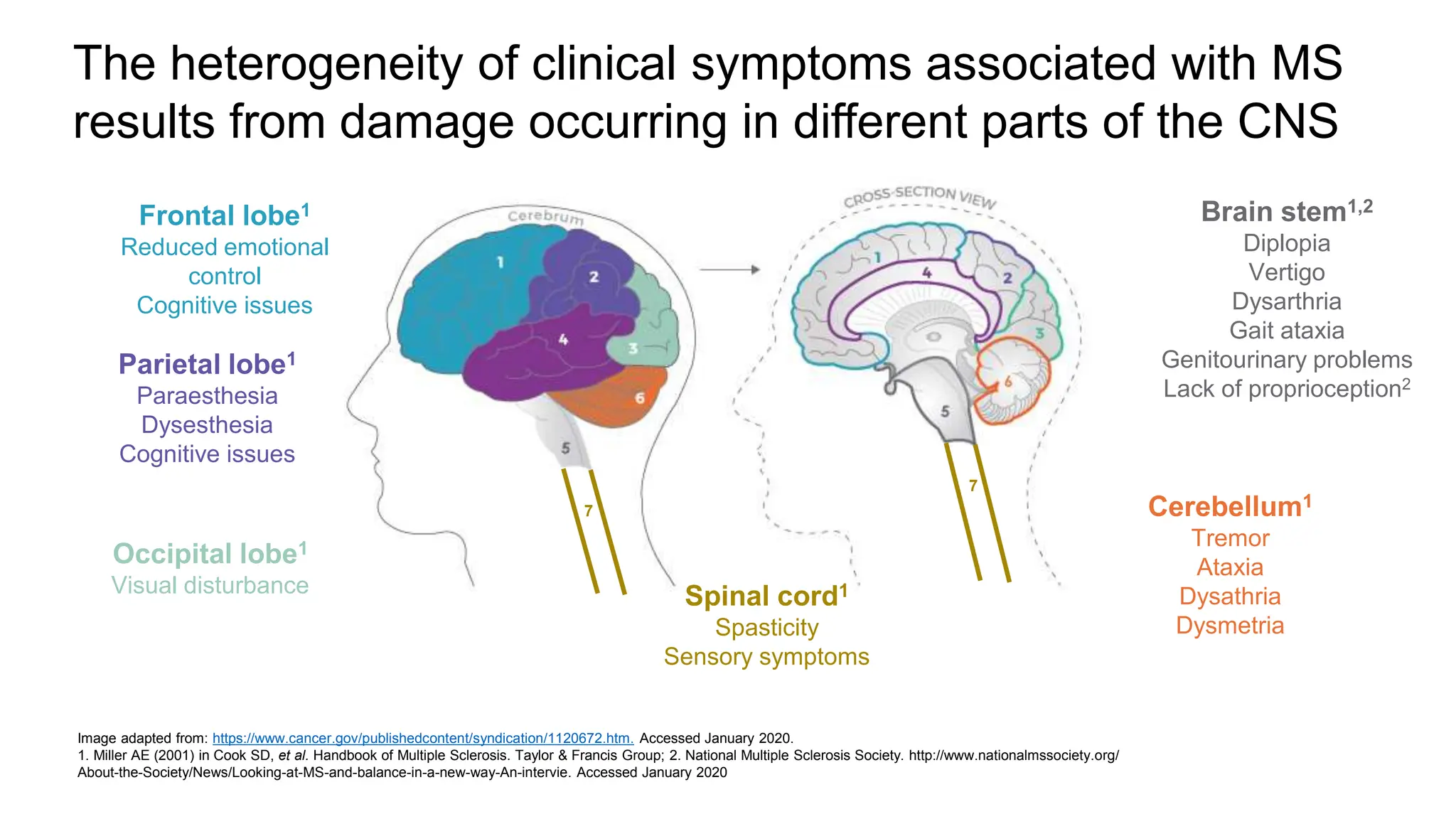
The heterogeneity of clinical symptoms associated with MS
results from damage occurring in different parts of the CNS
Frontal lobe1
Reduced emotional
control
Cognitive issues
Parietal lobe1
Paraesthesia
Dysesthesia
Cognitive issues
Occipital lobe1
Visual disturbance
Cerebellum1
Tremor
Ataxia
Dysathria
Dysmetria
Brain stem1,2
Diplopia
Vertigo
Dysarthria
Gait ataxia
Genitourinary problems
Lack of proprioception2
7
Spinal cord1
Spasticity
Sensory symptoms
7
Image adapted from: https://www.cancer.gov/publishedcontent/syndication/1120672.htm. Accessed January 2020.
1. Miller AE (2001) in Cook SD, et al. Handbook of Multiple Sclerosis. Taylor & Francis Group; 2. National Multiple Sclerosis Society. http://www.nationalmssociety.org/
About-the-Society/News/Looking-at-MS-and-balance-in-a-new-way-An-intervie. Accessed January 2020
What are the different phenotypes of MS?
CIS, clinically isolated syndrome; PPMS, primary progressive MS; RRMS, relapsing remitting MS; SPMS, secondary progressive MS.
1. Lublin FD, et al. Neurology 2014;83:278–86;
2. National Multiple Sclerosis Society. Relapse-remitting MS (RRMS). http://www.nationalmssociety.org/What-is-MS/Types-of-MS/Relapsing-remitting-MS. Accessed
January 2020;
3. National Multiple Sclerosis Society. Primary progressive MS (PPMS). http://www.nationalmssociety.org/What-is-MS/Types-of-MS/Primary-progressive-MS. Accessed
January 2020.
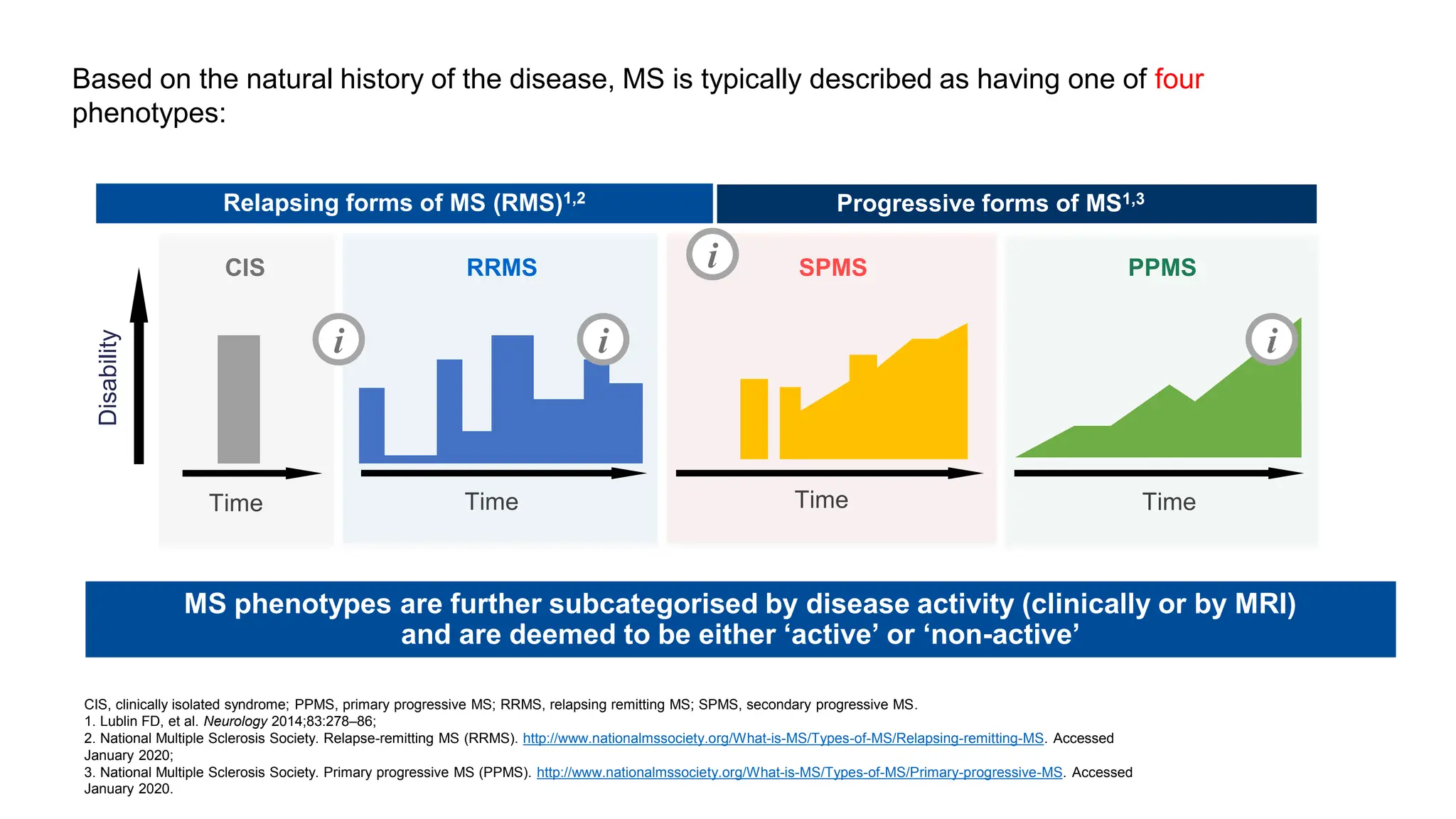
SPMS
Disability
CIS
Time
PPMS
Progressive forms of MS1,3
RRMS
Time Time Time
Relapsing forms of MS (RMS)1,2
Based on the natural history of the disease, MS is typically described as having one of four
phenotypes:
MS phenotypes are further subcategorised by disease activity (clinically or by MRI)
and are deemed to be either ‘active’ or ‘non-active’
i i
i
i
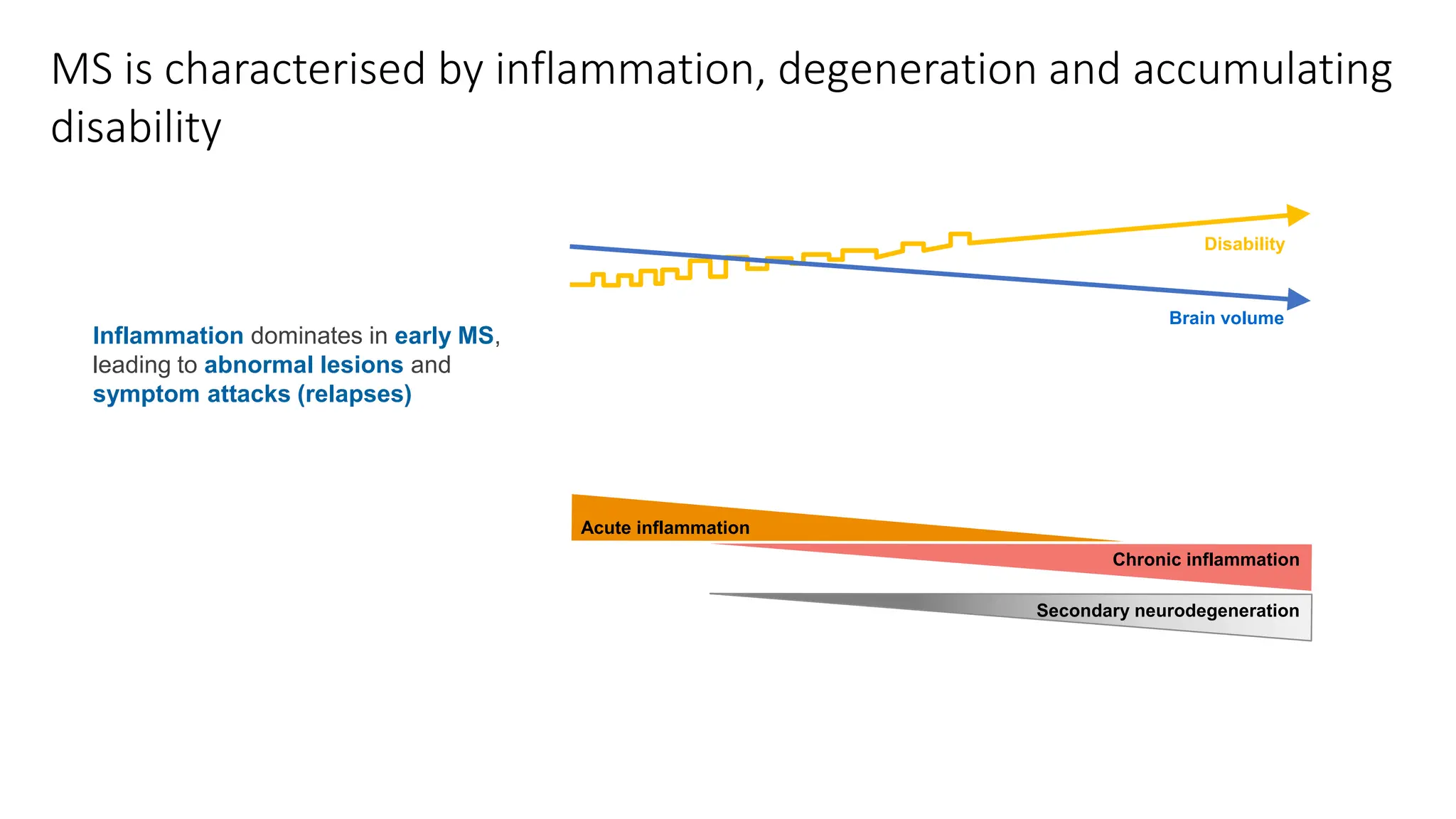
MS is characterised by inflammation, degeneration and accumulating
disability
Inflammation dominates in early MS,
leading to abnormal lesions and
symptom attacks (relapses)
Secondary neurodegeneration
Acute inflammation
Chronic inflammation
Disability
Brain volume
CIS, clinically isolated syndrome; CNS, central nervous system; RRMS, relapsing remitting MS; SPMS, secondary progressive MS.
1. Traboulsee A. J Neurol Sci 2007;256:S19–22; 2. Stys PK, et al. Nat Rev Neurosci 2012;13:507–14.
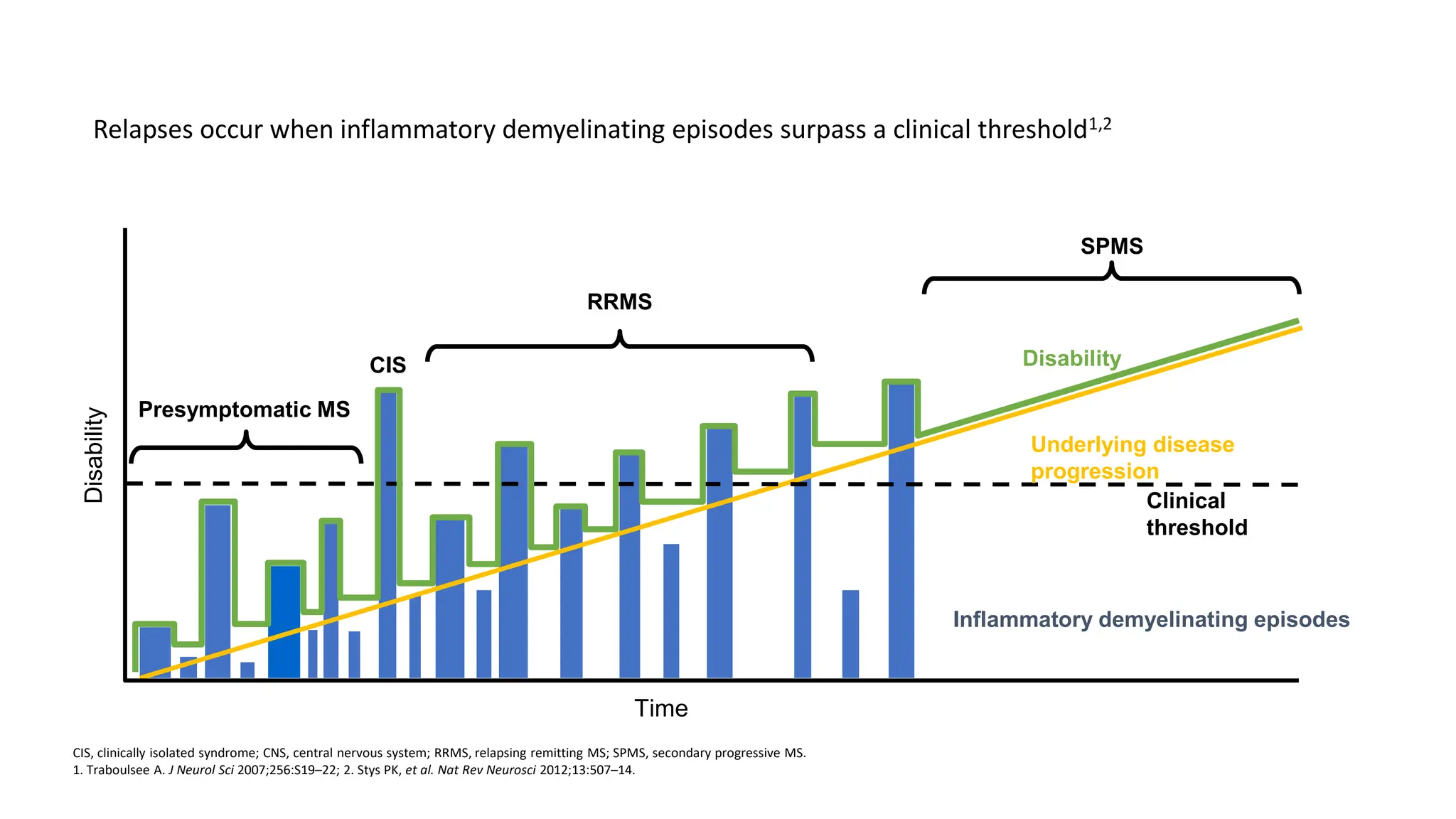
Relapses occur when inflammatory demyelinating episodes surpass a clinical threshold1,2
RRMS
SPMS
CIS
Presymptomatic MS
Underlying disease
progression
Disability
Inflammatory demyelinating episodes
Time
Clinical
threshold
Disability
Relapsing-remitting MS typically has an earlier age of onset than PPMS, sex bias
and different initial presentation
NARCOMS, North American Research Committee on Multiple Sclerosis; PPMS, primary progressive MS; RMS, relapsing MS.
1. Rice CM, et al. J Neurol Neurosurg Psychiatry 2013;84:1100–6; 2. Antel J, et al. Acta Neuropathol 2012;123:627–38; 3. Salter A, et al. Mult Scler 2017 [Epub ahead of print];
4. Cottrell DA, et al. Brain 1999;122:625‒39; 5. Sola P, et al. Mult Scler J 2011;17:303–11; 6. Compston A, Coles A. Lancet 2008;372:1502–17.
PPMS
RRMS
Minimal sex bias1–3*
Higher incidence in females
(3:1 ratio, female to male)1,2
Sensory symptoms
predominate, followed by
visual symptoms1,4‒6
Motor symptoms predominate,
followed by sensory symptoms1,4‒6
~30 years of age1
~45 years of age3
Disability progression is faster in patients with PPMS than RMS
Curves are not age adjusted.
EDSS, Expanded Disability Status Scale; PPMS, primary progressive MS; RMS, relapsing-onset MS; RRMS, relapsing-remitting MS; SPMS, secondary progressive MS.
1. Sola P, et al. Mult Scler 2011;17:303–11; 2. Musella A, et al. Frontiers Aging Neurosci. 2018;10:238; 3. Salter A, et al. Mult Scler 2017 [Epub ahead of print].
Kaplan–Meier curve for time to EDSS 41
PPMS (n=45)
RMS (RRMS [n=69]
SPMS [n=35])
0.00
0.25
0.50
0.75
1.00
Probability
of
not
reaching
EDSS
of
4
312
Time from diagnosis (months)
0 24 48 72 96 120 144 168 192 216 240 264 288
p<0.0001
How to diagnose MS?
16/06/2024 14
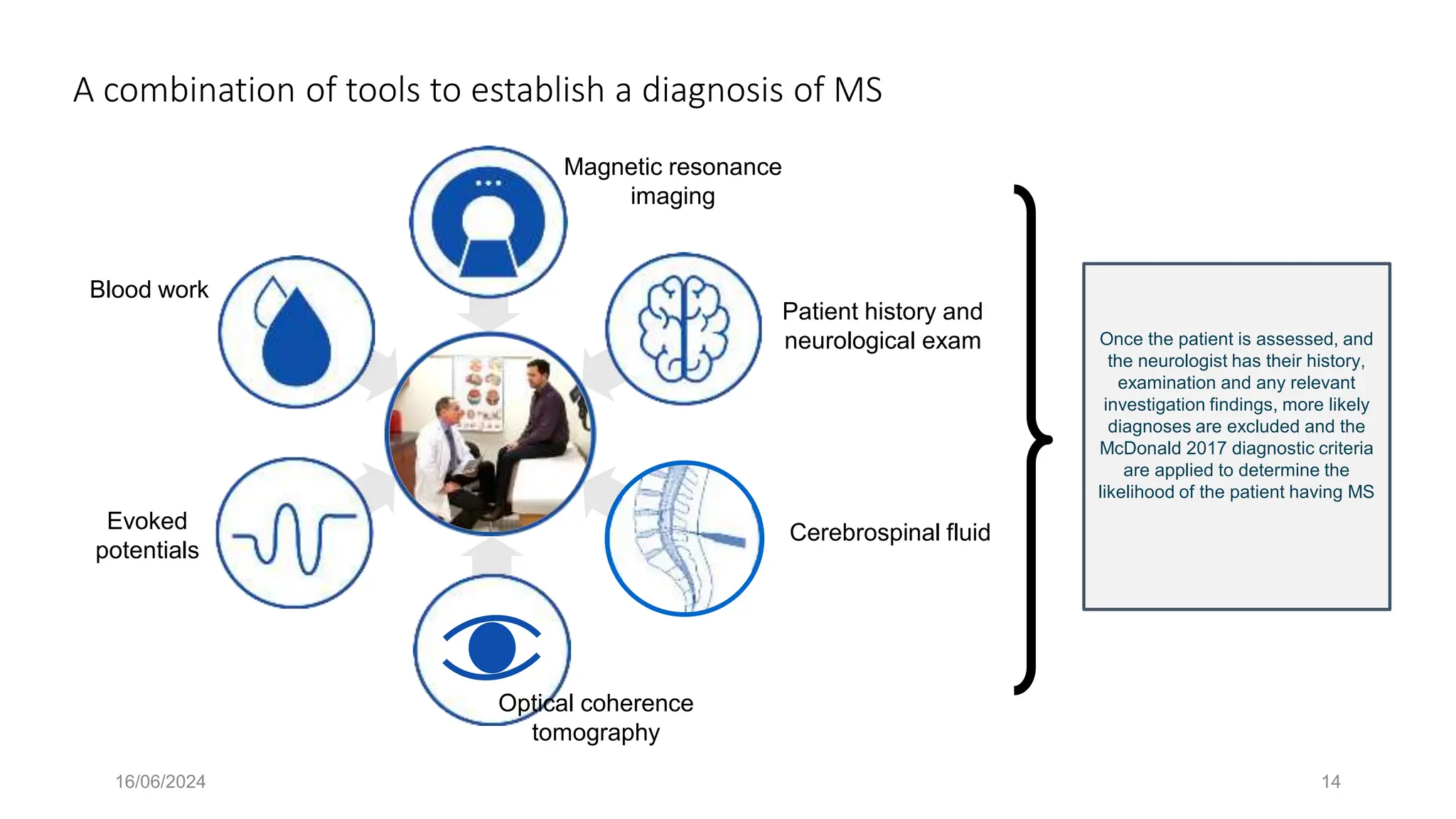
A combination of tools to establish a diagnosis of MS
Magnetic resonance
imaging
Blood work
Patient history and
neurological exam
Cerebrospinal fluid
Evoked
potentials
Optical coherence
tomography
Once the patient is assessed, and
the neurologist has their history,
examination and any relevant
investigation findings, more likely
diagnoses are excluded and the
McDonald 2017 diagnostic criteria
are applied to determine the
likelihood of the patient having MS
16/06/2024 15
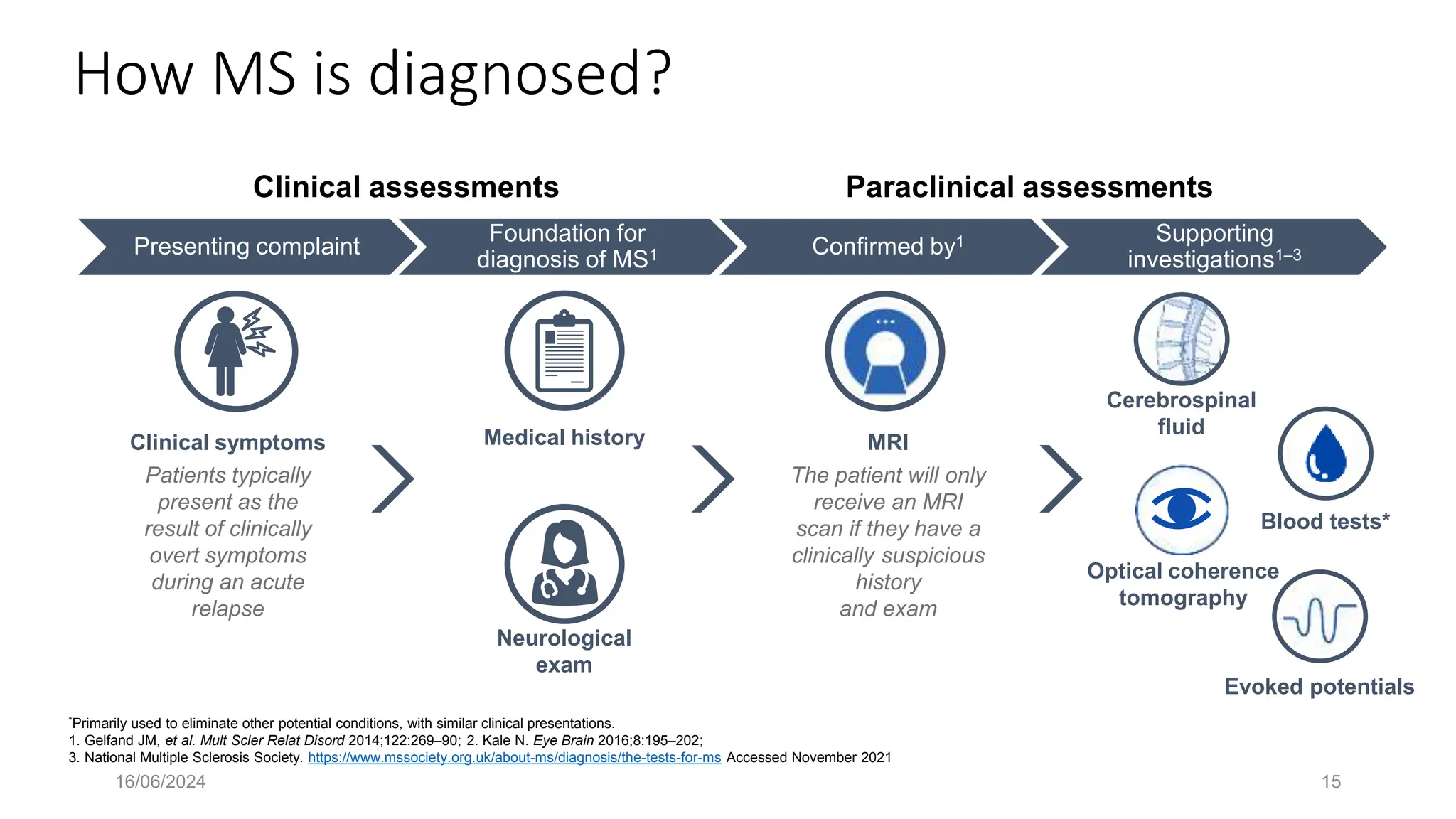
How MS is diagnosed?
Presenting complaint
Foundation for
diagnosis of MS1 Confirmed by1 Supporting
investigations1–3
Clinical assessments Paraclinical assessments
Blood tests*
Medical history
Neurological
exam
MRI
The patient will only
receive an MRI
scan if they have a
clinically suspicious
history
and exam
Evoked potentials
Cerebrospinal
fluid
Clinical symptoms
Patients typically
present as the
result of clinically
overt symptoms
during an acute
relapse
*Primarily used to eliminate other potential conditions, with similar clinical presentations.
1. Gelfand JM, et al. Mult Scler Relat Disord 2014;122:269–90; 2. Kale N. Eye Brain 2016;8:195–202;
3. National Multiple Sclerosis Society. https://www.mssociety.org.uk/about-ms/diagnosis/the-tests-for-ms Accessed November 2021
Optical coherence
tomography
16/06/2024 16
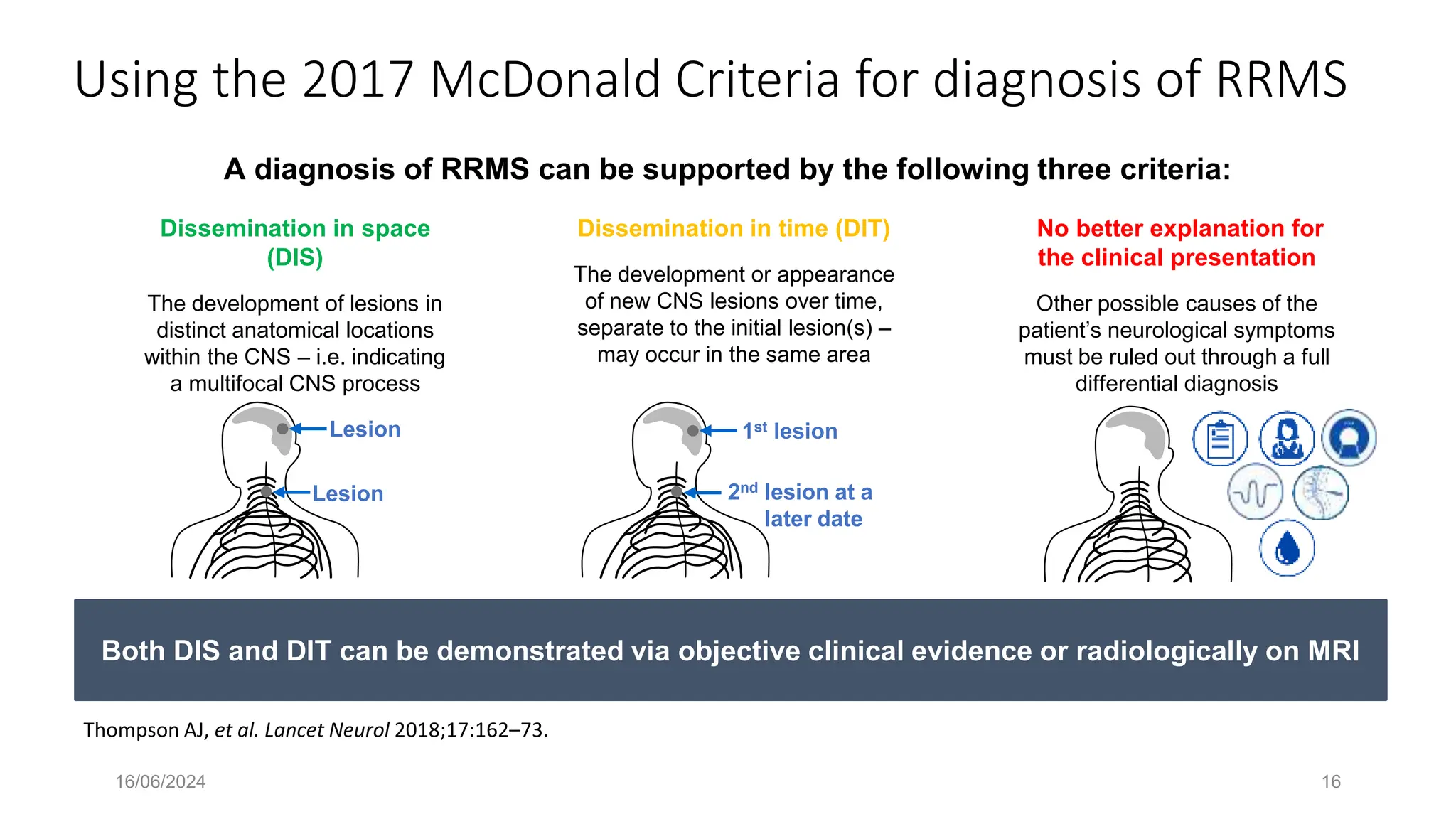
Using the 2017 McDonald Criteria for diagnosis of RRMS
Thompson AJ, et al. Lancet Neurol 2018;17:162–73.
Both DIS and DIT can be demonstrated via objective clinical evidence or radiologically on MRI
Dissemination in space
(DIS)
The development of lesions in
distinct anatomical locations
within the CNS – i.e. indicating
a multifocal CNS process
Lesion
Lesion
Dissemination in time (DIT)
The development or appearance
of new CNS lesions over time,
separate to the initial lesion(s) –
may occur in the same area
1st lesion
2nd lesion at a
later date
No better explanation for
the clinical presentation
Other possible causes of the
patient’s neurological symptoms
must be ruled out through a full
differential diagnosis
A diagnosis of RRMS can be supported by the following three criteria:
16/06/2024 17
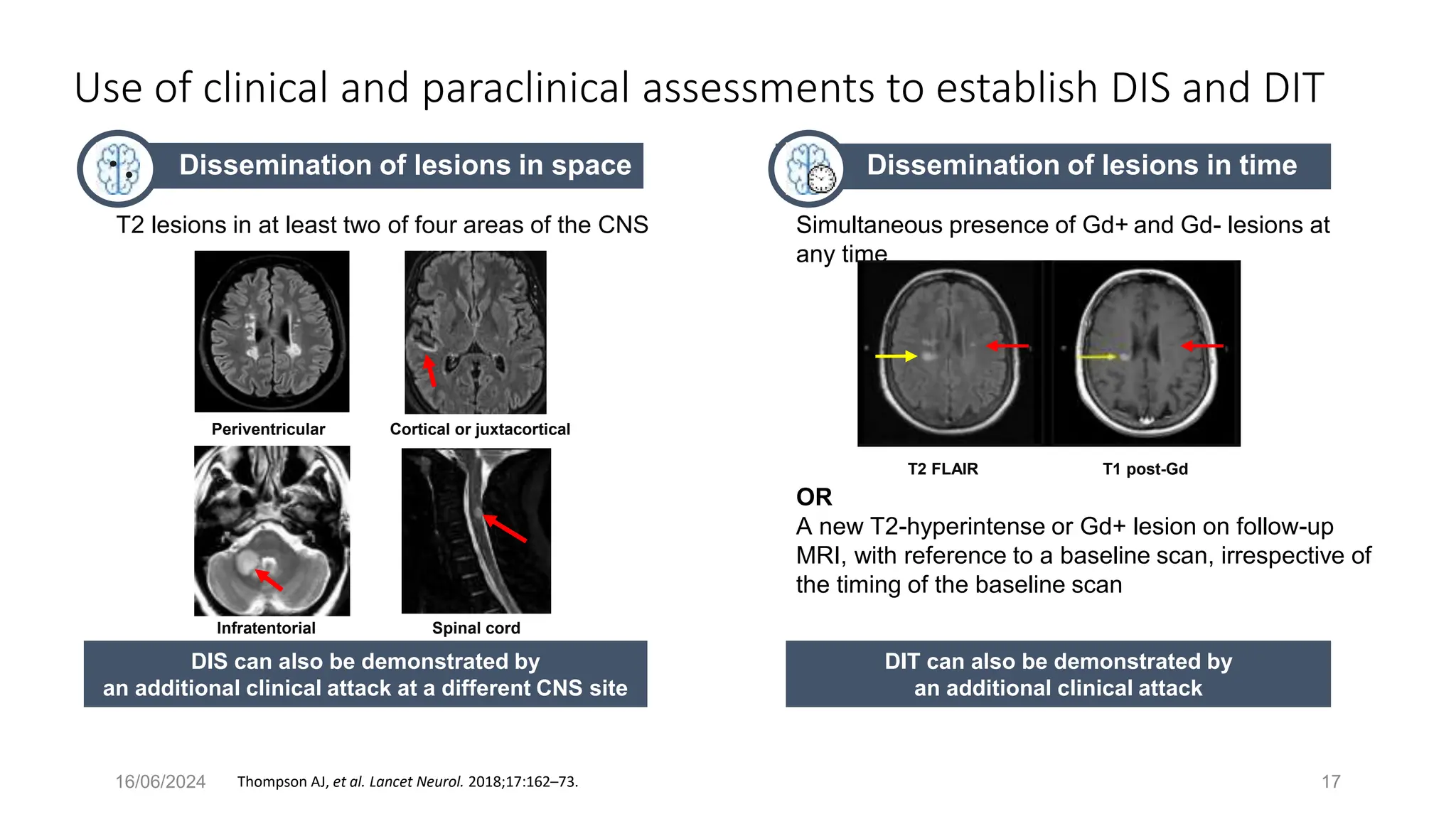
Use of clinical and paraclinical assessments to establish DIS and DIT
Thompson AJ, et al. Lancet Neurol. 2018;17:162–73.
Dissemination of lesions in space
T2 lesions in at least two of four areas of the CNS
Periventricular Cortical or juxtacortical
Infratentorial Spinal cord
DIS can also be demonstrated by
an additional clinical attack at a different CNS site
Dissemination of lesions in time
Simultaneous presence of Gd+ and Gd- lesions at
any time
OR
A new T2-hyperintense or Gd+ lesion on follow-up
MRI, with reference to a baseline scan, irrespective of
the timing of the baseline scan
T2 FLAIR T1 post-Gd
DIT can also be demonstrated by
an additional clinical attack
16/06/2024 18
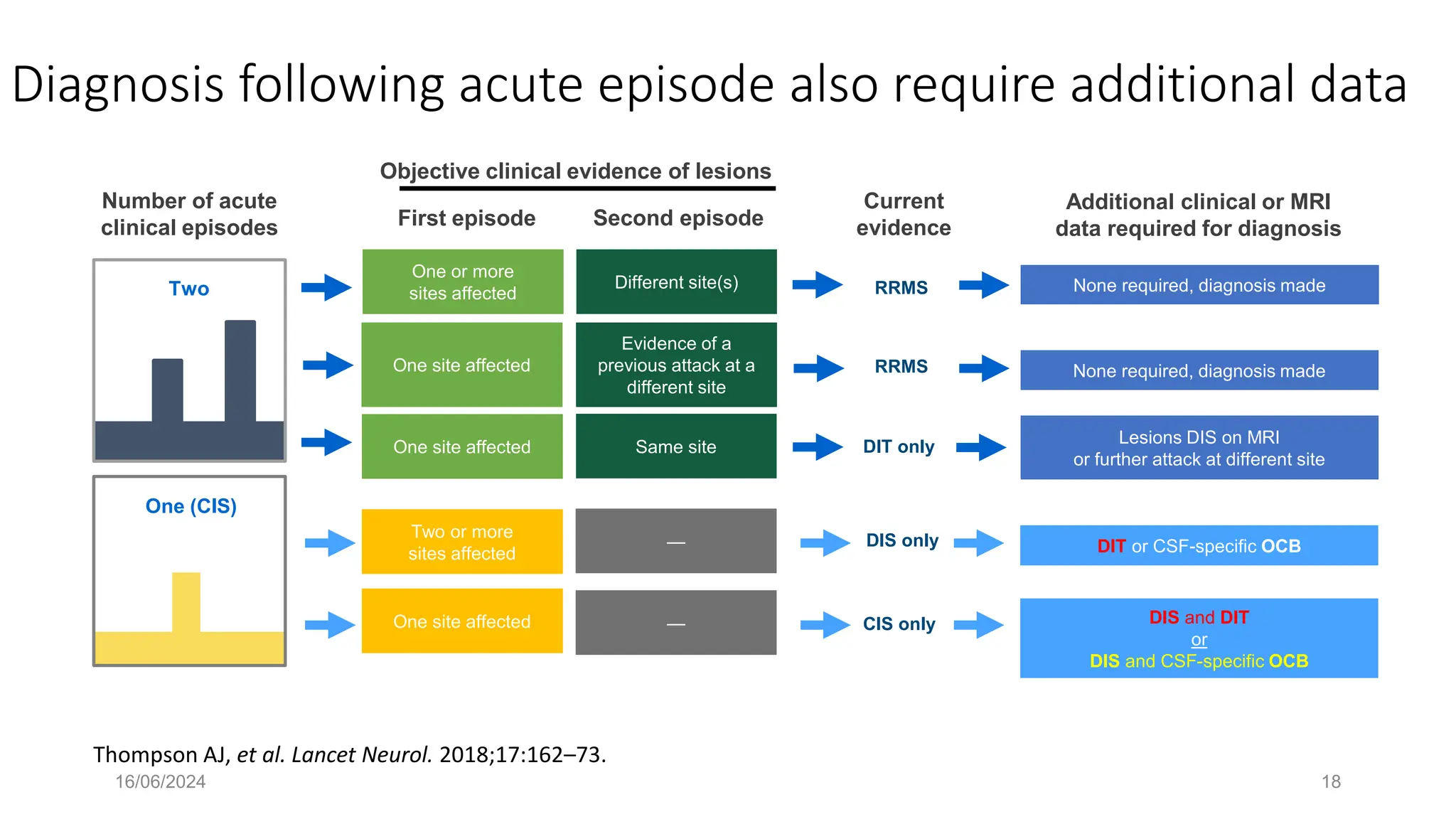
Diagnosis following acute episode also require additional data
Thompson AJ, et al. Lancet Neurol. 2018;17:162–73.
Objective clinical evidence of lesions
Number of acute
clinical episodes
Two
One (CIS)
First episode Second episode
One or more
sites affected
One site affected
Different site(s)
Evidence of a
previous attack at a
different site
Same site
Current
evidence
Additional clinical or MRI
data required for diagnosis
DIT or CSF-specific OCB
DIS and DIT
or
DIS and CSF-specific OCB
None required, diagnosis made
RRMS
RRMS
DIT only
DIS only
CIS only
Two or more
sites affected
One site affected
—
—
Lesions DIS on MRI
or further attack at different site
One site affected
19
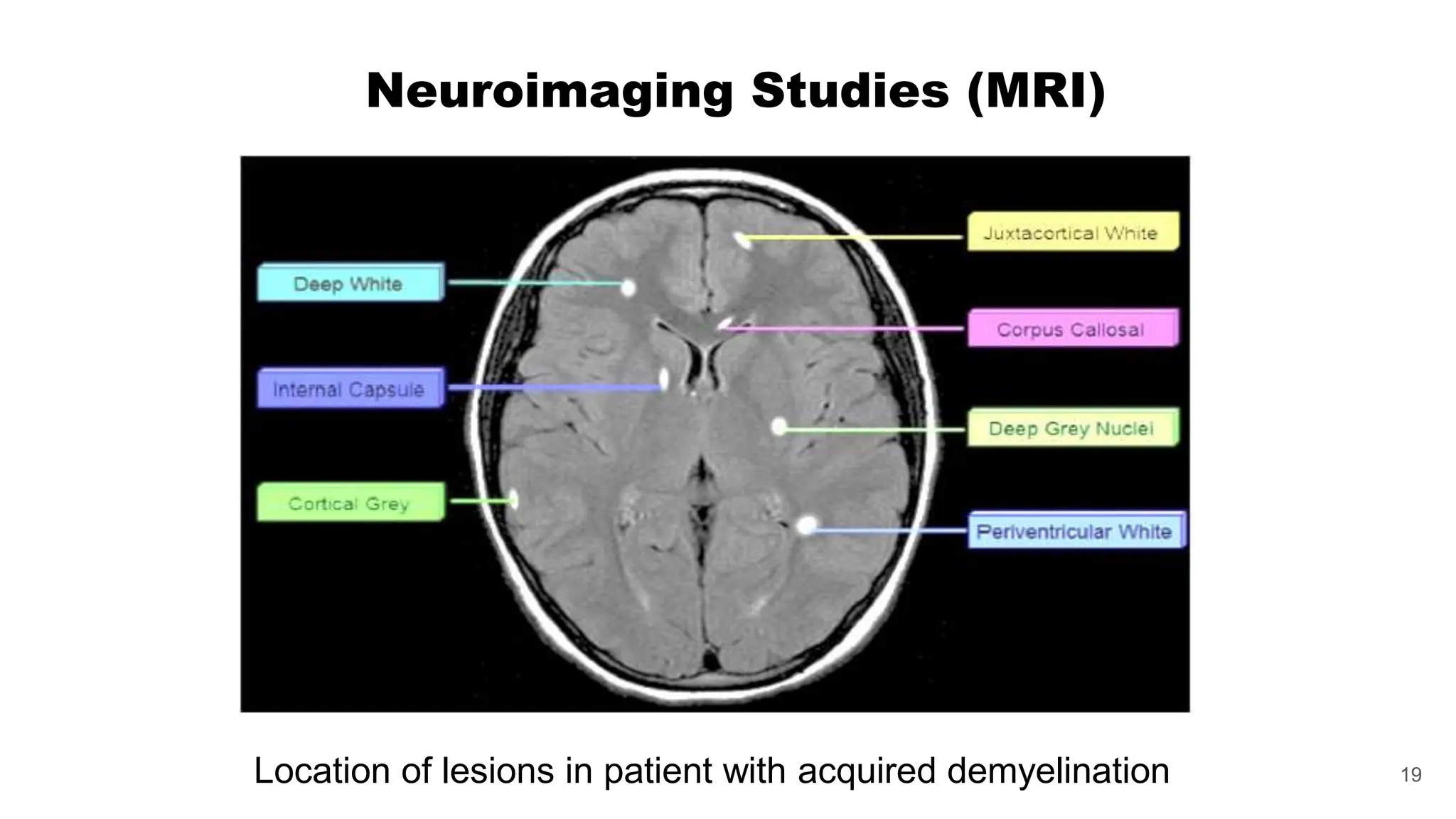
Neuroimaging Studies (MRI)
Location of lesions in patient with acquired demyelination
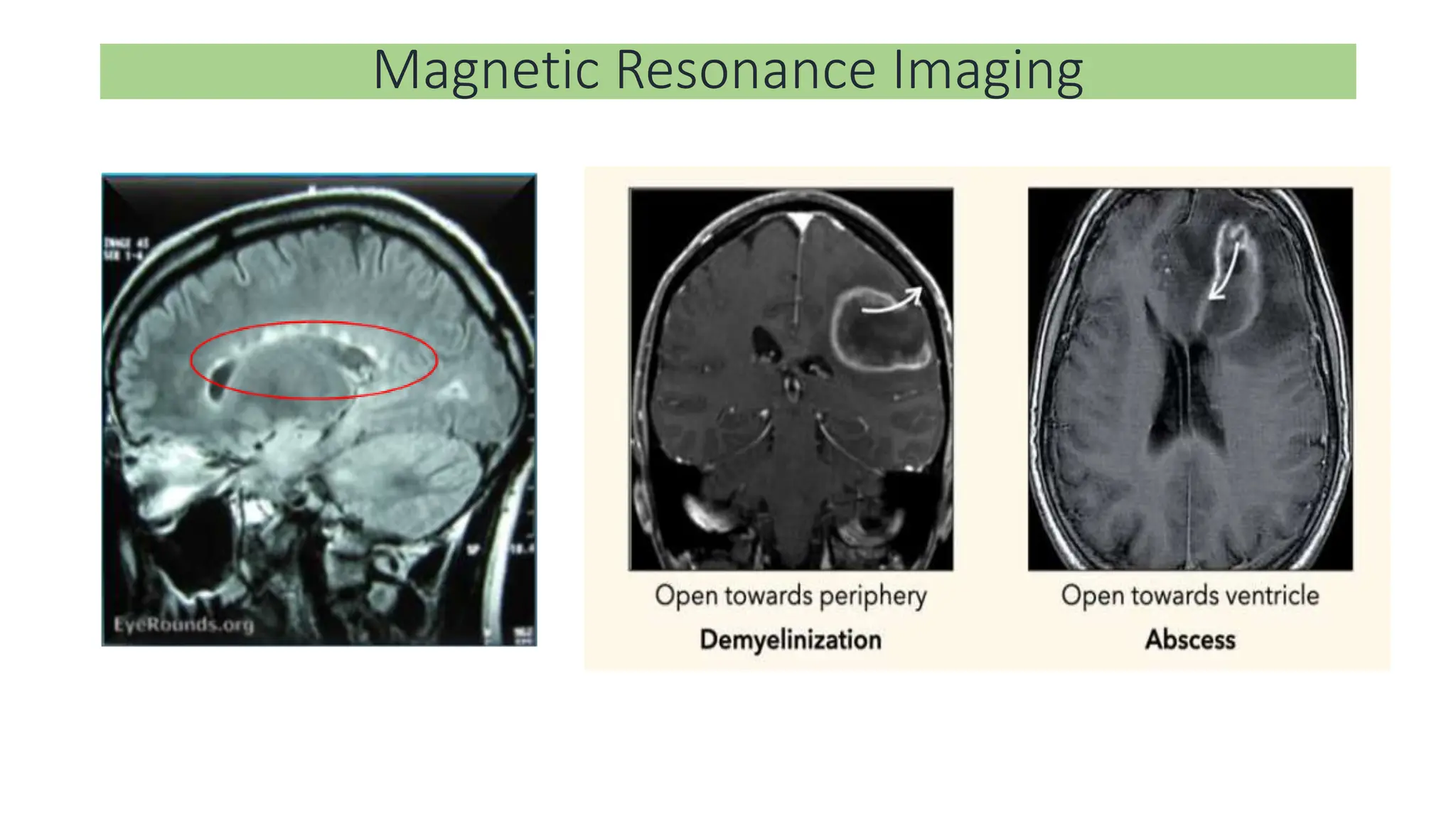
Magnetic Resonance Imaging
16/06/2024 21
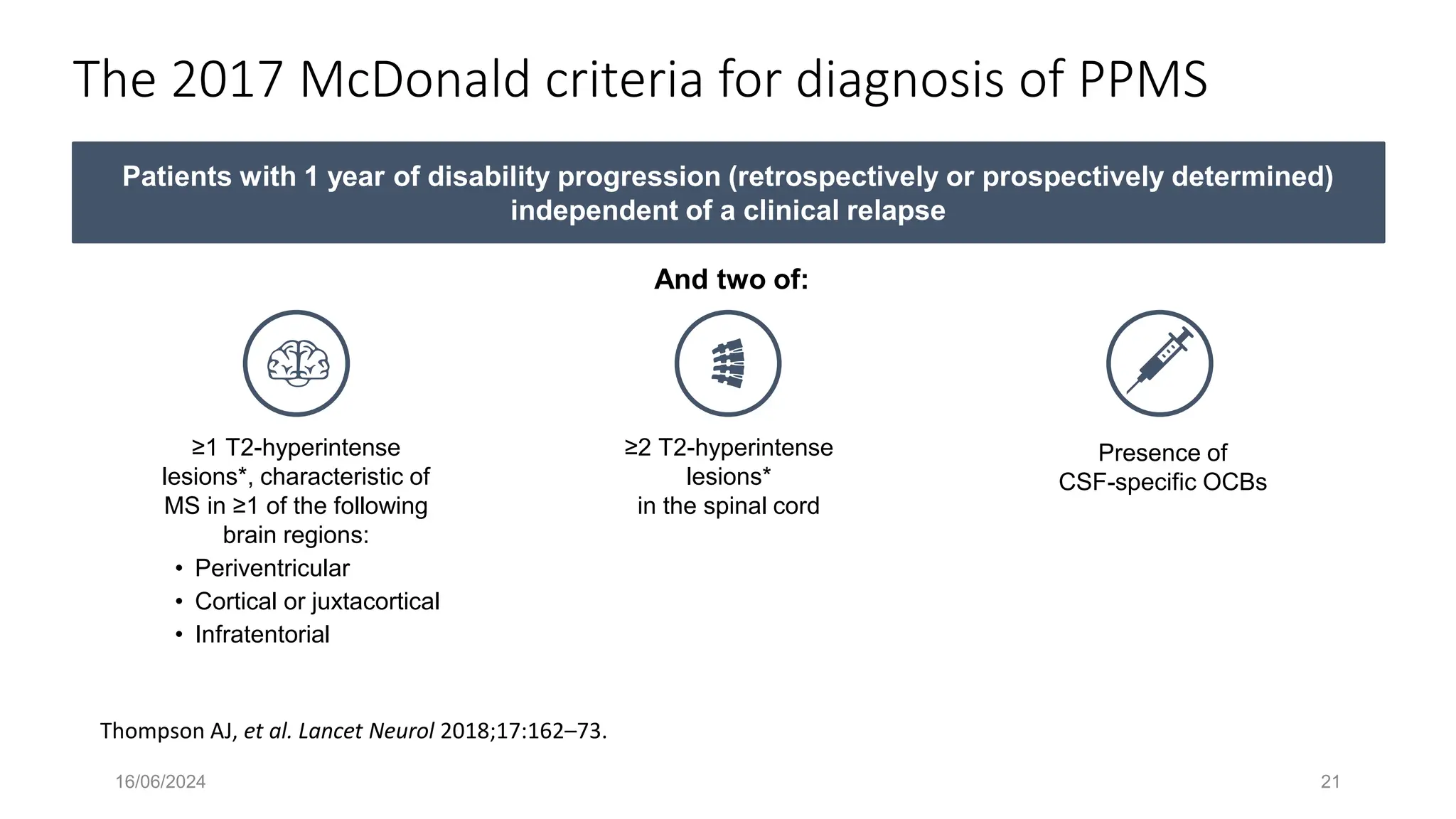
The 2017 McDonald criteria for diagnosis of PPMS
Thompson AJ, et al. Lancet Neurol 2018;17:162–73.
Patients with 1 year of disability progression (retrospectively or prospectively determined)
independent of a clinical relapse
And two of:
≥2 T2-hyperintense
lesions*
in the spinal cord
Presence of
CSF-specific OCBs
≥1 T2-hyperintense
lesions*, characteristic of
MS in ≥1 of the following
brain regions:
• Periventricular
• Cortical or juxtacortical
• Infratentorial
16/06/2024 22
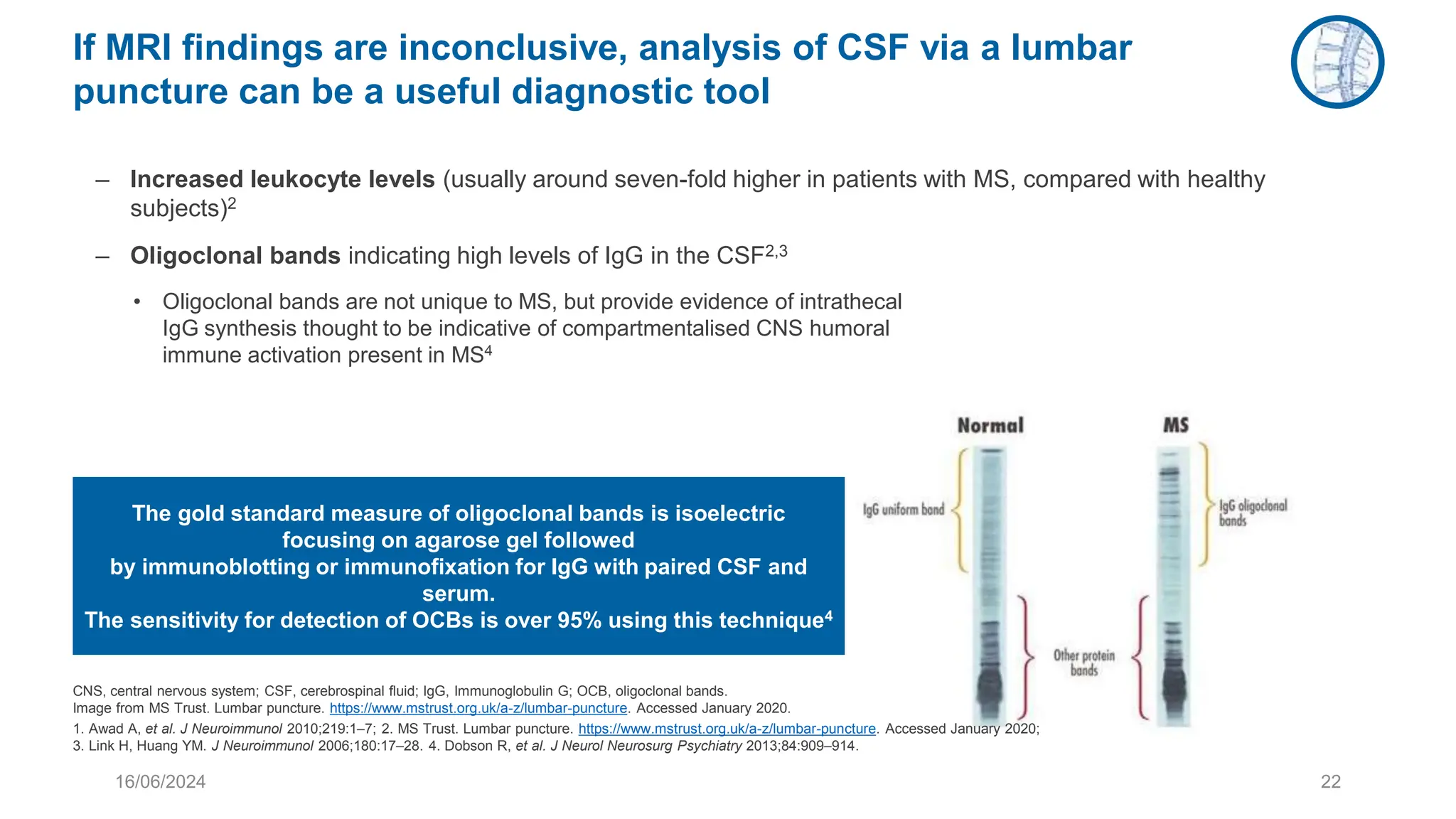
If MRI findings are inconclusive, analysis of CSF via a lumbar
puncture can be a useful diagnostic tool
– Increased leukocyte levels (usually around seven-fold higher in patients with MS, compared with healthy
subjects)2
– Oligoclonal bands indicating high levels of IgG in the CSF2,3
• Oligoclonal bands are not unique to MS, but provide evidence of intrathecal
IgG synthesis thought to be indicative of compartmentalised CNS humoral
immune activation present in MS4
The gold standard measure of oligoclonal bands is isoelectric
focusing on agarose gel followed
by immunoblotting or immunofixation for IgG with paired CSF and
serum.
The sensitivity for detection of OCBs is over 95% using this technique4
CNS, central nervous system; CSF, cerebrospinal fluid; IgG, Immunoglobulin G; OCB, oligoclonal bands.
Image from MS Trust. Lumbar puncture. https://www.mstrust.org.uk/a-z/lumbar-puncture. Accessed January 2020.
1. Awad A, et al. J Neuroimmunol 2010;219:1–7; 2. MS Trust. Lumbar puncture. https://www.mstrust.org.uk/a-z/lumbar-puncture. Accessed January 2020;
3. Link H, Huang YM. J Neuroimmunol 2006;180:17–28. 4. Dobson R, et al. J Neurol Neurosurg Psychiatry 2013;84:909–914.
What are relapses and why do they happen?
What is an MS clinical relapse?
Relapses, sometimes called attacks, exacerbations, flares or flare-ups, are acute clinical manifestations of
MS disease activity
A relapse evolves over a few days, plateaus, then remits over a few weeks or months with
or without full recovery
MS relapses are unpredictable and the relatively sudden onset of neurological symptoms may be functionally
and socially incapacitating4,5
A relapse presents clinically as an episode of neurological disturbance (such as paraesthesia,
weakness/clumsiness or visual disturbance) in the absence of fever or infection, that lasts for at least 24
hours
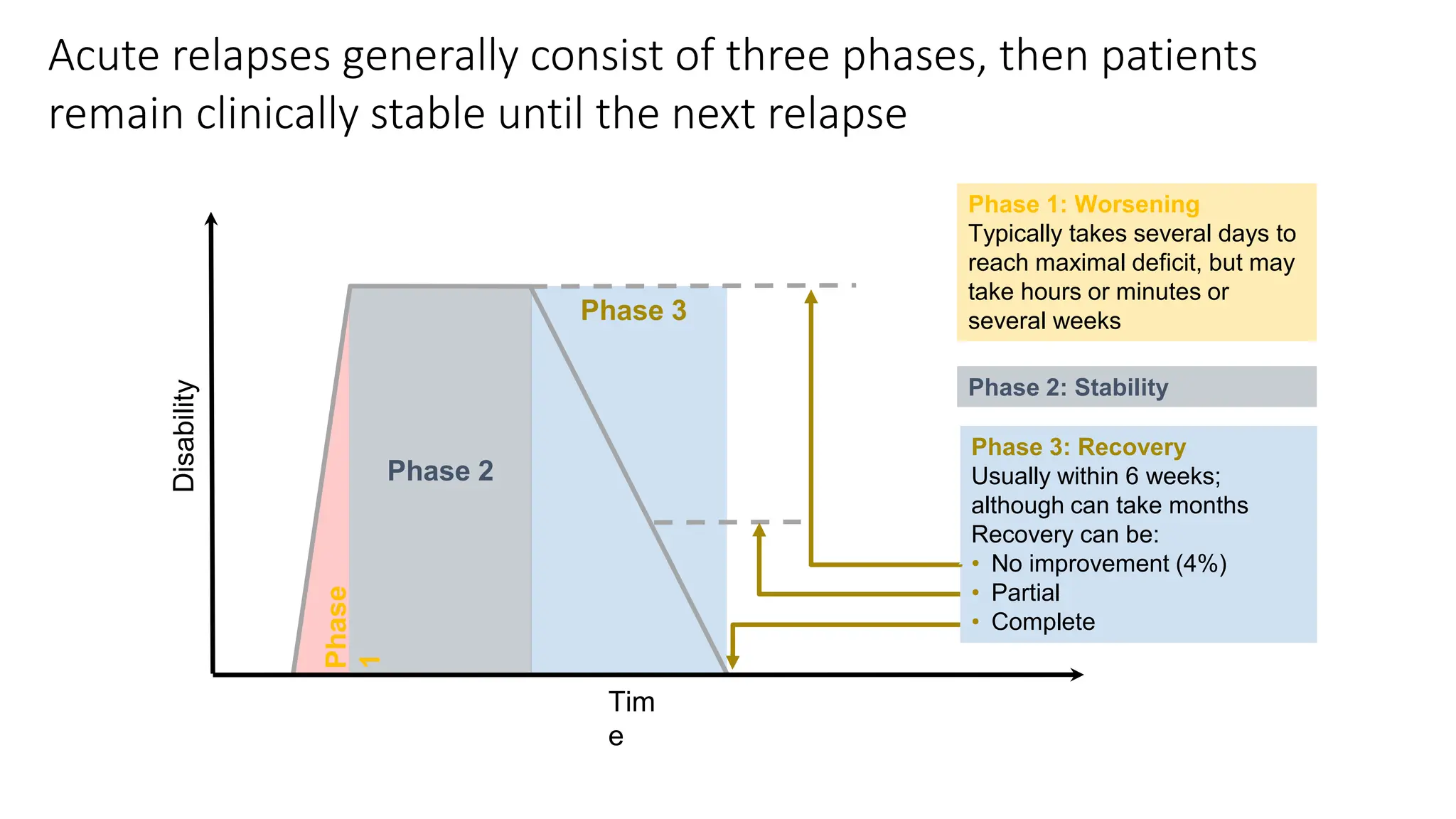
Acute relapses generally consist of three phases, then patients
remain clinically stable until the next relapse
Disability
Tim
e
Phase 1: Worsening
Typically takes several days to
reach maximal deficit, but may
take hours or minutes or
several weeks
Phase 2
Phase 3: Recovery
Usually within 6 weeks;
although can take months
Recovery can be:
• No improvement (4%)
• Partial
• Complete
Phase
1
Phase 3
Phase 2: Stability
How do avoid misdiagnosis of MS?
16/06/2024 27
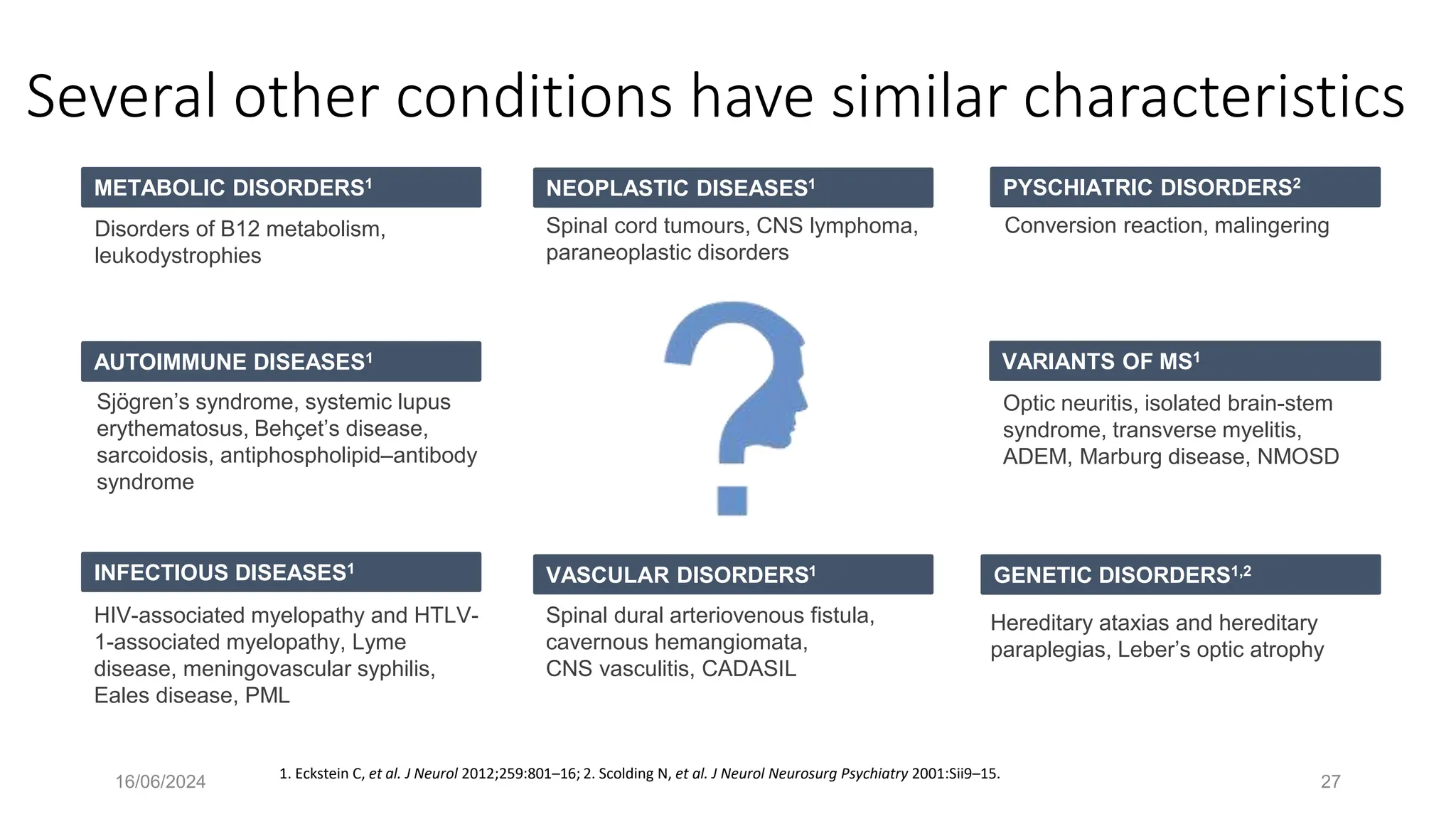
Several other conditions have similar characteristics
1. Eckstein C, et al. J Neurol 2012;259:801–16; 2. Scolding N, et al. J Neurol Neurosurg Psychiatry 2001:Sii9–15.
METABOLIC DISORDERS1
Disorders of B12 metabolism,
leukodystrophies
NEOPLASTIC DISEASES1
Spinal cord tumours, CNS lymphoma,
paraneoplastic disorders
INFECTIOUS DISEASES1
HIV-associated myelopathy and HTLV-
1-associated myelopathy, Lyme
disease, meningovascular syphilis,
Eales disease, PML
AUTOIMMUNE DISEASES1
Sjögren’s syndrome, systemic lupus
erythematosus, Behçet’s disease,
sarcoidosis, antiphospholipid–antibody
syndrome
VASCULAR DISORDERS1
Spinal dural arteriovenous fistula,
cavernous hemangiomata,
CNS vasculitis, CADASIL
GENETIC DISORDERS1,2
Hereditary ataxias and hereditary
paraplegias, Leber’s optic atrophy
PYSCHIATRIC DISORDERS2
Conversion reaction, malingering
VARIANTS OF MS1
Optic neuritis, isolated brain-stem
syndrome, transverse myelitis,
ADEM, Marburg disease, NMOSD
28
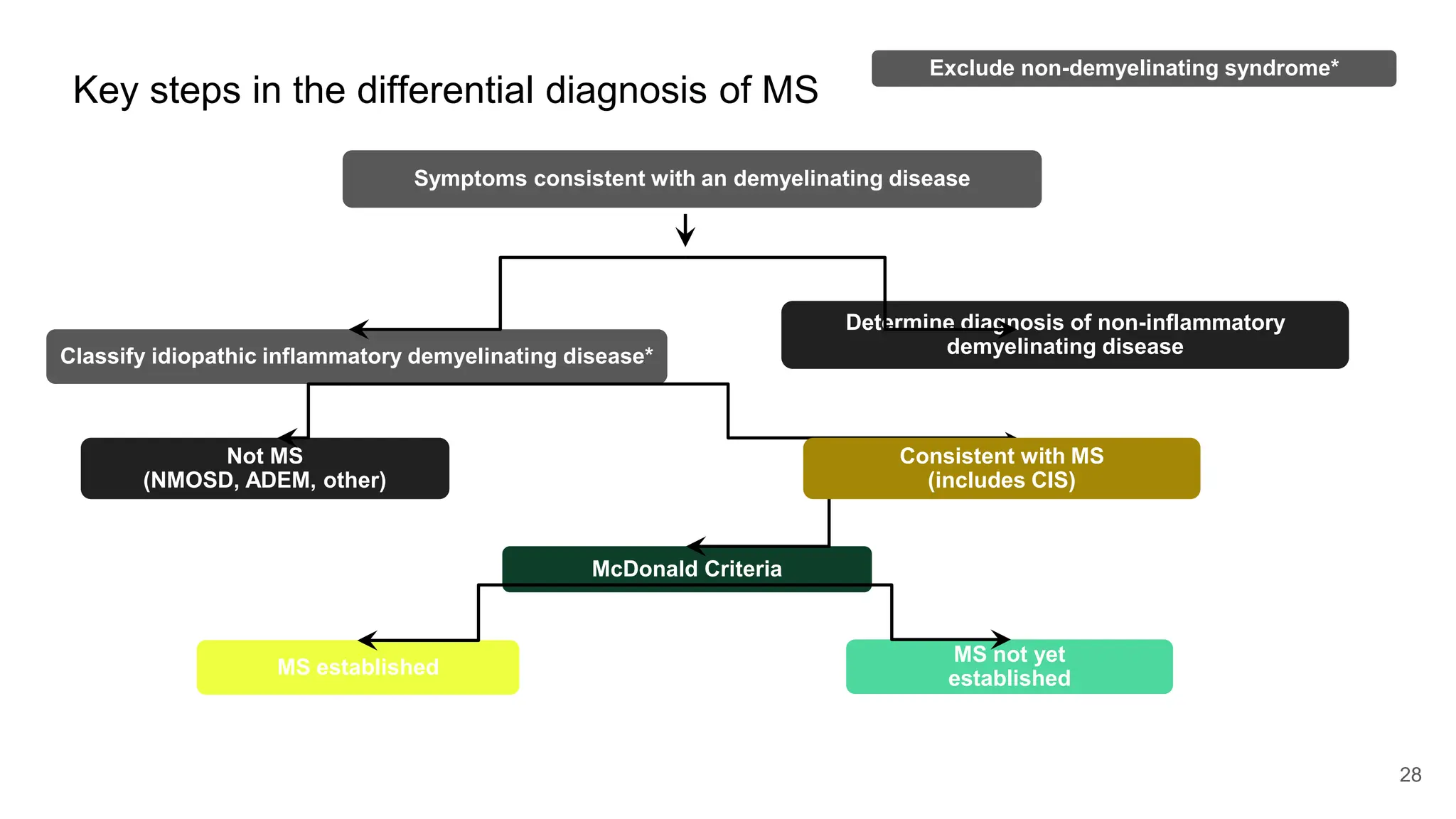
Key steps in the differential diagnosis of MS
Symptoms consistent with an demyelinating disease
Exclude non-demyelinating syndrome*
Classify idiopathic inflammatory demyelinating disease*
Determine diagnosis of non-inflammatory
demyelinating disease
Not MS
(NMOSD, ADEM, other)
McDonald Criteria
MS established
MS not yet
established
Consistent with MS
(includes CIS)
Managements
16/06/2024 30
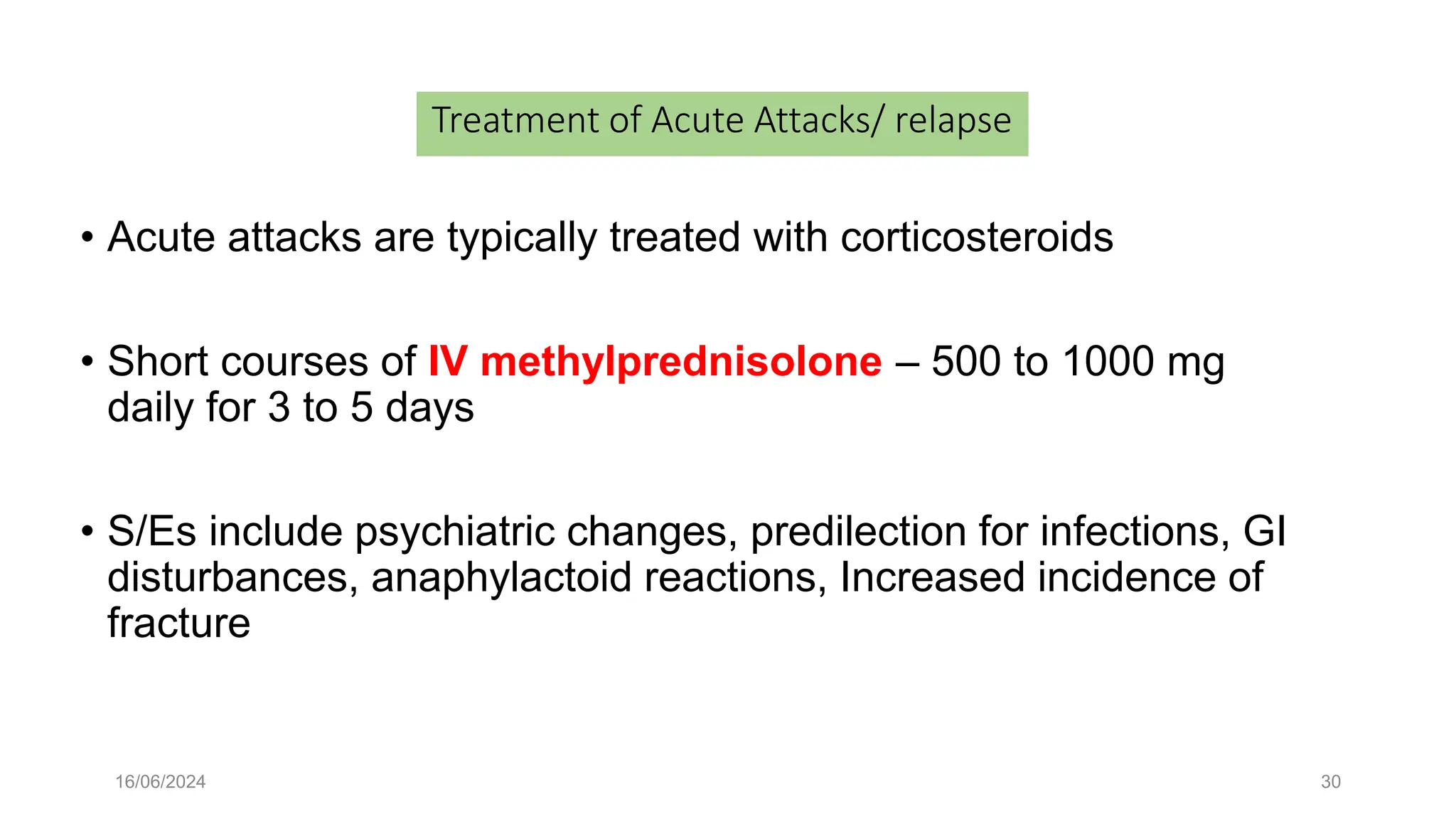
Treatment of Acute Attacks/ relapse
• Acute attacks are typically treated with corticosteroids
• Short courses of IV methylprednisolone – 500 to 1000 mg
daily for 3 to 5 days
• S/Es include psychiatric changes, predilection for infections, GI
disturbances, anaphylactoid reactions, Increased incidence of
fracture
31
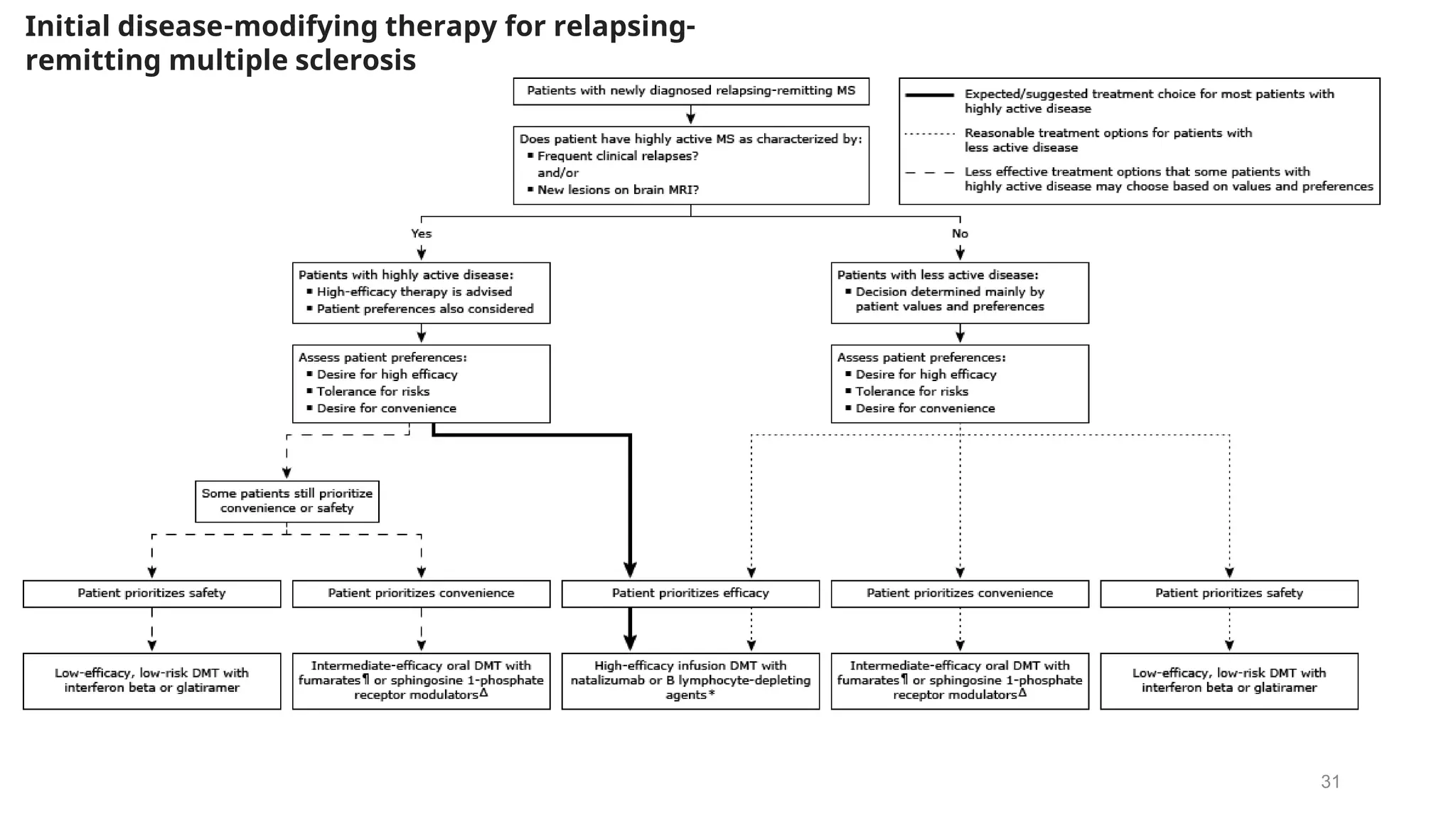
Initial disease-modifying therapy for relapsing-
remitting multiple sclerosis
16/06/2024 32
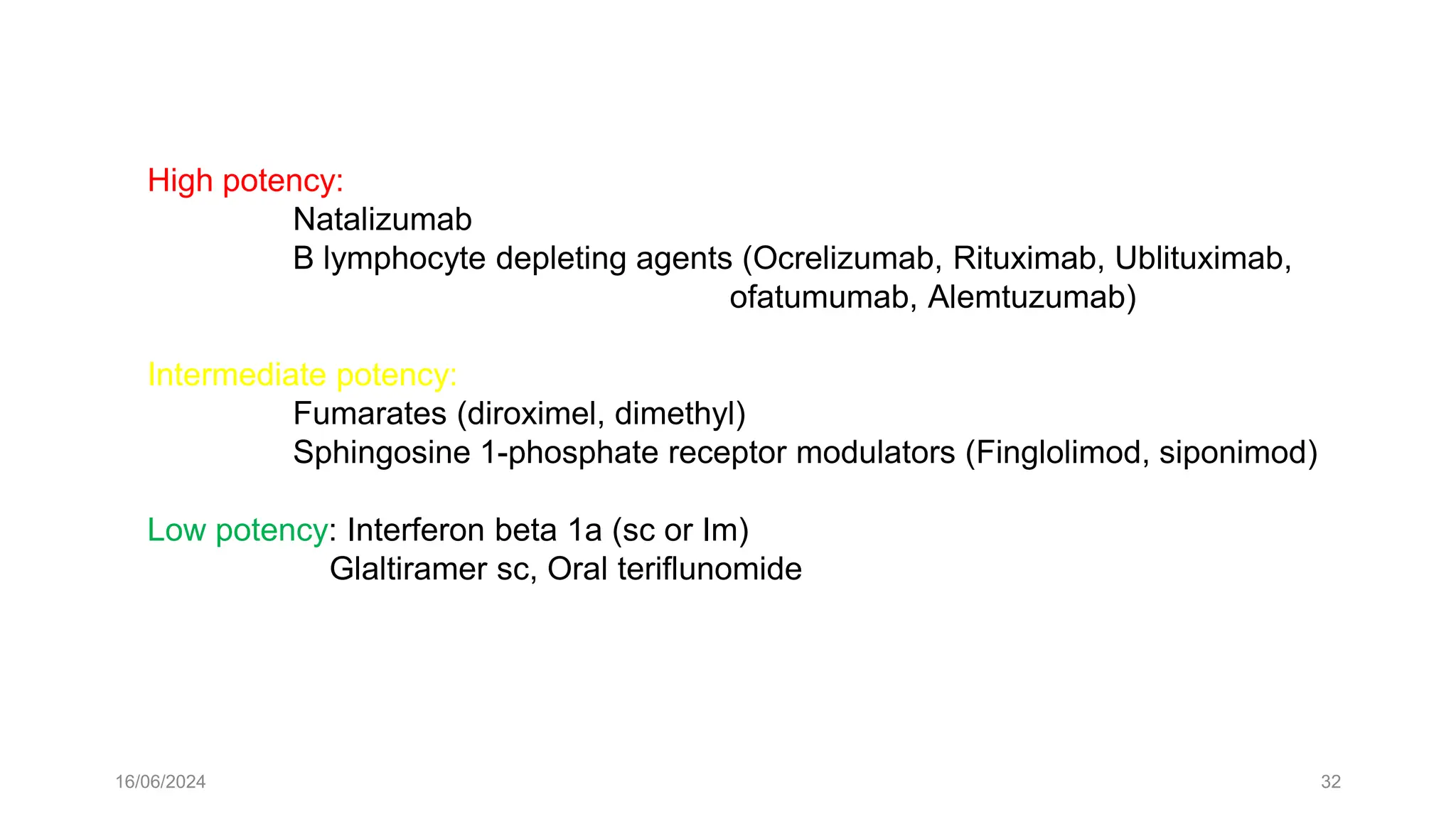
High potency:
Natalizumab
B lymphocyte depleting agents (Ocrelizumab, Rituximab, Ublituximab,
ofatumumab, Alemtuzumab)
Intermediate potency:
Fumarates (diroximel, dimethyl)
Sphingosine 1-phosphate receptor modulators (Finglolimod, siponimod)
Low potency: Interferon beta 1a (sc or Im)
Glaltiramer sc, Oral teriflunomide
16/06/2024 33
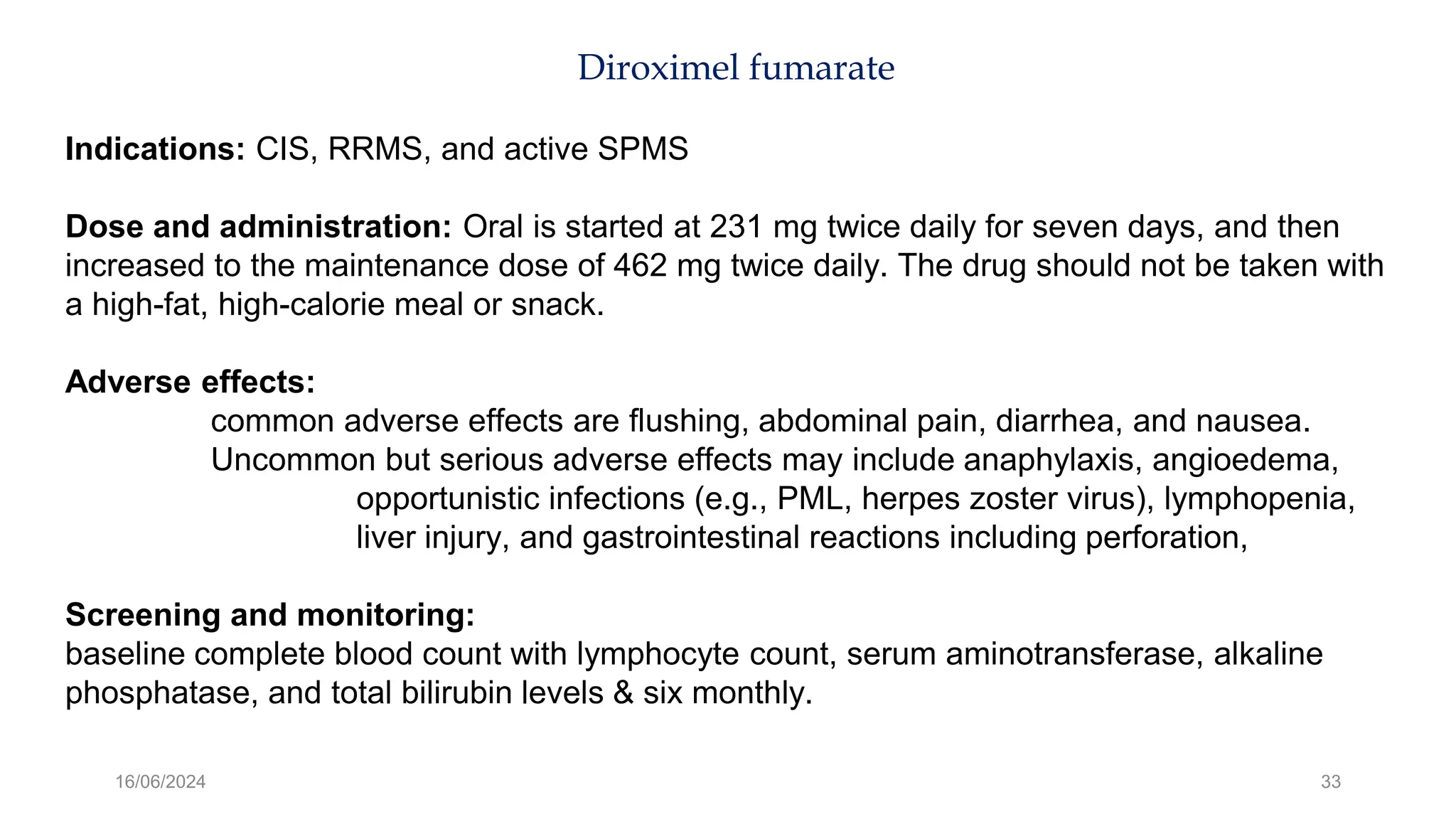
Diroximel fumarate
Indications: CIS, RRMS, and active SPMS
Dose and administration: Oral is started at 231 mg twice daily for seven days, and then
increased to the maintenance dose of 462 mg twice daily. The drug should not be taken with
a high-fat, high-calorie meal or snack.
Adverse effects:
common adverse effects are flushing, abdominal pain, diarrhea, and nausea.
Uncommon but serious adverse effects may include anaphylaxis, angioedema,
opportunistic infections (e.g., PML, herpes zoster virus), lymphopenia,
liver injury, and gastrointestinal reactions including perforation,
Screening and monitoring:
baseline complete blood count with lymphocyte count, serum aminotransferase, alkaline
phosphatase, and total bilirubin levels & six monthly.
34
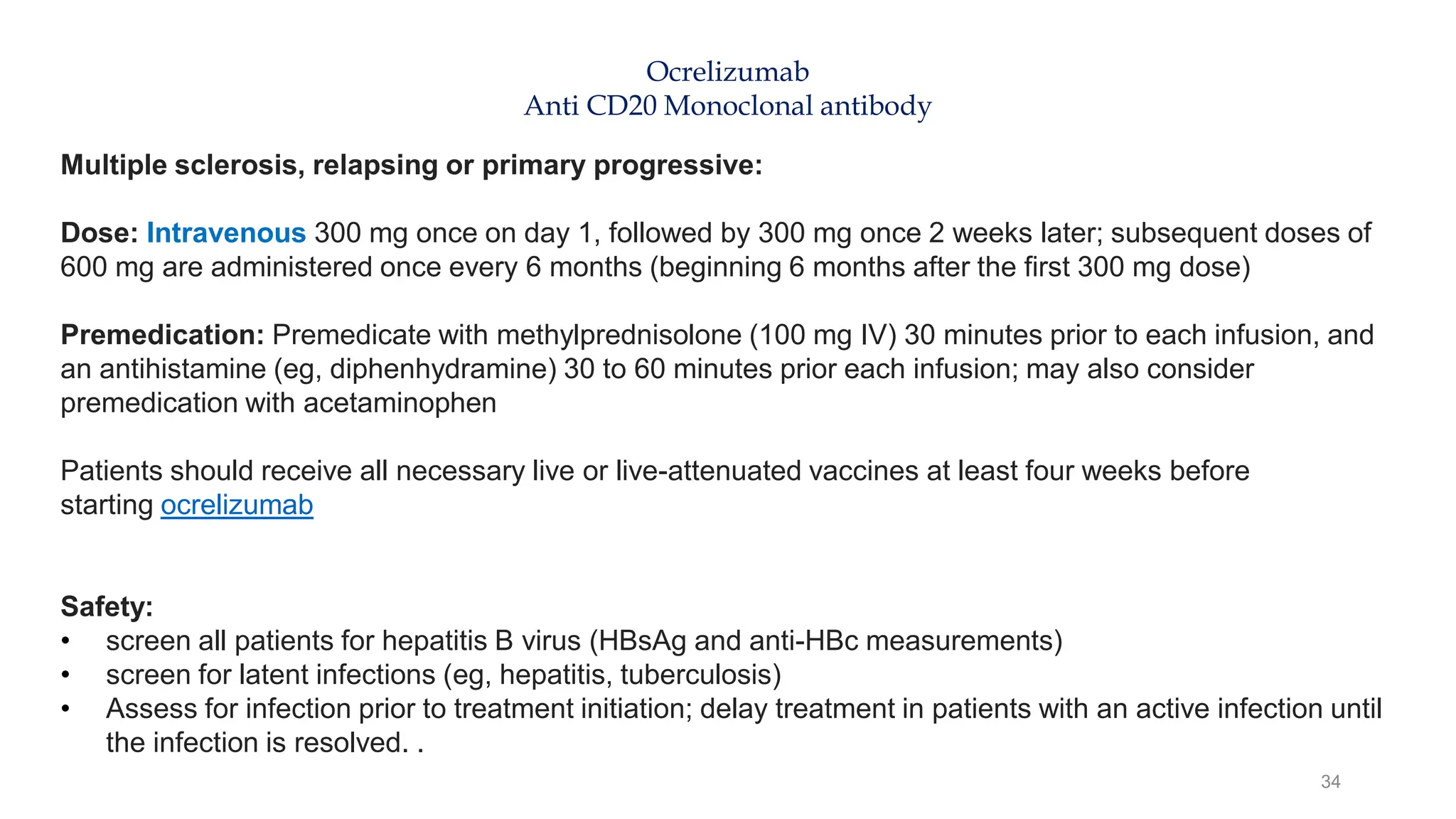
Ocrelizumab
Anti CD20 Monoclonal antibody
Multiple sclerosis, relapsing or primary progressive:
Dose: Intravenous 300 mg once on day 1, followed by 300 mg once 2 weeks later; subsequent doses of
600 mg are administered once every 6 months (beginning 6 months after the first 300 mg dose)
Premedication: Premedicate with methylprednisolone (100 mg IV) 30 minutes prior to each infusion, and
an antihistamine (eg, diphenhydramine) 30 to 60 minutes prior each infusion; may also consider
premedication with acetaminophen
Patients should receive all necessary live or live-attenuated vaccines at least four weeks before
starting ocrelizumab
Safety:
• screen all patients for hepatitis B virus (HBsAg and anti-HBc measurements)
• screen for latent infections (eg, hepatitis, tuberculosis)
• Assess for infection prior to treatment initiation; delay treatment in patients with an active infection until
the infection is resolved. .
16/06/2024 35
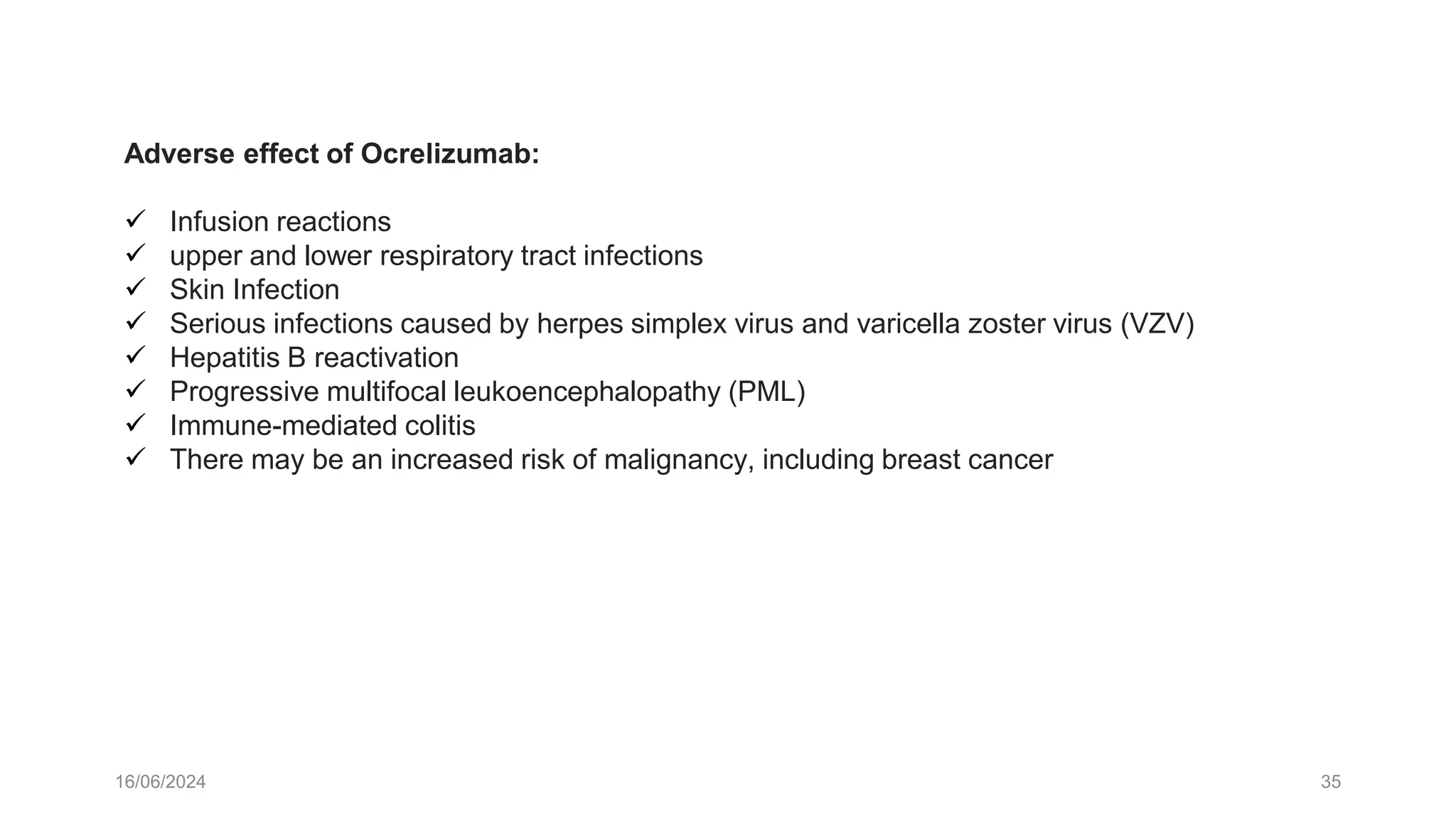
Adverse effect of Ocrelizumab:
 Infusion reactions
 upper and lower respiratory tract infections
 Skin Infection
 Serious infections caused by herpes simplex virus and varicella zoster virus (VZV)
 Hepatitis B reactivation
 Progressive multifocal leukoencephalopathy (PML)
 Immune-mediated colitis
 There may be an increased risk of malignancy, including breast cancer
16/06/2024 36
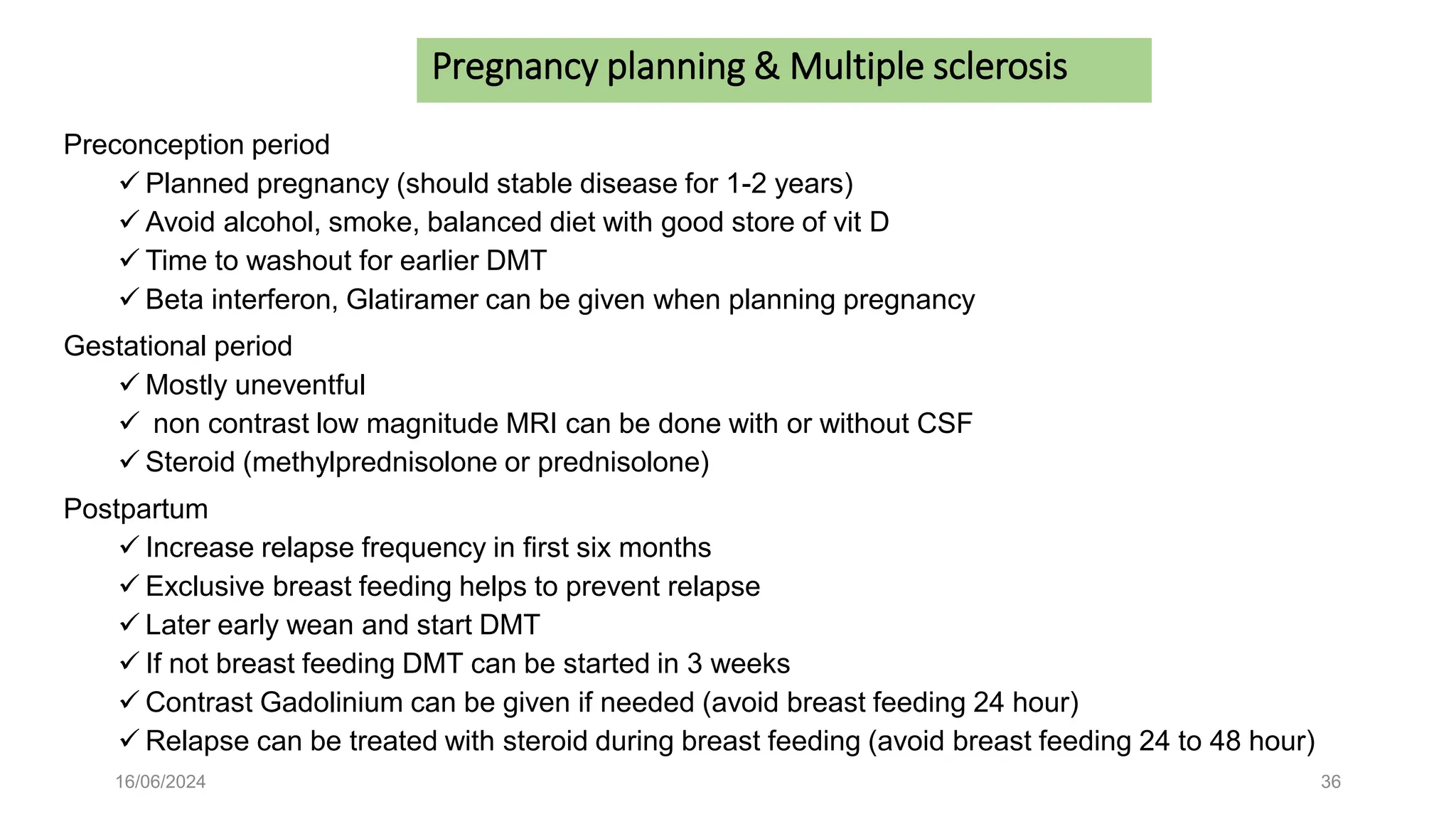
Preconception period
 Planned pregnancy (should stable disease for 1-2 years)
 Avoid alcohol, smoke, balanced diet with good store of vit D
 Time to washout for earlier DMT
 Beta interferon, Glatiramer can be given when planning pregnancy
Gestational period
 Mostly uneventful
 non contrast low magnitude MRI can be done with or without CSF
 Steroid (methylprednisolone or prednisolone)
Postpartum
 Increase relapse frequency in first six months
 Exclusive breast feeding helps to prevent relapse
 Later early wean and start DMT
 If not breast feeding DMT can be started in 3 weeks
 Contrast Gadolinium can be given if needed (avoid breast feeding 24 hour)
 Relapse can be treated with steroid during breast feeding (avoid breast feeding 24 to 48 hour)
Pregnancy planning & Multiple sclerosis
16/06/2024 37
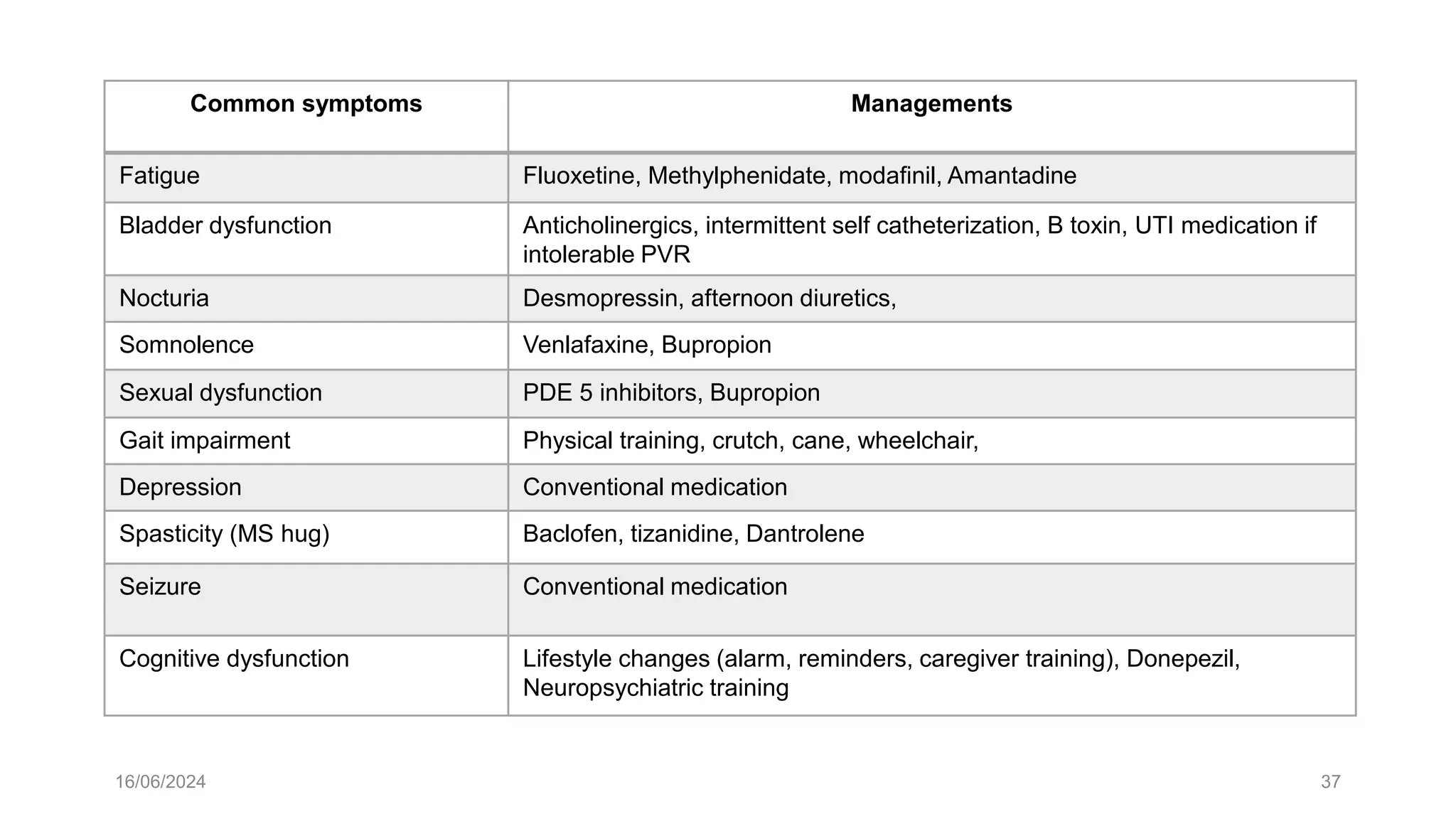
Common symptoms Managements
Fatigue Fluoxetine, Methylphenidate, modafinil, Amantadine
Bladder dysfunction Anticholinergics, intermittent self catheterization, B toxin, UTI medication if
intolerable PVR
Nocturia Desmopressin, afternoon diuretics,
Somnolence Venlafaxine, Bupropion
Sexual dysfunction PDE 5 inhibitors, Bupropion
Gait impairment Physical training, crutch, cane, wheelchair,
Depression Conventional medication
Spasticity (MS hug) Baclofen, tizanidine, Dantrolene
Seizure Conventional medication
Cognitive dysfunction Lifestyle changes (alarm, reminders, caregiver training), Donepezil,
Neuropsychiatric training
Follow up of a MS patient
39
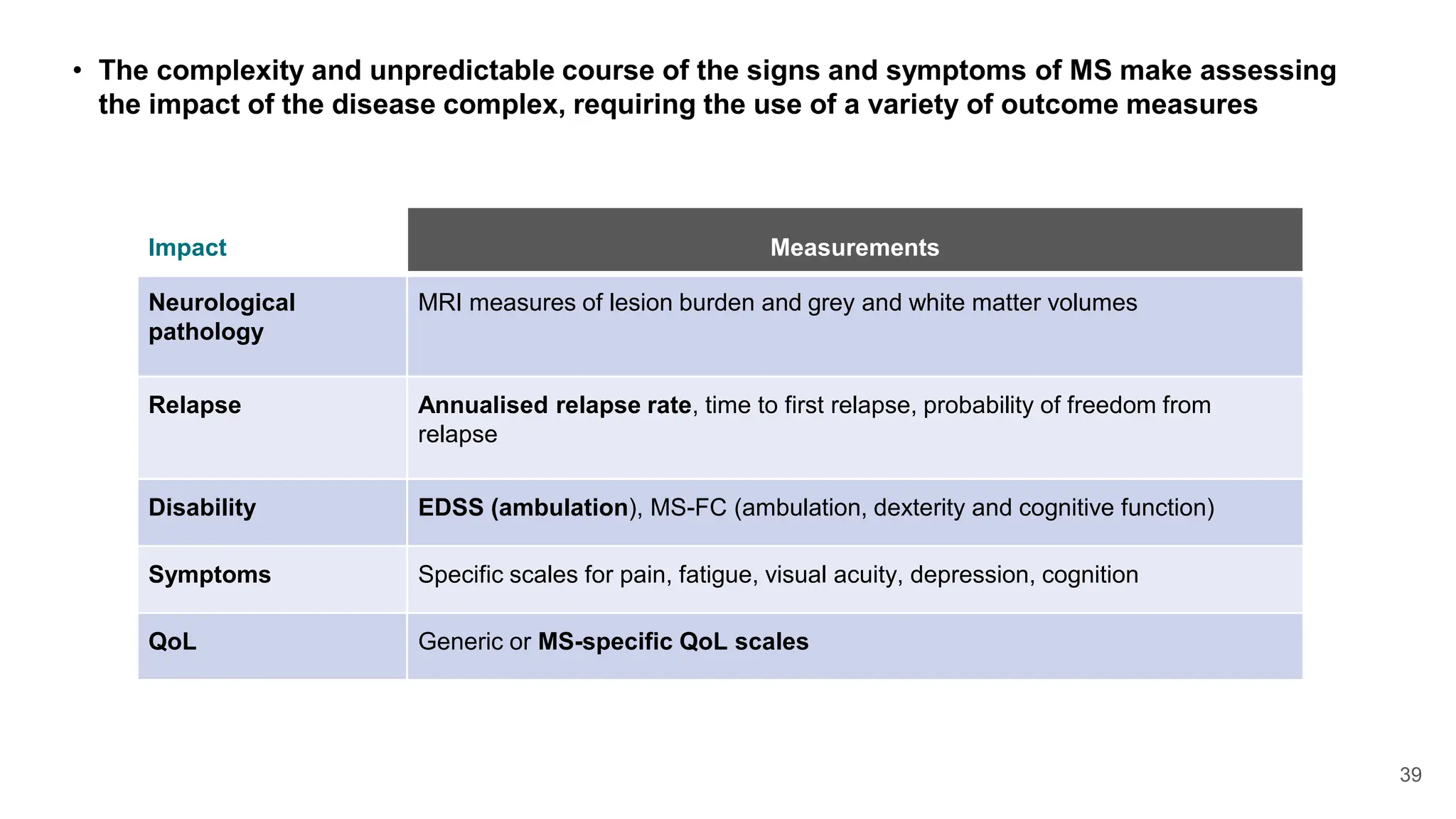
• The complexity and unpredictable course of the signs and symptoms of MS make assessing
the impact of the disease complex, requiring the use of a variety of outcome measures
Impact Measurements
Neurological
pathology
MRI measures of lesion burden and grey and white matter volumes
Relapse Annualised relapse rate, time to first relapse, probability of freedom from
relapse
Disability EDSS (ambulation), MS-FC (ambulation, dexterity and cognitive function)
Symptoms Specific scales for pain, fatigue, visual acuity, depression, cognition
QoL Generic or MS-specific QoL scales
40
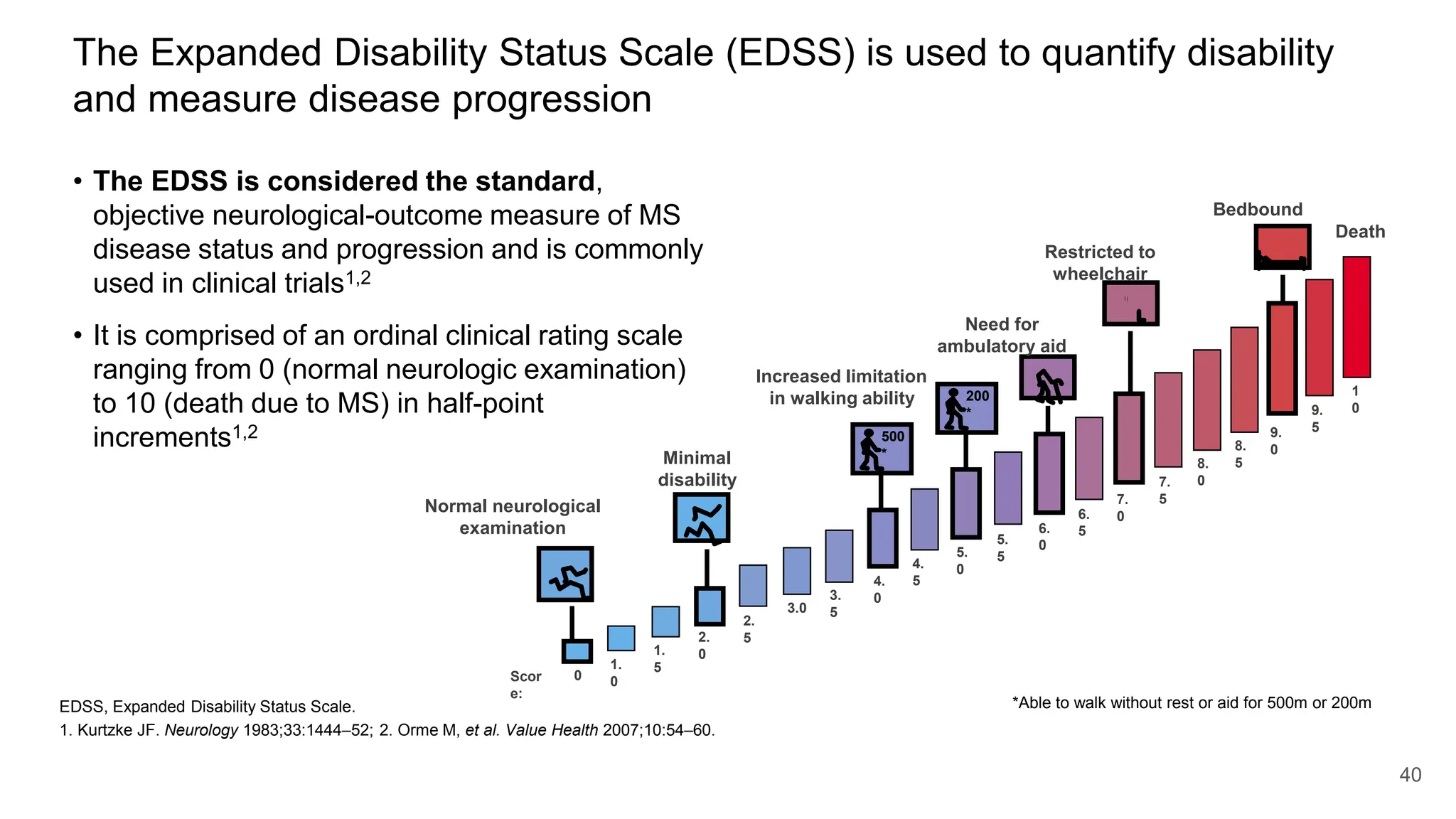
The Expanded Disability Status Scale (EDSS) is used to quantify disability
and measure disease progression
• The EDSS is considered the standard,
objective neurological-outcome measure of MS
disease status and progression and is commonly
used in clinical trials1,2
• It is comprised of an ordinal clinical rating scale
ranging from 0 (normal neurologic examination)
to 10 (death due to MS) in half-point
increments1,2
0
1
0
2.
0
4.
0
5.
5
7.
0
9.
0
1.
0
1.
5
2.
5
3.
5
3.0
4.
5
500
*
6.
0
6.
5
7.
5
8.
0
8.
5
9.
5
200
*
5.
0
Scor
e:
Normal neurological
examination
Minimal
disability
Increased limitation
in walking ability
Need for
ambulatory aid
Restricted to
wheelchair
Bedbound
Death
*Able to walk without rest or aid for 500m or 200m
EDSS, Expanded Disability Status Scale.
1. Kurtzke JF. Neurology 1983;33:1444–52; 2. Orme M, et al. Value Health 2007;10:54–60.
41
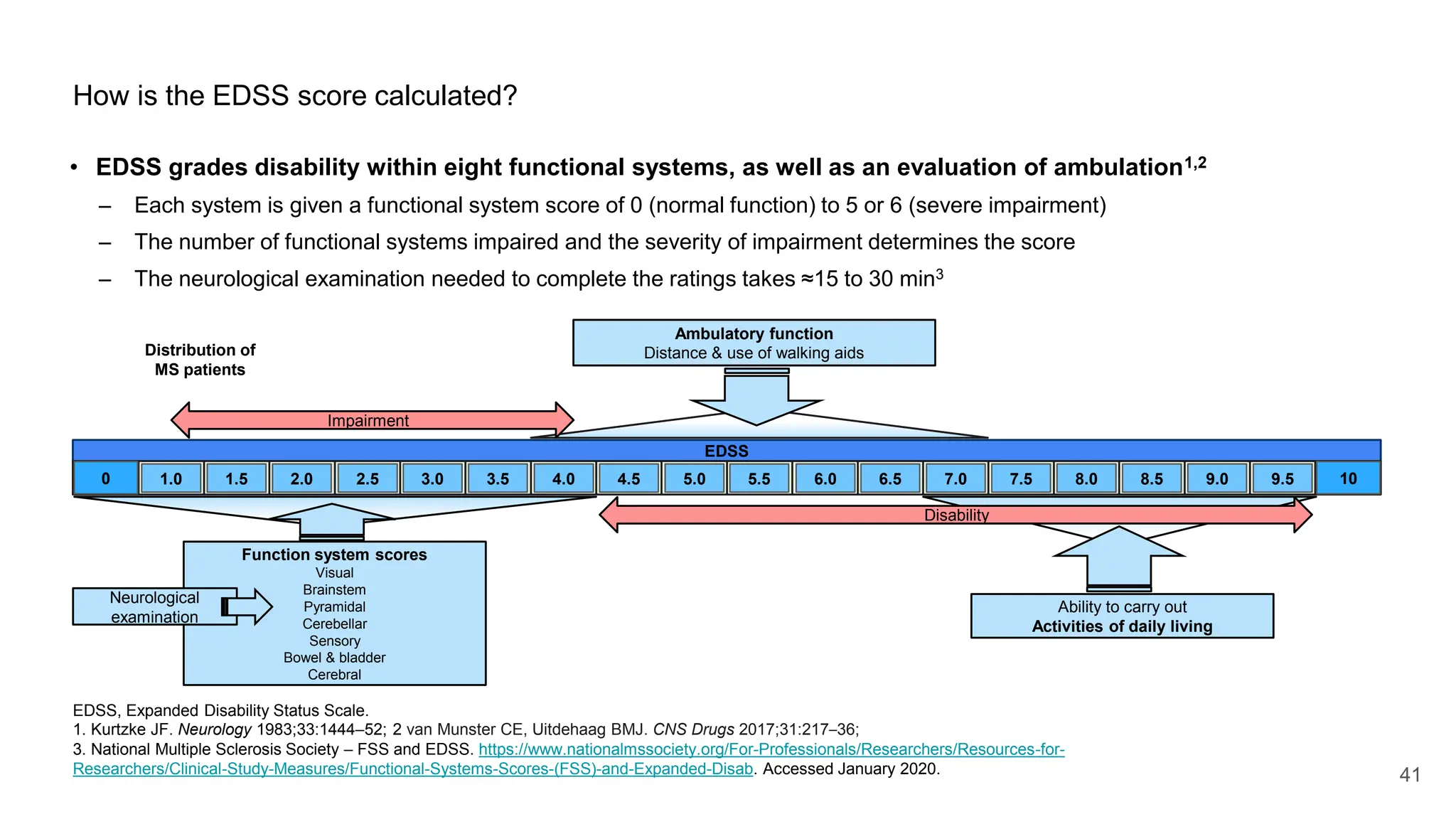
How is the EDSS score calculated?
• EDSS grades disability within eight functional systems, as well as an evaluation of ambulation1,2
– Each system is given a functional system score of 0 (normal function) to 5 or 6 (severe impairment)
– The number of functional systems impaired and the severity of impairment determines the score
– The neurological examination needed to complete the ratings takes ≈15 to 30 min3
EDSS, Expanded Disability Status Scale.
1. Kurtzke JF. Neurology 1983;33:1444–52; 2 van Munster CE, Uitdehaag BMJ. CNS Drugs 2017;31:217–36;
3. National Multiple Sclerosis Society – FSS and EDSS. https://www.nationalmssociety.org/For-Professionals/Researchers/Resources-for-
Researchers/Clinical-Study-Measures/Functional-Systems-Scores-(FSS)-and-Expanded-Disab. Accessed January 2020.
Function system scores
Visual
Brainstem
Pyramidal
Cerebellar
Sensory
Bowel & bladder
Cerebral
Ability to carry out
Activities of daily living
Neurological
examination
Ambulatory function
Distance & use of walking aids
EDSS
0 10
9.5
9.0
8.5
8.0
7.5
7.0
6.5
6.0
5.5
5.0
4.5
4.0
3.5
3.0
2.5
2.0
1.5
1.0
Disability
Impairment
Distribution of
MS patients
42
• Following initial diagnostic MRI, a follow-up MRI is recommended after 3–6 months, with second follow
up
6–12 months later and annual follow up thereafter1,2 to:
– Confirm diagnosis and demonstrate dissemination in time
– Detect clinically silent disease activity while on treatment
(Subclinical disease activity may indicate a sub-optimal response to treatment and the need to reconsider
DMT options)
– PML surveillance
Follow up MRI should be performed in the same scanner where possible, using the same standardised
imaging protocol/sequence
Routine follow up
Guidelines recommend regular MRI monitoring for disease activity
43
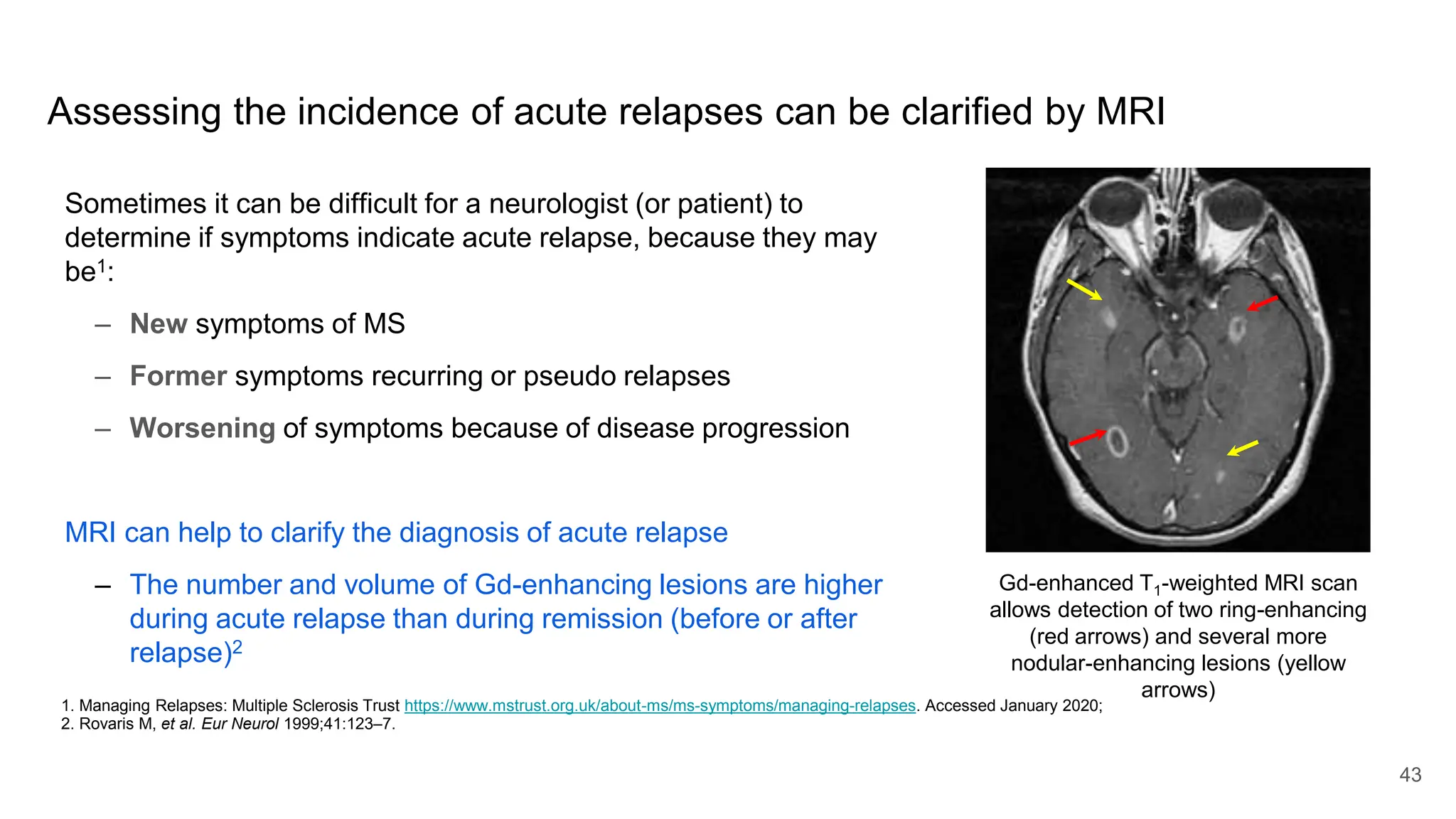
Assessing the incidence of acute relapses can be clarified by MRI
Sometimes it can be difficult for a neurologist (or patient) to
determine if symptoms indicate acute relapse, because they may
be1:
– New symptoms of MS
– Former symptoms recurring or pseudo relapses
– Worsening of symptoms because of disease progression
MRI can help to clarify the diagnosis of acute relapse
– The number and volume of Gd-enhancing lesions are higher
during acute relapse than during remission (before or after
relapse)2
1. Managing Relapses: Multiple Sclerosis Trust https://www.mstrust.org.uk/about-ms/ms-symptoms/managing-relapses. Accessed January 2020;
2. Rovaris M, et al. Eur Neurol 1999;41:123‒7.
Gd-enhanced T1-weighted MRI scan
allows detection of two ring-enhancing
(red arrows) and several more
nodular-enhancing lesions (yellow
arrows)
44
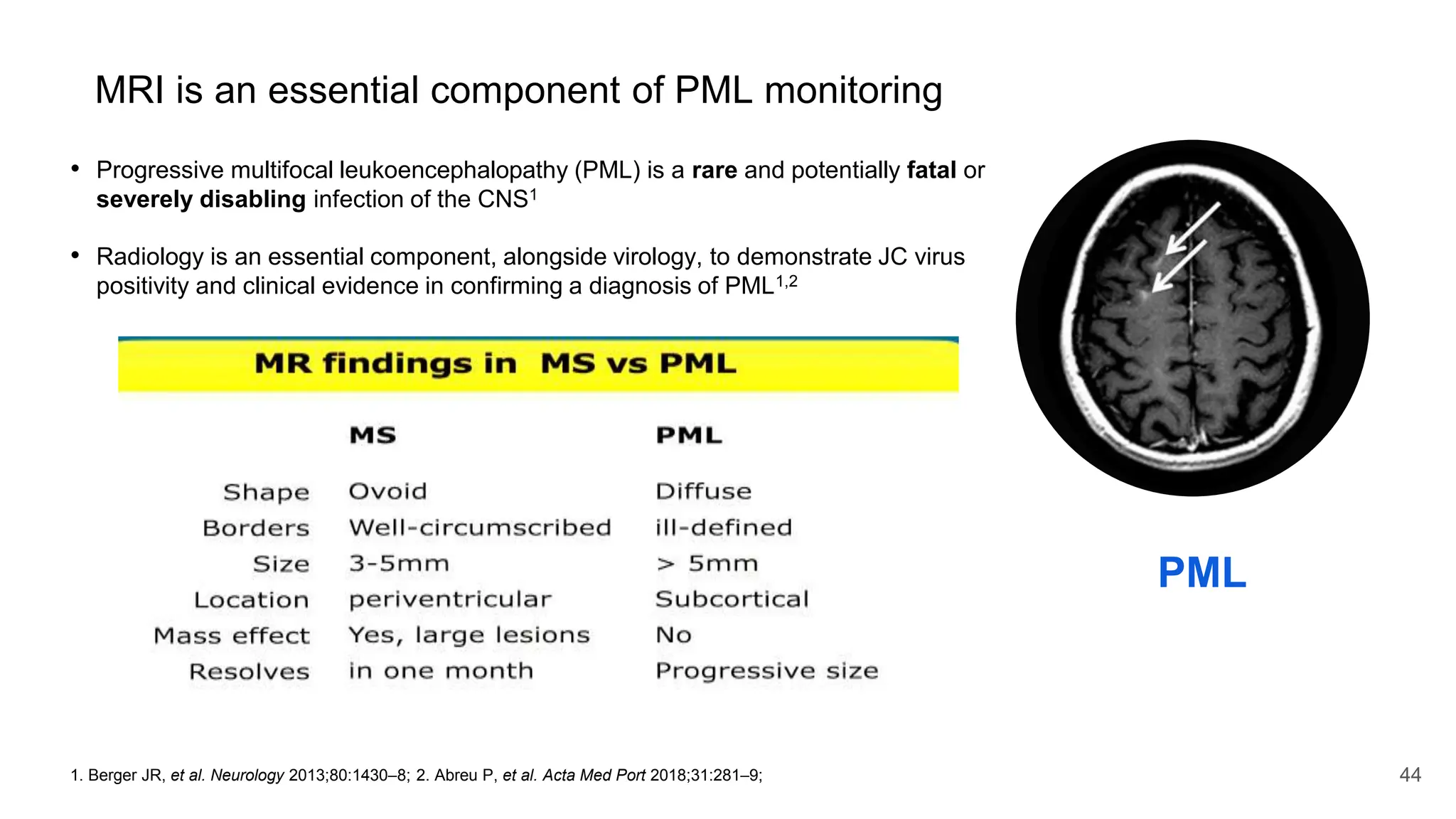
MRI is an essential component of PML monitoring
• Progressive multifocal leukoencephalopathy (PML) is a rare and potentially fatal or
severely disabling infection of the CNS1
• Radiology is an essential component, alongside virology, to demonstrate JC virus
positivity and clinical evidence in confirming a diagnosis of PML1,2
1. Berger JR, et al. Neurology 2013;80:1430–8; 2. Abreu P, et al. Acta Med Port 2018;31:281–9;
PML
45

Understanding Multiple Sclerosis and Management Updates

  • 1.
    Understanding Multiple Sclerosis& Management updates Dr. Ajay Kumar Agarwalla MD (Neurology), MRCP (UK)
  • 2.
    Multiple sclerosis isa chronic, progressive, inflammatory disease of the central nervous system CNS, central nervous system. 1. Frisullo G, et al. J Neuroimmunol 2012;249:112–6; 2. Zwibel HL. Adv Ther 2009:26:1043–57; 3. Dutta R, Trapp BD. Prog Neurobiol 2011;93:1–12; 4. Hauser SL, Oksenberg JR. Neuron 2006;52:61–76; 5. Markowitz CE, et al. Am J Manag Care 2010;16:S211–8. • MS is a chronic, inflammatory, demyelinating disease of the CNS, characterised by ongoing disease activity, with profound effects on patient independence and quality of life1,2 – MS is the most common cause of non-traumatic neurological disability in young adults3,4 – There is currently no cure for MS and the available therapies only slow disease progression5
  • 3.
    The key mechanismof MS is inflammation driving demyelination Bruck W. J Neurol 2005;252:v3–9. Damaged myelin sheath (demyelination) Impaired conduction Cell body Axon MS involves inflammation–mediated destruction of the myelin sheath and the supporting oligodendrocytes by inflammatory autoreactive immune cells This results in the accumulation of characteristic demyelinated lesions with subsequent loss of saltatory conduction, normal neuron function, and significant, irreversible, axon loss
  • 4.
    Acute lesions beginwith inflammation which disrupts the blood-brain barrier allowing an influx of harmful leukocytes to the CNS BBB, blood–brain barrier; CNS, central nervous system; Gd, gadolinium; Gd+, gadolinium enhancing; MHC, major histocompatibility complex. Ref: 1. Daneman R, Prat A. Cold Spring Harb Perspect Biol. 2015;7:a020412; 2. Henderson AP, et al. Ann Neurol 2009;66:739–53; 3. Filippi M, et al. Handbook of Clinical Neurology 2014;122:115–49. In healthy people The BBB controls the microenvironment, including preventing the traffic of peripheral leukocytes into the CNS In people with MS the BBB is disrupted at the location of acute lesions Gd+ of a lesion on T1 w/ MRI In acute lesions BBB disruption results in a perivascular cuff of inflammatory cell, including large numbers of lymphocytes It also allows leakage of Gd contrast into the CNS
  • 5.
    Symptoms of MSvary and are unpredictable, commonly patients experience fatigue, sensory problems and mobility impairment 1. National Multiple Sclerosis Society. http://www.nationalmssociety.org/Symptoms-Diagnosis/MS-Symptoms. Accessed January 2020; 2. Rae-Grant AD, et al. Mult Scler 1999:5:179–83; 3. Kister I, et al. Int J MS Care 2013:15:146–56; 4. Zwibel HL. Adv Ther 2009:26:1043–57. • Most common symptoms:1 – Mobility impairment and muscle weakness (90%)4 – Sensory problems including visual disturbances, numbness, and tingling (85%)3 – Fatigue (80%)1 – Bladder dysfunction (80%)1 – Walking difficulties and falls (50-70%)1 – Pain (67%)2 – Cognitive changes (50%)1 – Spasticity (44%–84%)4 • Less common symptoms:1 – Speech problems (25%–40%)1 – Respiratory problems (20%)2 – Hearing loss (6%)1 – Seizures (2%–5%)1 • Secondary and tertiary symptoms:1 – Urinary tract infections – Decreased bone density and loss of muscle tone – Pressure sores – Social, vocational, and psychological complications Numbness Tingling Muscle weakness Cognitive impairment Visual impairment including optic neuritis Bladder dysfunction
  • 6.
    The heterogeneity ofclinical symptoms associated with MS results from damage occurring in different parts of the CNS Frontal lobe1 Reduced emotional control Cognitive issues Parietal lobe1 Paraesthesia Dysesthesia Cognitive issues Occipital lobe1 Visual disturbance Cerebellum1 Tremor Ataxia Dysathria Dysmetria Brain stem1,2 Diplopia Vertigo Dysarthria Gait ataxia Genitourinary problems Lack of proprioception2 7 Spinal cord1 Spasticity Sensory symptoms 7 Image adapted from: https://www.cancer.gov/publishedcontent/syndication/1120672.htm. Accessed January 2020. 1. Miller AE (2001) in Cook SD, et al. Handbook of Multiple Sclerosis. Taylor & Francis Group; 2. National Multiple Sclerosis Society. http://www.nationalmssociety.org/ About-the-Society/News/Looking-at-MS-and-balance-in-a-new-way-An-intervie. Accessed January 2020
  • 7.
    What are thedifferent phenotypes of MS?
  • 8.
    CIS, clinically isolatedsyndrome; PPMS, primary progressive MS; RRMS, relapsing remitting MS; SPMS, secondary progressive MS. 1. Lublin FD, et al. Neurology 2014;83:278–86; 2. National Multiple Sclerosis Society. Relapse-remitting MS (RRMS). http://www.nationalmssociety.org/What-is-MS/Types-of-MS/Relapsing-remitting-MS. Accessed January 2020; 3. National Multiple Sclerosis Society. Primary progressive MS (PPMS). http://www.nationalmssociety.org/What-is-MS/Types-of-MS/Primary-progressive-MS. Accessed January 2020. SPMS Disability CIS Time PPMS Progressive forms of MS1,3 RRMS Time Time Time Relapsing forms of MS (RMS)1,2 Based on the natural history of the disease, MS is typically described as having one of four phenotypes: MS phenotypes are further subcategorised by disease activity (clinically or by MRI) and are deemed to be either ‘active’ or ‘non-active’ i i i i
  • 9.
    MS is characterisedby inflammation, degeneration and accumulating disability Inflammation dominates in early MS, leading to abnormal lesions and symptom attacks (relapses) Secondary neurodegeneration Acute inflammation Chronic inflammation Disability Brain volume
  • 10.
    CIS, clinically isolatedsyndrome; CNS, central nervous system; RRMS, relapsing remitting MS; SPMS, secondary progressive MS. 1. Traboulsee A. J Neurol Sci 2007;256:S19–22; 2. Stys PK, et al. Nat Rev Neurosci 2012;13:507–14. Relapses occur when inflammatory demyelinating episodes surpass a clinical threshold1,2 RRMS SPMS CIS Presymptomatic MS Underlying disease progression Disability Inflammatory demyelinating episodes Time Clinical threshold Disability
  • 11.
    Relapsing-remitting MS typicallyhas an earlier age of onset than PPMS, sex bias and different initial presentation NARCOMS, North American Research Committee on Multiple Sclerosis; PPMS, primary progressive MS; RMS, relapsing MS. 1. Rice CM, et al. J Neurol Neurosurg Psychiatry 2013;84:1100–6; 2. Antel J, et al. Acta Neuropathol 2012;123:627–38; 3. Salter A, et al. Mult Scler 2017 [Epub ahead of print]; 4. Cottrell DA, et al. Brain 1999;122:625‒39; 5. Sola P, et al. Mult Scler J 2011;17:303–11; 6. Compston A, Coles A. Lancet 2008;372:1502–17. PPMS RRMS Minimal sex bias1–3* Higher incidence in females (3:1 ratio, female to male)1,2 Sensory symptoms predominate, followed by visual symptoms1,4‒6 Motor symptoms predominate, followed by sensory symptoms1,4‒6 ~30 years of age1 ~45 years of age3
  • 12.
    Disability progression isfaster in patients with PPMS than RMS Curves are not age adjusted. EDSS, Expanded Disability Status Scale; PPMS, primary progressive MS; RMS, relapsing-onset MS; RRMS, relapsing-remitting MS; SPMS, secondary progressive MS. 1. Sola P, et al. Mult Scler 2011;17:303–11; 2. Musella A, et al. Frontiers Aging Neurosci. 2018;10:238; 3. Salter A, et al. Mult Scler 2017 [Epub ahead of print]. Kaplan–Meier curve for time to EDSS 41 PPMS (n=45) RMS (RRMS [n=69] SPMS [n=35]) 0.00 0.25 0.50 0.75 1.00 Probability of not reaching EDSS of 4 312 Time from diagnosis (months) 0 24 48 72 96 120 144 168 192 216 240 264 288 p<0.0001
  • 13.
  • 14.
    16/06/2024 14 A combinationof tools to establish a diagnosis of MS Magnetic resonance imaging Blood work Patient history and neurological exam Cerebrospinal fluid Evoked potentials Optical coherence tomography Once the patient is assessed, and the neurologist has their history, examination and any relevant investigation findings, more likely diagnoses are excluded and the McDonald 2017 diagnostic criteria are applied to determine the likelihood of the patient having MS
  • 15.
    16/06/2024 15 How MSis diagnosed? Presenting complaint Foundation for diagnosis of MS1 Confirmed by1 Supporting investigations1–3 Clinical assessments Paraclinical assessments Blood tests* Medical history Neurological exam MRI The patient will only receive an MRI scan if they have a clinically suspicious history and exam Evoked potentials Cerebrospinal fluid Clinical symptoms Patients typically present as the result of clinically overt symptoms during an acute relapse *Primarily used to eliminate other potential conditions, with similar clinical presentations. 1. Gelfand JM, et al. Mult Scler Relat Disord 2014;122:269–90; 2. Kale N. Eye Brain 2016;8:195–202; 3. National Multiple Sclerosis Society. https://www.mssociety.org.uk/about-ms/diagnosis/the-tests-for-ms Accessed November 2021 Optical coherence tomography
  • 16.
    16/06/2024 16 Using the2017 McDonald Criteria for diagnosis of RRMS Thompson AJ, et al. Lancet Neurol 2018;17:162–73. Both DIS and DIT can be demonstrated via objective clinical evidence or radiologically on MRI Dissemination in space (DIS) The development of lesions in distinct anatomical locations within the CNS – i.e. indicating a multifocal CNS process Lesion Lesion Dissemination in time (DIT) The development or appearance of new CNS lesions over time, separate to the initial lesion(s) – may occur in the same area 1st lesion 2nd lesion at a later date No better explanation for the clinical presentation Other possible causes of the patient’s neurological symptoms must be ruled out through a full differential diagnosis A diagnosis of RRMS can be supported by the following three criteria:
  • 17.
    16/06/2024 17 Use ofclinical and paraclinical assessments to establish DIS and DIT Thompson AJ, et al. Lancet Neurol. 2018;17:162–73. Dissemination of lesions in space T2 lesions in at least two of four areas of the CNS Periventricular Cortical or juxtacortical Infratentorial Spinal cord DIS can also be demonstrated by an additional clinical attack at a different CNS site Dissemination of lesions in time Simultaneous presence of Gd+ and Gd- lesions at any time OR A new T2-hyperintense or Gd+ lesion on follow-up MRI, with reference to a baseline scan, irrespective of the timing of the baseline scan T2 FLAIR T1 post-Gd DIT can also be demonstrated by an additional clinical attack
  • 18.
    16/06/2024 18 Diagnosis followingacute episode also require additional data Thompson AJ, et al. Lancet Neurol. 2018;17:162–73. Objective clinical evidence of lesions Number of acute clinical episodes Two One (CIS) First episode Second episode One or more sites affected One site affected Different site(s) Evidence of a previous attack at a different site Same site Current evidence Additional clinical or MRI data required for diagnosis DIT or CSF-specific OCB DIS and DIT or DIS and CSF-specific OCB None required, diagnosis made None required, diagnosis made RRMS RRMS DIT only DIS only CIS only Two or more sites affected One site affected — — Lesions DIS on MRI or further attack at different site One site affected
  • 19.
    19 Neuroimaging Studies (MRI) Locationof lesions in patient with acquired demyelination
  • 20.
  • 21.
    16/06/2024 21 The 2017McDonald criteria for diagnosis of PPMS Thompson AJ, et al. Lancet Neurol 2018;17:162–73. Patients with 1 year of disability progression (retrospectively or prospectively determined) independent of a clinical relapse And two of: ≥2 T2-hyperintense lesions* in the spinal cord Presence of CSF-specific OCBs ≥1 T2-hyperintense lesions*, characteristic of MS in ≥1 of the following brain regions: • Periventricular • Cortical or juxtacortical • Infratentorial
  • 22.
    16/06/2024 22 If MRIfindings are inconclusive, analysis of CSF via a lumbar puncture can be a useful diagnostic tool – Increased leukocyte levels (usually around seven-fold higher in patients with MS, compared with healthy subjects)2 – Oligoclonal bands indicating high levels of IgG in the CSF2,3 • Oligoclonal bands are not unique to MS, but provide evidence of intrathecal IgG synthesis thought to be indicative of compartmentalised CNS humoral immune activation present in MS4 The gold standard measure of oligoclonal bands is isoelectric focusing on agarose gel followed by immunoblotting or immunofixation for IgG with paired CSF and serum. The sensitivity for detection of OCBs is over 95% using this technique4 CNS, central nervous system; CSF, cerebrospinal fluid; IgG, Immunoglobulin G; OCB, oligoclonal bands. Image from MS Trust. Lumbar puncture. https://www.mstrust.org.uk/a-z/lumbar-puncture. Accessed January 2020. 1. Awad A, et al. J Neuroimmunol 2010;219:1–7; 2. MS Trust. Lumbar puncture. https://www.mstrust.org.uk/a-z/lumbar-puncture. Accessed January 2020; 3. Link H, Huang YM. J Neuroimmunol 2006;180:17–28. 4. Dobson R, et al. J Neurol Neurosurg Psychiatry 2013;84:909–914.
  • 23.
    What are relapsesand why do they happen?
  • 24.
    What is anMS clinical relapse? Relapses, sometimes called attacks, exacerbations, flares or flare-ups, are acute clinical manifestations of MS disease activity A relapse evolves over a few days, plateaus, then remits over a few weeks or months with or without full recovery MS relapses are unpredictable and the relatively sudden onset of neurological symptoms may be functionally and socially incapacitating4,5 A relapse presents clinically as an episode of neurological disturbance (such as paraesthesia, weakness/clumsiness or visual disturbance) in the absence of fever or infection, that lasts for at least 24 hours
  • 25.
    Acute relapses generallyconsist of three phases, then patients remain clinically stable until the next relapse Disability Tim e Phase 1: Worsening Typically takes several days to reach maximal deficit, but may take hours or minutes or several weeks Phase 2 Phase 3: Recovery Usually within 6 weeks; although can take months Recovery can be: • No improvement (4%) • Partial • Complete Phase 1 Phase 3 Phase 2: Stability
  • 26.
    How do avoidmisdiagnosis of MS?
  • 27.
    16/06/2024 27 Several otherconditions have similar characteristics 1. Eckstein C, et al. J Neurol 2012;259:801–16; 2. Scolding N, et al. J Neurol Neurosurg Psychiatry 2001:Sii9–15. METABOLIC DISORDERS1 Disorders of B12 metabolism, leukodystrophies NEOPLASTIC DISEASES1 Spinal cord tumours, CNS lymphoma, paraneoplastic disorders INFECTIOUS DISEASES1 HIV-associated myelopathy and HTLV- 1-associated myelopathy, Lyme disease, meningovascular syphilis, Eales disease, PML AUTOIMMUNE DISEASES1 Sjögren’s syndrome, systemic lupus erythematosus, Behçet’s disease, sarcoidosis, antiphospholipid–antibody syndrome VASCULAR DISORDERS1 Spinal dural arteriovenous fistula, cavernous hemangiomata, CNS vasculitis, CADASIL GENETIC DISORDERS1,2 Hereditary ataxias and hereditary paraplegias, Leber’s optic atrophy PYSCHIATRIC DISORDERS2 Conversion reaction, malingering VARIANTS OF MS1 Optic neuritis, isolated brain-stem syndrome, transverse myelitis, ADEM, Marburg disease, NMOSD
  • 28.
    28 Key steps inthe differential diagnosis of MS Symptoms consistent with an demyelinating disease Exclude non-demyelinating syndrome* Classify idiopathic inflammatory demyelinating disease* Determine diagnosis of non-inflammatory demyelinating disease Not MS (NMOSD, ADEM, other) McDonald Criteria MS established MS not yet established Consistent with MS (includes CIS)
  • 29.
  • 30.
    16/06/2024 30 Treatment ofAcute Attacks/ relapse • Acute attacks are typically treated with corticosteroids • Short courses of IV methylprednisolone – 500 to 1000 mg daily for 3 to 5 days • S/Es include psychiatric changes, predilection for infections, GI disturbances, anaphylactoid reactions, Increased incidence of fracture
  • 31.
    31 Initial disease-modifying therapyfor relapsing- remitting multiple sclerosis
  • 32.
    16/06/2024 32 High potency: Natalizumab Blymphocyte depleting agents (Ocrelizumab, Rituximab, Ublituximab, ofatumumab, Alemtuzumab) Intermediate potency: Fumarates (diroximel, dimethyl) Sphingosine 1-phosphate receptor modulators (Finglolimod, siponimod) Low potency: Interferon beta 1a (sc or Im) Glaltiramer sc, Oral teriflunomide
  • 33.
    16/06/2024 33 Diroximel fumarate Indications:CIS, RRMS, and active SPMS Dose and administration: Oral is started at 231 mg twice daily for seven days, and then increased to the maintenance dose of 462 mg twice daily. The drug should not be taken with a high-fat, high-calorie meal or snack. Adverse effects: common adverse effects are flushing, abdominal pain, diarrhea, and nausea. Uncommon but serious adverse effects may include anaphylaxis, angioedema, opportunistic infections (e.g., PML, herpes zoster virus), lymphopenia, liver injury, and gastrointestinal reactions including perforation, Screening and monitoring: baseline complete blood count with lymphocyte count, serum aminotransferase, alkaline phosphatase, and total bilirubin levels & six monthly.
  • 34.
    34 Ocrelizumab Anti CD20 Monoclonalantibody Multiple sclerosis, relapsing or primary progressive: Dose: Intravenous 300 mg once on day 1, followed by 300 mg once 2 weeks later; subsequent doses of 600 mg are administered once every 6 months (beginning 6 months after the first 300 mg dose) Premedication: Premedicate with methylprednisolone (100 mg IV) 30 minutes prior to each infusion, and an antihistamine (eg, diphenhydramine) 30 to 60 minutes prior each infusion; may also consider premedication with acetaminophen Patients should receive all necessary live or live-attenuated vaccines at least four weeks before starting ocrelizumab Safety: • screen all patients for hepatitis B virus (HBsAg and anti-HBc measurements) • screen for latent infections (eg, hepatitis, tuberculosis) • Assess for infection prior to treatment initiation; delay treatment in patients with an active infection until the infection is resolved. .
  • 35.
    16/06/2024 35 Adverse effectof Ocrelizumab:  Infusion reactions  upper and lower respiratory tract infections  Skin Infection  Serious infections caused by herpes simplex virus and varicella zoster virus (VZV)  Hepatitis B reactivation  Progressive multifocal leukoencephalopathy (PML)  Immune-mediated colitis  There may be an increased risk of malignancy, including breast cancer
  • 36.
    16/06/2024 36 Preconception period Planned pregnancy (should stable disease for 1-2 years)  Avoid alcohol, smoke, balanced diet with good store of vit D  Time to washout for earlier DMT  Beta interferon, Glatiramer can be given when planning pregnancy Gestational period  Mostly uneventful  non contrast low magnitude MRI can be done with or without CSF  Steroid (methylprednisolone or prednisolone) Postpartum  Increase relapse frequency in first six months  Exclusive breast feeding helps to prevent relapse  Later early wean and start DMT  If not breast feeding DMT can be started in 3 weeks  Contrast Gadolinium can be given if needed (avoid breast feeding 24 hour)  Relapse can be treated with steroid during breast feeding (avoid breast feeding 24 to 48 hour) Pregnancy planning & Multiple sclerosis
  • 37.
    16/06/2024 37 Common symptomsManagements Fatigue Fluoxetine, Methylphenidate, modafinil, Amantadine Bladder dysfunction Anticholinergics, intermittent self catheterization, B toxin, UTI medication if intolerable PVR Nocturia Desmopressin, afternoon diuretics, Somnolence Venlafaxine, Bupropion Sexual dysfunction PDE 5 inhibitors, Bupropion Gait impairment Physical training, crutch, cane, wheelchair, Depression Conventional medication Spasticity (MS hug) Baclofen, tizanidine, Dantrolene Seizure Conventional medication Cognitive dysfunction Lifestyle changes (alarm, reminders, caregiver training), Donepezil, Neuropsychiatric training
  • 38.
    Follow up ofa MS patient
  • 39.
    39 • The complexityand unpredictable course of the signs and symptoms of MS make assessing the impact of the disease complex, requiring the use of a variety of outcome measures Impact Measurements Neurological pathology MRI measures of lesion burden and grey and white matter volumes Relapse Annualised relapse rate, time to first relapse, probability of freedom from relapse Disability EDSS (ambulation), MS-FC (ambulation, dexterity and cognitive function) Symptoms Specific scales for pain, fatigue, visual acuity, depression, cognition QoL Generic or MS-specific QoL scales
  • 40.
    40 The Expanded DisabilityStatus Scale (EDSS) is used to quantify disability and measure disease progression • The EDSS is considered the standard, objective neurological-outcome measure of MS disease status and progression and is commonly used in clinical trials1,2 • It is comprised of an ordinal clinical rating scale ranging from 0 (normal neurologic examination) to 10 (death due to MS) in half-point increments1,2 0 1 0 2. 0 4. 0 5. 5 7. 0 9. 0 1. 0 1. 5 2. 5 3. 5 3.0 4. 5 500 * 6. 0 6. 5 7. 5 8. 0 8. 5 9. 5 200 * 5. 0 Scor e: Normal neurological examination Minimal disability Increased limitation in walking ability Need for ambulatory aid Restricted to wheelchair Bedbound Death *Able to walk without rest or aid for 500m or 200m EDSS, Expanded Disability Status Scale. 1. Kurtzke JF. Neurology 1983;33:1444–52; 2. Orme M, et al. Value Health 2007;10:54–60.
  • 41.
    41 How is theEDSS score calculated? • EDSS grades disability within eight functional systems, as well as an evaluation of ambulation1,2 – Each system is given a functional system score of 0 (normal function) to 5 or 6 (severe impairment) – The number of functional systems impaired and the severity of impairment determines the score – The neurological examination needed to complete the ratings takes ≈15 to 30 min3 EDSS, Expanded Disability Status Scale. 1. Kurtzke JF. Neurology 1983;33:1444–52; 2 van Munster CE, Uitdehaag BMJ. CNS Drugs 2017;31:217–36; 3. National Multiple Sclerosis Society – FSS and EDSS. https://www.nationalmssociety.org/For-Professionals/Researchers/Resources-for- Researchers/Clinical-Study-Measures/Functional-Systems-Scores-(FSS)-and-Expanded-Disab. Accessed January 2020. Function system scores Visual Brainstem Pyramidal Cerebellar Sensory Bowel & bladder Cerebral Ability to carry out Activities of daily living Neurological examination Ambulatory function Distance & use of walking aids EDSS 0 10 9.5 9.0 8.5 8.0 7.5 7.0 6.5 6.0 5.5 5.0 4.5 4.0 3.5 3.0 2.5 2.0 1.5 1.0 Disability Impairment Distribution of MS patients
  • 42.
    42 • Following initialdiagnostic MRI, a follow-up MRI is recommended after 3–6 months, with second follow up 6–12 months later and annual follow up thereafter1,2 to: – Confirm diagnosis and demonstrate dissemination in time – Detect clinically silent disease activity while on treatment (Subclinical disease activity may indicate a sub-optimal response to treatment and the need to reconsider DMT options) – PML surveillance Follow up MRI should be performed in the same scanner where possible, using the same standardised imaging protocol/sequence Routine follow up Guidelines recommend regular MRI monitoring for disease activity
  • 43.
    43 Assessing the incidenceof acute relapses can be clarified by MRI Sometimes it can be difficult for a neurologist (or patient) to determine if symptoms indicate acute relapse, because they may be1: – New symptoms of MS – Former symptoms recurring or pseudo relapses – Worsening of symptoms because of disease progression MRI can help to clarify the diagnosis of acute relapse – The number and volume of Gd-enhancing lesions are higher during acute relapse than during remission (before or after relapse)2 1. Managing Relapses: Multiple Sclerosis Trust https://www.mstrust.org.uk/about-ms/ms-symptoms/managing-relapses. Accessed January 2020; 2. Rovaris M, et al. Eur Neurol 1999;41:123‒7. Gd-enhanced T1-weighted MRI scan allows detection of two ring-enhancing (red arrows) and several more nodular-enhancing lesions (yellow arrows)
  • 44.
    44 MRI is anessential component of PML monitoring • Progressive multifocal leukoencephalopathy (PML) is a rare and potentially fatal or severely disabling infection of the CNS1 • Radiology is an essential component, alongside virology, to demonstrate JC virus positivity and clinical evidence in confirming a diagnosis of PML1,2 1. Berger JR, et al. Neurology 2013;80:1430–8; 2. Abreu P, et al. Acta Med Port 2018;31:281–9; PML
  • 45.