ASSIGNMENT 1 : MULTIPLE
SCLEROSIS
ILESHAA RAJADURAI 012021090998
CHITRA MUNIANDY 012021091487
ILHAASHINI KRISHNAN 012021090323
AININ SUFFIYA BINTI AIZUL AZRAN 012021070575
Introduction
01
OF MULTIPLE SCLEROSIS
Introduction
● The immune system of the body destroys the myelin sheath,
which serves as protection for the nerve cells in the brain,
spinal cord, and optic nerve, in a condition known as multiple
sclerosis. And the insulation of an electrical line is sometimes
used as a comparison for this sheath. Numerous neurological
symptoms that may result from CNS damage vary in type and
severity between MS patients. Injured areas form scar tissue.
This gives the disease its name which is multiple areas of
scarring or multiple sclerosis.
TYPES OF MULTIPLE SCLEROSIS
Types of Multiple sclerosis
● Clinically isolated syndrome (CIS)
● Relapsing-Remitting multiple sclerosis
● Secondary Progressive multiple sclerosis
● Primary Progressive multiple sclerosis
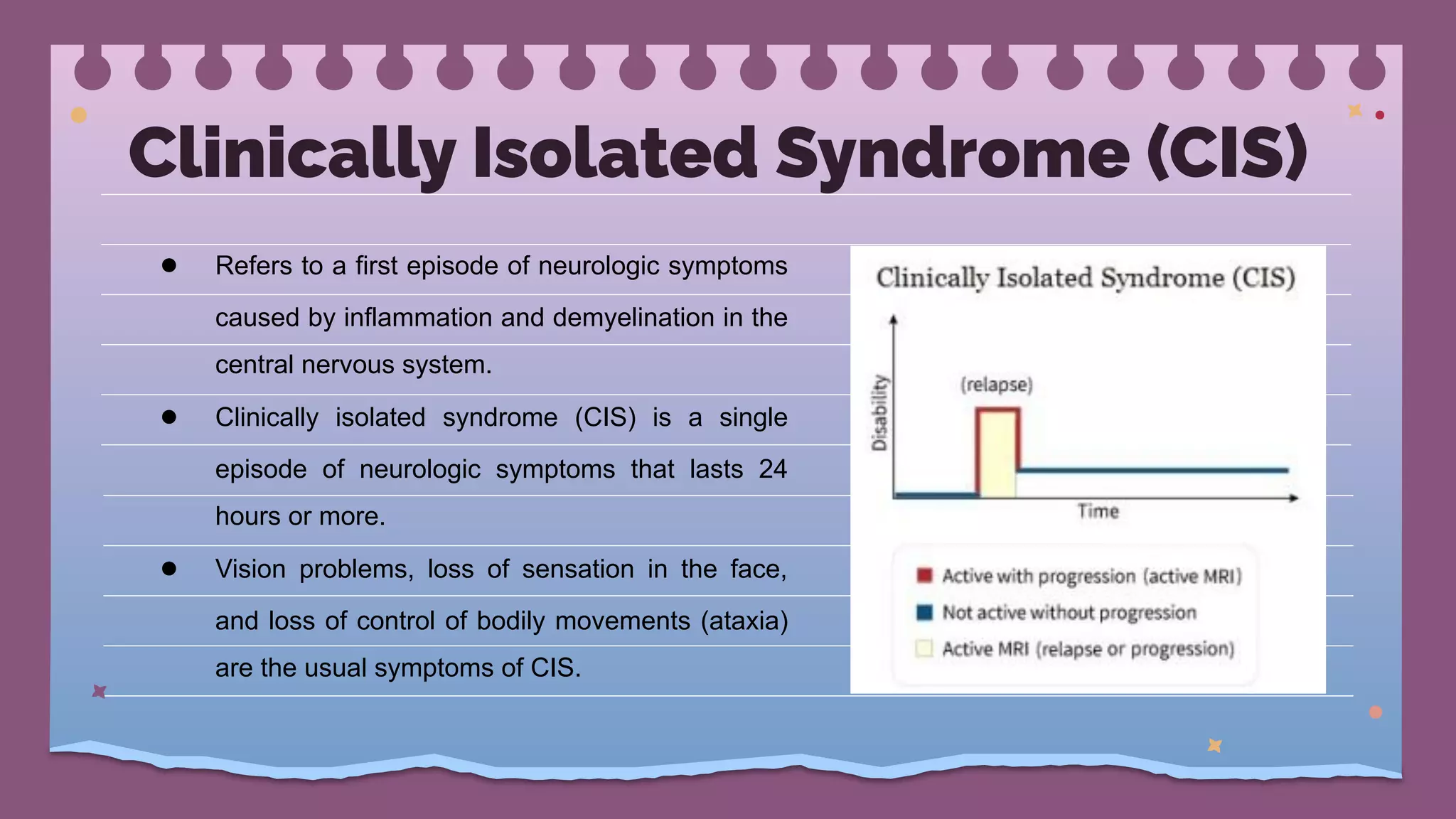
● Refers to a first episode of neurologic symptoms
caused by inflammation and demyelination in the
central nervous system.
● Clinically isolated syndrome (CIS) is a single
episode of neurologic symptoms that lasts 24
hours or more.
● Vision problems, loss of sensation in the face,
and loss of control of bodily movements (ataxia)
are the usual symptoms of CIS.
Clinically Isolated Syndrome (CIS)
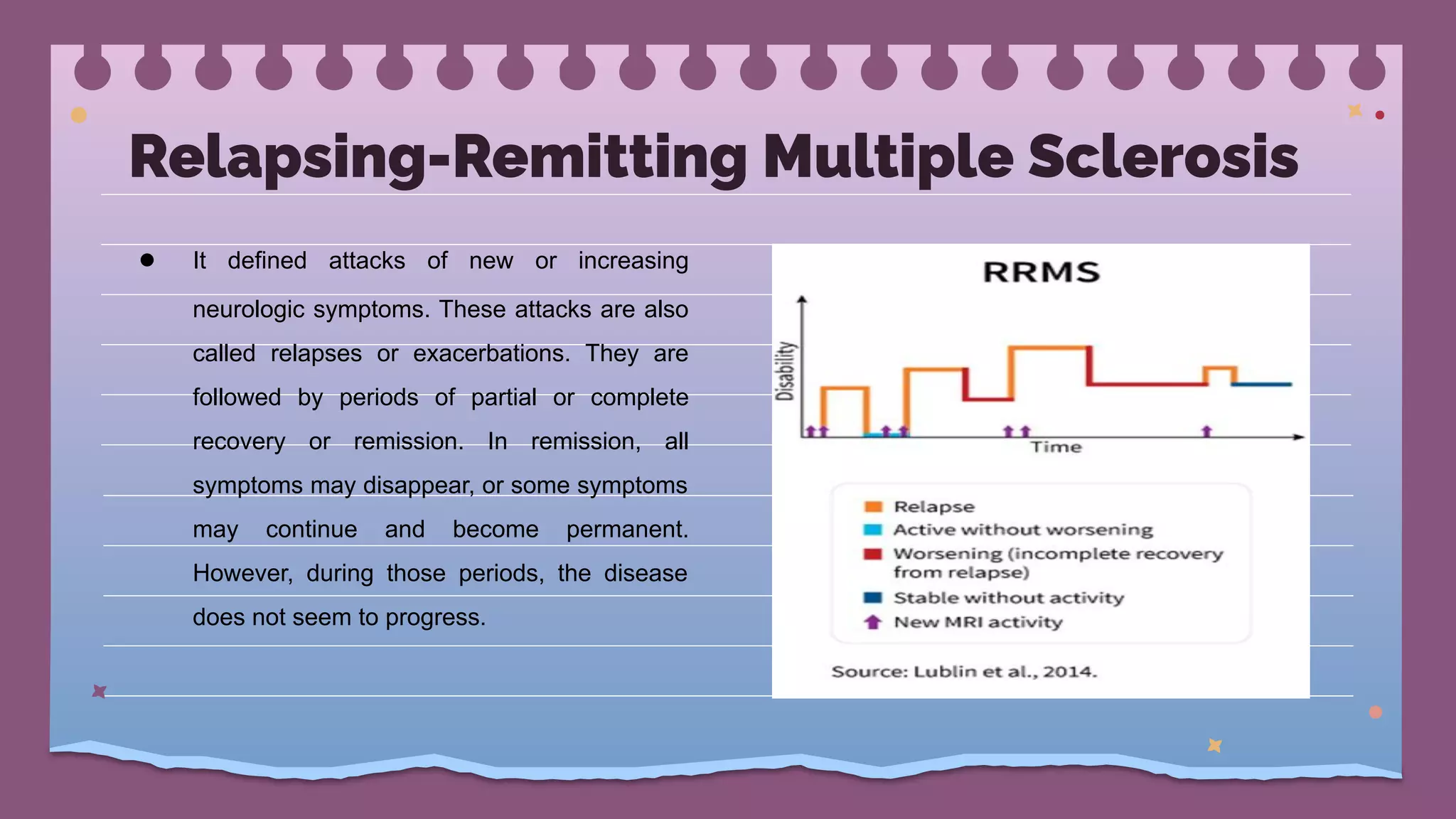
● It defined attacks of new or increasing
neurologic symptoms. These attacks are also
called relapses or exacerbations. They are
followed by periods of partial or complete
recovery or remission. In remission, all
symptoms may disappear, or some symptoms
may continue and become permanent.
However, during those periods, the disease
does not seem to progress.
Relapsing-Remitting Multiple Sclerosis
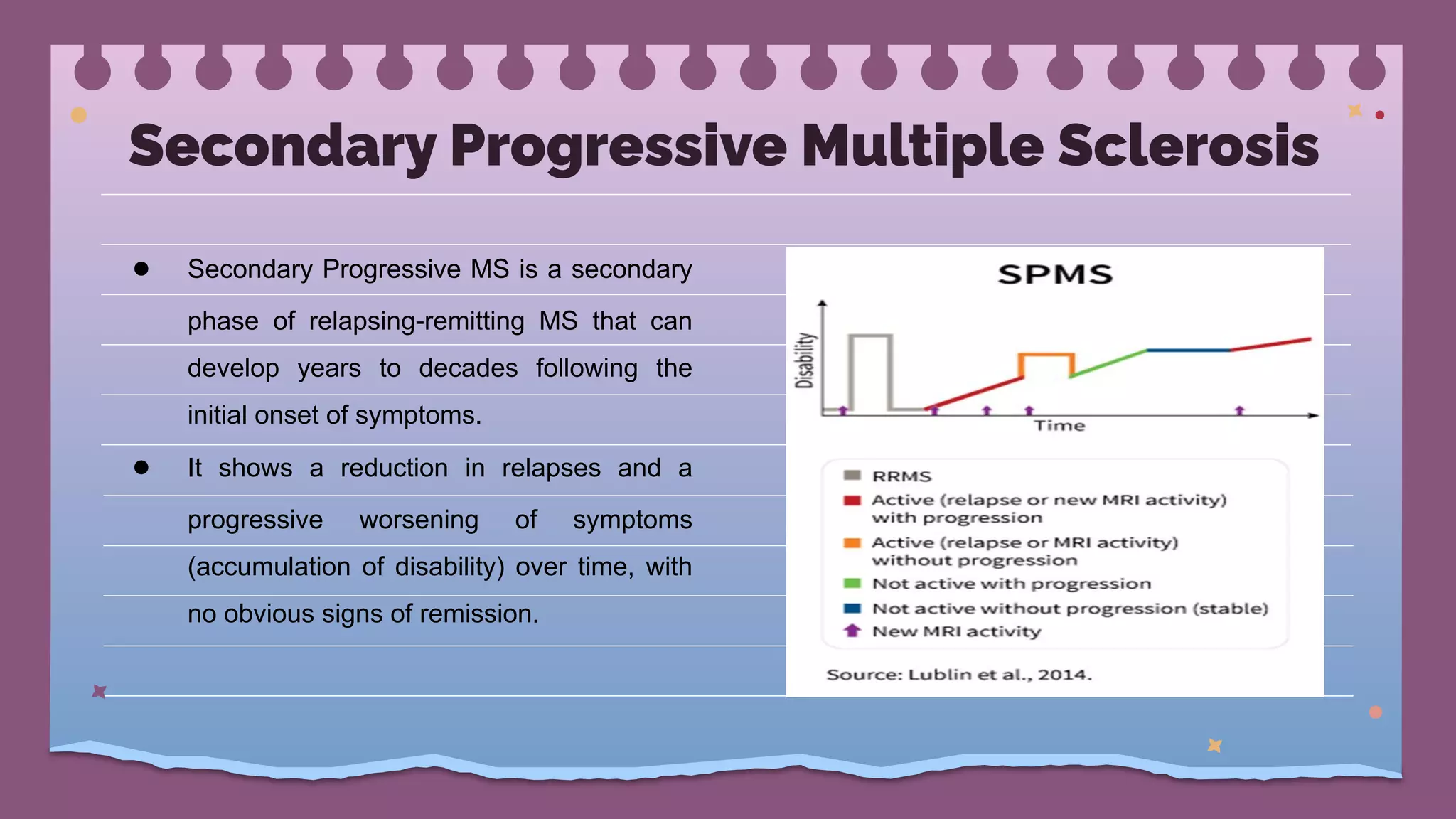
● Secondary Progressive MS is a secondary
phase of relapsing-remitting MS that can
develop years to decades following the
initial onset of symptoms.
● It shows a reduction in relapses and a
progressive worsening of symptoms
(accumulation of disability) over time, with
no obvious signs of remission.
Secondary Progressive Multiple Sclerosis
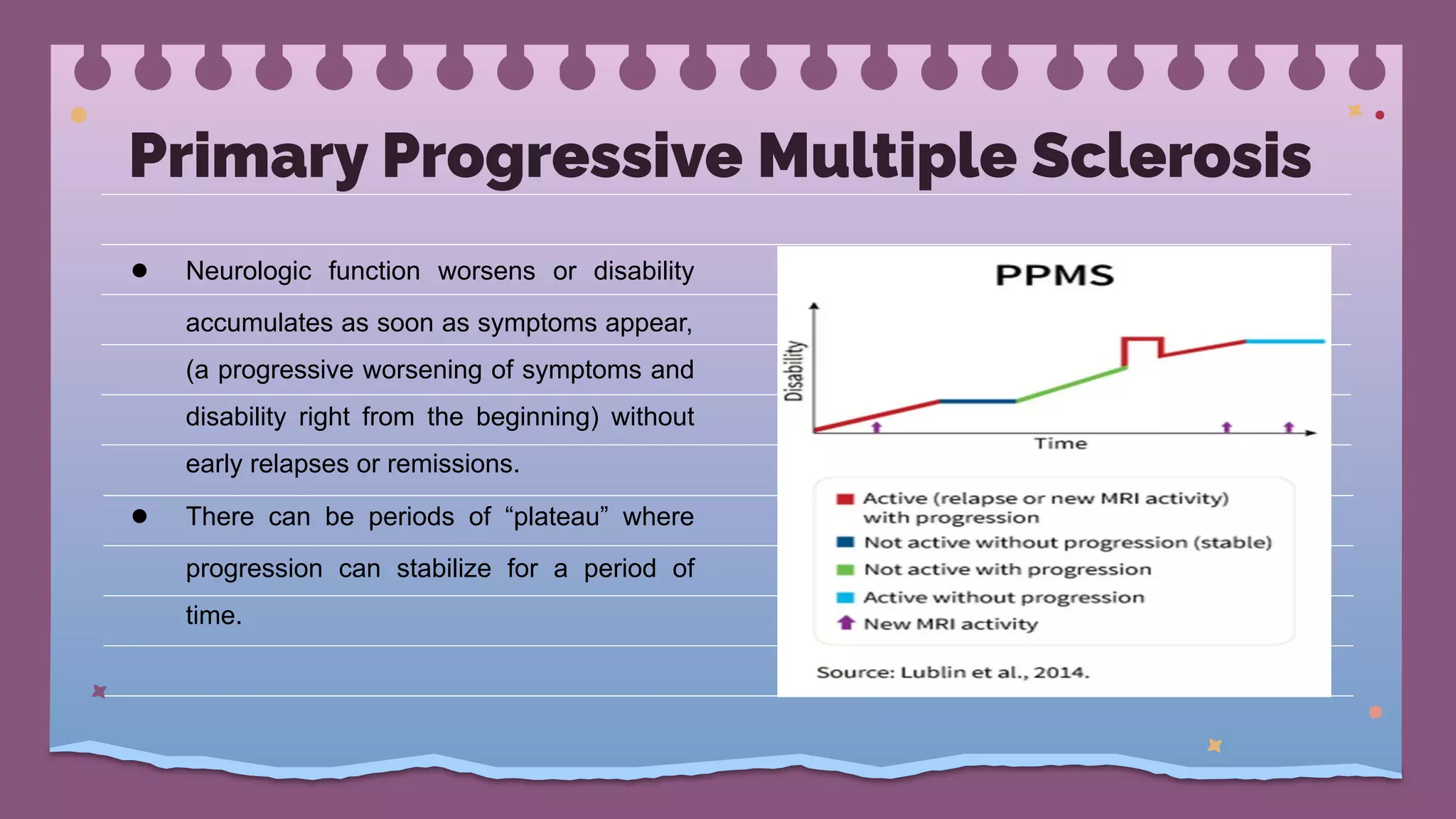
● Neurologic function worsens or disability
accumulates as soon as symptoms appear,
(a progressive worsening of symptoms and
disability right from the beginning) without
early relapses or remissions.
● There can be periods of “plateau” where
progression can stabilize for a period of
time.
Primary Progressive Multiple Sclerosis
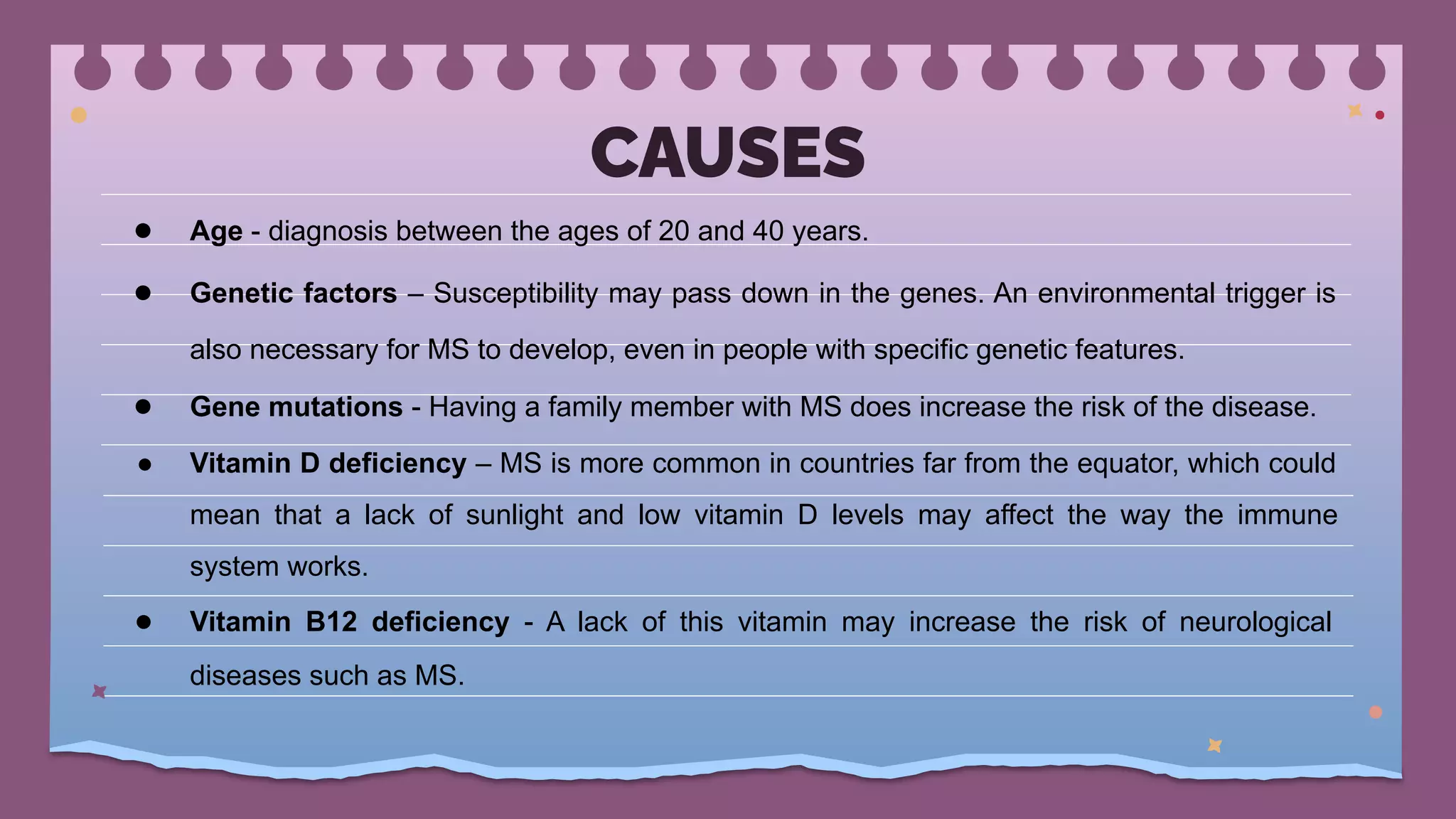
● Age - diagnosis between the ages of 20 and 40 years.
● Genetic factors – Susceptibility may pass down in the genes. An environmental trigger is
also necessary for MS to develop, even in people with specific genetic features.
● Gene mutations - Having a family member with MS does increase the risk of the disease.
● Vitamin D deficiency – MS is more common in countries far from the equator, which could
mean that a lack of sunlight and low vitamin D levels may affect the way the immune
system works.
● Vitamin B12 deficiency - A lack of this vitamin may increase the risk of neurological
diseases such as MS.
CAUSES
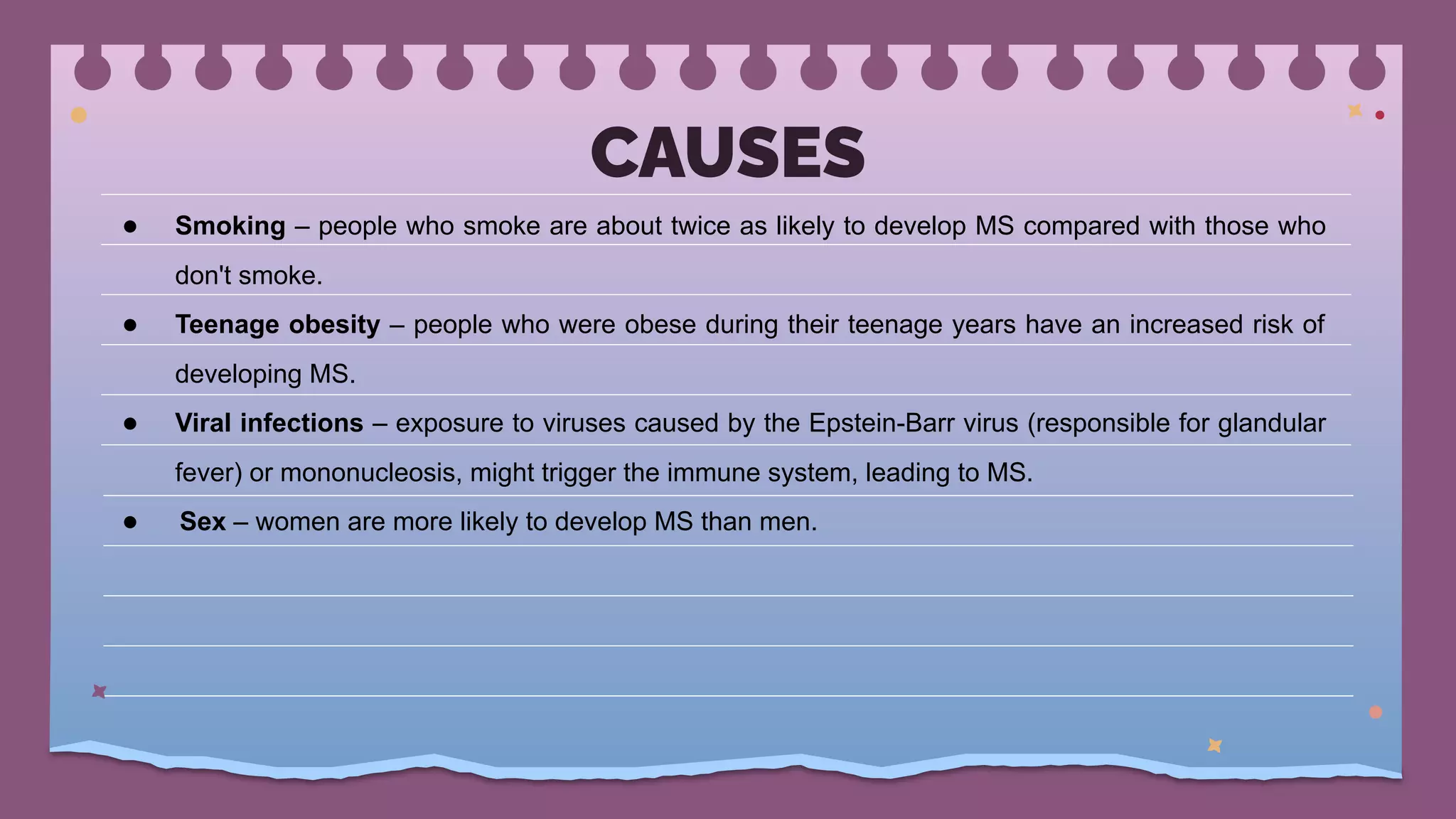
● Smoking – people who smoke are about twice as likely to develop MS compared with those who
don't smoke.
● Teenage obesity – people who were obese during their teenage years have an increased risk of
developing MS.
● Viral infections – exposure to viruses caused by the Epstein-Barr virus (responsible for glandular
fever) or mononucleosis, might trigger the immune system, leading to MS.
● Sex – women are more likely to develop MS than men.
CAUSES
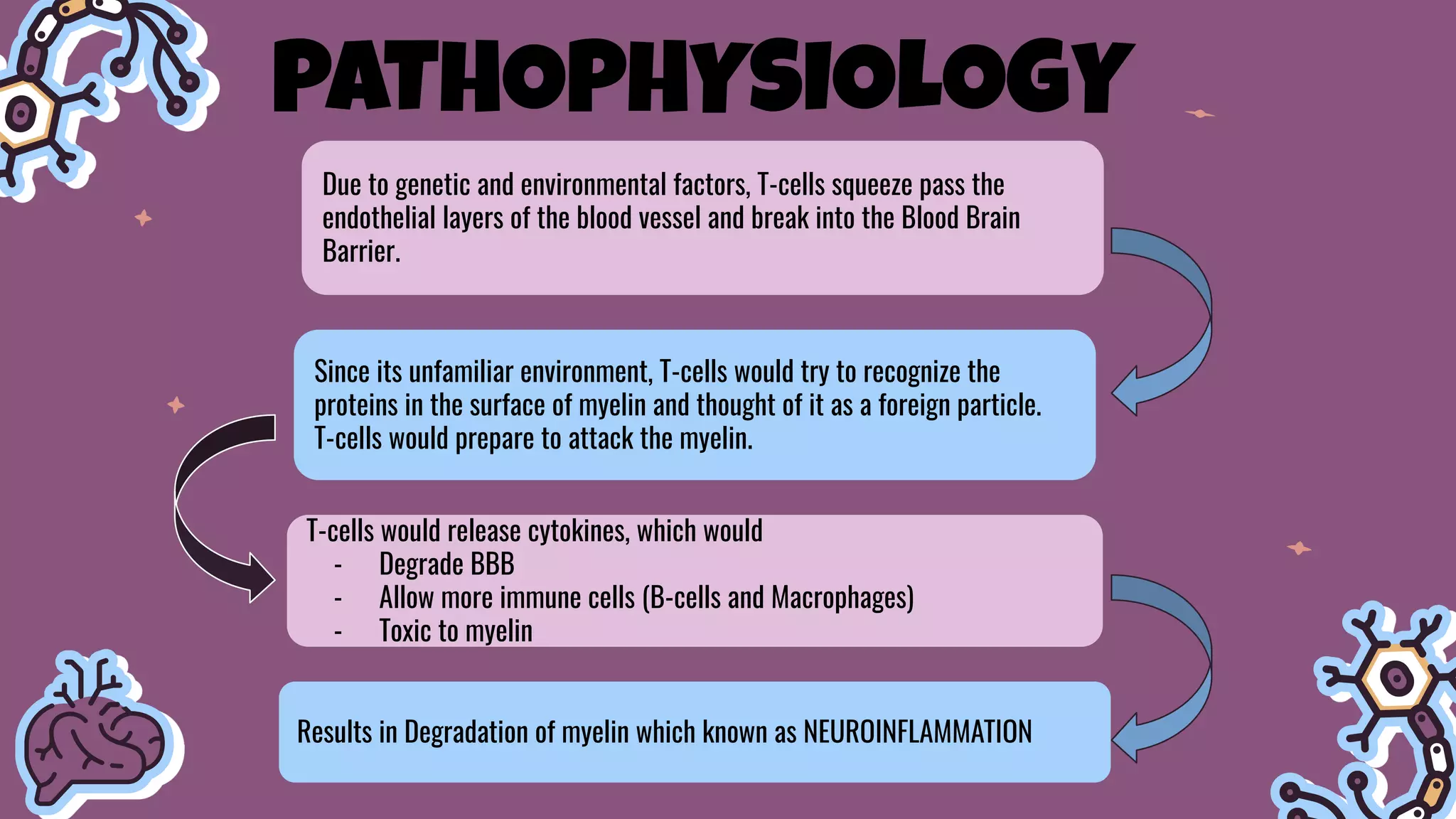
Due to genetic and environmental factors, T-cells squeeze pass the
endothelial layers of the blood vessel and break into the Blood Brain
Barrier.
Since its unfamiliar environment, T-cells would try to recognize the
proteins in the surface of myelin and thought of it as a foreign particle.
T-cells would prepare to attack the myelin.
T-cells would release cytokines, which would
- Degrade BBB
- Allow more immune cells (B-cells and Macrophages)
- Toxic to myelin
Results in Degradation of myelin which known as NEUROINFLAMMATION
PATHOPHYSIOLOGY
CLINICAL MANIFESTATIONS
MULTIPLE SCLEROSIS
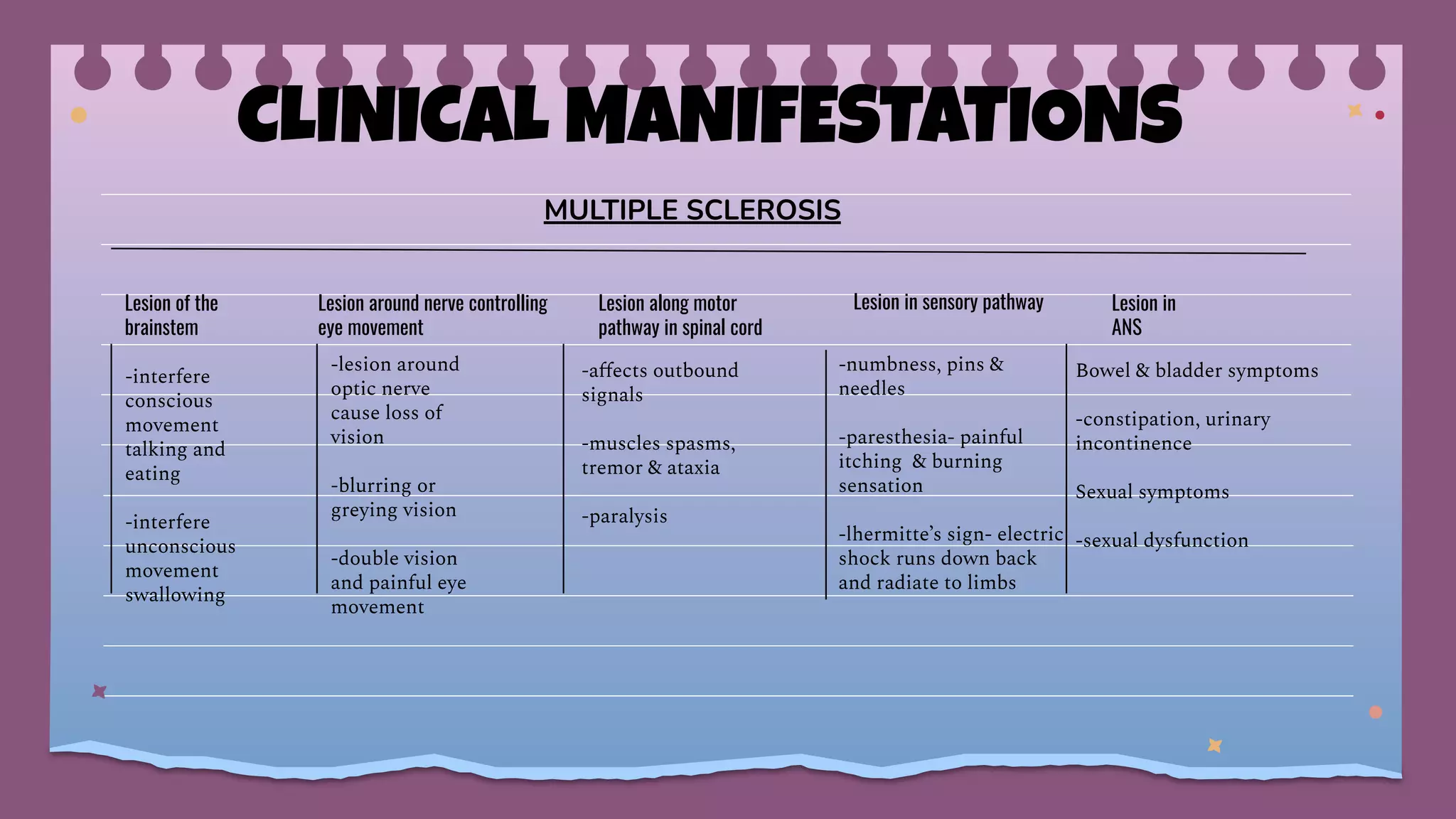
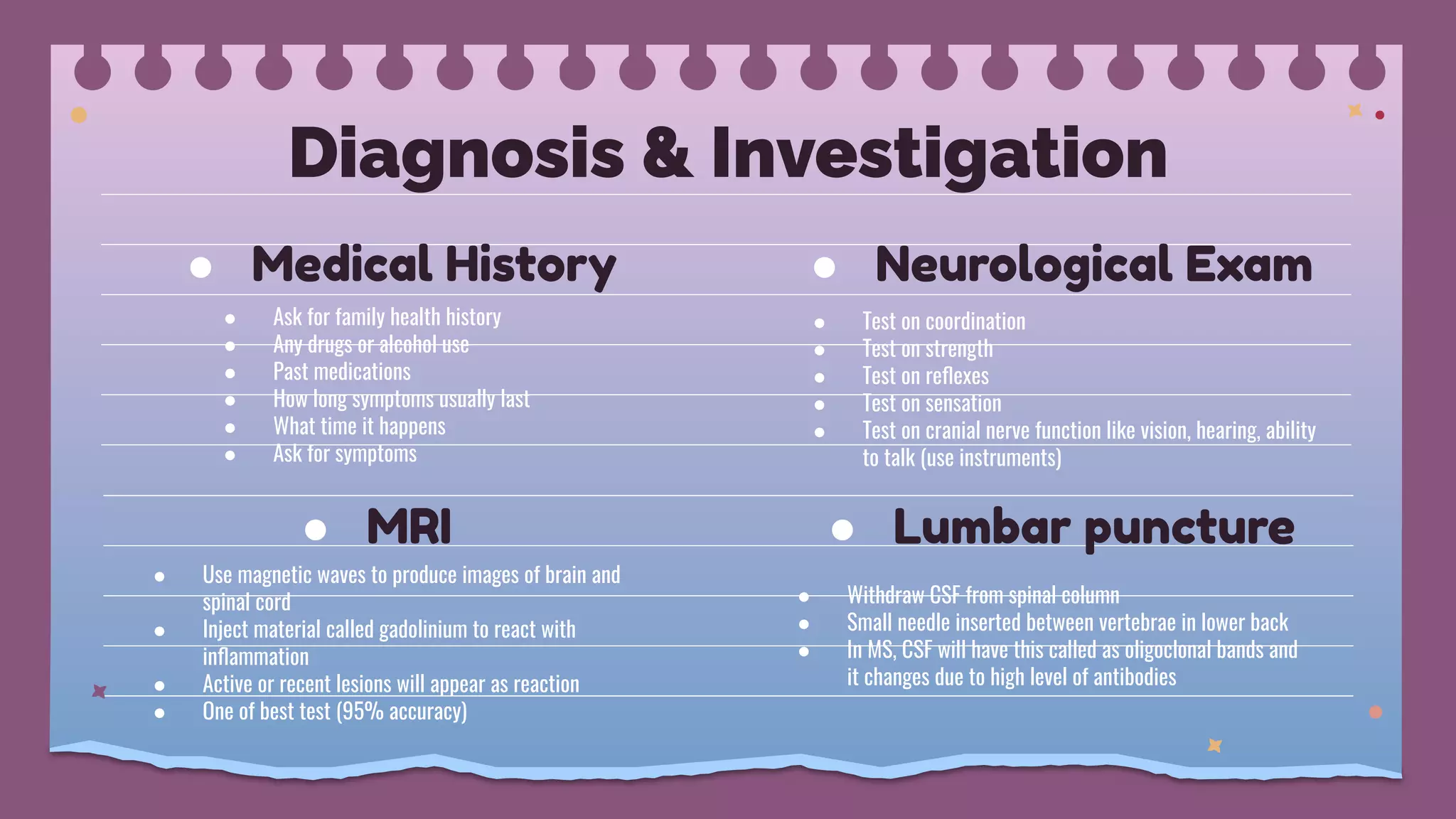
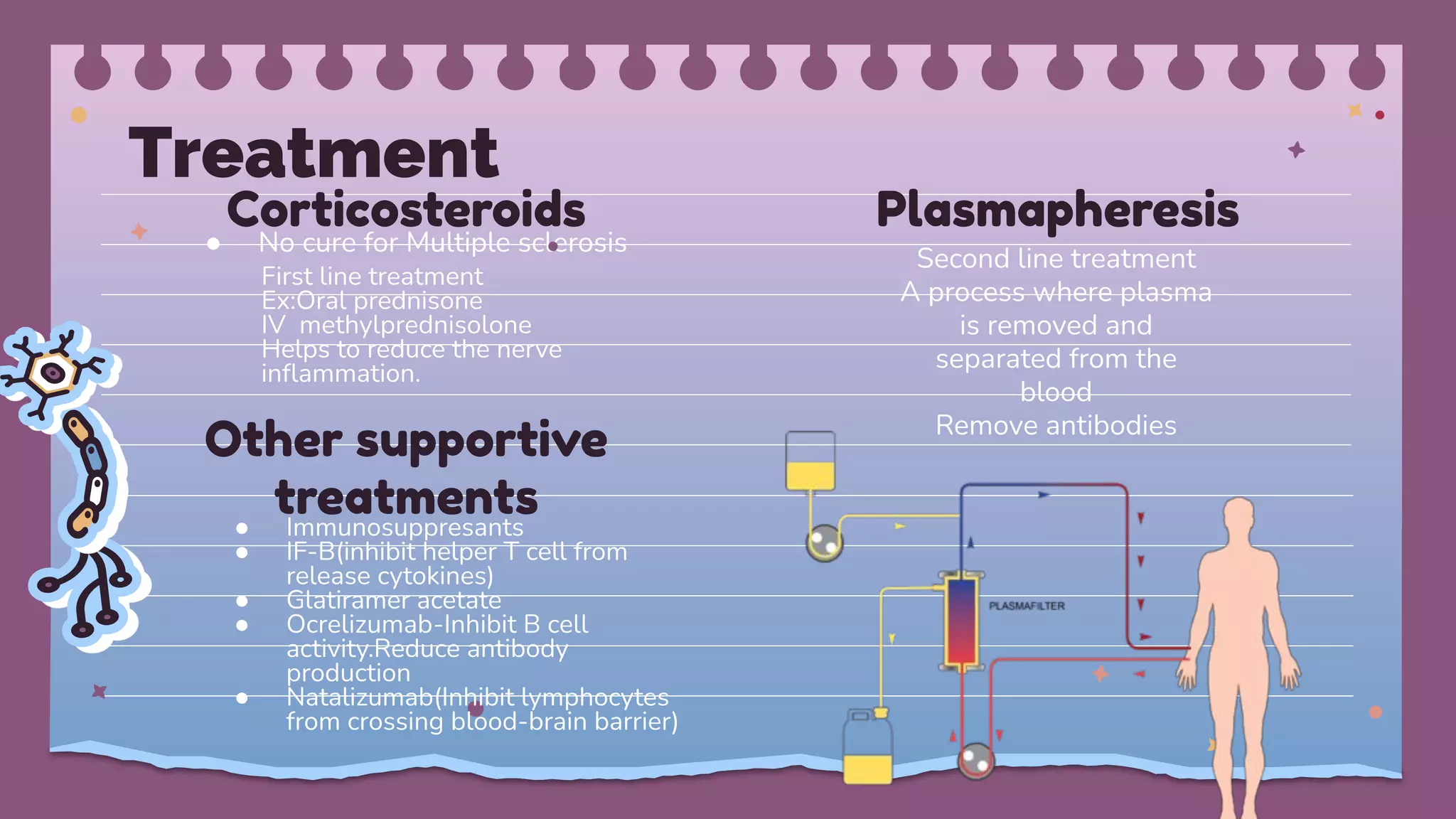
Lesion of the
brainstem
Lesion around nerve controlling
eye movement
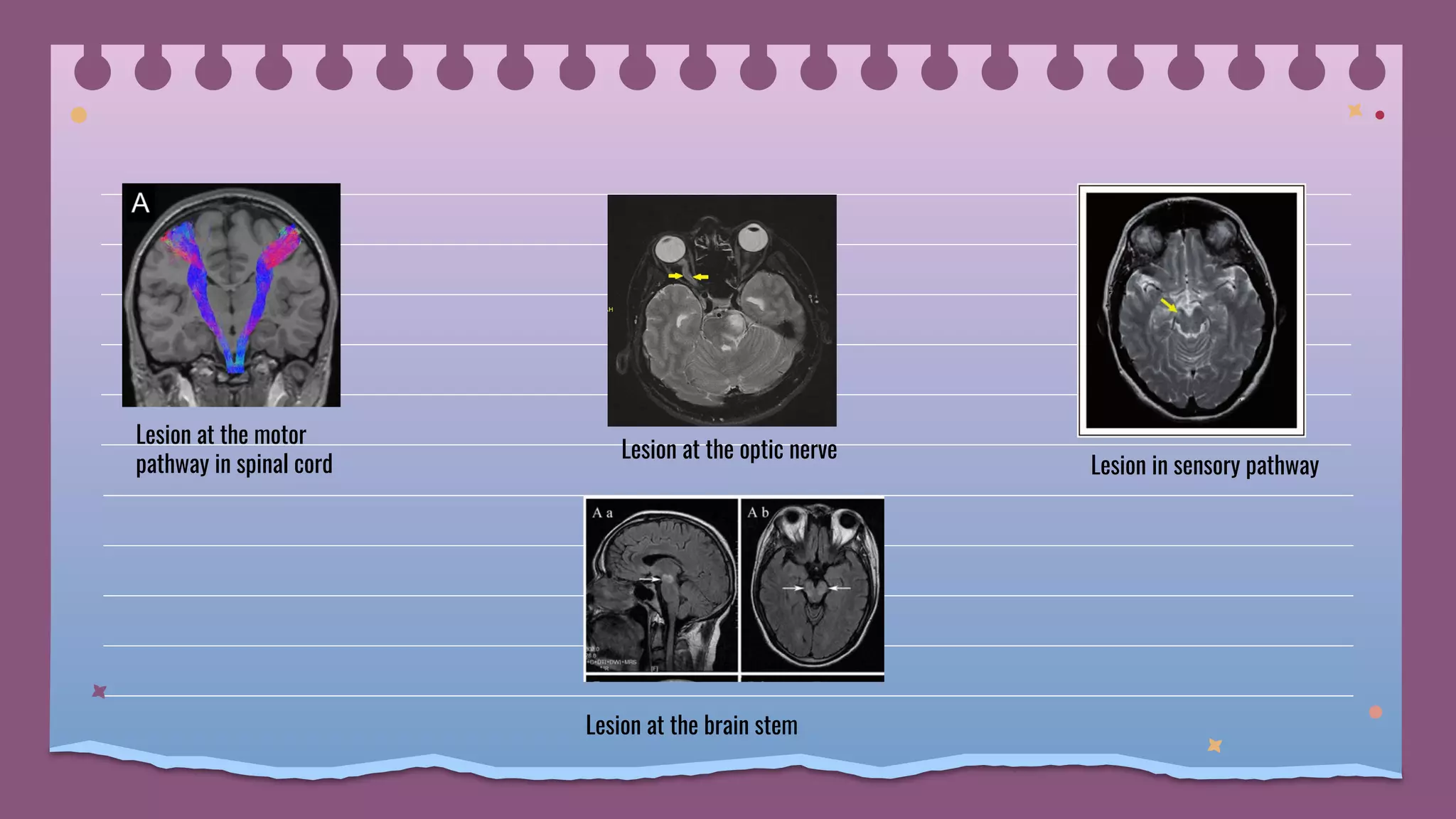
Lesion along motor
pathway in spinal cord
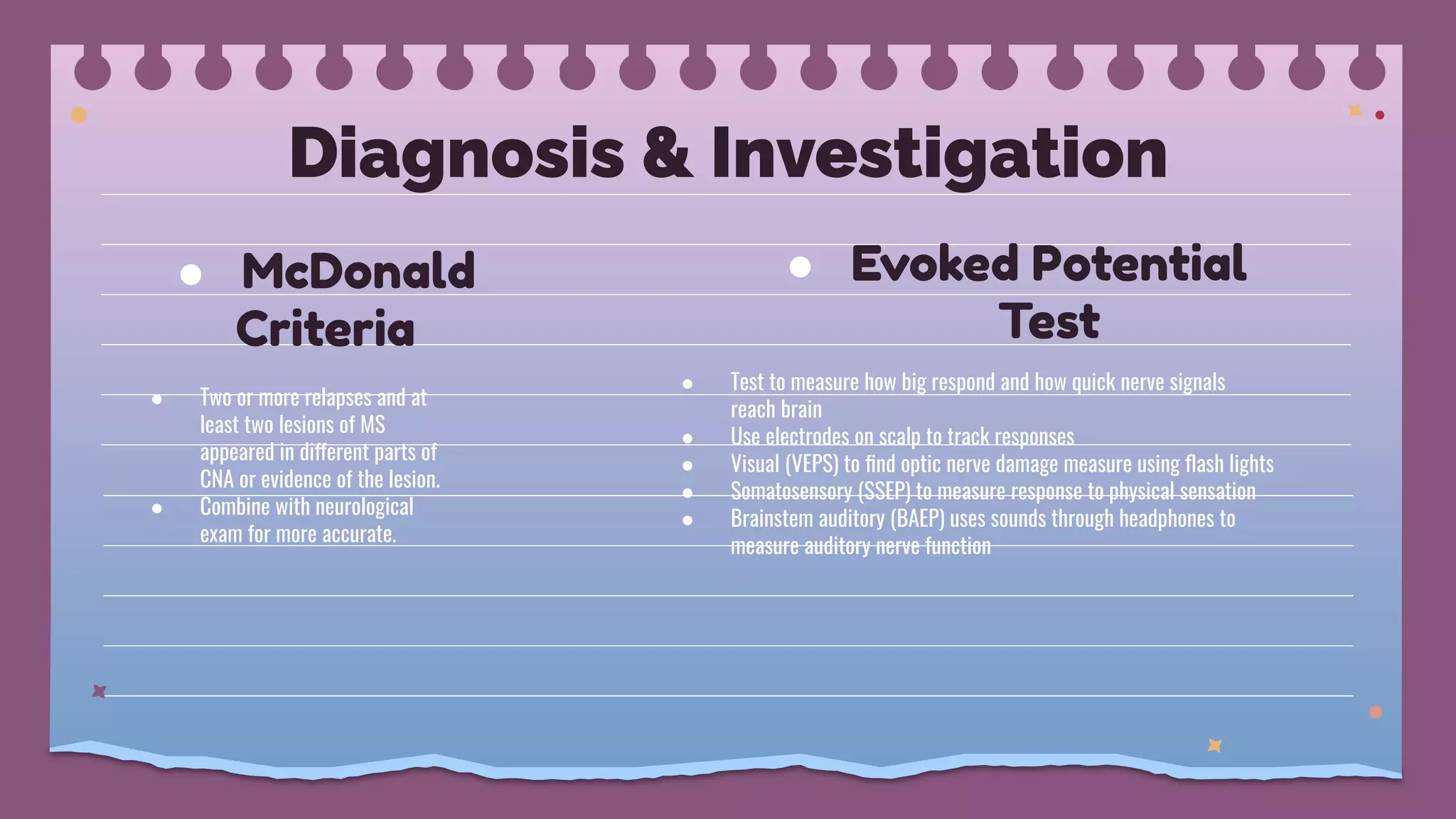
Lesion in sensory pathway Lesion in
ANS
-interfere
conscious
movement
talking and
eating
-interfere
unconscious
movement
swallowing
-lesion around
optic nerve
cause loss of
vision
-blurring or
greying vision
-double vision
and painful eye
movement
-affects outbound
signals
-muscles spasms,
tremor & ataxia
-paralysis
-numbness, pins &
needles
-paresthesia- painful
itching & burning
sensation
-lhermitte’s sign- electric
shock runs down back
and radiate to limbs
Bowel & bladder symptoms
-constipation, urinary
incontinence
Sexual symptoms
-sexual dysfunction
Lesion in sensory pathway
Lesion at the motor
pathway in spinal cord
Lesion at the optic nerve
Lesion at the brain stem
● Ask for family health history
● Any drugs or alcohol use
● Past medications
● How long symptoms usually last
● What time it happens
● Ask for symptoms
● Test on coordination
● Test on strength
● Test on reflexes
● Test on sensation
● Test on cranial nerve function like vision, hearing, ability
to talk (use instruments)
● Use magnetic waves to produce images of brain and
spinal cord
● Inject material called gadolinium to react with
inflammation
● Active or recent lesions will appear as reaction
● One of best test (95% accuracy)
● Withdraw CSF from spinal column
● Small needle inserted between vertebrae in lower back
● In MS, CSF will have this called as oligoclonal bands and
it changes due to high level of antibodies
● Medical History
● MRI
● Neurological Exam
● Lumbar puncture
Diagnosis & Investigation
● Two or more relapses and at
least two lesions of MS
appeared in different parts of
CNA or evidence of the lesion.
● Combine with neurological
exam for more accurate.
● Test to measure how big respond and how quick nerve signals
reach brain
● Use electrodes on scalp to track responses
● Visual (VEPS) to find optic nerve damage measure using flash lights
● Somatosensory (SSEP) to measure response to physical sensation
● Brainstem auditory (BAEP) uses sounds through headphones to
measure auditory nerve function
● McDonald
Criteria
● Evoked Potential
Test
Diagnosis & Investigation
Treatment
● No cure for Multiple sclerosis
First line treatment
Ex:Oral prednisone
IV methylprednisolone
Helps to reduce the nerve
inflammation.
Second line treatment
A process where plasma
is removed and
separated from the
blood
Remove antibodies
Corticosteroids Plasmapheresis
Other supportive
treatments
● Immunosuppresants
● IF-B(inhibit helper T cell from
release cytokines)
● Glatiramer acetate
● Ocrelizumab-Inhibit B cell
activity.Reduce antibody
production
● Natalizumab(Inhibit lymphocytes
from crossing blood-brain barrier)
Lifestyle Management
● Get plenty of rest
● Exercise
● Cool down
● Eat balanced diet
● Relieve stress
Case study
● A 30 year old white female presents to family
physician with acute loss of vision in left eye.She
having a family history where her mother had
diagnosed with Multiple sclerosis.
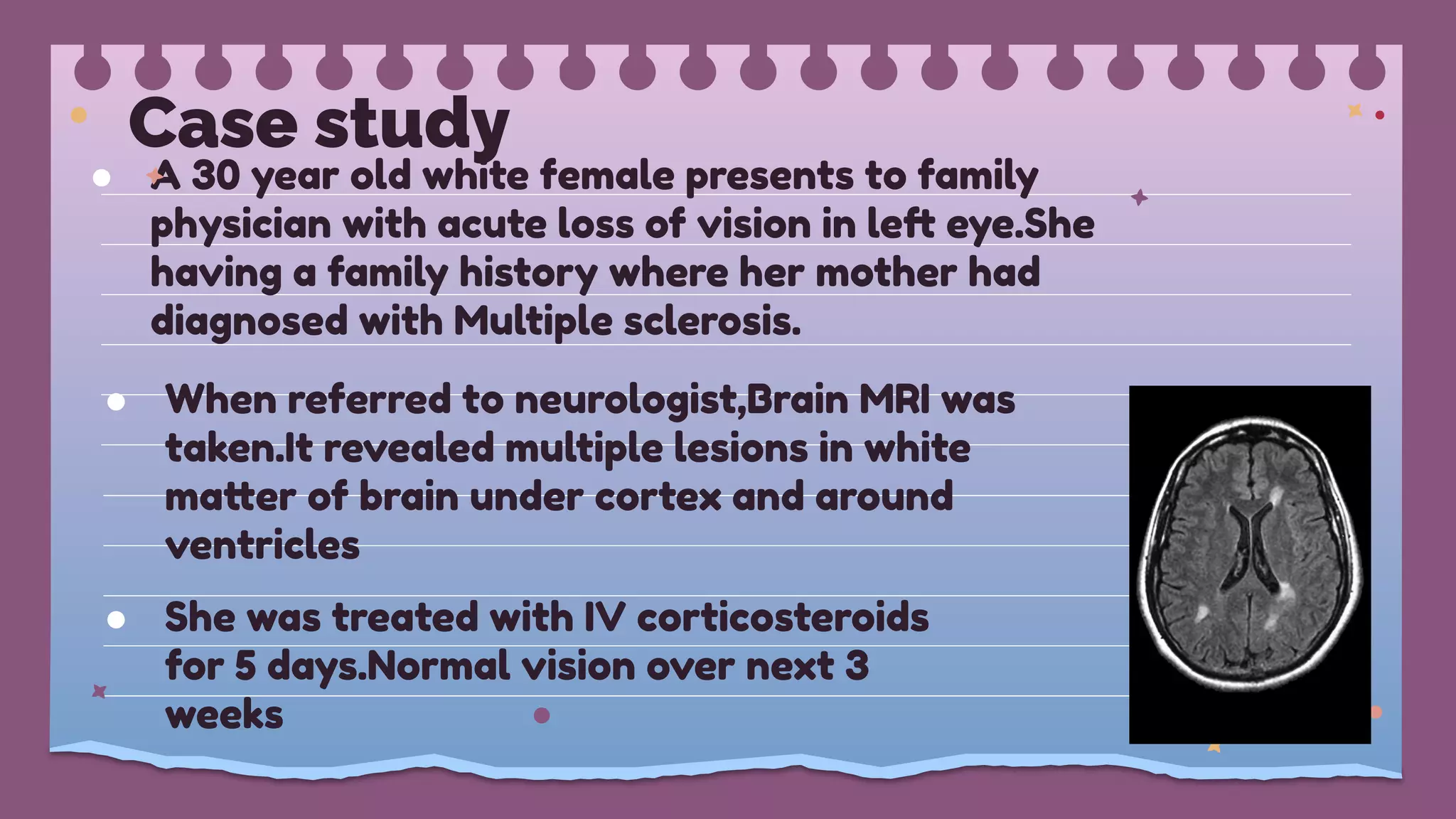
● When referred to neurologist,Brain MRI was
taken.It revealed multiple lesions in white
matter of brain under cortex and around
ventricles
● She was treated with IV corticosteroids
for 5 days.Normal vision over next 3
weeks
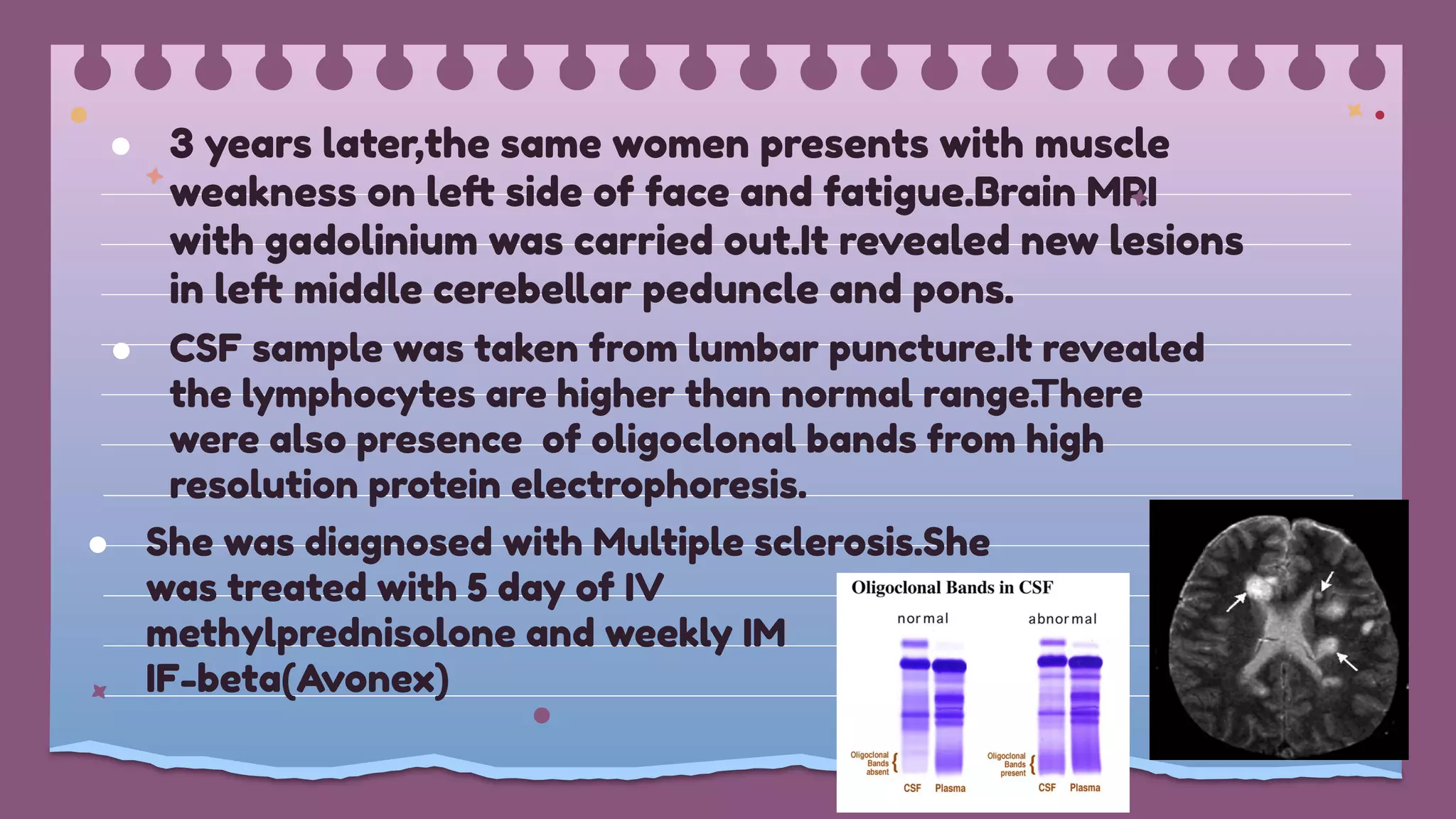
● 3 years later,the same women presents with muscle
weakness on left side of face and fatigue.Brain MRI
with gadolinium was carried out.It revealed new lesions
in left middle cerebellar peduncle and pons.
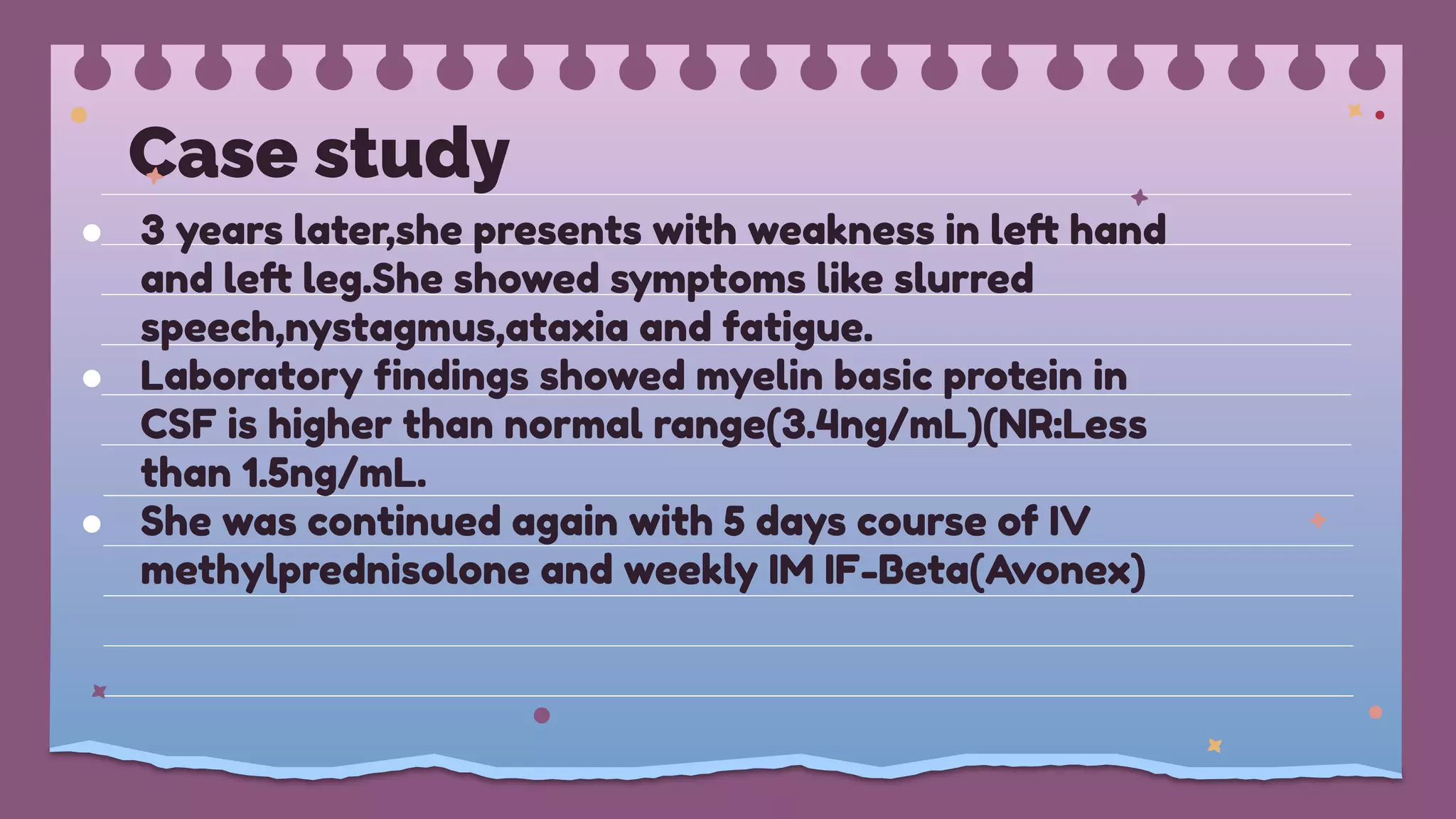
● CSF sample was taken from lumbar puncture.It revealed
the lymphocytes are higher than normal range.
There
were also presence of oligoclonal bands from high
resolution protein electrophoresis.
● She was diagnosed with Multiple sclerosis.She
was treated with 5 day of IV
methylprednisolone and weekly IM
IF-beta(Avonex)
Case study
● 3 years later,she presents with weakness in left hand
and left leg.She showed symptoms like slurred
speech,nystagmus,ataxia and fatigue.
● Laboratory findings showed myelin basic protein in
CSF is higher than normal range(3.4ng/mL)(NR:Less
than 1.5ng/mL.
● She was continued again with 5 days course of IV
methylprednisolone and weekly IM IF-Beta(Avonex)
Case study
● 8 months later,the clinical symptoms recurred,the
laboratory results shows myelin basic protein in CSF
is higher than previous result.4.1ng/mL
IFN-Beta has stopped and given high dose IV
methylprednisolone and cyclophosphamide monthly
for 3 months
● Following 9 months therapy,She was asymptomatic
and no new lesions on gadolinium MRI
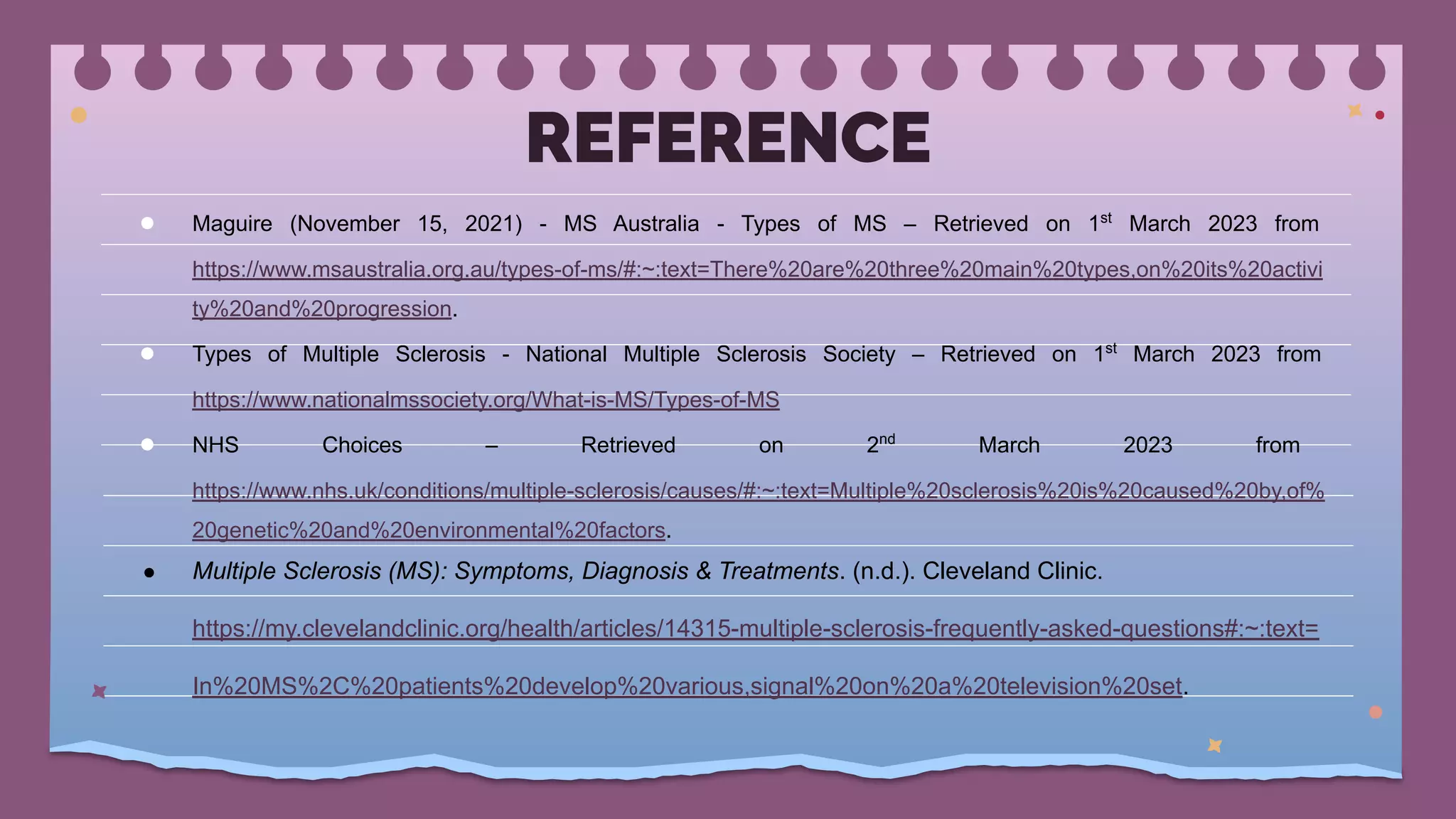
REFERENCE
● Maguire (November 15, 2021) - MS Australia - Types of MS – Retrieved on 1st
March 2023 from
https://www.msaustralia.org.au/types-of-ms/#:~:text=There%20are%20three%20main%20types,on%20its%20activi
ty%20and%20progression.
● Types of Multiple Sclerosis - National Multiple Sclerosis Society – Retrieved on 1st
March 2023 from
https://www.nationalmssociety.org/What-is-MS/Types-of-MS
● NHS Choices – Retrieved on 2nd
March 2023 from
https://www.nhs.uk/conditions/multiple-sclerosis/causes/#:~:text=Multiple%20sclerosis%20is%20caused%20by,of%
20genetic%20and%20environmental%20factors.
● Multiple Sclerosis (MS): Symptoms, Diagnosis & Treatments. (n.d.). Cleveland Clinic.
https://my.clevelandclinic.org/health/articles/14315-multiple-sclerosis-frequently-asked-questions#:~:text=
In%20MS%2C%20patients%20develop%20various,signal%20on%20a%20television%20set.

MULTIPLE SCLEROSIS (1).pdf

  • 1.
    ASSIGNMENT 1 :MULTIPLE SCLEROSIS ILESHAA RAJADURAI 012021090998 CHITRA MUNIANDY 012021091487 ILHAASHINI KRISHNAN 012021090323 AININ SUFFIYA BINTI AIZUL AZRAN 012021070575
  • 2.
  • 3.
    Introduction ● The immunesystem of the body destroys the myelin sheath, which serves as protection for the nerve cells in the brain, spinal cord, and optic nerve, in a condition known as multiple sclerosis. And the insulation of an electrical line is sometimes used as a comparison for this sheath. Numerous neurological symptoms that may result from CNS damage vary in type and severity between MS patients. Injured areas form scar tissue. This gives the disease its name which is multiple areas of scarring or multiple sclerosis.
  • 4.
    TYPES OF MULTIPLESCLEROSIS Types of Multiple sclerosis ● Clinically isolated syndrome (CIS) ● Relapsing-Remitting multiple sclerosis ● Secondary Progressive multiple sclerosis ● Primary Progressive multiple sclerosis
  • 5.
    ● Refers toa first episode of neurologic symptoms caused by inflammation and demyelination in the central nervous system. ● Clinically isolated syndrome (CIS) is a single episode of neurologic symptoms that lasts 24 hours or more. ● Vision problems, loss of sensation in the face, and loss of control of bodily movements (ataxia) are the usual symptoms of CIS. Clinically Isolated Syndrome (CIS)
  • 6.
    ● It definedattacks of new or increasing neurologic symptoms. These attacks are also called relapses or exacerbations. They are followed by periods of partial or complete recovery or remission. In remission, all symptoms may disappear, or some symptoms may continue and become permanent. However, during those periods, the disease does not seem to progress. Relapsing-Remitting Multiple Sclerosis
  • 7.
    ● Secondary ProgressiveMS is a secondary phase of relapsing-remitting MS that can develop years to decades following the initial onset of symptoms. ● It shows a reduction in relapses and a progressive worsening of symptoms (accumulation of disability) over time, with no obvious signs of remission. Secondary Progressive Multiple Sclerosis
  • 8.
    ● Neurologic functionworsens or disability accumulates as soon as symptoms appear, (a progressive worsening of symptoms and disability right from the beginning) without early relapses or remissions. ● There can be periods of “plateau” where progression can stabilize for a period of time. Primary Progressive Multiple Sclerosis
  • 9.
    ● Age -diagnosis between the ages of 20 and 40 years. ● Genetic factors – Susceptibility may pass down in the genes. An environmental trigger is also necessary for MS to develop, even in people with specific genetic features. ● Gene mutations - Having a family member with MS does increase the risk of the disease. ● Vitamin D deficiency – MS is more common in countries far from the equator, which could mean that a lack of sunlight and low vitamin D levels may affect the way the immune system works. ● Vitamin B12 deficiency - A lack of this vitamin may increase the risk of neurological diseases such as MS. CAUSES
  • 10.
    ● Smoking –people who smoke are about twice as likely to develop MS compared with those who don't smoke. ● Teenage obesity – people who were obese during their teenage years have an increased risk of developing MS. ● Viral infections – exposure to viruses caused by the Epstein-Barr virus (responsible for glandular fever) or mononucleosis, might trigger the immune system, leading to MS. ● Sex – women are more likely to develop MS than men. CAUSES
  • 11.
    Due to geneticand environmental factors, T-cells squeeze pass the endothelial layers of the blood vessel and break into the Blood Brain Barrier. Since its unfamiliar environment, T-cells would try to recognize the proteins in the surface of myelin and thought of it as a foreign particle. T-cells would prepare to attack the myelin. T-cells would release cytokines, which would - Degrade BBB - Allow more immune cells (B-cells and Macrophages) - Toxic to myelin Results in Degradation of myelin which known as NEUROINFLAMMATION PATHOPHYSIOLOGY
  • 12.
    CLINICAL MANIFESTATIONS MULTIPLE SCLEROSIS Lesionof the brainstem Lesion around nerve controlling eye movement Lesion along motor pathway in spinal cord Lesion in sensory pathway Lesion in ANS -interfere conscious movement talking and eating -interfere unconscious movement swallowing -lesion around optic nerve cause loss of vision -blurring or greying vision -double vision and painful eye movement -affects outbound signals -muscles spasms, tremor & ataxia -paralysis -numbness, pins & needles -paresthesia- painful itching & burning sensation -lhermitte’s sign- electric shock runs down back and radiate to limbs Bowel & bladder symptoms -constipation, urinary incontinence Sexual symptoms -sexual dysfunction
  • 13.
    Lesion in sensorypathway Lesion at the motor pathway in spinal cord Lesion at the optic nerve Lesion at the brain stem
  • 14.
    ● Ask forfamily health history ● Any drugs or alcohol use ● Past medications ● How long symptoms usually last ● What time it happens ● Ask for symptoms ● Test on coordination ● Test on strength ● Test on reflexes ● Test on sensation ● Test on cranial nerve function like vision, hearing, ability to talk (use instruments) ● Use magnetic waves to produce images of brain and spinal cord ● Inject material called gadolinium to react with inflammation ● Active or recent lesions will appear as reaction ● One of best test (95% accuracy) ● Withdraw CSF from spinal column ● Small needle inserted between vertebrae in lower back ● In MS, CSF will have this called as oligoclonal bands and it changes due to high level of antibodies ● Medical History ● MRI ● Neurological Exam ● Lumbar puncture Diagnosis & Investigation
  • 15.
    ● Two ormore relapses and at least two lesions of MS appeared in different parts of CNA or evidence of the lesion. ● Combine with neurological exam for more accurate. ● Test to measure how big respond and how quick nerve signals reach brain ● Use electrodes on scalp to track responses ● Visual (VEPS) to find optic nerve damage measure using flash lights ● Somatosensory (SSEP) to measure response to physical sensation ● Brainstem auditory (BAEP) uses sounds through headphones to measure auditory nerve function ● McDonald Criteria ● Evoked Potential Test Diagnosis & Investigation
  • 16.
    Treatment ● No curefor Multiple sclerosis First line treatment Ex:Oral prednisone IV methylprednisolone Helps to reduce the nerve inflammation. Second line treatment A process where plasma is removed and separated from the blood Remove antibodies Corticosteroids Plasmapheresis Other supportive treatments ● Immunosuppresants ● IF-B(inhibit helper T cell from release cytokines) ● Glatiramer acetate ● Ocrelizumab-Inhibit B cell activity.Reduce antibody production ● Natalizumab(Inhibit lymphocytes from crossing blood-brain barrier)
  • 17.
    Lifestyle Management ● Getplenty of rest ● Exercise ● Cool down ● Eat balanced diet ● Relieve stress
  • 18.
    Case study ● A30 year old white female presents to family physician with acute loss of vision in left eye.She having a family history where her mother had diagnosed with Multiple sclerosis. ● When referred to neurologist,Brain MRI was taken.It revealed multiple lesions in white matter of brain under cortex and around ventricles ● She was treated with IV corticosteroids for 5 days.Normal vision over next 3 weeks
  • 19.
    ● 3 yearslater,the same women presents with muscle weakness on left side of face and fatigue.Brain MRI with gadolinium was carried out.It revealed new lesions in left middle cerebellar peduncle and pons. ● CSF sample was taken from lumbar puncture.It revealed the lymphocytes are higher than normal range. There were also presence of oligoclonal bands from high resolution protein electrophoresis. ● She was diagnosed with Multiple sclerosis.She was treated with 5 day of IV methylprednisolone and weekly IM IF-beta(Avonex)
  • 20.
    Case study ● 3years later,she presents with weakness in left hand and left leg.She showed symptoms like slurred speech,nystagmus,ataxia and fatigue. ● Laboratory findings showed myelin basic protein in CSF is higher than normal range(3.4ng/mL)(NR:Less than 1.5ng/mL. ● She was continued again with 5 days course of IV methylprednisolone and weekly IM IF-Beta(Avonex)
  • 21.
    Case study ● 8months later,the clinical symptoms recurred,the laboratory results shows myelin basic protein in CSF is higher than previous result.4.1ng/mL IFN-Beta has stopped and given high dose IV methylprednisolone and cyclophosphamide monthly for 3 months ● Following 9 months therapy,She was asymptomatic and no new lesions on gadolinium MRI
  • 22.
    REFERENCE ● Maguire (November15, 2021) - MS Australia - Types of MS – Retrieved on 1st March 2023 from https://www.msaustralia.org.au/types-of-ms/#:~:text=There%20are%20three%20main%20types,on%20its%20activi ty%20and%20progression. ● Types of Multiple Sclerosis - National Multiple Sclerosis Society – Retrieved on 1st March 2023 from https://www.nationalmssociety.org/What-is-MS/Types-of-MS ● NHS Choices – Retrieved on 2nd March 2023 from https://www.nhs.uk/conditions/multiple-sclerosis/causes/#:~:text=Multiple%20sclerosis%20is%20caused%20by,of% 20genetic%20and%20environmental%20factors. ● Multiple Sclerosis (MS): Symptoms, Diagnosis & Treatments. (n.d.). Cleveland Clinic. https://my.clevelandclinic.org/health/articles/14315-multiple-sclerosis-frequently-asked-questions#:~:text= In%20MS%2C%20patients%20develop%20various,signal%20on%20a%20television%20set.