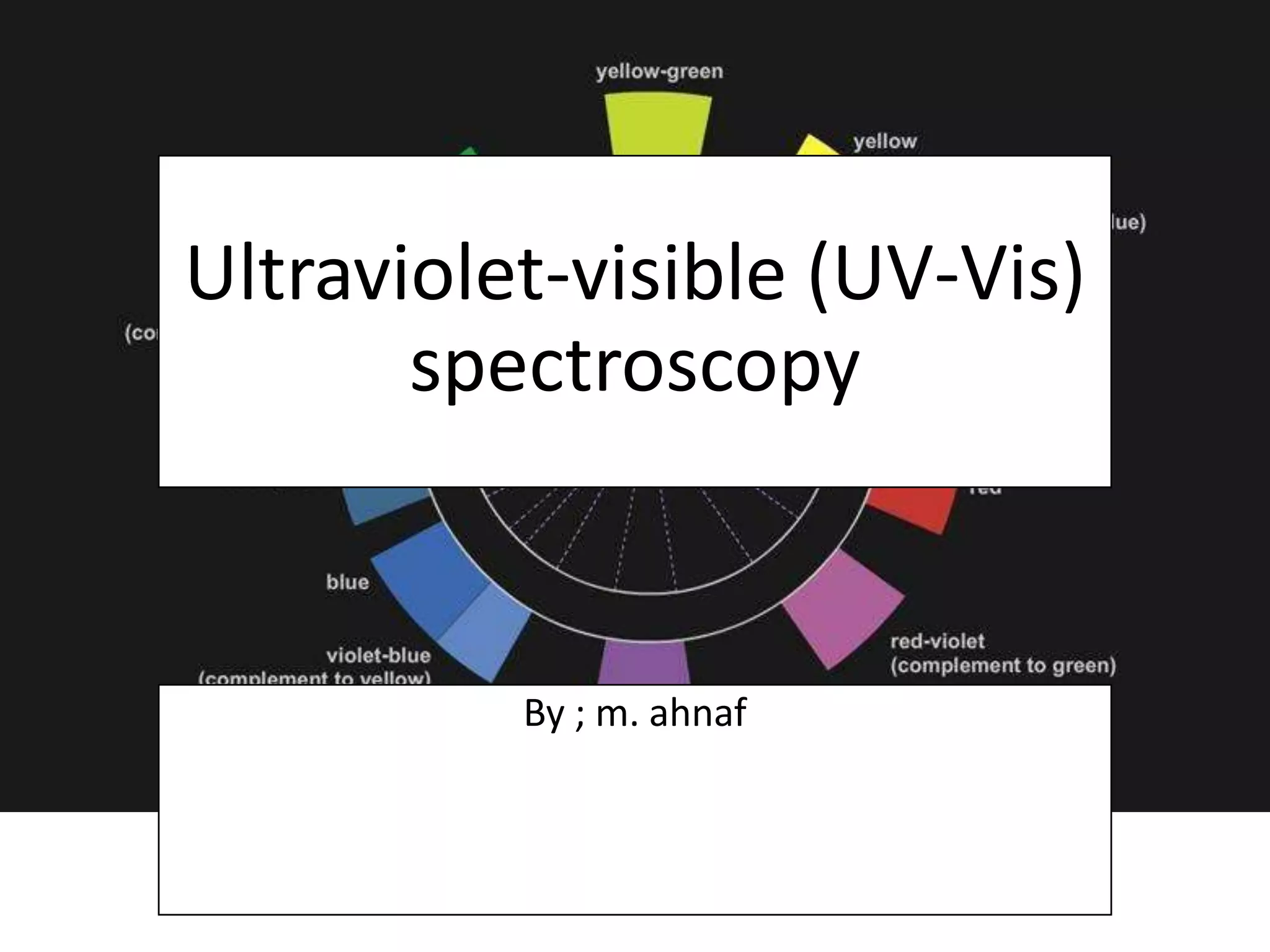
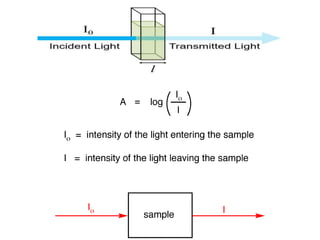
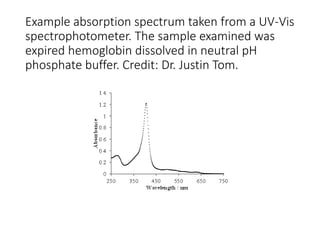
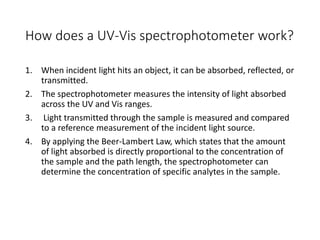
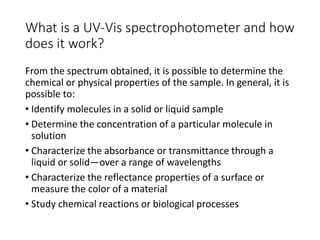
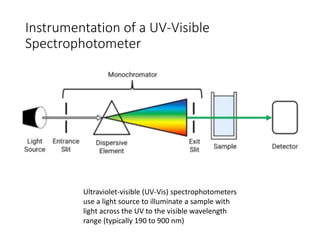
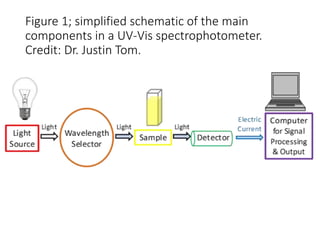
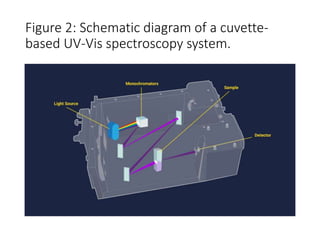
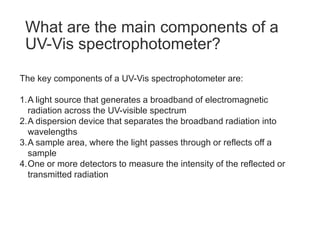
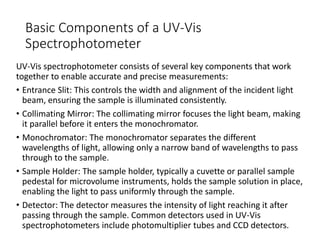
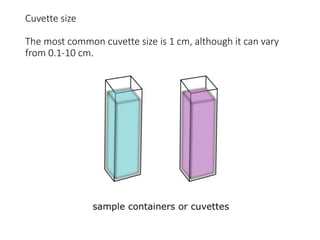
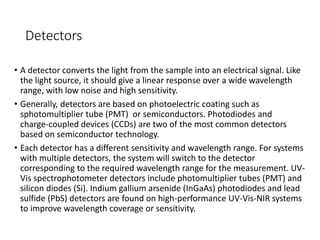
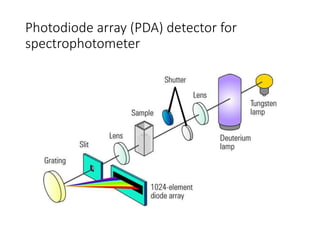
Ultraviolet-visible (UV-Vis) spectroscopy is an analytical technique that measures the amount of UV or visible light absorbed or transmitted by a sample. It provides information on the sample's composition and concentration. A UV-Vis spectrophotometer directs a light beam from a source such as a xenon lamp through a monochromator to isolate wavelengths, then through a sample and to a detector. It quantifies the light absorbed at each wavelength according to the Beer-Lambert law to obtain the sample's absorption spectrum and determine concentrations of absorbing substances in the sample.

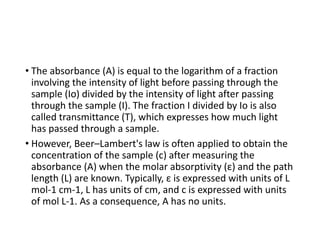
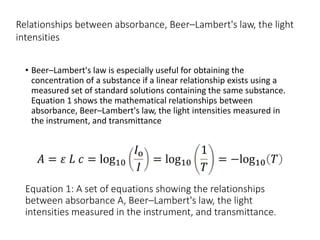
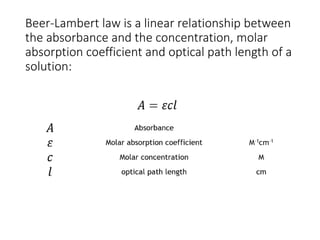
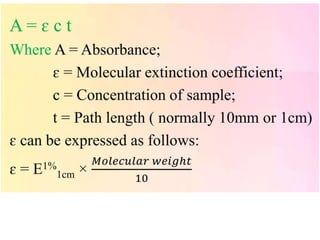

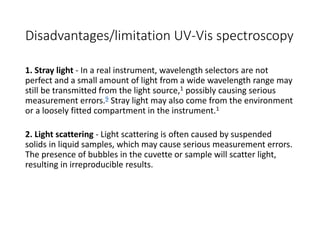
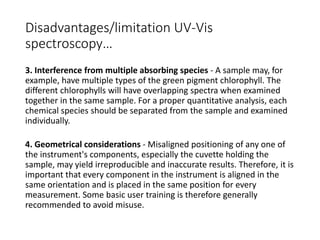
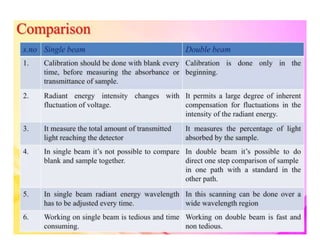

![Fluorimetry-M0dern pharmaceutical analysis[1].pptx](https://cdn.slidesharecdn.com/ss_thumbnails/fluorimetry-mpat1-240203124524-d3456e52-thumbnail.jpg?width=640&height=640&fit=bounds)


![FOURIER -TRANSFORM INFRARED SPECTROMETER [FTIR]](https://cdn.slidesharecdn.com/ss_thumbnails/ftir-160604063055-thumbnail.jpg?width=640&height=640&fit=bounds)


![Polymer [ बहुलक ] Chemistry Notes PDF - Irfanullah Mehar - JJ Sir Chemistry.pdf](https://cdn.slidesharecdn.com/ss_thumbnails/polymerchemistrynotespdf-irfanullahmehar-jjsirchemistry-260210172118-3f9b37f7-thumbnail.jpg?width=640&height=640&fit=bounds)


