Insulin sensitizers
Metformin: The Gold Standard
By
Prof. Adel A El-Sayed MD
Chairman Elect
Middle East and North Africa (MENA) Region
International Diabetes Federation (IDF)
Professor of Internal Medicine
Sohag Faculty of Medicine
Sohag-EGYPT
No Conflict Of Interest
Pathophysiology of Type 2
Diabetes
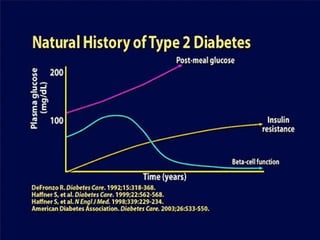
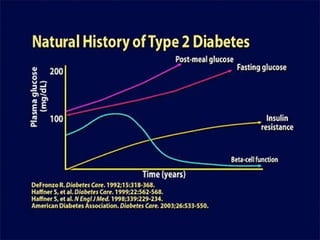
• Insulin resistance.
• Beta cell dysfunction.
Pathophysiology of Type 2 Diabetes
Insulin Resistance
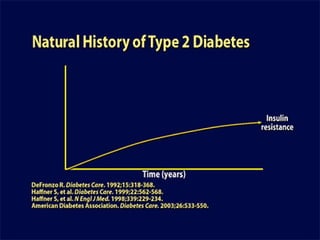
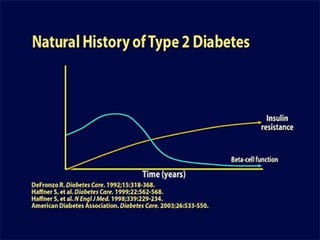
• Insulin Resistance starts very early in the
course of the disease.
• insulin resistance alone will not produce
diabetes. If beta-cell function is normal,
one can compensate for insulin resistance
by increasing insulin secretion.
Pathophysiology of Type 2 Diabetes
Insulin Resistance
• It is now generally believed that T2DM occurs
when the beta cell mass is unable to increase
the insulin secretion to meet the demands put on
them by the insulin resistance.
• Insulin resistance is related to most of the
markers of CV diabetic complications.
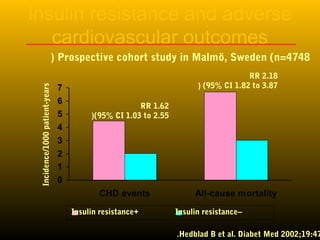
Insulin resistance and adverse
cardiovascular outcomes
0
1
2
3
4
5
6
7
CHD events All-cause mortality
RR 2.18
(95% CI 1.82 to 3.87(
RR 1.62
(95% CI 1.03 to 2.55(
Incidence/1000patient-years
Prospective cohort study in Malmö, Sweden (n=4748(
+Insulin resistance –Insulin resistance
Hedblad B et al. Diabet Med 2002;19:47.
Insulin sensitizers
• Metformin.
• Thiazolidinediones.
Metformin
• The blood glucose-lowering actions of
metformin result primarily from an
amelioration of insulin resistance, mainly
in liver and muscle, with a less marked
effect on adipose tissue. (Giannarelli, Diabetes
Metab2003)
• Within the liver, the principal effect of
metformin is a reduction in hepatic
glucose output.
The Metformin Problem
• Biguanides: Metformin and phenformin.
• Discovered in US and became available in the
market in 1959.
• Widely used between 1960 and 1978.
• Phenformin had been accompanied with
development of the serious and potentially fatal
lactic acidosis.
• Both drugs were withdrawn from US market in
1978.
• Metformin remained widely used in Canada and
Europe.
Cardiovascular Benefits With Metformin
UKPDS
• In newly-diagnosed type 2 diabetic patients
followed for a median of 11 years in the UKPDS,
(UK Prospective Diabetes Study Group, Lancet 1998) patients who
received metformin benefited from clinically and
statistically significant improvements in CV
complications of DM (the risk of all-cause death,
diabetes related death, myocardial infarction,
and in a composite measure of 21 diabetes-
related complications).
• other intensive therapies delivered a similar level
of glycaemic control without those CV benefits
In 1995 metformin was FDA
approved
Cardiovascular Benefits With
Metformin
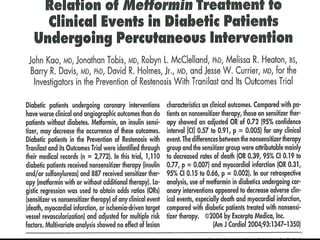
Several observational analyses have suggested
significant cardioprotective benefits with
metformin in patient populations with more
severe cardiovascular disease at baseline. (Kao et
al, Am J Cardiol 2004)
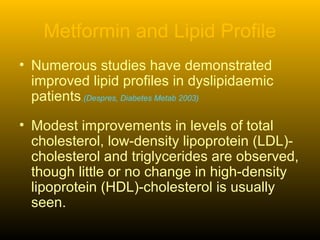
Metformin and Lipid Profile
• Numerous studies have demonstrated
improved lipid profiles in dyslipidaemic
patients.(Despres, Diabetes Metab 2003)
• Modest improvements in levels of total
cholesterol, low-density lipoprotein (LDL)-
cholesterol and triglycerides are observed,
though little or no change in high-density
lipoprotein (HDL)-cholesterol is usually
seen.
Metformin and Adiposity
• The modest reductions in body weight
often observed with metformin are
associated with redistribution of fat from
visceral deposits to subcutaneous
deposits .(Kurukulasuriya et al, Diabetes 1999)
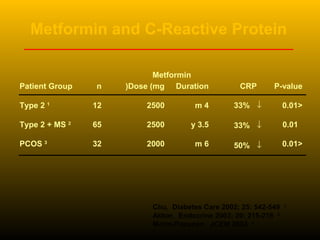
Metformin and C-Reactive Protein
Patient Group
Type 2 1
Type 2 + MS 2
PCOS 3
n
12
65
32
Dose (mg(
2500
2500
2000
CRP
↓33%
↓33%
↓50%
1
Chu. Diabetes Care 2002; 25: 542-549
2
Akbar. Endocrine 2003; 20: 215-218
3
Morin-Papunen. JCEM 2003
Duration
4m
3.5y
6m
P-value
>0.01
0.01
>0.01
Metformin
Inhibition of glycoxidation
• Metformin inhibits the formation of
advanced glycation endproducts (AGE)
both indirectly through improved
glycaemia and directly through reaction
with, and neutralization of highly reactive
radicals involved in AGE formation.
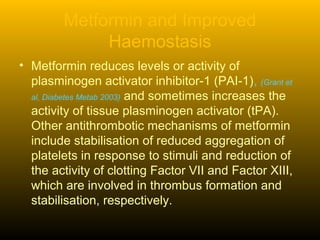
Metformin and Improved
Haemostasis
• Metformin reduces levels or activity of
plasminogen activator inhibitor-1 (PAI-1), (Grant et
al, Diabetes Metab 2003) and sometimes increases the
activity of tissue plasminogen activator (tPA).
Other antithrombotic mechanisms of metformin
include stabilisation of reduced aggregation of
platelets in response to stimuli and reduction of
the activity of clotting Factor VII and Factor XIII,
which are involved in thrombus formation and
stabilisation, respectively.
Prevention of Diabetes
- Diabetes Prevention Program.
- Prevention of Gestational Diabetes
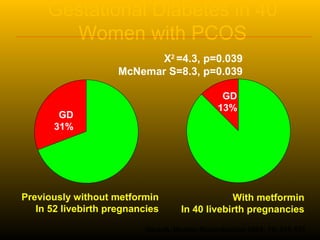
Gestational Diabetes in 40
Women with PCOS
Previously without metformin
In 52 livebirth pregnancies
With metformin
In 40 livebirth pregnancies
GD
13%
GD
31%
X2
=4.3, p=0.039
McNemar S=8.3, p=0.039
Glueck. Human Reproduction 2004; 19: 510-521
Metformin Mechanism of
Action
• Recent reports suggested that increase in
the circulating concentration of glucagon-
like peptide-1 (GLP-1) may contribute to
the metabolic effects metformin. (Lindsay et al,
Diabet Med 2005 - Sinha Roy et al, Diabetologia 2007)
• This might arise from increased secretion
of GLP-1 rather than inhibition of the
enzyme dipeptidyl peptidase-4 (DPP-4).
(Sinha Roy et al, Diabetologia 2007)
Metformin in combination
• The glucose-lowering extent of metformin is additive
when used in combination with every known antidiabetic
drug: a sulphonylurea,(Blonde et al, Diabetes Obes Metab 2002) a
meglitinide, (Marre et al, Diabetes Obes Metab 2002) a
thiazolidinedione (Charbonnel et al, Diabetologia 2005) an α-
glucosidase inhibitor (Chiasson et al, Diabetes Care 2001 – Phillips
et al, Diabetes Care 2003) a GLP-1 analogues, exenatide
(DeFronzo et al, Diabetes Care 2005) liraglutide, (Naucket al, Exp Clin
Endocrinol Diabetes 2006) DPP-4 inhibitors, vildagliptin (Ahren et
al, Diabetes Care 2005) or sitagliptin. (Hermansen et al, Diabetes Obes
Metab 2007) and insulin-based regimens .(Ryysy et al, Diabetes
Care 2001)
• The additive antihyperglycaemic efficacy of these
combinations relates to different cellular modes of action
of metformin compared with each of the other classes of
agents.
Metformin and Weight
• Metformin is widely recognized to have either
little effect on body weight or to facilitate modest
weight loss in type 2 diabetes. (Golay, Int J Obes 2008)
• There is no major effect of obesity status on the
antihyperglycaemic effect of metformin but a
slightly larger glucose-lowering effect of
metformin has been observed as body mass
index (BMI) decreases. (Donnelly et al, Diabet Med 2006)
• Thus, body weight should not unduly influence
the decision whether to prescribe metformin.
Metformin safety with pregnancy
• Metformin has long been reported to be
safe with pregnancy. Recently, in June
2008 the first results of the MIG Trial was
published in the N Engl J Medicine.
• It demonstrated that metformin is as safe
as insulin in women with gestational
diabetes.
• In the NICE guidelines (2008), and
Canadian guidelines (2009) metformin has
been mentioned as a safe and effective
substitute for insulin in treatment of
gestational diabetes.
Potential clinical uses beyond type
2 diabetes
• Diabetes prevention.
• Polycystic ovary syndrome.
• Other conditions associated with insulin resistance Non-
alcoholic fatty liver disease (NAFLD) and the related
non-alcoholic steatohepatitis (NASH) and in patients
receiving highly active antiretroviral therapy (HAART) for
HIV are at risk of lipodystrophy syndrome.
• Anti-Cancer by activating the enzyme AMPK:Two
observational studies in patients with type 2 diabetes
have demonstrated a significantly lower risk of cancer in
patients receiving metformin relative to other treatments.
(Evans et al, BMJ 2005) – (Bowker et al, Diabetes Care 2006)
Metformin In The International
Guidelines
• The recommendations of the American
Diabetes Association (ADA), European
Association for the Study of Diabetes
(EASD) (ADA/EASD consensus, Diabetologia 2006 updated on
22/10/2008), and the International Diabetes
Federation (IDF) 2005 place metformin as
first-line therapy for type 2 diabetic
patients irrespective of age, body weight
and severity of hyperglycaemia.
Thiazolidinediones
• Thiazolidinediones TZDs were developed in
1997. There first member troglitazone was
withdrawn from the market in the year 2000 due
to hepatotoxicity.
• Pioglitazone and rosiglitazone appeared in the
market in 1999.
• Glitazones act predominantly by enhancing
peripheral insulin sensitivity, offering promising
perspectives in terms of β-cell preservation
[Buchanan et al, Diabetes 2002 – Ovalle and Bell, Diabetes Obes Metab
2002] and cardiovascular protection [Suwattee et al,
Endocrinologist 2002 – Dormandy et al, Lancet 2005].
Thiazolidinediones
Mechanism of Action
• The primary effect of TZDs is peripheral, with
increasing insulin sensitivity and increased
glucose uptake with much less effect on hepatic
insulin sensitivity.
• Seventy percent of the insulin resistance seen in
patients with T2DM is in the periphery and this
shows the important role which the glitazones
can play as compared to metformin which has
its major action on the liver which accounts for
only 30% of the insulin resistance.
The Glitazones And The Beta Cell
• Beta cell failure begins more than a decade
before diabetes is diagnosed [Kahn, Cell 1998 - Donath
and Halban, Diabetologia 2004]
• Two mechanisms related to insulin resistance:
glucotoxicity, lipotoxicity.
• glitazone therapy:
- Delay or prevent beta cell failure?
- growing body of evidence that TZDs
rejuvenate beta-cells and improve their function
[Bell, Am J Med 2003].
The Glitazones And Diabetes
Prevention
TRIPOD (Azen et al, Control Clin Trials1998) and
PIPOD (Xiang et al, Diabetes2006) studies.
Glitazones and hypertension
• insulin resistance plays a role in leading to
hypertension (Reaven et al, N Engl J Med 1996) – (Natali et al,
Endocrinol Metab Clin North Am 2004)
• the decrease in insulin resistance brought about
by the glitazones should lead to a lowering of the
raised blood pressure levels
• Studies carried out in patients with T2DM have
shown a lowering of the blood pressure levels
although this may not have been to a very
significant extent (Rizza et al, Diabetes Care 2005) – (Scherbaum
et al, Diabetes 2001)
Glitazones and inflammation
• Inflammations are thought to be one of the
leading, if not the main, predisposing factors in
the causation of atherosclerosis (Libby et al, Circulation
2002) – (Mendall et al, Eur Heart J 2000) and even T2DM
(Roivanen et al, Diabetologia 1998) – (Pradhan et al, JAMA 2001)
• Pro-inflammatory markers such as hs-CRP,
interleukin- 6, tumor necrosis factor-alpha and
adipokines are associated with insulin resistance
• Glitazones have been shown in clinical studies
to be associated with a significant lowering of
these proinflammatory risk markers (Wang et al, Am J
Cardiol 2004) – (Satoh et al, Diabetes Care 2003).
Glitazones and coagulopathy
• Insulin resistance and T2DM are
associated with a pro-coagulant and anti-
fibrinolytic status
• This is closely related to the early onset
and rate of progression of macrovascular
disease and increased cardiovascular risk
(McGill et al, Diabetes 1994) – (Imperatore et al, Diabetes Care 1998).
• Studies have shown that glitazones can
improve these markers. (Kruszynska et al, Diabetes
2000) – (Freed et al, Diabetologia 2000)
Glitazones and the endothelium
• Insulin resistance in animals and humans has been
shown to be associated with endothelial dysfunction. (van
Oostrom et al, JR Soc Med 2002) – (Celermajer, J Am Coll Cardiol 1997
• Many studies have reported that the use of insulin
sensitizers, especially the glitazones show a salutary
effect on the various manifestations and consequences
of endothelial dysfunction (Bagi et al, Am J Physiol Heart Circ
Physiol 2004) – (Cominacini et al, Cell Adhes Commun 1999)
• Interestingly, in a short trial, Murakami et al. reported
that administration of troglitazone was associated with a
substantial reduction in the frequency of episodes of
angina in patients with coronar artery disease and T2DM
(Murakami et al, Am J Cardiol 1999). . Moreover, these
investigators found that the decrease in episodes of pain
was correlated with angiographic (coronary)
improvement in endothelial function.
TZDs Problems
Glitazones And CV Diseases
IHD
• However, in the meta-analysis of the trials
investigating the effect of rosiglitazone on
CV end points, an increase of the risk of
myocardial infarction by 43% was
observed in patients treated with this
medication (Nissen et al, N Engl J Med 2007).
TZDs Problems
Glitazones And CV Diseases
Heart Failure
• Two meta-analyses were published in the
September 12, 2007 issue of the Journal of the
American Medical Association
• The first about pioglitazone included 19
randomized trials (Lincoff et al, JAMA 2007; 298:1180-1188 )
and the second about rosiglitazone included four
randomized trials (Singh et al, JAMA 2007; 298:1189-1195 )
• Both meta-analyses demonstrated highly
significantly increased risk of serious heart
failure with the use of the studied drug.
Glitazones and the bones
• December 2006, the ADOPT trial reported a
higher risk of fractures in diabetic women
randomized to rosiglitazone than in women
randomized to metformin or glyburide (Kahn et al, N
Engl J Med 2006).
• This had been proved to be true in almost all big
trials with glitazones.
• This has lead to both GSK as well as Takeda,
manufacturers of rosiglitazone and pioglitazone,
respectively, to issue warnings that these
medications may cause an increased risk of
fracture in women (GlaxoSmithKline, www.fda.gov
{accessed 15 May 2007})
ADA/EASD Consensus Statement Updated
on Management of Type 2 Diabetes
October 22, 2008
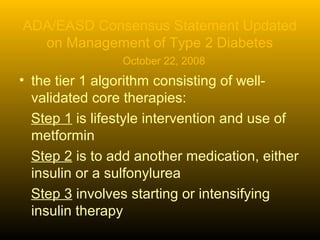
• the tier 1 algorithm consisting of well-
validated core therapies:
Step 1 is lifestyle intervention and use of
metformin
Step 2 is to add another medication, either
insulin or a sulfonylurea
Step 3 involves starting or intensifying
insulin therapy
ADA/EASD Consensus Statement Updated
on Management of Type 2 Diabetes
October 22, 2008
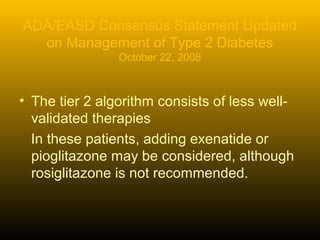
• The tier 2 algorithm consists of less well-
validated therapies
In these patients, adding exenatide or
pioglitazone may be considered, although
rosiglitazone is not recommended.
2010
• Rosiglitazone was practically
withdrawn
• Pioglitazone has been under
investigations for a probable
relationship with cancer bladder
The Lessons
• The evidence should be derived from
clinical studies with solid clinical end
points rather than surrogate markers.
• The honor of time should be always
respected.
THANK YOU

ued2011 metformin the gold standard-d.adel

  • 1.
    Insulin sensitizers Metformin: TheGold Standard By Prof. Adel A El-Sayed MD Chairman Elect Middle East and North Africa (MENA) Region International Diabetes Federation (IDF) Professor of Internal Medicine Sohag Faculty of Medicine Sohag-EGYPT
  • 2.
  • 3.
    Pathophysiology of Type2 Diabetes • Insulin resistance. • Beta cell dysfunction.
  • 4.
    Pathophysiology of Type2 Diabetes Insulin Resistance • Insulin Resistance starts very early in the course of the disease. • insulin resistance alone will not produce diabetes. If beta-cell function is normal, one can compensate for insulin resistance by increasing insulin secretion.
  • 9.
    Pathophysiology of Type2 Diabetes Insulin Resistance • It is now generally believed that T2DM occurs when the beta cell mass is unable to increase the insulin secretion to meet the demands put on them by the insulin resistance. • Insulin resistance is related to most of the markers of CV diabetic complications.
  • 10.
    Insulin resistance andadverse cardiovascular outcomes 0 1 2 3 4 5 6 7 CHD events All-cause mortality RR 2.18 (95% CI 1.82 to 3.87( RR 1.62 (95% CI 1.03 to 2.55( Incidence/1000patient-years Prospective cohort study in Malmö, Sweden (n=4748( +Insulin resistance –Insulin resistance Hedblad B et al. Diabet Med 2002;19:47.
  • 11.
  • 12.
    Metformin • The bloodglucose-lowering actions of metformin result primarily from an amelioration of insulin resistance, mainly in liver and muscle, with a less marked effect on adipose tissue. (Giannarelli, Diabetes Metab2003) • Within the liver, the principal effect of metformin is a reduction in hepatic glucose output.
  • 13.
    The Metformin Problem •Biguanides: Metformin and phenformin. • Discovered in US and became available in the market in 1959. • Widely used between 1960 and 1978. • Phenformin had been accompanied with development of the serious and potentially fatal lactic acidosis. • Both drugs were withdrawn from US market in 1978. • Metformin remained widely used in Canada and Europe.
  • 14.
    Cardiovascular Benefits WithMetformin UKPDS • In newly-diagnosed type 2 diabetic patients followed for a median of 11 years in the UKPDS, (UK Prospective Diabetes Study Group, Lancet 1998) patients who received metformin benefited from clinically and statistically significant improvements in CV complications of DM (the risk of all-cause death, diabetes related death, myocardial infarction, and in a composite measure of 21 diabetes- related complications). • other intensive therapies delivered a similar level of glycaemic control without those CV benefits
  • 15.
    In 1995 metforminwas FDA approved
  • 16.
    Cardiovascular Benefits With Metformin Severalobservational analyses have suggested significant cardioprotective benefits with metformin in patient populations with more severe cardiovascular disease at baseline. (Kao et al, Am J Cardiol 2004)
  • 18.
    Metformin and LipidProfile • Numerous studies have demonstrated improved lipid profiles in dyslipidaemic patients.(Despres, Diabetes Metab 2003) • Modest improvements in levels of total cholesterol, low-density lipoprotein (LDL)- cholesterol and triglycerides are observed, though little or no change in high-density lipoprotein (HDL)-cholesterol is usually seen.
  • 19.
    Metformin and Adiposity •The modest reductions in body weight often observed with metformin are associated with redistribution of fat from visceral deposits to subcutaneous deposits .(Kurukulasuriya et al, Diabetes 1999)
  • 20.
    Metformin and C-ReactiveProtein Patient Group Type 2 1 Type 2 + MS 2 PCOS 3 n 12 65 32 Dose (mg( 2500 2500 2000 CRP ↓33% ↓33% ↓50% 1 Chu. Diabetes Care 2002; 25: 542-549 2 Akbar. Endocrine 2003; 20: 215-218 3 Morin-Papunen. JCEM 2003 Duration 4m 3.5y 6m P-value >0.01 0.01 >0.01 Metformin
  • 21.
    Inhibition of glycoxidation •Metformin inhibits the formation of advanced glycation endproducts (AGE) both indirectly through improved glycaemia and directly through reaction with, and neutralization of highly reactive radicals involved in AGE formation.
  • 22.
    Metformin and Improved Haemostasis •Metformin reduces levels or activity of plasminogen activator inhibitor-1 (PAI-1), (Grant et al, Diabetes Metab 2003) and sometimes increases the activity of tissue plasminogen activator (tPA). Other antithrombotic mechanisms of metformin include stabilisation of reduced aggregation of platelets in response to stimuli and reduction of the activity of clotting Factor VII and Factor XIII, which are involved in thrombus formation and stabilisation, respectively.
  • 23.
    Prevention of Diabetes -Diabetes Prevention Program. - Prevention of Gestational Diabetes
  • 24.
    Gestational Diabetes in40 Women with PCOS Previously without metformin In 52 livebirth pregnancies With metformin In 40 livebirth pregnancies GD 13% GD 31% X2 =4.3, p=0.039 McNemar S=8.3, p=0.039 Glueck. Human Reproduction 2004; 19: 510-521
  • 25.
    Metformin Mechanism of Action •Recent reports suggested that increase in the circulating concentration of glucagon- like peptide-1 (GLP-1) may contribute to the metabolic effects metformin. (Lindsay et al, Diabet Med 2005 - Sinha Roy et al, Diabetologia 2007) • This might arise from increased secretion of GLP-1 rather than inhibition of the enzyme dipeptidyl peptidase-4 (DPP-4). (Sinha Roy et al, Diabetologia 2007)
  • 26.
    Metformin in combination •The glucose-lowering extent of metformin is additive when used in combination with every known antidiabetic drug: a sulphonylurea,(Blonde et al, Diabetes Obes Metab 2002) a meglitinide, (Marre et al, Diabetes Obes Metab 2002) a thiazolidinedione (Charbonnel et al, Diabetologia 2005) an α- glucosidase inhibitor (Chiasson et al, Diabetes Care 2001 – Phillips et al, Diabetes Care 2003) a GLP-1 analogues, exenatide (DeFronzo et al, Diabetes Care 2005) liraglutide, (Naucket al, Exp Clin Endocrinol Diabetes 2006) DPP-4 inhibitors, vildagliptin (Ahren et al, Diabetes Care 2005) or sitagliptin. (Hermansen et al, Diabetes Obes Metab 2007) and insulin-based regimens .(Ryysy et al, Diabetes Care 2001) • The additive antihyperglycaemic efficacy of these combinations relates to different cellular modes of action of metformin compared with each of the other classes of agents.
  • 27.
    Metformin and Weight •Metformin is widely recognized to have either little effect on body weight or to facilitate modest weight loss in type 2 diabetes. (Golay, Int J Obes 2008) • There is no major effect of obesity status on the antihyperglycaemic effect of metformin but a slightly larger glucose-lowering effect of metformin has been observed as body mass index (BMI) decreases. (Donnelly et al, Diabet Med 2006) • Thus, body weight should not unduly influence the decision whether to prescribe metformin.
  • 28.
    Metformin safety withpregnancy • Metformin has long been reported to be safe with pregnancy. Recently, in June 2008 the first results of the MIG Trial was published in the N Engl J Medicine. • It demonstrated that metformin is as safe as insulin in women with gestational diabetes. • In the NICE guidelines (2008), and Canadian guidelines (2009) metformin has been mentioned as a safe and effective substitute for insulin in treatment of gestational diabetes.
  • 29.
    Potential clinical usesbeyond type 2 diabetes • Diabetes prevention. • Polycystic ovary syndrome. • Other conditions associated with insulin resistance Non- alcoholic fatty liver disease (NAFLD) and the related non-alcoholic steatohepatitis (NASH) and in patients receiving highly active antiretroviral therapy (HAART) for HIV are at risk of lipodystrophy syndrome. • Anti-Cancer by activating the enzyme AMPK:Two observational studies in patients with type 2 diabetes have demonstrated a significantly lower risk of cancer in patients receiving metformin relative to other treatments. (Evans et al, BMJ 2005) – (Bowker et al, Diabetes Care 2006)
  • 30.
    Metformin In TheInternational Guidelines • The recommendations of the American Diabetes Association (ADA), European Association for the Study of Diabetes (EASD) (ADA/EASD consensus, Diabetologia 2006 updated on 22/10/2008), and the International Diabetes Federation (IDF) 2005 place metformin as first-line therapy for type 2 diabetic patients irrespective of age, body weight and severity of hyperglycaemia.
  • 31.
    Thiazolidinediones • Thiazolidinediones TZDswere developed in 1997. There first member troglitazone was withdrawn from the market in the year 2000 due to hepatotoxicity. • Pioglitazone and rosiglitazone appeared in the market in 1999. • Glitazones act predominantly by enhancing peripheral insulin sensitivity, offering promising perspectives in terms of β-cell preservation [Buchanan et al, Diabetes 2002 – Ovalle and Bell, Diabetes Obes Metab 2002] and cardiovascular protection [Suwattee et al, Endocrinologist 2002 – Dormandy et al, Lancet 2005].
  • 32.
    Thiazolidinediones Mechanism of Action •The primary effect of TZDs is peripheral, with increasing insulin sensitivity and increased glucose uptake with much less effect on hepatic insulin sensitivity. • Seventy percent of the insulin resistance seen in patients with T2DM is in the periphery and this shows the important role which the glitazones can play as compared to metformin which has its major action on the liver which accounts for only 30% of the insulin resistance.
  • 33.
    The Glitazones AndThe Beta Cell • Beta cell failure begins more than a decade before diabetes is diagnosed [Kahn, Cell 1998 - Donath and Halban, Diabetologia 2004] • Two mechanisms related to insulin resistance: glucotoxicity, lipotoxicity. • glitazone therapy: - Delay or prevent beta cell failure? - growing body of evidence that TZDs rejuvenate beta-cells and improve their function [Bell, Am J Med 2003].
  • 34.
    The Glitazones AndDiabetes Prevention TRIPOD (Azen et al, Control Clin Trials1998) and PIPOD (Xiang et al, Diabetes2006) studies.
  • 35.
    Glitazones and hypertension •insulin resistance plays a role in leading to hypertension (Reaven et al, N Engl J Med 1996) – (Natali et al, Endocrinol Metab Clin North Am 2004) • the decrease in insulin resistance brought about by the glitazones should lead to a lowering of the raised blood pressure levels • Studies carried out in patients with T2DM have shown a lowering of the blood pressure levels although this may not have been to a very significant extent (Rizza et al, Diabetes Care 2005) – (Scherbaum et al, Diabetes 2001)
  • 36.
    Glitazones and inflammation •Inflammations are thought to be one of the leading, if not the main, predisposing factors in the causation of atherosclerosis (Libby et al, Circulation 2002) – (Mendall et al, Eur Heart J 2000) and even T2DM (Roivanen et al, Diabetologia 1998) – (Pradhan et al, JAMA 2001) • Pro-inflammatory markers such as hs-CRP, interleukin- 6, tumor necrosis factor-alpha and adipokines are associated with insulin resistance • Glitazones have been shown in clinical studies to be associated with a significant lowering of these proinflammatory risk markers (Wang et al, Am J Cardiol 2004) – (Satoh et al, Diabetes Care 2003).
  • 37.
    Glitazones and coagulopathy •Insulin resistance and T2DM are associated with a pro-coagulant and anti- fibrinolytic status • This is closely related to the early onset and rate of progression of macrovascular disease and increased cardiovascular risk (McGill et al, Diabetes 1994) – (Imperatore et al, Diabetes Care 1998). • Studies have shown that glitazones can improve these markers. (Kruszynska et al, Diabetes 2000) – (Freed et al, Diabetologia 2000)
  • 38.
    Glitazones and theendothelium • Insulin resistance in animals and humans has been shown to be associated with endothelial dysfunction. (van Oostrom et al, JR Soc Med 2002) – (Celermajer, J Am Coll Cardiol 1997 • Many studies have reported that the use of insulin sensitizers, especially the glitazones show a salutary effect on the various manifestations and consequences of endothelial dysfunction (Bagi et al, Am J Physiol Heart Circ Physiol 2004) – (Cominacini et al, Cell Adhes Commun 1999) • Interestingly, in a short trial, Murakami et al. reported that administration of troglitazone was associated with a substantial reduction in the frequency of episodes of angina in patients with coronar artery disease and T2DM (Murakami et al, Am J Cardiol 1999). . Moreover, these investigators found that the decrease in episodes of pain was correlated with angiographic (coronary) improvement in endothelial function.
  • 39.
    TZDs Problems Glitazones AndCV Diseases IHD • However, in the meta-analysis of the trials investigating the effect of rosiglitazone on CV end points, an increase of the risk of myocardial infarction by 43% was observed in patients treated with this medication (Nissen et al, N Engl J Med 2007).
  • 40.
    TZDs Problems Glitazones AndCV Diseases Heart Failure • Two meta-analyses were published in the September 12, 2007 issue of the Journal of the American Medical Association • The first about pioglitazone included 19 randomized trials (Lincoff et al, JAMA 2007; 298:1180-1188 ) and the second about rosiglitazone included four randomized trials (Singh et al, JAMA 2007; 298:1189-1195 ) • Both meta-analyses demonstrated highly significantly increased risk of serious heart failure with the use of the studied drug.
  • 41.
    Glitazones and thebones • December 2006, the ADOPT trial reported a higher risk of fractures in diabetic women randomized to rosiglitazone than in women randomized to metformin or glyburide (Kahn et al, N Engl J Med 2006). • This had been proved to be true in almost all big trials with glitazones. • This has lead to both GSK as well as Takeda, manufacturers of rosiglitazone and pioglitazone, respectively, to issue warnings that these medications may cause an increased risk of fracture in women (GlaxoSmithKline, www.fda.gov {accessed 15 May 2007})
  • 42.
    ADA/EASD Consensus StatementUpdated on Management of Type 2 Diabetes October 22, 2008 • the tier 1 algorithm consisting of well- validated core therapies: Step 1 is lifestyle intervention and use of metformin Step 2 is to add another medication, either insulin or a sulfonylurea Step 3 involves starting or intensifying insulin therapy
  • 43.
    ADA/EASD Consensus StatementUpdated on Management of Type 2 Diabetes October 22, 2008 • The tier 2 algorithm consists of less well- validated therapies In these patients, adding exenatide or pioglitazone may be considered, although rosiglitazone is not recommended.
  • 45.
    2010 • Rosiglitazone waspractically withdrawn • Pioglitazone has been under investigations for a probable relationship with cancer bladder
  • 46.
    The Lessons • Theevidence should be derived from clinical studies with solid clinical end points rather than surrogate markers. • The honor of time should be always respected.
  • 47.

Editor's Notes

  • #11 Insulin resistance and adverse cardiovascular outcomes (1) Insulin resistance is central to the development of the metabolic syndrome. A prospective cohort study in Sweden demonstrated significant excess coronary events and all-cause mortality associated with insulin resistance, measured using homeostasis model assessment (HOMA) . Hedblad B, Nilsson P, Engstrom G, Berglund G, Janzon L. Insulin resistance in non-diabetic subjects is associated with increased incidence of myocardial infarction and death. Diabet Med 2002;19:470-5.
  • #19 PRESTO: improved outcomes with metformin Logistic regression analysisa showed that treatment of diabetic patients in the PRESTO trial with metformin was associated with a significantly decreased risk of any clinical event, myocardial infarction or death, compared with diabetic patients who did not receive an insulin sensitiser. aAdjusted for age; gender; % stenosis; tranilast; use of statins, -blockers, abciximab, angiotensin receptor blockers, P450 2C9 inhibitors; previous percutaneous intervention; history of or current coronary or peripheral vascular disease; severity of coronary disease; smoking; body weight. Kao J, Tobis J, McClelland RL et al. Relation of metformin treatment to clinical events in diabetic patients undergoing percutaneous intervention. Am J Cardiol 2004;93:1347-50