Dr Shinde Viraj Ashok
Junior resident 2
Department of Pharmacology
GMC Nagpur

Introduction
Pharmacodynamics
Pharmacokinetics
Adverse drug reaction
Current status
Overview

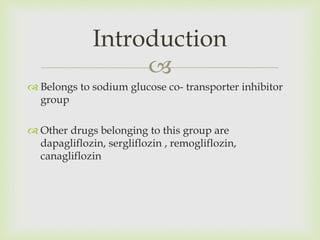
 Belongs to sodium glucose co- transporter inhibitor
group
 Other drugs belonging to this group are
dapagliflozin, sergliflozin , remogliflozin,
canagliflozin
Introduction

Potent highly selective Sodium Glucose Cotransporter 2
inhibitor

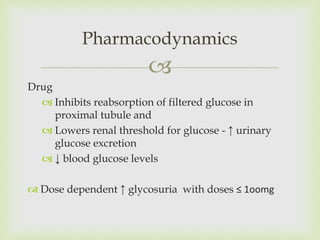
Drug
 Inhibits reabsorption of filtered glucose in
proximal tubule and
 Lowers renal threshold for glucose - ↑ urinary
glucose excretion
 ↓ blood glucose levels
 Dose dependent ↑ glycosuria with doses ≤ 1oomg
Pharmacodynamics

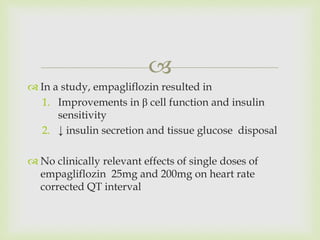
 In a study, empagliflozin resulted in
1. Improvements in β cell function and insulin
sensitivity
2. ↓ insulin secretion and tissue glucose disposal
 No clinically relevant effects of single doses of
empagliflozin 25mg and 200mg on heart rate
corrected QT interval

 No clinically relevant effects of food
 Vd - 73.8 L
 Steady state – 5 – 6 days
Pharmacokinetics

 37 % in RBC & 86 % plasma protein bound
 Primary route of metabolism – hepatic
glucuronidation (UGT)
 Excretion
 41% eliminated in faeces- majority as unchanged
 54% eliminated in urine – of which 50% was
unchanged
Contd …

 Avoid coadministration with drugs known to induce
UGT(5’ uridine diphosphoglucuronyltransferase)
enzymes ( phenytoin & carbamazepine)
 Doesn’t inhibit , inactivate or induce cytochrome
P450 enzymes
Drug interactions
Potential risk of ↓ efficacy

 Starting dose – 10mg once daily as
 Monotherapy or
 In combination with other antihyperglycaemic
agents
 Patients tolerating this dose & who require tighter
glycaemic control
 Dosage – may be ↑ to 25 mg ( maximum dose)
Dosage & administration

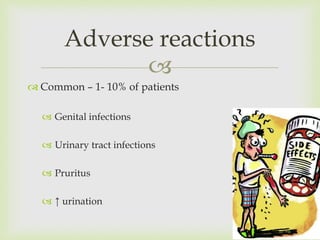
 Common – 1- 10% of patients
 Genital infections
 Urinary tract infections
 Pruritus
 ↑ urination
Adverse reactions

 May add to diuretic effects of thiazide & loop
diuretics - ↑ risk of dehydration & hypotension
 Frequency of minor or major hypoglycaemia was
similar to placebo recipient
 Risk of hypoglycaemia increases when
coadministered with a sulfonylurea and /or insulin

 Approved in EU and USA and based on most recent
guidelines (2013)
 First line monotherapy (though not typically first
choice) or
 Add on therapy to other antihyperglycaemic agents
(dual or triple combination)
 SGLT 2 inhibitors - associated with body weight loss
(may be used in obese patients)
Current status of
Empagliflozin
 Add on therapy to metformin
 Non inferior to glimepiride at 52 weeks
 Superior to glimepiride at 104 weeks in terms of
reduction of HbA1C
 In clinical trials overall number of empagliflozin
treated patients who developed kidney and bladder
cancer was low and similar to that in placebo
recipients

 Empagliflozin : A review of its use in patients with
Type 2 Diabetes Mellitus ; Drugs (2014)74 , Lesley J
Scott
 The sodium glucose cotransporter 2 inhibitor
empagliflozin does not prolong QT interval in a
thorough QT (TQT) study, Ring et al. Cardiovascular
Diabetology 2013, - bio med central
References


Empagliflozin

  • 1.
    Dr Shinde VirajAshok Junior resident 2 Department of Pharmacology GMC Nagpur
  • 2.
  • 3.
      Belongs tosodium glucose co- transporter inhibitor group  Other drugs belonging to this group are dapagliflozin, sergliflozin , remogliflozin, canagliflozin Introduction
  • 4.
     Potent highly selectiveSodium Glucose Cotransporter 2 inhibitor
  • 5.
     Drug  Inhibits reabsorptionof filtered glucose in proximal tubule and  Lowers renal threshold for glucose - ↑ urinary glucose excretion  ↓ blood glucose levels  Dose dependent ↑ glycosuria with doses ≤ 1oomg Pharmacodynamics
  • 6.
      In astudy, empagliflozin resulted in 1. Improvements in β cell function and insulin sensitivity 2. ↓ insulin secretion and tissue glucose disposal  No clinically relevant effects of single doses of empagliflozin 25mg and 200mg on heart rate corrected QT interval
  • 7.
      No clinicallyrelevant effects of food  Vd - 73.8 L  Steady state – 5 – 6 days Pharmacokinetics
  • 8.
      37 %in RBC & 86 % plasma protein bound  Primary route of metabolism – hepatic glucuronidation (UGT)  Excretion  41% eliminated in faeces- majority as unchanged  54% eliminated in urine – of which 50% was unchanged Contd …
  • 9.
      Avoid coadministrationwith drugs known to induce UGT(5’ uridine diphosphoglucuronyltransferase) enzymes ( phenytoin & carbamazepine)  Doesn’t inhibit , inactivate or induce cytochrome P450 enzymes Drug interactions Potential risk of ↓ efficacy
  • 10.
      Starting dose– 10mg once daily as  Monotherapy or  In combination with other antihyperglycaemic agents  Patients tolerating this dose & who require tighter glycaemic control  Dosage – may be ↑ to 25 mg ( maximum dose) Dosage & administration
  • 11.
      Common –1- 10% of patients  Genital infections  Urinary tract infections  Pruritus  ↑ urination Adverse reactions
  • 12.
      May addto diuretic effects of thiazide & loop diuretics - ↑ risk of dehydration & hypotension  Frequency of minor or major hypoglycaemia was similar to placebo recipient  Risk of hypoglycaemia increases when coadministered with a sulfonylurea and /or insulin
  • 13.
      Approved inEU and USA and based on most recent guidelines (2013)  First line monotherapy (though not typically first choice) or  Add on therapy to other antihyperglycaemic agents (dual or triple combination)  SGLT 2 inhibitors - associated with body weight loss (may be used in obese patients) Current status of Empagliflozin
  • 14.
     Add ontherapy to metformin  Non inferior to glimepiride at 52 weeks  Superior to glimepiride at 104 weeks in terms of reduction of HbA1C  In clinical trials overall number of empagliflozin treated patients who developed kidney and bladder cancer was low and similar to that in placebo recipients
  • 15.
      Empagliflozin :A review of its use in patients with Type 2 Diabetes Mellitus ; Drugs (2014)74 , Lesley J Scott  The sodium glucose cotransporter 2 inhibitor empagliflozin does not prolong QT interval in a thorough QT (TQT) study, Ring et al. Cardiovascular Diabetology 2013, - bio med central References
  • 16.

Editor's Notes

  • #15 No causal link has been established but concerns have been raised regarding potential ↑ risk of breast & bladder cancer occurring during clinical trials of dapagliflozin