Diabetes in the Elderly
A REAL PRACTICAL
CHALELENGE
MESBAH SAYED KAMEL
MD
Optimizing the Management
of T2D Patients....
AGENDA
 Impact of diabetes in the elderly patient
 Factors specific to the management of diabetes in the
elderly:
 Screening and diagnosis .
 Specific complications of type 2 diabetes in the elderly:
Risk of hypoglycaemic episodes
Functional disability
Depression, cognitive impairment and other
geriatric syndromes, such as fractures and falls.
How to adapt management and treatment goals in
the elderly patient with type 2 diabetes.
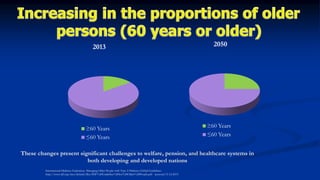
Adapted from http://www.indexmundi.com/egypt/demographics_profile.html , https://www.cia.gov/library/publications/the-world-factbook/geos/eg.html , http://en.worldstat.info/World accessed 22-2-2014
2013
≥60 Years
≤60 Years
International Diabetes Federation. Managing Older People with Type 2 Diabetes Global Guidelines.
http://www.idf.org/sites/default/files/IDF%20Guideline%20for%20Older%20People.pdf accessed 15-12-2013
2050
≥60 Years
≤60 Years
These changes present significant challenges to welfare, pension, and healthcare systems in
both developing and developed nations
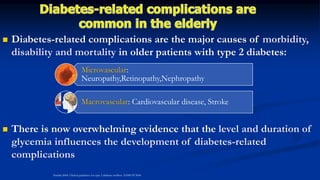
 Diabetes-related complications are the major causes of morbidity,
disability and mortality in older patients with type 2 diabetes:
 There is now overwhelming evidence that the level and duration of
glycemia influences the development of diabetes-related
complications
Sinclair 2004. Clinical guidelines for type 2 diabetes mellitus. EDWOP 2004
Microvascular:
Neuropathy,Retinopathy,Nephropathy
Macrovascular: Cardiovascular disease, Stroke
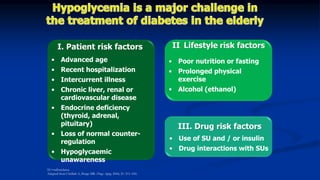
• Advanced age
• Recent hospitalization
• Intercurrent illness
• Chronic liver, renal or
cardiovascular disease
• Endocrine deficiency
(thyroid, adrenal,
pituitary)
• Loss of normal counter-
regulation
• Hypoglycaemic
unawareness
SU=sulfonylurea.
Adapted from Chelliah A, Burge MR. Drugs Aging. 2004; 21: 511–530.
I. Patient risk factors
• Poor nutrition or fasting
• Prolonged physical
exercise
• Alcohol (ethanol)
• Use of SU and / or insulin
• Drug interactions with SUs
III. Drug risk factors
II. Lifestyle risk factors
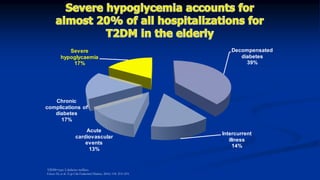
T2DM=type 2 diabetes mellitus.
Greco D, et al. Exp Clin Endocrinol Diabetes. 2010; 118: 215–219.
Decompensated
diabetes
39%
Intercurrent
illness
14%
Acute
cardiovascular
events
13%
Chronic
complications of
diabetes
17%
Severe
hypoglycaemia
17%
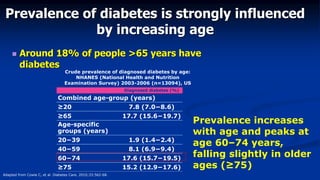
Prevalence of diabetes is strongly influenced
by increasing age
 Around 18% of people >65 years have
diabetes
Diagnosed diabetes (%)
Combined age-group (years)
≥20 7.8 (7.0−8.6)
≥65 17.7 (15.6−19.7)
Age-specific
groups (years)
20−39 1.9 (1.4−2.4)
40−59 8.1 (6.9−9.4)
60−74 17.6 (15.7−19.5)
≥75 15.2 (12.9−17.6)
Adapted from Cowie C, et al. Diabetes Care. 2010;33:562-68.
Prevalence increases
with age and peaks at
age 60–74 years,
falling slightly in older
ages (≥75)
Crude prevalence of diagnosed diabetes by age:
NHANES (National Health and Nutrition
Examination Survey) 2003-2006 (n=13094), US
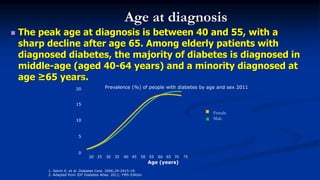
Age at diagnosis
 The peak age at diagnosis is between 40 and 55, with a
sharp decline after age 65. Among elderly patients with
diagnosed diabetes, the majority of diabetes is diagnosed in
middle-age (aged 40-64 years) and a minority diagnosed at
age ≥65 years.
1. Selvin E, et al. Diabetes Care. 2006;29:2415-19.
2. Adapted from IDF Diabetes Atlas. 2011; Fifth Edition
Age (years)
Prevalence (%) of people with diabetes by age and sex 2011
Female
Male
0
15
10
5
605550454035302520 65 70 75
20
Screening and diagnosis
in the elderly
Recommendations for screening and diagnosis in the
elderly
 Clinical presentation of diabetes in old age is often
asymptomatic and non-specific and clinical diagnosis may
be delayed
 In general, screening for and diagnosis of diabetes in older
subjects should be in accordance with published
international/national criteria and guidelines, and no age
modified criteria are currently recognised
 The prevalence and incidence rates of diabetes mellitus in
elderly subjects (>65 years) may be underestimated when
using only fasting plasma glucose.
Sinclair A, et al. Diabetes & Metabolism. 2011;37:S27-S38.
 The presence of isolated post-challenge
hyperglycaemia (IPH) is common in older
subjects and should alert the clinician to screen
for cardiovascular disease and institute risk
intervention strategies to minimise premature
death.
 In high-risk older subjects with a normal fasting
glucose, and where an OGTT is not feasible,
determination of HbA1c may be helpful in the
diagnosis of diabetes. A value of HbA1c >6.5%
may indicate the likely presence of diabetes
Managing type 2 diabetes in the elderly
Special considerations
 Clinicians who manage older people with diabetes
require special skills if they wish to provide high-
quality care
 Their approach is influenced by a multitude of
factors, such as the higher frequency of medical
comorbidities, frailty and socioeconomic issues
 Comprehensive geriatric assessment is a potentially
important tool in ensuring that patients with
diabetes receive a multi-professional assessment of
their functional status and unmet needs.Sinclair A. Diabetes Spectrum. 2006;19(4):229-33.
Management goals in the elderly
 The overall goals of diabetes management in older adults
are similar to those in younger adults and include
management of both hyperglycaemia and risk factors1
 However, in frail, elderly patients with diabetes, avoidance
of hypoglycaemia, hypotension, and drug interactions due
to poly-pharmacy are of even greater concern than in
younger patients with diabetes1,2.
 In addition, management of coexisting medical conditions
is important because it influences their ability to perform
self-management2
1.Brown AF, 2003; 51(5):S265-286. 2.Sinclair A. Diabetes Spectrum. 2006;19(4):229-33.
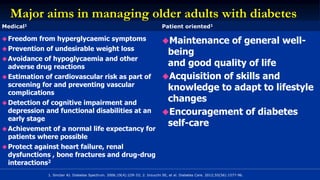
Major aims in managing older adults with diabetes
1. Sinclair AJ. Diabetes Spectrum. 2006;19(4):229-33; 2. Inzucchi SE, et al. Diabetes Care. 2012;55(56):1577-96.
Medical1 Patient oriented1
 Freedom from hyperglycaemic symptoms
 Prevention of undesirable weight loss
 Avoidance of hypoglycaemia and other
adverse drug reactions
 Estimation of cardiovascular risk as part of
screening for and preventing vascular
complications
 Detection of cognitive impairment and
depression and functional disabilities at an
early stage
 Achievement of a normal life expectancy for
patients where possible
 Protect against heart failure, renal
dysfunctions , bone fractures and drug-drug
interactions2
Maintenance of general well-
being
and good quality of life
Acquisition of skills and
knowledge to adapt to lifestyle
changes
Encouragement of diabetes
self-care
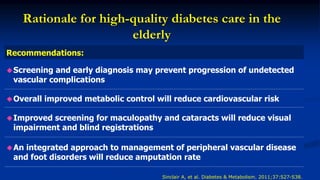
Rationale for high-quality diabetes care in the
elderly
Recommendations:
Screening and early diagnosis may prevent progression of undetected
vascular complications
Overall improved metabolic control will reduce cardiovascular risk
Improved screening for maculopathy and cataracts will reduce visual
impairment and blind registrations
An integrated approach to management of peripheral vascular disease
and foot disorders will reduce amputation rate
Sinclair A, et al. Diabetes & Metabolism. 2011;37:S27-S38.
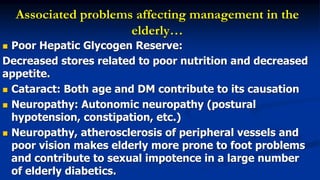
Associated problems affecting management in the
elderly…
 Poor Hepatic Glycogen Reserve:
Decreased stores related to poor nutrition and decreased
appetite.
 Cataract: Both age and DM contribute to its causation
 Neuropathy: Autonomic neuropathy (postural
hypotension, constipation, etc.)
 Neuropathy, atherosclerosis of peripheral vessels and
poor vision makes elderly more prone to foot problems
and contribute to sexual impotence in a large number
of elderly diabetics.
Managing the frail, elderly patient
with type 2 diabetes
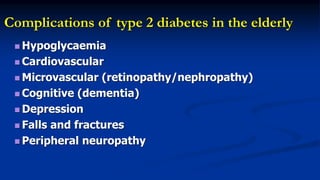
Complications of type 2 diabetes in the elderly
 Hypoglycaemia
 Cardiovascular
 Microvascular (retinopathy/nephropathy)
 Cognitive (dementia)
 Depression
 Falls and fractures
 Peripheral neuropathy
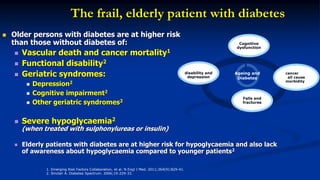
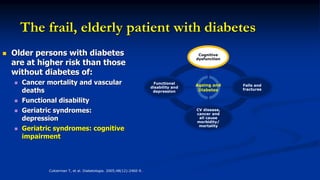
The frail, elderly patient with diabetes
 Older persons with diabetes are at higher risk
than those without diabetes of:
 Vascular death and cancer mortality1
 Functional disability2
 Geriatric syndromes:
 Depression2
 Cognitive impairment2
 Other geriatric syndromes2
 Severe hypoglycaemia2
(when treated with sulphonylureas or insulin)
 Elderly patients with diabetes are at higher risk for hypoglycaemia and also lack
of awareness about hypoglycaemia compared to younger patients2
Ageing and
Diabetes
Cognitive
dysfunction
CV disease,
cancer and
all cause
morbidity/
mortality
Falls and
fractures
Functional
disability and
depression
1. Emerging Risk Factors Collaboration, et al. N Engl J Med. 2011;364(9):829-41.
2. Sinclair A. Diabetes Spectrum. 2006;19:229-33.
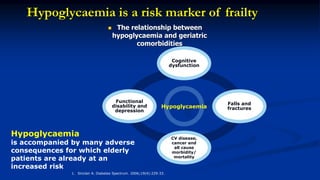
Hypoglycaemia is a risk marker of frailty
 The relationship between
hypoglycaemia and geriatric
comorbidities
Hypoglycaemia
is accompanied by many adverse
consequences for which elderly
patients are already at an
increased risk
Hypoglycaemia
Falls and
fractures
Functional
disability and
depression
Cognitive
dysfunction
CV disease,
cancer and
all cause
morbidity/
mortality
1. Sinclair A. Diabetes Spectrum. 2006;19(4):229-33.
2. Emerging Risk Factors Collaboration, et al. N Med. 2011;364(9):829-41.
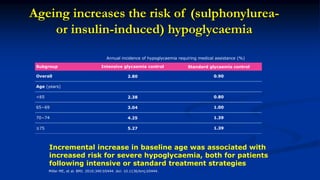
Ageing increases the risk of (sulphonylurea-
or insulin-induced) hypoglycaemia
Incremental increase in baseline age was associated with
increased risk for severe hypoglycaemia, both for patients
following intensive or standard treatment strategies
Annual incidence of hypoglycaemia requiring medical assistance (%)
Subgroup Intensive glycaemia control Standard glycaemia control
Overall 2.80 0.90
Age (years)
<65 2.38 0.80
65−69 3.04 1.00
70−74 4.25 1.39
≥75 5.27 1.39
Miller ME, et al. BMJ. 2010;340:b5444. doi: 10.1136/bmj.b5444.
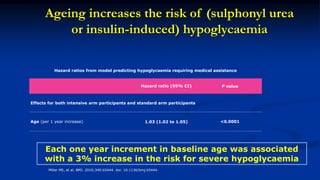
Ageing increases the risk of (sulphonyl urea
or insulin-induced) hypoglycaemia
Hazard ratios from model predicting hypoglycaemia requiring medical assistance
Hazard ratio (95% CI) P value
Effects for both intensive arm participants and standard arm participants
Age (per 1 year increase) 1.03 (1.02 to 1.05) <0.0001
Each one year increment in baseline age was associated
with a 3% increase in the risk for severe hypoglycaemia
Miller ME, et al. BMJ. 2010;340:b5444. doi: 10.1136/bmj.b5444.
Why is the elderly diabetic patient
at high risk of hypoglycaemia?
 Defective Counter-regulation or perception of symptoms
1.The effects of ageing on the responses to
hypoglycaemia1
2.The effects of type 2 diabetes on the responses to
hypoglycaemia2
3.The effects of type 2 diabetes and ageing on the
counter-regulatory responses to hypoglycaemia3
1. Meneilly GS, et al. J Clin Endocrinol Metab. 1994;78(6):1341-8; 2. Bolli GB. et al. J Clin Invest. 1984;73(6):1532-41;
3. Bremer JP, et al. Diabetes Care. 2009;32(8):1513-7.
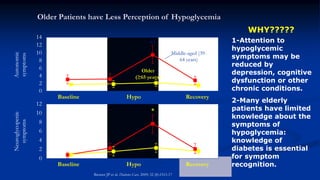
Older Patients have Less Perception of Hypoglycemia
Bremer JP et al. Diabetes Care. 2009; 32 (8):1513-17
12
14
10
8
6
4
2
0
Autonomic
symptoms
Baseline Hypo Recovery
**
12
10
8
6
4
2
0
Neuroglycopenic
symptoms
Baseline Hypo Recovery
*
Middle-aged (39-
64 years)
Older
(≥65 years)
• 1-Attention to
hypoglycemic
symptoms may be
reduced by
depression, cognitive
dysfunction or other
chronic conditions.
 2-Many elderly
patients have limited
knowledge about the
symptoms of
hypoglycemia:
knowledge of
diabetes is essential
for symptom
recognition.
WHY?????
1. The effects of ageing on the responses to hypoglycaemia:
 There is defective perception of symptoms in the elderly 1
2. The effects of type 2 diabetes on the responses to hypoglycaemia:
 Glucose counter-regulatory mechanisms may be abnormal in patients
with Typ2 DM: impaired glucagon, growth hormone, cortisol, and perhaps
epinephrine responses during hypoglycaemia could all contribute to a
lack of compensatory increase in glucose production2
3. The effects of type 2 diabetes and ageing on the counter-regulatory
responses to hypoglycaemia:
 Impaired perception of hypoglycemia in older type 2 diabetes patients3
The elderly patient with diabetes is at high risk of
hypoglycemia
1. Meneilly GS, et al. J Clin Endocrinol Metab. 1994;78(6):1341-8; 2. Bolli GB. J Clin Invest. 1984;73(6):1532-41;
3. Bremer JP, et al. Diabetes Care. 2009;32(8):1513-7.
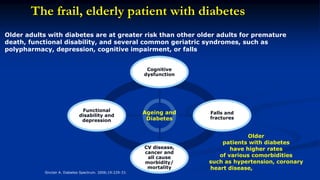
Older
patients with diabetes
have higher rates
of various comorbidities
such as hypertension, coronary
heart disease, and stroke than
those without diabetes
Older adults with diabetes are at greater risk than other older adults for premature
death, functional disability, and several common geriatric syndromes, such as
polypharmacy, depression, cognitive impairment, or falls
The frail, elderly patient with diabetes
Ageing and
Diabetes
Cognitive
dysfunction
CV disease,
cancer and
all cause
morbidity/
mortality
Falls and
fractures
Functional
disability and
depression
Sinclair A. Diabetes Spectrum. 2006;19:229-33.
Emerging Risk Factors Collaboration, et al. N Engl J Med. 2011;364(9):829-41.
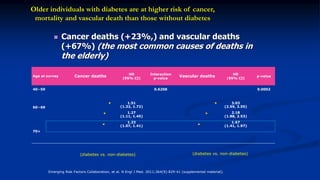
Older individuals with diabetes are at higher risk of cancer,
mortality and vascular death than those without diabetes
 Cancer deaths (+23%,) and vascular deaths
(+67%) (the most common causes of deaths in
the elderly)
Emerging Risk Factors Collaboration, et al. N Engl J Med. 2011;364(9):829-41 (supplemental material).
Age at survey Cancer deaths
HR
(95% CI)
Interaction
p-value
Vascular deaths
HR
(95% CI)
p-value
40−59
60−69
70+
1.51
(1.32, 1.72)
1.27
(1.11, 1.45)
1.23
(1.07, 1.41)
0.6208
3.03
(2.59, 3.55)
2.18
(1.88, 2.53)
1.67
(1.41, 1.97)
0.0002
.5 1 2 4.5 1 2 4
Hazard ratios
(diabetes vs. non-diabetes)
Hazard ratios
(diabetes vs. non-diabetes)
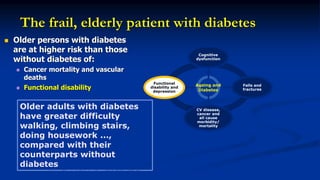
The frail, elderly patient with diabetes
 Older persons with diabetes
are at higher risk than those
without diabetes of:
 Cancer mortality and vascular
deaths
 Functional disability
Older adults with diabetes
have greater difficulty
walking, climbing stairs,
doing housework ...,
compared with their
counterparts without
diabetes
Ageing and
Diabetes
Cognitive
dysfunction
CV disease,
cancer and
all cause
morbidity/
mortality
Falls and
fractures
Functional
disability and
depression
This excess disability in patients with diabetes
was largely due to comorbidities, whereas
poor glycaemic control (A1C ≥ 8%) alone only
accounted for <10%
Kalyani RR, et al. Diabetes Care. 2010;33(5):1055-60.
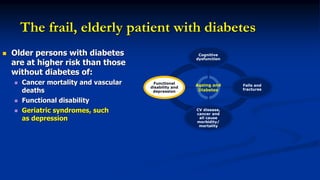
The frail, elderly patient with diabetes
 Older persons with diabetes
are at higher risk than those
without diabetes of:
 Cancer mortality and vascular
deaths
 Functional disability
 Geriatric syndromes, such
as depression
Ageing and
Diabetes
Cognitive
dysfunction
Falls and
fractures
Functional
disability and
depression
The presence of diabetes doubles the odds of
comorbid depression
Anderson RJ, et al. Diabetes Care. 2001;24(6):1069-78.
CV disease,
cancer and
all cause
morbidity/
mortality
Cognitive dysfunction should be added to the list of the complications of diabetes,
along with retinopathy, neuropathy, nephropathy and cardiovascular disease.
The frail, elderly patient with diabetes
 Older persons with diabetes
are at higher risk than those
without diabetes of:
 Cancer mortality and vascular
deaths
 Functional disability
 Geriatric syndromes:
depression
 Geriatric syndromes: cognitive
impairment
Ageing and
Diabetes
Cognitive
dysfunction
Falls and
fractures
Functional
disability and
depression
Cukierman T, et al. Diabetologia. 2005;48(12):2460-9.
CV disease,
cancer and
all cause
morbidity/
mortality
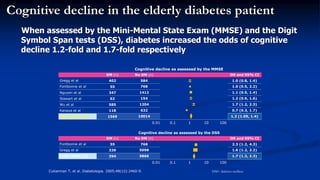
Cognitive decline in the elderly diabetes patient
When assessed by the Mini-Mental State Exam (MMSE) and the Digit
Symbol Span tests (DSS), diabetes increased the odds of cognitive
decline 1.2-fold and 1.7-fold respectively
Cognitive decline as assessed by the MMSE
DM (n) No DM (n) OR and 95% CI
Gregg et al 402 584 1.0 (0.8, 1.4)
Fontbonne et al 55 768 1.0 (0.5, 2.2)
Nguyen et al 347 1412 1.1 (0.9, 1.4)
Stewart et al 62 154 1.2 (0.9, 1.6)
Wu et al 585 1204 1.7 (1.2, 2.3)
Kanaya et al 118 632 0.7 (0.3, 1.7)
Total (95% CI) 1569 10014 1.2 (1.05, 1.4)
Cognitive decline as assessed by the DSS
DM (n) No DM (n) OR and 95% CI
Fontbonne et al 55 768 2.3 (1.2, 4.3)
Gregg et al 339 5098 1.6 (1.2, 2.2)
Total (95% CI) 394 5866 1.7 (1.3, 2.3)
0.01 0.1 10 1001
0.01 0.1 10 1001
Cukierman T, et al. Diabetologia. 2005;48(12):2460-9. DM= diabetes mellitus
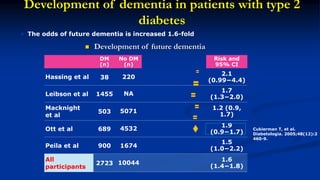
DM
(n)
No DM
(n)
Risk and
95% CI
Hassing et al 38 220
2.1
(0.99−4.4)
Leibson et al 1455 NA
1.7
(1.3−2.0)
Macknight
et al
503 5071
1.2 (0.9,
1.7)
Ott et al 689 4532
1.9
(0.9−1.7)
Peila et al 900 1674
1.5
(1.0−2.2)
All
participants
2723 10044
1.6
(1.4−1.8)
0.01 0.1 1 10 100
Development of dementia in patients with type 2
diabetes
 Development of future dementia
 The odds of future dementia is increased 1.6-fold
Cukierman T, et al.
Diabetologia. 2005;48(12):2
460-9.
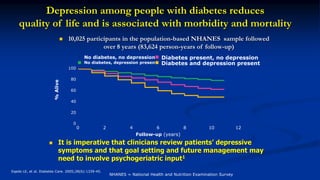
 10,025 participants in the population-based NHANES sample followed
over 8 years (83,624 person-years of follow-up)
%Alive
60 12
0
100
60
40
Follow-up (years)
82
20
No diabetes, no depression Diabetes present, no depression
104
80
No diabetes, depression present Diabetes and depression present
Eqede LE, et al. Diabetes Care. 2005;28(6):1339-45.
NHANES = National Health and Nutrition Examination Survey
Depression among people with diabetes reduces
quality of life and is associated with morbidity and mortality
 It is imperative that clinicians review patients’ depressive
symptoms and that goal setting and future management may
need to involve psychogeriatric input1
Management and treatment
considerations in the elderly patient
with type 2 diabetes
1. Sinclair AJ. Diabetes Spectrum. 2006;19(4):229-33;
2. Inzucchi SE, et al. Diabetes Care. 2012;55(56):1577-96.
Treatment priority of the elderly: prevention of hypoglycaemia
 The risks of tight glycaemic control may exceed the benefits in many
elderly patients1
 In elderly patients, who are frail and may have comorbidities limiting ability to self-
management, tight glycaemic control is unlikely to benefit...
 … and hypoglycaemia is associated with a wide variety of disabling consequences,
including amputation, peripheral neuropathy, immobility, falls, stroke, and cognitive
change.
 The frequency of hypoglycaemia is high and is exacerbated by older people having
little knowledge about the signs and symptoms of hypoglycaemia.
 The goal of minimising symptomatic hypoglycaemia, short-term geriatric syndromes
and maximising quality of life should be the primary factors in individualising
glycaemic targets
 Glycemic targets for elderly with long-standing or more complicated
disease should be less ambitious than for the younger, healthier
individuals2
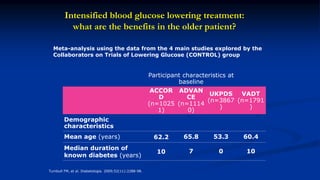
 Apart from the UKPDS, these large studies (intensive vs
standard treatment) were conducted in patients >60 years old
and with a long history of diabetes (9 years)
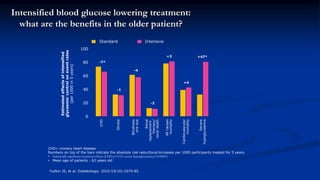
Intensified blood glucose lowering treatment:
what are the benefits in the older patient?
Participant characteristics at
baseline
ACCOR
D
(n=1025
1)
ADVAN
CE
(n=1114
0)
UKPDS
(n=3867
)
VADT
(n=1791
)
Demographic
characteristics
Mean age (years) 62.2 65.8 53.3 60.4
Median duration of
known diabetes (years)
10 7 0 10
Turnbull FM, et al. Diabetologia. 2009;52(11):2288-98.
Meta-analysis using the data from the 4 main studies explored by the
Collaborators on Trials of Lowering Glucose (CONTROL) group
Intensified blood glucose lowering treatment:
what are the benefits in the older patient?
Standard Intensive
Estimatedeffectsofintensified
glycaemiccontroloneventrates
(per1000in5years)
20
100
60
80
40
0
CHD
Stroke
Blindness
oneeye
Renal
replacement
therapy/
renaldeath
Allcauses
mortality
Cardiovascular
mortality
Severe
hypoglycaemia
-7*
-1
-4
-2
+3
+4
+47*
CHD= cronary heart disease
Numbers on top of the bars indicate the absolute risk reductions/increases per 1000 participants treated for 5 years.
• Statistically significant treatment effects (CHD p=0.03; severe hypoglycaemia p<0.00001)
• Mean age of patients : 62 years old
Yudkin JS, et al. Diabetologia. 2010;53(10):2079-85.
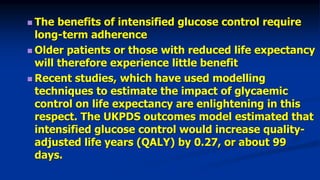
 The benefits of intensified glucose control require
long-term adherence
 Older patients or those with reduced life expectancy
will therefore experience little benefit
 Recent studies, which have used modelling
techniques to estimate the impact of glycaemic
control on life expectancy are enlightening in this
respect. The UKPDS outcomes model estimated that
intensified glucose control would increase quality-
adjusted life years (QALY) by 0.27, or about 99
days.
Treatment priority of the elderly: prevention
of hypoglycaemia
 The elderly patient with diabetes is often a frail patient1
 Elderly people with diabetes are also at higher risk for
hypoglycaemia and hypoglycaemia unawareness1,2
 Hypoglycaemia is associated with many adverse
consequences1
 The available data suggest that the risks of tight glycaemic
control (and the greatest risk is hypoglycaemia) exceed the
benefits in many elderly patients1
1. Sinclair A. Diabetes Spectrum. 2006;19(4):229-33.
2. ADA Diabetes Care;2012:35(1):S11-S63
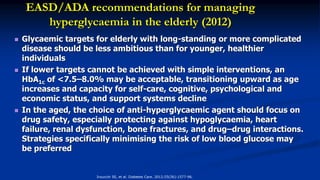
EASD/ADA recommendations for managing
hyperglycaemia in the elderly (2012)
 Glycaemic targets for elderly with long-standing or more complicated
disease should be less ambitious than for younger, healthier
individuals
 If lower targets cannot be achieved with simple interventions, an
HbA1c of <7.5–8.0% may be acceptable, transitioning upward as age
increases and capacity for self-care, cognitive, psychological and
economic status, and support systems decline
 In the aged, the choice of anti-hyperglycaemic agent should focus on
drug safety, especially protecting against hypoglycaemia, heart
failure, renal dysfunction, bone fractures, and drug–drug interactions.
Strategies specifically minimising the risk of low blood glucose may
be preferred
Inzucchi SE, et al. Diabetes Care. 2012;55(56):1577-96.
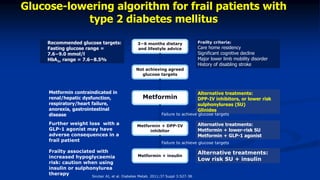
Glucose-lowering algorithm for frail patients with
type 2 diabetes mellitus
Sinclair AJ, et al. Diabetes Metab. 2011;37 Suppl 3:S27-38.
3−6 months dietary
and lifestyle advice
Not achieving agreed
glucose targets
Metformin
Metformin + DPP-IV
inhibitor
Metformin + insulin
Metformin contraindicated in
renal/hepatic dysfunction,
respiratory/heart failure,
anorexia, gastrointestinal
disease
Alternative treatments:
DPP-IV inhibitors, or lower risk
sulphonylureas (SU)
Glinides
Further weight loss with a
GLP-1 agonist may have
adverse consequences in a
frail patient
Alternative treatments:
Metformin + lower-risk SU
Metformin + GLP-1 agonist
Frailty associated with
increased hypoglycaemia
risk: caution when using
insulin or sulphonylurea
therapy
Alternative treatments:
Low risk SU + insulin
Failure to achieve glucose targets
Frailty criteria:
Care home residency
Significant cognitive decline
Major lower limb mobility disorder
History of disabling stroke
Recommended glucose targets:
Fasting glucose range =
7.6−9.0 mmol/l
HbA1c range = 7.6−8.5%
guidelines.diabetes.ca | 1-800-BANTING (226-8464) | diabetes.ca
Copyright © 2013 Canadian Diabetes Association
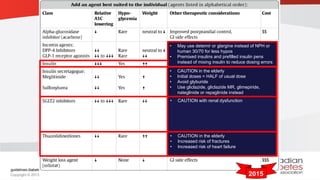
• CAUTION in the elderly
• Initial doses = HALF of usual dose
• Avoid glyburide
• Use gliclazide, gliclazide MR, glimepiride,
nateglinide or repaglinide instead
• CAUTION in the elderly
• Increased risk of fractures
• Increased risk of heart failure
• May use detemir or glargine instead of NPH or
human 30/70 for less hypos
• Premixed insulins and prefilled insulin pens
instead of mixing insulin to reduce dosing errors
• CAUTION with renal dysfunction
2015
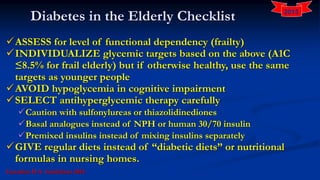
Diabetes in the Elderly Checklist
ASSESS for level of functional dependency (frailty)
INDIVIDUALIZE glycemic targets based on the above (A1C
≤8.5% for frail elderly) but if otherwise healthy, use the same
targets as younger people
AVOID hypoglycemia in cognitive impairment
SELECT antihyperglycemic therapy carefully
Caution with sulfonylureas or thiazolidinediones
Basal analogues instead of NPH or human 30/70 insulin
Premixed insulins instead of mixing insulins separately
GIVE regular diets instead of “diabetic diets” or nutritional
formulas in nursing homes.
Canadian D A Guidelines 2015
2015
In the frail elderly, while avoiding symptomatic
hyperglycemia, glycemic targets should be an A1C of
≤8.5% and FPG or pre-prandial PG of
5.0-12.0 mmol/L, depending on the level of frailty.
In elderly people with cognitive impairment, strategies
should be employed to strictly avoid hypoglycemia,
which include the choice of antihyperglycemic
therapy and less stringent A1C target [Grade D, Consensus].
Elderly people with type 2 diabetes should perform
aerobic exercise and/or resistance training, if not
contraindicated, to improve glycemic control [Grade B,
Summary and conclusions
 Advancing age is a risk factor for the development of diabetes1
 Elderly onset diabetes should be diagnosed as early as possible in
accordance with national guidelines to avoid the progression of
vascular complications, retinopathy and renal impairment2
 Hypoglycaemia is a danger in elderly diabetes patients due to a
higher level of hypoglycaemic unawareness and medication
combinations in this population3
 The presence of comorbidities presents unique challenges for the
management of elderly type 2 diabetes patients3
 Cognitive dysfunction, depression, risk of falls, frailty and other
morbidities need to be addressed as part of comprehensive care3
1. Cowie C et al. Diabetes Care. 2010;33:562-68; 2. Sinclair et al. Diabetes & Metabolism. 2011;37:S27-S38;
3. Sinclair A. Diabetes Spectrum. 2006;19(4):229-33
Thank you

Ueda2016 workshop - diabetes in the elderly - mesbah kamel

  • 1.
    Diabetes in theElderly A REAL PRACTICAL CHALELENGE MESBAH SAYED KAMEL MD
  • 2.
  • 3.
    AGENDA  Impact ofdiabetes in the elderly patient  Factors specific to the management of diabetes in the elderly:  Screening and diagnosis .  Specific complications of type 2 diabetes in the elderly: Risk of hypoglycaemic episodes Functional disability Depression, cognitive impairment and other geriatric syndromes, such as fractures and falls. How to adapt management and treatment goals in the elderly patient with type 2 diabetes.
  • 4.
    Adapted from http://www.indexmundi.com/egypt/demographics_profile.html, https://www.cia.gov/library/publications/the-world-factbook/geos/eg.html , http://en.worldstat.info/World accessed 22-2-2014
  • 5.
    2013 ≥60 Years ≤60 Years InternationalDiabetes Federation. Managing Older People with Type 2 Diabetes Global Guidelines. http://www.idf.org/sites/default/files/IDF%20Guideline%20for%20Older%20People.pdf accessed 15-12-2013 2050 ≥60 Years ≤60 Years These changes present significant challenges to welfare, pension, and healthcare systems in both developing and developed nations
  • 6.
     Diabetes-related complicationsare the major causes of morbidity, disability and mortality in older patients with type 2 diabetes:  There is now overwhelming evidence that the level and duration of glycemia influences the development of diabetes-related complications Sinclair 2004. Clinical guidelines for type 2 diabetes mellitus. EDWOP 2004 Microvascular: Neuropathy,Retinopathy,Nephropathy Macrovascular: Cardiovascular disease, Stroke
  • 7.
    • Advanced age •Recent hospitalization • Intercurrent illness • Chronic liver, renal or cardiovascular disease • Endocrine deficiency (thyroid, adrenal, pituitary) • Loss of normal counter- regulation • Hypoglycaemic unawareness SU=sulfonylurea. Adapted from Chelliah A, Burge MR. Drugs Aging. 2004; 21: 511–530. I. Patient risk factors • Poor nutrition or fasting • Prolonged physical exercise • Alcohol (ethanol) • Use of SU and / or insulin • Drug interactions with SUs III. Drug risk factors II. Lifestyle risk factors
  • 8.
    T2DM=type 2 diabetesmellitus. Greco D, et al. Exp Clin Endocrinol Diabetes. 2010; 118: 215–219. Decompensated diabetes 39% Intercurrent illness 14% Acute cardiovascular events 13% Chronic complications of diabetes 17% Severe hypoglycaemia 17%
  • 9.
    Prevalence of diabetesis strongly influenced by increasing age  Around 18% of people >65 years have diabetes Diagnosed diabetes (%) Combined age-group (years) ≥20 7.8 (7.0−8.6) ≥65 17.7 (15.6−19.7) Age-specific groups (years) 20−39 1.9 (1.4−2.4) 40−59 8.1 (6.9−9.4) 60−74 17.6 (15.7−19.5) ≥75 15.2 (12.9−17.6) Adapted from Cowie C, et al. Diabetes Care. 2010;33:562-68. Prevalence increases with age and peaks at age 60–74 years, falling slightly in older ages (≥75) Crude prevalence of diagnosed diabetes by age: NHANES (National Health and Nutrition Examination Survey) 2003-2006 (n=13094), US
  • 10.
    Age at diagnosis The peak age at diagnosis is between 40 and 55, with a sharp decline after age 65. Among elderly patients with diagnosed diabetes, the majority of diabetes is diagnosed in middle-age (aged 40-64 years) and a minority diagnosed at age ≥65 years. 1. Selvin E, et al. Diabetes Care. 2006;29:2415-19. 2. Adapted from IDF Diabetes Atlas. 2011; Fifth Edition Age (years) Prevalence (%) of people with diabetes by age and sex 2011 Female Male 0 15 10 5 605550454035302520 65 70 75 20
  • 11.
  • 12.
    Recommendations for screeningand diagnosis in the elderly  Clinical presentation of diabetes in old age is often asymptomatic and non-specific and clinical diagnosis may be delayed  In general, screening for and diagnosis of diabetes in older subjects should be in accordance with published international/national criteria and guidelines, and no age modified criteria are currently recognised  The prevalence and incidence rates of diabetes mellitus in elderly subjects (>65 years) may be underestimated when using only fasting plasma glucose. Sinclair A, et al. Diabetes & Metabolism. 2011;37:S27-S38.
  • 13.
     The presenceof isolated post-challenge hyperglycaemia (IPH) is common in older subjects and should alert the clinician to screen for cardiovascular disease and institute risk intervention strategies to minimise premature death.  In high-risk older subjects with a normal fasting glucose, and where an OGTT is not feasible, determination of HbA1c may be helpful in the diagnosis of diabetes. A value of HbA1c >6.5% may indicate the likely presence of diabetes
  • 14.
    Managing type 2diabetes in the elderly Special considerations  Clinicians who manage older people with diabetes require special skills if they wish to provide high- quality care  Their approach is influenced by a multitude of factors, such as the higher frequency of medical comorbidities, frailty and socioeconomic issues  Comprehensive geriatric assessment is a potentially important tool in ensuring that patients with diabetes receive a multi-professional assessment of their functional status and unmet needs.Sinclair A. Diabetes Spectrum. 2006;19(4):229-33.
  • 15.
    Management goals inthe elderly  The overall goals of diabetes management in older adults are similar to those in younger adults and include management of both hyperglycaemia and risk factors1  However, in frail, elderly patients with diabetes, avoidance of hypoglycaemia, hypotension, and drug interactions due to poly-pharmacy are of even greater concern than in younger patients with diabetes1,2.  In addition, management of coexisting medical conditions is important because it influences their ability to perform self-management2 1.Brown AF, 2003; 51(5):S265-286. 2.Sinclair A. Diabetes Spectrum. 2006;19(4):229-33.
  • 16.
    Major aims inmanaging older adults with diabetes 1. Sinclair AJ. Diabetes Spectrum. 2006;19(4):229-33; 2. Inzucchi SE, et al. Diabetes Care. 2012;55(56):1577-96. Medical1 Patient oriented1  Freedom from hyperglycaemic symptoms  Prevention of undesirable weight loss  Avoidance of hypoglycaemia and other adverse drug reactions  Estimation of cardiovascular risk as part of screening for and preventing vascular complications  Detection of cognitive impairment and depression and functional disabilities at an early stage  Achievement of a normal life expectancy for patients where possible  Protect against heart failure, renal dysfunctions , bone fractures and drug-drug interactions2 Maintenance of general well- being and good quality of life Acquisition of skills and knowledge to adapt to lifestyle changes Encouragement of diabetes self-care
  • 17.
    Rationale for high-qualitydiabetes care in the elderly Recommendations: Screening and early diagnosis may prevent progression of undetected vascular complications Overall improved metabolic control will reduce cardiovascular risk Improved screening for maculopathy and cataracts will reduce visual impairment and blind registrations An integrated approach to management of peripheral vascular disease and foot disorders will reduce amputation rate Sinclair A, et al. Diabetes & Metabolism. 2011;37:S27-S38.
  • 18.
    Associated problems affectingmanagement in the elderly…  Poor Hepatic Glycogen Reserve: Decreased stores related to poor nutrition and decreased appetite.  Cataract: Both age and DM contribute to its causation  Neuropathy: Autonomic neuropathy (postural hypotension, constipation, etc.)  Neuropathy, atherosclerosis of peripheral vessels and poor vision makes elderly more prone to foot problems and contribute to sexual impotence in a large number of elderly diabetics.
  • 19.
    Managing the frail,elderly patient with type 2 diabetes
  • 20.
    Complications of type2 diabetes in the elderly  Hypoglycaemia  Cardiovascular  Microvascular (retinopathy/nephropathy)  Cognitive (dementia)  Depression  Falls and fractures  Peripheral neuropathy
  • 21.
    The frail, elderlypatient with diabetes  Older persons with diabetes are at higher risk than those without diabetes of:  Vascular death and cancer mortality1  Functional disability2  Geriatric syndromes:  Depression2  Cognitive impairment2  Other geriatric syndromes2  Severe hypoglycaemia2 (when treated with sulphonylureas or insulin)  Elderly patients with diabetes are at higher risk for hypoglycaemia and also lack of awareness about hypoglycaemia compared to younger patients2 Ageing and Diabetes Cognitive dysfunction CV disease, cancer and all cause morbidity/ mortality Falls and fractures Functional disability and depression 1. Emerging Risk Factors Collaboration, et al. N Engl J Med. 2011;364(9):829-41. 2. Sinclair A. Diabetes Spectrum. 2006;19:229-33.
  • 22.
    Hypoglycaemia is arisk marker of frailty  The relationship between hypoglycaemia and geriatric comorbidities Hypoglycaemia is accompanied by many adverse consequences for which elderly patients are already at an increased risk Hypoglycaemia Falls and fractures Functional disability and depression Cognitive dysfunction CV disease, cancer and all cause morbidity/ mortality 1. Sinclair A. Diabetes Spectrum. 2006;19(4):229-33. 2. Emerging Risk Factors Collaboration, et al. N Med. 2011;364(9):829-41.
  • 23.
    Ageing increases therisk of (sulphonylurea- or insulin-induced) hypoglycaemia Incremental increase in baseline age was associated with increased risk for severe hypoglycaemia, both for patients following intensive or standard treatment strategies Annual incidence of hypoglycaemia requiring medical assistance (%) Subgroup Intensive glycaemia control Standard glycaemia control Overall 2.80 0.90 Age (years) <65 2.38 0.80 65−69 3.04 1.00 70−74 4.25 1.39 ≥75 5.27 1.39 Miller ME, et al. BMJ. 2010;340:b5444. doi: 10.1136/bmj.b5444.
  • 24.
    Ageing increases therisk of (sulphonyl urea or insulin-induced) hypoglycaemia Hazard ratios from model predicting hypoglycaemia requiring medical assistance Hazard ratio (95% CI) P value Effects for both intensive arm participants and standard arm participants Age (per 1 year increase) 1.03 (1.02 to 1.05) <0.0001 Each one year increment in baseline age was associated with a 3% increase in the risk for severe hypoglycaemia Miller ME, et al. BMJ. 2010;340:b5444. doi: 10.1136/bmj.b5444.
  • 25.
    Why is theelderly diabetic patient at high risk of hypoglycaemia?  Defective Counter-regulation or perception of symptoms 1.The effects of ageing on the responses to hypoglycaemia1 2.The effects of type 2 diabetes on the responses to hypoglycaemia2 3.The effects of type 2 diabetes and ageing on the counter-regulatory responses to hypoglycaemia3 1. Meneilly GS, et al. J Clin Endocrinol Metab. 1994;78(6):1341-8; 2. Bolli GB. et al. J Clin Invest. 1984;73(6):1532-41; 3. Bremer JP, et al. Diabetes Care. 2009;32(8):1513-7.
  • 26.
    Older Patients haveLess Perception of Hypoglycemia Bremer JP et al. Diabetes Care. 2009; 32 (8):1513-17 12 14 10 8 6 4 2 0 Autonomic symptoms Baseline Hypo Recovery ** 12 10 8 6 4 2 0 Neuroglycopenic symptoms Baseline Hypo Recovery * Middle-aged (39- 64 years) Older (≥65 years) • 1-Attention to hypoglycemic symptoms may be reduced by depression, cognitive dysfunction or other chronic conditions.  2-Many elderly patients have limited knowledge about the symptoms of hypoglycemia: knowledge of diabetes is essential for symptom recognition. WHY?????
  • 27.
    1. The effectsof ageing on the responses to hypoglycaemia:  There is defective perception of symptoms in the elderly 1 2. The effects of type 2 diabetes on the responses to hypoglycaemia:  Glucose counter-regulatory mechanisms may be abnormal in patients with Typ2 DM: impaired glucagon, growth hormone, cortisol, and perhaps epinephrine responses during hypoglycaemia could all contribute to a lack of compensatory increase in glucose production2 3. The effects of type 2 diabetes and ageing on the counter-regulatory responses to hypoglycaemia:  Impaired perception of hypoglycemia in older type 2 diabetes patients3 The elderly patient with diabetes is at high risk of hypoglycemia 1. Meneilly GS, et al. J Clin Endocrinol Metab. 1994;78(6):1341-8; 2. Bolli GB. J Clin Invest. 1984;73(6):1532-41; 3. Bremer JP, et al. Diabetes Care. 2009;32(8):1513-7.
  • 28.
    Older patients with diabetes havehigher rates of various comorbidities such as hypertension, coronary heart disease, and stroke than those without diabetes Older adults with diabetes are at greater risk than other older adults for premature death, functional disability, and several common geriatric syndromes, such as polypharmacy, depression, cognitive impairment, or falls The frail, elderly patient with diabetes Ageing and Diabetes Cognitive dysfunction CV disease, cancer and all cause morbidity/ mortality Falls and fractures Functional disability and depression Sinclair A. Diabetes Spectrum. 2006;19:229-33. Emerging Risk Factors Collaboration, et al. N Engl J Med. 2011;364(9):829-41.
  • 29.
    Older individuals withdiabetes are at higher risk of cancer, mortality and vascular death than those without diabetes  Cancer deaths (+23%,) and vascular deaths (+67%) (the most common causes of deaths in the elderly) Emerging Risk Factors Collaboration, et al. N Engl J Med. 2011;364(9):829-41 (supplemental material). Age at survey Cancer deaths HR (95% CI) Interaction p-value Vascular deaths HR (95% CI) p-value 40−59 60−69 70+ 1.51 (1.32, 1.72) 1.27 (1.11, 1.45) 1.23 (1.07, 1.41) 0.6208 3.03 (2.59, 3.55) 2.18 (1.88, 2.53) 1.67 (1.41, 1.97) 0.0002 .5 1 2 4.5 1 2 4 Hazard ratios (diabetes vs. non-diabetes) Hazard ratios (diabetes vs. non-diabetes)
  • 30.
    The frail, elderlypatient with diabetes  Older persons with diabetes are at higher risk than those without diabetes of:  Cancer mortality and vascular deaths  Functional disability Older adults with diabetes have greater difficulty walking, climbing stairs, doing housework ..., compared with their counterparts without diabetes Ageing and Diabetes Cognitive dysfunction CV disease, cancer and all cause morbidity/ mortality Falls and fractures Functional disability and depression This excess disability in patients with diabetes was largely due to comorbidities, whereas poor glycaemic control (A1C ≥ 8%) alone only accounted for <10% Kalyani RR, et al. Diabetes Care. 2010;33(5):1055-60.
  • 31.
    The frail, elderlypatient with diabetes  Older persons with diabetes are at higher risk than those without diabetes of:  Cancer mortality and vascular deaths  Functional disability  Geriatric syndromes, such as depression Ageing and Diabetes Cognitive dysfunction Falls and fractures Functional disability and depression The presence of diabetes doubles the odds of comorbid depression Anderson RJ, et al. Diabetes Care. 2001;24(6):1069-78. CV disease, cancer and all cause morbidity/ mortality
  • 32.
    Cognitive dysfunction shouldbe added to the list of the complications of diabetes, along with retinopathy, neuropathy, nephropathy and cardiovascular disease. The frail, elderly patient with diabetes  Older persons with diabetes are at higher risk than those without diabetes of:  Cancer mortality and vascular deaths  Functional disability  Geriatric syndromes: depression  Geriatric syndromes: cognitive impairment Ageing and Diabetes Cognitive dysfunction Falls and fractures Functional disability and depression Cukierman T, et al. Diabetologia. 2005;48(12):2460-9. CV disease, cancer and all cause morbidity/ mortality
  • 33.
    Cognitive decline inthe elderly diabetes patient When assessed by the Mini-Mental State Exam (MMSE) and the Digit Symbol Span tests (DSS), diabetes increased the odds of cognitive decline 1.2-fold and 1.7-fold respectively Cognitive decline as assessed by the MMSE DM (n) No DM (n) OR and 95% CI Gregg et al 402 584 1.0 (0.8, 1.4) Fontbonne et al 55 768 1.0 (0.5, 2.2) Nguyen et al 347 1412 1.1 (0.9, 1.4) Stewart et al 62 154 1.2 (0.9, 1.6) Wu et al 585 1204 1.7 (1.2, 2.3) Kanaya et al 118 632 0.7 (0.3, 1.7) Total (95% CI) 1569 10014 1.2 (1.05, 1.4) Cognitive decline as assessed by the DSS DM (n) No DM (n) OR and 95% CI Fontbonne et al 55 768 2.3 (1.2, 4.3) Gregg et al 339 5098 1.6 (1.2, 2.2) Total (95% CI) 394 5866 1.7 (1.3, 2.3) 0.01 0.1 10 1001 0.01 0.1 10 1001 Cukierman T, et al. Diabetologia. 2005;48(12):2460-9. DM= diabetes mellitus
  • 34.
    DM (n) No DM (n) Risk and 95%CI Hassing et al 38 220 2.1 (0.99−4.4) Leibson et al 1455 NA 1.7 (1.3−2.0) Macknight et al 503 5071 1.2 (0.9, 1.7) Ott et al 689 4532 1.9 (0.9−1.7) Peila et al 900 1674 1.5 (1.0−2.2) All participants 2723 10044 1.6 (1.4−1.8) 0.01 0.1 1 10 100 Development of dementia in patients with type 2 diabetes  Development of future dementia  The odds of future dementia is increased 1.6-fold Cukierman T, et al. Diabetologia. 2005;48(12):2 460-9.
  • 35.
     10,025 participantsin the population-based NHANES sample followed over 8 years (83,624 person-years of follow-up) %Alive 60 12 0 100 60 40 Follow-up (years) 82 20 No diabetes, no depression Diabetes present, no depression 104 80 No diabetes, depression present Diabetes and depression present Eqede LE, et al. Diabetes Care. 2005;28(6):1339-45. NHANES = National Health and Nutrition Examination Survey Depression among people with diabetes reduces quality of life and is associated with morbidity and mortality  It is imperative that clinicians review patients’ depressive symptoms and that goal setting and future management may need to involve psychogeriatric input1
  • 36.
    Management and treatment considerationsin the elderly patient with type 2 diabetes
  • 37.
    1. Sinclair AJ.Diabetes Spectrum. 2006;19(4):229-33; 2. Inzucchi SE, et al. Diabetes Care. 2012;55(56):1577-96. Treatment priority of the elderly: prevention of hypoglycaemia  The risks of tight glycaemic control may exceed the benefits in many elderly patients1  In elderly patients, who are frail and may have comorbidities limiting ability to self- management, tight glycaemic control is unlikely to benefit...  … and hypoglycaemia is associated with a wide variety of disabling consequences, including amputation, peripheral neuropathy, immobility, falls, stroke, and cognitive change.  The frequency of hypoglycaemia is high and is exacerbated by older people having little knowledge about the signs and symptoms of hypoglycaemia.  The goal of minimising symptomatic hypoglycaemia, short-term geriatric syndromes and maximising quality of life should be the primary factors in individualising glycaemic targets  Glycemic targets for elderly with long-standing or more complicated disease should be less ambitious than for the younger, healthier individuals2
  • 38.
     Apart fromthe UKPDS, these large studies (intensive vs standard treatment) were conducted in patients >60 years old and with a long history of diabetes (9 years) Intensified blood glucose lowering treatment: what are the benefits in the older patient? Participant characteristics at baseline ACCOR D (n=1025 1) ADVAN CE (n=1114 0) UKPDS (n=3867 ) VADT (n=1791 ) Demographic characteristics Mean age (years) 62.2 65.8 53.3 60.4 Median duration of known diabetes (years) 10 7 0 10 Turnbull FM, et al. Diabetologia. 2009;52(11):2288-98. Meta-analysis using the data from the 4 main studies explored by the Collaborators on Trials of Lowering Glucose (CONTROL) group
  • 39.
    Intensified blood glucoselowering treatment: what are the benefits in the older patient? Standard Intensive Estimatedeffectsofintensified glycaemiccontroloneventrates (per1000in5years) 20 100 60 80 40 0 CHD Stroke Blindness oneeye Renal replacement therapy/ renaldeath Allcauses mortality Cardiovascular mortality Severe hypoglycaemia -7* -1 -4 -2 +3 +4 +47* CHD= cronary heart disease Numbers on top of the bars indicate the absolute risk reductions/increases per 1000 participants treated for 5 years. • Statistically significant treatment effects (CHD p=0.03; severe hypoglycaemia p<0.00001) • Mean age of patients : 62 years old Yudkin JS, et al. Diabetologia. 2010;53(10):2079-85.
  • 40.
     The benefitsof intensified glucose control require long-term adherence  Older patients or those with reduced life expectancy will therefore experience little benefit  Recent studies, which have used modelling techniques to estimate the impact of glycaemic control on life expectancy are enlightening in this respect. The UKPDS outcomes model estimated that intensified glucose control would increase quality- adjusted life years (QALY) by 0.27, or about 99 days.
  • 41.
    Treatment priority ofthe elderly: prevention of hypoglycaemia  The elderly patient with diabetes is often a frail patient1  Elderly people with diabetes are also at higher risk for hypoglycaemia and hypoglycaemia unawareness1,2  Hypoglycaemia is associated with many adverse consequences1  The available data suggest that the risks of tight glycaemic control (and the greatest risk is hypoglycaemia) exceed the benefits in many elderly patients1 1. Sinclair A. Diabetes Spectrum. 2006;19(4):229-33. 2. ADA Diabetes Care;2012:35(1):S11-S63
  • 42.
    EASD/ADA recommendations formanaging hyperglycaemia in the elderly (2012)  Glycaemic targets for elderly with long-standing or more complicated disease should be less ambitious than for younger, healthier individuals  If lower targets cannot be achieved with simple interventions, an HbA1c of <7.5–8.0% may be acceptable, transitioning upward as age increases and capacity for self-care, cognitive, psychological and economic status, and support systems decline  In the aged, the choice of anti-hyperglycaemic agent should focus on drug safety, especially protecting against hypoglycaemia, heart failure, renal dysfunction, bone fractures, and drug–drug interactions. Strategies specifically minimising the risk of low blood glucose may be preferred Inzucchi SE, et al. Diabetes Care. 2012;55(56):1577-96.
  • 43.
    Glucose-lowering algorithm forfrail patients with type 2 diabetes mellitus Sinclair AJ, et al. Diabetes Metab. 2011;37 Suppl 3:S27-38. 3−6 months dietary and lifestyle advice Not achieving agreed glucose targets Metformin Metformin + DPP-IV inhibitor Metformin + insulin Metformin contraindicated in renal/hepatic dysfunction, respiratory/heart failure, anorexia, gastrointestinal disease Alternative treatments: DPP-IV inhibitors, or lower risk sulphonylureas (SU) Glinides Further weight loss with a GLP-1 agonist may have adverse consequences in a frail patient Alternative treatments: Metformin + lower-risk SU Metformin + GLP-1 agonist Frailty associated with increased hypoglycaemia risk: caution when using insulin or sulphonylurea therapy Alternative treatments: Low risk SU + insulin Failure to achieve glucose targets Failure to achieve glucose targets Frailty criteria: Care home residency Significant cognitive decline Major lower limb mobility disorder History of disabling stroke Recommended glucose targets: Fasting glucose range = 7.6−9.0 mmol/l HbA1c range = 7.6−8.5%
  • 44.
    guidelines.diabetes.ca | 1-800-BANTING(226-8464) | diabetes.ca Copyright © 2013 Canadian Diabetes Association • CAUTION in the elderly • Initial doses = HALF of usual dose • Avoid glyburide • Use gliclazide, gliclazide MR, glimepiride, nateglinide or repaglinide instead • CAUTION in the elderly • Increased risk of fractures • Increased risk of heart failure • May use detemir or glargine instead of NPH or human 30/70 for less hypos • Premixed insulins and prefilled insulin pens instead of mixing insulin to reduce dosing errors • CAUTION with renal dysfunction 2015
  • 45.
    Diabetes in theElderly Checklist ASSESS for level of functional dependency (frailty) INDIVIDUALIZE glycemic targets based on the above (A1C ≤8.5% for frail elderly) but if otherwise healthy, use the same targets as younger people AVOID hypoglycemia in cognitive impairment SELECT antihyperglycemic therapy carefully Caution with sulfonylureas or thiazolidinediones Basal analogues instead of NPH or human 30/70 insulin Premixed insulins instead of mixing insulins separately GIVE regular diets instead of “diabetic diets” or nutritional formulas in nursing homes. Canadian D A Guidelines 2015 2015
  • 46.
    In the frailelderly, while avoiding symptomatic hyperglycemia, glycemic targets should be an A1C of ≤8.5% and FPG or pre-prandial PG of 5.0-12.0 mmol/L, depending on the level of frailty. In elderly people with cognitive impairment, strategies should be employed to strictly avoid hypoglycemia, which include the choice of antihyperglycemic therapy and less stringent A1C target [Grade D, Consensus]. Elderly people with type 2 diabetes should perform aerobic exercise and/or resistance training, if not contraindicated, to improve glycemic control [Grade B,
  • 47.
    Summary and conclusions Advancing age is a risk factor for the development of diabetes1  Elderly onset diabetes should be diagnosed as early as possible in accordance with national guidelines to avoid the progression of vascular complications, retinopathy and renal impairment2  Hypoglycaemia is a danger in elderly diabetes patients due to a higher level of hypoglycaemic unawareness and medication combinations in this population3  The presence of comorbidities presents unique challenges for the management of elderly type 2 diabetes patients3  Cognitive dysfunction, depression, risk of falls, frailty and other morbidities need to be addressed as part of comprehensive care3 1. Cowie C et al. Diabetes Care. 2010;33:562-68; 2. Sinclair et al. Diabetes & Metabolism. 2011;37:S27-S38; 3. Sinclair A. Diabetes Spectrum. 2006;19(4):229-33
  • 48.