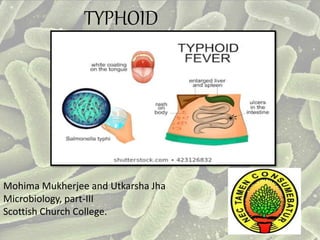
TYPHOID
Mohima Mukherjee and Utkarsha Jha
Microbiology, part-III
Scottish Church College.
About the disease
• The acute illness is characterized by prolonged fever,
headache, nausea, loss of appetite, and constipation or
sometimes diarrhoea.
• clinical severity varies and severe cases may lead to serious
complications or even death.
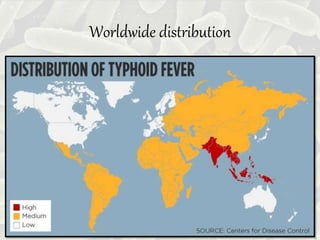
• It occurs predominantly in association with poor sanitation
and lack of clean drinking water
• According to the most recent estimates, between 11 and 21
million cases and 128 000 to 161 000 typhoid-related deaths
occur annually worldwide.
Worldwide distribution
CAUSATIVE ORGANISM
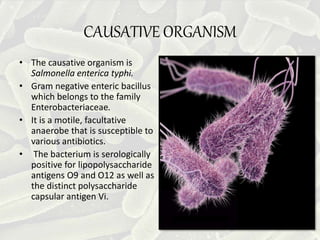
• The causative organism is
Salmonella enterica typhi.
• Gram negative enteric bacillus
which belongs to the family
Enterobacteriaceae.
• It is a motile, facultative
anaerobe that is susceptible to
various antibiotics.
• The bacterium is serologically
positive for lipopolysaccharide
antigens O9 and O12 as well as
the distinct polysaccharide
capsular antigen Vi.
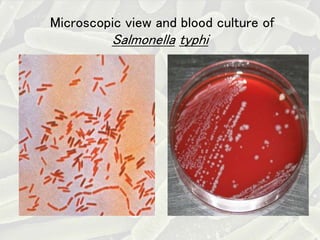
Microscopic view and blood culture of
Salmonella typhi
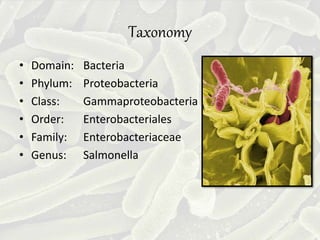
Taxonomy
• Domain: Bacteria
• Phylum: Proteobacteria
• Class: Gammaproteobacteria
• Order: Enterobacteriales
• Family: Enterobacteriaceae
• Genus: Salmonella
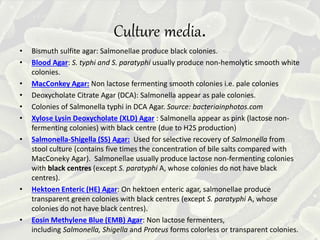
Culture media.
• Bismuth sulfite agar: Salmonellae produce black colonies.
• Blood Agar: S. typhi and S. paratyphi usually produce non-hemolytic smooth white
colonies.
• MacConkey Agar: Non lactose fermenting smooth colonies i.e. pale colonies
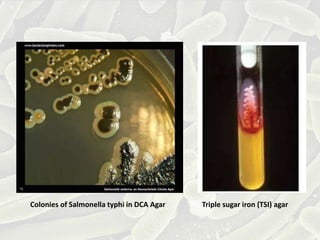
• Deoxycholate Citrate Agar (DCA): Salmonella appear as pale colonies.
• Colonies of Salmonella typhi in DCA Agar. Source: bacteriainphotos.com
• Xylose Lysin Deoxycholate (XLD) Agar : Salmonella appear as pink (lactose non-
fermenting colonies) with black centre (due to H2S production)
• Salmonella-Shigella (SS) Agar: Used for selective recovery of Salmonella from
stool culture (contains five times the concentration of bile salts compared with
MacConeky Agar). Salmonellae usually produce lactose non-fermenting colonies
with black centres (except S. paratyphi A, whose colonies do not have black
centres).
• Hektoen Enteric (HE) Agar: On hektoen enteric agar, salmonellae produce
transparent green colonies with black centres (except S. paratyphi A, whose
colonies do not have black centres).
• Eosin Methylene Blue (EMB) Agar: Non lactose fermenters,
including Salmonella, Shigella and Proteus forms colorless or transparent colonies.
Colonies of Salmonella typhi in DCA Agar Triple sugar iron (TSI) agar
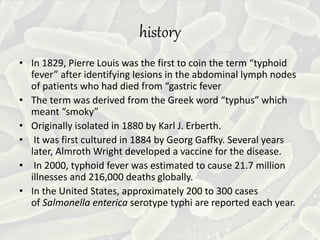
history
• In 1829, Pierre Louis was the first to coin the term “typhoid
fever” after identifying lesions in the abdominal lymph nodes
of patients who had died from “gastric fever
• The term was derived from the Greek word “typhus” which
meant “smoky”
• Originally isolated in 1880 by Karl J. Erberth.
• It was first cultured in 1884 by Georg Gaffky. Several years
later, Almroth Wright developed a vaccine for the disease.
• In 2000, typhoid fever was estimated to cause 21.7 million
illnesses and 216,000 deaths globally.
• In the United States, approximately 200 to 300 cases
of Salmonella enterica serotype typhi are reported each year.
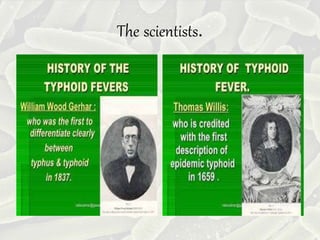
The scientists.
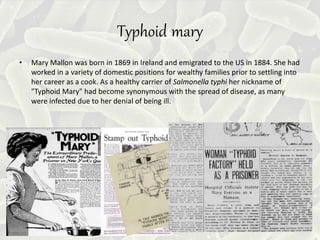
Typhoid mary
• Mary Mallon was born in 1869 in Ireland and emigrated to the US in 1884. She had
worked in a variety of domestic positions for wealthy families prior to settling into
her career as a cook. As a healthy carrier of Salmonella typhi her nickname of
"Typhoid Mary" had become synonymous with the spread of disease, as many
were infected due to her denial of being ill.
Stages of typhoid fever
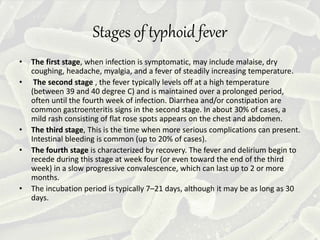
• The first stage, when infection is symptomatic, may include malaise, dry
coughing, headache, myalgia, and a fever of steadily increasing temperature.
• The second stage , the fever typically levels off at a high temperature
(between 39 and 40 degree C) and is maintained over a prolonged period,
often until the fourth week of infection. Diarrhea and/or constipation are
common gastroenteritis signs in the second stage. In about 30% of cases, a
mild rash consisting of flat rose spots appears on the chest and abdomen.
• The third stage, This is the time when more serious complications can present.
Intestinal bleeding is common (up to 20% of cases).
• The fourth stage is characterized by recovery. The fever and delirium begin to
recede during this stage at week four (or even toward the end of the third
week) in a slow progressive convalescence, which can last up to 2 or more
months.
• The incubation period is typically 7–21 days, although it may be as long as 30
days.
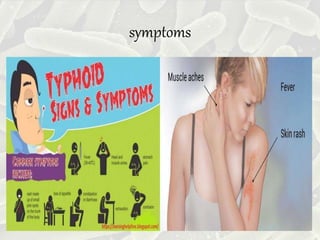
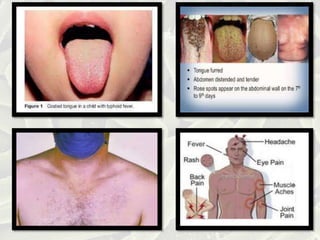
symptoms
types
What is the difference?
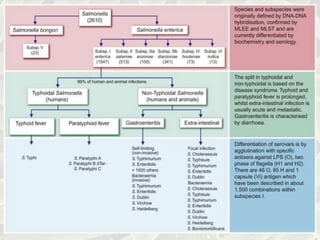
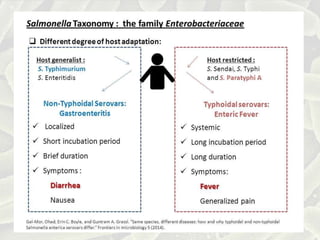
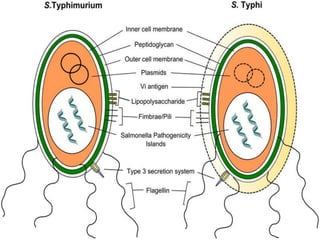
• Salmonella typhi has vi capsular polysaccharide in its
outer layer that is absent in Salmonella typhimurium.
• Typhoid fever is caused by systemic (body-wide)
infection with Salmonella enterica Typhi. In contrast,
infection with the bacterium Salmonella enterica
typhimurium is usually limited to the gut and causes
less serious diarrheal disease.
• One of the differences between [milder]
gastroenteritis and [dangerous] typhoid fever is that
the pathogen causing the latter disease evades
neutrophil chemotaxis.
How is it transmitted?
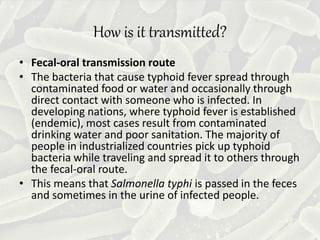
• Fecal-oral transmission route
• The bacteria that cause typhoid fever spread through
contaminated food or water and occasionally through
direct contact with someone who is infected. In
developing nations, where typhoid fever is established
(endemic), most cases result from contaminated
drinking water and poor sanitation. The majority of
people in industrialized countries pick up typhoid
bacteria while traveling and spread it to others through
the fecal-oral route.
• This means that Salmonella typhi is passed in the feces
and sometimes in the urine of infected people.
CARRIER
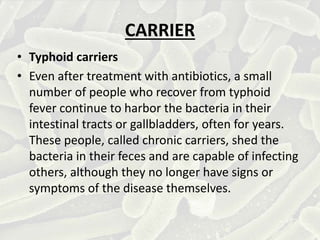
• Typhoid carriers
• Even after treatment with antibiotics, a small
number of people who recover from typhoid
fever continue to harbor the bacteria in their
intestinal tracts or gallbladders, often for years.
These people, called chronic carriers, shed the
bacteria in their feces and are capable of infecting
others, although they no longer have signs or
symptoms of the disease themselves.
how the disease is caused?
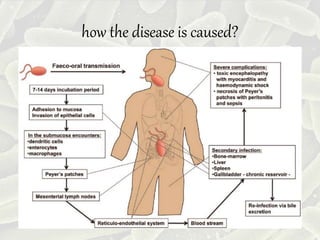
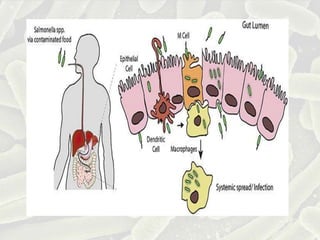
• The bacteria target epithelial cells and microfold cells of the small
intestine in the distal ileum in close proximity to the the Peyer's
patches, which are important lymphoid tissue in the gut.
• Salmonella Typhi employs a type III secretion system to inject
proteins into the host cell, altering its cytoskeletal structure and
inducing the uptake of the bacterium into the cytoplasm of the host
cell.
• Because of the location of infection in the small
intestine, Salmonella Typhi typically invades the Peyer's patches and
thereby accesses the lymphatic system, which ultimately leads to
more widespread dissemination by way of the general circulation.
• Once in circulation, these Salmonellae can target cells in multiple
organ systems. Most importantly, they infect macrophages, in which
they replicate and are able to disseminate throughout the
reticuloendothelial system.
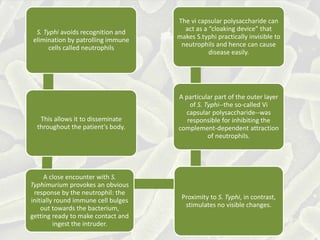
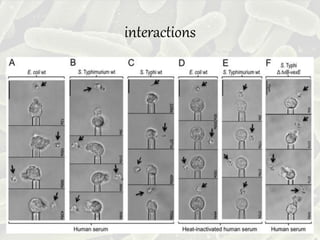
S. Typhi avoids recognition and
elimination by patrolling immune
cells called neutrophils
This allows it to disseminate
throughout the patient's body.
A close encounter with S.
Typhimurium provokes an obvious
response by the neutrophil: the
initially round immune cell bulges
out towards the bacterium,
getting ready to make contact and
ingest the intruder.
Proximity to S. Typhi, in contrast,
stimulates no visible changes.
A particular part of the outer layer
of S. Typhi--the so-called Vi
capsular polysaccharide--was
responsible for inhibiting the
complement-dependent attraction
of neutrophils.
The vi capsular polysaccharide can
act as a “cloaking device” that
makes S.typhi practically invisible to
neutrophils and hence can cause
disease easily.
interactions
Typhoid toxin
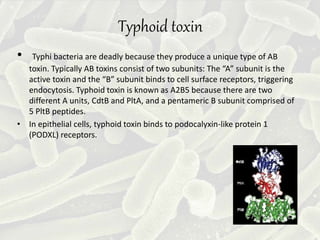
• Typhi bacteria are deadly because they produce a unique type of AB
toxin. Typically AB toxins consist of two subunits: The “A” subunit is the
active toxin and the “B” subunit binds to cell surface receptors, triggering
endocytosis. Typhoid toxin is known as A2B5 because there are two
different A units, CdtB and PltA, and a pentameric B subunit comprised of
5 PltB peptides.
• In epithelial cells, typhoid toxin binds to podocalyxin-like protein 1
(PODXL) receptors.
Life cycle
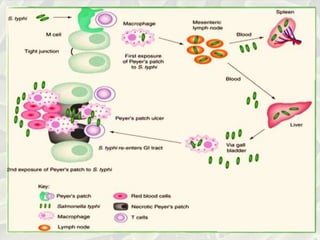
• Typhoidal Salmonella co-opt the macrophages' cellular
machinery for their own reproductionas they are carried
through the mesenteric lymph nodes to the thoracic duct
and the lymphatics and then through to the
reticuloendothelial tissues of the liver, spleen, bone
marrow, and lymph nodes. Once there, they pause and
continue to multiply until some critical density is reached.
Afterward, the bacteria induce macrophage apoptosis,
breaking out into the bloodstream to invade the rest of the
body.
• The bacteria then infect the gallbladder via either
bacteremia or direct extension of infected bile. The result is
that the organism re-enters the gastrointestinal tract in the
bile and reinfects Peyer’s patches.
Life cycle.
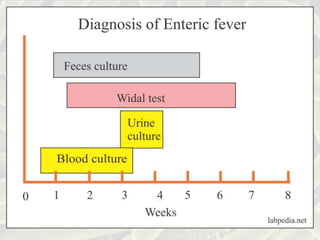
Diagnosis.
• Medical and travel history
• The doctor is likely to suspect typhoid fever based on the symptoms and
the medical and travel history. But the diagnosis is usually confirmed by
identifying Salmonella typhi in a culture of the blood or other body fluid or
tissue.
• Body fluid or tissue culture
• For the culture, a small sample of the blood, stool, urine or bone marrow
is placed on a special medium that encourages the growth of bacteria. The
culture is checked under a microscope for the presence of typhoid
bacteria. A bone marrow culture often is the most sensitive test for
Salmonella typhi.
• Although performing a culture test is the mainstay for diagnosis, in some
instances other testing may be used to confirm a suspected typhoid fever
infection, such as a test to detect antibodies to typhoid bacteria in the
blood or a test that checks for typhoid DNA in the blood.
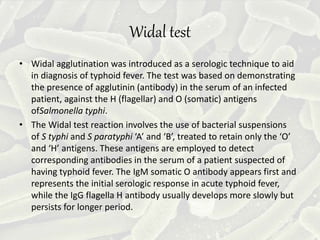
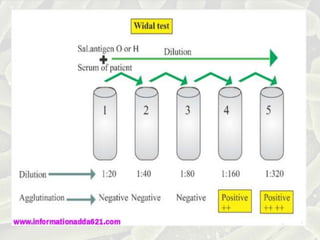
Widal test
• Widal agglutination was introduced as a serologic technique to aid
in diagnosis of typhoid fever. The test was based on demonstrating
the presence of agglutinin (antibody) in the serum of an infected
patient, against the H (flagellar) and O (somatic) antigens
ofSalmonella typhi.
• The Widal test reaction involves the use of bacterial suspensions
of S typhi and S paratyphi ‘A’ and ‘B’, treated to retain only the ‘O’
and ‘H’ antigens. These antigens are employed to detect
corresponding antibodies in the serum of a patient suspected of
having typhoid fever. The IgM somatic O antibody appears first and
represents the initial serologic response in acute typhoid fever,
while the IgG flagella H antibody usually develops more slowly but
persists for longer period.
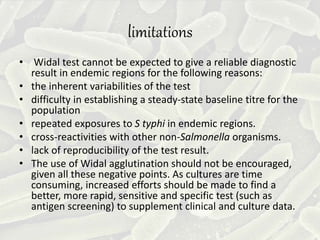
limitations
• Widal test cannot be expected to give a reliable diagnostic
result in endemic regions for the following reasons:
• the inherent variabilities of the test
• difficulty in establishing a steady-state baseline titre for the
population
• repeated exposures to S typhi in endemic regions.
• cross-reactivities with other non-Salmonella organisms.
• lack of reproducibility of the test result.
• The use of Widal agglutination should not be encouraged,
given all these negative points. As cultures are time
consuming, increased efforts should be made to find a
better, more rapid, sensitive and specific test (such as
antigen screening) to supplement clinical and culture data.
prophylaxis
• Fluoroquinolones usually Ciprofloxacin or Ofloxacin) are the drug
of choice for empiric treatment of typhoid fever. However, in recent
years, there has been increasing fluorquinolone-resistant and
multidrug-resistant strains (resistant to ampicillin, amoxacilline,
chloramphenicol, and trimethoprim- sulfamethoxazole)
of Salmonella typhi.
• Recently, some physicians have started using azithromycin, but
azithromycin-resistant strains have already been identified.
• There are other alternative antibiotics when resistance is suspected.
• Most commonly used antibiotics in multidrug-resistant strains are
the injectable third-generation cephalosporins (for
example, ceftriaxone (Rocephin) or cefotaxime (Claforan).
ciprofloxacin
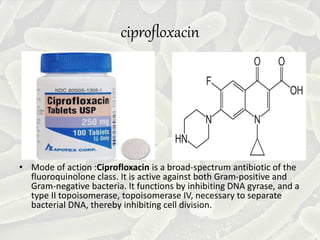
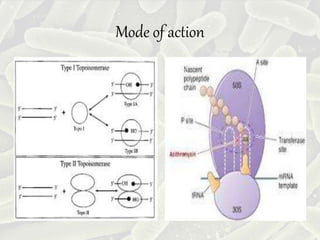
• Mode of action :Ciprofloxacin is a broad-spectrum antibiotic of the
fluoroquinolone class. It is active against both Gram-positive and
Gram-negative bacteria. It functions by inhibiting DNA gyrase, and a
type II topoisomerase, topoisomerase IV, necessary to separate
bacterial DNA, thereby inhibiting cell division.
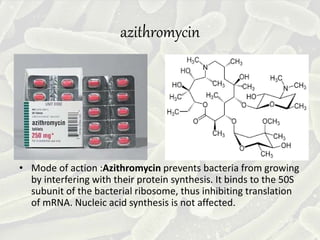
azithromycin
• Mode of action :Azithromycin prevents bacteria from growing
by interfering with their protein synthesis. It binds to the 50S
subunit of the bacterial ribosome, thus inhibiting translation
of mRNA. Nucleic acid synthesis is not affected.
Mode of action
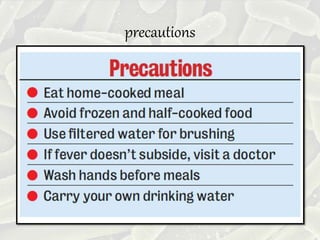
prevention
• Wash your hands. Frequent hand-washing in hot, soapy water is the best way to
control infection. Wash before eating or preparing food and after using the toilet.
Carry an alcohol-based hand sanitizer for times when water isn't available.
• Avoid drinking untreated water. Contaminated drinking water is a particular
problem in areas where typhoid fever is endemic. For that reason, drink only
bottled water or canned or bottled carbonated beverages, wine and beer.
Carbonated bottled water is safer than uncarbonated bottled water is.
• Ask for drinks without ice. Use bottled water to brush your teeth, and try not to
swallow water in the shower.
• Avoid raw fruits and vegetables. Because raw produce may have been washed in
unsafe water, avoid fruits and vegetables that you can't peel, especially lettuce. To
be absolutely safe, you may want to avoid raw foods entirely.
• Choose hot foods. Avoid food that's stored or served at room temperature.
Steaming hot foods are best. And although there's no guarantee that meals served
at the finest restaurants are safe, it's best to avoid food from street vendors — it's
more likely to be contaminated.
vaccination
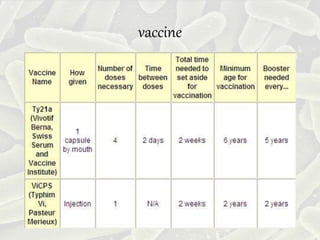
• Two vaccines are available.
• One is injected in a single dose at least one week
before travel.
• One is given orally in four capsules, with one capsule
to be taken every other day.
• Neither vaccine is 100 percent effective, and both
require repeat immunizations, as vaccine
effectiveness diminishes over time.
vaccine
precautions
Diet chart
Thank you
Feel free to ask any question! Woof woof!

Typhoid fever 1

  • 1.
    TYPHOID Mohima Mukherjee andUtkarsha Jha Microbiology, part-III Scottish Church College.
  • 2.
    About the disease •The acute illness is characterized by prolonged fever, headache, nausea, loss of appetite, and constipation or sometimes diarrhoea. • clinical severity varies and severe cases may lead to serious complications or even death. • It occurs predominantly in association with poor sanitation and lack of clean drinking water • According to the most recent estimates, between 11 and 21 million cases and 128 000 to 161 000 typhoid-related deaths occur annually worldwide.
  • 3.
  • 4.
    CAUSATIVE ORGANISM • Thecausative organism is Salmonella enterica typhi. • Gram negative enteric bacillus which belongs to the family Enterobacteriaceae. • It is a motile, facultative anaerobe that is susceptible to various antibiotics. • The bacterium is serologically positive for lipopolysaccharide antigens O9 and O12 as well as the distinct polysaccharide capsular antigen Vi.
  • 5.
    Microscopic view andblood culture of Salmonella typhi
  • 7.
    Taxonomy • Domain: Bacteria •Phylum: Proteobacteria • Class: Gammaproteobacteria • Order: Enterobacteriales • Family: Enterobacteriaceae • Genus: Salmonella
  • 8.
    Culture media. • Bismuthsulfite agar: Salmonellae produce black colonies. • Blood Agar: S. typhi and S. paratyphi usually produce non-hemolytic smooth white colonies. • MacConkey Agar: Non lactose fermenting smooth colonies i.e. pale colonies • Deoxycholate Citrate Agar (DCA): Salmonella appear as pale colonies. • Colonies of Salmonella typhi in DCA Agar. Source: bacteriainphotos.com • Xylose Lysin Deoxycholate (XLD) Agar : Salmonella appear as pink (lactose non- fermenting colonies) with black centre (due to H2S production) • Salmonella-Shigella (SS) Agar: Used for selective recovery of Salmonella from stool culture (contains five times the concentration of bile salts compared with MacConeky Agar). Salmonellae usually produce lactose non-fermenting colonies with black centres (except S. paratyphi A, whose colonies do not have black centres). • Hektoen Enteric (HE) Agar: On hektoen enteric agar, salmonellae produce transparent green colonies with black centres (except S. paratyphi A, whose colonies do not have black centres). • Eosin Methylene Blue (EMB) Agar: Non lactose fermenters, including Salmonella, Shigella and Proteus forms colorless or transparent colonies.
  • 9.
    Colonies of Salmonellatyphi in DCA Agar Triple sugar iron (TSI) agar
  • 10.
    history • In 1829,Pierre Louis was the first to coin the term “typhoid fever” after identifying lesions in the abdominal lymph nodes of patients who had died from “gastric fever • The term was derived from the Greek word “typhus” which meant “smoky” • Originally isolated in 1880 by Karl J. Erberth. • It was first cultured in 1884 by Georg Gaffky. Several years later, Almroth Wright developed a vaccine for the disease. • In 2000, typhoid fever was estimated to cause 21.7 million illnesses and 216,000 deaths globally. • In the United States, approximately 200 to 300 cases of Salmonella enterica serotype typhi are reported each year.
  • 11.
  • 12.
    Typhoid mary • MaryMallon was born in 1869 in Ireland and emigrated to the US in 1884. She had worked in a variety of domestic positions for wealthy families prior to settling into her career as a cook. As a healthy carrier of Salmonella typhi her nickname of "Typhoid Mary" had become synonymous with the spread of disease, as many were infected due to her denial of being ill.
  • 13.
    Stages of typhoidfever • The first stage, when infection is symptomatic, may include malaise, dry coughing, headache, myalgia, and a fever of steadily increasing temperature. • The second stage , the fever typically levels off at a high temperature (between 39 and 40 degree C) and is maintained over a prolonged period, often until the fourth week of infection. Diarrhea and/or constipation are common gastroenteritis signs in the second stage. In about 30% of cases, a mild rash consisting of flat rose spots appears on the chest and abdomen. • The third stage, This is the time when more serious complications can present. Intestinal bleeding is common (up to 20% of cases). • The fourth stage is characterized by recovery. The fever and delirium begin to recede during this stage at week four (or even toward the end of the third week) in a slow progressive convalescence, which can last up to 2 or more months. • The incubation period is typically 7–21 days, although it may be as long as 30 days.
  • 14.
  • 16.
  • 17.
    What is thedifference? • Salmonella typhi has vi capsular polysaccharide in its outer layer that is absent in Salmonella typhimurium. • Typhoid fever is caused by systemic (body-wide) infection with Salmonella enterica Typhi. In contrast, infection with the bacterium Salmonella enterica typhimurium is usually limited to the gut and causes less serious diarrheal disease. • One of the differences between [milder] gastroenteritis and [dangerous] typhoid fever is that the pathogen causing the latter disease evades neutrophil chemotaxis.
  • 19.
    How is ittransmitted? • Fecal-oral transmission route • The bacteria that cause typhoid fever spread through contaminated food or water and occasionally through direct contact with someone who is infected. In developing nations, where typhoid fever is established (endemic), most cases result from contaminated drinking water and poor sanitation. The majority of people in industrialized countries pick up typhoid bacteria while traveling and spread it to others through the fecal-oral route. • This means that Salmonella typhi is passed in the feces and sometimes in the urine of infected people.
  • 20.
    CARRIER • Typhoid carriers •Even after treatment with antibiotics, a small number of people who recover from typhoid fever continue to harbor the bacteria in their intestinal tracts or gallbladders, often for years. These people, called chronic carriers, shed the bacteria in their feces and are capable of infecting others, although they no longer have signs or symptoms of the disease themselves.
  • 21.
    how the diseaseis caused?
  • 22.
    • The bacteriatarget epithelial cells and microfold cells of the small intestine in the distal ileum in close proximity to the the Peyer's patches, which are important lymphoid tissue in the gut. • Salmonella Typhi employs a type III secretion system to inject proteins into the host cell, altering its cytoskeletal structure and inducing the uptake of the bacterium into the cytoplasm of the host cell. • Because of the location of infection in the small intestine, Salmonella Typhi typically invades the Peyer's patches and thereby accesses the lymphatic system, which ultimately leads to more widespread dissemination by way of the general circulation. • Once in circulation, these Salmonellae can target cells in multiple organ systems. Most importantly, they infect macrophages, in which they replicate and are able to disseminate throughout the reticuloendothelial system.
  • 24.
    S. Typhi avoidsrecognition and elimination by patrolling immune cells called neutrophils This allows it to disseminate throughout the patient's body. A close encounter with S. Typhimurium provokes an obvious response by the neutrophil: the initially round immune cell bulges out towards the bacterium, getting ready to make contact and ingest the intruder. Proximity to S. Typhi, in contrast, stimulates no visible changes. A particular part of the outer layer of S. Typhi--the so-called Vi capsular polysaccharide--was responsible for inhibiting the complement-dependent attraction of neutrophils. The vi capsular polysaccharide can act as a “cloaking device” that makes S.typhi practically invisible to neutrophils and hence can cause disease easily.
  • 25.
  • 26.
    Typhoid toxin • Typhibacteria are deadly because they produce a unique type of AB toxin. Typically AB toxins consist of two subunits: The “A” subunit is the active toxin and the “B” subunit binds to cell surface receptors, triggering endocytosis. Typhoid toxin is known as A2B5 because there are two different A units, CdtB and PltA, and a pentameric B subunit comprised of 5 PltB peptides. • In epithelial cells, typhoid toxin binds to podocalyxin-like protein 1 (PODXL) receptors.
  • 27.
    Life cycle • TyphoidalSalmonella co-opt the macrophages' cellular machinery for their own reproductionas they are carried through the mesenteric lymph nodes to the thoracic duct and the lymphatics and then through to the reticuloendothelial tissues of the liver, spleen, bone marrow, and lymph nodes. Once there, they pause and continue to multiply until some critical density is reached. Afterward, the bacteria induce macrophage apoptosis, breaking out into the bloodstream to invade the rest of the body. • The bacteria then infect the gallbladder via either bacteremia or direct extension of infected bile. The result is that the organism re-enters the gastrointestinal tract in the bile and reinfects Peyer’s patches.
  • 28.
  • 29.
    Diagnosis. • Medical andtravel history • The doctor is likely to suspect typhoid fever based on the symptoms and the medical and travel history. But the diagnosis is usually confirmed by identifying Salmonella typhi in a culture of the blood or other body fluid or tissue. • Body fluid or tissue culture • For the culture, a small sample of the blood, stool, urine or bone marrow is placed on a special medium that encourages the growth of bacteria. The culture is checked under a microscope for the presence of typhoid bacteria. A bone marrow culture often is the most sensitive test for Salmonella typhi. • Although performing a culture test is the mainstay for diagnosis, in some instances other testing may be used to confirm a suspected typhoid fever infection, such as a test to detect antibodies to typhoid bacteria in the blood or a test that checks for typhoid DNA in the blood.
  • 31.
    Widal test • Widalagglutination was introduced as a serologic technique to aid in diagnosis of typhoid fever. The test was based on demonstrating the presence of agglutinin (antibody) in the serum of an infected patient, against the H (flagellar) and O (somatic) antigens ofSalmonella typhi. • The Widal test reaction involves the use of bacterial suspensions of S typhi and S paratyphi ‘A’ and ‘B’, treated to retain only the ‘O’ and ‘H’ antigens. These antigens are employed to detect corresponding antibodies in the serum of a patient suspected of having typhoid fever. The IgM somatic O antibody appears first and represents the initial serologic response in acute typhoid fever, while the IgG flagella H antibody usually develops more slowly but persists for longer period.
  • 33.
    limitations • Widal testcannot be expected to give a reliable diagnostic result in endemic regions for the following reasons: • the inherent variabilities of the test • difficulty in establishing a steady-state baseline titre for the population • repeated exposures to S typhi in endemic regions. • cross-reactivities with other non-Salmonella organisms. • lack of reproducibility of the test result. • The use of Widal agglutination should not be encouraged, given all these negative points. As cultures are time consuming, increased efforts should be made to find a better, more rapid, sensitive and specific test (such as antigen screening) to supplement clinical and culture data.
  • 34.
    prophylaxis • Fluoroquinolones usuallyCiprofloxacin or Ofloxacin) are the drug of choice for empiric treatment of typhoid fever. However, in recent years, there has been increasing fluorquinolone-resistant and multidrug-resistant strains (resistant to ampicillin, amoxacilline, chloramphenicol, and trimethoprim- sulfamethoxazole) of Salmonella typhi. • Recently, some physicians have started using azithromycin, but azithromycin-resistant strains have already been identified. • There are other alternative antibiotics when resistance is suspected. • Most commonly used antibiotics in multidrug-resistant strains are the injectable third-generation cephalosporins (for example, ceftriaxone (Rocephin) or cefotaxime (Claforan).
  • 35.
    ciprofloxacin • Mode ofaction :Ciprofloxacin is a broad-spectrum antibiotic of the fluoroquinolone class. It is active against both Gram-positive and Gram-negative bacteria. It functions by inhibiting DNA gyrase, and a type II topoisomerase, topoisomerase IV, necessary to separate bacterial DNA, thereby inhibiting cell division.
  • 36.
    azithromycin • Mode ofaction :Azithromycin prevents bacteria from growing by interfering with their protein synthesis. It binds to the 50S subunit of the bacterial ribosome, thus inhibiting translation of mRNA. Nucleic acid synthesis is not affected.
  • 37.
  • 38.
    prevention • Wash yourhands. Frequent hand-washing in hot, soapy water is the best way to control infection. Wash before eating or preparing food and after using the toilet. Carry an alcohol-based hand sanitizer for times when water isn't available. • Avoid drinking untreated water. Contaminated drinking water is a particular problem in areas where typhoid fever is endemic. For that reason, drink only bottled water or canned or bottled carbonated beverages, wine and beer. Carbonated bottled water is safer than uncarbonated bottled water is. • Ask for drinks without ice. Use bottled water to brush your teeth, and try not to swallow water in the shower. • Avoid raw fruits and vegetables. Because raw produce may have been washed in unsafe water, avoid fruits and vegetables that you can't peel, especially lettuce. To be absolutely safe, you may want to avoid raw foods entirely. • Choose hot foods. Avoid food that's stored or served at room temperature. Steaming hot foods are best. And although there's no guarantee that meals served at the finest restaurants are safe, it's best to avoid food from street vendors — it's more likely to be contaminated.
  • 40.
    vaccination • Two vaccinesare available. • One is injected in a single dose at least one week before travel. • One is given orally in four capsules, with one capsule to be taken every other day. • Neither vaccine is 100 percent effective, and both require repeat immunizations, as vaccine effectiveness diminishes over time.
  • 41.
  • 42.
  • 43.
  • 44.
    Thank you Feel freeto ask any question! Woof woof!