The document discusses different types of probability events:
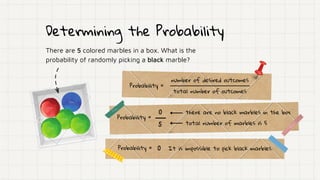
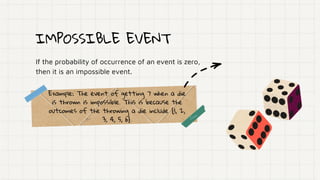
- Sure events have a probability of 1 and will always occur. Impossible events have a probability of 0.
- Complementary events cover all possible outcomes such that one event must occur.
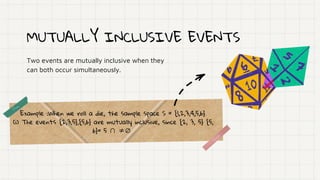
- Mutually exclusive events cannot occur together, while mutually inclusive events can occur simultaneously.
- Exhaustive events together cover all possible outcomes such that one is sure to occur. Equally likely events have outcomes that are equally possible.
- An example calculates the probability of randomly selecting a number greater than 13 from numbers 1 to 25. The probability is 12/25.

















![probability XD [Autosaved].pptx](https://cdn.slidesharecdn.com/ss_thumbnails/probabilityxdautosaved-230420120311-7454e0e1-thumbnail.jpg?width=640&height=640&fit=bounds)


