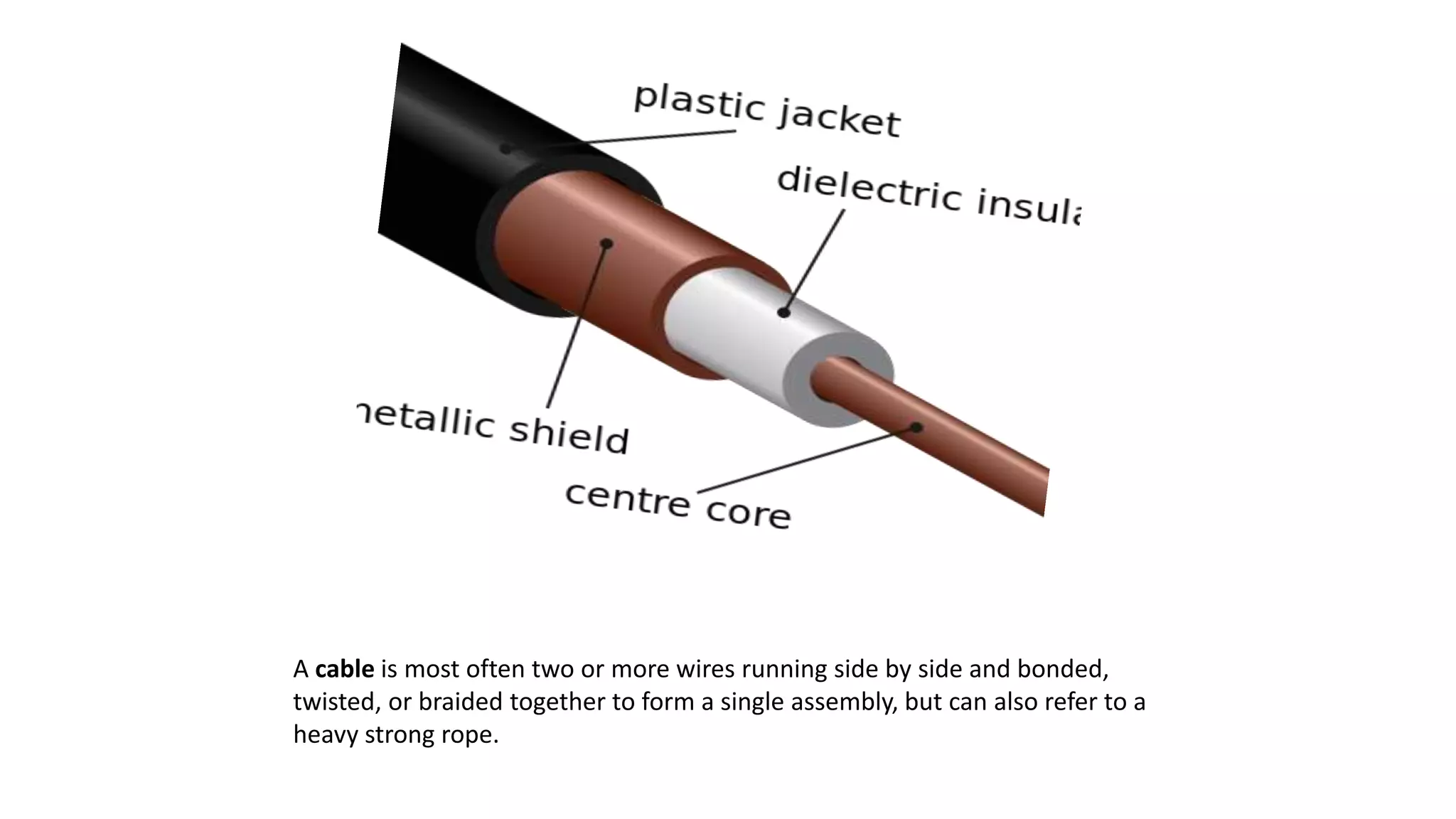
A cable is most often two or more wires running side by side and bonded,
twisted, or braided together to form a single assembly, but can also refer to a
heavy strong rope.
MAIN CABLE COMPONENTS
• An electric cable is made up of a conductor, which channels the electricity flow, and
an insulation that contains this electricity flow in the conductor. Moreover, other
auxiliary elements can be included which ensure its longevity.
• The conductor is where the electric current is actually transmitted, with copper
being generally the most used material.
• The insulation is the layer of polymer, plastic or elastomer which surrounds the
conductor and insulates it from external contact.
COLOR CODE
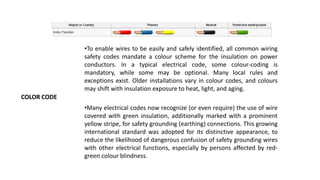
•To enable wires to be easily and safely identified, all common wiring
safety codes mandate a colour scheme for the insulation on power
conductors. In a typical electrical code, some colour-coding is
mandatory, while some may be optional. Many local rules and
exceptions exist. Older installations vary in colour codes, and colours
may shift with insulation exposure to heat, light, and aging.
•Many electrical codes now recognize (or even require) the use of wire
covered with green insulation, additionally marked with a prominent
yellow stripe, for safety grounding (earthing) connections. This growing
international standard was adopted for its distinctive appearance, to
reduce the likelihood of dangerous confusion of safety grounding wires
with other electrical functions, especially by persons affected by red-
green colour blindness.
PROPERTIES
Electric Properties:
- dielectric strength
- insulation resistance
- insulation power factors
- charging current
- arc resistance
-tracking susceptibility
Mechanical Properties:
- toughness and flexibility
- tensile, elongation and crushing strengths
- resistance to abrasion or moisture
-Brittleness
Chemical Properties:
- moisture absorption
- resistance to oil, gas, acids and alkalis
-stability when exposed to sunlight, ozone, or flames
Thermal Properties:
- expansion and contraction
- softening and flow temperature
- compatibility with operating, ambient, or emergency overload and short circuit
conditions
CONDUCTOR
MATERIALS
Copper
•The principal electrical conductor due to its excellent conductivity and
reasonable cost.
Aluminum
•61% the conductivity and .3027 times the weight of copper. Used in power
cables, overhead (ACSR), and some building wire.
Copper weld
•A thin coating of copper fused to a steel core. Used in line wire, cable
messengers and stranded with copper for strength or extending flex life.
Alum weld
•A thin coating of aluminum fused to a steel core. Used in line wire and cable
messengers.
Tinsel
•Flat ribbons of bronze, silver, or copper alloy spiraled around a textile core of
cotton, nylon, etc. Used in telephone and electronics applications as conductors
in line cords, microphone cords, and retractile cords.
Thermocouple
•Special matched Alloy Conductors. Used in temperature measuring
applications
TYPES OF CABLES
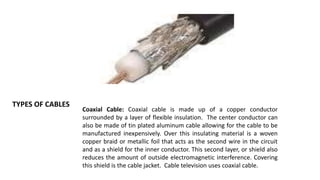
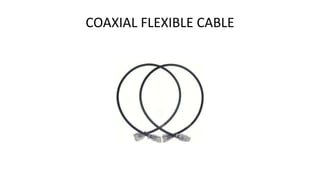
Coaxial Cable: Coaxial cable is made up of a copper conductor
surrounded by a layer of flexible insulation. The center conductor can
also be made of tin plated aluminum cable allowing for the cable to be
manufactured inexpensively. Over this insulating material is a woven
copper braid or metallic foil that acts as the second wire in the circuit
and as a shield for the inner conductor. This second layer, or shield also
reduces the amount of outside electromagnetic interference. Covering
this shield is the cable jacket. Cable television uses coaxial cable.
TYPES OF CABLES
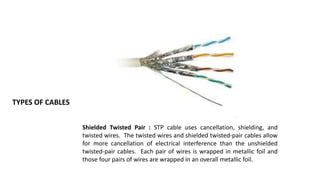
Shielded Twisted Pair : STP cable uses cancellation, shielding, and
twisted wires. The twisted wires and shielded twisted-pair cables allow
for more cancellation of electrical interference than the unshielded
twisted-pair cables. Each pair of wires is wrapped in metallic foil and
those four pairs of wires are wrapped in an overall metallic foil.
TYPES OF CABLES
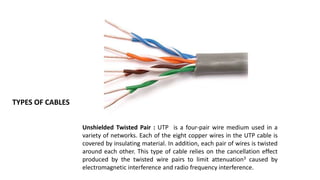
Unshielded Twisted Pair : UTP is a four-pair wire medium used in a
variety of networks. Each of the eight copper wires in the UTP cable is
covered by insulating material. In addition, each pair of wires is twisted
around each other. This type of cable relies on the cancellation effect
produced by the twisted wire pairs to limit attenuation3 caused by
electromagnetic interference and radio frequency interference.
COAXIAL FLEXIBLE CABLE
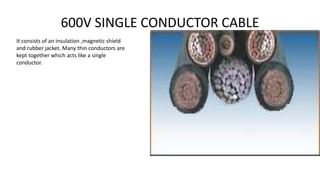
600V SINGLE CONDUCTOR CABLE
It consists of an insulation ,magnetic shield
and rubber jacket. Many thin conductors are
kept together which acts like a single
conductor.
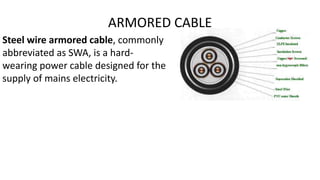
ARMORED CABLE
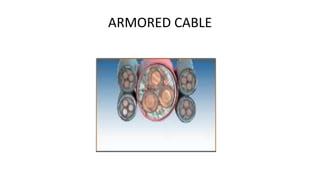
Steel wire armored cable, commonly
abbreviated as SWA, is a hard-
wearing power cable designed for the
supply of mains electricity.
ARMORED CABLE
CONTROL CABLE
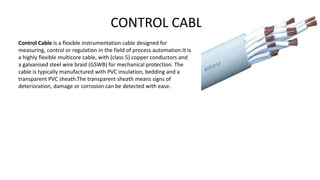
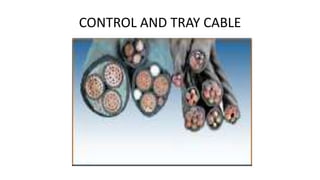
Control Cable is a flexible instrumentation cable designed for
measuring, control or regulation in the field of process automation.It is
a highly flexible multicore cable, with (class 5) copper conductors and
a galvanised steel wire braid (GSWB) for mechanical protection. The
cable is typically manufactured with PVC insulation, bedding and a
transparent PVC sheath.The transparent sheath means signs of
deterioration, damage or corrosion can be detected with ease.
CONTROL AND TRAY CABLE
COPPER CABLE
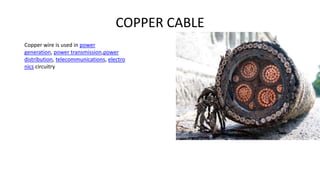
Copper wire is used in power
generation, power transmission,power
distribution, telecommunications, electro
nics circuitry
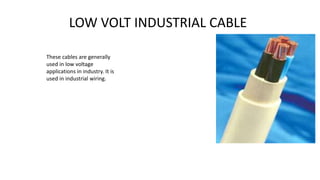
LOW VOLT INDUSTRIAL CABLE
These cables are generally
used in low voltage
applications in industry. It is
used in industrial wiring.
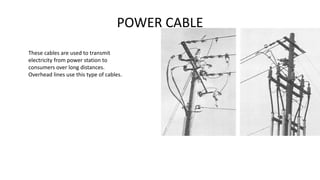
POWER CABLE
These cables are used to transmit
electricity from power station to
consumers over long distances.
Overhead lines use this type of cables.
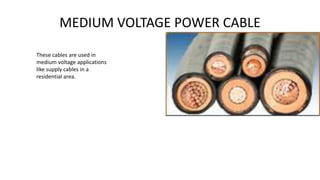
MEDIUM VOLTAGE POWER CABLE
These cables are used in
medium voltage applications
like supply cables in a
residential area.
PVC POWER CABLE
SHIELDING POWER CABLE
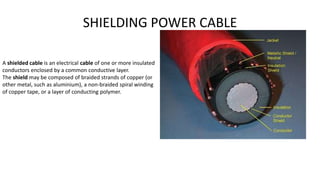
A shielded cable is an electrical cable of one or more insulated
conductors enclosed by a common conductive layer.
The shield may be composed of braided strands of copper (or
other metal, such as aluminium), a non-braided spiral winding
of copper tape, or a layer of conducting polymer.
PORTABLE CABLE
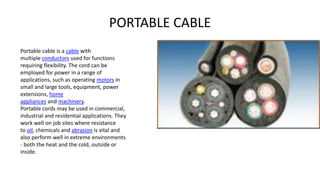
Portable cable is a cable with
multiple conductors used for functions
requiring flexibility. The cord can be
employed for power in a range of
applications, such as operating motors in
small and large tools, equipment, power
extensions, home
appliances and machinery.
Portable cords may be used in commercial,
industrial and residential applications. They
work well on job sites where resistance
to oil, chemicals and abrasion is vital and
also perform well in extreme environments
- both the heat and the cold, outside or
inside.
TELEPHONE CABLE
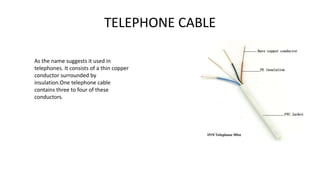
As the name suggests it used in
telephones. It consists of a thin copper
conductor surrounded by
insulation.One telephone cable
contains three to four of these
conductors.
Types of cables

Types of cables

  • 1.
    A cable ismost often two or more wires running side by side and bonded, twisted, or braided together to form a single assembly, but can also refer to a heavy strong rope.
  • 2.
    MAIN CABLE COMPONENTS •An electric cable is made up of a conductor, which channels the electricity flow, and an insulation that contains this electricity flow in the conductor. Moreover, other auxiliary elements can be included which ensure its longevity. • The conductor is where the electric current is actually transmitted, with copper being generally the most used material. • The insulation is the layer of polymer, plastic or elastomer which surrounds the conductor and insulates it from external contact.
  • 3.
    COLOR CODE •To enablewires to be easily and safely identified, all common wiring safety codes mandate a colour scheme for the insulation on power conductors. In a typical electrical code, some colour-coding is mandatory, while some may be optional. Many local rules and exceptions exist. Older installations vary in colour codes, and colours may shift with insulation exposure to heat, light, and aging. •Many electrical codes now recognize (or even require) the use of wire covered with green insulation, additionally marked with a prominent yellow stripe, for safety grounding (earthing) connections. This growing international standard was adopted for its distinctive appearance, to reduce the likelihood of dangerous confusion of safety grounding wires with other electrical functions, especially by persons affected by red- green colour blindness.
  • 4.
    PROPERTIES Electric Properties: - dielectricstrength - insulation resistance - insulation power factors - charging current - arc resistance -tracking susceptibility Mechanical Properties: - toughness and flexibility - tensile, elongation and crushing strengths - resistance to abrasion or moisture -Brittleness Chemical Properties: - moisture absorption - resistance to oil, gas, acids and alkalis -stability when exposed to sunlight, ozone, or flames Thermal Properties: - expansion and contraction - softening and flow temperature - compatibility with operating, ambient, or emergency overload and short circuit conditions
  • 5.
    CONDUCTOR MATERIALS Copper •The principal electricalconductor due to its excellent conductivity and reasonable cost. Aluminum •61% the conductivity and .3027 times the weight of copper. Used in power cables, overhead (ACSR), and some building wire. Copper weld •A thin coating of copper fused to a steel core. Used in line wire, cable messengers and stranded with copper for strength or extending flex life. Alum weld •A thin coating of aluminum fused to a steel core. Used in line wire and cable messengers. Tinsel •Flat ribbons of bronze, silver, or copper alloy spiraled around a textile core of cotton, nylon, etc. Used in telephone and electronics applications as conductors in line cords, microphone cords, and retractile cords. Thermocouple •Special matched Alloy Conductors. Used in temperature measuring applications
  • 6.
    TYPES OF CABLES CoaxialCable: Coaxial cable is made up of a copper conductor surrounded by a layer of flexible insulation. The center conductor can also be made of tin plated aluminum cable allowing for the cable to be manufactured inexpensively. Over this insulating material is a woven copper braid or metallic foil that acts as the second wire in the circuit and as a shield for the inner conductor. This second layer, or shield also reduces the amount of outside electromagnetic interference. Covering this shield is the cable jacket. Cable television uses coaxial cable.
  • 7.
    TYPES OF CABLES ShieldedTwisted Pair : STP cable uses cancellation, shielding, and twisted wires. The twisted wires and shielded twisted-pair cables allow for more cancellation of electrical interference than the unshielded twisted-pair cables. Each pair of wires is wrapped in metallic foil and those four pairs of wires are wrapped in an overall metallic foil.
  • 8.
    TYPES OF CABLES UnshieldedTwisted Pair : UTP is a four-pair wire medium used in a variety of networks. Each of the eight copper wires in the UTP cable is covered by insulating material. In addition, each pair of wires is twisted around each other. This type of cable relies on the cancellation effect produced by the twisted wire pairs to limit attenuation3 caused by electromagnetic interference and radio frequency interference.
  • 9.
  • 10.
    600V SINGLE CONDUCTORCABLE It consists of an insulation ,magnetic shield and rubber jacket. Many thin conductors are kept together which acts like a single conductor.
  • 11.
    ARMORED CABLE Steel wirearmored cable, commonly abbreviated as SWA, is a hard- wearing power cable designed for the supply of mains electricity.
  • 12.
  • 13.
    CONTROL CABLE Control Cableis a flexible instrumentation cable designed for measuring, control or regulation in the field of process automation.It is a highly flexible multicore cable, with (class 5) copper conductors and a galvanised steel wire braid (GSWB) for mechanical protection. The cable is typically manufactured with PVC insulation, bedding and a transparent PVC sheath.The transparent sheath means signs of deterioration, damage or corrosion can be detected with ease.
  • 14.
  • 15.
    COPPER CABLE Copper wireis used in power generation, power transmission,power distribution, telecommunications, electro nics circuitry
  • 16.
    LOW VOLT INDUSTRIALCABLE These cables are generally used in low voltage applications in industry. It is used in industrial wiring.
  • 17.
    POWER CABLE These cablesare used to transmit electricity from power station to consumers over long distances. Overhead lines use this type of cables.
  • 18.
    MEDIUM VOLTAGE POWERCABLE These cables are used in medium voltage applications like supply cables in a residential area.
  • 19.
  • 20.
    SHIELDING POWER CABLE Ashielded cable is an electrical cable of one or more insulated conductors enclosed by a common conductive layer. The shield may be composed of braided strands of copper (or other metal, such as aluminium), a non-braided spiral winding of copper tape, or a layer of conducting polymer.
  • 21.
    PORTABLE CABLE Portable cableis a cable with multiple conductors used for functions requiring flexibility. The cord can be employed for power in a range of applications, such as operating motors in small and large tools, equipment, power extensions, home appliances and machinery. Portable cords may be used in commercial, industrial and residential applications. They work well on job sites where resistance to oil, chemicals and abrasion is vital and also perform well in extreme environments - both the heat and the cold, outside or inside.
  • 22.
    TELEPHONE CABLE As thename suggests it used in telephones. It consists of a thin copper conductor surrounded by insulation.One telephone cable contains three to four of these conductors.