INTRODUCTION TO WIRES
There are mainly 6 types of wires are there.
vulcanised indian rubber wire (V.I.R)
tough rubber sheathed wire (T.R.S)
poly vinyl chloride wire (P.V.C.)
Lead alloy sheathed wire
weather proof wires
flexible wire
V.I.R (Vulcanised Indian Rubber)
wires.
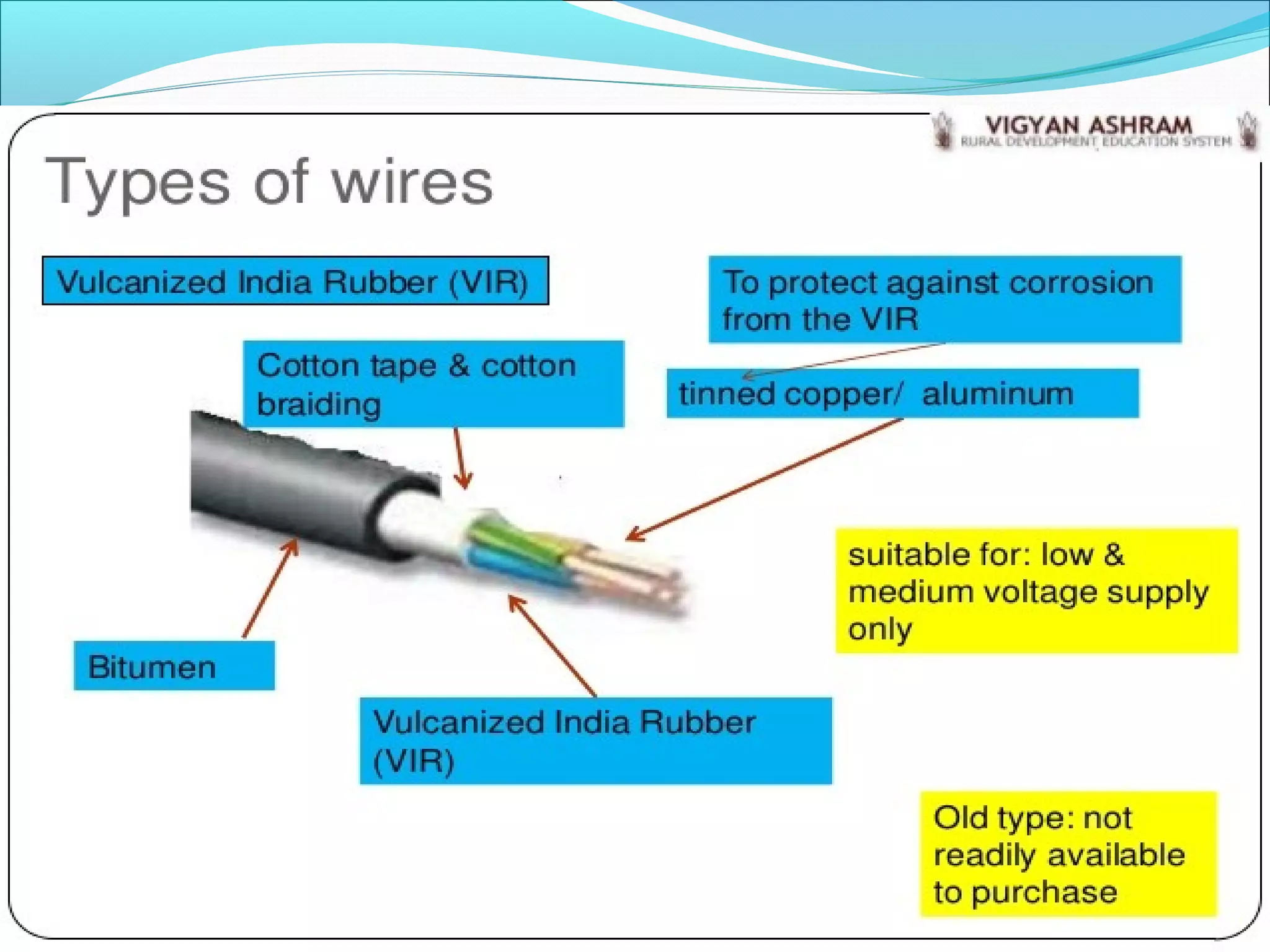
A VIR wire mainly consists of a tinned conductor
having rubber coating.
Tinning of conductor prevents the sticking of rubber
to the conductor.
Thickness of rubber mainly depends on the operating
voltage to which wire is designed.
A cotton bradding is done over the rubber insulations
to protect the conductor against the moisture.
Finally the wire is finished with wax for cleanliness.
Nowadays these wires are not used since a better
quality wires are available at a cheaper rate.
T.R.S. (Tough Rubber Sheathed)
wires.
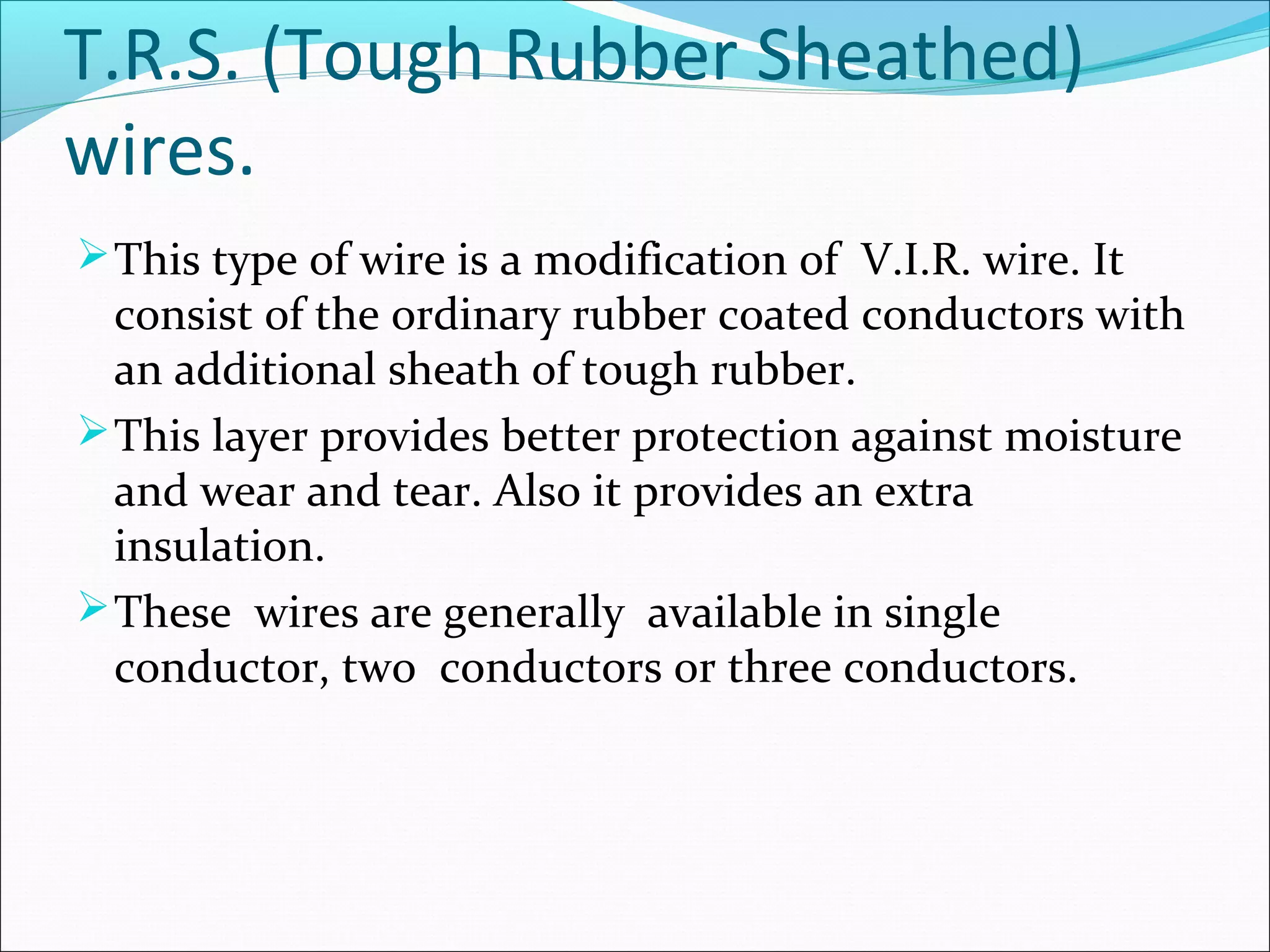
This type of wire is a modification of V.I.R. wire. It
consist of the ordinary rubber coated conductors with
an additional sheath of tough rubber.
This layer provides better protection against moisture
and wear and tear. Also it provides an extra
insulation.
These wires are generally available in single
conductor, two conductors or three conductors.
P.V.C. (Poly Vinyl Chloride) wires.
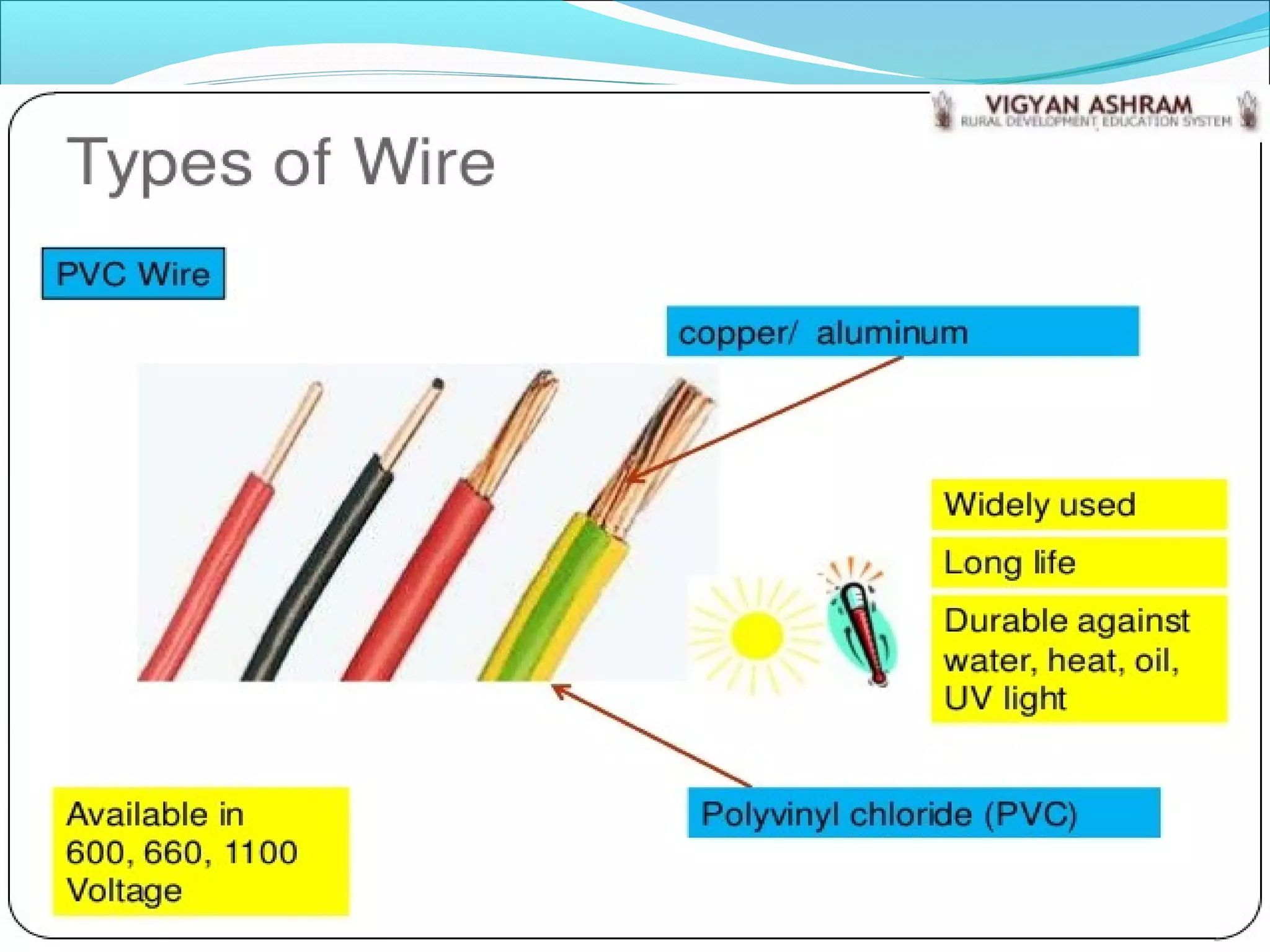
This is the most commonly used wire for wiring
purpose.
Conductor is insulated by poly vinyl chloride
(insulating material).
P.V.S. has following properties:
1. Moisture proof.
2.Tough.
3.Durable.
4.Chemically inert.
But it softens at high temperatures therefore not
suitable for connection to heating appliances.
Lead alloy sheathed wires.
The ordinary wires can be used only at dry places but
for damp places these wires are covered with
continuous lead sheaths.
The layer of lead covering is very thin like 0.12 cm
thick.
These wires provides little mechanical protections to
the wires.
Weather proof wires.
These types of wires are used outdoor i.e. providing a
service connection from overhead line to building etc.
In this type of wire the conductor is not tinned and
the conductor is covered with three braids of fibrous
yarn and saturated with water proof compound.
Flexible wires.
These wires consists of number of strands instead of
a single conductor. (Strand is a very thin conductor).
The conductor is insulated with P.V.C. material.
These wires are very useful for household portable
appliances where flexibility of wire is more important.
Typical specifications
55/.01mm(55 strands of 0.1mm diameter), maximum
current 6A,used for household purposes.
INRODUCTION TO CABLES.
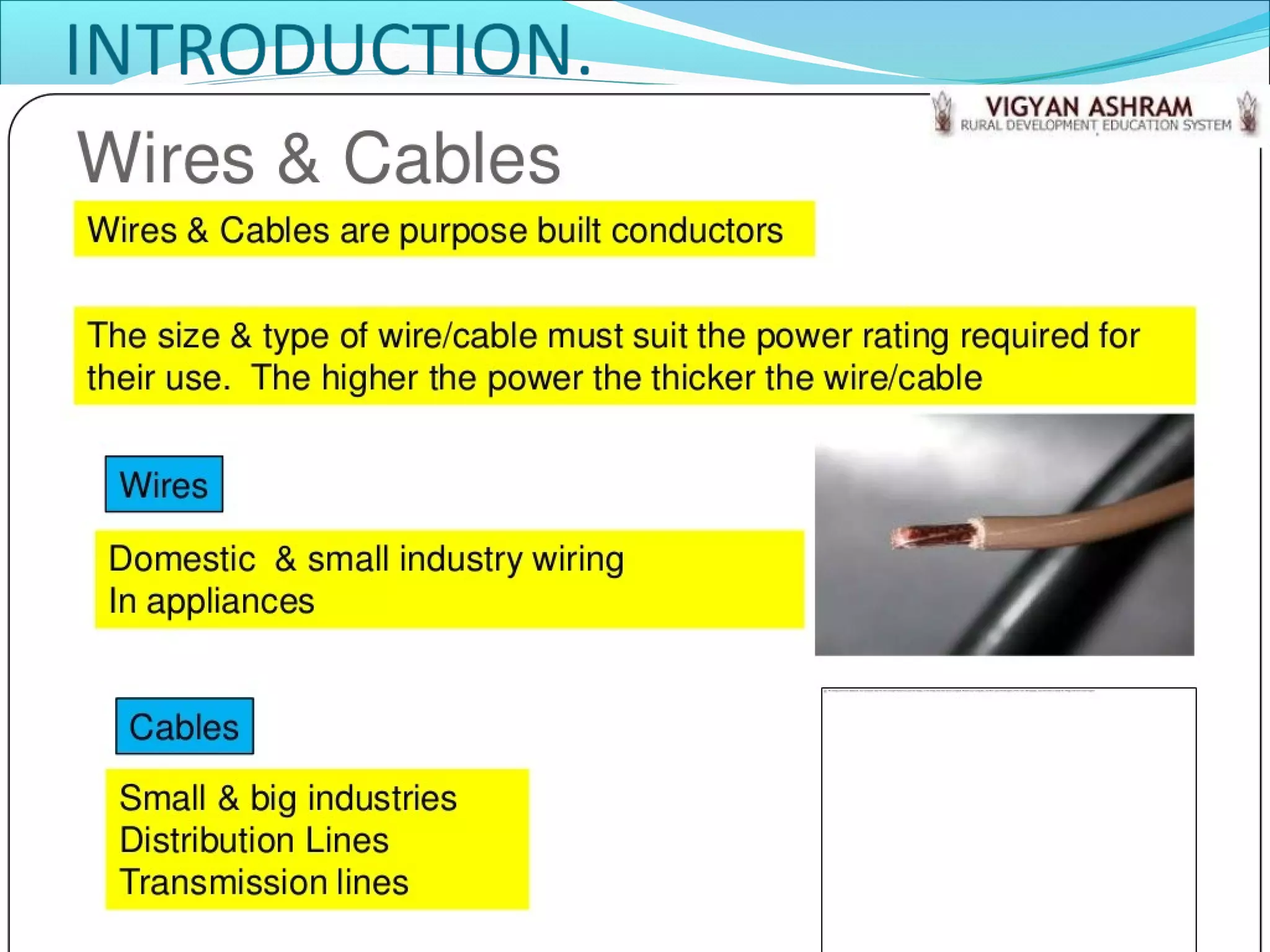
A power cable is an assembly of two or more electrical
conductors, usually held together with an overall
sheath. The assembly is used for transmission of
electrical power. Power cables may be installed as
permanent wiring within buildings, buried in the
ground, run overhead, or exposed.
Flexible power cables are used for portable devices,
mobile tools and machinery.
GENERAL CONSTRUCTION.
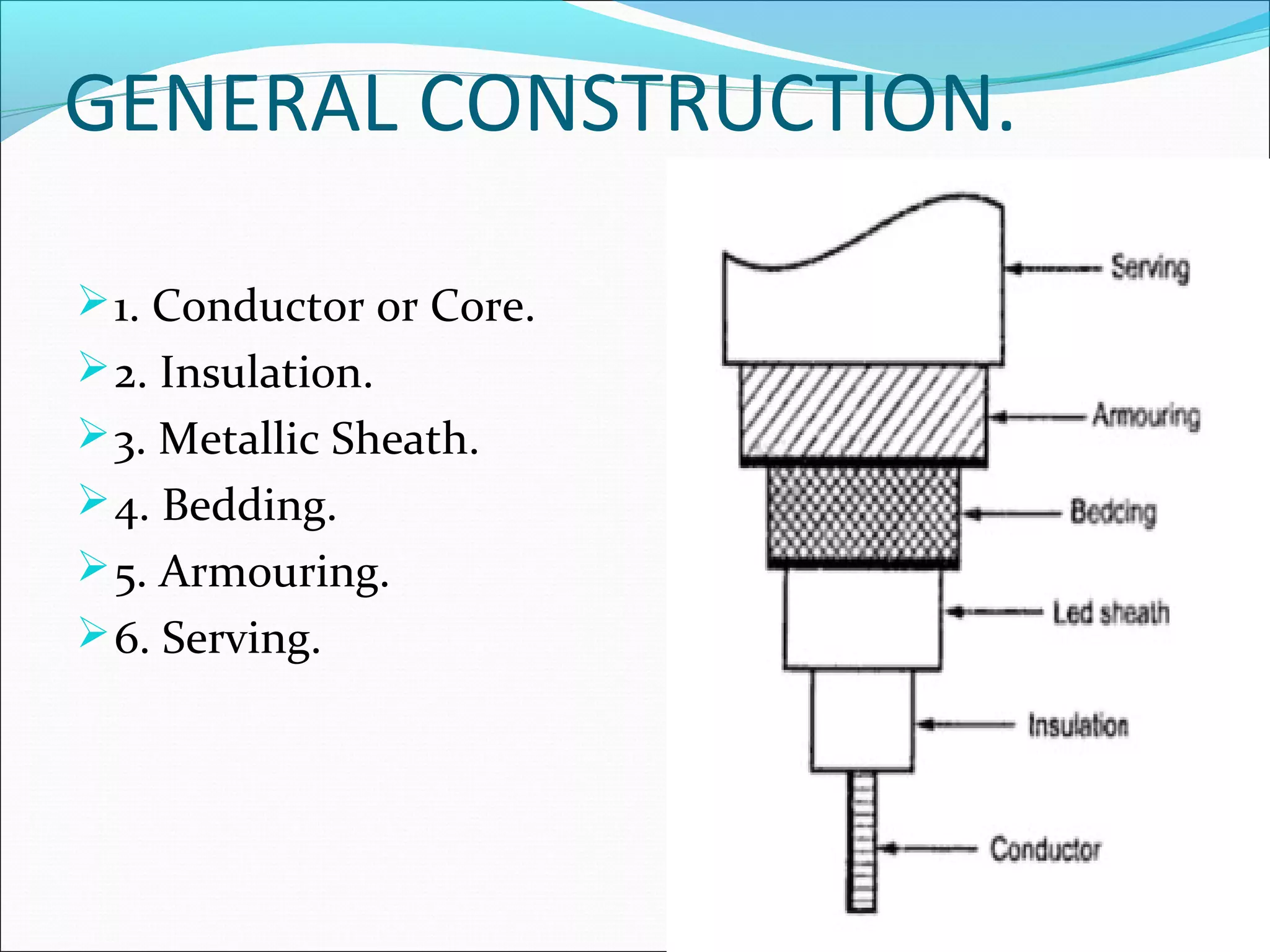
1. Conductor or Core.
2. Insulation.
3. Metallic Sheath.
4. Bedding.
5. Armouring.
6. Serving.
TYPES OF CABLES.
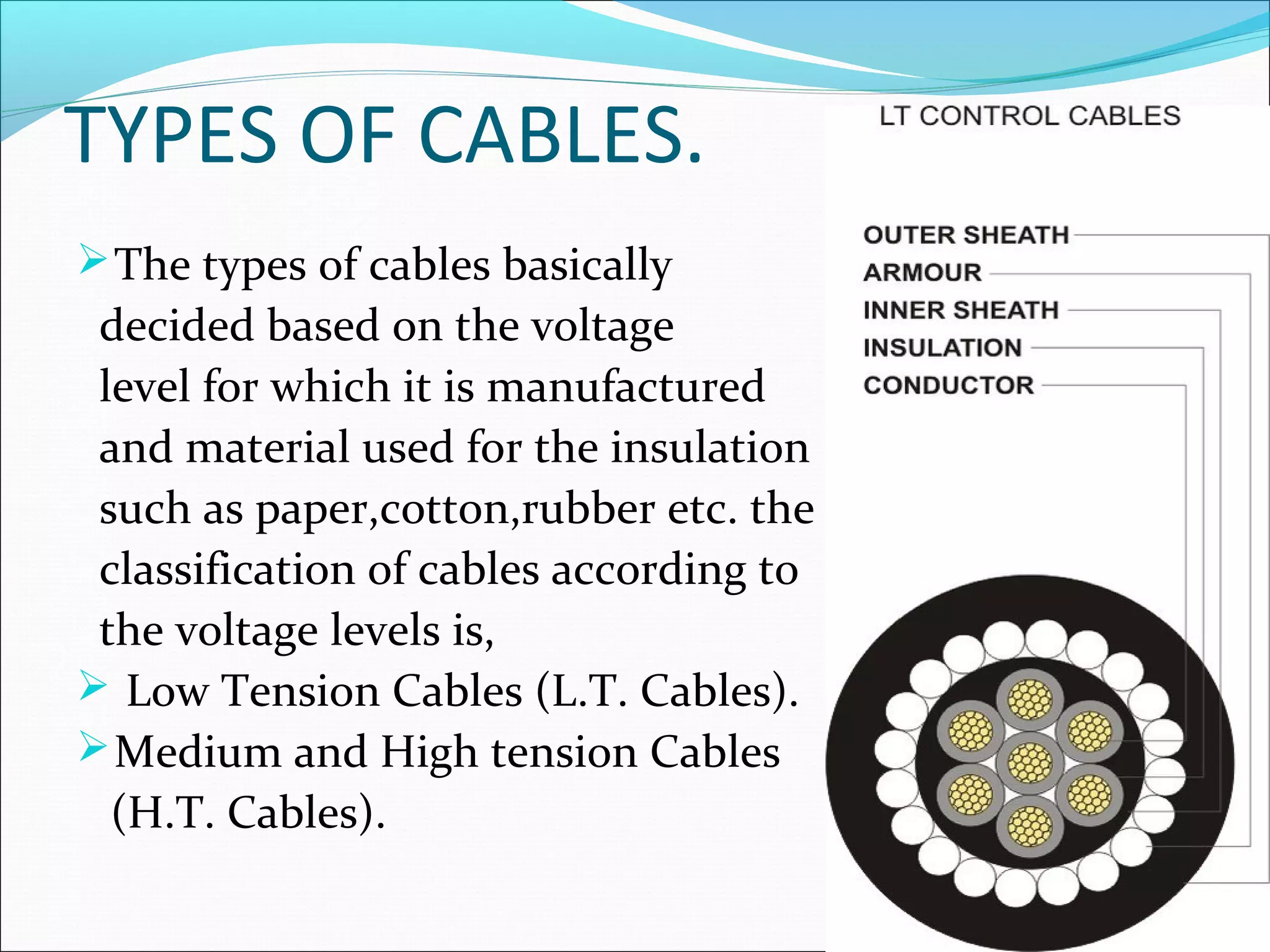
The types of cables basically
decided based on the voltage
level for which it is manufactured
and material used for the insulation
such as paper,cotton,rubber etc. the
classification of cables according to
the voltage levels is,
 Low Tension Cables (L.T. Cables).
Medium and High tension Cables
(H.T. Cables).
BELTED CABLES.
These cables are used for the
voltage level up to 11 kV. The
construction of belted cable is
is shown in fig.
The cores are not in circular
shape.
The cores are insulated from
each other by use of impregnated
paper.
The gaps are filled with fibrous
material like jute.
The belt is covered with lead
sheath.
SCREENED TYPE CABLES.
These cables are used for the voltage levels of 22 kV.
The two types of screened cables are:
H-Type cables.
S.L. Type cables.
H-Type cables.
Designed by M. Hochstetler and
hence named H-type cable.
No paper belt in this type of
cable.
Each conductor is insulated
with a paper, covered with a
metallic screen.
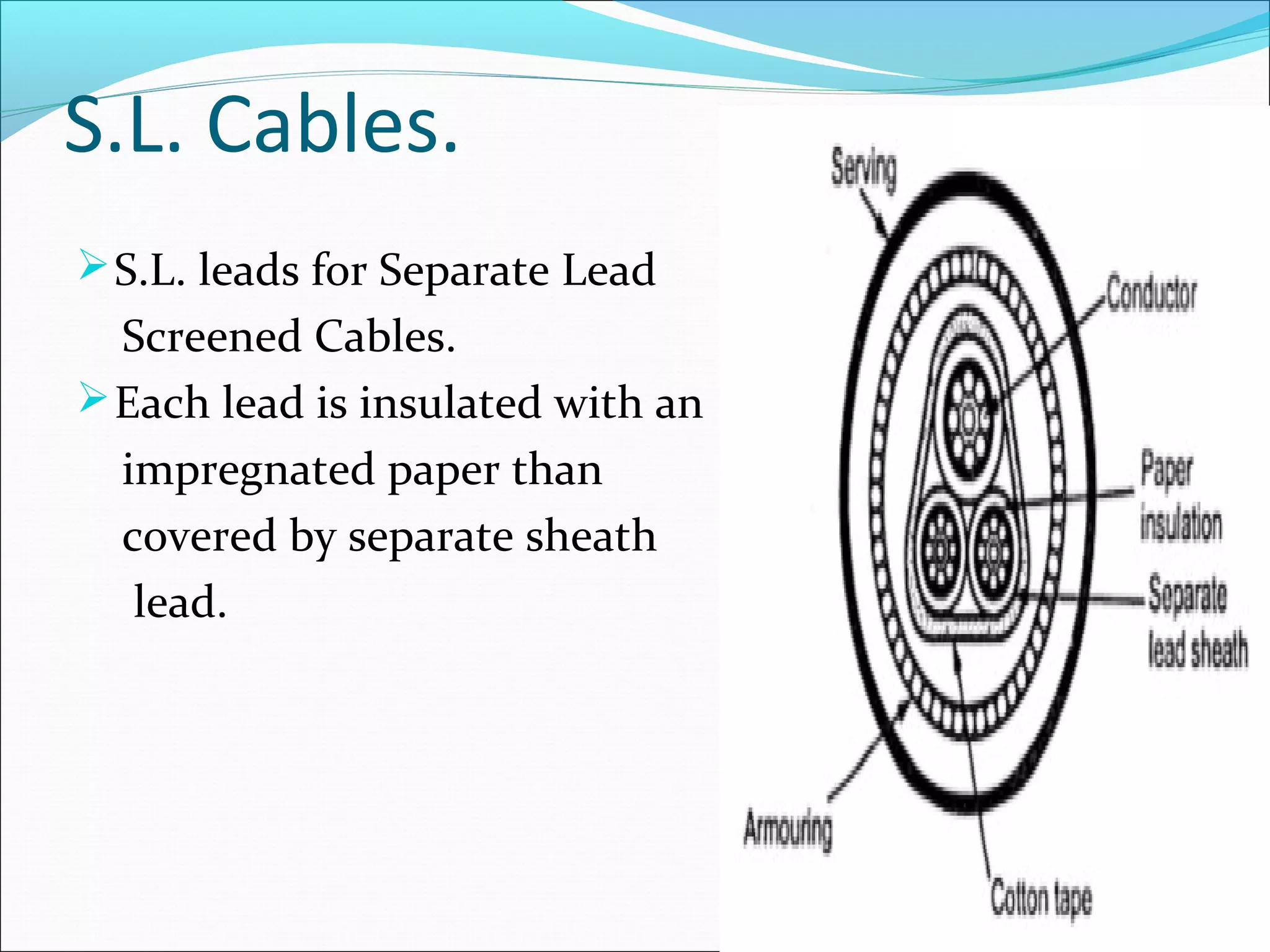
S.L. Cables.
S.L. leads for Separate Lead
Screened Cables.
Each lead is insulated with an
impregnated paper than
covered by separate sheath
lead.
SUPER TENSION (S.T.) CABLES.
The S.T. cables are intended for
132 kV to 25 kV voltage levels.
In such cables, the following
methods are specially used to
eliminate the possibility of
void formation:
Instead of solid type insulation,
low viscosity oils under pressure
is used for impregnation.
Using inert gas at high pressure in
b/w the lead sheath & dielectric.
OIL FILLED CABLES
In case of oil filled cables, the
channels or ducts are provided
within or adjacent to the cores,
through which oil under pressure
is circulated.
It consists of concentric standard
conductor but built around a hallow
cylindrical steel spiral core, which
acts as a channel for oil.
GAS PRESSURE CABLES
An inert gas like N at high pressure
is introduced lead sheath and
dielectric.
Gas like SF6 is also used in
cables.
Pressure is about 12-15
atmosphere.
Working power factors is
also high.

Types of wires and cables

  • 2.
    INTRODUCTION TO WIRES Thereare mainly 6 types of wires are there. vulcanised indian rubber wire (V.I.R) tough rubber sheathed wire (T.R.S) poly vinyl chloride wire (P.V.C.) Lead alloy sheathed wire weather proof wires flexible wire
  • 4.
    V.I.R (Vulcanised IndianRubber) wires. A VIR wire mainly consists of a tinned conductor having rubber coating. Tinning of conductor prevents the sticking of rubber to the conductor. Thickness of rubber mainly depends on the operating voltage to which wire is designed. A cotton bradding is done over the rubber insulations to protect the conductor against the moisture. Finally the wire is finished with wax for cleanliness. Nowadays these wires are not used since a better quality wires are available at a cheaper rate.
  • 6.
    T.R.S. (Tough RubberSheathed) wires. This type of wire is a modification of V.I.R. wire. It consist of the ordinary rubber coated conductors with an additional sheath of tough rubber. This layer provides better protection against moisture and wear and tear. Also it provides an extra insulation. These wires are generally available in single conductor, two conductors or three conductors.
  • 8.
    P.V.C. (Poly VinylChloride) wires. This is the most commonly used wire for wiring purpose. Conductor is insulated by poly vinyl chloride (insulating material). P.V.S. has following properties: 1. Moisture proof. 2.Tough. 3.Durable. 4.Chemically inert. But it softens at high temperatures therefore not suitable for connection to heating appliances.
  • 9.
    Lead alloy sheathedwires. The ordinary wires can be used only at dry places but for damp places these wires are covered with continuous lead sheaths. The layer of lead covering is very thin like 0.12 cm thick. These wires provides little mechanical protections to the wires.
  • 10.
    Weather proof wires. Thesetypes of wires are used outdoor i.e. providing a service connection from overhead line to building etc. In this type of wire the conductor is not tinned and the conductor is covered with three braids of fibrous yarn and saturated with water proof compound.
  • 11.
    Flexible wires. These wiresconsists of number of strands instead of a single conductor. (Strand is a very thin conductor). The conductor is insulated with P.V.C. material. These wires are very useful for household portable appliances where flexibility of wire is more important. Typical specifications 55/.01mm(55 strands of 0.1mm diameter), maximum current 6A,used for household purposes.
  • 12.
    INRODUCTION TO CABLES. Apower cable is an assembly of two or more electrical conductors, usually held together with an overall sheath. The assembly is used for transmission of electrical power. Power cables may be installed as permanent wiring within buildings, buried in the ground, run overhead, or exposed. Flexible power cables are used for portable devices, mobile tools and machinery.
  • 13.
    GENERAL CONSTRUCTION. 1. Conductoror Core. 2. Insulation. 3. Metallic Sheath. 4. Bedding. 5. Armouring. 6. Serving.
  • 14.
    TYPES OF CABLES. Thetypes of cables basically decided based on the voltage level for which it is manufactured and material used for the insulation such as paper,cotton,rubber etc. the classification of cables according to the voltage levels is,  Low Tension Cables (L.T. Cables). Medium and High tension Cables (H.T. Cables).
  • 15.
    BELTED CABLES. These cablesare used for the voltage level up to 11 kV. The construction of belted cable is is shown in fig. The cores are not in circular shape. The cores are insulated from each other by use of impregnated paper. The gaps are filled with fibrous material like jute. The belt is covered with lead sheath.
  • 16.
    SCREENED TYPE CABLES. Thesecables are used for the voltage levels of 22 kV. The two types of screened cables are: H-Type cables. S.L. Type cables.
  • 17.
    H-Type cables. Designed byM. Hochstetler and hence named H-type cable. No paper belt in this type of cable. Each conductor is insulated with a paper, covered with a metallic screen.
  • 18.
    S.L. Cables. S.L. leadsfor Separate Lead Screened Cables. Each lead is insulated with an impregnated paper than covered by separate sheath lead.
  • 19.
    SUPER TENSION (S.T.)CABLES. The S.T. cables are intended for 132 kV to 25 kV voltage levels. In such cables, the following methods are specially used to eliminate the possibility of void formation: Instead of solid type insulation, low viscosity oils under pressure is used for impregnation. Using inert gas at high pressure in b/w the lead sheath & dielectric.
  • 20.
    OIL FILLED CABLES Incase of oil filled cables, the channels or ducts are provided within or adjacent to the cores, through which oil under pressure is circulated. It consists of concentric standard conductor but built around a hallow cylindrical steel spiral core, which acts as a channel for oil.
  • 21.
    GAS PRESSURE CABLES Aninert gas like N at high pressure is introduced lead sheath and dielectric. Gas like SF6 is also used in cables. Pressure is about 12-15 atmosphere. Working power factors is also high.