TYPES OF
CONDUCTOR
PRESENTED BY-
SHANTANU KUMAR SINGH
ROLL NO-1401421059
CONTENT:-
Introduction
Different types of conductor
 Conclusion
INTRODUCTION
The important factor taken into account in the
selection of a conductor for a particular lines
are conductivity, tensile strength, corona loss,
local condition and cost.
The two most common conductor materials are
Hard drawn copper and aluminium.
Aluminium has the following advantages over
copper:
Lower cost
Lesser weight
Larger diameter
However ,the tensile strength of aluminium is
lower than copper.
Types of conductor
1).Hard drawn copper conductor
2).Cadmium copper conductor
3).Steel core copper conductor
4).Copper welded conductor
5).All aluminium conductor(AAC)
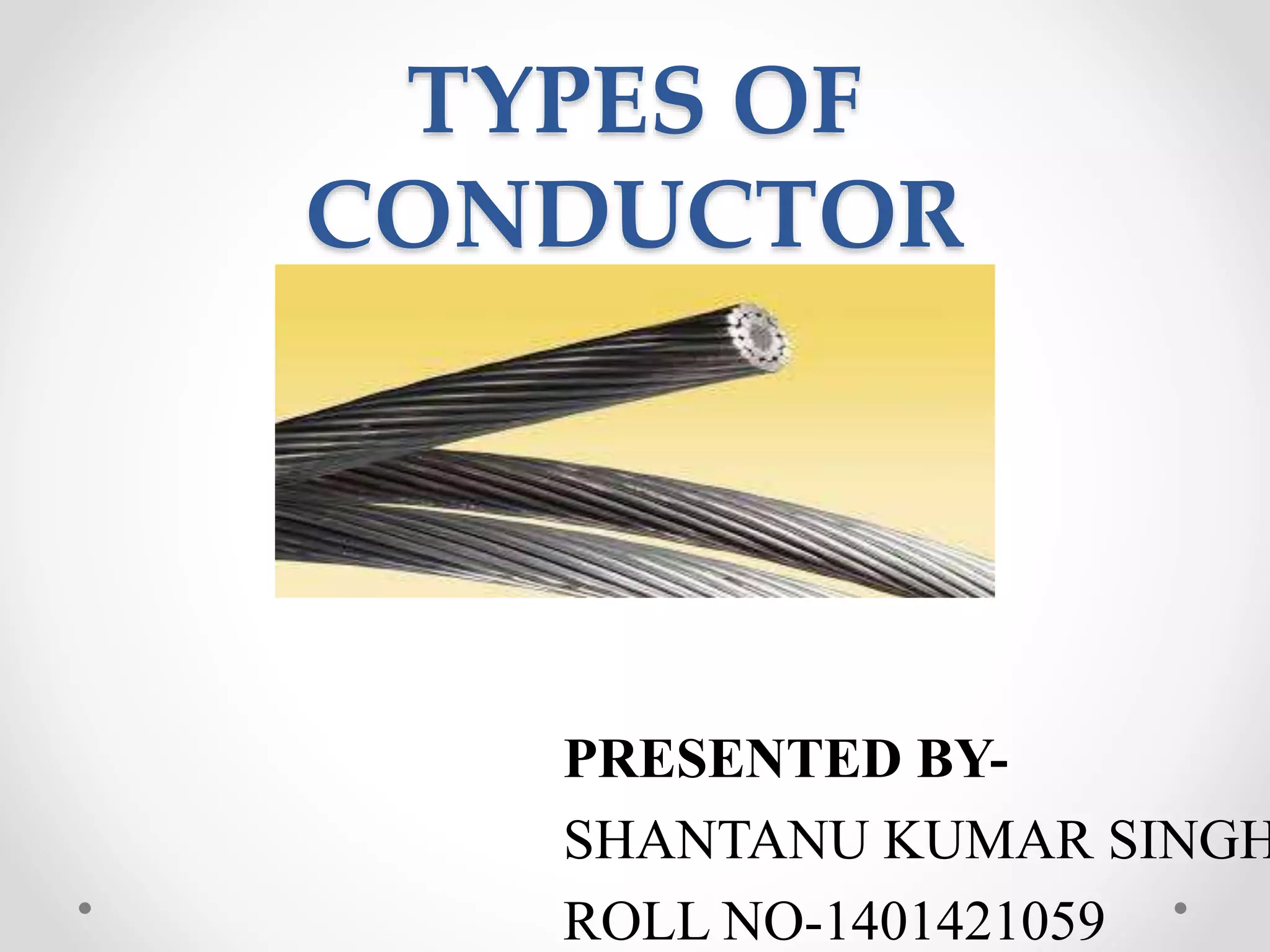
6).Aluminium conductor steel reinforced(ACSR)
7).Smooth body ACSR
8).Expanded ACSR
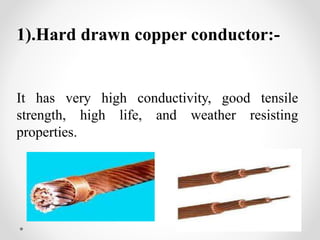
1).Hard drawn copper conductor:-
It has very high conductivity, good tensile
strength, high life, and weather resisting
properties.
2).Cadmium copper conductor:-
With addition of cadmium there is increase in the
tensile strength of copper at the cost of decrease
in the conductivity. Thus these conductors can be
used for longer spans. As tensile strength is
increased, longer spans with same sag is
possible.
3).Steel core copper conductor
The steel cored copper conductors are made by
surrounding a steel core with on or more layers
of copper strands. Due to addition of steel core
tensile strength of conductor is increased.
4).Copper welded conductor
In this ,copper is welded on the steel wire to
make copper welded conductor.
The conductivity of copper weld conductor
varies from 30 to 60% of that a solid copper
conductor with same diameter.
It is used for longer span such as river crossing.
5). All aluminium conductor(AAC)
Due to increasing cost of copper, aluminium is
used in transmission system.
For a specific resistance, cross sectional area of
aluminium condcutor is greater than that of
copper while its weight is about 50% of that of
copper conductor. This makes transportation and
erection of such conductors economical. Corona
effect is reduced due to increased diameter of
conductor.
6).Aluminium conductor steel
reinforced(ACSR)
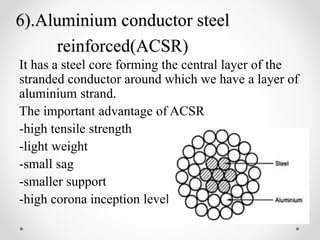
It has a steel core forming the central layer of the
stranded conductor around which we have a layer of
aluminium strand.
The important advantage of ACSR
-high tensile strength
-light weight
-small sag
-smaller support
-high corona inception level
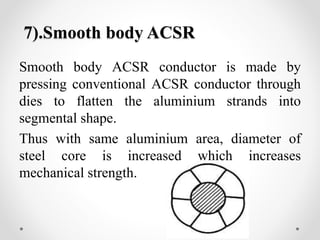
7).Smooth body ACSR
Smooth body ACSR conductor is made by
pressing conventional ACSR conductor through
dies to flatten the aluminium strands into
segmental shape.
Thus with same aluminium area, diameter of
steel core is increased which increases
mechanical strength.
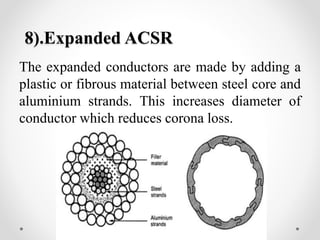
8).Expanded ACSR
The expanded conductors are made by adding a
plastic or fibrous material between steel core and
aluminium strands. This increases diameter of
conductor which reduces corona loss.
Conclusion
Hence all the conductors have their own area of
application.
The ACSR conductor are widely used in
transmission line.
Types of conductor

Types of conductor

  • 1.
    TYPES OF CONDUCTOR PRESENTED BY- SHANTANUKUMAR SINGH ROLL NO-1401421059
  • 2.
  • 3.
    INTRODUCTION The important factortaken into account in the selection of a conductor for a particular lines are conductivity, tensile strength, corona loss, local condition and cost. The two most common conductor materials are Hard drawn copper and aluminium.
  • 4.
    Aluminium has thefollowing advantages over copper: Lower cost Lesser weight Larger diameter However ,the tensile strength of aluminium is lower than copper.
  • 5.
    Types of conductor 1).Harddrawn copper conductor 2).Cadmium copper conductor 3).Steel core copper conductor 4).Copper welded conductor 5).All aluminium conductor(AAC) 6).Aluminium conductor steel reinforced(ACSR) 7).Smooth body ACSR 8).Expanded ACSR
  • 6.
    1).Hard drawn copperconductor:- It has very high conductivity, good tensile strength, high life, and weather resisting properties.
  • 7.
    2).Cadmium copper conductor:- Withaddition of cadmium there is increase in the tensile strength of copper at the cost of decrease in the conductivity. Thus these conductors can be used for longer spans. As tensile strength is increased, longer spans with same sag is possible.
  • 8.
    3).Steel core copperconductor The steel cored copper conductors are made by surrounding a steel core with on or more layers of copper strands. Due to addition of steel core tensile strength of conductor is increased.
  • 9.
    4).Copper welded conductor Inthis ,copper is welded on the steel wire to make copper welded conductor. The conductivity of copper weld conductor varies from 30 to 60% of that a solid copper conductor with same diameter. It is used for longer span such as river crossing.
  • 10.
    5). All aluminiumconductor(AAC) Due to increasing cost of copper, aluminium is used in transmission system. For a specific resistance, cross sectional area of aluminium condcutor is greater than that of copper while its weight is about 50% of that of copper conductor. This makes transportation and erection of such conductors economical. Corona effect is reduced due to increased diameter of conductor.
  • 11.
    6).Aluminium conductor steel reinforced(ACSR) Ithas a steel core forming the central layer of the stranded conductor around which we have a layer of aluminium strand. The important advantage of ACSR -high tensile strength -light weight -small sag -smaller support -high corona inception level
  • 12.
    7).Smooth body ACSR Smoothbody ACSR conductor is made by pressing conventional ACSR conductor through dies to flatten the aluminium strands into segmental shape. Thus with same aluminium area, diameter of steel core is increased which increases mechanical strength.
  • 13.
    8).Expanded ACSR The expandedconductors are made by adding a plastic or fibrous material between steel core and aluminium strands. This increases diameter of conductor which reduces corona loss.
  • 14.
    Conclusion Hence all theconductors have their own area of application. The ACSR conductor are widely used in transmission line.