Facing and
Interfacing
Understanding Key Elements in Garment Construction
"The way you face
challenges shapes
your strength.”
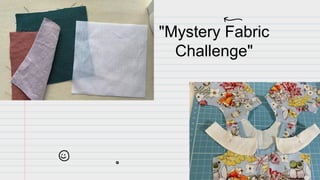
"Mystery Fabric
Challenge"
Types of
Facing and
Interfacing
01
Introduction
In garment construction, achieving a polished and
professional finish is essential. Two key components
that contribute to the structure and durability of
clothing are facing and interfacing.
Don't forget
...
What is Facing?
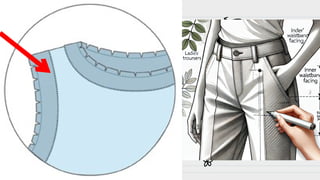
• Facing is an extra piece of fabric sewn to the
edges of a garment, such as necklines, armholes,
and waistbands, to create a clean and reinforced
finish. It helps maintain the shape of the garment
and ensures that raw edges are neatly enclosed.
In sewing and
tailoring, facing is
fabric applied to a
garment edge, on the
inside.
Purpose?
•to conceal a seam
• strengthen a particular area
•prevent a raw edge from fraying
Different kinds of
facings:
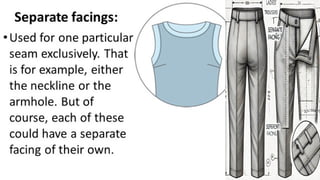
•Separate facings
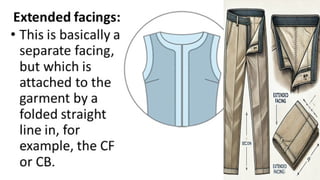
•Extended facings
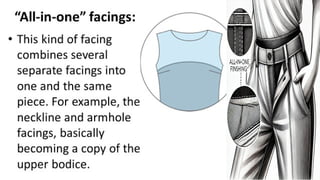
•“All-in-one” facings
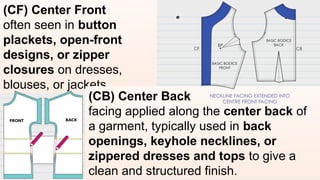
(CF) Center Front
often seen in button
plackets, open-front
designs, or zipper
closures on dresses,
blouses, or jackets.
(CB) Center Back
facing applied along the center back of
a garment, typically used in back
openings, keyhole necklines, or
zippered dresses and tops to give a
clean and structured finish.
An all-in-one facing is a finishing
technique where the waistband and
facing are combined into a single piece,
providing a clean, smooth, and
professional look inside the garment.
Instead of attaching a separate
waistband, the all-in-one facing is cut
and sewn as part of the trouser
pattern, folding neatly inside. It is usually
reinforced with interfacing to add
stability and prevent stretching over time.
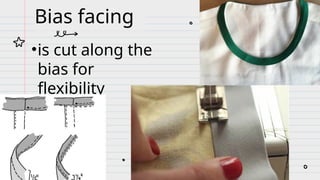
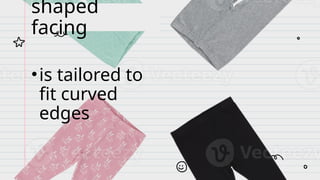
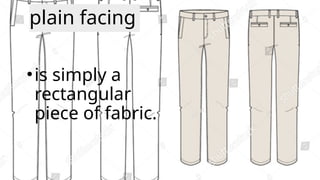
• Common types of facing include bias
facing, shaped facing, and plain facing.
Different types of
facing
Bias facing
•is cut along the
bias for
flexibility
shaped
facing
•is tailored to
fit curved
edges
plain facing
•is simply a
rectangular
piece of fabric.
• Each serves unique purposes in
garment construction, catering to
different designs and finishes.
What is interfacing?
• Interfacing is a supportive layer used to add
stiffness, stability, or reinforcement to certain
areas of a garment, such as collars, cuffs, and
buttonholes. It can be sewn-in or fusible (iron-on),
depending on the fabric and desired effect.
Different
types of
interfacing
...
Interfacing comes in
various forms, including
fusible, sew-in, and non-
woven.
Fusible interfacing
-has an adhesive
that bonds to the
fabric with heat,
making it easy to
apply.
Sew-in interfacing
• requires stitching and is
often used for structured
areas in garments, while
non-woven interfacing
provides good support
without bulk.
Knit Interfacing
• a soft, stretchable interfacing made
from knitted fibers
• provides support while allowing flexibility,
making it ideal for stretch fabrics like
jersey, knits, and lightweight woven
materials.
• Unlike woven interfacing, it moves with the
fabric, maintaining its drape and elasticity.
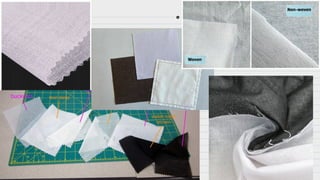
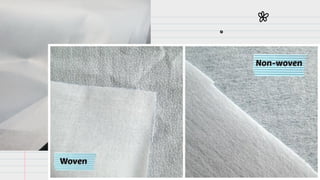
Woven Interfacing
• a type of fabric used in sewing to provide structure
and stability to garments.
• mimics the weave of standard fabrics, featuring a
warp and weft thread structure, which allows it to
maintain the fabric's natural drape and feel.
• This makes it ideal for use in areas that require
reinforcement without compromising the garment's
flexibility, such as collars, cuffs, waistbands, and
button plackets.
Non-Woven Interfacing
• a type of interfacing made from fibers that are
bonded together rather than woven.
• It does not have a grainline, making it easy to
cut in any direction.
• It is commonly used in lightweight to medium-
weight fabrics for adding structure without bulk.
Each type serves
specific purposes
based on fabric
compatibility and
desired firmness.
Application of
Interfacing in
Ladies' Trousers
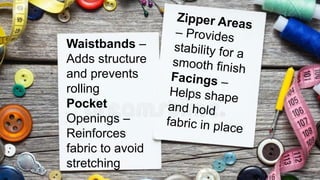
Waistbands –
Adds structure
and prevents
rolling
Pocket
Openings –
Reinforces
fabric to avoid
stretching
Zipper Areas
– Provides
stability for a
smooth finish
Facings –
Helps shape
and hold
fabric in place
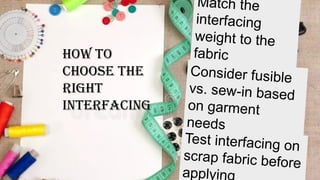
How to
Choose the
Right
Interfacing
Match the
interfacing
weight to the
fabric
Consider fusible
vs. sew-in based
on garment
needs
Test interfacing on
scrap fabric before
applyin
Step-by-Step
Procedure in
Attaching
Interfacing
Definition of
facing and
interfacing
Facing is a piece of fabric
used to finish the raw
edges of a garment,
ensuring a clean look.
Interfacing adds
structure and support
to areas that require it,
such as collars or cuffs.
Both elements
enhance the garment's
durability and
appearance.
Importance in Garment Construction
02
Facing and interfacing serve vital functions in
garment construction. They help finish the edges of
fabric, provide stability, and maintain the shape of
the garment. Proper use ensures that areas such as
necklines and armholes look polished and
professional. They also contribute to the overall
quality and longevity of the piece, making them
essential for well-constructed clothing.
Role of facing and interfacing
...
...
Don't
..
enefits of using correct materials
Using the right type of facing and interfacing
materials can significantly enhance the
durability and appearance of a garment. It
prevents stretching or distortion in key areas,
supports the design, and improves the
wearability of the fabric. Furthermore, correct
materials contribute to a satisfying finish,
making the garment not only functional but
thetically pleasing.
Improper use of facing and interfacing can lead to
several issues, such as sagging, bubbling, or an
unprofessional appearance. Materials that are too
heavy can weigh down the garment, while too
light may not provide adequate support.
Misalignment during application can also result in
an uneven finish, ultimately affecting both comfort
and style. Therefore, understanding the
characteristics of each type is critical for successful
garment construction.
Don
forget
...
...
Don't forget
...
Conclusions
In summary, understanding the
types and importance of facing and
interfacing is crucial for effective
garment construction. Proper
selection and application of these
materials contribute significantly to
the quality, durability, and
aesthetics of finished garments.
CREDITS: This presentation template was created
by Slidesgo, and includes icons by Flaticon and
infographics & images by Freepik
Thank you! Do you have
any
questions?

Types Facing and Interfacing in dressmaking

  • 1.
    Facing and Interfacing Understanding KeyElements in Garment Construction
  • 2.
    "The way youface challenges shapes your strength.”
  • 3.
  • 4.
  • 5.
    Introduction In garment construction,achieving a polished and professional finish is essential. Two key components that contribute to the structure and durability of clothing are facing and interfacing. Don't forget ...
  • 6.
    What is Facing? •Facing is an extra piece of fabric sewn to the edges of a garment, such as necklines, armholes, and waistbands, to create a clean and reinforced finish. It helps maintain the shape of the garment and ensures that raw edges are neatly enclosed.
  • 8.
    In sewing and tailoring,facing is fabric applied to a garment edge, on the inside.
  • 9.
    Purpose? •to conceal aseam • strengthen a particular area •prevent a raw edge from fraying
  • 10.
    Different kinds of facings: •Separatefacings •Extended facings •“All-in-one” facings
  • 13.
    (CF) Center Front oftenseen in button plackets, open-front designs, or zipper closures on dresses, blouses, or jackets. (CB) Center Back facing applied along the center back of a garment, typically used in back openings, keyhole necklines, or zippered dresses and tops to give a clean and structured finish.
  • 15.
    An all-in-one facingis a finishing technique where the waistband and facing are combined into a single piece, providing a clean, smooth, and professional look inside the garment. Instead of attaching a separate waistband, the all-in-one facing is cut and sewn as part of the trouser pattern, folding neatly inside. It is usually reinforced with interfacing to add stability and prevent stretching over time.
  • 16.
    • Common typesof facing include bias facing, shaped facing, and plain facing. Different types of facing
  • 17.
    Bias facing •is cutalong the bias for flexibility
  • 18.
  • 19.
    plain facing •is simplya rectangular piece of fabric.
  • 20.
    • Each servesunique purposes in garment construction, catering to different designs and finishes.
  • 21.
    What is interfacing? •Interfacing is a supportive layer used to add stiffness, stability, or reinforcement to certain areas of a garment, such as collars, cuffs, and buttonholes. It can be sewn-in or fusible (iron-on), depending on the fabric and desired effect.
  • 22.
    Different types of interfacing ... Interfacing comesin various forms, including fusible, sew-in, and non- woven.
  • 23.
    Fusible interfacing -has anadhesive that bonds to the fabric with heat, making it easy to apply.
  • 24.
    Sew-in interfacing • requiresstitching and is often used for structured areas in garments, while non-woven interfacing provides good support without bulk.
  • 25.
    Knit Interfacing • asoft, stretchable interfacing made from knitted fibers • provides support while allowing flexibility, making it ideal for stretch fabrics like jersey, knits, and lightweight woven materials. • Unlike woven interfacing, it moves with the fabric, maintaining its drape and elasticity.
  • 27.
    Woven Interfacing • atype of fabric used in sewing to provide structure and stability to garments. • mimics the weave of standard fabrics, featuring a warp and weft thread structure, which allows it to maintain the fabric's natural drape and feel. • This makes it ideal for use in areas that require reinforcement without compromising the garment's flexibility, such as collars, cuffs, waistbands, and button plackets.
  • 29.
    Non-Woven Interfacing • atype of interfacing made from fibers that are bonded together rather than woven. • It does not have a grainline, making it easy to cut in any direction. • It is commonly used in lightweight to medium- weight fabrics for adding structure without bulk.
  • 31.
    Each type serves specificpurposes based on fabric compatibility and desired firmness.
  • 32.
  • 33.
    Waistbands – Adds structure andprevents rolling Pocket Openings – Reinforces fabric to avoid stretching Zipper Areas – Provides stability for a smooth finish Facings – Helps shape and hold fabric in place
  • 34.
    How to Choose the Right Interfacing Matchthe interfacing weight to the fabric Consider fusible vs. sew-in based on garment needs Test interfacing on scrap fabric before applyin
  • 35.
  • 36.
    Definition of facing and interfacing Facingis a piece of fabric used to finish the raw edges of a garment, ensuring a clean look. Interfacing adds structure and support to areas that require it, such as collars or cuffs. Both elements enhance the garment's durability and appearance.
  • 37.
    Importance in GarmentConstruction 02
  • 38.
    Facing and interfacingserve vital functions in garment construction. They help finish the edges of fabric, provide stability, and maintain the shape of the garment. Proper use ensures that areas such as necklines and armholes look polished and professional. They also contribute to the overall quality and longevity of the piece, making them essential for well-constructed clothing. Role of facing and interfacing ...
  • 39.
    ... Don't .. enefits of usingcorrect materials Using the right type of facing and interfacing materials can significantly enhance the durability and appearance of a garment. It prevents stretching or distortion in key areas, supports the design, and improves the wearability of the fabric. Furthermore, correct materials contribute to a satisfying finish, making the garment not only functional but thetically pleasing.
  • 40.
    Improper use offacing and interfacing can lead to several issues, such as sagging, bubbling, or an unprofessional appearance. Materials that are too heavy can weigh down the garment, while too light may not provide adequate support. Misalignment during application can also result in an uneven finish, ultimately affecting both comfort and style. Therefore, understanding the characteristics of each type is critical for successful garment construction. Don forget ...
  • 41.
    ... Don't forget ... Conclusions In summary,understanding the types and importance of facing and interfacing is crucial for effective garment construction. Proper selection and application of these materials contribute significantly to the quality, durability, and aesthetics of finished garments.
  • 42.
    CREDITS: This presentationtemplate was created by Slidesgo, and includes icons by Flaticon and infographics & images by Freepik Thank you! Do you have any questions?